
1,419 words
8 minutes read time
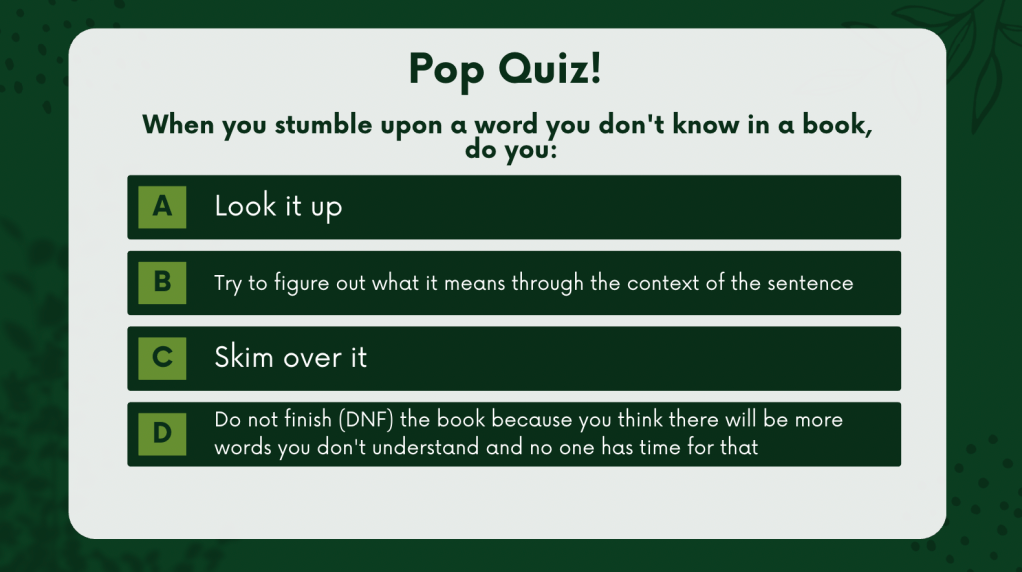
If you’ve kept up with what I’ve been doing lately, you’ll know that I’ve been re-editing some older work. I’ve said in the past you can’t go forward if you’re looking back, but sometimes the road to success isn’t a straight line and I’ve been happy with my decision to polish a couple of books that I published a few years ago.
What I’ve discovered is that I have/had a very pretentious way of writing, and when you’re writing commercial fiction, especially romance, that might not be a good thing. We’re told to write how we want to write, that readers will come back for our voice and style. But what if that style isn’t good? What if what sounds “natural” to you sounds like a dictionary and a thesaurus had a baby to your reader?
The average adult reading level in the United States is 7th to 8th grade according to The Literacy Project (https://www.sparxservices.org/blog/us-literacy-statistics-literacy-rate-average-reading-level), and that can impact how readers read your books. Readers don’t want to struggle to understand what your book is about, sift through complex words when something simpler would suffice do, or get bogged down in purple prose that doesn’t do anything to move the story forward.
That doesn’t mean every “big” word is bad, but it does mean that maybe using a “big” word when a simpler word would work just as well is the way to go. The problem is, making that conscious choice to swap out, say, adept for skilled seems like a cop out and maybe even disingenuous insincere if you have a big vocabulary and using those words is natural.
I certainly didn’t mean to bog down my books with words like “lambaste,” “derision,” and “ramifications” but those words were there in my head because, well, they just were. Unfortunately, too much of a good thing is bad, and thrown all together, A Heartache for Christmas sounds like I was trying too hard when really, I was writing what came instinctively.
But then we get into what would fit the character rather than what sounds easy. I write billionaire (for the most part) and that implies my MMCs are educated, sometimes disgustingly so (you don’t want to know how many degrees Rick Mercer has in Captivated by Her). They’re smart, they earned their money, and making them sound like a redneck who dropped out of school in sixth grade wouldn’t fit. So yeah, Sawyer might use words like “palpable” and “derision” but that’s part of who he is.
The trick is to make your characters sound like themselves while also staying true to your voice, but also keeping in mind that your reader just wants to have a good time reading your book.
Here are some of the sentences I found when I was re-editing A Heartache for Christmas and what I changed to make the sentences more relatable and easier to read.
Original: He was adept with the tow but he didn’t give off mechanic vibes.
Changed: He was skilled with the tow but he didn’t give off mechanic vibes.
Original: It goes against everything I am as a gentleman, as a decent person, to let McLeod berate Evie for attending the festival.
Changed: It goes against everything I am as a gentleman, as a decent person, to let McLeod chastise Evie for attending the festival.
Original: McLeod’s State Bank never would have worked with me on a payment arrangement.
Changed: McLeod’s State Bank never would have worked with me on a payment plan.
Original: Gray lambastes me for having the audacity to show my face at the festival, even when I try to defend myself.
Changed: Gray tears into me for coming to the festival, even when I try to defend myself.
Original: Alone in the quiet, the shakes set in, the ramifications of what Billy could have done to me if Sawyer hadn’t checked on me hitting me in the gut.
Changed: Alone in the quiet, the shakes set in, the reality of what Billy could have done to me if Sawyer hadn’t checked on me hitting me in the gut.
Original: I miss her and I should have invited her up to my room even if she would have declined.
Changed: I miss her and I should have invited her up to my room even if she would have said no.
I think you get the idea. Some aren’t so bad, like “arrangement” versus “plan” or “berates” versus “chastised.” You can say that maybe “chastised” is no better than “berates,” but when it comes to how familiar or common a word is or how conversational it sounds, choosing the one that sounds more relatable to readers will always be the best option. The thing is, the “best option” will vary by author to author and book to book.
So, I don’t think it’s necessarily dumbing own your prose or your language when you exchange one word or phrase for a simpler word or phrase. What you’re doing is:
- Using clear, common words that almost everyone instantly understands.
- Keeping emotional beats from getting buried in overly fancy phrasing.
- Making the writing feel “invisible,” letting the story, not the language, have the attention.
I read this article by Shane Snow–I’ll link it at the bottom–and he says:
I did an informal poll of some friends while writing this post. Every one of them told me that they assumed that higher reading level meant better writing. We’re trained to think that in school. But data shows the opposite: lower reading level often correlates with commercial popularity and in many cases, how good we think a writer is.
He goes on to say,
We shouldn’t discount simple writing, but instead embrace it.
I think this is why we’re so hard on books that do well when we think they aren’t worthy. They’re written simply, letting story and emotions shine through, and as writers who are trying our best, we think that’s not good enough when to the average reader, it’s what they want and what makes a bestseller.
That’s not to say you can’t use “big” words, just use them sparingly because as with any spice in any dish, too much can ruin the flavor. I think that might be where I was at with the standalones I’ve been re-editing these past few weeks, especially Faking Forever. It’s nothing I thought to watch out for, and I did have a beta reader read A Heartache for Christmas and she didn’t say one thing about any words that sounded out of place.
As for what I’m going to do now, after discovering my penchant for love of words that fit but don’t fit, of course I’m going to be paranoid my other books sound like that. I spot-checked my proof of Loss and Damages and that came out fine as far as I could tell. Rescue Me is okay. Faking Forever and now A Heartache for Christmas will be okay. I’ll have to trust that my King’s Crossing serial sounds good because there’s nothing I want to do less than read those again. My rockstars are okay. I lightly re-edited them not long ago but I haven’t updated back matter or uploaded the new files in KDP. I’ll get around to that sometime. At this point, I’m going through what probably all authors go through, and that’s being obsessed with perfection. Well, maybe not that specifically, but I want my books to be the best they can be, and after the last few years of not feeling well and craft improvement just because I’ve been writing, I’m worried that they aren’t.
Like I said in my last blog post, I’m learning how to relax, but when it comes to “big” words, I’ll have to be conscious of using them because it’s just natural. I’m not bragging I have a big vocabulary, in fact, I’m probably pretty average compared to other writers when it comes to the words I know. Still, the words I use aren’t needed, at least, not as often I do. The trick will be to find a happy medium between my style and toning it down but still sounding like me.
Pop Quiz!
When you’re in the zone which word do you reach for?
- Exacerbate
- Aggravate
- Worsen
That will be up to you, but I know which one I’ll use going forward . . . and it’s not the one I can’t spell.
Have a good week, everyone!
Shane Snow’s article: https://shanesnow.com/research/data-reveals-what-reading-level-you-should-write-at
Discover more from Vania Margene Rheault
Subscribe to get the latest posts sent to your email.


That is the big dirty secret isn’t it? Behind literary pretensions and certain electoral outcomes … that ppl in the US just have a very hard time reading and parsing communication. and I keep forgetting that over and over again when I write, because I do have this ambition that I want to reach a wider audience but the way I write is … not in the direction. I guess I shouldn’t “censor” myself, that would not be right either. but maybe I can still tweak things to become more legible while preserving my voice and style? I think it i worth a try … if nothing else then in my novel (coming soon – in 2037!)
Stay well and thanks for this post. It’s probably not going to draw as much traffic as some of the posts about AI-scandals and whatnot, but I actually think this is hugely important. And overlooked.
P.S. Exacerbate, of course. What else?! 😉
LikeLiked by 1 person