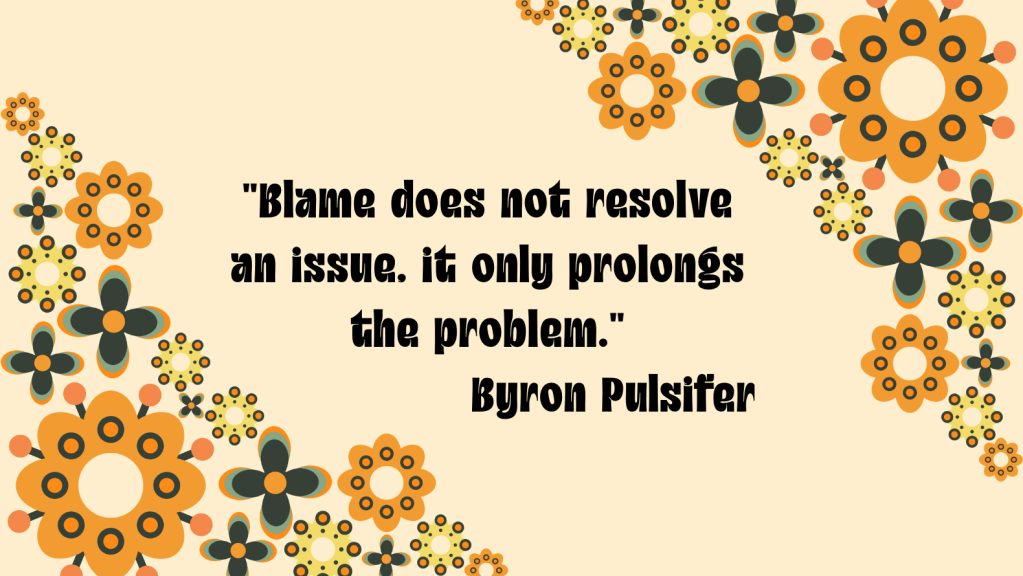
With how hard things are in publishing right now, I see a lot of entitled attitudes, misguided accusations, and a desperation to find the next “thing” that will move the needle, even just a tiny bit.
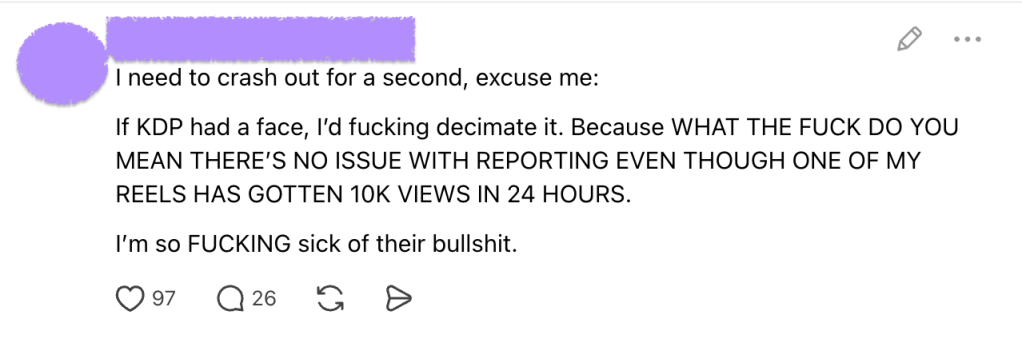
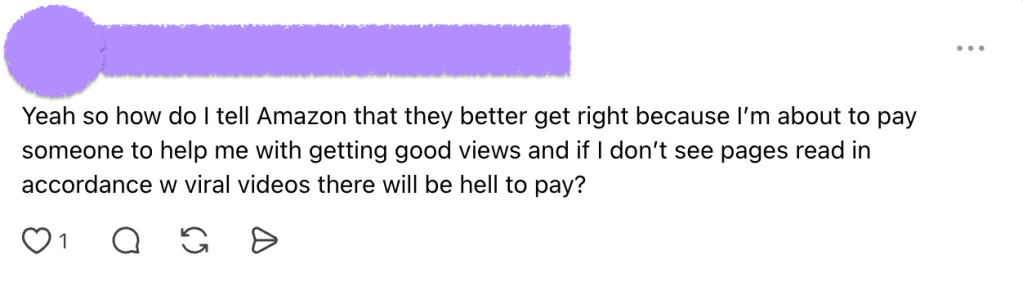
I know how that is, and I feel it still. Just because I found some slight success with Instagram Reels, that success was fleeting, and I can blame laggy reporting on my KDP dashboard or the natural ebbs and flows of the algorithms, but I’ve found that in the past couple of weeks I’ve had to post more often to find the reach that I was getting when I first started experimenting with Reels at the end of July. That’s stressful, because like any thirsty person dying from dehydration, you don’t want the water to turn off. You have no control over that though, and all you can do is your best. So, I know exactly what it feels like, but pushing that blame onto something or someone other than myself isn’t anything I’ve ever done. Sometimes there’s just no explanation except that’s the way things are.
I’ve seen the blame pushed on Amazon, AI slop, and unfortunately, readers not doing enough. I’m here to remind you that it’s not a reader’s job to do most of what an indie author wants or expects them to do, and you’re setting yourself up to have some rocky relationships with your readers and those in your chosen genre.
It’s not a reader’s job to follow you from publishing platform to publishing platform.
I know this hurts because we all want fans to buy and read everything we write and to follow us everywhere we go. But no matter how much you hate Amazon and detest any and every change they make to their programs, if you decide, for whatever reason, to pull your books, it’s not a reader’s job to follow you. You’re making that business decision and you’ll have to adapt to whatever benefits and consequences that come your way. I think it’s been pretty well established that KU readers will not follow you if you yank your books out of Kindle Unlimited. Readers will just find someone else to read, and trust me, there are plenty of authors to choose from. And it goes the other way too. If you’re in Kobo Plus and decide to go all in with Amazon, readers won’t all of a sudden start buying your books there. They have the Kobo app on their phones or tablets or a Kobo ereader. They built up their library and don’t want to lose it. It’s unfortunate, but readers are where they are because they like it there, and it’s not a reader’s job to change their reading habits because you decided to leave.
It’s not a reader’s job to be your unpaid PR department.
This is one I see a lot, and I’m not sure why this has turned into such a big thing. Authors these days seem to think that reading their book isn’t enough. They expect readers to make Reels and TikToks, create graphics and post them everywhere, and if a reader isn’t doing that, they’re a big disappointment. I understand it’s different when a reader decides to be part of your street team and specifically signs up, or downloads an ARC and there are some outlined expectations attached. An author approached me in my Instagram DMs not long ago and asked if I wanted an ARC to a book I told her I preordered. I looked at her form and the TikTok field was required. I didn’t have TikTok at the time, nor would she have been happy with the two followers I have now, so I said I’d just stick with my preorder. Then I could read it and not be expected to do anything else, which is how I’m really guessing most readers like to feel when they open a book. But somehow, only buying your book and reading it is a really low bar these days, when ten years ago, that’s all we wanted. It’s not a reader’s job to hype your book or give you word of mouth. It’s very nice when it happens, but it’s not a given. Expressing your disappointment puts the success, or lack thereof, of your book onto a reader’s shoulders, when it’s on yours.
It’s not a reader’s job to give you a review, and a positive one at that.
Readers don’t have to give you a review–they don’t even have to if they download an ARC. An ARC is a gift and a review should be looked at as a form of a thank you for that gift. I’ve seen a lot of authors say they aren’t doing ARCs anymore, and this is actually something I agree with. I’m not doing ARCs anymore either. I’ve been disappointed with the lack of follow-through and the quality of some reviews I’ve gotten on BookSprout (AI slop is everywhere). So I decided to give my next book away on my website for a couple of days before I publish it, and I’m going to say that a review would be appreciated but it’s not the reason I’m giving away free copies. Then I can take the expectation of getting reviews out of my mind and just enjoy treating readers to special early access before they have to pay for it or borrow it in KU. I’ve seen authors make fun of readers for their reviews, blocking them from ARC teams and street teams for leaving 3 star reviews, and authors getting angry because all their ARC copies went and reviews weren’t forthcoming. It’s getting harder and harder, but getting angry at readers isn’t the answer. Let them read how they want to read, let them review how they want to review, and let them say what they want to say in that review.
It’s not a reader’s job to care how you get paid.
I see this a lot: READERS SHOULD CARE IF AMAZON TREATS AUTHORS LIKE CRAP. And actually, no they shouldn’t. It’s not a reader’s job to know if buying your ebook will pay you more than reading it in KU. It’s not a reader’s job to know how much a page read is worth in KU. It’s not a reader’s job to understand why we have to mark our paperbacks so high to make just a couple of dollars. And it’s not a reader’s job to know that you make more if they buy/read your book over on Kobo rather than Amazon (I have no idea if this is true LOL). None of that is a reader’s job, and it’s not their job to fight on your behalf if you think Amazon is paying you unfairly. If you’re enrolled in Kindle Select, then you are accepting the terms and conditions, and it’s not a reader’s job to know what you think you’re giving up. It’s a very strange stance to think that readers should care how much, or how little, we make. My books are in KU, and I’m okay with what I’m paid or I wouldn’t have my books in it. If you don’t like it, then take your books out. But I’ve said many times that I’d rather have ten readers in KU than one who buys because I’m wide, and that’s not a fight I expect readers to fight for me.
It’s not a reader’s job to give you engagement on social media.
I saw someone post on Instagram something to the effect of, if someone is following you but they aren’t engaging or supporting you, they’re your opposition. Oh, hell, I might as well just post it:
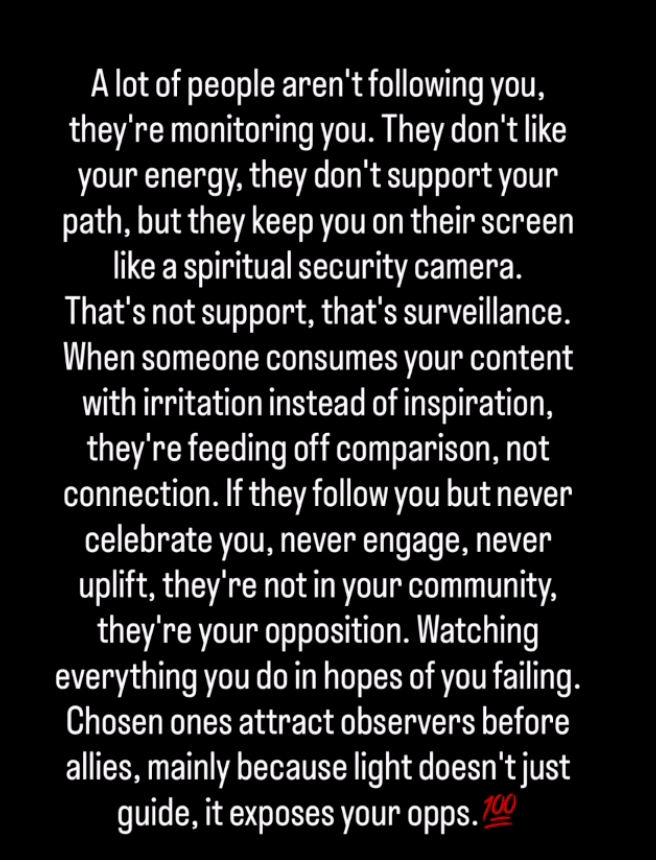
Let me tell you how fast my mouth popped open. People following you, be it readers or other authors, don’t owe you hearts, thumbs up, shares, or comments. They can actually consume your content as quietly as a mouse and scamper off just as silently. But here’s the thing. I would rather someone scroll away without giving a post a heart or a share because that’s not something they do, and go buy my book because they liked the snippet! You have no idea that’s not what they’re doing, and it’s not their job to tell you, either. Many years ago, back when I was on Twitter, I followed an author I liked. I bought her paperback book and kept it on my bookshelf. That was my way of supporting her. But I didn’t engage enough for her liking, and when she culled her followers, I was one of them. I gave her book away. I didn’t even want to keep it after that, and now, if I ever see her pop up on socials, I block her because I know the true person she is underneath. Readers, and people in general, really, don’t owe you engagement. And posting things like this on your social media? It’s gross. I saw this because someone I follow reposted it, and now I wonder, is that how she feels about me? I don’t like her posts so I’m the enemy? I have a couple of her books on my Kindle. I guess it doesn’t mean that much to her.
Authors can invest months or years in their books, and when the response doesn’t match the effort, they start looking for someone to blame. A lot of times they choose Amazon, sometimes it’s the algorithm, other authors who they see as competition, readers who won’t review, followers who won’t share, or the market full of books (AI or otherwise) they don’t think are worthy enough to be bestsellers.
But I think it’s worth it, no matter how uncomfortable it is, to remember that readers are not the enemy. They don’t owe you anything and aren’t in the wrong for not giving it to you. There are plenty of ways to show an author support, the biggest one buying your book, and you have no idea if they’re doing that or not.
It’s not a reader’s job.
It’s only nice if they do.