
2,077 words
11 minutes read time
I’ve seen a lot of hot takes online recently and I thought maybe it would be fun to talk about some of them. I know most hot takes are just engagement or rage bait (like arguing that a romance doesn’t need a happily ever after–if you don’t want to write a happily ever after ending, your novel is a love story–see the movie that is actually called Love Story with Ali McGraw and Ryan O’Neal where she freaking dies at the end) but there are are some hot takes that are worth discussing. When we talk about writing, publishing, and marketing, there is no one way to do things, and we can get caught up in the drama of opinions equalling fact or causation equalling correlation which usually is never true because there’s always going to be an exception that proves the rule.
Let’s go over some of the ones I’ve seen recently, and I’ll give you my opinion.
Releasing quickly doesn’t always mean writing fast or using AI
I’m kind of surprised more people don’t realize this–that an author can write a book or five, get them all prepped, and not do anything with them until they want to publish them. I think a lot of this stems from the idea that authors don’t sit on books, only because their own impatience dictates that they publish the second their book is ready.
If you’re a slow writer and have been working on a book for the past three years or whatever, I can understand the excitement of releasing the second your book is put together (edited, formatted, and cover done and blurb written), but for some people, waiting until they have a launch strategy is normal. Also, some authors like to rapid release books in a series to drive read-through. And while we, okay, I mean I, think it’s a pipe dream, there are authors out there who do this for a living and have the time to write for eight hours a day. They aren’t scrolling Threads or Twitter–they’re getting their books written because their paychecks depend on it. If you’re going to accuse someone of using AI because they released six books this year, take a step back, check your jealousy, and admit there are plausible reasons for how that’s possible.
Prologues and epilogues are fine . . . if done correctly
Talking about prologues and epilogues is always going to irritate some people because it’s not only a matter of preference, it’s a matter of craft.
Of course there are going to be prologues written by new authors who think they need to use one to “set up” the story rather than sprinkle in the details readers need to know throughout. They haven’t written enough to understand how to do it, so they info dump all the “important” parts first thinking a reader needs to know all that before they start reading the “real” story.
I’ve only written two prologues in my life, and that was in books one and five of my fantasy series I’ll never publish. Did it work? I’d like to think so. The series is about a women who gets pulled back in time because she’s a Healer and a sorceress needed her power. Then I added another prologue to the end of the last book where her ex-boyfriend also gets pulled back, and then later finds her living it up engaged to a prince. I thought it was quite clever, actually (don’t tell me it’s not), but then I switched to contemporary romance where prologues aren’t used as much.
Romance authors like to use epilogues, and there those make sense. Readers love a glimpse at the happy couple years later, and a lot of romance authors write more than one epilogue and use them as bonus material for newsletter signups. Sometimes I label my epilogues epilogues and sometimes I just label them the last chapter and put “three years later” or whatever at the top. I don’t think it really matters. With the way my “newsletter” is a blog on my author website now, it doesn’t make too much sense to write bonus material unless I wanted to pay for email collection on Bookfunnel. I don’t care about it that much and by the time I get done writing a book, I’m really not in the mood to write ten different endings. It’s one of my greatest faults as a writer is to say “See ya!” practically before I type the last period.
Whether you love or hate prologues and epilogues, either writing them or reading them, that’s personal taste. If you write a prologue make sure it serves purpose beyond an info dump, like letting us into the head of a murderer in a thriller, or letting your reader take a peek into the foundation of a world like GRRM’s prologue in Game of Thrones when the book opens beyond the Wall and the men of the Night’s Watch encounter the White Walkers.
When it comes to prologues and epilogues, it’s essential to know where your story starts and where you want it to end. Make each word count.
Tropes don’t take the place of stakes
A while back there was a lot of heated discussion about those book graphics that have the cover of the book on it then the squiggly arrows that point out the micro-tropes. Like this:
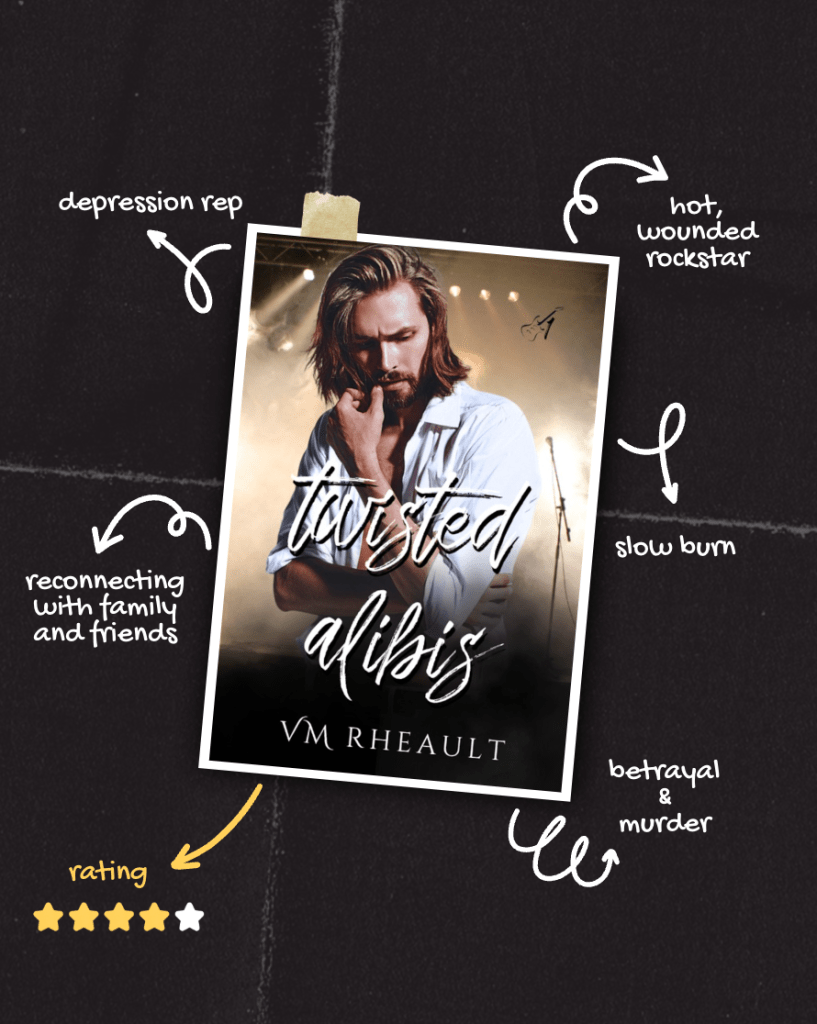
People were saying that they love them because they give you a quick glance into what the book is about, others said they hated them because it’s just a long list of spoilers. I’ve been of the mind that spoilers don’t spoil a book. After all, a happily ever after in a romance is the biggest spoiler of all–it’s the couple’s journey to get to that point that matters. And that’s where stakes come in. There’s no hook, there’s no exciting plot, without stakes, motivation, and consequences. What will the couple lose choosing love? What will they gain? What will they lose if they go their separate ways? Is what they will gain be enough to make up for that loss?
It wasn’t that long ago that I read a romance blurb that was packed full of mini-tropes. Small town, second chance, fake dating. You name it, and it was in there. But what the blurb lacked was stakes. What did they lose if the fake dating scheme didn’t work out? What did that couple stand to lose if the MMC didn’t stay in the little town he left so long ago? What would she lose if he leaves? Her heart? The blurb sounded exciting until you dug just a little deeper and realized that blurb could have been the blurb of any small-town, second chance book out there. Nothing made it that author’s. Nothing in that blurb screamed, “I’m different! Read me!”
I think arrow graphics can definitely be used as a quick “at a glance” vibe for your book, especially if you add something that is unique to your characters. And I wouldn’t worry about spoilers. If a little spoiler can ruin your entire book, you better rethink that plot.
Not everything is Amazon’s fault
I’ve defended Amazon quite a few times in the past on this blog. I know they have their flaws, just like any other employer or company that you do business with, but a lot of what I see isn’t just Amazon, it’s authors refusing to take responsibility for their actions, like missing a preorder date and having their privileges taken away or not ordering stock in time and blaming Amazon for not getting their books to them during the busy holiday season. I actually saw someone on Threads complaining that it will take six weeks for their books to come, and that it happened to them last year. Like, if you know this is going to happen but don’t take the steps to avoid it, then all you’re doing is blaming someone else for your own mistake.
I know that Amazon isn’t perfect. They’ve shipped my books with a body lotion order and that could have had a poor outcome. I have also seen pictures of books coming damaged because they weren’t packed correctly. I’m not saying they’re entirely blameless, but instead of making Amazon the eternal bad guy, it would be nice to see some people just taking ownership of their actions like the adults they are.
Just because you can doesn’t mean you should
Indie authors have a lot of freedom, and that can be great. We can re-edit a book and upload new files or change our covers whenever we want. We can run ads or not, use social media to promote our books or not. We can take five years to put out a book or we can publish twelve novellas in a year. We have 100% say in how we run our businesses.
But we should use that freedom wisely because I see a lot of hot-take behavior from indie authors that makes me squirm. I see authors canceling preorders, airing their dirty laundry on social media, making fun of readers for their reviews, making fun of other authors for what they like to write. The list is endless.
We are in an era where nothing online seems real. There is so much AI and so many scammers out there that it’s difficult to parse through for real and true information. I read a Substack article by Claire Taylor and she was saying that one of the most important things readers will be looking for going forward is trustworthiness and integrity from the authors they choose to read. I think this is a valid point and really important. Do what you tell your readers you are going to do. Have follow-through. And be kind while you’re doing it.
Your peers and coworkers need to know they can trust you too. Don’t say you’ll send out author copies for an event if you don’t think you can. Don’t sign up for book conventions and then back out. Don’t say you’ll help a fellow indie and then change your mind. I know life happens, and so does everyone else, but at some point you have to look at yourself and ask if you’re dependable. If not, you need to figure out why and what’s going on in your life that you need to change.
I think Claire is on the right track when she says that trustworthiness, integrity, and dependability is going to be your number one marketing strategy next year. How are you going to show up to your readers? As 2025 draws to a close, it might be a great time to think about that.
Just because you can doesn’t mean you should. And what kind of person will you look like if you do?
Hot takes are hot for a reason: they spark debate and can hurt feelings. They can ruffle feathers, not only for their basis of truth (or not), but because they force us to question ourselves and our beliefs. And what do we think of the people who have a different opinion than we do? I like listening to hot takes. Some of them are valid, some are pure BS, and some challenge what I think.
In the end we all make our own choices–write a prologue or not, save up your books before publishing or not, follow through with that promise or not–but remember, hot takes were made to get attention, so keep your cool . . . at least where people can see.
As part of my “favorite things” segment I’ve been including until Christmas, I want to highlight the Authors Guild YouTube channel. They have great content like where to find your readers, querying tips, and how AI is changing the publishing industry. You don’t have to be a member of the Authors Guild to watch these videos.
If one of your New Year’s resolutions is to learn about the publishing industry, this is a great channel to subscribe to. There are some videos geared more toward traditional publishing, but as an indie, I think it’s important to keep up to date on what’s happening in publishing as a whole.
Look here for a list of their videos and you can subscribe to their channel: https://www.youtube.com/@AuthorsGuild
That’s all I have for this week! Thanks for checking in and I’ll see you next Monday!
Discover more from Vania Margene Rheault
Subscribe to get the latest posts sent to your email.


Hey, I want to read that fantasy series one day!!!!
LikeLiked by 1 person
haha. no. unless i edit it, it’s not fit for public consumption 😂
LikeLiked by 1 person
Hehehe! I can understand that! But I can beta-read it for you!
LikeLike
I don’t think i’ll ever go back to it, but thank you so much for the offer!
LikeLiked by 1 person