
Words: 2519
Time to read: 13 minutes
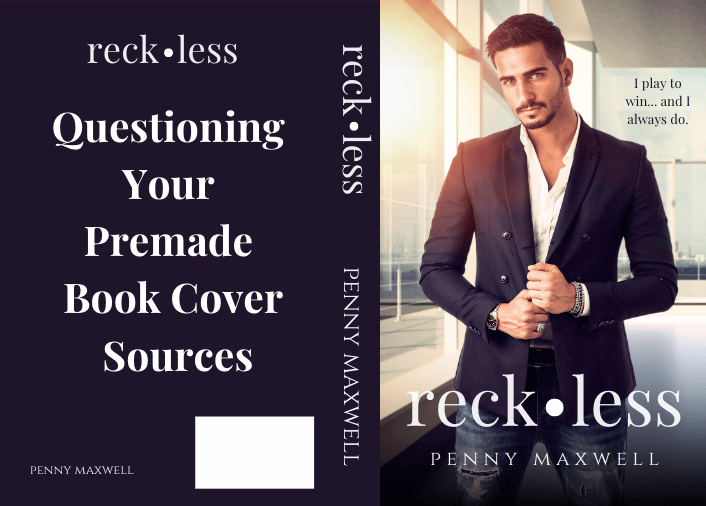
I was going to write about book covers at the end of my post, but I decided to move it to the top so if you don’t want to read my author update but still want to read that part, you don’t have to scroll to skip it.
One of the things I’ve been seeing a lot of online is scammers who are making premade book covers. That doesn’t seem so terrible–even I’ve mentioned making covers and putting them on this website, only for free in case anyone is having a difficult time and needs something quick that looks decent–and it’s not terrible, if they go about it right way.
Not everyone who makes premades is intending to rip you off, but many of them are. They think because you don’t know how to make a spine and back cover, that gives them the right to charge you $50-$100 dollars for something you can learn how to do on your own. I get that time is money and money is time, and for some authors it is worth it to pay out rather than learning how to do it yourself, and if you’re okay spending money on something someone did in under an hour, that’s a personal (and business) choice. What I am saying though, is that if you do decide to buy a premade, it’s really really important you vet where your designer is getting their stock.
Canva makes things really easy, and who knows, my instructions on how to do a full wrap may even be contributing to it. Anyone can make a cover on Canva, but what’s even worse is when scammers use Canva’s templates and only change the text to what the author wants. Years ago I was aware this was happening, but I kind of fell out of looking for it on Facebook, and it seemed to have died down. Then I was chatting with someone on Threads who saw it not long ago, and it made me realize scammers don’t every really stop, we just stop seeing it.
I also was talking to someone who does premades and she uses the stock photos that come with the Canva Pro option. Canva Pro has a lot of stock available, and they’re from all of the stock photo sites–Getty (which we know is god-awful expensive), Shutterstock, Pexels, and others. The problem with using the stock that Canva gives you access to is that KDP won’t accept Canva’s licensing agreement. I told the woman that and she didn’t care. Of course she didn’t care. She won’t be the one responsible if Amazon asks her authors for proof of copyright. They won’t have anything to give Amazon and what will happen is they won’t be able to use the cover they paid for. Scammed.
Some people think KDP won’t ask and in eight years of publishing, they didn’t ask me either, until the third book of my rockstar trilogy I released last summer. I had to give them screenshots of my DepositPhotos account (proof I was the owner and I’m glad my name matched my KDP account), proof that I downloaded the photos there, and the licensing agreement that goes with each photo. I had to do this for two photos (the man and the background) and I had to do it twice, because the first time, the KDP rep cleared me and told me to submit my book for publication again, but when I did, I was flagged again. That time after I re-sent all my screenshots, they let my book pass, but it was a very long and stressful wait. I couldn’t imagine being an inexperienced author having to deal with it, and having a book cover designer who wouldn’t care (and who couldn’t help you). I would be bawling my head off. Actually I was bawling my head off. Publishing is stressful, even when things go right.
So, how can you prevent getting scammed? The number one way is to ask for proof of licensing. DepositPhotos isn’t the only place you can buy stock at affordable prices. There’s also Dreamstime and 123rf. There’s Shutterstock which isn’t bad, but be careful with Adobe Stock if you’re a romance author. In their terms and conditions, they say they don’t want their stock used for romance book covers. You should always stay away from sites like Pixabay and Pexels and Unsplash. They may have free for commercial use pictures, but anytime you’re using a photo to sell something, like a book, always pay for the privilege. Stock photos aren’t that much, even if you buy them singly. A photo from DepositPhoto is only seven dollars. It’s worth it for peace of mind.
I don’t mean to imply people who make “simple” covers are scammers because they have no skills to make complicated ones (I make simple ones too, for myself and for others), but some premades can look fairly uncomplicated, sometimes cheap, and if you can say, “I could do that,” it’s usually a red flag you shouldn’t be spending more than twenty or thirty bucks or so. This is my opinion, but thirty dollars will pay them for the hour it took to put your cover together, seven dollars for the stock photo, and maybe a couple dollars for the font. I made this cover in an hour–it took longer to find the adjustable silver frame I needed to fit the bleed lines of the KDP template than it did anything else:
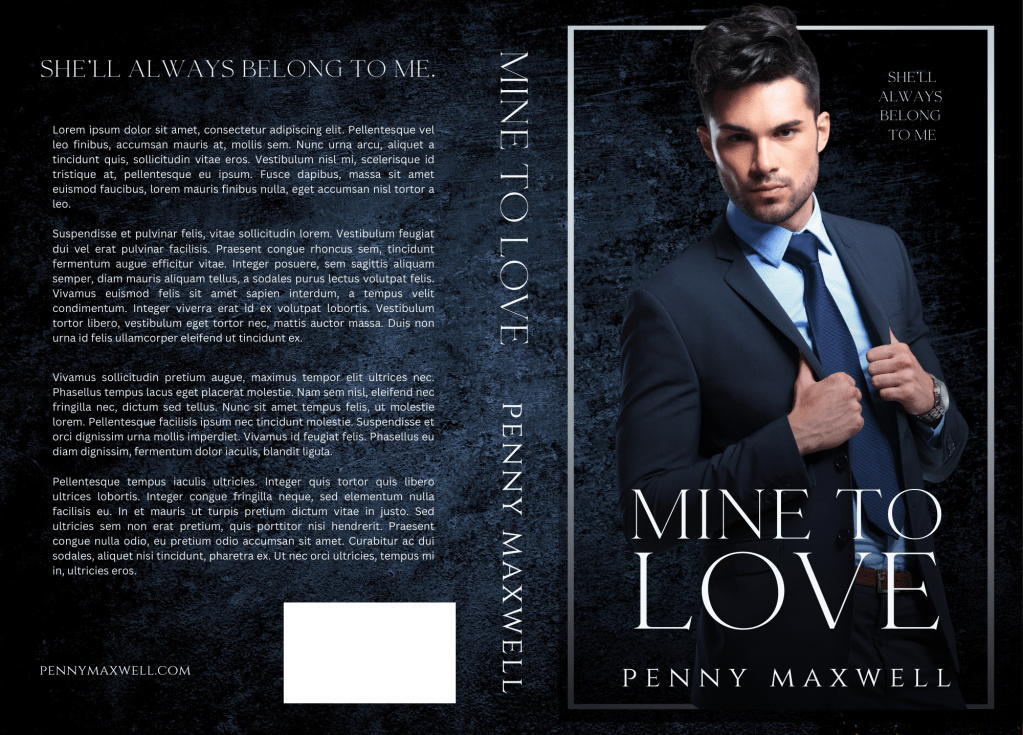
I’m not suggesting book cover designers aren’t worth their fees–we’re talking about relatively simple romance/women’s fiction/thriller covers here that only require the right photo and correct font and font positioning to look decent, not in-depth fantasy covers that require hours to create. You can do a Google search for Canva book templates or look here: https://www.canva.com/templates/s/book/
Book covers and editing seem to be the top two services where scammers are abundant and vetting editing services will have to be a topic for another day. Please look out for yourself if you’re hiring out for a book cover or looking at premade websites. Always ask where they get their stock photos and if they tell you Canva Pro, or one of the free sites like Pixabay, don’t use them. Or, if you have the stock photo you want but not the skills to turn it into a book cover, buy the photo yourself and pass it on to your designer. Then you get the best of both worlds.
So, yeah, do ask for licensing proof. Also familiarize yourself with Canva’s templates. They have hundreds, maybe thousands, and browsing and noting what looks good, what fonts they use, etc, is actually a good way to teach your eye things like colors and balance. If you suspect your cover was made using a Canva template or you want to know where your designer got the stock photo, you can use a reverse look up. I use https://tineye.com/.
That’s all I have on the book covers topic. If you want to read my author update, you can keep going, otherwise I hope you have a wonderful week ahead!
I can’t believe April is going by so quickly. We don’t have much left of it but I’m hoping to finish my second to the last read through of book three by the end of the month. I’ll go ahead and read books 4-6 but I’m hoping it won’t take me long. While I do that, I’ll need to get serious about firming up the covers (I’m always having doubts) so that once I’m done, I can jump right into finishing up formatting and ordering proofs.
I said I would give you numbers on my blog post over on my author website, and I was poking around my stats. For my first author blog post, I had 26 visitors and 32 views. That’s just readers popping by on the website. I clicked on the subscribers tab (something I have never done for this blog) and it turns out WordPress does give you some email stats, and I had 300 opens and 27 clicks of links I put inside. I had a huge post that day, so the clicks could have been anything. The book promo that got botched in my last newsletter, or the buy-link for Give & Take since I said I was going to be taking that off sale soon, or the Bookfunnel link for my reader magnet that I’m going to put at the end of every blog post. I think with the number of subscribers compared to the number of opens, I have a 38% open rate on that email, and that’s about what I’ve always had. So perhaps the same people who were opening it before will still open it, and now that my blog is available to the public, I’ll continue to get more views and visits.
I have to admit, having it sent to emails, having it show up in the WordPress reader, and then linking the blog post to my FB author page makes it almost a preferable choice to a newsletter. I mean, I guess they’re the same, but they feel different, and I just think I’ll enjoy blogging more than sending out a newsletter. (And sometimes I boost a post on my FB author page for exposure, so there’s always that, too.) It’s a funny coincidence, but recently, Anne R Allen blogged about this very thing on her blog. Thanks to Nick Thacker’s ThackStack for bringing it to my attention. Nick consolidates the top weekly indie news stories, and if you like lists like that for easy access, you should sign up for his newsletter here: https://www.thackstack.com/
Anyway, so Anne has been a cheerleader for blogging for years, and she makes some great points between blogging and sending out a newsletter. Not that I’m trying to sway you into dropping your newsletter if you have one, rather, I’m making myself feel better for not jumping into another newsletter aggregator. She mentions Substack, a free newsletter option that’s available if you want to send a newsletter but don’t have the cash. You can read her blogpost here: https://annerallen.com/2024/04/substack-vs-blogging/ I didn’t consider using Substack as the newsletters I’ve read using that aggregator are geared more toward nonfiction, and blogging, since I’ve been doing it here for so long, seemed more of an easier transition. Coincidentally, I also have her book, The Author Blog: Easy Blogging for Busy Authors. I found it when I was going through all my books. It might be worth rereading since I’m doing away with my newsletter.
I’m not interested in monetizing anything–helping people on this blog is its own reward, and blogging for my readers is supposed to be a lead-up into buying my books. I would never charge for exclusive information, and I wouldn’t know what to make exclusive, anyway. I think a paid newsletter option is more for nonfiction writers who want to share their expertise in mini-chunks and still get paid. I suppose fiction writers could do the same, offering exclusive content, but the romance authors I know who do that require a signup to their newsletter or have tiers on Patreon. I’m nowhere near writing exclusive content like that (I’d just as soon add it to the actual book) or offering books before they’re published or commissioning artwork to share. I’m still finding an audience, finding readers, and trying to publish good books. I agree authors need a place for readers to find them, and that will be my website. At least my subscriber link in my back matter already pointed there, and that will just be my hub from now on.
I don’t have much other news on the author update front. I think my mind will implode once I don’t have my series to think about anymore. It’s been like a weighted blanket all these years–comfortable and heavy, but sometimes a little too much if you lie under it for too long. It would really be nice if it sold so I could stop worrying about my job situation that gets nearer and nearer as time slips away, but besides publishing the best series I can, that seems to be out of my hands so all I can do is enjoy the process.
I haven’t given you a health update since I don’t like sounding like a scratched record, but my health has improved since my appointment back in February. The creams are working and the pills to regulate my ovaries have had good results. I don’t feel as down as I used to and my ovulation symptoms for the most part have disappeared. Every once in a while I still get bloated and achy, but not as much as I used to. There are days where I can feel pretty “normal” but my mind can’t relax and enjoy it. That might be something I’ll have to deal with for a long time. I’ve felt like garbage for so long that my mind doesn’t understand my body’s feeling better. I don’t have anxiety attacks anymore, which is nice, though I do get a sense of unease sometimes, but it doesn’t feel like it used to. A little of that is probably work related because we’re going through some software changes and that makes everyone tense, and my coworker/friend is still ghosting me. I haven’t heard from her since the latter part of January, so I figure we’re done and even if she apologized, I would tell her to keep walking. If there’s one thing I’ve learned as I’ve gotten older is being alone is better than having faux friends in your life. Even now I have no idea why she stopped talking to me, other than keeping up friendships needed too much energy for her. I get it–I’ve lost a few friends during my health issues and you just can’t help it if you don’t have the spoons. But running low on spoons doesn’t make it okay to completely drop off, for her, or for me, so don’t think I’m playing with double standards. It’s just tough to get used to, kind of like wrapping my mind around feeling better. I’m not feeling “best” or “normal” but I can’t expect to after so little of a time, and maybe never since I dove deeper into what she told me at my appointment and found out there’s no outright cure. But I guess my coworker’s timing isn’t that bad. She chose when I was feeling better at least, instead of kicking me while I was down.
So, all in all, life has calmed down for me a lot and I’m looking forward to getting this series out and hopefully a hot summer. We didn’t have much of a summer last year, and I wasn’t feeling well enough to enjoy it.
This is a huge blog post, so I should wrap it up for now. Thank you if you’ve made it this far. I appreciate you all more than words can say. I hope you have a wonderful Monday!

 Vania Margene Rheault