
2,377 words
13 minutes read time

I saw a post on Threads a few days ago accusing authors of gatekeeping information, namely how to sell books, and lots of them. Needless to say, she got reprimanded in the comments because most authors are nothing but transparent when it comes to what worked and didn’t work for them.
I’m not sure what they were looking for, most of that information is common knowledge. Write a good book and publish it with a good cover, title, and blurb that meet genre and reader expectations, and do that over and over again, forever. I think the problem comes from authors who have done that and haven’t gotten anywhere. They think there’s special information out there and successful authors are keeping it to themselves. I understand the frustration, being in the predicament situation I’m in, but the longer you’re in this business, the more you realize that there is no magic bullet that will ensure your success.
That got me thinking about the “real” gatekeepers out there, and I mean in indie publishing, not so much traditional because we all know those are agents and editors who acquire the books. We like to think there are no gatekeepers in indie publishing, but, unfortunately, there are. You can tell me if you agree with me or not.
What kind of gatekeeping am I talking about? Let’s explore.
Money–the obvious but unspoken gatekeeper
We don’t think much about the money part of indie publishing because in all actuality, you can publish without it. Edit yourself or trade if you can find someone willing, do your own cover in Canva, format using a free tool like Draft2Digital’s software, take the free ISBN from Amazon, and you’re all set. It sounds easy, and plenty of authors publish this way. But the hard reality is, a lot of people aren’t willing to trade services anymore, preferring to get paid for giving their time, and a lot of authors can’t edit on their own or have the skills to create a good cover. You can format yourself, but you can say goodbye to fancy chapter headers and forced edges.
Money also enables you to buy ads and promos, what you need to start a newsletter and have an author website, and other resources like nonfiction resource books and classes.
There are a lot of free things out there, but free will only get you so far until eventually you’ll run into a dead end. After a while your books and author platform won’t be able to compete with authors who can invest in their business.
Time–money’s invisible twin
Anyone who says we all have the same twenty-four hours in a day can fuck right off. If you have a full-time job, take care of littles, have a spouse, run errands, do chores, wrangle a pet, and try to write on top of it, you know how difficult it is to get the words down and the books published. I’ve said on this blog many times that if you can’t pay with money, you’ll pay with time, and that’s something you can’t get around.
If you can’t pay for an editor, you have to teach yourself. If you can’t buy a premade book cover or hire a designer, you have to teach yourself how to make one–at least enough to get a handle on the basics (a good font and stock photo can go a long way). If you can’t hire a formatter, you have to learn how to do it yourself, and Draft2Digital’s free software is the easiest I’ve found to use.
Then there’s the marketing: constantly creating graphics and writing ad copy to go with them, networking, engaging with readers. Writing newsletters or blog posts. Writing a reader magnet and bonus material. A lot of that will fall to the wayside if your time is limited because it’s more important to get that book written. Lucky are the few who have the time to write and market while doing the thousand other things that make up a life.
Time is a powerful gatekeeper, and to the people who write during naptimes and after your kids have gone to bed, I see you.
Access–who you know and where you exist online
Networking used to mean meeting connections in your MFA program. Now it means joining Facebook groups where authors in your genre hang out, joining author chats and Discord groups. It means knowing authors who write in your genre not only to be invited into promotional opportunities like newsletters swaps and anthologies, but because authors really are willing to share what works for them, and you never know if just one tiny tweak to an ad or a change to your back matter will be what lifts your business to the next level.
It’s not about trying to bust your way into established cliques–it’s about having access to information that could boost you up. Here’s a funny story, or actually, not so funny (it’s rather pathetic, if you want to be honest). I’m a romance author and have been publishing romance for around ten years. When I first started out, I networked with indie authors, not necessarily romance indie authors, and I missed out on some big connections. I kind of knew who Zoe York was, but didn’t really get to know her or other romance authors of her caliber until I joined a romance marketing chat on Clubhouse, that, incidentally, I only learned about by being in the connected Facebook group. Zoe runs a huge book blast promo group, and I didn’t know about it for eight years. I’ve tried to make myself feel better by telling myself I just wasn’t ready to know, and maybe that’s true, but it’s a sad testament that I wasn’t networking and meeting the right people. Even if I wasn’t ready to participate, I should have at least known about it.
Not everyone has time to hang out in Facebook groups or participate in chats, and some people don’t feel comfortable joining groups or talking to people they don’t know. I used to be a lot more involved, but I don’t have the time anymore to answer questions or give feedback. It’s tough, and like any other professional industry, a lot of success can boil down to who you know and the opportunities they bring with them.
Overall, authors with the right connections learn faster what’s working, which platforms are paying off, and how to pivot. Without those connections, you’ll always feel behind, and chances are, you probably will be.
Luck and Timing–the chaos gatekeepers
Unfortunately, luck and timing are two things that you can try your best to control, but you never will. You can go crazy with it, trying to go viral on TikTok or publishing your book on a certain day of the week. Bad timing can pop up when you least expect it, like inadvertently releasing the same day as a bigger author in your genre, or as a lot of authors who released in 2020 found out, during the start of a world-wide pandemic. Or, as I found when I launched one of my books in my King’s Crossing series, on the inauguration day of a president nobody wanted.
It’s uncomfortable to admit, but luck and timing can have just as much weight as skill, strategy, networking, or money. They aren’t predictable. They aren’t earned, which is why so many authors get bitter when someone they don’t consider “worthy” gets all the attention. And, unfortunately, someone else’s luck or good timing can’t be replicated, not even by the person experiencing it.
You can position yourself to take advantage of luck if it eventually comes your way, but you can’t force it to show up. This is one of the hardest parts of the industry because it means success isn’t guaranteed to those who work harder than others. Hard work raises the odds of success, but it doesn’t promise a payoff. As far as timing goes, sometimes you completely miss your window (like when a reporter for the New York Times wanted to talk to me about one of my blog posts and she emailed an email address I don’t check but stupidly had in my contact information). Sometimes you never get a window that opens–it’s always glued shut. And sometimes the window flings open wide when you least expect it and you happily jump through, much to the envy of those around you.
Emotional endurance–the gatekeeper everyone talks about but there are only so many spoons to go around
The ability to keep going after you’ve done everything right and have still fallen short of your expectations might be the biggest gatekeeper of all. I’ve been around for ten years, which can seem like a long time to those who are just publishing their first novel, yet, I know people who have been around for double that time. They were around when the Kindle Goldrush was a thing, and are still writing and publishing books. But I would guess for every one person who was around then and are still going strong, a hundred authors have quit and disappeared.
I used to be a hardcore cheerleader of Team Endurance, spouting nonsense like “A quitter never wins and a winner never quits” and “The harder I work, the luckier I am.” Actually, I think Christian Grey said that one first, but you know what I mean. These days I’m still in the game, and not just dipping my toes in indie waters. I constantly dive in, writing books, keeping up a publishing schedule, and trying to remain at least somewhat visible online. I’m proud of that, though sometimes it does wear me out. Not because of the work itself, but because it produces so few results. “Write what you love and you’ll find readers who love it too” isn’t true. “Write for yourself” is the only saying that I can fully get behind these days because with the industry how it is, you might be the only one reading it.
“Publishing is a marathon not a sprint” is another pithy saying, but I stopped running for the same reasons I’m facing this wall in indie publishing. I ran a half marathon in 2015. It’s one of my biggest achievements. But no one was there to congratulate me at the finish line. I drove home, took a shower, and went to work.
And I never raced again.
I still write, and with all the plots in my head and characters banging around begging me to let them out, I have no plans to stop. But I no longer “Live to write,” another line I used to say that makes my stomach churn now. Maybe one day I won’t have any more stories to share, but unless that happens I’ll keep going. Not because of endurance, but for the simple fact writing is a part of me and has been all my life. At this point, it would be harder to let it go than to keep going, and maybe that’s true for you too.
Privilege–the gatekeeper no one wants to admit is there
The publishing industry is a white man’s world, and it would be remiss of me if I didn’t include privilege in this list of hidden gatekeepers, though if you’re a marginalized author, this particular gatekeeper isn’t so hidden. It’s something you have to fight against every day. Marginalized authors aren’t the only ones who deal with the lack of privilege in the industry. Disability, economic background, sexuality, geography, language, and education all play a role in how accessible publishing is. And not just indie publishing, but the entire writing and publishing industry.
A white, cis-het author like me doesn’t have to worry about certain biases, like how my name and author photo will be judged, whether my characters will be considered “marketable” or not, if a cover featuring people who look like me will get beaten down by social media (algorithms, bots, and keyboard warriors alike), or whether agents/editors/ARC reviewers will dismiss my work before they even read the first page. Authors who belong to marginalized groups face barriers I can’t even imagine, and pretending that everyone is on the same playing field only encourages the problem.
Privilege shows up in smaller ways that, as a white author, you might not have thought about:
* Who feels welcome in author groups
* Who gets boosted by influencers without asking
* Who agents assume is “commercial”
* Who feels safe being visible online
What can you do to fight against this? Read widely, boost up your fellow authors any way you can, be friendly and welcoming to everyone you meet, online and at author events, and acknowledge that some authors have more stacked against them than you realize.
Authors aren’t gatekeeping other authors. It’s just a sad fact that no two authors are alike and we’re all trying to do the best we can with what we have. If there is ever anything I can help you with, be it resources, a question about publishing or marketing, or if you have an issue and you can’t find a clear solution, email me. I’ll always do what I can. There’s enough holding us back.
I’m sorry this post is so long! My biggest thank yous to those who made it to the end! Or maybe by now you’re used to me being long-winded, haha.
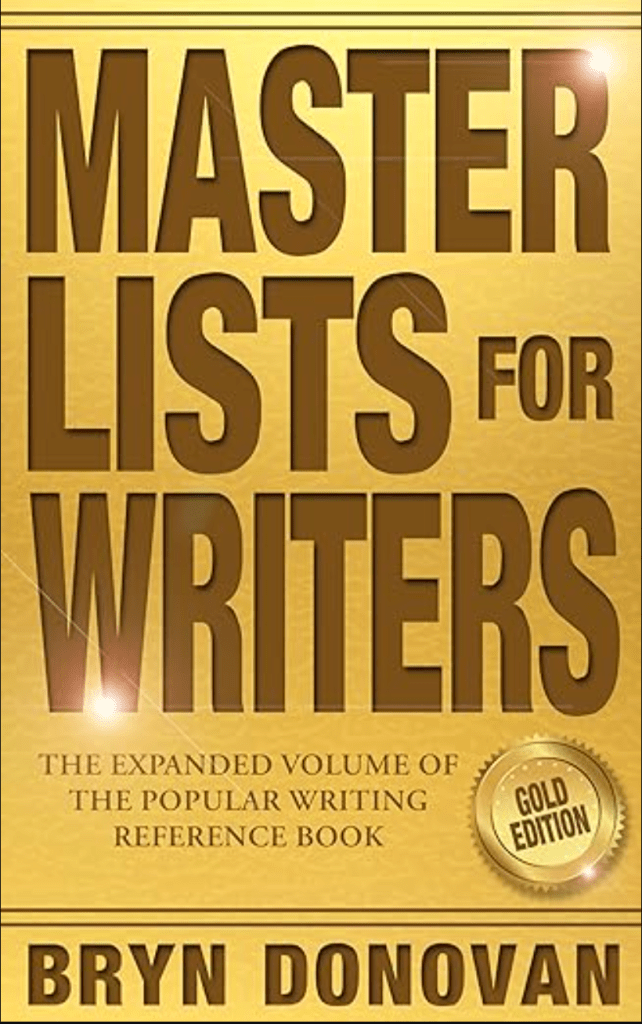
My last little bit is my “Favorite Things” section that I’m adding to the end of every blog post until Christmas, and this week’s favorite thing is Master Lists for Writers, Gold Edition, by Bryn Donovan. This book of lists is amazing and covers everything from facial expressions to settings. I have the first edition she published back in 2015, and I was so excited when I saw on Instagram she wrote an updated version. (Kind of validates that social media can sell books….noooooo! LOL)
Master Lists for Writers, Gold Edition, is definitely one of my favorite things this year, and you can check it out here (this is not an affiliate link): https://www.amazon.com/MASTER-LISTS-WRITERS-Bryn-Donovan-ebook/dp/B0FXDQ79G2
Thanks for hanging in there with me this week! Have a great day!
Discover more from Vania Margene Rheault
Subscribe to get the latest posts sent to your email.

 Vania Margene Rheault
I enjoy your blog post so much. Thank you!
LikeLike
Thank you so much! I appreciate that a lot! 🙂
LikeLike
Love the Master List for Writers Gold Edition. I have the first one in paperback and got this one in paperback as well.
Every time I go on Threads, I see mostly people posting stuff they know will get them engagement, the more egregious and opinion, the better, and so I just turn it off and write my next book.
LikeLiked by 1 person
I have both in paperback as well. I try to buy all my writing resources that way.
I agree…but sometimes those posts make great conversation starters! LOL
LikeLike