
1,998 words
11 minutes read time
This is an age-old question: How much does it cost an author to write and publish a book? This comes up a lot because after the book is finished, edited, formatted, the cover made and blurb written, paying for book set up on a distribution site then paying them for said distribution, authors would like their money back.
But, unfortunately, that isn’t so simple.
Before I started writing, I used to run. I’m not sure how I even started, but it got to the point where I was running six or so miles a day, five or six days a week. Running, though while considered free (much like writing), is anything but. I developed tendonitis in my left ankle, and this required buying new shoes every three to four months. I had to buy Brooks Adrenaline, and they were at least $120.00 a pair at the local running store–I shopped a local, small business store. Then all the running clothes, Garmin watches, race fees, gym membership fees to run in the winter if the temperatures and snow were bad, and protein bars, shakes, and other health food, I was spending just as much or even more to run as I do right now running my book business (pun not intended).
Then we have to factor in time. At my peak, I could run six miles in an hour. I never really got better than that, and that was fine. Having a new personal record (PR) was fun, but nothing I worked toward. After that hour or so of running, I had to cool down, stretch, then shower. And sometimes I would go longer than six miles, especially in the last year or two when I trained for a half-marathon. When you’re not very fast, running ten or eleven miles takes a long time. While my kids were in school and I did the longer runs on my days off, running could easily eat up most of my morning.
I mentioned all that because I wanted to give you a real life example of why I understand, and not only understand, but I’m okay with, spending money on my book business. I spend a lot that could be considered a “waste.” Two websites, paying for things like a Red Feather promotion on a standalone book (no read-through, you see), paying the Goodreads fee for their giveaways, a business email even though I don’t run a newsletter anymore, author copies and postage for reviewers who prefer paper, Bookfunnel for distribution of my reader magnet and ARCs. When I started writing instead of running, all my running money kind of shifted into this new hobby, and I didn’t think much of it at all. It was just something I had to do. New shoes to stay healthy, check. Websites to look legit, check.
But, writing costs more than just what it does to your wallet, and that’s mostly what I wanted to talk about. There’s an old adage that says, “If you don’t spend money, you’ll spend time,” and that’s especially true in indie publishing. On top of everything I listed above, indies pay for a lot of things, and if they don’t pay, they have to learn how to do those things themselves. There are free tools to format your book, like Reedsy and Draft to Digital, but there’s a learning curve to get familiar with even the simplest software. Then you have to learn a different kind of software like Canva or Bookbrush to make graphics for marketing.
Posting those graphics isn’t easy, either. Learning the algorithms of a platform takes a lot of trial and error. Not all social media platforms are the same, and their audiences respond to different content. Some authors cross-post which can work, but not often. I’ve never been a big fan of cross-posting, mostly for that reason. So we have to learn all the quirks of each platform so our posts are seen by at least some people. Then we have to learn ad platforms and those are changing all the time. Just when you think you have things figured out, they change the way you have to put an ad together and it can eat up hours of your time relearning where everything is.
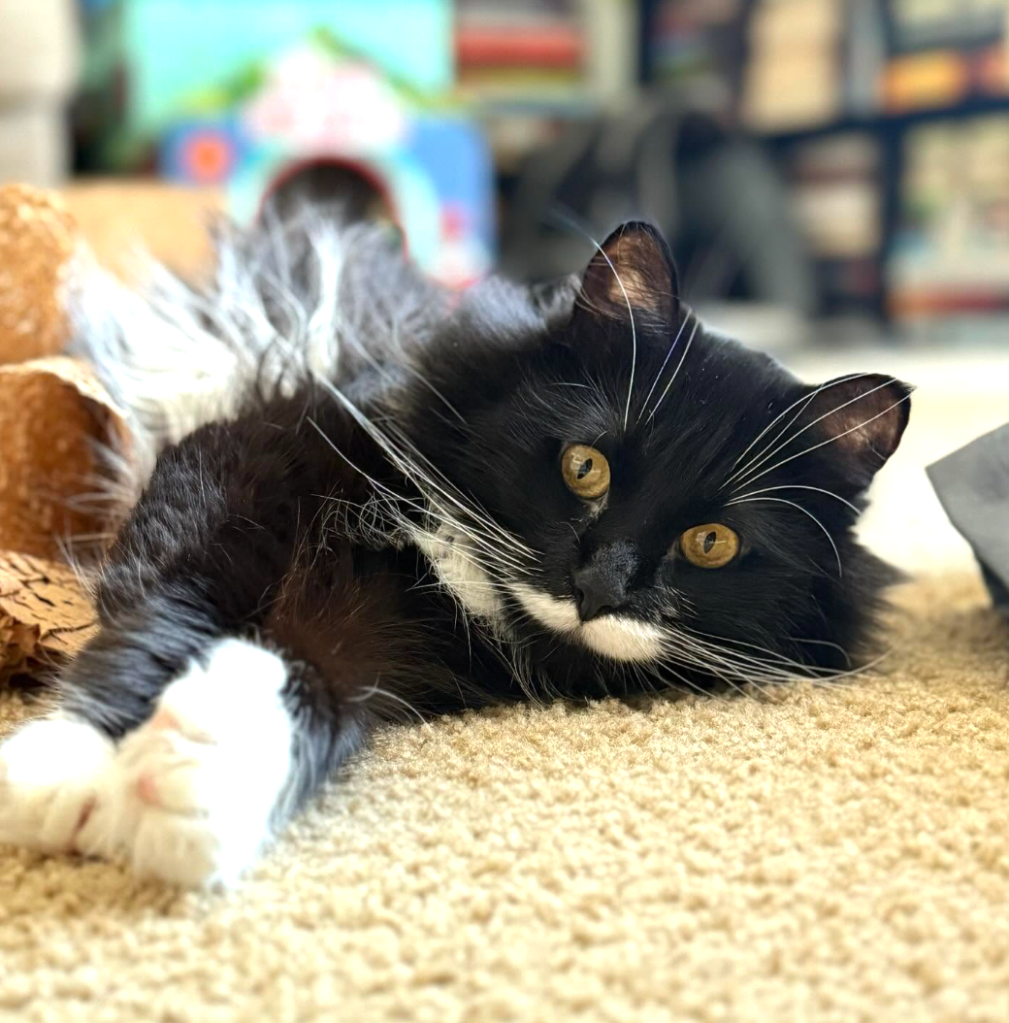
When we spend time writing, learning craft, being a good literary citizen by helping others, reading in your genre, and marketing, we are not doing other things like spending time with family and friends, chores, errands, taking the dog for a walk or playing with your cat. There’s an emotional trade-off happening, and it can make you feel guilty when you want to work on your book but you’re pulled in the opposite direction. Lately I’ve been a victim of this. Our cat Pim, who has been with us since June, knows I’m a sucker. When I’m trying to write, she’ll come into the bedroom, sit near the bed, and stare at me. She’ll stare at me until I get up, go in the living room, and play with her. Her favorite thing is chasing after a crumpled up piece of notebook paper. Sometimes she’ll bring it back in a cute little game of fetch. Her previous owner didn’t tell us she liked to play this game–he might not even have known–I figured it out because I took the time to get to know her. So, she definitely knows that if she stares long enough, she’ll get me off my butt. But, that’s a half an hour or forty-five minutes I could have been writing.
Here she is for the cat tax:
This past year I’ve been trying to let go of the urgency I feel when I’ve spent too much time away from writing, and it’s been happening more and with changes at my work. My writing time has been cut in half, but my personal obligations have stayed the same and so there’s a push/pull that happens when I want to write but want to do other things too, like play with Pim, go to a movie, or go for lunch with my daughter. Over time this can create an emotional toll that we don’t even realize is there.
So, when we talk about how much it costs to write and publish a book, there are hidden expenses we pay that can’t always be calculated.
But the same holds true for “getting our money back.”
At the beginning of 2025, I made peace with the idea that my books would never turn into a full-time income. But when your sales dashboard is all zeroes, it’s good to remind yourself that positive return on investment (ROI) can be just as hidden as the emotional costs of writing and publishing.
Here are some of the things I’ve gained since I started writing ten years ago:
The skills you learn along the way
There’s no denying that even with my BA in English, my writing and editing skills have significantly improved. I’ve read quite a few self-editing books since I started my indie journey, edited for friends, and of course, written millions of words. There’s no way I could have gotten ROI like that without actually doing the work. I’ve developed an eye and can make passable, if not decent, book covers. I’m getting better at writing ad copy (thanks for nothing, TikTok!). All those things add up to valuable ROI, and I know this because without my time in the indie trenches, my resume would look pretty bleak.
Being part of a community
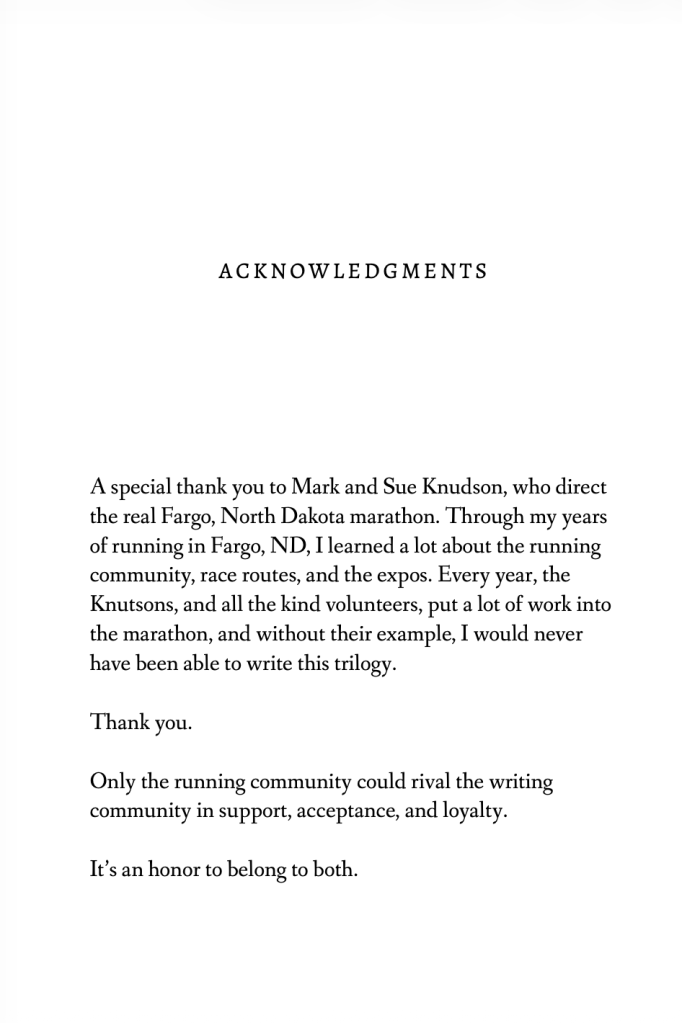
I know I’ve bemoaned the state of the indie community–it seems like deteriorated along with Twitter after Musk bought it. But I know that my opinion is valued because I get thousands of hits on my blog every year. I’ve made friends and connections these past ten years, even if more people have fallen out of my orbit than have come into it. Runners, as well, have a strong community, and when I was still running but had started writing, I was in both and that was the best feeling in the world. In fact, I thanked both communities in my acknowledgments in the last book of my running trilogy, Running Scared. In that book, my MMC isn’t part of the running community but he falls in love with a hardcore runner who is hired to be the city’s university running coach.
I miss being a part of the running community, but being an indie is very rewarding too.
Emotional Satisfaction
In running circles there’s a saying, “You only regret the runs you didn’t take.” I don’t think that can be so easily applied to writing, but I know that if I have time to write and don’t, it’s the same guilt factor. There’s an emotional satisfaction to lacing up, just like there is when you sit down, stay off socials, and use an hour to put 1,000 words down. I know for me and most other authors there’s nothing better than opening up that envelope and holding a proof of your book baby in your hands. You worked hard in more ways than one to get to that point in time, and you should always be proud of yourself.
Long-term Impact
Two years ago, the director of the Fargo, ND marathon, Mark Knudson, whom I mentioned in my acknowledgements above, died when he lost control of his bicycle and was hit by a truck. The running community was devastated. He had put so much time into getting the Fargo Marathon off the ground, and for his life and contribution to be so suddenly ended was traumatic for everyone who knew him.
The longer you’re in the writing community, the more impactful that time is, even if it doesn’t feel like it. The time you spend blogging, helping other indies, and of course, the books you write, all contribute to a lasting legacy.
Writing and publishing a book has concrete, evident costs, money and time, and also hidden ones like hits to your mental health, lost time with family and friends, and choosing to write rather than do something else you also enjoy like watching TV. But there are more rewards than just sales and KU page reads.
So, when we’re asked, “What’s the cost of writing a book?” The cost is higher than most of us imagine, but the rewards, like skills, connections, creative satisfaction, and legacy, are far richer than anything you could ever report to your accountant.
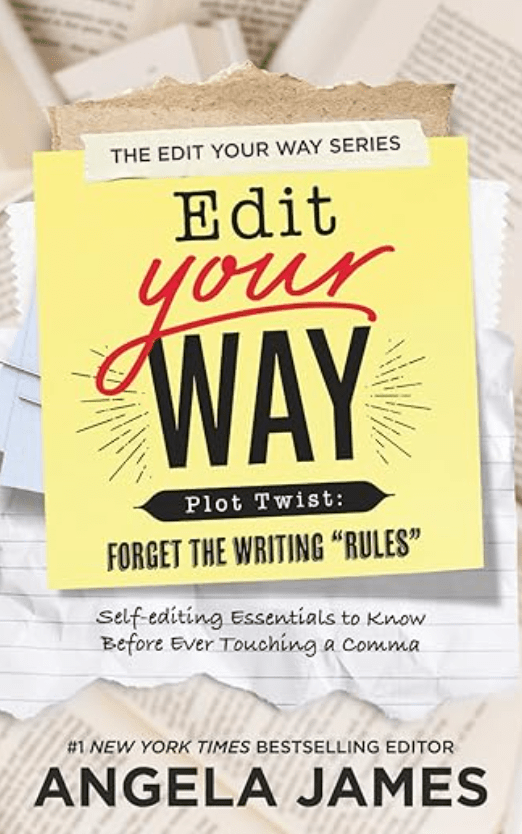
I only have a couple weeks of my “Favorite Things” segment left, and this week I’m highlighting a new self-editing book by Angela James. I love a good editing book, and I cannot wait to dig in. This is her bio on her website:
Helping fiction authors build strong stories—and stronger careers
Hi, I’m Angela James. I’m a
#1New York Times bestselling indie editor and author career coach with over two decades in publishing. I help authors write better books and build sustainable, satisfying careers—on their own terms. Whether you’re indie, trad, or hybrid, I meet you where you are and help you get where you want to go, using clear editorial feedback, coaching, and frameworks that support both your storytelling and your career growth.Together, we create stories that connect with readers, and an author business that works for you.
Edit Your Way: (Plot Twist: Forget the Writing “Rules”) is available from your favorite retailers (AKA, wide). Here’s the Amazon link and book cover: https://www.amazon.com/dp/B0G63FR1Q8 (This is not an affiliate link.)
That’s all I have for this week. Next week I’ll do an author update and the week after that, my year-end recap. It’s hard to believe this year is almost over, but the timing for the other two blog posts works out perfectly.
I hope the holiday season (and all the cold temperatures!) haven’t been too hard on you. Have a good week and I will see you next Monday!
Discover more from Vania Margene Rheault
Subscribe to get the latest posts sent to your email.


