
One of the most talked about things that happened last week was when the CEO of Astronomer, Andy Byron, attended a Coldplay concert with his mistress and HR chief, Kristin Cabot, and got caught on camera.
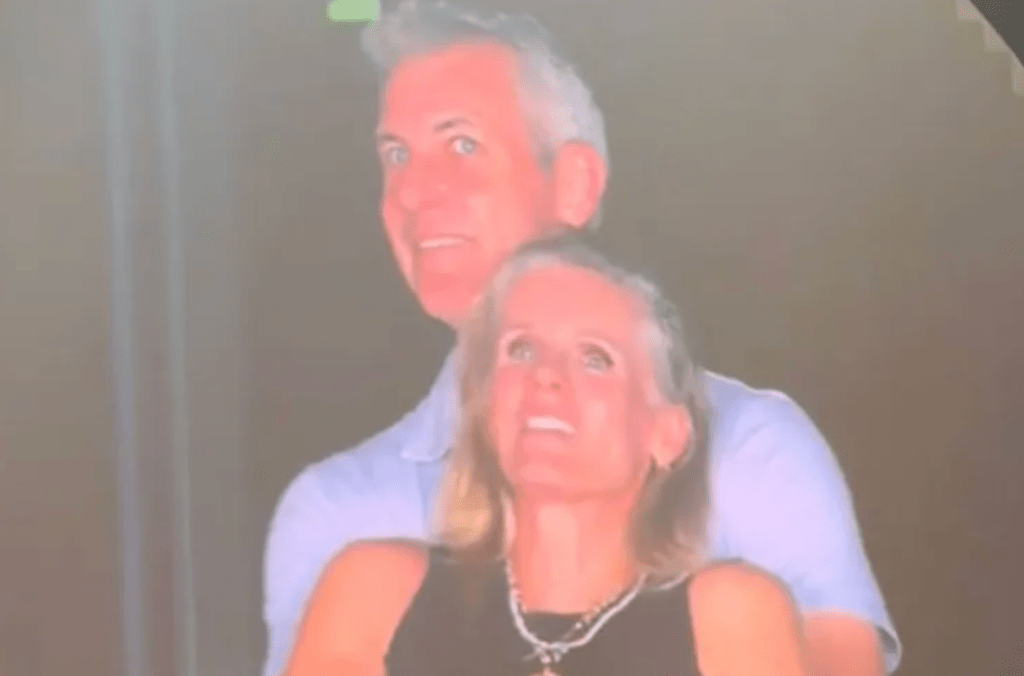
Of course, the first thing I thought was, “What’s Astronomer?”
The second thing I thought was, “That’s too bad. They looked cute together.”
The third thing I thought was (as someone who has an HR degree), “Is she going to have to fire herself for fraternizing?”
The fourth thing I thought was, “How can we learn from this from a craft perspective?”
Going all the way back to the beginning of time, we’ve been taught to view cheating as this horrible, vile thing that we should never do, and the responses online validate that belief over and over again. Andy, and Kristin too, were called some pretty nasty names, and the general consensus was that they deserved each other.
As someone who was married for about fifteen years (what is time 😵💫) and has since divorced, I never thought it was as clear cut as that. Marriages, relationships, fall apart all the time, and for the most part, it’s not anyone’s business why. We don’t know what’s going on in Andy’s home life that warranted him stepping outside his marriage–he and his wife could have simply grown apart. We tend to need to place blame, automatically calling him a bastard for hurting his wife and her a bitch for dating a married man.
Where does this thinking come from, in a society that celebrates couples staying together for fifty plus years, even though, at the end, they can’t stand to be in the same room together and have slept in different beds for the past thirty. There’s failure in divorce, failure in not “sticking it out.” No matter how miserable you are. Being unhappy is the American Way.
I bring up divorce because everyone thinks that’s the solution. Don’t cheat, have the integrity to get divorced first before you start seeing someone else. And I think, up to a point, that’s true. But divorce can be messy, it can be expensive, not only paying for attorneys but for what happens afterward (I have seen on more than one occasion couples who have gotten divorced but still live together because they can’t afford to move out), and if you have little kids, complicated.
It probably sounds like I’m defending Andy, just another rich white guy fucking around and not liking the finding out part. That might be what he is, and maybe I’ll get backlash for being, if not understanding, a bit sympathetic, at least. But I’m thinking of cheating in terms of, well, how romantic it is, not the kind of people they look like because they did it in the first place.
There’s a reason why forbidden love is a trope, after all.
And done right, readers love it.
In a private group I’m a member of on Facebook, an author polled her readers, asking them what tropes they liked best. I won’t share the group, but she said we could share the results–you have to give her your email address to download the pdf–and you can find it here through Bookfunnel: https://BookHip.com/QDMZAFS (this is not an affiliate link)
Anyway, I was a little surprised by the results. She gave her readers these tropes to choose from:
Billionaire, Alpha, Age-Gap
Cowboy, Small Town, Medical Second Chance, Love Triangle, Cheating
Enemies to Lovers, Arranged Marriage, Secret Baby
Holiday, Workplace, Fake Relationship
Secret Identity, Motorcycle Club, Rejected Mate
Ugly Duckling, Celebrity
Friends To Lovers, Grumpy/Sunshine, Second Chance
I think she got most of them, maybe she forgot Mafia, or even true forbidden romance that can fit into any subgenre. Anyway, want to guess which trope came in first?
Second chance.
But the second was cheating.
That kind of took me aback not only because Andy and Kirstin were the top news story on social media when I downloaded Maya’s reader poll results, but because I have written the cheating trope and was warned there are two different kinds and I would be in big trouble if I chose the wrong one.
One kind is where the characters are married and they cheat with other people to find an HEA outside their marriages. Readers don’t want their main characters to be with other people. So when you write a romance where your characters are already married when they meet and start their relationship, you’re going to have some unhappy readers.
The other form of cheating is when you have characters who were involved with people who were already married and something happens. Characters die or they leave the people who were taken and go on to relationships with characters who are available. They’re still cheaters, but it’s softer somehow, more acceptable.
My rockstar trilogy is full of cheaters. Well, kind of. In Twisted Alibis, Sheppard falls in love with Olivia, who he thinks is engaged. It turns out her fiancé had committed suicide and she still wore her ring out of guilt and lost dreams. He struggled with that, and it affects how he deals with his depression. In Twisted Lullabies, Eddie cheats with Clarissa, who happened to be married to one of their bandmates. Her husband’s murdered, but that doesn’t make it easy for Clarissa and Eddie to be together. Eddie finally confesses to Sheppard, and their conversation is one of my favorite scenes:
“When Olivia and I met, I thought she was engaged. She wore an engagement ring, and I took that at face value as I’m sure many would. I tried to fight how I started feeling about her because I knew it was wrong, but the way she would listen when I talked, the way it seemed she always knew what I needed, how she would wrap herself around me as if she were trying to absorb all my pain . . .” He sighs. “After you and Brock were here and we talked about Derrick . . . I needed her as badly as I have ever needed anything in my life, and I went out to the beach and kissed her. I didn’t care she was engaged, in fact, I blamed him for letting her be here at all. I didn’t care. All I knew was I couldn’t live without her. That’s when she told me. That’s when the paparazzi took that picture of us in the water.”
Olivia sniffles and wipes a tear off her cheek.
Shep stares at the photo, lost in thought. “It scared me, that my feelings were so strong I would try to steal another man’s woman, and I grappled with that for a long time. What kind of person that made me, what kind of person Olivia would have been had she been willing to cheat on him with me. When love is dirty, but you crave it, need it to survive. I suspected Melody was seeing someone, but it wasn’t that she was. It was that she felt she had to hide it. Honesty is important, and she should have told me she was in love with Dalt and divorced me properly. I don’t know what Derrick would have done if you’d told him the truth. It sounds like he didn’t want her. Maybe he would have just let you have her.”
The only way Clarissa was able to escape her marriage was the way things went down, but I say, “Sharyn wouldn’t have let him let her go. She wanted to turn his reputation in the press around, and she did. He went from a rich, rockstar playboy to husband of the year practically overnight. The tabloids loved pictures of them, and I bet Sharyn leaked those herself. I begged Clarissa to leave him, but she stayed because she has integrity. She stayed because she knew she’d made a mistake and thought she should pay for it. She stayed long after Derrick died because—”
“Because she knew Mason’s yours and she wanted to be a family.”
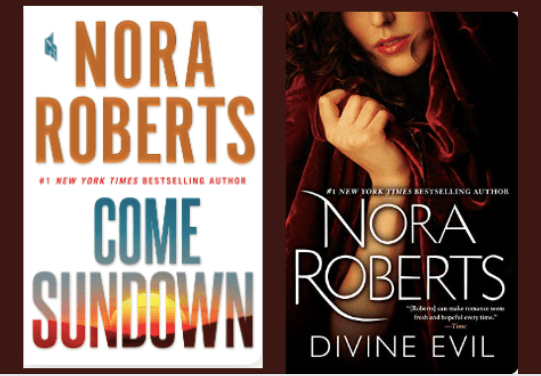
In Twisted Lies, Agatha had been seeing a married man and confessed to Brock, thinking that he wouldn’t be able to see past her mistake. His conversation with Eddie is another scene I loved to write. (Trilogy link: https://www.amazon.com/dp/B0CDQJ28SB)
We look down on cheating in real life, calling people nasty names for disrespecting their spouses, but using cheating as a plot point can bring a lot of complicated emotions and feelings to your story because cheating doesn’t always come from a place of selfishness. People can’t control who they fall in love with, but how they handle that can be classy or trashy.
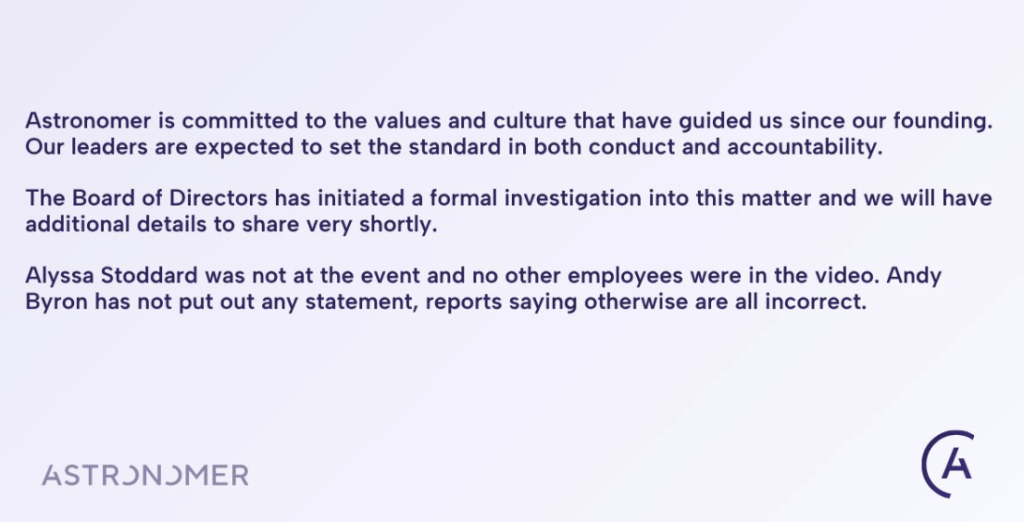
Astronomer issued a statement, and I wonder after this if Andy and Kristin will stop seeing each other. I guess it depends on if he wants to save his marriage (if his wife will even let him try), or if he doesn’t, if he and Kristin can get past the shame of not only being found out but how they reacted to it.
What’s funny is I think he wanted to be–found out, that is. You can’t go to a public event like that without knowing you’re taking a risk. Even if the camera hadn’t caught them hugging, they could have ran into any number of people who knew them and thought it was suspicious they were together past working hours.
So, where does this all go? Cheating in real life is icky, but cheating in fiction (like the TV drama Scandal) is so yummy we can’t get enough? Is there hypocrisy there? I think a lot of it, if not most, is that when people do it in real life, like Andy and Kristin, we don’t have any context, and when we see it in movies, TV shows, and read it in books, we get all their heartbreaking reasons why.
That’s addicting, and maybe we don’t want to admit it, but . . . relatable.
Humans are messy, and if you write them right, so are characters. To have a full character arc, they need to make mistakes, learn from those mistakes, and come out better people in the end.
Maybe Andy’s full character arc includes resigning from his position and “finding himself” in whatever way that makes sense to him. My characters had a lot of regret too and moved on the best they could.
He might not have chosen to have his affair blasted all over the internet, but I have to admit, sympathetic to his and Kristin’s plight or not, it would be perfect for the beginning of a funny RomCom.
And you can be sure, the next time they meet up, it will be in a private hotel room with room service.
I actually just bought a romance novel that centers around cheating. I grabbed it when I went through my BookBub email newsletter. The cover drew me in and the blurb made me click. If you’re interested, you can find it here:
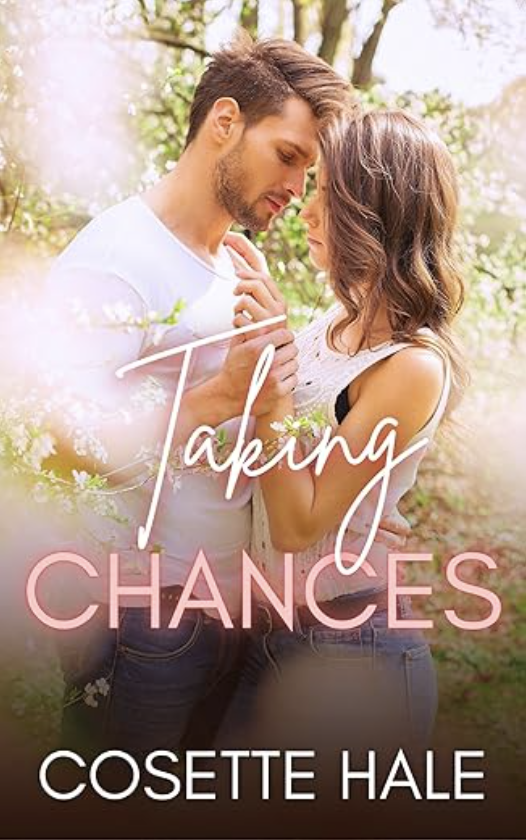
https://www.amazon.com/Taking-Chances-Cosette-Hale-ebook/dp/B01M146WPF
One lie. One affair. One chance to take her life back.
Audrey Hale has it all—a devoted husband, a dream vacation to the Virgin Islands just days away, and a secret she can’t wait to share.
One moment, she’s holding four positive pregnancy tests. The next, she’s cradling a broken dream—and a gnawing suspicion that her husband’s late nights have more to do with sex than sales.
The worst part? Her best friend—the glamorous, magnetic Natalie— might be in on it.
When one heartbreak leads to another, Audrey is left raw, vulnerable… and searching for truth in a world that’s quickly unraveling.
And the only person who seems to be there for her is Natalie’s husband—Harvey.
He’s off-limits.
He’s furious.
He might be the only one who sees what’s really going on.
As secrets are uncovered and stolen glances become charged, the line between comfort and temptation starts to blur.
Because betrayal cuts deep—but desire cuts deeper.




 Vania Margene Rheault