
As a writer, putting your work out there is difficult. It’s probably the number one reason writers don’t publish: they are afraid of people seeing their work. And not only seeing their work, but judging it. I’m editing Summer Secrets right now. My editor (I feel like such a professional writer when I say that!) sent me back my novellas, and over the past week, I’ve slowly been putting in the revisions she suggested and fixing the mistakes she found.
You would think that I would be ecstatic that my novellas are so much closer to publication, and don’t get me wrong, I am. But you know how I really feel when I go through all her comments and suggestions? Shame. Embarrassment. Sadness. Fear.
Shame
The definition of shame from Merriam-Webster is:

When I go through my editor’s comments (and let me be clear, these are all my feelings, not caused by my editor. My editor is a professional, in that she is kind, supportive, and in no way hurtful or disrespectful in regards to me and my work) I’m ashamed. I’m ashamed I made the mistakes I made. I’m a writer, aren’t I? I can’t see for myself I used the same word five times in two sentences? I can’t see for myself my two main characters have names that are similar and therefore yes, a reader may mix them up, and why couldn’t I choose different names, for crying out loud? In the definition above, 1a mentions shortcomings. Uh. Yeah. Nothing makes you feel like you are less than a writer than when all your mistakes are highlighted and accentuated with a comment. Definition 3a mentions regret. Yep. I have a ton of regret in that, why didn’t I find all these mistakes before I passed on my work to someone?
Embarrassment
Embarrassment goes hand in hand with shame. I’m embarrassed I sent her my work with so much wrong with it. I’m embarrassed I didn’t try harder. Never mind how many times I read through them, never mind that I used Grammarly, then read them again. Never mind I spent money on printing them out to edit a paper copy. I didn’t try hard enough to make them mistake-free. That’s my inner critic talking, my irrational, unrealistic inner critic. Because any writer knows how impossible it is to catch all your own mistakes.
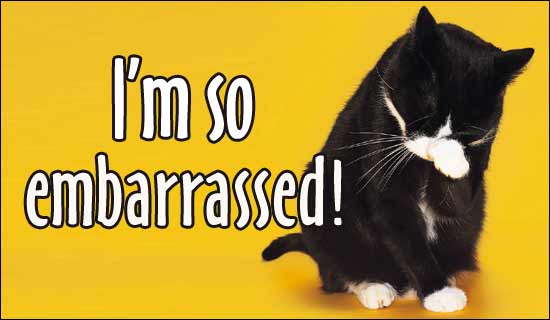
But it’s how I feel when my eyes slide away from a highlighted paragraph and the comments telling me what’s wrong with it and possible ways to fix it. My cheeks heat up, I have to swallow hard, and I have to force myself to just get on with it.
Sadness
Sadness is probably the weakest feeling I have when I edit, but it’s still there. I get sad that my editor had to work so hard, I get sad when I feel like I could have tried harder. I get sad when I think there are better writers out there than me. Sadness waltzes with self-doubt in my heart when I see how many comments she made in my document. But you know what else I get sad about? Thinking about not writing anymore. That makes me sad, too.
Fear
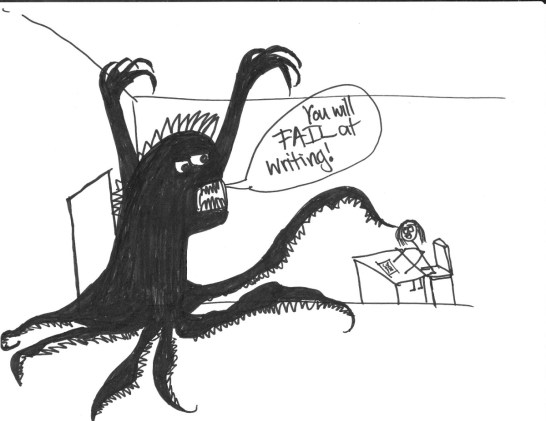
When I searched “fear in writing” I found this lovely drawing on Lynette Noni’s blog post. I have a lot of fears about my writing, and yes, they come out when I’m editing. I fear I’m not a good writer. I fear I’ll never sell any books. I fear I’ll never be able to make a career out of my writing. After all, I can’t be a good writer if my editor finds all these things wrong with my book, right? And I want to be a good writer so I can sell books, so people can say, “Wow, that was probably one of the most emotional, heart-wrenching books I have ever read.” We all want to be writers who touch someone in some way with our work.
But What Else . . .
But you know what else I feel when I edit? I feel joy. I feel happy when my editor says she enjoyed a setting description or how I nailed how a character feels with show and not tell. I get excited when she tells me she loved an intimate moment between two characters, and a “More please!” in the comment section. I get excited when she congratulates me on proper grammar.
I’ll feel pride when I hold my published books in my hands, when my friends, family, and co-workers congratulate me on being tenacious, of having a dream and working toward it.
The act of writing and publishing is no doubt an emotional roller coaster ride. There are ups and downs, you’re thrown sideways and completely head over heels. But the trick, and oh my, is it a trick, is to keep fighting. To not let those negative feelings overwhelm you, to let them win. Surround yourself with friends who know what you’re going through, who will support you, and not let you give up.
If I have any advice from going through the editing process, it’s to keep your mind open and learn. Learn from what your editor is telling you. S/he’s on your side. Your editor wants to you to put out your best work, and that undoubtedly is your goal too, which is why you hired one. Don’t take their advice and suggestions as hurtful criticism, (unless it is, then you need a new editor) take their feedback and turn it into a positive learning moment. I’ve learned a lot going through my editor’s feedback.
I took a break from editing to quickly write up this post. I’d come to a paragraph where her advice was hard to swallow. I see it, I understand it, I agree with it, but there again, those feelings come up. Why didn’t I see this? Why did I send my work to her this way? What is so wrong with me I couldn’t fix this on my own?
Nothing is wrong with me. Nothing is wrong with you, either. We’re all human, and doing the best we can.
For more articles about fear in writing, look here:
http://www.writersdigest.com/whats-new/10-ways-to-harness-fear-and-fuel-your-writing
Discover more from Vania Margene Rheault
Subscribe to get the latest posts sent to your email.

 Vania Margene Rheault
Pingback: Oh, No… A Dangling Participle – The Aila Stephens Blog
Pingback: #Anxiety is not just a #parentproblem. It is a #writerproblem, too. | Jean Lee's World
Thank you for sharing!
LikeLike
Pingback: Friday thoughts and author update. | Vania Margene Rheault
Thankyou , I am in middle of going through my book edits and I was having doubts of why I started in the first place. Reading this as definitely helped me to keep going !
LikeLiked by 1 person
I’m glad I could help. That blog post is quite old, and I still feel that way. I’m afraid for me, the feelings never go away, all I can do is keep pushing them back knowing I’m doing the best I can. Good luck to you!
LikeLike
Hi Vania. Thanks for writing this. Almost seven years after and it still helps someone, like me! Today, I received my editor’s comments on my very first book. It’s part memoir, part how-to. As I was going over her tracked changes and the bubble comments on Word, I couldn’t stomach it. Before this, I already knew I had to brace myself for the editor’s input because 1) I know that my draft isn’t perfect and 2) I’ve read dozens of times before in the acknowledgementpart of a book how the author’s editor really murdered his/her manuscript that made the book a masterpiece. Still, I didn’t expect I’d feel so sad after receiving my edited draft. But somehow, reading through this post of yours, helped a lot.
Thanks!
LikeLiked by 1 person
Don’t think of your editor as murdering your book, think of it as learning CPR and you’re bringing your book back to life. You can use that lesson to breathe life into future books.
I don’t use an editor very often anymore (nothing I would recommend) and I have a writer friend who reads most of my books, after I’ve published them. I asked her once, what she thought, since getting honest feedback can be difficult even if you use editors and betas and she said that my characters have a habit of fading off in their dialogue. Editing this series, I realized she was absolutely right. I don’t properly end conversations, moving on to action or inner dialogue. And that makes it seem like my characters are snubbing each other. A developmental editor may have caught this, or even a line editor, but now I’m aware that sometimes I do this, and I’ve put it on my list of things to watch out for in edits. What’s funny is I had a beta read this series and she didn’t mention it at all, so maybe it was a bit confusing but they didn’t read that bad. Who knows. I’m only telling you this because no matter how many more books you write, your editor will still find things to fix. My writing tics differ from book to book more than likely because my characters differ from book to book and I fall into pattern depending on how they sound. It’s amusing only until I don’t see it.
Try not to let her edits get you down. Think of them as lessons learned and apply them to future writing. The good news is, as you get better, there won’t be so much to fix, the bad news is, what needs to be fixed can change, so chances are really good you’ll never write a perfect book. But we all get better, in some way or another, and that’s what counts.
LikeLike