
Words: 1918
Time to read: 10 minutes
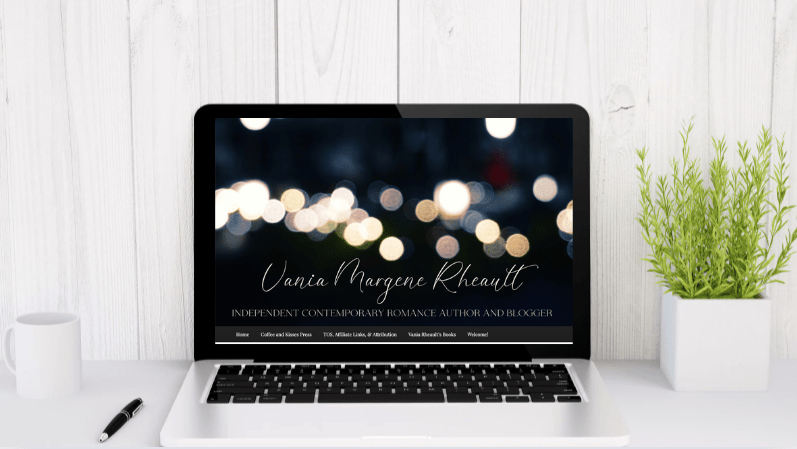
Today’s topic on websites is thanks to Melody Loomis, and you can check out her website here: https://www.melodyloomis.com/
I’ve been a writer in some way, shape, or form, all my life, like most writers are, but when I found writing after a failed attempt at going into Human Resources as a career, I didn’t think to create a website. In fact, the idea of it sounded foreign, confusing, and costly. I dusted off my Twitter account–I had made one while I was in school to connect with HR people–and joined the writing community instead (thinking I’d make the connections I would eventually need to sell my books. Ha!). One of the first things they said was to start a website, so, despite my inhibitions, like everything else I’ve done in publishing, in December of 2015, according to my WordPress site, I jumped right in.
I didn’t create my website to tell people about my books though. I started an indie blog, the one you’re reading right now. Almost nine years later, I have never taken my website down or skipped a week publishing, for that matter. I was pretty hardcore back then, writing six times a month about stuff I knew nothing about. Arrogant, I suppose, like a lot of newbie authors are. I don’t recommend having a website where you blog for indie authors and try to sell your books to readers at the same time. Mixing the writing community and the reading community can leave a bad taste in someone’s mouth, be it the writing community who doesn’t like the kinds of books you’re writing or the reading community who doesn’t like what you have to say on your blog that’s intended for other writers and authors. In fact, after typing that sentence, I’m tempted to take my Books page down. I don’t promote them anyway, and really, they don’t belong on a website that I use to write about my publishing experiences. I could always add them to my true author website (vmrheault.com), nesting a page under that Books page and making it clear they’re written under another name, but that’s a thought for another day.
The title of this blogpost is “Author Websites: Do you need one?” and the answer to that question is yes. Yes, you do, and along with the reasons why, I’ll explain how I use my websites and how they differ from each other.
Don’t build your house on other people’s land.
This is really important and I can’t stress this enough. Just a couple of days ago, someone on Threads was saying how her Facebook Author page got taken down and she lost over four thousand followers. Imagine if she had created a newsletter/blog instead. I know this post is about websites, but websites and newsletters/blogs are almost one and the same. A website is yours, and so is your newsletter. Social media platforms come and go (not because they fall apart like Google + but because you’re at the mercy of a bot who decides if you’re breaking their guidelines), but your website and a newsletter will always be around (unless, for some reason, you take them down).
It’s where you should send newsletter subscribers.
It’s a very bad idea to use your newsletter aggregator’s landing page link to send readers to sign up for your newsletter. If you change your landing page or you have an issue with your newsletter, that link might not always work. When you put that link around online and for some reason it gets broken, readers will think you don’t have a newsletter anymore and you could lose a fan. Also, broken links just look plain unprofessional. If you send subscribers to your website instead, you can make changes to your newsletter sign-up link as needed. No one learned this lesson better or faster than I did when my MailerLite newsletter went up in a puff of smoke. I had an invitation to sign up to my newsletter in the back matter of over ten books. That’s a lot of links to change when you think of ebooks, paperbacks on KDP, and paperbacks on IngramSpark. Luckily, I was sending them to my website, and now instead of a landing page link, I edited what the page says and it invites them to subscribe to my blog. My reader magnet is on that page now, instead of in my welcome email, but it is what it is. I’ll never try another newsletter aggregator. I like being in control of my website and blog. The longer I’m in this industry, the more I learn it’s difficult to trust anyone with any part of your business. If you want to see what that page looks like, you can look here: https://vmrheault.com/subscribe/
It doesn’t cost that much.
I can only speak for WordPress. I use WordPress and let them host. I bought my domain name and the email I needed, vania@vaniamargene.com, when I set up my newsletter, through WordPress too. I’ve shared that email enough that I probably won’t get rid of it even if I don’t need it for MailerLite anymore. Way back people said you shouldn’t do that because you can’t enjoy plugins and other things on a WordPress-hosted site. I didn’t care about having popups or selling books on my site, and still really don’t. Selling my books here sounds like a big time-suck and I already have enough of those. So, I went with a Premium plan for both and pay $96.00 dollars a year, each, $19.00 for my domain names, each, and my G Suite email for $72.00. You don’t need all that. Personal plans are $4.00 a month or $48 a year plus the domain for $19. You can have a professional WordPress website for $67.00 a year. Some website providers are even free, and there’s no reason you can’t go that way, but you’ll still end up paying for a domain name. One of the things authors forget is that when you get your taxes done, you can write off your expenses. I keep track of all my yearly spend and give that and my yearly royalties to my accountant. With how much I spend in ads, I break even or I’m in the red, but I can still get some money back for all the money I put into my business. No matter which way you go, free or paid, or if you find a site that’s in between, set something up.
Your website will turn into your hub.
Your website will be around for years and years and years and as you publish books, you’ll add those to build a nice backlist. You don’t need to worry about SEO or how people will find you. You can add your website link to the backs of your books and on all your social media profiles. People who are searching for you or your books already know your name and what to Google. The only time you need to worry about building SEO is if you’re blogging on a topic and you want to be found when someone searches for information about that topic. That really doesn’t apply to authors, unless you write nonfiction, and then you’re probably blogging about your subject.
This website gets anywhere from 30-100 hits a day. Mostly because people are looking for instructions on how to make a paperback cover in Canva. The updated instructions have gotten over 6,000 views since I published it in June of 2022. I get my regular readers who will read every Monday, and they count too, but if you search for “making paperback covers in Canva” my blog post is on the first page of results. That doesn’t matter much since it doesn’t sell books, I’m just happy I can help people publish. I don’t sell books off this website, so that would be another reason to take my Books page down. If you’re worried about SEO for your website, the only thing you can do is blog consistently on it. Being that a normal newsletter is only sent out once a month, if you blog that infrequently, you’ll never get the SEO you want. Building SEO takes hard work and consistency. Anyone who blogs whenever they feel like it and hops around from topic to topic can tell you how difficult it is to grow your following. Still, if you choose a WordPress-hosted site, you can be part of the WordPress Reader. When I moved my newsletter to my blog, not only did my number of opens stay around the same, but my posts were seen in the WordPress Reader, a perk I hadn’t considered but appreciate now. If you truly want your website to come up if someone searches your genre, sell a lot of books. That’s all you can do.
People say they don’t want a website because they don’t have anything to put on it. To me, that sounds like a good reason to have one. There’s no maintenance. I guess then you can argue you’re paying for nothing, but you’re paying for an internet presence you own and you have no idea how helpful it is to have one until you don’t and you need it. I loving having both my websites, and I have to admit, I love blogging on both too. I never understood people who say they don’t have anything to write, and oh, my God, do I hear it a lot. You’re a writer. How hard is it to come up with 500-1000 words once a month? Talk about yourself. Talk about your books. People can’t get to know you or think they’ll try out your books if you don’t put yourself out there. Though, that’s neither here nor there since we’re just talking about websites and not blogging, but if you’re worried your website will become stale, at least copy over your newsletter content to a blog once or twice a month, and maybe you’ll get some new readers who haven’t subscribed to your newsletter.
Content is the name of the game, and you’d need something to post if you make up a Facebook Author Page. You definitely need to create content on FB if you want people to see it, otherwise the algorithms will sink your page faster than Amazon will sink your book. If you write lengthy posts on Facebook, repurpose those posts on your website.
When I started posting about my books on my author site, I really enjoyed myself, and I was surprised at the number of views and visitors I was getting. I put my ARC links up and though they haven’t gone as fast as I would have liked, more signed up than if I wouldn’t have made them available on my website at all.
Your website will be what you make it. It will reflect who you are as author and the kinds of books you write. We’re all grappling for discoverability, for our books to be seen. A website is a good way to do that.
Now, I need to set up a blog for my author site. I’m blogging more over there to create buzz for my series, and it’s working well. In the past week I’ve had 145 views and 95 visitors, plus the opens I get from the list I exported from MailerLite when I deactivated my account. I couldn’t be happier.
I hope you had a good weekend and that you’re enjoying the Labor Day holiday. Check www.vmrheault.com if you want to see what I’m writing to my readers.
Until next time!
Discover more from Vania Margene Rheault
Subscribe to get the latest posts sent to your email.

 Vania Margene Rheault
The information you provide is priceless. I have a blog on WP and try to promote my work. It is good to know I need to set up another site [was just using a category for my book. Could you please share some info on arc’s, thank you for all the top shelf information.
LikeLiked by 1 person
Thank you for reading! I haven’t done much with ARCs up until recently. I use Booksprout and have started nurturing a readership which is easier because they supply the reviewers. I also put all my books on Bookfunnel which is a delivery system for ePubs and PDFs. You have to have people to send them to, which can be challenging if you don’t have already have a team. I am running Facebook ads to my website’s page that has all the links and information. It’s the only way I know of to get eyes on my links because I haven’t built up a review team that’s not on Booksprout. Bookfunnel is cheap enough. I pay $20/year and use them to deliver my reader magnet too.
I checked out your site, and that the cutest pupper ever! Is s/he yours? What’s his/her name?
LikeLiked by 1 person
I am about 4 months out from my debut release and am trying to learn all I can. I signed up with goodreads but still need to learn so much. Thank you for answering this for me and I will be looking into the info you gave me. The dawgs on my site are all AI generated but glad you liked it. Have a blessed day my friend.
LikeLiked by 1 person
Congratulations on your impending release! If there’s anything I can help you with that’s not covered here, you can email me at vaniarheault(at)gmail(dot)com. I’ll do my best to answer your questions.
LikeLiked by 1 person
Thank you so much Vania, you are a God send already. 🙏
LikeLiked by 1 person
It’s no problem at all. Good luck!
LikeLiked by 1 person
Thanks for sharing such valuable information, Melody…
LikeLiked by 1 person
Great blog post, Vania! Glad I could give you the idea! I think websites are definitely important. You can’t depend on social media to be your author page/site because we all know what can happen to social media platforms. And if the big time authors like Stephen King and Nora Roberts have websites, well then, I think I should too! – Melody
LikeLiked by 1 person
Thanks for reading and the idea! I’ll work on your other suggestion, too. It will come in handy since I decided to re-cover my series I wrote in third person and published in 2020. I guess looking for your couples wasn’t enough torture LOL
LikeLike
Hello I looked at your blog/site and liked it.I have a free classified site if you ever want to use it
Thanks
Tim
LikeLiked by 1 person
Thank you for the offer! Happy holidays if you celebrate. 🙂
LikeLiked by 1 person
Well, you know, they made their billions with their art. That gives them a pass, LOL. Doing okay… bogged down proofing this series…looking forward to being done and just working on stuff that doens’t feel so heavy. I’ll email you back soon!
LikeLike