
One of the biggest mistakes authors can make is trying to talk to everyone from the same place. Back when I first started publishing and writing my blog, I did this, and it actually took me years to figure out that not all readers are created equal. If you don’t know what I mean, let me explain.
It may not feel like it, but once you publish, your author life is suddenly split in two. You have your author pals who support you, maybe read your books (and that’s a big maybe), promote you on their socials that may or may not have readers in the audience, and after a while can even turn into accountability partners, alpha and beta readers, and friends. Then you have your readers, your actual readers who, if they are on social media at all, aren’t part of the #writingcommunity. They use socials for other things like connecting with family and reading articles about gardening, cooking, movies, and politics. Maybe they like their favorite authors’ Facebook author pages because that’s where they hear about new releases, giveaways, book boxes, and in-person events.
I came this realization a while back, and when I started my pen name, decided I needed to have a hub just for readers. To be honest, I didn’t want readers reading my nonfiction stuff anyway. I use this blog as a way to help others in their publishing journeys, let other indies know what worked for me in terms of marketing (promos and ads), and just talk about what crazy BS is going on in the publishing industry. That information isn’t for readers, and it shouldn’t be. They don’t need to know how many books I’ve sold, what Amazon pays in terms of KENP, or that I make my covers in Canva and format my own books.
But, I understand this decision isn’t for everyone. I pay for two websites, and some authors don’t even like paying for one. I enjoy blogging for other indies and connecting to the industry makes me feel “professional” so I eat the cost of the WordPress plan and domain name. But, if that’s not for you, don’t feel bad. Not every indie author wants to share their journey, stay up-to-date on what’s going on in the publishing world (both trad and indie) to have something of substance to write about, or pass on what they’ve learned because writing tutorials can take a lot of time. There are weeks when I’m at a loss as to what to say too, and I either just default to an author update or scroll Threads looking for dirt a topic. I feel fortunate when I can share a podcast I enjoyed and/or learned from or I’m able to find a subject like this one that might resonate with someone and help them move in a better direction. You don’t have to lock yourself into writing every week like I have, but if the views and visits are what get you out of bed, consistency will always make that happen faster. I owe a lot of my SEO to my tutorials, particularly my Canva post on how to make a paperback cover. I’ve tried to keep this blog relevant and helpful, but if you already have limited time to write, nurturing a blog that won’t sell books won’t sound appealing.
That said, if you really want to make a go of this publishing stuff, you should have an author website, a place to point readers in the backs of your books. This is where you’ll have your backlist of books and where readers can find them, a newsletter signup, your reader magnet, trigger warnings, direct sales, and any in-person events. If you check out other author websites, you’ll find that they don’t blog about process or complain about Amazon payouts or how they package author copies for shipping. Author websites cater to readers and what they want, not other authors who like to hear about behind the scenes news.
The problem with only writing to only readers is that if you don’t have a lot going on, there’s not a lot to say and that can make you feel disconnected. I write my newsletter on my author blog once a month, and I usually have something to share. A sale, a new release. Maybe highlighting an older book in my backlist that hasn’t gotten a lot of love. Creating content can be challenging if you’re a one-book-a-year author, and it might be tempting to write about what you’re working on, but unfortunately, readers don’t care until you can give them something to buy and read. When that happens, when you aren’t constantly updating, it may feel like people are forgetting about you, but you know, as I’ve said in the past, they will. You can be afraid of something that will happen, but there’s no point to that. There is so much content out there it’s inevitable, but it’s better to jog their memory after a few months of silence than waste their time blogging about something that doesn’t concern them.
If that describes you, if you feel like if you’re not reaching out then you’re invisible, then yeah, you might want to blog for indies who are interested in your process, would like to know how well your promos did, and/or how you make your covers. It gives you a reason to communicate and not feel so alone, and you’re writing to the people who actually care what you’re working on. Sales won’t come of it, which is why in the end I moved my books off this website and put them on my author website, but the more you segment your efforts, the more effective each one becomes and you won’t feel like you’re shouting at people who aren’t listening. Reaching out doesn’t even require a blog. You can create an indie Facebook group or Discord channel. A place where other writers and authors can get together but where you also know the score: your peers won’t buy your books. You can let go of that expectation and just be happy you’re in a group of people who are going through what you are and know how it feels to have zero sales on your dashboard.
So you might ask how is my author platform split in two?
Here’s what I do, and I made a graphic in Canva so you can save it or print it out if you want a quick reference.
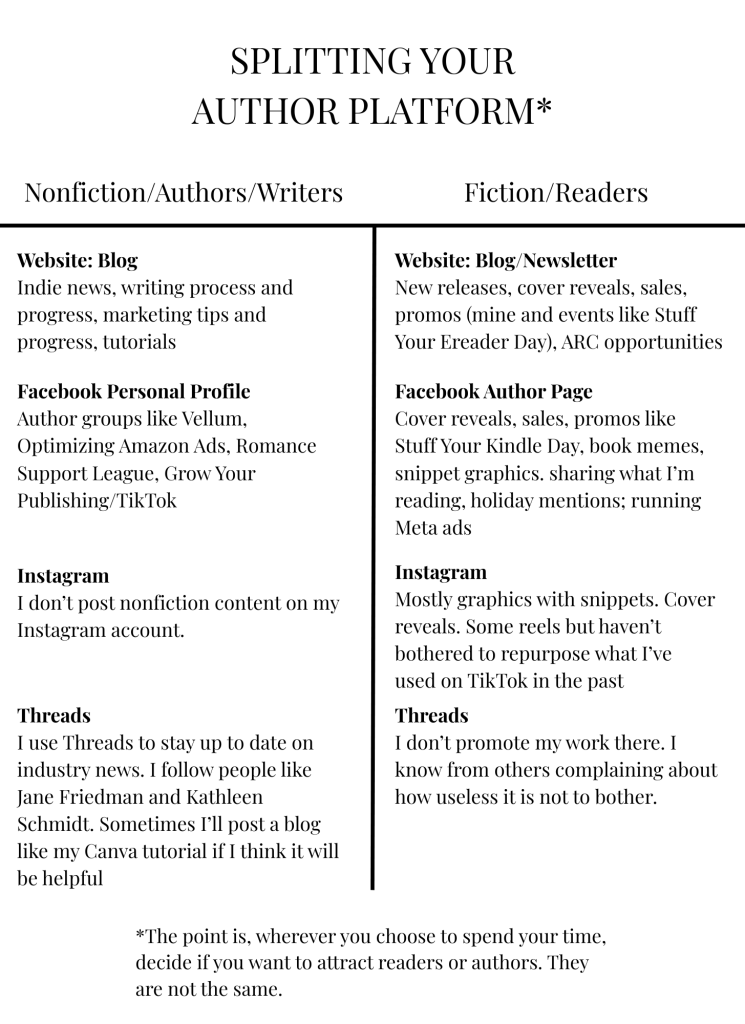
There are a lot of places to hang out that I haven’t listed. I just can’t be everywhere and don’t want to be. Lemon8 is popular, so is Pinterest, and let’s not mention TikTok because I really don’t want to use my time making videos, but the fact is, if you’re a slow writer and you want to talk to only readers, you’re not going to have a lot to say. You can share book memes and pet photos, where you went to dinner on your anniversary, but you’re going to lose readers to other authors who publish faster. The industry in some ways is very slow, such as trends are very very slow to change, but when they do, it feels like it happened over night. Trad authors can seem like they get away with a book a year, but behind the scenes, they’re worried about getting a new book deal, if their publisher will pay for marketing, how their launch is going to go since they haven’t had a new book out in however long. Indies face the same trouble, trying to find traction while others are zooming ahead because they have more time/motivation/whatever than they do.
Figuring out where and what to post is a mental health issue, it really is. I’ve gone through my own struggles, beating myself up for not wanting to post on my Facebook author page, not making videos for TikTok when everyone says that’s where you belong if you’re an author. I boosted a post on my Instagram account and got a few new followers, but they aren’t going to do me any good if I don’t post. And you know, I’m pretty prolific, so it’s not that I don’t have content, it’s just that I don’t care. I let Amazon ads, promo newsletters like BargainBooksy, FreeBooksy, and Fussy Librarian, and author-driven book blasts like Zoe York’s ZoeBub pickup most of my sales weight, which I can do because my series and trilogies have solid read-through. Maybe I have to pay for it, but I’m reaching readers, not shouting at other authors then getting mad when my books aren’t selling.
Splitting up your author platform can take a lot of the stress off your shoulders. You know who you’re talking to and what they want to hear. Shouting to everyone will never work and you’ll only get frustrated. It’s difficult to break out of the #writingcommunity bubble, but the longer you do it the more natural it will feel and the feedback will become more positive because you’re staying in your chosen lane and once you draw the lines, you’ll actually have more time to write because that urgency to post and reach anyone you can will be gone.
Again, I know this advice isn’t for everyone, but if even reading this makes you step back and look at how you’re posting on social media, you may make some small changes that could turn into big results. Let me know what you think!
I better get off here and finish proofing my proof of Loss and Damages. I’m almost done then I can put the changes in and order another proof. I’m really excited to jump into more hockey research. I’ve put that aside to get Loss and Damages ready for ARCs next month, but I’m eager to start again. Take care everyone, and have a great week ahead!
Discover more from Vania Margene Rheault
Subscribe to get the latest posts sent to your email.

 Vania Margene Rheault