
917 words
5 minutes read time
I think about this every time I see, “KU isn’t working for me, I’m pulling my books and going wide,” or vice versa, “Wide isn’t giving me the sales I want/need. I’m going to pull my books and enrolled them into KU.”
I have to tell myself not to answer these posts because the lesson they’re going to learn has be experienced firsthand: There is no magic bullet, and going back and forth won’t help. You need to nurture an audience on one or the other and that can take years. Because here’s the thing that no one seems to understand. KU readers read KU books and will rarely buy because they don’t have to, and if they do purchase, it will be on Amazon because KU subscribers have Kindles or the Kindle app. Wide readers buy books from their favorite retailer or they have a Kobo or the Kobo app and buy from there.
You might say there are outliers, readers who will read everywhere and will buy whatever they want while also having KU and Kobo Plus subscriptions, and it’s probably true but readers like that are the exceptions that prove the rule and won’t help you sell books in the numbers you need to create a career.
I’m seeing so much of this now with the “boycott KU/Kindle/Amazon” because everyone hates Jeff Bezos, but if you’ve built a readership in KU pulling your books out will only hurt your reader because they aren’t going to follow you anywhere else. There are over four million books in KU–they don’t have to follow you anywhere. What about reader loyalty, you ask. Sure readers are loyal to the authors they love, but you have to show them a little loyalty too, and taking your books out of the subscription service they use to read books isn’t it.
The one thing authors need to understand is that if you don’t know how to tell readers where your books are, it doesn’t matter where you publish. KU doesn’t offer the organic reach a lot of authors think it does (just look at my sales dashboard lately), and just because your books are everywhere and there are more chances readers can find you, that doesn’t mean they will. You’re still competing with millions of books. Here’s the breakdown:
Kobo: has over three million books and Kobo Plus offers 1.5 million books to choose from plus audiobooks.
Apple Books: the numbers are undisclosed but Al says they hold about 8% of the e-book market share (compared to Amazon’s 70-75%.)
Google Play: Over five million titles
Nook Books: the numbers are undisclosed but Al says they hold about 8% of the ebook market share (similar to Apple Books). (All stats I grabbed off a Google search.)
So I guess one of the main reasons I’m writing this post is that if you’re thinking of pulling your books from KU, understand that you’re going to leave the readers who read you there behind. If you’ve been enrolling your books for a while, it’s possible you’ve got a few readers who look for your books and when Amazon stops sending them new releases or recommendation emails about your books, they’ll forget about you. It sounds harsh, but when we talk about market saturation, that means there are plenty of books to choose from, and KU makes it easy to try new-to-them authors.
So, if you do want to give Jeff Bezos the middle finger and cancel all things Amazon, here’s a couple of tips for you:
To go wide, use Draft2Digital or PublishDrive, but go direct where possible, like Kobo and Apple books. Not only do you save more cutting out the middleman, but you gain access to the Kobo promo tab that you won’t get if you let a distributor distribute there.
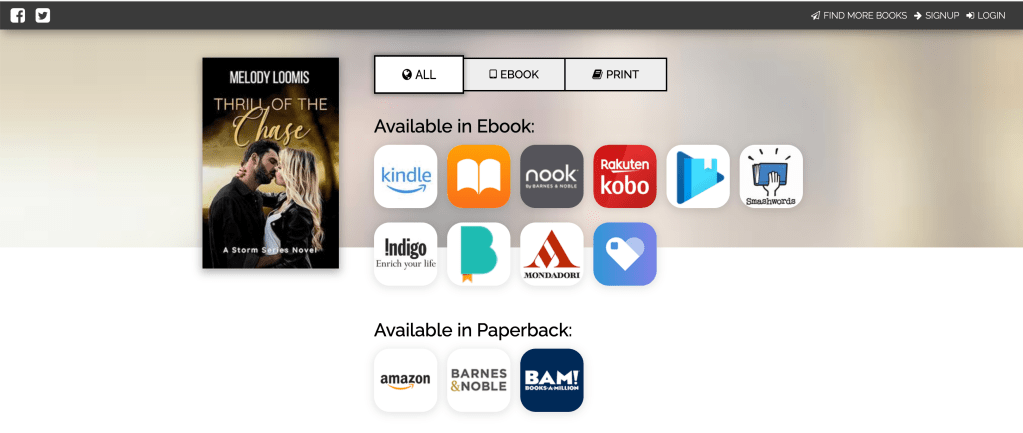
Remember to mention your books are everywhere. KU authors have no trouble shouting from the rooftops that their books are available in KU. Do the same wide. Draft2Digital offers the Books2Read universal link creator. It will scrape everywhere your books are sold and will offer a cute landing page my like my friend, Melody’s, books have. You can find her books here: https://www.melodyloomis.com/books
Try Facebook ads. This is a great way to find new readers because you can target certain audiences, like, say, readers who own Kobo devices.
And the same advice is true for authors pulling their books from wide platforms and going to KU. Authors are proud they’re in KU. Use their logo on every social media post you create. Being in KU doesn’t come without it’s challenges, so make use of Amazon ads and Facebook ads, and tell your newsletter that you’re in KU. One of my biggest selling points I think my books have is that I tell my readers my books are in KU and are going to stay there. Consistency, no matter what you’re doing or where you’re publishing, is key. You know the saying, you teach people how to treat you? You teach your readers where to find you.
That’s a good lesson for every author: be consistent in where your books are available, in your genre, in your spice level. These are what can make or break your marketing because once you reel in a reader, if you teach them what you write and they love that, they will keep coming back for more.
That’s about all I have for this Thursday. I’ll see you Monday! Have a great weekend, everyone!

 Vania Margene Rheault