
2,449 words
13 minutes read time
The first month of the year is almost over, but I’ve been promising this blog post for a while now, and I think Written Word Media’s 2025 predictions are still worth exploring. I need to break this post into two parts, five trends in each, or this blog post will get so long no one will want to read it, and honestly, I don’t have time to do all ten at once (still gotta get some editing in today). I linked to the article if you want to read the original first or as you go along. Some of them you might have seen before, here on this blog, or theirs. Sometimes it feel like publishing, especially indie publishing, can move quite fast, but in reality, publishing, both trad and indie, moves at a snail’s pace, and turning in any other direction than the one in which you are going is slower than the Titanic trying to avoid that iceberg.
Let’s begin:
Trend number one: Authors Focus on Building Loyal Audiences
I feel like this might be a given, and no offense to WWM or the author of the article, but I don’t see the point of adding it. Authors have always been focused on building a loyal audience, finding their true 1,000 fans. I’m not sure why it was included, except maybe to accentuate the fact that building a loyal audience is hard work. First you have to actually find your readers, then offer them enough books to either look forward to everything you write, or self-select out of your books because they don’t like your style or voice or whatever reason they have. How you go about doing this will be different for everyone, not to mention if you can only write and publish one book a year, it will take a long time. The authors who are making a living wage and who do have their 1,000+ fans have managed to accomplish this, so we know it can be done. But given the number of books out there, finding, and keeping, your readers is just a given of being an author. Write your books because without them, you won’t need an audience.
Tread number two: Authors Invest in Email Marketing
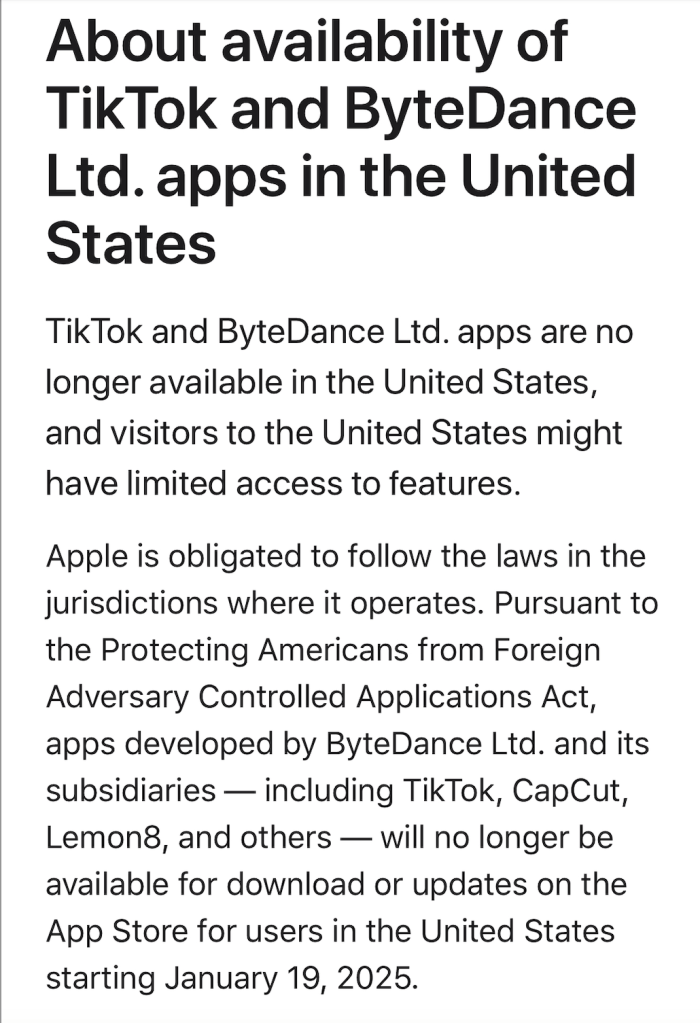
It’s always been known that if you’re an author, you should be building a newsletter, and if you’re not, that’s a personal choice that may come back and bite you in the butt. After the TikTok fiasco, I saw a lot of authors on Threads saying they might start one or start a blog so they have something that’s not social media. It’s probably the smart thing to do, since we saw a lot of desperation when TikTok almost went away, and even some now, because if you deleted TikTok off your phone or other device, you can’t get it back. The app store doesn’t allow you to download it anymore (and if you do still have it, there won’t be any new updates).
That’s not say you can’t use TikTok in your browser, but who knows what kind of reach it has. We’ll talk more about Meta in the next trend, but if you don’t like good old Zuck (for political reasons or other), you might not want to be dependent on Facebook, Threads, and Instagram, either. They say you can’t be everywhere at once, but maybe be on a place that you control first and foremost, and then use social media as a backup or Plan B. Evergreen content can be used over and over again, and all content can be repurposed. A blog post on your author site can be chopped into chunks to use on your FB author page or IG. I think the main thing here though, is to train your readers to look for you on your website. If you have an active FB page, make sure they know you have a website too. Turn your website and your newsletter into your primary source of news for your reader. Billionaires don’t care about you–we see this over and over again. Stop thinking they do and take care of yourself. Jane Friedman has a get-started-guide to newsletters, and you can read it here: https://janefriedman.com/email-newsletters-for-authors/
Trend number three: Meta Continues to Dominate
Unfortunately, because he owns Facebook, Instagram, and Threads, there’s not a lot of places for authors to go if you want to avoid Mark Zuckerberg. Personally, I think he’s an idiot for licking Trump’s feet. Be that as it may, he owns a lot of social media now, and if you have a large following on your Facebook author page or your Instagram page, you probably don’t want to leave. I think if anyone was still hanging around Twitter, they left after Musk’s Nazi salute. Finding anywhere else to go is difficult, Bluesky’s founder Jack Dorsey (that is such a good name though) not without his share of problematic activity. I don’t use social media a lot, though I’ve been posting more this month because I joined a challenge. Once the challenge is over at the end of the month, I’ll probably just go back to not posting at all. Being accountable to someone helps, but I should be feeling accountable to my readers and so far, that has only extended to my blog and my books. If I say I’m going to have a book out at a certain time, I do and that’s about as far as my accountability goes.
As far as ads, Facebook ads probably are the best ad platform an author is going to get, Instagram, Bookbub, and Amazon coming in close second, third, and fourth, though hard to tell which order. They all have their attributes and setbacks, and though I’ve struggled in the past, I would lean toward Facebook ads if I ever wanted to run more ads in the future.
I think the thing to remember about any social media, not just what Zuckerberg owns, is that if you’re trying to reach readers, that’s different than being part of the writing community. Approach each platform with the goal you have in mind. If you want to post graphics and reels all day that feature your books, Instagram seems to be the place for that. If you want to connect with other authors, Threads and Bluesky seem like the better choice. Facebook acts as a one-stop-shop, and you can join author groups for publishing and marketing information and networking with other authors to join newsletter swaps and author-driven promos, start an Author page for your readers, and run ads. Each platform does have different purposes, and while above I suggested you reuse content, not all content will be fit for all platforms. For an example, I’ve been posting a lot on my FB author page, but that’s kind of an anything goes platform, whereas, if you’re trying to create an aesthetically pleasing grid on Instagram, everything has to be in line with your theme which means you’ll be planning your posts. Choose your goal and have your plan. I post on FB and Instagram to promote my books to my readers, joined FB groups for publishing industry news and networking, and I joined Threads (though I said I wasn’t going to) to get book news and just post random crap that’s not fit for anywhere else. (How many people care I had to buy a new coffeemaker?)
It seems like Meta will be around for a bit, but always have a backup plan. When Meta servers go down, Facebook, Instagram, and Threads go down at the same time. That’s a lot of social media blackout. Know why you’re posting and what you want to get out of your social media use. If something isn’t working, move on. Algorithms are heartless animals, don’t let them beat you down.
Trend number four: Direct Sales Continue to Grow
I think this is really true. Authors are seeing the benefit of cutting out the middleman and earning more for themselves. But, on the flip side, if you don’t have the technical savvy (or patience) to pull it off, don’t have the space to store physical books, don’t have the spoons to think about any of it much less the ability to get to the post office two or three times a week, I wouldn’t worry about it. For as many authors who do sell direct, there are just as many or more who do not. Because my ebooks are in KU, I couldn’t sell those directly, but I could sell my paperbacks if I wanted. I don’t have the space to store stock, and though I know a couple people who could probably help me get some kind of system set up on my website, it just sounds like too much work.
Honestly, anything more than what I’m doing sounds like too much work. Direct sales doesn’t necessarily mean setting up Stripe on your website and shipping physical books out of your home. It could mean setting up a Patreon and asking readers to pay for exclusive content. It could mean setting up a paid newsletter. Anything where you are engaging with readers directly, where they pay you (minus the fees of whatever platform or system you’re using) directly for content they want. If I ever had a book take off, maybe I would create a special edition to sell directly to readers somehow, but all that seems so up in the air and you have to consider ROI. Are you getting enough from the time and stress it takes to put all that together? I sound like I’m against direct sales, but I’m not. If you have the energy, resources, and your books are available to be sold elsewhere other than Amazon, then you should do it. What I’m trying to do is tell authors who don’t want to or can’t do this right now, or ever, that it’s okay. Not everyone does it or wants to do it. With my luck, I would put paperbacks on my website and sales would explode. I don’t have a team to handle that. Amazon is okay for what I want it to do. They take care of taxes, distribution, and shipping, and royalties land in my account.
I don’t know what’s in store when it comes to a trend like this. More authors doing it? Maybe, as Amazon’s reputation gets worse and worse and Draft2Digital and IngramSpark get increasingly harder to work with. Indies go indie to be in control, after all, and there’s no greater control than selling your own books.
Trend number five: Authors Experiment with Pricing
I think all authors experiment to some extent, though from the small sampling I’ve seen on Threads, authors could be a bit more flexible. Amazon doesn’t make this easy, only giving us 35% if our prices are 1.99 and below, and we’re reluctant to price at .99 only to receive 34 cents per sale. This is where having a series can come in handy, putting your first book for .99 (or free if you’re wide) as a loss leader and recouping that loss when a reader reads all the books in the series. There are a lot of arguments as to what book blasts like SYKD do for anyone, though no one can truly know since evidence for or against is so elusive.
When I price my books, I think of two things: I’m in KU so price doesn’t mean that much, but I also want to be price-friendly for readers who do not have KU and have to pay out of pocket. Right now my six-book series is priced like this: Book One, .99; Book Two, 1.99; Book Three, 2.99; Books 4-6, 4.99 (USD). That’s still over twenty dollars if someone wants to read all six. That sounds crazy to me considering they could pay for a month of Kindle Unlimited for 11.99 USD plus tax. They could read mine and as many other books as they could for the month. I understand not every country has access to Kindle Unlimited but my audience is 75% US, so I always keep that in mind when I make decisions for my book business.
I gave away almost 15,000 books in 2024, and I see the benefit in giving away a first in series or even just a standalone to let readers get a free taste of what you offer, but as the article states, we have to price in a way that we still make money. That’s been something I haven’t quite figured out, and we all have to find that delicate balance among ad spend, giving away our books, and pricing low to keep readers happy but also to reach whatever monetary goals we have. I’ve decided making money isn’t going to be my focus in 2025, stopping all my ads and just letting the chips fall where they may. I’m focusing on enjoying the writing process and not thinking so much of how many books I’ll publish every year.
The more books you have, the more choices you have. You don’t have to think so much of price if you have only one book out or if your series isn’t complete. Look at the bigger picture when pricing your books, not just what you’ll get when one person buys one book. (I also touched on this in a different blog post and you can read it here: https://vaniamargene.com/2024/07/29/every-time-someone-reads-your-book/) Pricing your books is a sales and marketing strategy, so try to know what kind of outcome you want when figuring out what to price your books. You can’t measure return on investment if you don’t know what kind of return you want. Sometimes it’s not all about sales, it’s about exposure or read-through.
Experiment and see what works for you. The first three books in my series won’t be low forever, but I can’t guarantee when I’ll get around to changing them to 4.99 like the rest. It is smart though, to mix it up every now and then, even if it’s just so you have something to write about in your newsletter.
That’s about all I have for the first five of Written Word Media’s 2025 trends. I’ll do the other five next week. Here are some quick links if you’re looking for resources about what we talked about. I hope 2025 is treating you well. I can’t believe how fast time is flying by.
Until next time!
Links:
Bookbub also did a predictions list that focus more on AI: https://insights.bookbub.com/publishing-leaders-share-predictions-2025/
Jane Friedman and newsletters for authors: https://janefriedman.com/email-newsletters-for-authors/
How to do a Kindle Countdown Sale: https://www.writtenwordmedia.com/kindle-countdown-deals-explained/
TikTok Uncertainty Prompts the Book Business to Envision an Even Better Future: https://www.publishersweekly.com/pw/by-topic/industry-news/publisher-news/article/96889-tiktok-uncertainty-prompts-the-book-business-to-envision-an-even-better-future.html (You might hit a paywall if you’ve read all your allotted free articles)

 Vania Margene Rheault