
Most of the marketing we hear about is how, what, and how often to post on social media. Snippets and book trailers, TikTok videos and reels. Be yourself, don’t talk about your book all the time, support others.
Like I mentioned in a previous post, we think about marketing after we’ve written our books. That’s… not a great time to think about it, to be honest. Yes, we should all love what we’re writing and I’m not even talking about that, necessarily. One of the lessons I learned too late was how important your cover and title are. Each book you put out ends up in your backlist and your backlist is your brand. Each book is a brick in your author career’s foundation, and you want your bricks to look the same, be made of the same material, and be able to hold the same weight as the other bricks. I’m not saying you can never deviate, but having a solid foundation makes it a lot easier to experiment.
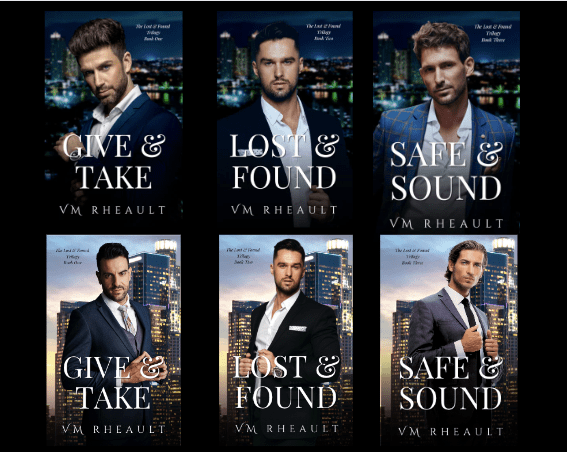
I’ve changed five of my books’ covers. My duet got an update I think only 6 months after publication, my Lost & Found trilogy, a year. By then I’d settled into a brand, and I knew that they were okay, but not the best they could be.

When I was writing Rescue Me, I knew it was high-angst, and both characters had some pretty crappy backstories. I wrote a poignant scene between them where they were sitting in the park. They were sharing stories, and he says to her,
“I saw a woman sitting alone in a booth, staring so forlornly into her wineglass she could have been a mirror image of how I was feeling. I sat down with her, and something happened. I can’t describe it. I thought, this woman understands me. I haven’t spoken one word to her, but she understands. When she gathered her purse to leave, I had never felt panic so debilitating. I had to ask her to be with me, and miraculously, she said yes. I was a stupid son of a bitch and didn’t get her name. Don’t ask Samantha what I was like the week afterward.” He blows out a breath, his chest expanding against my back. “You’re not the only one who’s been trampled on. You’re not the only one who feels unfit for someone else because of your pain. If you take my secondhand heart, I’ll take yours.”
REscue me, Vm rheault
Right away, I thought, what a great title. Secondhand Heart. I even started on a book cover for it. I lucked into the perfect couple, as Sam is older and Lily is a redhead, and the scene above happens to take place in the autumn in a park. I couldn’t have been happier.
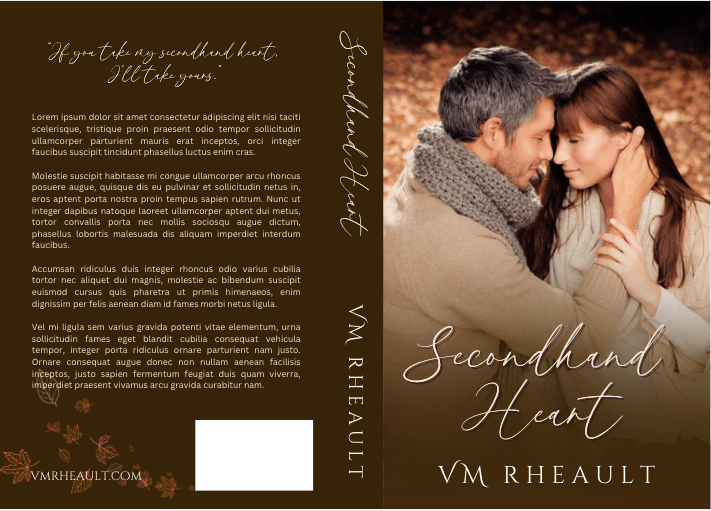
But by then, I’d already published my duet, and if you remember, I had several books on my computer waiting to be published. I had to make a decision–where did I wanted my brand to go? Billionaires have a specific feel. They’re in suits, they’re wearing “the watch,” they’re meticulous, sometimes they’re coldhearted. They’re untouchable until they meet the right woman. And all that needs to be conveyed in the cover, the title, the font, and the blurb.
The cover above is perfect, but it wasn’t going to meet the vibe of the genre I chose, and while the title fits perfectly, it’s not as hard and as edgy as it needed to be. The cover above is great for a contemporary romance novel, and while Billionaire is contemporary romance, the main category I put all my books into is, well, Billionaire.
And this is the lesson I kind of want you take away from this blog post. Even if the cover and title are perfect, it may still miss the mark and give readers the wrong message.
This is the cover I made that I went with. You’ll notice he’s in a Billionaire suit, and I think he’s wearing a watch. He’s stoic. When I chose him, I didn’t realize that I’d see him everywhere all the time (this model is very popular among indies), but he fits the way Sam looked in my head, and even knowing he’s been used, I would still choose him. Also, the title is a lot stronger–they did rescue each other the way couples who fall in love do. This is a one-night-stand-with-my-boss trope, and I was very happy with the tagline I came up with.

If you compare the two covers, they look really different, don’t they? The titles make them sound like different books, too.
You can start thinking about this stuff when you’re writing your book. Study other books in your genre, the bestsellers, the covers that are reeling readers in. How do the blurb, title, and cover work together to convey the genre? What kind of tagline or hook is on the cover, or the top of the blurb on the Amazon page?
This is part of marketing that we don’t talk about nearly enough. We always say that the cover is your biggest marketing tool, but we don’t say what kind of cover. You could have paid 1,000 dollars for the best cover ever, but if it doesn’t hit the mark with what your book is about and what category it’s in, it won’t matter how much you paid or how professional it is. It won’t entice readers. Or it will, but they’ll be the wrong kind of readers and you’ll pay for it with poor reviews.
Chances are the cover I made with the couple would have been okay–but they wouldn’t have fit in with my overall brand anyway, so an author has a lot to think about when it comes to cover design and title.
I have a terrible terrible time thinking up titles. I’m crap at it, and it took a couple of hours of brainstorming with my ex-fiancé to title my duet. I’m proud of their titles, and I like their covers now too. I need to push them more, but what I’ll do is a different blog post.
I like the direction my brand is going. Even though I slipped off the path for a second and did some rockstar romance, the covers blend in to what I have and they still sell better than all my other books (but I’m not taking the hint. I have no more rockstar plots in me, I’m afraid. Shep and Olivia landed in my lap, and maybe that will happen again one day, but I’m not going to look for it.)
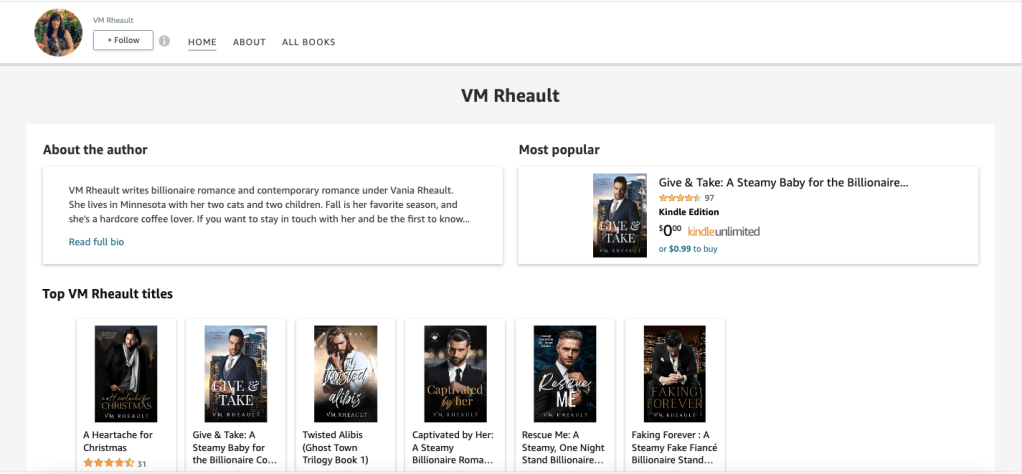
How your books look on Amazon is important. A reader clicks on you, and they can see most of your covers at once. If they’ve already liked one of your books, knowing you’re going to deliver more may make them a fan. Maybe they’ll give you a follow. (This is the top half of my author page on Amazon.) https://www.amazon.com/stores/VM-Rheault/author/B0B1QSXVK4
I’m all for consistency and lots of people say that genre-hopping isn’t that bad, but even if you know an author who is doing well at it, you have no idea how much they’re spending on ads and promos and other marketing activities. Without that transparency, their monthly royalties may look good but they could be pushing all their money back into their business leaving them breaking even at the end of every month.
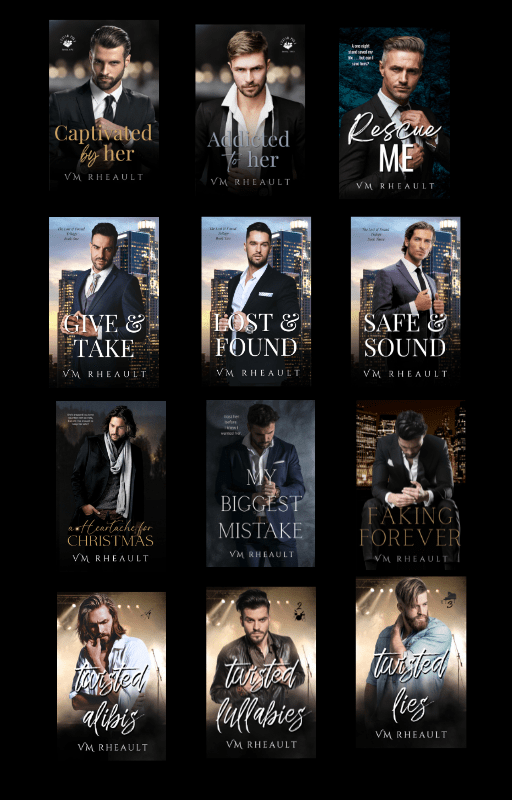
Now that I have a brand, I want to keep it going, and I have to think of what kind of titles and covers I want for my books going forward. My six-book series is going to fit right in, and I’ve already made the cover for the standalone I’m going to write afterward. I won’t share my series covers yet, but here are the 11 books I have under my pen name right now, plus my reader magnet that is still free on my sister site. I’m proud of how they look. (And the guy on Faking Forever, I think is Eddie on Twisted Lullabies–don’t tell anyone!)
I’m not going to turn this post into a do-it-my-way-because-it’s-the-right-way post. It took me a long time to change my mindset around and start packaging my books in a way that would target the genre and in ways that would sell. It’s also something you need to learn, a lot through trial and error, researching genre and book covers, and in some instances, ignoring trends and staying true to your brand. Just because illustrated covers are still in, or because discreet covers haven’t gone away, that doesn’t mean you have to do it. Your covers are for your readers. Maybe one day down the line because of the lack of variety on DepositPhotos, I may have to start cutting off heads or doing item covers or text covers, but I’ll be really deep into my backlist then and hopefully have more of a readership that will borrow/buy anything I write.
I see covers all the time that don’t look very good, don’t fit the genre their authors say their books are in. It really doesn’t help when other people say their covers are lovely. Yes, they might be, but we already know, and maybe from personal experience like mine, that just because it’s lovely doesn’t mean it’s going to fit. Fit the genre, fit your story, fit your brand. And I think this is a lot of why we don’t talk about it–because negative, or constructive, feedback feels a lot like an attack on what you like. I still believe after all my time writing and publishing you can find a happy medium between what you like and what you need to do to sell your books.
If writing and publishing is really your way or the highway, there’s not much room for improvement. Flexibility got me where I am right now and I’ve already made half of what I did for the whole year last year. I hope finally releasing my series will keep that going.
I know it also took me a long time to get to where I am. Thousands of hours of writing and planning. Organizing and fixing mistakes. There’s always going to be mistakes, but if you can look ahead maybe you won’t make so many. I’m making fewer and fewer. I’m not going to re-edit A Heartache for Christmas because I was aware of my tics when I was writing it. I’m not going to re-edit my rockstars either, though I know I had a “when” problem. They still sound good and readers aren’t counting. This six-book series will probably be the first books where I was aware of everything before I published, but it only took 12 books. We all still learn every day, and the best news is, covers can be changed. Blurbs can be changed.
Put in place what you learn and keep doing it.
That’s all any of us can do.
If you want to read more about how “perfect” covers can still be wrong for your book, look at this BookBub article: https://insights.bookbub.com/gave-professional-book-covers-makeover/
Thanks for reading and have a great week!

 Vania Margene Rheault