
1,080 words
6 minutes read time
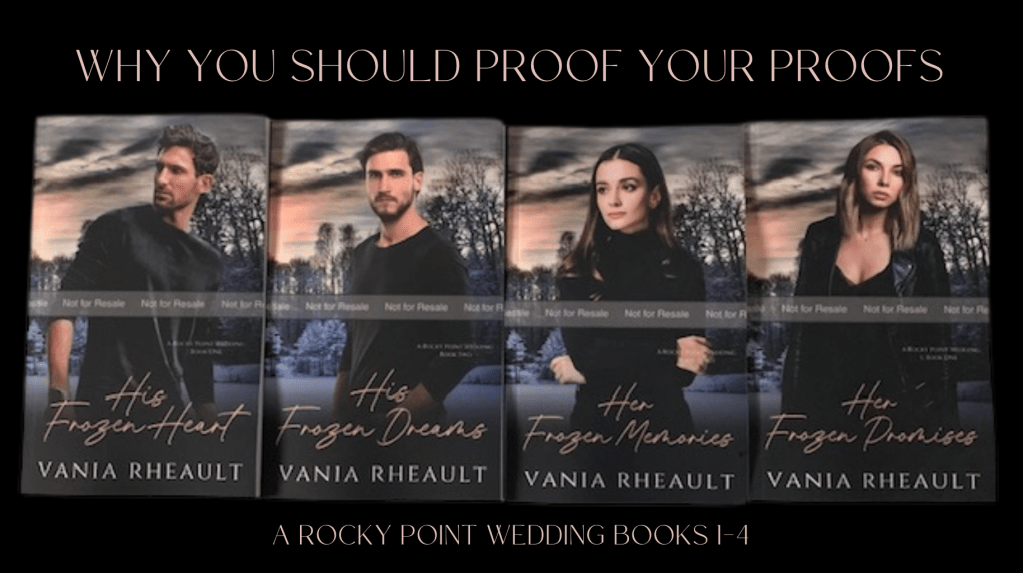
Back in the day, I used to be excited to order my proof from KDP. It was fun to see my book look like a book, and I’d take pictures of it, proud I was a published author. That was when we published through CreateSpace and they didn’t have that ugly stripe in the middle. When Amazon merged CreateSpace and the ebook part of KDP, I didn’t mind. I liked having my book versions together on one dashboard, and when they added the NOT FOR RESALE stripe, I was okay with it. A lot of physical ARCs have some kind of warning that it’s not the finished product, and these are no different.
But, there is also other value in ordering a proof (if you can) and as the years went on, I started going over my proofs. Now I’m always shocked to learn not everyone proofs their proofs, and they are missing out on a great opportunity.
A last editing sweep, of course.
Editors and other authors say to change your font in your Word document to make typos stand out or use the read aloud feature (listening to the voice read a word that’s not spelled correctly is funny), and those are both great ways to find typos that would normally slip by. But, also reading your proof is a good way to see run-on sentences, punctuation errors like broken ellipses, spelling mistakes, and more. One of the things I have noticed is that reading your proof can actually help you see where scenes could be plumped up or if it drags. Reading your book, flipping the pages, and seeing the words on a printed page allows you to feel how your book moves, and when I was proofing my King’s Crossing series, I made a lot of scene changes right at the last minute. There’s something real about holding your book in your hands and reading it, and if you don’t proof your proof, you’re missing out on that experience.
Check your formatting.
Sometimes things look okay on your screen but not in print. When I was proofing books 4-6 of my King’s Crossing novels, there are a lot of journal entries. Max left Gage his journal that described a lot of what happened in books 1-3 and played a huge part in Gage figuring out Zarah’s past. But I wanted to format those journal entries in a way that didn’t distract the reader from the story. I finally ended up just using italics, though I tried other things like setting them in in a block quotation or an alignment block. Then, once I decided on how I wanted them formatted, I had to go through all the books and make sure I changed them all and didn’t miss any for consistency. Sometimes you’ll end up with just a word or two on a separate page that you need to fix, sometimes the pictures in your back matter need to be adjusted. You won’t know those things if you don’t proof your proof.
Check the cover.
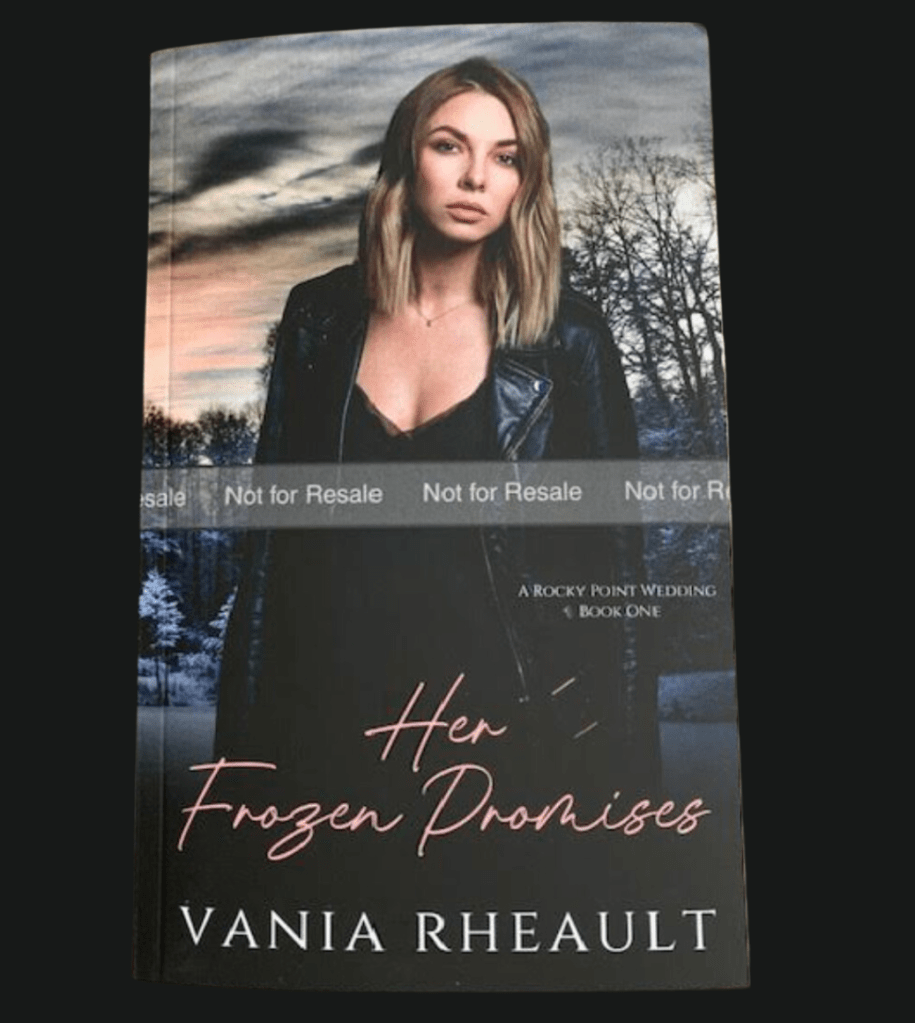
Print on demand isn’t always accurate, and KDP is notorious for printing dark. Sometimes you might decide to go with a matte cover instead of glossy. You are never going to get the colors you see on the screen, so it’s best to order a poof copy and make sure the colors are how you want them, that your spine looks good, and the back over looks professional. A lot of times I don’t get the gradients lined up to the spine just right and I have to move it over. You won’t be able to tell that looking at a PDF of your cover. One of the last-second catches I saw when I was proofing my Rocky Point Wedding series was that I still had A Rocky Point Wedding Book One on book four. KDP might have caught it when I published, but it was better that I saw it and fixed it myself.
Look for lines and scenes that you can use in graphics and reels.
This will probably be one of the last times you read your book, and you can use this read-through to highlight hooky lines, dialogue, and scenes you can use in social media graphics and TikTok videos. One of the most time-consuming things is to page through your book, looking for lines you can use, and if you do this during your last edit, you’re saving yourself time in the long run. I wish I would have thought of this a long time ago, but social media isn’t my strong suit. You can be sure that I’ll be doing it from now on.
Peace of mind.
I see so many people who want their books in bookstores and libraries, yet they never order a proof to see exactly what their readers are getting when they pay 10-20 dollars to buy a paperback. I want to see exactly what my readers are going to get. I want the cover to look good, I want my formatting to look like a traditionally published book. I want to be able to catch all the typos I can (humanly) catch. I know that cost can be a barrier for some, the cost of the book and shipping might be too much after spending on editing and cover design, but as long as you are able, I would always recommend proofing your proof.
You probably don’t want to know how many proofs I ordered of my King’s Crossing series. That series is over four years in the making, and I changed the covers, too. I spent a lot on books I ended up throwing away, not needing them after fixing what I needed to fix. I throw away a lot of proofs, actually, because I don’t need them anymore. I only have room for so many, and prefer to keep a few author copies on hand instead. If you have the space, you might keep them for nostalgic purposes, but I don’t have much room, and I don’t see the sense in keeping them. The finished product is enough for me.
Ordering a proof is exciting, but it’s also a chance for one last read, no matter how sick you are of the story by now. Enjoy the last time you’ll read it, and quietly say goodbye to characters that you worked so hard on.
Discover more from Vania Margene Rheault
Subscribe to get the latest posts sent to your email.

 Vania Margene Rheault
Lack of proofreading is evident in today’s e-books, online articles, news feeds, etc. A simple proofing would give the author’s so much more credence. As it stands, so many authors with potential create suspicion in the reader’s mind as to the professionalism of the author. Cheers to you for this article!!!
LikeLike
Thank you!
LikeLike
Pingback: Monday’s Author Mashup | Vania Margene Rheault