Moving the Goalposts: The Feeling of Not Doing Enough

1,343 words
7 minutes read time

toy soccer ball with toy goalie net. green background.  text says: moving the goalposts. the feeling of not doing enough

Years ago when I saw someone say being an indie author felt like always having homework, I laughed, but I didn’t quite believe it. When I was in school, I hated homework. Back in high school, anyway. College was a little different, and when I went to tech school to get my HR degree, I actually enjoyed homework and group assignments. I suppose age could have played a part in that, because I think as we get older we just naturally appreciate things more and I was grateful to have the resources to go back to school.

Anyway, so when it came to my writing and all the stuff that went along with it, I didn’t compare homework, a seemingly endless, joyless, task, to what I had to do to write, publish, and market my books.

But, when I wrote my blog post for last week, I realized that no matter how much an indie author gets done, there is always going to be more to do, and instead of being excited for the next cover design, formatting job, or editing sweep, it turns into a version of Groundhog Day that we can’t escape. That infinity loop also sucks the joy out of the past accomplishments, and something to be proud of, like a book release or the cover of a book that comes together perfectly, is just an item on the list that needs to be checked off.

When I really thought about why we never feel like we’ve done enough, a few things came to mind.

Because we’re indie: We control everything — writing, editing, marketing, covers, social media — there’s no external validation from a boss or coworker nor is there a stopping point we can work toward. There’s always going to be another social media post to create to keep your profiles from stagnating. There’s always going to be a newsletter to send out. Another ad to create. There’s always a WIP to work on because we all know that writing the next book is the best marketing and front list sells backlist.

Moving the goalpost: We hit one milestone (a release or a finished draft) and immediately reset the net. I think this one is what I was particularly feeling writing my blog post last week. No matter how much I accomplish there will always be more to do. Another goal to score, another game to win.

Comparison culture: We see other authors posting “I just hit 10k sales” or “my preorder is live,” and that fuels the sense we’re behind. This one is particularly triggering for me because I have a terrible fear of missing out. I don’t want other authors to be doing something I could be or should be doing too.

The creative push to keep moving forward: Creatives are wired for “what’s next?” The next book, the next painting, the next drawing. That desire to create makes us prolific, but it can also burn us out. This one I understand 100% because once I start thinking about characters for a new book, they don’t leave me alone until I set them free on the page. I mean, that’s a great place to be in–I never have to worry about writer’s block or what I’m going to write next–but it’s also draining because I don’t let myself properly rest between projects . . . or celebrate something I just achieved.

Lack of (what you consider) success: This one probably hit me the hardest because with all the books I have out, with all the hard work I’ve put into my author career in the past ten years, I don’t have the sales I hoped I would have. So I’m always reaching for that next book, that next social media graphic, that will get me there.

The indie hustle culture: This kind of goes along with comparing yourself to other authors. We see on social media what other authors are doing, but at the same time, there’s an underlying feeling of not doing enough and getting judged for it. You see it on Threads when people start their posts with, “It might not mean much to some . . .” or “It might not be a big deal to a lot of people here but . . .” We are constantly afraid that we’re being judged for our successes and achievements, and while a lot of people will tell you to stop worrying about what others will think because no one is watching you, for as many people who don’t care what you’re doing, there are just as many who do and are judging you. “You’ve only written one book this year?” “You’ve only made fifty dollars this week?” “You don’t post on TikTok? How do you expect to sell books?” “When is the rest of your series coming out?” The hustle culture online is real, you can see evidence of it every day, and it’s just another reason why you can never be happy with what you have because it will never feel like it’s enough. And it will never feel like that so long as someone you see online is doing more than you.

So, what can we do to combat this? It’s a question that I’ve been dealing with since the beginning of 2025 when I came to the conclusion my books would never be a business and that I would never make any meaningful earnings from it.

It was a disappointing and disheartening realization to come to, but it was freeing in some ways. I stopped my Facebook ads. I took time to go into my backlist and re-edit a few titles. I don’t stress about the fact that I have written only one book this year. I don’t let myself feel bad if I don’t feel like writing and would rather watch a show instead. Do the low sales numbers bother me? Sure. I think any author who publishes to a site where readers have to pay wants sales. But I just remind myself there is a lot of content out there and I can’t be, and don’t want to be, everywhere online. Creating content when you don’t feel like it is just as stressful as forcing yourself to write when you’re not in the right headspace.

But, no matter how many times I remind myself to loosen up or brush away those pesky feelings of inadequacy, they always manage to pop up, which is why I wrote my blog post last week to begin with. I needed the reminder that yes, I have accomplished a lot this year, and more than acknowledging it, I should celebrate it. Even if I closed my laptop today, after I schedule this post, and don’t open it again until January first, my 2025 year in review would still rock and it really has nothing to do with how much I’ve made this year and if I managed to break even with all that I’ve had to pay for to keep my hobby afloat.

I wrote a book I’m proud of. Maybe it won’t make me any money, but I wrote it with my whole heart, and I love Seth and Avery. I wrapped up five years’ worth of work when the last of my King’s Crossing serial released, and I doubt I’ll ever write anything like that again. I applied what I learned and re-edited three of my standalone books. I’ve helped hundreds of authors make their own book covers using my Canva instructions. I edited for someone who couldn’t afford to hire out and helped her get that much closer to publishing her next book.

It’s easy to forget even your biggest accomplishments when the to-do list never ends. Give yourself credit for everything you’ve managed to do–this week, this month, this year. Being an indie author really does feel like having homework sometimes, but maybe it’s time we start grading ourselves on how happy we are with what we’re doing, not on our output or the outcome of it.

And stop moving those goalposts. Run past them and don’t look back.

What I’ve Done This Year: Beating Up Imposter Syndrome

1,561 words
8 minutes read time

red boxing gloves hanging in front of black and grey background. 

Text says what i've done this year: beating up imposter syndrome

Sometimes you can look back and not feel especially productive. I feel like that this year since I have only one book written so far. But feeling like you haven’t gotten anything done is actually a form of Imposter Syndrome and instead of letting it win, I thought I’d pick apart my year and document everything I’ve done that moved my writing business forward.

January
According to older blog posts, I started editing Loss and Damages in January. I don’t know when I decided to release that book, but it had been written for a couple of years already. I spent the last four months of 2024 re-editing my Rocky Point Wedding series, so I was feeling a little burnt out. But I didn’t stop to rest, no that would be silly, and jumped into getting Loss and Damages ready for a September release.

I also kept up with this blog and wrote my four posts that I published on Mondays. But I must have had a lot of thoughts because I gave you seven posts instead of four. I feel like that might have started my year off on a good note, so let’s see if I kept that going.

**Shattered Fate released January 20th, 2025, but that seems like a very long time ago now.

February
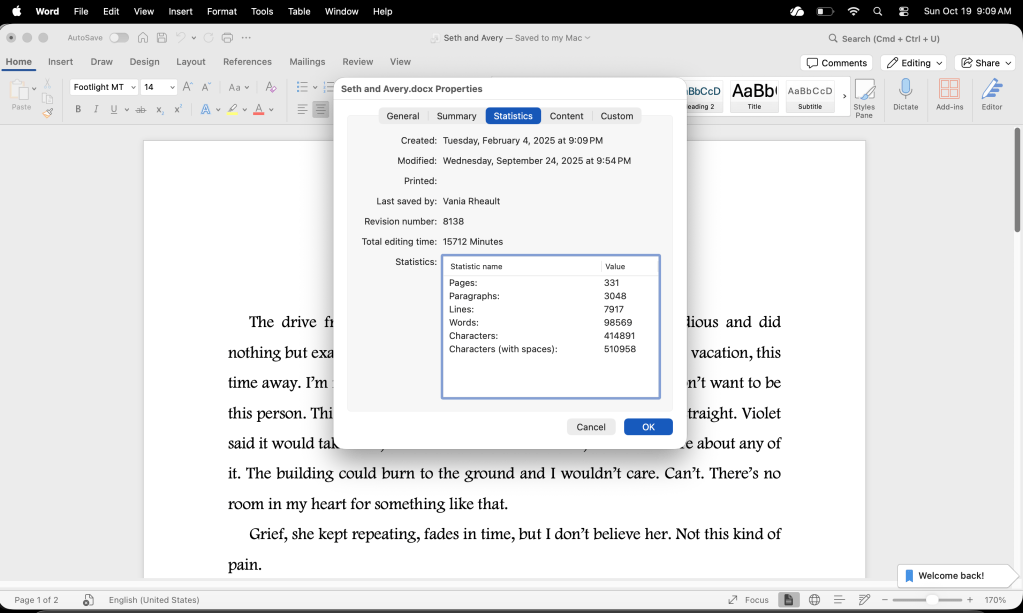
I started writing Wicked Games on February 4th, 2025

screenshot of statistics of Wicked Games. 
Seth and Avery.docx Properties
General Summary
Statistics
Content
Custom
Created: Tuesday, February 4, 2025 at 9:09 PM
Modified: Wednesday, September 24, 2025 at 9:54 PM
Printed:
Last saved by: Vania Rheault
Revision number: 8138
Total editing time: 15712 Minutes
Statistics:
Statistic name
Value
Pages:
331
Paragraphs:
3048
Lines:
7917
Words:
98569
Characters:
414891
Characters (with spaces):
510958
Cancel
OK

Besides my King’s Crossing serial slowly releasing around that time (they dropped six weeks apart), that was the biggest thing I did that month. Doing so much editing made me miss writing and I was excited to get back into it.

I also kept writing on this blog, and I must have had more to say that month as well since I wrote six posts instead of my regular four.

March
March seems like it was the same old, same old for me. I kept working on Wicked Games,(though I hit a bump with lack of motivation) kept posting on this blog, and Shattered Hearts, the fifth book in my King’s Crossing serial, published on the third. March can be really dreary in Minnesota too, so I was probably just waiting for the snow to get the hell out of here and for it to warm up. But, every little bit counts and releasing a book is a pretty big deal. I shouldn’t brush it off, even if SAD was probably getting me down.

April
According to a mid-month check-in blog post, I finished Wicked Games the first week in April. Getting a book done in three months tracks, so I’m not surprised that despite writing a whole blog post the month before about how “stuck” I was, that I finished a short time after. What else did I get done?
*I didn’t give myself a break and did another round of edits on Loss and Damages.
*I blogged four times.
*The last book in my King’s Crossing serial, Shattered Dreams, released.
Looking back, April was a pretty big month for me. I finishing writing a book and that series wrapped up five years of hard work. I was also working on a book that would turn out to be my next release. It was a good month but I doubt I took the time to celebrate anything. That’s just how I am.

May
May was a slow month for me. I was listening to Loss and Damages and thinking about what I wanted to write next. I’m amused because in my author check-in for May I was thinking about the book I’m writing now, Bitter Love. I hadn’t named it and only had the idea of a plot, but I guess that’s what happens when a story won’t let you go. I remember feeling burnt out still, and while I was considering diving into hockey, even started doing some research, that kind of project felt like it was too much to tackle.

That month was a breakthrough for my health though, and I stopped drinking our city’s tap water and switched to bottled spring water. That has made a big difference in how I feel. I’ll always have my lichen sclerosis and nerve damage from that hysterectomy I agreed to in desperation, but I’m closer to normal than I have been in the past five years. So May might have been quiet writing-wise, but it turned out to have a big impact on my life.

My blog had a good month: I had five posts, and one was an author interview. I like adding new voices occasionally since different perspectives are interesting to read and keeps things fresh. It’s tough finding people who will give you time though, so I only get to do that a couple times a year.

June
I was making some small progress in June. I got the proof of Loss and Damages in the mail and did some light editing of my rockstars. I was still debating on what I was going to write next, waffling between writing Bitter Love and hockey. That’s probably about as relaxed as I get. But I can tell while reading past blog posts that I lost a lot of the urgency I was feeling in previous years to move, move, move.

Blog was good. I wrote five posts.

July
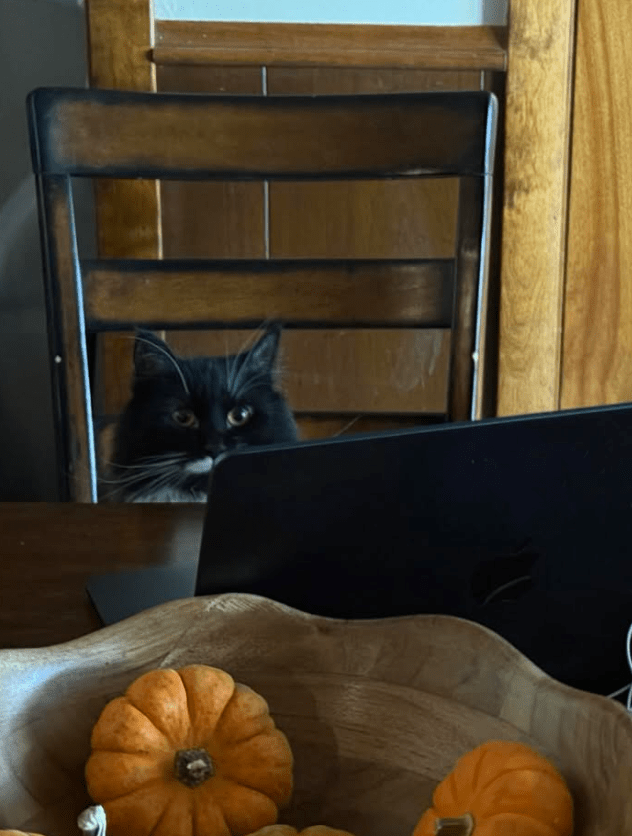
I re-edited Rescue Me and I’m happy I did. I found a timeline issue that I’m glad was easy to fix and just eased up on my dense prose. I think I got rid of about 1500 words and updated the formatting, and I ordered two proofs to make sure my changes looked okay. I uploaded new files at both KDP and IngramSpark. We also adopted my son’s friend’s cat and she’s been a nice addition to our family so far, her need for attention aside. (That has nothing to do with productivity, unless you count her helping me.)

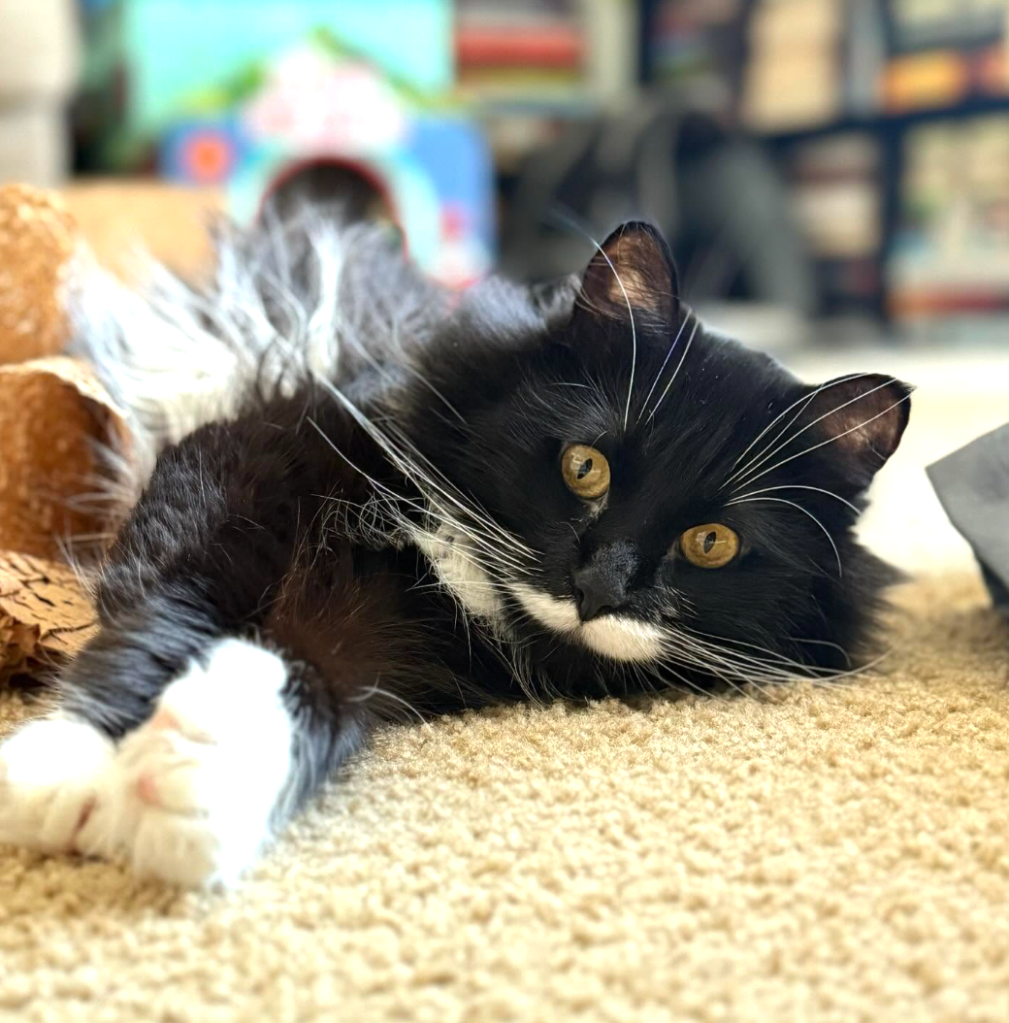
tuxedo cat sitting on chair in front of black laptop.  small pumpkin gourds in foreground.

My blog was still chugging away–I had four regular Monday posts.

August
August was more of the same. I re-edited Faking Forever, which was a chore and a half, then moved on to A Heartache for Christmas. I ordered proofs of both of those books and updated the files with KDP and IngramSpark. Though at the time it felt like I wasn’t going anywhere, overall I’m satisfied that I took the time and with the results of those several weeks of re-editing. It was a crash course in readability, and all three books sound more conversational and not so stuck-up. I plan to do my Cedar Hill Duet after the New Year. I want to redo the covers after doing another edit. Those are good books but they can be better. I’ll have a little time after I finish Bitter Love, so that’s the next project on my list.

September
I started Bitter Love, but my friend was ready for me to edit her book, so that’s what I did for the majority of the month. Because of changes at my job, it took me a little longer than it has in the past, so I didn’t get much done on anything else.

Loss and Damages also released on the 15th, after trying to do a proper launch that included a cover reveal on IG, sending out ARCs, and a Goodreads giveaway. It didn’t hit big, most people who took an ARC didn’t leave a review, but I’ve sold two ebooks and have had the equivalent of eleven books read in Kindle Unlimited. It’s a long and character-driven book. I didn’t expect it to do much better.

Blog was fine–I published five posts.

Looking back, I’ve done a lot with my year so far, and I’m not sure why I don’t give myself more credit. I finished releasing a six-book series. I released a standalone. I re-edited three books and started a new WIP. I think one of the issues is that when you’re an indie author, there’s always something more to do so you don’t get the chance to feel like you finished anything or are any closer to your goal. There’s always another book to write, another book to edit, another TikTok video to make.

And think this is especially true when you haven’t gone viral, you haven’t earned an orange bestseller tag on Amazon, haven’t reached the number of followers you were hoping for. I think I might want to do a separate blog post on why goals never seem obtainable, even if you have reached milestones you should be proud of, so I’m going to leave that there for now.

Of course now the only thing that I’m thinking about now is getting Bitter Love done but I’m taking it easy and enjoying the process. Jesse and Jordan have been fighting inside my head for a few months now and it’s a relief to be putting them on the page. Motivation is the key to getting things done and getting things done is the only path to success, no matter what your definition is, but we also need to celebrate the little wins or everything we accomplish will feel hollow.

Be proud of yourself for sticking with it. Not everybody does. And if you’re reading this and thinking you haven’t done much this year, try making your own list. You’ll probably surprise yourself.

And that’s worth celebrating.

Have a great week!

Guest Author A. K. Ritchie

cream and blue bokeh. cream square with author's photo.  text says. guest post: author a.k. ritchie

As with most of my online friends, I met A. K. on Twitter many years ago. After I left, I wasn’t sure how many people I’d lose touch with, and when I found her on Threads, I was thrilled! Recently, I saw her reply to this post:

Right away I asked her if she’d be willing to do a guest post to talk about her response a little more, and she agreed!

I’ll let her have the floor now. Thanks, A. K.!


It wasn’t long after I published my first novel, AFTER THE PARTY, that I realized a hard truth. I’d been so focused on getting my novel edited and learning how to manage the technical side of self-publishing that I forgot I would have to market my own book. Specifically, I would have to find my own readers.

I didn’t understand the impact platforms like TikTok and Instagram were going to have on fiction and sales. It never occurred to me that I would have to concisely explain to people my novels’ genre on a regular basis. I never realized how hard it would be to find my readers and promote my book. 

I often joke that my novels are marketing nightmares. While some of my novels have romance, I don’t fit into the genre as the love story is often a subplot (or not included at all like my novel WILDE LIKE US). While my themes may be well suited for Upmarket fiction, my writing style does not fit the current trends. I landed on Women’s Fiction, but some argue that it’s more Coming-of-Age. It never occurred to me to lock down a genre and the ideal reader before I started creating. 

It makes it hard to find readers when you don’t know who they might be. 

I went into self-publishing over traditional publishing because I wanted to write what I wanted without the pressure of conforming to trends and labels. I grew up in a culture of hand-made, home-printed zines. I found bands recording in their garage, burning their songs to CDs with handwritten track listings. I wanted to DIY it. This is something that I lived in my everyday life, so I wanted it to apply to my fiction as well. 

While I may have broken even on my first two novels, it occurred to me that writing only what you love, without considering the market, can make self-publishing an expensive endeavour. As much as I love the stories I’ve told and what I’ve created, it doesn’t mean that passion will translate to sales. 

Without sales, it becomes difficult to continue producing more fiction. The cost of editors, artists, subscription for websites, etc, all costs money and unless you have funds coming in from other sources, continuing to produce fiction this way may not be sustainable for the vast majority of people. 

If I were to start this journey from the beginning, I would take more time to understand what readers are looking for and how that can be implemented into the stories I want to tell. I’d try to find a space where my voice already fit into a thriving community. 

In no way do I regret writing my stories the way I did. I was being true to my creative side, honouring the stories I wanted to tell. I was also learning so much. And I still am. My storytelling has become stronger with each novel I create. I wrote without external pressures of deadlines and expectations.

But I’ve also come to realize that if I would like to keep publishing, and would like to do so with more frequency, there needs to be a balance between what I write and what the market wants. Even those bands I listened to and zines I grew up consuming took that into consideration. They had a market and they were filling that need in their community. 

There is nothing wrong with writing for yourself or writing based on the current trends or a mix of both. My advice would be to set realistic expectations based on your personal goals and move forward with intent. A good balance would be finding that sweet spot between stories you’re passionate about and ones that make a profit. 

For now, I will keep writing my novels as a form of expression and as a hobby. However, I am already making plans for future romance novels that may still explore a mix of emotional topics with a focus on romance first and foremost. My plan is to bring my stories forward in a way that might meet the readers where they are. 


Thanks again to A. K. for her post about writing what you love! If you’d like to follow
A. K., you can find her on these platforms:

Instagram: https://www.instagram.com/a.k.ritchie

Goodreads: https://www.goodreads.com/author/show/21836915.A_K_Ritchie

Amazon Canada: https://www.amazon.ca/stores/author/B09HJX6R6P/about

Amazon US: https://www.amazon.com/stores/A.K.-Ritchie/author/B09HJX6R6P

Website: akritchie.com

Do You Wanna Write a Novel?

927 words
5 minutes read time

snowman wearing orange and white hat and scare sitting in front of a laptop outside blue sky

It’s that time of year when everyone is thinking about writing a 50k word novel in November. I’ve only done NaNoWriMo one time, way back in, I think it was around 2014. A couple people at my work found out I was writing what would now be my shelved fantasy books and asked if I wanted to join them. I said sure, and we started meeting at various places, including Perkins, which I always enjoyed because I have a thing for French Silk pie. I stopped writing my fantasy book and started what would be Don’t Run Away, the first in my Tower City trilogy. It was fun, if not a little intimidating for this introvert, because we met with some of their friends whom I didn’t know. My kids were older so I had a lot of time to write and I “won” the first and only time I officially participated–and by that I mean creating a profile on NaNoWriMo’s website and logging my words written.

I remember the thrill of meeting with other writers, talking shop and sharing a common interest. It’s a high I think a lot of people still chase–that feeling of belonging.

I found it for a few years on Twitter and tried to replicate the in-person feeling by joining a writing group in the town where I live, but that ultimately didn’t work out. I’m not saying they were unfriendly, but they were established, having written for many years together, and wiggling in took more energy than I really wanted to spend. Productivity-wise I’ve never needed something like NaNoWriMo to keep me going. I love to write, and while I can understand the concept when people say they love “having written” putting words down isn’t a chore. I’ve never had a problem sitting down with a cup of coffee and writing couple thousands words in an afternoon.

Back when I was hardcore about treating my books like a business, I knew how beneficial it was to have a backlist and a steady stream of new books. For me, that was plenty of motivation. These days, since the beginning of 2025 at least, I let go of the idea this will ever be a career and have lightened up a lot when it comes to how many books I want to write and publish in a year. I only have one book scheduled to release in 2026, and while I’ll still be writing, dedicated productivity just doesn’t seem as important as it once was.

NaNoWriMo might have gone away, but a writer’s desire to belong to a group of like-minded people is still there and this month a few alternatives have popped up to fill that need. I signed up for one, not because I need encouragement to write, but because lately I’ve been looking for something different. I don’t know if Novel November, ProWritingAid’s answer to the now-defunct original writing challenge, will be what I’m looking for, but this is the first year in a long time that I’ll actually be able to participate because I’m not editing something, helping someone with one of their books, or taking a break.

If you’re looking for an alternative to NaNWriMo, here’s what I’ve come across online:

ProWritingAid
ProWritingAid started Novel November and after looking around the dashboard, it’s feels pretty close to what NaNoWrimo was. PWA has offered author services for years and I have a good feeling about participating. If you want to sign up or take a look around, you can find it here: https://prowritingaid.com/novel-november

Successful Indie Author
This is Craig Martelle’s Facebook group and he started No Excuse November (NoNo). Right now information is only in his group, but it looks like he’s partnering with Draft2Digital and creating a website as well. I know Craig hit a few bumps while he was a part of 20booksto50k that banged up his reputation, and if you have no interest because of that, that’s okay. I’m just offering all the alternatives I’ve come across online. His Facebook group is large, with 8k members, so you’ll find plenty of support there if you join his challenge. He also has May I Write a Novel that happens in May, so there are two challenges a year if that’s something you were looking for or need. I think NaNo had writing camp in July, so Craig’s group would be a good substitute. You can find his group here: https://www.facebook.com/groups/successfulindieauthor

Reedsy
Reedsy created the Reedsy Novel Sprint 2025. It looks like you have to write in their Studio to be eligible for all their benefits, but if that doesn’t bother you, this challenge looks like it will be very supportive. There are already 15,000 authors signed up and you can join events like First Line Frenzy™: Submit Your Opening Line. If you’re interested in looking around, you can find it here: https://reedsy.com/studio/challenges/reedsy-novel-sprint-2025

I’m sure there are others, and a lot of authors are making up their own.

I’m actually kind of excited to be participating in PWA’s Novel November. I’ve loved writing all my books, but since I left Twitter, I haven’t felt part of a group. Like everyone is working on something bigger than we who are as individuals, if that makes sense.

Are you going to join in a challenge? Let me know.

If you know of a challenge that I didn’t mention or are putting on your own, mention it in the comments. Someone might want to join in!

Thanks for reading and have a great week!

Why Sitting on a Finished Book Isn’t Always a Bad Thing

1,325 words
7 minutes read time

woman sitting on a stack of books while reading a book.   woman has dark skin and dark hair. She's wearing a yellow and maroon blouse and jeans text says why sitting on a finished book isn't always a bad thing.

Writing a book takes a lot of time, and if you’re busy with work, kids, and maybe have an active social life, it can take even longer than someone who has more free time than you. It’s addicting to release a book the second you finish it, and what I mean by finishing it is you have most of your editing done and have a working cover. These days, not too many authors are willing to sit on a completed book, but I think the biggest reason is FOMO. You’re excited and want readers reading that book ASAP and having a finished book sitting around feels wrong. Also, you want to prove to your author friends that yes, you are writing and publishing, not just saying you are.

But after my time in the indie trenches, I think probably one of the most detrimental things you can do to your publishing schedule is publish as you go.

I see it a lot in indie circles. They’ve written a book, can’t wait to put it out, then they do. They do the ARCs and the launch, have an exciting week or month, and then there’s nothing else. And I mean, nothing. For years. Because they don’t have another book written, not even started, maybe they don’t even know what they’re going to write next. So they talk about the book or books they do have, and as the months and years go on, you can tell they get a little stressed out because the pressure to publish another book is intense.

Here are a few other reasons why I think it’s beneficial to publish a book behind . . .

Readers love consistency.
Readers like to know when your next book is coming out. It gives them something to look forward to. When you create buffer it means you can have a manageable writing and release schedule that won’t leave a gap and readers won’t wonder if you disappeared. I’ve seen authors push back on this, saying readers are rude for asking, but then I have to ask, is it really though? Are they being rude or are you being sensitive because you know how much time has gone by? Especially if you’re writing a series. Especially if that book ends on a cliffhanger.

You have built-in time for marketing and a launch strategy.
Rather than finishing up and book, diving into launch and marketing activities and then having all that fizzle the second you hit Publish, you are on a continual content loop of talking up an older book while building buzz for the new one that’s already written…while working on your next book. It took me a little bit to get into this kind of posting schedule. Once I publish a book I tend to forget about it and focus on the next, but keeping a published book in mind while being excited about one that is coming out in the next six months or so, and also writing the next one keeps motivation high because you removed the stress of not having a next book. I’m not one to really do cover or blurb reveals, but having a few months before a launch can give you lots of time for teasers, something I actually enjoyed doing for Loss and Damages, the book I released last month.

You give yourself room for quality control.
I think every single one of us has rushed through editing because we wanted to publish. I’ve published with covers I didn’t 100% like because I wanted to get my books out ASAP and that only hurt me and my launch in the process. The fact is the editing and packaging of a book (meaning formatting, cover, and blurb-writing) takes a lot more time than we realize and we tend to rush through it all because it’s already been so long since we published last. Having a book waiting in the wings ensures you’re giving yourself time to edit, choose a cover or create a cover you like, write an enticing blurb, and make sure it all looks great before pushing it out into the world.

Flexibility for life interruptions.
There’s nothing like life getting in the way of what you want to do. I discovered that when my work decided to fire everyone and mess with my schedule. Suddenly I went from having an obscene amount of time to write to almost nothing–just like every other writer who still works forty hours a week to pay their bills. It was a great relief to know I had a book already written and mostly edited. (I started Wicked Games on March 18th, 2025, finished it three months later, and now I’m not publishing it until May of 2026.) When life gets in the way, you can get through whatever pops up that much easier because you don’t have to worry about your readers and if they’re wondering when your next book will be out. It will already be written and planned.

All that sounds great, you say, but how do you do that?

Well, actually, that’s the hard part. It takes extreme willpower and patience (or nonchalance) not to publish a book just because you can, and takes triple that patience if you’re already caught in a writing, publishing, and waiting loop because that just means more time waiting while you write more to “catch up.”

Since I’ve published most of the books I wrote during lockdown, I’m now facing that same issue. I just released Loss and Damages in September of 2025 and I won’t be releasing Wicked Games until the middle of 2026 because I need time to write Bitter Love. I got waylaid by an editing project so I’m not as far as I’d like to be, but I’m still hoping I can write the bulk of it this year. Then I probably won’t publish it until the end of 2026 or the beginning 2027 because I need the time to write my hockey duet. Those books will just be interconnected standalones, so it might be okay to release them with space apart. I’m not sure yet.

Do I mind that I have Wicked Games almost ready and no immediate plan to publish? Not really. Maybe it’s just a mental thing, but I get most excited about the book I’m writing at the moment, and right now that’s Bitter Love. I mean, I love Seth and Avery in Wicked Games, but their story is done and I’m not in a rush to push them out into the world. I guess you can see that as a flaw, but I think it takes the pressure off to get my work out there as quickly as possible.

How can you make up a schedule like that? Here are a few tips that helped me:

  1. Know Your Writing Pace. Track how long it usually takes you to finish a draft and get through edits. That way you’re working with realistic timelines instead of what you think you can do.
  2. Decide on a Sustainable Release Schedule. Don’t compare yourself to authors who are doing this for a living. If one or two is all you can do, plan around that.
  3. Commit to Holding Back. This is the hardest part! Even when a manuscript is polished and ready, remind yourself that waiting gives you breathing room later.
  4. Enjoy the Writing. Remember that your readers aren’t counting the months like you are. They’d rather wait a little longer for a book you loved writing than get a rushed one.

It’s tough to start a schedule like that, but once you get into the groove, you might find a little wiggle room helps you write and you just enjoy the process more.

If you do this and love it or hate it, let me know. If you have any other tips, those are welcome too.

Have a good week, everyone!

Monday Musings: Where Have All the Reviewers Gone?

1,415 words
7 minutes read time

silhouette of a cowboy on horseback among wild horses.  sepia tones

text says: where have all the reviewers gone

If, after reading that, you have Paula Cole’s Where Have All the Cowboys Gone? stuck in your head, you’re welcome. If not and want a flash of nineties nostalgia, you can listen to it here: https://youtu.be/bUmKUWzbDxg?si=u6OsnxNGOCIqQiil

Recently I came to the disappointing conclusion that I’m going to cancel my BookSprout membership. I’ve published quite a few books over the years and I can definitely tell that the quality of the reviews has gone down. It really sucks because for a long time it was a great place to find reviewers, and I was building a following of dedicated readers. But with my latest release of Loss and Damages, I’m finding that’s no longer the case. While I don’t want to insult the reviewers who have read my books because there are still a couple who read and leave honest feedback, there really is no incentive for me to stay there anymore, at least, not for the price I have to pay every month.

I put up Loss and Damages two months before launch because I know how important it is to give readers time to read, think about the book, and write a heartfelt, honest review. Twenty copies out of twenty five were taken, and now, nine days after my launch day, only eleven of those twenty have left a review and of those eleven only two wrote a review that was more than just a couple of sentences, wasn’t a blurb recap, or wasn’t written by AI. I understand that only a sentence can be a meaningful review and that any indie would/should be happy with any review at all. But when an author is paying for a service, and when those readers have voluntarily signed up to review books, I would think expectations can be a little higher.

There are a few reasons for this, I think, mostly due to so much content being out there these days. I see ARC readers online say they have several books on their lists, and it could be true they are over-extending themselves. There are so many books to choose from and if an ARC reader has several favorite authors, it would be easy to suddenly have ten books that need reviews at the same time. This is on top of day jobs, kids, and other responsibilities. This leads to shorter reviews or ARC readers resorting to using AI to spit out a review.

Another reason I think ARC reviews don’t have the quality they used to to is that authors are demanding they leave reviews all over the place–and there are many places. TikTok, Instagram, Facebook, Goodreads and Amazon, other platforms like Kobo and Apple Books if those authors are wide, their own social media, and places that may not be at the top of everyone’s heads but are there nonetheless like Pinterest and Lemon8. If authors aren’t making the graphics those ARC readers need, it can be time-consuming for those readers to come up with videos and graphics for those reviews and platforms. Whenever I added a book to BookSprout, all I asked was that the review be posted to Amazon. There were a couple that went above and beyond posting to TikTok and Instagram, but it wasn’t anything I asked for. Sometimes they’ll post to Goodreads too, but again, that wasn’t something I required.

I admit I’ve been doing things wrong. When I put out my Bookfunnel ARC link, I don’t ask for email addresses, I don’t ask potential reviewers to fill out a Google form. I don’t vet reviewers who ask for a copy of my book. I just give my link away and hope for the best. Obviously, I’m not getting the best, or even anything close to it, and I doubt my tactic ever will considering if you don’t hold people accountable, they’ll more than likely take what they can and run. I gave out over 100 copies of Loss and Damages this way and have nothing to show for it. Although, I never could be as unrelenting as some authors I see, which is why I go with my “hope for the best” process to begin with. I’ve seen some truly nasty authors treat reviewers with such disrespect and I can’t even imagine why they think that’s okay. I never want to come across as a harpy because you can do irreparable damage to your reputation with readers and reviewers. I just think that if you say you’re going to do something, then you should do it and apparently not everyone thinks that way.

I also gave away 100 copies of Loss and Damages in a Goodreads giveaway. Unfortunately, though that giveaway ended ten days ago, that didn’t result in many reviews yet either (I skimmed my reviews on GR and it looks like one person reviewed from that giveaway so far.) In a perfect world, I’d have over 200 reviews for that book: reviews from the people who took a copy on BookSprout, the people who downloaded it from my Bookfunnel link when I advertised it in an FB ad, and the people who won my Goodreads giveaway. I mean, it’s not for lack of trying that my books launch to few reviews, and I know I’m in the same position as a lot of other authors.

There are other review sites out there like BookSirens and Hidden Gems, and I follow an account called PenPinery on Threads that looks hopeful. I have a little bit of time to figure out what I want to do as I just announced to my newsletter and my (small) FB author page that my next book, Wicked Games, will come out in May of 2026. Trying a different review service might yield more favorable results, but being that I really do think ARC readers are already dealing with an onslaught of content and suffer from lack of time, it may not be the solution.

As for what other options you, me, or anyone else can try, I’m not sure. We obviously need reviews–social proof is really important. I firmly believe that reviews help your ads do better, they help a reader trust you’ll give them a good story, and book promos who vet your books before accepting you are more apt to feature your book. I don’t think there’s a magic number, like I don’t believe Amazon gives your book better treatment if you have say, 50 reviews. What authors see is that a book that has a good number reviews sells, and Amazon will boost that book because it’s already selling, and then it just gets more reviews. It’s a circular motion that feeds into itself, but it takes a lot of traction, sales, and a solid launch, to reach that point.

What I’ll try for my next launch?

Use a different review service.
Cancelling BookSprout will give me that money to experiment with.

Build (better) buzz.
I’ll try to post on social media more before ARCs are available. Readers can’t be excited about reading your book if they’ve never heard of it before. This is an especially difficult thing for me because I really don’t like posting on social media that much and I’m probably doing it wrong by not creating reels and videos for TikTok anyway.

Try a Google form.
Maybe that will help weed out the people who only want a copy from the people who will actually do something with it once they have it. I have never created a form for all the books that I have ever given out ARCs for, so it will be interesting. Going in this train of thought, I may even just make only a set number of copies available. Scarcity creates excitement and a “Pick Me” vibe could also generate buzz.

Going about my ARCs in a different way next year may help me get more reviews. I have to do something. Well, I mean, I don’t, but I don’t mind trying new things. I gave BookSprout a lot of time and a lot of books and if there’s anything this business taught me it’s that doing things the same way and expecting different results never works. I don’t want to turn into one of “those” authors, but going the “set it and forget it” way isn’t helping. All I can do is try.

Have you tried a way to get reviews? Did it work? Let me know your thoughts in the comments.

Have a lovely day!

Is writing a (long) series worth it?

1,715 words
9 minutes read time

graphic of my king's crossing serial. all book covers with a red x in front of them.

In a blog post a couple of months ago, I shared my series’ sales and read-through numbers with you, and it really got me thinking about whether or not it’s worth it in this reading and publishing climate to write another series. Of course, if I really wanted to write another one (and I will some day because I have 2/6 done in a series I started years ago and I won’t let those two books go to waste) I would no matter where the evidence pointed. But because I’m curious by nature, like knowing the landscape of the publishing industry, and well, I just like plain old BSing, I wonder, how worth it these days is it to write a series in the first place?

Any author with a huge series and a strong audience for those books will say it’s worth it: JD Robb (In Death 60 books), Marie Force (McCarthys Of Gansett Island Books 28 books) Robyn Carr (Virgin River 20 books), and Susan Mallery (Fool’s Gold 22 books), to name a few. There are indie authors who write long series too, like Shannon Mayer (Rylee Adamson 10 books), A.J. Rivers (Emma Griffin® FBI Mystery 37 books) and more I don’t have the energy to look up. But if there’s one thing they all have in common is that they didn’t start writing those series recently. They’ve been building their audiences for years, when things were different. So where does this leave a new indie author who’s planning to write a ten-book series?

The blog post I referenced was written back in July, and my numbers haven’t gotten much better: (FYI the person who bought my series in print was my aunt.)

Book	Paid eBooks	Print	KENP Read	Est. Paid Books (KENP ÷ KENPC)	Total Paid + Print + KU
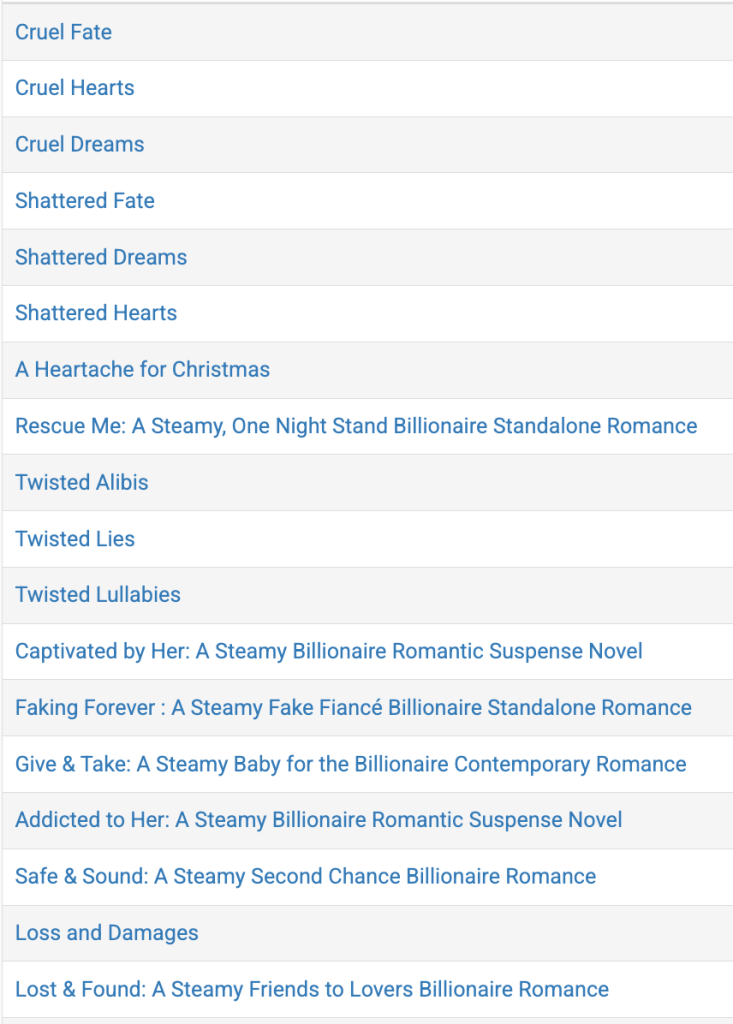
Cruel Fate	76	1	32,050	74	151
Cruel Hearts	26	1	29,027	62	89
Cruel Dreams	13	1	26,438	57	71
Shattered Fate	8	1	19,871	45	54
Shattered Hearts	9	1	16,028	36	46
Shattered Dreams	11	1	14,268	32	44

When doing series read-through, you can see how many readers are going from book one to book two and on. I don’t have big numbers to play with here, and for some reason my KDP dashboard decided not to show me all the free ebooks of book one I gave away during promos like Fussy Librarian and Freebooksy. That just makes my stats look even worse anyway, so let’s stick with paid books for now.

From Book	To Book	Total Units (From → To)	Read-Through %
Cruel Fate	Cruel Hearts	151 → 89	59%
Cruel Hearts	Cruel Dreams	89 → 71	80%
Cruel Dreams	Shattered Fate	71 → 54	76%
Shattered Fate	Shattered Hearts	54 → 46	85%
Shattered Hearts	Shattered Dreams	46 → 44	96%

You can see my biggest drop is from book one to book two, but once readers get invested they keep going. Though, these numbers look deceiving because when you do the math, read-through from book one to book six is only 29%. (Dividing 44 (sales of Shattered Dreams)/151 (sales of Cruel Fate)x100=29%.) It’s rather disheartening to know that only 29% of readers who read book one went on to finish the series.

Of course my experience isn’t indicative of what’s going on in the entire indie industry when it comes to what people are doing and what their success or lack of it is. But it does make me wonder if there is an overall shift in what authors are doing or will be doing because of the changing landscape.

What do I mean by changing landscape?

People’s attention spans are shorter than ever. According to a Microsoft study, the average human has the attention span of 8.25 seconds. That means it’s difficult to grab someone’s attention and keep it where you want it. There’s competing content everywhere–ads, reels, books, podcasts, movies, TV shows, and even if a reader enjoyed book one, that doesn’t mean they’re going to want to read the rest of your series. People get bored and may not want to follow the same set of characters for hundreds of thousands of words. In fact, Lauren Brown in an article on The Bookseller writes:

Publishers are noting a shift in industry mindset around short stories as readers embrace shorter works, with a number feeling like “something is slowly shifting” and that “there’s a real excitement around stories again.”

Getting readers excited about diving into a series that has five, six, seven or more books might be more work than an author wants to admit, or put in.

Authors may also not want to invest time to write a series. “Build it and they will come” isn’t true anymore, and there’s nothing more heartbreaking than putting years of your life into something no one wants. Writing a series is a serious time commitment and when there’s no guarantee a reader will make it all the way to the end of a series, the investment might not be worth it. When you think about it, an eight-book series could be a four-book series, a duet, and two standalones–books that are much more easier to digest and easier entry points for readers.

This also brings up the argument you can’t get away from when we talk about series. Readers may not want to start until all the books are released, but authors don’t want to write more books unless there’s proven interest in what’s already published. This creates a strange Catch-22, and the bottom line is an author would have to write, and finish, a series for their own personal fulfillment first rather than continuing based on positive reader response.

That’s not to say there isn’t advantages to writing a series, which is why the advice used to be so popular ten years ago. A series can build loyal readers. A well-written series can practically sell itself, but your first book has to be so strong that your series has actual read-through or you could end up with my 29%. Unfortunately, you don’t know how your book is going to hit the market, and what you think is a strong start could be boring to readers. But, if you have an engaging book one that leads readers to the rest, as long as your books keep reader attention, that’s money in your pocket and time well-spent writing them.

We’ve changed so much from where we were ten years ago that maybe readers and authors are moving in a different direction. Readers’ attention spans have shortened, there is a lot of content out there to compete with–from real authors and from people using AI to write their books, and authors are burning out trying to compete with all that content and getting frustrated when readers don’t want to wait for the next book.

What’s the solution? (If you think there needs to be one.)

Writer short “series.” Series that have four books in them instead of a massive list, or write trilogies or duets.

Write interconnected standalones. These types of series you can stop writing at any time if you get burned out, bored, or if readers stop reading.

Write a long series in novella length rather than full-length novels. You can still write a ten-book series, but if you cut the length of the book in half, you don’t have to put so much energy into writing them and readers don’t have to put so much time and energy into reading them. You can write them faster, save them up and do a rapid-release style launch and still get almost the same rewards. Your page reads may drop because longer books have higher KENP, but you may get more readers to settle in and binge.

Or go even shorter and write 10k-20k shorts. Sadie King has an excellent book on that if you write romance, and you can find it here: https://www.amazon.com/Writing-Short-Romance-Pleasure-Profit-ebook/dp/B0CFKTRC13

I wrote this blog post as a way to feel out what’s been happening in the industry. From my own experience and the complaints I’ve been seeing online with regard to reader retention and author burnout, I think we’re going to see a shift in the coming years. Offering a selection for readers to choose from has always been solid advice anyway. Even if a series is fabulous, not ever reader wants to sign up for the time or financial commitment of reading one. Not to mention the mental and emotional requirement to get invested. Standalones, duets, and trilogies are great entry points for readers who haven’t read you yet or just want something they can read in a day or over the weekend. Offering a diverse backlist can only help you find and keep readers.

As for what I’ve got next, that series I started years ago will take more years to finish. I have Wicked Games done (standalone), working on Bitter Love (standalone), and have my hockey duet waiting in the penalty box. After those are finished, I have a Mafia duet simmering (but I could turn that into a trilogy as the premise is new for me and I’m excited to write it. I won’t be surprised if I want to stay in that world for longer than two books.), and only after that will I have the time and maybe the want to do work on something else. So it might be quite a while before I want to tackle the last four books in the series I started. But fortunately, I don’t publish until I have my series all written, so the books are trapped on my computer. Readers aren’t wondering where the rest are, and that takes a lot of pressure off me to keep going.

What do you think of the publishing landscape? Do you think it’s changing or do you see readers still getting excited for longer series? Let me know in the comments!


With the changes at my work, I think the time has come that I’ll have to cut my blog posts down to twice a month. Not only did they do a reduction in workforce, they shuffled my days off around which impacts my writing time during the week. I’ll still do my best to post weekly, but I’m not sure how easy that will be for me while still writing as many words as I want on my books during the week. When they let a lot of my coworkers go, I thought this might be coming, but then they changed my work schedule from something I had been working for years, so I need to get used to a new routine. Hopefully I can bounce back because I love writing on this blog, so we’ll see how it goes in the coming months.

I have no idea what I’m writing about next week, but I’ll try to show up and see you then.

Have a lovely day!

Monday’s Author Update

1,617 words
9 minutes read time

higher view of a state park in autumn. browns dull greens and oranges over a hilly field. lake to the left a murky green water.
Maplewood State Park, Maplewood, MN October 2024

It’s cooling down in the evenings and the leaves are just beginning to change colors, which is lovely. We’re tiptoeing into my most favorite part of the year, the yummy months when it isn’t summer but it isn’t winter. In Minnesota, no one can accurately guess how long that time will last, but I’ll enjoy it for however long it stays.

My editing and proofing is done!
I finally finished proofing my Christmas novel that I was re-editing in time for the holiday push. I ordered a second proof just to make sure the formatting is still okay, but I’m not reading it over again. I changed a lot of word choices and phrasing, just like I did for Faking Forever, and going forward I’ll be trying to sound more conversational while staying true to my voice.

One of the things I had in the back of my mind when I re-edited those three standalones (Rescue Me, Faking Forever, and A Heartache for Christmas) was those books not sounding like me if I made too many changes. But, I’m trying to lighten up because since I’ve been reading a little bit more I’ve noticed that popular romance books just don’t get too deep with the prose and vocabulary. Whether this is a conscious choice of the author or just their own light writing style, I’m going to try to meet in the middle. I can only write how I write . . . but I can be mindful of word choices and syntax and maybe my books will be a little easier to read. I wrote a blog post on the changes I was making in A Heartache for Christmas and you can read it here: https://vaniamargene.com/2025/08/18/when-dumbing-down-your-writing-isnt-dumb/

I’m going to set up an Amazon ad for it, I think, and maybe set up a Facebook ad for it at the end of October. I really let up on the Facebook ads this year, and the only ad I’ve purchased was for getting my ARCs of Loss and Damages seen. I did manage to give away quite a few ARCs of that book through the ad, but since I gave them away on good faith (meaning no Google form to fill out and no email collection), I doubt much will come of it.

Goodreads giveaway update.
My Goodreads giveaway is doing well, though I guess I don’t have a gauge to tell. I have 1,150 entries at the time of this writing, and I’m pretty happy with that. Like the ARC giveaways through my FB ad, I doubt much will come of it, but if you don’t get your name out there somehow, no one will know who you are. It’s especially true these days with so much content to choose from.

New book and new editing project.
I’m 6,563 words into Bitter Love, but I’m going to have to table that for now. One of my friends I edit for has the next book in her series ready for me, and I’ll be putting Jesse and Jordan aside to take care of that. Because of the changes at my work and just basic free time slipping away, it will take me a while to get that editing project done and I probably won’t get Bitter Love finished this year like I wanted. My day job has just been stressful overall, and I’m at the point where I’m not sure what would be harder: staying and toughing it out or finding something new after twenty-four years. All I’m grateful for is that I’m feeling better physically every day, so if/when I decide to jump into the job search I can at least handle the change. It still won’t be easy because change is hard, but at least I won’t have the physical stuff to deal with if it come to pass.

Posting on social media.
I’ve still been trying to post on socials, and though I’ve pulled way back on FB ads, I’ve been boosting posts on IG a little more. That hasn’t translated to sales as far as I can see, but I have gained a few followers pushing me close to 500 after having the account for thirteen years. I only post graphics, not reels, so I don’t know if growing my IG account will do anything for me, either in the long or short runs, but I think I prefer posting on IG rather than my FB author page. I have come to realize I hate that page. I have three friends who like all my posts and besides that, reach is non-existent. I wonder if it would be smart to start over, but I’ve had that page for almost as long as I’ve had Instagram so I have no idea where that link is out in the world. I hate broken links so I’ll keep it up and just repurpose my IG posts for it. I started a new TikTok account and just named it something generic that has to do with books. I’m testing to see whether a “book” account will do more for me than an “author” account, like my reader page on Facebook I run ads off of when I bother. It doesn’t seem so advertise-y, so we’ll see what comes of it. Content creation is still the main issue, but I’m good with Canva and just try to juggle creating on my laptop and posting on my phone (I have the Canva app). Even if I’m stuck in what’s considered the TikTok dungeon, the low views (my last carousel got 353 views) still beats what I get on FB and IG combined, even when I boost a post on IG. I don’t want to try to be everywhere, just where I can have the most eyes without a lot of work.

Blog cleanup.
Speaking of broken links, I’ve been cleaning up my blog posts and trashing some of my older ones I did with other authors who have since flaked out or have changed their own links (or even author pen names!) making the post useless or obsolete. I didn’t like doing that, but some of my relationships with those authors have gone so far south I didn’t like having them on my blog anymore anyway. So if you happen to run into a link that doesn’t work anymore, you weren’t missing much and there’s a reason why the post no longer exists. I’ve also gone back and updated a few older posts that kept getting hits even though they were six, seven, or eight years old. Back then I had no idea what I was doing and the posts are only getting hits because my SEO on this site is actually pretty good. So, I updated those older posts with actual relevant information and now I won’t feel bad when people are reading them to find out about something.


Library distribution of Kindle Select books.
There’s been a lot of talk in indie circles about KDP letting ebooks into libraries even if you’re enrolled in Kindle Select (the author side of Kindle Unlimited).

I didn’t jump on this bandwagon for one simple fact: you still have to be selected by a librarian to be in a library. Your books don’t just automatically show up there because they’re available. And with the deluge of indie books now being available, your chances of being selected are that much worse. So, no I didn’t go upload all my books to Draft2Digital to use their site as a distribution service to libraries, and I probably won’t. My paperbacks have always been available through IngramSpark and as far as I know a library has never purchased one of my books. Like being in a bookstore, being in a library has never been a dream of mine, and I just don’t care. If you care about being in the library system and want to take advantage of that for your Kindle Unlimited ebooks, you can make an account with Draft2Digital and when selecting storefronts, select library distribution only. This article gets a little more detailed: https://newshelves.com/kindle-unlimited-authors-can-now-distribute-to-libraries/

What’s on the blog next week.
I was going to get into if writing a long series anymore is a good idea and talk about some current information I’ve run into that has possibly proved that it’s not. But right now, this blog post is already eight minutes long, so it’s probably better if I wait to talk about it another day.

Peak leaf-looking season will be coming in a couple of weeks and I’ll be taking a day off to go to a state park near here with my sister and daughter. We went last year and I took some amazing pictures. It’s nice to spend the day outside in cooler temperatures and then we go out to dinner after we get back into town. Things will change a lot for me if I have to get a different job, but change doesn’t have to be bad. It’s the getting-through-it part that’s uncomfortable, but with my health issues, the past five years have been hellish and maybe finding a different job will be a piece of cake after that. Anyway, I will keep you posted on all that as I know more.

Next week, let’s say I’ll write that blog post on whether or not it’s worth an author’s time to invest in a long series. With attention spans dwindling and a reader’s need for instant gratification, I feel the old advice of writing a long series is slowly becoming as obsolete as some of my old blog posts.

Chat more about that later! Have a great week!

murky photo of a lake through dark brown and black tree branches. brown and orange trees off in the distance
Maplewood State Park, Maplewood, MN. October 2024.

Networking with the Right People at the Right Time

1,554 words
8 minutes read time

"life is one big tug of war between mediocrity and trying to find your best self"  david goggins

quote on cream background

In my last blog post, I talked about the writing community and meeting and networking with the right, or wrong, people. I see this on Threads, even today, though not at the scope it was on Twitter say, eight years ago. Back then, there were, like I said, themed days to post your work, like #1linewed​ #2bittues​ and #fridaykiss​ ​(that has since been moved to Instagram). The #writingcommunity​ was a melting pot of genres and publishing levels. It was easy to get swept away by how “professional” everyone seemed with their websites and debut books. Talk was cheap and sounding like you knew what you were doing had more weight than actually knowing what you were doing. I’m not sure how many books I bought that had fabulous covers that just sounded blah inside. And of course, the number of followers topped everything, and someone with 30k followers interacting with you or retweeting a tweet was like Christmas morning.

It was easy to lose sight of the real reason (if you knew the reason at all) you should have been networking, and a realization like that takes years to come, if it ever does.

If I were to do it over again, I’d stay off Twitter and focus on Facebook groups. I was there, too, in groups like Bryan Cohen, Mark Dawson, and 20booksto50k. But those groups were like being on Twitter–a mishmash of genres. I’d definitely focus more on romance groups and getting to know those authors. Once I started publishing, I did do that a bit, and joined the Romance Writers of America, but I didn’t get involved to nearly the extent I should have. That brings me to where I am today. Not having very many romance author friends and not having the energy (or time) to fix it.

I sound like I’m all gloom and doom, regretting and maybe resenting the path I didn’t realize I was taking, but that’s not entirely true. There’s a lot of good that came out of it, but it doesn’t benefit me in the way I’d like it to now.

When I dove into the Do-It-Yourself part of indie publishing, I didn’t hold back because I love the entire process. The formatting, even back before Vellum existed and we were formatting our CreateSpace manuscripts in Word, and book cover design, also in Word before Canva was around. I bought a book on how to use WordPress and set up my own website. Then tools like Vellum and Canva did come into existence, and with the encouragement of my friend Aila, I started using Canva and learned how to make graphics and later, book covers with it. I remember I wanted to do my book cover for Wherever He Goes in Canva, but I wasn’t sure if it was possible. Up until then, I was doing them in Word with instructions that I found online somewhere, but I thought, A PDF is a PDF, so why not try? So, I did the same thing I was doing in Word but in Canva, and I actually made a very nice (for what I was capable of back then) cover. If you want a sample of what I was doing back in 2017, you can look here: https://vaniamargene.com/2017/03/14/your-books-back-cover/ (Also, yikes!)

I was very into the soup to nuts of indie-publishing like a lot of people were, and while I do think it set me back in some ways, there are some skills that I don’t regret nurturing like learning how to use WordPress so I can maintain my own blog, or learning how to use Vellum so can I re-edited and update back matter whenever I want. The Canva tutorial on how to make a full paperback cover wrap has helped thousands of people, and I never would have been able to write it if I hadn’t learned how to do it myself.

But leaning into nonfiction really wasn’t what I had in mind when I was first starting out. Actually, I’m not really sure what I was doing. I never really thought I’d be able to turn my books into a career, and didn’t know how to go about it anyway. It took many years to figure out that other authors weren’t readers, that your cover, title, and blurb are more important that you realize, and when you’re just starting out, your books aren’t going to be very good. Meaning, I really do think it takes a million words or more to find your voice and style and actually write books that sound good. I think the only way I could describe what I was doing is fucking around, but seriously. Seriously fucking around. While I had good ideas, (I still love the short story I wrote about a woman inheriting a huge mansion on the coast in Oregon and falling in love with its caretaker) we all know that good ideas do not build a readership.

Which is probably why I’m stalled now, because I’m still seriously fucking around. My books have gotten better since I first wrote to publish back in 2016 when I wrote On the Corner of 1700 Hamilton, but I’m still stuck in the same DIY pattern I was back then, doing my own covers, doing my own formatting, and doing my own editing. What was popular and “wow” worthy back then really isn’t so much now, but with the way things have shifted in the industry, it’s not so easy to fix.

That brings us back around to having not met and networked with the right people and forming those connections that I could have used to find trustworthy editors and cover designers that don’t cost a fortune and who won’t use AI. It’s not impossible to find those people now, but it is a lot harder. Editors who will charge you only to feed your book chapter by chapter into AI or ProWritingAid, or book cover designers who use AI and try to hide it. So, not only am I stuck in the DIY trenches, it would take a lot of work to climb out of it.

I mean, where I am isn’t bad. It’s not, especially when you see other authors who are doing the same thing, either out of trust issues or lacking the financial budget to hire out. If your book is mediocre and it’s floating in a sea of mediocre books, it’s not mediocre now, is it?

I think I lost the thread.

What I’m trying to say is, had I networked differently, I could have went down the professional path rather than the DIY path, and maybe I would be in a different place. I say maybe because I have improved a lot over the years, even just re-editing Rescue Me, Faking Forever, and A Heartache for Christmas has shown me that and improvement like that has to come from doing the work. But had I hired an editor and bought premade covers for my books instead of insisting on doing them myself, maybe I could have gotten here faster. I’m not sure.

I don’t know why I threw myself into the nonfiction side of indie-publishing (and giving advice when I had no right to be giving it). Maybe back then I thought blogging was a way to sell books, just like I thought networking with whoever would also sell books, but besides giving me joy because I’m helping people and giving me a way to voice my thoughts to someone who might get something out of them, it’s not doing anything for me professionally. I don’t plan on writing a nonfiction book–I thought about it for five minutes then realized it wasn’t for me–and I’ll never monetize this blog. I don’t have the heart for it and I’m not arrogant enough to think that my opinion and advice is worth a cup of coffee.

So, the way I see it is, I have two choices now that I know what I’m doing: I can go professional and network with romance authors, hire an editor instead of doing it myself, and buy covers that look better than what I’ve been making, or I can keep doing things on my own and hope that it’s good enough to eventually lift me to the next level. Networking alone won’t help so I have to decide what I want to do.

The decision is harder than it seems because the work I’ve been doing for myself has been fine compared to what’s out there. But “fine” rarely makes headlines, so if you’re in my situation where you’re doing what you can but still not where you want to be, be it networking or sales, you can choose a different path. It might be scary since the road you’re on is familiar and you already know all the twists and turns, but we all know finding success won’t be where you’re comfortable. That means networking with the right people and making your product shine, so when those opportunities do come, you’re ready to take them and make the most out of them.

Next week I’ll catch you up on what I’ve been doing and chat about some things that have been happening in the indie community.

Talk to you next week!

Friendships, Coworkers, and Cliques: Navigating the Author Communities

1,973 words
10 minutes read time

“In prosperity our friends know us; in adversity we know our friends.” 

– John Churton Collins

There has been a lot of talk about author cliques on Threads lately, and while I didn’t feel the need to contribute to those conversations, I do have a lot of thoughts about friendships that I’ve collected over the ten years I’ve been doing this. Not friendships. Thoughts. Though, I guess, maybe friendships too. Friendships are complicated, made even more so by expectations and reciprocation. Here’s a breakdown of what I think friendships, coworkers, and cliques are, and if you’ve been at this for a while, in the comments you can tell me if you agree or what you’d add to the conversation.

Indie Friends
When I first got into the writing community, I made lots of friends. That was back when I was writing my high fantasy series that will never see the light of day. Anyway, I thought, “I should join Twitter so once it’s ready, I’ll have readers.” It was a naïve way of thinking at best, but even back then I was aware that I would need some kind of marketing strategy once my books were released. I already had a Twitter account made from when I was in school for human resources and I changed the focus of my profile from HR connections to the writing community. There I made lots of friends, joined chats like #1linewed and #2bittues and even made my own chat called #smutchat. The tweets are still there if you search the hashtag. Anyway, so I got in with a group of people, some of whom I still talk to today, and life was good. We beta read for each other, retweeted each other’s tweets, and everyone supported my blog when I first started writing it.

Of course there were the usual troubles when it came to those friendships. Some of them became one-sided, some people dropped off because they stopped writing. (One of my friends even had to deactivate his Twitter account because a person he had grown close to started stalking him. Yikes!) Some people you just learn you don’t really mesh with and you stop talking to them or they stop talking to you. I definitely had my share of rocky relationships, some of which I’ve documented on this blog over the years, notably when you mix business with friendship: https://vaniamargene.com/2019/03/11/when-friends-turn-into-business-partners-sometimes-it-doesnt-work-out/

Some of the talk I’ve been seeing alluded to the idea that if you don’t have the “right” kinds of friends, they can’t/won’t help you propel your book business to the next level. I’ve reached out to a couple people here and there who I’ve met on Threads and they weren’t too interested even after posting they were looking for friends. It wasn’t until this morning in the shower that I realized it was because they probably took a look at my socials and sales and realized being friends with me wouldn’t get them anywhere. It was an “oh, shit” moment, but it didn’t hurt my feelings. If all they want to do is use me, I don’t need them as friends anyway.

When I was at my Twitter “peak,” I had a different kind of friendship experience. What I found out was that making friends on Twitter wasn’t the same as finding your readers, and some people I know still get caught in the trap of making author friends with the idea that those authors will buy their books. They confuse making friends and networking with marketing and that only ends in frustration.

The indie author friends I was making wrote all different kinds of genres, were happy to boost my work and support my blog and I reciprocated. Those times are gone and I haven’t replaced the real friends I lost. While I have made connections, I’ve come to realize those people are coworkers, and if you have a day job, you know, and hopefully not through trial and error, your coworkers aren’t your friends.

Coworkers
Coworkers are what people mean when they say you should be networking in your genre. Coworkers are going to be the connections that offer things like newsletter swaps, promo opportunities, anthology opportunities and more. They help you with ads, they might beta read for you or put you in touch with who they use. They help you find ARC readers and open the door to things like book conventions. They’re like Deb in they cubby next to you. She’s not your friend but she’s happy to tell you about what went on in the meeting you missed because you were sick.

What a lot of authors get confused is that these coworkers are not your friends. They don’t touch base on a daily basis. You don’t talk to them about your kids. They don’t text you privately or want to meet you in person if they happen to be in your area. We all know what friends are, and these people are not it. But, to have these kinds of coworkers, you also have to be pulling your own weight, meaning, your books are selling and you have your own opportunities and experiences to share. You do your share of the work in anthology compilations and book blasts, and you can do your share because you’ve put in the work to have a large newsletter, Facebook group, and reader base. You bring something to the table and you share the sides with the other authors who also have something to bring to the table.

When I see authors complain about not being invited into networking circles, I can take a look at what they’re doing and know right away why no one wants to work with them. They don’t have an author platform, they don’t have a newsletter. They don’t have a solid backlist that’s selling. They haven’t worked on an individual basis to get the results they need to get invited into the group. No one wants to do your work for you. I know that puts some authors in a quandary because they say they can’t get to that level without help, but you can make headway on your own with social media, ads, and publishing consistently and in one genre. Start smaller and network with authors who are at your level. Grow together and you’ll naturally expand your professional network.

On a smaller, more personal scale, maybe you know how to format and you format for others, either out of kindness or you charge a small fee that’s less than what a professional formatter would charge. Then you don’t hear from that person again until she needs another book formatted. I have quite a few acquaintances I’ve made because I offer help, they take it, and I don’t hear from them again until/unless they need something else. It was actually a surprise to realize they aren’t friends, they’re coworkers, but it’s helpful to know where the line is. Not everyone needs to be your friend. Maybe someday they’ll remember I helped them and pass along an opportunity, but I didn’t offer to help with the idea they would reciprocate. I wanted to help because editing, formatting, and designing covers keeps my skills sharp for when I need to work on my own books.

Unfortunately, I’m still living in a time when I was on Twitter and we all did happily for each other. I don’t think we can ever go back to the way things were and over the past couple of years I’ve been getting used to being an island. You can’t get jaded. If Deb brings peanut butter cookies to put in the breakroom and you have a peanut allergy, just remember your workplace isn’t where you should be making friends anyway.

Cliques
This brings us to cliques. I must not get out enough, because honestly, I haven’t had much exposure to cliques. What I have bumped into online is romance authors who have been writing and publishing for years, who are friends and have been for that same amount of time. They can appear as cliques because they have that history of friendship, but not only that, their careers grew successfully at the same time keeping them on the same playing field professionally. You can say that’s because they had each other’s help, but that’s not necessarily true. What you’re writing has to hit the market, your writing style has to resonate with readers. No number of friendships can help you do that.

When I think of cliques, I think of their members as unkind, and I haven’t met any romance authors that have been truly unkind to me. I used to listen to a romance marketing chat on Clubhouse (that they stopped because it was too much work to keep going) and the hosts were friends and seemed like they had been for years. All the speakers and anyone else who contributed were very nice and eager to share their knowledge and experiences. The same goes for the book blasts I’ve been a part of, and when I do those, I always make graphics to share on social media so others can use if they don’t have time to make their own and post the blast everywhere I can to pull my own weight.

Of course, I haven’t elevated myself to be coworkers or acquaintances of huge romance authors like LJ Shen or Melanie Harlow, but I haven’t wanted or needed to approach them, either. I’ve traded a comment here and there with authors like Lindsay Buroker, Zoe York, and Elana Johnson, and EL James actually responded to a comment I made on her post on Threads, and everyone is very nice. I don’t approach people wanting something because that’s never been who I am and I think the bigger the author is the stronger their BS radar is and they know if you’re just looking to use them.

So, I don’t think author cliques truly exist, not in the negative way some authors say they do because they’re resentful they can’t crack the code to be invited in.

And cracking the code to be invited in will only get harder as time goes on. I mean, let’s be honest here. No one wants to talk to you if you support the orange clown. No one will want to talk to you if you use AI to write or use AI for your covers. No one will want to talk to you if you don’t respect your peers and insist on leaving bad reviews for the books you’ve read. Authors are guarding their space more than ever before and because of that you’re in for a harder time proving yourself. That’s something I can totally understand. Our president is tearing this country apart and I don’t want to talk to anyone who supports him either.

The best thing you can do, in my opinion, is join Facebook groups in your genre and get to know people there. Making friends, good friends, will take time. Share resources, share experiences. Learn from the people you’re networking with and let those relationships grow. Oftentimes I’ve complained about feeling lonely, though that has gotten better as my health improved, and I know that I don’t do enough to expand my circle. I should be participating in romance groups, offering to do newsletter swaps with my small blog, beta read, and format if needed. But right now I’m juggling a few things and don’t have the energy for that. That is also something else you’ll have to take into consideration. How much time and energy do you have to nurture new relationships? Don’t take if you can’t give.

Next week I’ll talk about where I ended up when I started on that path of friending writers and authors who weren’t writing romance.

Hint: It’s not a bad place.

Talk to you next week!