Monday’s Author Update

Words: 1450
Time to read: 8 minutes
I don’t have much to say this week. I was able to finish proofing my proofs and I tweaked their covers. They looked plain, like they were missing something. I had made a series logo when I had the other covers, but with the colored lights, the logo didn’t fit anymore and I had to figure out something else. I really like the bokeh city background. I think it fits in with my other covers and the brand I’ve been able to create with all my books so I didn’t want to change it once I found it.
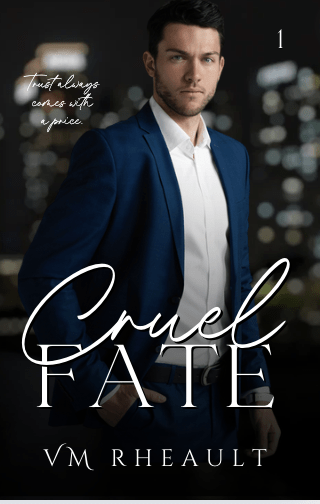
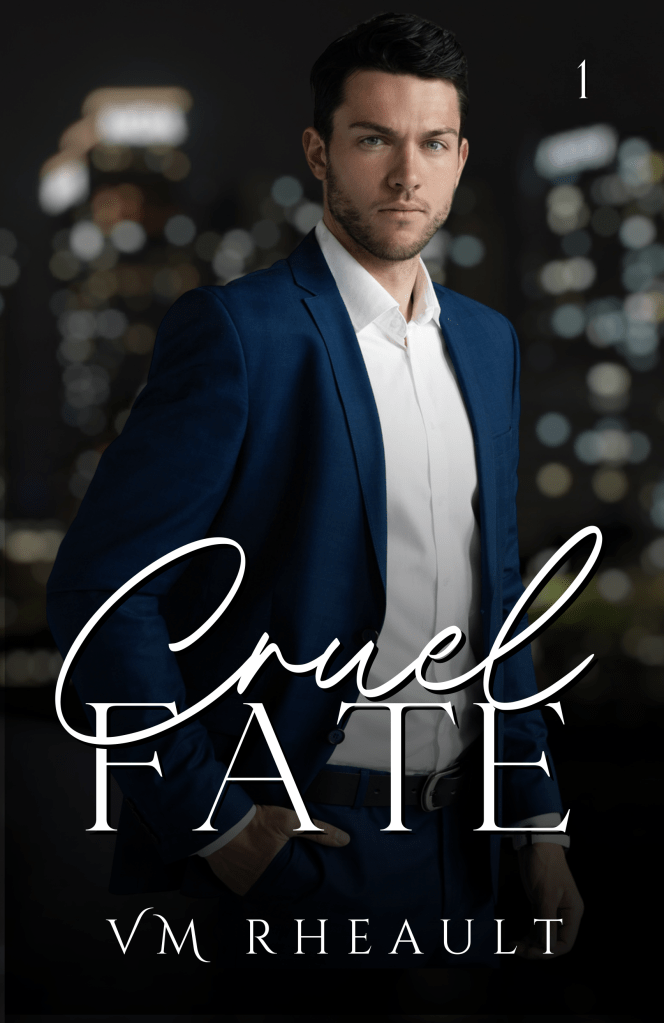
The tagline doesn’t add much, but I think it fills in the emptiness and balances out all the text at the bottom. I bolded the font (in Canva, if there’s not a choice to bold a font, you can duplicate it and lay it on top of the first which is what I had to do here) and it actually doesn’t look too bad in person. I won’t bother to take a picture of it because it wouldn’t look right anyway, but I’m pleased with how they look and besides moving the guy up on the sixth book, the covers are good. Here are all my covers together, besides my series, if you wanted to see them side by side:
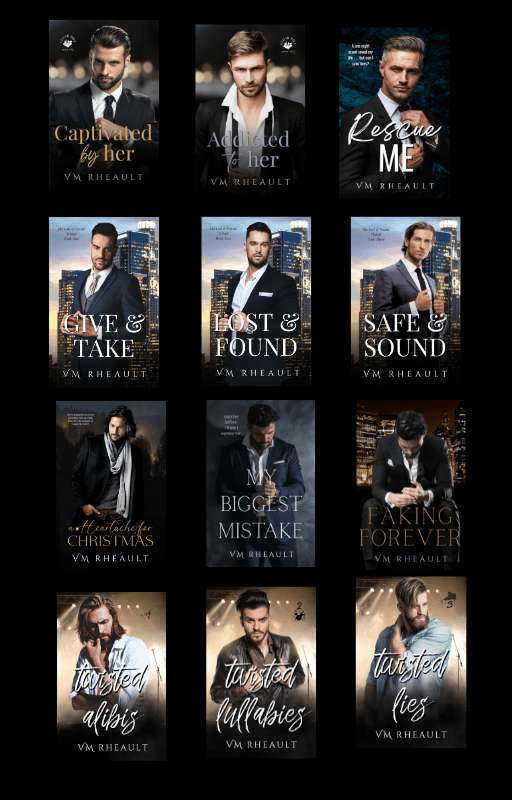
Some might say not being able to read the tagline is a concern, especially at thumbnail size, but it will be bolded on the Amazon product page in the blurb section, so it’s mostly for decoration at this point.

I still have a lot to do–I haven’t even paged through the proofs yet, just opened the box to see how the tagline looked on the covers. I need to make sure the interiors are okay, that I added and took out everything I wanted, change the chapter headers because the paperback and ebook chapter headers have to be different, and then create the ebook files, for both Amazon and Bookfunnel. For six books, that will likely take me all day, and then I still have to create download pages for Bookfunnel and upload the files. I decided that I’m going to put all the ARCs up first before putting my preorders up on Amazon. I just want to do things one step at a time, and I’ll put my ARCs up for a couple of weeks first. I plan to run a Facebook ad to my website to encourage readers to download and I’m also going to use Booksprout since I’ve been nurturing a following there. I was a little hesitant putting the ARCs up while they were on preorder because I don’t want to upset the Amazon gods in any way, and I’d prefer links not being up in other places if they’re on Amazon, even if they’re only available for preorder.


If you’re wondering why I haven’t dug into any of that yet, it’s because I was stupid. On Saturday I had the entire day ahead of me, and instead of reading a book that I didn’t write or making graphics for social media, I opened my reader magnet and started reading My Biggest Mistake.

I didn’t have any intention of editing it, but once I started reading, I started changing things here and there, getting rid of some echoing, that kind of thing. My Vellum file says I last edited it in January of 2023, and while I did a good job, I’m finding things to fix to make it sound better. The story is still solid–I’m only changing things on a paragraph and sentence basis, and not even much of that. I started reading it because I really enjoy the story, and since I’ve been lightly editing it, I’m almost sorry I’m giving this book away. Despite the changes I’ve made so far, it’s one of my better books, deep and angsty, my characters saving each other from the choices they’ve made.

I don’t know how I could sell it and not feel bad since it’s free on my website, and I don’t want to put it for free anywhere since it does encourage visitors to my blog. I’m still giving away copies, about one every two days, though I’m not sure if I’ve been getting new subscribers. I exported my list from MailerLite and fed my list into my website, but since then the numbers have remained steady, though WordPress gives me a notification now and then I have a new subscriber. I’ve been blogging more, trying to get the word out, so I guess if people are getting sick of that, they’ve unsubscribed.

I don’t pay attention to those kinds of numbers, but I would feel bad if I took down my free book. I’ve been giving it away since practically I wrote it–it’s basically part of my brand now.

Anyway, so I enjoyed reading that and it will be better for it besides.


I have a Mayo Clinic appointment on the 23rd, and my sister is taking advantage of the trip to see a dermatologist for her eczema. I’ll be gone August 21-23 and I’ll try to get as much done as I can before then. I don’t know if I’ll be able to get my ARCs up. It would be nice if I could, because once those go up, I’ll be able to take another break. I haven’t been feeling lousy, and it would be fun to actually enjoy this trip down to the Cities–maybe eat at a place we never have before and I want to hit up Half Price Books in Apple Valley, if time allows. I haven’t been in there for a long time, and they may have some craft books I haven’t read yet.

Otherwise, that’s about all I have going on. I’m having an MRI done at one of my appointments, and I think she’s going to tell me I have endometriosis. This isn’t the blog for that, but I’ve been going down there every three months since February and if she wants to see me again, I’m going to put her off until December, or even January. I’d like to enjoy the holidays this year since even though I’m not cured, I’m feeling better, AND my 50th birthday falls on US’s Thanksgiving Day. That has got to be some kind of omen, you’d think. Better things coming for 2025, maybe? Not sure. I’m too hesitant after everything that’s happened to hope.

One thing at a time, at any rate, and getting those ARCs up is what I’m going to be working on this week. My sister and I are dragging my daughter (who is eighteen) to see Twisters (the second time for my sister and me) and I’m looking forward to that. When the original Twister came out, I saw it in the movie theatre thirteen times. There’s just something about seeing a movie like that on the big screen as often as you can. Probably the only good thing I can say about COVID is that the theatres were forced to regurgitate old movies, and my sister and I were able to see Titanic a couple of times in the theatre. She’s young enough she never saw it on the big screen. We made my daughter go to that one too, and I was pleased she sniffled through the entire thing, even though she gave us a hard time for forcing her to go.

Sales are slow at the moment, and there’s nothing to report there. The only thing that will breathe life into my sales now, I’m afraid, is publishing again, and I’ll get on that soon enough. I’ve heard lots of reports of August being a slow month (which I don’t really believe because the world is a big place), and I almost regret putting out my series during an election year. Stupid politics. I have a bad feeling that fiasco is going to ruin my launch and I can only hope the series hangs in there until after the New Year because I’ll be releasing into summer of 2025. But, never fear, it’s the first year my daughter can vote and I’m running her little butt up to the polling place because we both understand the assignment. Besides, I’ve benefited from living in Minnesota. Tim Walz is great, and I would love for the rest of the country to benefit from all he’s done for us, too.

I don’t get political often, and I hope if you’re publishing around that time, too, that you have a great launch!

That’s all I have for today. Good luck this week, keep your chin up if you’re going through the usual garbage. Take care of yourselves.

Until next time!

Being an indie author means using what works for you, no matter the source.

I had an interesting conversation with a friend the other day. Not really a conversation I guess, because it’s long been established that we don’t see eye to eye on writing, publishing, and marketing, and that’s okay. Just looking at her back list and mine makes it clear we have different paths and different goals. She’s 100% indie, does her own thing when it comes to books, genres, writing craft, as well as covers and where she publishes her books. She’s happy, (I’m assuming she is as she has never told me otherwise) and wants to stay on that path.

I learned over the five years I’ve been writing and publishing romance is just because I want to do it the way I want to do it, it may not align with my business goals and what I want for my books. That’s an important distinction. Just because it’s the way I want to do it, it may not be the best way to make the dreams I have to come true. So, I’ve learned to niche down to a sub-genre and study what’s on the covers of the books doing well in that sub-genre. I create my covers not only with what I like (and what my skills will allow), but I also have to take into consideration what is selling, and what will meet Amazon’s guidelines when it comes to ads. Just because you’re indie doesn’t mean your books can’t look and read as professionally as they should, and this made me think: we can publish indie books while borrowing from the best of indie and trad worlds.

What do I mean?

Covers: Think like a trad author.
As an indie you can put whatever you want on your cover, but the fact is, after you publish, you aren’t competing with only indie authors. In fact, the line between indie and trad grows blurrier every day. Readers don’t care who publishes your book as long as they get a good read for a fair price. You’re in complete control of your cover, but once you start tweeting your book to generate interest, or you run any kind of ad, you’re going to compete against a lot of other authors. Authors who are traditionally published by the Big Four, authors who are published by a small press, authors who can afford to spend $500 dollars on a cover, authors who know a photo manipulation software backward and forward, and authors who put their cover together in the middle of the night high on caffeine using Microsoft Paint. This is an area where we can learn from traditional publishing. Create your cover to fit in with other books in your genre. People do judge books by their covers and who knows how many readers pass you by if your cover isn’t up to standards. Unfortunately, you may never know.

Blurbs: Think like an indie.
Up until recently, and I mean, like the past couple of years (which is recent when you’re talking about publishing) blurbs (plot teasers on the product page, not one-sentence praise from your peers) were written in third person present tense. It was just the way things were done, and there are still indie authors who write their blurbs this way, despite that their book is written in first person/present/past. It took me a long time to wrap my mind around a romance that was written in first person, and it took me actually writing a romance in first person dual POV for me to fall in love with it (no pun intended). While this was going on, the savvy authors started writing their blurbs in first person, using the voice of their characters. If you look back, the authors who started that and bucked the system were GENIUS. Blurbs have always been, and always will be, a marketing tool. Because it’s a trad thing to write your blurb in 3rd person present, there have been some people who are reluctant to move away from that (and I blogged about that too.) Personally, I think blurbs written in first person makes sense (and only applies to authors who write in first) and you can have a lot of fun writing your blurb that way. This is time for a good reminder that you should always research what other authors are doing in your genre and what reader expectations are. Writing your blurb in third could lose you readers, or make readers unhappy when they read a 3rd person blurb and expected a book written in 3rd person as well. There are some readers who detest first person books and go out of their way to avoid them. If you like to troll Twitter (and I mean scroll, not be a jerk) you can read some more thoughts on 3rd person vs. 1st person blurbs using these Twitter search results:
https://twitter.com/search?q=1st%20person%20blurbs&src=typed_query

Release schedules: Think like an indie.
Being an indie when it comes to how often you can publish and when can help you build an audience quickly. Trad authors are stuck to once a year, maybe twice if they’re with a small press with a flexible schedule. It seems Amazon imprints like Thomas and Mercer or Montlake allow their authors to publish a little faster, but all in all, authors who can release a book quarterly (3-4 a year) have a better chance at building an audience so why not use that to your advantage? It hurts to save up books, but if you’re a slow writer, why not? Write, edit, and package three, then write more as you release. this can start a publishing schedule that you can maintain and after a while, your growing audience will know when to look for a new release. In the time a trad author publishes three, an indie could publish nine to twelve, and that just means more money in your pocket.

Series: Think like an indie and trad author.
Indies are getting better at this, but I’ve seen some books in a series that don’t look like they’re a series because their covers don’t look the same and don’t have a similar vibe. Trad has always been great with series branding, using the same fonts, backgrounds, and characters. For instance, the first book in the Flowers in the Attic series was published way back in 1979.

photo taken from https://thebookmelon.weebly.com/blog/flowers-in-the-attic

Series branding is important, but these days in the era of fickle attention spans, a trad house may pull the plug before a series is complete because it’s not selling. Sometimes an author gets a chance to wrap up, but sometimes not. Readers get angry, but like my friend Dea pointed out on Twitter the other day, it’s not up to an author if they have a book deal whether or not to continue a series [unfortunately since I wrote this post, Dea left Twitter and the link no longer works]:

This is where being an indie can make all the difference. IF YOU’RE AN INDIE AND YOU’RE WRITING A SERIES, FINISH IT, OR AT LEAST WRAP IT UP! Readers don’t like being left hanging, and when you’re publishing your own books, there’s no reason not to finish. The release consistency subject above also comes into play here. If you’re going to make use of a cliffhanger, you better have the next book ready to go (hopefully on very short preorder), or you’ll get bad reviews like this one:

Use your freedom to your advantage and keep your readers informed. I was tweeting with this author, trying to figure out the best way to let her readers know so this didn’t happen again. Is posting a publishing schedule in the first book’s blurb the way to go? Perhaps this would be a good reason to use A+ content? I’m publishing a six-book series next year, and yes, I do use cliffhangers. But unlike the author above, they are all written and I will be releasing all six in one year. When I read the Crossfire series by Sylvia Day, she did give the characters a happily for now ending just for the fact she’s a trad author, knew her readers would have to wait a year between books, and wanted to give her readers a bit of closure until the next book came out. When you’re indie and you need time, maybe that is the better way to go. Personally, I’m not sure what the answer is, but I will never not have all my books written in a series before I publish. Just for the fact avoiding small plot-holes and consistency issues will always be reason enough for me to wait to publish while I write.

The overall look of your book: think like a trad author.

A lot of authors don’t know this, but there is a set of guidelines you can (should) follow when you publish. The Independent Book Publisher’s Association lists them on their website and covers everything from what you should have in your copyright page to reminding you that your interior should be full-justified. It’s amazing that you can be a life-long reader, but when it comes to assembling your own book, how a book should look flies right out of your head. I’ve seen books that are left-justified only, no page numbers, spaces between paragraphs (this is okay for non-fiction, but I’m referring to fiction books), double spaced, no front matter except a title page, nothing in the back, not even an About the Author page. There’s no reason you can’t put out a professional product. To find the list of guidelines, look here:
https://www.ibpa online.org/page/standardschecklist

While I understand the disgust thinking about traditional publishing can evoke in an indie, there are lessons trad can teach us. Your book should look professionally put together, even if you’ve done it all yourself. When you’re asking a reader to pay for your product, it’s up to you to make sure they are paying for quality. It doesn’t matter how you reach that standard, it’s only important that you do. If that means hiring out every step of the way, then that’s what it means. Some may only need an editor, some can edit their own work and do just fine. Some indies are a one-stop shop and do every single thing for themselves, or use $50 dollar premades to cover their books that go on to make thousands of dollars. As indies, we have so much flexibility, but don’t use that as an excuse to do what you want. Once you put your book out into the world, you want readers and you want readers who will recommend your book to others. You want people to take photos of your books in their gardens, next to their cats, at the beach, and they won’t do that if your book has a crappy cover on it.

You CAN have your cake and eat it too. Just maybe scrape a little frosting off it first.

Until next time!