When Dumbing Down Your Writing Isn’t Dumb

1,419 words
8 minutes read time
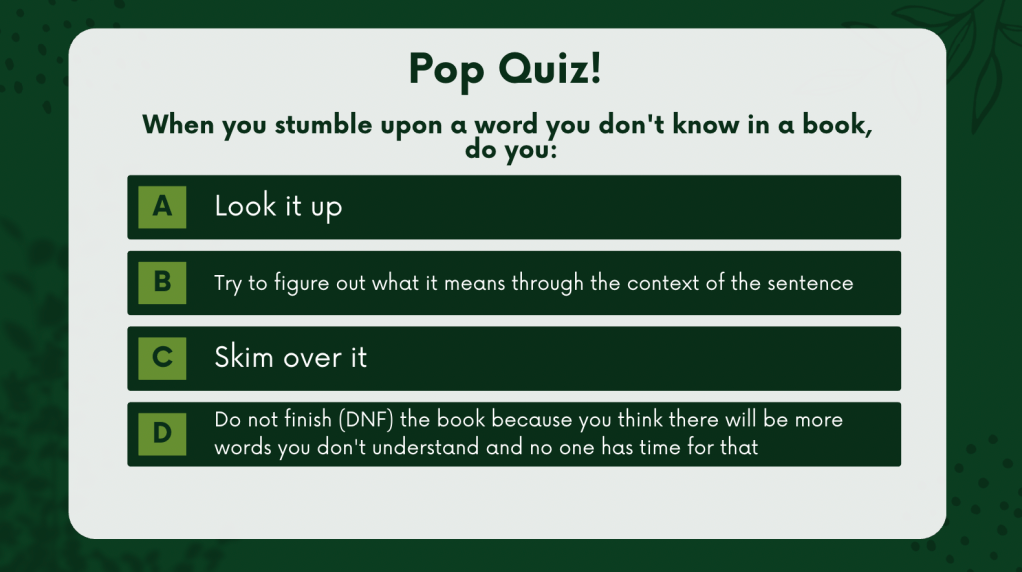
Pop Quiz! 

When you stumble upon a word you don't know in a book, do you:

A) Look it up
B) Try to figure out what it means through the context of the sentence
C) Skim over it
D) Do not finish (DNF) the book because you think there will be more words you don't understand and no one has time for that

green background with grey letters

If you’ve kept up with what I’ve been doing lately, you’ll know that I’ve been re-editing some older work. I’ve said in the past you can’t go forward if you’re looking back, but sometimes the road to success isn’t a straight line and I’ve been happy with my decision to polish a couple of books that I published a few years ago.

What I’ve discovered is that I have/had a very pretentious way of writing, and when you’re writing commercial fiction, especially romance, that might not be a good thing. We’re told to write how we want to write, that readers will come back for our voice and style. But what if that style isn’t good? What if what sounds “natural” to you sounds like a dictionary and a thesaurus had a baby to your reader?

The average adult reading level in the United States is 7th to 8th grade according to The Literacy Project (https://www.sparxservices.org/blog/us-literacy-statistics-literacy-rate-average-reading-level), and that can impact how readers read your books. Readers don’t want to struggle to understand what your book is about, sift through complex words when something simpler would suffice do, or get bogged down in purple prose that doesn’t do anything to move the story forward.

That doesn’t mean every “big” word is bad, but it does mean that maybe using a “big” word when a simpler word would work just as well is the way to go. The problem is, making that conscious choice to swap out, say, adept for skilled seems like a cop out and maybe even disingenuous insincere if you have a big vocabulary and using those words is natural.

I certainly didn’t mean to bog down my books with words like “lambaste,” “derision,” and “ramifications” but those words were there in my head because, well, they just were. Unfortunately, too much of a good thing is bad, and thrown all together, A Heartache for Christmas sounds like I was trying too hard when really, I was writing what came instinctively.

But then we get into what would fit the character rather than what sounds easy. I write billionaire (for the most part) and that implies my MMCs are educated, sometimes disgustingly so (you don’t want to know how many degrees Rick Mercer has in Captivated by Her). They’re smart, they earned their money, and making them sound like a redneck who dropped out of school in sixth grade wouldn’t fit. So yeah, Sawyer might use words like “palpable” and “derision” but that’s part of who he is.

The trick is to make your characters sound like themselves while also staying true to your voice, but also keeping in mind that your reader just wants to have a good time reading your book.

Here are some of the sentences I found when I was re-editing A Heartache for Christmas and what I changed to make the sentences more relatable and easier to read.

Original: He was adept with the tow but he didn’t give off mechanic vibes.
Changed: He was skilled with the tow but he didn’t give off mechanic vibes.

Original: It goes against everything I am as a gentleman, as a decent person, to let McLeod berate Evie for attending the festival.
Changed: It goes against everything I am as a gentleman, as a decent person, to let McLeod chastise Evie for attending the festival.

Original: McLeod’s State Bank never would have worked with me on a payment arrangement.
Changed: McLeod’s State Bank never would have worked with me on a payment plan.

Original: Gray lambastes me for having the audacity to show my face at the festival, even when I try to defend myself.
Changed: Gray tears into me for coming to the festival, even when I try to defend myself.

Original: Alone in the quiet, the shakes set in, the ramifications of what Billy could have done to me if Sawyer hadn’t checked on me hitting me in the gut.
Changed: Alone in the quiet, the shakes set in, the reality of what Billy could have done to me if Sawyer hadn’t checked on me hitting me in the gut.

Original: I miss her and I should have invited her up to my room even if she would have declined.
Changed: I miss her and I should have invited her up to my room even if she would have said no.

I think you get the idea. Some aren’t so bad, like “arrangement” versus “plan” or “berates” versus “chastised.” You can say that maybe “chastised” is no better than “berates,” but when it comes to how familiar or common a word is or how conversational it sounds, choosing the one that sounds more relatable to readers will always be the best option. The thing is, the “best option” will vary by author to author and book to book.

So, I don’t think it’s necessarily dumbing own your prose or your language when you exchange one word or phrase for a simpler word or phrase. What you’re doing is:

  • Using clear, common words that almost everyone instantly understands.
  • Keeping emotional beats from getting buried in overly fancy phrasing.
  • Making the writing feel “invisible,” letting the story, not the language, have the attention.

I read this article by Shane Snow–I’ll link it at the bottom–and he says:

I did an informal poll of some friends while writing this post. Every one of them told me that they assumed that higher reading level meant better writing. We’re trained to think that in school. But data shows the opposite: lower reading level often correlates with commercial popularity and in many cases, how good we think a writer is.

He goes on to say,

We shouldn’t discount simple writing, but instead embrace it. 

I think this is why we’re so hard on books that do well when we think they aren’t worthy. They’re written simply, letting story and emotions shine through, and as writers who are trying our best, we think that’s not good enough when to the average reader, it’s what they want and what makes a bestseller.

That’s not to say you can’t use “big” words, just use them sparingly because as with any spice in any dish, too much can ruin the flavor. I think that might be where I was at with the standalones I’ve been re-editing these past few weeks, especially Faking Forever. It’s nothing I thought to watch out for, and I did have a beta reader read A Heartache for Christmas and she didn’t say one thing about any words that sounded out of place.

As for what I’m going to do now, after discovering my penchant for love of words that fit but don’t fit, of course I’m going to be paranoid my other books sound like that. I spot-checked my proof of Loss and Damages and that came out fine as far as I could tell. Rescue Me is okay. Faking Forever and now A Heartache for Christmas will be okay. I’ll have to trust that my King’s Crossing serial sounds good because there’s nothing I want to do less than read those again. My rockstars are okay. I lightly re-edited them not long ago but I haven’t updated back matter or uploaded the new files in KDP. I’ll get around to that sometime. At this point, I’m going through what probably all authors go through, and that’s being obsessed with perfection. Well, maybe not that specifically, but I want my books to be the best they can be, and after the last few years of not feeling well and craft improvement just because I’ve been writing, I’m worried that they aren’t.

Like I said in my last blog post, I’m learning how to relax, but when it comes to “big” words, I’ll have to be conscious of using them because it’s just natural. I’m not bragging I have a big vocabulary, in fact, I’m probably pretty average compared to other writers when it comes to the words I know. Still, the words I use aren’t needed, at least, not as often I do. The trick will be to find a happy medium between my style and toning it down but still sounding like me.

Pop Quiz!

When you’re in the zone which word do you reach for?

  • Exacerbate
  • Aggravate
  • Worsen

That will be up to you, but I know which one I’ll use going forward . . . and it’s not the one I can’t spell.

Have a good week, everyone!


Shane Snow’s article: https://shanesnow.com/research/data-reveals-what-reading-level-you-should-write-at

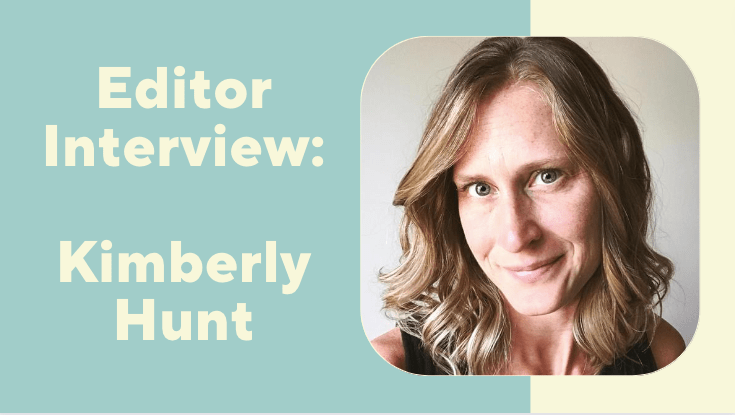
Editor Interview: Kimberly Hunt

I met Kimberly on Twitter some time back, and I’m a member of her Facebook group, Revision Division. We’re also members of Romance Editor Q & A since I do a little editing myself and keep up the skill not only for my own books but for those I edit for on the side. I appreciate Kimberly’s time, and I hope you enjoy the answers to all the questions she so graciously filled out for me.


Introduce yourself! How did you get into editing and what are your qualifications? What genres do you enjoy editing most?
C.S. Lewis said “You are never too old to set another goal or to dream a new dream.” This is exactly what I did. After twenty years in the corporate world, I took a sabbatical and it shook my world to realize how amazing it is to fill my day with activities I’m passionate about. I have always enjoyed my work and the companies that employed me, so it was jarring to realize I could be happier. Before I set off on a vacation volunteering in Peru, a friend of the family asked if I’d read a novel he’d written. The story was amazing, but I couldn’t get past the number of errors. This was my inspiration to look into copyediting. My natural ability to spot punctuation, usage, grammar, and spelling errors lent itself well to copyediting, so I took courses to start there. My education introduced trusted resources like dictionaries and style guides and working with publishers taught me how to create and maintain a style sheet for consistency. The more advanced courses I took revealed my true passion is earlier in the process, with developmental editing. I love assessing the big picture elements like structure, plot, pace, point of view, and character development to help writers improve their stories. I love editing romance the most but I also enjoy editing women’s fiction, mystery, and psychological thrillers. I’ve edited all heat levels and time periods but prefer steamy contemporary.

There’s the saying that a writer needs to write a million words before they can write something publishable. Do you agree with this? Why or why not?
Whoa, that’s a loaded question without a simple answer! On one hand I don’t agree with the limitations of hitting an exact word count and refraining from sharing your work until it’s perfect. We grow and learn from making mistakes. I definitely don’t think writers should wait for an arbitrary milestone to publish. On the other hand, I agree with the sentiment of the saying where putting in the hours and the work makes for a better quality product in the end. Have you read Malcom Gladwell’s Outliers? He has a point about it taking 10,000 hours to become exceptional at something.

What is the biggest mistake you see indie writers making right now? (For example, info dumps at the beginning of their book, not enough conflict, too much tell vs. show, etc.)
I’ll admit I had to give this question some thought because I see such a wide variety of manuscripts with different issues. Considering both the unpublished manuscripts I edit and the completed books I read for pleasure, I’d say the biggest challenge seems to be related to pace because conflict is tricky. Many authors struggle to create believable conflict that escalates. Each chapter needs a purpose where the complications grow and the consequences are impactful. Many of my developmental editing projects require suggesting solutions for improving chapters without clear purpose. It’s hard to move the plot forward if the reader doesn’t know what the character wants, why they want it, or what stands in their way.

There’s a lot of talk about whether or not it’s necessary to have a manuscript edited before querying. What are your thoughts?
Most of my clients are independent authors, but I have helped several writers improve their story and polish with a copyedit prior to querying. I have more than one data point for authors gaining representation and eventually signing publishing contracts, but I can’t take credit for those achievements. Their storytelling talent far outshines my knowledge of where a comma goes. But as a businessperson who has reviewed cover letters and resumes before hiring someone, that first impression needs to be solid, so editing before querying could be beneficial even if it’s not required.

How do you keep the author’s voice intact while also guiding them with suggestions on how to make their book the best it can be?
Great question! My job is to point out both what works well and areas for improvement. I give suggested solutions in comments or in a revision letter for the more lengthy explanations. Changes made directly in the manuscript are usually corrections to indisputable errors. I reference Merriam-Webster dictionary and the Chicago Manual of Style to support the corrections I propose. When line editing, I tread carefully to make sure I’m respecting the author’s voice while keeping concision and clarity a priority.

Is there ever a time when a book would require too much work? What do you tell a writer whose book isn’t ready for a professional edit? What resources do you refer them to?
This has happened a few times. Sometimes an eager writer finishes that first draft and jumps to the editing stage too soon. Revision and self-editing are recommended in these cases and I often provide resources for finding critique partners or offer to take on the project as a writing coach instead if the manuscript isn’t ready for editing yet.

What advice can you offer an author who can’t afford a professional edit? Are there things they can do to sharpen their own self-editing skills?
Definitely! These tips don’t replace the value of working with a professional editor, but they do offer some cost-savings if you can self-edit as much as possible first. I have a bunch of videos and blog posts on this subject on https://revisiondivision.com/tips but here is my best advice: read aloud to yourself, others, or have Word read it aloud to you. You’d be amazed by how much this trick catches. It will highlight awkward flow and bring attention to missed words and sneaky errors.

As an editor, it’s important you’re honest and give critical and actionable feedback. How do you offer this feedback so a writer doesn’t take it personally?
Diplomacy. I aim to provide valuable feedback through constructive criticism AND praise. By pointing out a writer’s strengths and showing in their manuscript where something works well, they learn and grow. On a scale of one to ten, with one being a Positive Pollyanna and ten being brutally honest, I’m probably a moderate four. I’m a professional and my training emphasized how to provide actionable feedback tactfully.

Are there any other tips or thoughts you would like to add about editing or publishing?
Adding on to that last question, I’d like to encourage writers to expect good and bad feedback. But they shouldn’t react right away in order to avoid an emotionally defensive response. Edits can be overwhelming. After initially receiving feedback, it’s a good idea to set it aside and digest. See what resonates and come back to it later to make a plan for revisions. Most importantly, do not give up.

Thank you for this opportunity to talk about something I’m so passionate about. 😊


Thank you, Kimberly, for your time!

How to find Kimberly:

Website: https://revisiondivision.com/
Twitter: https://twitter.com/RevisionDiv
Instagram: https://www.instagram.com/revisiondivkimberly/
Facebook Group: https://www.facebook.com/groups/2376033425801031

Working on your craft: Can you publish without an editor?

So, there was an interesting question that came up in one of my Facebook writing groups, and essentially, she asked, Can you really make a living publishing without an editor?

Considering that’s what I’m trying to do with my new pen name because I can’t afford to hire out, it piqued my interest.

All the answers, as you would imagine said, of course you need an editor. I was the only one who said, not so fast. There are a lot of variables when deciding something like that, and some of the questions I threw back at her were, How long have you been writing? Have you ever gotten feedback before, like, ever? Do you have a good memory to keep track of your own (in)consistencies and details? If you don’t know how to write a catchy beginning, avoid a saggy middle, create interesting and meaningful character arcs, and know your grammar and punctuation backward and forward, then you’ll probably need help. (It also helps immensely if you know what you don’t know and have the wherewithal to look it up.) During the first couple of years when decided to try write books to publish, I needed help, and I did use editors and beta readers. That was back when I had a large circle of friends who were willing to trade or charge very little and we all came through for each other. Now most of those friends are gone, and I’m alone. I said in my post, if you’ve written enough words to find your voice and style, then you’re one step ahead of most newbie authors. I’ve edited for a few new writers, and no amount of good editing will fix bad writing. The writer first has to give you something to work with, and if s/he doesn’t….

If you, or the original poster of that question, are looking for an easy way out, there isn’t one. Writing is like any other skill and it takes practice and a knowledge of the genre you’re trying to write in.

I admit, I love a writing craft book, and I read them all, but some of them get too formulaic, and I can’t follow. I tried reading Save the Cat! Writes a Novel: The Last Book On Novel Writing You’ll Ever Need by Jessica Brody, and it just wasn’t for me. (She also has a blog that you may find helpful.) The way Jessica broke down a novel’s components made my head spin. Another book I’ve read, (though not recently) is Romancing the Beat: Story Structure for Romance Novels (How to Write Kissing Books) by Gwen Hayes. Romance authors a million times over swear by this book, but I just couldn’t make it work for me. And it’s not because I’m a pantser and want to write as I discover the story. I’m a plantser, and have a general idea of how I want the story to go, what the characters’ backstories are and their emotional wounds from their pasts that haven’t healed and how they affect their futures, which is what any romance book is about. But turning writing into a formula, or consciously chopping up my plot into the three act structure is really difficult for me to grasp and I can’t do it. The only two things I do with regards to planning that way is making sure something happens at the 50% mark to avoid the saggy middle (the Mirror Moment as James Scott Bell calls it), and breaking up my characters around the 75% mark, because that’s most what romances do. To be honest, them breaking up and thinking all hope is lost is my favorite part of any romance, and I would do it anyway.

When you’re a new writer, betas or developmental editors are valuable. They’ll tell you where the story drags, if you’ve rushed your ending, if your characters have no substance, and over time, if you listen to their feedback, your writing will smooth out and you’ll start to include those elements naturally. I don’t think any writer who is writing a debut novel will have all that figured out, never mind having written enough to find their voice and style. It’s why whenever I see a writer saying they are querying their first ever book, I say good luck, because chances are, your book will sound like you’re a brand new writer, and an agent can’t sell that.

It’s really not fair, because a lot of good writing comes from gut instinct, or following an intuition that you’ve honed over a million words. You develop your own formula based on genre expectations and how you twist those reader expectations to make your tropes fresh and new. All that comes with practice and listening to feedback.

Once you have your voice and style down, once you know you can deliver to your readers, then yeah, I think you don’t need an editor, not someone who will deep-clean your manuscript, though it does mystify me how many people get angry when I say it. (I even left a Facebook group over it.) I don’t know if it’s because they resent having to use an editor, or are just defensive of indie publishing as a whole and how much crap is published on, let’s face it, a daily basis, or what. I really don’t know what makes people so mad when I say it, but that doesn’t make it less untrue. Besides, no one has any idea how hard someone will work not to need an editor. I read craft books like crazy, read in my genre (though not as much as I should) and write. Maybe that’s the issue people have? They aren’t writing? Look, it doesn’t matter who you are, you need to practice to get better, and that goes for anything you want to try to master. Olympic gold medalists have been honing their skills in their chosen sports since childhood. Same as musicians. But I suppose if you have twenty hours a week to write, and you’re talking to someone who only has five free hours a week, yeah, maybe there will be a little resentment there. I write a lot. I don’t have many friends, I work from home, I don’t go out much. When I’m not working, doing chores, running errands, or going to Tuesday movie night with my sister, I’m writing. That’s not something I’m going to apologize for, and neither should you if someone is giving you a hard time.

In reality, it’s a moot point, anyway. I know 6 and 7 figure authors with one-star reviews that say they needed an editor, when I know that hiring an editor is part of their publishing process. You won’t please everyone, so you might as well be honest. If you need help, get help, and if you can write a good story without help, don’t worry about it. You can’t achieve perfection, and I’ve already said this will be the last time I go through my 6 book series. I will ALWAYS be able to find something to change, but I need to let them go. I’m tired and I have many other stories in my head that I want to get onto the page.

So, how do you make your writing better, level up so you don’t need an editor?

Read a lot in your genre. A lot of developmental editing is finding those tropes and elements that make your genre what it is and helping you meet those reader expectations. You won’t know what those expectations are unless you read a lot in your genre. I know this stinks like writing to market, but every genre, be it romance, domestic thrillers, detective novels, have elements that you can’t leave out or you’ll just make readers mad. Writing a good story is all about the overall picture as much as knowing where your commas go.

Listen to feedback early in your career. When I first started writing again, it took me a lot of feedback to find my groove. My very first beta who volunteered pointed out all the “justs” and “thats” and that was my first lesson in filler words. That was a great start to learning what I was doing wrong. Another beta/editor told me to trust my readers because I had a habit of “reminding” them of what they’ve read in previous chapters. That was another great lesson, and one I still apply today when I find myself rehashing information. Repetition is tedious and boring. Echoing was another thing people pointed out to me, and I still do it, and it’s part of my editing to delete or replace repeated words. That’s one of the reasons why I’m going through my series again when I thought I was done. Because I found a couple of words that I used over and over and over again and I wanted to tighten up my sentences. Those are words I will always watch out for now, and you can make your own list of filler and crutch words to refer back to when you’re creating your own editing process.

Work on new projects. I learned a lot working on different books, and it’s the only way you’ll be able to practice crafting an engaging plot. As Kathryn Kristen Rusch says, rewriting will only teach you rewriting. You need to work on fresh projects to move forward.

Realize it will take time. “They” say you need to write a million words before you find your voice. I think that’s true–I wrote a 5 book fantasy series that will never see the light of day, plus a few novellas, and a book that would turn into book one of my first trilogy before I found my stride. That was in 3rd person past. I wrote a quarter of a million words in first person present before I found my voice in that POV, and I can tell reading through my series. That’s why I was so paranoid editing these books–I wanted book one to sound like book five, and it did take me a few extra thousand words added to books one, two, and three for them to smooth out and sound as good as books four, five, and six.

I feel bad for the beginning writer with no writing friends or money for resources. But as they say, if you don’t have money to spend, then you have to spend time, and that might mean swapping projects with another author who is in the same position as you. That’s not a bad thing. You can learn a lot editing for someone else, so it’s a great idea to join author groups on Facebook and make friends with authors who write in your genre. You’ll get help, and you’ll help others, so it’s a win-win for you and your writing career.

This was a very long introduction to what was supposed to be a list of craft books that have helped me. I linked to Save the Cat Writes a Novel and Romancing the Beat above. Just because they didn’t work for me, doesn’t mean they won’t work for you, and you should definitely give them a try.

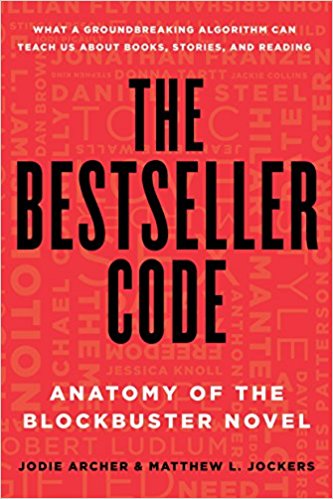
It’s surprising but one of the books that helped me a lot isn’t necessarily a craft book. It’s The Bestseller Code: Anatomy of the Blockbuster Novel by Jodie Archer and Matthew L. Jockers. This breaks down why bestsellers sell the way they do. This might be my favorite book in the whole world because it mixes craft and the publishing industry. I love it. I can’t recommend it enough.

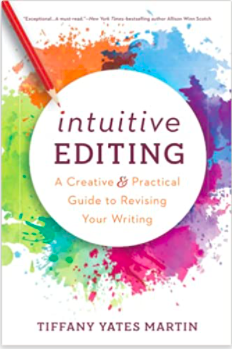
The second book that changed my life is Tiffany Yates Martin’s book, Intuitive Editing: A Creative and Practical Guide to Revising Your Writing. I love everything about this book. She reminded me about conflict, character arcs, character motivation, and stakes. Important elements that, if you skip or miss, will make any book fall flat. You need tension, and this book will help you find it. There’s even a section that mentions other editing resources if you can’t hire out. If you like audiobooks, she posted on Twitter she narrated it herself! (She also blogs, and you can sign up for her newsletter.)

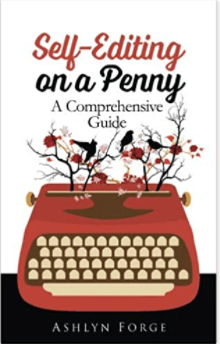
Though I haven’t read it for a long time, it was one of the first self-editing books I ever read, and it helped me a lot: Self-Editing On a Penny: A Comprehensive Guide by Ashlyn Forge.

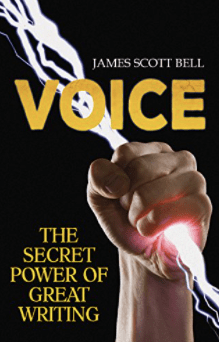
This book made so much sense. It was a real eye-opener, and now I recommend it to every new author: VOICE: The Secret Power of Great Writing (Bell on Writing) by James Scott Bell.

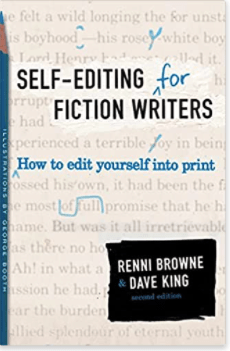
When I went to the Santa Barbara Writer’s Conference a few years ago, every agent in attendance said this book is a must have. I do have it, and it’s a great resource: Self-Editing for Fiction Writers, Second Edition: How to Edit Yourself Into Print by Renni Browne and Dave King.

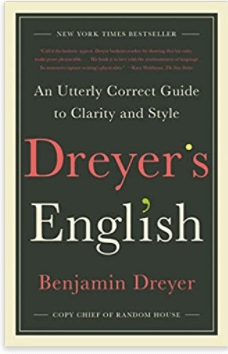
Someone recommended this book to me, and his sense of humor keeps this book from reading like a textbook–it was an enjoyable read, and I also learned a lot: Dreyer’s English: An Utterly Correct Guide to Clarity and Style by Benjamin Dreyer.

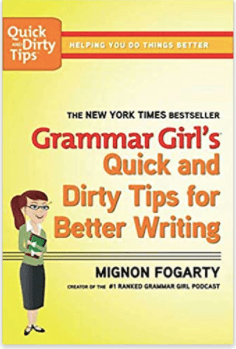
And last, but not least, Mignon Fogarty’s grammar guide is a must have. Written in a light, conversational tone, Grammar Girl is easy to understand, and she goes through everything you need to learn grammar and punctuation for all of your writing projects: Grammar Girl’s Quick and Dirty Tips for Better Writing (Quick & Dirty Tips) (Quick & Dirty Tips)

This post turned into its own animal, and that’s okay. Thanks for reading if you’ve gotten this far. In an age where everything is pay to play, including beta readers, even if you have plans to hire out, making your manuscript as perfect as possible will save you money. The less your editor/proofer has to do for you, the better for your wallet. You’ll never regret teaching yourself as much as you can. I haven’t.

Thanks for reading!

***Per usual, this post does not contain any affiliate links, and the book covers are screen grabs from Amazon.

Are Editors the Next Gatekeepers? Some people want them to be.

The one thing we say most about independent publishing is it has completely taken away the gatekeepers. You can publish anything you want, whenever you want, all you need is a properly (sometimes not!) formatted file and a good cover (sometimes not!). We all know that there are lot of good books that are indie-published every day. We also know there are a lot that aren’t.

I left another FB group the other day. The conversation turned so stressful that I was in a bad headspace all day. It’s hard to shake things off when people attack you for what you believe. What was it I said? I said some indie writers are good enough not to need the whole buffet of editing: development edit, copy edit, line edit, and a proofreader. That’s all I said, and I still stand by that. An author who is on book 30 is not going to need the time and attention an author is going to need publishing her debut novel. They simply aren’t. The craft is there, the skill is there, the experience is there. Two editors took my words the wrong way, or they were just spoiling for a fight, and tore into me.

Of course the conversation turned more ugly when price became a topic because everyone in the industry knows that editing is the most expensive part of publishing–especially if you do need the whole smorgasbord before you put your book out there–and the editors were defensive. I’ve never said an editor shouldn’t be paid what he or she is worth. I’d never devalue an editor’s work like that. You’re paying for a skill that they’ve (hopefully) honed for years. An excellent editor can take your lump of coal book and turn it into a diamond, I get that. On the other hand, not everyone can afford it, and they didn’t seem to understand that.

I agree with the belief that you shouldn’t publish until your book has been edited, at least by SOMEONE, but it’s also discriminatory to say that no one should publish at all if you can’t afford it. That’s gatekeeping all over again.

I didn’t point out in my exit rant that the people saying this were affluent white people who have the disposable cash to hire an editor. I’m white too, but I’m poor. I can’t afford a $2,000 development edit. I simply can’t. That’s three and a half months of rent. I do the best I can with the resources I have, and I will never let anyone insult me for it.

One of the big questions that come up when discussing editing fees is, why do editors cost so much? It’s not because each individual editor is trying to rip you off (though some are better than others, so ALWAYS ask for a sample and make educated choices). There’s an association that offers guidelines as to how much freelance editors should charge their clients. Editors/beta readers like Kimberly Hunt, the paid beta reader I referred to in my feedback blog last week, adheres by this association, and you can look at the pricing structure the Editorial Freelancers Association recommends. She, and many other editors, are charging the standard. Some editors who freelance on the side may charge more depending on where you’ve found them. Professional editors found on Reedsy, for example, are more than I can afford. On the flip side, there are writers and authors who want to start editing and charge a lot less because they are just getting their business going. It would be up to you whether you want to pay less. An editing sweep by a new editor will be better than no editing, but always make informed choices. Don’t just sign with her because you can afford her. And on the flip side of THAT, I wouldn’t pay a new editor the industry standard unless they can provide testimonials and proof that their skills are worth it.

Indie publishing has opened up a whole new world for scammers, and some of them don’t know they’re doing it. (Like the freelance book cover designer who will charge you 50 dollars for ten minutes of time in Canva. They think they’re running a business. I think they’re ripping you off.)

What can you do if you can’t afford an editor?

The obvious thing is to learn your craft inside and out. Learning your craft is a good first step in the editing process. It’s a lot easier to edit a good first draft than it is to tackle a draft that you know has plot holes, flat characters, and verb tense changes throughout. Hone your writing skills.

Then find feedback where you can, and like I said in the feedback blog from last week, listen to that feedback, or you’re just wasting everyone’s time.

And lastly, learn how to self-edit. Put the book in a drawer for a month or two, write something else, then come back to it with fresh eyes.

You can teach yourself to self-edit, and there are a lot of resources out there that will help. You can take editing classes, definitely edit for others (that’s why I do it for free for my friends because it helps me improve) or my favorite (and probably cheaper) way to learn how to edit is reading self-editing books.

Here are my go-tos:

Self-Editing for Fiction Writers, Second Edition: How to Edit Yourself Into Print by Rennie Browne and Dave King

Intuitive Editing by Tiffany Yates Martin

Cover to Cover: What First-Time Authors Need to Know about Editing (Read this book before you publish your book by Sandra Wendel (Hat tip to Jane Friedman for this find on her blog.)

You also should have a firm grasp on grammar and punctuation. No matter who reads your book, be it a paid beta reader or one of the authors you networked with who said they would give you feedback, make it easier for them to read you by knowing your grammar and punctuation. If you choose to pay a proofreader or a line editor, it will be cheaper if they don’t have so much to wade though.

Grammar Girl’s Quick and Dirty Tips for Better Writing (Quick & Dirty Tips) by Mignon Fogarty

Dreyer’s English: An Utterly Correct Guide to Clarity and Style by Benjamin Dreyer

I have all these books; I’ve read all these books. Self-editing is a different skill than learning and practicing how to write good books, but I think they go hand in hand.

I’m glad I left that group, but I wish I would have asked those snobby women what they do to help the indie publishing industry if they so despise what come out of it. Do they beta read for free? Do they edit pro bono twice a year? How are they making a difference? Complaining about the state of indie publishing is only being part of the problem not part of the solution.

I try to help when I can. Maybe my edits aren’t as good as someone with a real editing degree, but I have a Bachelor’s in English with a concentration in creative writing, and I educate myself all the time. I hope that the authors I’ve edited for have gone away with a better book.

Saying an author shouldn’t publish without a professional edit is shortsighted to say the least. Authors are going to publish without an editor no matter what anyone says because they don’t have the disposable income to afford it. Hell, I’ve read some traditionally published books that have read like they haven’t been edited, either. (See my crabby review of Jasmine Guillory’s The Wedding Date novel.) It’s up to the author to learn what they need to learn if they can’t afford an editor and aren’t willing to sell plasma like Jami Albright to hire one.

Readers will always be the new gatekeepers. You, as an author, need to do what you can to keep your readers happy. In the end it doesn’t matter how you go about doing it, only that you do. And if you don’t, your reviews and sales rank will be proof that you’ll need to start doing better. It will be up to you as to how.


Got/Get: The laziest words.

I don’t write a lot on craft in this blog. I’ll share editing books I like and tell you over and over again that no matter what you do, ads, graphics, book promotion sites, what have you, if you’re not selling a good book, you’re not going to make it. I don’t mean a well-written book that doesn’t resonate with some readers. You’re not going to please everyone, and that’s just how it is. It’s one of the reasons why I’ve been able to keep going in the past few years of writing. Certain people may not like my stories–I’ve never written a character people hate more than Jax in All of Nothing, but never in any review have I ever read of my work has anyone told me I’m a bad writer. So whether or not people don’t agree with my characters and all their flaws, at least I can hold my head up and know I’m a good writer.

I’m not sure where I was going with that?

Oh, so I don’t offer much craft advice. That really should come from your beta readers, your writing group, your editor. What you choose to take from those people is your own business, and as one editor I know says, “It’s always going to be their book.” So yeah, I don’t like craft advice very much, at least, not giving it.

Lately I’ve been reading more on my Kindle. I pay for a KU subscription and I signed up thinking that I would keep up with my comp authors that way. A lot of romance authors are in KU and it’s always a good thing to keep up with what’s selling. That was my intention anyway, but I paid for a few months of it before I charged up my Kindle and decided I was going to take advantage of my subscription. I read a lot of non-fiction and reading in KU is a lot cheaper than buying paperbacks.

Anyway, so I finished a mystery/thriller the other day. It’s written in first person present, which is why I chose to read it. I’m writing my own stuff in first person present and for me, it’s easier to keep in that POV and tense.

It didn’t take me long to get annoyed. This author really, I mean really, liked the words GOT/GET/GOTTEN. Not short for Game of Thrones, like we associate that word now, but the. . . I guess it’s a verb? . . . got. Gotten. Getting. Get.

She’s got an open black peacoat revealing black slacks and a gray blouse beneath.

When I got in last night, (character name) was in the middle of working on a story.

I need to get to that hospital.

While everyone else has pictures or knickknacks on their desk, she’s got nothing.

I don’t need to do anymore, and it didn’t take me long to find these. The author turns sloppier toward the end of book, like he was tired of writing it and wanted to finish it as quickly as possible.

Maybe it’s just me because that word has already been a pet peeve of mine, but it really turned me off. There are better verbs you can use, and they aren’t hard to reach for–She’s wearing an open black peacoat . . . Even as something simple as changing out GOT for HAS. While everyone else has pictures or knickknacks on their desk, she has nothing. Maybe it’s not any better, creatively speaking, but to me it reads a lot better.

He was able to comb through her devices after we got them from her parents.

It just sounds all around clunky and I’ve hammered it out of my writing. I know how easy it is to slip into easy language, and sometimes that’s all right. But the more you do it the more you can fall into “telling” a story rather than “showing” it. First person is particularly difficult because we’re writing someone’s thoughts, and people’s thoughts are messy and not particularly sophisticated.

And of course, I didn’t tag any dialogue because that’s how how speak. “To make it on time, we have to get going.” “We really gotta go now.” And if you’re speaking to kids, “We really gotta go NOW.”

I’m not blaming this author–I blame her editor for not catching it, or not caring enough to catch the repetitiveness of the word and asking the author to perhaps do a word search of her document and swap out the word where applicable. This wasn’t an indie published book, and unlike some indie where you’re not sure if an editor has gone over the book, this one has. It’s too bad because the word ruined a story I could have enjoyed.

In my own unfinished WIP (67k+) I used GOT 19 times. All but one time is in dialogue. In this particular conversation I used it to express character:

“You got balls, doll, but I guess you’d have to, to lie to so many people for so long. It’s not going to be that easy for you, either, once your secret comes out. What got you into that mess, if you don’t mind me asking?”

Murray Jameson, from an untitled WIP

I can search through that book and find GOT maybe every three pages, and I wanted send out a warning. Words like putting, getting, put, got–those are lazy words and you can do better. If you can’t pull the word you need out of your brain while you’re in the zone, I don’t blame you and you shouldn’t let it derail you. Keep going but make a note, maybe an actual note so you don’t forget, that you’ll need to do a sweep for that word in edits.

I don’t write literary fiction, and I’m not out to be the next Margaret Atwood, but I do want my books to read clean and give the reader a chance to immerse herself into my story. I don’t want sloppy grammar to pull her out.

I got into plenty of trouble after Hannah died.

So easily remedied: I found plenty of trouble after Hannah died.

I know we all have our voices, our own styles, and if you want to use GOT go ahead. There is a time and place for it, and I know that. But too much of a good thing can be bad.

And that is my craft post for the month.

“Got” a pet peeve that you’ve discovered in books? Let me know!


Editing: Can you edit too much?

As I look up wrapping up my six book series (I’m at 67k for book five) editing 540,000 words is weighing on my mind. It’s a daunting task. I edit my own books, which people tell me is quite a no-no, and I agree for first-time authors and writers still working on their craft. I use beta readers who hunt for typos and point out murky scenes and I take their opinions to heart and decide if what they say has any validation in my work. (It usually does.)

On the other hand, my betas are writers, too, not only readers, and writers don’t read like readers do. We are pickier, which may or not be a good thing. The problem is, the pickier you are, the more you’re going to nickel and dime your manuscript to death.

So how can you edit without sucking the life out of your story?

  1. Don’t write by committee. I have to thank Kristine Kathryn Rusch for this tip. While critique partners and writing groups can offer valuable tips and suggestions, the end product should always be yours. There is no “best” way to write. Readers read your work because they like your voice. Writing by committee is the fastest way to lose your voice. You simply can’t implement everyone’s suggestions, nor can you make your book “perfect.” There is no such thing. Your book could have a million endings, a million different twists. If what you have chosen gels (meaning no potholes, you have realized character acs, etc) there’s no reason to be swayed by someone else’s opinion if you like what you’ve already got.
  2. Too many cooks ruin the broth. Every beta reader is going to have an opinion and your mind can spin if you try to listen to everyone. Some people think the more beta readers the better, but all that does is give you more opinions to listen to. Maybe you like that. I have one or two trusted betas and that’s it. I wouldn’t even bother with that except it’s not a good idea to publish without another set of eyes just to be sure you’re not missing anything plot-wise.
  3. Too many editing sweeps and you’ll edit the flavor right out of the story. I did this with Wherever He Goes. I wanted my first standalone to sound good, but all I did was make the opening chapters sound bland. It’s difficult to trust your gut, especially if you haven’t been writing for a while and you know your voice and writing style still need a little work. Going over and over your work won’t make it better–it’s already written. Make that particular piece the best it can be with as few editing sweeps as possible and move on to something new.
  4. Trust your instincts. I have already made some changes with my first couple of books in the series that I don’t agree with based on beta suggestions, and I regret them now. In my next editing sweep I’ll put them back. The things she pointed out and I changed were based on her personal dislikes and I should never have listened to her. I liked what I had before I made changes.
  5. Choose beta readers in your genre. I think that was part of my problem with number four above. The person who disliked aspects of my book doesn’t read or write in my genre. Sometimes this can be valuable, but usually having a beta familiar with your genre can help with tropes etc. and tell you if you hit the nail on the head or missed the mark. (Usually if you are an extensive reader in your genre, you’ll know without being told.)
  6. If you’ve been writing for a while, you may not need an editor. Hear me out. You may only need a proofreader so you can publish a clean copy of your work. As you’re writing evolves, you’ll become more confident and you won’t second-guess yourself like I did with Wherever He Goes, or even when I listened to my beta reader with the first couple of books when deep down I didn’t want to.

In closing, I’m not going to go all crazy with the editing of these books. I don’t want to edit my voice out of them. I want my characters to sound like themselves and that is a real risk when you over-edit. You can edit the spirit right out of your characters so they sound like every other character you’ll ever write.

You don’t want to publish a first draft, but you don’t want your editing to take longer than the actual writing either. There’re a lot of stories out there. Go write them.


If you want to hear Kristine Kathryn Rusch’s talk, she spoke at the 20booksto50k conference in Vegas last year. I think I might have referenced this video once before on the blog, but I’ll post it again if you’re curious.

Also, if you’re curious about a couple of good editing books, I just recommended these two to a friend on Twitter:

Self-Editing for Fiction Writers is a fabulous book and it’s highly recommended by a lot of writers, agents, and editors. You can find it here: https://www.amazon.com/Self-Editing-Fiction-Writers-Second-Yourself/dp/0060545690/

Taken from Amazon

And a new editing book that just came on the scene not long ago by Tiffany Yates Martin called Intuitive Editing: A Creative and Practical Guide to Revising Your Writing is fabulous! I heard about it in one of the FB groups I’m in, and it is awesome! I recommend you check it out! https://www.amazon.com/Intuitive-Editing-Creative-Practical-Revising/dp/1950830020/

taken from Amazon

Thanks for stopping in! Until next time! 🙂


How Do You Feel When You Get Your Work Back From Your Editor?

As a writer, putting your work out there is difficult. It’s probably the number one reason writers don’t publish: they are afraid of people seeing their work. And not only seeing their work, but judging it. I’m editing Summer Secrets right now. My editor (I feel like such a professional writer when I say that!) sent me back my novellas, and over the past week, I’ve slowly been putting in the revisions she suggested and fixing the mistakes she found.

You would think that I would be ecstatic that my novellas are so much closer to publication, and don’t get me wrong, I am. But you know how I really feel when I go through all her comments and suggestions?  Shame. Embarrassment. Sadness. Fear.

Shame

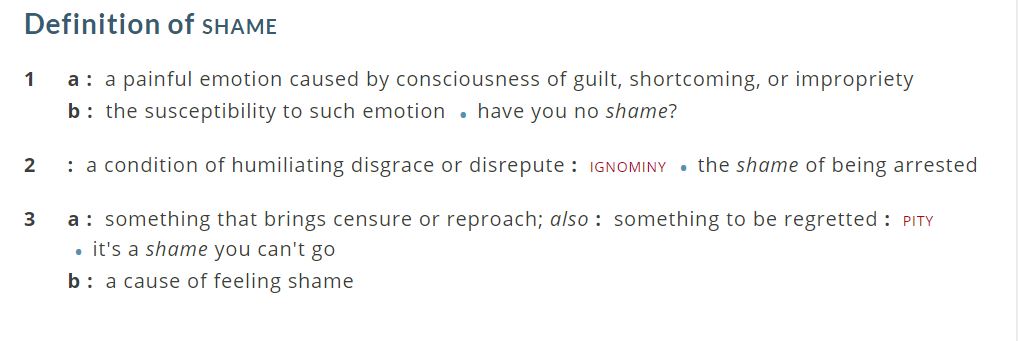
The definition of shame from Merriam-Webster is:

shame definition

When I go through my editor’s comments (and let me be clear, these are all my feelings, not caused by my editor. My editor is a professional, in that she is kind, supportive, and in no way hurtful or disrespectful in regards to me and my work) I’m ashamed. I’m ashamed I made the mistakes I made. I’m a writer, aren’t I? I can’t see for myself I used the same word five times in two sentences? I can’t see for myself my two main characters have names that are similar and therefore yes, a reader may mix them up, and why couldn’t I choose different names, for crying out loud?  In the definition above, 1a mentions shortcomings.  Uh. Yeah. Nothing makes you feel like you are less than a writer than when all your mistakes are highlighted and accentuated with a comment. Definition 3a mentions regret. Yep. I have a ton of regret in that, why didn’t I find all these mistakes before I passed on my work to someone?

Embarrassment

Embarrassment goes hand in hand with shame. I’m embarrassed I sent her my work with so much wrong with it. I’m embarrassed I didn’t try harder.  Never mind how many times I read through them, never mind that I used Grammarly, then read them again. Never mind I spent money on printing them out to edit a paper copy. I didn’t try hard enough to make them mistake-free. That’s my inner critic talking, my irrational, unrealistic inner critic. Because any writer knows how impossible it is to catch all your own mistakes.

embarrassed

But it’s how I feel when my eyes slide away from a highlighted paragraph and the comments telling me what’s wrong with it and possible ways to fix it.  My cheeks heat up, I have to swallow hard, and I have to force myself to just get on with it.

Sadness

Sadness is probably the weakest feeling I have when I edit, but it’s still there. I get sad that my editor had to work so hard, I get sad when I feel like I could have tried harder. I get sad when I think there are better writers out there than me. Sadness waltzes with self-doubt in my heart when I see how many comments she made in my document. But you know what else I get sad about? Thinking about not writing anymore. That makes me sad, too.

Fear

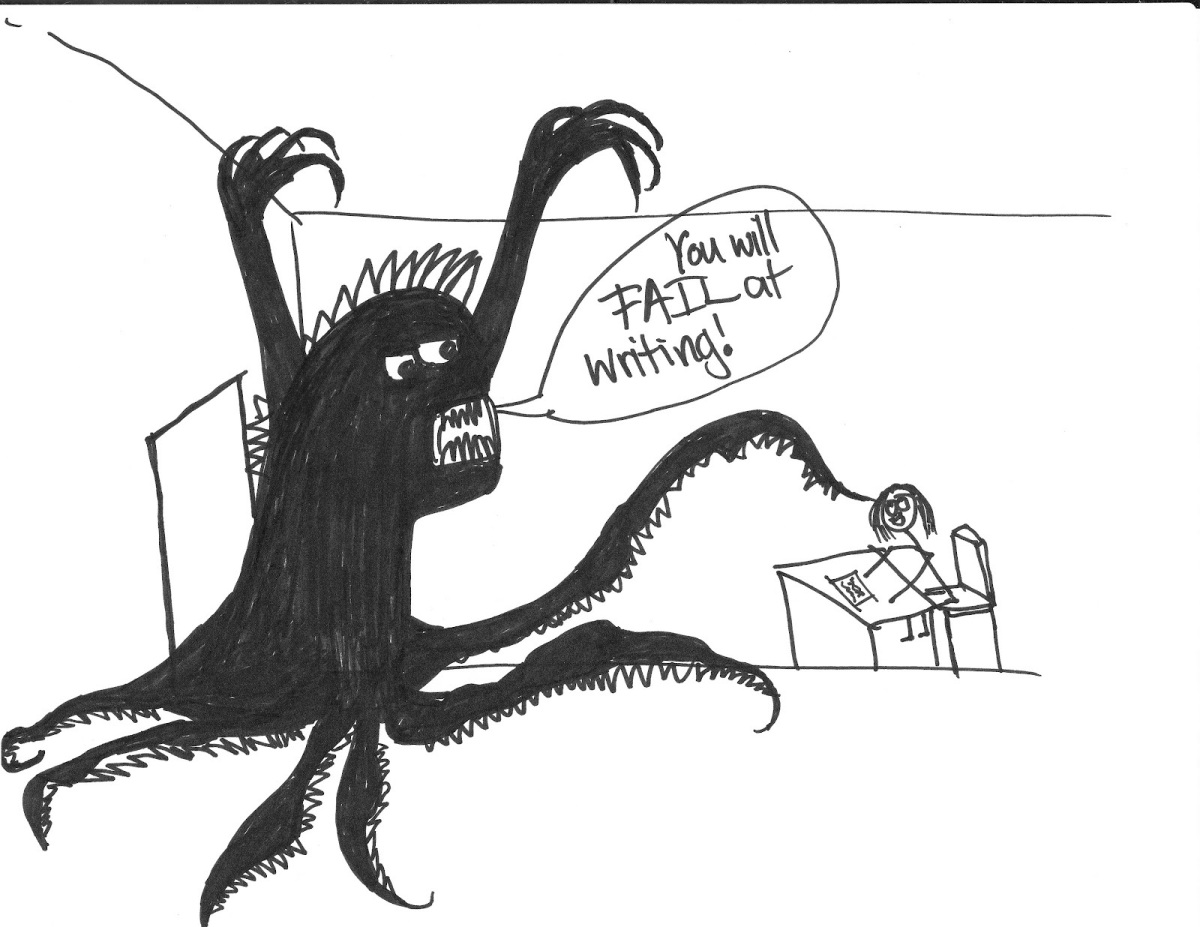
fear of writing

When I searched “fear in writing” I found this lovely drawing on Lynette Noni’s blog post. I have a lot of fears about my writing, and yes, they come out when I’m editing. I fear I’m not a good writer. I fear I’ll never sell any books. I fear I’ll never be able to make a career out of my writing. After all, I can’t be a good writer if my editor finds all these things wrong with my book, right? And I want to be a good writer so I can sell books, so people can say, “Wow, that was probably one of the most emotional, heart-wrenching books I have ever read.”  We all want to be writers who touch someone in some way with our work.

But What Else . . .

But you know what else I feel when I edit? I feel joy. I feel happy when my editor says she enjoyed a setting description or how I nailed how a character feels with show and not tell.  I get excited when she tells me she loved an intimate moment between two characters, and a “More please!” in the comment section. I get excited when she congratulates me on proper grammar.

I’ll feel pride when I hold my published books in my hands, when my friends, family, and co-workers congratulate me on being tenacious, of having a dream and working toward it.

The act of writing and publishing is no doubt an emotional roller coaster ride. There are ups and downs, you’re thrown sideways and completely head over heels. But the trick, and oh my, is it a trick, is to keep fighting. To not let those negative feelings overwhelm you, to let them win. Surround yourself with friends who know what you’re going through, who will support you, and not let you give up.

If I have any advice from going through the editing process, it’s to keep your mind open and learn. Learn from what your editor is telling you. S/he’s on your side. Your editor wants to you to put out your best work, and that undoubtedly is your goal too, which is why you hired one. Don’t take their advice and suggestions as hurtful criticism, (unless it is, then you need a new editor) take their feedback and turn it into a positive learning moment. I’ve learned a lot going through my editor’s feedback.

I took a break from editing to quickly write up this post. I’d come to a paragraph where her advice was hard to swallow. I see it, I understand it, I agree with it, but there again, those feelings come up. Why didn’t I see this? Why did I send my work to her this way? What is so wrong with me I couldn’t fix this on my own?

Nothing is wrong with me. Nothing is wrong with you, either. We’re all human, and doing the best we can.

For more articles about fear in writing, look here:

http://www.writersdigest.com/whats-new/10-ways-to-harness-fear-and-fuel-your-writing

Being Held Back by Your Fear of Writing? Here’s What to Do