How to start a beta reading service

Beta reading can be a great way to give back to the writing community and help out your fellow authors. Coincidentally, a couple of my friends have decided to go into the beta reading business. Turning something you do for someone for fun into something that you’re charging for might require a different way of doing things. For a friend, you can be more casual about it, but to trade your time for cash will call for a bit more professionalism. If I were to go into beta reading for a few bucks (and I never will because I’m not interested in that) this is what I would do.

What are my qualifications? This is probably the most important, and something you might not consider. But charging for your services is different than reading for your friends for free. Authors who are giving you cash want expertise and experience in return. Simply being able to say that you’ve been a lifelong reader might be helpful, but may not be good enough. Do you have any formal education like a literature degree or an English degree? Do you know the genre conventions/reader expectations of the genre you’re going to read? Do you read the bestselling books in that genre? Do you know the tropes that make them bestselling books? Not every author you read for is going to be writing to market, that’s true, but just because it’s unsavory to some, there are authors who do want to know if they’re hitting the right beats, that the character arcs and plot arcs are in line with what’s selling, and that they’re nailing the end in a way readers are going to want. If you yourself are an author, how are your books selling? What are your reviews like? Beta reading is different from writing, that’s true, but you can’t expect to tell authors what they should be doing if you can’t do it with your own work. If I were going to answer these questions, I would say I have an English degree with a concentration in creative writing, I’ve been reading romance for years, have been writing romance for years, and finally am now making a little from the books I’ve published since I pivoted from 3rd to 1st person present and niched down. I would have to read more in my genre, though. I’ve said I don’t do it enough, and I don’t.

Decide what genre I would read. Let’s be honest here. If you go into beta reading, proofreading, or editing, you’re going to come across some stinkers. That’s just how it is, and probably why they’re asking for help in the first place–they know they need it. Reading something that needs work is tough enough; reading something that needs work written in a genre you don’t enjoy is even harder. Be firm with the genres you’ll read. If you choose romance, decide if you’re going to read open door sex scenes or not. I’m dirty and I’ll read it all. Some won’t. Same with swearing. I swear, my characters say Jesus Christ all day long, and I don’t mind reading it. Put together a set of wills and won’ts, and ask the person you’re beta reading for if their books contain those things.

How long are the books I read going to be? One thing that surprised me on Fiverr is how cheap inexpensive all the beta readers were–until I dug deeper and realized that betas charge on a tier system. 10 bucks for a short story, 25 bucks for a novelette, 50 bucks for a novella, 100 bucks for a novel 40-50k words long, 125 bucks for a novel 50-85k words, and 150 bucks or more for anything above 85k. (That’s just an example–I didn’t steal anyone’s prices.) They use the lowest fee to draw you in, and you’re massively disappointed when you can’t find a beta reader who charges 10 dollars for your enormous 160k word YA Fantasy. If you have limited time in your personal life you may want to limit how long those books are, or maybe you’re happy reading and charging for one book a month and digging into 150k words is your jam. But it’s helpful to know what length you like to read. I don’t read short stories, and I find novellas lacking in depth. I don’t buy novellas, but if the premise drew me in, then I would maybe beta read for a friend who needed it. Decide what you like and make sure your potential customers know.

What would I charge? This is icky for me since I beta for free at the moment. I’m selective and honest and only do it for my friends. If I’m busy, I say so. I don’t accept a project then get pissy because I don’t have the time (or don’t want to make time, for that matter). I read romance and I’ve made allowances, like reading a science fiction romance, because a friend asked me to take a look. That’s fine, and I’m happy to help. If I were charging, I’d be more strict with the genres I accept and probably put into practice a flat fee like I listed above. Some charge by the word, and some even by the hour, though I don’t now how you would keep track of (or prove) something like that. I’d enable a disclaimer and say I have the right to return a project if I can’t handle the first chapter. If the first chapter is badly written or just not my cup of tea, reading 50k plus more words wouldn’t be worth it. Life’s too short for that. Though, that could be feedback in and of itself. Starting out I would probably beta read at a discount until I had a few testimonials and could prove I make my customers happy. Maybe I would already have that if the friends I’ve helped gave a review of my work for my website. Like with anything else, you have to prove yourself before you can charge the maximum amount.

Decide if you’re going to proofread as you go. Some beta readers proof while they read–it isn’t all for plot and characterization. One beta reader I worked with couldn’t decide if she was going to proof for me or not. She marked some things, but for every one thing she found, she didn’t point out ten others. It was confusing. Don’t do that. Either be all in or be all out. If I proof for someone, they’re getting a line edit, too. I can’t overlook a mistake. I’d have to turn off my editor brain and I think unless they were close to publishing (the book had already gone through a critique group, for instance) I wouldn’t proofread as I went along. I’d read for plot, pacing, and characterization only. If they did ask for a proofread, that could be an extra fee. That would be up to you.

How would I give my feedback? Usually I just write up a separate Word doc and email it along with the manuscript I beta read (using Track Changes for short comments). I once proofed/beta read for someone using Google Docs, but since that’s live online, she read along with me and either fixed things or dismissed things while I was reading. That was creepy AF, and I will never beta read for someone using Google Docs again.

Can I give my readers resources in areas where they’re lacking? Probably the most satisfying part of beta reading for me is being able to point out resources for authors if they need some extra help. I read a lot of editing books, my favorite being Intuitive Editing: A Creative and Practical Guide to Revising Your Writing by Tiffany Yates Martin. Feedback is important, no doubt about it, but learning how to do a lot on your own before someone takes a look can save time and money down the road. I have a ton of editing resources, and if you want to take a look at my favorites, you can read this older blog post about publishing without an editor.

Where would I post about my business? It would make the most sense to add a page to this website, as being a paid beta reader would be a natural step after blogging for indies and publishing my own books. I already pay for the domain name, and I have to admit, when I see an editor, beta reader, or proofreader trying to sell their services and they don’t pay for a domain name, I write them off as unprofessional. http://www.sallyeditor.wordpress.com looks cheap and I can only assume, like readers assume a crappy cover indicates crappy insides, that if they aren’t willing to pay a few bucks a month for their domain name, that their services are on par.

How would I bill my clients? Creating an invoice in Canva would be the easiest, I think. You have to have a way to bill your customers because some authors write off their beta and editing expenses on their taxes, or at the very least, they keep track of their expenditures. And you as well, should keep track of how much you make so can report that income. The beta reader I worked with asked for half before she started and half when she finished. I didn’t mind that at all and would maybe follow something similar.

How would I accept payments? If you post your job listing on a website like Fiverr, they take care of that for you, and I’m assuming, take a small cut for helping you. I paid my beta through PayPal, but I’ve never accepted money through it, only sent it out. I would need to research that and figure out how people could pay me. PayPal seems to be popular still, but I would want to make paying me easy. Not sure how I would go about it, and I would definitely set that up beforehand so my clients knew the options available.


Beta reading for payment is a business choice, and like indie-publishing, it’s best to remain professional. Confidentiality is important. Not talking about your clients’ work to other people, maybe having a privacy clause on your website stating that their manuscripts are safe. When I beta read, I delete them from my computer after I send my feedback. Their stories and books don’t belong to me so I trash them when my work is done. It wouldn’t feel right keeping them, though technically I still “have” them in email because I don’t delete correspondence.

Beta reading is more than just reading–you’re helping an author put their books into the world. That’s nothing to take lightly. I’m always humbled when someone asks me for help. I think they value my opinion and respect my work. I offer that in kind, and I like to think I’ve added something to the writing community.

If you want to read more about starting your beta reading business, look here:

https://kindlepreneur.com/how-to-be-a-beta-reader/

https://www.scribophile.com/academy/how-to-become-a-beta-reader

Have a great week, everyone!

So…Much…Indie Publishing…News!

Words: 1431
Time to read: 8 minutes

There has been a lot going on in the past couple of weeks, and now that I’m done with my trilogy (!) I can poke my head out of my writing cave and weigh in! Most of it’s been happening over at Amazon, but when aren’t they making huge waves over little changes that leave all of us authors rolling around on the floor in a temper tantrum?

The first big thing was they raised the price of Kindle Unlimited. It used to be $9.99 a month and they raised it to $11.99 USD. I’m not sure why that gave every author I know a heart attack. Two dollars is nothing, especially since in the email they sent all their subscribers, they said their catalogue has grown to over four million titles.

Since the launch of Kindle Unlimited in 2014, we have grown our eBook catalog from 600,000 titles to over 4 million titles today, introduced digital magazine subscriptions, and improved selection quality across genres. Kindle Unlimited members have unparalleled access to read as much as they want from a rich catalog of eBooks, audiobooks, magazines and comics. We continue to invest in making Kindle Unlimited even more valuable for members.

Taken from my Amazon Email

Guys, readers aren’t going to care. As a reader who uses KU, I don’t care. Have you priced ebooks lately? Anyone? These days your KU subscription fee will pay for two, mmmaaaayyybbbbeeee three ebooks, if they’re priced low enough. Everyone’s prices are rising, and KU for a reader is still a great deal. If you’ve been considering pulling your books out of Kindle Select because of this small price change, I would tell you to take a step back and breathe. You all are going to make a major business decision over two dollars a month? (And I’m especially staring at the people who are paying Musk $11.00/month to tweet.) I hope not. But if you are going to go wide, publish with Kobo directly and enroll your books in Kobo Plus. They don’t require the exclusivity Kindle Select does, and if you’re considering signing up as a reader to save money, understand that their catalogue isn’t nearly as large.

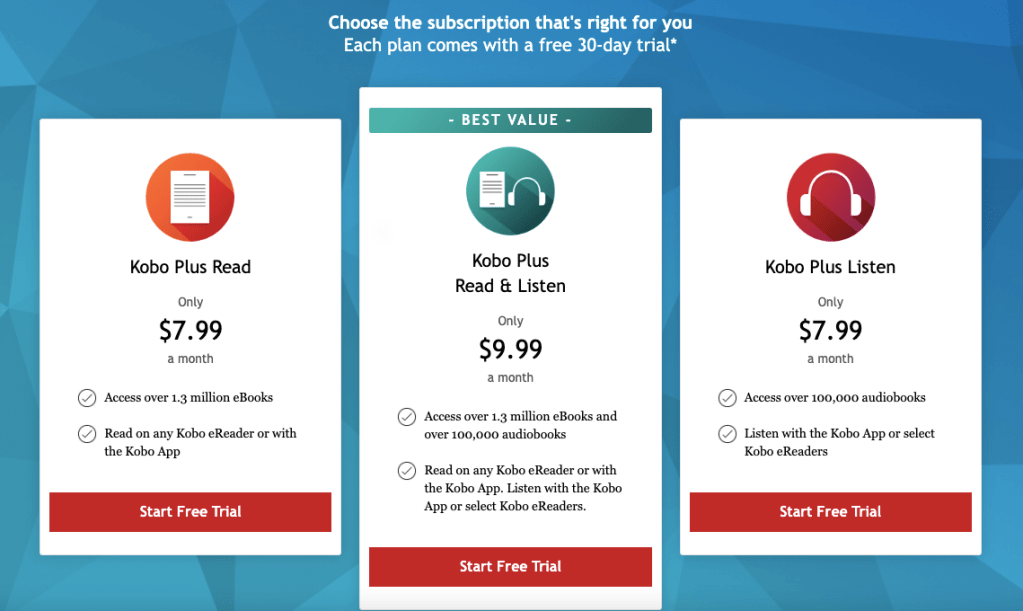
Graphic explaining Kobo Plus benefits for readers.  Text taken from their website:

After the free trial period, we'll charge you $7.99 a month for a Kobo Plus Read or Kobo Plus Listen subscription, or $9.99 a month for Kobo Plus Read & Listen, ...
Free delivery · ‎30-day returns
https://www.kobo.com/us/en/plus

Evaluate for yourself if keeping your books enrolled in Kindle Select is the right thing for you and your business. Don’t blindly follow what people are doing on Twitter and in your author groups. A lot of the reaction is due to the fact that AMAZON made this change. Authors love to hate Amazon, always accusing them of undercutting and cheating us. They added value and upped their prices–like any company does. Like Canva is going to do with all their new toys. I’m waiting for the email to come from them too. It’s what happens.

Another nasty surprise we woke up to is Kindle Direct Publishing raising their printing costs. This caused a lot of anger and resentment too, but someone I trust analyzed how much that means for indie authors, and the fact is, KDP upped printing costs by .15 a paperback. You need to take a look at your business and decide if freaking out over .15 is a wise business decision. I don’t sell many paperbacks. It’s not where my focus is. I market to KU subscribers. Any time I run an FB ad or mention my book on Twitter or anywhere else, I say it’s available in Kindle Unlimited. That is where my readers are. That might not be true for everyone. Authors who write poetry, kids books, and middle grade focus on paperbacks, and if you’re buying author copies in bulk, you can always print through IngramSpark. I think again, people are angry because this is Amazon, but you have to take a look at the industry as a whole. For some reason, I follow a lot of agents, and when they are telling querying writers to adhere to a certain word count because printing is expensive and it’s easier for them to sell shorter books, then it’s an industry problem, not an Amazon problem. Amazon is part of the publishing business, and the publishing industry is global. We are caught in the middle of the pandemic aftermath, and it seems a lot of people forget that. Are you upset about fifteen cents? I’ll give you the quarter I found between my couch cushions.

IngramSpark is dropping their publishing and revision fees this month. That was actually a very nice surprise, and I will be taking advantage of it as I haven’t put my trilogy on IS yet. (I abhor busywork and adjusting the KDP cover template to the IS template is a boring pain the butt.)

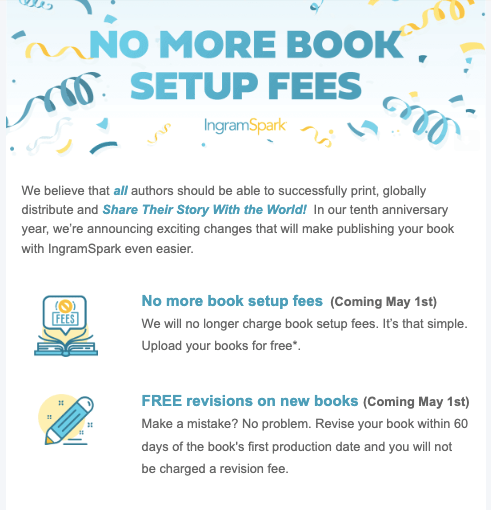
We believe that all authors should be able to successfully print, globally distribute and Share Their Story With the World!  In our tenth anniversary year, we’re announcing exciting changes that will make publishing your book with IngramSpark even easier. 


No more book setup fees  (Coming May 1st)

We will no longer charge book setup fees. It’s that simple. Upload your books for free*.


FREE revisions on new books (Coming May 1st)

Make a mistake? No problem. Revise your book within 60 days of the book's first production date and you will not be charged a revision fee.

I wondered how they were going to recoup that loss, and they too, are going to be charging more. I can’t remember where I got this screenshot, but I shared with my friend Sami-Jo when we were talking about IS dropping their fees:

To balance the general 60-day waiving of fees, IngramSpark is introducing a higher percentage fee on the publishing side, a "market access" fee. We are currently seeking more clarification on both changes and will further update you as soon as we know the full details.

So while the free title set up and the free revisions are a good thing, they are going to make up that loss, and it will fall to us. I’ve never paid a fee; I’ve belonged to a group like IBPA or ALLi who includes codes as member benefits, or just waited until they had a promotion and used their promo days (a good time was always in December for their NaNoWriMo promo.) Amazon isn’t doing anything everyone else isn’t doing, so please breathe and conduct your book business accordingly.

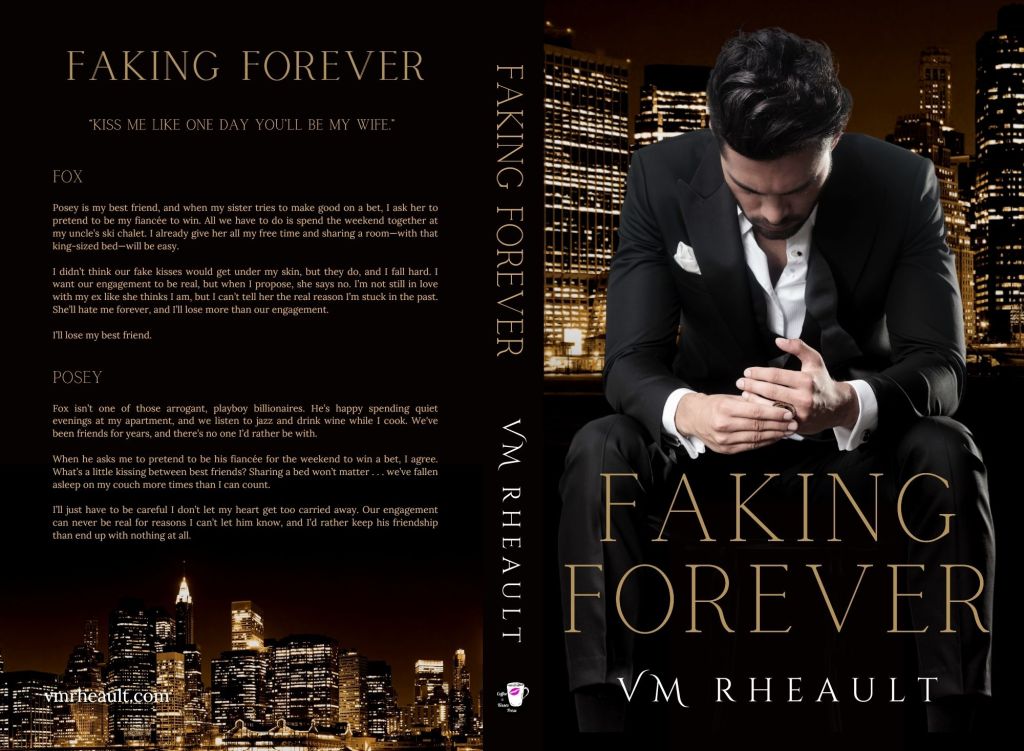
So much talk about AI I’m going to scream. I’m never going to use AI to write my books. I’ve played with Chat-GPT and while it’s fun to chat with Al and bounce ideas off him from time to time, the last thing I’m going to do is give him a prompt and copy and paste it into a book that has my name on it that i’m going to sell. If other authors want to do that, that’s their choice, name, and reputation. My books come from my heart, and I pour a lot of blood, sweat, tears, and wine into my fiction. (Not so much the wine anymore. I’ve stopped drinking hoping to drop a few pounds this summer.) I enjoy writing. I love creating characters and putting them through a lot of crap before giving them their HEAs. Why would I outsource that? I get not everyone feels the same, and that’s fine, but I have started to include a disclosure on the copyright page of my books, and I did it with my newest release Faking Forever, which was out last week.

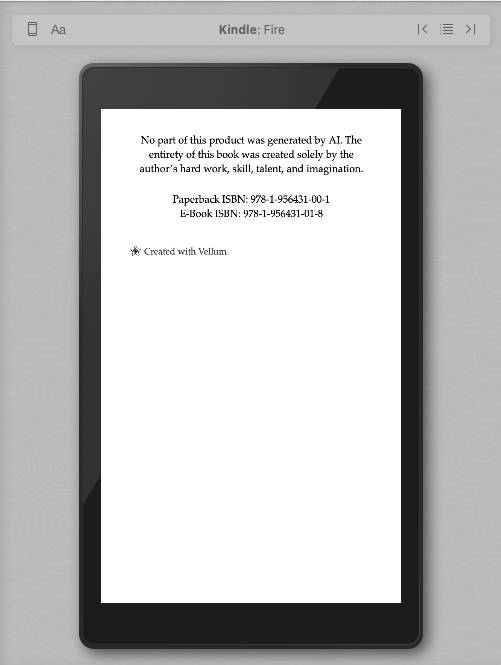
screenshot of kindle view on the formatting software Vellum
No part of this product was generated by AI. The entirety of this book was created solely by the author’s hard work, skill, talent, and imagination.

My copyright page is absurdly long because I give credit to everyone living and dead who in any way shape or form helped me with my books. Just kidding, but I add all the contributors for my stock images and chapter headers with DepositPhotos plus I give credit to my son and ex-fiancé for helping me with the imprint logo. And maybe one day I’ll update that too so I don’t have his name in my books anymore. Anyway, maybe no one reads copyright pages, but I like knowing that I’ve added it. I’m not going to write my books using it, but I can look at both sides and understand that there can be a place for it. Authors are going to have to do what they’ve always had to do: write good books and find a readership. I don’t think AI is going to disrupt this any more than COVID did when everyone was staying home and writing and publishing books because they didn’t have anything better to do. Publish good books, publish consistently, buy promos and invest in an ad platform. Start a newsletter and reach out to your readers. Let them get to know you as a person, and they’ll respond and connect with that.


Probably more went on, but this is going to be it for me this week, as far as commentary goes, anyway. While I “take a break” I’m going to re-edit The Years Between Us and reformat it using one of the newer styles that came with a Vellum upgrade. Depending on how I feel after that I would like to tackle my small town series and give them a facelift (especially covers because not being able to run Amazon ads is especially annoying), but I also want to stay on track with my rockstar trilogy to have that ready to rapid release by the end of August. There is always something to do!

I hope you all have a fantastic week!

Monday Musings and an Author Update!

Words: 1364
Time to read: 7 minutes

It’s another Monday, but not manic, sorry, Susanna Hoffs. I’m just tired AF. By way of author updates, I don’t have too much. A proof job fell into my lap last week, and I started and finished that before working on my own manuscript. I’m 91k into the last book of my rockstar trilogy, and I’m hoping to finish it ASAP. I want to dive into editing them and polishing them up for an August release. The week between books went really well for my other trilogy, so there’s no reason not to do that again if I work hard enough over the summer. It’s crazy how I’m already thinking about a Christmas novel, but we’ll see how much time I have when school starts. My daughter will be in her last year of high school this year, and September is always a little busy as we try to shake off the summer months. I am grateful I write clean first drafts, but my co-worker who read my series and proofed them for typos would like to read the rockstar trilogy before release, so if I take her up on that, I need to make time for it.


I have a book coming out on the 17th, and the first review on Booksprout put my mind at ease. I really wasn’t sure about Fox and Posey’s story, but I was honest in my author note to my reviewers and said as much. I have ARC copies available until it goes into KU on Wednesday, and you can download a copy from Bookfunnel if you’d like. There are eight left, but don’t download one unless you want to read it and leave a review: https://BookHip.com/PPSTKQF

I’ve been trying to shake off some doldrums and with the rain and my girl-stuff flaring up, it’s been difficult. I honestly wasn’t feeling a book launch, and it shows. I need to start Amazon ads to the preorder so they’re up and running when the ebook goes live, and I was going to schedule a promo for Give & Take on either ENT or Fussy Librarian to keep the ball rolling on my books. I haven’t done that either, and they book about a month out, so we’re looking at the middle of June before I can do anything now.

I guess this all kind of feeds into the discussions online lately about writers and their worth. I wrote a blog post about it a while back, which goes to show we’ll always have conversations about things like this. I sound bitter, frantic, almost, and what’s funny is my situation has changed very little. I’m selling more books because of the 1st person POV change, so that’s turning into a good move, but my fiancé and I broke up so I no longer have that “stream of income” I amusingly called it. (I did work for it, so it may be appropriate after all.) The blogpost I wrote in 2020 I could be writing now, except I’ve learned a lot over lockdown and actually put into practice those things as I started releasing new books last year. At any rate, it just goes to show some things will never change, and writers’ pay is one of them.

The conversation this time started over a tweet from an agent who said her agenting was a career and our writing was a passion. Let me dig it up so you can see it.

I honestly understand where she’s coming from (don’t come at me with pitchforks, please), and I often think of something similar myself when I see all the writers querying and complaining about all their rejection emails. Savannah probably could have been a little nicer about it, but agents have bills to pay and they can only pick up what they know will sell. It’s not rocket science. On the flip side, which is where my old blog post comes in, no one pays a writer for all the work that goes into writing a novel. All the months and years that we spend writing, there’s no pay for that, and sometimes, after we find an agent, get that book deal or self-publish, there’s still no pay for that. Certainly not a living wage.

It can be disheartening to keep writing, to keep producing for no little to no gain. And when we complain there’s no money in it, everyone piles on and says you shouldn’t be writing for the money. Which… is what Savannah did. It’s quite the conundrum, especially if you break down all the hours you work on your books for free. I work maybe 20-30 hours a week on my books. I have to if I want to write as quickly as I do. Part time wages compared to what I make full-time at my job would work out to be about 15k a year from just writing. I’ve said before how much easier my life would be if that were a reality. Of course I love it. Of course I love helping my friends publish their books. Of course I love the readership I’m building with my first person books. I don’t know how you can’t be a writer if writing calls to you. How do you shut it off simply because you’re not earning an income?

I listened to the latest Six-Figure Author podcast episode and could really feel Jo’s plight. He revealed he was getting a job for the first time in a long time, and that brought on a lot of emotions for him and the people listening. I doubt I will ever be able to quit some kind of a day job. I need the stability of a paycheck, and I would have to be earning a lot from my books to even think about it, even if my work barely pays me a living wage. If you want to listen to the episode, you can here. He starts talking about that 8:00 minutes into the video.


I guess I don’t know where I’m going with this post, except I can see both sides. There are ways to make your book enticing to agents before you query, just like there are ways to make your book more enticing to readers if you self-publish. Know what’s going on in your genre. Know who your comp authors are. Know what shelf your book is going to be in a bookstore. (It really is amazing how many authors say they wouldn’t know.) Work on your craft. Whenever I see a tweet that says they queried the perfect agent and still got a rejection, I just think the writing isn’t there. It’s a tough industry and you have no idea who’s right. Should you get an editor before you query? I don’t know. How strong is your writing? Should you get one before you self-publish? I don’t know. How strong is your writing? Either way, you have to know the industry. Read Publisher’s Weekly. Read Publisher’s Marketplace if you can afford it. Read Jane Friedman’s The Hot Sheet if you can afford it. Publishing is a business. Learn about the business you’re in. Someone DM’d me and asked me a question because she said I knew more about indie publishing than anyone else she knew. That’s not just from publishing books. That’s from listening to podcasts. Reading blog articles. That’s from listening to talks on YouTube like the 20books50k conference last year in Vegas. That’s from knowing the heavy-hitters in the industry and signing up for their newsletters. Sign up for workshops if you can. Anytime Melanie Harlow speaks, I’m on it. What do you do to stay on top of your industry? When you’re querying, what can you bring to the table? Everyone keeps saying the agent/writer relationship is a partnership. Okay, what’s in your half besides your book?

I don’t understand the helpless mentality online. You are not helpless. Your career is in your hands. You just have to decide how long you want to work for free, because it’s a lot longer than any of us realized it would be.

This is the first year ever that I have sold a book or had page reads every day since January 1st. My craft is better, my brand stronger, and my focus clearer. I didn’t know what I wanted when I first started publishing. I do now. And until I have to be like Jo and cut back to find something else that will pay the bills, I’ll never stop trying.

Hopefully, you don’t either.

Have a great week!

Monday Musings and Quick Author Update

Words: 1100
Time to read: 6 minutes

Happy Monday, if you like that kind of thing. Today, incidentally, is the first day of May, as well, which means everyone should probably check to see how their ads are doing and compare ad spend with royalties earned. Because my Amazon ads were running away with clicks but my royalties didn’t seem to be keeping up, I paused some of them. Sometimes that’s not the best idea, but until royalties catch up, I can only spend so much. I’ve made $219.62 this month in sales, spent $108.00 on Amazon Ads (my fault I wasn’t keeping track of them) and $39.96 on my Facebook ad for Rescue Me. Of course, that’s not great (an ROI of $71.66), and I take all the blame for my Amazon ads. I had one going for Rescue Me that didn’t make any sense, because those clicks were .34 which is what I earn on a .99 book. My FB ad is .13/click so I make a tiny something. Mostly I’m using it as a gateway to my other books, and just from Rescue Me this month I made $72.22 so at least the FB ad is paying for itself.

Over the weekend I put Faking Forever on Bookfunnel to offer a few ARCs to my newsletter subscribers and later this month I’ll need to put it on Booksprout for reviews. That is going to go live around the 17th sometime, and I need to book another promo for Give & Take. I wanted to for Captivated but that duet isn’t selling and as I have lamented before, there’s no point in trying to throw money at that duet anymore. If people find it with my low click bid ads, that’s cool, but as my backlist grows, it may just get lost in the shuffle.


Today I wanted to talk a little bit about why I give away a full novel as my reader magnet for my newsletter subscribers. You hear a lot of opinions on it. No one wants to put in that amount of work into something for nothing, or they want to make money off selling it instead. Maybe they can write something shorter that still gets the job done (but how you would measure that is debatable–maybe if no one signs up would be a hint). I can understand the reluctance, and I tried writing short for my reader magnet too. But when I realized it would be easier to just give away something longer, the idea wasn’t so painful. Mostly, I heard advice a long time ago that made sense: you want to give your readers a taste of what you write. I will never write a novella, nor do I write short stories. My Biggest Mistake is the perfect example of what I’m writing under my pen name. It’s 78k words long, is about a billionaire who finds love (and family), and it’s steamy. There really is nothing better I could give away, and if the readers who picked it up don’t like that, they sure as hell aren’t going to like what’s in my backlist I’m selling.

Someone in one of my writing groups said she read that people think their email is worth ten to twenty dollars. I tried to find the source, but after snooping around online for a bit, I gave up. What’s important here is that people don’t give their email addresses to just anyone and for just anything. Authors who don’t like newsletters and haven’t started one because of their own personal biases will probably believe this more than anyone. They protect their email and will only give it away if they know it’s worth it. A $4.99 ebook more than likely isn’t worth it unless the cover and blurb really pull them in, but perhaps the books you’ve already written add to the value, the books you’ll write, and the special offers you’ll only give newsletter subscribers might be enough to tip them over the edge. Since I started my newsletter last year around this time, I’ve given my reader magnet away 952 times. I collect email addresses through Bookfunnel and Bookfunnel sends them directly to my MailerLite account. I don’t force people to give me their address, so I’m 300 email addresses short in my MailerLite account. I was hoping to add people who really wanted to be there by giving them the choice.

I suppose what I’m trying to say is, you need to make sure you’re giving value to your subscribers, and not think you’re entitled to emails just because you have a newsletter. A little short story may not do it, though there are plenty of ways to entice readers, one way being writing bonus content for newsletter subscribers only. I’m too lazy to do this– and once a story’s done in my mind, it’s done. I had one reviewer for Rescue Me say she appreciated I didn’t dangle bonus content in front of her in the form of a newsletter sign up, and I don’t do that because I’m already giving away a book and don’t feel the need to give away anything more than that. It frees up a lot of headspace.

My novel took 3 months to write and I can use it for years to build my list. I think that’s a great return on investment. I can understand if it takes you longer to write a book, but you will have to decide what you want to offer instead. It may not be good enough to entice subscribers and it will take you a lot longer to build your list.


This is all I have for his week. I’m just trying like mad to get the last book of this trilogy written, and it’s been one of those books that are more fun to read than to write. I’m going to have to make a serious effort to finish up in the next couple of weeks. I’ve already went back and read this book from the beginning twice, so I don’t need to do it again. I know exactly what I need to get it done, I just need to stop letting things get in the way. I’ve enjoyed writing this trilogy very much, and like all the other books I’ve written, I’ll be sad when their stories are done and it’s time to move on. After these are good to go, I may be able to squeeze in a Christmas novel. I really want to write one and have some kind of holiday auction plot simmering in the back of my mind, but we’ll see. I need to finish the book I AM writing first and take it from there.

Have a great first week of May everyone! Make every day count!