Thursday Thoughts: The world is a large place

917 words
5 minutes read time

When I get up in the morning, I have a routine. I go to the bathroom, start a pot of coffee, and go out and feed the squirrels, bunnies, and the crows if they come. I have a bowl I use and fill it with cat treats (for the crows) bird seed, and peanuts in the shell, and toss it outside in my apartment complex’s parking lot. There is an empty parking spot and the animals, because we live in a quiet building, don’t mind picking around there for food. Anyway, so I toss the food out while the coffee drips, go inside and pour a cup, and scroll social media for a few minutes before I shower.

I always see some goofy stuff, some Amazon hate, politics (of course), the Cat Distribution System at work, that kind of thing. Today I saw a post that said (paraphrased), that if you’re bummed about sales there’s a Stuff Your Kindle Event going on and that could be why your sales are low.

I mean, I get it. I’ve gone through my own pity parties before (it seemed like mine went on for all of 2024) and I can get behind whatever you have to tell yourself to feel better. But, lying to yourself also does your books a disservice. The world is not that small that a Stuff Your Kindle Day would hurt your sales, especially if you don’t write romance.

That’s one thing that being stuck in the writing community will do: it will box you in to the point where you think nothing else is going on outside that bubble, and let me just remind you that’s not the case at all. I’ve joined Stuff Your Kindle Days, and out of respect for the person putting it together I’m not going to spew the numbers she shares with us, and I have no idea what Stuff Your Kindle event this is anyway. There are so many now it’s hard to keep track of them all. I hadn’t heard there was one going on today, but let’s just say there are 500 books available. That seems to be an average number where these things are concerned, so that means 500 authors are taking part. Some authors’ newsletters subscribers and social media followings can get pretty high, but if those 500 authors had 1,000 newsletter subscribers, that’s half a million readers this event is going out to. Not everyone opens their emails, so we can subtract a few thousand from that number but we can also add them in again to make up for authors posting on their social media. I would think a half million readers is pretty generous as authors just starting out can have as few as a hundred newsletter subscribers, and some none at all, using the event to jumpstart their writing careers.

A half million readers might seem like a lot, but according to Visual Capitalist, in 2020, there were five billion eighteen million adults in the world between the ages of 20 and 79. That’s a lot of readers that we might be forgetting about when we hear there’s a Stuff Your Kindle Day.

I think instead of being bummed there’s an event going on, or trying to blame your low sales on holidays (that not everyone celebrates) or a time of year that doesn’t affect all parts of the world at the same time, like summer (we have summer in the US while Australia has winter for a quick and harmless reminder), we could just use that energy to figure out how to reach readers all over all year round.

That’s easier said than done, of course, as my own sales being what they are don’t put me in a position to preach to anyone. But, I’m also realistic in that I don’t blame my lack of sales on things like Christmas. I take full responsibility for it.

It’s a better use of your time and energy to think of ways to reach those 5 billion plus readers such as write a reader magnet and build your newsletter list. Join a Facebook group of authors who write in your genre and introduce yourself. Networking is a great way to build relationships for newsletter swaps down the road. Experiment with some ads, they don’t have to be expensive. Double check that your categories and keywords are correct. The correct meta data will help Amazon position your book and help your ads work better too. Write another book, preferably a series. As much as I say how difficult they can be and how much energy they take, if you write a strong first book, read-through can lift your sales by more than you’d think.

When we place the blame of low sales on something like a Stuff Your Kindle Day, you’re taking power away from yourself. I know marketing can feel painful and not everything you do is going to work, but you can explore options to get the word out about your books.

Anyway, this was just a quick thought I had today. I hope you’re all staying warm where you are. It was a chilly -20F this morning when I went out to feed my animals. While I’m waiting for it to warm up I’m busy writing WICKED GAMES, but next week I’ll update you on what I’ve been doing.

See you on Monday!

QUICK LINKS:

I wrote about Stuff Your Kindle Days in a different post, and if you write romance or a romance subgenre and want to participate, you can find the list here.

If you’re interested in buying a promotion David Gaughran has a huge list, and some aren’t that much money. You can find the list here.

Remove What Doesn’t Serve You (or something like that)

1,698 words
9 minutes read time

beige background text says. letting go and finding your joy

I’ve heard this phrase a lot, and it makes sense. Remove the things in your life that aren’t a help to you, that drain you, that serve no purpose. I agree with it to an extent. I’ve never had a problem throwing stuff away, so much so that sometimes I’ve regretted it, not holding on to it long enough to find out if I’ll have a need for it later. Then I do need it and I regret throwing it away. I guess that’s where the meme about old cords comes in, saving a VCR cord from the eighties, just in case you might need it for something twenty years later.

But I also find the phrase somewhat selfish and self-serving, and it puts a bad taste in my mouth. Not everything is meant to serve you. Not every relationship you have will cater to you and your “needs.” What if, hear me out, you are put in the place you’re in to help someone else?

Before you Marie-Kondo your life, maybe think for a minute about just what you’re trying to accomplish.

I’m famous (no, not really) for keeping people in my life who don’t belong there. I’ve had friends in the past who have made our friendship all about them. Everything was about her life, her writing, her plans. Even if I was able to mention something, she wouldn’t acknowledge it, and I came away from every conversation I had with her drained. I’ve had other friends who have treated me badly, and I hung in there, hoping things would get better. I’ve thought a lot about why I let this happen, up until the point I just explode and say, “Forget it,” and I think it’s from getting bullied in school. I would latch on to people who were just a little bit nice to me, and this went on until I graduated high school. The need for friends, the need to create a connection with someone, is human nature, and once you meet someone with whom you think a sincere friendship can be made, it’s difficult to admit that they aren’t such good friends at all. As the years pass and I realize what’s important, I would rather be alone than have a “frenemy,” and I’ve learned to stop talking to people who take advantage of me and my kindness. I think anyone who’s read this blog for any length of time knows about my fiancé and how I let him lie to me for years before I finally cut him off. Maybe it wasn’t years, or maybe it was and I just didn’t realize it until they were too blatant to ignore. You really don’t know when people turn if you trust them and they’re good at hiding it. What stretched on for over five years could have ended in two or three and saved me a lot of pain.

I’m always willing to give people a second chance because we all make mistakes, but it’s in cases where having a relationship with that person isn’t a positive experience or makes your life worse than assumably it already is that you have to reassess why you’re keeping them around. I think there’s value in giving people the benefit of the doubt, not cutting people off without some kind of explanation. There was an article I read on Buzzfeed about a woman who ghosted her best friend of twenty years because she turned too needy, then regretted it after she found out her friend passed away. Rather than having an honest conversation with her friend, she just cut her friend off, blocked her, and well, when you look at a situation like that, who’s the bad friend? The person who thinks you can help and has the courage to ask, or you blocking that person because you thought she was using you? Remove what isn’t serving you. Yeah, she did. She cut her friend off, but she found out later that it didn’t come without consequences.

I understand the concept, I really do, but I’ve been unfriend and unfollowed after I’ve purchased other authors’ books to support them. Maybe I never said anything, maybe I thought being acquaintances on a platform like Twitter was enough, but it’s definitely not enough for some people, who, I don’t know, expect you to comment on everything they post. You know, that says more about them than it says about me who was quietly supporting them and didn’t think I needed to shout it around (because honestly, I think that just makes you look like you’re looking for praise and I don’t need to be patted on the back for supporting someone).

This isn’t just all about people, though I think that can have the most damning effect. I’ve seen a lot of people who regret deleting their TikTok and CapCut apps off their phones because they thought TikTok wouldn’t be around anymore (and all the apps ByteDance created). Turns out that TikTok barely went away and now those apps can’t be re-downloaded. I didn’t get rid of mine, relatively certain that TikTok was here to stay, though I don’t post on TikTok much at all and the only thing I use CapCut for is to add captions to videos I rarely make. But I don’t impulsively do stuff like that and whether or not the apps are eligible for updates, I’m rather proud of myself for my restraint.

Whenever you think about that phrase, I think it’s important to understand just what you’re relating it to. Overall I think that phrase is selfish, and maybe in these times we have to be. No one will take care of you but you. The US government is in shambles, and he’s only been our president for a month. Everyone has kind of a “fend for themselves” attitude, which I guess makes this saying a perfect slogan for the next four years. But I also think that we can combat what’s ahead by being kind, not doing something just for what you can get out of it. Not everything or every person on this earth was put here to serve you, but finding the balance between keeping things that aren’t working and keeping things that are is crucial.

I turned off my FB ads, and it was one of the best decisions I ever made. Ironically, my sales haven’t fallen, and now those royalties are mine, free and clear. I may not make the 5k I made last year, but I won’t be spending 5k either. So, in that instance, yes, removing something that was not serving me was the way to go and I feel lighter, mentally, than I have in a long time. I also removed the idea that I deserved (maybe deserved is too harsh a word, but not sure how else to phrase it) readers and royalties for all the work I put into my writing and publishing, and that’s not the case at all. Going back to basics and writing because I love it has also done wonders for my mental health and like I told a friend, I feel like I did five years ago, creating content for the joy of it, and for no other reason.

So, after all that, I would caution you. Think before you jettison someone out of your life–not everyone is there to kiss your feet. Sometimes you are in their lives, and they are making the same choice about you. Are you being a good friend? Are you upholding your part of the friendship, because relationships go both ways. If you treat people like trash, expect to be removed. No one has time, energy, or heart for that. Think before you turn off your ads or delete that social media profile. Think before you unfollow or block someone. You never know who is silently supporting you and you could be snubbing them without realizing it. If being in a group on Facebook isn’t beneficial, leave. I’m in 89 groups, and not all of them give me something. I could probably remove myself from half those and be just fine. But being in them doesn’t hurt me either, since I’m not on Facebook all that much anyway. Pick and chose where you want to give your time. Maybe you could leave some and that would open up space to join others that would serve you better.

There is a ton of products and services out there for indie authors and my FOMO goes crazy when I think of all the classes there are to buy, podcasts and webinars there are to listen to. Every time K-Lytics sends me a new report, I think I need to buy it. I can’t afford to buy every report they send out, nor do I need to because not all of them are about romance. I don’t even need the ones that are about romance because I think I keep a pretty good eye on industry information in other ways. Remove the noise that gives you a headache, but think about what’s beneficial first. That may mean trying an episode of a podcast you’ve had your eye, uh, ear, on and finding out you don’t mesh with the hosts. Maybe that means actually sitting down with the craft book you’ve been wanting to read, and finding out that it does have some valuable information in it.

There are are less callous ways to figuring out what you want than what this saying implies. Gently sweep what’s not working for you out the door, but realize what might not work for you is something that makes someone get out of bed.

Go easy and be gentle. Extricate yourself if you must, but do it with intent and if you’re doing it to person, use sensitivity, compassion, and empathy. And remember, you may be what people are removing from their own lives, so accept their decision with grace and honesty, and like with the coworker who ghosted me, it may be the best thing that ever happened to you. And I didn’t have to do a thing.

Written Word Media’s 2025 Trends: Part Two

2,028 words
11 minutes read time

If you’re just finding the blog and/or missed the first five trends I wrote about that are in Written Word Media’s blog post, you can find that post here: Written Word Media’s 2025 Publishing Trends: Part One. And if you want to read Written Word Media’s blog post yourself, you can find it here: https://www.writtenwordmedia.com/the-top-10-publishing-trends-for-2025/

Let’s jump right in to the trends.

Trend number six: Trad and Indie Converge in Due Course
We already see this happening in different ways, so I would imagine this will keep going. Publishers snapping up indies who are doing well to exploit the audiences they’ve already built, trad authors publishing titles on the side themselves, the Big Five using print on demand technology. Publishing is getting mixed up more than it ever has been, and that won’t stop as authors and publishers alike look for the best ways to find an audience, save money on printing and distribution, and keep as many royalties as they can.

I think what this means for indies is that as long as you put out a good book that has a good cover and has been edited, it’s not going to matter if you published the book yourself. The stigma that used to come from self-publishing is gone. Trad authors who publish on the side to either add extra books to their publishing schedule or publish books that their agent didn’t sell, or whatever the reason is, they have a loyal audience who buys all their books and it doesn’t matter if it was trad-pubbed or not. Indies don’t have that convenience of an already-made audience, so that’s one thing we have to take upon ourselves, but everything else is pretty much the same, especially when we read every day about a traditionally published book that needs more editing. If you want to read about traditional publishers using print-on-demand equipment, Jane Friedman wrote a blog post about it and you can read it here: https://janefriedman.com/dont-demonize-print-on-demand/

Trend number seven: AI Tools Become More Mainstream
I think anyone who really believes this isn’t tapped into the way a lot of authors feel. I get that being on Threads and seeing the hate AI evokes isn’t an accurate sampling of authors everywhere, but just knowing that there is a portion of authors out there who won’t use AI no matter what makes this prediction shaky at best.

As I discussed in my blog post about KC Crowne, I do understand that Al can be used for different things. WWM’s article also talked about non-fiction uses, such as “social media posting, to advertising, email, sales fulfillment, or tax management” and I think if authors start embracing Al in bigger numbers, that will be all they’ll use it for, because, here’s the thing. Writers actually like to write. We want to plot our stories, we want to come up with backstories, we want to delve into our characters’ feelings and emotions so we can evoke those feelings and emotions in our readers. If we turn to Al for any part of that creative process, why are we writing then? Like with KC wanting to relate to her readers, how can she do that when she won’t take the time to get to know her own characters and write her own work?

People who predict the controversy of using AI will go away don’t have their fingers on the pulse of what a lot of authors feel. We also want people to get paid for their work, which is why I would never ask Al to create a picture for me. Almost every single thing you want can be found on a stock photo site, and if you can’t find it there, hire an artist, and maybe she’ll be able to pay her internet bill with the fee you’re paying her.

Readers may not care if you use AI to write, or to make your books’ covers, or to make Facebook ads as long as their enjoyment of a book they read isn’t impacted. Which means that whether you use AI or not, your main goal when writing and packaging your book should be to deliver a good product that will keep readers coming back for more.

Trend number eight: AI Unlocks Licensing and IP Innovation
I think this trend will only work for the authors who can pay to do it correctly. A long time ago on Twitter I saw someone who said she was using AI to translate her English language books to German and then she was publishing them. She wasn’t using a German-speaking real live human to double-check Al’s work, and I think that is a big mistake. Al doesn’t understand nuance and context, and there’s a reason why the phrase “lost in translation” exists. But, paying a proofreader, any kind, costs money, and using AI is supposed to help us get around that, right? So yeah, she might have had more IP in her hands, but God only knows what she was selling her German readers. Maybe it isn’t that bad, but who’s going to know unless she starts getting bad reviews? By then, it’s too late.

AI narration is getting better and better every day, but I haven’t heard anything recently about the quality of KDP’s audiobook program. It made waves when it first came out, many authors cursing it to the depths of hell, others embracing it as an affordable way to finally have their books in audio format. When I found out that duo narration, preferred when writing dual POVs, wasn’t available, I lost interest in it anyway. I’ve always figured audiobooks will be out of my reach as I can’t afford production, and I kind of left it there. Considering a determined reader can figure out how to have a book read to them on their device, it may not matter much. If AI narration is getting better, so is text-to-voice and the experience for a reader that’s not too picky will be just fine.

I think the bottom line on AI and IP is that yeah, Al can help you put together translations and audio books and art for special editions, but it’s up to you to make sure the quality is there (no one wants to see a model who has six fingers on each hand and has three legs). Al can make mistakes, (just look at Grammarly and how often they recommend commas you don’t need) and going without a human to check and make sure what he’s doing is okay is a risk I wouldn’t want to take with my audience. Listen, I’ve edited for authors who have trusted Grammarly, and it’s harder to edit a manuscript like that than if they would have just handed me a rough draft. Grammarly and other editing software is not perfect so always use with caution.

You might end up with a lot of IP if you use AI to get ahead, but if it’s trash, it’s not worth much.

Trend number nine: Audiobook Accessibility Expands in 2025
We already talked about this a bit, but it will be up to authors who want to use AI narration and readers who want to listen to it. When it comes to AI, it isn’t just about availability and quality, it’s also about what you feel is best for you, your book business, and audience. Not everyone wants to support AI. Maybe we want to support true voice actors who depend on their jobs to make a living. Maybe readers would also like to support humans. Once you put out enough audio books, you’ll find an audience who will support either (or maybe even both). Maybe you’ll find a system where you hire narrators for full-length books but use AI for novellas, or maybe you write only shorts and AI is good enough for your needs. As access expands, it doesn’t mean authors will use it. And if authors us it, it doesn’t mean readers want to listen to it. So while this trend is true, it will expand, because why wouldn’t it, authors can choose not to create with it and readers can choose not to consume it.

Trend number ten: POD Goes Mainstream
We talked a little bit about this already, and it didn’t even occur to me that I’ve purchased a book from a trad author and her paperback book came printed by KDP (there was the time, date, and location stamp in the back). I was wondering what the heck and if she’d been dropped by her publisher and had gotten her rights back. It makes sense for publishers to use POD as it takes up less space than keeping stock and they don’t have to worry about titles going out of print. But as Drew Broussard in Jane’s blog post I linked to above says, there’s just a little lesser quality with a POD print than a book that came from a print run. You’re not going to get the embossed letters or fancy textures, you even run the risk of getting the wrong book between the covers, so I’m guessing that publishers will decide which title will get the POD treatment based on how big the audience still is and how old the book is.

This also could be why it takes so dang long to get author copies. Obviously the more authors who depend on POD the busier the equipment is, and that means planning ahead months if you need to order author copies. Especially since the more authors who use the equipment the more taxed they are and you don’t know if your books will come in good condition and you need to put in a replacement order.


Everyone says don’t write to trends, write the book you want to write because trends change too quickly to keep up. That’s not true, and Billionaire romance is proof of that. Everyone said that was a trend, that “mommy porn” was a passing phase, but it’s going on fifteen years since EL James published her Fifty Shades of Grey trilogy and Billionaire romance is still one of the top selling romance subgenres, though lately Mafia is giving it a run for its money. Trends take a long time to actually lose favor with readers, even if it feels like it happens overnight. These trends WWM talked about won’t fade because that’s just the direction publishing is going right now. AI won’t go away because too many people find value in using it, even if practices like using it to write or narrate books some find too abhorrent to do.

2025 will be like all the others, authors writing good books and trying to get them seen to build an audience of their 1000 true fans. Sometimes I think the publishing industry is glutted with too many books, but then I remember that readers can read a book a day and demand probably matches supply, even if we look at the thousands of books published every month and it doesn’t feel like it. Personally, I don’t think ramping your publishing schedule will help any. If someone doesn’t know you’ve written a book, they wont know you’ve written two. Being that the top marketing advice right now is to write the next book, advice I have passed along and believe in, I think we should still be writing with intent, trying to level up our craft each time we write, always trying to write a book better than our last.

The fact is, it’s difficult finding an audience, but the trick now is to not give up. Do what you have to do to stay interested and engaged and not lose heart. I’ve started to enjoy working on LOSS AND DAMAGES again, and I get excited talking about the next book I’m going to write. I like thinking about the future and the books I want to write, having material planned for well into 2027. I don’t know what life has in store for me, but I’m pretty sure writing is more than a passing trend.

Take care of yourselves this year, and in the meantime, I’ll you next week!

Five Reasons Why You Should Proof your Proofs!

1,080 words
6 minutes read time

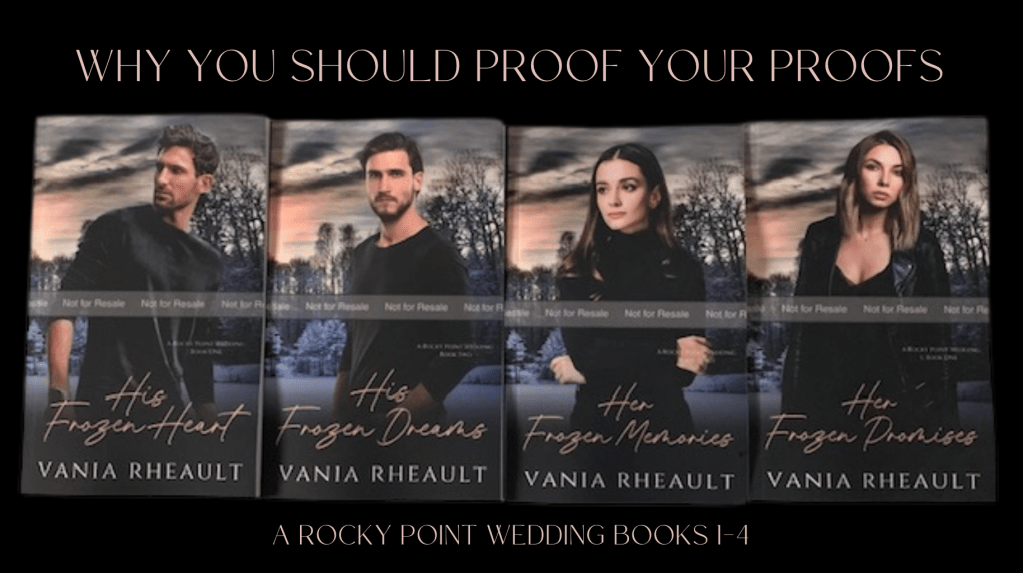
picture of four book covers. they have the not for resale stripe in the middle. a rocky point wedding series
I still love the way those covers turned out!

Back in the day, I used to be excited to order my proof from KDP. It was fun to see my book look like a book, and I’d take pictures of it, proud I was a published author. That was when we published through CreateSpace and they didn’t have that ugly stripe in the middle. When Amazon merged CreateSpace and the ebook part of KDP, I didn’t mind. I liked having my book versions together on one dashboard, and when they added the NOT FOR RESALE stripe, I was okay with it. A lot of physical ARCs have some kind of warning that it’s not the finished product, and these are no different.

But, there is also other value in ordering a proof (if you can) and as the years went on, I started going over my proofs. Now I’m always shocked to learn not everyone proofs their proofs, and they are missing out on a great opportunity.

A last editing sweep, of course.
Editors and other authors say to change your font in your Word document to make typos stand out or use the read aloud feature (listening to the voice read a word that’s not spelled correctly is funny), and those are both great ways to find typos that would normally slip by. But, also reading your proof is a good way to see run-on sentences, punctuation errors like broken ellipses, spelling mistakes, and more. One of the things I have noticed is that reading your proof can actually help you see where scenes could be plumped up or if it drags. Reading your book, flipping the pages, and seeing the words on a printed page allows you to feel how your book moves, and when I was proofing my King’s Crossing series, I made a lot of scene changes right at the last minute. There’s something real about holding your book in your hands and reading it, and if you don’t proof your proof, you’re missing out on that experience.

Check your formatting.
Sometimes things look okay on your screen but not in print. When I was proofing books 4-6 of my King’s Crossing novels, there are a lot of journal entries. Max left Gage his journal that described a lot of what happened in books 1-3 and played a huge part in Gage figuring out Zarah’s past. But I wanted to format those journal entries in a way that didn’t distract the reader from the story. I finally ended up just using italics, though I tried other things like setting them in in a block quotation or an alignment block. Then, once I decided on how I wanted them formatted, I had to go through all the books and make sure I changed them all and didn’t miss any for consistency. Sometimes you’ll end up with just a word or two on a separate page that you need to fix, sometimes the pictures in your back matter need to be adjusted. You won’t know those things if you don’t proof your proof.

Check the cover.
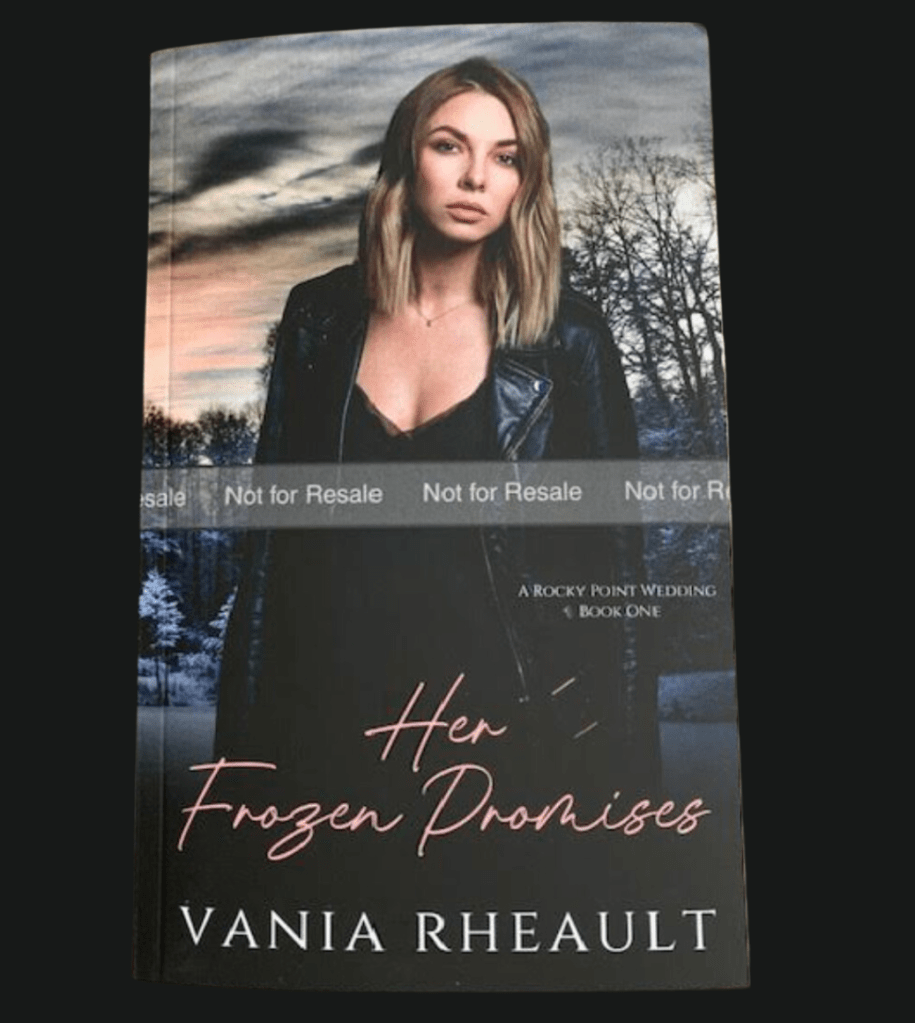
Print on demand isn’t always accurate, and KDP is notorious for printing dark. Sometimes you might decide to go with a matte cover instead of glossy. You are never going to get the colors you see on the screen, so it’s best to order a poof copy and make sure the colors are how you want them, that your spine looks good, and the back over looks professional. A lot of times I don’t get the gradients lined up to the spine just right and I have to move it over. You won’t be able to tell that looking at a PDF of your cover. One of the last-second catches I saw when I was proofing my Rocky Point Wedding series was that I still had A Rocky Point Wedding Book One on book four. KDP might have caught it when I published, but it was better that I saw it and fixed it myself.

This is book four. Ooops.

Look for lines and scenes that you can use in graphics and reels.
This will probably be one of the last times you read your book, and you can use this read-through to highlight hooky lines, dialogue, and scenes you can use in social media graphics and TikTok videos. One of the most time-consuming things is to page through your book, looking for lines you can use, and if you do this during your last edit, you’re saving yourself time in the long run. I wish I would have thought of this a long time ago, but social media isn’t my strong suit. You can be sure that I’ll be doing it from now on.

Peace of mind.
I see so many people who want their books in bookstores and libraries, yet they never order a proof to see exactly what their readers are getting when they pay 10-20 dollars to buy a paperback. I want to see exactly what my readers are going to get. I want the cover to look good, I want my formatting to look like a traditionally published book. I want to be able to catch all the typos I can (humanly) catch. I know that cost can be a barrier for some, the cost of the book and shipping might be too much after spending on editing and cover design, but as long as you are able, I would always recommend proofing your proof.

You probably don’t want to know how many proofs I ordered of my King’s Crossing series. That series is over four years in the making, and I changed the covers, too. I spent a lot on books I ended up throwing away, not needing them after fixing what I needed to fix. I throw away a lot of proofs, actually, because I don’t need them anymore. I only have room for so many, and prefer to keep a few author copies on hand instead. If you have the space, you might keep them for nostalgic purposes, but I don’t have much room, and I don’t see the sense in keeping them. The finished product is enough for me.

Ordering a proof is exciting, but it’s also a chance for one last read, no matter how sick you are of the story by now. Enjoy the last time you’ll read it, and quietly say goodbye to characters that you worked so hard on.

Written Word Media’s 2025 Publishing Trends: Part One

2,449 words
13 minutes read time

illustrated picture of brunette woman holding cell phone with a stack of books behind her

The first month of the year is almost over, but I’ve been promising this blog post for a while now, and I think Written Word Media’s 2025 predictions are still worth exploring. I need to break this post into two parts, five trends in each, or this blog post will get so long no one will want to read it, and honestly, I don’t have time to do all ten at once (still gotta get some editing in today). I linked to the article if you want to read the original first or as you go along. Some of them you might have seen before, here on this blog, or theirs. Sometimes it feel like publishing, especially indie publishing, can move quite fast, but in reality, publishing, both trad and indie, moves at a snail’s pace, and turning in any other direction than the one in which you are going is slower than the Titanic trying to avoid that iceberg.

Let’s begin:

Trend number one: Authors Focus on Building Loyal Audiences
I feel like this might be a given, and no offense to WWM or the author of the article, but I don’t see the point of adding it. Authors have always been focused on building a loyal audience, finding their true 1,000 fans. I’m not sure why it was included, except maybe to accentuate the fact that building a loyal audience is hard work. First you have to actually find your readers, then offer them enough books to either look forward to everything you write, or self-select out of your books because they don’t like your style or voice or whatever reason they have. How you go about doing this will be different for everyone, not to mention if you can only write and publish one book a year, it will take a long time. The authors who are making a living wage and who do have their 1,000+ fans have managed to accomplish this, so we know it can be done. But given the number of books out there, finding, and keeping, your readers is just a given of being an author. Write your books because without them, you won’t need an audience.

Tread number two: Authors Invest in Email Marketing
It’s always been known that if you’re an author, you should be building a newsletter, and if you’re not, that’s a personal choice that may come back and bite you in the butt. After the TikTok fiasco, I saw a lot of authors on Threads saying they might start one or start a blog so they have something that’s not social media. It’s probably the smart thing to do, since we saw a lot of desperation when TikTok almost went away, and even some now, because if you deleted TikTok off your phone or other device, you can’t get it back. The app store doesn’t allow you to download it anymore (and if you do still have it, there won’t be any new updates).

About availability of TikTok and ByteDance Ltd. apps in the United States
TikTok and ByteDance Ltd. apps are no longer available in the United States, and visitors to the United States might have limited access to features.
Apple is obligated to follow the laws in the jurisdictions where it operates. Pursuant to the Protecting Americans from Foreign Adversary Controlled Applications Act, apps developed by ByteDance Ltd. and its subsidiaries — including TikTok, CapCut, Lemon8, and others — will no longer be available for download or updates on the App Store for users in the United States starting January 19, 2025.

That’s not say you can’t use TikTok in your browser, but who knows what kind of reach it has. We’ll talk more about Meta in the next trend, but if you don’t like good old Zuck (for political reasons or other), you might not want to be dependent on Facebook, Threads, and Instagram, either. They say you can’t be everywhere at once, but maybe be on a place that you control first and foremost, and then use social media as a backup or Plan B. Evergreen content can be used over and over again, and all content can be repurposed. A blog post on your author site can be chopped into chunks to use on your FB author page or IG. I think the main thing here though, is to train your readers to look for you on your website. If you have an active FB page, make sure they know you have a website too. Turn your website and your newsletter into your primary source of news for your reader. Billionaires don’t care about you–we see this over and over again. Stop thinking they do and take care of yourself. Jane Friedman has a get-started-guide to newsletters, and you can read it here: https://janefriedman.com/email-newsletters-for-authors/

Trend number three: Meta Continues to Dominate
Unfortunately, because he owns Facebook, Instagram, and Threads, there’s not a lot of places for authors to go if you want to avoid Mark Zuckerberg. Personally, I think he’s an idiot for licking Trump’s feet. Be that as it may, he owns a lot of social media now, and if you have a large following on your Facebook author page or your Instagram page, you probably don’t want to leave. I think if anyone was still hanging around Twitter, they left after Musk’s Nazi salute. Finding anywhere else to go is difficult, Bluesky’s founder Jack Dorsey (that is such a good name though) not without his share of problematic activity. I don’t use social media a lot, though I’ve been posting more this month because I joined a challenge. Once the challenge is over at the end of the month, I’ll probably just go back to not posting at all. Being accountable to someone helps, but I should be feeling accountable to my readers and so far, that has only extended to my blog and my books. If I say I’m going to have a book out at a certain time, I do and that’s about as far as my accountability goes.

As far as ads, Facebook ads probably are the best ad platform an author is going to get, Instagram, Bookbub, and Amazon coming in close second, third, and fourth, though hard to tell which order. They all have their attributes and setbacks, and though I’ve struggled in the past, I would lean toward Facebook ads if I ever wanted to run more ads in the future.

I think the thing to remember about any social media, not just what Zuckerberg owns, is that if you’re trying to reach readers, that’s different than being part of the writing community. Approach each platform with the goal you have in mind. If you want to post graphics and reels all day that feature your books, Instagram seems to be the place for that. If you want to connect with other authors, Threads and Bluesky seem like the better choice. Facebook acts as a one-stop-shop, and you can join author groups for publishing and marketing information and networking with other authors to join newsletter swaps and author-driven promos, start an Author page for your readers, and run ads. Each platform does have different purposes, and while above I suggested you reuse content, not all content will be fit for all platforms. For an example, I’ve been posting a lot on my FB author page, but that’s kind of an anything goes platform, whereas, if you’re trying to create an aesthetically pleasing grid on Instagram, everything has to be in line with your theme which means you’ll be planning your posts. Choose your goal and have your plan. I post on FB and Instagram to promote my books to my readers, joined FB groups for publishing industry news and networking, and I joined Threads (though I said I wasn’t going to) to get book news and just post random crap that’s not fit for anywhere else. (How many people care I had to buy a new coffeemaker?)

It seems like Meta will be around for a bit, but always have a backup plan. When Meta servers go down, Facebook, Instagram, and Threads go down at the same time. That’s a lot of social media blackout. Know why you’re posting and what you want to get out of your social media use. If something isn’t working, move on. Algorithms are heartless animals, don’t let them beat you down.

Trend number four: Direct Sales Continue to Grow
I think this is really true. Authors are seeing the benefit of cutting out the middleman and earning more for themselves. But, on the flip side, if you don’t have the technical savvy (or patience) to pull it off, don’t have the space to store physical books, don’t have the spoons to think about any of it much less the ability to get to the post office two or three times a week, I wouldn’t worry about it. For as many authors who do sell direct, there are just as many or more who do not. Because my ebooks are in KU, I couldn’t sell those directly, but I could sell my paperbacks if I wanted. I don’t have the space to store stock, and though I know a couple people who could probably help me get some kind of system set up on my website, it just sounds like too much work.

Honestly, anything more than what I’m doing sounds like too much work. Direct sales doesn’t necessarily mean setting up Stripe on your website and shipping physical books out of your home. It could mean setting up a Patreon and asking readers to pay for exclusive content. It could mean setting up a paid newsletter. Anything where you are engaging with readers directly, where they pay you (minus the fees of whatever platform or system you’re using) directly for content they want. If I ever had a book take off, maybe I would create a special edition to sell directly to readers somehow, but all that seems so up in the air and you have to consider ROI. Are you getting enough from the time and stress it takes to put all that together? I sound like I’m against direct sales, but I’m not. If you have the energy, resources, and your books are available to be sold elsewhere other than Amazon, then you should do it. What I’m trying to do is tell authors who don’t want to or can’t do this right now, or ever, that it’s okay. Not everyone does it or wants to do it. With my luck, I would put paperbacks on my website and sales would explode. I don’t have a team to handle that. Amazon is okay for what I want it to do. They take care of taxes, distribution, and shipping, and royalties land in my account.

I don’t know what’s in store when it comes to a trend like this. More authors doing it? Maybe, as Amazon’s reputation gets worse and worse and Draft2Digital and IngramSpark get increasingly harder to work with. Indies go indie to be in control, after all, and there’s no greater control than selling your own books.

Trend number five: Authors Experiment with Pricing
I think all authors experiment to some extent, though from the small sampling I’ve seen on Threads, authors could be a bit more flexible. Amazon doesn’t make this easy, only giving us 35% if our prices are 1.99 and below, and we’re reluctant to price at .99 only to receive 34 cents per sale. This is where having a series can come in handy, putting your first book for .99 (or free if you’re wide) as a loss leader and recouping that loss when a reader reads all the books in the series. There are a lot of arguments as to what book blasts like SYKD do for anyone, though no one can truly know since evidence for or against is so elusive.

When I price my books, I think of two things: I’m in KU so price doesn’t mean that much, but I also want to be price-friendly for readers who do not have KU and have to pay out of pocket. Right now my six-book series is priced like this: Book One, .99; Book Two, 1.99; Book Three, 2.99; Books 4-6, 4.99 (USD). That’s still over twenty dollars if someone wants to read all six. That sounds crazy to me considering they could pay for a month of Kindle Unlimited for 11.99 USD plus tax. They could read mine and as many other books as they could for the month. I understand not every country has access to Kindle Unlimited but my audience is 75% US, so I always keep that in mind when I make decisions for my book business.

I gave away almost 15,000 books in 2024, and I see the benefit in giving away a first in series or even just a standalone to let readers get a free taste of what you offer, but as the article states, we have to price in a way that we still make money. That’s been something I haven’t quite figured out, and we all have to find that delicate balance among ad spend, giving away our books, and pricing low to keep readers happy but also to reach whatever monetary goals we have. I’ve decided making money isn’t going to be my focus in 2025, stopping all my ads and just letting the chips fall where they may. I’m focusing on enjoying the writing process and not thinking so much of how many books I’ll publish every year.

The more books you have, the more choices you have. You don’t have to think so much of price if you have only one book out or if your series isn’t complete. Look at the bigger picture when pricing your books, not just what you’ll get when one person buys one book. (I also touched on this in a different blog post and you can read it here: https://vaniamargene.com/2024/07/29/every-time-someone-reads-your-book/) Pricing your books is a sales and marketing strategy, so try to know what kind of outcome you want when figuring out what to price your books. You can’t measure return on investment if you don’t know what kind of return you want. Sometimes it’s not all about sales, it’s about exposure or read-through.

Experiment and see what works for you. The first three books in my series won’t be low forever, but I can’t guarantee when I’ll get around to changing them to 4.99 like the rest. It is smart though, to mix it up every now and then, even if it’s just so you have something to write about in your newsletter.


That’s about all I have for the first five of Written Word Media’s 2025 trends. I’ll do the other five next week. Here are some quick links if you’re looking for resources about what we talked about. I hope 2025 is treating you well. I can’t believe how fast time is flying by.

Until next time!


Links:

Bookbub also did a predictions list that focus more on AI: https://insights.bookbub.com/publishing-leaders-share-predictions-2025/

Jane Friedman and newsletters for authors: https://janefriedman.com/email-newsletters-for-authors/

How to do a Kindle Countdown Sale: https://www.writtenwordmedia.com/kindle-countdown-deals-explained/

TikTok Uncertainty Prompts the Book Business to Envision an Even Better Future: https://www.publishersweekly.com/pw/by-topic/industry-news/publisher-news/article/96889-tiktok-uncertainty-prompts-the-book-business-to-envision-an-even-better-future.html (You might hit a paywall if you’ve read all your allotted free articles)

Monday Author Update

holiday flat. holly berries, evergreen branches and a red present on black background.  text says. Monday author update

I haven’t done one of these for a while, but there’s nothing to update you on, either. I finished book three of my Rocky Point series, and since I dated the most recent edits, I was dismayed to find that it will have taken me four months (or more as I’m not done with book four yet) to get through these. Not that I should be bothered, these books are a strong series and a solid part of my 3rd person backlist, but I had planned to use this time to get ahead. It doesn’t matter. The longer I’m writing and publishing, the less I think there are repercussions to having long wait times between books. You’ll need to push your back list and communicate with your readers through your newsletter and/or social media, but we think too much about readers forgetting about us, and that’s really not the case.

We can burn ourselves out thinking about FOMO and drive ourselves mad thinking that readers will move on to other favorite authors. It’s true, some readers may be one and done, but any author has to face that possibility, not just slow writers. There are millions of readers out there and when you do get around to releasing that next book, you’ll find new readers and the readers who have enjoyed your books before will come back.

I’m not even looking at a long gap between releases, I don’t think, despite the four months I used to polish my old series. I have no idea how long it will take me to get Loss and Damages edited and packaged (I have the cover done, so we’re just talking writing the blurb and shoving my Word document through Vellum), but if I can do that by the end of March for a September release, I’m not going to need something new until January of 2026 . . . if I keep Amazon’s cliffs in mind, and at this point, I don’t know if I care. It seems silly to freak out over something that really doesn’t warrant it, but man, it’s difficult to let go of the RIGHT NOW mentality so many authors face every day.

Anyway, so how do I plan to to keep my readers interested in me and my books while they have to wait? What can you do if you have long gaps between releases? Here are a few things I plan to do next year.

Keep going with my newsletter. I’m a proud cheerleader of newsletters, but if I have to push myself to write them at times. I almost didn’t even send one out when my third book in my King’s Crossing series released, but people wanted to know as I had the highest open rate since I started my newsletter back in, I have no idea now, 2022 maybe. I was shocked and really pleased, so you might think no one wants to hear from you but just the fact they signed up says they do.

Do better with social media. I know (I use the word loosely because we don’t talk anymore) someone who would constantly take down her social media profiles. She’d have them up for a bit, post, gain a following, then take them down. I still check in with what she does (stalking sounds so nasty, doesn’t it? LOL) only because she does social media so well. She’s got almost as many followers on her new FB page as I do after having my author page up for six years. It’s not that I don’t have things to talk about. I have plenty of books and stuff going on in my life that having a blank author page really isn’t necessary and makes me look lazy and like I don’t care. I care, but I have a terrible time showing it.

Put my book(s) on sale. This is something else that I have a problem with. I don’t remember to use my free days very often, and I can’t remember the last time I even tried to do a Kindle Countdown Deal. Sales are also a good way to keep in touch with your readers so you have something to tell them, and obviously, sales are a great way to find new readers. A while back I heard Zoe York say you should plan a promo every quarter, so four times year. I’d like to do that, especially since I have more than enough product to rotate and there are newsletter promo sites like E-Reader News Today and Robin Reads that I haven’t tried yet.

Keep doing ARCs. There’s been some talk on Threads about authors not doing ARCs anymore, due to lots of reasons like piracy and reviewers not pulling through. If just for the sake of something to talk about, I will keep doing ARCs of my books, and you can probably look forward to ARCs of Loss and Damages sometime in June or July. I’d like to have all my ARC links taken down by the time I put my book on preorder, even if it is just a short one. Admittedly, this option is only good if you write ahead. Some people put their ARCs up just weeks after the book is complete, but Loss and Damages will be finished months before I need reviews. I even hope that by the time I put ARCs up, I’ll have the next standalone I want to write done and edited and almost ready to go.

The main thing is to communicate with your readers, and I’m terrible at it. I love talking writing and publishing with other authors, but I need to get used to talking about my books in a different way. I have dreams of being an obscure bestseller, but that’s an oxymoron at best. Even if I have never heard of a romance author who is making a living wage, that doesn’t mean she doesn’t have a huge fanbase she talks to on a regular basis. I need to start putting myself out there, and that’s really difficult for me. Not like, personally. I can talk about my health issues all day long (and have) or marketing or publishing, but talking about my books, hyping them up, is odd somehow. I’m proud of my books and I think I’m a good writer, even if I have to go back occasionally and do the extra editing sweep from time to time. I don’t know. Being proud of myself and my accomplishments is just different, but in 2025 I’m going to try to be better.

I’m not going to stress about my publishing schedule next year. I need to control my FOMO and just write and publish at my own pace and not think I’m going to fade off into the void if I don’t have books ready all the way until 2027. It’s ridiculous the pressure we put on ourselves, and no one is keeping score except us.

Write for the love of it, and publish because you want to share your stories. I’m excited for the books I’m going to be editing and writing next year. I want to change my perspective and talk about my books in a way that readers will want to read them.

Next week is my usual year-end summary, and after that we’ll see what the new year brings. I’m sure there will be the usual publishing predictions and I haven’t weighed in on them for a while. Mostly because it seems all the predictions are the same year after year (publishing moves slowly after all), but I haven’t really paid attention either, because of how I’ve felt, so this will just be another change in a long line of things.

I hope you have a happy week if you celebrate!

Until next time!
Author Goals 2025

Everyone is doing these and I thought I might as well. You can either look eagerly into the future or think it’s just going to be another year of writing to no one. I don’t really think that, I do have readers, but I know there are more than a few who do think it because marketing is hard and it’s harder still when you don’t have any money to buy ads or promos.

My goals for 2025 are pretty simple. I don’t have any. Of course, I have a list of things I want to get done, but when I think about goals and what I’ve seen from other authors, they aren’t the same. I don’t have a goal to make 10k with my writing or get an orange tag. I don’t have a goal to sell 100 copies of a book or even 50 copies and I’ll you why. Because I don’t have a plan to achieve those goals, and I don’t have a plan because if I knew what would work I’d be doing it. Goals are only as good as the motions you can put into place to achieve them, which is why the only things on my goals list are what I can control.

So, let’s begin:

Finish proofing the proofs of my Rocky Point series, upload, and publish new files to KDP and IngramSpark. I’m not going to get done this year. I wanted to, so I could start 2025 with a clean slate, but I won’t. Book one is a word salad of filler words and echoing that for some reason I didn’t fix the first time around (paper always reads different so it could just be I’m seeing them for the first time) and it’s going to take me probably until the end of the year just to finish book one. Even if I could finish book one before then, I have three more to go. I committed to editing these, so I’m going to finish it out to the best of my ability.

Finish editing Loss and Damages, a first person present Billionaire standalone that I started back in May of 2021. It’s finished and has already had one read-through and I added quite a few notes of what I need to fix. I want to finish those edits and get the preorder up, I don’t know when. I have no deadline, just do it as soon as possible after my Rocky Point series is squared away. My last book in my King’s Crossing series releases in the middle of April, and to give myself time to write, I decided on a September 15th, 2025 release date for Loss and Damages. Then, if I keep with the four-five month time between, I’ll have plenty of time to write more books, with an estimated release day sometime in January of 2026.

When Loss and Damages is completed and scheduled, the next book I want to write and edit will be completely from scratch and is a standalone Billionaire romantic suspense. I have it mostly plotted out in my mind (and to no one’s surprise, the cover is already done), and I’d like to write it before I forget what it’s about. Also, if I can make good use of my time and schedule it for the January 2026 release date, that will give me extra time to work on what I want to write next.

I doubt I’ll be able to get this done in 2025, but I want to finish a series I started back in 2021. I have two books written of a six books series, but after working on King’s Crossing (a six-book serial) and my Rocky Point series (four books that are connected but can be read as standalones), I don’t want to dive into another huge project. So what I need to do is rewrite parts of book one and cut out two of the characters or make it clear somehow they would be not be getting their own stories, so I only have two books to edit and two books to write. The combined writing, editing, and packaging of four books will take me a very long time, and I really don’t think I can edit a book, write a book, plus complete that series all in one year. I’ll need to figure out how much time I want to have between my January 2026 release and the series. I could maybe do six months and aim to have the series completed in enough time to put them on preorder in July of 2026, but I’m not going to think that far ahead.

I’m feeling better physically and in turn, mentally, so I’ve said I’m going to approach 2025 a little differently. I am, already veering away from series for a minute and I’m going to concentrate on editing Loss and Damages and writing Wicked Games. I need the break working on standalones will give me, and even though I could give myself a deadline, I actually haven’t sat down and written a book since August 2023 when I wrote A Heartbreak for Christmas and packaged that for its November release. All this time I’ve been editing, so it might be a bit intimidating to open a new Word document and try to pull words out of my head. Editing is a different beast, after all, and I’d like to have fun rather than just think of Wicked Games as another book I need to write and sell.

I’ve really grown as an author editing so many words this year, and the mistakes and filler words and general clutter I was using that I didn’t see are pretty blatant to me now. Loss and Damages and Wicked Games are probably going to sound better than any of the books I’ve written so far. Well, besides my King’s Crossing stuff because I went over those with a fine-tooth comb, and if some filler words managed to squeak by me, then they have earned the right to stay.

As far as other goals, my King’s Crossing series is done. The third book will release on December 9th, the fourth in January, the fifth in March, and the sixth in April. They are all loaded up and on preorder. No files need to be changed out, the covers are locked in. That series is gone in my mind, which is probably why I have such a hard time marketing. Once a book is up, it’s out, and I’m moving on to other things. I don’t have goals for sales or page reads, in fact, my expectations are quite low and will be until the last book is released. As a serial, a reader won’t know the whole story until the last book is released and since I have that information written in the blurb, readers might not even want to start the series until they are all available. I’ve kept my expectations realistic, running ads to create buzz and awareness (and bleeding into the red with clicks), and just focusing on editing my series to maybe boost my 3rd person backlist. I’ll be releasing four books in 2025, and anyone would be proud of that, other goals be damned.

I probably should try to think of some kind of plan to push book one out more, beyond the author driven promos and promos you can buy like Freebooksy, but that would require hustling and networking, and since I haven’t felt well, that just sounds exhausting. I have a rockstar promo opportunity someone sent me months ago and I just haven’t felt like reaching out to follow up, but if I want to spread the word I’m going to have to start doing the work and that can probably be one of my goals for next year. I need a mindset change because not feeling well has been a valid excuse not to do a lot of things, but I need to start being present in the present and not hiding, writing a book because my doctor didn’t know what was wrong with me. That’s all in the past, so 2025 will have to be different in that regard.

I don’t have a lot of goals and I really don’t want to make any beyond what I’ve touched on here. I’m not struggling as much as I have been, a clearer (and sober) mind has helped me come to terms with knowing that a lot of what I’m doing will (still) be on my own, ie, forgoing a beta readers/editors/proofers and cover designers. I have a few friends I touch base with, and I’m grateful to them because they keep me sane and remind me I’m not totally alone. Writing has always been something you need to do by yourself (have you ever tried to write while someone was talking to you?) so that part is understandable and something I have enjoyed even while I wasn’t feeling well. I’m just still adjusting to the loss of my fiancé who loved to talk publishing and a friend here and there who would like to brainstorm. Now that I’m doing better, I can focus more on replacing those relationships and reaching out to the romance community, which I should be doing anyway.

I’ll be approaching 2025 a little differently, trying to find the fun I lost in the writing, and trying to find the fun I lost in my life overall. It was a real miracle my doctor at Mayo knew what was wrong with me and could actually fix it (to the best of her ability) and while I’m adjusting to how things are in my writing and the writing community, I’ll be adjusting to my new way of feeling. I’ll never be “normal,” but I’m better than what I was and I’m grateful for that.

I suppose that’s all I have for this week. Four more weeks of 2024. Make them count, and maybe, maybe 2025 will actually be different for many of us!

Until next time!

Past Decisions and Their Consequences

Words: 1535
Time to read: 8 minutes


Too tired to look for a stock image. Imagine something pretty here.


Everything we do results in some kind of consequence, some kind of reward, whether we know it or not. Whether we want to admit it or not.

Last week was another crazy day on social media when I saw someone encouraging people to use KDP’s POD, but mark up their paperback prices on Amazon to $200.00 so they could sell off their website instead. This is such a bad take for so many reasons, and when I replied saying that at least IngramSpark was a better option because you can print without distributing, she went off on me saying IS wasn’t viable for everyone and that I was toxic and privileged for even suggesting it. That really hurt and I dropped out of our conversation because I’m not going to let people assume how I live. It’s not toxic to suggest a better way of doing things, it’s not privilege to suggest a platform many authors have access to. She wanted to be right, and there were plenty of people who agreed with her. That’s fine. Look like an idiot selling your paperback for $200.00. Doesn’t bother me at all.

The main issue is that IngramSpark costs money. If you live in the US, you know how expensive ISBNs are. Part of her privilege insult was because she assumed I buy my ISBNs and that I was telling people they should do the same by suggesting they use IS. She doesn’t know that yeah, I did buy a pack of 100 (costs $575 which was almost as much as my rent) but I charged them on a credit card and it took me several years to pay them off. My ex-fiancé said he would buy them for me, but you know how that turned out and I ended up paying off a massive credit card bill that he said he would take care of. Anyway, the outcome of that story is that yeah, I did buy own ISBNs, and it’s none of her business it took me years to pay them off.

Very rarely on this blog do I suggest you spend money on your book business, but on the flip side, I’m very clear that I believe you can’t start a business properly without spending some cash. If you want to sell YOUR book off YOUR website because you’re running a business YOU own, why would you want to use an ISBN that didn’t belong to you? That’s MY main reason for buying ISBNs. They belong to me, I’m registered as the publisher, and if Amazon is ever a dick and closes my account, my books are safe. For all the hating on Amazon over on the sewing platform, they’re quick enough to take what Amazon gives them.

Anyway, so when you use free ISBNs you’re taking a risk Amazon will treat you well and if you take free ISBNs from anywhere else, you’re accepting any eventual consequences.

This isn’t a post just about ISBNs. You take risks making your own covers, especially if you don’t have the skill to create a cover that will tell readers what your genre is and won’t look homemade. Just the other day someone was bemoaning the fact he couldn’t get preorders for his book. I told him to look at his cover and maybe redo it, that it looked homemade. He actually was very nice about it, and maybe he will change it, I have no idea. That kind of consequence you may never see–you could not sell any books and blame it on lack of marketing or algorithms. Unless someone you believe and trust says your cover is garbage and you change it, you could go years without knowing what kind of damage your cover caused. I mean, you know I do my own covers, and back in the day they weren’t great. I still see the free stock photo I used on 1700 Hamilton other places, and I published that book eight years ago now. Canva templates taught me a lot, and I still like how this cover came out, the first for Wherever He Goes, even though I changed it to something sexier later that’s still the cover on the book now.

Not listening to your editor and having a book bomb after the fact can have dire consequences–a reader won’t give you another chance if they spent money on a book that had plot holes and grammatical errors every two sentences. And, you know, poor reviews last forever. I’ve been editing my own books for a while, and I know the risks, may have even suffered from some of them. God only knows who’s read my books and said they’d never read me again. I also know the risks of trusting people, and well, tired of that, so you have to choose the lesser of the two evils.

My biggest regret so far was not starting a newsletter sooner, and I wonder how far I’d be now if I had given as much attention to a newsletter as I have to this blog. Maybe because of the change in direction I decided on in 2020, it wouldn’t have mattered, or those people who signed up wouldn’t have cared either way.

After unpublishing some hardbacks and Large Print, I thought about unpublishing a couple of my first books, just because they aren’t the quality of the others, nor are they in the genre I decided to write in. Some say romance is romance, but my romantic speculative fiction could probably go, also my erotica that I decided I couldn’t write because there was just too much sex. (If you have to remind yourself to put in the sex scenes, erotica probably isn’t for you.) When you say you want to write and publish whatever, those consequences can catch up with you. Difficult to make a brand out of “whatever” and you may look back in five years at all the word salad you hoped people would buy.

The one thing all these have in common is that no one can tell you these things. I mean, yeah, the advice is out there, cover to market, hire an editor, start a newsletter, buy your ISBNs if you can. All that’s out there but it’s funny because we’ve turned being indie into defying the rules and maybe some rules are meant to be broken, but this is a business and whether we like it or not, there are best practices.

I almost didn’t write this blog post because I realize the subject is boring and repetitive, even if I’ve made similar mistakes. The bad advice out there can really take me aback, and that woman who had supporters telling people to price up their book left me speechless. What would readers think stumbling upon a book that cost $200.00? How is that author going to tell those readers she preferred to sell off her website? It all seemed so bizarre to me, yet people agreed, said they were going to try it. I don’t know, it just seems like one of those things that you could look back on later and say, “What was I thinking?” Of course, you can do that for just about anything, the cover that wasn’t right, blowing off your editor, not listening to someone who knew what they were talking about because you were determined to fail on your own. That’s how people learn, and I’ve had people tell me to hire an editor, but some things are easier said than done.

So this post is 1200 words of drivel (it’s almost Thanksgiving in the US so I’ll refer to it as turkey gravy), but honestly, my brain is fried. I’m halfway through editing my age-gap. I’m really loving the story and it’s fun to see how far my writing as come, but editing is tiring, probably more so than simply writing. I also have to proof my series proofs, and that will take a minute, but I’m hoping that I’ll get everything wrapped up by the end of the year. I want to start working on my first person stuff again, putting into practice the things I finally know that I didn’t before. I’ve come a long way working on my King’s Crossing series. Really, smoothing out over a half a million words taught me a lot, and I know it did because working on my Rocky Point series was really eye-opening. I agree that sometimes you have to fail on your own to learn, but you do have to keep working on your craft and level up on your own if you don’t want to take anyone’s advice.

That’s all I have for this week. I’ll probably post my Billionaire post next week. I think it’s still relevant, and tempers, while they haven’t cooled all the way down, aren’t so hot, at least, and even if it makes some readers crabby, I think it was wise to wait.

After that, well, it’s year-end stuff, and before you know it, it will be January. The world keeps spinning, no matter what kind of rut you’re in. Do your best to keep moving forward, and hopefully you’ll see more rewards than consequences.

Every Time Someone Reads Your Book….

….you might not actually get paid.

Words: 1798
Time to read: 10 minutes

There seems to be an idea floating around the author community that you should get paid every time someone reads your book. This is especially true when we talk about pirating. The main concern is that we aren’t getting paid for those reads. I get it, especially since two years ago I pivoted to first person present and focused on billionaires in an attempt to find a readership that will read all the books I’ll ever write.

But when it comes to books, we’re always saying books are meant to be shared. These days, we mean more word of mouth so that other people will take those recommendations and buy their own copies. Sharing books, physical or passing around a Kindle, has turned into something of a no-no because as an author, we want our cut, no matter how small that ends up being.

Nothing a book loves more than to be collected.

Eloise Bridgerton, Bridgerton, Season 3

I don’t know if the idea of not sharing is more popular now because pirating is more prevalent, authors complaining that the second their books are available online they end up on a pirate site, or because we’re fighting against all the legitimately free books out there. A reader can sign up for newsletter promos like Freebooksy, Red Feather Romance (that does feature free books sometimes) Ereader News Today, Robin Reads, and other newsletter promos that promote free books. If a reader opened those newsletters every day and took advantage of all their offerings, there’s a good chance that person wouldn’t have to buy a book to read ever again. And then there are subscriptions to programs like Kindle Unlimited and Kobo Plus, where readers aren’t paid as much as a sale (at least, that’s the way it is if an author participates in Kindle Select), and yeah, authors love to put Amazon down for it. And we can’t forget the huge free book blasts that are becoming more and more popular. (You can read about some of them here: https://www.bookbub.com/blog/stuff-your-kindle-day.) I joined one last year and there were over two thousand free books available for download. If a reader downloaded every book, even if they are voracious readers, how long do you think it would take them to read every single one? A year? Longer? And those blasts can happen two or three times a year, depending on the genre you like to read.

Free books are out there. And yours, whether you like it or not, might be one of them.

I’ll be fifty years old this year, and I remember when there weren’t Kindles, there wasn’t KU. There wasn’t online reading at all. Okay, you got me. There wasn’t internet, haha. If you wanted a book you needed to go to the library, pick up a paperback at a K-Mart or PAMIDA, if you remember those from so long ago. This was back when bookstores actually carried books and not toys and games and music, and if you wanted to read a series, you were very lucky if you could find them all in one place. There were other ways to get books, other ways that didn’t always ensure an author would see their royalties–thrift stores selling secondhand books, rummage sales. I have totes and totes of Harlequin Desires and Temptations because there’s not a thrift store I can’t go into without loading up.

Is it fair to an author?

At some point, I think it’s better if you let go of the idea you’re going to get paid for every read. The way books were created and designed was to be shared, and it’s been that way with other printed media like newspapers and magazines for decades. Publications try to curtail this loss of income by using online paywalls for their digital editions, but more often than not, if you hit a paywall, you click out, or you use an internet extension to bypass it if you can. To some extent, we think information should be free, but just like an author wants to be paid for their work, so does a journalist or, in some cases, a blogger or newsletter creator. Indie authors who go the nonfiction way to help other authors find a balance between free and paid information. Dave Chesson gives indie authors tons of free resources, everything from QR code and barcode generators to free Amazon ads classes. But, he also charges for things like Publisher Rocket and his formatting software, Atticus. There are other indie authors who give out free marketing advice or answer questions by giving up time to be interviewed or joining in podcasts but offer things authors can buy (I’m thinking of Zoe York who is very free with information on her YouTube channel who has written nonfiction books about writing a series and fiction writer Alessandra Torre who hosts an authors’ convention called InkerCon and runs a Facebook group of the same name).

Some authors do give away books, a reader magnet like I do, or a free first in series if they’re not exclusive with Amazon. You’d have to ask them why they’re okay with giving away books. Some of them have a large readership and just consider these books a loss leader because they know the return on investment is worth it. Some are very guarded with their books and rarely give anything away for free, thinking they deserve every penny for every second spent writing. In my opinion, this kind of attitude comes off as miserly. There was even one person in Mark Dawson’s Self Publishing group on Facebook (that I am no longer a part of) who said he wouldn’t be offering a paperback version of his book because he didn’t want people to share it. With that kind of attitude, I wonder if he found any readers at all.

This isn’t a post about giving away books. I’ve written about that before (https://vaniamargene.com/2022/11/28/author-update-thoughts-on-getting-blocked-and-giveaways-are-they-worth-it/). It’s really a personal and business choice and discussion around it can get very heated at times. What I’m really getting at here is that after someone purchases your book, what happens to it afterward can be out of your hands. They can give it to a friend, put it in a LFL (little free library), put it in a donation box for charity. When my son put together my bookshelves, I went through all my books that aren’t in storage. I gave my local library three big boxes of books I knew deep in my heart I would never read or didn’t want to keep (and yes, some of them were indie). I didn’t feel like I was cheating the authors out of royalty money. Some of the books I did buy from places where the authors would get their cut like Amazon, Barnes and Noble, the grocery store, and Walmart. Some I didn’t, like secondhand bookstores and thrift shops. I’m getting older and have trouble reading smaller print, and while I still love to hold a book, I prefer to read on my Kindle, and between the Freebooksy newsletter I subscribe to and my Kindle Unlimited subscription, I have plenty to read for many, many months.

There will always be someone selling the books they’ve purchased–third party sellers on Amazon and people trying to get rid of their copies on eBay. Some of my books are on eBay going for a helluva a lot more than if they would just buy from Amazon, and maybe sometimes those sellers make money but probably most of the time they don’t.

When it comes right down to it, authors make very little off their books, and that could be why authors are so guarded. I particularly see this attitude from newer authors who only have one book available and who’ve found their book on the pirating sites. They realized that when you print a 500 page book and have to price it at 25 dollars readers are paying Amazon for paper and those authors are lucky to make fifty cents (that’s actually an exaggeration, and if you you want to play with a print calculator, you can find it here https://www.draft2digital.com/podcalc). They don’t want to give books away for free, don’t see a value in it because they do only have the one book. I see authors raising their prices to try to make any kind of money at all, and that’s a business decision. Personally, I’d rather keep my prices reasonable, even on the low side. I’d rather have two readers for the price of one, but not everyone thinks like that. I’d rather have a reader in KU than lose out on page reads because I hate Amazon and I’m wide. We all have to make the choices that are best for us, but while owning a business can be stressful, there are things you can choose not to stress over and one of those things are readers reading your books for free. It will happen.

I don’t mind if people share my reader magnet after downloading it from Bookfunnel. I don’t care if someone buys one of my paperbacks and ten people read it after her. I’ve read free books, and it would be hypocritical not to expect it to happen to me because I’ve done it all my life. The idea that people shouldn’t be able to read a book for free needs to die down. There will always be free books everywhere, and if you believe you should get paid for every page, I’m sorry to say that you may be in for a hard time business-wise. There is value in ARCs, reader magnets, and loss leaders. There might even be value to your books being read on pirate sites. Who knows where you’ll pick up a fan.

Laura Zats and Erik Hane, the hosts of Print Run, recorded an interested podcast about the topic of secondhand books, more specifically, the used bookstore Half Price Books in Apple Valley, Minnesota. They’re agents who live in the Twin Cities area, so they talk about the trad side of things, but their conversation was interesting nonetheless, and you can listen to it here: (https://soundcloud.com/printrunpodcast/episode-166)

That’s all I have for this week. I’ll have an author update for you soon, and hopefully that will have some good news. I also would like to talk more about ads and I’m still mulling over what I want to talk about based off a comment about AI and algorithms I saw on Threads not long ago.

I hope you’re having a great summer. It’s two-thirds gone, and if you wanted to get anything done before fall hits, you might want to get on that. Summer will be gone before you know it!

Take care and thanks for reading!

Policing Other People’s Work

Words: 1225
Time to read: 6 minutes

This isn’t as fun as it looks.

One thing that has always puzzled me about authors is their need to police other people’s work. I see it all the time, from the authors who defend their right to leave bad reviews (thinking they’ll teach that author how to write correctly) to people who are loud and proud about the books they do not finish (DNF) for whatever reason. I came across this jewel the other day, and I gave myself a cookie for not responding:

genuine question for kindle unlimited authors: does reporting typos through the content error box ding you in any way? Is there a better way to report mistakes?

Picture of reporting screen on a kindle

I actually see this a lot, with authors who are asking if it’s okay to email other authors about mistakes, or direct message them to inform them of errors. This isn’t the first time I’ve seen someone ask about the actual reporting feature on a Kindle either, and it just makes me so confused as to why someone would waste the energy to do something like this while they’re supposedly reading for pleasure.

This is one of the big reasons I don’t promo my books where other authors hang out. I have never met a more judgmental or pickier group. And not only are they judgmental and picky, they are not afraid to let others know. The reporting system on a Kindle is anonymous, but just the fact that she posted that on Threads tells me she actually uses it, or wanted to use it. Maybe the responses changed her mind, but knowing she would think about it gives me the ick and I don’t want her reading my books.

I’ve given this some thought as to why authors would want to police someone’s book:

So they can feel better about their own writing. I know this is a pretty crappy reason, and maybe that tells you something about me that I mentioned it first. I think the worst of people? Maybe, but I’ve also seen it enough that I do think authors enjoy being able to report typos or call a book out for bad editing. They like to feel like their books are better than someone else’s. It’s not a terrible thing, really. I think we all have read a book that we thought was bad and said, “If this book is a bestseller, then my books have a chance.” We need the validation, but that’s not a good way to go about getting it. Putting someone else down, even in the guise of being helpful, will never lift you up. It might make you feel better for a little bit, but as most authors become aware, what goes around comes around, and someone reading your book may not take so kindly to your typos, either. And trust me, no matter how many times you go through it, you’ll publish your book with a couple.

They really do want to be helpful. I don’t jump completely to negative assumptions–there are authors out there who genuinely want to tell an author what the problems are in their books so the authors can fix them. The problem is, not everyone has access to their files. If they’re traditionally published, or if they’re published by a small press, telling them about the typos, or plot holes, or that the male main character’s eye color changed halfway through the book, won’t help. You can report it, sure, maybe eventually Amazon will alert the author of the quality issues and prompt their publisher to submit the edits (from what I know this would be very unlikely), but what good is that going to do? You can email, but if every person emailed that author about their typos and they can’t do anything, think of how defeating that would be. You get an email once a week about an issue you can’t fix….how demoralizing that is. Detrimental to that author’s mental health, even. So you being helpful can turn into anything but being helpful.

I understand that you might want to help an author fix their book, but after publication is not the time for that. If you truly want to help, help a writer beta read, or offer to proofread. That book you’re so eager to give feedback on, that book could have gone through multiple rounds of editing, or maybe that author couldn’t afford an editor at all, did the best they could, and you’re rubbing salt in their wounds by needing to mention all the typos, words used in the wrong context, and punctuation errors.

Writers and authors have a really difficult time turning off their editing brains to read for pleasure. It’s part of the reason I don’t read as much as I should. It’s difficult for me to find authors whose writing styles I mesh with. Sometimes I don’t like the author’s voice from the first page, and it takes me a chapter or two to let go of my dislikes and get into the story. I, too, am picky, and I dislike characters who don’t act their age, or dual point of view books that have too much of the female point of view and not enough of the male’s. I’ve read books where the author couldn’t decide between past and present tense, books where the author (or editor) didn’t know how to punctuate dialogue. Books that didn’t take time to flesh out characters. Never, not in my wildest dreams, have I ever wanted to report an error through my Kindle, email an author, or direct message them. I would never take the time to edit a book like that or tell them that something they were doing didn’t work for me. Chances are really good that they wouldn’t care anyway, so when you think about reaching out to an author, figure out what you want the outcome to be. Do you want them to thank you? Is gratitude what you’re after? Will you be disappointed if you don’t get a response? What would you say if they wrote back and said, “Thanks for letting me know, but I’m published with a small press and I can’t do anything.”? Apologize for saying something? Not respond? Get embarrassed and crawl into a hole? Because that’s what I would do if that happened to me. You have no idea what an author’s circumstances are, and even if you are coming from a sincere place of wanting to help, you could be doing more harm than good.

I’ve known authors who police books, giving “honest” reviews, or even editing snippets of books on Twitter, and it’s never great when it comes back to them (and Karma’s like a Boomerang–it will). I keep my nose out of people’s business. Years ago I used to write “honest” reviews, too, even some on this blog that I have since trashed because it was a hard lesson learned that no one is better than anyone else and we’re all in this together.

If you just can’t stop yourself from emailing an author, at least offer to beta read their next book or join their ARC team. Offer some help instead of just emailing them a list of typos and expecting a thank you. Be kind and realize that they may actually not want your help. They might not be able to do anything with it, anyway. I’ve seen vindictiveness and I’ve also seen it returned. Instead of focusing all that energy on someone else’s book, concentrate on yours. It will be better spent.