Preorders and Promises

1,422 words
8 minutes read time
Blog graphic with peach and cream flowers and watercolor accents framing the words “Preorders & Promises” in black script.

Kindle Direct Publishing created some buzz last week when they announced that they extended their preorder window to eighteen months instead of the twelve months that we were allowed previously, and let you push back a preorder date two times. Once without penalty and the second time suspending your preorder privileges for six months.

From what I can tell, there were a lot of happy people. One reason is because not many people think Amazon treats indie authors well, and when Amazon does do something positive, it’s cause for celebration. The other is, well, I guess indie authors are going to take advantage of the longer preorder period.

Preorders are a slippery slope. You want to create excitement for your book and announcing a preorder is a way to do that. You can have a link for your CTA and start posting on socials, tell your newsletter, and start running ads. But over the ten years I’ve been in the business, authors tend to get a little overzealous, maybe a little too industrious, and pretty soon they’re canceling their preorder because the book isn’t ready.

Let me tell you a story. An acquaintance of mine has been talking about her newest release since May, maybe even before that. She put her book up on preorder under a pen name, and I preordered it because, you know, I wanted to read it. Then she took it down. I asked her what happened and she said she didn’t know when she wanted to publish it or if she even would. I can understand that publishing is kind of grueling, especially right now, and I forgot about it. Then I saw on social media that she put the preorder up under her main author name, and I got excited and preordered it again. She has long preorder times, two months or so (I consider that long, LOL) but I was excited that I was finally going to be able to read it. Then she announced that she was pushing back her preorder date again. After waiting so long to read it, I gave up and canceled it. I felt like she had jerked me and any other hopeful reader who wanted to finally get the book into their hands around too much. She lost a reader, and maybe more than me. Preorders are promises and when you break them, you break a reader’s trust.

I was a little surprised when I heard that Amazon had relaxed their guidelines and gave indies more time. They are all about giving customers a positive experience, and pushing back or canceling a preorder is not doing that. I also don’t think that’s going to solve the issue I see: indies overpromising and under-delivering. Some indies use a deadline as a way to encourage their productivity, and I guess I can understand that if you’re the type of person who thrives under pressure. But a lot of indies crumble, and what they thought was an exciting announcement turns into a noose around their necks a year later.

How do you decide if using a preorder is right for you? Here are some tips:

Be honest with your own capabilities and limitations.
If you’ve never written a book in a year before, you probably won’t start now. There’s more to a preorder than just writing. You do have to get the book finished, but you also have to edit it, have it formatted, and have a cover made, which all takes a lot more time than it sounds. Eighteen months may seem like a lot of time, but if your editor rips your book apart, that time can disappear.

Ask yourself why you want to do a preorder.
Preorders are not magical. They take the same amount of time and effort to market as anything else. Sometimes more. Readers want the thing the second they want the thing and you’re asking them to wait however many months to have it. I mean, eighteen months might not sound long to you because you’re working on the book. But to a reader–that’s a year and a half. A reader can read a hundred books in that time. Unless you’re a well-known author with a loyal fanbase who’s willing to wait, chances are you’re not going to find many who will. So ask yourself why you want to do a preorder and what your plan is to put that link in front of readers who will click.

Figure out how long you really need, and be smart about it
I’ve seen a lot of authors panic because they’re locked out of their book’s content and they’re not able to change the placeholder file to the completed file. Then it goes out to their readers and I’ve seen plenty of authors get mad about it and blame Amazon for locking them out. It’s better to put a book on preorder when you have the book done, or at least almost done (whatever that means to you) and you have a cover that you can upload that won’t need to be swapped out. Just because Amazon is giving you eighteen months doesn’t mean you need the entire eighteen months. The length of your preorder should serve a purpose, and everyone’s purpose is going to be different. The longer you ask someone to wait, the more opportunities there are for them to lose interest, forget why they wanted it, cancel it, or simply tackle their TBR. Personally, I would prefer to finish my book without telling anyone than putting my book on preorder and having to add marketing to my schedule so people know it exists. (Because if you don’t, your preorder number will be 0 and there’s no fun in that.)

Putting your book on preorder eighteen months before release is potentially giving yourself eighteen months of marketing a book no one can read yet. That’s a long time to keep readers interested, especially when you’re competing with books that they can buy and read right away. Unless you have a specific reason for needing that much time, you may be creating more work for yourself without getting much in return. Finishing the book first and using a shorter preorder period gives you something concrete to market without asking readers to wait a year and a half for the payoff.

Don’t use your readers as an accountability tool.
I understand that authors can plan out their preorders and stick to the schedule. I watched a 20booksto50k talk with Elana Johnson, and if she hasn’t changed how she publishes, she plans to release three or four preorders a year. She also writes full-time and has for many years. She doesn’t need an accountability partner. Writing and publishing is her job. But if you need an accountability partner, perhaps there’s a better option than Amazon. Every day I see people hating on Amazon so I’m not sure why you would willingly turn one of the most unstable publishing partners out there into a tool that can actually interfere with your book business if you mess up.

I’ve also said this before and no one liked it: Break too many promises and all you are is a liar. Readers are not going to trust you if you back out of a preorder too many times. They just won’t. Maybe one day I’ll buy that book I canceled, or maybe I’ll forget about it after I get over being mad. I’m sure she had her reasons for doing what she did, but those reasons aren’t my business. All I wanted was to read her book. I don’t know if she’ll notice that I canceled my preorder. Maybe. She probably wants that number to go up and not down. But it’s an author’s job to follow through, not my job to give her unlimited understanding. There are better ways to hold yourself accountable. You don’t need to set up a preorder so far into the future we’ll get the next season of Bridgerton first.

Are KDP’s changes a good thing? Undoubtedly people think so. Especially since they changed how they’ll reprimand you if you have to change a preorder date. But I think these changes also come with drawbacks that may not be evident right now. We’ll see how it goes.

Good luck to you and your publishing schedule. And if you need an accountability buddy, I offer up Pim for her services. She’ll keep her eye on you!
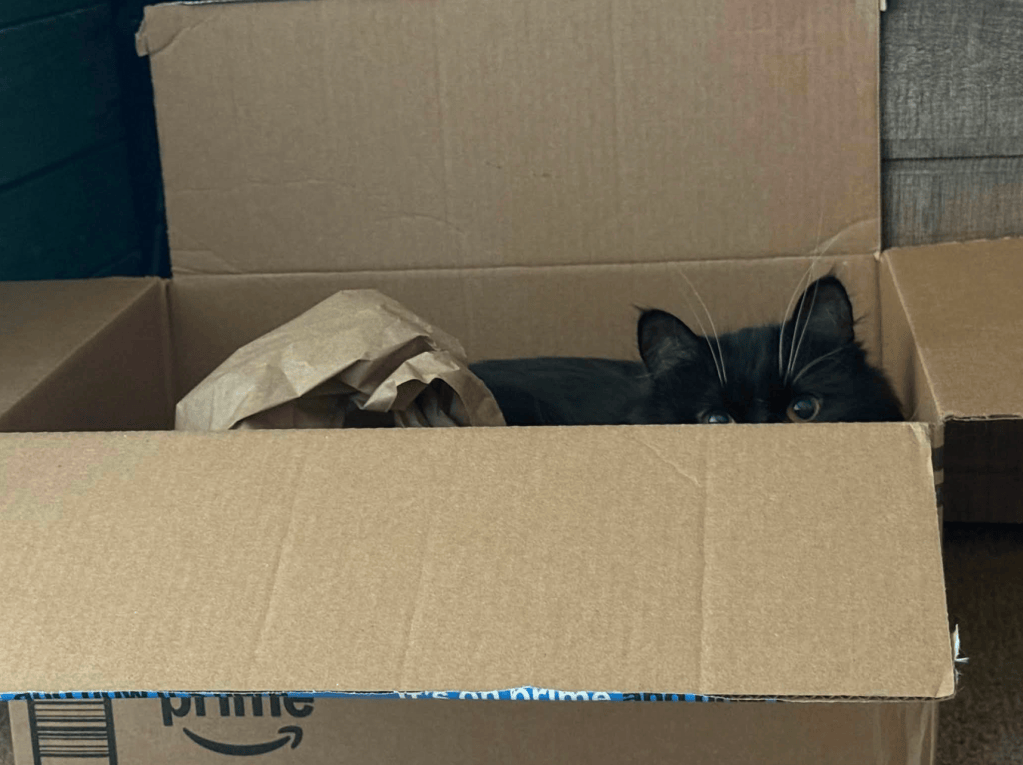
tuxedo cat peeking over the edge of an amazon cardboard box


Have a great week ahead!

Indie News Roundup

1,417 words
7 minutes read time

The indie publishing space online last week was hopping with news, and there was some good mixed with the bad. Let’s jump in!

KDP will now allow customers to read a sample of a book on preorder
KDP will now allow customers to read a sample of a book on preorder like they do with books that are available for purchase or to be borrowed in Kindle Unlimited. I think this is great, though not everyone was happy about it. A few people I saw who were arguing might have just been eager to jump on Amazon about something, one going so far as to say this will cheat us out of KU reads–I just rolled my eyes–but most had a positive reaction to the news. This is what my email said:

Hello,

We’re excited to share that Amazon will test allowing customers to read a sample of your eBook pre-order starting the week of April 14. This feature will work exactly like the “Read Sample” feature that displays for books on Amazon today. It’ll show a preview, up to 10% from your current manuscript’s content to engage potential readers.

If you’ve already submitted your manuscript, Amazon will automatically generate the reading sample. If no manuscript is currently uploaded, then no reading sample will be shown.

I think this will be a game-changer for preorders. Before, unless you posted a sample somewhere or tried to generate buzz with excerpts, there was no way for a reader to know if they were going to like it and that might have dissuaded a reader from preordering. I’ve never put much stock in preorders because my books are in Kindle Unlimited and readers will wait until the book is live to read–meaning, I don’t get many sales. But I’ve been putting books on preorder more and more, usually just a couple of weeks so that I can have the buy-link for promo graphics and whatnot and it also frees up my mind to move on to other things. I’ve always uploaded the finished files because I don’t want accidents to happen, like the wrong file to be pushed out to readers or being locked out of editing during their quality check because I miscalculated. Some authors will put a book on preorder without a finished book or even a finished cover. I wonder if this will prompt authors to at least have the first chapter written and available for the sample. However authors end up using it, I think this was long overdue, and I’ll be watching to see if it makes a positive impact on authors’ sales.

KDP has been terminating accounts (again).
I’ve heard in various author spaces that KDP is terminating accounts again, though whether those authors have done something to warrant it, you never know. Because KDP doesn’t like to tell you if you’ve done something wrong, shooting first and asking questions….never, you won’t always know if you’ve accidentally done something to make them mad, either. Author CD Reiss has put together a Google doc that outlines the steps you should take when trying to get your account back.
https://docs.google.com/document/d/1PKd94sSvgD3XoFFWHaUC6Gxey2GOU6WH7cRLNpb3428/edit?tab=t.0 Various authors have said that CD Reiss is okay with this being shared, so I thought I would post it as well in case you want to bookmark it. I have it saved, but this is pretty much the main reason I’ve invested in an Alliance of Independent Authors membership. I don’t want to take on Amazon alone, and I write off my membership every year when I do my taxes as a business expense. But, if you can’t afford a membership to an author organization like Alli or the Authors’ Guild, then having a step-by-step of what to do is the next best thing. Thanks to Zoe York for reminding me it’s out there and able to be shared.

NaNoWriMo goes out of business
NaNoWriMo issued a statement last week that said they were closing their doors. I’m not surprised because of the various scandals they’ve been involved in recently, but it seems like it’s an end of an era for a lot of authors and writers who got their start participating in NaNo. I didn’t know NaNoWriMo was a thing until a woman at my day job found out I was writing something and invited me to participate. Back then, I was writing my fantasy series, but for that year’s NaNo, I stopped and started a sports contemporary romance that turned into my Tower City trilogy I published many years ago. Since then, a lot of the people she introduced me to have stopped writing, but it was a fun experience to meet at Perkins, order pie and coffee, and just sit and write a few times a week. That was really the only time I participated, actually counting my words in the website. I’ve always had plenty of time and drive to treat every month as a NaNo month, and actually November was really difficult to write a lot because of my birthday, my daughter’s birthday, and Thanksgiving. For the past year or so since NaNo has been involved in some shadiness, such as the grooming incident and a pro-AI stance, other challenges have taken its place.

Like I said, it just seems like an end of an era, for me, too, since this comes on the heels of some of my favorite podcasts stopping, like Mark Dawson and James Blatch’s Self Publishing Formula, and earlier, Six-Figure Authors hosted by Lindsay Buroker, Andrea Pearson, and Jo Lallo, not to mention all the issues at the Romance Writers of America that I used to be a member of for a very long time. Things change, time goes on, but no matter what kind of trouble NaNo had fallen into recently, they will be missed. For more information on the closure, you can look here:
https://www.theguardian.com/books/2025/apr/02/creative-writing-nanowrimo-to-close-after-20-years and here:

All that being said, I saw one author who said she went on to nanowrimo.org and deleted her account. She wanted to be in control of her information, and that seemed like a good idea. Though I didn’t have much under my profile, only one book, and I’m not sure how many connections, I went ahead and deleted mine too. You just never know, so I did that before I forgot.

Potential eight-figure deal for a thriller written by James Patterson and MrBeast
I didn’t even know who MrBeast was when I first heard of the deal, not that I was impressed when I looked him up. No one was happy that James Patterson was involved in a book that was generating so much attention, saying all that money could have been used to lift up mid-list, BIPOC, and marginalized authors. It’s just another piece of evidence that publishing is in a bad place and doesn’t seem to be getting better any time soon. Considering that James Patterson has a net worth of 800 million and MrBeast aka Jimmy Donaldson is said to be worth close to a billion dollars, I think they could leave some crumbs for us little people. Whether the book and potential movie will earn out that much money remains to be seen. If you want to read more about it, look here: https://deadline.com/2025/03/james-patterson-mr-beast-novel-1236352620/

There were other things that happened last week, like romance author Tori Woods getting arrested after her book Daddy’s Little Toy was rumored to have pedophilia in it–https://www.ndtv.com/feature/australian-author-charged-for-child-abuse-material-over-daddys-little-toy-book-8005994–but I’m a little tired between all that and the government BS that has been going on lately. I’ve had friends ask how I’m doing, and I’ve said I’m staying close to home. Writing, taking care of my kids and making sure we have what we need. Working. Still getting used to how I’m always going to feel, I don’t have a lot of mental energy for extra things. I’ve stopped posting on my FB author page again, don’t have any motivation to post there. I have a TikTok video made, and it’s been made for a week, but I can’t decide on the music, so I just exit out of the app in frustration and don’t post at all. I don’t want to get too much more into what I’ve been doing–I’ll save that for a proper author update next week–but I have an author interview coming up that I’m excited about and I’m almost done writing Wicked Games. Anyway, I’ll fill you in on all that next week.

Have a great Monday, everyone, and I’ll see you next time!

Looking at Books on Preorder: What it can do for you

There are many reasons why a writer or author would love to have a crystal ball. If we could predict trends or subgenres that are going to be seeing a lot of reader love in the coming months or even years, we could adjust our writing accordingly. We could write that dark romance vampire book, or the new YA with the talking pets as sidekicks. If we knew what readers are going to want in six months to a year, then we could hop on the query train or quickly write a series and get her ready to go just in time to ride that wave.

While we don’t have anything so magical, what we can do is look for what’s coming in the months ahead by using the Amazon advanced search and looking at what books are popping up on preorder in your genre.

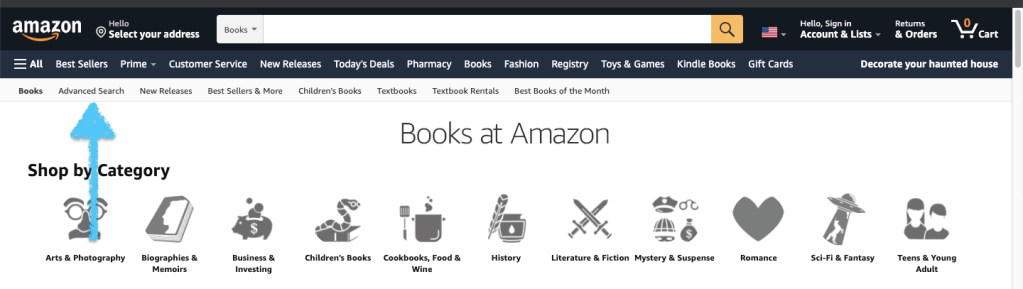
First fo all, how do we do this? Go to an incognito window and head over to Amazon. Click on Books and use the Advanced Search.

There you’ll find the search fields and you can enter in the genre and preorder dates you want to search for. I’ll search for Billionaire Romance because that’s what I’ll be releasing in the next few months:

After you click Search, you can also click on Kindle Unlimited books to narrow your search further, if you’re planning on releasing into KU:

You can look at any date, any genre, wide or in KU and see what’s going to be released. Why would we want to do that? Here’s a few ideas:

  1. If you’re planning on making a genre switch you can see by the results if the genre is glutted or if there will be room for you. Billionaire romance looks crowded, but that’s a good and bad thing. Good because billionaire romance hasn’t lost its popularity, but bad because I know I’ll be doing a lot of advertising to compete. On the other hand, there will be a lot of authors and book titles for Amazon Ads keywords, but because of the competition, cost per click might go up.
  2. You can take a look at what authors are doing for covers. Cover trends change, but it looks like billionaire romance is still going to be dominated by a single rich-looking guy probably showing some abs. Knowing what is working for covers in your genre is important because you want your cover to fit in. I’ve heard the best way to see if your cover is going to fit in is to screenshot the top 20 and put your cover next to them. If your book doesn’t look like it belongs, a reader will pass you by. A quick scroll through the search results tells me a dark cover with a title in neon green, teal, or red still indicates a dark romance, or a man in muted color without much background can signify a billionaire romance though not necessarily dark.
  3. You can research titles. Titles are an important part of your book, and often overlooked. When you look ahead using the advanced search, you can find what authors are using as titles, and in billionaire romance, the word billionaire is still a popular part of the subtitle.
  4. You can find the categories these books are listed under and you can add them to your own book. Some of the books are too far out for the ranking and categories to be listed under their product information, but some do, and you can make note of the categories authors are listing their books under.

Searching preorders to find out what’s coming in your genre will probably be the closest thing you’ll get to telling the future. If you want a deeper look at what authors in your genre are doing, you can look at their Amazon author pages and see if they have any preorders that may have not shown up in the search. When I experimented with the keywords and dates, etc, the preorder results changed, so do your due diligence with your comp authors.

Alex Newton of K-lytics talks about this a lot better than I can, and he has a free webinar hosted by Jane Friedman on her YouTube channel (I link it below). I like diving into anything that has to do with the publishing industry, genres, trends, writing-to-market and what books are selling and why. Staunch traditionally published authors say there is no way to predict a trend and that by writing to trend you’re already behind because by the time you query and are possibly published, that trend is over. Well, when traditional publishing is two years behind (seriously, I have friends on Twitter with book deals and books that won’t be coming out until 2023) they are guessing just as much as we are. Maybe more so because if an author can write and publish a book in six months, that’s a far cry from waiting two years and they have a better chance of riding the wave of what’s selling right now. But as Alex says in his webinar, even in indie publishing things don’t change overnight.

I will definitely be doing more looking into preorders as I do more with my books.

Here is the webinar with Jane and Alex. Let me know what you think!