Do You Wanna Write a Novel?

927 words
5 minutes read time
snowman wearing orange and white hat and scare sitting in front of a laptop outside blue sky

It’s that time of year when everyone is thinking about writing a 50k word novel in November. I’ve only done NaNoWriMo one time, way back in, I think it was around 2014. A couple people at my work found out I was writing what would now be my shelved fantasy books and asked if I wanted to join them. I said sure, and we started meeting at various places, including Perkins, which I always enjoyed because I have a thing for French Silk pie. I stopped writing my fantasy book and started what would be Don’t Run Away, the first in my Tower City trilogy. It was fun, if not a little intimidating for this introvert, because we met with some of their friends whom I didn’t know. My kids were older so I had a lot of time to write and I “won” the first and only time I officially participated–and by that I mean creating a profile on NaNoWriMo’s website and logging my words written.

I remember the thrill of meeting with other writers, talking shop and sharing a common interest. It’s a high I think a lot of people still chase–that feeling of belonging.

I found it for a few years on Twitter and tried to replicate the in-person feeling by joining a writing group in the town where I live, but that ultimately didn’t work out. I’m not saying they were unfriendly, but they were established, having written for many years together, and wiggling in took more energy than I really wanted to spend. Productivity-wise I’ve never needed something like NaNoWriMo to keep me going. I love to write, and while I can understand the concept when people say they love “having written” putting words down isn’t a chore. I’ve never had a problem sitting down with a cup of coffee and writing couple thousands words in an afternoon.

Back when I was hardcore about treating my books like a business, I knew how beneficial it was to have a backlist and a steady stream of new books. For me, that was plenty of motivation. These days, since the beginning of 2025 at least, I let go of the idea this will ever be a career and have lightened up a lot when it comes to how many books I want to write and publish in a year. I only have one book scheduled to release in 2026, and while I’ll still be writing, dedicated productivity just doesn’t seem as important as it once was.

NaNoWriMo might have gone away, but a writer’s desire to belong to a group of like-minded people is still there and this month a few alternatives have popped up to fill that need. I signed up for one, not because I need encouragement to write, but because lately I’ve been looking for something different. I don’t know if Novel November, ProWritingAid’s answer to the now-defunct original writing challenge, will be what I’m looking for, but this is the first year in a long time that I’ll actually be able to participate because I’m not editing something, helping someone with one of their books, or taking a break.

If you’re looking for an alternative to NaNWriMo, here’s what I’ve come across online:

ProWritingAid
ProWritingAid started Novel November and after looking around the dashboard, it’s feels pretty close to what NaNoWrimo was. PWA has offered author services for years and I have a good feeling about participating. If you want to sign up or take a look around, you can find it here: https://prowritingaid.com/novel-november

Successful Indie Author
This is Craig Martelle’s Facebook group and he started No Excuse November (NoNo). Right now information is only in his group, but it looks like he’s partnering with Draft2Digital and creating a website as well. I know Craig hit a few bumps while he was a part of 20booksto50k that banged up his reputation, and if you have no interest because of that, that’s okay. I’m just offering all the alternatives I’ve come across online. His Facebook group is large, with 8k members, so you’ll find plenty of support there if you join his challenge. He also has May I Write a Novel that happens in May, so there are two challenges a year if that’s something you were looking for or need. I think NaNo had writing camp in July, so Craig’s group would be a good substitute. You can find his group here: https://www.facebook.com/groups/successfulindieauthor

Reedsy
Reedsy created the Reedsy Novel Sprint 2025. It looks like you have to write in their Studio to be eligible for all their benefits, but if that doesn’t bother you, this challenge looks like it will be very supportive. There are already 15,000 authors signed up and you can join events like First Line Frenzy™: Submit Your Opening Line. If you’re interested in looking around, you can find it here: https://reedsy.com/studio/challenges/reedsy-novel-sprint-2025

I’m sure there are others, and a lot of authors are making up their own.

I’m actually kind of excited to be participating in PWA’s Novel November. I’ve loved writing all my books, but since I left Twitter, I haven’t felt part of a group. Like everyone is working on something bigger than we who are as individuals, if that makes sense.

Are you going to join in a challenge? Let me know.

If you know of a challenge that I didn’t mention or are putting on your own, mention it in the comments. Someone might want to join in!

Thanks for reading and have a great week!

Is writing a (long) series worth it?

1,715 words
9 minutes read time

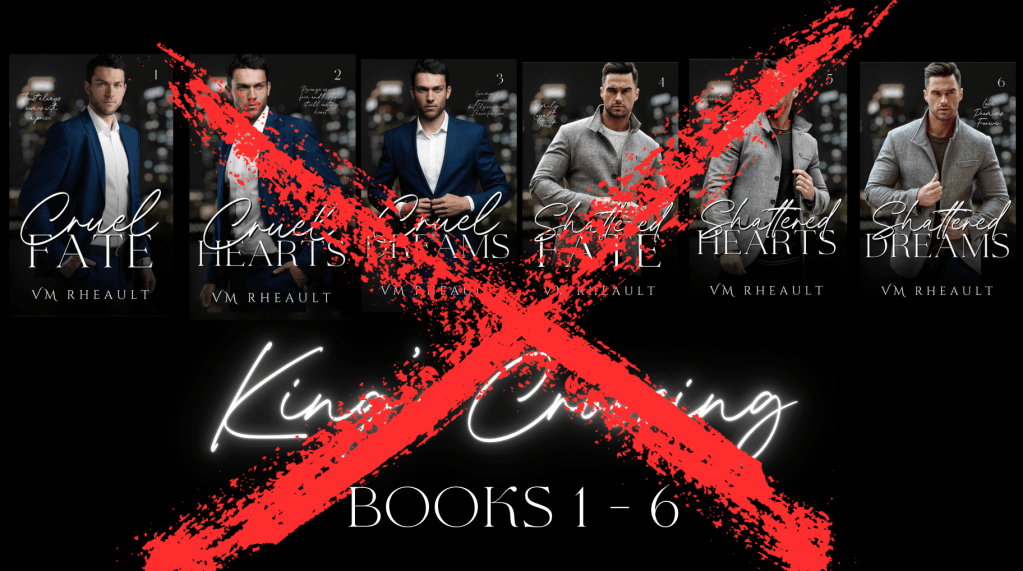
graphic of my king's crossing serial. all book covers with a red x in front of them.

In a blog post a couple of months ago, I shared my series’ sales and read-through numbers with you, and it really got me thinking about whether or not it’s worth it in this reading and publishing climate to write another series. Of course, if I really wanted to write another one (and I will some day because I have 2/6 done in a series I started years ago and I won’t let those two books go to waste) I would no matter where the evidence pointed. But because I’m curious by nature, like knowing the landscape of the publishing industry, and well, I just like plain old BSing, I wonder, how worth it these days is it to write a series in the first place?

Any author with a huge series and a strong audience for those books will say it’s worth it: JD Robb (In Death 60 books), Marie Force (McCarthys Of Gansett Island Books 28 books) Robyn Carr (Virgin River 20 books), and Susan Mallery (Fool’s Gold 22 books), to name a few. There are indie authors who write long series too, like Shannon Mayer (Rylee Adamson 10 books), A.J. Rivers (Emma Griffin® FBI Mystery 37 books) and more I don’t have the energy to look up. But if there’s one thing they all have in common is that they didn’t start writing those series recently. They’ve been building their audiences for years, when things were different. So where does this leave a new indie author who’s planning to write a ten-book series?

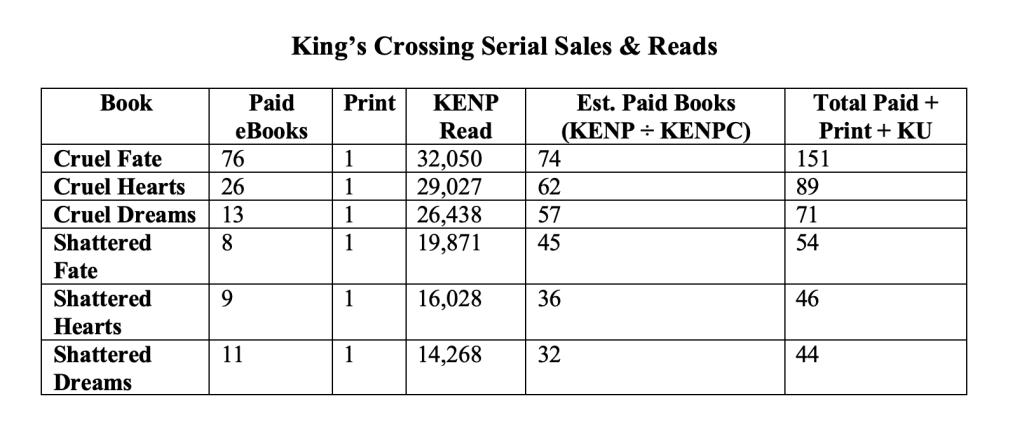
The blog post I referenced was written back in July, and my numbers haven’t gotten much better: (FYI the person who bought my series in print was my aunt.)

Book	Paid eBooks	Print	KENP Read	Est. Paid Books (KENP ÷ KENPC)	Total Paid + Print + KU
Cruel Fate	76	1	32,050	74	151
Cruel Hearts	26	1	29,027	62	89
Cruel Dreams	13	1	26,438	57	71
Shattered Fate	8	1	19,871	45	54
Shattered Hearts	9	1	16,028	36	46
Shattered Dreams	11	1	14,268	32	44

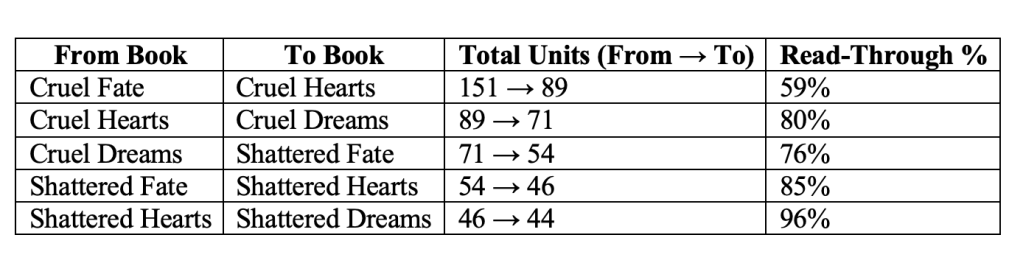
When doing series read-through, you can see how many readers are going from book one to book two and on. I don’t have big numbers to play with here, and for some reason my KDP dashboard decided not to show me all the free ebooks of book one I gave away during promos like Fussy Librarian and Freebooksy. That just makes my stats look even worse anyway, so let’s stick with paid books for now.

From Book	To Book	Total Units (From → To)	Read-Through %
Cruel Fate	Cruel Hearts	151 → 89	59%
Cruel Hearts	Cruel Dreams	89 → 71	80%
Cruel Dreams	Shattered Fate	71 → 54	76%
Shattered Fate	Shattered Hearts	54 → 46	85%
Shattered Hearts	Shattered Dreams	46 → 44	96%

You can see my biggest drop is from book one to book two, but once readers get invested they keep going. Though, these numbers look deceiving because when you do the math, read-through from book one to book six is only 29%. (Dividing 44 (sales of Shattered Dreams)/151 (sales of Cruel Fate)x100=29%.) It’s rather disheartening to know that only 29% of readers who read book one went on to finish the series.

Of course my experience isn’t indicative of what’s going on in the entire indie industry when it comes to what people are doing and what their success or lack of it is. But it does make me wonder if there is an overall shift in what authors are doing or will be doing because of the changing landscape.

What do I mean by changing landscape?

People’s attention spans are shorter than ever. According to a Microsoft study, the average human has the attention span of 8.25 seconds. That means it’s difficult to grab someone’s attention and keep it where you want it. There’s competing content everywhere–ads, reels, books, podcasts, movies, TV shows, and even if a reader enjoyed book one, that doesn’t mean they’re going to want to read the rest of your series. People get bored and may not want to follow the same set of characters for hundreds of thousands of words. In fact, Lauren Brown in an article on The Bookseller writes:

Publishers are noting a shift in industry mindset around short stories as readers embrace shorter works, with a number feeling like “something is slowly shifting” and that “there’s a real excitement around stories again.”

Getting readers excited about diving into a series that has five, six, seven or more books might be more work than an author wants to admit, or put in.

Authors may also not want to invest time to write a series. “Build it and they will come” isn’t true anymore, and there’s nothing more heartbreaking than putting years of your life into something no one wants. Writing a series is a serious time commitment and when there’s no guarantee a reader will make it all the way to the end of a series, the investment might not be worth it. When you think about it, an eight-book series could be a four-book series, a duet, and two standalones–books that are much more easier to digest and easier entry points for readers.

This also brings up the argument you can’t get away from when we talk about series. Readers may not want to start until all the books are released, but authors don’t want to write more books unless there’s proven interest in what’s already published. This creates a strange Catch-22, and the bottom line is an author would have to write, and finish, a series for their own personal fulfillment first rather than continuing based on positive reader response.

That’s not to say there isn’t advantages to writing a series, which is why the advice used to be so popular ten years ago. A series can build loyal readers. A well-written series can practically sell itself, but your first book has to be so strong that your series has actual read-through or you could end up with my 29%. Unfortunately, you don’t know how your book is going to hit the market, and what you think is a strong start could be boring to readers. But, if you have an engaging book one that leads readers to the rest, as long as your books keep reader attention, that’s money in your pocket and time well-spent writing them.

We’ve changed so much from where we were ten years ago that maybe readers and authors are moving in a different direction. Readers’ attention spans have shortened, there is a lot of content out there to compete with–from real authors and from people using AI to write their books, and authors are burning out trying to compete with all that content and getting frustrated when readers don’t want to wait for the next book.

What’s the solution? (If you think there needs to be one.)

Writer short “series.” Series that have four books in them instead of a massive list, or write trilogies or duets.

Write interconnected standalones. These types of series you can stop writing at any time if you get burned out, bored, or if readers stop reading.

Write a long series in novella length rather than full-length novels. You can still write a ten-book series, but if you cut the length of the book in half, you don’t have to put so much energy into writing them and readers don’t have to put so much time and energy into reading them. You can write them faster, save them up and do a rapid-release style launch and still get almost the same rewards. Your page reads may drop because longer books have higher KENP, but you may get more readers to settle in and binge.

Or go even shorter and write 10k-20k shorts. Sadie King has an excellent book on that if you write romance, and you can find it here: https://www.amazon.com/Writing-Short-Romance-Pleasure-Profit-ebook/dp/B0CFKTRC13

I wrote this blog post as a way to feel out what’s been happening in the industry. From my own experience and the complaints I’ve been seeing online with regard to reader retention and author burnout, I think we’re going to see a shift in the coming years. Offering a selection for readers to choose from has always been solid advice anyway. Even if a series is fabulous, not ever reader wants to sign up for the time or financial commitment of reading one. Not to mention the mental and emotional requirement to get invested. Standalones, duets, and trilogies are great entry points for readers who haven’t read you yet or just want something they can read in a day or over the weekend. Offering a diverse backlist can only help you find and keep readers.

As for what I’ve got next, that series I started years ago will take more years to finish. I have Wicked Games done (standalone), working on Bitter Love (standalone), and have my hockey duet waiting in the penalty box. After those are finished, I have a Mafia duet simmering (but I could turn that into a trilogy as the premise is new for me and I’m excited to write it. I won’t be surprised if I want to stay in that world for longer than two books.), and only after that will I have the time and maybe the want to do work on something else. So it might be quite a while before I want to tackle the last four books in the series I started. But fortunately, I don’t publish until I have my series all written, so the books are trapped on my computer. Readers aren’t wondering where the rest are, and that takes a lot of pressure off me to keep going.

What do you think of the publishing landscape? Do you think it’s changing or do you see readers still getting excited for longer series? Let me know in the comments!


With the changes at my work, I think the time has come that I’ll have to cut my blog posts down to twice a month. Not only did they do a reduction in workforce, they shuffled my days off around which impacts my writing time during the week. I’ll still do my best to post weekly, but I’m not sure how easy that will be for me while still writing as many words as I want on my books during the week. When they let a lot of my coworkers go, I thought this might be coming, but then they changed my work schedule from something I had been working for years, so I need to get used to a new routine. Hopefully I can bounce back because I love writing on this blog, so we’ll see how it goes in the coming months.

I have no idea what I’m writing about next week, but I’ll try to show up and see you then.

Have a lovely day!

When Dumbing Down Your Writing Isn’t Dumb

1,419 words
8 minutes read time

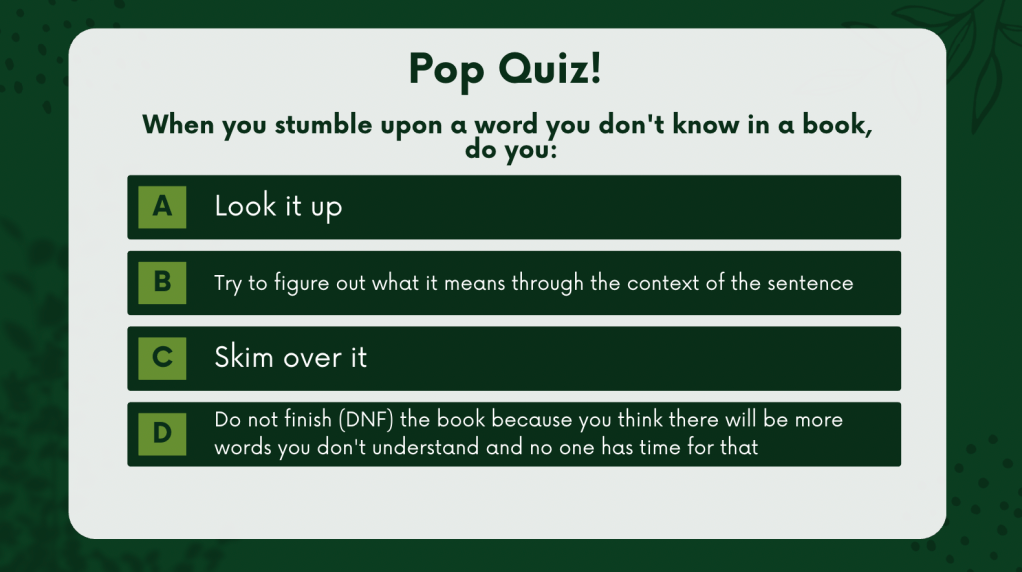
Pop Quiz! 

When you stumble upon a word you don't know in a book, do you:

A) Look it up
B) Try to figure out what it means through the context of the sentence
C) Skim over it
D) Do not finish (DNF) the book because you think there will be more words you don't understand and no one has time for that

green background with grey letters

If you’ve kept up with what I’ve been doing lately, you’ll know that I’ve been re-editing some older work. I’ve said in the past you can’t go forward if you’re looking back, but sometimes the road to success isn’t a straight line and I’ve been happy with my decision to polish a couple of books that I published a few years ago.

What I’ve discovered is that I have/had a very pretentious way of writing, and when you’re writing commercial fiction, especially romance, that might not be a good thing. We’re told to write how we want to write, that readers will come back for our voice and style. But what if that style isn’t good? What if what sounds “natural” to you sounds like a dictionary and a thesaurus had a baby to your reader?

The average adult reading level in the United States is 7th to 8th grade according to The Literacy Project (https://www.sparxservices.org/blog/us-literacy-statistics-literacy-rate-average-reading-level), and that can impact how readers read your books. Readers don’t want to struggle to understand what your book is about, sift through complex words when something simpler would suffice do, or get bogged down in purple prose that doesn’t do anything to move the story forward.

That doesn’t mean every “big” word is bad, but it does mean that maybe using a “big” word when a simpler word would work just as well is the way to go. The problem is, making that conscious choice to swap out, say, adept for skilled seems like a cop out and maybe even disingenuous insincere if you have a big vocabulary and using those words is natural.

I certainly didn’t mean to bog down my books with words like “lambaste,” “derision,” and “ramifications” but those words were there in my head because, well, they just were. Unfortunately, too much of a good thing is bad, and thrown all together, A Heartache for Christmas sounds like I was trying too hard when really, I was writing what came instinctively.

But then we get into what would fit the character rather than what sounds easy. I write billionaire (for the most part) and that implies my MMCs are educated, sometimes disgustingly so (you don’t want to know how many degrees Rick Mercer has in Captivated by Her). They’re smart, they earned their money, and making them sound like a redneck who dropped out of school in sixth grade wouldn’t fit. So yeah, Sawyer might use words like “palpable” and “derision” but that’s part of who he is.

The trick is to make your characters sound like themselves while also staying true to your voice, but also keeping in mind that your reader just wants to have a good time reading your book.

Here are some of the sentences I found when I was re-editing A Heartache for Christmas and what I changed to make the sentences more relatable and easier to read.

Original: He was adept with the tow but he didn’t give off mechanic vibes.
Changed: He was skilled with the tow but he didn’t give off mechanic vibes.

Original: It goes against everything I am as a gentleman, as a decent person, to let McLeod berate Evie for attending the festival.
Changed: It goes against everything I am as a gentleman, as a decent person, to let McLeod chastise Evie for attending the festival.

Original: McLeod’s State Bank never would have worked with me on a payment arrangement.
Changed: McLeod’s State Bank never would have worked with me on a payment plan.

Original: Gray lambastes me for having the audacity to show my face at the festival, even when I try to defend myself.
Changed: Gray tears into me for coming to the festival, even when I try to defend myself.

Original: Alone in the quiet, the shakes set in, the ramifications of what Billy could have done to me if Sawyer hadn’t checked on me hitting me in the gut.
Changed: Alone in the quiet, the shakes set in, the reality of what Billy could have done to me if Sawyer hadn’t checked on me hitting me in the gut.

Original: I miss her and I should have invited her up to my room even if she would have declined.
Changed: I miss her and I should have invited her up to my room even if she would have said no.

I think you get the idea. Some aren’t so bad, like “arrangement” versus “plan” or “berates” versus “chastised.” You can say that maybe “chastised” is no better than “berates,” but when it comes to how familiar or common a word is or how conversational it sounds, choosing the one that sounds more relatable to readers will always be the best option. The thing is, the “best option” will vary by author to author and book to book.

So, I don’t think it’s necessarily dumbing own your prose or your language when you exchange one word or phrase for a simpler word or phrase. What you’re doing is:

  • Using clear, common words that almost everyone instantly understands.
  • Keeping emotional beats from getting buried in overly fancy phrasing.
  • Making the writing feel “invisible,” letting the story, not the language, have the attention.

I read this article by Shane Snow–I’ll link it at the bottom–and he says:

I did an informal poll of some friends while writing this post. Every one of them told me that they assumed that higher reading level meant better writing. We’re trained to think that in school. But data shows the opposite: lower reading level often correlates with commercial popularity and in many cases, how good we think a writer is.

He goes on to say,

We shouldn’t discount simple writing, but instead embrace it. 

I think this is why we’re so hard on books that do well when we think they aren’t worthy. They’re written simply, letting story and emotions shine through, and as writers who are trying our best, we think that’s not good enough when to the average reader, it’s what they want and what makes a bestseller.

That’s not to say you can’t use “big” words, just use them sparingly because as with any spice in any dish, too much can ruin the flavor. I think that might be where I was at with the standalones I’ve been re-editing these past few weeks, especially Faking Forever. It’s nothing I thought to watch out for, and I did have a beta reader read A Heartache for Christmas and she didn’t say one thing about any words that sounded out of place.

As for what I’m going to do now, after discovering my penchant for love of words that fit but don’t fit, of course I’m going to be paranoid my other books sound like that. I spot-checked my proof of Loss and Damages and that came out fine as far as I could tell. Rescue Me is okay. Faking Forever and now A Heartache for Christmas will be okay. I’ll have to trust that my King’s Crossing serial sounds good because there’s nothing I want to do less than read those again. My rockstars are okay. I lightly re-edited them not long ago but I haven’t updated back matter or uploaded the new files in KDP. I’ll get around to that sometime. At this point, I’m going through what probably all authors go through, and that’s being obsessed with perfection. Well, maybe not that specifically, but I want my books to be the best they can be, and after the last few years of not feeling well and craft improvement just because I’ve been writing, I’m worried that they aren’t.

Like I said in my last blog post, I’m learning how to relax, but when it comes to “big” words, I’ll have to be conscious of using them because it’s just natural. I’m not bragging I have a big vocabulary, in fact, I’m probably pretty average compared to other writers when it comes to the words I know. Still, the words I use aren’t needed, at least, not as often I do. The trick will be to find a happy medium between my style and toning it down but still sounding like me.

Pop Quiz!

When you’re in the zone which word do you reach for?

  • Exacerbate
  • Aggravate
  • Worsen

That will be up to you, but I know which one I’ll use going forward . . . and it’s not the one I can’t spell.

Have a good week, everyone!


Shane Snow’s article: https://shanesnow.com/research/data-reveals-what-reading-level-you-should-write-at

Reading for pleasure and other things I should be doing

After a chat with a friend, I realized how little I read for pleasure (well, I knew that, but she makes time to read and I…don’t). I used to love to read–I think most writers have been (or still are) voracious readers at some point, but like a lot of writers too, the moment I sat down to write my own books, reading for pleasure took a backseat.

There are a couple of reasons for this but the biggest one is that there isn’t a lot of time. Once you hop on the indie merry-go-round, it takes incredible willpower jump off. I’ve been running on it since 2016 chasing after that elusive brass ring that seems farther and farther away with every rotation. Doing anything that’s not working on my books feels like a waste of time (and needless to say, it’s what I enjoy doing most when I’m not working) and I know what a dangerous mindset that can be. Deep in my heart I know as a writer (and as a person, really) you need to experience new things, new ideas, meet new people. What is that saying?

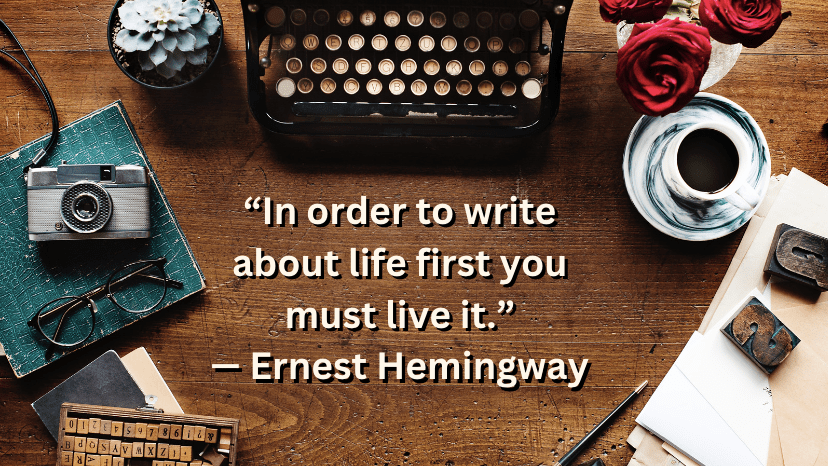
desk with old typewriter, espresso cup, camera, notebook and flowers. Text reads, “In order to write about life first you must live it.”

— Ernest Hemingway

This isn’t exactly an argument for writing what you know, but it kind of is, too. I went to Santa Barbara, California, for a writing conference… five years ago I think now. I’ve seen the ocean many times, in Florida and I once went to Cancún for spring break, but until you see the coasts in person, you don’t realize how different they are. It surprised the hell out of me that the Atlantic Ocean was cold. I’ve swam in the Pacific and the Gulf of Mexico, but in June, in Santa Barbara, there was no way I would have jumped in (and this is from a woman who’s swam in Minnesota lakes). I was also surprised by how chilly it got in the evenings. I was expecting the Floridian heat and humidity, and I was pleasantly surprised. Fast forward to this year when I wrote my rockstars and Olivia moved to Malibu for the summer to help Sheppard. She was from Minnesota and had never been to California before. It was so much fun to push my experiences into her life. I never would have been able to do that had I not traveled to California for that conference. I met a lot of nice people, scooted out of my comfort zone, and learned a few things too. But, I took the time to do it, something that seems unfathomable now.

Reading has fallen to the faraway wayside, and I need to get back to it. Not only because I enjoy reading, but because you can learn from another person’s writing style, vocabulary, and their own experiences they put into their books. It’s important as a writer to read, especially in your genre so you understand reader expectations, tropes, and what readers are enjoying. I think taking this approach will help me read more. I’ve always been a sucker for research, diving into hours of YouTube videos to write Captivated by Her and looking up plane crashes like JFK Jr. and Carolyn Bessette’s, when I wrote the series I’m editing now. I can still get sucked into looking at photos of them and reading about their crash. Even when I wrote my rockstars, I watched Lady Gaga’s documentary on Netflix and read Taylor Jenkins Reid’s Daisy Jones and the Six and watch the series on Prime. I probably should have read more rockstar romances before writing my trilogy–I’m lucky they’re meeting reader expectations for that subgenre (At least, I think they are. I haven’t heard otherwise). Do you know the book I fell back on when the plot of Twisted Alibis landed in my lap? An old Nora Roberts standalone about a rock band called Public Secrets. Copyrighted in 1998, I read it many years ago, and no, I didn’t reread it when I was plotting my books.

I probably shouldn’t feel like I need to look at reading as research, but I think I’m going to have to. I want to read, I used to enjoy it, and I had no trouble reading the book I mentioned in a previous blog post, or the one that came after that. It’s a mind thing, thinking that if I’m not working on my own books (or making graphics for them) I’m wasting time.

There are a ton of other things I want to do–shows to watch, cleaning, putting together bookshelves and weeding out books like the publishing books I bought years ago that are obsolete now. I said I was going to take December off, but I have no idea where that delusion came from–I want to get this series put up because I am really looking forward to writing new books. BUT, I need to research them so I can do the mafia subgenre justice. I need balance, but I feel like there’s lava on one side and a pool full of piranha on the other. I know working only on my own books isn’t good for me, or even my books, but damned if I can slow down for even a minute.

And to make matters worse, I’m not even all that fast. Most of the books I published this year I’d held back, so I wasn’t even really writing for a lot of 2023. Then you hear of the indies who do this full-time who say, “Oh, well, I published 8 books this year, but it was a slow year for me. I usually do 10-12,” and you don’t want to get left behind. What’s funny though, is I’m already behind, so the idea of being left there is just a figment of my imagination.

The bottom line is, I like working on my own stuff too much. All things should be enjoyed in moderation, but unfortunately, I started working on my series, and I honestly won’t stop to do anything else now until they’re ready to go. Tenacity and dedication can help you succeed, but I think you can appreciate it more fully if you take time out.

Not to mention, it’s nice to know what everyone is talking about on social media when it comes to the hottest new thing. It helps you join in the conversation, which is why I started watching Bridgerton in the first place. I wanted to know what all of Romancelandia was talking about. If you don’t know, that’s a different way to get left behind. Also, knowing who does what when will help you build your brand. If you’re an author, promoting books like yours can help build your platform. That’s where breaking out of the can come in handy. You don’t want to only recommend your friends’ books. You might like reading other genres, but readers can be set in their ways and only read one thing. You can teach them to go to you for book recs and then when you have a new book out, you already have an audience who reads it.

Being this is the end of the year, I can put reading and “experiencing life” on my 2024 New Year’s Resolutions. There are also a lot of speakers I want to watch on YouTube from the 20Booksto50k conference last month. One of my resolutions is to get better with FB ads, and Mallory and Jill Cooper were there. As far as resolutions go, I’m paying off my car this week (YAY!!!), and instead of absorbing the payment into my monthly budget, I’m going to keep taking it out and save up for a BookBub featured deal. I think it’s time I start applying for those, but a Contemporary Romance spot is 665 dollars. I’ll have to save up for four months, but I think my backlist and my pen name are ready for that kind of boost. I have no doubt that my rockstars would give me the read through I need to recoup my fee. But all my resolutions would make for a good post next month, so I’ll stop there.

Next week I have my guest author interview. My year-end wrapup will fall on Christmas Day, but I’ll write it the weekend prior and schedule it. I can’t believe how fast December is going, but I’m hoping to get through book two before the New Year. It’s taking me a bit longer than I had anticipated to get through book one. I’ve read these so many times by now, and yeah, book one is a little slow because it’s setting up the next five books. There’s still stuff going on, but nothing is new to me and I’m dragging my feet. I’ve added 2,000 words already and I have 5 chapters left to go. Mainly just filling in some scenes that read too stark. I’m happy with the changes, and I’ll be very confident putting these out.

That’s all I have for this week. Read something that doesn’t have your name on it, haha.

Until next time!

Happy Thanksgiving! Five Things I’m Grateful For

Words: 1164
Time to read: 6 minutes

It’s Thanksgiving Day in the States, and most times I don’t jump on the bandwagon for much, but I thought I would blog about the five things that I’m grateful for, not only in my life, but in the indie community, writing- and publishing-wise.

Number one, no doubt about it, is going to be my audience. I don’t pick up many subscribers on the blog anymore. One or two would sign up with every blog post I published, but I think that’s due to Twitter’s API and how WordPress can’t tweet my blogposts anymore when my blog goes live. I don’t go through the hassle of pushing my own blog on that platform (or anywhere for that matter). I was happy enough to let WordPress take care of it. Now I only have my own SEO to depend on, but I’m still finding a lot of discoverability with my how-to Canva posts and I might still get a follower or two out of those instructions. But, I’m not just grateful for the readers I’ve managed to pick up here. I have readers other places too, like my FB author page, and of course, the people who read my books. I started at 0, blogging for no one, writing for no one. It’s not a lot of fun, and without consistency, you can stay at 0 for a long time too. I’m grateful for all the readers who have stuck by me, in whatever capacity and on whatever platform, but I’m also grateful I hung in there for myself.

The friends I’ve made doing this crazy thing. I talk a lot about how lonely this gig feels, and I think you can feel that way no matter how many writer friends you have. Sitting behind your laptop and staring at a blank Word document can probably be one of the loneliest things you can do as a writer. No one can write your book but you. Sure, you can join sprints or writing groups, and those can be valuable. But writing starts and ends with you–it starts and ends with what’s inside your head. I’ve made lots of friends on Twitter and they were so helpful when it came to just starting out publishing. Most have faded now, not writing, family issues pulling them away, COVID, but I believe people come into your life when you need them. If they hang around, you still need them, and if they drift off, they’ve gone on to help someone else. I like to think I’ve done my share of helping and paying it forward because I value and appreciate the time people have given me. I don’t regret time I’ve given anyone–any relationship I’ve made in the past seven years I’ll treasure. Even if we don’t talk anymore, for whatever reason, I’m always wishing you the best.

People who are free with their information. I talk a lot on the blog about how “the information for success is out there,” you just have to know where to look for it. Several successful authors write nonfiction, and you’re crazy if you’re not listening to them speak or devouring their books. In no particular order, my favorite nonfiction authors are (and yes, I’ve read them all, and no, there are no affiliate links here):

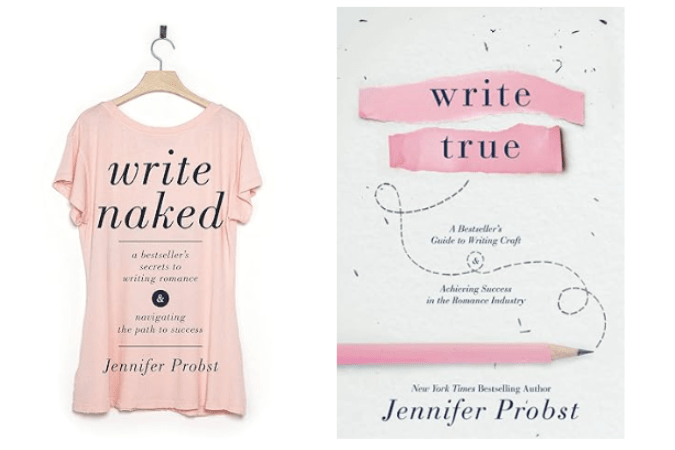
Jennifer Probst. I love her two books on writing. You can’t get a more honest look on being an author than these two books–Write Naked and Write True.
Write Naked: https://www.amazon.com/Write-Naked-Bestsellers-Secrets-Navigating-ebook/dp/B01N16FESI
Write True: https://www.amazon.com/dp/B08FLGFLL5

Zoe York. Her how to write a series series is fantastic, and I can’t recommend it more: https://www.amazon.com/dp/B082CZDK75

Elana Johnson. Her indie inspiration books are the best! https://www.amazon.com/dp/B07TWGGLCS

Craig Martelle. Read all his books. You won’t be disappointed! https://www.amazon.com/dp/B07SVG6GB9

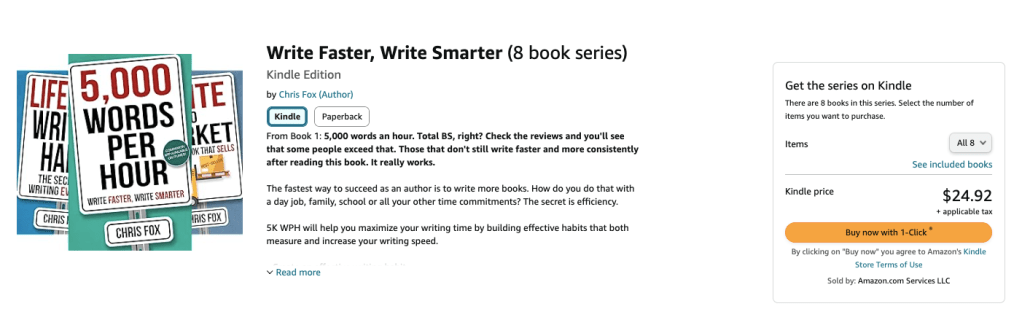
Chris Fox. His books aren’t only a source of information, they’re also motivational: https://www.amazon.com/dp/B074CJPMZ1

Joanna Penn. A pillar in the indie community, her books are a must have! https://www.amazon.com/dp/B085CBDFQJ

This is quite a list, and your wallet is probably crying. I read all these over the course of 7 years, so it didn’t seem like such time-consuming event. And, you’re probably saying, these aren’t exactly free, and you’re right. Books aren’t free. But, no one said these authors had to sit down and share their secrets either, so they should be paid for the time they put into their books. All these authors share this information for free in some way, shape, or form. They all speak on podcasts, are interviewed for blogs or host their own FB groups. If you’re a romance author, start with Jen’s and Zoe’s books. They’re a godsend.

The support I have in my real life. I’ve come to realize that even if I don’t have full-fledged support from the people on this side of the screen, I don’t NOT have it, either. As a character once said in one of the books I’m putting out next year, indifference can be a kindness, and it can be. People don’t say derogatory things about my writing, and a couple of co-workers take an interest, my proofreader included. I’ve heard some people say that they don’t get any support from friends and/or family whatsoever, that their partners can be downright hostile, and even at least, if my family and friends aren’t interested, they aren’t mean about it. I’ll take that as a win and be glad I have what I have.

That this gave me a haven in the storm. I’ve been pretty honest in the past few years about my struggles, and I’m still being honest saying that having the writing and publishing community to fall back on has been wonderful. There’s nothing better to forget your worries than plotting out a book, setting a deadline, and focusing on that until it’s complete. I really don’t know what I would have done had I not had writing, not had the passion I have for it. Somewhere to put my misery and nervous energy. Somewhere to shove my anxiety. It really helps too, that so many authors and writers experienced their own anxieties dealing with COVID and the obstacles that brought on. Being able to open my Word document and focus on bringing characters to life probably saved me more than I know. Also, having this blog helped, and I hope somehow I helped others by admitting that my life just hasn’t been roses and rainbows. I never let it slow me down, though. I never let it slow me down.

I hope you can find some good in your life, something to be grateful for. There are days that are better than others, when you feel like crap and that takes precedence over everything else. Not even physical, but mentally too. Just remember things will pass and trying to be positive helps. I’ve written a lot of books when essentially my life has been pretty crappy these past few years. Do what you can and be grateful we made it this far.

Happy Thanksgiving!

Technology in Novels: Pros, Cons, and Avoiding It Altogether

Words: 1735
Time to read: 9 minutes

Since I’m on TikTok to hopefully spread the word about my books, it makes sense that I’ve found some books to read, too. I’m on a “break” from editing my Christmas novel, and I’ve been trying to do other things like read books that I haven’t written, purge some old clothing, and do other annoying things I’ve put off like getting my oil changed. I’ve had success with some–I got my oil changed and an estimate for new tires before the snow comes (yikes!)–but failed at others, mostly reading books I haven’t written.

The book I picked up from TikTok promised a hot, sexy read, and it is. A reader will have no complaints about that part of it. But like any book, there needs to be more than sexytimes, and this one delivers that too, if only in passing. There’s the main plot (all the sex), the subplot, and a sub-subplot, that unfolds very slowly, and that’s fine. We talk about “literary” versus “commercial” books, and let’s just say, people aren’t reading this for the plot. Perfectly okay. After all, I did borrow it in KU and I’m not going to apologize, but what took me completely out of the story at about 50% or so, is the fact I could see where the subplot and the sub-subplot are going to tangle and explode. It’s not that I don’t like the direction the author is going, but the whole thing could be avoided by a quick Google search.

This is where technology can be the bane of an author’s existence… and a character’s too. I’ve heard authors say they write strictly historicals because they don’t want to have to deal with it. That’s fine, but if you write 80s books, I’m not reading it. I was born in 1974, and nothing interests me less than how things were in the 80s. I actually like technology. I jumped in when internet was still new, had dial-up through our landline and learned a few photo manipulation techniques on GIMP long before I decided to write books and design my own covers because I messed around with pictures of my kids. I’m not unlike anyone else who is constantly online, and if you think about it, characters in contemporary novels are online a lot too. It’s very difficult to get away from, and as authors, we have to assume that as with real life, information is but a touchscreen away.

You can make the argument that a character isn’t going to know what he doesn’t know, and that’s true. When you’re writing a mystery or a thriller, your character is going to start from scratch. That’s inevitable, but if your detective has agency and moves the plot forward instead of letting the plot push him around, he’s going to be curious, ask questions, and yes, do internet searches. You can’t get away from it if your character works for the FBI, the CIA, or an off-the-grid intelligence agency that you invent. They have software at their disposal like AFIS and face recognition software.

Mafia and Billionaire romance is steeped in technology, everything from paparazzi stalking them and posting photos online to the male characters doing background checks on their love interests to help them decide if she loves him for him or his money. That’s the part that hung me up in this book. The main guy is the son of a dirty billionaire, she has a mysterious past, and the thing that’s going to break them on page 500, he could have found on page two. Now, I don’t know for sure if that’s how it’s going to play out. The sub-subplot is mentioned so infrequently that I will more than likely have to read the entire series to see if my hunch is correct, but I’ve written my own twisty books and I doubt I’m far off.

The thing that bothers me most is that with the type of book this is and the types of characters are in this book, doing a background check on her would have been a no-brainer. Maybe the author is a pantser and didn’t fully plot out this series and decided on the direction she wanted to go too late, or she realized that if she didn’t plan it that way, there would be no book at all. It’s not like she cares. According to Publisher Rocket, the first book in the series is estimated to make $49,000 dollars this month alone, and who knows how many books are in the series. She doesn’t give one f*ck if a lowly indie author sniffed out a potential plot hole. And let’s face it, if you’re reading a book with that much smut, a plot that makes sense is a bonus (and I mean that in the nicest way possible, as it is well-written otherwise).

Technology, or deliberately excluding it, is the same as characters holding on to a secret–sometimes it makes sense and sometimes it doesn’t. I’m getting reviews for Twisted Lies, and one or two have pointed out that they should have just talked to each other. Sure, but then there would have been no book. It’s human nature to hold on to things you think another person is going to react negatively to, but when it comes to tech, is it human nature to avoid it? Maybe, depends on the kind of book you’re writing and if you can get away with it. In my Christmas novel, he’s stranded in a small town and stumbles upon a mystery about a woman he’s falling in love with. He wants to solve it for her, and he starts with a background check on her and another character. There definitely would have been no book if he wasn’t curious enough to start investigating, and as a billionaire, he has the resources that a poorer character may not have. He digs and backtracks, people lying to him or telling him things they think are the truth only for him to find out otherwise. Could he have solved the mystery without technology? Yes. But as he dug online, the readers also could piece together clues, which is what a real mystery is about–readers solving the puzzle along with your characters.

People text each other (rather than placing phone calls), they’re on social media, they stream rather than pay for cable. They’re on TikTok and Facebook, and even if you don’t mention some platforms by name in an attempt to make your book evergreen, it looks very suspect if you exclude these things from your writing. So, yeah, when a character doesn’t know something he could find out online, that’s always going to trip me up unless your character has a specific reason why he didn’t go looking in the first place. And you better consider if “he didn’t think of it” is going to be good enough because chances are it won’t be.

I don’t go crazy with technology in my books. My characters have cell phones, take classes online. Some have social media profiles, some don’t or if they do, I don’t mention it. It depends on the story and what should and would be naturally included. Most of my books require characters to do some kind of online research. The most important is for it to sound natural.

I was disappointed this author hid a fact that would have been found out in a five second online search, but I also read like a writer and not everyone is going to pick up on that or care. Sex doesn’t carry my books, so if I do cut corners out of laziness, I can’t use that as an excuse. Sometimes a character’s lack of information is just sloppy writing or the author didn’t do enough research on their side. When I was plotting Captivated, I spent hours on YouTube watching construction projects so I could get an idea for a realistic accident that would hurt Rick. On the flip side, when Devyn was investigating what happened, she too, watched clips on a video sharing site.

Technology is a part of our everyday lives, and it should be for your characters, too. After all, chances are good that your reader is reading your book on a tablet and she bought the ebook online.

I’ll skim the rest of the book I borrowed– I doubt I’ll find out if my hunch is correct until later books in the series. I may or may not get to those as I have other books on my list to read first.

If you want to read about more tips and ways to include technology in your books look here:

https://www.artfuleditor.com/blog/2019/6/12/how-to-use-modern-tech-in-your-novel

https://nickkolakowski.com/2022/02/01/how-to-weave-technology-into-that-thriller-novel-youre-writing/


In author and personal news, I finished the second read-through of my Christmas novel. I have a few things to do this week, so I’m going to let it sit before I listen to it, get a few things done around my apartment, and watch Queen Charlotte on Netflix. I also want to read a couple more books I have coming in the mail, and I want to work more on the cover (also working a blurb would be a good idea).

Over the weekend, I was experimenting with my billionaire trilogy covers, and I think I might have found some guys that will work a lot better than what I have now and also a city background that is more suited. I’m excited, and my first impulse is to change them out, but I’m going to wait until January when they have their first book birthdays and try to get a little mileage out of a re-release. I have plenty to do while I wait, but you know how it is. I’m not even going to put them up here until later, and I’ll write a whole blog post about it.

One more thing before I go, KENP page reads for August went up to $ 0.004108 compared to the $ 0.003989 it was in July. That’s good news, as a lot of us were expecting a downward trend. I feel justified telling my blog readers to stay calm and see what happens. It’s never a good idea to make decisions based on other people’s negative prophesies.

I suppose I should save some news until next week, so I will say goodbye for now and I hope you all have a good week!

How “Self” is Self-Publishing?

This has been on my mind a little since there’s not a day that goes by when i see something online putting down authors who publish their own work. We aren’t included in some award competitions, people say readers don’t read self-published books (though I still don’t understand how readers know), and just a common misconception everywhere that self-published books are “less than” books that are gate-kept.

The problem is, not many, if any, books are truly self-published. What do I mean by that? Let’s take a look at book creation, design, and publishing.

Content: If you’re a writer, chances are 100% that you’ve brainstormed with someone. You’ve hit a plot hole and need help, or you can’t parse out your characters’ backstories to align with their present story. You bounce ideas off someone, more than likely another writer, who lights that creative spark that helps you figure out A to Z. Maybe you plot and use a plotting software like Plottr, or you use a plot generator or trope generator. Writing is a solitary endeavor, to be sure, but we rarely do it alone.

Content Part 2: After you’ve written your book, there are very few people who publish that book without a second set of eyes, be it a beta reader, editor, or proofer. Even though my editing routine is pretty hardcore (I mean, I listen to each and every book I publish, and that takes several days) I still miss things that a proofer picks up. I haven’t always used a beta reader or proofer, and with this pen name, I’m trying to get better with that. A second opinion (other than your own) can go a long way. While betas and editors can be expensive, there are ways around it–trading for services or asking a friend who isn’t in the indie community to help you in exchange for lunch. It could very well be by the time an author’s book is ready to publish, that book has been read by an editor, a proofer, and several beta readers.

Interior: Vellum makes it easy to format your own books. I’m lucky and my ex-fiancé bought me a Mac and the software. I format all my books with it, and to pay his kindness forward, I format for others for free. If you don’t have the resources to format your own book or don’t want to take the time to learn how using free software from places like Reedsy and Draft2Digital, an author is going to pay for their books to be formatted. Word does an okay job, but the PDF for the paperback can get a little complicated. I offered a lot of resources for formatting in a different blog post and you can look at them here.

Blurbs: Blurbs are probably one of the most difficult parts of publishing your book. You need one that’s hooky, that will draw a reader in, and if there is one thing out of any part of self-publishing that I make sure I do, it’s get help with my blurb. A bad blurb will turn away a potential reader just as quickly as a bad cover. A great-sounding blurb is your biggest marketing asset next to your cover. You have no idea how convoluted or confusing your blurb sounds until you workshop it. Especially with people who haven’t read your book before. Don’t put your blurb up on your book’s buy-page without feedback. No matter how good you think your blurb sounds, it can be better. Your book will thank you for it.

Covers: Considering my blog post on how to create your own cover in Canva has been viewed over five thousand times, more authors than ever are doing their own covers. It isn’t any wonder since cover designers can be a sketchy bunch, and costly, too, even the designers who are just starting their businesses because they have to recoup stock photo and font fees. You may do your own cover, but if you do, get feedback. I’ll post my covers on the Indie Cover Project on Facebook (find it here https://www.facebook.com/groups/582724778598761) and grab some tips. Often, people will see things you don’t. It’s tough though, because sometimes they’ll suggest improvements you don’t know how to do if you have limited skills, or they’ll suggest things that don’t go along with your genre. I’ve gotten some good feedback, but if you post your cover there, thicken your skin up first.

Marketing/Advertising: There are a lot of resources for indies on learning advertising platforms and marketing tips. Bryan Cohen, who offers a free Amazon Ad Profit Challenge every three months, runs a Facebook group, and that group has over twenty-seven thousand members in it. That is a lot of people to help you if you do the challenge with Bryan. Author Unleashed, another Facebook group hosted by Robert J. Ryan, has almost six thousand members in it. Authors Optimizing Amazon and Facebook Ads – Support Group, also on Facebook, has almost seven thousand members in it. That is a lot of support if you’re running ads and have questions. There are a ton of books, Facebook groups, webinars, and classes that will teach you what you need to do to market your books effectively.

Publishing: There are a lot of Facebook groups, podcasts, blogs, and books that talk about publishing. You can also join Facebook groups for authors in your genre. I’m in several for romance authors. Members are more than happy to answer ISBN, wide vs. KU, and other questions that constantly pop up. Right now there’s a big conversation about the Adult/Explicit Content and 18+ readership that KDP has started. If you have a publishing question, the 20booksto50k group is great for it. You can even tweet your question, but I’ve read some convoluted and not entirely true information over there, so it would be worth it to get a second opinion if you ask there.


Considering all the steps indies take while they’re writing, packaging their books, and publishing indies rarely do this alone, and if you truly do, I encourage you to find a group or create your own. I spent the better part of the past 7 years I’ve been publishing networking and getting to know the wrong people. Find authors who have the same goals as you do. I’ve run into some issues online lately and with writing acquaintances because we don’t have the same goals. I want my books to sell and will do what it takes to make that happen. Not everyone thinks like that–unable to separate the art from the business. I take my writing seriously. It’s not a hobby. I consider it a second job. If you feel like that too, hang out with authors who feel the same. It will save you a lot of hurt down the road.

I’m sorry this blog post was late! I was so busy formatting over the weekend, this post completely slipped my mind. I don’t want to start slacking as that is the easiest way for me to fall out of the habit of writing at all. After I post, I’m going to work on my covers. I’ll have a trilogy update for you next Monday.

Enjoy the 4th if you’re in the States, and have a great week!
How to start a beta reading service

Beta reading can be a great way to give back to the writing community and help out your fellow authors. Coincidentally, a couple of my friends have decided to go into the beta reading business. Turning something you do for someone for fun into something that you’re charging for might require a different way of doing things. For a friend, you can be more casual about it, but to trade your time for cash will call for a bit more professionalism. If I were to go into beta reading for a few bucks (and I never will because I’m not interested in that) this is what I would do.

What are my qualifications? This is probably the most important, and something you might not consider. But charging for your services is different than reading for your friends for free. Authors who are giving you cash want expertise and experience in return. Simply being able to say that you’ve been a lifelong reader might be helpful, but may not be good enough. Do you have any formal education like a literature degree or an English degree? Do you know the genre conventions/reader expectations of the genre you’re going to read? Do you read the bestselling books in that genre? Do you know the tropes that make them bestselling books? Not every author you read for is going to be writing to market, that’s true, but just because it’s unsavory to some, there are authors who do want to know if they’re hitting the right beats, that the character arcs and plot arcs are in line with what’s selling, and that they’re nailing the end in a way readers are going to want. If you yourself are an author, how are your books selling? What are your reviews like? Beta reading is different from writing, that’s true, but you can’t expect to tell authors what they should be doing if you can’t do it with your own work. If I were going to answer these questions, I would say I have an English degree with a concentration in creative writing, I’ve been reading romance for years, have been writing romance for years, and finally am now making a little from the books I’ve published since I pivoted from 3rd to 1st person present and niched down. I would have to read more in my genre, though. I’ve said I don’t do it enough, and I don’t.

Decide what genre I would read. Let’s be honest here. If you go into beta reading, proofreading, or editing, you’re going to come across some stinkers. That’s just how it is, and probably why they’re asking for help in the first place–they know they need it. Reading something that needs work is tough enough; reading something that needs work written in a genre you don’t enjoy is even harder. Be firm with the genres you’ll read. If you choose romance, decide if you’re going to read open door sex scenes or not. I’m dirty and I’ll read it all. Some won’t. Same with swearing. I swear, my characters say Jesus Christ all day long, and I don’t mind reading it. Put together a set of wills and won’ts, and ask the person you’re beta reading for if their books contain those things.

How long are the books I read going to be? One thing that surprised me on Fiverr is how cheap inexpensive all the beta readers were–until I dug deeper and realized that betas charge on a tier system. 10 bucks for a short story, 25 bucks for a novelette, 50 bucks for a novella, 100 bucks for a novel 40-50k words long, 125 bucks for a novel 50-85k words, and 150 bucks or more for anything above 85k. (That’s just an example–I didn’t steal anyone’s prices.) They use the lowest fee to draw you in, and you’re massively disappointed when you can’t find a beta reader who charges 10 dollars for your enormous 160k word YA Fantasy. If you have limited time in your personal life you may want to limit how long those books are, or maybe you’re happy reading and charging for one book a month and digging into 150k words is your jam. But it’s helpful to know what length you like to read. I don’t read short stories, and I find novellas lacking in depth. I don’t buy novellas, but if the premise drew me in, then I would maybe beta read for a friend who needed it. Decide what you like and make sure your potential customers know.

What would I charge? This is icky for me since I beta for free at the moment. I’m selective and honest and only do it for my friends. If I’m busy, I say so. I don’t accept a project then get pissy because I don’t have the time (or don’t want to make time, for that matter). I read romance and I’ve made allowances, like reading a science fiction romance, because a friend asked me to take a look. That’s fine, and I’m happy to help. If I were charging, I’d be more strict with the genres I accept and probably put into practice a flat fee like I listed above. Some charge by the word, and some even by the hour, though I don’t now how you would keep track of (or prove) something like that. I’d enable a disclaimer and say I have the right to return a project if I can’t handle the first chapter. If the first chapter is badly written or just not my cup of tea, reading 50k plus more words wouldn’t be worth it. Life’s too short for that. Though, that could be feedback in and of itself. Starting out I would probably beta read at a discount until I had a few testimonials and could prove I make my customers happy. Maybe I would already have that if the friends I’ve helped gave a review of my work for my website. Like with anything else, you have to prove yourself before you can charge the maximum amount.

Decide if you’re going to proofread as you go. Some beta readers proof while they read–it isn’t all for plot and characterization. One beta reader I worked with couldn’t decide if she was going to proof for me or not. She marked some things, but for every one thing she found, she didn’t point out ten others. It was confusing. Don’t do that. Either be all in or be all out. If I proof for someone, they’re getting a line edit, too. I can’t overlook a mistake. I’d have to turn off my editor brain and I think unless they were close to publishing (the book had already gone through a critique group, for instance) I wouldn’t proofread as I went along. I’d read for plot, pacing, and characterization only. If they did ask for a proofread, that could be an extra fee. That would be up to you.

How would I give my feedback? Usually I just write up a separate Word doc and email it along with the manuscript I beta read (using Track Changes for short comments). I once proofed/beta read for someone using Google Docs, but since that’s live online, she read along with me and either fixed things or dismissed things while I was reading. That was creepy AF, and I will never beta read for someone using Google Docs again.

Can I give my readers resources in areas where they’re lacking? Probably the most satisfying part of beta reading for me is being able to point out resources for authors if they need some extra help. I read a lot of editing books, my favorite being Intuitive Editing: A Creative and Practical Guide to Revising Your Writing by Tiffany Yates Martin. Feedback is important, no doubt about it, but learning how to do a lot on your own before someone takes a look can save time and money down the road. I have a ton of editing resources, and if you want to take a look at my favorites, you can read this older blog post about publishing without an editor.

Where would I post about my business? It would make the most sense to add a page to this website, as being a paid beta reader would be a natural step after blogging for indies and publishing my own books. I already pay for the domain name, and I have to admit, when I see an editor, beta reader, or proofreader trying to sell their services and they don’t pay for a domain name, I write them off as unprofessional. http://www.sallyeditor.wordpress.com looks cheap and I can only assume, like readers assume a crappy cover indicates crappy insides, that if they aren’t willing to pay a few bucks a month for their domain name, that their services are on par.

How would I bill my clients? Creating an invoice in Canva would be the easiest, I think. You have to have a way to bill your customers because some authors write off their beta and editing expenses on their taxes, or at the very least, they keep track of their expenditures. And you as well, should keep track of how much you make so can report that income. The beta reader I worked with asked for half before she started and half when she finished. I didn’t mind that at all and would maybe follow something similar.

How would I accept payments? If you post your job listing on a website like Fiverr, they take care of that for you, and I’m assuming, take a small cut for helping you. I paid my beta through PayPal, but I’ve never accepted money through it, only sent it out. I would need to research that and figure out how people could pay me. PayPal seems to be popular still, but I would want to make paying me easy. Not sure how I would go about it, and I would definitely set that up beforehand so my clients knew the options available.


Beta reading for payment is a business choice, and like indie-publishing, it’s best to remain professional. Confidentiality is important. Not talking about your clients’ work to other people, maybe having a privacy clause on your website stating that their manuscripts are safe. When I beta read, I delete them from my computer after I send my feedback. Their stories and books don’t belong to me so I trash them when my work is done. It wouldn’t feel right keeping them, though technically I still “have” them in email because I don’t delete correspondence.

Beta reading is more than just reading–you’re helping an author put their books into the world. That’s nothing to take lightly. I’m always humbled when someone asks me for help. I think they value my opinion and respect my work. I offer that in kind, and I like to think I’ve added something to the writing community.

If you want to read more about starting your beta reading business, look here:

https://kindlepreneur.com/how-to-be-a-beta-reader/

https://www.scribophile.com/academy/how-to-become-a-beta-reader

Have a great week, everyone!

Marketing ideas for your books

We tend to confuse marketing and advertising when it comes to our books. Advertising is what you do when you’ve already written it and published it and you’re only looking for readers. That’s running ads, buying a promo, tweeting about it, or posting in FB groups. That’s not really marketing. That’s shoving your book under someone’s nose and hoping they like it enough to buy it.

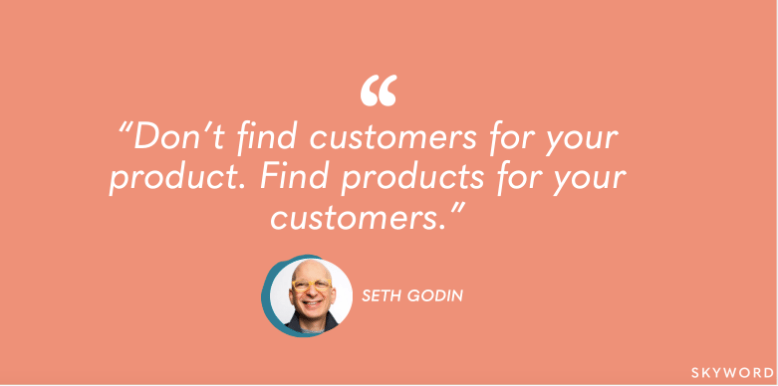
Marketing encompasses a lot more than that, and it starts with your product, a fact many indie authors don’t like because they prefer writing the book of their heart and hoping someone likes it enough to read it. That’s fine; whatever floats your boat. And honestly, it’s what you should do when you first start out. But writing the book of your heart, or the books of your heart, won’t get you very far unless you can meet in the middle between what you want to write and what readers are looking for. As I’ve said in the past, authors who can meet in the middle find their longevity in this business. Or rather than compromising on every book, write something you love, then something you know will sell, and go back and forth. I was reading Bryan Cohen’s new Amazon Ads book Self-Publishing with Amazon Ads: The Author’s Guide to Lower Costs, Higher Royalties, and Greater Peace of Mind and in it he quoted John Cusack, who said something like, “I do one project for them and one project for me.” I can’t find attribution for that quote, but for the sake of this blog post, let’s go with it. That’s not what this blog post is about, as it is your choice what you want to write, but as Seth Godin said, and I quoted him not long ago, “Find products for your customer instead of trying to find customers for your product.”

(And if you’re interested, a really great talk by Kyla Stone is available here. She talks about writing to market, but she couldn’t get to where she is today if she wasn’t writing what she loved to write.)

I’ve spent six years publishing and learning from my mistakes. Here are some tips I picked up from other authors and what you can implement with your next books.

Make sure your series looks like a series.
If you look at any big indie’s backlist all their series look like they belong together. It doesn’t matter if they’re all standalones and readers don’t have to read them in order. If they fit together, create their covers so they look like they do. Not only does a reader glancing at your Amazon page know they belong in a series, they just look nicer when they’re all branded in the same way. That means a matching background, maybe, cover models who have the same vibe. Create a series logo and add that to the cover as another way to identify one series from the next. If you do your own covers but publish as you write, create all your covers at once. That way you’re not stuck with one cover that’s already out in the world you can’t duplicate. That shoves you into a corner you don’t want to be in. Book covers are more important than we want to believe, but trust me. Look at any of your comparison authors’ backlists and see for yourself how they brand their series. Also make sure if you’re going to run ads that they meet Amazon’s policies. I had to tweak my small town contemporary series because Amazon kept blocking my ads. I had to zoom in on their faces and it ruined the entire look. I’m much more careful now.

These are books under this name. It’s easy to see the trilogy belongs together, the three standalones and then the small town series. Amazon didn’t like they were in bed. Too bad. They did.

Write in a series, but also don’t tie things up –until the very last one.
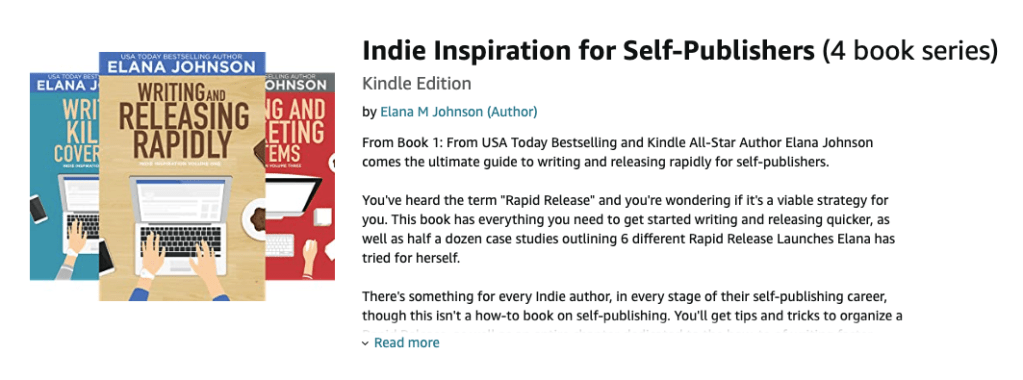
Elana Johnson calls these loops. You can end each book with an HEA, but with the overall plot, don’t wrap things up! This encourages the reader to read through your entire series to see how things finally end. With my small town series, everyone is in town for a wedding, and there are wedding activities throughout. The last book ends with the couple’s ceremony. What’s fun, the couple getting married isn’t even one of the couples featured in the books. They are background characters that help with the subplot of each book. That’s it. That might be a flimsy piece of tape holding the books together, but it was a fun way for me to end the series–with the reason why everyone was together in the first place. When Elana talks about loops, she doesn’t mean ending books on a cliffhanger, though it is well within your right and another marketing strategy you can incorporate into your writing. Elana has a wonderful series for indie authors, and you can look at the books here. I’ve read them all, and this isn’t an affiliate link.

Use your back matter.
When you write in a series, and the books are available, your Kindle can help you out by prompting you to read the next one. That can be a boost, but also, you want to take matters into your own hands and add the link to the next book in the back matter of the one before it. If you don’t write in a series, add a different book. If a reader loves your book, they’ll want to read more from you, and you might as well make it easy for them. Too many calls to action may confuse a reader, so you don’t want pages and pages of back matter asking a reader to buy a million books, sign up for your newsletter, and follow you on Twitter and Facebook. Choose the one most important to you, add it immediately after the last word of your book while they are still experiencing that reader’s high, and ask them to buy your next book or sign up for your newsletter. I have also heard that graphics work wonders and adding the cover along with the link is a great way to prompt readers to buy.

Introduce your next book with a scene at the end of the previous book.
This is one I learned from the writers in my romance group on Facebook. Say your novel is about Travis and Amy, but the next book is going to be about Rafe and Emily. End Travis and Amy’s book with a short chapter/scene in Rafe’s POV to get them excited for the next book. I haven’t started doing this, but the writers in my group give it 10/10 stars, would recommend as a great way to get readers buying the next book. Also, if you’re writing romance, readers gravitate toward those hunky men, so if you can, write from his POV. I’m definitely doing this with the trilogy I’m publishing in January, and with the six books that are with my proofer now, the third book ends with an HEA for that couple, but I added a chapter from the heroine’s POV for the next three books. I suppose I could have done it from his POV, but hers felt more natural, and I hope it will be enough to get the readers invested in her story and how the series plays out. You can do this with any genre you write in–if he’s a detective, maybe he stumbles onto a new case, or maybe something serious happens in his personal life. Whatever the case may be, add something that will entice readers to click on the link you’re putting in the back.

Bonus scenes for newsletter subscribers only.
I haven’t started this up yet because 1) you have to write the bonus content 2) I don’t know my newsletter aggregator well enough to make something like this happen, and 3) with my newsletter signup link already in the back, I’m giving away a full-length novel. If you don’t have a reader magnet, writing a bonus scene that is only available if readers sign up for your newsletter is a great way to add to your list and hopefully, the more engaged your list is, the more readers you have.

Looking at your entire backlist as a whole–or what you’ll be writing in the future.
If you think of marketing as an umbrella for your entire career, then think of advertising on a book by book basis. Marketing involves all your books, who you are as an author, and what your message is. That’s why so many authors want a logo–but attach feelings, emotions, and what you’re giving your reader in your books to that logo so they think of those things when they see it. It’s why soda commercials are always happy. They want you to equate having a good time with drinking their product. What do you want your readers to get out of your books? If you’re a romance author, an HEA, for sure, but what else? Is your brand a damaged hero? Found family? If you write women’s fiction, do you want your readers to expect a woman on a journey, or maybe sisters repairing their relationship? Best friends who have grown apart only to be reunited for some reason? Of course, that sounds like all your books will be about the same thing, but that’s not really the case. What is your theme, what is your message you want your reader to get from your books?

Publish consistently.
Training your readers to expect a book at certain time will help you build buzz as your readers will get used to your schedule. Figure out a comfortable schedule and try to maintain it. Once every 3 months seems like a good practice if you can keep up with that as you’ll never fall off Amazon’s 90 cliff. Also, if you’re writing a series, keep in mind readers don’t like to wait and you’ll have your work cut out for you if you can only release one book a year. You might just have to be resigned to the fact you won’t get the number of readers you want until all the books are released.

It’s a bit older now, but Jamie Albright spoke at the 20books convention a few years ago. She shared some good tips if you can only write and release one book a year.

Tweeting incessantly about your books isn’t marketing. Doing research on your next book before you write it, figuring out your comp authors and comp titles, doing cover research, and writing a good blurb is marketing. Running ads and buying promos to that book once you’ve written it is advertising.

It took me a really long time to figure this out–ten failed books because I genre hopped and was only writing what came to me. I didn’t publish on a schedule, didn’t have a plan. I’m still not publishing on a schedule, though I am going to try to aim for one book a quarter after my COVID stockpile is out into the world.

I’m getting a hang of this marketing thing, but it’s nothing you can achieve over night. I spent five years making mistakes. I’ll spend the next five fixing them.

Thanks for reading!


If you want resources on planning your career, Zoe York has a wonderful series of books that talk about that. You can get them here. https://www.amazon.com/dp/B082CZDK75

Sara Rosette also has a wonderful book on how to write series, and you can find it here. https://www.amazon.com/How-Write-Structure-Troubleshooting-Marketing/dp/1950054322/

The top 6 reasons listening to marketing advice is a pain in the A$$.

We all have marketing advice coming out our ears. I’m to the point where I don’t even care about marketing advice right now. I stopped listening to Clubhouse, I’m not an active participant in any Facebook group. All I’ve been doing is writing, writing, and more writing because let’s face it, marketing won’t do anything if you don’t have product. But more than that, marketing won’t do anything if you don’t have the right product. So here are my top six reasons why listening to marketing advice is a pain the you know what.

You don’t have the same backlist as the person dispensing the advice.
Frontlist drives backlist. Right? Maybe you’ve never heard it phrased like that. Maybe you’ve heard “writing the next book is the best marketing for the current book.” I like frontlist drives backlist better because sometimes we think that after a book is so many months old it will stop selling. Maybe in traditional publishing circles this is true–when bookstores yank your paperbacks off the shelves, but we’re digital now, and books on the digital shelf don’t get old. So when you have someone who’s been publishing for a while saying that their newest release earned them lots of money–you don’t know if it’s from the current release or if their new book bumped up all the books in their catalog. Listening to someone talk about how they are promoting their 20th book might not do much for you if you’re planning a second. They are 100 steps ahead of you. Take notes if you want, but chances are good what they are saying won’t apply to you. I’ve been in that position, too. Listening to big indies is discouraging. Rather than listening, I go write.

You’re not in the same genre/subgenre/novel length/platform.
If you write thrillers, what a romance author is doing may not help that much. Maybe you’ll get some ideas because a lot of marketing is universal, but for example, lots of romance authors are on TikTok right now. Whether that is beneficial for you, you would have to do your research and figure it out before you waste time learning how to make the videos. Marketing for wide isn’t going to be the same if you’re in KU, just like listening to a webinar on how to market a historical saga isn’t going to do much for you if you’re a children’s book author. Marketing advice isn’t created equal and it helps to figure out what you’re selling before listening to advice. Even marketing for historical romance would be different than marketing mafia romance. If you write short stories, chance are marketing those will be different than if you’re writing long novels.

They have money–you don’t.
It’s easy to say, “Oh, I bought a Freebooksy, put my first in series for free, and watched the royalties roll in through page reads.” That sounds like the answer to anyone’s prayers, except, then you rush to Written Word Media and see a Freebooksy spot is $40 to $175. If you’re trying to promote a standalone, there’s no way you’ll get that money back paying to give away a free book. Amazon ads aren’t nearly as expensive (I have six ads going and have only spent 4 dollars this month so far) but if you don’t know how to put together a Facebook ad, they are happy to take your money and run leaving you with no clicks and no sales. Unfortunately, there’s not a lot you can do for free anymore, all the begging going on right now on Twitter is proof of that. So it would be in your best interest to find a couple of nickels to rub together, make sure your book is advertising ready, and hope that you can find some traction with a low cost-per-click ad. If you’re afraid of losing money, do what you can with your product so that doesn’t happen. The person who DOES make their money back and then some on ads and promos has a product that people want and all they’re doing is helping readers find it.

They have a newsletter. You don’t.
Ever listen to a 6-figure indie author talk about their marketing campaigns? They give you all the sales numbers, all the rank, and someone asks them how they did it and they say…. “I emailed my newsletter and told them I had a new book out.” Where are the melting face emojis when you need them?

courtesy of Canva

Here they are. There is nothing so disheartening as thinking you are going to hear a nugget of information that will take your author career to the next level. Don’t get me wrong, you need a mailing list. That bomb she dropped is proof of that. Only, her list was six years in the making and you’re stuck on MailerLite tutorials on YouTube. That doesn’t mean you can’t listen and write down her advice for later. She built up her newsletter somehow and she probably has a lot of tips on how she did that. Gave away a reader magnet, joined in Bookfunnel promotions (or StoryOrigin), she networked with other authors and they featured her in theirs to get the ball rolling. But you have to understand that she’s six years ahead of you. I’ve heard Lucy Score has 140,000 subscribers on her email list. You may never, ever, get there, and her marketing strategies will not be yours.

They write and publish faster than you.
I remember when I settled in for a good marketing talk with a big indie author. I had a notebook, a pen, a cup of coffee, and I was going to absorb all the knowledge. She was talking about ads and promos and the usual, and then she got to how many books she released a year.

calico cat grimacing

That really sums how how I felt. There’s no way I could do that. I write fast–I can crank out four books a year with no help. No editor, no beta reader, no formatter, no one to do my covers, just me. But she multiplied that by four, and my heart sank. Obviously, their marketing techniques are going to be way different than yours. They can put a first in series for free, buy a promo, and get a ton of read-through from the get-go. They can run ads to several books and create boxed sets. What they can do in a year, you might be able to do in five, so you need to adjust accordingly. It doesn’t mean you won’t be successful, it just means you won’t be successful as quickly. When listening to marketing advice from prolific authors who are doing this as their day jobs, keep your expectations realistic. Save up advice that you might be able to use later, but realize that you can’t do anything without product first.

They could just be a better writer than you (for now).
No one likes to talk about craft. We don’t. It’s messy and subjective and it’s easy to start talking about rules and editing and first person vs. third person, and before you know it, you’re not talking to anybody anymore because everyone is ticked off about the Oxford Comma. But the fact is, good books sell. You can run ads and sell a bad book once, but you’ll never build an audience or a loyal readership off a crappy book. People work hard for their money and they don’t like to waste it. Time is precious and trying to read a book that isn’t well written is a drain when they could be reading something better, catching up with a show they’re behind on, or spending time with a significant other or their kids. You can’t be cavalier about asking people to spend time with you. People who have writing careers write good books. So if you’re discouraged because the authors you’re listening to are telling you that they don’t lose money on ads, and/or they have a huge newsletter, it’s because their books are good. Do you think this author has readers who are invested for the long haul?

I’m not making fun of anybody–he obviously has readers–I would do a lot for 458 reviews–but when 41% of them are one and two stars, you’re not offering content readers will come back for. Imagine how this book could have taken off if it had been well-written. It’s the first in a trilogy, and I don’t have to tell you the other two books aren’t doing well. The loss of potential is devastating to me. I can’t even imagine how he feels. Maybe he doesn’t even understand his own self-sabotage and is happy with the instant gratification.


It’s really difficult to listen to marketing advice. We all write such different books. Our genres will be different, our covers. Our willingness to put ourselves out there for the sake of networking. Our author voices and style will be different. Before you try to follow any advice, your books have to be marketable or any marketing you do will be for nothing.

This is why writing about marketing is hard. It’s why it’s difficult to listen to advice. And really, what no one talks about is how much marketing you have to do before you even write that book. We try to find customers for our product, when really, it’s a hell of a lot easier to find product for already existing customers. Finding your comparison authors makes it easy to find readers–their readers are your readers. We don’t like to study the market because we’d prefer to write what we want to write. The authors with the most longevity meet in the middle between what the market wants and what they love to write. It’s easy to do market research these days–Alex Newton of K-lytics takes the work right out of it, and you can watch a short trend report that he made this month for free here. https://k-lytics.com/kindle-e-book-market-trends-2022-september/

Read on for more resources and have a great week!
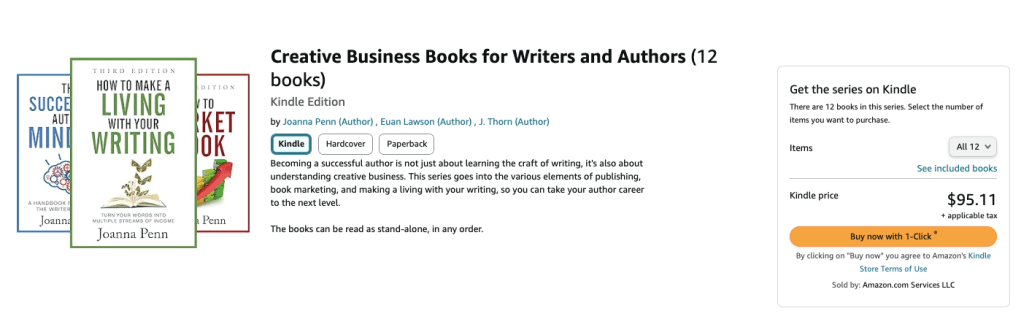

If you want to work on your craft, Tiffany Yates Martin has all her classes on sale for NaNoWriMo for $29.00/each. Check them out here! https://foxprinteditorial.teachable.com/