Amazon Ads: A Case Study

I stumbled upon something interesting on Threads the other day. Someone was asking for tips and tricks on how to make Amazon ads work for her. Of course, I looked at the book she was trying to sell, noted a few things, and told her what I thought. That never works well in the land of the public, and there were a couple of people who commented on my comment. It’s interesting to me how people can tell you their opinions without looking at what you’re trying to sell or just spew stuff based on their own poor experiences. I’m not going to call this author out, but you can apply what I’m going to say to almost any debut author.

One of the things you should do when wanting to run ads is look at your product. We think we’re pretty wonderful we’ve managed to write a book and publish it, but that doesn’t mean everyone is going to want to read it. In fact, there are so many books out there it’s actually a miracle if you can find anyone who wants to pay for what you’ve written. Thinking that you’re going to set the world on fire will only set you up for disappointment. You have to be realistic when it comes to your book and by that I mean you have to look at your book and your author career as a whole.

What did I see when I saw her book?

It was only the first in a duology and the second book wasn’t on preorder. This is a Catch-22, and we know it is. People won’t buy the first book in a series without the others available because they don’t want to wait or won’t take a chance the author will finish. Authors who don’t sell enough of their first book think there’s no interest, lose motivation, and may not want to finish. I get it, but we also need to look at it from a reader’s point of view. Not being able to start and finish a series on their timetable is unsatisfying. Bingeing is a way of life now and when we are kept from it, we hear about it. No one wants to wait for the next season of Bridgerton or The House of the Dragon. No one knows where they’re going to be in 2026. This author doesn’t have the second book even on preorder, so God only knows when it will be out. She may not have even started writing it yet. It’s a sad fact that if she’s selling a duology, the first would sell better if readers had access to the second, even if only in preorder form.

She’s wide.
Amazon ads can be used if you’re wide, but to me, it makes more sense to use Facebook ads so that you can capture readers on all devices (by targeting them in your audience list). I told her that, and someone said she uses Amazon ads to great effect even though she’s wide. I just scoffed. Okay, Karen. The person who said that has been publishing for years, has over 30 books in her backlist, and, I would imagine, a very large newsletter list. She started way back in the Kindle gold rush where it was possible to make a lot of money simply publishing books and buying ads to fuel the flames. Publishing isn’t like that today, and only running ads won’t get you very far, especially as a debut author. I wasn’t impressed with her answer since it was clear she didn’t look at this author’s book or lack of backlist to provide any real, personalized direction. There’s no reason why you can’t run Amazon ads if you’re wide, but Amazon ads are known to be spendy, can’t get any traction for less than 30 cents a click, and you’re only reaching one audience. Facebook ads can reach more than only Kindle readers, can be cheaper (there are ads where I’ve gotten my clicks down to 9 cents a piece), and just seems all around a better investment. For her.

She’s not in KU, and her book is priced at $5.99.
This goes along with the “wide” part of the case study. I’m not saying Amazon readers are cheap, I’m sure there are people on Amazon who buy books at full price. But, we’re also talking about a debut author who has one book and the other book doesn’t look to be forthcoming. I’m not sure how many readers will really take a chance on a book that’s $5.99. I’m not arguing for or against being in Kindle Unlimited, that’s a business choice and being wide can be beneficial, but you are choosing your audience and that audience has disposable cash to buy entertainment. I don’t think it’s easier or harder to reach those people, you just have to know how. She may have her book in the Kobo Plus program (Kobo’s KU) but running Amazon ads won’t help her find those readers. So, she’s using Amazon ads to find readers who are willing to pay $5.99 for a debut author who is more than likely still writing the next book. If she’s getting a lot of clicks and no sales, her price could be part of the reason.

She has few reviews.
We like to think that reviews don’t matter, but they do. My duet won’t move no matter what I do and I attribute that to not putting them on Booksprout for reviews. The first book is only at twelve, and the second book is only at ten. I didn’t look to see if those are text reviews or only star ratings, but it doesn’t really matter. I don’t know the statistics on the number of readers who read reviews or just glance at the stars, but it does stand to reason the more star ratings you have, the better your book looks. Even if you have a good cover and solid blurb, a reader could nope right out of there if you don’t have enough social proof.

The book is old.
She published a while back, about eight months ago, well past the ninety-day grace period Amazon gives you. Running ads to a book that is old and already not selling well is like pushing a boulder up a mountain. Amazon is all about relevancy, and if your book isn’t relevant, meaning, people aren’t buying it, Amazon doesn’t care about it. They may still show your ad, and you get evidence of that when you see your impressions, but who knows if Amazon is pushing down your ad when it could be doing better. She’d do better to put her second book on preorder and then create an ad that targets both of them. That may be her plan once her book is closer to completion, I don’t know, but trying to drum up buzz for an old book takes a lot of time and money. Being that I have no idea how many ads or what kind she’s running, it’s hard to say if creating more and different kinds of ads (category vs. auto placement vs. keywords for example) with a higher budget would work.

So that’s what I saw when I looked at her Amazon page. Marketing is more than just figuring out an ad platform or posting social media graphics. It’s the genre you’re writing in, what your publishing schedule is like, if you offer a newsletter. She’s just getting started, so it’s no surprise her marketing tactics will be slow to take off.

I mentioned a little bit about the ad platforms, but let’s just take a shallow dive into them (I don’t have the expertise to go deep). Amazon’s ad platform isn’t complicated, though you do have to invest in clicks if you want any traction. I can’t get anywhere if I’m not bidding 40 cents or more, and that’s for contemporary romance/billionaires/rockstars. The ad itself only consists of your book cover, a tagline if you live in a country where that’s offered, and the number of reviews your book has. You need a strong cover, and if you get clicks, your cover is doing its job. It’s after you get the click and it doesn’t convert into a sale that you need to look at your product page. If your price doesn’t attract readers or if they’re looking for KU books and your book is wide, or your blurb is confusing, or they decide you don’t have enough reviews. Those can affect other ad platforms too, but if we’re just talking clicks, having your book in solid categories so they show up in the right spots on Amazon and having a fabulous cover will go a long way.

There’s a lot that goes into Facebook ads, and the potential to get one part wrong is huge. It’s probably the reason why the guy who said my Facebook ads recommendation was garbage. He had a bad experience, didn’t know how to put the ad together and maybe lost some money, but not everyone is going to have that experience. You need a good description, a good hook (headline), a good stock photo (creative) that will draw readers in enough to click. They can take a lot of trial and error and it can be costly, but I know it can be worth it once you figure out the secret sauce. Again, though, clicks can be a waste of money if readers don’t like what they see after they click on your ad. Facebook ads allow you to target more than just one kind of reader (versus Amazon ads whose readers only read on Kindles). You can target Google Play readers, Apple readers, Nook readers, Kobo, hoping to draw in those Kobo Plus subscription holders. Facebook will spend your money faster than Amazon does, but I found overall the clicks can be cheaper which allows for a little wiggle room. The dashboard is hella complicated, and I hate clicking around in it, but like any platform, once you get used it it, it’s not so bad. She could start small and boost a post off her author page and see how it goes. She would still need to create an audience, but you’d want to do that anyway. Every author needs comps.

I saw someone who was having bad luck with BookBub ads (not the featured deal you have to approved for) saying she was getting impressions but no clicks. It’s really important to understand what kind of platform you’re using. Amazon ads can cater to regular-priced books as does Facebook, but BookBub’s audience are freebie seekers and if she was trying to sell a book at full price, she wasn’t going to get any clicks. I asked her if she was trying to sell a full-priced book and if she had the price on her creative like they encourage you to do, but she didn’t answer me. Whether she didn’t see my response or she resented me telling her a full-priced book wouldn’t sell there, I have no idea, but I’ve heard of other authors trying to sell full-priced books on BookBub and it just won’t work. They have built their entire readership on readers who want free and cheap books. Trying to go against years of that will be futile. You can use them if you put your book on sale, though I have noticed that not a lot of authors want to do that. The author who is trying to sell the first in a duology might do that when her second book comes out, but without knowing her, I would guess the chances are slim.

When you decide to run ads, you have to take a look at your product and your company, which is you. Backlist, number of reviews, how long you’ve been publishing (there’s a reason why companies love to say they were established in XXXX–it creates trust in the person who’s looking at the advertisement), and how often you publish can all influence a reader’s potential to buy. Being a debut author isn’t a bad thing–we all have to start somewhere–but you have to keep your expectations in check. When she does release the second book in her duology, how long will it take her to write another book? Will she be marketing two books for the next two years? Will she release another first in series and expect readers to wait while she writes the next? Building a backlist can take years and she may not get ads to work for her for just as long.

There’s a reason why they say writing the next book is your best marketing tool. I understand the want to push your book out into the world, and I applaud her for trying, but she seemed to think the ads were what was going wrong, and well, I think in this case, it’s the operator and not the machine.

I’m certainly not an expert and I’ve killed ads that were costing me money, not making it. Like I said, I stopped trying to run ads to my duet, and now when I get someone reading them, I just figure they found out about them some other way. I’m running Amazon ads to my King’s Crossing series, and I had to kill a very productive ad. No one was preordering and the clicks were adding up. I may turn it back on once more books are available to purchase or read in KU. I knew from the start I would be paying for exposure, and I left three of the slower-moving ads on. I created two for my rockstars but they are very slow moving right now but maybe rockstars aren’t in and the books are a year old already (relevancy).

Once I write a blurb for the whole series I’ll set up a Facebook ad for it. I need a blurb that explains what the series is about, but I’ve been busy doing other things (which isn’t great since marketing this series should be on the top of my list) and well, I hate writing blurbs.

Anyway, ads are a great marketing too, just be sure you’re in a place in your career where you can benefit from them and always make more than you spend.

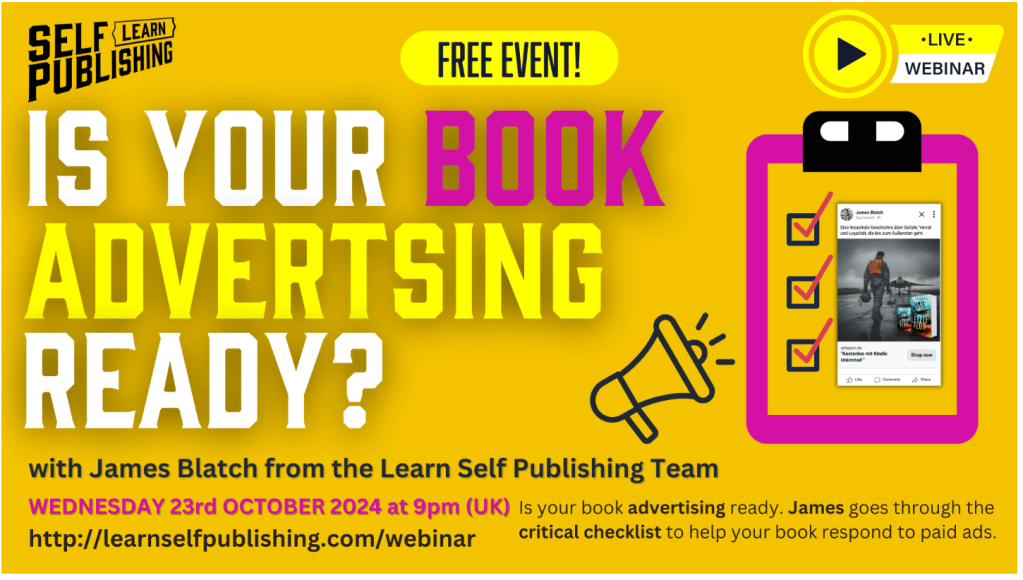
I found this in my email from James Blatch–Is your book advertising ready? Could be a fun webinar to listen in on. It’s free, and you can click here to sign up:

https://us02web.zoom.us/webinar/register/WN_RqcLtAxuSd-ioWbFGZiIKQ?inf_contact_key=d2952934bcb214bf7377961b3d3304084dfbc39d7283b2cb89d5189540b69330#/registration


Quick Links:

Bryan Cohen’s free five day Amazon Ads course: https://www.bestpageforward.net/getting-ready-for-the-5-day-amazon-ad-challenge/
The link at the bottom directs you to his Facebook page. Join his group to stay up to date on all the webinars he offers. https://www.facebook.com/groups/2230194167089012

Dave Chesson’s Free Amazon Ad course: https://kindlepreneur.com/free-amazon-ads-course/

Matthew J. Holmes offers a newsletter and classes on Amazon and Facebook ads: https://www.matthewjholmes.com/

David Gaughran has free tools on his YouTube channel that includes using Canva to make Facebook ads graphics: https://www.youtube.com/@DavidGaughran

There are a lot more resources out there when it comes to learning ads. Robert Ryan’s books are great, and if you want to learn BookBub ads, David Gaughran has one that will read outdated because the platform has surely changed, but the tactics described to find your audience are probably still on target. Ricardo Fayet of Reedsy also wrote one that is really informative.

2020 Indie Publishing Predictions: Pay-to-Play and ad platform resources for indie authors

2020 indie publishing predictions

Thank you for staying with me through this blog series about Written Word Media’s predictions for 2020. I’m discussing these predictions as an Emerging Author who has less than 10 books published and making less than $60,000 a year (let’s be honest according to my 1099s I made less than $2000 in 2019).

In the last post we talked a little bit about author collaboration because there is power in numbers, though the group opportunities don’t mean much to me because I’m still building my own career in my own right. Just as I’m sure most readers of my blog are.

The next point WWM predicts is that running ads will become a requirement. This isn’t a prediction so much as it’s already a fact. You need to learn an ad platform and not be afraid to use it. Meaning, you can’t be afraid to spend a little money to make a little money.

Various people say that Amazon ads are the smartest way to go. You’re putting your ad in front of shoppers who’re already in the mood to buy books. I like Amazon ads, too, because you’re selling books to readers who do not have a KU subscription and your enticing readers to borrow your book if they do.

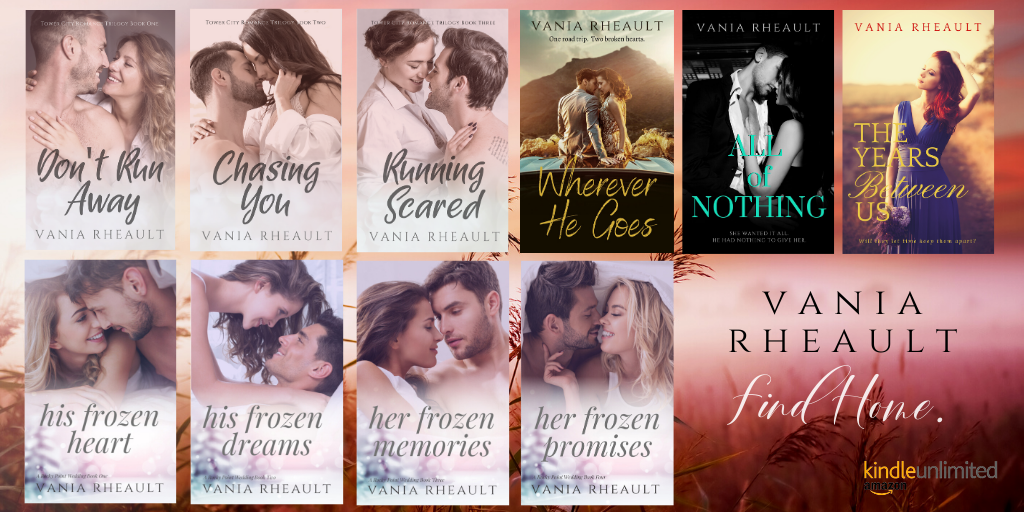
It shouldn’t need to be said that running successful ads means you’re advertising a quality product. Unfortunately you may waste a little money on clicks figuring this out. You may recall in a prior blog post of mine where I described losing some money in ads for The Years Between Us. My ad copy was good, my cover was good, but I was losing people at the blurb. The Years Between Us is an older man/younger woman novel, but it’s not naughty. I was marketing it as a older man/younger woman, when maybe my blurb should have emphasized the forbidden love aspect instead. At any rate, you may need to experiment. If your ad doesn’t get any clicks, but you are getting some impressions, maybe your ad copy isn’t hooky, or your cover looks too homemade or doesn’t reflect the genre clearly. In any case, the blurb cost me clicks. I should have turned my ads off a lot sooner than I did. I was optimistic and I paid the price.


Mark Coker has is own opinion on this prediction–it’s evident he hates that Amazon took this direction. He claims that being pay-to-play makes us compete against other authors. He also states that since Amazon took away the also-boughts at the bottom of the product pages and replaced those with sponsored ads, Amazon is pitting us against each other. (Amazon is always playing with their platform looking for ways to improve the customer experience. Just because they are gone today doesn’t mean they won’t be back tomorrow, or a variation of them.) My book, All of Nothing, does still have some also-boughts, and I’m happy to say that they seem to fit into the kind of book All of Nothing is.

Screen Shot 2020-03-14 at 6.33.41 PM

It’s true that when you search an author, their product pages can be peppered with ads. That’s business. It’s no different than driving down the main strip of the city and having your choice of Dairy Queen, Hardee’s, Burger King, McDonald’s, Sonic, Popeye’s, KFC, and a million other places. It’s up to their marketing team to make them stand out, just like it’s up to you to have a good cover, blurb, title, and look inside, so your potential reader isn’t lured away by a prettier cover and better ad copy.

The motto of the 20booksto50k group is a “A rising tide lifts all boats.” There’s no competition. Be the best you can be, put out the best quality product you can. If you write against the grain (the book of your heart), and/or can’t afford an editor and/or can’t find someone to trade with you, if you have to make your own cover, these are choices in situations you’re going to have to work with. Your book isn’t anyone else’s responsibility.

I don’t agree much with Mark Coker. We aren’t competing against each other. It helps to look at other authors as allies instead of competition. Make friends, not enemies, and stay in control of what you can–the quality of your own books.

I like Amazon ads. They don’t cost much money, and they are surprisingly easy to learn how to use. I haven’t ventured into the UK, or Germany territory. I advertise in the US store, and small sales I do have are because I run ads. But you may find better luck with Facebook or Bookbub ads. In my experience, they eat up money faster. We can blame, or try to blame, Amazon for a lot of things, but taking your money isn’t one of them. Except for when they do–but then that usually is due to operator error not the machine.

No matter where you advertise, you’ll need comp authors and their book titles. You need these because in Amazon’s case they’ll be your keywords, in Facebook’s case they will help you find an audience to target. That’s why it’s important to know what genre you’re writing in, and what books fit with yours. Always stay up-to-date with what’s happening in your genre. Keep an eye on authors who are doing well who write the same kinds of books you do.

Take time to learn how ads work. There are a lot of free resources out there. All they take is a little bit of time to listen to a podcast or to read a book a generous person (usually an indie author himself or herself) has taken time to write for the rest of us. Going in blind is silly and will cost you money. As a writer, you should be used to researching. This isn’t any different – you’re only researching wearing your businessperson’s hat and not your writer’s hat. I’ll list them at the bottom of the blog post.

When it comes to this prediction, the future is now. You won’t get far without some kind of paid advertising. You won’t have a launch, strong or otherwise, without ads, and they are especially important in keeping your book in front of readers if you’re going to take a while to release another. Jami Albright has said she wouldn’t make the money she does releasing one book a year without depending on ads.

They are a huge piece of the indie–publishing puzzle.


Resources

Amazon

Bryan Cohen hosts an Amazon ads challenge every once in a while. The next one is scheduled for April 2020. In this ad challenge, he teaches you the fundamentals of Amazon ads: where to find keywords, how much to bid, what to set your daily limit at. Ultimately, he wants you to buy his Amazon Ads course, but in the challenge, he’ll teach you beginning information for free and it’s enough to get you started. It runs for a week, then a week after that he closes down the information. If you miss participating, you have to wait until he does it again. Eventually he may stop doing the ad challenge and think of something else to advertise is Amazon Ad course.

Follow Bryan on Facebook. This is his Facebook group for his business, Selling for Authors. Join his group for lots of Amazon ad tips, blurb help, copywriting tips and more. This is where he’ll announce a new ads challenge. You can request to join the ads challenge group here. He may not approve your request until the ads challenge opens up again. He’s very generous with his time, and if you have a question, he’ll do his best to answer it. He posts a lot of info on Instagram, too. I would follow him there, as well.

Dave Chesson has made how-to-learn Amazon ad videos. You can access them for free and watch at your own pace. He teaches you the same as Bryan: how to find keywords, how much to bid, how much to set your daily limit. His way is a little different from Bryan’s methods. Though like Bryan, he wants to sell you something and Dave wants to sell you a Publisher Rocket, a software to analyze what the competition is doing, how much they’re making, how many books are selling. It’s also a keyword grabber, though both gentlemen kindly teach you how to find keywords for free. I have Publisher Rocket and it’s worth the money.

Reedsy also has a course that is delivered in chunks to your email. Taught by Ricardo Fayet, this course is free, and you can sign up for it here. 

Facebook

There is only one free way to learn Facebook ads, that I know of, that’s signing up for the email class by Reedsy. Otherwise, you need buy a book explaining how to do them, or take a paid class. I recommend you do something before diving in because Facebook loves to take your money, and if you don’t have the proper audience targeted, or your ad isn’t put together correctly (bad graphics, bad ad copy) you’ll be broke and your ads won’t attract any engagement, never mind convert to sales. Mal Cooper is the powerhouse here, and she has an updated Facebook ads book available (you can even download the ebook version for free though I would encourage you to throw her some coin for being so great!), and she was just interviewed about Facebook ads on the 6 Figure Authors podcast. You can watch it here.


Bookbub

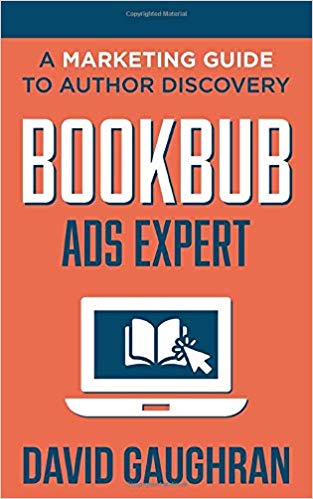
41hhK-35Z0L._SX311_BO1,204,203,200_As with Facebook ads, free ways to learn the platform are scarce. To be clear, Bookbub ads are not the same as being approved for a featured deal. Those are expensive and you have to submit and be approved. Bookbub ads are what they sound like — ads you make yourself using Canva or BookBrush that are placed at the bottom of their newsletters they send out to their subscribers. The only authority I know of is David Gaughran. He wrote a book about them, and you can find it here. In partnership with Reedsy, he also did a course that is delivered in segments for free to your email address. You can sign up here.
He’s very generous with his time, and he includes links in the book to a forum where you can ask questions. He’ll answer or someone else will help out. The book is a year old, so if you have a question and you search the forum you might find your answer without having to ask. But Bookbub is good for discounted books only. That’s the basis of their whole platform and they’ve trained their readers to look to them for deals. Don’t advertise a full-priced book there. You’ll get plenty of clicks and no sales.

The pros say to choose one platform and get really good at it.

Good luck!

PS: Since I love throwing podcasts at you, this is one by Joanna Penn with Russell Blake and Michael Beverly. Michael founded Adwerks, a business that runs Amazon ads for indie authors who don’t have the time to manage them on their own. They are a wealth of information on how the Amazon ads work, and they give you a peek into the mysterious Amazon Algorithms. I highly recommend it!


The next prediction that Written Word Media talks about is the Big Five putting books into KU. See you there!


end of blog post graphic