Happy Monday! Author updates and thinking about 2022

Happy Monday after US Thanksgiving! I hope you all had a fabulous holiday and were able rest and relax over the weekend! I missed last Monday’s blog post. I was so swamped with getting my edits on my book done and overall burnout that I dropped the ball. I should have at least told you I would be skipping, but I hope to make it up to you all with the goodies I have to talk to you about for the rest of the year!

I did have something else I wanted to talk about today, but it’s getting pushed until next week because I need more time to write it, so I’m going to do a short author update and talk about goals for 2022.

I’m done with my third read-through of my kind-of Beauty and the Beast retelling. It veered from that as some stories do, and I won’t be using that description as a marketing ploy when it’s published. Anyway, I never usually edit books so quickly after finishing them–I’ve always been a huge fan of letting books breathe–but something about this book has hooked me. Maybe it’s because I finished it so quickly, or maybe because I didn’t want to leave the loose ends untied, but whatever it is, I’m finished reading and moving on to plotting book two. I don’t count drafts, but after this third read-through it sounds fantastic and unless book two requires that I make changes to book one, all it needs now is a proofread. I’ve been mulling over what I want book two to be about–mostly I need to wrap up the over-arching plot of book one. I didn’t intentionally not finish, but it just kind of worked out that way, and it’s fine. It’s giving me more room to figure it out, so I need to find a way for my female main character to do what the FMC in book one failed to do (though she tried her best). I was also thinking about tropes and naturally, as a much younger sister, there’s going to be an age gap that I didn’t count on, but won’t drill down on either. I was thinking about a secret baby, but an age-gap/secret baby is what I did for The Years Between Us and while this will be written in 1st person under my pen name, I dislike reusing plot devices. Their ages are set–there isn’t much I can do about that, but he might not knock her up after all. Brainstorming and coming up with backstories for my characters and how those affect their present stories is a lot of fun, and I can’t wait to sit with pen and paper and think about all the ways I can make their lives miserable.


I listened to a great room on Clubhouse last week during the Monday Marketing hour for my Level Up Romance group. The question they asked today was, what is one thing you’re going to work on for 2022?

That’s an interesting question to me, especially since I’ve started helping someone as an alpha reader/editor/critique partner. She’s been with small presses and is looking to indie publish. Today I asked her what she wanted for and from her books.

It’s such an important question because with so many books on Amazon and so many choices going wide on other platforms, publishing isn’t just about putting up a book and walking away. Publishing now requires a lot of thought as to where you want your career to go. How many books can you write/edit/publish a year? What is your genre? Where are your readers? KU? Wide? A lot of authors don’t understand that marketing begins while writing the book. If you can figure this out before you waste too much time, you’re ahead of the game. It took me five years to learn this.

What do I want to work on next year that will help me and my business? I’d like to expand my squad. Find beta readers that will consistently help me (I’m more than willing to help in return!). Maybe find an editor that I can afford–at least a proofreader so I can have that extra confidence I’m putting out a typo-free product. Possibly find a cover designer, because honestly, while I enjoy it, I’m tired of doing my own covers. (This part is actually a lie. I probably will never trust anyone to do my covers, but it would be nice to have help.) For the amount of books I’m going to have coming out in the next little while, it would be super not to have to do all the work for each and every one. But, networking and connecting with people who offer services is difficult and sometimes you have to waste spend money to realize that someone isn’t going to work out.

The paid beta reader I used a few months back didn’t give me enough feedback for what I paid. Maybe that was my fault because I didn’t know the questions I should ask, but after the lack of feedback, I know now (and that can be a blog post for a different day). So while her fee wasn’t a complete waste–I learned a lot about myself and what I need–it didn’t go toward what it could have, either, which is a bummer. I never talked to her about it, and that was another mistake, I just figured to leave well enough alone and to try someone else. That’s not a great way to build relationships–you should always be able to talk to the person you’re doing business with, and possibly I could hire her again only this time be clear with what I need because what she did give me was fine–it was what she didn’t that I had a problem with.


What am I loving right now?

There is so much information that I haven’t consumed yet–from the K-lytics reports that I’ve paid for and the free ones Alex made available, to all the 20booksto50k talks from the conference in Vegas earlier, that I am downing in content and I have many many many hours of watching and listening ahead of me.

If you want to start in on the conferences, I did watch Elana Johnson’s talk and she touched upon what she’s going to be working on in 2022. How she’s going to market all the books she’s going to be putting out, and doing it all without going crazy. She has a great sense of humor, too, so listening to her speak was a lot of fun. You can watch it here.

I’ll be sharing the ones I like best as I watch them.

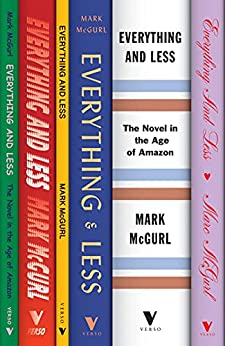
Another thing I’m loving right now is the book, Everything and Less: The Novel in the Age of Amazon by Mark McGurl. Hat tip to Jane Friedman for pointing out the New Yorker’s article about the book (follow her on Twitter for more insights into the publishing industry). You can read the article here. After I read the book, I’ll probably do a blog post about it. How Amazon has shaped, and is shaping, the publishing industry is fascinating to me, and how Amazon molds how indies write is really interesting, too. (And how some indies rebel against it.) For example, the idea of making the first 10% of your book the best it can be because that’s the amount of sample pages Amazon lets a reader skim to help them decide if they want to purchase your book. Another example is how Amazon pushes its own imprint books and how that dictates how readers find the books they want to read while perusing Amazon. Of course Amazon is going to push the books they publish, and being they are the biggest book retailer in the US, those books will do well with Amazon’s power behind them. How does that shape what’s trending, what’s popular, and how do indie authors respond to that with the books they write hoping to cash in on what is selling on the top 100 lists? I love reading about that kind of thing, so I will definitely check back in. If you want to take a look at the book yourself, you can find it here.
So, needless to say, I will be quite busy in 2022. It would be too much for me to hope that I can finish writing book two of this duet before Christmas being that I don’t even have a plot for it yet, but If I can get it finished by the end of the year and work out a few things, I would love to publish these as the first two books of my pen name in the spring. I’m doing that because unfortunately, and I have lamented about this in the past, you cannot build a readership on standalones. You can certainly publish standalones, but the real butter for your bread comes with read-through of a series. Any indie making it will tell you that. In fact, I was going to go ahead and rebel, and publish two standalones at the beginning of next year, but changed my mind after listening to Lindsay, Jo, and Andrea talk abut what they would do now if they were to start over knowing what they know now. Not one of them said they would publish a standalone, and while that was disheartening to hear, I also have to take their advice. Publishing a duet first is my compromise. Read-through to book two will be nice while I get a feel for my readers and they get a feel for me. I’ve said in the past I don’t write billionaire romance the way the other top 100 authors do. My characters are older and they hit upon issues that I haven’t found in a lot of the billionaire romances out there. So this will be me slowly testing the waters, and all I can do is see if it works. If you want to listen to that podcast where they talk about that, you can listen to it here:

I think that is all I have for now!

Until next time!

Happy Monday! Creating a Logo for a Series and short author update.

Good morning and happy Monday! If you’re participating in NaNoWriMo, I hope you’re getting all your words down so you can take a (much needed) break around Thanksgiving if you celebrate!

I’d like to congratulate Barbara Avon for winning the fall gift basket I gave away in association with Nina Romano’s fabulous interview we did! Incidentally, I interviewed Barb last spring, and you can read her interview here.


I don’t have much going on for myself. My daughter’s birthday is this week (on the 18th) and we’ll be heading out to dinner to celebrate her turning the big sixteen. It makes me feel old to have a daughter that age, though I’ll be turning 47 on the 28th, and that really isn’t that bad. I haven’t spoken about it for a long time, but I’m still dealing with some girly issues. It’s been a long year. Luckily, I haven’t let how I’m feeling get in the way of writing, and I hit 78k on my latest novel. A friend asked me if I’m ever going to publish them, or if I’ll just hoard my books like a dragon guards his gold, but one day I’ll publish something. After the holidays, at least. I probably will be publishing without a reader magnet, but that’s a choice I’ll be making because I haven’t written anything I want to give away.


What I wanted talk about today is logos for series. I’ve been seeing so many of them lately, and I like looking at them and how they’re associated with the books. There are a few reasons why you would want to make a logo for your series, but you’d have to think about branding and how your covers are going to look before you publish book one. Indies are terrible at looking ahead (I know–I was one of them) but all it takes is a little pre-planning to make your series shine. Why do a logo?

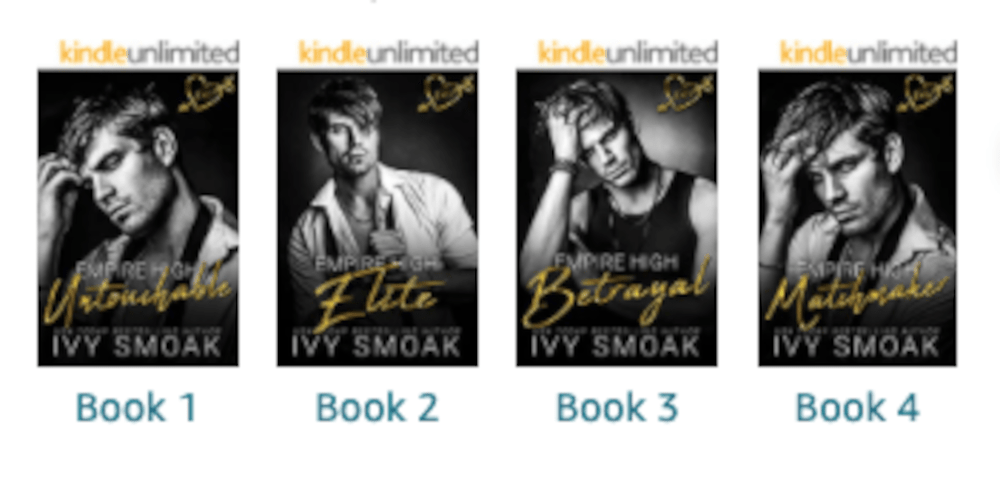
It will make the reader aware the books are in the same series. If you have deep backlist, a logo will help separate one series from another. I say help, because your logo shouldn’t be the only thing to tie your series together. Take, for instance, Ivy Smoak’s gorgeous covers for her Empire High series. (Check them out here!) They all look similar, with the same font, stock photo model, and overall vibe.

Screen grab taken from Amazon

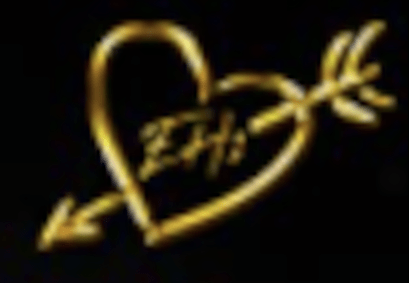
Here is a close up of her logo for the series. It might be a little pixelated–all I could do is take a screenshot of it and blow it up, but you get the idea.

It’s great for marketing purposes. It probably doesn’t need to be said that having a logo identifier is great for branding and marketing purposes. How? That’s the million dollar question everyone asks. How do you market? How do you promote your brand?

The first thing I thought of when doing this blog post was swag. Bookmarks are the go-to for authors and many of us turn our book covers into bookmarks to give away at events, or even just to leave in places like coffee shops. You never know who is going to pick up a bookmark and then go on to look up your book because of the hunky stock photo guy or book cover you used. But, I’m also thinking of using Dave Chesson’s QR code creator (it’s FREE). With his QR code creator, not only can you add a logo to to the code, but you can make the code go right to your Amazon series page or your Amazon Author page.

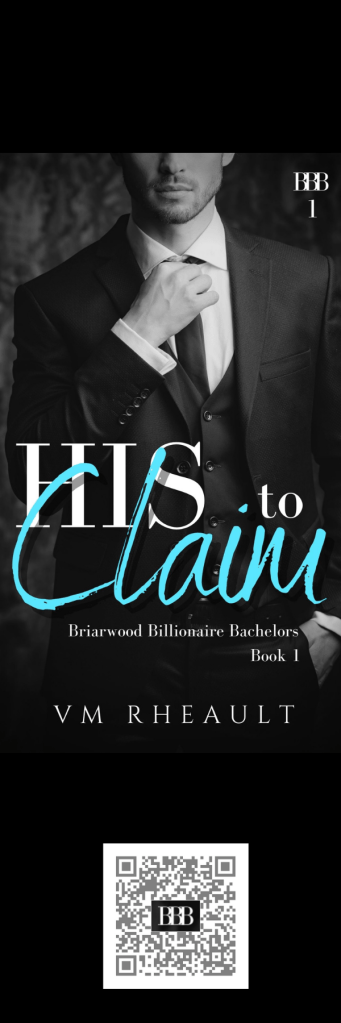
This is a poor and quick attempt to show you what I mean:

Of course, you can do better than this. It’s a very poor attempt to show you that you can match the logo on your book’s cover to the logo you can put in the center of the QR code. This is a cover I made up for one of my books while I was goofing around with concepts. It turns out it’s going to be book one of a six book series, and I only have two written right now. I’ll get back to those after I get all these standalones out of my system. But for now we’ll use the fake cover as an example. I made the bookmark in Canva (search bookmarks and they will give you a variety of templates), but VistaPrint is another great place to make bookmarks. I’ve seen their quality and they are a great resource for swag.

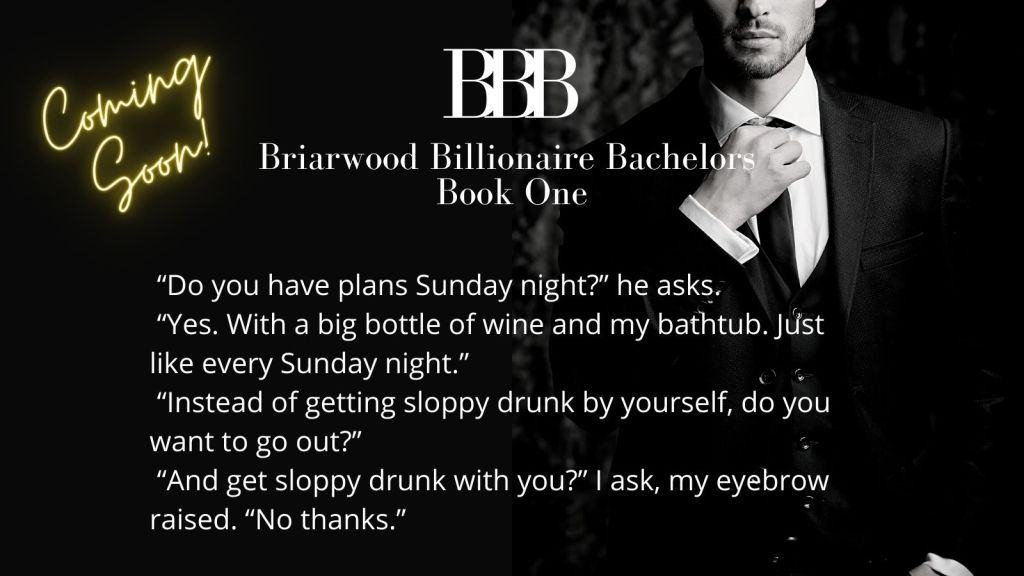
Another thing you can do with a logo is put it on all your graphics. Even if you don’t use ads, you can make graphics for your FB author page, Twitter, and Instagram. Here is something I whipped up for this blog post using Canva with my fake cover and the logo.

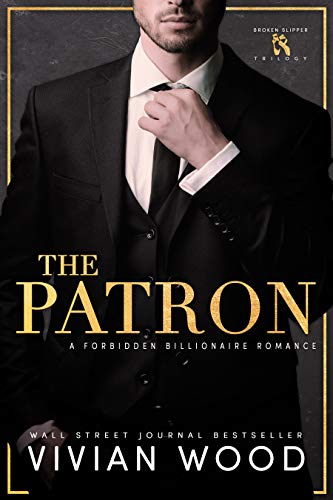
It can be clever identifier to what the books are about. The BBB for my logo isn’t a great example, but the ballet slippers that author Vivian Wood used is. We know right away her trilogy is going to be about dancers of some kind.

Taken from

It is a funny coincidence that our cover models are the same man–such is life in the life of a romance author with limited stock photos.

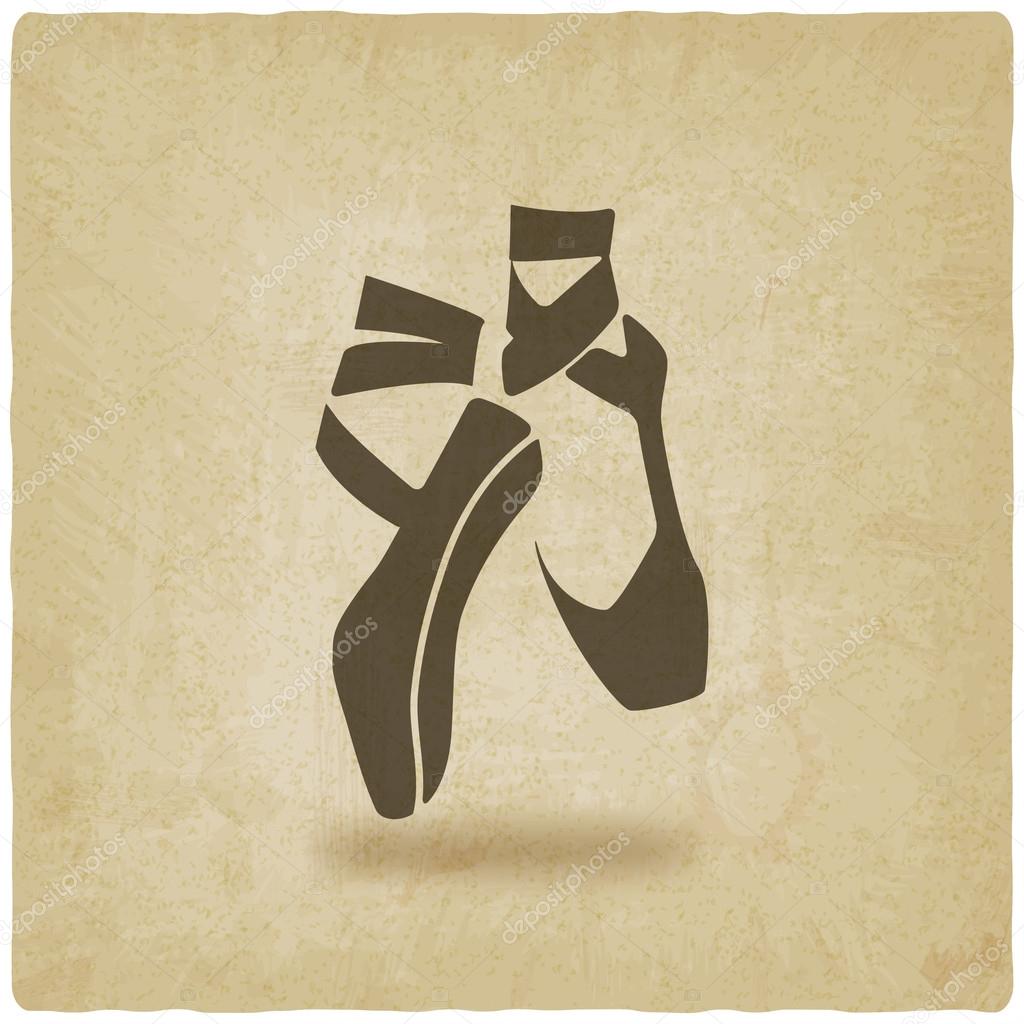
But this brings me to a really great point about logos. A lot of logos you will make for your covers are just going to be elements that you hunt up yourself unless your cover designer also makes them for you. Going on depositphoto.com and searching for vectors is probably the best way to find something you’re looking for, and I found a similar pair of ballet slippers Vivian used for her cover:

All it would take is a little know-how with GIMP or Photoshop to strip this pair of their sepia background and color the shoes gold to fit in with her color scheme. Like anything else you do with your cover, it’s best to buy your elements. In fact, this article from The Cover Counts says DepositPhotos is the ONLY place you should buy logo elements because different stock sites have different terms of service and vectors may not be allowed to be used a part of a logo.

When we talk about logos, we’re not talking about trademarking it as part of your official brand, author brand, or book brand. It’s more a part of your cover like the font you use than it is some of real legal value. Just like the guy above we both used as a cover model, there’s nothing that says an author can’t like your logo so much they want it as part of their own series and copy it. Indies are a pretty good group of people though, and I don’t hear of thievery like this very often, especially in romance author circles. But because we’re all limited by stock choices out there, one can only hope that an author’s or cover designer’s creativity will keep them from having to copy someone else.

How do you make a logo? It would be tempting to go into Canva and search logos and and alter one to suit your needs, but you should make your own with elements you purchase (please stay away from pixabay, unsplash, pexels, and other free sites) and use fonts that you have purchased or you know are free for commercial use. I’ve been thinking about the logo I’m going to make for the duet I’m currently writing, and my King’s Crossing 6-book series will definitely need one.

Canva is the easiest way to try a design, using their free elements, and then when you think you might have what you need, look to DepositPhotos and buy what you can find that will fit.

Most authors have an author logo, too, and I made one for my pen name. For now I’ve been placing the on the backs of my books in the empty bottom left hand corner of the cover. The cityscape theme matches the stock photo I use on my newsletter signup, and If I rebrand the author page on Facebook I have now, or start a new one, the cityscape can be part of the header too.

You can have a lot of fun with a logo for a series, and it’s great way to tie your books and covers together, and with splashing it everywhere, maybe you can build some brand awareness!


I don’t have much else today. It’s going to be a busy week, and I’m going to try to get this book done before Thanksgiving so I can rest a few days during the holiday. I still don’t have a plot for book two, but I left a lot of loose ends in book one (not for the couple, they’ll have their HEA) but book two is definitely needed now, and all I have to to do is figure out how to do it.

I’ll think of something.

Until next time!

Monday Musings: Updates, Word Counts, and Managing Reader Expectations.

I, unfortunately, don’t have a lot going on for this post today. I’m not doing NaNoWriMo, so there’s nothing to update you there. I’ve never needed the motivation or the camaraderie. I did NaNo one year about 5 years ago, and after a ton of editing, that book turned into Don’t Run Away, the first in my Tower City Romance Trilogy. Since then I’ve never needed to “get serious” or use it as a month to “start over.” I’m actually kind of glad I don’t depend on NaNo to get words down. What do people do the rest of the year? Anyway, I actually have a blog post about why I never participate, and you can read it here, if you want.

I am, however, 56,000 words into my new novel, and more than likely it will be a duet. My FMC has a sister who is introduced to my MMC’s business partner. It stands to reason they’ll have their own story, even though I don’t have a plot for them. I’m excited for the possibility of a duet since that is something I haven’t tackled, but at the same time, I don’t want to write it. Why would I force myself to write something that hasn’t grabbed me? Mostly because of reader expectations. When you have two secondary characters and they meet and there’re sparks, readers are going to want to know what happens. Can I rewrite what I have so there are no sparks, yes, but it felt natural they were attracted to each other. From one writer to another, you know what happens when characters go off and do their own thing. It’s difficult to rein them in and they end up doing what they want to do, much to our disappointment and disapproval. I like my two side characters, and I hope a nice juicy plot ends up in my lap by the time I’m done with this book.

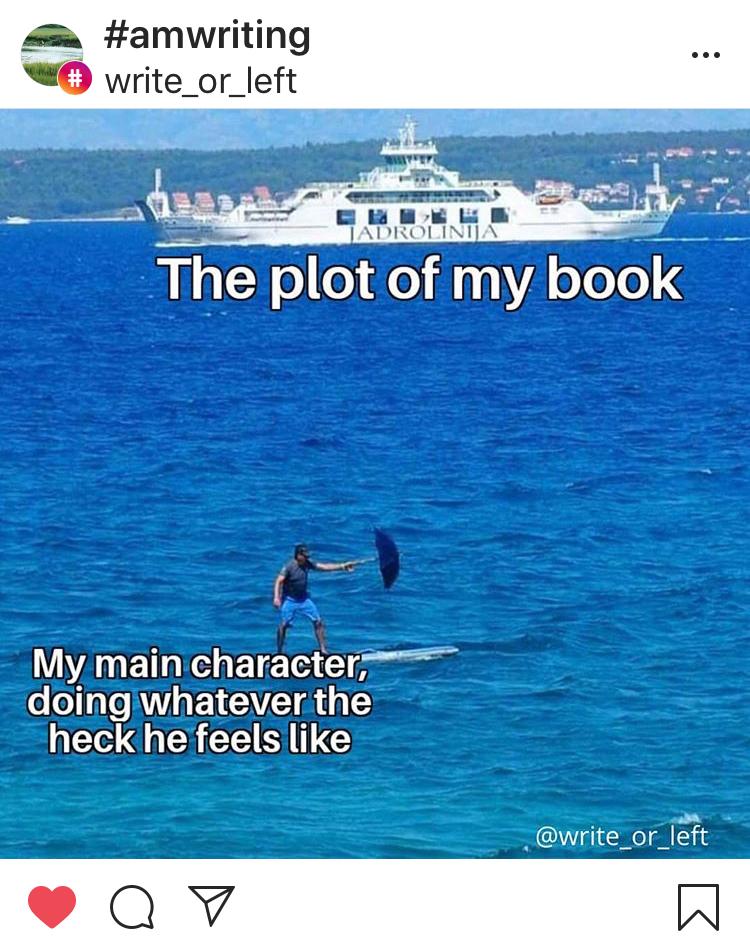
My favorite meme when it comes to character vs. plot:

Found on Instagram

You might be tempted to tell me to do what I want, regardless of what readers will want after reading this book. That is the indie author refrain after all. I’m an indie, I’m going to do what I want to do, but the funny thing is, the indies on Twitter who say that the loudest also lament about how low their sales are. I could do what I want and let this be another standalone, or I could put my brain to work, think up a few things for these characters, and give my readers what I know they’ll want after they read this book.

Managing reader expectations is important. When they pick up your book based off an ad because you targeted a similar author, and they see your cover, your blurb, the title, they are going to expect certain things. The novel’s content will nudge them to expect certain things. If you’re writing about a group of friends, chances are each friend is going to have her own book–especially if your novel is tagged a Book One, and you indicate it’s part of a series. Your readers will expect that. Writing Book One and then never writing another book–I’ve seen authors do that. They might as well not even have published for all the good that did. So, if I set up for my characters to have their own book, then I should give them their own book. I nag about this topic too much, but Nora Phoenix has a great blog post about this very thing, and you can take a look at it here.

As an extra tidbit, even word count can make a reader happy or disappoint them. You should be well-read in the genre you’re writing, should know the tropes, general feel, and how long the books usually are. A great way to see how long a book is is to use this website Wordcounters. There you can look up a book or better yet, an author, and get an idea of their average book length. Some of the top billionaire romances right now range from 80-110k words per book. Some are longer, but very very few are shorter. The authors I looked up also have their books in KU, so I’m going to guess that a lot of them write with that in mind. Romance can go all over the place, but a lot of the novellas I see now are written to fit between books as extra content, and the main books are full-length novels. All of you know that I’ve been trying to write a reader magnet for my newsletter, and it would be great if I could write a shorter book for that. I’m trying, but first person takes up a lot of room, and my shortest book I’ve written since changing POVs is 74k, my longest, 97k. I still don’t know what I’m doing, but maybe one day I’ll figure it out. I need a plot for a 50k novel I can write in week, please and thank you.

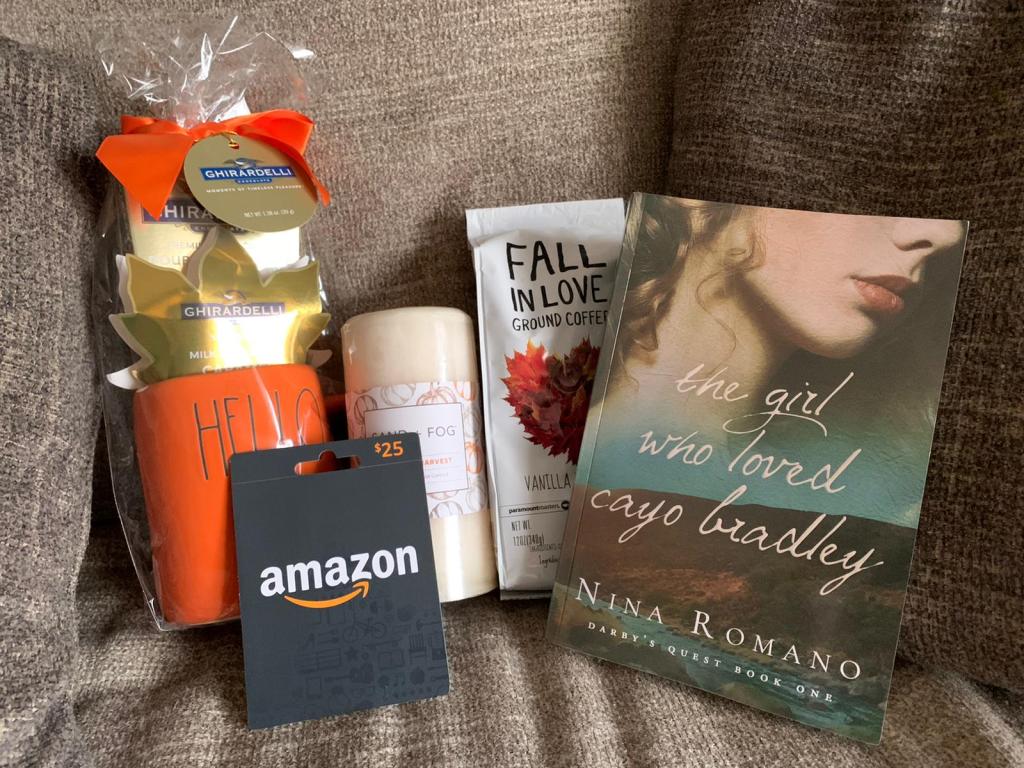
My giveaway I’m hosting for Nina Romano’s interview ends Wednesday, the 10th of November. You can read her interview and enter to win this gift basket full of fall goodies and a beautiful paperback copy of her book, The Girl Who Loved Cayo Bradley. I’ll ship anywhere in the United States and I’ll brave the post office to ship to Canada.

Hello Fall, orange mug with chocolates, a $25 Amazon gift card, Pumpkin candle, Vanilla Nut ground coffee and Nina’s book.

What am I loving right now?

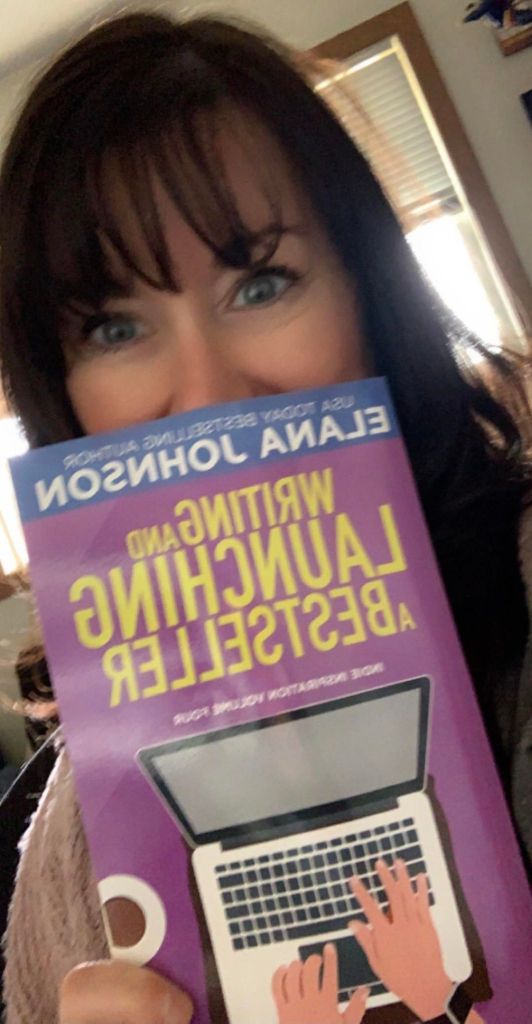
I’m reading Elana Johnson’s Writing and Launching a Bestseller.

Usually when I read stuff like this, it’s just them preaching to the choir, but I’m hoping she can give me some good ideas on how to launch my books next year, too.

I think that is about it from me. Things, I suppose, will be quiet around here until after the holidays. I’ll be writing and relaxing, and I hope you will be doing the same!

Until next time!

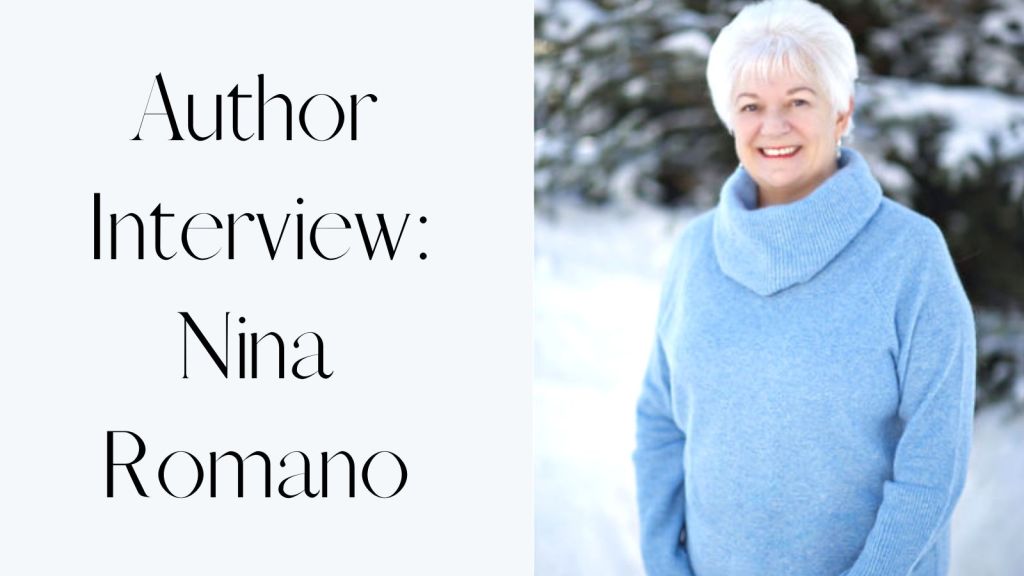
Author Interview: Nina Romano

I got to know Nina on Twitter, and when she asked if I would interview her for my blog, I was all in! I’m so excited to share this interview with you! I hope you find something valuable in the interview I did with Nina. Thanks for reading!


You’ve been writing and publishing for many years. Do you have any advice for an author just starting out?

When I was starting to publish, I used to submit poems and short stories, nonfiction pieces every Friday. That was the day of the week I stopped writing and did the “business” end of writing. So pick a day to submit and make sure you send your writing out somewhere. This also can be a query to an agent, editor, or small publisher.

How do you keep the energy and momentum going over such a long period of time?

Each writing project brings with it a different set of problems to solve and research to be done because I mostly write historical fiction. It’s these various unresolved complications that spark interest.

I must say, I read a great deal of fiction, and when I read a well-executed novel, this, too, will boost my momentum and energy. With each new novel I write, I try to obtain a higher level of commitment to the piece in hopes that it’ll be more unique and render a better one than my last. I’m not in competition with anyone but Nina Romano.

We always say writing and publishing is a marathon, not a sprint, but what does that mean to you?

It’s the long haul dedication to excel, and with everything I write, I find challenges which in the short term equal the sprint and might be accomplished rather quickly. However, it’s the persistence to meet each task with the accrued knowledge from past experiences which aid in finalizing a new more difficult piece of writing. I never make it easy on myself—what would be the purpose of that?

Your books have won various awards, and I think that’s something a lot of authors, indie and traditionally published, hope for. Congratulations! I think what every author would like to know, myself included, is does winning an award help with sales, or do you find it’s a personal achievement?

Thank you, Vania. I can’t really say that winning awards or making it to a finalist category in a contest helps with marketing books. I can attest to one thing—it’s a lovely satisfaction to know you have a winner or at least a mighty strong contender. It gives you confidence to continue to attempt achieving a degree of excellence. 

You can’t win a race if you don’t participate—I think some authors are either afraid to put themselves out there for contests or perhaps it’s another issue—these contests are expensive, and that may be a super drawback to many fine authors. (My note: Poets and Writers has a great list of contests and you can look at it here.)

I’ll bet there are many people writing today who just want to write—uncaring of prizes, awards, commendations. But the world we live in doesn’t afford us the luxury to do just that. It’s a competitive world, so we must endeavor, struggle, and strive to do our best. A finalist or first place win in a particular category is merely someone’s pat on the back saying, you’ve succeeded. But it’s a lovely accomplishment and we must celebrate all the accolades we can garner. It especially helps to remember these on a dark day when you receive a negative review! 

You are published by various publishing houses and presses. Can you tell us a little bit about what went into submitting and them ultimately publishing your books?

This is a loaded question—I could write an entire thesis on it. At one point I had an agent.  To secure that agent I wrote eighty-four query letters.  We went our separate ways, but I always knew I wanted a traditional publisher. For years, every Friday I would send out poems, short stories, nonfictions pieces, articles, blogs, parts of novels to literary journals, small magazines, and blog sites—in print and online. It’s relatively easy to publish individual poems and stories.  When I had enough poems and a theme, I put them together and made collections—how?  I began to write poems or revise them to fit the theme, which I then submitted to publishers. I did the same with stories. I submitted five poetry collections and one story collection to small, independent publishers, and they were accepted and published.

When it came to novels, I did things differently. Some of my novels grew out of short stories that I had published. I took back the novel, Lemon Blossoms, from the agent, and it became the second book of my Wayfarer Trilogy. I worked backwards and wrote the prequel to that novel: The Secret Language of Women. It took me nine years to get that manuscript into the shape I wanted. I then submitted the manuscript to three small, independent, traditional publishers. I received a letter after a week from Turner Publishing saying they wanted to publish the book. I then sent them Lemon Blossoms, which was accepted, and I was under contract with them to write the third book of the trilogy, In America, which was a great challenge because I had to do it in one year.

Can you give our readers any tips on successfully submitting a manuscript?

Make sure the manuscript is in the best possible shape it can be before submitting—that means completely edited and flawless with regards to research. I had many readers for all of my books—some critiqued for me and others only read. You can never have too many pairs of eyes on a manuscript before you decide to submit it. If a writer doesn’t have good readers, they should pay a professional editor.

Never assume or think that because an editor or a publisher asks for a partial or the entire novel that it will be accepted.  It’s an exhilarating feeling, but by no means is it the gold ring on the carousel ride. At one time, I had eight agents reading one of my novels—not one took me as their client.

Don’t get discouraged. I could paper all the walls of an entire bathroom suite with rejections.  A rejection is only one person’s subjective opinion.  Read the rejection for any positive points to see if you can correct a flaw in the writing. Then, repackage the piece and submit it elsewhere.

I was told years ago that you have to have twelve to twenty submissions circulating in order to get picked up. Never waste time waiting for a single response from an agent or publisher.  SEND! SUBMIT! REPACKAGE! MAIL OUT! And keep on doing it till someone sees the kernel of gold in your writing.

I am by nature a tenacious individual. I worked hard in school, but never quit and have four university degrees to prove it. I worked hard at writing and never quit, and that’s what every writer who wants to publish should do: work hard. Today, things are easy—you can self-publish.  Amazon has a plethora of self-published books. Do they have merit? I can’t guarantee that. The old saying is: “Everyone has a story,” but that doesn’t mean everyone can write a story. My mentor John Dufresne used to say—if you can do or be anything else but to be a writer—do it. I took many writing workshops and seminars, attended numerous writing conferences, readings, author presentations and writing panel discussions. Writing is hard and not all succeed at it.  But what is success, anyway?

Success for me is the thrill of someone reading one my novels. I’m doubly thrilled if it had for the reader an aspect of universality and hit a core with them and they wrote a positive review. My books haven’t made the BEST SELLERS list of the NY Times and they may never. Are the books of intrinsic value? Do they merit being translated into other languages—I believe so. Are they novels I’m proud to say that I’ve penned? You bet they are! And are they books that could be turned into a screenplay and be made into a movie? Yes, if someone with inclination and imagination decided to, that’s also a possibility. Writing abounds in a world of possibilities—it’s what you make of it. So my advice is this: persevere. Be persistent. Never give in or give up.

There is so much that goes into writing, publishing, and marketing. What do you find to be the most challenging?

Marketing. Without a doubt. You can spend a fortune on a publicist—which I did and it didn’t pay off! I lost the advance payment of two novels! I say: don’t bother. You can take out advertisements that are costly but won’t be worth it—in fact, you can lose your knickers and won’t even break even. You can spend hours on social media and it’ll amount to the same thing—zero sales. And what’s worse it’ll be time taken away from your writing, or finding other ways to sell books.

What works? Word of mouth! And for me, personal contact with people almost always pays off. I’ve taught seminars and workshops at writing conferences, attended book fairs, given readings, presentations, and appeared on panel discussions. For me to garner sales is when I have a connection with people.  Put me in front of an audience, a classroom full of eager future writers, or a group of readers and something clicks—I’m a people person and I don’t have an introverted bone in my body. 

You’re re-releasing The Girl Who Loved Cayo Bradley. Can you tell us why you decided to make changes and if someone is thinking to re-release a book what they can expect and what to look out for?

I had originally wanted to publish this book with my new publisher Speaking Volumes, LLC.

Unfortunately, their acceptance came right after I’d already signed a contract with a small, independent publisher. The contract ran for three years and then I had the option of taking back the rights, which I did.  I resubmitted the manuscript to SV. Why did I do it?  The first publisher only wanted one book, whereas Speaking Volumes wanted a trilogy. In my mind, that’s a no brainer! Done deal!

But that’s my experience.  Everyone else will have a different spin on why they would switch publishers, or re-write and release a book. I did a great many edits on this book, but it happens that sometimes when you fix something, another problem will arise. I hope the end product will be a finer one then was first published.  I know one thing for absolute positive certain—the cover is a knockout and I’m hoping that readers will think the material contained therein is also!

What a gorgeous cover!

I try to tailor my questions to the authors I’m interviewing, and I noticed you have given quite a few interviews! Can you give our readers any tips on approaching a blog or website and asking them to promote you and your novels?

I have been asked to write guest blogs and do many interviews, which are always fun and help give an author visibility. Some even help promote books, and although I’d like to say that sales improve, there are never any guarantees.

I’ve even approached people directly, like this interview with you, Vania. I asked you if you’d be interested in interviewing me. My advice is be polite and straightforward, and don’t take a “no” personally. If the answer is negative—just try someone else.

Is there anything else you’d like to add to the conversation before we wrap up?

I want to thank you, Vania, for these provocative questions and your valuable time. I very much enjoy talking about writing and books—so this was a great pleasure. My hope is that a writer who reads these questions and answers gains some personal insight they can put to good, practical use.


Thank you, Nina! That was amazing! I’m sure everyone who reads this will find something useful that they can use for their own writing and publishing careers. I love it when we can support and help each other!


Read on for Nina’s author bio and all her social media links:

Nina Romano earned a B.S. from Ithaca College, an M.A. from Adelphi University and a B.A. and an M.F.A. in Creative Writing from FIU. A world traveler and lover of history, she lived in Rome, Italy, for twenty years, and is fluent in Italian and Spanish. She has taught English and Literature as an Adjunct Professor at St. Thomas University, Miami, and has facilitated numerous Creative Writing and Poetry Workshops at Writing Conferences throughout the States.

Romano has authored a short story collection, The Other Side of the Gates, and has had five poetry collections and two poetry chapbooks published traditionally with independent publishers. She co-authored a nonfiction book: Writing in a Changing World, and has been nominated twice for the Pushcart Prize in Poetry.

Nina Romano’s historical Wayfarer Trilogy has been published from Turner Publishing. The Secret Language of Women, Book #1, was a Foreword Reviews Book Award Finalist and Gold Medal winner of the Independent Publisher’s 2016 IPPY Book Award. Lemon Blossoms, Book # 2, was a Foreword Reviews Book Award Finalist, and In America, Book #3, was a finalist in Chanticleer Media’s Chatelaine Book Awards.

Her Western Historical Romance, The Girl Who Loved Cayo Bradley is a semifinalist for the Laramie Book Awards.

Her novel, Dark Eyes, an historical thriller set in Soviet Russia, is forthcoming in 2022 from Speaking Volumes, LLC.

Amazon Author: https://amzn.to/2SUamoF

The following three books are in hard cover, softcover print, and Kindle:
Amazon: The Secret Language of Women https://amzn.to/2MQZpNC
Amazon: Lemon Blossoms https://amzn.to/2TWqzYt
Amazon: In America https://amzn.to/2Hl2VzT

The following book is available in softcover print and Kindle:
Amazon: The Girl Who Loved Cayo Bradley https://www.amazon.com/dp/1645405397
Barnes & Noble: https://www.barnesandnoble.com/w/the-girl-who-loved-cayo-bradley-nina-romano/1130663914?ean=2940161021804

Goodreads: https://bit.ly/3vCJ871

Twitter: https://twitter.com/ninsthewriter
@ninsthewriter

Facebook: https://bit.ly/2BFi38l

BookBub.com: https://www.bookbub.com/profile/nina-romano