Putting a Price on Writing and Publishing a Book

1,998 words
11 minutes read time
person wearing sneakers standing next to stack of books (only feet and books are visible). text on cream square overlay says putting a price on writing and publishing a book

This is an age-old question: How much does it cost an author to write and publish a book? This comes up a lot because after the book is finished, edited, formatted, the cover made and blurb written, paying for book set up on a distribution site then paying them for said distribution, authors would like their money back.

But, unfortunately, that isn’t so simple.

Before I started writing, I used to run. I’m not sure how I even started, but it got to the point where I was running six or so miles a day, five or six days a week. Running, though while considered free (much like writing), is anything but. I developed tendonitis in my left ankle, and this required buying new shoes every three to four months. I had to buy Brooks Adrenaline, and they were at least $120.00 a pair at the local running store–I shopped a local, small business store. Then all the running clothes, Garmin watches, race fees, gym membership fees to run in the winter if the temperatures and snow were bad, and protein bars, shakes, and other health food, I was spending just as much or even more to run as I do right now running my book business (pun not intended).

Then we have to factor in time. At my peak, I could run six miles in an hour. I never really got better than that, and that was fine. Having a new personal record (PR) was fun, but nothing I worked toward. After that hour or so of running, I had to cool down, stretch, then shower. And sometimes I would go longer than six miles, especially in the last year or two when I trained for a half-marathon. When you’re not very fast, running ten or eleven miles takes a long time. While my kids were in school and I did the longer runs on my days off, running could easily eat up most of my morning.

I mentioned all that because I wanted to give you a real life example of why I understand, and not only understand, but I’m okay with, spending money on my book business. I spend a lot that could be considered a “waste.” Two websites, paying for things like a Red Feather promotion on a standalone book (no read-through, you see), paying the Goodreads fee for their giveaways, a business email even though I don’t run a newsletter anymore, author copies and postage for reviewers who prefer paper, Bookfunnel for distribution of my reader magnet and ARCs. When I started writing instead of running, all my running money kind of shifted into this new hobby, and I didn’t think much of it at all. It was just something I had to do. New shoes to stay healthy, check. Websites to look legit, check.

But, writing costs more than just what it does to your wallet, and that’s mostly what I wanted to talk about. There’s an old adage that says, “If you don’t spend money, you’ll spend time,” and that’s especially true in indie publishing. On top of everything I listed above, indies pay for a lot of things, and if they don’t pay, they have to learn how to do those things themselves. There are free tools to format your book, like Reedsy and Draft to Digital, but there’s a learning curve to get familiar with even the simplest software. Then you have to learn a different kind of software like Canva or Bookbrush to make graphics for marketing.

Posting those graphics isn’t easy, either. Learning the algorithms of a platform takes a lot of trial and error. Not all social media platforms are the same, and their audiences respond to different content. Some authors cross-post which can work, but not often. I’ve never been a big fan of cross-posting, mostly for that reason. So we have to learn all the quirks of each platform so our posts are seen by at least some people. Then we have to learn ad platforms and those are changing all the time. Just when you think you have things figured out, they change the way you have to put an ad together and it can eat up hours of your time relearning where everything is.

When we spend time writing, learning craft, being a good literary citizen by helping others, reading in your genre, and marketing, we are not doing other things like spending time with family and friends, chores, errands, taking the dog for a walk or playing with your cat. There’s an emotional trade-off happening, and it can make you feel guilty when you want to work on your book but you’re pulled in the opposite direction. Lately I’ve been a victim of this. Our cat Pim, who has been with us since June, knows I’m a sucker. When I’m trying to write, she’ll come into the bedroom, sit near the bed, and stare at me. She’ll stare at me until I get up, go in the living room, and play with her. Her favorite thing is chasing after a crumpled up piece of notebook paper. Sometimes she’ll bring it back in a cute little game of fetch. Her previous owner didn’t tell us she liked to play this game–he might not even have known–I figured it out because I took the time to get to know her. So, she definitely knows that if she stares long enough, she’ll get me off my butt. But, that’s a half an hour or forty-five minutes I could have been writing.

Here she is for the cat tax:
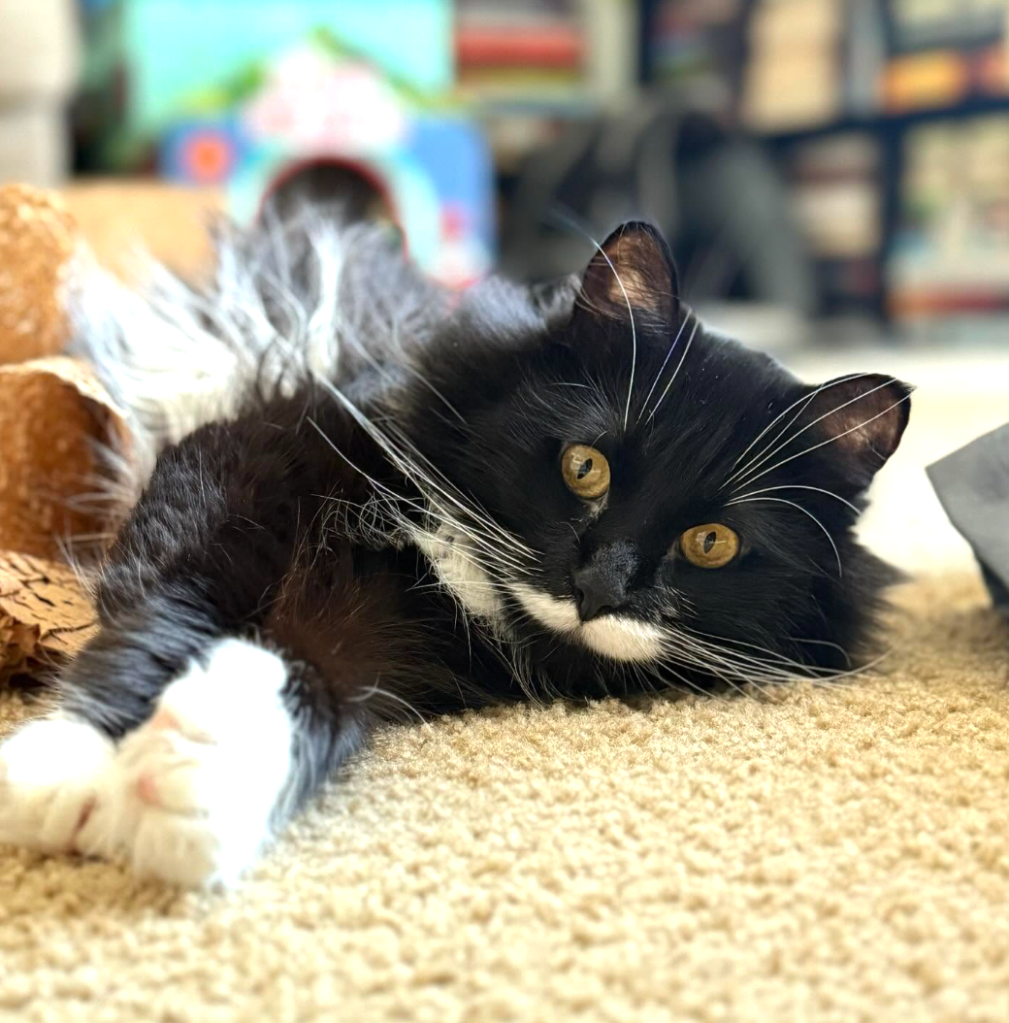
black and white tuxedo cat lying on the floor staring into the camera. amber eyes, brown carpet

This past year I’ve been trying to let go of the urgency I feel when I’ve spent too much time away from writing, and it’s been happening more and with changes at my work. My writing time has been cut in half, but my personal obligations have stayed the same and so there’s a push/pull that happens when I want to write but want to do other things too, like play with Pim, go to a movie, or go for lunch with my daughter. Over time this can create an emotional toll that we don’t even realize is there.

So, when we talk about how much it costs to write and publish a book, there are hidden expenses we pay that can’t always be calculated.

But the same holds true for “getting our money back.”

At the beginning of 2025, I made peace with the idea that my books would never turn into a full-time income. But when your sales dashboard is all zeroes, it’s good to remind yourself that positive return on investment (ROI) can be just as hidden as the emotional costs of writing and publishing.

Here are some of the things I’ve gained since I started writing ten years ago:

The skills you learn along the way
There’s no denying that even with my BA in English, my writing and editing skills have significantly improved. I’ve read quite a few self-editing books since I started my indie journey, edited for friends, and of course, written millions of words. There’s no way I could have gotten ROI like that without actually doing the work. I’ve developed an eye and can make passable, if not decent, book covers. I’m getting better at writing ad copy (thanks for nothing, TikTok!). All those things add up to valuable ROI, and I know this because without my time in the indie trenches, my resume would look pretty bleak.

Being part of a community
I know I’ve bemoaned the state of the indie community–it seems like deteriorated along with Twitter after Musk bought it. But I know that my opinion is valued because I get thousands of hits on my blog every year. I’ve made friends and connections these past ten years, even if more people have fallen out of my orbit than have come into it. Runners, as well, have a strong community, and when I was still running but had started writing, I was in both and that was the best feeling in the world. In fact, I thanked both communities in my acknowledgments in the last book of my running trilogy, Running Scared. In that book, my MMC isn’t part of the running community but he falls in love with a hardcore runner who is hired to be the city’s university running coach.
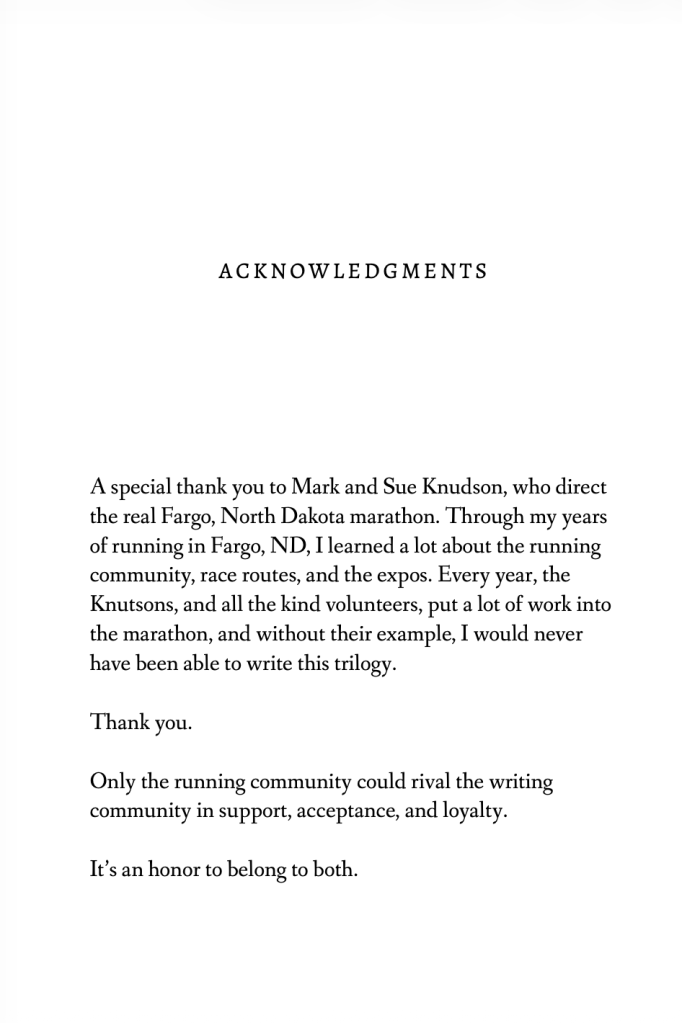
ACKNOWLEDGMENTS
A special thank you to Mark and Sue Knudson, who direct the real Fargo, North Dakota marathon. Through my years of running in Fargo, ND, Hearned a lot about the running community, race routes, and the expos. Every year, the Knutsons, and all the kind volunteers, put a lot of work into the marathon, and without their example, 1 would never have been able to write this trilogy.
Thank you.
Only the running community could rival the writing community in support, acceptance, and loyalty.
It's an honor to belong to both.

I miss being a part of the running community, but being an indie is very rewarding too.

Emotional Satisfaction
In running circles there’s a saying, “You only regret the runs you didn’t take.” I don’t think that can be so easily applied to writing, but I know that if I have time to write and don’t, it’s the same guilt factor. There’s an emotional satisfaction to lacing up, just like there is when you sit down, stay off socials, and use an hour to put 1,000 words down. I know for me and most other authors there’s nothing better than opening up that envelope and holding a proof of your book baby in your hands. You worked hard in more ways than one to get to that point in time, and you should always be proud of yourself.

Long-term Impact
Two years ago, the director of the Fargo, ND marathon, Mark Knudson, whom I mentioned in my acknowledgements above, died when he lost control of his bicycle and was hit by a truck. The running community was devastated. He had put so much time into getting the Fargo Marathon off the ground, and for his life and contribution to be so suddenly ended was traumatic for everyone who knew him.

The longer you’re in the writing community, the more impactful that time is, even if it doesn’t feel like it. The time you spend blogging, helping other indies, and of course, the books you write, all contribute to a lasting legacy.

Writing and publishing a book has concrete, evident costs, money and time, and also hidden ones like hits to your mental health, lost time with family and friends, and choosing to write rather than do something else you also enjoy like watching TV. But there are more rewards than just sales and KU page reads.

So, when we’re asked, “What’s the cost of writing a book?” The cost is higher than most of us imagine, but the rewards, like skills, connections, creative satisfaction, and legacy, are far richer than anything you could ever report to your accountant.


I only have a couple weeks of my “Favorite Things” segment left, and this week I’m highlighting a new self-editing book by Angela James. I love a good editing book, and I cannot wait to dig in. This is her bio on her website:

Helping fiction authors build strong stories—and stronger careers

Hi, I’m Angela James. I’m a #1 New York Times bestselling indie editor and author career coach with over two decades in publishing. I help authors write better books and build sustainable, satisfying careers—on their own terms. Whether you’re indie, trad, or hybrid, I meet you where you are and help you get where you want to go, using clear editorial feedback, coaching, and frameworks that support both your storytelling and your career growth.

Together, we create stories that connect with readers, and an author business that works for you.

Edit Your Way: (Plot Twist: Forget the Writing “Rules”) is available from your favorite retailers (AKA, wide). Here’s the Amazon link and book cover: https://www.amazon.com/dp/B0G63FR1Q8 (This is not an affiliate link.)
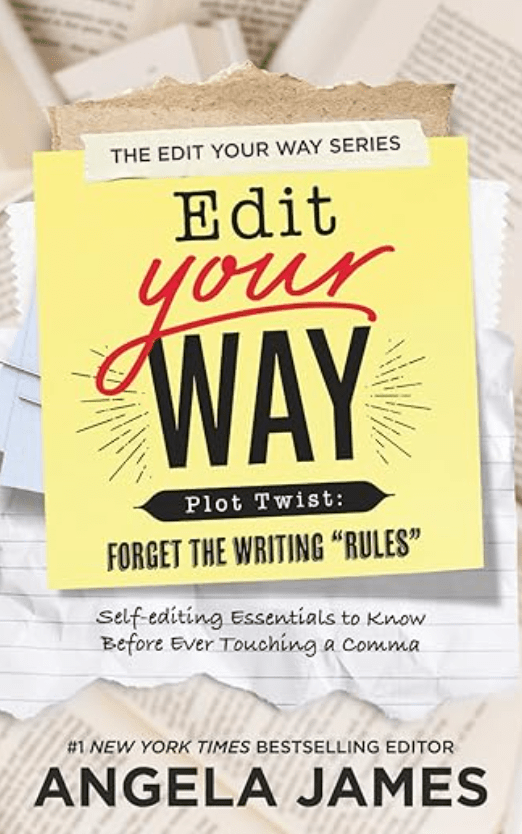
book cover.  text says. edit your way plot twist; forget the writing "rules" angela james new york times best selling editor

That’s all I have for this week. Next week I’ll do an author update and the week after that, my year-end recap. It’s hard to believe this year is almost over, but the timing for the other two blog posts works out perfectly.

I hope the holiday season (and all the cold temperatures!) haven’t been too hard on you. Have a good week and I will see you next Monday!

When Dumbing Down Your Writing Isn’t Dumb

1,419 words
8 minutes read time

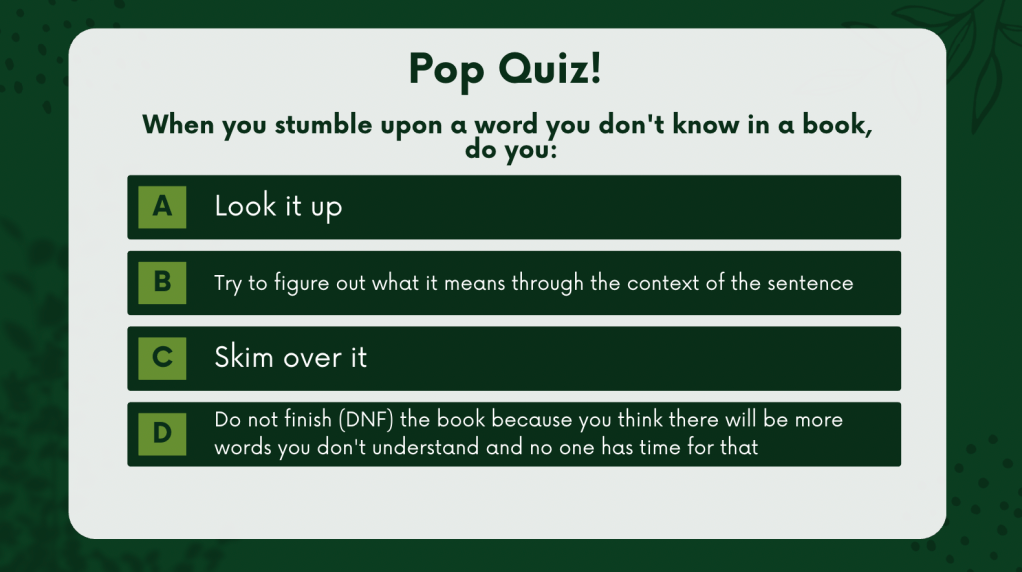
Pop Quiz! 

When you stumble upon a word you don't know in a book, do you:

A) Look it up
B) Try to figure out what it means through the context of the sentence
C) Skim over it
D) Do not finish (DNF) the book because you think there will be more words you don't understand and no one has time for that

green background with grey letters

If you’ve kept up with what I’ve been doing lately, you’ll know that I’ve been re-editing some older work. I’ve said in the past you can’t go forward if you’re looking back, but sometimes the road to success isn’t a straight line and I’ve been happy with my decision to polish a couple of books that I published a few years ago.

What I’ve discovered is that I have/had a very pretentious way of writing, and when you’re writing commercial fiction, especially romance, that might not be a good thing. We’re told to write how we want to write, that readers will come back for our voice and style. But what if that style isn’t good? What if what sounds “natural” to you sounds like a dictionary and a thesaurus had a baby to your reader?

The average adult reading level in the United States is 7th to 8th grade according to The Literacy Project (https://www.sparxservices.org/blog/us-literacy-statistics-literacy-rate-average-reading-level), and that can impact how readers read your books. Readers don’t want to struggle to understand what your book is about, sift through complex words when something simpler would suffice do, or get bogged down in purple prose that doesn’t do anything to move the story forward.

That doesn’t mean every “big” word is bad, but it does mean that maybe using a “big” word when a simpler word would work just as well is the way to go. The problem is, making that conscious choice to swap out, say, adept for skilled seems like a cop out and maybe even disingenuous insincere if you have a big vocabulary and using those words is natural.

I certainly didn’t mean to bog down my books with words like “lambaste,” “derision,” and “ramifications” but those words were there in my head because, well, they just were. Unfortunately, too much of a good thing is bad, and thrown all together, A Heartache for Christmas sounds like I was trying too hard when really, I was writing what came instinctively.

But then we get into what would fit the character rather than what sounds easy. I write billionaire (for the most part) and that implies my MMCs are educated, sometimes disgustingly so (you don’t want to know how many degrees Rick Mercer has in Captivated by Her). They’re smart, they earned their money, and making them sound like a redneck who dropped out of school in sixth grade wouldn’t fit. So yeah, Sawyer might use words like “palpable” and “derision” but that’s part of who he is.

The trick is to make your characters sound like themselves while also staying true to your voice, but also keeping in mind that your reader just wants to have a good time reading your book.

Here are some of the sentences I found when I was re-editing A Heartache for Christmas and what I changed to make the sentences more relatable and easier to read.

Original: He was adept with the tow but he didn’t give off mechanic vibes.
Changed: He was skilled with the tow but he didn’t give off mechanic vibes.

Original: It goes against everything I am as a gentleman, as a decent person, to let McLeod berate Evie for attending the festival.
Changed: It goes against everything I am as a gentleman, as a decent person, to let McLeod chastise Evie for attending the festival.

Original: McLeod’s State Bank never would have worked with me on a payment arrangement.
Changed: McLeod’s State Bank never would have worked with me on a payment plan.

Original: Gray lambastes me for having the audacity to show my face at the festival, even when I try to defend myself.
Changed: Gray tears into me for coming to the festival, even when I try to defend myself.

Original: Alone in the quiet, the shakes set in, the ramifications of what Billy could have done to me if Sawyer hadn’t checked on me hitting me in the gut.
Changed: Alone in the quiet, the shakes set in, the reality of what Billy could have done to me if Sawyer hadn’t checked on me hitting me in the gut.

Original: I miss her and I should have invited her up to my room even if she would have declined.
Changed: I miss her and I should have invited her up to my room even if she would have said no.

I think you get the idea. Some aren’t so bad, like “arrangement” versus “plan” or “berates” versus “chastised.” You can say that maybe “chastised” is no better than “berates,” but when it comes to how familiar or common a word is or how conversational it sounds, choosing the one that sounds more relatable to readers will always be the best option. The thing is, the “best option” will vary by author to author and book to book.

So, I don’t think it’s necessarily dumbing own your prose or your language when you exchange one word or phrase for a simpler word or phrase. What you’re doing is:

  • Using clear, common words that almost everyone instantly understands.
  • Keeping emotional beats from getting buried in overly fancy phrasing.
  • Making the writing feel “invisible,” letting the story, not the language, have the attention.

I read this article by Shane Snow–I’ll link it at the bottom–and he says:

I did an informal poll of some friends while writing this post. Every one of them told me that they assumed that higher reading level meant better writing. We’re trained to think that in school. But data shows the opposite: lower reading level often correlates with commercial popularity and in many cases, how good we think a writer is.

He goes on to say,

We shouldn’t discount simple writing, but instead embrace it. 

I think this is why we’re so hard on books that do well when we think they aren’t worthy. They’re written simply, letting story and emotions shine through, and as writers who are trying our best, we think that’s not good enough when to the average reader, it’s what they want and what makes a bestseller.

That’s not to say you can’t use “big” words, just use them sparingly because as with any spice in any dish, too much can ruin the flavor. I think that might be where I was at with the standalones I’ve been re-editing these past few weeks, especially Faking Forever. It’s nothing I thought to watch out for, and I did have a beta reader read A Heartache for Christmas and she didn’t say one thing about any words that sounded out of place.

As for what I’m going to do now, after discovering my penchant for love of words that fit but don’t fit, of course I’m going to be paranoid my other books sound like that. I spot-checked my proof of Loss and Damages and that came out fine as far as I could tell. Rescue Me is okay. Faking Forever and now A Heartache for Christmas will be okay. I’ll have to trust that my King’s Crossing serial sounds good because there’s nothing I want to do less than read those again. My rockstars are okay. I lightly re-edited them not long ago but I haven’t updated back matter or uploaded the new files in KDP. I’ll get around to that sometime. At this point, I’m going through what probably all authors go through, and that’s being obsessed with perfection. Well, maybe not that specifically, but I want my books to be the best they can be, and after the last few years of not feeling well and craft improvement just because I’ve been writing, I’m worried that they aren’t.

Like I said in my last blog post, I’m learning how to relax, but when it comes to “big” words, I’ll have to be conscious of using them because it’s just natural. I’m not bragging I have a big vocabulary, in fact, I’m probably pretty average compared to other writers when it comes to the words I know. Still, the words I use aren’t needed, at least, not as often I do. The trick will be to find a happy medium between my style and toning it down but still sounding like me.

Pop Quiz!

When you’re in the zone which word do you reach for?

  • Exacerbate
  • Aggravate
  • Worsen

That will be up to you, but I know which one I’ll use going forward . . . and it’s not the one I can’t spell.

Have a good week, everyone!


Shane Snow’s article: https://shanesnow.com/research/data-reveals-what-reading-level-you-should-write-at

Monday Musings: ARCs, Goodreads, and Writing While You’re Sick

1,906 words
10 minutes read time

I’ll tell you a little story. In our city, our Walmart is located in a poor neighborhood. I would imagine when they built it, they didn’t intend for that to happen, but as the city grew, it became a poor part of town. Since then, theft has increased. You can tell it’s increased because of the way they treat their customers. They have security walking around their store (I know who he is because I worked with him many many years ago when I was checker at K-Mart), they lock up everything that has value, from laundry detergent to pregnancy tests, and in the cosmetics department, you have to pay for anything you want before you leave. They don’t let you pay at the main checkout counters anymore.

They treat you like you’re going to rob the place the second you step foot in their store. And you know what? It sucks. It sucks being treated that way. I mean, I get it, they probably do lose thousands of dollars in product every year, and that will continue to happen as things get more expensive and companies don’t want to pay their employees.

The sad part is, I’ve seen authors treat their ARC readers this way. Changing one word in each copy to “catch” someone pirating, watermarking their copies, making them sign NDAs. Sometimes we forget that we need them–ARC readers don’t need us. Treating them like they’re guilty before they do anything is kind of, I don’t know. I left another Facebook group the other day because I got into a discussion with someone who was trying to prevent theft. At first she said her post was about ARC readers then she changed her story and said she was doing a giveaway on Instagram, mostly, I think, because I told her treating ARC readers like they’re guilty before they even do anything is nasty and unnecessary. No matter how you’re giving out copies of your book, treating readers like they’re going to steal from you will only make you look petty and mean. Your book will get pirated. The potential is there for it to get stolen, but the stories I hear of that happening? Other authors are doing the stealing, not plain old, every day readers who want to help you.

I’m glad I left that group, but I’m sure I’ll see it again. I don’t like being treated like I’m going to do something before I’ve done it. I don’t like being accused when I’m innocent. And neither does anyone else. If you feel that strongly about protecting your work, don’t give out ARCs. Don’t do giveaways and don’t publish because the second your book is on Amazon, it will get pirated.

And as Forrest Gump says, “That’s all I have to say about that.”


Once again I had to go through the wonderful process of contacting Goodreads to move Loss and Damages from my “fake” profile to my “official” one. I don’t understand how my “fake” profile isn’t allowed to exist, but it does, and every time I publish, I have to contact Goodreads and have them move my book. This time I contacted support rather than a Librarian and they actually took my “fake” profile down, so maybe the next time I publish a book it will move over correctly without me having to do anything. They were great about it and did it in a couple of hours. I should contact a Librarian and change some of my old covers too, but dealing with Goodreads is a necessary evil, and I try to do it as little as possible.


I’ve been re-editing some older titles, and I think I mentioned that in my last blog post. Since then I finished Faking Forever a couple days ago. Now I’m reading it over just because I made so many changes that I’m looking for mistakes in my edits.

I’m trying to think back to when I was writing that book, or Rescue Me for that matter. Most of my books I wrote between 2020 and 2024 were written while I wasn’t feeling well. I wasn’t myself, dealing with my lichen sclerosis when I didn’t know what it was, getting a hysterectomy that I’d find out later wouldn’t help and only cause me post-surgery issues, and breaking up with my fiancé who did nothing less than catfish me into thinking he was a decent human being. I look back at that time in my life, and I just wonder if those things didn’t effect how I wrote, because I have to say, Rescue Me didn’t sound too terrible, but Faking Forever sounded like shit. My word choices, my writing style, it all sucked, and I can really tell that I wasn’t in a good frame of mind. I just wasn’t.

When I was re-editing Faking Forever, I practically rewrote the whole thing. Not on a plot or character arc basis, but on a sentence and paragraph level. I took out over 1,000 words when I re-edited Rescue Me, and I took out almost the same in Faking Forever. It makes me sad because looking back, maybe I shouldn’t have been writing. Though, I don’t know what I would have done with myself if I hadn’t. Those four years I was undiagnosed, my doctors lying to me, prescribing treatments that wouldn’t help, I was in a really bad place mentally. I had anxiety. We were going through COVID and lockdown and I was trying to support my daughter who started tenth grade virtually.

I’m feeling better now. In 2024 I got a diagnosis. I stopped taking the medication that had side effects. I stop drinking the tap water that was making me nauseated and messing up my digestion. Most days now I don’t think about how I feel physically. I can push what’s left into a corner of my brain and ignore it. But in doing so, that leaves my mind open to a lot of other things, and I can see in my writing how stressed out I was.

This makes me feel horrible, because in 2020 I started my pen name in an effort to do everything “right.” I wanted to turn my books into a career, but I sabotaged myself and starting a pen name or trying to do any kind of “real” work not feeling well only backfired. I have a lot of books out. My Lost & Found Trilogy. My Cedar Hill Duet. Those are the first books I published. Since I published them, I’ve edited them, but I edited them when I still wasn’t feeling well, and well, unless I read them again, I have no idea how they would sound to me now.

I can safely say that my other books are okay. I just reread my rockstars and I like how they sound (except for a couple of typos here and there that are normal). I’m lucky I did the final sweeps of my King’s Crossing serial when I was feeling good. That would have been a monster of a project to re-edit and I’m confident I don’t have to do that. Rescue Me and Faking Forever are fixed, or close to it. I’ll edit A Heartache for Christmas after I upload new files to KDP for Faking Forever, just in time for the holiday push this year. Then, maybe I can feel in a good enough place to write new work. I felt good writing Wicked Games earlier this year. I edited Loss and Damages (coming out next month) when I was feeling good.

Where does this leave me? I’m cleaning up my house, literally and figuratively, but there’s a lot of time gone by. I don’t want to say wasted. I can’t. Writing was there for me when my world was pretty much falling part, for lack of a better way to describe it, but I don’t want to sound melodramatic either. I can write new books knowing I’m giving my best to the story and the characters and nothing is holding me back or distracting me.

A friend told me to give myself grace. That if my writing is better today it’s not only because I’m feeling better but because I’ve put a lot of words on the page. That might be true. I know I learned over the past year to spot some writing tics that I’ve been able to avoid in newer work. I’ve learned to relax, not only just to enjoy the writing, but my writing style and my voice. Who cares if I use “get” or “put” or “takes” or a little telling slips in there sometimes? My writing sounds stilted because I was trying to avoid garbage words, and honestly, with the books out there that are selling like ice cream cones in 90 degree weather, you’re better off just saying “fuck it” and write in a freer manner than trying to conform to rules that will only make you sound like cardboard.

But this also circles around to my not having an editor. I’ve broken probably one of the most important rules in publishing. Not even just indie, but publishing in general. There are a lot reasons why I haven’t. I mean, I used to, back when I first started, but my productivity was so much that I would never have been able to afford one for every single book anyway. And I’ve had this argument with myself and others before: an editor can’t teach you how to write. They can only make better what you’ve given them, and if you give them garbage, you only get better garbage when they’re done.

Likely, an editor wouldn’t have been able to do much with Faking Forever. It was my voice, my style as a whole, that had problems. Fox’s and Posey’s character arcs are solid. The plot is fine. It just read like crap and I’m not sure what an editor could have done. Marked every sentence and suggested I rewrite it? And even if that had happened, I’m not sure I could have. Not how I was feeling.

So, I guess the best thing I can do is move on. Write more, enjoy the process now that I can. Celebrate my improved health. Go back if I feel like it, and I probably will at some point. Re-edit my Lost & Found trilogy and my Cedar Hill duet. Those would be the last books I’d need and then I could say all my books are okay. But I don’t want to be re-editing forever either. I’d like to write something new, but I’m going with my instincts and right now after getting Faking Forever out of the way, giving A Heartache for Christmas one final read will make me feel better. I like Evie and Sawyer anyway, so going back won’t be a hardship. I’ve read bits and pieces since I published them and I already know that book doesn’t sound like Faking Forever did. Maybe I was in a particularly nasty frame of mind when I wrote Faking Forever, I don’t know. All I can do is take the good from that time in my life and leave the bad.


I’m still getting used to the restructuring my work did last week. Only time will tell if it will effect how often I can blog, but I love sharing bits of my life and news with you so I’ll do my best not to let it impact me too much.

Have a good week, everyone, and I’ll chat with you later for sure.

Editor Interview: Kimberly Hunt

I met Kimberly on Twitter some time back, and I’m a member of her Facebook group, Revision Division. We’re also members of Romance Editor Q & A since I do a little editing myself and keep up the skill not only for my own books but for those I edit for on the side. I appreciate Kimberly’s time, and I hope you enjoy the answers to all the questions she so graciously filled out for me.


Introduce yourself! How did you get into editing and what are your qualifications? What genres do you enjoy editing most?
C.S. Lewis said “You are never too old to set another goal or to dream a new dream.” This is exactly what I did. After twenty years in the corporate world, I took a sabbatical and it shook my world to realize how amazing it is to fill my day with activities I’m passionate about. I have always enjoyed my work and the companies that employed me, so it was jarring to realize I could be happier. Before I set off on a vacation volunteering in Peru, a friend of the family asked if I’d read a novel he’d written. The story was amazing, but I couldn’t get past the number of errors. This was my inspiration to look into copyediting. My natural ability to spot punctuation, usage, grammar, and spelling errors lent itself well to copyediting, so I took courses to start there. My education introduced trusted resources like dictionaries and style guides and working with publishers taught me how to create and maintain a style sheet for consistency. The more advanced courses I took revealed my true passion is earlier in the process, with developmental editing. I love assessing the big picture elements like structure, plot, pace, point of view, and character development to help writers improve their stories. I love editing romance the most but I also enjoy editing women’s fiction, mystery, and psychological thrillers. I’ve edited all heat levels and time periods but prefer steamy contemporary.

There’s the saying that a writer needs to write a million words before they can write something publishable. Do you agree with this? Why or why not?
Whoa, that’s a loaded question without a simple answer! On one hand I don’t agree with the limitations of hitting an exact word count and refraining from sharing your work until it’s perfect. We grow and learn from making mistakes. I definitely don’t think writers should wait for an arbitrary milestone to publish. On the other hand, I agree with the sentiment of the saying where putting in the hours and the work makes for a better quality product in the end. Have you read Malcom Gladwell’s Outliers? He has a point about it taking 10,000 hours to become exceptional at something.

What is the biggest mistake you see indie writers making right now? (For example, info dumps at the beginning of their book, not enough conflict, too much tell vs. show, etc.)
I’ll admit I had to give this question some thought because I see such a wide variety of manuscripts with different issues. Considering both the unpublished manuscripts I edit and the completed books I read for pleasure, I’d say the biggest challenge seems to be related to pace because conflict is tricky. Many authors struggle to create believable conflict that escalates. Each chapter needs a purpose where the complications grow and the consequences are impactful. Many of my developmental editing projects require suggesting solutions for improving chapters without clear purpose. It’s hard to move the plot forward if the reader doesn’t know what the character wants, why they want it, or what stands in their way.

There’s a lot of talk about whether or not it’s necessary to have a manuscript edited before querying. What are your thoughts?
Most of my clients are independent authors, but I have helped several writers improve their story and polish with a copyedit prior to querying. I have more than one data point for authors gaining representation and eventually signing publishing contracts, but I can’t take credit for those achievements. Their storytelling talent far outshines my knowledge of where a comma goes. But as a businessperson who has reviewed cover letters and resumes before hiring someone, that first impression needs to be solid, so editing before querying could be beneficial even if it’s not required.

How do you keep the author’s voice intact while also guiding them with suggestions on how to make their book the best it can be?
Great question! My job is to point out both what works well and areas for improvement. I give suggested solutions in comments or in a revision letter for the more lengthy explanations. Changes made directly in the manuscript are usually corrections to indisputable errors. I reference Merriam-Webster dictionary and the Chicago Manual of Style to support the corrections I propose. When line editing, I tread carefully to make sure I’m respecting the author’s voice while keeping concision and clarity a priority.

Is there ever a time when a book would require too much work? What do you tell a writer whose book isn’t ready for a professional edit? What resources do you refer them to?
This has happened a few times. Sometimes an eager writer finishes that first draft and jumps to the editing stage too soon. Revision and self-editing are recommended in these cases and I often provide resources for finding critique partners or offer to take on the project as a writing coach instead if the manuscript isn’t ready for editing yet.

What advice can you offer an author who can’t afford a professional edit? Are there things they can do to sharpen their own self-editing skills?
Definitely! These tips don’t replace the value of working with a professional editor, but they do offer some cost-savings if you can self-edit as much as possible first. I have a bunch of videos and blog posts on this subject on https://revisiondivision.com/tips but here is my best advice: read aloud to yourself, others, or have Word read it aloud to you. You’d be amazed by how much this trick catches. It will highlight awkward flow and bring attention to missed words and sneaky errors.

As an editor, it’s important you’re honest and give critical and actionable feedback. How do you offer this feedback so a writer doesn’t take it personally?
Diplomacy. I aim to provide valuable feedback through constructive criticism AND praise. By pointing out a writer’s strengths and showing in their manuscript where something works well, they learn and grow. On a scale of one to ten, with one being a Positive Pollyanna and ten being brutally honest, I’m probably a moderate four. I’m a professional and my training emphasized how to provide actionable feedback tactfully.

Are there any other tips or thoughts you would like to add about editing or publishing?
Adding on to that last question, I’d like to encourage writers to expect good and bad feedback. But they shouldn’t react right away in order to avoid an emotionally defensive response. Edits can be overwhelming. After initially receiving feedback, it’s a good idea to set it aside and digest. See what resonates and come back to it later to make a plan for revisions. Most importantly, do not give up.

Thank you for this opportunity to talk about something I’m so passionate about. 😊


Thank you, Kimberly, for your time!

How to find Kimberly:

Website: https://revisiondivision.com/
Twitter: https://twitter.com/RevisionDiv
Instagram: https://www.instagram.com/revisiondivkimberly/
Facebook Group: https://www.facebook.com/groups/2376033425801031

Working on your craft: Can you publish without an editor?

So, there was an interesting question that came up in one of my Facebook writing groups, and essentially, she asked, Can you really make a living publishing without an editor?

Considering that’s what I’m trying to do with my new pen name because I can’t afford to hire out, it piqued my interest.

All the answers, as you would imagine said, of course you need an editor. I was the only one who said, not so fast. There are a lot of variables when deciding something like that, and some of the questions I threw back at her were, How long have you been writing? Have you ever gotten feedback before, like, ever? Do you have a good memory to keep track of your own (in)consistencies and details? If you don’t know how to write a catchy beginning, avoid a saggy middle, create interesting and meaningful character arcs, and know your grammar and punctuation backward and forward, then you’ll probably need help. (It also helps immensely if you know what you don’t know and have the wherewithal to look it up.) During the first couple of years when decided to try write books to publish, I needed help, and I did use editors and beta readers. That was back when I had a large circle of friends who were willing to trade or charge very little and we all came through for each other. Now most of those friends are gone, and I’m alone. I said in my post, if you’ve written enough words to find your voice and style, then you’re one step ahead of most newbie authors. I’ve edited for a few new writers, and no amount of good editing will fix bad writing. The writer first has to give you something to work with, and if s/he doesn’t….

If you, or the original poster of that question, are looking for an easy way out, there isn’t one. Writing is like any other skill and it takes practice and a knowledge of the genre you’re trying to write in.

I admit, I love a writing craft book, and I read them all, but some of them get too formulaic, and I can’t follow. I tried reading Save the Cat! Writes a Novel: The Last Book On Novel Writing You’ll Ever Need by Jessica Brody, and it just wasn’t for me. (She also has a blog that you may find helpful.) The way Jessica broke down a novel’s components made my head spin. Another book I’ve read, (though not recently) is Romancing the Beat: Story Structure for Romance Novels (How to Write Kissing Books) by Gwen Hayes. Romance authors a million times over swear by this book, but I just couldn’t make it work for me. And it’s not because I’m a pantser and want to write as I discover the story. I’m a plantser, and have a general idea of how I want the story to go, what the characters’ backstories are and their emotional wounds from their pasts that haven’t healed and how they affect their futures, which is what any romance book is about. But turning writing into a formula, or consciously chopping up my plot into the three act structure is really difficult for me to grasp and I can’t do it. The only two things I do with regards to planning that way is making sure something happens at the 50% mark to avoid the saggy middle (the Mirror Moment as James Scott Bell calls it), and breaking up my characters around the 75% mark, because that’s most what romances do. To be honest, them breaking up and thinking all hope is lost is my favorite part of any romance, and I would do it anyway.

When you’re a new writer, betas or developmental editors are valuable. They’ll tell you where the story drags, if you’ve rushed your ending, if your characters have no substance, and over time, if you listen to their feedback, your writing will smooth out and you’ll start to include those elements naturally. I don’t think any writer who is writing a debut novel will have all that figured out, never mind having written enough to find their voice and style. It’s why whenever I see a writer saying they are querying their first ever book, I say good luck, because chances are, your book will sound like you’re a brand new writer, and an agent can’t sell that.

It’s really not fair, because a lot of good writing comes from gut instinct, or following an intuition that you’ve honed over a million words. You develop your own formula based on genre expectations and how you twist those reader expectations to make your tropes fresh and new. All that comes with practice and listening to feedback.

Once you have your voice and style down, once you know you can deliver to your readers, then yeah, I think you don’t need an editor, not someone who will deep-clean your manuscript, though it does mystify me how many people get angry when I say it. (I even left a Facebook group over it.) I don’t know if it’s because they resent having to use an editor, or are just defensive of indie publishing as a whole and how much crap is published on, let’s face it, a daily basis, or what. I really don’t know what makes people so mad when I say it, but that doesn’t make it less untrue. Besides, no one has any idea how hard someone will work not to need an editor. I read craft books like crazy, read in my genre (though not as much as I should) and write. Maybe that’s the issue people have? They aren’t writing? Look, it doesn’t matter who you are, you need to practice to get better, and that goes for anything you want to try to master. Olympic gold medalists have been honing their skills in their chosen sports since childhood. Same as musicians. But I suppose if you have twenty hours a week to write, and you’re talking to someone who only has five free hours a week, yeah, maybe there will be a little resentment there. I write a lot. I don’t have many friends, I work from home, I don’t go out much. When I’m not working, doing chores, running errands, or going to Tuesday movie night with my sister, I’m writing. That’s not something I’m going to apologize for, and neither should you if someone is giving you a hard time.

In reality, it’s a moot point, anyway. I know 6 and 7 figure authors with one-star reviews that say they needed an editor, when I know that hiring an editor is part of their publishing process. You won’t please everyone, so you might as well be honest. If you need help, get help, and if you can write a good story without help, don’t worry about it. You can’t achieve perfection, and I’ve already said this will be the last time I go through my 6 book series. I will ALWAYS be able to find something to change, but I need to let them go. I’m tired and I have many other stories in my head that I want to get onto the page.

So, how do you make your writing better, level up so you don’t need an editor?

Read a lot in your genre. A lot of developmental editing is finding those tropes and elements that make your genre what it is and helping you meet those reader expectations. You won’t know what those expectations are unless you read a lot in your genre. I know this stinks like writing to market, but every genre, be it romance, domestic thrillers, detective novels, have elements that you can’t leave out or you’ll just make readers mad. Writing a good story is all about the overall picture as much as knowing where your commas go.

Listen to feedback early in your career. When I first started writing again, it took me a lot of feedback to find my groove. My very first beta who volunteered pointed out all the “justs” and “thats” and that was my first lesson in filler words. That was a great start to learning what I was doing wrong. Another beta/editor told me to trust my readers because I had a habit of “reminding” them of what they’ve read in previous chapters. That was another great lesson, and one I still apply today when I find myself rehashing information. Repetition is tedious and boring. Echoing was another thing people pointed out to me, and I still do it, and it’s part of my editing to delete or replace repeated words. That’s one of the reasons why I’m going through my series again when I thought I was done. Because I found a couple of words that I used over and over and over again and I wanted to tighten up my sentences. Those are words I will always watch out for now, and you can make your own list of filler and crutch words to refer back to when you’re creating your own editing process.

Work on new projects. I learned a lot working on different books, and it’s the only way you’ll be able to practice crafting an engaging plot. As Kathryn Kristen Rusch says, rewriting will only teach you rewriting. You need to work on fresh projects to move forward.

Realize it will take time. “They” say you need to write a million words before you find your voice. I think that’s true–I wrote a 5 book fantasy series that will never see the light of day, plus a few novellas, and a book that would turn into book one of my first trilogy before I found my stride. That was in 3rd person past. I wrote a quarter of a million words in first person present before I found my voice in that POV, and I can tell reading through my series. That’s why I was so paranoid editing these books–I wanted book one to sound like book five, and it did take me a few extra thousand words added to books one, two, and three for them to smooth out and sound as good as books four, five, and six.

I feel bad for the beginning writer with no writing friends or money for resources. But as they say, if you don’t have money to spend, then you have to spend time, and that might mean swapping projects with another author who is in the same position as you. That’s not a bad thing. You can learn a lot editing for someone else, so it’s a great idea to join author groups on Facebook and make friends with authors who write in your genre. You’ll get help, and you’ll help others, so it’s a win-win for you and your writing career.

This was a very long introduction to what was supposed to be a list of craft books that have helped me. I linked to Save the Cat Writes a Novel and Romancing the Beat above. Just because they didn’t work for me, doesn’t mean they won’t work for you, and you should definitely give them a try.

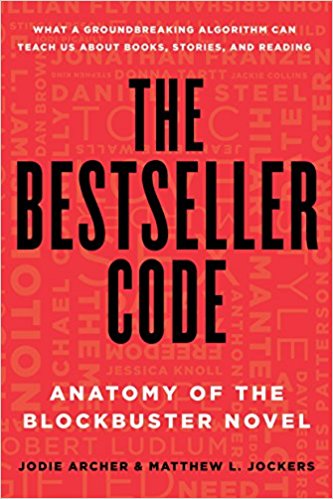
It’s surprising but one of the books that helped me a lot isn’t necessarily a craft book. It’s The Bestseller Code: Anatomy of the Blockbuster Novel by Jodie Archer and Matthew L. Jockers. This breaks down why bestsellers sell the way they do. This might be my favorite book in the whole world because it mixes craft and the publishing industry. I love it. I can’t recommend it enough.

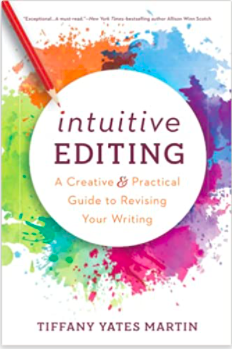
The second book that changed my life is Tiffany Yates Martin’s book, Intuitive Editing: A Creative and Practical Guide to Revising Your Writing. I love everything about this book. She reminded me about conflict, character arcs, character motivation, and stakes. Important elements that, if you skip or miss, will make any book fall flat. You need tension, and this book will help you find it. There’s even a section that mentions other editing resources if you can’t hire out. If you like audiobooks, she posted on Twitter she narrated it herself! (She also blogs, and you can sign up for her newsletter.)

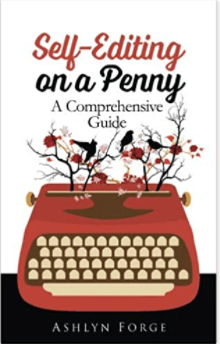
Though I haven’t read it for a long time, it was one of the first self-editing books I ever read, and it helped me a lot: Self-Editing On a Penny: A Comprehensive Guide by Ashlyn Forge.

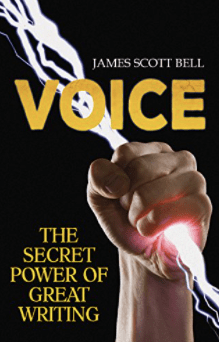
This book made so much sense. It was a real eye-opener, and now I recommend it to every new author: VOICE: The Secret Power of Great Writing (Bell on Writing) by James Scott Bell.

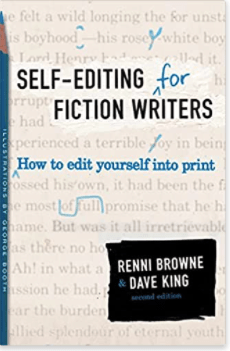
When I went to the Santa Barbara Writer’s Conference a few years ago, every agent in attendance said this book is a must have. I do have it, and it’s a great resource: Self-Editing for Fiction Writers, Second Edition: How to Edit Yourself Into Print by Renni Browne and Dave King.

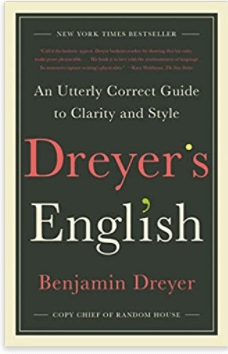
Someone recommended this book to me, and his sense of humor keeps this book from reading like a textbook–it was an enjoyable read, and I also learned a lot: Dreyer’s English: An Utterly Correct Guide to Clarity and Style by Benjamin Dreyer.

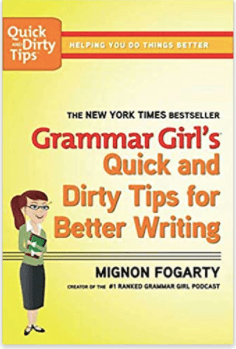
And last, but not least, Mignon Fogarty’s grammar guide is a must have. Written in a light, conversational tone, Grammar Girl is easy to understand, and she goes through everything you need to learn grammar and punctuation for all of your writing projects: Grammar Girl’s Quick and Dirty Tips for Better Writing (Quick & Dirty Tips) (Quick & Dirty Tips)

This post turned into its own animal, and that’s okay. Thanks for reading if you’ve gotten this far. In an age where everything is pay to play, including beta readers, even if you have plans to hire out, making your manuscript as perfect as possible will save you money. The less your editor/proofer has to do for you, the better for your wallet. You’ll never regret teaching yourself as much as you can. I haven’t.

Thanks for reading!

***Per usual, this post does not contain any affiliate links, and the book covers are screen grabs from Amazon.

Monday Musings

Preview in new tab

Happy Monday! laptop with red coffee mug, paperclips and scratch paper that says happy monday
Good morning, and Happy Monday! I think I’m always excited about Mondays because they are my Saturdays, and usually after a morning of errands and chores, I spend the rest of the day writing. I hope anyone who is facing a full workweek starts off with a productive day!

Lots going on in the indie community last week, most of it centered around Brandon Sanderson and his 24 million dollar Kickstarter. Now, most of what I’ve seen on Twitter has been derogatory at best and downright nasty at worst, and it’s really sad that there is so much jealousy when an author finds so much success. I would never speak ill of any writer who has taken the time to build an audience, nurture loyal fans, and deliver on the promises he makes to those fans. Some people on Twitter confused Kickstarter with GoFundMe, which is incorrect. GoFundMe is a site for donations only. Kickstarter is an investment website, and those people support others monetarily in exchange for product after that product has been manufactured. I’ve seen Kickstarters for more than only books–video game developers use it as do board game creators are two off the top of my head that I’ve seen. I got a little crabby with Twitter when I didn’t see one person offer him any kind of congratulations at all. Of course, that’s Twitter, and when I moved on to Facebook where Brandon is doing a lot of what my peers are trying to do, over there the tone changed to awe, support, and viewing what he’s done as motivation for their own careers.

The thing to remember about what Brandon Sanderson did is this: we all have the power to do it. Brandon has been nurturing his career for many many years, and he’s known for writing science fiction and fantasy. You can look at his career as a case study for your own, and see that he was consistent with genre, consistent with output (I’ve heard people say he’s quite prolific), and consistent with quality. If you want to get down on him for treating his books like a business, then go ahead, but there is something to be learned by his success. Maybe a 24 million dollar Kickstarter propels him into outlier status, but it’s nothing he hasn’t earned, and nothing that you can’t aspire to with hard work and dedication to your business and craft. While they aren’t doing 24 million dollar Kickstarters, every genre has its own powerhouse authors, and in the romance that industry that’s LJ Shen, Melanie Harlow, Ava Harrison, Willow Winters, Tijan, Lucy Score, Skye Warren and many others. Some, like Skye, even share what they’ve learned (she’s the founder of Romance Author Mastermind). One of the best author interviews I ever heard was with Melanie Harlow and James Blatch on the SPF podcast. I’ve mentioned her interview on the blog before, and you can listen to it here:

Brandon, too, shares his secrets on YouTube, and you can watch his classes here:

There is no one more generous than a successful writer. They’re always willing to tell you how they did it, but the fact is, it won’t matter to you if you don’t work on your own craft and be flexible enough to change things that aren’t working. Just the other day I saw someone on Twitter say, I ignore all book marketing advice. Okay. Do what you want to do, but the thing is, two months from now, she’ll be whining she’s not selling books.

If you want to read an interesting article about Brandon on Slate, you can look here:

How Angry Should Other Writers Be About Brandon Sanderson’s $22 Million Kickstarter?
Parsing the reactions to the sci-fi/fantasy author’s record-setting campaign.
BY LAURA MILLER


I finally received the email that Booksprout is raising their prices and that there will be no free option for a review plan. It’s unfortunate, and I’m still struggling to decide if I want to pay or not. The decision would be easier if the quality of reviews was better. Some of the reviews from there were just a five star with a three sentence summary of the book. Readers won’t glean anything from a review like that, and when they say that their review was given freely in exchange for a free book, it looks fishy and spammy as hell. I know it’s better for reviewers to say they were gifted the book in exchange for a review, but since there isn’t a free plan on Booksprout anymore, we’re essentially buying reviews, and we’ve always been told that’s not a good idea. Some others in different groups mentioned Voracious Readers Only but that’s also pay to play at $20/month. It may be better to concentrate on my newsletter and build up my subscribers than to invest 240 dollars a year in a review service. At least those readers will be mine and they’ll be happy forever as long as they keep enjoying my books. If you’re interested in the new pricing for Booksprout you can find it here.

I guess that’s all I have for this week. I’ve been formatting my guest blogger posts for next month, and I still have to get Sami Jo her interview questions. Hopefully I’ll work on that today. Right now I’m focused on getting my series edited one more time since I know what I’m looking for now.

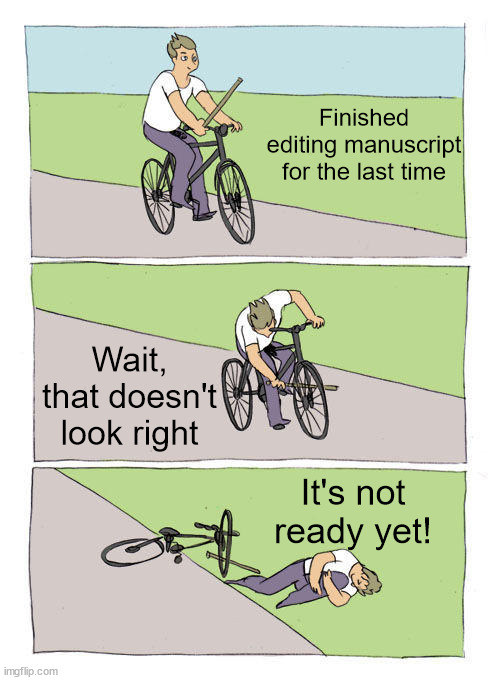
Here’s a funny meme that brings to mind all the times I’ve gone through these books courtesy of @AneAbraham on Twitter:

meme in three parts: first part, cartoon man riding bike, holding a stick with text: finished editing manuscript for the last time. 

middle panel: guy shoving stick through the spokes of front tire with text: wait, that doesn't look right.

last panel: guy lying on the ground with the bike tipped over next tot him with the text: it's not ready yet!

But as they say, comparison is the thief of all joy, and I just finished reading a 75k word Billionaire dual first person POV and I noticed that author, too, like to use the words “take” or “taking.” When I searched my Kindle for the word, she used it over 200 times. Many more than I did in my novel that has 11k more words in it. Do I regret going over my books again after discovering this? Not really. I’m not “taking” them all out–sometimes the sentence just makes sense with it in there, but the sentences I am rewriting sound better, stronger. It’s unfortunate I thought to look though, as the book, according to Publisher Rocket, is set to make $7,000 this month. It just goes to show that what will bother you won’t bother other people, and to write the best book you can and not compare your work to others.

That is all I have for this week!

Comparison is the thief of joy. Text typed over pink and white flower petals.

Negativity in the Writing Community

social media doesn't create negativity, it uncovers it. Jay Baer

posted on a desk with partial view of laptop, notebook, and pen

I am really tired. Not only because of what’s been going on in writing circles, but because my cat won’t let me sleep, and I’ve been approved for surgery at the end of March, which is good news because I need to keep trying to find some relief from what’s going on with me, yet it will cause a lot more work for the next little while. I was really hoping to launch the first book in my duet in April…we’ll see how that goes.

But what I’ve been seeing in the writing community makes me tired, too. Namely, tweets like this: (And no, I don’t feel bad for showcasing them here. If you’re putting something out on social media, expect for it to be shared. Period.)

My books ARE edited. By me.

I wrote my own blog post about that a long time ago, once upon a time believing that indies who didn’t care about what they published brought us all down. But the fact is, it’s not true, and it will never be true. Because I’ve realized this: Instead of looking at Amazon as a retailer, look at Amazon as a distribution center. You still have to create and store a good product, you still have to drive traffic to your book’s product page, you still have to keep the promise you made to your reader and satisfy your customer with the content. All that is on you.

So, why do indies take quality, or lack thereof, so hard? So personally?

I would guess it’s fear. Fear that they are going to put so much money, time, and effort into a book that will sell a handful on launch day and then sink in the charts. There is nothing more disheartening. Nothing. While a book that (and this is subjective, anyway) isn’t written as well, will sell like gangbusters for months, maybe years after its release. This happens. Of course it happens. Why do we still talk about Fifty Shades even though that book is 10 years old? Or Twilight? People hated Twilight so much that they ran Stephenie Meyer from social media. Writing and being on social media in a writing community capacity wasn’t on my radar back then, but I saw in real-time what the writing community is capable of doing when they bullied a poor agent after she tweeted her preferred book lengths guideline. It was atrocious, to say the least. Fifty Shades of Grey was fine; it still is fine. Ask Erika how her sales are of the books written in Christian’s POV. She’s not crying in her tea. So is the Twilight saga–it’s fine. Midnight Sun has sold over a million copies. The authors who are bitter may never find that level of success, but that isn’t something that you should shove onto other authors in your community. Your, ummm, peers?

Will poorly written books sell? Of course they will, and this fact is what drives splinters under people’s fingernails.

Now, I can get crabby at authors the same as everyone else. When I hear the, “I’m an indie author and I can do what what” mantra, and then in the same breath, “Why aren’t I selling any books?” Yes, I get crabby at those people. Very rarely can you have it both ways.

I just don’t understand why anyone needs to put that kind of negativity out there in public. There are bad indie books. Books full of telling, head-hopping, plot holes, poorly edited because let’s face it, editing is expensive, but no one is forcing anyone to read those books. Like Nicole says further in that tweet thread, maybe those authors shouldn’t expect to sell books. Maybe they shouldn’t, but it’s none of my business. I learned a long time ago not to buy a book because it has a nice cover on it–anyone can make one in Canva. I have to read the blurb, make sure it’s properly formatted, and I have to read all of the look inside Amazon makes available before I buy a book. And listen, if you buy a book and you don’t like it after the first couple of chapters, return it. Why keep it? You wouldn’t keep any other product that’s broken after you bring it home from the store. Maybe that advice won’t go over well, but I view books as products, and I don’t keep things that are broken. I’m too poor for that. Yes, I’ve had my books returned. No, it didn’t hurt my feelings. I simply didn’t care.

This topic is near and dear to my heart, because when authors like these decide to spew censure all over Twitter, I am one of those authors they hit. I have never, ever, been afraid to tell you that I do most of the work on my books alone before I publish. All alone. And the fact is, I’m not in the minority here. When everything, and I mean, EVERY SINGLE THING in this industry is pay to play, and you are broke, what in the heck can you do? You can still be a real author and not pay for a developmental edit, a copy edit, and a proofer, and a beta reader after the fact. That’s ridiculous and will cost you thousands of dollars. Do beginning authors need more help than an author who has written twenty books? Maybe. Probably. But I also know authors who have an extensive back list and their books are boring and/or have other technical issues, either because they haven’t gotten the feedback they needed earlier in their career, or they think they are good writers and aren’t open to feedback.

No one can predict what will hit and what won’t. What book will fill a need at the right time, what will hit with a trope or a feeling or a theme. That’s why there are sleeper hits. Any book at any time can explode. Do you have a better chance if that book is properly edited, has an exciting look inside, with a great (and legal) cover and fantastic story? Sure, but it’s not like authors intentionally publish books without those things. We all launch to the best of our ability, and my best won’t be the same as someone else’s best. There are are people who will always be better or worse than you. I have a degree in English with a concentration in creative writing. Someone else could have an MFA. Someone else could have flunked high school English. Those things are not indicative of success. And to be honest, it’s none of my business what degrees you have or not. Maybe you have 100,000 newsletter subscribers like Lucy Score, or maybe you have a little money and can run some Amazon ads and buy a newsletter promo and hope Amazon’s algos help you out. Maybe your book gets picked up by popular TikTokers. Colleen Hoover’s books are having a moment because of TikTok.

Generally speaking, there is more wit than talent in the world. Society swarms with witty people who lack talent. -- Antoine Rivarol

printed on desk with partial view of laptop, notebook, and pen

The point is, tweets like the ones up above aren’t necessary. If you’ve been burned by an author, indie or otherwise, tuck their name in the back of your mind, don’t buy from them again, and move on. While I was reading Billionaire when I decided to pivot, I read a lot of books. Some were really really good, and some were not that great. And I understand the frustration. A lot of those not-so-great books? They were outselling the books I enjoyed. By a lot. A lot has to do with who the author publishes with. Some are full-fledged indie authors, some were published by Montlake–an Amazon imprint. But that just makes it even clearer that there is so much that goes into a bestseller that trying to hit it is futile.

So stop ragging on other authors. Do your best, and hopefully one day it will pay off.

The end.

Are Editors the Next Gatekeepers? Some people want them to be.

The one thing we say most about independent publishing is it has completely taken away the gatekeepers. You can publish anything you want, whenever you want, all you need is a properly (sometimes not!) formatted file and a good cover (sometimes not!). We all know that there are lot of good books that are indie-published every day. We also know there are a lot that aren’t.

I left another FB group the other day. The conversation turned so stressful that I was in a bad headspace all day. It’s hard to shake things off when people attack you for what you believe. What was it I said? I said some indie writers are good enough not to need the whole buffet of editing: development edit, copy edit, line edit, and a proofreader. That’s all I said, and I still stand by that. An author who is on book 30 is not going to need the time and attention an author is going to need publishing her debut novel. They simply aren’t. The craft is there, the skill is there, the experience is there. Two editors took my words the wrong way, or they were just spoiling for a fight, and tore into me.

Of course the conversation turned more ugly when price became a topic because everyone in the industry knows that editing is the most expensive part of publishing–especially if you do need the whole smorgasbord before you put your book out there–and the editors were defensive. I’ve never said an editor shouldn’t be paid what he or she is worth. I’d never devalue an editor’s work like that. You’re paying for a skill that they’ve (hopefully) honed for years. An excellent editor can take your lump of coal book and turn it into a diamond, I get that. On the other hand, not everyone can afford it, and they didn’t seem to understand that.

I agree with the belief that you shouldn’t publish until your book has been edited, at least by SOMEONE, but it’s also discriminatory to say that no one should publish at all if you can’t afford it. That’s gatekeeping all over again.

I didn’t point out in my exit rant that the people saying this were affluent white people who have the disposable cash to hire an editor. I’m white too, but I’m poor. I can’t afford a $2,000 development edit. I simply can’t. That’s three and a half months of rent. I do the best I can with the resources I have, and I will never let anyone insult me for it.

One of the big questions that come up when discussing editing fees is, why do editors cost so much? It’s not because each individual editor is trying to rip you off (though some are better than others, so ALWAYS ask for a sample and make educated choices). There’s an association that offers guidelines as to how much freelance editors should charge their clients. Editors/beta readers like Kimberly Hunt, the paid beta reader I referred to in my feedback blog last week, adheres by this association, and you can look at the pricing structure the Editorial Freelancers Association recommends. She, and many other editors, are charging the standard. Some editors who freelance on the side may charge more depending on where you’ve found them. Professional editors found on Reedsy, for example, are more than I can afford. On the flip side, there are writers and authors who want to start editing and charge a lot less because they are just getting their business going. It would be up to you whether you want to pay less. An editing sweep by a new editor will be better than no editing, but always make informed choices. Don’t just sign with her because you can afford her. And on the flip side of THAT, I wouldn’t pay a new editor the industry standard unless they can provide testimonials and proof that their skills are worth it.

Indie publishing has opened up a whole new world for scammers, and some of them don’t know they’re doing it. (Like the freelance book cover designer who will charge you 50 dollars for ten minutes of time in Canva. They think they’re running a business. I think they’re ripping you off.)

What can you do if you can’t afford an editor?

The obvious thing is to learn your craft inside and out. Learning your craft is a good first step in the editing process. It’s a lot easier to edit a good first draft than it is to tackle a draft that you know has plot holes, flat characters, and verb tense changes throughout. Hone your writing skills.

Then find feedback where you can, and like I said in the feedback blog from last week, listen to that feedback, or you’re just wasting everyone’s time.

And lastly, learn how to self-edit. Put the book in a drawer for a month or two, write something else, then come back to it with fresh eyes.

You can teach yourself to self-edit, and there are a lot of resources out there that will help. You can take editing classes, definitely edit for others (that’s why I do it for free for my friends because it helps me improve) or my favorite (and probably cheaper) way to learn how to edit is reading self-editing books.

Here are my go-tos:

Self-Editing for Fiction Writers, Second Edition: How to Edit Yourself Into Print by Rennie Browne and Dave King

Intuitive Editing by Tiffany Yates Martin

Cover to Cover: What First-Time Authors Need to Know about Editing (Read this book before you publish your book by Sandra Wendel (Hat tip to Jane Friedman for this find on her blog.)

You also should have a firm grasp on grammar and punctuation. No matter who reads your book, be it a paid beta reader or one of the authors you networked with who said they would give you feedback, make it easier for them to read you by knowing your grammar and punctuation. If you choose to pay a proofreader or a line editor, it will be cheaper if they don’t have so much to wade though.

Grammar Girl’s Quick and Dirty Tips for Better Writing (Quick & Dirty Tips) by Mignon Fogarty

Dreyer’s English: An Utterly Correct Guide to Clarity and Style by Benjamin Dreyer

I have all these books; I’ve read all these books. Self-editing is a different skill than learning and practicing how to write good books, but I think they go hand in hand.

I’m glad I left that group, but I wish I would have asked those snobby women what they do to help the indie publishing industry if they so despise what come out of it. Do they beta read for free? Do they edit pro bono twice a year? How are they making a difference? Complaining about the state of indie publishing is only being part of the problem not part of the solution.

I try to help when I can. Maybe my edits aren’t as good as someone with a real editing degree, but I have a Bachelor’s in English with a concentration in creative writing, and I educate myself all the time. I hope that the authors I’ve edited for have gone away with a better book.

Saying an author shouldn’t publish without a professional edit is shortsighted to say the least. Authors are going to publish without an editor no matter what anyone says because they don’t have the disposable income to afford it. Hell, I’ve read some traditionally published books that have read like they haven’t been edited, either. (See my crabby review of Jasmine Guillory’s The Wedding Date novel.) It’s up to the author to learn what they need to learn if they can’t afford an editor and aren’t willing to sell plasma like Jami Albright to hire one.

Readers will always be the new gatekeepers. You, as an author, need to do what you can to keep your readers happy. In the end it doesn’t matter how you go about doing it, only that you do. And if you don’t, your reviews and sales rank will be proof that you’ll need to start doing better. It will be up to you as to how.


Learning Craft + Feedback

On Monday I had guest author Sarah Krewis on my blog and she talked a little bit about the importance of learning craft so you can put out the best book you can when it is time to publish. She mentioned the Centre of Excellence and the writing modules they offered. In a private message I asked her if an instructor gave out critique and she said not in a way that I would probably want, which led to the topic of feedback.

You can learn the craft all you want, read all the books, take all the online courses you can afford, but at some point you’re going to need feedback on your work. We don’t like to ask for feedback because it hurts when we hear that our writing isn’t as perfect as we want it to be or thought it was. But you have to keep an open mind when people are reading your work and be receptive to the idea that your work needs, well, work.

If you want to see a cute little Venn diagram, an author’s process should probably look like this:

This isn’t the best, spacing it out was a pain, but you get the idea. Feedback and reading are just as important as the writing part of the craft. I know authors who read read read and prefer to hide from their own writing by reading other authors instead. I know writers who write write write but don’t ask for one ounce of feedback. Then there are others who thrive on feedback and implement every single little change, but then that leaves no room for moving on to other projects because they’re looking for perfection they probably aren’t going to find.

I’m not perfect–I don’t read as much as I should, but I am open to feedback and I hired my first professional beta reader this month.

Where you do find feedback? Before the pandemic, looking locally was easy. A call to your public library probably would have hooked you up with some local writers and maybe a NaNoWriMo group that met up at a coffee shop on Thursdays. But since everything has moved online and to Zoom meetings, it might be a little harder for you to find something in person. That might not be a bad thing for us introverts, but putting yourself out there is the price we pay when we said we wanted to be an author.

If you want a professional opinion, hiring a paid beta reader may be the way to go. They will give you more than “It was great!” They dig into story and characters. I’m using Mary Dunbar, and you can find her website here. She doesn’t list beta reading prices because she said she’s just been thinking about adding it to her list of services. Contact her through her website and ask if there is way she can help you with what you need. She’s an editor, too, and she critiques queries. I’ll be blogging about my experience with her in later blog posts. Another paid beta reader that I may use in the future is Kimberly Hunt from Revision Division. I’ve gotten to know her on Facebook and she’s gotten positive reviews. You can find her website here.

But if you’re a newbie writer, you may not be ready for paid services, and that’s okay. That’s where networking and forming relationships with your fellow authors comes in. It’s really important that your beta readers read and write in the genre you’ve written in. That way they can identify the tropes and tell you if you’ve hit the mark or if you’re too far off the path to keep your readers happy. There are a lot of FB groups that you can join and once you get to know a few people you can put it out there and say that you’ll beta read in return. As the diagram above shows, beta reading for someone else can be just as valuable as the the feedback you’ll receive.

What are some tips when it comes to finding and accepting feedback?

  • Know what you want. A beta reader reads your book after it’s finished. Some will point out typos, grammatical errors, etc, but you may not be in a place for that and just want general feedback. Let your beta reader know you want overall feedback like plot holes and character arc opinions and advice. An alpha reader reads as you write it, say chapter by chapter. They make sure you’re steering your ship in the right direction and can catch inconsistencies as you go along ensuring by the end of the book you don’t have a huge plot hole making you scrap half the book. It’s up to you and what your skill level is at and what you feel you need.
  • Remember you don’t have to take everything to heart. If you already know your plot, you don’t have to accept advice that’s different, unless you like it and think it will make your book better. We all have ideas and you can give six writers a writing prompt and come back with six different stories. It’s always going to be your book, but if your beta spots a plot hole and you choose not to fix it, that’s on you.
  • Don’t have too many opinions. Too many cooks spoil the broth and this is true for your book. Find one, two, maybe three betas in your genre that you trust that you know are good writers and listen to what they have to say. You don’t want to be overwhelmed with opinions. On the other hand, if they all have the same problem with the same thing, then you know that’s something you have to pay attention to. I’ve seen some authors confuse beta readers with ARC reviewers. While your beta readers may leave a review down the line, beta readers are not readers who receive an advanced copy of your book solely to leave a review. Two different readers.
  • If the relationship is not working, don’t force the issue. For whatever reason, you may not mesh with your beta reader. That’s fine. I wrote a blog post a long time ago about what to do if your business relationship with a friend goes south. You can try to be amicable about it, but hurt feelings comes with the territory. You never want to burn bridges in this industry because while it seems large, thousands and thousands of authors who publish every day, this is really a small industry and we all know each other. Word gets around and you don’t want to be that person who is known for not getting along with her peers. If the beta is too heavy handed or is too cruel to work with, simply say that you’re going to choose a different route and thank her for her time. An egift card for a coffee shop or 25 dollars to Amazon might ease some ruffled feathers. But be sure that when you beta read for someone that you aren’t the one being heavy handed. We all need kindness when giving our work to other people. It’s fear that keeps us from seeking out feedback in the first place.
  • Keep an open mind. Don’t waste someone else’s time. If you’re not ready to hear criticism, wait until you are. Betas, paid or for free, are giving you their time. Don’t waste it by being in a headspace where you aren’t receptive to their feedback.

If you’re new and don’t know where to look, try Googling writing critique groups. This article by thewritelife.com has a list and you can look at it here.

The Reedsy blog, a blog that I’ve referred to in the past that I trust, also has a list and you can find it here.

In short, writer eduction, feedback, and reading go hand in hand. As Sarah said in her guest blog post, there is no excuse not to keep learning, but you also have to know if you’re applying what you’ve learned correctly otherwise you could actually be unintentionally reinforcing bad habits that can take you years to break.

Good luck!

Where do you find feedback? Let me know!


Got/Get: The laziest words.

I don’t write a lot on craft in this blog. I’ll share editing books I like and tell you over and over again that no matter what you do, ads, graphics, book promotion sites, what have you, if you’re not selling a good book, you’re not going to make it. I don’t mean a well-written book that doesn’t resonate with some readers. You’re not going to please everyone, and that’s just how it is. It’s one of the reasons why I’ve been able to keep going in the past few years of writing. Certain people may not like my stories–I’ve never written a character people hate more than Jax in All of Nothing, but never in any review have I ever read of my work has anyone told me I’m a bad writer. So whether or not people don’t agree with my characters and all their flaws, at least I can hold my head up and know I’m a good writer.

I’m not sure where I was going with that?

Oh, so I don’t offer much craft advice. That really should come from your beta readers, your writing group, your editor. What you choose to take from those people is your own business, and as one editor I know says, “It’s always going to be their book.” So yeah, I don’t like craft advice very much, at least, not giving it.

Lately I’ve been reading more on my Kindle. I pay for a KU subscription and I signed up thinking that I would keep up with my comp authors that way. A lot of romance authors are in KU and it’s always a good thing to keep up with what’s selling. That was my intention anyway, but I paid for a few months of it before I charged up my Kindle and decided I was going to take advantage of my subscription. I read a lot of non-fiction and reading in KU is a lot cheaper than buying paperbacks.

Anyway, so I finished a mystery/thriller the other day. It’s written in first person present, which is why I chose to read it. I’m writing my own stuff in first person present and for me, it’s easier to keep in that POV and tense.

It didn’t take me long to get annoyed. This author really, I mean really, liked the words GOT/GET/GOTTEN. Not short for Game of Thrones, like we associate that word now, but the. . . I guess it’s a verb? . . . got. Gotten. Getting. Get.

She’s got an open black peacoat revealing black slacks and a gray blouse beneath.

When I got in last night, (character name) was in the middle of working on a story.

I need to get to that hospital.

While everyone else has pictures or knickknacks on their desk, she’s got nothing.

I don’t need to do anymore, and it didn’t take me long to find these. The author turns sloppier toward the end of book, like he was tired of writing it and wanted to finish it as quickly as possible.

Maybe it’s just me because that word has already been a pet peeve of mine, but it really turned me off. There are better verbs you can use, and they aren’t hard to reach for–She’s wearing an open black peacoat . . . Even as something simple as changing out GOT for HAS. While everyone else has pictures or knickknacks on their desk, she has nothing. Maybe it’s not any better, creatively speaking, but to me it reads a lot better.

He was able to comb through her devices after we got them from her parents.

It just sounds all around clunky and I’ve hammered it out of my writing. I know how easy it is to slip into easy language, and sometimes that’s all right. But the more you do it the more you can fall into “telling” a story rather than “showing” it. First person is particularly difficult because we’re writing someone’s thoughts, and people’s thoughts are messy and not particularly sophisticated.

And of course, I didn’t tag any dialogue because that’s how how speak. “To make it on time, we have to get going.” “We really gotta go now.” And if you’re speaking to kids, “We really gotta go NOW.”

I’m not blaming this author–I blame her editor for not catching it, or not caring enough to catch the repetitiveness of the word and asking the author to perhaps do a word search of her document and swap out the word where applicable. This wasn’t an indie published book, and unlike some indie where you’re not sure if an editor has gone over the book, this one has. It’s too bad because the word ruined a story I could have enjoyed.

In my own unfinished WIP (67k+) I used GOT 19 times. All but one time is in dialogue. In this particular conversation I used it to express character:

“You got balls, doll, but I guess you’d have to, to lie to so many people for so long. It’s not going to be that easy for you, either, once your secret comes out. What got you into that mess, if you don’t mind me asking?”

Murray Jameson, from an untitled WIP

I can search through that book and find GOT maybe every three pages, and I wanted send out a warning. Words like putting, getting, put, got–those are lazy words and you can do better. If you can’t pull the word you need out of your brain while you’re in the zone, I don’t blame you and you shouldn’t let it derail you. Keep going but make a note, maybe an actual note so you don’t forget, that you’ll need to do a sweep for that word in edits.

I don’t write literary fiction, and I’m not out to be the next Margaret Atwood, but I do want my books to read clean and give the reader a chance to immerse herself into my story. I don’t want sloppy grammar to pull her out.

I got into plenty of trouble after Hannah died.

So easily remedied: I found plenty of trouble after Hannah died.

I know we all have our voices, our own styles, and if you want to use GOT go ahead. There is a time and place for it, and I know that. But too much of a good thing can be bad.

And that is my craft post for the month.

“Got” a pet peeve that you’ve discovered in books? Let me know!