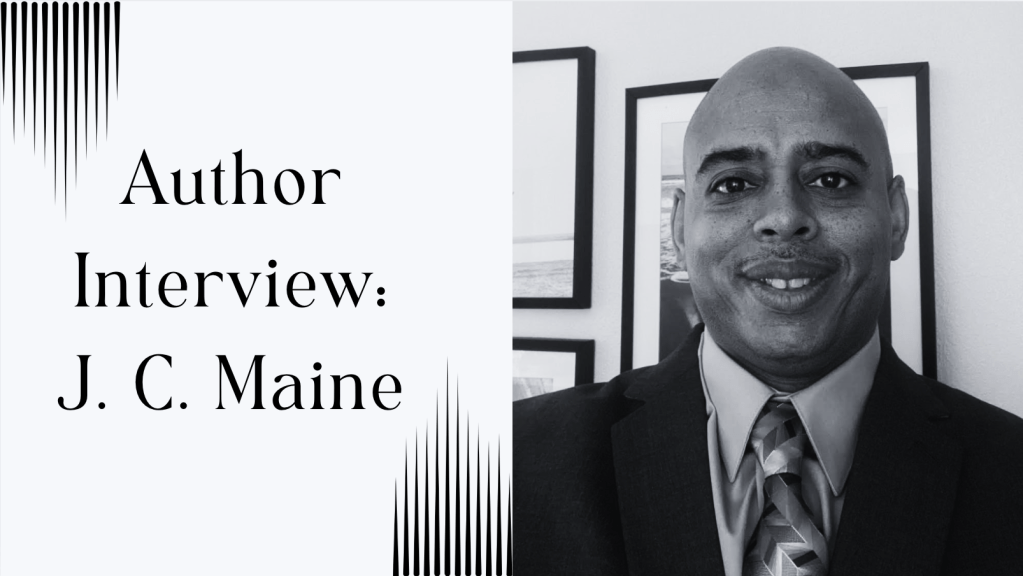
Today’s interview is with J. C. Maine. We met over on Twitter, like most of my online friends, and we managed to stay in touch over the years and a platform change where we reconnected on Threads after I left. I love hearing different experiences with self-publishing and sometimes I learn a little something too. Jump into this short, but sweet, interview!
Let’s talk about social media. Where do you like to hang out and do you find it beneficial to selling books or do you use it only to network with other authors? Most of my time online is spent on Instagram. I think it’s very beneficial for promoting and selling books, because it forces you to be visual. It’s also a good way to network.
You seem to write a little bit of everything. How do you decide which project to write? Whatever moves me at the moment. I was inspired by the dynamic of a real-life couple when I wrote the novel, I Can’t Help It. When Covid-19 disrupted our way of life in 2020, the uncertainty inspired me to write Days of Revelation.
How much of the work that goes into publishing do you do yourself, like formatting, cover design, and editing? Do you like all aspects of it? What is your favorite part? I do my own formatting, and I do the majority of the editing. Occasionally, a beta reader will also help me with editing. I want my book covers to look professional, so I outsource that to someone who specializes in it. I somewhat enjoy the editing. Unfortunately, I’m not a fan of formatting.
What do you think is the hardest part of publishing and what do you do to make this part manageable/affordable/profitable? Definitely the formatting. I have to tinker with it for a few days before I get the inside of my books the way I like it.
Your books are enrolled in Kindle Unlimited. How did you decide to enroll in KU and not publish your books wide? I enrolled in KU because I didn’t want to put pressure on someone who wanted to read my work, but didn’t want to pay a lump sum for it. I write books more for exposure than for profit, so giving readers access to it this way doesn’t bother me. Although there are other self-publishing companies I could use, for me it’s a lot easier to work exclusively for Amazon. Besides, I can always order and sell physical copies of my book.
What are you currently working on and what are your plans for the rest of the year? I’m working on a new thriller. This will be the first time I’ve written a book from a 1st person point-of-view. I’m having fun writing it so far, and I think people will really like it once it’s published.
J.C., I appreciate you taking the time to answer my questions and sharing your experiences with indie-publishing. J.C. is active on Threads, BlueSky, and Instagram, and you can follow him on Amazon and Goodreads.
I hope you all are having a great spring so far, and have a lovely week ahead!
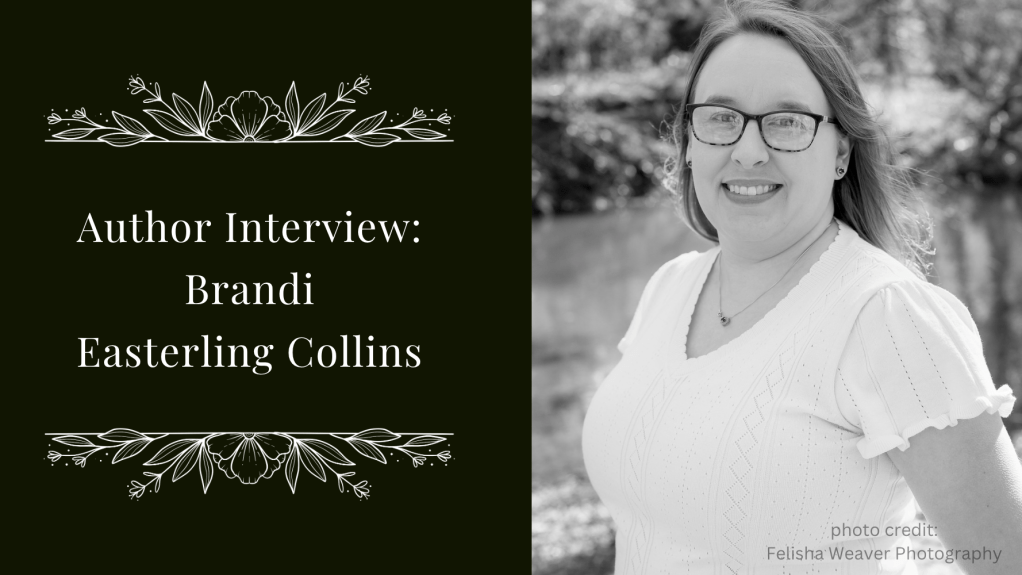
I met Brandi a long time ago, over on Twitter, and over the years we managed to keep in touch. I was really happy when she said she would do an author interview as it gave me a chance to catch up with her. I hope you enjoy her interiew!
You published your first book, Caroline’s Lighthouse, in 2016. How do you think the publishing landscape has changed since then? With so many tools available for indie authors, I think more high-quality indie works are available than ever before. Now is the perfect time for authors to put out quality work as long as they don’t forgo the most important part—editing.
I published my first novel through Archway Publishing, which is fine for someone who wants help. Taking on the process myself has been more fulfilling (and a lot less expensive). After establishing my imprint for my second novel, Jordan’s Sister, I had retained my rights to Caroline’s Lighthouse, so I republished the second edition with Luminesce Publishing in 2018.
You write primarily Young Adult. How did you begin writing that genre? Do you think you’ll write in a different genre, and if you do, what do you think it will be? As a young adult, I read many novels that helped me navigate teenage angst. I write young adult because I want to provide that same enjoyment and help for readers (of any age). I wrote first drafts or notes about all of my published novels when I was between the ages of 13 and 18. The stories have been completely rewritten, but I’d like to think I accurately captured the teenage emotions I felt then. As an adult, I could flesh out the parents and other older characters.
Even now, at 43 years old, I still gravitate toward reading YA novels because they represent a type of journey that just isn’t the same experience you get in other genres. That being said, if I were to venture into another genre, it would be women’s contemporary fiction. My second novel, Jordan’s Sister, and my fifth novel, When Does Life Begin?, are New Adult novels that lean heavily into women’s fiction.
How much of the work that goes into publishing do you do yourself, like formatting, cover design, and editing? Do you like all aspects of it? What is your favorite part? I am almost a one-woman show with my company, Luminesce Publishing. I handle all the writing, editing, formatting, and cover design. Fortunately, I have a day job in content marketing, so I write and edit weekly. Before that, I worked in higher education marketing for 17 years, writing, editing, and managing some graphic design projects.
I have a team of wonderful beta readers who review the second drafts of my manuscripts. A dear friend who is a professional photographer has helped with a few of my author headshots and offered graphic design advice. My amazing husband is a tech guy who helps with website troubleshooting.
You read a lot. How do you balance your reading time and your writing time? Reading is my favorite hobby and lifeline. I read in waiting rooms, during my lunch break, while walking on the treadmill (because it’s boring otherwise!), and before bed to relax. Reading a lot makes me a better writer. My writing time is separate. I typically hit my writing stride between 10 p.m. and 11 p.m. weeknights and late afternoons on Sundays.
What do you think is the hardest part of publishing and what do you do to make this part manageable/affordable/profitable? Selling myself and my work is the hardest part for me. I can praise others’ work all day, but I clam up when I try to tell someone how awesome my books are. I’m proud of my work, so I plan to work harder on advertising in 2025.
This year, I plan to beef up my website, discuss my writing with colleagues and friends, and attend more author events. Since I have very little to devote to advertising, I must make the limited funds count.
Your books are enrolled in Kindle Unlimited. How did you decide to enroll in KU and not publish your books wide? I love Kindle Unlimited because I have discovered so many great authors (including you, Vania!), both indie and traditionally published, through the platform. My paperbacks are published wide, but I was okay with keeping the e-books available exclusively through KU.
[My note: Brandi is the whole reason why I re-edited my Rocky Point Series. She reached out and said she was reading them, and I had a “Oh, crap!” moment. Thanks for the nudge, Brandi! The books are better for it. :)]
What’s next for you in 2025? I plan to populate my publishing company website with writing, editing, and publishing tips for indie authors. Although I’ve owned the domain since 2018, I didn’t do much with the site until earlier this year. Eventually, I plan to open submissions for poetry and short stories to be included in an anthology. It might be 2026 before that happens!
I am also almost finished writing my sixth novel, tentatively titled Four Hearts. The planned publication date is December 10, 2025, my mom’s birthday.
Thanks, Brandi! I really appreciate your time! It sounds like you have a lot going on in the next little while, and I wish you nothing but the best of luck!
We talk about marketing a lot, such as buying promos, setting up a newsletter, networking with authors in your genre to do newsletter swaps, learning an ad platform. Depending on the status of your mental health and how thin your wallet is, you should probably be doing all those things. As Meta buys everything and then enforces guidelines, (no more steamy snippets on Instagram, y’all) it’s getting more and more difficult to use free resources.
Social media could be useful, or has been, but as these company shy away from content they consider porn, or pörn, you run the risk of getting your account suspended, shadow-banned, or simply the algorithms just won’t show your stuff to anyone. TikTok is the worst in its guidelines they arbitrarily enforce, and I can’t remember the last time I even bothered to post a video. With the announcement of the new Instagram guidelines pertaining to sexual content, lots of romance authors are scrambling. Social media isn’t dependable, and hopping from platform to platform won’t do anything, and here’s why. Author problems are not reader problems. Instagram’s policies really don’t affect readers. We get caught up in the author world and forget that readers aren’t always where we are. Yeah, you might be posting hoping to catch the eye of a bookstagrammer, and if that’s part of your marketing strategy, then you’ll be dealing with the change, but for the most part, you can find readers other places.
The one best marketing thing you can do though–we hear it a lot and also ignore it–is to write the next book. There are caveats to that, and I think that’s why it gets pushed aside. If no one is reading what you’ve got, then why keep going, right? I agree to a point, and that’s when you have to make a decision. Learn how to market in other ways or accept that no one is going to read you. BUT, here’s the thing we don’t talk about. If a reader finds you an likes you, having a backlist is the best way to keep them with you.
Here are the reasons why I think it’s always important to be working on your next book despite what’s happening on social media… and your sales dashboard.
Publishing regularly keeps you relevant. There’s not a lot we can agree on when it comes to Amazon besides how frustrating it is to work with them, and this: Amazon gives you a 30-, 60-, and 90-day new release cliff. This is where they push your book, giving you a little bump that you’re supposed to run with. Once the first 90 days pass, you’re on your own, and authors frequently find out that being on your own is not a good thing. Ask any author who is pleasantly surprised by their positive ranking only to watch their rank sink. It’s why indies try to publish four times a year–they don’t want to fall off the cliff. You may not be able to publish four times a year, not unless you save up and slowly release, but the more you publish the more relevant you are to Amazon and to readers who will know you’re in it for the long haul.
You get better with every book. Writers need to write to get better. Each new book gives you the opportunity to try new things and level up your craft. Like I mentioned before in previous blogs, I plotted out A Heartache for Christmas years ago, but I couldn’t write it because I wasn’t good enough to execute the plot twist. After I wrote ten other books, I tackled the plot and the mystery with ease. Maybe the mystery isn’t a shocker, but it was more than what I was able to do when I was plotting the book in the first place.
Another great reason along these lines is you get faster with every book. All these social media posts that say books that are written in two months (or whatever) are trash are written by people who are jealous an author doesn’t need long to write something good. The more you write the faster you get and the less you need to spend on editing. You can’t get good at anything unless you practice.
More promotional opportunities. Events like Stuff Your Ereader Day and newsletter swaps are becoming more prevalent as social media becomes more unstable and more undependable. It really helps when you have more product to be able to rotate in these promos. Even when I buy a Freebooksy, I don’t always promote the same book, and you can find different readers by advertising different books because they’ll be written around different tropes/plots/characters. On the same token, you’ll have more books to put on sale. Even if you’re in KU, being able to put your books on sale is a great way to find new readers. Right now I have three of my King’s Crossing series on sale: Book one is .99, the second is 1.99, and the third is 2.99 to encourage readers to buy and try. I’ve sold 24 of book one since its release, and I don’t think I would have sold them unless they were on sale. Book one could potentially lead a reader to buy the other five, so never discount the power of putting a book on sale. Elana Johnson is a master of putting her books on sale. She talks about rapid releasing and book prices in her talk at the 20booksto50k conference a couple years ago. It can be intimidating to listen to her, but she’s motivating too. You can listen to her here:
You’ll have more to offer your readers. Readers want more from you, and while that can be scary, it can be motivating, too. You’ll have more to talk about in your newsletter (and on social media) more excerpts to share, more covers to reveal. If readers know you’re going to stick around, it makes it more likely they’ll stick around to see what you’ll be up to next.
You may motivate someone else. I’ve heard from a few people they have admired how many books I’ve been able to write in such a short amount of time. I was writing to hide how I felt, sure, but I also could have used my health as an excuse to wallow (no judgment to those who have health issues and can’t write as much as they’d like. I was fortunate. I was able to write, so I did). The fact is, I enjoy writing and it’s never a hardship to give up a few hours every day to get some words in. I hope that as a whole, my career has motivated a few people. I’ve gotten compliments on this blog, too, how I manage to stay consistent and try to help people with the topics I write about. I’ve said I really only can do that by being active in the writing community, trying new things (like my Goodreads giveaway), and be willing to spend a little money (like on ads) so I can write about my experiences. Writing and publishing your own books is difficult, and to keep doing it year after year is admirable. Willing to write about your failures is also admirable and can be a learning experience so others don’t have to go through it.
Keep a book on reserve. One thing you could do with an “extra” book is keep one on your computer and publish it at a time when things are rough and you can’t get the words down. Most authors I know wouldn’t do this because they write slowly and every book they finish they want to publish and put out into the world. But I do know one or two people who hang on to books for this very reason. They don’t know if they’re going to get sick, they don’t know if having a baby will slow them down. Life is full of uncertainties, and if you’re making any kind of money you can’t lose, having a book on reserve could be the difference between keeping your royalties up, or losing what momentum you’ve managed to create for yourself.
Use a book as a reader magnet. I’ve given away My Biggest Mistake over a thousand times since I put it up for free as a newsletter freebie in January of 2022. The downloads have slowed down a bit because I used to run an ad to my Bookfunnel link, but I don’t do that anymore. It got to be too expensive, and now I just give it away for free, casual like, and hope people will sign up for my blog instead. MailerLite did me dirty, and that’s okay. I like blogging and I’m still reaching readers, and I don’t mind giving away a taste of what readers will get if they buy one of my books.
If you’re going to be in this for a while, there’s no downside to writing the next book. It’s kind of like that running saying that I used to hear all the time back when I was running: You regret 100% of the runs you never take. Maybe it would help if you had a plan for the book before you start or while you’re writing it. Like, this will be my reader magnet, because I want to spend the second half the new year nurturing my list, or, this will be on standby because last year I was sick a lot and having something already written would easy some of the pressure. (Kinda like making saving your sick time for when you really are sick.) Maybe just working toward finishing a series is enough motivation to keep you going. At any rate, marketing can be time-consuming, creating graphics and looking for snippets, but none of that really means anything at the end of the day. A healthy backlist will look more impressive, and the more product you have the more product you can sell.
What are you goals for 2025? How many books do you want to write? How many do you know your capable of doing? I wish you the best of luck when writing!
With the number of book blasts on the rise, once again we’re talking about if giving away books is worth it. Not even giving away books because if you’ve read my blog for any amount of time you know I’m a big fan of giving books away. But there are so many book blasts coming into existence now, when before there were just one or two prominent ones and that was all. These book blasts can have anywhere from 100 to 2,000 free books and they always bring up questions such as, “Are readers actually going to read my book or will it sit on their Kindle?” “Do these book blasts hurt authors who don’t give books away?” “Do readers take a chance on new authors?” “If I give away a first in series will a reader read the rest of the series?”
No one can know the answers to these questions, but I don’t think authors really care about the answers anyway. What they’re concerned about is getting lost in the shuffle, and you can get lost during a free book blast just as easily as publishing a book and watching it sink to the bottom of your category because you don’t know how to market.
I’ve given a couple of my books away, during book blasts and using promos like Written Word Media’s Freebooksy. I don’t think there’s a lot of difference between them besides cost. Most, if not all, of the book blasts are free (the only cost is spreading the word around online and with your newsletter) and a Freebooksy is about 120 dollars depending on the genre you write in. The only time I’ve never not gotten my money back is when I’m giving away a first in series that no one likes. (I’m looking at you, poorly edited His Frozen Heart, book one in my Rocky Point series I happen to be re-editing now.) I’ve also discovered that my standalones do better than first in series, and I’m not sure why. Maybe some readers don’t want to get locked into a series by an unknown author and they just want an uncomplicated taste of your writing style. Maybe the tropes hit a little better. I mean, there could be a thousand reasons why one reader picks up one book but not another.
At any rate, the number of downloads your book gets doesn’t mean that readers are going to read it, or if they do, turn into a fan. Free book blasts are a way to get your name out there, but you have a responsibility to the readers who do try your book. If a book blast has 2,000 books available, and you get downloads, that’s half your battle. Here’s how to tackle the other half.
Write the best book you can. I know this sounds like a no-brainer, but for a lot of readers, grabbing your book out of a book blast will be their first taste of your work. You want the cover to look great and you want your book to have as few typos as possible. I realized that no one is going to waste their time on a poorly written book, and if it’s a first in series, you can forget about read-through to other books. I know firsthand. I think these numbers reflect a couple different free promos I’ve done over the years, but I’ve given away 10,604 copies of His Frozen Heart. The series was rapid-released back in 2018 and I tried to promote the hell out of it. You all know I do my own editing, and you’d think I’d learn my lesson, especially after crunching these numbers.
His Frozen Heart: Free: 10,604 Paid: 83 KU pages converted into books sold: 362
His Frozen Dreams: Free: 0 Paid: 34 KU pages converted into books sold: 105
Her Frozen Memories: Free: 0 Paid: 32 KU pages converted into books sold: 96
Her Frozen Promises: Free: 0 Paid 31 KU pages converted into books sold: 77
You could tell me that out of 10,000 books given away that people did go on to read, and yeah, it looks like a few did, but the numbers aren’t great because the first book was a dumpster fire, and to be fair, so are (were) the rest. After these have new covers and they’re re-edited, it will be a very interesting experiment to see if any of these numbers increase. Of course, the first one will be exposed to the same readers, who may or may not remember they downloaded the first before, but Amazon will remind them when they click on the product page. So, putting my book in another blast may not do what I want it to do anyway.
The moral of this story of course, is to put out the best book you can. You’ll increase your chances of growing your readership if you’re publishing good books.
Be consistent. I talk about this a lot, but this is especially true if you’re hoping to expand your readership through a book blast. You’re giving out a free sample of your work, and hopefully that sample reflects other books that your reader can choose from. I doubt any of the readers who managed to choke down my series went on to read other books, even if they did forgive all the flaws. My Rocky Point series is a small town holiday and other books under that name are enemies to lovers, close proximity, and age gap. And let’s not forget the first trilogy I ever published that probably sounds even worse than my Rock Point series that I should just unpublish and sweep under the rug (which happens to be a sports/running romance). That was probably one of the biggest publishing lessons of my life: if you hope to build a readership, don’t genre-hop. I thought I was writing “contemporary romance” and that anything under that umbrella was okay. It is okay. For Nora Roberts. The thing is, traditional publishing and indie publishing are different, and you can maybe attribute my sales going up to just being a better writer, but I did start selling more books when I created my pen name and niched down to Billionaire. I also changed my POV from 3rd past to 1st present, so that could have had an impact too, but when we try to drill down like that, we’ll never know for sure.
Make use of your back matter. You should be doing this anyway, but capture those readers who chose to read your book out of 2,000 books. Put your newsletter link in the back and give them a way to stay connected to you. Then, actually send out your newsletter. Authors get so weird about saying they have nothing to say or that they don’t want to bother anyone. People don’t sign up for things they don’t want. It’s actually a confusing take, but the point is to stay connected so readers know you have more to offer or that you’re going to be publishing soon.
Be real. In an era of AI, readers are going to seek real people to connect with. They want to know about you, what your struggles are, what you like to do when you’re not writing. I know this sounds like a load of crap, but look at the engagement of any huge author and the activity on their Facebook Author pages. Authors like Brenda Novak and Lori Foster have thousands of members and they talk about everything from what kind of wine they like to drink to sharing pictures of family vacations. They treat their members like family, and when they have a new book out, all it takes is a post to make them a best seller. Start by personalizing your bio on Amazon. A reader may look at it when going through book blast entries. Whether you want to use a real author photo or an avatar or a logo, that’s up to you, but I’ve never regretted putting my real photo on my author pages and in the backs of my books.
Do I think that book blasts are harmful or there aren’t good reasons to participate? I don’t think they’re harmful at all, no matter what other authors say. Yes, there are lot of free books on that day, but honestly, there are a lot of free books out there every day. I don’t have any reasons why you wouldn’t want to participate unless you have few books out. If you only have one or two, there’s not much for a reader to move on to if they like you, so you would have to fit the blast into your marketing strategy so you know what you’re getting and that you’re okay with the outcome. I don’t participate in every romance book blast that’s available. There are books I haven’t given away, like my first rockstar book in that trilogy or my Christmas novel. The last book I gave away was the first in my Lost & Found trilogy, but I don’t think it did too much. I got a few downloads (3,000) but not a lot of read through after the fact because it wasn’t the first time I’d given it away. It’s really difficult to let a book blast pass me by because I have terrible FOMO and I worry I’m giving up a golden opportunity to be seen. Because of the money I save doing the blasts with other authors, I feel okay paying for a promo every now and then, or something different like the Goodreads giveaway I paid for last month. I pay for ads, too, so the blasts are just a part of my overall marketing strategy.
You can use them as a learning opportunity, like my Rocky Point series. If you’re getting downloads but no read through, or if your book is also in KU and you get very few pages read, you know something is wrong with your book. It’s not well-written or the first ten percent is too slow and doesn’t keep their attention. It’s a costly lesson, as those readers may not try anything else you’ve written, even if you leveled up your craft and you’re doing better now.
I don’t know if I’ll do any more blasts this year. I did two, and that seems like enough. My King’s Crossing series is slowly releasing, the next book will be out on the 28th, and I’ve been trying to do better posting on social media to keep sales up. The second book has 7 preorders, which is amazing to me since I’ve never had that many preorders for a book before, and Cruel Fate, the first book in the series, has sold 7 ebook copies and has had the equivalent of 7 books read in KU. Not the greatest launch by any means, but the book ends on a cliffhanger, and I’ve been very clear about it, so I hope that just means readers are waiting to dig in.
If I can give you any advice as to joining a book blast, it’s to figure out what you want out of it. Do you want downloads? KU reads? Are you doing it to simply get your name out there? If you’re giving away a first in series but your series isn’t done yet, what are you hoping to accomplish? That’s not a derogatory question, it’s something you should ask yourself as your read-through won’t reach its full potential and you’ll have to work at dragging those people back to your series when the next book releases, which, if they didn’t connect with you in some way, is easier said than done.
I’m not going to whine about book blasts or support others who do. I don’t think they take away from my audience on days I don’t participate, in fact, I still tell my newsletter and social media followers about them because it’s content they appreciate. It would just be sour grapes to keep that information from my list.
If you choose not to do them, that’s a business choice, as well as doing them over and over again. It really does help to know what you want out them, though, and to keep your expectations realistic depending on the books you’re giving away. They can be a great marketing tool if used correctly, and free exposure never hurts.
Here’s a list of book blasts I’ve put together. Someone is always asking how to join but either don’t know where to start to search or are too lazy to do the legwork. Either way, the list is mostly romance, though it wouldn’t surprise me if more genres start forming. It’s a lot of work to put together, so if you do join, please be kind to the facilitator. They are doing a lot of work on your behalf, so the least you can do is follow their rules to make things easier for them. I don’t run any of these, and I’m not interested in doing so, so please use the contact information for the blast you want to participate in if you have questions.
This is a whining post. If you don’t want to hear it, check in on Monday for a more grown-up Author Update. 😛
Words: 985 Time to read: 5 minutes
A friend of mine, well, we haven’t been friends for a while now but we’ve remained… acquaintances?, wrote all her friends/followers/readers and told them that she was leaving the writing/author community… again. I don’t mean to pick on her, but she does this every once in a while, and every time she does, I get reflective and think about where I am and where I want to be.
I’ve been writing and publishing for about eight years now, and I have never left, have never unpublished books, but that doesn’t mean I haven’t struggled finding my place. I think we all do, on some level, looking for a community or looking for readers and building a fanbase. We write and write and work and work and we realize that no matter how hard we run on that treadmill, after you turn it off, you’re in the same place, a tired and a sweaty mess.
She’s disappeared a few times now, trying to find her own place in life and in the writing/author community, and honestly, I don’t know what she’s looking for. She probably doesn’t know either, and it’s not so difficult to say if you don’t know what you’re looking for, you can’t find it.
I hate when she does this because I always feel bad for her, though she’s not looking for sympathy. I think she wants to be a writer, wants to be an author who sells books, but I don’t know what’s standing in her way. I’ve never been the type of person whose identity depends on a label. I was never only a wife, never only a mother, never only a daughter, or a sister, or anything else I’ve been over the years, and while I don’t want to assume, it does seem she relies on other people to tell her who she is. I’ve always been my own person and maybe she struggles with that. I have no idea. You have to be selfish if you want to be a writer, work hard on something you love that others deem frivolous and unnecessary. Especially if you’re not making money yet. Maybe she bowed under the guilt of taking time for herself. You have to, or you don’t have time to write.
Whenever she makes these announcements, I wish she would be more forthcoming, not to give us any explanations because she certainly doesn’t owe us any, but so I can pick through whatever I feel whenever she does this. Though, her job isn’t to make me feel better about her leaving. That’s silly.
Sometimes I think a lot of this hollowness I (sometimes) feel is because I haven’t been well over the past three years. Health is can be taken for granted, and it’s only when you lose it do you realize how much you miss it. A memory on Facebook from four years ago popped up on my timeline yesterday, a selfie I took because I was having a good hair day.
twenty pounds, a box of dryer sheets, and almost a pandemic ago….
Of course, a lot goes into happiness than just how you feel. My ex-fiancé wasn’t an ex, so we were probably in an okay place. I hadn’t lost a couple of my cats, and the deaths of Harley and Blaze hit me hard. I might even have still been going into my workplace–though I enjoy working from home now, the transition wasn’t smooth.
While I’m not feeling as terrible as I did before my Mayo Clinic appointment in February, I’m not feeling as great as I hoped either. But, having a diagnosis has helped the mental part of it. Not knowing why you feel like crap is worse than feeling like garbage but at least understanding why–even if there really is no cure.
I can blame working on this series for so long… I’m tired, but working on something new won’t help. Same day, different document. Hoping that maybe this will be the book that will turn the tide.
I don’t feel this melancholy all the time. I’ve actually had to be in pretty good mental health to withstand three years of feeling like I have. I doubt I would even be feeling this way at all this morning if it wasn’t for her announcement, and is it selfish to wish that if she’s going to leave, that she would just stay gone? If she really doesn’t want to write anymore that she would find something else to do? Either that or if she ever does come back, that I’m in a different place so I don’t notice.
I’m not even sure what the point of this post is except I needed a place to put my feelings, and besides a handful of friends who are too busy navigating their own lives to listen to me moan about my “problems” that I admit, aren’t really problems, there really is no one else. I go through this every now and then, feeling lost, but at the same time, walking on a path I know I want to be on, heading in the direction I know I want to go. Can you be lost when you’re doing that?
I have no idea.
Anyway, so when she says she’s leaving, she usually goes all in, and I ordered her paperback just in case she unpublishes. I helped her design her cover, and I’ll just put her book with the rest of my indies on my bookshelf and she’ll turn into someone I used to know along with most of the authors there.
But I do know one thing–I should shower and open my blinds.
I have a roast in the slow cooker and a series to finish.
I know where I’m going, and I’m finding happiness in the journey.
I hope that she does too–wherever it is she’s going.
Happy Monday! I can honestly say that because Mondays are my Saturdays, and I’m fortunate I can work through the weekends and avoid them. I always say I don’t have much to say, but this week, it’s really true. I’m only three chapters into the fifth book in my series, and this chapter is 20k words long. It will take a bit to edit it, but getting through these is starting to burn me out, so I don’t mind going slow. It’s a big project anyway, and I should start playing with the covers when I don’t feel like editing. Mostly for now that’s just scrolling through stock photos and that’s becoming more and more disheartening. I can try a couple of different sites like dreamstime.com and 123rf.com. I don’t mind paying if I know I’ll use the photos. I’ve downloaded quite a few with my DepositPhotos packages I purchased through AppSumo, and I don’t end up using all of them. Because they were so inexpensive, it doesn’t matter, but if I’m going to go through a different site, I need to make absolutely sure I’ll use them and so far I haven’t bothered to hunt and peck through those sites.
It’s been a week and a few days since my appointment at the Mayo Clinic in Rochester, MN. The good news is she seemed to know what was wrong and I left with a couple of creams and a medication that suppresses my ovaries. This was part of the best news because since I had my hysterectomy in March of 2022, my ovulation cycle has made me feel like garbage every month. She explained why and when she offered me that medication, I jumped all over it. I’ve only taken it for eight days, but I can already tell a difference in the way I feel. The other stuff I’m dealing with hasn’t lightened up, but I knew going in that since I’ve been suffering for so long, there wouldn’t be an overnight fix. My treatment at this point is more of a journey than a destination, and I have a follow up appointment at the end of May. Now that we know what to expect and how to get around, this will just be a quick overnight thing and more than likely we’ll head back after my appointment instead of staying for another night. They were very efficient and she seemed to know what was wrong with me just by talking to me and a quick exam. So, there’s that update. Nothing too new there, but life has been smoothing out for me, thank God. I went and got my teeth cleaned and my oil changed last week, so now that my bumper fiasco is over, besides getting my taxes done (which is tedious because I print out all my book spend and report my royalties to the IRS in case I ever strike it rich), most of the drudgery of adulting is finished for the next little bit.
Even social media has been quiet, not much on Twitter (though I am liking to call it X more and more simply because I feel like it’s a warning to stay away), just some reviewer shaming, some people who are complaining about their books being returned, that kind of thing that I don’t see in my author groups on FB at least. It still is surprising to me how writers think that if they’re querying they don’t have to do anything. Don’t have to edit because an agent/acquiring editor will take care of it, don’t have to market because the publisher will take care of it. Even just today I saw a woman lamenting because she queried too soon (I wonder how she figured that out?), and I mean, if you get a book deal, wouldn’t you want to work your ass off to promote your book? Shouldn’t authors feel that way no matter who publishes their book? Yet it feels like so many writers think all they have to do is crank out 350 pages of brilliance and their work is done. A huge controversy last week (cause by this now-deleted tweet)–
–was over whether querying writers should have a website–some said no, some said yes–but if you don’t want to, is this a hill you’re going to die on? It’s free to set one up. Isn’t it better to have a social media presence before you query so potential agents have something to look at? Querying/having an agent and publishing is a partnership, but it seems like writers don’t want to be a partner, they want it all done for them. Let me tell you, from doing this from the ground up and seeing some of my author friends who have given up their rights to small presses and gotten them back, it’s a hell of a lot easier to be in charge of all your stuff yourself. And this isn’t a debate between querying/trad pub vs. self-pub. This is talking about taking control of your book business in any way you can. To know how to do covers in case you ever want to be hybrid and put out some books on your own, to know how to format, to know the back end of your own website. Knowing how your newsletter provider works. Knowing how to do things for yourself will never hurt you in the long run. Because you know what sucks? Depending on people to do stuff for you. You’re at their mercy . . . if they’re busy doing something else, if your relationship with them goes south, if they simply drop out of the game. Publishing is work. It will never not be work, and I should stop being amazed at the writers and authors who think someone else should be doing that work. Honey, just because you wrote 80k words, your work is only just beginning. Suck it up, pay for a Canva Pro account, and learn how to use it.
I had some super awesome Amazon ads going, so much so I spent 100 dollars in five days. Super good! Not really, because I wasn’t getting the sales or borrows (checking your rank to see if it goes up will tell you if you’re getting borrows. There really is no other way as Amazon sees a borrow as a sale and adjusts your rank accordingly.) Fifty pounds, fifty US dollars. I paused my UK ads because I couldn’t afford it, let my US ads keep going, and they are still rocking forty dollars later. I’m having some good impressions and clicks in Canada, too, but not nearly as expensive at only seven dollars, so I left those alone. Maybe my Lost & Found trilogy covers are working after all. I’m always very very leery of turning off a well-performing ad. Mostly because of ad and royalties reporting. Nothing Amazon does is in real time, and I would hate to shut off an ad only for my sales to die. In fact, they even added this disclaimer to their dashboard: All numbers are based on the time zone of the marketplace where the purchase was made. Please note monthly KENP numbers may change and will be finalized near the 15th of the following month.
Waiting until the following month for real page reads numbers…..yeah…..so you know not to do anything drastic or be ticked off too soon. You should never make decisions when you’re angry or disappointed. Things can change in an instant and you never want to regret anything. Pausing your ads and then restarting them can make them not turn on again at all, ruining the momentum they had before you shut them off. It’s the risk I took pausing my UK ads, but I’m going to have to be okay with it. I don’t have the cash to pay 50,000 dollars for 100,000 dollars worth of royalties. While that’s great ROI, I need to start smaller, and I’m guessing you do too.
I’m also running FB ads, so I’ll always have something going that costs money, but it sure would be nice if I could come out ahead every once in a while. Not that I’m complaining. Breaking even is fine too–I’m finding readers and that’s a good thing.
That’s about all I have going on for this week. I’m going shopping with my sister on Tuesday so I can buy some bookshelves for my living room. I live like a college student (and a poor one at that) and it would be nice to display my books. Now that we don’t have cats, I don’t have to hide them from a furbaby who wants to eat all my covers. She’s ruined plenty of spines using them as a scratching post, so while they will be displayed in a more pleasing manner, they will look well-loved indeed.
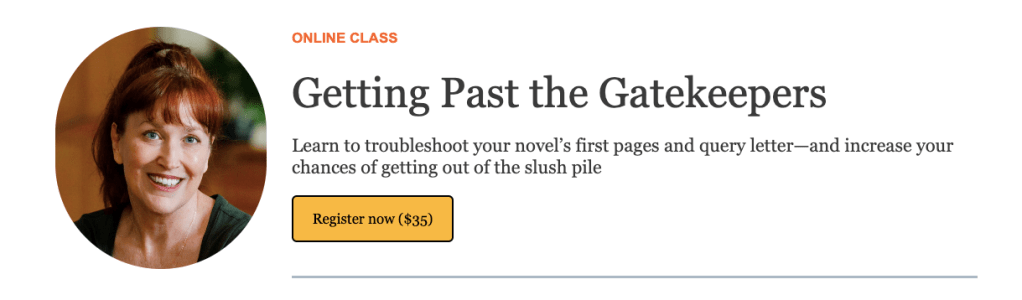
Speaking of querying and newsletters and all that, I must have gotten purged from Jane Friedman’s newsletter. I admit I don’t open my newsletters enough, and I missed hers, so I signed up again. She’s a good source of publishing news and also she hosts inexpensive classes with industry experts. If you want help with your query or first pages, take a look at this class hosted by her with guest Allison K Williams. https://janefriedman.com/get-past-gatekeepers/ (This is not an affiliate link.)
taken from Jane’s website
I’ve taken some of her classes before, and if you can’t watch it live, she makes the replay and all the handouts available after the fact, so don’t worry if you can’t fit it into your schedule. Her class with Allison is March 20th, 2024, from 1-3pm. It’s $35.00 and it will be worth every penny if landing an agent is one of your goals for 2024.
I hope you have a wonderful week ahead and good luck with all your endeavors! It’s not too late to hop on my social media calendar. I may end up making one for March. I’ve been able to stick to posting. My engagement isn’t the best, but it keeps my pages from looking so bleak. Nothing works without consistency, so we’ll see what happens in the coming months.
I met Melody on Twitter when she was asking some questions about a Midwestern winter for her WIP. Being I’m in Minnesota, I was happy to help her with all the chilly details. We happened to have several inches of snowfall that winter, and I tweeted her lots of pictures. She asked me to beta read when she was finished, and I was happy to do that, too. We stayed in touch, and now I consider one of my friends. I asked her if she would be willing to do an author interview, and she agreed. Still getting her feet wet with the whole publishing thing, she was happy to share what her past couple of years have been like writing and publishing. She spills on her newest wintery release out this week… (Ironically, we don’t have much snow right now! I’m sure her FMC, Melissa, would love that!)
You write YA and Adult Contemporary Romance. What made you mix it up and do you think you’ll write other genres in the future? I knew before I published my first book that I wanted to write both YA and adult contemporary romance. I’ve always enjoyed a good love story, and growing up, I was very much into Judy Blume and similar authors. So those are the kinds of stories I like to read and write. I considered using different pen names, but in the end, decided it was too much of a hassle. And I think there will be readers who will enjoy both. I’m still writing in the contemporary genre, even though I’m writing for different ages. And I’m mostly targeting a female audience, though not that men can’t read them too!
As for branching out into writing other genres, I might like to tackle writing romantic suspense, because I enjoy reading that too. I’ve also considered writing picture books and humorous essays, but I’m not ready to do any of that yet.
You’re writing a series now. What do you like best about writing in a series and what do you find challenging? I love writing in a series because often, I’m not quite ready to let the characters go! I want to keep writing and find out what happens next in their story. Or, I want to explore the best friend’s story.
The thing I’ve found challenging about writing a series is that sometimes, my muse wants to work on other things, and I have to work hard to keep on track. I don’t want to leave a series unfinished. I’m currently working on my Storm Series, but stories 5 and 6 haven’t been written yet. Stories 3 and 4 need work. I think in the future, I will wait until the series is complete before publishing. That way, I’m not under any pressure to keep writing in that series if my muse won’t cooperate. This will probably be the only way I will ever “rapid release.” I consider myself a slow writer, and I like to put away projects for a long time to let them rest before I go back to revising and editing them.
You do your own covers. What prompted you to try and can you explain your creative process? For my first book, I reached out to a book cover designer, because I didn’t really know what I was doing. When she returned the cover, I thought, “Hey, I could have done that.” Plus, I wanted to try making my own covers to save a little money. I purchased Affinity Photo, which is a great alternative to Photoshop since you don’t have to purchase a subscription. I played around making mock book covers for months. I’m still learning the program, but I discovered that making book covers is a lot of fun.
I only suggest making your own book covers if you really enjoy it and are willing to learn the process, otherwise it can cut into your writing time. But looking at stock images gives me a lot of ideas for future stories, so that’s a plus.
You’re part of the #5amwritersclub. How did you realize early mornings are the best time for you to write and what would you suggest to other writers who are struggling to find time to write? Not everyone wants to get up early, but I’ve always been a morning person. It’s quiet before dawn, and I write best with silence. Also, I like to start off my day doing something that brings me joy. And the earlier I get up, the more time I have to write. Though I write at other times of the day, morning is simply the best time, as my creativity is at its sharpest. By early evening, I’m yawning and can barely keep my eyes open!
The best advice I can give, if you’re struggling to find time to write, is that you’re going to have to give up something. For me, that was a lot of TV shows. And YouTube. I used to have an Authortube channel over there, but making videos cut into my writing time.
Or sometimes, you just have to make time to write. Find a few minutes here and there. Maybe you can write for 15 minutes while dinner is cooking, or if you have kids, when they go to bed. For me, getting up before dawn is easy. But also, having a cat helps. They’ll ALWAYS wake you up early!
You self-publish. What is the hardest thing you’ve encountered about the process and what did you do to tackle it? The hardest thing about self publishing has always been the things I didn’t know or expect, like when my paperback showed up as temporarily out of stock, or when my pre-orders were not fulfilled and customer support wasn’t helpful. I also had an ISBN problem for my second book. And it’s not like I don’t know how ISBNs work. I’m a library assistant, and I look up ISBNs all day! But it surprised me that some sites wouldn’t allow me to use the same ISBN, even though it was one I had purchased.
The only thing I can do when it comes to these issues is to figure out what to do better next time. The first time, I didn’t go “direct” with Amazon for the paperback, and that was a mistake for me. As for the ISBN issue, Draft2digital support helped me out with that one by assigning me one of theirs. Talking to other writers and listening to podcasts has also been helpful in solving these kinds of issues. Maybe by the time I publish my next book, things will go smoothly. Fingers crossed!
Your book went live yesterday (December 17th)! Congratulations! What do you do leading up to your launch? Any marketing secrets you’d like to share? I’ll be the first to say that marketing is not my strong suit. I didn’t do any kind of marketing for my first book, other than social media posts and a YouTube video. For my second book, I did two book promotions through Written Word Media, In hindsight, I think it would have been better if I had spread those promotions out and not done both at once. I have no way of knowing which promotion brought me more sales because I did them at the same time. And once they were over, the sales dropped off again.
For this upcoming book, I’ve scheduled one promotion, and I’ll plan to do another one at a later date. Also, since this is book 2 in my series, and my romance books are in KU, I’m looking into scheduling some free days for book 1 at some point to introduce people to the series and hopefully encourage them to buy the next one. I’ll also do social media posts, what’s left of social media these days. I haven’t done any Amazon or Facebook ads yet. I’m just not mentally (or financially) ready for that. All I want to do for now is to write books, and if people read them, great. I believe my readers will find me eventually. I think for now, I will try to focus on building my email list. I’m still looking for my first 1000 superfans.
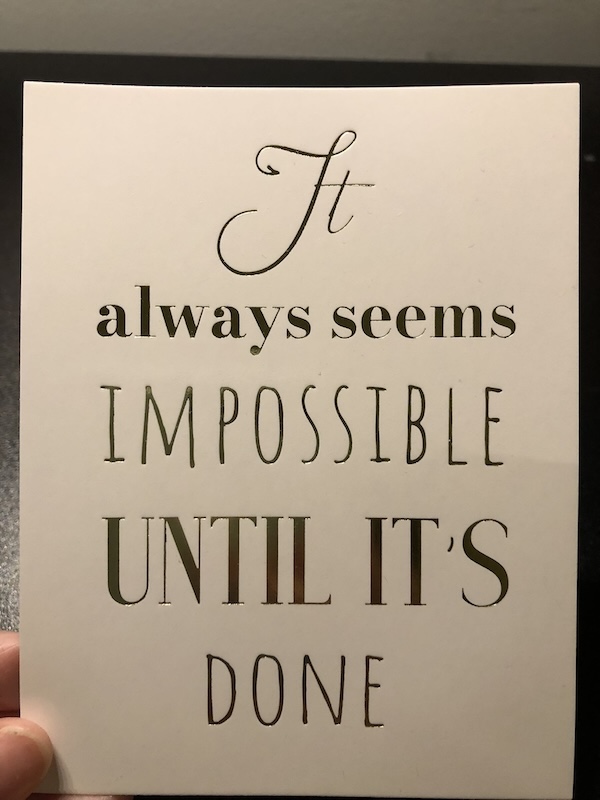
Share your favorite motivational quote about writing. It’s not actually a quote about writing, but there’s this quote by Nelson Mandela. “It always seems impossible until it’s done.” I think about this quote when I’m working on a novel. When the words won’t come, or when I’m stuck in the muddy middle, it’s hard to think that I’ll ever get to the end. But after some determination and butt-in-chair time, the draft gets finished. It always seems impossible until it’s done.
A couple of years ago, I purchased these motivational cards to put on my vision board, and I was excited that one of them had that very quote!
picture provided by Melody
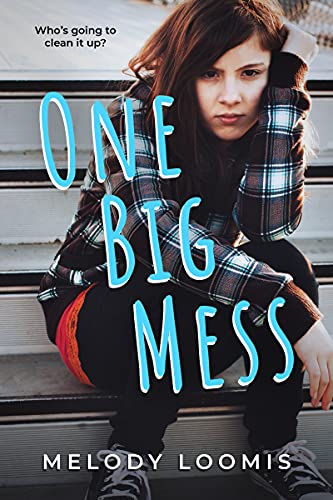
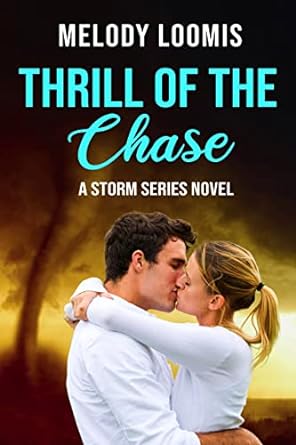
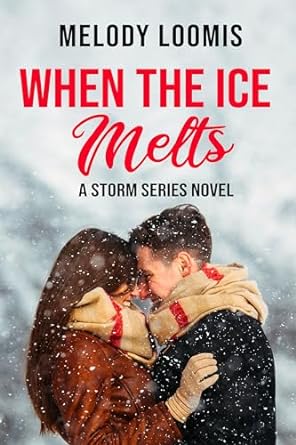
Thank you for your time, Melody! It’s always fun to hear about other authors’ experiences. You can follow Melody at all the platforms listed below, and I pulled her book covers off Amazon so you can see them. You can also join her newsletter for updates at www.melodyloomis.com. Thanks for reading this week!
Independent publishing has opened up a whole new world for scammers who want to make a quick buck, and we all know those kinds of people don’t have morals or scruples. But we don’t hear a lot about ethical behavior of the “kind of” innocent kind, at least not until recently with the rise of AI. I have a lot of opinions on AI, many I keep to myself because for the most part, it’s none of my business what other people do. I’m not going to take part in the witch hunts I see happening online, authors guilty until proven innocent. People can make mistakes, can be misled, or, can actually make the choice to use AI for whatever reason, and I’m not interested in being judge and jury for those people. I’m too busy with my own stuff going on, and honestly, unethical behavior happens everywhere, every day. You can’t take it all on (and for the sake of your mental health, why would you want to?).
I have spoken out about some of it, though, beta readers who take your money to beta read but actually don’t put in the work, “cover designers” selling Canva templates and calling them their own designs, editors who are paid to edit, when they shouldn’t be anywhere near a red pen. I don’t like when I hear about people getting ripped off, mainly because I don’t believe in paying people to do something you can do yourself. You can create your own cover using a Canva template for free–there’s no need to pay someone 50 to 100 dollars. You can do the bulk of your editing for free too, if you take the time to listen to your manuscript before sending it off, and there are a free resources for formatting, Draft2Digital and Reedsy to name two off the top of my head.
Like almost everyone in the indie space, I’ve been a victim of some unethical behavior, and I have been for as long as I’ve published. Editors who sit on manuscripts for months and then when they finally get to your work, they don’t give you the experience (*cough* time and effort *cough*) you gave them money for. They say you get what you pay for, but that’s not necessarily true–some people don’t actually know they shouldn’t be charging for the services they are. They don’t know they’re poor editors, they don’t know it’s an ethical grey area to sell Canva templates. Once on Twitter I saw a freelance editor bragging about some kind of award ProWritingAid gave her, and I was dumbfounded. I knew she was putting her clients’ manuscripts through it. Perhaps that’s part of her “editing process” but her clients are paying for that–it’s definitely nothing she should have been admitting in public. After seeing that, I never would have hired her for anything. I can run my own manuscripts through PWA if I wanted to use it (the Hemingway Editor is a free version of this). I don’t need to pay for someone else to do it.
The question, I guess, is how do you know what you don’t know? You have to be honest with yourself for one thing. A “cover designer” I called out starting her business selling Canva templates said she liked “simple designs.” No. She just admitted she has no skills. If you’re an author and you can’t edit your own books, you shouldn’t think you can edit for other people and get paid for it. If you don’t have time or the inclination to beta read, don’t offer or don’t accept a job. Honesty and integrity begin with yourself and it will extend to your clients. If you need the money that badly, get a second job. Ripping people off, no matter how unintentionally, is still ripping people off.
On the author side, is it ethical to use AI? I’m not going to poke that bear. I think in some instances it is okay to use AI. I chat with Al, brainstorm with him, and it’s fun to bounce ideas off him when I’m stuck with a plot issue or need sparks for ad copy. I don’t feel it’s any different than searching for a plot generator and sorting through the prompts, or making a huge list of tropes and pulling one out of a fishbowl when it’s time to write a new novel. Of course, that’s very different than asking him to write a short story and then turning around and submitting it to an online journal. I would never do that, and all my books are written by me and only me. I don’t copy and paste. Never have and never will. I like to write; I wouldn’t outsource that. If there ever comes a time when I think I might, I’m tired of writing in general and should quit altogether. In connection, I would never use a ghostwriter to publish a book then claim I’m an author, but people do that. I saw on Twitter one “author” who queried a ghostwritten book and landed an agent. I think that’s kind of disgusting, especially since books go through extensive editing and likely that person won’t have the skills to do that.
Dealing with people who don’t have any ethics, or who don’t know they are being unethical, is what makes indie publishing difficult. It’s a minefield and it would be a lot easier for everyone involved if people stopped trying to make a quick buck out of everything. Life is hard, though, and I don’t see that happening. Authors can’t afford to hire a professional at every turn, so we do what we can, cut corners, or try to, and sometimes we get burned.
But, when we do that, as authors, sometimes it’s our readers who get burned, too. When you’re trading a product for cash, your product needs to be the best it can be, and not everyone can do that alone. I’m not fond of gatekeeping–it’s one of the pillars of this blog. To give you resources to do things for yourself, be it editing, cover design, or formatting. But I’m well aware that even with all the resources in the world, not everyone can do all the things on their own, and the unfortunate fact is, if you can’t put out a decent product by yourself, you can’t find someone to help you for free, and you can’t afford to pay for a service, then maybe it’s just not your time to publish. I don’t say that with a light heart, either, but your customers and you readers deserve more.
I have a short list of things I see authors do that I would never do when it comes to my own business. I would never put book one of a series in KU but publish the others wide in an attempt to force readers to buy them to keep reading. People try to have it both ways, and I blogged about that here: KU vs. Wide (Can you have your cake and eat it too?) I would never enroll my books in KU and still put them wide, hoping to take advantage of Amazon, but authors do, and even brag when they aren’t caught. I would never not finish a series. I think starting a series and abandoning it is terrible for your readers and you look untrustworthy and like you have no follow-through. I would never post on social media that I’m writing a book and then not actually write it. I have changed my mind once or twice when blogging here, but any books I’ve committed to where my readers are, I have finished and published.(Let’s just say that fantasy series I blogged about will never see the light of day. I’ve put it away for good, and I am really really okay with that now.)
This whole thing started with a Facebook post accusing GetCovers/MiblArt of unethical behavior, notably plagiarizing covers of bestselling books. I won’t point to the post or the person who wrote it because most of the Facebook groups I’m in are private and it’s against group guidelines to share. I took the post with a grain of salt because while you can accuse anyone of copying a book cover, the fact is, it’s done all the time. Maybe not purposefully, but it is done. One of the best practices of covers is to blend in with your genre while having one or two elements that stand out. Anyone will tell you to go through the top 100 in your genre and see what other authors are doing. That’s standard advice. If an author asks GetCovers to do their cover like the latest LJ Shen’s billionaire romance, that’s what they’re going to get. That’s hardly GetCovers or MiblArt’s fault. It’s not even the author’s fault because they’re following advice that’s pretty common. Designers have their own code of ethics that prevents them from stepping on each other’s toes, and that’s great. We should all support each other, but some of those guidelines are hazy and grey, and sometimes it just comes down to common sense and courtesy–like a lot of ethical subjects. I didn’t talk about the ethics part of copying a cover, but I do talk about the “sameness” of billionaire covers here. If you see ten covers with the same background stock photo, maybe it wouldn’t be that hard to avoid that photo. If you see the same font used for titles, use something else? I don’t know the right answer because I do the same things. Your books need to look like they belong, but using the same background, font for your tile, and color scheme may not do what you want it to do. You’re not Nicole Snow, and the only person who is, is her. Build your own brand instead of trying to piggyback off of someone else’s–that’s probably the best advice you can follow. Plus, it’s more ethical and will serve you well in the long run.
As always, this post went longer than I wanted. If you want to read more about ethics in publishing, look here:
if you spend any time in author groups on Facebook, the number one topic of conversation this week is that the KENP page read payout has gone down again. It’s at an all time low of $0.003989. That means KDP will pay you $0.0039 whenever someone reads a KENP page of your book if it’s in Kindle Unlimited. For as long as I’ve been publishing and having my books in KU, it has never dropped below $0.04X and it is a little bit disheartening to see, mostly because it’s been decreasing over the summer, and it’s always easier to fall than to climb up, no matter what you’re doing.
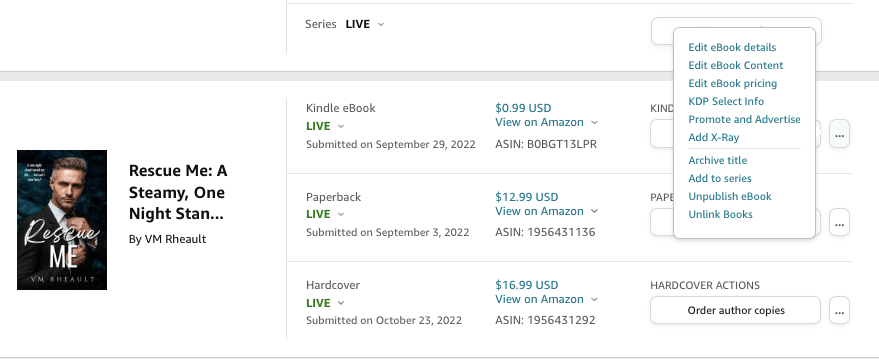
Just as a quick reference, we can do the dreaded math. Take, for example, Rescue Me. It has an KENP of 391. You can find that information on your Bookshelf. Hover over the three dots to the right of your title, click on Promote and Advertise, and the information is at the bottom of the page.
To do the math, you multiply the KENP of your book with whatever the payout is. For Rescue Me, if I multiply 391 by 0.003989 I get $1.55. So in KU, every time someone reads Rescue Me from cover to cover I get $1.55. Which is less than 70% of $4.99 if someone were to buy my book. For June, it was $ 0.004042 and that math equals out to $1.58. Three cents it’s that big of deal especially to smaller indies who don’t sell many books. (But considering it was $ 0.004293 at this time last year, it’s worth keeping in the back of your mind.)
Of course, this has brought on a tidal wave of authors declaring they’re going to pull their books out of KU and go wide, but it’s not a good idea to make decisions in anger and hate for Amazon. This is your business, businesses go through ups and downs and it’s better if you run your business with informed choices.
Here are my thoughts:
You have to build a brand/readership no matter where you are. This is true no matter if you’re in KU or you’re wide. You need to find readers, you need to show them you are in it for the long haul. You need a solid brand so a new reader can look at your author page/book covers and know exactly what they are going to get if they read one of your books and stick with you. Building a brand/readership is even more important wide because unless you regularly run sales on your books, you’re asking a reader who has never heard of you before to spend $3.99+ to try you, and you better be giving them their money’s worth. Not only so they don’t waste money on your unedited book, but that is their one and only taste of your writing and you need them to crave your books enough to spend money on each and every book you ever publish.
You have to be consistent no matter where you are. When I went to the Sell More Books Summit in Chicago before the pandemic hit, they had a panel of indie vendor reps, among them, Ricardo Fayet from Reedsy, Brad and Brad from Vellum, and a rep from Kobo who is no longer in that position. The one thing that stuck out for me during that talk was when she said, don’t put your books in and out of wide. We remember you, readers remember you. Google Play, Apple Books, Nook, and Kobo and others have representatives that work with authors and book promos. They won’t okay you for a promo if they know your fickle. Why would they help you build a brand and an audience when they think all you’re going to do is pull your books out and put them in KU the next month? Going wide is hard, but so is being in KU. It doesn’t matter where you are, you still have to build that readership. Authors think being on more than one platform is a sure way to find readers, but that’s not true. Your book will sink anywhere if readers don’t know your book exists. Stick with one place, publish consistently, advertise, work with the platform reps with promotions and sales. Being wide takes work, but it’s only a different kind of work than being in KU. They say work smarter, not harder, and if smarter for you is being wide, then you should do that.
Go direct where you can. It’s tempting to put your book on Draft2Digital and let them take care of it, but no one considers that if you do that, you’re paying D2D to distribute, you’re paying Nook, Kobo, Apple, etc, to sell your book, and you’re left with what’s leftover. After everyone takes a cut, you might as well have stayed in KU and absorbed the cost of the lower payout. If you want to go wide, do the work and publish directly to the platforms you can. Upload at Nook, Kobo, Google Play (if they’re accepting new authors–for a long time they weren’t and I have no idea if they are now). Upload direct wherever you are able to save yourself the cost of the distribution fee D2D charges you. Their fee and other FAQs are here: https://www.draft2digital.com/faq/
Your KU readers won’t follow you. Some authors think that their readers will follow them if all of a sudden their books are not in KU on Amazon anymore, and with all the years I’ve been part of author groups, the one thing anyone can agree on is, no, they won’t. KU has over four million books in it now, and depending on the genre you write, your books are a dime a dozen. I’m not so self-important to understand that if readers who have read all 7 of my billionaire books in KU (and even LOVED THEM) suddenly had to pay wide prices for any other books I publish, they won’t buy them. They would write me off and move on to the next romance author. Wide readers and KU readers are very different audiences. I have a KU subscription myself. I don’t buy books on top of that and I won’t try wide authors who put their first in series for free because I know I would have to buy the rest of the series if I liked the first. (That’s a normal marketing strategy even for books in KU because read-through is what earns you royalties.) Readers are smart–they know if you’re in KU or not just by browsing the newsletter promo lists like Freebooksy and Fussy Librarian.
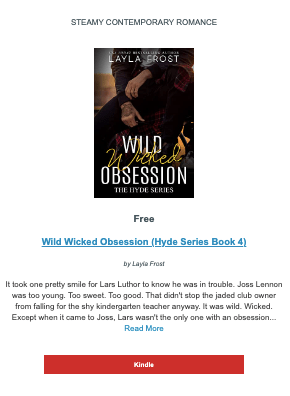
Here are the first two books in the Freebooksy contemporary romance promo newsletter I sign up for sent to me on Wednesday, August 16th. Any reader who has been reading books for any number of years knows that the Kindle-only book will be in Kindle Unlimited. It might not be reader knowledge that Amazon forces us into exclusivity, but they don’t need to know that. They see Kindle only, KU. When I go through these looking for books, I don’t even read the blurbs for books available everywhere. I don’t want to like a book that’s wide. I can’t afford to buy the others. Wide readers have a book budget, and KU readers have a book budget that’s wrapped up in their KU subscription fee. It’s too bad, but with rent prices out of this world, medical costs, parents doing the back-to-school thing, groceries, gas prices, and whatever else, the entertainment budget is the first to go. I’m not saying that so you stay in KU if you’re there, but you know, you have to build a readership with really great books and that takes time.
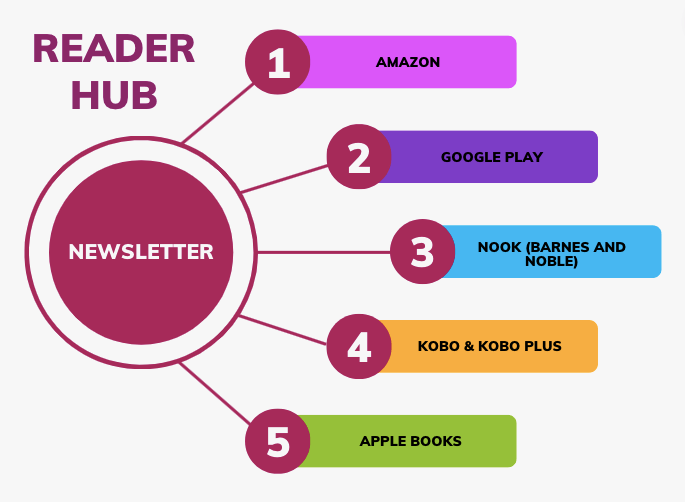
Change your mindset. Instead of moaning about the drop, do something about it. The piece of advice I see the most when this kind of thing happens is, “Write another book.” More books will earn you more money, no matter where you are, so get your butt into your chair and write. You can also write longer books to fill in that page-read payout shortage. If you write 70k books, write 75k books. Add a sex scene, or a couple of dialogue scenes between characters. Add an epilogue. You don’t have to add filler or fluff to lengthen a book. Also, if you haven’t already, start a newsletter. If you’re everywhere, a newsletter will be your reader hub. If you’re Amazon exclusive, readers can follow your Amazon author page and Amazon will email your readers when you publish a new book. If you’re wide, you want a place you can share with your readers about sales and promos and new releases. When you move your books over from KU, edit your interior and put your newsletter sign up link in the back matter of all your books.
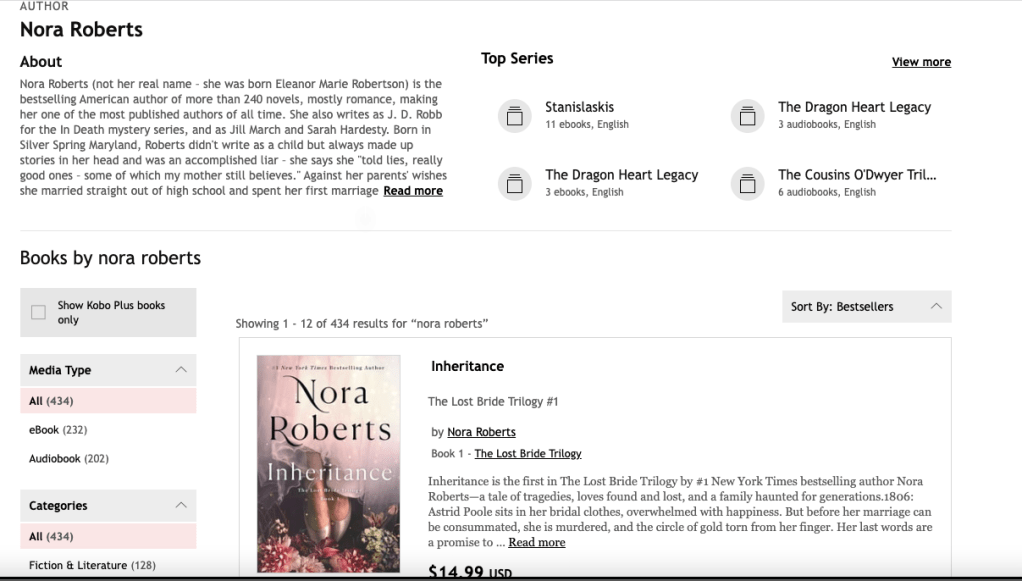
If you don’t have one, you might think that’s just more work, but I don’t know if other platforms offer author pages like Amazon does. Kobo doesn’t. You can click on an author’s name and get their list of books, but it doesn’t look like you can follow an author, and I have no idea if Kobo will email you new releases once you’ve bought an author’s book. This is what I get when I searched Nora Roberts:
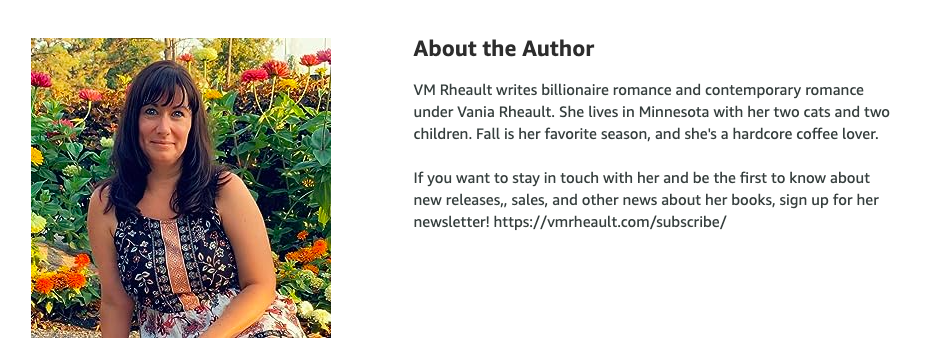
It’s just better to control that for yourself, and you can even put your newsletter sign up link in the author bio. Here’s mine on my Amazon author page.
What am I going to do? I’m going to hang in there a while yet. I have four more books coming out this year, and six next year, so we’ll see what happens. I could move my 3rd person books over, but then I would be courting two different audiences, and one for a name I’m not writing in anymore. I don’t think moving my older backlist titles is the answer. They aren’t selling, and I don’t use any of the tools given to me so they do. I can’t remember the last time I put All of Nothing or The Years Between Us for free, and since those are are standalones. I only get page reads for royalties if a reader happens to borrow instead of download when I do that, no read-through to other books.
It’s important to have some kind of plan in place when you make a decision like this, a goal, so you can measure if what you did worked.
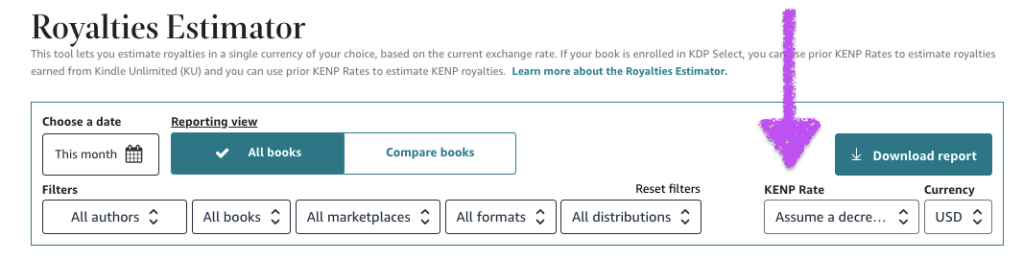
Anyway, this will come up again and again, but I hope this is the last time it drops. You can assume a decrease when looking at your KENP royalties, and that’s what I do:
The biggest concern right now, for me, is if this downward trend keeps going. More than 50% of my royalties of any given month are from Kindle Unlimited, and like other authors say on various forums, if you’ve published for a bit and have built a brand around being in KU, you can feel trapped. You don’t want to stay because you’re scared to leave or don’t want to put in the work to move wide. It’s how I feel in my day job right now. I’ve worked there for 22 years, and finding something else is scary. I signed a contract saying I can’t say derogatory things about them online, so let’s jus say they aren’t the same company I worked for 20 years ago, and it’s discouraging not to be valued. Things change, and that includes Amazon. How much you want to put up with will be your own personal decision. If you don’t feel Amazon values you and your business, if you think you’ll be treated better elsewhere, then you should go. We all need to know our worth and act accordingly.
I also tweeted all of the resources I knew about in a tweet thread here:
If you're wide, there are a lot of people, places and things to help you sell your books. Here's list of resources that I've found over the years. #BookMarketing#sellingwide#indieauthors 1/13
Like a reader pointed out in her comment on my blog post last week, sometimes people have to learn things on their own and in their own time. That’s never been more true for publishing. There is so much information out there, and to consume it in some way (blog post, podcast, non-fiction book, reading a tweet) then applying it to your own circumstances can be a lot of work–and you need a healthy dose of self-awareness to even know you need the information in the first place. Not at easy feat when we’re told from the second we start writing our books that our novels are our babies and every baby is beautiful, not a product to sell.
It’s important to know where you want your publishing to go (well it is for me–I’m done trying to tell people what to do), and you can think about these things if you’re unsatisfied with where your career is up to this point: Do you want to publish for fun and earn some pocket money, or do you want more? Do you want to make what you’d earn working part-time? Do you want to be a full-time writer and quit your day job? I think a lot of us, whether we really want to admit it nor not, would love to at least make a part-time income. Part-time, for me, would be about $10,000/year. Depending on where you live in the world and what you do as a profession, that’s either a lot or barely what you earn in a month at your day job. I work for a non-profit, I’m barely scraping by, and that’s half of what I make in a year. To say an extra $10,000 a year would turn my life around is an understatement. It would take care of a lot of worries for me. It’s not asking a lot, but that is the biggest thing I’ve learned this year–I have to write out a goal in black and white and figure out a plan on how to get there.
Changing what I’m writing was a good start (and something not a lot of people are willing to do). Most indie romances are written in first person now, and two years ago, I pivoted and that’s what I started writing in. It wasn’t that difficult–just a minor change in mindset and some feedback to put me on the right path since I’ve never written in it before and only read it without acknowledging it like the Hunger Games trilogy and the Twilight series.
But I need to do more than that. Through the years I’ve gotten the basics down: that marketing pertains to your whole brand and what you’re offering readers across the board as apposed to advertising which is only buying promos and running ads to your books. It’s funny that when you start a pen name you get a fresh start when it comes to your brand. I had to figure out how I was going to present myself to readers. It helped that I already had a few books written (not published) and I caught on to some characteristics/themes that I can play with: my characters are older, some divorced, they’ve gone through a trauma which means a shitty backstory they have yet to overcome so they can find love. My covers are cohesive, even if they aren’t in the same series, and over time I want people to be able to catch a glimpse of a cover and say, “That’s a VM Rheault romance.” That’s branding, that’s marketing, and that’s something I’ve learned on my own over the past five years. That’s not anything anyone can explain to someone else–it has to click. (When you have 20 books and they all look different, maybe it will click or maybe it won’t, or maybe you just don’t care. And definitely, under no circumstance, will I tell you that you should.)
Made in Canva
So for 2023, I thought I’d do the math and figure out what I needed to make $10,000 a year. Having more books, of course, is helpful all around, and right now I only have three under my pen name, though All of Nothing, a standalone under my full name, has been my biggest earner since I published it and my small-town holiday series comes in second because of read-through. I’ll always run ads to those books, but as I figured out during my Freebooksy promo, I think I just want to focus on my first person books for now and see what I can do with them. I have three out, I’ll release three more in January, and a standalone in March.
What I’m thinking, and though I haven’t accomplished it, I know it’s achievable, is the idea taken from the 20booksto50k concept, being if you have 20 books published, you should be able to make $50,000 a year. Twenty books is a lot of books (and let’s assume we’re talking full-length novels, only based on the idea that I’m in Kindle Select, and the longer the book the more you earn from page reads.) Maybe then, you can halve that and say I want to make $25,000 off ten books. That’s nothing I’ve done with my ten that’s written in 3rd person, but I know where I went wrong, even if they are in 3rd person. I didn’t stick to one sub-genre, my covers were abysmal because I did them myself starting out, my trilogy wasn’t solid because my writing just wasn’t there yet. I could have hired a better editor than I had, though, I just hadn’t written enough to find my voice and my writing was the best it could be at the time. I definitely could have had better covers, but I hadn’t heard the secret of researching the top 100 in that genre and blending in with those books. I was all about the “vibe” and capturing it on the cover, and I definitely didn’t know about stock photo sites and used pictures from Pixabay which is a huge no-no. I didn’t know how to write good blurbs or good ad copy for ads, and I didn’t know how to use those platforms anyway. It’s not a surprise that I haven’t earned $25,000 a year off those books. I was doing too many things wrong. Even though they’re “fixed” too much time has gone by to do anything with them.
Now I’m on the right path, or at least a frontage road going in the right direction, having a concrete number to shoot for is probably best. There are some things you need to know, such as your ratio of read-through from book one to the others if you have a series, and how much you earn from page reads if you’re in KU. I’m actually kind of surprised to see how many authors don’t know how to calculate pages read when they’re in KU. I’ll show you quick in case you don’t know. To find how many KENPs (Kindle Edition Normalized Page) are in your book if it’s enrolled in Kindle Select so it’s available in Kindle Unlimited, you have to go to your bookshelf, click on the promote and advertise tab of the ebook and it’s at the very bottom of that page.
My KENP for Captivated by Her is 404. Now that we know that, we can divide the number of page reads with that number to find out how many total books have been read. When I look for the number of pages reads for Captivated by Her for this year I get 14,800. 14,800/404 is 36.63. So roughly 36 full books in page reads since I published in June. You should know the KENP of all your books. (If you want to know how much you earn, multiply the total number of page reads by .0045 [the average payout of a page read by KDP–this fluctuates and you can use .0044 or even .0043 if you want to assume a decrease] and in my case 14800*.0045 is $66.60).
The KENP for the second book in that duet is 397. We can do the same for Addicted to Her: I’ve had 4593 pages read, equalling 11 full books read. (Royalties–4593*.0045=$20.66.). We don’t have to do the math to see that there is a significant drop off from book one to book two. And thanks to Mal Cooper, this is how you figure that percentage. But first, KU reads are only part of the equation. I did have a couple sales, so let’s factor those in.
According to Mal’s math, you divide the number of book 2 by the number of book 1 and it looks like this:
16 / 49 = 32%.
32% of the readers who read book one went on to read book two. Mal says you want read through from book one to book two to be about 50% and each book after that will likely drop even more. If you want to read more about read-through, I grabbed her formula from the post she did for Dave Chesson, and you can read it here. https://kindlepreneur.com/calculate-series-read-through/
Where were we again? Oh, yeah, so I want to know how many books I would have to sell if I want to make $10,000 from my books next year. My books are around the same length so we can assume I make $1.78 from every full book read in KU and $3.49 for every ebook sale. (Remember to give KDP or your other platforms their %–Amazon takes 30% if you choose the 70% royalty, and 70% of 4.99 is $3.49.)
If we just go by full sales and not page reads, I would have to sell 2,865 books in 2023 to earn $10,000. Considering in my lifetime of publishing, I’ve only sold 887 books (not counting page reads) that seems like a significant feat–on the other hand, it’s not as many as I thought it would be. $10,000 sounds like such a large sum, LOL. But that’s also 5,617 full books read in KU, which may or may not be easier. ($10,000/$1.78 = 5,617 books.)
The math seems like the easiest part–it’s the advertising and marketing that trips us up. So what am I planning to do to sell that many books?
Use my Bookfunnel subscription in a more productive way. I haven’t taken advantage of any promos or newsletter builder opportunities. I’ve been waiting until my newsletter looks like it has something to offer and also been waiting until I have a few more books in my backlist. I plan to snoop around after my trilogy is out. I’ll have six books published and that seems like a good number to see how things go.
Keep going with ads. After the holidays I’m going bump up my bid per click on my Amazon ads and create some new ones with updated keywords and see if that helps. Right now I’m doing conservative bidding per Bryan Cohen but romance is competitive and bumping up my bids might help with impressions and getting more clicks. Amazon ads are easy with category and keyword ads, but Facebook is a bit trickier when it comes to building your target audience. I’m going to research a little more into how to build that audience so I’m not wasting clicks.
Buy more promos. There are a few I haven’t tried like Ereader News Today, Robin’s Reads, and Fussy Librarian that will put books in front of readers who have never heard of me before.
Start posting regularly on my FB pages. I was sneaky and turned my Vania Margene Rheault Author page into my VM Rheault Author page so I don’t haven’t start from scratch there. I don’t have a significant following, but I connected that to my Instagram that I also rebranded. I’m going to try harder to post content on there rather than waste time on Twitter. I’m so disillusioned with my experience on Twitter lately that the best thing I can do is to spend that time in a place that will have a better return on investment. I also have my V’s Vixens reader page that I started that I run ads from. If I post content there regularly, I can pick up followers from my ads. Building a social media platform takes time, patience, and content. If I trade the hour I spend scrolling Twitter every day, I should be able to post content no problem and that should be better for me long-term.
Publish consistently. The best thing I can do is publish consistently. I have the next 18 months set out and hopefully, by the time those books run out, I’ll have 6 more (or another year’s worth). I don’t want to think of my books as widgets on a factory conveyor belt, but I have to admit, there isn’t so much pressure to write quickly when I know I have time. With how my mind works it’s difficult for me to write a new WIP and go back and promote older books, but I’m going to explore turning two days a week into marketing only and then the rest of the week into writing days. Maybe that will help. Focus is a good thing until it’s not. Then you have to figure out ways to work around it and make it work for you rather than against you.
Keep putting my books on Booksprout for reviews. Publishing without reviews is tough and my duet may never recover (which would be a crummy start to my pen name). All I can do promote it and hope readers who like it review it. Unless I pull them out of KU and put them up in Booksprout, there’s not much more I can do, but I’m not willing to do that. It was a mistake I’ll learn from and move on.
Will I get to $10k in 2023? I don’t know. I’ve never been in this place in my life with all that I know now. If all goes to plan, I’ll have 8 books for sure, maybe 10 with two of my six book series released toward the later part of the year. All I can do is my best, apply what I’ve learned, and hopefully I’ll find some readers who enjoy my books!
I have three more Mondays after today to post before the New Year. One will be my end of the year recap that I usually do, and the other two, I’m not sure. The last Monday is the day after Christmas, so I might take that Monday off. We’ll see. I hope you all have a wonderful week!