
1,715 words
9 minutes read time
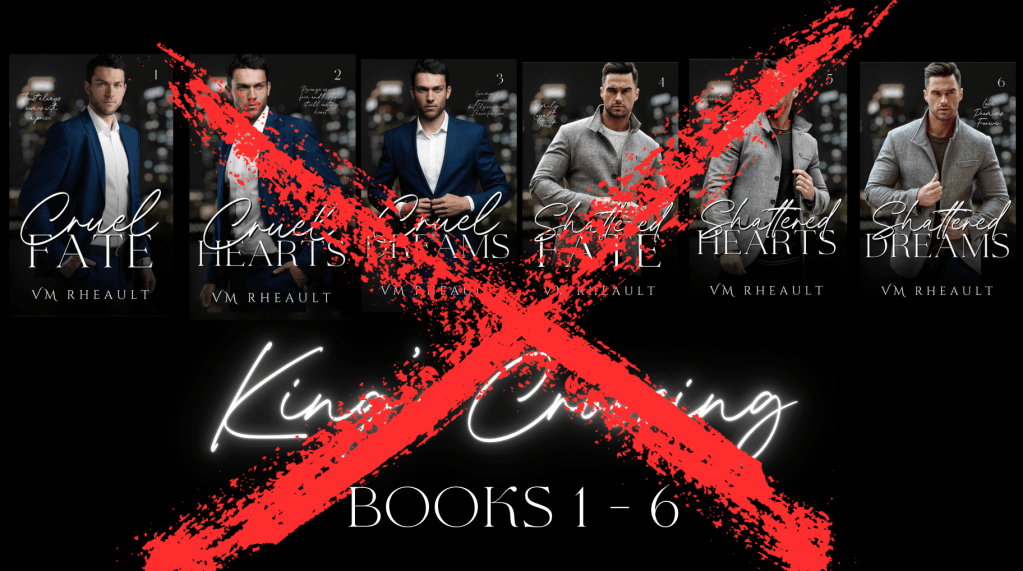
In a blog post a couple of months ago, I shared my series’ sales and read-through numbers with you, and it really got me thinking about whether or not it’s worth it in this reading and publishing climate to write another series. Of course, if I really wanted to write another one (and I will some day because I have 2/6 done in a series I started years ago and I won’t let those two books go to waste) I would no matter where the evidence pointed. But because I’m curious by nature, like knowing the landscape of the publishing industry, and well, I just like plain old BSing, I wonder, how worth it these days is it to write a series in the first place?
Any author with a huge series and a strong audience for those books will say it’s worth it: JD Robb (In Death 60 books), Marie Force (McCarthys Of Gansett Island Books 28 books) Robyn Carr (Virgin River 20 books), and Susan Mallery (Fool’s Gold 22 books), to name a few. There are indie authors who write long series too, like Shannon Mayer (Rylee Adamson 10 books), A.J. Rivers (Emma Griffin® FBI Mystery 37 books) and more I don’t have the energy to look up. But if there’s one thing they all have in common is that they didn’t start writing those series recently. They’ve been building their audiences for years, when things were different. So where does this leave a new indie author who’s planning to write a ten-book series?
The blog post I referenced was written back in July, and my numbers haven’t gotten much better: (FYI the person who bought my series in print was my aunt.)
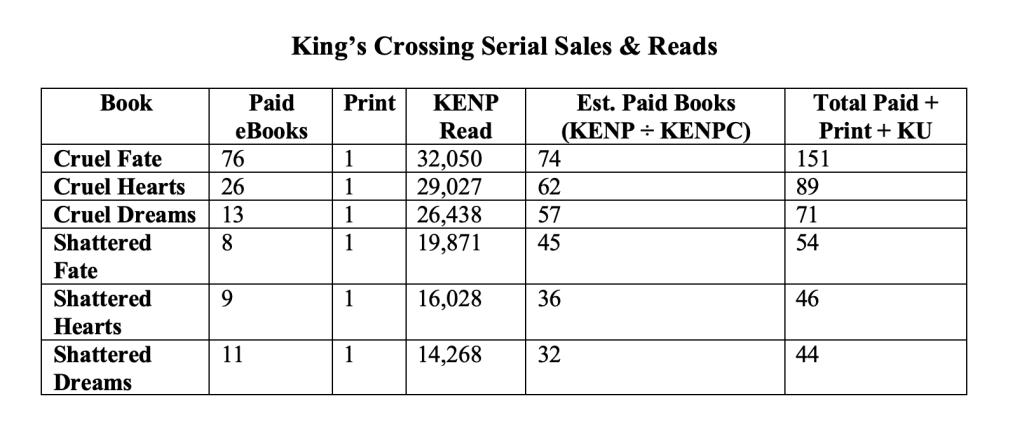
When doing series read-through, you can see how many readers are going from book one to book two and on. I don’t have big numbers to play with here, and for some reason my KDP dashboard decided not to show me all the free ebooks of book one I gave away during promos like Fussy Librarian and Freebooksy. That just makes my stats look even worse anyway, so let’s stick with paid books for now.
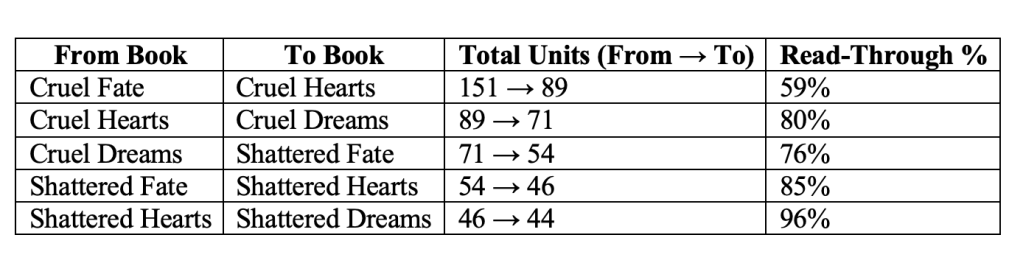
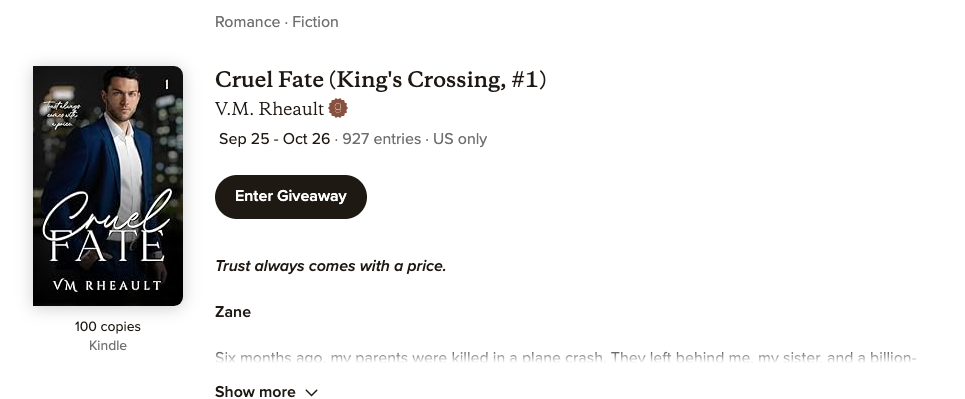
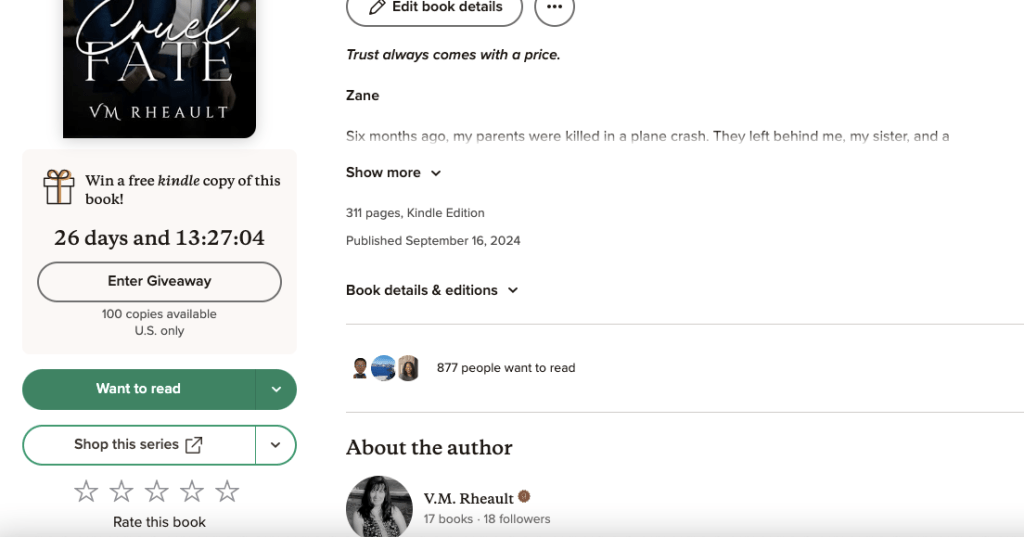
You can see my biggest drop is from book one to book two, but once readers get invested they keep going. Though, these numbers look deceiving because when you do the math, read-through from book one to book six is only 29%. (Dividing 44 (sales of Shattered Dreams)/151 (sales of Cruel Fate)x100=29%.) It’s rather disheartening to know that only 29% of readers who read book one went on to finish the series.
Of course my experience isn’t indicative of what’s going on in the entire indie industry when it comes to what people are doing and what their success or lack of it is. But it does make me wonder if there is an overall shift in what authors are doing or will be doing because of the changing landscape.
What do I mean by changing landscape?
People’s attention spans are shorter than ever. According to a Microsoft study, the average human has the attention span of 8.25 seconds. That means it’s difficult to grab someone’s attention and keep it where you want it. There’s competing content everywhere–ads, reels, books, podcasts, movies, TV shows, and even if a reader enjoyed book one, that doesn’t mean they’re going to want to read the rest of your series. People get bored and may not want to follow the same set of characters for hundreds of thousands of words. In fact, Lauren Brown in an article on The Bookseller writes:
Publishers are noting a shift in industry mindset around short stories as readers embrace shorter works, with a number feeling like “something is slowly shifting” and that “there’s a real excitement around stories again.”
Getting readers excited about diving into a series that has five, six, seven or more books might be more work than an author wants to admit, or put in.
Authors may also not want to invest time to write a series. “Build it and they will come” isn’t true anymore, and there’s nothing more heartbreaking than putting years of your life into something no one wants. Writing a series is a serious time commitment and when there’s no guarantee a reader will make it all the way to the end of a series, the investment might not be worth it. When you think about it, an eight-book series could be a four-book series, a duet, and two standalones–books that are much more easier to digest and easier entry points for readers.
This also brings up the argument you can’t get away from when we talk about series. Readers may not want to start until all the books are released, but authors don’t want to write more books unless there’s proven interest in what’s already published. This creates a strange Catch-22, and the bottom line is an author would have to write, and finish, a series for their own personal fulfillment first rather than continuing based on positive reader response.
That’s not to say there isn’t advantages to writing a series, which is why the advice used to be so popular ten years ago. A series can build loyal readers. A well-written series can practically sell itself, but your first book has to be so strong that your series has actual read-through or you could end up with my 29%. Unfortunately, you don’t know how your book is going to hit the market, and what you think is a strong start could be boring to readers. But, if you have an engaging book one that leads readers to the rest, as long as your books keep reader attention, that’s money in your pocket and time well-spent writing them.
We’ve changed so much from where we were ten years ago that maybe readers and authors are moving in a different direction. Readers’ attention spans have shortened, there is a lot of content out there to compete with–from real authors and from people using AI to write their books, and authors are burning out trying to compete with all that content and getting frustrated when readers don’t want to wait for the next book.
What’s the solution? (If you think there needs to be one.)
Writer short “series.” Series that have four books in them instead of a massive list, or write trilogies or duets.
Write interconnected standalones. These types of series you can stop writing at any time if you get burned out, bored, or if readers stop reading.
Write a long series in novella length rather than full-length novels. You can still write a ten-book series, but if you cut the length of the book in half, you don’t have to put so much energy into writing them and readers don’t have to put so much time and energy into reading them. You can write them faster, save them up and do a rapid-release style launch and still get almost the same rewards. Your page reads may drop because longer books have higher KENP, but you may get more readers to settle in and binge.
Or go even shorter and write 10k-20k shorts. Sadie King has an excellent book on that if you write romance, and you can find it here: https://www.amazon.com/Writing-Short-Romance-Pleasure-Profit-ebook/dp/B0CFKTRC13
I wrote this blog post as a way to feel out what’s been happening in the industry. From my own experience and the complaints I’ve been seeing online with regard to reader retention and author burnout, I think we’re going to see a shift in the coming years. Offering a selection for readers to choose from has always been solid advice anyway. Even if a series is fabulous, not ever reader wants to sign up for the time or financial commitment of reading one. Not to mention the mental and emotional requirement to get invested. Standalones, duets, and trilogies are great entry points for readers who haven’t read you yet or just want something they can read in a day or over the weekend. Offering a diverse backlist can only help you find and keep readers.
As for what I’ve got next, that series I started years ago will take more years to finish. I have Wicked Games done (standalone), working on Bitter Love (standalone), and have my hockey duet waiting in the penalty box. After those are finished, I have a Mafia duet simmering (but I could turn that into a trilogy as the premise is new for me and I’m excited to write it. I won’t be surprised if I want to stay in that world for longer than two books.), and only after that will I have the time and maybe the want to do work on something else. So it might be quite a while before I want to tackle the last four books in the series I started. But fortunately, I don’t publish until I have my series all written, so the books are trapped on my computer. Readers aren’t wondering where the rest are, and that takes a lot of pressure off me to keep going.
What do you think of the publishing landscape? Do you think it’s changing or do you see readers still getting excited for longer series? Let me know in the comments!
With the changes at my work, I think the time has come that I’ll have to cut my blog posts down to twice a month. Not only did they do a reduction in workforce, they shuffled my days off around which impacts my writing time during the week. I’ll still do my best to post weekly, but I’m not sure how easy that will be for me while still writing as many words as I want on my books during the week. When they let a lot of my coworkers go, I thought this might be coming, but then they changed my work schedule from something I had been working for years, so I need to get used to a new routine. Hopefully I can bounce back because I love writing on this blog, so we’ll see how it goes in the coming months.
I have no idea what I’m writing about next week, but I’ll try to show up and see you then.
Have a lovely day!



















 Vania Margene Rheault