Things I Learned So Far This Summer About Writing:

I’ve had an interesting summer so far. Here are some of the highlights:

Don’t fight with CreateSpace.
I didn’t have the knowledge to bend CreateSpace to my will.

witch-2501446_1920
This doesn’t mean that I never will, but I had to back down on things I wanted in favor of time and simplicity. Does that mean I won’t try again? Nope. I’m tenacious like that. But I may have more patience with a project that hasn’t been staring at me in the face for a year.

I can’t wait to try Amazon Ads!
I’m reading Mastering Amazon Ads by Brian D. Meeks. He’s hilarious and makes trying the ads sound profitable and so much fun. He discusses using them in a way that does not make them sound costly or scary at all. Unfortunately, you cannot use AMS (Amazon Marketing Services)  for erotica so I won’t be able to use them for Summer Secrets. But watch out when I release my Tower City Romance trilogy!

I get bored easily.
This may sound blasphemous to writers who are so in love with their characters they never want to let them go. Not me. I’m 7,500 words into the third (and last) Tower City Romance book and I just want it done already. It could be because the first in the trilogy was a NaNoWriMo project I’ve spent two years fixing. So these characters have been with me for a while. Regardless, I’m ready for new characters, new plots, and new adventures.

tower city logo


My #smutchat participants were tired of chatting about the writing craft.
Last Thursday I had the best chat ever. We talked about building your writer’s platform and it was a big hit. It was my most popular chat though I am still having trouble persuading people to enter the drawing for the writing resource. I may need to do a poll and see if an e-reader version would be a better bet. Maybe people don’t value a paperback as much as I do, or maybe people are hesitant to give me their mailing address. Nevertheless, it was a great chat, and I am so grateful everyone had fun.

whatsapp-interface-1660652_1280Summer is 66% over, and I am right where I want to be writing-wise.
I finished Summer Secrets, and I’m on track to publish my Tower City Romance trilogy in the fall. Maybe not all three–but releasing them even a month apart gives me more time than I need to finish the last and start the stand-alone I want to write and release very early next year.

The sun shining outside isn’t the only thing looking bright.

pretty-woman-1509956_1920

Tell me how your summer’s been going!

#Smutchat Writer’s Platform Giveaway

Thank you for joining #smutchat tonight! I hope you enjoyed talking about writer’s platform!

If you have any suggestions on what you would like to chat about during one of my chats, let me know! It doesn’t have to be about smut/romance–anything about writing/publishing/editing and everything in-between will do!

Tonight’s giveaway is the wonderful book by Chuck Sambuchino. I had the honor of meeting him at the MN Conference back in February. He’s a great guy and certainly knows his stuff!

create your writer's platform

I’ve read all the books I’ve given away, just FYI, so I would never give away a book I didn’t know would be 100% useful in some capacity.

Again, thanks for playing, and see you later!

a Rafflecopter giveaway

What Are You Writing For?

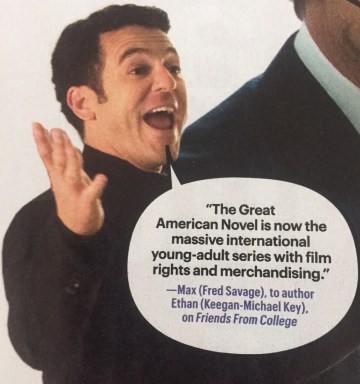
I was flipping through my Entertainment Weekly and you know how they have the funny quotes in the front from characters in shows you don’t watch? I like to read them and have a laugh, but this particular one this morning caught my eye.

FullSizeRender


It made me think: why do we write? What are our goals and aspirations when we start a novel, a novella, a story?  At a basic level, we want people to read our work. Maybe post a nice review. But is it more than that?  When we plan a series is our first thought, Jamie Dornan would be awesome playing my main male character if were to be turned into a movie. I doubt E. L. James was thinking anything past just making fun of Twilight for her own amusement when she was writing 50 Shades of Grey.

I think this quote says a lot about the industry, too. Hollywood is having a terrible time coming up with original ideas, and it seems services like Hulu and HBO are happy to pick up their next best thing from a book, The Handmaid’s Tale and Game of Thrones, respectively.  But there has been a shift in what’s trending, and gone are the days of blockbuster deals for a YA series like Twilight, Divergent, and The Hunger Games.  The whole thing does make me wonder how Hollywood chooses what to make into movies and what it won’t. Nicholas Sparks is always good for a movie, and I wonder if he sits down to write specifically thinking his next book will be turned into a movie. There are other authors who have tried, or at least, their books have tried, to break into the movie industry and have failed miserably. (I’m looking at you LeAnn Rimes and Nora Roberts’ Northern Lights.)

Joanna Penn loves to ask, “how do you measure success?” Is it when you finish a book, when you publish? When you are picked up by an agent? When your book is optioned for the movie rights?

It pays to have goals when you sit down to write–to know the direction you want your writing to take and who you’re writing for. It helps with the marketing of your book, it helps to know what your plan is going to be once your work is completed. But putting too much pressure on yourself, to picture your character sitting next to you on your desk, legs swinging off the edge, saying, “Hurry up and wrrriiiitttteeeee me, I want to be in a mooooovvvvviiiiieeee,” will do more harm than good.

Love what you’re writing is a standard rule when writing your books. Love your characters, love your plot. I’ve always advocated writing to market, but hopefully somewhere along the road, your passion and what sells meet. Sitting down to write expressly for commercial success is the wrong way to go. You may find success, but then you’re stuck writing what you don’t like. Eventually, that will come out in your writing, and once you stop caring about your stories, your readers will, too.

Success doesn’t come overnight–sometimes even us writers forget that as we are blinded by the success of indie authors such as Hugh Howey, Andy Weir, and Mark Dawson. Top indie author sellers like Melissa Foster, Bella Andre, and Linsday Buroker have been at this for years and have a strong backlist. They don’t stop writing, they’re always publishing new material, creating new content. It’s easy to forget how much freaking work this is.

So, go write, do the work; I wish you all the success in the world–movie rights and action figures of your characters included.

CreateSpace Adventures Continue

Monday I received my proofs from CreateSpace. For the past week I’ve been going through the first one (Novellas 1 – 3) editing them, looking for typos, and checking formatting. It’s taking a long time, and today I resubmitted the first one again. I found some typos (probably not all of them, but c’est la vie) found where some ellipses marks were broken, a fragment that should have been deleted. That kind of thing. There was also a novella that was spaced at 1.5 when the rest was single spaced, so I fixed that and lost about ten pages. I had to redo the page setup and adjust the spine to reflect the page loss. girl-792039_1920

But I am making progress, and I’ll be very excited when I’m finished reading these and submitting these for the last time.

It does make me wonder if I’ll ever get faster. If I’ll ever be able to write a book, read through it once, submit it, give the proof a quick once-over, and hit approve. This is only my second go-around so I shouldn’t be too hard on myself.

And I’m proud of myself that I’m not rushing through this. It’s cool to hold my books, but when someone else holds them, I want them to be as perfect as I can make them.

The month is slipping away and I was hoping for an August 1st release. If the proofs can come back without needing any tweaks, I might be able to do it.

Wish me luck.

What to Think About When Writing and Publishing a Series

There is a lot to consider when writing and publishing a series. I wrote a novella series called Summer Secrets. The collection consists of six novellas—the shortest being 25,000 words, the longest 32,000. I wrote them one right after the next without a break. The novellas each feature a couple and they are chronological—the next book picks up right where the last leaves off. I made a lot of decisions while I was writing them and one decision I had to make right away was how I was going to publish these. Did I want to paperback each novella? How much money did I want to spend on them? (I pay for photos for my covers and my own ISBN numbers.) Maybe I just wanted to publish them through Kindle Direct Publishing. When should I publish? Creating a cover on Canva.com and uploading it and hitting publish on KDP would take less than 24 hours.

I had to think if this was the way to go. Plenty of authors do it. Release, write the next, release, etc. but this strategy requires some thought. How long will it take to write the next book? How long do you want your readers to have to wait if they are eager for the next book? How will you use the time between books to market and build anticipation? What’s your publishing plan?

It takes about a month for me to write a novella, so I was faced with these questions not too long after I decided to write my series.

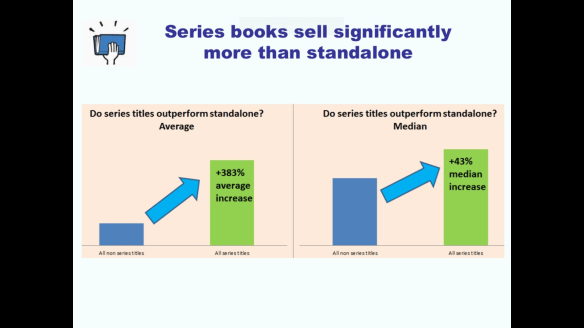
There’s no doubt that when you’re writing and publishing (in romance in particular), a series is the way to go. Smashwords released their 2017 survey that said books in a romance series sold way better than standalone books. That’s reason enough to think about writing a series. But Smashwords doesn’t tell you the best way to publish them. (Though they did favor setting up a pre-order for the first one, and pricing it for free. I’ll link to the study at the end of the blog.)

2017-07-17 (2)

Let’s list some pros and cons between waiting between books and releasing your series at once.

Pro: You can build anticipation for the next book through promos online.
If you have fans and can reach them through social media and email list, this may work very well for you.

Con: If you wait too long to release the next, your fans will forget about you.
This may not happen if you can reach your fans. But if you’re just starting out like I am, you may not want to run the risk of readers forgetting about you or waiting until the series is complete.

Pro: If you have one or two books published, you can take a break.

Con: That “rest” can turn into months—or years—because you realize you’re tired of writing them and don’t want to finish, or you get involved in a different story and you never go back to your series.

Pro: You can fix consistency issues before you publish your books. Or if you’ve written yourself into a corner, you can fix it because your books aren’t “out there” yet.

Con: You have to have a ton of patience, because how great is it to finish a book and hit publish?

Pro: Your books will have the same “feel.” Your voice will be consistent if you write and publish them at once. (We’re constantly developing and fine-tuning our voice and craft. If you wait months or years between books, they may sound different as you cultivate your skill.)

Con: Editing takes a long time, and you’re going to bog yourself, or your editor, down, if you give them your whole series at one time.  My editor took a while to get through all six novellas. It added a lot of time to my publishing schedule. There’s no doubt she could have gotten through them a lot faster had I given them to her one by one.

Pro: If you give them to your editor all at once, you’ve given them to her/him in their best possible shape. I know waiting and editing them more before I turned them over gave me time to make changes with my consistency, etc. It’s better I fix mistakes myself than pay an editor. It’s just respectful anyway to give your editor your best possible work.

Con: If your book doesn’t sell, you won’t know why. It may be because the rest isn’t released yet, or maybe because you didn’t do any promotions. Maybe it’s just because you’re a new author and you don’t have an audience yet. You can’t let this get you down and discourage you from writing and/or releasing the next book. That would be a downer to you and to the people who did buy your first book.

In the end, I did decide to publish them all at once. I split them in half to paperback them—novellas 1-3 in book one, and novellas 4-6 in book two. I felt like this was a good option because I definitely wanted to offer a paperback—I always will for all my books. But holy cow, there was no way I wanted to format and create covers for six novellas, and CreateSpace would have made me set their prices too high (for novellas) for anyone to buy, anyway. I’m going to release them the same way on the e-reader as well. It was important to me that my readers read them in order. In some series it’s okay if you read them out of order because they only deal with the same people; the plot of one book doesn’t necessarily depend on the next. A reader needs to my novellas in order or they won’t make sense. Publishing them bound together was a way to make sure this happened.

While the trilogy I’m writing right now won’t depend on each other for the plot, I’m still thinking of releasing them all at the same time. Number one is done, two is being edited by me, and three I’ve just started writing. Because Summer Secrets isn’t out yet, I feel I have some wiggle room. I’ll release my novellas, enjoy that release for a while and then publish my trilogy. Before I publish my trilogy though, I would like to have another book almost done—I have a standalone I would like to write and be ready to publish a few months after my trilogy is released. (Oh my God am I drooling to write new material!) It would be great for me if I could continue to release something every three to four months. By this time next year, I would love to have a decent backlist built up.

Everyone’s publishing plans are different and I encourage you to think ahead to what you want to do with your books and your writing career.

Here is the Smashwords Survey.
Another article on how to publish a series is here.

Let me know what you think.

Until next time!

#Smutchat Conflict Giveaway

Thank you for participating in #smutchat! I hope you’re having fun and maybe picking up some writing tips and tricks as we go along.

Today’s giveaway is Master Lists for Writers by Bryn Donovan (@BrynDonovan ). She has a lovely website too–check it out here.

master lists for writers

As always, this giveaway is open internationally. Good luck! You’ll love this book!

a Rafflecopter giveaway

The Right Attitude to Move On

I work in a call center typing for the deaf. There are lots of them out there, so I don’t think I’m going to out my work location. If you put together where I live with what I do and zero in on me, then you have way too much time on your hands and should be writing, not stalking me. But this post isn’t about where I work; it’s about knowing what you’re doing. See, my call center manager worked her way up. She was the secretary, then the HR manager, then she was hired to be the manager, but she never did what we did. She didn’t know how to process calls. Do you know how much respect we gave her when she walked around the call floor making sure we were processing our calls correctly? That’s right, none. If we had a call processing issue or had a question, she couldn’t help. She had to call the floor supervisor over for assistance. When a brand new trainee in their first hour of their first shift ever knows more about the job than the manager, something’s wrong.

If you’ve read my other posts, you know I’ve had trouble with CreateSpace accepting my files. I was trying to be fancy, and I’ll just full out admit that didn’t work out. I’ve never hidden what I don’t know–pretending you know it all closes you off to learning what you don’t, and that won’t help.

reading-1246520_1920You’re never too old to learn something new.

I stripped my file of everything I was trying to do and swapped the font with the original one in the CreateSpace template. Hey, guess what, that was accepted. No kidding, right?

When I tweeted about my problem, several people supported me, some even tried to troubleshoot my problems. And this hit home for me because it just reinforced something I already knew but I hate admitting–there will always be someone out there who knows more than you. 

Self-publishing is an ever-changing industry and what you know today you probably won’t know tomorrow. That’s just the way it is. But by doing things yourself, muddling through with the knowledge you do have will help you learn more and more.

I was talking to Thomas Jast, the subject of my interview I posted yesterday, and he said with IngramSpark, if you do it this way and this way, the sky’s the limit. He didn’t see me because we were on chat, but I rolled my eyes. I would imagine that holds true for everything you ever try to do. If you have the knowledge and the know-how, the sky’s the limit. I’m sure if I knew more than I do, I could have forced CreateSpace to accept what I wanted.

But I don’t.

Do I have the determination to figure it out?  Maybe. It depends on your priorities–do you want to master CreateSpace or do you want to write? I think I would rather put out a book that looks good (maybe a little boring, but it still looks good) than waste hours of my time trying to figure something out. I mean, software is complicated–just because you pay for and download PhotoShop doesn’t mean you’re going to know how to use it. I could download all the software I need to make an interior and cover CreateSpace will accept no matter what I do to it, but is there a means to an end doing that? Probably not since I don’t aspire to do this for anyone else.

sprout-1147803_1920Determination can take you places.

I received emails from CreateSpace this morning. My interior files and cover were accepted. They still had to tweak both covers–they said my spine text was too big so they centered it and made it smaller. They keep saying I have images smaller than 300 DPI, which is frustrating because I know it’s not true. (This is something I learned last year when I published 1700.)

Surprisingly, even with all my issues with CreateSpace (caused by my own stubbornness) converting my files to Kindle was just as bad. It took many adjustments to make the Kindle file look good in their online viewer. But hey, guess what, I did it.


colorful-1289308_1920Give the lady a gold star!


Today I’ll be ordering my proofs. I’m going to trust CreateSpace knows what they’re doing–it’s obvious they know more than me–and I’m going to hope that my proofs come out so I don’t have to fix them anymore.

So the story about my manager at my work? I guess the moral of this little post is to take pride in your work, take pride in what you do, take pride in doing things for yourself. Sure I could have hired someone at Fiverr to format and convert my books for me. It would have saved me a lot of headache and time, oh so much time. But would I have gotten the same sense of pride when I hold my books in my hands? Maybe. I don’t know. But I do know when I hit publish on those books, I’ll know that I did all the work myself, that from cover to cover is me, and no one else. There’s pride in that.

I want to be a prolific writer. I want to crank out books people love to read. I never want to lose joy and pride in publishing a book. I never want what I do to become so ho-hum I could take it or leave it.  I love writing, and even with the problems I’ve encountered, I love the designing and publishing aspect of it as well.

Always ask for help. Read books and blog posts. There’s no shame in asking for help–one day you could pay it forward.

But be careful where you’ll hold firm, and what you’re willing to compromise on. I would rather have my book published and have it look decent than try to push through all the bells and whistles and have it come out looking less than its best.

The ultimate goal for me is to put out these books and move on. I already have the next book in my head needing to be put on the page.

How about you?

young-woman-2268348_1920Keep on keeping on.


(Pictures from http://www.pixabay.com)

An Interview with Writer Thomas Jast

Today I interviewed the deliciously eccentric Thomas Jast. His new book, Exit Strategies, featuring his character, Alex Aberdeen, is now available on Amazon. This is his fourth published book. Come have a slightly scary peek at the world in which Thomas Jast lives. Have you poured a glass of wine? Good. Let’s begin.

IMG_3133

How long have you been writing? What are you working on now?

I did writing journals in Grade 1 to learn English. I assumed that every child was a literary superstar so I overcompensated and hammered out page after page. Little did I realize that writing was going to be my favourite artistic expression and that it would continue forever. I started writing “novels” at age 13 with my older sister’s PC. They were terrible and I truly believe someone would pay money to stop reading them. (And yes, I still have every word I have ever written backed up to a half-dozen locations.)
I’m currently working on a comedy project called Derek Must Die with my BFF Vito Andrews, and this fall I’ll be starting on my next project, Under Gemini Skies, a twisted story of two small-town girls whose friendship disintegrates when one of them gets a taste of wealth and freedom… mixed in with a murder plot, a revenge scheme and an unhealthy dose of psychology, of course.

Exit Strategies is the third book featuring Alex Aberdeen. What appeals to you about her? Why do you keep coming back to her?

I felt that Alex didn’t get a proper ending in Mixed Messages since the original third Alex book never came out. Exit Strategies is entirely new and is set years later, but does the things I didn’t have the skill (or guts) to do back during the original writing period (2009-2010). I have bravely (foolishly?) labelled this novel as a romance and categorized it as such. It’s a love story featuring Alex using everything I’ve learned in life. Mostly bad things. A lot of horrifying things. And it’s kind of dirty and graphic in parts, which isn’t something I’m used to doing.

Do you have more books planned for her?

Always. I have the titles “Trust Issues,” “Systematic Habits” and “Burning Bridges” rolling around in my head. Each one is going to get darker and darker until the text is basically black on black pages. But no earlier than 2020, since I’m moving onto other things for a while. Alex will evolve along with the rest of my work, I hope. Comparing Calculated Regrets to Exit Strategies is unusual because I didn’t even attempt to make them feel similar. I never want to write the same thing twice, which is what a lot of serialized books feel like.

The art on your covers is unique. Can you explain the process of designing your covers?

I generally try to find a “moment” in the book that has a strong visual element to it, something that can be summed up as a single still frame. From Empathetic onward, I found myself moving more toward graphic design, iconography or pictograms. Since indie works are generally found and judged by small Amazon thumbnails, I seem to think that bold, simple images with high contrast stand out more. I’m hoping to catch someone by surprise, have them check it out, and then browse the reviews or a sample.

You publish with IngramSpark. How did you choose between IngramSpark and CreateSpace?

I’ve used CreateSpace years ago on a different project and it was fine. However, as a computer and graphics design nerd, the flexibility and high technical standards of IngramSpark appeal to me. I love the inherent complexity. I love the difference between “black” and “60-40-40-100 CYMK.” That’s my jam.

You publish on Kindle only. What made you decide to go Select rather than publish wide?

I really like Kindle’s KDP Select plan where you get paid when people read the books as part of Kindle Unlimited. As an indie author, many people will give your work a chance if there’s no risk. For a fellow author friend of mine, maybe 80% of his revenue comes from “free” reads and he couldn’t get that with any other plan.

You’re querying a different project. Can you share how that journey is going for you?

I haven’t done as much as I would like but will resume later on this year. I query that book because it’s not my usual indie style and I feel it could be a mainstream success if it lands in the right place. I have no delusions of what is appropriate where: I am aware that a majority of my work is niche and enjoyable for a select audience. But to answer the real question: Querying is soul-crushing and frustrating and probably one step removed from walking around in hell in bare feet.

Do you have any tips or tricks for authors who may be thinking about querying?

Don’t query your first-ever completed novel. It’s probably much rougher than you think, no matter how great the ideas are. You will do much better as your writing skills evolve. The trick is to still *want* to query after all of that time…

You have a limited social media presence. Can you share your opinion on the idea that writers must have a strong social media platform to sell books? Why or why not do you think this is true? If you agree with this opinion, can you give a reluctant author tips on how to work around this?

Leaving Twitter was the very best thing for me and my work ethic. It was a platform of sorts and it did get my name out, but it also paralyzed me from writing new material. What used to take a month now took six, and the competitive and (dare I say…) negative atmosphere eventually sunk me. It depends on what kind of person you are. I’m an obsessive, clingy, dedicated type and what engages me tends to have a way of backfiring. My social circles on there were improved with my peer editing, chat groups, and existing friends. Pushing your indie works on uninterested strangers isn’t very effective so that shouldn’t be the primary reason to use social media. Make yourself and your personality known, and eventually people will want to check out your work.

Exit Strategies will be the first time I release something without the cushion of Twitter, so we’ll see what happens.

What’s next for you writing- and publishing-wise?

Writing one novel a year and releasing a polished novel from the previous year. I want to top Cassandra’s End and am having trouble doing that so far, in both scope and refinement. I want to write a mix of indie and mainstream works because I don’t think one single style or group of content can truly improve your general writing craft. I always want to be out of my comfort zone, even if I fail in the end. I have many completed books I’ve scrapped and don’t regret a thing.

Thanks, Tom, for talking with me! I love chatting with writers about how their journeys are going.


You can find all of Tom’s books on Amazon. Calculated Regrets and Mixed Messages are both on sale now on Kindle for .99 until July 18th. Take advantage of this awesome sale and get to know Alex Aberdeen.

Tom’s newest book, Exit Strategies is available now in paperback and Kindle! Follow Tom on Goodreads and Amazon and read about his imprint, eVw Press here.

Thanks for reading! Come back soon.

(Photo credits: Thomas Jast’s personal photo, covers taken from Amazon.com)

Adventures with CreateSpace

Publishing your own books isn’t easy. After you write it and pay to have it edited, or self-edit the best you can, you still have to format the insides, write front and back matter, write the blurb, and design the cover. And after you’ve managed to do that, you still have to submit it, and if you’ve got it wrong–well.

rawr

It’s enough to make you pull your hair out. I’ve been working on Summer Secrets since last August. I’m not kidding. It’s when I opened the file and started with that first sentence. It feels like forever, though some writer friends kindly remind me that they’ve been writing their current WIPs for years. I feel for them, I really do, because there’s nothing I want more than to push these books into the world and never look back.

But alas, I cannot because CreateSpace, to borrow the words of my friend Brickley, is a temperamental hag, and what I’m doing isn’t good enough for her.

Don’t get me wrong, that’s a good thing. It’s a great thing because of course I want to publish my best work, and I want it to look its best, too. But I’m beginning to lose hope that I’ll ever be able to publish a book without some issues. Well, this is only my second try, and some things have changed since I published 1700 last year, so I should cut myself some slack. Publishing will always be a learning curve, and yep, I’m learning.

First off is my font. CreateSpace didn’t like the font I laboriously searched for. It’s not embeddable. That doesn’t mean I can’t use it (always look for a site that says their fonts are free for commercial use or pay because my first choice was $35.00, and let’s face it, publishing a book costs enough as it is), but CreateSpace gave me warnings up the wahoo. Interestingly enough, in the email I received saying my cover had been rejected, they mentioned my interior file was fine. The email and the interior viewer said two different things, so the only thing I can do is wait for the proof.

My cover was rejected?!

confused cat

You caught that, huh? Yeah, let me tell you it was a surprise. I knew I had the measurements for the page set up just right. I triple-checked the numbers. The only thing I could think of when they said I didn’t leave room for bleed, (though I know I did because my measurements were spot-on with what they said they needed) was that my font on the cover was too close to the edges. I can’t show you because I’m not revealing my cover yet, but I fixed it, lowering my font size and bringing in the margins on the blurb. I did the same thing to my title and my name. I’m hoping this fixes it. If it doesn’t, I’m going to have to call.

No one said publishing was boring!

excited cat

I’ll let you know how it turns out.

Until next time!

Things to Think About When You Choose Your Setting

Last night was the second night of Settings for my Twitter chat, #smutchat. We don’t just talk about smut, we talk about lots of things about the craft, and where you set your story was one of the topics.

How do you know where your story is going to take place?

ipad-632394_1920

Generally, this is a no-brainer. If you’re writing fantasy, more than likely your characters are going to move around a world that resembles medieval times.  A story with a Prince cursed with magical powers who needed to fend off an evil sorceress wouldn’t have the same feel if it were set in present-day New York City. Along those lines, if you are writing a time-traveling saga, the historical periods you choose for them to travel to will play a huge role in where your story will take place. A contemporary romance wouldn’t be contemporary if you set your story in 1700 England.  You get the idea.

But when we talk about settings, we need to dig deeper than just the time and the place. The smaller details can have a huge impact on your story.

When I chose to write Summer Secrets, the first thing that popped into my head were couples on a vacation at a fishing resort.  I didn’t think beyond that setting other than each couple stayed in their own cabin, and each couple would have their own story. But as I began writing, I noticed how this setting both positively and negatively affected my characters.

cabin-2149726_1920


For every positive, there was a negative. They were on vacation, which meant they were relaxed, in a good mood. But as the story went on, the characters also got bored, and they rubbed on each other’s nerves. This created conflict that I didn’t foresee, but it was great planning on my part all the same.

In this vein I also didn’t realize exactly what cutting them off from other people would do. They were forced to talk to each other, whether they were tired of each other or not. As the title suggests, each couple kept secrets from each other and forcing my characters to talk because they didn’t have anyone else to talk to created some very tense dialogue, and of course, the unveiling of those secrets.

The setting caused some issues for people vacationing from the city: my characters got lost while hiking, bit by bugs, almost drowned, were hurt from falling in terrain they weren’t accustomed to.  Putting my characters into another environment would have worked too, so long as they were strangers to that environment so it would have caused outside conflict that they had to handle along with the internal conflict of being pushed together.

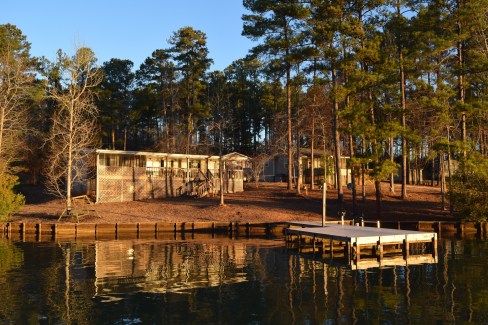
Choosing a lake resort gave my characters plenty of room for themselves where they thought things through, assumed things, came to erroneous conclusions. The seclusion also made my characters feel even more alone with their problems and secrets.  On the flip side, they also found peace being away from city life.

lake-696098_1920

When you think of your setting, look at it as a character in its own right. And when you create your setting be it world building for a fantasy, or choosing a city for your romance novel, think of some of these things:

  1. How will it positively affect your characters? Your character moves to the city of her dreams. Your male MC moves next door to the girl he’s always wanted to marry. Your character wins a trip on a cruise, or your knight on a quest finds a prosperous kingdom.
  2. How will your setting negatively affect your characters?  Your MC’s mother moves next door and makes your MC’s life a living hell.  Your MC’s boss hits on her at work, so now she views her workplace as a nightmare she must go to every day until she finds another job. The mansion your MC inherits from her uncle is haunted.
  3. How will the setting make your character feel?  An empty lake could exaggerate a character’s feeling of loneliness. A hospital setting could remind your character of an accident from his childhood and he feels fear when visiting his sick sister. A crowded room could make your character feel anxious and claustrophobic–maybe she was abused as a child and locked in a closet.
  4. Incorporate all the senses when writing about your setting.  Sight is the most common because we’re writers and we describe what our characters see. But what do they smell when they enter a diner? Greasy fish that turns her stomach? Visiting her mother’s home, does the smell of apple pie bring her back to her high school days after school?  Does your MC love her cat, but hates when her cat licks her because the cat’s tongue is too rough for her sunburnt skin? Does the music playing from a car passing by remind her of a date gone wrong?
  5. Setting can help you weave backstory into your character’s lives and novel. A man must go back to his hometown and gradually we learn why he left in the first place.

For me, the setting will pop into my head along with the characters and some of the plot. When I went to California, it was my first time in LAX and I was curious if I was going to see any celebrities (I didn’t), but being in an airport I had never been in before made a story pop into my head, characters, plot and all.  I’m champing at the bit to write it.

aircraft-742833_1920

In this day of technology with Google and Google maps, it’s easier than ever to set a story where you’ve never been. You can go anywhere the world; the setting for your next story is at your fingertips.

How do you decide on your setting?

More tips on choosing your setting:

4 Ways to Choose the Right Story Setting

Tips for Establishing Setting in Your Novel

http://blog.janicehardy.com/2013/07/10-questions-to-ask-when-choosing.html