Putting emphasis on marketing over writing: an indie author issue.

It’s probably not a secret by now that I find a lot of my blog post ideas on Twitter. Be that something i don’t agree with, or something I whole-heartedly stand behind, or even something going on that I have an opinion about and want to share with others who might find that event (for lack of a better word) interesting.

Writer Twitter is fascinating, to say the least. Lots of ideas ranging from “you can’t make a living writing” to “a book deal is the only way to go” make a unique experience when you’re scrolling through the #writingcommunity hashtag.

Obviously I have my own ideas when it comes to writing, publishing, and marketing, and I believe in a few things that not all indies agree with: writing to market, picking a genre and sticking with it to build an audience, not using Twitter as a place for successful promo. I could probably list a few more, but it’s not important.

Today I saw a tweet from Joanna Penn, and she had commented on Lindsay Buroker’s tweet about how many books she has published:

I’ve listened to Joanna’s podcast enough that I totally read her tweet in her voice and British accent! Joanna always exudes an enthusiasm with indie publishing and life in general that sometimes it wears me out listening to her. But her excitement is usually infectious and it makes me glad that I’m an indie author and part of her community.

This is a really long intro into what I wanted to talk about today. I think that Joanna’s right in that indies put a lot of emphasis on marketing and not enough (or as much as they should) on the actual writing and publishing side of things.

The saying is true that the best marketing is writing your next book but we get really caught up in the excitement that comes with a launch and we want to push that book as long and as hard as we can. I don’t want to take away the satisfaction that comes with writing and publishing a book–we should always celebrate that–but as another saying goes, this is a marathon not a sprint, and you can celebrate the first mile, but trust me I ran a half marathon (once a long time ago) and the first mile isn’t much when you think you have twenty five more to go.

Lindsay’s brilliant career aside, I made up a list of the real reasons why it’s better to publish consistently, even if that’s just two books a year.

The Amazon algorithms will favor your book around your launch period. Amazon wants to give you boost, and anyone who launches well in their categories without doing any work can tell you this. They give you a head start, so to speak, but it’s up to you what you do with it. Most indies drop the ball because they haven’t mastered ads, or they don’t have a newsletter, or they think they can keep ranking without doing anything. But a good launch ranking is more of an illusion than anything else and if you don’t use it, you’ll sink like a stone. Publishing consistently will at least keep the Amazon’s algorithms eyes on you and as you and your books build momentum, the little push Amazon gives you can turn into something useful. All it takes is a little spark to create a flame.

Here are the stats from an author I know who launched a book during the first week of August 2019:

A friend and I were chatting about how well he was ranking for a first time author without prior books released. We didn’t know then that it’s normal to rank higher during launch week. Those aren’t bad numbers for a new author with no backlist, newsletter, no ads running, and no audience. I can’t give you the exact date he published as he re-released his book in the summer of 2020, but it just goes to show that Amazon wants to help you. Use that to your advantage.

Your Amazon Ads will do better. There are a ton of things I could talk about with ads, but the most relevant one concerning this blog post is the fact that if you’re running ads to old books, it’s like pushing a boulder up a mountain. I think it was Robert J. Ryan in his book Amazon Unleashed that used the metaphor. You might make a little headway, but in the end it probably won’t work that well. I skimmed through the first part of his book trying to find it, but I can’t. I’m pretty sure I read it in his book though, and it’s a great resource if you’re looking for more information about running Amazon ads. It all comes down to relevancy. All my books are over a year old and I try like crazy with ads to sell them. It doesn’t matter how much I bid, how high my daily budgets are, Amazon knows they’re old, and to be fair, Amazon knows they didn’t launch well. It’s tough to make Amazon care about your book and if you waste your launch period, it’s even harder.

Your frontlist sells your backlist. That’s something I’ve heard many times, but it’s not applicable if your lone book is your backlist and no frontlist is forthcoming anytime soon. This is especially important if you’re writing in a series. I still see so many indie authors trying to push a book one, when they aren’t even writing book two. What is the point of that? All that work you’re doing right now to bring readers into your series, you’re going to have to do over and over every time you release a book. Yeah, you can get them onto your mailing list and keep them updated as you write more books, but honestly, I’ve only seen this work for established authors who have an audience and that audience trusts them to follow through with the series. I’m going to stop there because I’ve blogged about that many times. But here are a couple more articles on frontlist selling your backlist.

What is a Backlist?

We Need to Talk About the Backlist

You’re giving readers what they want. As your audience grows, you’ll be giving your readers what they want. Being prolific can add stress and pressure to your career, but when readers are looking forward to your next book, that’s a good problem to have. I feel sorry for George RR Martin. Readers really want the next GoT books, but he’s stated the pressure is so intense it’s given him writer’s block. Of course, we can all hope to have the problem the size of George’s, but as you grow an audience they will look forward to every new release and publishing consistently feeds them. Out of anything on this list, this reason is probably the most important in the argument for consistent publishing.

As indies we talk so much about marketing that we forget we need something to market. I’ll never forget the writer who started Bryan’s Amazon Ads Profit Challenge and asked after we started: Do we need a book published for this? I get we can be excited and sometimes that excitement is putting the cart before the horse. Writing is hard. Learning ads is easy compared to that. Writing is hard. Playing with Canva is a lot more fun. Writing is hard. Writing a blog post or updating your website is a more pleasant way to spend the afternoon. Writing is hard. It’s easier to read in your genre and call it research.

Not everyone can be like Lindsay and have several 10,000 word days a week, but she does, and it’s no secret how she can write a 150,000 word epic fantasy novel in just a few weeks’ time.

Being prolific helps with marketing. It’s a lot easier to market if you have a new launch every few months.

I don’t have a system yet as to how I write and publish books. Publishing consistently gives the process almost an assembly line feel, but I try not to think of it that way. If you have a process, you’re much better off to think of it as being efficient with your time rather than typing The End, looking up from your laptop and yelling, Thank You, Next! a la Ariana Grande and shoving the manuscript on to your editor. Just because you publish frequently doesn’t mean you don’t care about your books or characters less than someone who has to take a year to write a book.

In a previous blog post I talked about taking time with your launches, enjoying your books, giving them room to breathe. I haven’t done that, not with the 13 books I have completed on my laptop because I enjoy the writing process so much. I jump from one finished book to the next without regard for how how I’m going to publish them or when. I may have gotten carried away with the writing part of it, but at least I’ve got the hardest part down pat.

As a friend likes to say, it’s all about the books. But you can’t market if you don’t have any. Create the product then worry about the rest later.

Until next time!

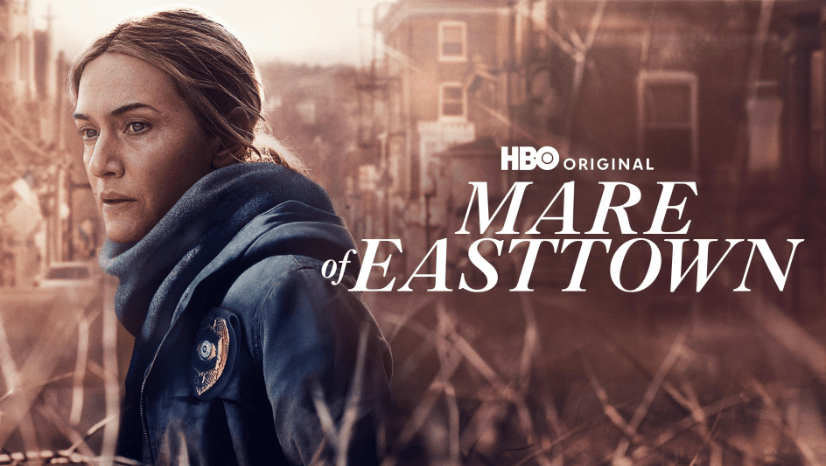
Mare of Easttown: A Character and Plot Study plus Author Resources. (Spoiler Alert!)

**Spoiler Alert!** I’m going to talk about the HBO Max crime show starring Kate Winslet, Mare of Easttown. I won’t give everything away, but if you haven’t yet started and want to keep all the details a surprise, skip this blog post. I won’t be mad. 🙂

Photo borrowed from HBO MAX: https://www.max.com/shows/mare-of-easttown/c1517b80-50ab-4733-8208-ae2c2765c0e7

If you’re not familiar with the show, Mare of Easttown is about a detective played by Kate Winslet who lives in a rundown New England town. When a homicide takes place, she investigates. While it’s only on its third episode as of this writing, it didn’t take me long to get sucked in, and after every episode, I’m excited to get back to my own manuscript. Not many shows or movies encourage me to want to write, but Mare of Easttown definitely gets the creative spark going every time I watch.

Mare is a typical detective, and until you list her attributes and flaws, you don’t realize how cliche her character is to the police procedural, crime genre. Of course, that can be a good thing–you have to meet reader and viewer expectations. She drinks too much, though I wouldn’t quite call her an alcoholic. She has a tragic back story: dealing with the death of a child, the death of her father when she was young, and a divorce. Those are important because they make her what she is–a rough around the edges, but kind, character. She doesn’t let anyone get too close to her, and that includes her friends, her mother, and her remaining child.

The one thing that sets my teeth on edge, and I suppose you could consider that a good thing, as it’s eliciting some kind of emotion, is that her life would be a lot easier if she made better choices. Everything from her temper to the way she treats her friends and family to the way she drinks while she goes over evidence and police reports at home, it all makes me want to shake her and tell her her life doesn’t have to be this way. Probably, if she’s got a good character arc going for herself courtesy of the writers of the show, she’ll figure it out. What remains to be seen is how much she’s going to have to lose before she does.

Other facets of the show that are actually tropes of the genre are the out-of-town detective who is also assigned to the case because Mare isn’t doing a good enough job, her ex-husband getting remarried, and she develops a love interest with an outsider–a guest author who is teaching at the local college. Right away we see that the detective also assigned to the case is going to cause friction, though to my surprise it didn’t take many episodes for them to start getting along, but I was glad of that. Mare has so many other conflicts with her personal life that she doesn’t need to add any more in her professional life. Her professional life is already rocky as the Chief of their department, her boss, isn’t happy with her performance with a previous still-open case and that has consequences later on. Her ex-husband is implicated in the homicide, and of course, I would bet in one of the episodes that her love interest will also be implicated in some way. That’s just the way these shows and books go. Whether anything will come of it, we don’t know. Red herrings are what make this genre. The best writing is when everyone is a little bit guilty and the red herrings have a some merit.

I really like the feel of the show, how gritty it is, and we get a taste with the opening credits. It’s rainy, cold. There is no sun, and even if it’s not raining, everything looks washed out and old. You can tell right away that this is a poor town. Not enough money to go around–Mare lives with her mother to help share costs, and her mother is another source of conflict. I just cringe the way she treats her mother when I have so much regret with the way I treated mine before she died. Anyway, life is hard, and we see that in the way the sun never shines and everyone is walking around in a winter jacket frozen to the bones.

There would be a lot that goes into writing something like this–because at the heart of the show is the homicide that Mare has to solve. All the other stuff like relationships and how she deals with her losses, or how her family members are connected to the crime, they are all just obstacles she has to overcome or at least bury so she can do her job. As a casual consumer, it was fun to watch her and her new partner search a local park at night for shell casings and/or a stray bullet, but as a writer and one with zero knowledge of police work, I watched carefully how Mare found a chip off a building caused by a ricocheting bullet, and how she followed (imagined?) the trajectory to find the bullet buried in a tree. That’s tenacious, but we also get a glimpse that under the beer and vaping and personal problems, she is (was?) a good cop.

Under the heart of all of it is the police work, and it has to fit into the story as seamlessly as the rest.

Would I want to write something as involved as Mare of Easttown? I’m not sure. I like the romance part of writing, and I don’t think that Mare and her guest author are going to ride off into the sunset. That’s not the kind of show this is. My detective would definitely need a love interest, a serious one, but one that brings as many problems to her life as it solves.

The only things I know about police work are from the eight seasons of Castle that I loved to watch, but when you get into crime fiction like this, unfortunately, the devil is in the details. If real cops shot their guns as many times as Kate Beckett does in one episode, they’d be out of a job. No, I’d definitely need to dive deep into the world of police work, and besides enjoying watching Castle and Mare of Easttown, I’m not quite sure if that level of interest would fuel a book or a series like the one I’m reading now about Emma Griffin, an FBI agent by AJ Rivers.

If I wanted to write crime like this I would have to prepare big-time, and I would start with these:

1. Read Cops and Writers: From The Academy To The Street by Patrick J O’Donnell. When looking at resources, it’s important to try to find things that are current. Police policy and laws change all the time. You want to start off as close to this year as you possibly can, then you can research details as you write. This book was published in 2019. Not bad.

2. Listen to these two podcast episodes on the Self Publishing Formula. One is with Patrick J O’Donnell, the gentleman who wrote the book above, and Hollie S. Roberts.

3. Join the FB group that Patrick and James talk about. I’m not a member but it sounds like a great resource for writers. You can find it here.

4. Watch more shows like Mare of Easttown and definitely read more books. I started Big Little Lies on HBO as well, and that is also an interesting show where the plot revolves around a murder. I enjoyed reading the two detective books from Dea Poirier, and if I did decide to write in this genre, I would definitely dig up more. (No pun intended.)

5. I would have to decide if writing a series is the way to go or a standalone, and even these days domestic thrillers/crime are being written more in the first person POV as AJ Rivers’ and Dea’s books are. First person and third person both have limitations and would dictate how you write your books. I’m very comfortable with first person right now, but it’s not so easy to give another character their POV like it is in third person. They are a little old, but Tami Hoag’s detective series is written in third person past and they are based in Minneapolis, which I enjoyed.

6. I would buy a police scanner and listen to the types of calls that come in around my area. Not only would it give me a feel for the kind of crime that is committed in my city, but I think it would also spark story ideas.

7. Undoubtedly I’d want to make a contact at my local police department. It can be something as small as taking a tour, or something more involved as requesting a ride-along, but chances are good I’m going to need someone I can email questions to. Contact your the PR department for your local police department and ask how you can reach out to a police officer.

While I may never want to write crime/detective novels, there’s no doubt that there’s a certain dark romance to them that intrigues almost everyone. Whether I want to devote time to a new genre, that decision won’t come until much later. I have several things on my plate right now, but I’m going to bookmark Mare and come back to her time after time. Everyone can use a little motivation now and then, and she’s mine.

Until next time!

Thursday Thoughts: Keeping up with content and where I’m at right now.

Hello, May! I can’t believe how fast 2021 is going. Spring is right around the corner, though in Minnesota, it’s always been a little iffy when it will come and whether or not it will stick. We didn’t have a terrible winter at all, and due to some unusually warm temperatures in March, our snow disappeared a long time ago. I’ll probably do a little spring cleaning and put in a work order for a few things I need done around my apartment. While I don’t have many exciting things planned for summer, I’ve always enjoyed the lazy feel of the longer days. Do you have any plans for the summer?


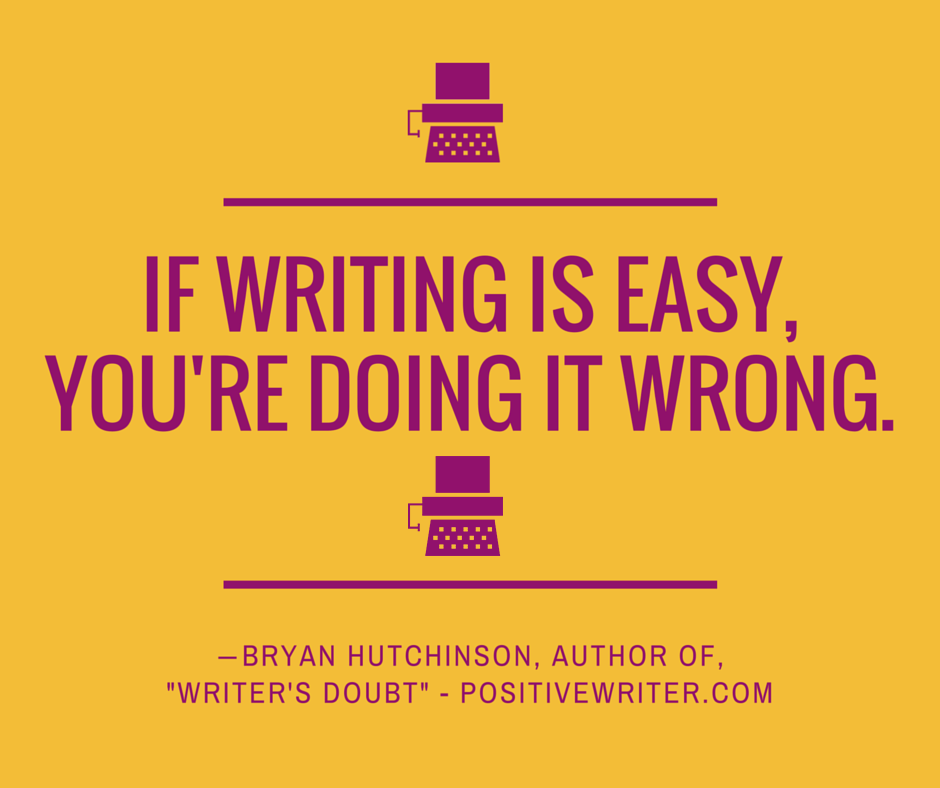
Writing a blog post ahead of time requires to me to look into the future, or at least, aim to achieve the goals I say I’ve met so my posts don’t require too much editing the night before when I proofread one last time before the blog goes live. I was hoping to be done with my third book of the year (I’m at 63k, but sadly I’ve been so tired lately I spend a lot of my free time sleeping) and I am fighting a bit of quality vs. quantity, imposter syndrome, and self-doubt a lot of writers face when things are going too well. A lot of the argument comes from quality of the fiction, and something deeper, something with a few more twists and turns or a few more chapters of character development, may need a little extra time in the oven before the timer goes off. I’ve never been one not to be completely honest with what I read and write. I read and write romance. Characters have their flaws, they move past them to find a happily ever after. That’s all I’ve ever written and that’s all I’ve ever wanted to write. It doesn’t cheapen the work–it can’t or any adult writing YA, Middle Grade, and children’s books would be set aside and not considered “real writers.” Maybe no matter what one chooses to write, it’s always going to be a personal thing as to how long a book will take from start to finish, but the phrase “If writing is easy you’re doing it wrong” is always in the back of my mind after a successful writing day.

Graphic taken from positivewriter.com/printable-quote-posters-on-writing-and-creativity/

I won’t know if my books resonate with readers until the feedback starts coming in. That’s all anyone can use to gauge their skills, I guess. Can you sell your work or not? If it’s not worth the money, the consumer won’t buy, no matter how pretty your cover is or how well-written your blurb is. Simple as that.

I’m still waiting on my beta reader to get back to me with what she thinks of my first 1st person present standalone I’ll be publishing this year. In the meantime I have plenty to keep me busy. I just can’t let myself start another book. There is more to the business than writing, even if we wished there wasn’t. I’ll be focusing on that as times goes on and I’ll keep you updated on those things as I get them done.


How do you search through all the content out there? I’ve blogged before about my fear of missing out, and I need a way to figure out how to consume the information I need when I need it. I’ve thought of a couple of tips to help with that, and I’ll share them with you. Like so many streaming services and shows/movies/documentaries to choose from, if you try to pay for it all and give all your time to what’s out there you’ll go broke and crazy.

  1. Where are you in your journey? For instance, if you’re just starting your newsletter, content such as what to put in them, or developing an on-boarding sequence may be more in-line with what you need rather than how and when to cull a percentage of your thousands of subscribers who don’t open. Those two things are very different needs, and we could be talking years between needing to know each one.
  2. Is it tried and true? Things happen so fast in the industry that sometimes it’s not worth it to learn something if you’re not going to need it when you learn it. For example, I’m taking a mini-course from Mark Dawson about his launch plan. Being that I’m going to hopefully publish a book in the near future, taking that course makes sense. But if you don’t have anything that you think you’ll be publishing for a while, spending money on his course maybe wouldn’t be the wisest investment. Things can change between now and when you’re ready to publish. A new promo site may develop, or the Amazon Ads dashboard may go through a thousand changes before you’re ready to use it. Facebook is known for changing how you set up an ad. There are very few things that will never change–even tropes, trends, and craft advice can change if you write commercial fiction–but advice on what to blog about, building your author platform, or going back to newsletters, how to offer good content so readers sign up, things like that will always be necessary.
  3. How much money is it? I’ve blogged before about how some of these courses can cost hundreds of dollars. Sometimes, depending on what you need when you need it, a book or a beginners free course will be enough to get you on your way without breaking the bank. Time can also be an investment. I don’t know about your life or finances, but I would rather spend time reading about something and researching than spending money on a course that will spoon-feed the information to me, but at a significant cost.
  4. Make a list of the things you need at the moment versus what you should always be doing. Networking is something everyone should do that never stops. Probably one of the biggest mistakes I’ve made in the past four years is not making friends with other romance writers. They can beta read for you, recommend editors, help with newsletter swaps, keep you up to date with industry news, and be all-around cheerleaders and sprinting partners. As introverts, it’s difficult to put yourself out there, but networking, especially in your genre, is something you should always be working on. Same as reading in your genre. You’ll have a better understanding of what’s going on in the genre you’re writing in than listening to secondhand information. Learning craft is another thing you should always be doing, but things like listening to a podcast about a new program like Kindle Vella can wait until you have the time to consider if it’s the right path for you.

Cutting through all the noise is hard, and it’s difficult to be a hoarder of information. What do you do with a piece of information if you don’t need it right at that moment? You can put it away and hope it’s still relevant when you pull it out again, but chances are something about what you know is going to change. Like I said, ad platforms are notorious for that. There will always be new promo sites, or sites that have worked in the past but don’t work now due to saturation.

I need to remind myself that I don’t need to know everything all the time. Joining Clubhouse (the audio-drop in app) has been really hard for me–I realized that the full-time authors who do a lot of the meetings and talking can do so whenever they want because they work from home and aren’t under anyone’s restraints but theirs. I still have a day job and more than once I’ve been disappointed I couldn’t listen in a room because I was working.

I feel a lot of pressure to know all of the things, and a lot of that is fueled by being truly interested in the publishing industry, both traditional and indie. At least it’s something I can recognize in myself and try to control it the best ways I know how.


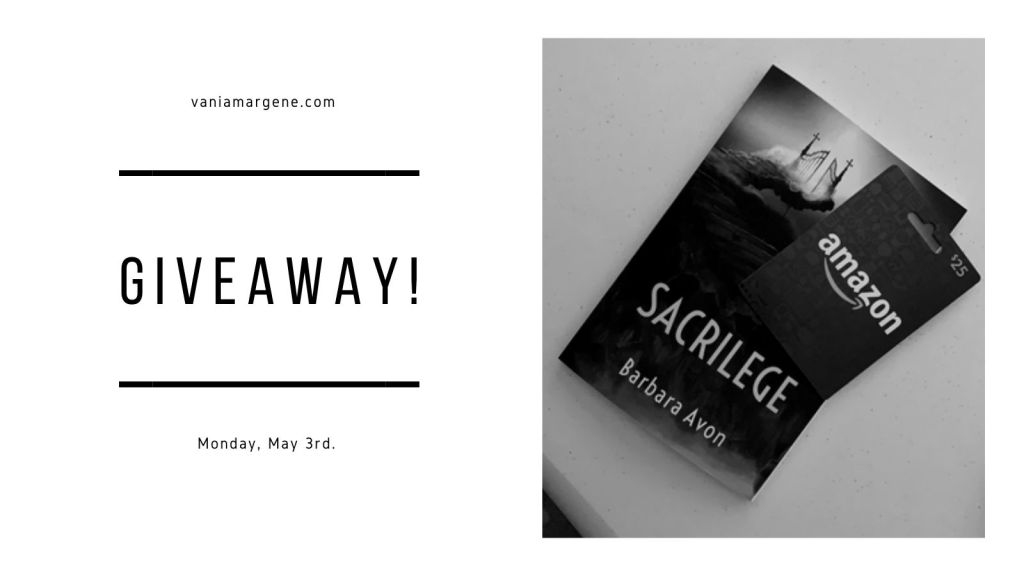
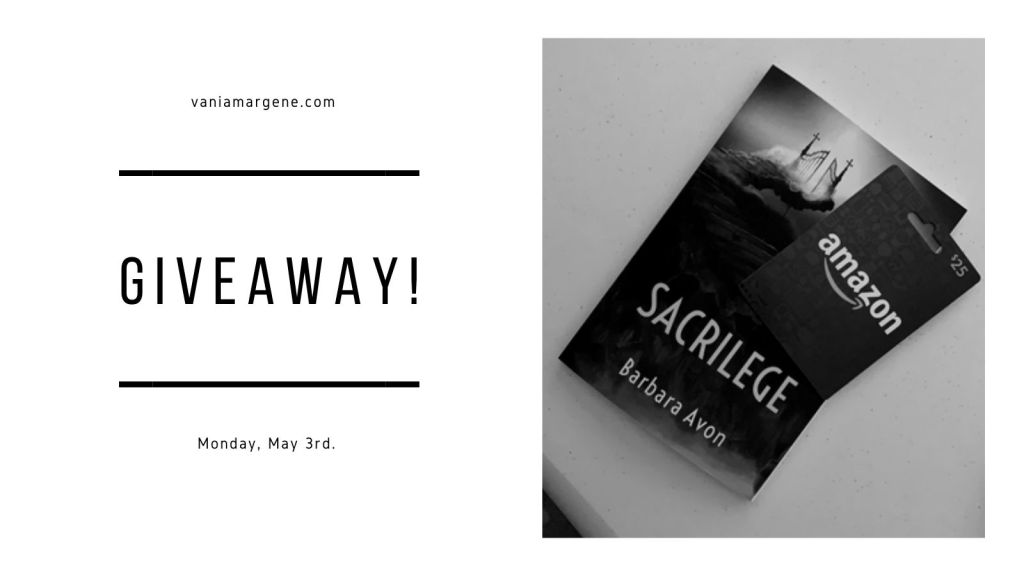
As a reminder, the giveaway for Barbara Avon’s author interview is still open! Enter to win a paperback copy of her book, Sacrilege, and a $25 dollar gift card to Amazon. Click here to read her interview! And click here fore easy access to the giveaway! The giveaway ends Sunday, May 9th, so don’t forget!

Thursday Thoughts: How fast do you write?

Happy Thursday, everyone! I hope the week is treating you well.

There isn’t much going on in my corner of the world. I’m close to finishing my fake fiancé billionaire romance. I keep saying I’m going to take a break from writing and do other things, things I need to do like set up my newsletter, but I always dive into another book. After this book is done and breathing, I will get my newsletter sorted out and go through the edits my beta reader will give me when she’s done with my ugly duckling trope I gave to her a few weeks ago. I’m going to have my newsletter link and welcome email ready for the back of that book and publish it as soon as it’s ready. That is my plan for the next couple of months, providing everything goes well.

I only say that because I’m still dealing with this infection and while it’s only a bit painful and uncomfortable, it still takes away my focus. With any health issues, minor or major, sometimes you can’t help but worry about what’s going on. Thinking I might have to live with this for the rest of my life (there are only so many rounds of antibiotics I want to subject my body to) causes me some stress, though thank goodness I don’t have the anxiety I had at the beginning of the year. I admire anyone who can write while they have health issues, mental or physical. I am doing my best to stay positive and keep writing, and hopefully, one day, this too shall pass.


On that note, I want to talk a little bit about writing speed. There’s been some talk on Twitter about quality versus quantity, and the majority agreement seems to be you can’t have both. I have to admit, this makes me a little cranky because as someone who has a lot of time to write, and uses that time, I do manage to write a romance novel of about 75k to 80k in about two months, give or take. Writing in 3rd person past tense was harder for me for some reason, and writing in 1st person present tense, the books seem to go faster. All that is besides the point though. There will be writers who take years to finish a novel, and there will be others who can finish a book in a month, or even a couple of weeks.

I think one of the main reasons we still think it should take time to write a book is because the traditional publishing industry only publishes one book a year by an author. (Normally. Nora Roberts’ publicist just mentioned on Nora’s FB official page that Nora writes four books a year. They have to go somewhere.) That is their publishing schedule, and we tend to to think they do that because the author needs that year to write the book, when in reality, that author probably wrote that book in three months, and it takes the rest of the year for edits, book cover design, formatting, and a huge marketing push before the book comes out.

With indie publishing, any timetable is non-existent. Write as fast as you want, publish when you want. Depending on the genre–romance, cozy mysteries–authors can write books quickly, send them off to their editors, hire out formatting and book covers, and keep up with a schedule that might seem grueling to some, but easy for them. That does not mean their books are crap.

I really resent anyone who implies my books are crappy because I can write them in a reasonable amount of time. There are writers who are faster than me. Lindsay Buroker averages 10k to 12k days (not weeks) regularly. Does that mean her words are crap? She’s a seven figure author. She’ll tell you her readers say, no, her books are not crap. There are writers who dictate and can write thousands of words an hour. Do I feel slow writing romance? Maybe. I feel REALLY slow knowing I haven’t published anything since early 2020 and I’m taking the steps I need to rectify that.

I could go into my daily routine and show you all my obstacles and how I write despite them, but you all know I’m divorced and a single mom of two human kids and three cat kids. I work full time. I do the shopping alone. I read fiction and nonfiction, write this blog, spend time with my sister, listen to podcasts, and go for walks. I still write 10-15k words a week.

If you have to belittle someone for using the time they have to write, you need to look at yourself and your own schedule. Where does your time go? What is your mindset? Where do you want your career and business to go and how fast? Do you think of your writing as a business or is it just a hobby? If you say you don’t want to write one day because you’re not in the mood and all you’ll write is crap, guess what? You need to write the crap before you write the quality. In quantity comes quality. It takes thousands of hours of practice to master anything. If you don’t put in those thousands of hours, you won’t have the quantity and your quality will suffer. I learn something new about myself and my writing every time I write a new book. A writer will never stop learning, and every book he writes will be better than the one before. That’s quality and quantity in a nutshell.

Craig Martelle did a 5 Minute Focus on the topic of quality. You can listen to it here:

So please stop sneering at the people who write quickly. It doesn’t mean their books are terrible. There are going to be terrible books out there. A debut novel will never sound as good as that author’s tenth, even if they worked on it for five years. I’ve clocked a lot of hours writing, a lot of hours going through beta readers’ notes, and editors’ comments. I write. I learn. I write some more. I’ve earned a two-month book.

If you want to increase your speed, here are two great resources! Check them out. 🙂

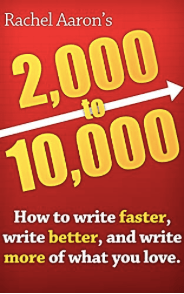
Rachel Aaron’s 2k to 10k: Writing Faster, Writing Better, and Writing More of What You Love is a fabulous resource.

Photo grabbed from Amazon.com

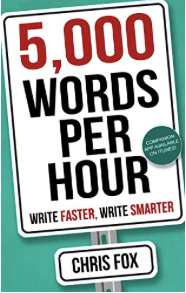
Also, Chris Fox’s 5,000 Words Per Hour will help you boost your word count.

Photo grabbed from Amazon.com

Chris also did a really fun interview on the Six Figure Authors Podcast where he talks about writing speed, making your writing time count, and writing to market. I love listening to him speak, and you can listen here:


And last, but not least, I’m formatting interview answers by the lovely Barbara Avon! She’s been writing and publishing for a little while now and she has some great advice when it comes to navigating the indie publishing world. I’m also giving away a paperback copy of her book Sacrilege and a $25 dollar Amazon gift card. That interview will show up on Monday, so check back and enter!


That is all for now, I hope you have a lovely weekend! Keep writing!

Until next time!
Pricing Your Book: Who is your reader?

My local mall doesn’t have a lot to offer. You might think that’s crazy–why would the city mall in Fargo, ND be lacking? Joking aside, there aren’t many stores in the mall anymore. “Back in the day”, there used to be something for everyone: toy stores, candy stores, bookstores, clothing and shoe stores for every family income range. Back to school used to be an exciting day-long event.

Now, not so much.

The other day I noticed they are putting in a Sephora–that’s expensive makeup to anyone who doesn’t know.

Last month they opened an Athleta to replace Gap. That’s an expensive workout clothing store to anyone who doesn’t know.

I wondered why they put in an Athleta when we got a Lululemon last year. That’s more expensive workout clothes if you didn’t know. Pair those stores with a Dry Goods and a Francesca, and the only affordable place left is JC Penney with customer service so bad I don’t bother to shop there. I don’t want to go through the hassle of paying for something if I find something I want.

You’re probably wondering where I’m going with all this, and my point is, if you’re financially challenged, you’re not shopping at my local mall. You’re going to bring your limited spending money to places like Kohl’s (don’t forget your coupon!), TJ Maxx, Old Navy, and Marshall’s.

This made me start thinking about where the mall finds their customers, and how indie authors find their readers.

Whether my mall has intended to do so or not, they are shutting out the little shoppers. Shoppers who can’t afford $100 dollars for workout leggings. Shoppers who could spend $100 at Kohl’s and buy three or four pieces of clothing–maybe more.

When you price your book at launch and you choose if your book is going to be in Kindle Select to take part in the Kindle Unlimited program, or wide (on other platforms like Books and Nook) you are consciously deciding where your readers are coming from and how much money they have.

In KU, readers pay $9.99 a month to read an unlimited number of books. Granted, not all books are in KU–a lot of traditionally published books are not, so a reader is sacrificing selection for value (though with the number of books published every year, month, and day that’s not much of a sacrifice if you ask me).

Anyway, so KU readers are one type of readership. They may be whale readers and read a book a day, or every two days, and their subscription fee pays for itself in a week and the rest of the month really is “free” for them. They may love indie authors and binge every book that author has written before they move on to another author. No matter how or what they read, they have limited income and $9.99 a month is a bargain.

Being wide cultivates a different readership, though you do have more flexibility with your prices and sales–if you choose to use them and many indies do not. When indies are wide they expect readers to pay for their books (duh). They can’t be borrowed like the KU model (unless you’ve enrolled your book in the program Kobo offers, but if I’m not mistaken you have to publish directly to Kobo instead of using an aggregator for the option to join).

Readers on other platforms may have more disposable cash and will buy your $2.99 book if they really want to read it. They won’t blink an eye at spending $11.97 for a four-book series at $2.99/each. Sometimes indies will do a permafree book, meaning it’s free everywhere, usually the first book in a long series to draw readers in, or they’ll run a .99 cent sale, but when you’re wide, you have to figure out your marketing strategy or no one will know you’re having a sale.

I’ll scroll through Twitter and see a book promo that makes me interested enough to click on it. Sometimes I’ll click on that link and see the book isn’t in KU, but the author hasn’t added any other store links to the tweet to indicate they are selling on other platforms, too. That ends up wasting my time, and other readers’ time when they have a KU subscription and are looking for books to read in KU. What’s the point of going wide if all you’re going to do is promote your Amazon buy-link?

This isn’t a blog post about enrolling into KU versus selling your books wide. There are plenty of those, and I don’t need to add my voice to the noise. But what this blog post is about is knowing who your reader is and guesstimating how much money they have to spend on books. With all the free content out there, and sales, too, a reader with a KU subscription or limited funds isn’t likely to spend $4.99 on an ebook. Especially if that ebook is only 50k words like a lot of romances out there. My opinion may be unpopular, especially with indies being told these days to “know your worth.” I know my worth, and I also respect my readers’ pocketbooks.

So what exactly am I proposing?

*If you’re wide, promote your books and all their platforms. You can use Books 2 Read, a universal link creator that will create a link to your book that will point your reader in the direction of their favorite retailer.

*Make your reader aware of sales. You can use social media for this, and your newsletter, but also use promo sites that let readers know your book is on sale. Some readers who like you when your books aren’t in KU or Kobo Plus have to wait until your book is on sale, and that’s the choice you’re making not enrolling into one of these programs.

*Read Wide for the Win by Mark Leslie Lefebvre. This is a great resources for reaching all the readers you can while publishing wide. Which is why you went wide in the first place, right?
Joanna Penn interviewed him recently on her podcast, and you can listen to it here:

*Research how to sell books at regular price. More often than not you’re asking readers to buy a book at full price. Some readers still have a hard time swallowing the idea of parting with money for something they can’t hold in their hands–like an ebook. Check out David Gaughran’s video on how to sell your book at full price:

*Research how to reach wide readers with ads specifically for wide books. David Gaughran also has a really awesome book on how to use BookBub ads, and you can find it here. Mal and Jill Cooper has a fabulous book out on how to use FB ads, and you can find it here.

*Make your books available in the library system. This is one of the sad things about having to be exclusive with Amazon while my books are in KU. I can’t add my ebooks to the library system. When you are wide, aggregators like Draft2Digital will enroll your books in library systems like Overdrive and bibliotheca. Ask readers to request your book from their local libraries.

*Go wide with your paperbacks too. Clicking expanded distribution on Amazon with your paperbacks is limiting and earns you less royalties than if you publish with IngramSpark. IngramSpark will distribute your paperbacks to all the online book retailers and also enroll your book into the library system.

My local mall has lost sight of who its customer is. Unfortunately because of what they offer (or don’t) I can no longer be one of them. I can’t afford to shop at most of their stores, and the one or two that interest me aren’t worth the hassle of finding a parking spot, navigating down the corridors to the store and then leaving again. Customers with money can browse the high-end selection from Lululemon or buy games and other computer/gaming equipment from Best Buy–an anchor store that replaced Sears when the chain went out of business.

When you sell anything, you have to know who your customer is so you can tell them about the products you have. Probably the most profound piece of marketing advice I ever heard was this: Don’t force customers come to you, you go to your customer. I don’t know who said it first, I think Craig Martelle said it in one of his YouTube videos–it could have been anyone in indie marketing space, honestly–and it’s true. “Build it and they will come” doesn’t apply to books. My mall needs to show me they want my business by offering me stores I can afford to shop at. Since they aren’t, they’re telling me they don’t care about my business, that the customers who can afford to shop there are enough for them.

When you’re wide and you only put your Amazon link in a tweet, you’re telling a potential customer that a) you don’t care if they have a KU subscription or you’re hoping they don’t and b) you don’t care if they like to read on a different platform.

I don’t care if you’re wide or not, your business plans are not any of my concern, but if you are, I can’t buy your book, not unless you somehow let me know your book is on sale. Unfortunately, that’s the kind of reader my income has turned me into and there are a lot of readers like me out there.

What’s really interesting is that just this morning I was listening to Andrea, Lindsay, and Jo on their newest podcast episode of Six Figure Author, and Andrea polled her newsletter subscribers. She asked them why her newest series hasn’t done so well, and the resounding answer was that readers lost a lot of disposal income due to COVID. Also a lot of people just weren’t in the mood to read because the past year has been so stressful. If you want to listen to the podcast you can listen here:

Find your reader, market to them.


Coming up, I’m going to have an author interview with Barbara Avon and maybe a giveaway too! Have a good week, everyone!

Thursday Thoughts, Clubhouse, and Time to Think.

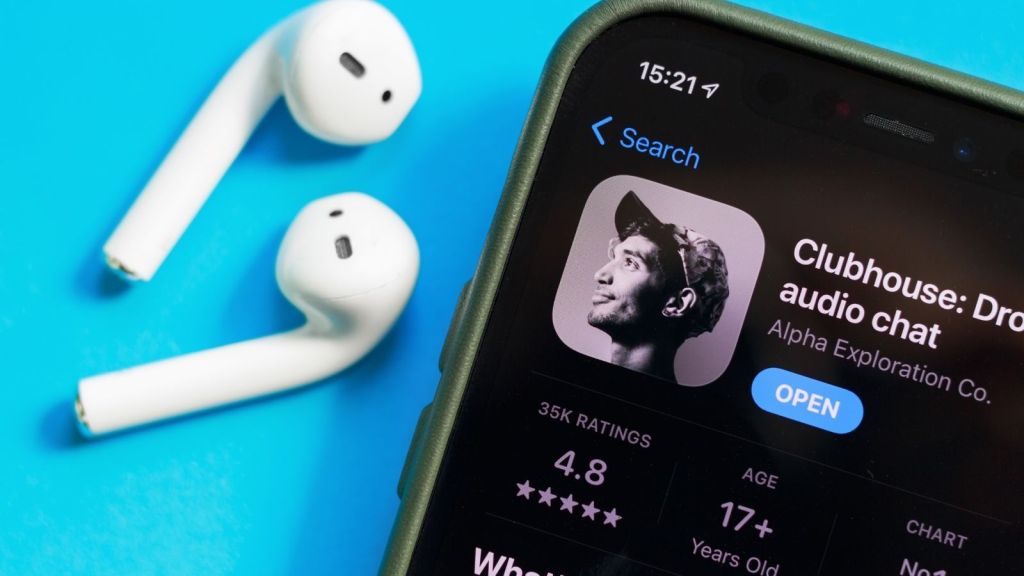
It seems all anyone can talk about these days is Clubhouse, and I was lucky enough to be invited into the app exclusive for iPhone users (thanks Aidy!). If you haven’t heard of Clubhouse, it’s an app where you can drop in on any room of your choosing and be a fly on the wall. I’m a part of a couple of indie writing rooms and a publishing room. One of the rooms, or I guess “club”, is hosted by my Level Up Romance Group on Facebook. There I get to listen to the speakers “on stage” chat about whatever topic they’ve decided on (today it was Kindle’s new platform Vella, but that’s a different blog post). It’s not scripted, not like a podcast where the interviewer answers questions previously given to them by the hosts. It’s fashioned as more of a chat/discussion, or if you’ve ever been to a conference (not just a writing conference but any professional conference) I liken it to dropping into a breakout session and listening in. If you don’t get anything out of it, or you need to attend a different session, you can slip out the door, or in the app’s case, you can press on “leave quietly” and leave the room.

I don’t know all the ins and outs of this app–I’ve never spoken and haven’t been invited to. (My area of expertise is limited and I’m not making any money selling books so I doubt an invitation will be forthcoming in the near future.) I’m still learning how to move about the app (or hallways), and the first time I attended a room, I was scared to blow my nose because I wasn’t sure if I was muted or not. (Unless you’re invited to speak, you are, but it’s up to you to unmute yourself when it’s your turn to contribute.)

As you can imagine, there is a lot of information passed along these casual chats and it feeds right into my Fear Of Missing Out.

I present myself as a pretty stable individual mental-health wise, and for the most part, I am. But when it comes to the indie publishing industry and all the information out there, I have a desperate fear of missing out on the NEXT NEW THING. How are authors making money, what are they doing, what are they trying? I can get a bit obsessive when it comes to gathering information, and it’s only been in the past six months or so where I’ve tried, consciously tried, to loosen the reins and dump some Facebook groups. I don’t listen to nearly as many podcasts as I used to, either. I haven’t listened to Joanna Penn for quite some time, and it’s been while since I listened to the Wish I’d Known Then podcast hosted by Jami Albright and Sara Rosett, though that one should be at the top of my list since they both write romance and interview romance authors on the regular. I don’t listen to The Sell More Books Show since Jim Kukral left. I don’t care for the new format (no offense, Bryan!) and I don’t click with H. Claire Taylor, Bryan’s new cohost. The only podcast that I listen to every week is the 6 Figure Author podcast. I like Lindsay, Jo, and Andrea, though if it’s just the three of them talking, sometimes their information can get a bit repetitive, and I’m not always interested in their guests, though they are more business-minded than some podcasts I’ve listened to about publishing (recently they interviewed Joe Solari).

The reason why I stopped listening to so many podcasts is because if I listened to as many as I think I needed I wanted, or as many as are available, my mind would not rest. I need the time unplugged to think about my books. I need the time to mull over my plots, what my characters are doing, where they’re going, and how they’re going to get there. If I constantly have a voice yipping in my ear, my brain can’t wander, I can’t brainstorm, and my books will never get done.

There isn’t only one way to write a book, but this is my way. It helps me keep writer’s block at bay. There is no quicker way for me to shut down than if I sit at my computer and I don’t know what I need to write during that session. I call myself a planster, and I plot as I go along, and for me, that does mean knowing what I need to write that day even if I don’t know what I need tomorrow.

This applies to blog posts too. I thought a lot about what I wanted to say on the drive home from dropping my daughter off at school. I never would have had that time if I would have been listening to a Clubhouse meeting or a podcast. Sometimes even music takes away the space in my brain, and in the past I’ve been able to write with music in the background, but I’m moving away from that and writing in silence more and more.

So, enter Clubhouse and my need to know everything. So far the app is new, and there aren’t many rooms you can join, which is a good thing for me. To add to the urgency, rooms aren’t recorded. Either you can join and listen at that moment or you can’t. At least with a podcast, webinar (most offer replays though you can’t join in with a live Q & A session), or even a YouTube video, you can listen at your leisure. While Clubhouse could be a fabulous resource for authors down the road (especially once they are out of beta and you don’t need an invite to join) FOMO is real for a lot of people, and it will be interesting to see how others handle their time.

I don’t know everyone who is on stage most of the time, I know a few of the authors who speak, and they are all full-time authors. I mean, if you’re making ten grand a month on your books, I guess you can feel like you can make time to listen and join the rooms. I need all of my writing time still, because I work full time, have three cats (one of which is always needing something) two kids, and a social life. I need time to shut my brain off or my books won’t get written.

Time to think about your stories and blog posts and other content you share on social media is important, and I need to remind myself constantly that I don’t need to know everything. I like knowing what’s going on in the industry, especially romance. I probably wouldn’t have started writing in first person present had I not been keeping my ear to the ground. I wouldn’t have gone with MailerLite if it wasn’t the most recommended newsletter aggregator. Chances are if I wasn’t paying attention to the indie news in general, I wouldn’t have known to ask for a Clubhouse invite in the first place.

But I have to make sure I have space in my brain for books–which is doubly difficult if you’re already worried about something going on in your life. For me, it’s my health, but I’m slowly getting back to normal there, and eventually that space can be taken up with something else–hopefully nothing quite so serious. The next time I need an oil change, maybe, or when I need to make an appointment for a hair trim. It’s emotionally exhausting worrying about something, and when you can find quiet, it’s best to take it instead of cuing up a podcast or joining a room on Clubhouse.

It’s all about finding that elusive balance.

And that’s always easier said than done.

All stock photos supplied by Canva Pro.

Keeping Your Focus: Shiny Object Syndrome

When there is so much you can (and should) be doing as an indie author, it’s difficult to keep your focus. Writing should come first, though sometimes it doesn’t, and when you let other things get in the way you can suddenly look up and see that several days have passed and you haven’t written a single thing. And by other things I don’t mean laundry or family activities. I mean making graphics for your Facebook ads, searching for keywords and making ads on Amazon, watching craft videos on YouTube and an assortment of other things that are important to your business but can take time away from your writing.

Another issue that plagues writers is the shiny object syndrome. Writing is hard, and it’s tempting to chuck a current project and start something new. Beginnings for some are a lot easier than finding your way through the murky middle of a book or you finished a project and don’t care to edit it because you ignored a couple of major problems you didn’t, and still don’t, know how to fix.

The problem is though that if you let your shiny object syndrome go on for too long, all you’ll have is a computer full of half finished projects and no clear idea of how to move forward.

Last year I realized a rather surprising cause of burnout–lack of progress, lack of moving forward and/or lack of success. When you feel like a hamster on a wheel, it’s no wonder you can get tired quickly.

So what can you do to start moving forward?

  1. Figure out your plan. If you’re writing to build an audience you need to publish consistently (in all ways, I’m learning, genre as well as time-wise) even if that’s a book a year. If you’re dabbling, maybe you don’t care as much about completing a project, but even dabblers and hobbyists need to complete projects now and then. Finishing something gives everyone a sense of purpose and satisfaction, and publishing on Amazon, your blog, or a place like Wattpad feeds our need to have readers read our work and supplies the feedback we crave.
  2. Make a list. What are all the projects you have going right now? What projects do you have simmering in the back of your mind? Make a list of the projects that are sitting on your computer in various stages of completion, then make a list of what you’d like to write in the future. Many authors have a file full of ideas to draw from when they are ready to start a new project. You won’t feel like you’re missing out on a great idea–you can always come back to it once your plate is clear.
  3. What is your closest project to completion? If you choose a project that’s almost done, finishing it will be that much faster. Then you can let a beta reader read it, workshop it with a critique partner, or post it on your blog.
  4. Create a cover for it. These days it doesn’t matter if it’s just an extra epilogue for a newsletter sign up, or a short story, everything needs a cover these days, and you can find motivation and inspiration to finish that project if you create a cover for it with the idea that one day soon you’ll publish it. Canva makes it easy to look at templates and experiment with font and font placement. Just be careful that you don’t spend too much time doing that. A project that will never get done doesn’t need a cover.

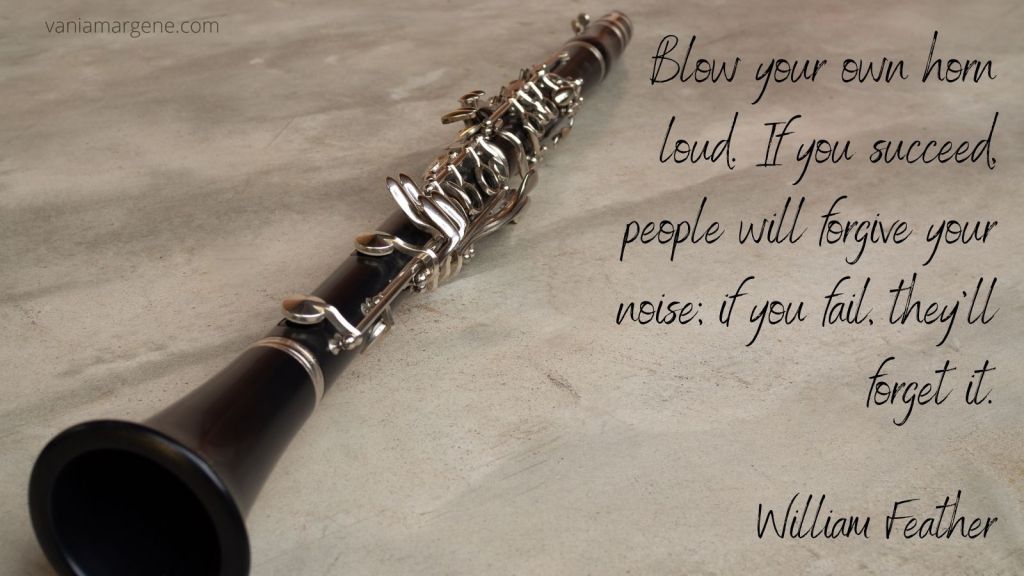
I have a lot of projects on my computer, almost 9 books in various stages of edits. I’ll get them done, but like in my blog post musing about publishing and launch plans, I need to figure some things out. I need to publish something soon, so I can find the high again. There is nothing, NOTHING, like holding the proof of your paperback book in your hands. I’m going to try to do a better job of putting my work out there on social media. Never been afraid to blow your own horn. Not many will do it for you!

I was trolling Twitter while I took a break writing this post, and it couldn’t have come at a better time.

Focusing your energy and your attention is hard–there is so much outside stimulation vying for it–but it will be worth it in the end when you can check off items one by one on your list.

That is a great feeling to propel you to finish even more things!

Good luck!

Want to read more about shiny object syndrome? Check these out!

Do You Have ‘Shiny Object’ Syndrome? What It Is and How to Beat It

5 Ways to Resist Bright Shiny Object Syndrome and Finish What You Start

Thursday Thoughts: Keeping daily word counts and other bits and pieces.

Keeping a Daily Word Count.

A couple months ago, a romance writer offered a Google spreadsheet to anyone in our romance group on FB. We could add our name and enter our daily word counts. This isn’t a private total–anyone who added their name can see (and be motivated by) others’ word counts, and they can see yours. I’ve never needed the motivation, but I’d never kept visual track of my daily word counts either, and I thought, what the heck.

It was addicting, to say the least.

I love(d) (the challenge isn’t over yet) adding my daily word counts and watching as other did the same. One author in a column close to mine does high numbers too, and subconsciously, or maybe not so “sub”, I tried to keep up with her. It was fun.

But keeping track in a public way like that was also hard. Here’s why:

  1. You are keeping score. You’re not supposed to compare yourself to others, or if you do, you’re supposed to do it in a positive manner. That doesn’t always happen.
  2. It can make you feel bad on the days you can’t write and you have to put in 0. That’s tough when the person next you logged in 5,000 that day. The problem is, you don’t know how another person’s life is. They can be a full-time author where 5,000 words a day is the norm for them and a 0 day means they had an emergency. Sometimes a 500 word day for someone else is a great day because they work a full-time job and have kids. I didn’t like my 0 days. Especially when I had a week of them between books.
  3. Added pressure. It’s addicting to enter in a number at the end of the day. This can make it so you don’t give yourself enough grace if you have a bad day. Some say bad words are better than no words, but I don’t agree with that. If something else is taking up headspace and I know I can’t sit down and write something decent, I won’t bother. I know I can make it up later. Because I do. Giving yourself grace only works as far as you putting in the work later.
  4. There wasn’t a way to claim editing words. I wanted to log in the new words I wrote for that challenge. There were a few days I put in 0 because I was rereading and smoothing out the first third of my book. I was working, but I couldn’t log in any numbers. Entering in that 0 made me feel like I hadn’t worked that day.
  5. Writing and publishing isn’t always about writing new words. We couldn’t modify the spreadsheet because there’s a formula that tallies up our words and entering anything else in the field makes the formula not work. But if I were to make my own spreadsheet, I would make room for days that I did something else so I could still feel productive.
  6. Seeing the words add up is a great motivator. There are some negatives when doing a challenge like this, but I like seeing my words add up. Right now since January 4th when she offered us the spreadsheet, to March 20th, I’ve written 141,826 words, and I’ll have more before the challenge is over (April 13th) because I have a book to finish. But I won’t be starting another project, so as soon as this book is done, I’ll be entering in zeros for the rest of the challenge. That will be hard for me, but i’ll just have to make peace with it because I know I’ll still be working.

Would I recommend doing this? Yes, if you can keep yourself from getting carried away and playing the comparison game in a negative way. Your fellow writers’ successes should bolster your own, not drag you down.


In other news, I’m still going through my infection issues. Eventually I’ll get better, but it may take another round of antibiotics (I’m on my third and I can’t drink while on them which is a real bummer!). I need to make another appointment but I’m going to take a small break so I can have a glass of champagne over the weekend. I want to celebrate the completion of my second book of 2021. I may already be done with it by the time you read this post, I’m not sure. I’m 61k into it right now, and I tend to drag my feet toward the end because no matter how eager I am to move on to the next, I’m still attached to my characters and hate to say goodbye.


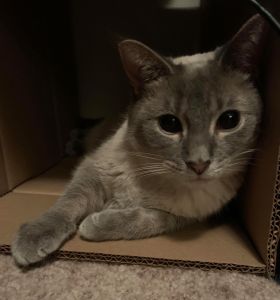
I’m not the only one with medical issues, and I had to bring my cat in to the vet. She kept going to the litter box, and I’m glad I trusted my instincts–it turns out she had a UTI. They gave her an antibiotics shot and I think it made her feel not that great. She sleeps a lot and doesn’t have her usual spunk. I’m hoping once the antibiotics do their job she’ll be back to her old self, but I’ll probably need to make her a follow-up appointment just to be sure. I know all about lingering infections and I don’t want to her to suffer. Here’s a picture of her if you don’t follow me on IG or you’re not friends with me on FB.

Blaze is a two-year-old Siamese Ragdoll mix.

One more thing I’m excited to share with you–Savannah Cordova from Reedsy is going to guest blog on Monday, March 29th! When she first reached out to me, I didn’t think it was real! I’m happy she thought my writing and publishing blog was relevant enough to contribute, and I hope you get a lot out of what she’s going to be sharing with us.

If you don’t know what Reedsy is, they are a team writing/marketing/publishing experts and professionals that help you with your journey. They offer lists of vetted freelance editors and book cover designers. They offer a FREE book formatting feature on their website (similar to Draft2Digital’s) and I’ve often blogged about the free classes they offer right to your email inbox that allow you to complete them at your own pace along with a short quiz at the end of each course. They really are amazing, and Ricardo Fayet, founder of Reedsy, wrote and is offering his book How to Market a Book: Overperform in a Crowded Market (Reedsy Marketing Guides Book 1) free on Kindle right now. I’m so honored to host Savannah on my blog!


Lastly, even though I haven’t been feeling 100% and I’ve been dealing with a sick cat and I’m always going to the grocery store for milk, I am trying to spend time outside and this is the pretty picture I captured the other day on a walk. With spring coming almost a full month early, this has been beautiful, cool, crisp weather to walk in. These are the golden days in Minnesota–when the weather is warming up but the bugs haven’t caught on yet. I love an evening walk in weather like this.

Enjoy your weekend! May it be productive! Check in with Savannah on Monday…. hope to see you there! 🙂


Publishing Plan & Launch Plan: How they’re different and why you need both.

I’m struggling. I’m struggling for a myriad of reasons (some not related to writing–anyone know how to quiet an old cat at night?!), but the prevalent one for me right now is my publishing plan for the books I have written, and the launch plan I’m going to need to find readers for those books.

It’s tough because when you press publish, you aren’t guaranteed readers. It would be nice if we were, if we became overnight sensations, but that rarely happens and if it does, there’s a tremendous amount of work that goes into it behind the scenes.

The difference between a publishing plan and a launch plan to me is when we talk about a publishing plan, I think about how many books am I going to be able to publish in a given year, two years, three? How far out am I looking when I plan how many books I’m going to be capable of writing? That’s different for everyone. How fast you can write depends on your living situation, if you have kids, if you have a full-time job. Obviously, if you’re single with no kids and you’re already a full-time author, you’re going to be able to write quicker than a woman with a husband and children, a job, and maybe a sick pet. It also depends on where you are with your craft. If you can write your first draft so that you consider it practically your last draft, you can publish books faster than someone who needs a few months of editing. It’s important not to over-extend yourself, especially since Amazon allows year-long preorders. Due to COVID they are giving you grace if you have to move your preorder date, or cancel altogether, but that might not always be the case. Before COVID, if you missed your preorder date, you were suspended from creating preorders for a year, and I would imagine that at some point, they will go back to those guidelines.

A launch plan for the release of a book can consist of a Goodreads giveaway, stacked promotions, newsletter swaps, and everything in between.

How to optimize those things will be different for everyone, and while you can grab tips for a great launch, genre, how well your book is written, cover, the size of your newsletter and the authors you swap with, your backlist, how much you can afford to pay in ad spend, even what’s going on in the world, and I have no idea how many other factors, can influence how well your book does on launch day.

Planning your publishing schedule while optimizing your launch can be a nightmare. When you look at your launch plan/publishing plan it’s important to know your strengths and your weaknesses.

Newsletter. This is definitely a weakness of mine. I don’t have one . . . yet. Not even one for my 3rd person books I can hit up on the off chance there would be some crossover readers. Some authors have a large enough newsletter their whole launch plan consists of sending out an email to their newsletter and that’s it. It’s enough to make them sticky in the stores and their loyal readers will leave reviews.

Networking/Swaps. This is another area where in the four years I’ve been publishing I have failed. I have writer friends, sure. But I had no idea how important it is to network with other authors in your genre. Without a strong newsletter I can use for reciprocation and without romance author friends who are willing feature my books in their newsletter, I’ll have to rely on the kindness of strangers until I can pay those favors back with my own list.

Number of Books. This is one strength of mine, at least. Your launch plan will definitely look different if you haven’t banked some books, or if you don’t have a backlist written in your chosen genre. If you’re launching a new first in series, it’s better to have another book or two written so your readers know that more books will eventually come. Putting book two on preorder and linking the preorder to the back matter of book one can help. Fickle indie authors aren’t the only ones teaching consumers to be wary. Streaming platforms like Netflix can pull the plug on a new series before wrapping it up, and a lot of consumers now won’t try something new unless all the seasons (or books) are available. I know for me as a consumer, I was really disappointed when Amazon Prime released the first season of Carnival Row, but maybe because of COVID I haven’t heard of another season in the works. BUT as I have found out, rapid releasing when no one knows about you or your books doesn’t do anything and when I released my Rocky Point Wedding series last year, it didn’t matter how fast I released them–I didn’t have readers. I have this weird thing where I need to write a whole series first before I can even think about publishing. I many need to change my way of doing things to streamline my publishing schedule.

Ad spend. I’m fortunate that I have a little money for some ad spend. I can afford to book a promo with Freebooksy or BargainBooksy, ENT, etc. So far, if I put my first in series for free and pay for a Freebooksy with Written Word Media, I gain back my fee with sales and page reads. But that has never elevated my status or made my book “sticky” in the charts. I also play with Amazon Ads, but I’ve never worked with them to create second or third generation ads because I’d rather write more books than spend time playing with ads. Also, keep in mind that if you do plan to run ads at some point, your cover can’t be too racy. With stricter guidelines in place, Amazon has determined my Rocky Point covers are too sexy and they won’t let me run ads which could be a problem for you if you’re counting on an ads boost.


So, here’s my dilemma. First of all, I’m banking books as is my usual custom. I have six books in a series (serial, meaning no entry point except book one) that are completed. They’ve gone through a couple editing sweeps by me, and unless I’ve missed something, they sound strong: no plot holes, complete character arcs, etc. I spent the majority of 2020 writing and editing those. I needed a break, so I…

…wrote what I thought would be a standalone novel just to publish for the sake of hitting that publish button, but then I realized it could be a really cool book one of a series and while a paid beta reader read it and made her notes, I wrote book two of what will be another six-book series. That one has since been edited by me a couple of times, and is just sitting on my computer while I…

…thought I was writing a reader magnet for this newsletter I need to get going this year. The problem is, it’s a good book. It’s going to be a really good book, and I don’t know if I want to “waste” it by offering it up as a freebie. Obviously building up a newsletter is not a waste, and offering a full 85k book will be a good incentive to sign up for my newsletter. But, even though eventually I can put it up for sale, I would then need a new magnet anyway. So what difference will it make if I sell it now or later?

I’m at a loss, and while having 8.5 books on my computer almost ready to go (besides covers, formatting, and blurbs) is a good problem to have, I’m tired of publishing to crickets. I’m rebranding, writing new books under my initials instead of my first name, and if I can’t figure out how to make things better than the last four years, all I’m going to be doing is releasing books to no one. And let me tell you, I’m getting real tired of that.

Y’all, I’m tired of starting from zero. At some point, an author shouldn’t have to do that.

Another problem I’m having is that this is a new direction for me, and stockpiling books before I know if my style and voice are going to resonate with readers is ill-advised at best. Because now I’m stuck between a rock and a hard place. If I can’t find readers, then ALL the books I have on my computer I may not have a use for. I doubt that will happen–I don’t write in a vacuum and someone has looked at all the books in some way, shape or form–but it’s something to think about (like there isn’t enough to worry about, right?)

That’s why I’m interested in releasing one standalone just to see how readers react. While it wouldn’t be a huge release, I know a little bit to at least get a few readers and if I add a cookie to the back, it might not be a bad way to start building my list with organic signups. On the other hand, if it makes more of a dent than I expect, I would want something to publish next in the not so distant future.

The uncertainty is enough to give me a headache, but I appreciate you listening to me brainstorm. I mean, there are things I can do. Hire a consultant for one. There are a few indie authors out there who will chat for an hour for a fee. I can ask for opinions in my FB groups, and I think I will be doing that. Maybe an experienced indie author can give me a few pointers.

I know one thing–I need to publish something, soon. I need the high. But like a drug hit, it may not be the best thing for me. Or it could change my life. You just never know.

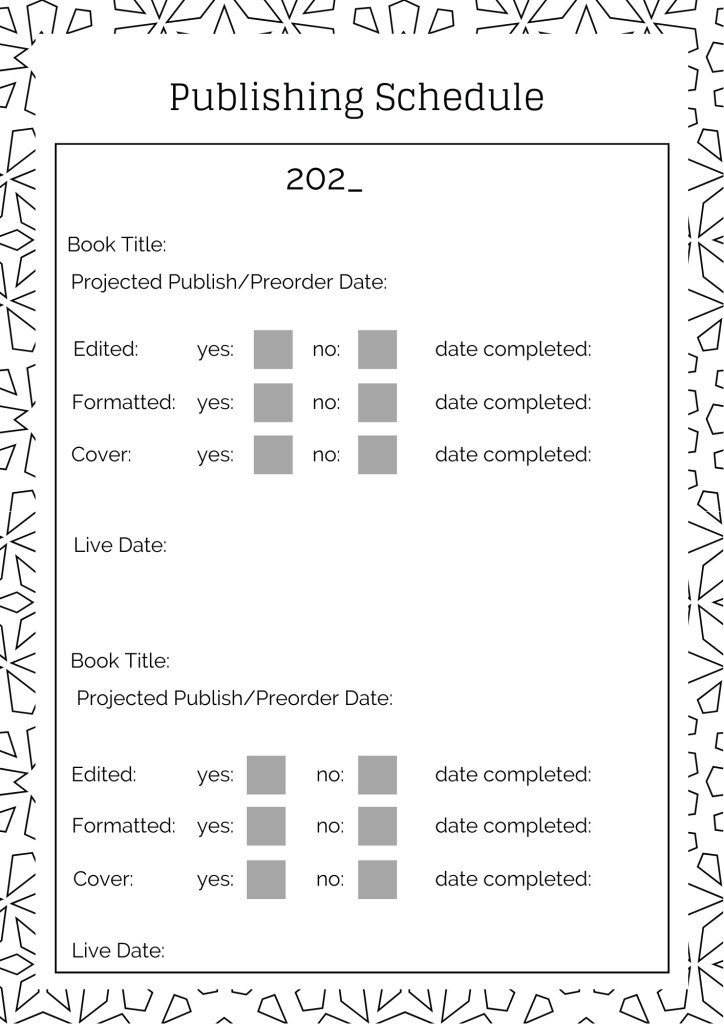
Here are a couple things that can help you with a publishing plan:

This is printable! Save it and print it for your own use.

A Book Production Schedule for Indie Authors: IngramSpark Blog

As for a launch, I’ve never had a successful one. I’ve never put the time and the effort to set up blog tours, newsletter swaps, promo stacking, the list goes on with what you can do. Normally I press publish, run some ads, and then feel sad when my book doesn’t make the splash I was hoping for.

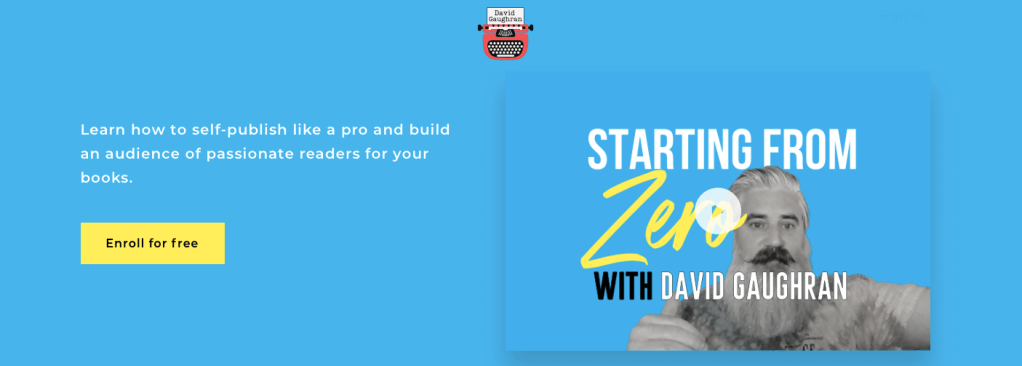
Since I’m starting at zero, this is worth another peek:

Screen grab taken from his website.

David’s course is free, and if you want to sign up, click here.

He also has an updated list of Promo Sites and you can find that here.

As for what else you can do for a launch, the resources can be it’s own blog post, and this is already a lot longer than I wanted it to be. I hope you find this useful, and thanks for tagging along on this journey with me!

Until next time!
Flexibility: When time and patience aren’t enough to achieve your goals.

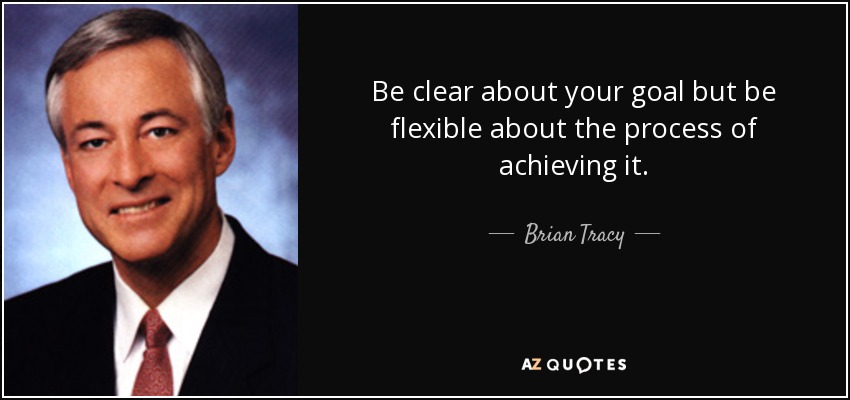
Spotted in my Instagram feed.

As indie authors we have a lot of flexibility. Blurb not working? Change it. Cover not working? Change it. Didn’t edit your novel well enough the first time, give it another editing sweep and upload the new file. We have a lot of flexibility when treating our writing like a business. We can pivot faster than any traditionally published author, chasing trends if we’re fast enough writers, or researching sub-genres and hopping onto a hugely-demanded but underserved niche.

This quote jumped out at me this morning as I scrolled all my social media feeds while I sipped on my much-needed first cup of coffee. I like it because as indies, we’re able to search out new ways if something we’re doing isn’t working. The problem is, there is such variety out there that it’s difficult knowing when to give up and try something new or sticking with what we’re doing and hoping that our tenacity will be rewarded. We need to give something ample time to see if it’s going to work, and bailing too quickly before something can stick could cut off something that could be really viable to your business. On the other hand, sticking with something that’s not working out of fear of the unknown won’t get us very far, either.

Knowing when to keep trying and when to throw in the towel is something that needs to be taken as case by case basis and perhaps the thing you’ve moved on from could work for you later. With all the information available to indies right now, it’s easy to get overwhelmed with all the choices.

Here’s a not-so-quick list of some of the things that we as indies have control over, when to let things ride, and when to maybe give new things a shot:

  1. POV. Changing up a POV may not be an option for some people. You need to definitely work with your strengths and admit your weaknesses. If you rock 3rd person past, it wouldn’t be wise to change to shaky 1st person present just because that’s what’s trending in some genres right now. The quality of the work should always come first, or what you do after that won’t make much sense. I find writing 1st person present easier than 3rd person past. I can write faster, and as my paid beta reader just got through the first book my first series and liked it, I feel I’m capable in that area. A comment made on this blog on one of my posts said I didn’t like writing it, but that’s not true. I wasn’t sure if it was the right choice when I decided to write a book in it, that’s true. It wasn’t what I gravitated toward when I started writing because I’d read 3rd person past all my life and stuck with what I knew. But my books also were not selling that well, and since I had nothing to lose, I mixed it up. This is one area where I probably could have stuck with 3rd person past and eventually seen some level of success. On the flip side, my 1st person present books could flop. I don’t know. The amount of flexibility we have can be a pro as well as a con. If you’ve been writing in a POV you may not click with, or you haven’t found readers to click with it, change it up. You never know where a new POV will take you.

    If your current POV is not clicking with readers, you don’t have to change POV to find traction. Maybe changing subgenres would help. When I was writing 3rd person past, I wrote steamy contemporary romance. I didn’t have to change to 1st person present to make a change–I could have started writing women’s friendship fiction, or domestic thrillers, or literary fiction. Again, you need to know where your strengths are. I like writing romance and have a difficult time plotting anything that doesn’t revolve around a man and woman falling in love. Changing POVs made more sense to me than seeking out another subgenre, but I could have made a less drastic change and started writing clean romance as well. There are all sorts of things you can do if what you’re writing isn’t hitting the mark and finding an audience. I was lucky and stumbled upon first person present billionaire romance. I enjoy writing it, I feel I’m good at it, and I’m hoping that even though that subgrene has peaked, I will still find readers when I’m ready to publish.

    POV: Choosing Between First-Person and Third Person Writer’s Digest


  2. Ad platforms. This is a tricky one because your ads can only do a well as the book you’re selling. Bailing on Amazon Ads in favor of Facebook ads may not do anything for you except eat up money faster. You also have to know what your business goals are. If you’re in Kindle Unlimited, it makes sense to run Amazon Ads, but if you’re wide, Facebook can reach more people who read on all platforms. I see some authors give up on ads saying they don’t work, but they aren’t advertising a book written to market, or the cover is bad, or the look inside is full of telling. Another important thing to consider is if you learned how to use the platform. There are a lot of free resources out there and I would never try to put together an ad on a platform I wasn’t familiar with. Once you are familiar and know your ad budget then you have to figure out if your return on investment is worth it to keep running ads. It may not be. So you table that ad platform and write another book, or just hold off on ads for a bit, or try BookBub ads instead. You have to give something time to work. When I was doing Bryan Cohen’s ad challenge, there were so many people who wanted to throw in the towel after the first couple of days. If you feel like that, then maybe you don’t have confidence in your product and your gut is trying to tell you something. If you know you’re advertising a good book, then you should have patience and faith in your product. Your book will be on sale forever (unless you pull it). You can afford to wait a couple months to gather ad data to make good choices.

    The quick and easy guide to Facebook and Amazon (AMS) ads for authors by Derek Murphy

  3. Newsletter. If you haven’t started one, you can start one anytime. If your newsletter has low open rates, figure what why readers don’t want to open your mail. Maybe you’re not giving them anything of value. Maybe you’re not emailing frequently enough. Maybe the only mail you send out is when you have a new release and readers are tired of your “buy buy buy” message you send out every three or four months. Maybe you need a new aggregator because the one you’re using now sends everyone’s mail to their spam folder. If you aren’t getting the results you want, figure out why. Change your newsletter sign up cookie, or offer the readers you already have more content. There is a lot of flexibility here and you can make it work for you.
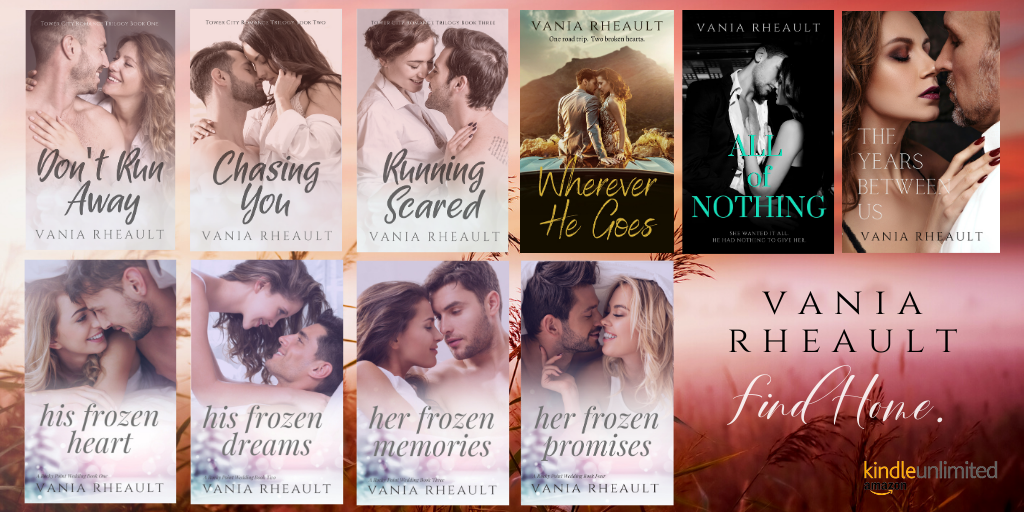
  4. Your book’s package. It’s easy to fly off the handle with changes when Canva makes it easy to create a book cover, and changing the blurb is as simple as writing something quickly and logging into your KDP account. The thing is though, you have to wait to see if what you already have can work. Run ads, ask in reader groups, or send out your cover and blurb in your newsletter and ask for feedback. I’ve blogged before that it took me a year to change the cover of The Years Between Us, and when I did, I saw immediate results. But when I changed the cover of Wherever He Goes, it did nothing for sales. Whenever I do Bryan Cohen’s Amazon Ad challenge, the first part of the challenge is always taking a look at the product and making sure your book is sellable. Covers get changed, blurbs get changed, categories are added. I have no doubt that a lot of those changes are for the good of the book, but also if you’re running ads for the first time for only a handful of days and you’re not seeing impressions, that may not have anything to do with your book and going through the hassle of changing your cover may be for nothing. Oftentimes it’s helpful to take a step back and give yourself, and your book, time to breathe while collecting data.

When we talk about old ways keeping doors closed, what we’re doing is talking about years of collected data. I can look back on my 4+ years of indie publishing, and I know what I did wrong. I didn’t network with other romance authors, I don’t have a newsletter. Had I done those two things, maybe my 3rd person present stuff would have sold better. Maybe my POV switch wasn’t necessary and I was just grasping at straws making such a drastic change to my writing career. OR, it could breathe new life into my writing and it could offer more opportunities than I ever thought possible.

That’s the thing with being flexible. My third person books will always be there and I can always go back to them if my first person stuff doesn’t work out, or I need a change of pace. In fact, I had a good standalone idea for my next book that I was going to write before I made the change. Now I can write it in first person or put the idea on hold. I also have 20k of a book that I need to rewrite and finish that was part of a writing prompt I stumbled upon a couple years ago. I wasn’t in a place writing-wise where I could finish it, but my skills have come a long way, and I’d like to revisit it and finish it up.

We have a lot of flexibility as indie authors. Don’t get bogged down with the way you’ve always done things. You could be missing out on a new opportunity!

Until next time!