The Evolution of the Romance Genre

1,663 words
9 minutes read time

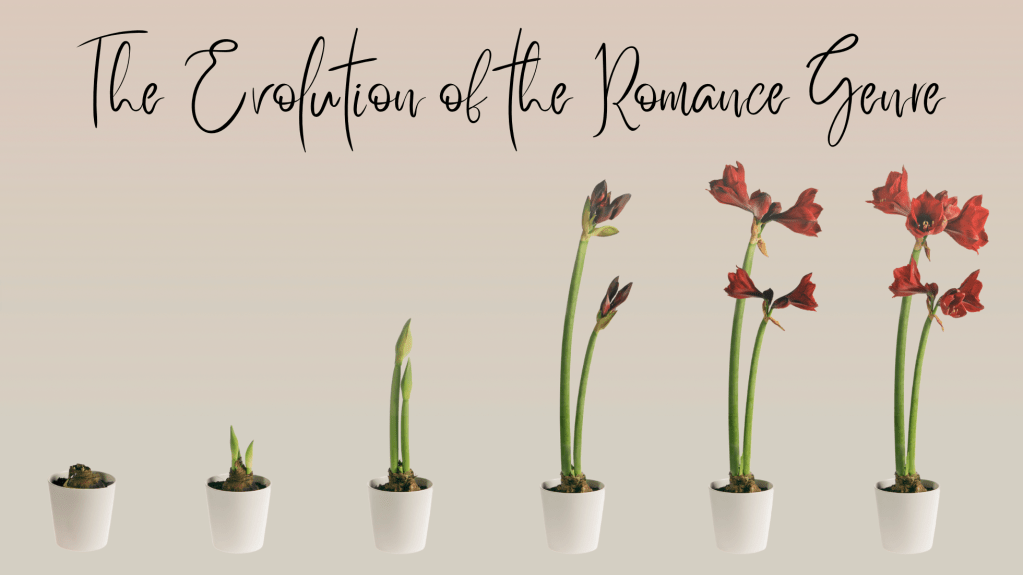
beige background. a flower in its growing cycle dirt, sprout, stem, bloom. red flowers, green stem, white pot.  text says, The Evolution of the Romance Genre

I’ve wanted to be a writer since I was a kid.

That’s probably not a surprise to anyone who is also a writer, and many of us can say we’ve been writing stories since we learned how to hold a crayon. When I was in high school, I devoured Harlequin Temptations and Desires, finding them at garage sales, the library, and shoplifting them from Pamida. I got caught and my dad made me talk to the manager about how stealing was bad, but I was a kid who loved to read and was a kleptomaniac at heart and well, it didn’t stop me. That’s neither here nor there, but one night, I remember holding a book and thinking, I want to be in charge of it all. The cover, the blurb. All of it. What I didn’t realize back then is I was describing what would eventually become indie publishing. So, yeah. I am in charge of all of it. Down to where the numbers appear on the page.

That was thirty-five years ago or so, and I didn’t understand tropes. I chose books based off the blurb, if I thought I would enjoy the story. In fact, I don’t think I really understood tropes at all until I was assigned the difficult task of marketing my own books. It was through listening to romance marketing talks, webinars, and podcasts where I learned tropes are what sell your books. That was also a difficult realization for me because, like most writers, I just wrote what I wanted to write. My first trilogy was written without tropes in mind–I just made up a group of friends who lived in a fake town, gave them some trouble, and forced them to fall in love while navigating those troubles.

I don’t remember the precise “Ah-ha” moment I had regarding tropes, but I must have had it at some point because my next three standalones were all trope-specific–enemies to lovers, age-gap, and close proximity. Then I veered off again with my Rocky Point series and just wrote whatever I wanted, and if a trope was baked in, like second chance, yay for me.

So you can imagine my confusion when, after seven years of publishing, I realized, yet again, romance was becoming even further divided than just tropes and that I would never be a successful indie author writing “contemporary romance” because romance didn’t work like that anymore.

Indies were changing the game.

There’s an interesting interview that Nora Roberts did not long ago with the Associated Press, and she was talking about her career in romance. She’s written over 250 books and has seen firsthand how the romance genre has evolved, going so far to even say, “My roots are in romance and I have a lot of respect. But I don’t write romance anymore. I do write relationships.”

AP: Speaking of the sex, that’s a good transition to romance as a genre. It has evolved a lot in the last couple of years. Where do you see yourself in the pantheon of that genre?

Roberts: I don’t at all. My roots are in romance and I have a lot of respect. But I don’t write romance anymore. I do write relationships.

I’ve been writing for a really long time now, and the romance genre evolves and it changes. And it did when I was working in it, and it just got to a point where I didn’t want to go where it was evolving. I wanted to go in a different direction. So my roots and foundation are there, and gratitude. But that’s not what I’m doing now.

That’s a great way to look at it . . . if you’re Nora Roberts and not a nameless, faceless author trying to find readers in market so saturated it’s tempting to close your laptop and never look back. She has her audience and has built it over years of publishing. So where does that leave the rest of us?

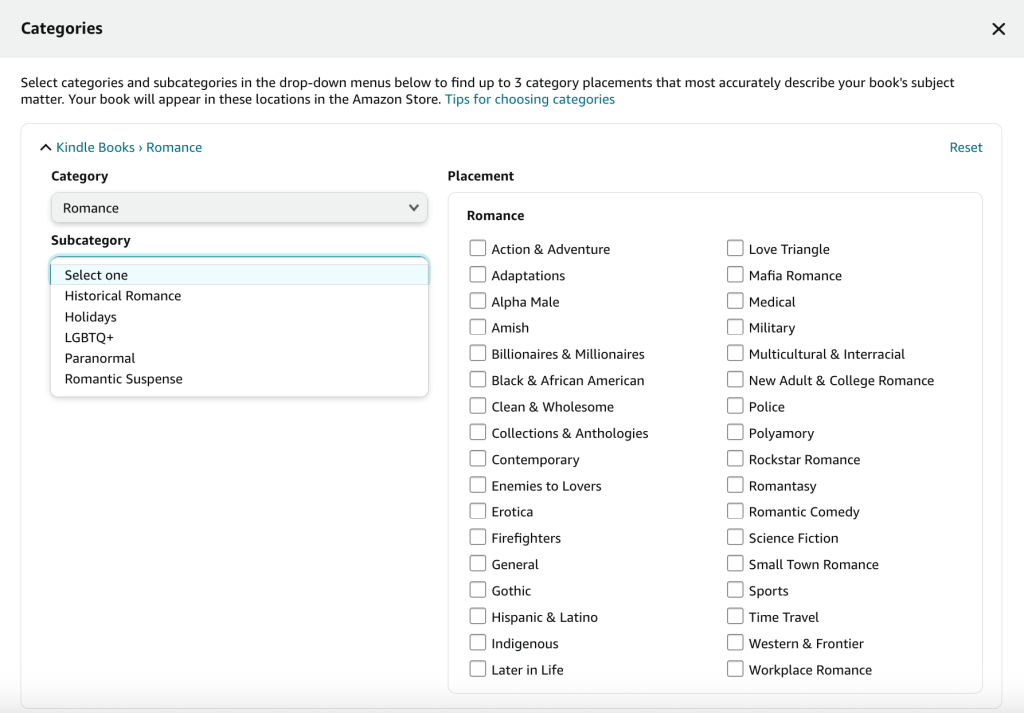
There are indie publishing “rules” and one of the biggest rules of them all is to never genre-hop. There’s some logic in that–it’s hard enough to market your books when you’re writing in just one genre, never mind trying to reach readers in two or three. But when you decide to write romance, that rule is split down even further. Choose a subgenre, and there are plenty:

screenshot of KDP's romance subcategories and subgenres

subcategories include historical romance, holidays, LGBTQ+, paranormal and romantic suspense

subgenres include:
Action & Adventure
Adaptations
Alpha Male
Amish
Billionaires & Millionaires
Black & African American
Clean & WholesomeLater in Life
Love Triangle
Mafia Romance
Medical
History
Multicultural and Interracial
New Adult and College Romance
Police
Polymory
Rockstar Romance
Romantasy
Romantic Comedy
Science Fiction
Small Town Romance
Sports
Time Trave
Western and Frontier
Workplace Romance
Collections & Anthologies
Contemporary
Enemies to Lovers
Erotica
Firefighters
General
Gothic
Hispanic & Latino
Indigenous

This is the screenshot of romance subgenres you can choose when you publish on KDP. They have narrowed them down so much you can pick something like Love Triangle or Workplace Romance. Ten years ago we didn’t have those choices, and it makes me wonder if they’re helping or hurting.

How niching down into a subgenre can help:

You have a built-in audience. You know before you write you’re going to have readers who want to read your books.
You can build your brand easier. Instead of saying you’re a “multi-genre author” and trying to turn your brand into something for everyone (which never works well and is expensive to market, too) you can say “Mafia romance author” and those readers will know they can plow through your entire backlist and be happy.
It’s easier to market. Just being able to choose your subgenre category and using the appropriate keywords will help immensely when it comes to creating ads. You can also partner with other authors who write that subgenre and share audiences.
Better discoverability. It’s a lot easier for a reader to recommend a hot new Small Town romance series than a general romance.

Cons to only writing one thing:

You might get bored. So far, I haven’t felt too burnt out writing Billionaire Romance, but what saved me was playing with tropes and adding in a dash of Romantic Suspense. Still, there’s not a lot of wiggle room when you choose something like Motorcycle Club. There’s a solid set of exceptions you have to meet to keep readers of that subgenre happy and not a lot of leeway to mix things up.
Your loyal readers won’t follow you. I’m fully aware that readers who liked my Billionaire stuff might not have read my Rockstar trilogy, and the readers who stumbled upon my Rockstars may not have wanted to read anything else in my backlist.
Your chosen niche might get saturated. Hockey is hot right now, and those who got in on the ground floor might be annoyed that suddenly the market is flooded. A while back Reverse Harem, or Why Choose as we have to call it now, went through the same popularity contest. You may have to pivot when that happens, and it might be too much work to start over.
Branding fatigue. All my covers look the same, though I actually don’t mind because with my limited skill set when it comes to graphic design and software, it’s easy for me to meet genre expectations but still keep my books and series separate and distinguishable from one another. But, I’m also trapped now because I put single men on the covers of my books and after sixteen books, a couple all of a sudden would look very out of place. Also, unless you can afford to be flexible, eventually you might use up all the hot men that are available on a stock site like DepositPhotos, trapping you even more.

So, what does all this even mean? Subgenres aren’t going to go away, in fact, chances are good KDP will add even more as time goes on, but I know from just my limited experience that niching down does help whether we want to admit it or not. It helps marketing and branding, for sure, and in turn it doesn’t take so much work to find readers. Anyone who looks at my Amazon author page knows exactly what they’re going to get, even if I do happen to throw in a rockstar or hockey player.

That doesn’t mean I’m always going to want to write billionaires, if even, you know, I’ve downgraded my billionaire status to simply, “Men with money.”

And what does that mean for romance? Readers aren’t picking romances off the Pamida shelves and deciding on which ones to stuff into their purses. They search online marketplaces like Amazon and Kobo by the tropes or subgenres they like, hope the cover catches their eye, then skim the blurb, looking to see if the description lives up to the cover. Subgenres have changed the way readers find books and I don’t know what we can do to combat that.

Writing what you want when you want in a time where indies niche down and produce six books a year is a tough act to follow and not everyone wants to. Some are steadfast in the idea that they’ll do their own thing, and it’s an idea that I keep circling around now that I’ve tried the other way and failed. I mean, to be clear, pivoting and writing Billionaire romance did boost my visibility and sales. Yes, it really did, but it wasn’t a magic bullet to a large readership, either, and in my case, I’m exploring other options to keep my joy.

I don’t know what the answer is. Maybe there is no answer because there’s not really a question. I just find it interesting how indies have shaped romance, even to the point where Nora Roberts has said, “Good luck.”

I can tell you what I’m going to do. I’m going to keep writing the books I want. I like writing “Men with money” or I wouldn’t keep doing it, but I can play with tropes and different subgenres like Romantic Suspense. I can explore themes of mental health, friendships, and found family. Because the market is going to keep evolving and there’s nothing we can do to stop it.

I’m going to write relationships, and if you want to grab one off a pirate site, go for it. But be careful. Pamida’s manager wasn’t very nice.

Splitting Your Author Life in Two: Readers vs. Writers

 white background. black piece of torn paper.  text says in black and white, splitting your author platform.

One of the biggest mistakes authors can make is trying to talk to everyone from the same place. Back when I first started publishing and writing my blog, I did this, and it actually took me years to figure out that not all readers are created equal. If you don’t know what I mean, let me explain.

It may not feel like it, but once you publish, your author life is suddenly split in two. You have your author pals who support you, maybe read your books (and that’s a big maybe), promote you on their socials that may or may not have readers in the audience, and after a while can even turn into accountability partners, alpha and beta readers, and friends. Then you have your readers, your actual readers who, if they are on social media at all, aren’t part of the . They use socials for other things like connecting with family and reading articles about gardening, cooking, movies, and politics. Maybe they like their favorite authors’ Facebook author pages because that’s where they hear about new releases, giveaways, book boxes, and in-person events.

I came this realization a while back, and when I started my pen name, decided I needed to have a hub just for readers. To be honest, I didn’t want readers reading my nonfiction stuff anyway. I use this blog as a way to help others in their publishing journeys, let other indies know what worked for me in terms of marketing (promos and ads), and just talk about what crazy BS is going on in the publishing industry. That information isn’t for readers, and it shouldn’t be. They don’t need to know how many books I’ve sold, what Amazon pays in terms of KENP, or that I make my covers in Canva and format my own books.

But, I understand this decision isn’t for everyone. I pay for two websites, and some authors don’t even like paying for one. I enjoy blogging for other indies and connecting to the industry makes me feel “professional” so I eat the cost of the WordPress plan and domain name. But, if that’s not for you, don’t feel bad. Not every indie author wants to share their journey, stay up-to-date on what’s going on in the publishing world (both trad and indie) to have something of substance to write about, or pass on what they’ve learned because writing tutorials can take a lot of time. There are weeks when I’m at a loss as to what to say too, and I either just default to an author update or scroll Threads looking for dirt a topic. I feel fortunate when I can share a podcast I enjoyed and/or learned from or I’m able to find a subject like this one that might resonate with someone and help them move in a better direction. You don’t have to lock yourself into writing every week like I have, but if the views and visits are what get you out of bed, consistency will always make that happen faster. I owe a lot of my SEO to my tutorials, particularly my Canva post on how to make a paperback cover. I’ve tried to keep this blog relevant and helpful, but if you already have limited time to write, nurturing a blog that won’t sell books won’t sound appealing.

That said, if you really want to make a go of this publishing stuff, you should have an author website, a place to point readers in the backs of your books. This is where you’ll have your backlist of books and where readers can find them, a newsletter signup, your reader magnet, trigger warnings, direct sales, and any in-person events. If you check out other author websites, you’ll find that they don’t blog about process or complain about Amazon payouts or how they package author copies for shipping. Author websites cater to readers and what they want, not other authors who like to hear about behind the scenes news.

The problem with only writing to only readers is that if you don’t have a lot going on, there’s not a lot to say and that can make you feel disconnected. I write my newsletter on my author blog once a month, and I usually have something to share. A sale, a new release. Maybe highlighting an older book in my backlist that hasn’t gotten a lot of love. Creating content can be challenging if you’re a one-book-a-year author, and it might be tempting to write about what you’re working on, but unfortunately, readers don’t care until you can give them something to buy and read. When that happens, when you aren’t constantly updating, it may feel like people are forgetting about you, but you know, as I’ve said in the past, they will. You can be afraid of something that will happen, but there’s no point to that. There is so much content out there it’s inevitable, but it’s better to jog their memory after a few months of silence than waste their time blogging about something that doesn’t concern them.

If that describes you, if you feel like if you’re not reaching out then you’re invisible, then yeah, you might want to blog for indies who are interested in your process, would like to know how well your promos did, and/or how you make your covers. It gives you a reason to communicate and not feel so alone, and you’re writing to the people who actually care what you’re working on. Sales won’t come of it, which is why in the end I moved my books off this website and put them on my author website, but the more you segment your efforts, the more effective each one becomes and you won’t feel like you’re shouting at people who aren’t listening. Reaching out doesn’t even require a blog. You can create an indie Facebook group or Discord channel. A place where other writers and authors can get together but where you also know the score: your peers won’t buy your books. You can let go of that expectation and just be happy you’re in a group of people who are going through what you are and know how it feels to have zero sales on your dashboard.

So you might ask how is my author platform split in two?

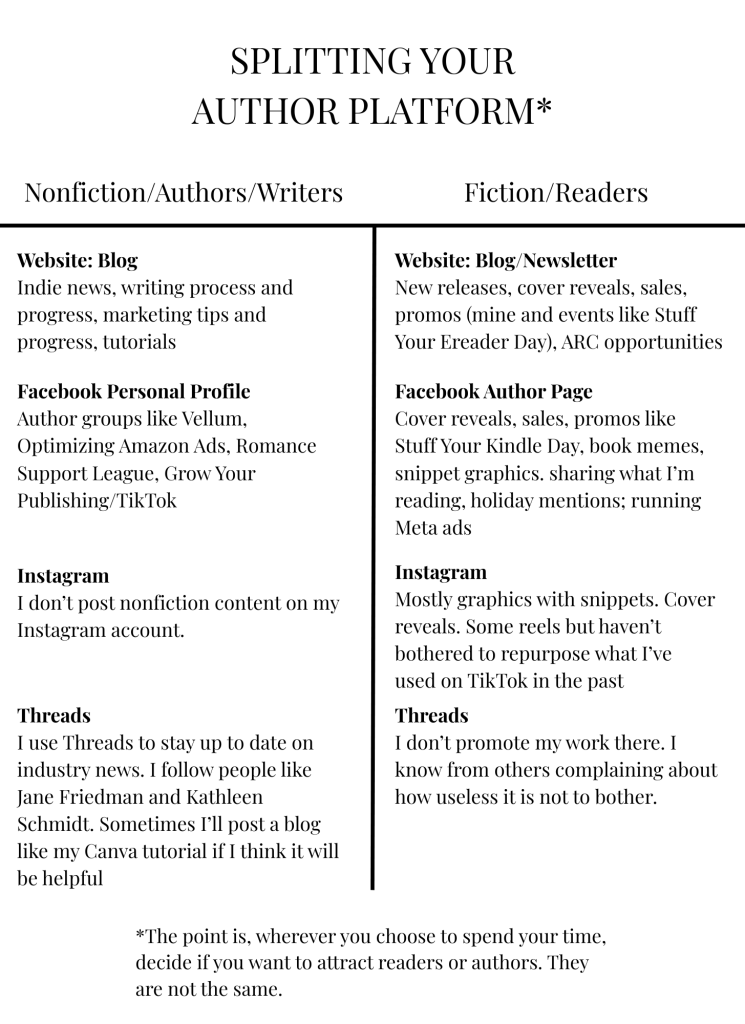
Here’s what I do, and I made a graphic in Canva so you can save it or print it out if you want a quick reference.

png image:
SPLITTING YOUR AUTHOR PLATFORM*
Nonfiction/Authors/Writers
Fiction/Readers
Website: Blog
Indie news, writing process and progress, marketing tips and progress, tutorials
Website: Blog/Newsletter
New releases, cover reveals, sales, promos (mine and events like Stuff Your Ereader Day), ARC opportunities
Facebook Personal Profile
Author groups like Vellum, Optimizing Amazon Ads, Romance Support League, Grow Your Publishing/TikTok
Instagram
I don't post nonfiction content on my
Instagram account.
Threads
I use Threads to stay up to date on industry news. I follow people like
Jane Friedman and Kathleen Schmidt. Sometimes I'll post a blog like my Canva tutorial if I think it will be helpful
Facebook Author Page
Cover reveals, sales, promos like Stuff Your Kindle Day, book memes, snippet graphics. sharing what I'm reading, holiday mentions; running
Meta ads
Instagram
Mostly graphics with snippets. Cover reveals. Some reels but haven't bothered to repurpose what I've used on TikTok in the past Threads
I don't promote my work there. I
know from others complaining about how useless it is not to bother.
*The point is, wherever you choose to spend your time, decide if you want to attract readers or authors. They are not the same.

There are a lot of places to hang out that I haven’t listed. I just can’t be everywhere and don’t want to be. Lemon8 is popular, so is Pinterest, and let’s not mention TikTok because I really don’t want to use my time making videos, but the fact is, if you’re a slow writer and you want to talk to only readers, you’re not going to have a lot to say. You can share book memes and pet photos, where you went to dinner on your anniversary, but you’re going to lose readers to other authors who publish faster. The industry in some ways is very slow, such as trends are very very slow to change, but when they do, it feels like it happened over night. Trad authors can seem like they get away with a book a year, but behind the scenes, they’re worried about getting a new book deal, if their publisher will pay for marketing, how their launch is going to go since they haven’t had a new book out in however long. Indies face the same trouble, trying to find traction while others are zooming ahead because they have more time/motivation/whatever than they do.

Figuring out where and what to post is a mental health issue, it really is. I’ve gone through my own struggles, beating myself up for not wanting to post on my Facebook author page, not making videos for TikTok when everyone says that’s where you belong if you’re an author. I boosted a post on my Instagram account and got a few new followers, but they aren’t going to do me any good if I don’t post. And you know, I’m pretty prolific, so it’s not that I don’t have content, it’s just that I don’t care. I let Amazon ads, promo newsletters like BargainBooksy, FreeBooksy, and Fussy Librarian, and author-driven book blasts like Zoe York’s ZoeBub pickup most of my sales weight, which I can do because my series and trilogies have solid read-through. Maybe I have to pay for it, but I’m reaching readers, not shouting at other authors then getting mad when my books aren’t selling.

Splitting up your author platform can take a lot of the stress off your shoulders. You know who you’re talking to and what they want to hear. Shouting to everyone will never work and you’ll only get frustrated. It’s difficult to break out of the bubble, but the longer you do it the more natural it will feel and the feedback will become more positive because you’re staying in your chosen lane and once you draw the lines, you’ll actually have more time to write because that urgency to post and reach anyone you can will be gone.

Again, I know this advice isn’t for everyone, but if even reading this makes you step back and look at how you’re posting on social media, you may make some small changes that could turn into big results. Let me know what you think!

I better get off here and finish proofing my proof of Loss and Damages. I’m almost done then I can put the changes in and order another proof. I’m really excited to jump into more hockey research. I’ve put that aside to get Loss and Damages ready for ARCs next month, but I’m eager to start again. Take care everyone, and have a great week ahead!

Thursday Thoughts: What is your book’s value?

When we think about our books, we think about value. What is the value to our readers? We want to give them a good book at a competitive price. That’s pretty much a no-brainer when we publish. Readers want and need that value because if they feel like authors have wasted their time and/or money, they won’t be a repeat customer. And that’s how most authors make their money–readers reading their back list and anything new they publish.

But we also think about value for ourselves. We’re told not to give away our books or price them low because we’re cheating ourselves and not doing our books and all the work we put into them justice. We can argue about it all day long, the benefit of having a loss leader, using free books to find new-to-you readers. We give away ARCs hoping for reviews, we hope that an inexpensive book will fuel word-of-mouth. And what that conversation comes down to is, how much do you value your book, and what does value mean to you?

At some point in your career, you may find you value readers and feedback more than you value the royalties that come with sales. The market is so saturated that maybe being seen and being read will feel like a victory even if you’re not making money. I’m not really talking about exposure, though that could be part of it. We work for free, like doing a guest blog post or donating a novella to an anthology, hoping to get our name out there. Exposure can be valuable, if the right people read it, as they could offer you opportunities you wouldn’t have had otherwise. But if you’re donating to a publisher or company who can afford to pay you and simply doesn’t or doesn’t want to, maybe you feel like your contribution isn’t that valuable after all. After all, there’s hardly a scarcity of writers out there. We’re easily replaceable, and I’m not just talking about AI, either.

They say that people value things they pay for and that’s true, but they also avoid things if they have doubts what they’re buying is worth the money. (A good cover, blurb, and look inside is imperative.)

I was just thinking about this when I saw a post from an author who said someone told her to never put her books on sale, but she ignored that advice and has built a successful author business around a book she priced at .99. She found more value in putting her book on sale than she would have keeping her book at full price.

So when you think about your books and author business, think more of just how much work you put into your book. You might price high, but are you finding value if no one wants to pay it? Or do you think that one sale at 9.99 is better than 10 sales at .99? I know you’re not guaranteed to sell books at any price, but I think you do stand a better chance of selling books at a “reasonable” price, and that means whatever price you would be comfortable buying someone else’s book.

You might feel a sense of validation over that one sale, but how far will that carry you? How far will that carry your author business?

We say that success means different things to different people, and I think that’s true for value as well. A common cliché is you get what you pay for, and maybe that saying is what fuels authors to price high or never put their book on sale. Except, in these days of no gatekeepers, paying more doesn’t mean, as a customer, you’re going to get more.

Anyway, that was on my mind. I hope you all have a great day and weekend ahead!

Chat with you Monday!

Six Things I Learned after Starting My Pen Name

2,277 words
12 minutes read time


I thought starting my pen name (not really a pen, VM Rheault vs. Vania Rheault but for now, that’s what I’ll call it) would be the ticket to not fame or fortune, but I wanted to start my career on the right path after a couple of years of not doing things the proper way.

When I first started publishing, I did what a lot of indies did, and still do. I published what I wanted, didn’t really have a plan. I genre-hopped, looking for that genre I wanted to settle into long-term. No one told me I didn’t have to actually publish those experiments, but I wouldn’t have listened even if they had. Publishing without gatekeeping was a free-for-all, and it still is, indies publishing whatever they want without regard to a publishing schedule, marketing, or anything else that would start them on the right foot. Probably the only habit I had and still hold on to now, is writing all my books in a series first before publishing them. I started that when I wrote my Tower City Trilogy and I’ll never stop, even if that means I have a year or two between launches. But, let’s break it down. Here are the six things I learned when I started my pen name back in 2020, well, 2022 when I first published my Cedar Hill Duet and I tried to do things the “right” way.

You can’t click Publish and walk away.
If you don’t have a launch plan, this is what a lot of authors do. They don’t know how to launch and it can hurt you. When I published my Cedar Hill Duet, I didn’t put them on Booksprout for reviews. Before 2022, it was a free service, and I used it for my Rocky Point series under my full name. Then it went to paid, and I listened to the annoyed authors who said they were going to stop using that service. I should never have listened and put my own books up. Reviews matter. No one wants to think it, and I know correlation doesn’t equal causation, but Captivated by Her and Addicted to Her are my worst selling books and I attribute that to their low number of reviews. So, if you don’t have a plan or don’t want to have a plan, like cover/title/blurb reveal or newsletter, at the very least, try to get as many reviews as you can the week of your launch. They will affect how your book does from that day forward.

Nail your cover the first time.
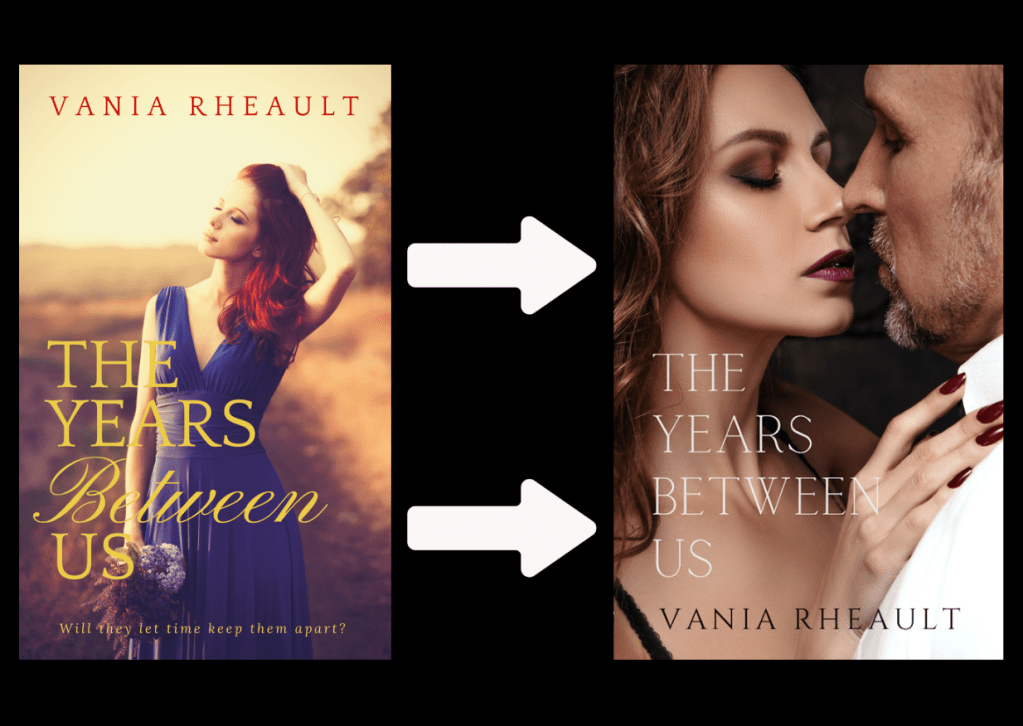
When I decided to do my pen name, I really wanted to make sure I published correctly the first time. And by that, I mean I wanted to make sure my covers met genre and reader expectations. I’ve written a lot about how my cover for The Years Between Us screamed Women’s Fiction, and after I changed it to a couple, my sales went up. It was a beautiful cover but didn’t match the blurb or what the book was about.


I changed the cover to Wherever He Goes, too, and that helped. Unfortunately, I’ve had to change covers for some of my first person books even though I tried my best to avoid it. Your skills get better or better models come along, your taste changes, whatever, but no matter why you have to change your cover, if you change it to something better, just know that you’re blowing your launch period. I totally fucked up my launch for my Lost & Found trilogy because I didn’t wait to find better models. I published with what I had, and didn’t change the covers for a year or so after my launch. I gave them another edit, too, so I “re-launched” them, but man, you really waste Amazon’s bump if you screw up the first month of your release. Title, blurb, and your cover’s tone need to be spot on. Just because you like something or it looks professional doesn’t mean it’s a good fit. You have to do market research, and nobody wants to do that because it sounds like you’re selling out. You’re not. You’re helping the right readers find your book, and that’s all that should matter. I wrote more about choosing the appropriate cover, and you can read it here: https://vaniamargene.com/2024/04/08/my-marketing-secret-shh/

Don’t listen to everything you hear.
One of the riskiest things you can do online is listen to other people. I’m on Threads a lot (you know this) and the number of opinions out there, well . . . you know the saying: Opinions are like assholes . . . everyone has one and they all stink. There is no place this is more true than when you get a bunch of romance authors together, be it on Threads or in a Facebook group, and they’re telling you what they like and what they think should be the standard. No 3rd act breakups, no cliffhangers. Don’t use the word “folds” when you’re talking about p*ssy. Don’t make him an asshole, don’t write about rape. Don’t romanticize stalking. Don’t write in 3rd person. Don’t write your blurb in 1st person. Don’t do this, don’t do that, but what’s funny is that when you take a look at popular books, THEY ALL DO THAT! Yes, there is some advice out there that’s good, like don’t genre-hop if you hope to build an audience. I’m a firm believer in writing your blurb in the POV your book is written in. But at the end of the day, when it’s just you and your book, you need to write what you enjoy. Even if that’s a super dark romance that would get you locked up (and not in a good way). If you’re bombarded with opinions about how nasty the enemies-to-lovers trope is, and that’s what you’re working on, it can be discouraging. But honestly, you’re not writing for other authors anyway, and if an author tells you she hates cliffhangers and you love them, tell her to fuck off. There are readers for everything, and it’s okay if people self-select out of your books. You don’t want people who don’t like what you’re writing to read your stuff because all you’re doing is courting bad reviews. It can be difficult staying true to yourself, but you’ll be happier for it.

Just because you do everything right doesn’t mean you’ll find success.
This is probably the hardest lesson of all. You can spend a ton of money on editing, you can publish with the perfect cover and a ton of reviews, but in the end, that doesn’t mean you’re going to find success. And by success, I mean, readers, sales, royalties, whatever success means to you. I’ve said in the past that success to me would be making a part-time income with my books. Part-time for me would be about 15k a year. It would help me out tremendously, that little extra money, but this year I gave up that dream and realized that maybe what I’m writing just isn’t going to hit the market the right way, or my reluctance to be on TikTok will always hold me back. My books are too quiet, or I chose the wrong sub-genre when I rebranded myself. I don’t know, but the fact is, there are thousands of authors out there who publish regularly, publish good books regularly, and they get absolutely nowhere. They spend more than they make, they get burnt out, and/or they publish to no one over and over again. After you come to that realization, you’re hit with the trite sayings like “A quitter never wins and a winner never quits” or “Believe in yourself and you’re halfway there” and you just wanna cry (or puke). When 2025 rolled around, I decided to change how I looked at my writing. I can’t call it a business because I don’t have one. That implies money in and money out, and right now, I pay more than I earn. So, in that vein, I decided to stop doing what I think I should be doing and just do what I want. That means writing what I feel like writing without regard to a publishing schedule. I stopped all my ads. Don’t care about social media and post only when I have something to say. I stopped chasing the dream and I feel better. Writing is fun again and that has turned into my new definition of success. Here’s an interesting article by Jane Friedman about having what it takes to make it: https://careerauthors.com/do-you-have-what-it-takes-to-make-it-in-publishing/

Numbers don’t mean anything.
Social media sucks. It really does. I believe that you should have a hub where readers can find you if they want. (That should ultimately be your website, but I understand the value of a Facebook author page or an Instagram account.) Authors should have some kind of social media presence, if only to prove you’re a real person instead of a made up author some guy sitting in his mother’s basement created using AI. You can’t appear fake in this day and age when there are so many bots out there that can act and interact like a real person. As AI usage gets worse and worse, readers knowing you are real will be part of your marketing toolbox. But in the past seven or eight years I’ve been online, I’ve learned no matter how many followers you have, that doesn’t mean you’re going to sell books. They might like you because you have pets or because you live in the same state. They like how you do your hair or think you’re pretty, whatever it is, but that doesn’t necessarily mean you’re going to be able to sell them your books [see Billie Eilish: https://medium.com/better-marketing/billie-eilishs-book-flopped-because-her-marketing-team-assumed-it-would-sell-itself-71c32dc19af3]. I just looked up someone who has over 5k followers on her Facebook author page, and she sells very few books every month–and she has a lot of books. So, if you don’t have many followers or you’re just on social media to kill time or to amuse yourself, don’t feel bad. Finding readers is hard work and it’s a long game. Besides, depending on how you run your social media, you could just have other authors following you, and when it comes down to it, that’s not helpful. I wrote about busting out of the bubble, and you can read it here: https://vaniamargene.com/2021/12/06/how-to-break-out-of-the-writing-community-bubble-and-sell-books-to-readers/

Mix friendship with business at your own risk.
I help a lot of people do their covers, format, even just give them publishing advice through my experiences and what has worked for me. I’ve paid my friends to edit and beta read, I’ve done a lot of free work that I was pleased to do because you’ll learn fast that the can be full of people only in it for themselves. I’ve also accepted some payment for the work I’ve done for others, but no matter if it was free or paid, in the past eight years I’ve been at this, nothing has pleased me more than helping someone publish their book. But not every relationship is infallible, and mixing business with pleasure isn’t always something that works out. I’ve lost friends because the business part of our relationship soured, and unfortunately, that’s a risk you take. Sometimes you can see that person for what they are and you realize that in time your friendship would have tanked anyway. But, it’s important to understand what you’re getting into, even simply saying you’ll format for someone or if you offer to whip up a quick cover. Writers and authors are some of the touchiest people on earth, and I’m included in that because I know I’ve gotten upset over things other people would have shrugged off. But when I help someone, I’m a professional at heart and always do my best to give them a product I would be proud of if it were for my own book and I don’t think I’m out of line to expect the same–especially when cash exchanges hands. I’d never beta read while watching TV or use photos on a cover that weren’t safe to use. Even though I have ethics and integrity, not everyone does, and I stopped talking to someone who admitted she was editing my book while she was at a hair salon, and I cut ties with someone who backed out of reading for me when she gave me her absolute promise she would finish. I know that sounds callous, but we had underlying issues and those instances just happened to be what did me in. So if you think you’d be heartbroken to lose that friendship, don’t let the line between personal and business smudge. It’s difficult to get past that.


I’m sure there are more things I’ve learned, but this blog post is long enough for now and I touched on the topics that I have found the most important in publishing and the most important to me when it comes to my experiences. It’s tough to cut out the noise, but like I said, at the end of the day, it’s only you, your book, and your readers and if you go to bed happy, that’s all that matters. People will come and go, opinions and advice change. Do your best with what you have, keep true friends close, and go outside and touch grass every once in a while.

That’s all I have for this week. Next week I’ll let you know about a shiny new thing I couldn’t step away from and what my publishing schedule will entail because of it.

Chat soon!

Monday Author Update: When you can’t decide what to write next

1,491 words
8 minutes read time

I was going to post something else today, something about writing “rules” and publishing “rules” mostly because I saw an author on Facebook who was complaining about sales who definitely wasn’t making choices I would be making, but alas, no one wants to read about rules. And, well, no one wants to hear what they’re doing wrong, either, which is fine. Some people need to learn from their mistakes, and some don’t realize they’re making mistakes, blaming their lack of sales on other things. *Cough* Like the Amazon boycott. *Cough Cough*

So, that doesn’t leave me with much except my own updates, of which there are not many. I’ve been listening to Loss and Damages, and Word has updated their read aloud feature since I used it last. The process is a lot smoother and it’s really easy to listen now. It can be tedious because it takes a lot of time, but I catch syntax errors, missed words, repeated words, and typos. I catch enough that I would never skip this part of the editing process. I’d much rather listen to my manuscript than feed it chapter by chapter to ProWritingAid, even if I have been pro-Al in the past. I will still Google a grammar question here and there, but even if I miss things, I like to be in control of my own editing. It’s slow going, I can only listen to about thirty pages at a time, but it’s worth it. That’s what I’ve been doing for the past few days since I took a break after I finished writing and doing a couple read-throughs of Wicked Games. I’ll be able to write Loss and Damages‘s blurb, format it, and order the proof sometime in the next couple of weeks, and that book will pretty much be a wrap.

Next I’ll maybe give Wicked Games another read-through, though I might let it sit for a while longer yet. I was going to jump into a series I have that’s 1/3 completed, but thinking about tackling another big project like that really wears me down. I never used to be one to shy away from work, but I’m still not feeling well, I’m always tired, and it doesn’t sound appealing. I’ve been reading Dea Poirier’s Last Girl to Die, and in that book, a detective goes back to her home town to solve a murder. It got me thinking about my own books and tropes, and besides a book in my Rocky Point series where Logan goes home to Rocky Point for a wedding and reconnects with his high school girlfriend, Ivy, I’ve never written a “back to my hometown” book.

I started putting the pieces together about a guy who left his small town after high school graduation to strike it rich, and he does. He gets called home because his grandpa is dying and there he bumps into his high school sweetheart. She knew it was better for him to leave after graduation and pretended to hook up with another guy to force him to go. I was thinking about all the shit he could step in going home, and the characters started grabbing me. It would be another standalone, but I realize now that I’m inching away from true Billionaire romances. Giving characters money isn’t the only thing that defines the genre, and shoving my characters into small towns doesn’t fit, no matter how rich they are. I turned to the billionaire genre and the alternating first person POV hoping it would springboard a career, but lately I’ve just been writing “Contemporary Romance” that would have better fit under my full name written in 3rd person. I don’t know what to do about that since I don’t want to write in 3rd person anymore. I could keep writing in first, but that would also possibly mean a shift in what my covers should look like. I’m seeing more covers with couples on them in general, but I’ve been watching my brand so carefully that suddenly throwing a couple on a cover would look very out of place. I’m between a rock and a hard place. I whole-heartedly believe in writing what you want, but I also believe you need to package those stories correctly or they won’t meet reader expectations resulting in readers not finding the books they want and/or poor reviews.

Along those lines, I have to stop looking at that series as a drudgery or I’m never going to want to write the rest. I could start looking at the books one by one instead of the series as a whole and maybe that would help my mindset. Maybe I’m still burnt out getting my King’s Crossing books done then jumping right into editing those Rocky Point books, but whatever the cause is, I’m not wasting the two books already written so I better just put some lipstick on and get my shit together, as Elizabeth Taylor is rumored to have said. Whether I’ll do that before or after this new standalone remains to be seen. It just depends on how loudly this new set of characters speaks to me. On the other hand, already having a standalone planned after my series is done would be like a little treat to myself for working so hard. It was very nice writing Wicked Games, no pressure at all to set up other books or having to think about more than one cover.

Speaking of series, my King’s Crossing serial isn’t lighting the world on fire, but I am happy to say that readers are making it to the sixth book. That’s always a gamble, writing such a long series, especially all at once instead of publishing as you go. I will always finish a series that I start just for the personal satisfaction and closure, but it’s nice when it pays off. I tried running an FB ad to it, and while it was getting clicks, sales and borrows didn’t keep up with ad spend and I paused it. I have a couple of Amazon ads running, some are auto placement and some are category placement, and that’s the only thing pushing my series right now. Well, any of my books. If I’m selling other books that aren’t my King’s Crossing serial, it’s because readers found my FB author page or my IG account or they’ve read me before and they’re reading other books. That’s about it. I was thinking of buying a BargainBooksy, since Cruel Fate is still .99, and seeing what that does. My Fussy Librarian didn’t do that much, more than if I had done nothing, but still. A BargainBooksy Romantic Suspense feature is $72.00, and it would be nice to think that I would earn that fee back but it doesn’t always happen.

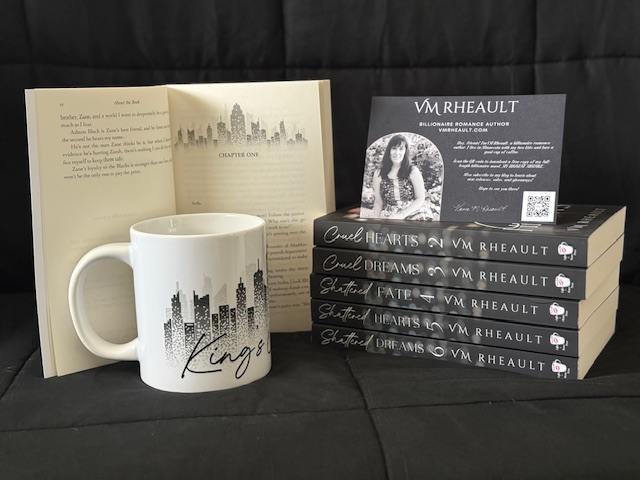
I’m also going to run a giveaway of my paperbacks and the mug I made. If I run my giveaway in conjunction with that, maybe it would help a little. I have no idea. Here’s a picture I took for the giveaway.

I’m still teasing the giveaway on my FB page. I’m going out of town this week, Monday through Thursday (if you read this on Monday I’m probably on the road), and I didn’t want to run the giveaway while I’m gone in case something happened and I can’t fix it. I’ll do all of that when I get back and I’m available to post about it.

That’s about all I have. Life would be super if I felt better, but a lot of people can say that. If I had access to better doctors, I might even go back to see if there was anything else that can be done, but I don’t trust the idiots where I live and driving five hours to see someone who knows what they’re doing isn’t feasible. I was driving back and forth last year and it wore out my mental health and my wallet. It’s been nine months since my last appointment and in some ways I’m feeling a lot better and in some ways I’m not. I don’t know if, in the ways I’m not, that’s even treatable, but like I said, figuring that out seems like it would be a lot of work. I might just end up with a, “You’re old and this is your life now,” diagnosis that would just be depressing to hear or something that could possibly be, if not fixed, made better, through surgery, but I’m not letting myself get cut open again. I think that’s what caused a lot of this mess in the first place.

Next week I think I have an author interview scheduled, and if something happens with that, I’ll just let you know how my trip went and hopefully I can tell you I’m done listening to Loss and Damages.

I hope you all have a wonderful week ahead!

Writing the Book of Your Heart

1,411 words
7 minutes read time

Writers are always told to write what they love, and there’s a joke in there. We’re told that because we’re going to be reading it a million times. That’s true in a way. The editing process can be long and tedious for some, especially for those of us who can’t afford an editor and must make sure our books are as typo-free as possible on our own.

The book of your heart might be a little different than that, the characters staying with you for many, many years, so much so that you really don’t want to write anything else. You keep going back to that book, the characters, the themes, because they resonate so much with what you’re going through, or were going through at the time.

That made me think of my own journey as a writer and author, and looking back at my backlist and the books I’ve written, I can’t say that I have the “one book” that I loved more than any of the others. When I sit down to write a new book, I love that book with all my heart. I’m obsessed while writing it; I cry at the end when I’m done. I love the editing process because that means I can stay with those characters longer and make them shine. But, in all the books I’ve ever written, once they’re published, I don’t really think about them anymore, moving on to my next set of characters and beginning the process all over again.

Sometimes I do go back and read my favorite parts, a scene that I loved to write, like Sawyer and Evie in her barn talking in A Heartache for Christmas, or in Twisted Alibis, when Sheppard realizes he’s in love with Olivia but he knows he shouldn’t feel that way about her because he thinks she’s engaged to another man. But I’ve never wanted to tear a book apart and start over simply because I didn’t want to leave them yet. I did a massive re-edit of my Rocky Point series because they needed it, not because I missed them and wanted to hang around the town of Rocky Point for an extra four months.

Some of my books have been years in the making, like the book I’m editing now, Wicked Games. I did a fake cover for a blog post back in 2021, and I had to come up with a blurb for the back. I liked the blurb so much that it stuck with me, and I turned it around and around in my head for four years.

Lucy Fulbright’s time in Gull’s Point is over. Moving across the country for a job opportunity she thinks will elevate her career to the next level, she tries to look forward to the future. Since her divorce, Lucy has been struggling to find her way, and she’s hopeful focusing on her professional life is the right move.

On her last day in town, she meets Josh Graham, and suddenly she’s not sure leaving is such a great idea.

Josh is running from a past not of his own making. Hoping to find refuge in Gull’s Point, he meets Lucy, and his vow to stay away from women and the trouble they cause is the last thing on his mind.

In a desperate attempt to convince her to stay in Gull’s Point, he asks for her help.

Torn between moving on with her life and seeing where her attraction to Josh will take her, she requests a delay in starting her position.

Lucy has one more week in Gull’s Point.

Will it be enough time for Josh to convince her that their pasts have nothing to do with their future?

Four years is a long time to think about something, but the concept stayed with me and wouldn’t leave me alone. Here’s the cover I made. The “final draft” was a little different, but I deleted it out of my Canva account as I do sometimes to keep the “clutter” at bay. I don’t have the one I liked best, but that’s okay. This one will do for this post:

I often think about my books for years before I write them, like the Mafia books I’m planning to write later, probably in 2026. I’ve had the idea in my head since I wrote a short story about the characters back in 2018. I’ve blogged about writing them and I will, eventually. But being excited about it, looking forward to writing it, having it in the back of my mind for so long, that doesn’t mean it’s the book of my heart.

Is it bad not to have a “book of your heart?” I’m not sure. For one, people might accuse you of not putting your whole heart and soul into the things you write, which isn’t true, for most of us. Yeah, there are writers who only write what they think will sell, using their books as a way to make income only, skipping the “art” part of the writing and going directly to the “product” part of publishing. On the other hand, if you’re stuck writing and rewriting the same book over and over and over again, you’re never going to get anywhere. You can’t move forward going backward, or staying in the same place. So, you’d have to decide what your true plans are. Are you okay being at a standstill? And if you are, what does that mean for your business? It might mean that you don’t have one. Readers want something new to read, and there are plenty of authors out there who can and will do that for them. They don’t have to hang around and wait for you.

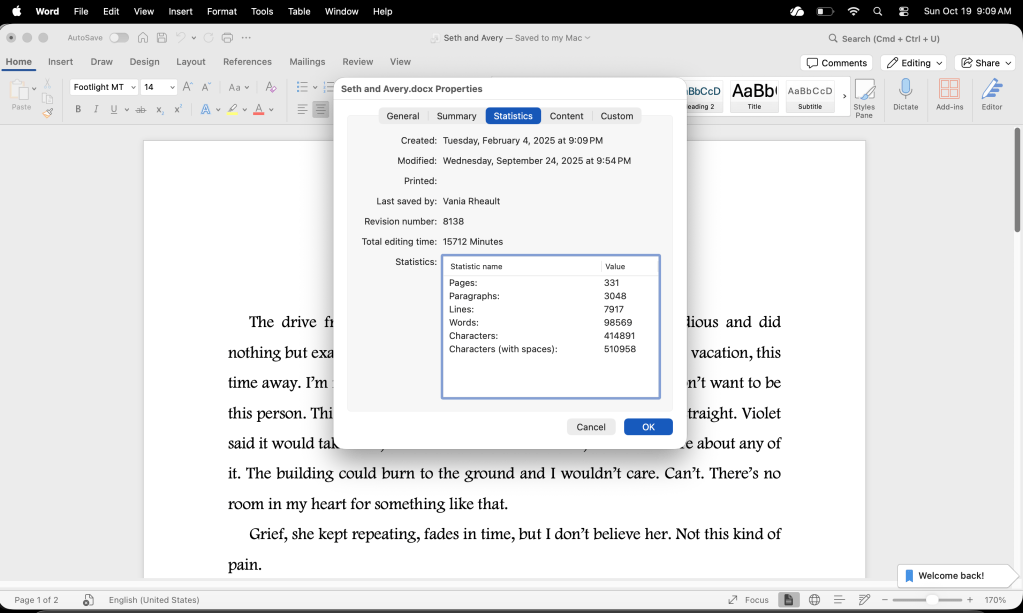
But, as I’m trying to lighten up in my writing and business, writing only for the thrill of it and resigning myself to the fact that this will never be a career, maybe thinking writing for the sake of writing instead of trying to build a business is okay. That doesn’t mean I’m going to suddenly spend years writing my next book. In fact, thinking about my books for so long before I write them only speeds up the writing process because I know exactly what I want to write. Wicked Games was one of the fastest books I’ve ever written, 97,606 words in sixty-two days. I ate, breathed, and slept Seth and Avery, even though they’d already been a part of my life for years.

I’m writing this post because I’m trying to articulate the fact that in some ways, I envy those who want to stay with a certain set of characters forever and ever. To feel that connection deep in your bones, to never want to let them go. I think it would be amazing, like those characters are real people, part of your life. But, I also hear of authors who need years and years to finish a book, and it makes my stomach churn. Before I started feeling like crap, I liked adventure, trying new things. I liked to travel and my curiosity was off the charts. I haven’t lost some of that, and I think staying with a set of characters would drag me down. I want to write about new characters, new experiences. New settings and create new heartbreaking backstories.

We all write differently, and write different things. What you do with your time and your business is always up to you, but you have to keep expectations in check, and not only that, but you have to keep the way the book business works in the corner of your mind when making your decisions. The latest figure I read is that there are 7,500 books published on Amazon a day. There is a lot of content out there and readers don’t need to wait for you. It’s nice to think they are, or that they will, but in reality, attention spans are short, there’s a lot to choose from, and well, just from the backlash we see when we hear that shows like The House of the Dragon or Bridgerton won’t release another season for two years, we know that people don’t like to wait for something they like.

I think maybe I do write the book of my heart, but I write it over and over again. And even if I’m not making any money, I think that’s a pretty awesome place to be.

When Good Advice is Bad

1,681 words
9 minutes read time

picture of framed text that says when good advice is bad. generic white vases and a bronze bowl flanking the frame

There’s a lot of advice out there, some of it good, have decent covers, write an exciting blurb, and some of it’s not so good, like doing whatever you want just because you can (which is advice I actually see a lot online).

What’s disheartening is when you hear good advice that doesn’t fit you, for whatever reason, like rapid releasing/writing quickly when you don’t have the life that lets you, or writing a long series when maybe you don’t have the patience to invest in several related books. It can be good advice, and I’ve given my fair share on this blog too, like trying to afford some ads to reach new readers, but it just isn’t going to be for you. Ads can be expensive and time consuming to learn, for example. So I get it, especially when I’ve touted the advantages of Facebook ads then turned around and shut them off due to burnout.

There was a bit of advice I got from someone in one of my romance groups, and it’s advice you might have heard before too. When you want to find hooks in your books to make graphics, they say to borrow your book in KU or buy the Kindle version and look at the parts other readers have highlighted. This is the example in the book I’m reading now, Dea Poirier’s Next Girl to Die. To find the highlights in the book you’re reading, press the three dots on the upper right. I’m using a Kindle Fire, so I’m not sure if the way to find them is the same on all devices. There you’ll see the Popular Highlights. I apologize for the glare. No matter where I moved in the room I couldn’t get rid of my shadow.

screenshot of my kindle. screens indicate where you can find the highlights of a kindle book.
I’m reading Dea Poirier’s Next Girl to Die. You can find it here: https://www.amazon.com/dp/B07QDC7Y6B

I think this is great advice, as I’ve read books that have the highlights and it would be so easy to use those as hooks on graphics for Instagram and TikTok. So, I figured I would look at the book I’ve sold the most of and check out those highlights. Now, let me tell you, the book I chose was Twisted Alibis. I’ve sold 132 combined paperbacks and ebooks, had the equivalent of 821 books read in Kindle Unlimited, and gave away 3,130 copies during a promo last year. I thought those numbers would give me the best chance of giving me the most highlights, and you know how many sentences I had highlighted? None. Not one person who read Twisted Alibis thought a sentence or paragraph was worth highlighting.

At first I thought I wasn’t looking in the right place, and I Googled how to find the highlights in a Kindle book. Where the option should be wasn’t and it took me a few minutes to understand that the option wasn’t there because I didn’t have any highlights.

To say I was disappointed is an understatement and it’s easy, very easy, to take something like that personally. Even now I can feel the shame. That book is 107k words long and not one of them touched a person enough to highlight them. Then I thought maybe it was a fluke and looked up Rescue Me. That book has sold 429 ebook copies, I’ve given away 4,916, and I’ve had the equivalent of 572 books read in KU. Nope, not one highlight. I was so embarrassed after I looked that I didn’t look at any other books.

There’s a lot you can take away from that, not any of it good, if you want to be honest, and I was still stinging when I saw someone on Threads ask how they grab hooks on a newly released book and one of the responses was to wait a few days then look at the highlights. I felt compelled to tell that person that they might not get any at all and to have a thick skin just in case they don’t. I guess I don’t have to say that I bristled with the assumption that if you just wait a few days readers will love your book so much they’ll highlight the hell out of it. Some authors don’t even get readers, let alone highlights from those readers.

I don’t actively read my reviews because I’m just not up to reading why someone (or many someones) didn’t like my book, and that’s okay. After that highlighting debacle, I’m not going to look for my highlights anymore either, because obviously, I might not like what I find.

So, what can you do when stuff like this happens? When what works for someone else is just a dumpster fire for you?

What you have to do, first and foremost, is to remember that your books are good. Know that deep in your heart. My books sell, and Twisted Alibis has 87 reviews on Amazon and a 4.5 star rating. Rescue Me has 112 with a 4.4 rating on Amazon. That may not be much to some, but it means the world to me. Just because they don’t have any highlights doesn’t mean readers didn’t enjoy reading them.

Remember that you are not the only going through this. There are a lot of books out there that for some reason or other don’t have highlights (or reviews). They aren’t being read or like in my case, those authors just didn’t have the readers who were into highlights for whatever reason. It helps to know you’re not alone even if you feel like you are.

Find alternatives. If something isn’t working for you, find a different way to do things. The highlights are easy because you can just go through your book and find the ones YOU like and flash them all over. Maybe those quotes will get people excited enough to read your book. Brag. You wrote the damn thing and loved it enough to publish it! Who cares what others think? In the case of reviews, ask a friend to go through them for you, or choose an hour to scroll, pick a couple that you like, and then close out of Amazon–and look on Amazon! Stay off of Goodreads for all that’s holy. Reward yourself for not falling down the rabbit hole of bad reviews and have a piece of chocolate or a glass of wine, them remember you don’t have to do that again–at least, not for that book. I understand the value in having a review or two for social media purposes, and I noticed this review of Twisted Alibis when I was on Author Central skimming the reviews coming in for my King’s Crossing series:

Verified Purchase
If you like the rockstar romances, this is one, true, BUT it is more. Lots of social issues addressed, done in a delicate way, no raging reality tv tropes, more like addressing things we all face with a nice romance tucked inside.It's heavy in places, prepare for that, but you'll come out better for it at the end.Gitcher readin glasses out and enjoy.

Text on white background. Verified purchase in red

Like everyone else where bad things are concerned, I’ll probably carry that shame for a long time. Everyone makes it sound so easy to get and use highlights, and I feel like I’m missing out on something big. Maybe I do have highlights somewhere, but I think it’s best if I don’t look because if I don’t, that’s only going to make me feel worse. I don’t put up a lot of graphics anyway, so I guess in the scheme of things I’m not missing out on much. But in the future I’ll definitely be taking everyone’s advice with a grain of salt.


I suppose that’s all I have for this week. I’m 66k words into Wicked Games even though I said I would be taking it easy writing this book. I am, I don’t stress so much about it if I don’t feel like writing, but I guess it helps I’ve been thinking about this book for a long time and I know what I want to write every time I sit down. I was worried this book would be short, but after I ironed out a kink in the plot, I’m back on track and it will probably hit somewhere in the 90k range. After I reach 50k and swim through the murky middle, I really don’t care how long my books end up but I was a little worried about it when I didn’t know how to fit in what I needed without a setting change. They’re in a small town right now, but I just can’t finish it without them moving into the city where they both live, so that eased some of my worries. We’ll see how it turns out.

As far as anything else, my sales have all but slowed to a stop, even with the few Amazon ads I have going. I got my tax returns back and have a little “fun money” as my dad likes to call it, but I’m not too eager to start up my Facebook ads again. If I did that, I would only start one or two and push readers toward my King’s Crossing series as I have gotten good reviews on the books so far and the read-through would be amazing. Plus I might get a few sales here and there, especially since the first three are on sale right now. But we’ll see how that all shakes out after I pay all my bills and stash what I want to stash in savings. I could probably set aside a couple hundred and see what works, but I’d have to keep a close eye on clicks and be ready to pause if it looks like cost-per-click is greater than sales. I’m not into spending 5k to make 5k anymore. I really didn’t get anything out of it when I did that. Readers were reading but I didn’t see any evidence of an uptick in blog subscribers or read-through to other books in my backlist.

That’s all I have for now. The first day of spring is March 20th, so I’m looking forward to some warmer weather and more consistent sun. I hope wherever you are in the world the weather treating you okay, and my thoughts are with the people in the south who are dealing with tornadoes and their aftermath.

Thanks for reading and I’ll see you next week!

Monday Update: What a Mess

1,641 words
9 minutes read time

cleaning supplies.   black spray bottle and plain bottle. two white tubes of paper towels with a sprig of baby's breath (god knows why)

Text says, monday author update. what a mess

There are so many things that are baffling me right now, and I just don’t know where to start or if I should even write about any of it. Let me start with what I’ve been doing and then I’ll see if I’m brave enough to write anything else or if I’ll just call it good.

First, my fifth book in my King’s Crossing series launched on the 3rd. I made a handful of pennies because there were a few people who preordered it, then I made another handful because I had a couple people read it in KU. Honestly, this is not what I was hoping for launching this series, but I’m barely doing anything to promote it, so I guess the blame falls on me. On March 5th I paid for a Fussy Librarian bargain ebook promo, and I sold 15 copies on the day and two more the next and then sales sank to nothing, which is to be expected. Here’s what the promo looked like if you’re interested:

screenshot of fussy librarian cruel fate promo entry. 

picture is of cruel fate's cover and the blurb that says:
Six months ago, my parents were killed in a plane crash. They left behind me, my sister, and a billion-dollar company that’s my responsibility now.  The only things that have gotten me through are Zarah and my best friend, Ashton Black. Until I meet Stella. Ash hates Stella as much as I love her, and as I try to uncover the reason why my parents’ plane crashed, I struggle to keep both of them in my life. When she disappears, Ash says, “I told you so,” and all I have left is our friendship built on years of family loyalty, tears, and blood. Cruel Fate is book one in the King's Crossing six-book serial and ends with a cliffhanger.

I paid 26.00 USD, so the results were fine for how much it cost. Plus there is always read-through potential to the other five books, so we’ll see what happens. Generally speaking it could have been better, but I’m glad I remembered at the end of the blurb to mention that it was a first in series and that the book ends in a cliffhanger. Not everyone likes those, so it’s good to keep that out in the open and may account for why I didn’t sell that many. I should have also put in there the series was complete as many readers won’t start a series unless they’re all available and I’ll remember that for future promos.

I started some very low cost-per-click Amazon ads again and unpaused some of the ones I turned off months ago. Those never got the traction back they had when I turned them off, and the new ones aren’t doing much because the bid is too low for Amazon to show them. Don’t know why I’m bothering if I’m going to half-ass it like that, but sometimes I think doing a very little is better than doing completely nothing, though it’s probably not true. I don’t have anything else planned besides releasing the last book in my series in April, then all I have left this year is the launch of my next book in September. (I’ve been telling people it will be live September 15th and plan to stick to that.) But that’s too far ahead to think about because I’m not rushing through summer. I hope it’s hotter than hell so I can lie on my balcony and bake. Your girl is tired and needs a break.

My Rocky Point Series giveaway went okay. I mailed out copies to the one winner who emailed me back. I should have probably chosen someone else as a second winner, but if I would have done that, the actual second winner would have emailed me (that’s how my luck goes) and I would have needed to purchase more copies which would have taken a while. So I have a paperback set the second winner didn’t claim and I’ll figure out what to do with those later. I didn’t expect huge results and mostly it gave me things to write about on my FB author page and my newsletter.

Speaking of my FB author page, since I’ve been boosting posts, I’ve gotten a deluge of followers who just want to make me book trailers and others who didn’t look like they would care about a billionaire romance author. So, I took a couple of hours and culled my followers from 270 to 210. I know it’s better to have quality instead of quantity, but it really gave me the feeling (again) that my FB author page isn’t worth the energy and I haven’t posted since I did that. It’s something I can’t get rid of because over the years I’ve shared that link in various places and I hate beyond reason broken links. I may post on it every couple of days, just so it looks somewhat active, but it’s one of those things where I can’t measure ROI, I can only measure how I feel. I really don’t know what to do with myself in that regard because the motivation to post on social media just is not there, and I’m not really sure what would inspire me to post more. Sales, probably. Not engagement. Everyone yells about how much they want engagement, but if you’ve known me for a while, you know how special you are if you DM me and I answer you back. So, I’ll figure something out. The only good part about posting at all is that Canva makes it so easy, and I have to pay for that until I die because I have a lot of assets trapped there and I’ll never stop doing my own book covers.

Right now I’m about 60% done with WICKED GAMES but at 58k words I’ve lost motivation to work on it. I’ll finish it, no doubt about that because I still love Seth and Avery and want them to have their HEA, but I’m not running a sprint or a marathon and I work on it when I feel like working on it. It’s part of the “new me” I have going on for 2025, but I also think some of it has to do with hormones and the lackluster feeling I have sometimes of just being old and still alive. I mean, it’s not serious, I don’t have depression. I used to have depression, before my son was born, so I definitely know how that feels. This is more of a “meh” feeling, and it will pass. Spring is actually kind of gloomy here right now, the snow melting uncovering all the dog poop people didn’t pick up and the air stinks like dead things. Once it gets warmer and the sun shines more consistently and starts drying things out, that will perk me up.

My despondency is actually opening me up to reading a few books, but it’s a sad thing because these authors are on social media asking readers to share and I just can’t. I want to refer people to good books, and one book I read has so many commas they could have prevented the Titanic from sinking and the other has an info dump at the beginning that’s so boring that I cut out after 5%. Luckily one I had picked up during a free promo and the other I borrowed in KU and returned it, but still. While we’re complaining about the Amazon boycott and how people feel trampled because of what’s going on in the state of the world, I think it’s important to remember that as authors who might have people listening to our opinion, we shouldn’t waste our readers’ time and money. I want to recommend books that blew me away, that made me feel something other than annoyance. So, while I’m feeling listless, I’ll be going through my TBR which is a nice change from feeling like if I’m not writing to publish I’m not moving forward.

This Amazon boycott everyone (on Threads) is talking about is a real downer, and it’s interesting how all that blows up only to eventually disappear and never to be spoken of again. A friend told me that she hasn’t seen any of it on Twitter, and I have no idea if it’s made its way to BlueSky or not as I don’t scroll there. But personally, I think it’s all just talk because even if there are a few who actually do cancel their KU subscriptions or whatever, it’s not going to make a dent in the number of readers who use Amazon to buy and read their books. It’s frustrating to have to read that when I’m on social media. If your book sales are low or non-existent, again, it’s something you need to take responsibility for. I mean, I get it. There are ebbs and flows to publishing and any author who has been publishing for a while can tell you that. The political and economic climate also is not helping, but something isolated like this isn’t going to cause the collapse of sales for hundreds or thousands of authors. My sales stopped the second I stopped running ads. My experience might not mean anything to you, but to me it means that I actually do control my sales (not to be confused with royalties). No one can buy your book if they don’t know it exists, and I think it’s easy to forget that. If you truly are concerned about something like this and its effect on your sales, take a look at what the big-time authors who write in your genre are saying. If they are taking a hit and can trace it back to something like this, then maybe it’s time to be concerned. But if they’re carrying on as business as usual, then what you are experiencing probably isn’t caused by whatever people are talking about that day. We have to keep things in perspective. As I say, there’s a big world out there and it’s always a good idea when you get to caught up in the day’s/week’s/month’s drama to step out of that bubble and touch some grass. (Just avoid the dog poop. Gross!)

I think that’s all I have for this week. Thanks again to Brandi Easterling Collins for the interview she so graciously said she’d do that I posted last week. If you missed it, you can read it here.

No clue what I’ll write about next Monday, but I’ll be here with a smile on my face!

Have a great week!
Author Interview: Brandi Easterling Collins

I met Brandi a long time ago, over on Twitter, and over the years we managed to keep in touch. I was really happy when she said she would do an author interview as it gave me a chance to catch up with her. I hope you enjoy her interiew!


You published your first book, Caroline’s Lighthouse, in 2016. How do you think
the publishing landscape has changed since then?

With so many tools available for indie authors, I think more high-quality indie works are available than ever before. Now is the perfect time for authors to put out quality work as long as they don’t forgo the most important part—editing.

I published my first novel through Archway Publishing, which is fine for someone who
wants help. Taking on the process myself has been more fulfilling (and a lot less
expensive). After establishing my imprint for my second novel, Jordan’s Sister, I had
retained my rights to Caroline’s Lighthouse, so I republished the second edition with
Luminesce Publishing in 2018.

You write primarily Young Adult. How did you begin writing that genre? Do you
think you’ll write in a different genre, and if you do, what do you think it will be?

As a young adult, I read many novels that helped me navigate teenage angst. I write young adult because I want to provide that same enjoyment and help for readers (of any age). I wrote first drafts or notes about all of my published novels when I was between the ages of 13 and 18. The stories have been completely rewritten, but I’d like to think I accurately captured the teenage emotions I felt then. As an adult, I could flesh out the parents and other older characters.

Even now, at 43 years old, I still gravitate toward reading YA novels because they
represent a type of journey that just isn’t the same experience you get in other genres.
That being said, if I were to venture into another genre, it would be women’s
contemporary fiction. My second novel, Jordan’s Sister, and my fifth novel, When Does
Life Begin?
, are New Adult novels that lean heavily into women’s fiction.

How much of the work that goes into publishing do you do yourself, like
formatting, cover design, and editing? Do you like all aspects of it? What is your
favorite part?

I am almost a one-woman show with my company, Luminesce Publishing. I handle all the writing, editing, formatting, and cover design. Fortunately, I have a day job in content marketing, so I write and edit weekly. Before that, I worked in higher education marketing for 17 years, writing, editing, and managing some graphic design projects.

I have a team of wonderful beta readers who review the second drafts of my
manuscripts. A dear friend who is a professional photographer has helped with a few of
my author headshots and offered graphic design advice. My amazing husband is a tech
guy who helps with website troubleshooting.

You read a lot. How do you balance your reading time and your writing time?
Reading is my favorite hobby and lifeline. I read in waiting rooms, during my lunch break, while walking on the treadmill (because it’s boring otherwise!), and before bed to relax. Reading a lot makes me a better writer. My writing time is separate. I typically hit my writing stride between 10 p.m. and 11 p.m. weeknights and late afternoons on Sundays.

What do you think is the hardest part of publishing and what do you do to make
this part manageable/affordable/profitable?

Selling myself and my work is the hardest part for me. I can praise others’ work all day,
but I clam up when I try to tell someone how awesome my books are. I’m proud of my
work, so I plan to work harder on advertising in 2025.

This year, I plan to beef up my website, discuss my writing with colleagues and friends,
and attend more author events. Since I have very little to devote to advertising, I must
make the limited funds count.

Your books are enrolled in Kindle Unlimited. How did you decide to enroll in KU
and not publish your books wide?

I love Kindle Unlimited because I have discovered so many great authors (including you, Vania!), both indie and traditionally published, through the platform. My paperbacks are published wide, but I was okay with keeping the e-books available exclusively through KU.

[My note: Brandi is the whole reason why I re-edited my Rocky Point Series. She reached out and said she was reading them, and I had a “Oh, crap!” moment. Thanks for the nudge, Brandi! The books are better for it. :)]

What’s next for you in 2025?
I plan to populate my publishing company website with writing, editing, and publishing tips for indie authors. Although I’ve owned the domain since 2018, I didn’t do much with the site until earlier this year. Eventually, I plan to open submissions for poetry and short stories to be included in an anthology. It might be 2026 before that happens!

I am also almost finished writing my sixth novel, tentatively titled Four Hearts. The
planned publication date is December 10, 2025, my mom’s birthday.


Thanks, Brandi! I really appreciate your time! It sounds like you have a lot going on in the next little while, and I wish you nothing but the best of luck!

You can follow Brandi here:

Blog: caniscareyou.com
Website: luminescepublishing.com
Amazon: https://www.amazon.com/stores/author/B075DXYBHB
Goodreads: https://www.goodreads.com/author/show/16102161.Brandi_Easterling_Collins
Facebook: https://www.facebook.com/BEC.caniscareyou


Thanks for stopping by today and I hope you have a great week!
Until next time!

Thursday Thoughts: KU and Wide Audiences are different

917 words
5 minutes read time

I think about this every time I see, “KU isn’t working for me, I’m pulling my books and going wide,” or vice versa, “Wide isn’t giving me the sales I want/need. I’m going to pull my books and enrolled them into KU.”

I have to tell myself not to answer these posts because the lesson they’re going to learn has be experienced firsthand: There is no magic bullet, and going back and forth won’t help. You need to nurture an audience on one or the other and that can take years. Because here’s the thing that no one seems to understand. KU readers read KU books and will rarely buy because they don’t have to, and if they do purchase, it will be on Amazon because KU subscribers have Kindles or the Kindle app. Wide readers buy books from their favorite retailer or they have a Kobo or the Kobo app and buy from there.

You might say there are outliers, readers who will read everywhere and will buy whatever they want while also having KU and Kobo Plus subscriptions, and it’s probably true but readers like that are the exceptions that prove the rule and won’t help you sell books in the numbers you need to create a career.

I’m seeing so much of this now with the “boycott KU/Kindle/Amazon” because everyone hates Jeff Bezos, but if you’ve built a readership in KU pulling your books out will only hurt your reader because they aren’t going to follow you anywhere else. There are over four million books in KU–they don’t have to follow you anywhere. What about reader loyalty, you ask. Sure readers are loyal to the authors they love, but you have to show them a little loyalty too, and taking your books out of the subscription service they use to read books isn’t it.

The one thing authors need to understand is that if you don’t know how to tell readers where your books are, it doesn’t matter where you publish. KU doesn’t offer the organic reach a lot of authors think it does (just look at my sales dashboard lately), and just because your books are everywhere and there are more chances readers can find you, that doesn’t mean they will. You’re still competing with millions of books. Here’s the breakdown:

Kobo: has over three million books and Kobo Plus offers 1.5 million books to choose from plus audiobooks.
Apple Books: the numbers are undisclosed but Al says they hold about 8% of the e-book market share (compared to Amazon’s 70-75%.)
Google Play: Over five million titles
Nook Books: the numbers are undisclosed but Al says they hold about 8% of the ebook market share (similar to Apple Books). (All stats I grabbed off a Google search.)

So I guess one of the main reasons I’m writing this post is that if you’re thinking of pulling your books from KU, understand that you’re going to leave the readers who read you there behind. If you’ve been enrolling your books for a while, it’s possible you’ve got a few readers who look for your books and when Amazon stops sending them new releases or recommendation emails about your books, they’ll forget about you. It sounds harsh, but when we talk about market saturation, that means there are plenty of books to choose from, and KU makes it easy to try new-to-them authors.

So, if you do want to give Jeff Bezos the middle finger and cancel all things Amazon, here’s a couple of tips for you:

To go wide, use Draft2Digital or PublishDrive, but go direct where possible, like Kobo and Apple books. Not only do you save more cutting out the middleman, but you gain access to the Kobo promo tab that you won’t get if you let a distributor distribute there.

Remember to mention your books are everywhere. KU authors have no trouble shouting from the rooftops that their books are available in KU. Do the same wide. Draft2Digital offers the Books2Read universal link creator. It will scrape everywhere your books are sold and will offer a cute landing page my like my friend, Melody’s, books have. You can find her books here: https://www.melodyloomis.com/books

Try Facebook ads. This is a great way to find new readers because you can target certain audiences, like, say, readers who own Kobo devices.

And the same advice is true for authors pulling their books from wide platforms and going to KU. Authors are proud they’re in KU. Use their logo on every social media post you create. Being in KU doesn’t come without it’s challenges, so make use of Amazon ads and Facebook ads, and tell your newsletter that you’re in KU. One of my biggest selling points I think my books have is that I tell my readers my books are in KU and are going to stay there. Consistency, no matter what you’re doing or where you’re publishing, is key. You know the saying, you teach people how to treat you? You teach your readers where to find you.

That’s a good lesson for every author: be consistent in where your books are available, in your genre, in your spice level. These are what can make or break your marketing because once you reel in a reader, if you teach them what you write and they love that, they will keep coming back for more.

That’s about all I have for this Thursday. I’ll see you Monday! Have a great weekend, everyone!