Five Reasons Why You Should Proof your Proofs!

1,080 words
6 minutes read time

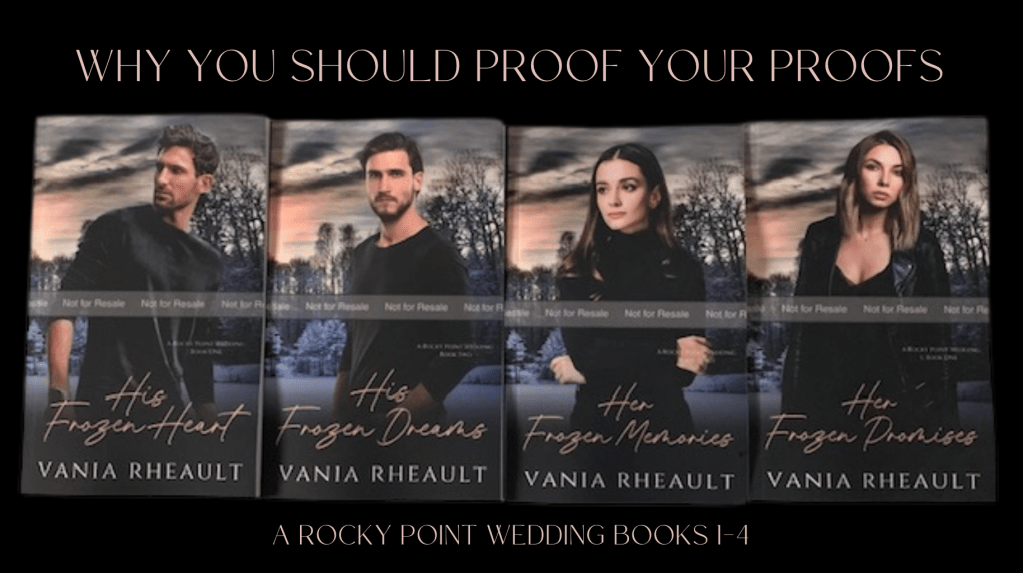
picture of four book covers. they have the not for resale stripe in the middle. a rocky point wedding series
I still love the way those covers turned out!

Back in the day, I used to be excited to order my proof from KDP. It was fun to see my book look like a book, and I’d take pictures of it, proud I was a published author. That was when we published through CreateSpace and they didn’t have that ugly stripe in the middle. When Amazon merged CreateSpace and the ebook part of KDP, I didn’t mind. I liked having my book versions together on one dashboard, and when they added the NOT FOR RESALE stripe, I was okay with it. A lot of physical ARCs have some kind of warning that it’s not the finished product, and these are no different.

But, there is also other value in ordering a proof (if you can) and as the years went on, I started going over my proofs. Now I’m always shocked to learn not everyone proofs their proofs, and they are missing out on a great opportunity.

A last editing sweep, of course.
Editors and other authors say to change your font in your Word document to make typos stand out or use the read aloud feature (listening to the voice read a word that’s not spelled correctly is funny), and those are both great ways to find typos that would normally slip by. But, also reading your proof is a good way to see run-on sentences, punctuation errors like broken ellipses, spelling mistakes, and more. One of the things I have noticed is that reading your proof can actually help you see where scenes could be plumped up or if it drags. Reading your book, flipping the pages, and seeing the words on a printed page allows you to feel how your book moves, and when I was proofing my King’s Crossing series, I made a lot of scene changes right at the last minute. There’s something real about holding your book in your hands and reading it, and if you don’t proof your proof, you’re missing out on that experience.

Check your formatting.
Sometimes things look okay on your screen but not in print. When I was proofing books 4-6 of my King’s Crossing novels, there are a lot of journal entries. Max left Gage his journal that described a lot of what happened in books 1-3 and played a huge part in Gage figuring out Zarah’s past. But I wanted to format those journal entries in a way that didn’t distract the reader from the story. I finally ended up just using italics, though I tried other things like setting them in in a block quotation or an alignment block. Then, once I decided on how I wanted them formatted, I had to go through all the books and make sure I changed them all and didn’t miss any for consistency. Sometimes you’ll end up with just a word or two on a separate page that you need to fix, sometimes the pictures in your back matter need to be adjusted. You won’t know those things if you don’t proof your proof.

Check the cover.
Print on demand isn’t always accurate, and KDP is notorious for printing dark. Sometimes you might decide to go with a matte cover instead of glossy. You are never going to get the colors you see on the screen, so it’s best to order a poof copy and make sure the colors are how you want them, that your spine looks good, and the back over looks professional. A lot of times I don’t get the gradients lined up to the spine just right and I have to move it over. You won’t be able to tell that looking at a PDF of your cover. One of the last-second catches I saw when I was proofing my Rocky Point Wedding series was that I still had A Rocky Point Wedding Book One on book four. KDP might have caught it when I published, but it was better that I saw it and fixed it myself.

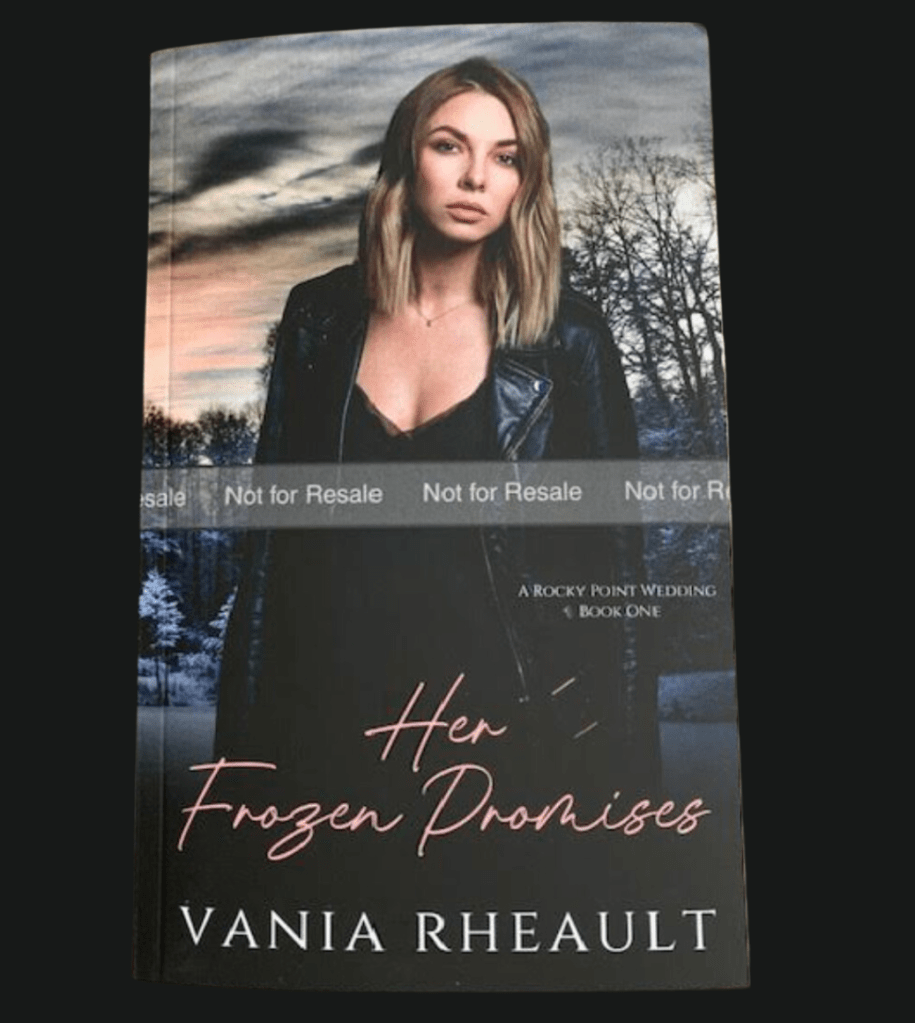
This is book four. Ooops.

Look for lines and scenes that you can use in graphics and reels.
This will probably be one of the last times you read your book, and you can use this read-through to highlight hooky lines, dialogue, and scenes you can use in social media graphics and TikTok videos. One of the most time-consuming things is to page through your book, looking for lines you can use, and if you do this during your last edit, you’re saving yourself time in the long run. I wish I would have thought of this a long time ago, but social media isn’t my strong suit. You can be sure that I’ll be doing it from now on.

Peace of mind.
I see so many people who want their books in bookstores and libraries, yet they never order a proof to see exactly what their readers are getting when they pay 10-20 dollars to buy a paperback. I want to see exactly what my readers are going to get. I want the cover to look good, I want my formatting to look like a traditionally published book. I want to be able to catch all the typos I can (humanly) catch. I know that cost can be a barrier for some, the cost of the book and shipping might be too much after spending on editing and cover design, but as long as you are able, I would always recommend proofing your proof.

You probably don’t want to know how many proofs I ordered of my King’s Crossing series. That series is over four years in the making, and I changed the covers, too. I spent a lot on books I ended up throwing away, not needing them after fixing what I needed to fix. I throw away a lot of proofs, actually, because I don’t need them anymore. I only have room for so many, and prefer to keep a few author copies on hand instead. If you have the space, you might keep them for nostalgic purposes, but I don’t have much room, and I don’t see the sense in keeping them. The finished product is enough for me.

Ordering a proof is exciting, but it’s also a chance for one last read, no matter how sick you are of the story by now. Enjoy the last time you’ll read it, and quietly say goodbye to characters that you worked so hard on.

Your Best Marketing Strategy–TL;DR (Write more books!)

TEAL GREEN BACKGROUND STACK OF OLD BOOKS. TEXT SAYS. TL;DR: WRITE MORE BOOKS

We talk about marketing a lot, such as buying promos, setting up a newsletter, networking with authors in your genre to do newsletter swaps, learning an ad platform. Depending on the status of your mental health and how thin your wallet is, you should probably be doing all those things. As Meta buys everything and then enforces guidelines, (no more steamy snippets on Instagram, y’all) it’s getting more and more difficult to use free resources.

Social media could be useful, or has been, but as these company shy away from content they consider porn, or pörn, you run the risk of getting your account suspended, shadow-banned, or simply the algorithms just won’t show your stuff to anyone. TikTok is the worst in its guidelines they arbitrarily enforce, and I can’t remember the last time I even bothered to post a video. With the announcement of the new Instagram guidelines pertaining to sexual content, lots of romance authors are scrambling. Social media isn’t dependable, and hopping from platform to platform won’t do anything, and here’s why. Author problems are not reader problems. Instagram’s policies really don’t affect readers. We get caught up in the author world and forget that readers aren’t always where we are. Yeah, you might be posting hoping to catch the eye of a bookstagrammer, and if that’s part of your marketing strategy, then you’ll be dealing with the change, but for the most part, you can find readers other places.

The one best marketing thing you can do though–we hear it a lot and also ignore it–is to write the next book. There are caveats to that, and I think that’s why it gets pushed aside. If no one is reading what you’ve got, then why keep going, right? I agree to a point, and that’s when you have to make a decision. Learn how to market in other ways or accept that no one is going to read you. BUT, here’s the thing we don’t talk about. If a reader finds you an likes you, having a backlist is the best way to keep them with you.

Here are the reasons why I think it’s always important to be working on your next book despite what’s happening on social media… and your sales dashboard.

Publishing regularly keeps you relevant. There’s not a lot we can agree on when it comes to Amazon besides how frustrating it is to work with them, and this: Amazon gives you a 30-, 60-, and 90-day new release cliff. This is where they push your book, giving you a little bump that you’re supposed to run with. Once the first 90 days pass, you’re on your own, and authors frequently find out that being on your own is not a good thing. Ask any author who is pleasantly surprised by their positive ranking only to watch their rank sink. It’s why indies try to publish four times a year–they don’t want to fall off the cliff. You may not be able to publish four times a year, not unless you save up and slowly release, but the more you publish the more relevant you are to Amazon and to readers who will know you’re in it for the long haul.

You get better with every book. Writers need to write to get better. Each new book gives you the opportunity to try new things and level up your craft. Like I mentioned before in previous blogs, I plotted out A Heartache for Christmas years ago, but I couldn’t write it because I wasn’t good enough to execute the plot twist. After I wrote ten other books, I tackled the plot and the mystery with ease. Maybe the mystery isn’t a shocker, but it was more than what I was able to do when I was plotting the book in the first place.

Another great reason along these lines is you get faster with every book. All these social media posts that say books that are written in two months (or whatever) are trash are written by people who are jealous an author doesn’t need long to write something good. The more you write the faster you get and the less you need to spend on editing. You can’t get good at anything unless you practice.

More promotional opportunities. Events like Stuff Your Ereader Day and newsletter swaps are becoming more prevalent as social media becomes more unstable and more undependable. It really helps when you have more product to be able to rotate in these promos. Even when I buy a Freebooksy, I don’t always promote the same book, and you can find different readers by advertising different books because they’ll be written around different tropes/plots/characters. On the same token, you’ll have more books to put on sale. Even if you’re in KU, being able to put your books on sale is a great way to find new readers. Right now I have three of my King’s Crossing series on sale: Book one is .99, the second is 1.99, and the third is 2.99 to encourage readers to buy and try. I’ve sold 24 of book one since its release, and I don’t think I would have sold them unless they were on sale. Book one could potentially lead a reader to buy the other five, so never discount the power of putting a book on sale. Elana Johnson is a master of putting her books on sale. She talks about rapid releasing and book prices in her talk at the 20booksto50k conference a couple years ago. It can be intimidating to listen to her, but she’s motivating too. You can listen to her here:

You’ll have more to offer your readers. Readers want more from you, and while that can be scary, it can be motivating, too. You’ll have more to talk about in your newsletter (and on social media) more excerpts to share, more covers to reveal. If readers know you’re going to stick around, it makes it more likely they’ll stick around to see what you’ll be up to next.

You may motivate someone else. I’ve heard from a few people they have admired how many books I’ve been able to write in such a short amount of time. I was writing to hide how I felt, sure, but I also could have used my health as an excuse to wallow (no judgment to those who have health issues and can’t write as much as they’d like. I was fortunate. I was able to write, so I did). The fact is, I enjoy writing and it’s never a hardship to give up a few hours every day to get some words in. I hope that as a whole, my career has motivated a few people. I’ve gotten compliments on this blog, too, how I manage to stay consistent and try to help people with the topics I write about. I’ve said I really only can do that by being active in the writing community, trying new things (like my Goodreads giveaway), and be willing to spend a little money (like on ads) so I can write about my experiences. Writing and publishing your own books is difficult, and to keep doing it year after year is admirable. Willing to write about your failures is also admirable and can be a learning experience so others don’t have to go through it.

Keep a book on reserve. One thing you could do with an “extra” book is keep one on your computer and publish it at a time when things are rough and you can’t get the words down. Most authors I know wouldn’t do this because they write slowly and every book they finish they want to publish and put out into the world. But I do know one or two people who hang on to books for this very reason. They don’t know if they’re going to get sick, they don’t know if having a baby will slow them down. Life is full of uncertainties, and if you’re making any kind of money you can’t lose, having a book on reserve could be the difference between keeping your royalties up, or losing what momentum you’ve managed to create for yourself.

Use a book as a reader magnet. I’ve given away My Biggest Mistake over a thousand times since I put it up for free as a newsletter freebie in January of 2022. The downloads have slowed down a bit because I used to run an ad to my Bookfunnel link, but I don’t do that anymore. It got to be too expensive, and now I just give it away for free, casual like, and hope people will sign up for my blog instead. MailerLite did me dirty, and that’s okay. I like blogging and I’m still reaching readers, and I don’t mind giving away a taste of what readers will get if they buy one of my books.

If you’re going to be in this for a while, there’s no downside to writing the next book. It’s kind of like that running saying that I used to hear all the time back when I was running: You regret 100% of the runs you never take. Maybe it would help if you had a plan for the book before you start or while you’re writing it. Like, this will be my reader magnet, because I want to spend the second half the new year nurturing my list, or, this will be on standby because last year I was sick a lot and having something already written would easy some of the pressure. (Kinda like making saving your sick time for when you really are sick.) Maybe just working toward finishing a series is enough motivation to keep you going. At any rate, marketing can be time-consuming, creating graphics and looking for snippets, but none of that really means anything at the end of the day. A healthy backlist will look more impressive, and the more product you have the more product you can sell.

What are you goals for 2025? How many books do you want to write? How many do you know your capable of doing? I wish you the best of luck when writing!

Author Goals 2025

Everyone is doing these and I thought I might as well. You can either look eagerly into the future or think it’s just going to be another year of writing to no one. I don’t really think that, I do have readers, but I know there are more than a few who do think it because marketing is hard and it’s harder still when you don’t have any money to buy ads or promos.

My goals for 2025 are pretty simple. I don’t have any. Of course, I have a list of things I want to get done, but when I think about goals and what I’ve seen from other authors, they aren’t the same. I don’t have a goal to make 10k with my writing or get an orange tag. I don’t have a goal to sell 100 copies of a book or even 50 copies and I’ll you why. Because I don’t have a plan to achieve those goals, and I don’t have a plan because if I knew what would work I’d be doing it. Goals are only as good as the motions you can put into place to achieve them, which is why the only things on my goals list are what I can control.

So, let’s begin:

Finish proofing the proofs of my Rocky Point series, upload, and publish new files to KDP and IngramSpark. I’m not going to get done this year. I wanted to, so I could start 2025 with a clean slate, but I won’t. Book one is a word salad of filler words and echoing that for some reason I didn’t fix the first time around (paper always reads different so it could just be I’m seeing them for the first time) and it’s going to take me probably until the end of the year just to finish book one. Even if I could finish book one before then, I have three more to go. I committed to editing these, so I’m going to finish it out to the best of my ability.

Finish editing Loss and Damages, a first person present Billionaire standalone that I started back in May of 2021. It’s finished and has already had one read-through and I added quite a few notes of what I need to fix. I want to finish those edits and get the preorder up, I don’t know when. I have no deadline, just do it as soon as possible after my Rocky Point series is squared away. My last book in my King’s Crossing series releases in the middle of April, and to give myself time to write, I decided on a September 15th, 2025 release date for Loss and Damages. Then, if I keep with the four-five month time between, I’ll have plenty of time to write more books, with an estimated release day sometime in January of 2026.

When Loss and Damages is completed and scheduled, the next book I want to write and edit will be completely from scratch and is a standalone Billionaire romantic suspense. I have it mostly plotted out in my mind (and to no one’s surprise, the cover is already done), and I’d like to write it before I forget what it’s about. Also, if I can make good use of my time and schedule it for the January 2026 release date, that will give me extra time to work on what I want to write next.

I doubt I’ll be able to get this done in 2025, but I want to finish a series I started back in 2021. I have two books written of a six books series, but after working on King’s Crossing (a six-book serial) and my Rocky Point series (four books that are connected but can be read as standalones), I don’t want to dive into another huge project. So what I need to do is rewrite parts of book one and cut out two of the characters or make it clear somehow they would be not be getting their own stories, so I only have two books to edit and two books to write. The combined writing, editing, and packaging of four books will take me a very long time, and I really don’t think I can edit a book, write a book, plus complete that series all in one year. I’ll need to figure out how much time I want to have between my January 2026 release and the series. I could maybe do six months and aim to have the series completed in enough time to put them on preorder in July of 2026, but I’m not going to think that far ahead.

I’m feeling better physically and in turn, mentally, so I’ve said I’m going to approach 2025 a little differently. I am, already veering away from series for a minute and I’m going to concentrate on editing Loss and Damages and writing Wicked Games. I need the break working on standalones will give me, and even though I could give myself a deadline, I actually haven’t sat down and written a book since August 2023 when I wrote A Heartbreak for Christmas and packaged that for its November release. All this time I’ve been editing, so it might be a bit intimidating to open a new Word document and try to pull words out of my head. Editing is a different beast, after all, and I’d like to have fun rather than just think of Wicked Games as another book I need to write and sell.

I’ve really grown as an author editing so many words this year, and the mistakes and filler words and general clutter I was using that I didn’t see are pretty blatant to me now. Loss and Damages and Wicked Games are probably going to sound better than any of the books I’ve written so far. Well, besides my King’s Crossing stuff because I went over those with a fine-tooth comb, and if some filler words managed to squeak by me, then they have earned the right to stay.

As far as other goals, my King’s Crossing series is done. The third book will release on December 9th, the fourth in January, the fifth in March, and the sixth in April. They are all loaded up and on preorder. No files need to be changed out, the covers are locked in. That series is gone in my mind, which is probably why I have such a hard time marketing. Once a book is up, it’s out, and I’m moving on to other things. I don’t have goals for sales or page reads, in fact, my expectations are quite low and will be until the last book is released. As a serial, a reader won’t know the whole story until the last book is released and since I have that information written in the blurb, readers might not even want to start the series until they are all available. I’ve kept my expectations realistic, running ads to create buzz and awareness (and bleeding into the red with clicks), and just focusing on editing my series to maybe boost my 3rd person backlist. I’ll be releasing four books in 2025, and anyone would be proud of that, other goals be damned.

I probably should try to think of some kind of plan to push book one out more, beyond the author driven promos and promos you can buy like Freebooksy, but that would require hustling and networking, and since I haven’t felt well, that just sounds exhausting. I have a rockstar promo opportunity someone sent me months ago and I just haven’t felt like reaching out to follow up, but if I want to spread the word I’m going to have to start doing the work and that can probably be one of my goals for next year. I need a mindset change because not feeling well has been a valid excuse not to do a lot of things, but I need to start being present in the present and not hiding, writing a book because my doctor didn’t know what was wrong with me. That’s all in the past, so 2025 will have to be different in that regard.

I don’t have a lot of goals and I really don’t want to make any beyond what I’ve touched on here. I’m not struggling as much as I have been, a clearer (and sober) mind has helped me come to terms with knowing that a lot of what I’m doing will (still) be on my own, ie, forgoing a beta readers/editors/proofers and cover designers. I have a few friends I touch base with, and I’m grateful to them because they keep me sane and remind me I’m not totally alone. Writing has always been something you need to do by yourself (have you ever tried to write while someone was talking to you?) so that part is understandable and something I have enjoyed even while I wasn’t feeling well. I’m just still adjusting to the loss of my fiancé who loved to talk publishing and a friend here and there who would like to brainstorm. Now that I’m doing better, I can focus more on replacing those relationships and reaching out to the romance community, which I should be doing anyway.

I’ll be approaching 2025 a little differently, trying to find the fun I lost in the writing, and trying to find the fun I lost in my life overall. It was a real miracle my doctor at Mayo knew what was wrong with me and could actually fix it (to the best of her ability) and while I’m adjusting to how things are in my writing and the writing community, I’ll be adjusting to my new way of feeling. I’ll never be “normal,” but I’m better than what I was and I’m grateful for that.

I suppose that’s all I have for this week. Four more weeks of 2024. Make them count, and maybe, maybe 2025 will actually be different for many of us!

Until next time!

Writing Billionaire Romance Novels (in these trying times)

Words: 1566
Time to read: 8 minutes

So someone on Threads said something interesting the other day. She said since the election and its outcome, she’s questioning even writing Billionaire romances anymore. She said the whole concept is not what it used to be, and I wondered about that.

There’s no mistake that billionaires don’t have a positive reputation, and maybe they never did. Elon Musk is kind of a slime (just my personal opinion–like him if you want), interfering with the election and caring more about space than helping people here on earth. Jeff Bezos is similar, I suppose, not letting the Washington Post endorse a presidential candidate and having his own odd fascination with reaching for the stars. I don’t know much about billionaires or their lifestyles, far from it, and when I write my own Billionaire romances, a lot of Googling is involved.

I can understand the idea. You don’t get to be a billionaire without stepping on a lot of toes, to put it mildly, and being willing to do that, some might consider you an asshole, cutthroat, unfeeling and uncaring. Female billionaires like Bezos’s ex-wife, MacKenzie Scott, who has been giving a lot of her divorce settlement money to charity, Ruth Gottesman who gave $1 billion to the Albert Einstein College of Medicine, ensuring free tuition for all future students, even Taylor Swift who donates heavily, have more positive reputations than any of their male counterparts.

That’s not to say that billionaires are… bad. I guess I could consider hoarding money bad, but I also admire the tenacity and intelligence of the people who are capable of earning that money on their own in the first place. Billionaires like Mark Zuckerburg and Bill Gates earned their money, even if it was through a lot of luck (hitting the market at the right time with their products). I wouldn’t know where to begin to build a social media/technological empire.

I think the point though, or at least, assuming without talking to her about it further, is the fact that no one needs that much money, no matter how much they give away. We all say tax the rich, and we should, but we also forget that where that money is supposed to go doesn’t always get there. You’ll find crooked, greedy politicians at every level of the government (and one will be our president), and just because the billionaires are taxed doesn’t mean us poor people will see a dime.

So what does this mean for Billionaire romance novels? I think it’s fair to say that readers will still read to escape… not everyone wants to read a novel that echoes real life. Sometimes someone wants to be trapped on Mars or get seduced by a handsome stranger in a rundown bar. There’s a certain fairytale feeling about Billionaire romance, a dreamlike quality readers like to get swept up in, especially, if, like myself, they’re so far removed from that kind of life there’s no possibility of even meeting a billionaire, much less one falling in love with them.

I understand the conundrum. The pull of having that much money but the repulsion of it too, how it makes people behave. As a Billionaire romance author, you can tackle that idea that a billionaire character doesn’t have to be bad. That being rich hasn’t turned him into an entitled asshole. Your conflict can come from other things, like Sam, in my novel Rescue Me. He’s a billionaire (on and off, he admits because he does give to charity), but he’s kind and worn out. His wife passed away from breast cancer, and he’s mourning her. His and Lily’s story doesn’t have much to do with money. She doesn’t fall in love with him because he’s rich, and he doesn’t not fall in love with her because she’s not. They’re just two people who are trying to live with their pain in the only way they know how.

There’s a danger in making your billionaire characters too soft, as another person on Threads noticed. She said she also writes kind billionaires, but she thinks thats why her books have never taken off. They aren’t alphaholes. I commiserated. My male characters won’t be mean to their love interests. I write instalove and I find it incredibly difficult to force my MMCs to mistreat the women they love. Sometimes they do because they simply don’t want to fall in love and they’re lashing out, but the kind of violence needed to write dark romance or some mafia, I’ll never be able to write.

That’s part of my point though. Just because you’re writing Billionaire, or any character that has more than a little money, you don’t have to make them mean and entitled. You don’t have to make them behave like children, stomping their feet and yelling at everyone. They can act grownup and go after what they want without hurting people. Does that sell books? (So far my answer is no. At least, I doubt I’ll ever find Haunting Adeline fame.) My characters hurt each other, don’t get me wrong, but they aren’t mean to each other just to be mean.

Readers want conflict and they want stakes, and they want men who will fall on their knees in front of their women begging them not to leave when they fuck up. That doesn’t have anything do with money, and maybe that’s where I’m going wrong.

A while back I posted a blurb in a Facebook group looking for help, and one person said just because my characters have money doesn’t make the book fall into the Billionaire category. She said this to me years ago, but it’s stuck with me, mainly because what she said is true. In a “real” Billionaire novel, characters’ problems come from having money. Like the two most famous Billionaires, Christian Grey (EL James) and Gideon Cross (Sylvia Day), you can blame most of their issues on the fact that they have money. People are always going after them out of jealousy. They have heavy backstories too, like Christian’s mother’s death and Gideon’s history with rape, and mixing their money and enemies with their backstories makes for some pretty anguishing novels. I use my characters’ money to help them get out of situations but their situations don’t always come from having money. The series I’m releasing now is probably the closest I’ve come to that. Zane’s and Zarah’s problems come from their father’s legacy–a multi-billion dollar company and more enemies than they can count. They don’t have backstories, all their problems are in their present, a first for me, because half the fun of writing is giving my characters a painful character arch they have to overcome to find happiness.

I doubt I’d sell more books not labeling them Billionaire. Just because their problems aren’t caused by money doesn’t mean that their money doesn’t influence how they live. I already put them in the contemporary romance categories anyway, so not much would change.

I’m not going to stop writing Billionaire romance, even though sales have slowed and I’m struggling like other authors. I’m ahead of where I was three years ago and I’m sure my pivot to first person present Billionaire is to thank. Not to mention, I just enjoy writing it, so why stop? Although, ironically enough, a lot of my royalties have come from my Rockstar trilogy I published in August last year. Maybe that’s a fluke or maybe Rockstars are where it’s at. Really hard to say, but unfortunately, I can only write what falls into my lap and I don’t have another rockstar plot in me at the moment. I do have three completed Billionaire novels waiting for my attention, one standalone plotted out (that I really should write before I forget it all), and two that I need to write that will complete an already-started series. That will keep me busy for quite a long time, unless all of a sudden I decide to pivot again, though with so much planned out, I’m not sure why I would.

I think the bottom line for me is that I’m going to keep writing Billionaire because I like to. Because whether my books are selling or not, my characters are kind and use their money for good. I don’t think as Billionaire authors we’re required to do anything different. Asshole billionaires sell books, and I wouldn’t begrudge any author if they didn’t want to change their ways. Nor should they have to just because of what’s going on in the world today. The fact is, there will always be billionaires, and there will always be billionaires who are fucking assholes, just like they will always be fucking assholes who are poor.

I’ll leave you with Zane’s thoughts in the third book of my King’s Crossing series, Cruel Dreams:

Pretending as if nothing is out of the ordinary, we mingle with the other guests. I see what Stella saw when she first started hanging out with Zarah and me. Jewels, gowns, expensive bags. So much waste trying to outdo each other and pretending to be better than everyone else. Talking tee times and country clubs, mergers and acquisitions. The meaningless words flow over me like a cold shower.

It’s a wonder Stella loves me at all.

Have a good week, everyone! Until next time!

Past Decisions and Their Consequences

Words: 1535
Time to read: 8 minutes


Too tired to look for a stock image. Imagine something pretty here.


Everything we do results in some kind of consequence, some kind of reward, whether we know it or not. Whether we want to admit it or not.

Last week was another crazy day on social media when I saw someone encouraging people to use KDP’s POD, but mark up their paperback prices on Amazon to $200.00 so they could sell off their website instead. This is such a bad take for so many reasons, and when I replied saying that at least IngramSpark was a better option because you can print without distributing, she went off on me saying IS wasn’t viable for everyone and that I was toxic and privileged for even suggesting it. That really hurt and I dropped out of our conversation because I’m not going to let people assume how I live. It’s not toxic to suggest a better way of doing things, it’s not privilege to suggest a platform many authors have access to. She wanted to be right, and there were plenty of people who agreed with her. That’s fine. Look like an idiot selling your paperback for $200.00. Doesn’t bother me at all.

The main issue is that IngramSpark costs money. If you live in the US, you know how expensive ISBNs are. Part of her privilege insult was because she assumed I buy my ISBNs and that I was telling people they should do the same by suggesting they use IS. She doesn’t know that yeah, I did buy a pack of 100 (costs $575 which was almost as much as my rent) but I charged them on a credit card and it took me several years to pay them off. My ex-fiancé said he would buy them for me, but you know how that turned out and I ended up paying off a massive credit card bill that he said he would take care of. Anyway, the outcome of that story is that yeah, I did buy own ISBNs, and it’s none of her business it took me years to pay them off.

Very rarely on this blog do I suggest you spend money on your book business, but on the flip side, I’m very clear that I believe you can’t start a business properly without spending some cash. If you want to sell YOUR book off YOUR website because you’re running a business YOU own, why would you want to use an ISBN that didn’t belong to you? That’s MY main reason for buying ISBNs. They belong to me, I’m registered as the publisher, and if Amazon is ever a dick and closes my account, my books are safe. For all the hating on Amazon over on the sewing platform, they’re quick enough to take what Amazon gives them.

Anyway, so when you use free ISBNs you’re taking a risk Amazon will treat you well and if you take free ISBNs from anywhere else, you’re accepting any eventual consequences.

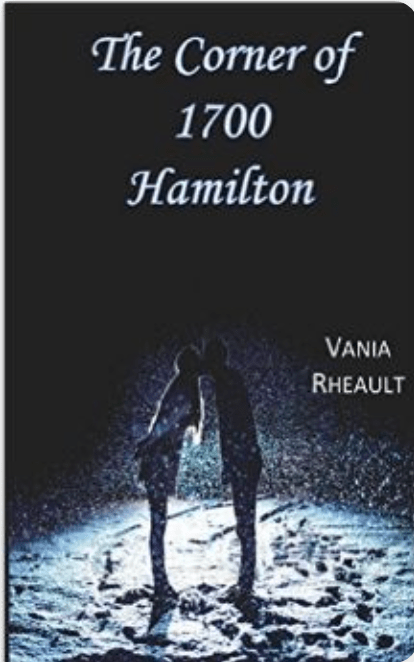
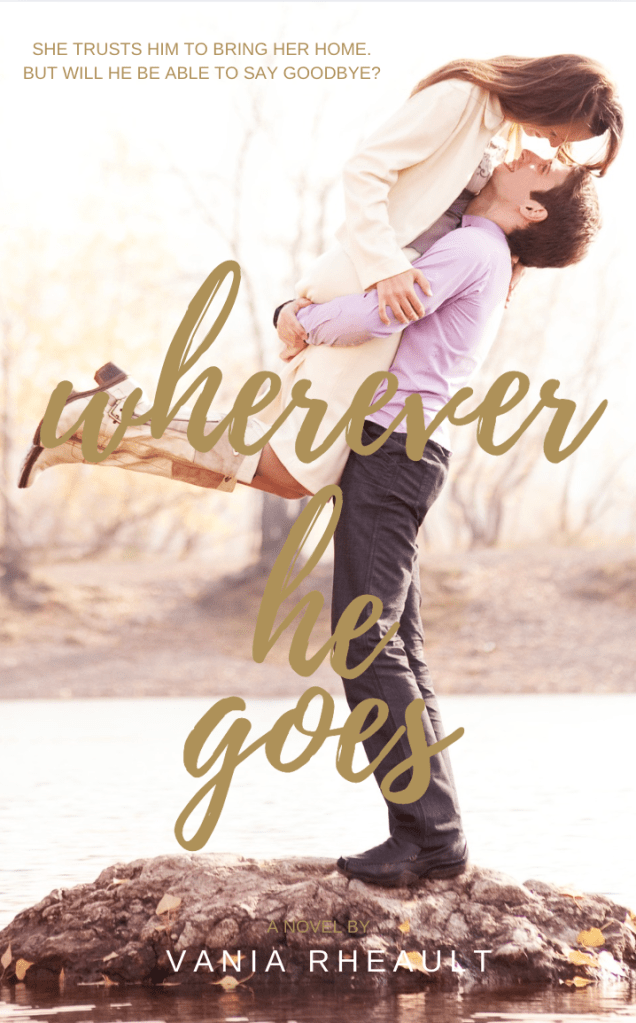
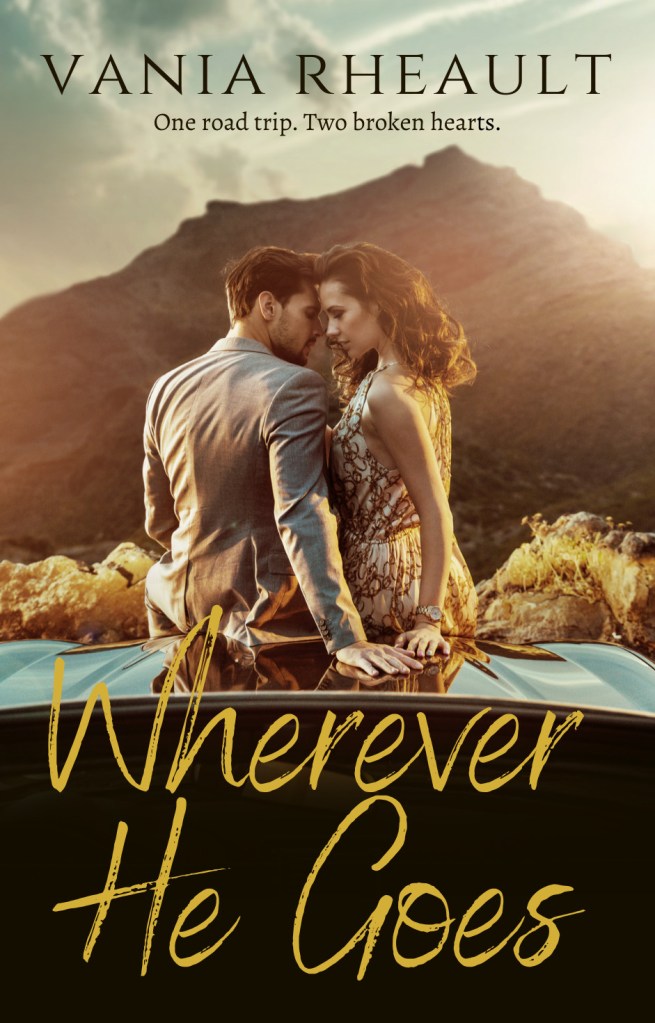
This isn’t a post just about ISBNs. You take risks making your own covers, especially if you don’t have the skill to create a cover that will tell readers what your genre is and won’t look homemade. Just the other day someone was bemoaning the fact he couldn’t get preorders for his book. I told him to look at his cover and maybe redo it, that it looked homemade. He actually was very nice about it, and maybe he will change it, I have no idea. That kind of consequence you may never see–you could not sell any books and blame it on lack of marketing or algorithms. Unless someone you believe and trust says your cover is garbage and you change it, you could go years without knowing what kind of damage your cover caused. I mean, you know I do my own covers, and back in the day they weren’t great. I still see the free stock photo I used on 1700 Hamilton other places, and I published that book eight years ago now. Canva templates taught me a lot, and I still like how this cover came out, the first for Wherever He Goes, even though I changed it to something sexier later that’s still the cover on the book now.

Not listening to your editor and having a book bomb after the fact can have dire consequences–a reader won’t give you another chance if they spent money on a book that had plot holes and grammatical errors every two sentences. And, you know, poor reviews last forever. I’ve been editing my own books for a while, and I know the risks, may have even suffered from some of them. God only knows who’s read my books and said they’d never read me again. I also know the risks of trusting people, and well, tired of that, so you have to choose the lesser of the two evils.

My biggest regret so far was not starting a newsletter sooner, and I wonder how far I’d be now if I had given as much attention to a newsletter as I have to this blog. Maybe because of the change in direction I decided on in 2020, it wouldn’t have mattered, or those people who signed up wouldn’t have cared either way.

After unpublishing some hardbacks and Large Print, I thought about unpublishing a couple of my first books, just because they aren’t the quality of the others, nor are they in the genre I decided to write in. Some say romance is romance, but my romantic speculative fiction could probably go, also my erotica that I decided I couldn’t write because there was just too much sex. (If you have to remind yourself to put in the sex scenes, erotica probably isn’t for you.) When you say you want to write and publish whatever, those consequences can catch up with you. Difficult to make a brand out of “whatever” and you may look back in five years at all the word salad you hoped people would buy.

The one thing all these have in common is that no one can tell you these things. I mean, yeah, the advice is out there, cover to market, hire an editor, start a newsletter, buy your ISBNs if you can. All that’s out there but it’s funny because we’ve turned being indie into defying the rules and maybe some rules are meant to be broken, but this is a business and whether we like it or not, there are best practices.

I almost didn’t write this blog post because I realize the subject is boring and repetitive, even if I’ve made similar mistakes. The bad advice out there can really take me aback, and that woman who had supporters telling people to price up their book left me speechless. What would readers think stumbling upon a book that cost $200.00? How is that author going to tell those readers she preferred to sell off her website? It all seemed so bizarre to me, yet people agreed, said they were going to try it. I don’t know, it just seems like one of those things that you could look back on later and say, “What was I thinking?” Of course, you can do that for just about anything, the cover that wasn’t right, blowing off your editor, not listening to someone who knew what they were talking about because you were determined to fail on your own. That’s how people learn, and I’ve had people tell me to hire an editor, but some things are easier said than done.

So this post is 1200 words of drivel (it’s almost Thanksgiving in the US so I’ll refer to it as turkey gravy), but honestly, my brain is fried. I’m halfway through editing my age-gap. I’m really loving the story and it’s fun to see how far my writing as come, but editing is tiring, probably more so than simply writing. I also have to proof my series proofs, and that will take a minute, but I’m hoping that I’ll get everything wrapped up by the end of the year. I want to start working on my first person stuff again, putting into practice the things I finally know that I didn’t before. I’ve come a long way working on my King’s Crossing series. Really, smoothing out over a half a million words taught me a lot, and I know it did because working on my Rocky Point series was really eye-opening. I agree that sometimes you have to fail on your own to learn, but you do have to keep working on your craft and level up on your own if you don’t want to take anyone’s advice.

That’s all I have for this week. I’ll probably post my Billionaire post next week. I think it’s still relevant, and tempers, while they haven’t cooled all the way down, aren’t so hot, at least, and even if it makes some readers crabby, I think it was wise to wait.

After that, well, it’s year-end stuff, and before you know it, it will be January. The world keeps spinning, no matter what kind of rut you’re in. Do your best to keep moving forward, and hopefully you’ll see more rewards than consequences.

Policing Other People’s Work

Words: 1225
Time to read: 6 minutes

This isn’t as fun as it looks.

One thing that has always puzzled me about authors is their need to police other people’s work. I see it all the time, from the authors who defend their right to leave bad reviews (thinking they’ll teach that author how to write correctly) to people who are loud and proud about the books they do not finish (DNF) for whatever reason. I came across this jewel the other day, and I gave myself a cookie for not responding:

genuine question for kindle unlimited authors: does reporting typos through the content error box ding you in any way? Is there a better way to report mistakes?

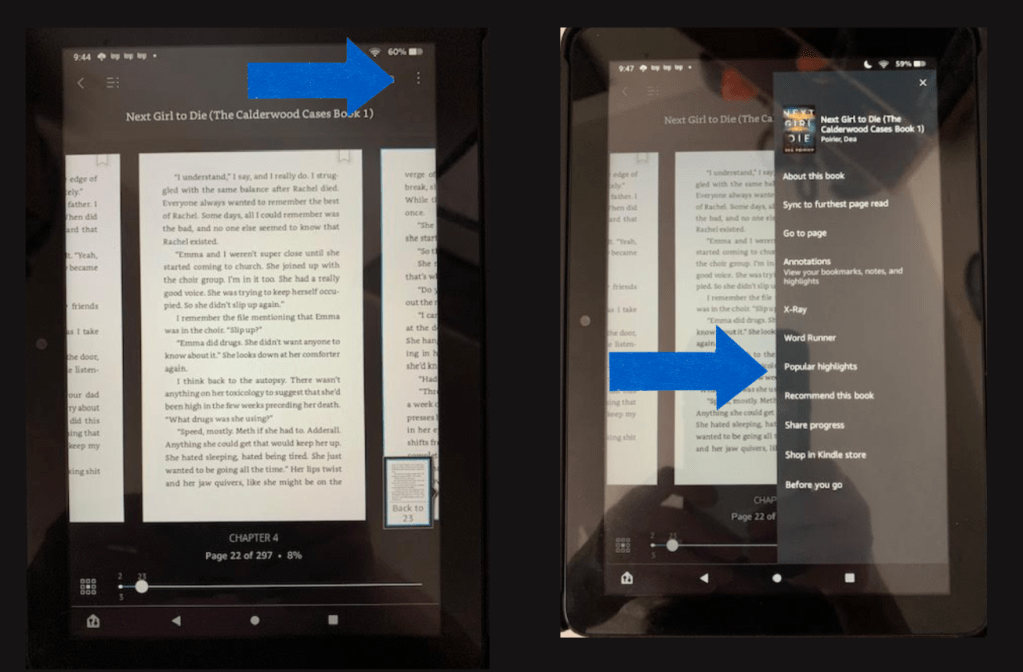
Picture of reporting screen on a kindle

I actually see this a lot, with authors who are asking if it’s okay to email other authors about mistakes, or direct message them to inform them of errors. This isn’t the first time I’ve seen someone ask about the actual reporting feature on a Kindle either, and it just makes me so confused as to why someone would waste the energy to do something like this while they’re supposedly reading for pleasure.

This is one of the big reasons I don’t promo my books where other authors hang out. I have never met a more judgmental or pickier group. And not only are they judgmental and picky, they are not afraid to let others know. The reporting system on a Kindle is anonymous, but just the fact that she posted that on Threads tells me she actually uses it, or wanted to use it. Maybe the responses changed her mind, but knowing she would think about it gives me the ick and I don’t want her reading my books.

I’ve given this some thought as to why authors would want to police someone’s book:

So they can feel better about their own writing. I know this is a pretty crappy reason, and maybe that tells you something about me that I mentioned it first. I think the worst of people? Maybe, but I’ve also seen it enough that I do think authors enjoy being able to report typos or call a book out for bad editing. They like to feel like their books are better than someone else’s. It’s not a terrible thing, really. I think we all have read a book that we thought was bad and said, “If this book is a bestseller, then my books have a chance.” We need the validation, but that’s not a good way to go about getting it. Putting someone else down, even in the guise of being helpful, will never lift you up. It might make you feel better for a little bit, but as most authors become aware, what goes around comes around, and someone reading your book may not take so kindly to your typos, either. And trust me, no matter how many times you go through it, you’ll publish your book with a couple.

They really do want to be helpful. I don’t jump completely to negative assumptions–there are authors out there who genuinely want to tell an author what the problems are in their books so the authors can fix them. The problem is, not everyone has access to their files. If they’re traditionally published, or if they’re published by a small press, telling them about the typos, or plot holes, or that the male main character’s eye color changed halfway through the book, won’t help. You can report it, sure, maybe eventually Amazon will alert the author of the quality issues and prompt their publisher to submit the edits (from what I know this would be very unlikely), but what good is that going to do? You can email, but if every person emailed that author about their typos and they can’t do anything, think of how defeating that would be. You get an email once a week about an issue you can’t fix….how demoralizing that is. Detrimental to that author’s mental health, even. So you being helpful can turn into anything but being helpful.

I understand that you might want to help an author fix their book, but after publication is not the time for that. If you truly want to help, help a writer beta read, or offer to proofread. That book you’re so eager to give feedback on, that book could have gone through multiple rounds of editing, or maybe that author couldn’t afford an editor at all, did the best they could, and you’re rubbing salt in their wounds by needing to mention all the typos, words used in the wrong context, and punctuation errors.

Writers and authors have a really difficult time turning off their editing brains to read for pleasure. It’s part of the reason I don’t read as much as I should. It’s difficult for me to find authors whose writing styles I mesh with. Sometimes I don’t like the author’s voice from the first page, and it takes me a chapter or two to let go of my dislikes and get into the story. I, too, am picky, and I dislike characters who don’t act their age, or dual point of view books that have too much of the female point of view and not enough of the male’s. I’ve read books where the author couldn’t decide between past and present tense, books where the author (or editor) didn’t know how to punctuate dialogue. Books that didn’t take time to flesh out characters. Never, not in my wildest dreams, have I ever wanted to report an error through my Kindle, email an author, or direct message them. I would never take the time to edit a book like that or tell them that something they were doing didn’t work for me. Chances are really good that they wouldn’t care anyway, so when you think about reaching out to an author, figure out what you want the outcome to be. Do you want them to thank you? Is gratitude what you’re after? Will you be disappointed if you don’t get a response? What would you say if they wrote back and said, “Thanks for letting me know, but I’m published with a small press and I can’t do anything.”? Apologize for saying something? Not respond? Get embarrassed and crawl into a hole? Because that’s what I would do if that happened to me. You have no idea what an author’s circumstances are, and even if you are coming from a sincere place of wanting to help, you could be doing more harm than good.

I’ve known authors who police books, giving “honest” reviews, or even editing snippets of books on Twitter, and it’s never great when it comes back to them (and Karma’s like a Boomerang–it will). I keep my nose out of people’s business. Years ago I used to write “honest” reviews, too, even some on this blog that I have since trashed because it was a hard lesson learned that no one is better than anyone else and we’re all in this together.

If you just can’t stop yourself from emailing an author, at least offer to beta read their next book or join their ARC team. Offer some help instead of just emailing them a list of typos and expecting a thank you. Be kind and realize that they may actually not want your help. They might not be able to do anything with it, anyway. I’ve seen vindictiveness and I’ve also seen it returned. Instead of focusing all that energy on someone else’s book, concentrate on yours. It will be better spent.

Author Update and Monday Musings

Words: 1445
Time to read: 8 minutes

desk flatlay with flowers, paper clips, white mouse and white keyboard. text says author update

I really don’t have anything to write about this week. I finished editing book five of my series, and I’m on to book six … I’ve been looking at my covers thinking they’re a little plain, wondering if I should break my brand mold and put couples on them instead, but I don’t really want to do that. I don’t hate the covers I have now, but this series is special and I feel like they need a bit more pizzazz. Something might come at me while I’m updating the formatting–it seems my best covers materialize the night before I want to upload files, but all I know for right now is they’re missing something and I’m not going to publish until I’m completely happy. I did that when I published my Lost & Found trilogy and botched their launch. I doubt the launch of this series will go perfectly, but I want to do as well as I can and I know for right now these covers aren’t it.

In a rare move, I took last Wednesday off. Wednesdays are my biggest editing/writing days because it’s my last day off of the week (Mondays I do errands and cleaning around the apartment and Tuesday nights I go to dinner and a movie with my sister) and I don’t have any chores, errands, or plans. I can edit from sun up to sun down, and I usually get a good chunk of work done. On Tuesday I had finished book five and I just was not feeling jumping into book six. So I did some admin stuff, took a nap, brought my daughter shopping for a dress to wear to her high school graduation, made dinner, watched a replay of a YouTube live from an indie author I wanted to watch, and then I went to bed. It’s not like me to waste time like that, but I have been working so hard on this series I just needed a day to relax (if I can call that relaxing–yeah, I know).

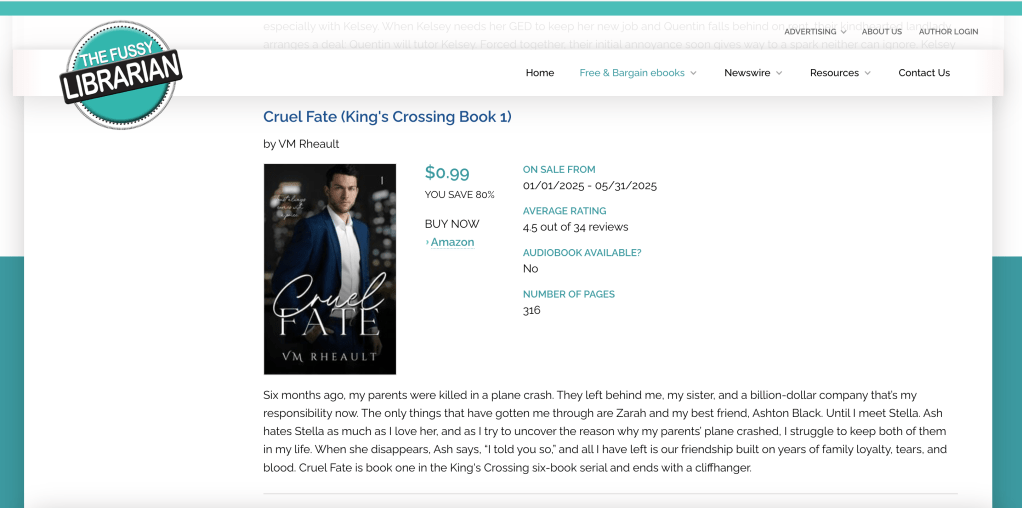
I did a free run on Captivated by Her and Rescue Me from May 9th to yesterday, the 12th, and I gave away 4616 copies of Rescue Me and 98 copies of Captivated by Her. I paid for a Freebooksy promo for Rescue Me–that’s why I gave away more copies of that book–but I’m happy I moved a few copies of Captivated, too. I’m not sure why I did the promotion except that I hadn’t done one for a while and I’m still shaky on how to get my name out there without having to pay for it. I was happy with the placement of my book in their newsletter–I was first. I had to shrink my screen to fit it all in the screenshot, but this is how it looked:

I know giving away a book is easy, and making the free top 100 list isn’t anything to brag about, but I made it to number 6 in the contemporary romance category and number 15 overall in the free kindle store.

I was getting some page reads from Rescue Mei, but since it’s a standalone I’m not hoping to earn my fee back. I’ll keep an eye on how many people go on to read Addicted to Her, but being I gave away less than 100 copies of Captivated, it may not be that many. We’ll see what happens.

Anyway, so I watched a YouTube Live replay of a romance indie author who went over her six-month marketing plan and I noticed that she heavily used cross-promotion as a way to get the word out. I’ve moaned for a while now that my networking is crap, and while it’s really difficult to think you need to meet people with the intent of using them, I don’t see it that way. I’m more than happy to swap and share. Because writing and publishing is such a solitary thing, I don’t often think about including anyone else. I didn’t tell any of my romance groups in case they were looking for free reads for their subscribers, and when I planned those free days and set up my free days in my KDP dashboard, that was the first thing I should have done so other authors had a heads up in case they were looking for content. It’s just really hard for me to think in terms of including others in my plans and I know I need to do better.

She also was saying how important new releases are, and that you can get a lot of content out of a launch. I think we all know this…snippets…cover reveals… that kind of thing, but I am terrible at doing anything with it. I’ve said before that by the time I have a new book out, I’m already writing something else, and that is a terrible way to treat your newest release. Your books deserve all the love in the world, and I wonder if I haven’t wanted to take the time to do that kind of thing because I’ve been so busy trying to bury how I’m feeling. In the four years I’ve felt like garbage, all I’ve done is try to feel better and forget about how crappy I do feel. Immersing myself in writing has been pretty much the only way I’ve been able to do that, and pressing pause to promote a book has never been on my radar. Releasing six books two months apart will be a different thing for me and it would be a waste to publish these and not freaking tell anyone. There’s no sense in that, but fighting to be seen is a struggle and it’s difficult to add that struggle when you’re already struggling with something else. I try not to go too much into my health anymore because I don’t want to tire you and I really don’t want people to stop reading my blog because they’ll think it’ll be just more of the same. It was just interesting to me when a friend last week asked me if I still get the buzz of releasing a book, and it was a surprising revelation to think that I hadn’t really enjoyed anything in the past few years and that includes starting my pen name and releasing the eleven books I have so far. I mean, I have on some level, but not to the extent a healthy person would have enjoyed it.

So now that I know what’s wrong with me, that I’m on some kind of treatment–even more so since I’ll have had a followup by the time my series is ready to go–I’d like to intentionally enjoy these books and their launches. I would like to intentionally talk them up on social media, intentionally choose snippets and create posts. Intentionally write more blog posts about them and show them off to the world. I didn’t feel like doing that before. I wanted to be distracted by the next story, and I was, to the detriment of the other books. I mean, I’m grateful I was able to build a backlist so quickly, but it makes me wonder too, how I’ll feel writing the next book. If there won’t be such an urgency to write quickly and finish it to get on to the next. Maybe it will be different to savor the drafting part of it, enjoy my characters. I don’t know. It’s just an interesting thing to think about. When your quality of life sucks, can you enjoy anything?

In an uncharacteristic move, I think that’s all I have for today. I have a couple of personal things to do this month, like go to my daughter’s high school graduation ceremony on the 24th and I’ll be gone for two days to go to Rochester, MN for my followup appointment, Memorial Day and the day afterward. I’ve been walking a bit more, even if it’s just walking around the block during my half an hour lunch break when I’m logged into my day job. I bought a new lounger for my balcony and I’m looking forward to lying in the sun. I didn’t feel good enough last year and we didn’t have that great of a summer besides.

Things are topsy-turvy, and maybe heading in a good way for the first time in a while. It’s a different feeling, one I can’t embrace fully because I haven’t had the time to acclimate, but I mused to my friend how I would feel a year from now.

Hopefully there’s only good things ahead.

Have a good week, everyone!

Fake It ’til You Make It (Or something like that.)

cinderella's glass slipper with text tha says fake it 'til you make it
It worked for Cinderella

Words: 2974
Time to read: 16 minutes

A lot of people wonder, when they start the publishing game, just how long and just how much money it’s going to take until you “make it.” And without muddying the waters with things like “success is what you think of it” or “every sale counts” let’s assume that “making it” is earning a full-time wage. That will be different for different people too (I could do a lot with an extra 30k a year) but let’s go with 50k since the group 20booksto50k put the number out there.

When you’re getting your book, or books, ready to publish, you can put as little or as much money into your product as you want, and chances are unless you publish a real stinker of a novel, the quality of your book will be just fine. Maybe you’ll be shocked to hear it, but when you look at books that have taken off, they aren’t literary masterpieces by any means. So, if you’re looking at editing, do I think you need to spend $1,000 on a developmental edit, $600 on a copy edit after you’ve made changes, then $200 on a proofread? No, and the people who say that you should are probably other authors who are snobs and editors who want you to hire them. I don’t believe you should publish without some kind of feedback, even if you just ask your spouse to read it to look for plot holes, unless you’ve been at this for a long time and have found your voice and you know what your tics and weaknesses are and can edit them out on your own. If you’re patient enough, shoving your book in a drawer for a month can go a long way to reading your manuscript with fresh eyes. Make use of critique partners and beta readers, catch typos on your own by listening to your manuscript and proofing the proof (mistakes really do jump out at you when your book looks like a book). So, the bottom line is, pay for the editing you can afford or think you need and use free where you can get it.

This also applies to covers–some authors make their covers for as little as $7.00 to buy the stock photo from DepositPhotos and use the free Canva plan, some spend hundreds, even thousands on a cover from places like 99Designs and Damonza, or hire artists for one-of-a-kind art. Of course I believe people judge books by their covers, but your cover is only going to be as good as what’s inside. I knew someone who used Damonza, and his cover was beautiful. I tried to read his book in KU to support him, but it was all telling. He had an entire trilogy in 300 pages because of all the telling. If your book isn’t good, the most beautiful, expensive cover in the world won’t help it take off. Your readers will review, your star rating will tank, and even if you can sell a book, that reader won’t enjoy it, she’ll think she wasted money and never buy you again. I think you can find a happy medium when it comes to covers. GetCovers is inexpensive, they do a decent job, and you’re supporting Ukraine. Or buy a premade for $100 dollars. It’s more important to know what the trends are and what other top authors are doing in your genre than how much money you put into your cover. Do your research because being original isn’t the flex you think it is.

Formatting doesn’t have to be complicated, and while you might want the fancy chapter headers, be honest and admit it’s for yourself and not your readers. I don’t sell many paperbacks, and ebook formats can’t support the fancy stuff authors are always talking about. Ebooks don’t have “pages” and frilly extras don’t apply. So you can pay the $300 for the formatting that will have black pages or full-spread graphics, if you think you’re going to put a lot of energy into selling paperbacks to get your fee back, or you can pay $50 for a simple formatting job. Or you can do it yourself for free using Draft2Digital’s free formatting tool, or Reedsy’s, or upload a Word document. It’s all up to you. I wrote about formatting and gave a lot of resources in this blog post, and you can read it here: https://vaniamargene.com/2022/08/22/formatting-your-paperback-books-interior-tips-and-tools-that-can-help/

That’s packaging your book, and there are always more things you can spend money on like an author logo, the ISBN, or registering your book with the copyright office. When I started my pen name, I swore I would start registering my copyright, but then the fee went up from $35 to $65, and I lost my resolve. If you’re not putting out many books, maybe the $65 dollar fee isn’t that bad, but it can add up if you’re publishing six books a year. Here’s the fee list if you want to bookmark it. https://www.copyright.gov/about/fees.html

I didn’t do a very good job explaining how much it costs to get a book ready to go because depending on their choices, costs can vary from author to author. Some want to bootstrap it because they don’t know if they’ll earn their money back and some don’t care. Some have disposable income and paying for services isn’t a big deal, some can barely afford the seven dollars to buy a stock photo. Some have a huge network and don’t pay for anything because they have a lot of free help or they’ve joined something of an author’s co-op where they all trade services. If you’re like me, pretty much doing this alone, do the best you can. You might be surprised your best is better than you think it is.

Once you have your book ready, reviews are kind of important. I don’t believe in the magical number of 50, but I think if you’re writing commercial fiction, putting your book on a place like Booksprout (there’s a small fee) would give you a few to start out. I didn’t with my duet and published without any, and now Captivated by Her and Addicted to Her are my poorest sellers. I’ve tried doing free promos for Captivated, but I think I ruined any momentum I could have had not launching with a few reviews. Maybe it’s circumstantial, but my other books always had a better launch maybe because I put them on Booksprout first. You never know.

So what do you do after you publish your book? How many times do you have to do that to “make it?” How much money do you throw at marketing to make your book sticky enough to quit your job? The sad part is, I don’t know or I would be doing it. I’m at a point where baby authors would probably envy me my sales dashboard, but authors who knew what they were doing from the very beginning and have been making six figures for the past few years would be unpleasantly surprised if they woke up to my numbers.

Even going viral, in some cases, won’t help. Chelsea Banning (and I’m not picking on her or throwing her shade in any way. She’s an interesting case study because I watched in real time how that all played out and what happened afterward.) went viral on Twitter after Stephen King quote-tweeted her. Suddenly, she was everywhere, from USA Today to doing a video call on the Kelly Clarkson Show. But when something like this happens, not a lot of people are prepared to keep it going. Having a backlist helps because your sudden popularity will lift up all your books. If the timing is right and you have a new book ready to go, that will boost the algorithms too, as will throwing your unexpected royalty money at some ads (you’d have to borrow from yourself because of how Amazon pays out, but I think in this instance you’d be okay with that). But if you only have one book out, don’t have another ready to go, even if you run ads, you may not be able to keep the momentum going. You can save up a little money, maybe have a few hundred to a couple thousand depending on how viral you really went, to throw at your next book, but you need to be in the right place and be in the right mindset to make the most out of going viral. We all want it, but I don’t think we understand what the rewards and consequences of going viral can entail. At this point in my career, I would love to go viral (in a positive way). I have a few books out, trilogies that have good read through and standalones that have a number of decent reviews. I have a six-book series about to drop, and I have a newsletter (blog) in place to capture new readers. But even I would question if I have what it takes to keep that going–after a while, you get burnt out. Posting on social media to stay relevant is time consuming, and if you’re scrambling to get another book ready or to set up a newsletter because you didn’t have one, creating graphics for Instagram or your FB author page may not be on your list of priorities, especially since more than likely you have a full-time job and maybe some kids and a spouse you’d like to see every once in a while. I brought up Chelsea only because going viral didn’t seem to help her in the long run. She might have been able to put away a small nest egg, but on Threads she was asking people to buy her book because her husband had gotten laid off or some such, and she does only have one book out right now so while going viral must have been exciting, it was only a blip in her career. I wrote a little bit about her here: What I learned from an author’s literal, overnight success

And it’s really hard to say how many of those readers stay with you, or if they bought your books and interacted with you to taste your fifteen minutes of fame. Going viral is a flash in the pan, and no doubt helpful, but how can it compare to writing and publishing consistently for many years and organically attracting readers who love your work? Though I doubt anyone would turn down going viral–that’s like saying you wouldn’t take a $100,00 dollar jackpot because you were disappointed you didn’t win a million dollars.

So let’s go back to the question, how long do you have to fake it before you make it? And the honest answer is, I have no idea. Some unlucky authors fake it forever and don’t truly make it. And why they don’t make it is going to boil down to what they’re doing wrong on an individual basis. (I talked a little about this in my transparency post, and you can read it here: https://vaniamargene.com/2024/02/29/the-magic-of-transparency/)

I mean, obviously, there are things you can do to up your chances of consistently selling books:

Write in a popular genre and package it properly. Romance, Thrillers, Sci-Fi/Fantasy, maybe? I haven’t watched a K-Lytics report in a while, so I don’t know what the numbers are, but there are some genres that are harder to make a go at it, like horror (that’s not YA–I think Goth Cottagecore is having a moment right now) or speculative fiction, literary fiction. Like that. You’re already making it hard on yourself by choosing a genre that’s not already a bestseller.

Put up a website and start a newsletter/blog then put that link in the back matter of your books. I always have to qualify that now since I moved my newsletter to my blog, but start something where readers can find you and subscribe for updates. But do more than just start one. Keep it updated. If you’re putting out a book a year, you may think you have nothing to talk about, but doing character sheets, character interviews, talk about where and why you chose the setting you did, etc, can fill up a post a month. You can also do author interviews to keep your name out there.

Learn an ad platform. If you only have one book, it might seem repetitive after awhile, but ads are the best way to shove your book out into the world, especially if you don’t want to put it on sale or use any free days (and why would you? You want to make money.). There are millions of readers and you can run ads indefinitely so long as your spend doesn’t outrun your royalties. You can spend (waste) a lot of money if you don’t know what you’re doing. I would start with a solid list of comp authors–this will help whether you run FB ads or Amazon ads. Make sure your keywords and categories are solid and that your book’s cover, title, and blurb complements them. Figure out how much you want to set for a budget. Go slow and see what happens.

Network with authors in your genre, not just authors in the writing community. Romance is big for opportunities such as newsletter swaps, promos, anthologies, auctions, collaborations, and just genre news in general. I missed a lot of chances for exposure because I got sucked into the writing community on Twitter instead of meeting and getting to know authors who write romance. I’m getting better at it now, spending time in romance groups on Facebook, but I should have been introducing myself many many years ago.

One of the pieces of advice I hear from big indie authors is to have multiple streams of income. If you can’t do it now, that’s fine, I’m not in a position to right now either, but if you have an ebook, a paperback, and audio, that’s three ways, setting up a Patreon could be another, going wide rather than enrolling in KU could be one, starting a podcast that businesses could eventually sponsor could be another. Even adding a Ko-fi link to your social media profiles could be one, or maybe editing/beta reading on the side. If you already don’t have time to be working on what you need to be working on, absolutely none of this will sound appealing, and that’s okay. But if you look at what the big indies are doing, I’m thinking of authors like Joanna Penn and Lindsay Buroker, they have money coming in from a lot of places like translations. One day I would just like to add audio, and that’s a long ways off.

So, you can ask me the question again…. how long do I have to fake it before I make it? And does spending more increase my odds of making it? I’m just shaking my head and shrugging. No one knows. I know what to do to increase your chances and I implemented some of those things myself, but the only thing you can really do is publish your best book and publish your best book as often as you can. Build a backlist because the more product you have to sell the more you sell. Always be working on the next book. That might not get you to 50k in a year, or five, maybe not even ten. I’m on year eight, but I don’t know if not making the mistakes I made would have helped. It’s difficult to watch authors zoom ahead of you, and I have. Two that come to mind are Cara Devlin and Elizabeth Bromke. I met them on Twitter, both when maybe we are around the same level. All of sudden they took off making full-time earnings from their books. Then I see some of the authors who have been around for as long as I have, or even longer, who are still in the same place, maybe because they let their lack of sales get them down and they don’t write much anymore, or their covers and/or genres are just off the mark, or they don’t have money for ads and depend on free social media to get anywhere, or maybe life just got in the way and before they knew it, two years went by and they haven’t opened their Word document.

The problem is, we all write such different books, have different resources, have different lives, that someone like Elizabeth (who writes romance/women’s fiction) could tell me exactly what she did, and maybe I would pick up something here and there, but in the end, I’m not sure it would get me anywhere. She hires an editor and cover designer, but if she lives a life where she could afford that before she started making money from her books, that’s two strikes against me, so we could stop writing out the list already. I mean, it’s nothing to get bitter about–I’m sure there are some people who read my blog get a little annoyed when I recommend running ads. Spending ten dollars without a guarantee of ROI is a stretch and a luxury they can’t afford. I get it. So some of us, through no fault of our own, may be blocking our own paths to success.

I’ve given up the idea that I will ever make a full-time author’s wage. A lot of authors don’t–trad and indie–and not because their books aren’t good or they didn’t go viral. They weren’t at the right place at the right time, or they never wrote a book that hit the market just right. But as I always say to myself with every new release, maybe this will be the one.

It never is, but all you can do is keep faking it.

author photo

Owning vs Renting: An Author’s Dilemma

Words: 1420
Time to read: 8 minutes

Is anything completely ours in this business? Maybe only our books.

Good morning! I hope you all had a good weekend! I worked more on my last book–getting ever so closer to finishing up. I’ll still have to take a break and read the proofs to look for typos I might have edited into my books, but the end is in sight, and I can’t wait! I might treat myself to a new Mac–my T is still driving me crazy, and it would be a nice little present for myself after working on this series for so long.

So, a week ago, on Monday, March 5th, Facebook, Instagram, Threads, and Messenger all went down. They were down for a couple of hours, but to say it spread panic across the author universe would be putting it mildly. I know a lot of authors happened to have releases that day, and I’m sure not being able to post was upsetting to a lot of people.

It was kind of eye-opening for me as well, because this was my first outage while on Threads instead of Twitter. Outages never bothered me because I was always able to flip from one platform to the other, but since Meta owns all of them, there was nowhere for me to go. A friend and I went to email for a quick exchange (just to assure each other we hadn’t been hacked), so all wasn’t completely lost, but not having any social media felt strange… scrolling is just habit. I finally was able to kick my Twitter addiction only because I found a substitute on Threads.

Anyway, so this gave way to some thought about how authors are always told never to build on someone else’s grass. I agree with that wholeheartedly–especially since TikTok gave me such a hard time, always accusing me of violating community guidelines. I’m glad I never got invested because it ticked me off and a ding on one of your videos like that affects your entire account and how they show your content.

But after my hassle with MailerLite, I realized that even a list you cultivate on your own doesn’t really belong to you. If your account, for whatever reason, goes down or glitches and you don’t regularly export your list as a backup, those emails you worked so hard for can disappear in a puff of smoke. Sometimes tech support can help, depending on your aggregator. MailerLite charges too much for their tech support and plenty of authors take their chances and stay on the free plan (that does not give you access to tech support) for as long as possible.

My WordPress site feels like it belongs to me. I pay for the domain and for the plan. I have access to tech support if something goes wrong (like when I accidentally deleted DNS records I needed), but the fact is, anything online can go down so even selling direct to avoid dealing with Amazon isn’t always a sure thing.

I guess this post is kind of a warning to pick and choose carefully. Last night I was thinking about all the author things I’m “stuck” with, and it’s kind of scary in a looking-into-the-future-and-adding-up-spend kind of way. Every single one of my books has a link to my author website and a call to action (CTA) to subscribe to my newsletter. Every single book. Over 20, which is over 60 files I would have to change if my author website ever went kaput (the ebooks and paperbacks on Amazon, and then all my paperbacks on IngramSpark). I mean, it wouldn’t be the end of the world to amend all that back matter, but if I didn’t have an IngramSpark code for free revisions, it would add up quickly. I was lucky I directed my readers to go to my website instead of a MailerLite landing signup page, probably one of the few things I did correctly from the start. My homebase, has been, and now with my newsletter gone, always will be, my author website.

Don’t get me wrong, I’m locked into other things too–things I want to keep at the very least because I like how they work. Like Bookfunnel. I may have gotten rid of my expensive plan that supported MailerLite integration after my migration to the new MailerLite platform screwed everything up (saving me 150 dollars a year), but I like how they deliver my free book and readers are used to that platform. The easter egg that I hid in Addicted to Her is delivered that way too. At least the team at Bookfunnel doesn’t seem to be going anywhere, and it helps that thousands, if not hundreds of thousands of authors, use them.

I’m also locked into my Canva account. I have so many designs there, and without it, I could never make changes to any of my book covers. I’ll always need my account, but luckily their business and reputation seem solid and hopefully won’t be disappearing anytime soon.

Maybe it will make you feel better to think that being locked into certain services isn’t only an author thing. I think Amazon is so integrated into our lives now that getting rid of it would cost–I have purchased several movies and TV shows on Prime. I would lose a lot of money if all of a sudden Prime Video disappeared. The same with my Kindle account. I’ve purchased many books that would disappear if something happened to my Kindle account. Several years ago I bought books on Nook, and when I dropped it into the tub, I lost all that content. I could have bought another Nook, but I preferred being on a Kindle anyway, so I swallowed the loss.

When you’re a baby author, as they like to say, you just don’t understand what you’re locking yourself into signing up for all these things. That would be the time to weigh what you’re willing to pay for, for pretty much all of your indie career. You get used to having access to those things and you tie up a lot of your IP into an account like Canva. But, when you’re new, you don’t know what you don’t know, and if you’re proud of your newsletter and start putting the landing page link everywhere, if something happens, you have no idea the damage control it takes to fix it.

I’m very fortunate that I linked to my website everywhere, and I’m very fortunate that I chose Bookfunnel as a way to distribute my reader magnet. I didn’t have to scramble to update any links–I don’t think I can portray in writing how relieved I was that I could just shut down my newsletter and not look back.

Building on someone else’s grass is definitely inconvenient at best (career damaging at worst), but sometimes you just can’t avoid it. We subscribe to products and services every day with the hope that those products and services have the longevity we need to keep our business afloat.

Only time will tell if the things we sign up for have staying power–in terms of the business itself and how we need to use them. I had thought MailerLite was a good fit and I recommended them several times, but they proved to be just as sketchy as any other business has the possibility to be, and some people just learn that the hard way. Lots of scammers in this business, and you’d like to think a steady business like that won’t turn, but like my daughter says, the risk is low but never zero.

I was lying in bed last night thinking about my blogs and how to make them seem more professional, if only on my author blog now, so it comes off as more newslettery and less bloggy, and I decided to create a “footer” of sorts for the ends of my posts. For eight years I’ve struggled with how to end my posts, and I’ve gone through various footers, like creating a graphic that has all my books on it and attaching my Amazon author page to it. This isn’t the right audience for that, but I would still like to end my blogs with some kind of signature so I came up with this. It’s especially important on my author blog now so no one misses the link to download their free book which I will add to every post.

Tell me what you think, and I hope you all have a great week!

Author Interview: Romance and YA Author Melody Loomis

I met Melody on Twitter when she was asking some questions about a Midwestern winter for her WIP. Being I’m in Minnesota, I was happy to help her with all the chilly details. We happened to have several inches of snowfall that winter, and I tweeted her lots of pictures. She asked me to beta read when she was finished, and I was happy to do that, too. We stayed in touch, and now I consider one of my friends. I asked her if she would be willing to do an author interview, and she agreed. Still getting her feet wet with the whole publishing thing, she was happy to share what her past couple of years have been like writing and publishing. She spills on her newest wintery release out this week… (Ironically, we don’t have much snow right now! I’m sure her FMC, Melissa, would love that!)

You write YA and Adult Contemporary Romance. What made you mix it up and do you think you’ll write other genres in the future?
I knew before I published my first book that I wanted to write both YA and adult contemporary romance. I’ve always enjoyed a good love story, and growing up, I was very much into Judy Blume and similar authors. So those are the kinds of stories I like to read and write. I considered using different pen names, but in the end, decided it was too much of a hassle. And I think there will be readers who will enjoy both. I’m still writing in the contemporary genre, even though I’m writing for different ages. And I’m mostly targeting a female audience, though not that men can’t read them too!

As for branching out into writing other genres, I might like to tackle writing romantic suspense, because I enjoy reading that too. I’ve also considered writing picture books and humorous essays, but I’m not ready to do any of that yet.

You’re writing a series now. What do you like best about writing in a series and what do you find challenging?
I love writing in a series because often, I’m not quite ready to let the characters go! I want to keep writing and find out what happens next in their story. Or, I want to explore the best friend’s story.

The thing I’ve found challenging about writing a series is that sometimes, my muse wants to work on other things, and I have to work hard to keep on track. I don’t want to leave a series unfinished. I’m currently working on my Storm Series, but stories 5 and 6 haven’t been written yet. Stories 3 and 4 need work. I think in the future, I will wait until the series is complete before publishing. That way, I’m not under any pressure to keep writing in that series if my muse won’t cooperate. This will probably be the only way I will ever “rapid release.” I consider myself a slow writer, and I like to put away projects for a long time to let them rest before I go back to revising and editing them.

You do your own covers. What prompted you to try and can you explain your creative process?
For my first book, I reached out to a book cover designer, because I didn’t really know what I was doing. When she returned the cover, I thought, “Hey, I could have done that.” Plus, I wanted to try making my own covers to save a little money. I purchased Affinity Photo, which is a great alternative to Photoshop since you don’t have to purchase a subscription. I played around making mock book covers for months. I’m still learning the program, but I discovered that making book covers is a lot of fun.

I only suggest making your own book covers if you really enjoy it and are willing to learn the process, otherwise it can cut into your writing time. But looking at stock images gives me a lot of ideas for future stories, so that’s a plus.

You’re part of the . How did you realize early mornings are the best time for you to write and what would you suggest to other writers who are struggling to find time to write?
Not everyone wants to get up early, but I’ve always been a morning person. It’s quiet before dawn, and I write best with silence. Also, I like to start off my day doing something that brings me joy. And the earlier I get up, the more time I have to write. Though I write at other times of the day, morning is simply the best time, as my creativity is at its sharpest. By early evening, I’m yawning and can barely keep my eyes open!

The best advice I can give, if you’re struggling to find time to write, is that you’re going to have to give up something. For me, that was a lot of TV shows. And YouTube. I used to have an Authortube channel over there, but making videos cut into my writing time.

Or sometimes, you just have to make time to write. Find a few minutes here and there. Maybe you can write for 15 minutes while dinner is cooking, or if you have kids, when they go to bed. For me, getting up before dawn is easy. But also, having a cat helps. They’ll ALWAYS wake you up early!

You self-publish. What is the hardest thing you’ve encountered about the process and what did you do to tackle it?
The hardest thing about self publishing has always been the things I didn’t know or expect, like when my paperback showed up as temporarily out of stock, or when my pre-orders were not fulfilled and customer support wasn’t helpful. I also had an ISBN problem for my second book. And it’s not like I don’t know how ISBNs work. I’m a library assistant, and I look up ISBNs all day! But it surprised me that some sites wouldn’t allow me to use the same ISBN, even though it was one I had purchased.

The only thing I can do when it comes to these issues is to figure out what to do better next time. The first time, I didn’t go “direct” with Amazon for the paperback, and that was a mistake for me. As for the ISBN issue, Draft2digital support helped me out with that one by assigning me one of theirs. Talking to other writers and listening to podcasts has also been helpful in solving these kinds of issues. Maybe by the time I publish my next book, things will go smoothly. Fingers crossed!

Your book went live yesterday (December 17th)! Congratulations! What do you do leading up to your launch? Any marketing secrets you’d like to share?
I’ll be the first to say that marketing is not my strong suit. I didn’t do any kind of marketing for my first book, other than social media posts and a YouTube video. For my second book, I did two book promotions through Written Word Media, In hindsight, I think it would have been better if I had spread those promotions out and not done both at once. I have no way of knowing which promotion brought me more sales because I did them at the same time. And once they were over, the sales dropped off again.

For this upcoming book, I’ve scheduled one promotion, and I’ll plan to do another one at a later date. Also, since this is book 2 in my series, and my romance books are in KU, I’m looking into scheduling some free days for book 1 at some point to introduce people to the series and hopefully encourage them to buy the next one. I’ll also do social media posts, what’s left of social media these days. I haven’t done any Amazon or Facebook ads yet. I’m just not mentally (or financially) ready for that. All I want to do for now is to write books, and if people read them, great. I believe my readers will find me eventually. I think for now, I will try to focus on building my email list. I’m still looking for my first 1000 superfans.

Share your favorite motivational quote about writing.
It’s not actually a quote about writing, but there’s this quote by Nelson Mandela. “It always seems impossible until it’s done.” I think about this quote when I’m working on a novel. When the words won’t come, or when I’m stuck in the muddy middle, it’s hard to think that I’ll ever get to the end. But after some determination and butt-in-chair time, the draft gets finished. It always seems impossible until it’s done.

A couple of years ago, I purchased these motivational cards to put on my vision board, and I was excited that one of them had that very quote!

picture provided by Melody

Thank you for your time, Melody! It’s always fun to hear about other authors’ experiences. You can follow Melody at all the platforms listed below, and I pulled her book covers off Amazon so you can see them. You can also join her newsletter for updates at www.melodyloomis.com. Thanks for reading this week!

Follow Melody here: Goodreads | Amazon | Twitter | Instagram | Threads | Substack