Using the pandemic to sell books: a short discussion.

The Six Figure Authors podcast interviewed Alex Newton of K-lytics for their most recent podcast. I love Alex and his data. I’ve talked about him before on the blog. He scrapes Amazon and publishes his findings on genre trends for indies. He sells a lot of his studies, but he also gives out a lot of free information during his talks.

His talk on the podcast was about reading habits during COVID-19. Knowing what is selling is good for us indies because if we have books in those categories, we can amp up our ads, right?

A lot of people question the ethics of this practice. Taking advantage of the pandemic to sell books. But are we?

I think using an ad like this:

might be a little tasteless because while people are at home because they have to be, they might not be in the right mindset to settle in with a book. We can’t ignore the real issues of people on unemployment, or the people with anxiety who have to go to work and are worried that they’re going to bring home the virus to their loved ones.

On the other hand, you could argue that since people ARE staying home, that supplying the demand isn’t unethical, it’s just good business.

When the pandemic first started and we were ordered to shelter in place, a lot of my FB groups discussed this. Some authors even turned off their ads because they didn’t want to be viewed as taking advantage of the situation.

But the fact is, with people staying home, if they really are reading more ebooks because Barnes and Noble is closed, or Amazon wasn’t/isn’t prioritizing shipping on physical books, who is it going to hurt to keep your ads going? You aren’t raising your prices, you aren’t ripping people off, or trying to, anyway. Doing a promotion on a book in a genre that’s selling I feel is just good business sense.

Now, you might write in a genre that has fallen to the wayside and maybe you don’t feel that marketing your books would do much good right now, and you may be right. But you don’t necessarily have to blame the pandemic, either. All genres, subgenres, tropes, and trends have their day in the spotlight, pandemic or not, and those books might always take a little more push to make sales.

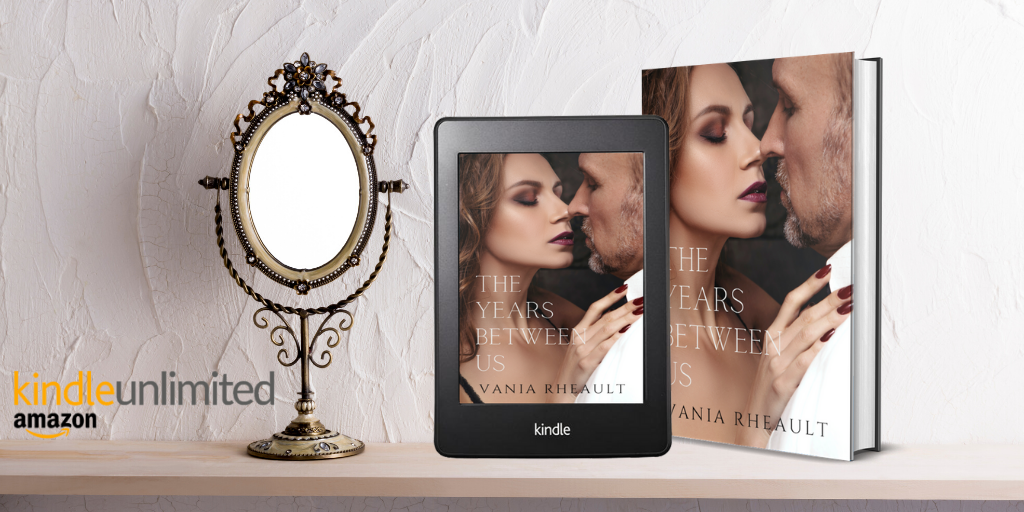
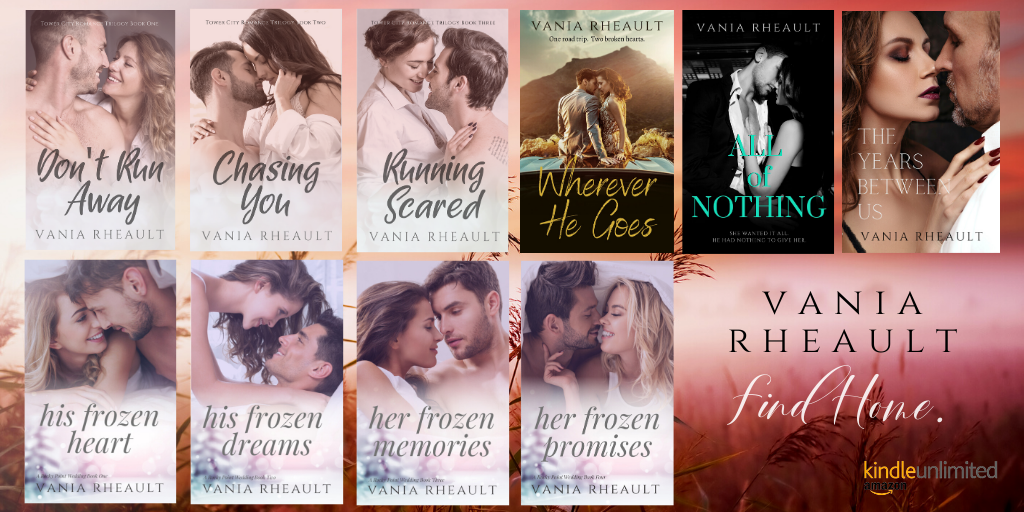
Anyway, I haven’t done anything to my ads outside of turning off the ones that were losing money. The pandemic doesn’t seem like it has done much to my marketing attempts. One of the best things I ever did was swap out my cover for The Years Between Us and that had nothing to do with the pandemic.

At any rate, if you want to watch Alex’s talk (and I recommend you watch it as he throws up a graph or two once in a while) you can watch it here and come to your own conclusions. For me, I’ve been too busy to put up more ads, trying to get through my backlist checklist and start on my first person books again. But it might be advantageous for me to do so.

Let me know your thoughts!

Pointing fingers: Who’s fault is a bad book?

book-back-COVER-2-op0xdop9ax0haxvc95x9ft6dzj0yiadp35hjwu9e90

Taken from Stephenie’s website, stepheniemeyer.com

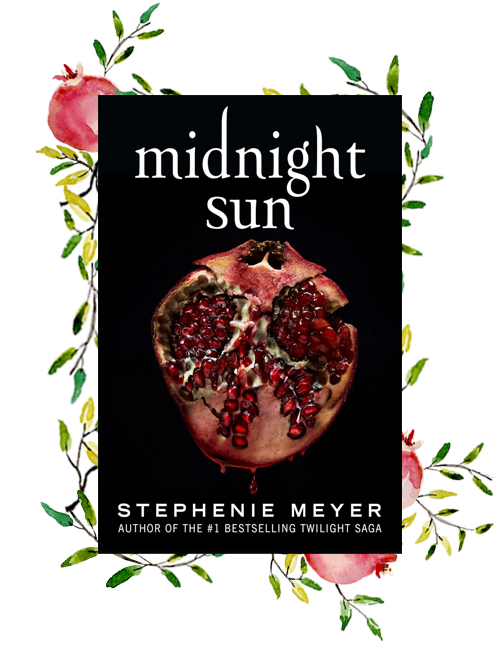
There was a lot of hoopla on writer Twitter last week when Stephenie Meyer announced that she would be finally releasing Midnight SunTwilight only from Edward’s point of view. Twelve years ago, halfway through writing it, someone leaked it, and heartbroken, Stephanie didn’t finish it letting the half-done manuscript sit on her website.

The vitriol on Writer Twitter started immediately. I even saw someone make a parody of the cover of Midnight Sun which features a pomegranate. In the parody, the designer used a peeled banana. It didn’t take me long to get sick of the scathing remarks.

Coincidence, or maybe not, I saw on Instagram that E L James is starting to write the last 50 Shades book from Christian’s point of view.
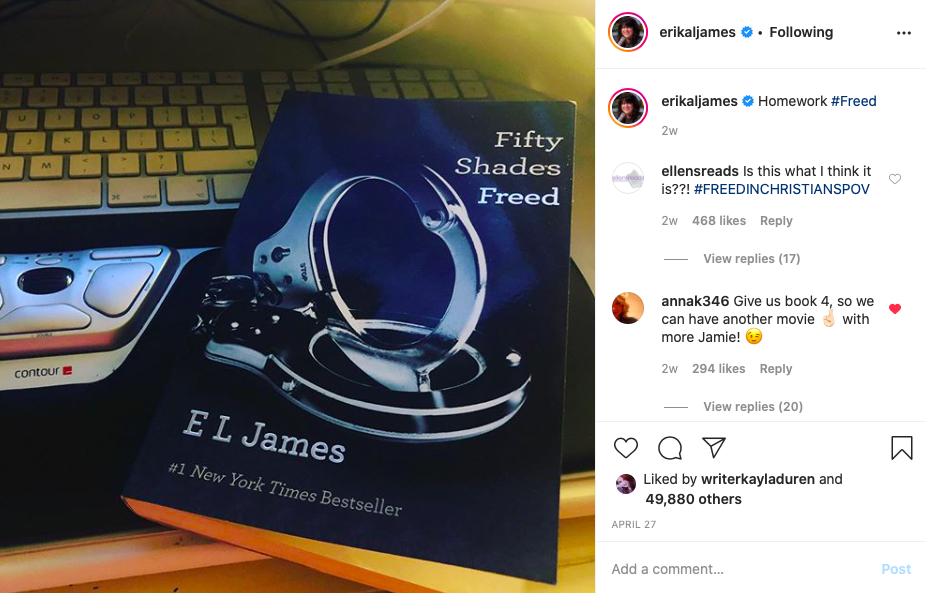
Screen Shot 2020-05-16 at 8.53.52 PM

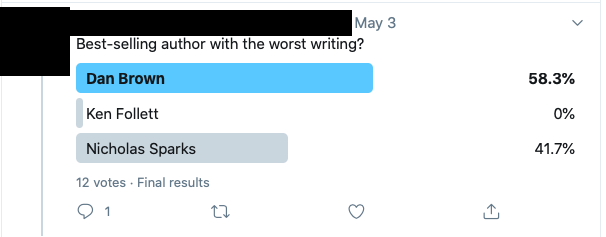
And a few days ago, someone on Twitter posted a poll: Who is the worst best-selling author among Ken Follett, Nicholas Sparks, and Dan Brown. It was an unnecessary and meaningless post. I told her so, and we got into a little catfight until ultimately she told me to grow up. I found that funny because I wasn’t the one tearing down best-selling authors in public.
Screen Shot 2020-05-16 at 6.39.16 PM

But all this mud opinion slinging, all these disparaging remarks, begs a question: whose fault is a bad book?

It’s easy to pin in it on the author. Readers take passages from a book to make fun of it, they make gagging noises when reading the Look Inside of a book on Amazon, they live tweet their reactions to books hoping to start a mob of dislike. (Public Twitter shaming is big in YA, especially if the topic of racism/race is involved.)

Is it always the author’s fault when a bad book is published?

In the indie world, it sure is. Whether indies don’t hire an editor because they can’t afford it, or don’t think they need one, or they hire one then ignore everything that editor says because it’s “their book and they can do what they want,” when an indie self-publishes, everything from cover to cover is their responsibility.

Some say it’s not really fair. Finding resources, resources that are affordable and trustworthy, is hard. I totally get that and it’s why I’ve stopped reviewing indie books. Sometimes no matter how hard an author tries, their book isn’t going to be good enough. When it comes to Stephenie Meyer or E L James, their best obviously wasn’t good enough for some people, either.

Though, when an author gets picked up by an agent, when that agent sells work to a publishing house who employs several editors, when does the responsibility shift from author to publishing house? Is there no differentiation? When you publish a book, your name is on it. It belongs to you. You’re responsible for the outcome, good or bad, and I guess when you’re a reader, you don’t stop to consider that a “bad,” traditionally-published book has been looked at by probably close to five sets of eyes–one belonging to an agent who deemed it sellable in the first place. Twilight was actually found a slush pile by agent assistant at Writers House who passed it along to a senior agent, Jodie Reamer.

If you get picked up by an agent, and she sells it, and an editor edits it, the house publishes it and puts a few thousand dollars at marketing it, are you that remiss in thinking that your book is good or that you’re a decent writer? Agents are gatekeepers after all, and it’s why some writers still query and never self-publish even if they never find an agent. They need the validation. They need to be told their writing is good.

And all these musings beg another question: When an agent, editor, publishing house says an author is a great writer, but the readers say she is not, who is correct? The house who pays the author an advance, or the readers on Twitter who tweets live what a piece of shit it is?

Is it the author’s fault they believe the agent, the editor, and the publishing house? Of course not. Is it the author’s fault the editor skimped on edits and pushed the book out to meet reader demand and take advantage of social media momentum like in the case of 50 Shades of Grey? I don’t think so.

So why all the finger pointing at the author when the book is taken out of their hands?

I mean, do you think E L James’s editor pulled her aside and told her to join a writing critique group? Probably not. Erika didn’t have time anyway, she was too busy rolling in money and watching Jamie Dornan strip on set.

The thing is, as writers, we’re bound to get better. I read The Mister and it was definitely a change from 50 Shades. She got better. Now, we’ll probably never know if she took some creative writing classes or read some craft books, or if that time around her editor took more time with her and The Mister went through more rounds of edits than 50 Shades.

I tell indies on my blog and on Twitter all the time–it’s not your editor’s responsibility to teach you how to write. If you get a 1,000 dollar editing bill from a copy editor, you’d be better off investing in two English/creative writing classes. Which do you think is the better investment? The classes that could help you for your entire career, or the edits from one book?

If you’re an indie and your editor highlights every single sentence because of grammar, punctuation, or it simply doesn’t make sense, you need to take the future of your writing into your own hands. Not every writer is going to have an MFA, but if you don’t understand tension, conflict, stakes, plot, and character arcs, you best figure it out or you’re always going to have problems and your books will never sell.

That’s a big difference between bestselling authors who use too many adverbs and an indie who doesn’t know how to plot–story. Stephenie’s and Erika’s agents knew a good story when they read one, and so did their publishing houses, and most importantly, so did their readers.

Maybe it’s not fair of me to blame an indie for their weaknesses and not a traditionally published author. In the case of a “bad” book, though, it’s not an author’s fault if their agent and editor tell them that their book is good. Those people are supposed to be in the know–and they didn’t end up wrong–numbers of copies sold proves that.

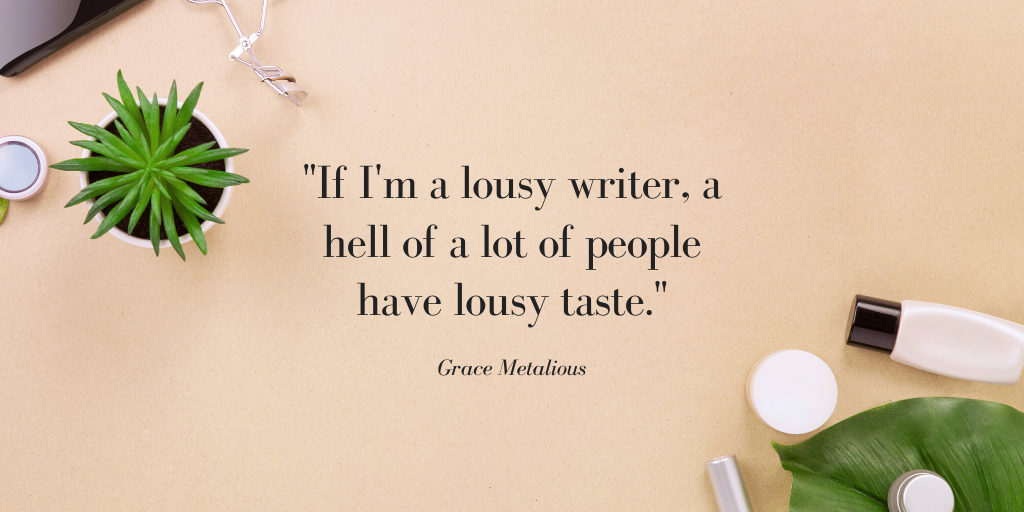
As Grace Metalious said of her runaway bestseller Peyton Place, “If I’m a lousy writer, a hell of a lot of people have lousy taste.” A sentiment I’m sure E L James shares, and a sentiment that brings the literary versus commercial fiction argument full circle.
You’ll never change your life until you change something you do daily

If books like Twilight and 50 Shades of Grey are so offensive because of sparkling vampires, horny main characters, and typos so abundant that even the free version of Grammarly would meet its match, why do so many people read them? In one of my tweets to the writer with the poll, I told her she can read who she likes. No one is forcing her to read Nicholas Sparks.

There are a lot of ways a book can be “bad.” The story can be well-written but more boring than hell. The author may not know her grammar and punctuation, or subject-verb agreement, or maybe she has a crutch word issue like the girl from Tik Tok pointed out making fun of Stephenie’s use of the word “chuckled.” (An editing failure, in my opinion.)

We all aspire to write “good” well-written novels and we chafe when we do so (or we think we have) and we’re not recognized. That’s luck and what’s hitting the market at any particular time, and you’e not proving anything to anyone showing off sour grapes because an author you deemed “not worthy” has found that luck and niche in the market.

What can you do besides wasting time with useless polls?

Work on your craft. Read books that won’t offend your high-society taste. Query your heart out or learn marketing because, honey, that’s the only way your book will see the light of day.
You’ll never change your life until you change something you do daily-2

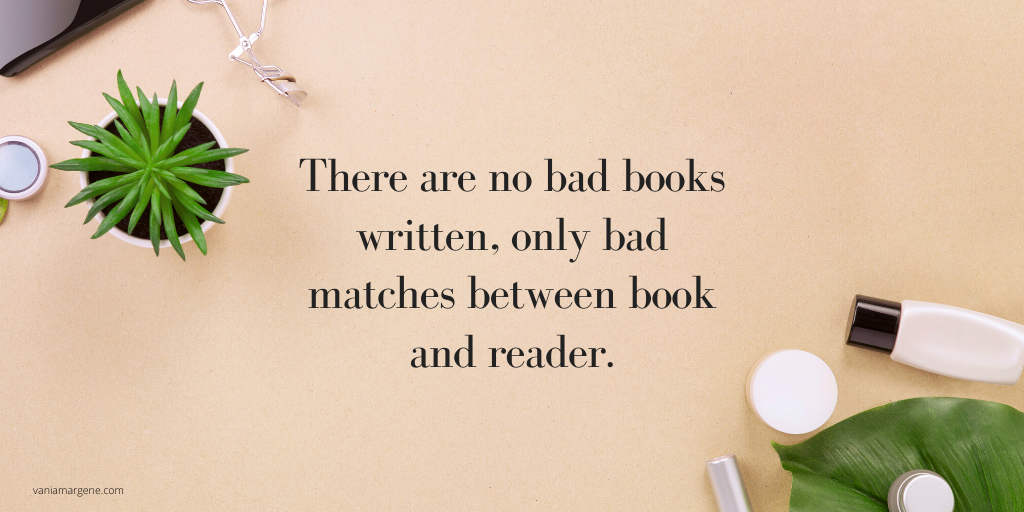
So, who’s fault is a bad book? I suppose after such a long blog post hashing out the question, we can determine there are no bad books written, only bad matches between book and reader. The only difference is some readers are more vocal about their unhappiness and some aren’t.

I wish Writer Twitter weren’t so vocal about it. It’s not like a lot of those writers have anything to brag about. Sometimes I find the reader who complains the loudest is only making themselves feel better because their books fall into the same camp they’re trashing online.

I wish Stephenie all the success in the world with Midnight Sun. And I hope Erika’s critics never stop her from writing.

There are books out there for everyone. Read what you like and leave the rest of us alone.


Resources I used for this blog post:
The Bestseller Code: Anatomy of the Blockbuster Novel by Jodie Archer and Matthew L. Jockers


end of blog post graphic

Thursday musings: What I’ve completed, what’s next, and a small pet peeve.

Brown Photo Independence Day Twitter Post

Happy Thursday! It’s a rainy day here and I thought the picture was apt. I’m not having as much fun as they are, but that’s okay. Rainy days are good for writing, or in this case, catching you up on all that I’ve been doing.

I’m going to start with a something that has been bothering me a lot in the past couple days. All the writing groups on Facebook can provide an endless stream of fodder for any blogger, and the other day I took particular offense to one post. I won’t mention the group because I don’t to get kicked out, and I don’t want to mention the poster because maybe she didn’t know what she was doing (though I’m sure she did). At any rate, she posted something to the effect of, “Whew! I wrote two books this month! Now it’s time to relax and celebrate!”

Of course she got the obligatory congratulations, and there were some people who were a little down, because, hey, that announcement really sounds like something good. Who doesn’t want to be able to write two books a month?

The problem is, and I’m sure you know where I’m going with this is, what really is a “book?” How many words is that? You know me and my big mouth and my nosiness couldn’t leave it be and I asked her how many words she’d managed to write in a month’s time.

You know what? She didn’t answer me. It could be that she missed it. It could be she never checked that post again, because the whole point was to a brag in the guise of, “If I can do it, you can do it, too!” Or it could be she didn’t want to admit that she wrote two novellas that were about 25,000 words a piece.

Even if she did do that, it’s an accomplishment and I don’t want to take that away from her. But I think it shows complete lack of courtesy for the writers and authors in that group who struggle just to write a couple thousand words a week. Be proud of yourself, share your victories, but come on, be honest about it too. You’ll get more appreciation that way.

Brown Photo Independence Day Twitter Post-2

This is why comparisonitis is a bad thing. You don’t know the real story. You don’t know what is really being accomplished. It could be she “wrote” 100,000 words–in dictation, and hired someone to transcribe it all. That sounds pretty cool, too, but not how the majority of us write. Be careful who you compare yourselves to. Get the real story, then mine their experiences for the real-life tips that can help you achieve your own level of success.


I took the feedback from comments on a different blog post, and I found a different photo for The Years Between Us. I think there were a few photographers who uploaded new stock photos on depositphotos.com because I had never seen this couple before, but they hit the nail on the head when it came to my characters.

After I changed out the cover and ordered a proof to make sure it looked good in print, too, I started running some ads using keywords from Publisher Rocket. The ads haven’t turned on yet, so I’m getting some impressions but not many. As I said in a previous blog post, a new cover, a fresh editing sweep, and a new blurb is the best I can do for this book. It could just be that I didn’t hit the mark, and it will never sell. That’s something I’m going to have to come to terms with, but at least I can say I gave this book my all.

Brown Photo Independence Day Twitter Post-3

I’m not going to write it off just yet. I can bid very low and continuously run ads to it, as impressions are free and running ads as long as they don’t cost you money without return never hurts. I’ll keep you posted.


I am using COVID-19 and the #stayathome order to still go back and get some messy housekeeping done.

Yesterday I went on IngramsSpark and uploaded new insides and uploaded new covers for some of my books. I have this thing where my books need to be the same everywhere, and even though dealing with IngramSpark can be a pain, and I did three out of six books. I’ll wait to make sure they go through then do the other three. They do not have the online previewer that KDP does, so you can upload your files, but you won’t know if they pass until someone from Ingram looks them over. At least with the KDP previewer you have an idea if the file is going to be approved, or if you see a mistake you can fix it before submitting. Ingram did make some changes to their website and it’s more user friendly, but it still doesn’t work the way I wish it did.

I did my standalones, next I’ll do my Tower City trilogy. When those are all uploaded and approved, I’ll publish my Rocky Point Wedding Series there. I haven’t done that yet, though I did not select expanded distribution on Amazon. I do like seeing my paperbacks other places even if they’re not selling.

Screen Shot 2020-05-13 at 12.36.22 PM

And please keep in mind for anyone who does not know, you have to be listed in the IngramSpark catalogue for someone to walk into Barnes and Noble and ask them to order your paperback. They will not purchase a book from Amazon. You may approach the manager of your local Barnes and Noble and see if they will carry your book on consignment and then bring in your author copies from Amazon, but you’ll look more professional if you say your book is available through the IngramSpark catalogue. It is a pain dealing with them, but they will list your paperback book on all the marketplaces. You do have to buy your own ISBN though. IngramSpark won’t take the free one Amazon gives you if you go that route.

Robin Cutler is the director of the indie side of Ingram, and she did a wonderful interview with Craig Martelle in the 20booksto50k group! Take a few minutes to give it a listen. There’s some really great advice there if you’re interested.


I wanted to add a little bonus content to my Tower City trilogy. After I edited the books again (took out some telling, smoothed out the writing) I wanted to add a little something to the boxed set. I intended to write a novelette, but it turned into a 29k novella. I’ve been writing that for the past few days (ten to be exact, ahem) and I’ll spend the weekend cleaning it up and putting together a new boxed set with extra novella. Then I’ll run some ads to it and see if I can’t get some page reads. I said in a previous blog post I didn’t think my books were worth selling, and I feel better now that I’ve given them a read through and corrected a few typos and small inconsistencies. I haven’t looked at those books since I published them, and going at them with a fresh eye was beneficial.


That is all the news I have to share–unless you want a quick update on my ads.

I lost 14 dollars for the month of April with a spend of $180.97 and royalties across all my books of $166.92.  I turned off my big spenders to see if my KU page reads would eat up the difference. Not so much, but I’ve operated in the red before. Obviously the main goal is making money, but at this point I’ll be happy to break even. It’s cool. Still learning, still playing. Going forward I won’t bid so much and hopefully lower cost per click.

I’m up for the month of May, with an ad spend so far of $41.16 and estimated royalties of $78.73. I only have two ads going right now for All of Nothing, still my biggest earner. I put up some fresh ones for The Years Between Us, but nothing to write home about yet, and Wherever He Goes is DOA. Not sure what I can do to revive that either. His Frozen Heart is going okay, and I’ll run a promo later after the last book in the series releases at the end of this month. As I said, it was an ill-timed release, so maybe a Christmas in July type thing. We’ll see.

I really will shut up now since I talked your ears off. I hope all of you are having productive days and weeks, as it seems this may not get back to normal until the fall, and maybe not even then. It’s hard to keep your head in the game, but every little bit helps!

Until next time!

end of blog post graphic


Ebook explosion 2020

2020 indie publishing predictions

We’ve reached the end of Written Word Media’s 2020 predictions. So far we’ve talked about audiobooks, author collaboration on marketing and writing projects, the organic reach that is diminishing and ways to find it again, and the necessity of running ads. We’ve explored what would happen if the big five started using KU.

I’ll be ending the series now as the COVID-19 virus has a lot of us on edge (and frankly, tired of being at home), and some writers aren’t writing much now, instead focusing on the day to day just to stay sane. It’s difficult to write when you’re worried, so I’ll hit on one more point to round out the prediction series and wrap it up until the next wave in 2021.

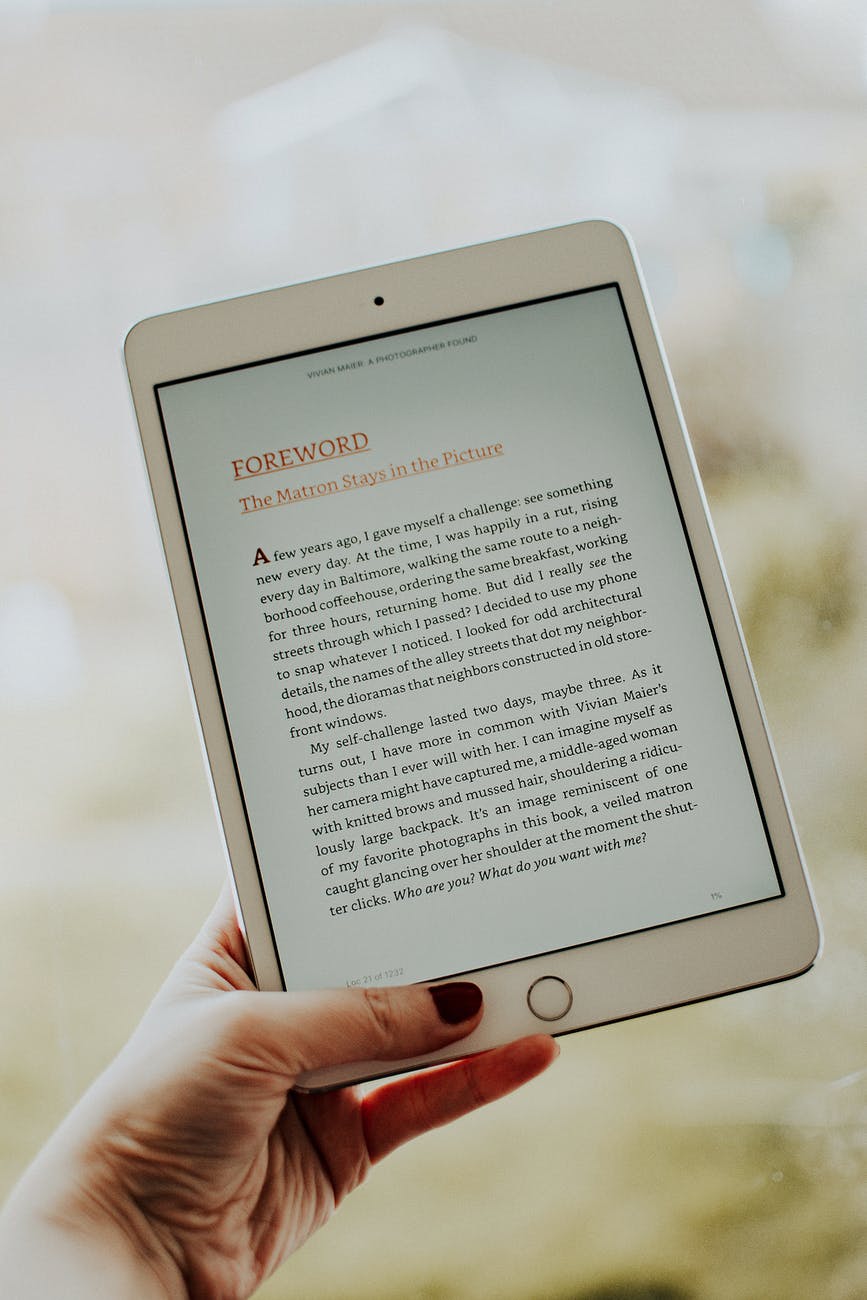
The next prediction that WWM goes into is that the e-book market will grow even more

photo of person s hand holding ipad

Photo by Lisa Fotios on Pexels.com

in 2020.

When you think that over 2,000 books are published every month, it’s crazy to think that it could grow even more than that. As publishing a book gets easier and easier, and faster and faster, the number may rise, but the quality probably won’t. This presents two problems: one, you have to fight to be seen and two, you have to fight to be seen through crap.

The article goes on to say that e-book readers are younger, which is a good thing for authors who write YA and coming of age/college fiction. It used to be a struggle for authors of those genres to be seen in an online presence only able to only reach those readers through a traditional publishing channel (paperbacks and brick and mortar stores), but when teens are reading on their phones it gives authors of those genres a reachable audience.

But like all the rest of the predictions indicate, writing good books and publishing frequently will help you find readers.

There’s not much to this prediction – it’s almost a given — but it does make discoverability harder, no matter what genre you write in. The article suggests not getting distracted by shiny objects, but hopefully a writer with his or her eye on the prize has been avoiding temptation already.

In that vein, you have to think of publishing as a lifelong endeavor. I’ve listened to podcasts and read articles about 2020 predictions and discussions looking back at the past 10 years.

A good one is Joanna Penn talking with Orna Ross from the Alliance of Independent Authors, and you can watch/listen to it here:

One thing that has kept popping up was how many authors have disappeared. The indie “gold rush” such as it was started with the invention of the Kindle in 2010 and writers like Lindsay Buroker and Joanna Penn were there at the start. Both have commented that quite a few writers they knew 10 years ago have dropped out and have never been seen again. I’ve only been publishing for four years, and even in that short amount of time people have come and people have gone.

You can take a couple things from this. Of the 2,000 to 3,000 books published every month, some, maybe most, of those authors are one and done. Of course you don’t want to feel good because of another’s misfortune or bad luck, but let’s say those authors only had one book in them, or they thought publishing would be a different experience from what they had. Maybe they thought they would get rich quick and slunk away when their booked debuted at 300,000 in the Kindle Store and was buried, never to be seen again. Those authors aren’t competition for long, but unfortunately, there will always be more to take their place.

If you can publish a few times a year, build a backlist a potential reader can see looking your author page, you’ll be ahead of the curve just by sticking around.

selective focus photography of spark

Photo by Malte luk on Pexels.com

2020 started a new decade and we don’t know what the next 10 years in publishing will bring. What does your next 10 years look like? Five years? Are you still in the game or did you come in like a sparkler only to fizzle and die out?

My goal is to make it. I want to work on discoverability; writing and publishing isn’t a problem. If you read my blog on a semi-regular basis you know I’d rather write with my free time over anything else. I don’t see that changing anytime soon. Twenty-five years ago I majored in English and creative writing. Books are in my blood.

The e-book market will grow and continue to do so beyond this year. It’s the easiest way to publish a book. But it will be the ones who stick around that will cut through the noise.

What will this new decade bring to you?

Thanks for sticking with me through these predictions. I’ve always been interested in the evolution of the publishing industry. If you want to read a good book about the industry, and how Amazon has impacted it, more specifically, read  The Book Business: What Everyone Needs to Know by Mike Shatzkin and Robert Paris Riger.

And you can listen to Mike’s podcast interview with Joanna Penn, here:

Thanks for reading and stay safe and healthy!


end of blog post graphic

Scammers Gonna Scam

2020 indie publishing predictionsI’ve fallen a bit behind with the 2020 predictions published by Written Word Media at the beginning of this year. I try to always finish what I start and I wanted to at least end this series even if half the year has already gone by and maybe no one really cares what’s going on because we’re dealing with bigger things right now.

I’ve forgotten where we are when it comes to the numbering of this series, but we’ll keep going.

Another prediction that Written Word Media predicts is that scammers are going to become even more prevalent as the the industry grows.

There will always be scammers. From the big guys who ask $10,000 to publish your book to the jerk who charges $25 to use a free photo and slap some text on it to make a book cover, someone is always looking to take advantage of someone else.

This is the part of the in the industry that I despise. There isn’t a day that goes by when I’m not online getting bent out of shape about something. I’m a member of lots of groups on Facebook and every day there’s someone who posts, “My client asked for XYZ for their book and I don’t know how to do that.”

This bothers me on two levels: 1) these guys are charging for a service they don’t know how to provide. If you don’t know how to do something like hell you should be charging for it. And 2) they’re asking the group to do the work. You have the audacity to charge for a service you are not qualified to provide then you ask someone else for the answer.

A case in point: Lots of people have started a formatting service using Vellum. Fine. Whatever you want to do, but if you are going to charge for your time and “expertise” the least you could do is look up answers for yourself. I’m not the one getting paid to answer your questions.

Another thing I can’t stand is all the crappy book covers for sale. Buying a book cover from a shady designer will get you into trouble. If they steal artwork, or use photos not available for commercial use, or they use fonts not available for commercial use, that is all on you – your name is on that book.

There are scammers out there who have whole premade cover businesses made entirely on free images off Pexels, Unsplash, and Pixabay, put some text on it in Canva and sell it for $50 or $100 for paperback. Some of these people don’t know any better. They think anything online is fair game, but some just want to make a quick buck off a new indie author who is excited they wrote a book and want to publish it.

These guys are dangerous. Trusting them is stupid, and with a couple of hours of practice in Canva you can do for free what they are charging for.

Another place where scamming has become popular is editing. You need an editor to proof or edit your book and you have a ton of offers when you ask around on Twitter. A lot of people who edit charge way more than their experience allows, or they shouldn’t be editing at all.

There’s a guy on Twitter who wanted to edit for me, for a fee, and I’m glad I never took him up on it. He published a book and it’s complete trash. If you’re going to solicit at least put out some quality work on your own or you’re going to look like a complete ass–not to mention look like an asshole–charging for a service you have no business telling people you can provide.

At any rate, those are only my pet peeves. The predictions article is a bit more encompassing.

Don’t pay someone to publish your book. Watch out for “small presses” where it’s just a guy living in his mom’s basement eating Cheetos and charging you to upload your book into KDP.

Learn how to do things on your own. Or network and develop a couple friendships and add them to your publishing team. Always ask for a sample and/or reviews and testimonials from other authors. Be responsible or you’ll pay $500 for an edit and your book will come back with typos and a million other things wrong with it.

There are legitimate people out there. Take your time in look. And seriously, if you aren’t happy with what you get as a finished product, say something. If you find out you’ve been scammed, maybe you can file a claim with PayPal if that’s how you paid or ask your bank for a stop payment.

You can contact Writer Beware if you feel you have been scammed. There are resources to assist you in legal action, and perhaps add the person who scammed you to a list so they can’t scam anyone else. This is a wonderful resource provided by SFWA and you can look at it here. Also, you can, and should, look at the list before you hire someone and make sure some else hasn’t reported them.

Your books are your business and responsibility. Take care and be careful. On the same token, don’t charge for a service you don’t have the skill or expertise to provide.


The article didn’t go into this kind of scammer but they are out there. One type are the writers who take advantage of Kindle Unlimited. Scammers like Chance Carter, who used to bookstuff and offer prizes to readers who would review the most.

Or the authors who will put blank spaces between paragraphs (making their book “longer”) to up their page read. In fact, I just read the look inside of a book like that a couple days ago. Sometimes this is ignorance–authors don’t know how to properly format a book. Most times it’s

intentional, trying to scam Amazon out of page reads. And hurts us. Kindle Unlimited Authors are paid out of a giant fund, and if those funds go to authors who haven’t earned the page reads, then they are stealing our royalties.

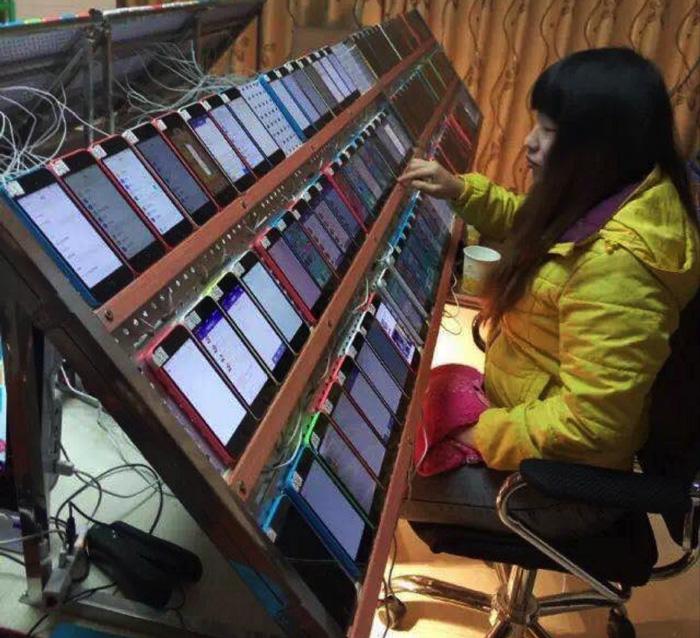
Another type of author scammer is the kind that uses click farms to get page reads. It was rumored that the writing duo/trio Alexa Riley used click farms for page reads to catapult them to the top of the charts. That was what I had heard in a romance group I’m in on Facebook. Upon looking up an article to link to this post, it seems they were banned from Amazon for bookstuffing, but it could be they were also using click farms for page reads.

Another author said they were plagiarizing and using ghostwriters to publish their books faster. Whatever is true, and whatever is not, Amazon took their books down for violating terms of service and/or using their account illegally.

David Gaughran likes to keep track of these “black hat” authors as he calls them, but he doesn’t publicly denounce them. Lots of us want to know who they are so we can avoid them, not work with them, etc. But as he states, there does come a risk when pointing fingers and sometimes it’s best just not to say anything at all.

The point I’m trying to make is that scammers can be on both sides of publishing. Yes there are people who offer services and charge exorbitant prices for those services, when they do not have the skills required to offer any type of services at all. And then there are the authors who think they can make a quick buck or two scamming Amazon and Kindle Unlimited, and therefore, their fellow authors.

It’s too bad that an industry can be so riddled with people who would do anything to make a bit of cash. (And sometimes it’s a lot more than a bit. A top selling book on Amazon has the potential to make thousands of dollars a month.)

The one thing you can remember is that authors like Chance Carter and Alexa Riley, even Faleena Hopkins, do end up getting theirs. I’ve heard that Chance has tried to come back under different pen names such as Abby Weeks, and Amazon has blocked those as well. Alexa Riley may end up coming back too. She could already be out there writing books under a different pen name. It’s difficult keeping track of these authors when you are trying to build your own business.

Scams will continue to pop up as the article suggests. They aren’t going to go away.

As an author who requires services, be careful who you hire.

If you’re an author who needs to supplement their income by offering services, make sure you know what you’re doing and that you’re earning your fees ethically.

And for the love of God, don’t try to earn a quick buck with your books. Even a simple question like “Can I publish a book in KU but put a different version wide?” will put you into scammer territory. (This is a real question I’ve seen posted to try to take advantage of being in KU but also being able to sell her books wide. The answer is no.)

I fell down the rabbit hole looking up what Chance Carter, Faleena Hopkins, Alexa Riley, Cassandra Dee and others have done. There’s not much recent, a lot of it comes between 2015-2019, but it’s interesting reading all the same. I’ll add some links below if you, too, don’t have anything else to do today besides read what kinds of things authors will do to make it to the top of the charts.

It’s fun, y’all. 

This isn’t going away. Keep your eyes open, and your white hat on.

Want to read more about Chance, Alexa, Faleena, Madison Faye? Here are some links I skimmed to write this post:

#BOOKSTUFFING AND WHY IT MATTERS

Kindle Unlimited – A Cheater Magnet

An interesting Twitter thread from two years ago:
https://twitter.com/CAlmeidaAuthor/status/1002942665019846656

More by David Gaughran: https://davidgaughran.com/2018/06/10/cassandra-dee-mosaic-book-stuffing/

Reactions to the Amazon Clickfarming Scandal

BAD ROMANCE To cash in on Kindle Unlimited, a cabal of authors gamed Amazon’s algorithm


We have one or two more blog posts to finish up this series. Next up, a prediction that ebooks will continue to be grow and be the top way indies make their money.

See you there!