Unknown's avatar

About Vania Margene Rheault

Vania enjoys reading and writing. She's lived in Minnesota all her life, and with a cup of coffee in hand, enjoys the seasons with her two children.

Working on your craft: Can you publish without an editor?

So, there was an interesting question that came up in one of my Facebook writing groups, and essentially, she asked, Can you really make a living publishing without an editor?

Considering that’s what I’m trying to do with my new pen name because I can’t afford to hire out, it piqued my interest.

All the answers, as you would imagine said, of course you need an editor. I was the only one who said, not so fast. There are a lot of variables when deciding something like that, and some of the questions I threw back at her were, How long have you been writing? Have you ever gotten feedback before, like, ever? Do you have a good memory to keep track of your own (in)consistencies and details? If you don’t know how to write a catchy beginning, avoid a saggy middle, create interesting and meaningful character arcs, and know your grammar and punctuation backward and forward, then you’ll probably need help. (It also helps immensely if you know what you don’t know and have the wherewithal to look it up.) During the first couple of years when decided to try write books to publish, I needed help, and I did use editors and beta readers. That was back when I had a large circle of friends who were willing to trade or charge very little and we all came through for each other. Now most of those friends are gone, and I’m alone. I said in my post, if you’ve written enough words to find your voice and style, then you’re one step ahead of most newbie authors. I’ve edited for a few new writers, and no amount of good editing will fix bad writing. The writer first has to give you something to work with, and if s/he doesn’t….

If you, or the original poster of that question, are looking for an easy way out, there isn’t one. Writing is like any other skill and it takes practice and a knowledge of the genre you’re trying to write in.

I admit, I love a writing craft book, and I read them all, but some of them get too formulaic, and I can’t follow. I tried reading Save the Cat! Writes a Novel: The Last Book On Novel Writing You’ll Ever Need by Jessica Brody, and it just wasn’t for me. (She also has a blog that you may find helpful.) The way Jessica broke down a novel’s components made my head spin. Another book I’ve read, (though not recently) is Romancing the Beat: Story Structure for Romance Novels (How to Write Kissing Books) by Gwen Hayes. Romance authors a million times over swear by this book, but I just couldn’t make it work for me. And it’s not because I’m a pantser and want to write as I discover the story. I’m a plantser, and have a general idea of how I want the story to go, what the characters’ backstories are and their emotional wounds from their pasts that haven’t healed and how they affect their futures, which is what any romance book is about. But turning writing into a formula, or consciously chopping up my plot into the three act structure is really difficult for me to grasp and I can’t do it. The only two things I do with regards to planning that way is making sure something happens at the 50% mark to avoid the saggy middle (the Mirror Moment as James Scott Bell calls it), and breaking up my characters around the 75% mark, because that’s most what romances do. To be honest, them breaking up and thinking all hope is lost is my favorite part of any romance, and I would do it anyway.

When you’re a new writer, betas or developmental editors are valuable. They’ll tell you where the story drags, if you’ve rushed your ending, if your characters have no substance, and over time, if you listen to their feedback, your writing will smooth out and you’ll start to include those elements naturally. I don’t think any writer who is writing a debut novel will have all that figured out, never mind having written enough to find their voice and style. It’s why whenever I see a writer saying they are querying their first ever book, I say good luck, because chances are, your book will sound like you’re a brand new writer, and an agent can’t sell that.

It’s really not fair, because a lot of good writing comes from gut instinct, or following an intuition that you’ve honed over a million words. You develop your own formula based on genre expectations and how you twist those reader expectations to make your tropes fresh and new. All that comes with practice and listening to feedback.

Once you have your voice and style down, once you know you can deliver to your readers, then yeah, I think you don’t need an editor, not someone who will deep-clean your manuscript, though it does mystify me how many people get angry when I say it. (I even left a Facebook group over it.) I don’t know if it’s because they resent having to use an editor, or are just defensive of indie publishing as a whole and how much crap is published on, let’s face it, a daily basis, or what. I really don’t know what makes people so mad when I say it, but that doesn’t make it less untrue. Besides, no one has any idea how hard someone will work not to need an editor. I read craft books like crazy, read in my genre (though not as much as I should) and write. Maybe that’s the issue people have? They aren’t writing? Look, it doesn’t matter who you are, you need to practice to get better, and that goes for anything you want to try to master. Olympic gold medalists have been honing their skills in their chosen sports since childhood. Same as musicians. But I suppose if you have twenty hours a week to write, and you’re talking to someone who only has five free hours a week, yeah, maybe there will be a little resentment there. I write a lot. I don’t have many friends, I work from home, I don’t go out much. When I’m not working, doing chores, running errands, or going to Tuesday movie night with my sister, I’m writing. That’s not something I’m going to apologize for, and neither should you if someone is giving you a hard time.

In reality, it’s a moot point, anyway. I know 6 and 7 figure authors with one-star reviews that say they needed an editor, when I know that hiring an editor is part of their publishing process. You won’t please everyone, so you might as well be honest. If you need help, get help, and if you can write a good story without help, don’t worry about it. You can’t achieve perfection, and I’ve already said this will be the last time I go through my 6 book series. I will ALWAYS be able to find something to change, but I need to let them go. I’m tired and I have many other stories in my head that I want to get onto the page.

So, how do you make your writing better, level up so you don’t need an editor?

Read a lot in your genre. A lot of developmental editing is finding those tropes and elements that make your genre what it is and helping you meet those reader expectations. You won’t know what those expectations are unless you read a lot in your genre. I know this stinks like writing to market, but every genre, be it romance, domestic thrillers, detective novels, have elements that you can’t leave out or you’ll just make readers mad. Writing a good story is all about the overall picture as much as knowing where your commas go.

Listen to feedback early in your career. When I first started writing again, it took me a lot of feedback to find my groove. My very first beta who volunteered pointed out all the “justs” and “thats” and that was my first lesson in filler words. That was a great start to learning what I was doing wrong. Another beta/editor told me to trust my readers because I had a habit of “reminding” them of what they’ve read in previous chapters. That was another great lesson, and one I still apply today when I find myself rehashing information. Repetition is tedious and boring. Echoing was another thing people pointed out to me, and I still do it, and it’s part of my editing to delete or replace repeated words. That’s one of the reasons why I’m going through my series again when I thought I was done. Because I found a couple of words that I used over and over and over again and I wanted to tighten up my sentences. Those are words I will always watch out for now, and you can make your own list of filler and crutch words to refer back to when you’re creating your own editing process.

Work on new projects. I learned a lot working on different books, and it’s the only way you’ll be able to practice crafting an engaging plot. As Kathryn Kristen Rusch says, rewriting will only teach you rewriting. You need to work on fresh projects to move forward.

Realize it will take time. “They” say you need to write a million words before you find your voice. I think that’s true–I wrote a 5 book fantasy series that will never see the light of day, plus a few novellas, and a book that would turn into book one of my first trilogy before I found my stride. That was in 3rd person past. I wrote a quarter of a million words in first person present before I found my voice in that POV, and I can tell reading through my series. That’s why I was so paranoid editing these books–I wanted book one to sound like book five, and it did take me a few extra thousand words added to books one, two, and three for them to smooth out and sound as good as books four, five, and six.

I feel bad for the beginning writer with no writing friends or money for resources. But as they say, if you don’t have money to spend, then you have to spend time, and that might mean swapping projects with another author who is in the same position as you. That’s not a bad thing. You can learn a lot editing for someone else, so it’s a great idea to join author groups on Facebook and make friends with authors who write in your genre. You’ll get help, and you’ll help others, so it’s a win-win for you and your writing career.

This was a very long introduction to what was supposed to be a list of craft books that have helped me. I linked to Save the Cat Writes a Novel and Romancing the Beat above. Just because they didn’t work for me, doesn’t mean they won’t work for you, and you should definitely give them a try.

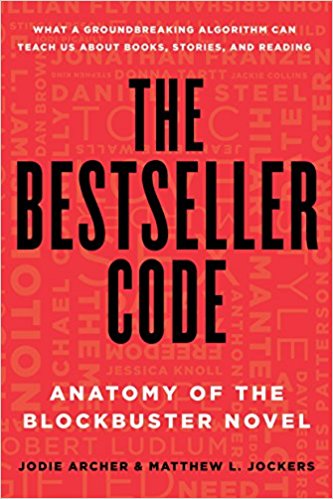
It’s surprising but one of the books that helped me a lot isn’t necessarily a craft book. It’s The Bestseller Code: Anatomy of the Blockbuster Novel by Jodie Archer and Matthew L. Jockers. This breaks down why bestsellers sell the way they do. This might be my favorite book in the whole world because it mixes craft and the publishing industry. I love it. I can’t recommend it enough.
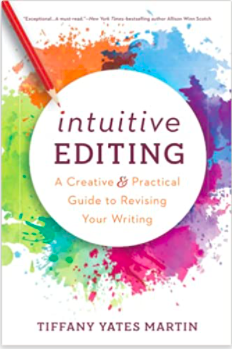
The second book that changed my life is Tiffany Yates Martin’s book, Intuitive Editing: A Creative and Practical Guide to Revising Your Writing. I love everything about this book. She reminded me about conflict, character arcs, character motivation, and stakes. Important elements that, if you skip or miss, will make any book fall flat. You need tension, and this book will help you find it. There’s even a section that mentions other editing resources if you can’t hire out. If you like audiobooks, she posted on Twitter she narrated it herself! (She also blogs, and you can sign up for her newsletter.)
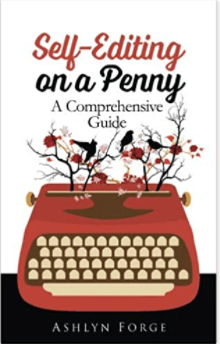
Though I haven’t read it for a long time, it was one of the first self-editing books I ever read, and it helped me a lot: Self-Editing On a Penny: A Comprehensive Guide by Ashlyn Forge.
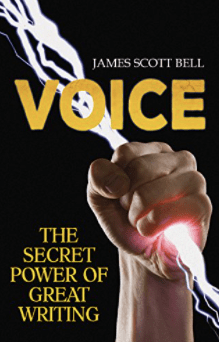
This book made so much sense. It was a real eye-opener, and now I recommend it to every new author: VOICE: The Secret Power of Great Writing (Bell on Writing) by James Scott Bell.
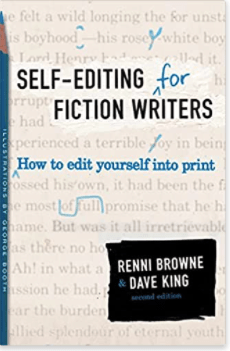
When I went to the Santa Barbara Writer’s Conference a few years ago, every agent in attendance said this book is a must have. I do have it, and it’s a great resource: Self-Editing for Fiction Writers, Second Edition: How to Edit Yourself Into Print by Renni Browne and Dave King.
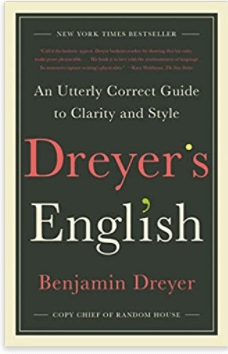
Someone recommended this book to me, and his sense of humor keeps this book from reading like a textbook–it was an enjoyable read, and I also learned a lot: Dreyer’s English: An Utterly Correct Guide to Clarity and Style by Benjamin Dreyer.
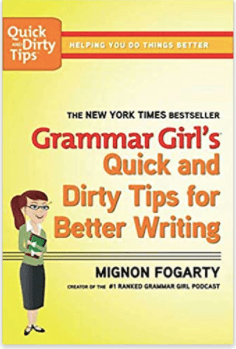
And last, but not least, Mignon Fogarty’s grammar guide is a must have. Written in a light, conversational tone, Grammar Girl is easy to understand, and she goes through everything you need to learn grammar and punctuation for all of your writing projects: Grammar Girl’s Quick and Dirty Tips for Better Writing (Quick & Dirty Tips) (Quick & Dirty Tips)
This post turned into its own animal, and that’s okay. Thanks for reading if you’ve gotten this far. In an age where everything is pay to play, including beta readers, even if you have plans to hire out, making your manuscript as perfect as possible will save you money. The less your editor/proofer has to do for you, the better for your wallet. You’ll never regret teaching yourself as much as you can. I haven’t.

Thanks for reading!

***Per usual, this post does not contain any affiliate links, and the book covers are screen grabs from Amazon.

Hustle Culture in the Indie Community

I didn’t even know what I was going to write about today, until I saw Kim Kardashian trending (when isn’t she) for telling people to get off their asses and get to work.

This comes at a great, or maybe not so great, time when several assistant editors in large publishing houses recently quit their jobs. It’s not a secret editors are underpaid and overworked, and houses cutting the positions due to budget cuts, something that’s evident when you pick up a traditionally published book and wonder why there are so many typos. (It wasn’t that long ago I read a book where the author kept using the word “sallow” as complimentary adjective. The word does not mean what she think it meant–an easy catch for an editor–and I wondered why no one told her to fix it.)

With gas prices soaring while the pandemic is still around (yeah, it really is), sometimes it’s difficult think of how someone could work harder than they already are. Cost of living has gone up (the price of meat is out of this world) but pay rates stay the same (my last raise was .25/hr–I’ll be sure not to spend it all one place), and there doesn’t seem to be a solution…especially when the overall sentiment these days is, if you don’t have money to pay your bills, you’re not working hard enough.

The same holds true for indies in the indie publishing industry. If you can’t crank out a book a month, you’re not working hard enough. Two of these tweets popped in my feed this morning, so it’s on people’s minds:

A lot has to do with the industry and the way it’s evolved since Jeff Bezos created the Kindle. Expectations changed, more authors than ever are publishing books. Thousands of new titles a month are published on Amazon, and while it’s easy to say a rising tide lifts all boats, it’s a lot easier to feel like your boat has a hole in it when you’re comparing your career to other people’s.

What it took me time to understand is that you can burn out doing what you love, and you can burn out doing what you love if you don’t see any small measure of success while you’re doing it. For the most part I love all that goes into indie publishing: learning how to do covers, watching ad platform workshops–I”m watching a craft workshop with Melanie Harlow later today. I love it all, but I resent it too, because how hard do I have to work to move the needle, how much money do I have to spend (which seems counterproductive to what I’m trying to do), and how long is my “overnight success” going to take?

The last thing I want is to let the industry drag me down so much that I don’t enjoy writing, on the other hand, my finances are taking a beating right now, like many who have found themselves in tight spots when the pandemic hit, and it’s really difficult to hang in there when I don’t know where my rent is coming from.

I agree with Kim to a point. You do have to work for what you want. You have to put in the work. You have to write the words, work on your craft. Before worrying about marketing or ads, or starting a newsletter, you have to learn how to write good books, and that’s a never-ending process. But after that, then what? When Amazon feeds into the hustle culture by rewarding your books with a new release bump that will fade after 30 days…. It’s why authors aim to publish so quickly–they’re trying to feed Amazon’s algorithm the best they can. Relevancy is rewarded with ad performance and rank, and you have to do a different kind of hustle if you can’t publish four times a year.

I understand what it’s like to feel guilty for taking a break–it wasn’t that long ago on my blog I was outlining the ways I could make my surgery recovery work for me, instead of, you know, resting. And even if I want to just lie in bed and “rest” I have plenty of webinars, both paid and free to watch, and hours of podcasts I’ve fallen behind listening to, that would maybe keep me from feeling like I was wasting my time. But what I won’t do, and probably a lot of people in my position wouldn’t do either, is flip on Netflix and watch TV all day.

The most insulting thing I find about what Kim said is that there are plenty of people who put in the time, they just don’t have anything to show for it…yet. She wasn’t always rich and famous. At some point, way at the beginning of her “career,” she was a personal shopper/dresser hanging around Paris Hilton making sex tapes, and it’s easy for her now to stand on her pedestal and preach about how hard she worked to get where she is.

I mean, I get what she’s trying to say. I see a lot of writers, especially on Twitter who say they don’t have time to write, yet in the next tweet (ahem) they’re talking about video games, or watching a new show, or what they’re baking, what they’re knitting. I can appreciate filling the creative well. I did replace my Kindle and renewed my KU subscription, so I’m all about reading for fun. But you are making a choice when you’d rather play on TikTok than sit down and write. That is a choice, but then I guess if you’re making that choice, the hustle culture conversation doesn’t apply to you because you already know how to relax (haha!).

We don’t have to work twenty-four hours a day, seven days a week, even if that’s what society is telling us we need to do. You have to take a break, and if you’re working two jobs, maybe that means writing falls to the wayside, and at this time in your life, there’s not much you can do about that except hope things turn around for the better. If you’re able to put in the time without getting burnt out, why not? But if you can’t, don’t let people make you feel bad. You’re doing the best you can.

I just wish my best paid off a little bit more.


My thoughts were kind of scattered today. I have a lot going on, and my energy has been focused on other worries lately. I hope after my surgery I can feel more like normal and things won’t look so bad. It really is amazing how things can perk up when you feel better. If you want to read more about the hustle culture or thoughts on assistant editors leaving their jobs, you can find the articles below. Thanks for reading today, happy Daylight Savings Time if you celebrate!

The Amazon Cliff by Limelight Publishing

Why are so many editors leaving publishing?
And how does it impact authors?

by Kern Carter via Medium

Letting go of hustle culture is harder than it seems by Serena Smith

The End of Editing
An author argues that editors have become too hands-off

By Sadie Hoagland

Trever Noah’s Reaction to Kim’s statement. He makes a lot of great points and worth a listen.

Monday Musings

Preview in new tab

Happy Monday! laptop with red coffee mug, paperclips and scratch paper that says happy monday

Good morning, and Happy Monday! I think I’m always excited about Mondays because they are my Saturdays, and usually after a morning of errands and chores, I spend the rest of the day writing. I hope anyone who is facing a full workweek starts off with a productive day!

Lots going on in the indie community last week, most of it centered around Brandon Sanderson and his 24 million dollar Kickstarter. Now, most of what I’ve seen on Twitter has been derogatory at best and downright nasty at worst, and it’s really sad that there is so much jealousy when an author finds so much success. I would never speak ill of any writer who has taken the time to build an audience, nurture loyal fans, and deliver on the promises he makes to those fans. Some people on Twitter confused Kickstarter with GoFundMe, which is incorrect. GoFundMe is a site for donations only. Kickstarter is an investment website, and those people support others monetarily in exchange for product after that product has been manufactured. I’ve seen Kickstarters for more than only books–video game developers use it as do board game creators are two off the top of my head that I’ve seen. I got a little crabby with Twitter when I didn’t see one person offer him any kind of congratulations at all. Of course, that’s Twitter, and when I moved on to Facebook where Brandon is doing a lot of what my peers are trying to do, over there the tone changed to awe, support, and viewing what he’s done as motivation for their own careers.

The thing to remember about what Brandon Sanderson did is this: we all have the power to do it. Brandon has been nurturing his career for many many years, and he’s known for writing science fiction and fantasy. You can look at his career as a case study for your own, and see that he was consistent with genre, consistent with output (I’ve heard people say he’s quite prolific), and consistent with quality. If you want to get down on him for treating his books like a business, then go ahead, but there is something to be learned by his success. Maybe a 24 million dollar Kickstarter propels him into outlier status, but it’s nothing he hasn’t earned, and nothing that you can’t aspire to with hard work and dedication to your business and craft. While they aren’t doing 24 million dollar Kickstarters, every genre has its own powerhouse authors, and in the romance that industry that’s LJ Shen, Melanie Harlow, Ava Harrison, Willow Winters, Tijan, Lucy Score, Skye Warren and many others. Some, like Skye, even share what they’ve learned (she’s the founder of Romance Author Mastermind). One of the best author interviews I ever heard was with Melanie Harlow and James Blatch on the SPF podcast. I’ve mentioned her interview on the blog before, and you can listen to it here:

Brandon, too, shares his secrets on YouTube, and you can watch his classes here:

There is no one more generous than a successful writer. They’re always willing to tell you how they did it, but the fact is, it won’t matter to you if you don’t work on your own craft and be flexible enough to change things that aren’t working. Just the other day I saw someone on Twitter say, I ignore all book marketing advice. Okay. Do what you want to do, but the thing is, two months from now, she’ll be whining she’s not selling books.

If you want to read an interesting article about Brandon on Slate, you can look here:

How Angry Should Other Writers Be About Brandon Sanderson’s $22 Million Kickstarter?
Parsing the reactions to the sci-fi/fantasy author’s record-setting campaign.
BY LAURA MILLER


I finally received the email that Booksprout is raising their prices and that there will be no free option for a review plan. It’s unfortunate, and I’m still struggling to decide if I want to pay or not. The decision would be easier if the quality of reviews was better. Some of the reviews from there were just a five star with a three sentence summary of the book. Readers won’t glean anything from a review like that, and when they say that their review was given freely in exchange for a free book, it looks fishy and spammy as hell. I know it’s better for reviewers to say they were gifted the book in exchange for a review, but since there isn’t a free plan on Booksprout anymore, we’re essentially buying reviews, and we’ve always been told that’s not a good idea. Some others in different groups mentioned Voracious Readers Only but that’s also pay to play at $20/month. It may be better to concentrate on my newsletter and build up my subscribers than to invest 240 dollars a year in a review service. At least those readers will be mine and they’ll be happy forever as long as they keep enjoying my books. If you’re interested in the new pricing for Booksprout you can find it here.

I guess that’s all I have for this week. I’ve been formatting my guest blogger posts for next month, and I still have to get Sami Jo her interview questions. Hopefully I’ll work on that today. Right now I’m focused on getting my series edited one more time since I know what I’m looking for now.

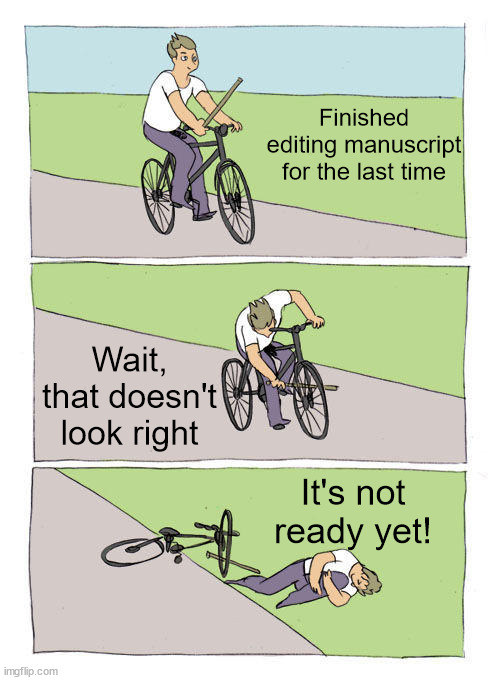
Here’s a funny meme that brings to mind all the times I’ve gone through these books courtesy of @AneAbraham on Twitter:

meme in three parts: first part, cartoon man riding bike, holding a stick with text: finished editing manuscript for the last time. 

middle panel: guy shoving stick through the spokes of front tire with text: wait, that doesn't look right.

last panel: guy lying on the ground with the bike tipped over next tot him with the text: it's not ready yet!

But as they say, comparison is the thief of all joy, and I just finished reading a 75k word Billionaire dual first person POV and I noticed that author, too, like to use the words “take” or “taking.” When I searched my Kindle for the word, she used it over 200 times. Many more than I did in my novel that has 11k more words in it. Do I regret going over my books again after discovering this? Not really. I’m not “taking” them all out–sometimes the sentence just makes sense with it in there, but the sentences I am rewriting sound better, stronger. It’s unfortunate I thought to look though, as the book, according to Publisher Rocket, is set to make $7,000 this month. It just goes to show that what will bother you won’t bother other people, and to write the best book you can and not compare your work to others.

That is all I have for this week!

Comparison is the thief of joy. Text typed over pink and white flower petals.

Thursday Thoughts and an Author Update.

Today was an unexpectedly busy day: I had to bring my cat, Harley to the vet. I noticed she would go into the litter box but not do anything, and I suspected she was constipated, which turned out to be the case. $400.00 and an enema later, she’s shaky but going to the bathroom. She’s snoozing on the floor next to me right now where I can keep an eye on her. The vet sent us home with some stool softener and some fiber-rich food. I hope this does the trick as it was a costly trip for me, but who can put a price on love?

calico female cat hidden by white blanket with face poking out

Anyway, I’m not feeling much better than she is, having taken another dose of ibuprofen today which is not like me at all. My hysterectomy is all set for the 28th of March, and I dropped off my FMLA paperwork at the clinic this afternoon.

flat desk with laptop and sharpened orange pencils. Guest blogger text

I didn’t want to leave the blog unattended, and I set up some pretty cool guest bloggers for the month of April while I force myself to relax and recuperate (haha). Barbara Avon will be writing about being a multi-genre author, and I asked Vera Brook to write something about writing short stories and submitting them for publication. I’m also going to interview Sami Jo Cairns about her experiences with small presses and her thoughts on going indie with her series for the first time. Since I always do a giveaway with my author interviews, I probably won’t post that until the end of the month when I can get to the post office if need be to mail out a prize. So I’m really l excited for some fresh blood on the blog as well as some exciting topics I’ve never written about because those aren’t my experiences. I may look for one more person to help me with the remaining Monday of the month, but we’ll see. I don’t think I’ll be incapacitated to the extent I can’t write or blog, but I was hoping to also launch a book in April, but I honestly don’t see that happening right now.

I am going through my six book series again. During the last sweep, I thought I was fixing everything that needed to be fixed, but then I was listening to book 6 and I started catching all my crutch words I didn’t notice with the other five books (why am I like this?). While I caught some discrepancies last time, this final read-through is rewording sentences to get rid of them. The books as a whole will sound stronger, but this edit requires ingenuity on my part. My crutch words in these books: take/taken/taking/took and making. I’ve never had a problem with those words before, but since these are the first books I wrote after I switch to first person present, it was how I was writing while I figured out my voice I’m just now recognizing. I am VERY happy with the way the first book is sounding since realizing I needed to weed out those words, and I shouldn’t need to read them again after I’m done.

But this does put me in a quandary as I don’t work on more than one WIP at a time (I consider my series one project) so if my beta reader finishes my duet in the near future, I may not be in a position to work on any fixes he brings to my attention. Which sucks, but because I’m working with a huge story arc, I’m reluctant to edit another project and break my momentum. I can listen to these pretty fast though, and I think I’ll only be a month before and I can publish in May instead of April. I’m nothing if not patient, so this isn’t as bad as I thought it was when I started rereading my series again from book one.

I did get some nasty news though, and MailerLite is revamping their interface which is a terrible terrible terrible idea, because I had just finally gotten used to dealing with the old one. I haven’t even logged on to see the changes. I might have my reader magnet set up on BookFunnel, but when my my tax refund dropped into my account, instead of saving it, I made a rash and too-positive-thinking-for-my-own-good decision to upgrade my BookFunnel account so I can just share the BookFunnel link to my reader magnet and BookFunnel will collect email addresses for me. It decreases the number of clicks a person has to do to sign up for my newsletter, and since I paid extra for MailerLite integration, my life should be a little easier. But I still have to figure out all that stuff, how it works, yada, yada, yada, so I’m not going to be flat on my back watching Netflix and eating ice cream while my body is trying to figure out where my uterus went. I have a crap-ton of stuff to do, and if I take three or four weeks off work, I can put 40 hours a week into my second job. Of course, that’s not me scamming my FMLA. I have plenty of paid time off they’re going to be more than happy to use first, which is fine. I can’t afford to take time off without getting paid for it somehow.

In other crappy news, too, with BookSprout also revamping, I’ve heard in an FB group or two that they are doing away with their free plans. If you don’t know what BookSprout is, it’s a website where readers request arcs of books that need reviews. You can put your book up and ask for reviews and where you want the readers to post them. I tried it, didn’t get too much of a response for my books, but it’s one of those things that only work if you’re writing to-market commercial fiction. My 3rd person stuff was okay, but still, like finding readers in general, I didn’t stick to a subgenre and it made it difficult to hook readers and reviewers alike. Still, I was going to try again with my launch this spring. So far, the free plan is still available, but I’ve heard nothing about being grandfathered in while they roll out the new update.

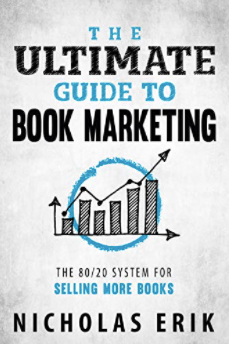
When I added up what I spend on my business for my accountant, it made me a little sick inside. I know you have to spend money to make money, and as indie-publishing evolves and it’s more difficult to compete with other authors, you may find you have no choice but to invest in some of these tools. I got into it with someone on Twitter today who said Twitter sells books, and when I asked how many (because I don’t believe it does) he didn’t have anything to say. When you depend on only one thing for marketing, and I don’t even care if you choose Twitter, or FB ads, or Bookbub ads, or you like TikTok, you have to realize that your reach will be limited. In his book, Nicholas Erik outlines many ways to market your book. It’s a very informative, and you should grab a copy.

And if you can’t resist some drama, here’s the thread on Twitter I’m referring to.

Have a great weekend, everyone! See you Monday!

Negativity in the Writing Community

social media doesn't create negativity, it uncovers it. Jay Baer

posted on a desk with partial view of laptop, notebook, and pen

I am really tired. Not only because of what’s been going on in writing circles, but because my cat won’t let me sleep, and I’ve been approved for surgery at the end of March, which is good news because I need to keep trying to find some relief from what’s going on with me, yet it will cause a lot more work for the next little while. I was really hoping to launch the first book in my duet in April…we’ll see how that goes.

But what I’ve been seeing in the writing community makes me tired, too. Namely, tweets like this: (And no, I don’t feel bad for showcasing them here. If you’re putting something out on social media, expect for it to be shared. Period.)

My books ARE edited. By me.

I wrote my own blog post about that a long time ago, once upon a time believing that indies who didn’t care about what they published brought us all down. But the fact is, it’s not true, and it will never be true. Because I’ve realized this: Instead of looking at Amazon as a retailer, look at Amazon as a distribution center. You still have to create and store a good product, you still have to drive traffic to your book’s product page, you still have to keep the promise you made to your reader and satisfy your customer with the content. All that is on you.

So, why do indies take quality, or lack thereof, so hard? So personally?

I would guess it’s fear. Fear that they are going to put so much money, time, and effort into a book that will sell a handful on launch day and then sink in the charts. There is nothing more disheartening. Nothing. While a book that (and this is subjective, anyway) isn’t written as well, will sell like gangbusters for months, maybe years after its release. This happens. Of course it happens. Why do we still talk about Fifty Shades even though that book is 10 years old? Or Twilight? People hated Twilight so much that they ran Stephenie Meyer from social media. Writing and being on social media in a writing community capacity wasn’t on my radar back then, but I saw in real-time what the writing community is capable of doing when they bullied a poor agent after she tweeted her preferred book lengths guideline. It was atrocious, to say the least. Fifty Shades of Grey was fine; it still is fine. Ask Erika how her sales are of the books written in Christian’s POV. She’s not crying in her tea. So is the Twilight saga–it’s fine. Midnight Sun has sold over a million copies. The authors who are bitter may never find that level of success, but that isn’t something that you should shove onto other authors in your community. Your, ummm, peers?

Will poorly written books sell? Of course they will, and this fact is what drives splinters under people’s fingernails.

Now, I can get crabby at authors the same as everyone else. When I hear the, “I’m an indie author and I can do what what” mantra, and then in the same breath, “Why aren’t I selling any books?” Yes, I get crabby at those people. Very rarely can you have it both ways.

I just don’t understand why anyone needs to put that kind of negativity out there in public. There are bad indie books. Books full of telling, head-hopping, plot holes, poorly edited because let’s face it, editing is expensive, but no one is forcing anyone to read those books. Like Nicole says further in that tweet thread, maybe those authors shouldn’t expect to sell books. Maybe they shouldn’t, but it’s none of my business. I learned a long time ago not to buy a book because it has a nice cover on it–anyone can make one in Canva. I have to read the blurb, make sure it’s properly formatted, and I have to read all of the look inside Amazon makes available before I buy a book. And listen, if you buy a book and you don’t like it after the first couple of chapters, return it. Why keep it? You wouldn’t keep any other product that’s broken after you bring it home from the store. Maybe that advice won’t go over well, but I view books as products, and I don’t keep things that are broken. I’m too poor for that. Yes, I’ve had my books returned. No, it didn’t hurt my feelings. I simply didn’t care.

This topic is near and dear to my heart, because when authors like these decide to spew censure all over Twitter, I am one of those authors they hit. I have never, ever, been afraid to tell you that I do most of the work on my books alone before I publish. All alone. And the fact is, I’m not in the minority here. When everything, and I mean, EVERY SINGLE THING in this industry is pay to play, and you are broke, what in the heck can you do? You can still be a real author and not pay for a developmental edit, a copy edit, and a proofer, and a beta reader after the fact. That’s ridiculous and will cost you thousands of dollars. Do beginning authors need more help than an author who has written twenty books? Maybe. Probably. But I also know authors who have an extensive back list and their books are boring and/or have other technical issues, either because they haven’t gotten the feedback they needed earlier in their career, or they think they are good writers and aren’t open to feedback.

No one can predict what will hit and what won’t. What book will fill a need at the right time, what will hit with a trope or a feeling or a theme. That’s why there are sleeper hits. Any book at any time can explode. Do you have a better chance if that book is properly edited, has an exciting look inside, with a great (and legal) cover and fantastic story? Sure, but it’s not like authors intentionally publish books without those things. We all launch to the best of our ability, and my best won’t be the same as someone else’s best. There are are people who will always be better or worse than you. I have a degree in English with a concentration in creative writing. Someone else could have an MFA. Someone else could have flunked high school English. Those things are not indicative of success. And to be honest, it’s none of my business what degrees you have or not. Maybe you have 100,000 newsletter subscribers like Lucy Score, or maybe you have a little money and can run some Amazon ads and buy a newsletter promo and hope Amazon’s algos help you out. Maybe your book gets picked up by popular TikTokers. Colleen Hoover’s books are having a moment because of TikTok.

Generally speaking, there is more wit than talent in the world. Society swarms with witty people who lack talent. -- Antoine Rivarol

printed on desk with partial view of laptop, notebook, and pen

The point is, tweets like the ones up above aren’t necessary. If you’ve been burned by an author, indie or otherwise, tuck their name in the back of your mind, don’t buy from them again, and move on. While I was reading Billionaire when I decided to pivot, I read a lot of books. Some were really really good, and some were not that great. And I understand the frustration. A lot of those not-so-great books? They were outselling the books I enjoyed. By a lot. A lot has to do with who the author publishes with. Some are full-fledged indie authors, some were published by Montlake–an Amazon imprint. But that just makes it even clearer that there is so much that goes into a bestseller that trying to hit it is futile.

So stop ragging on other authors. Do your best, and hopefully one day it will pay off.

The end.

Knowing when to pivot. (What does that mean?)

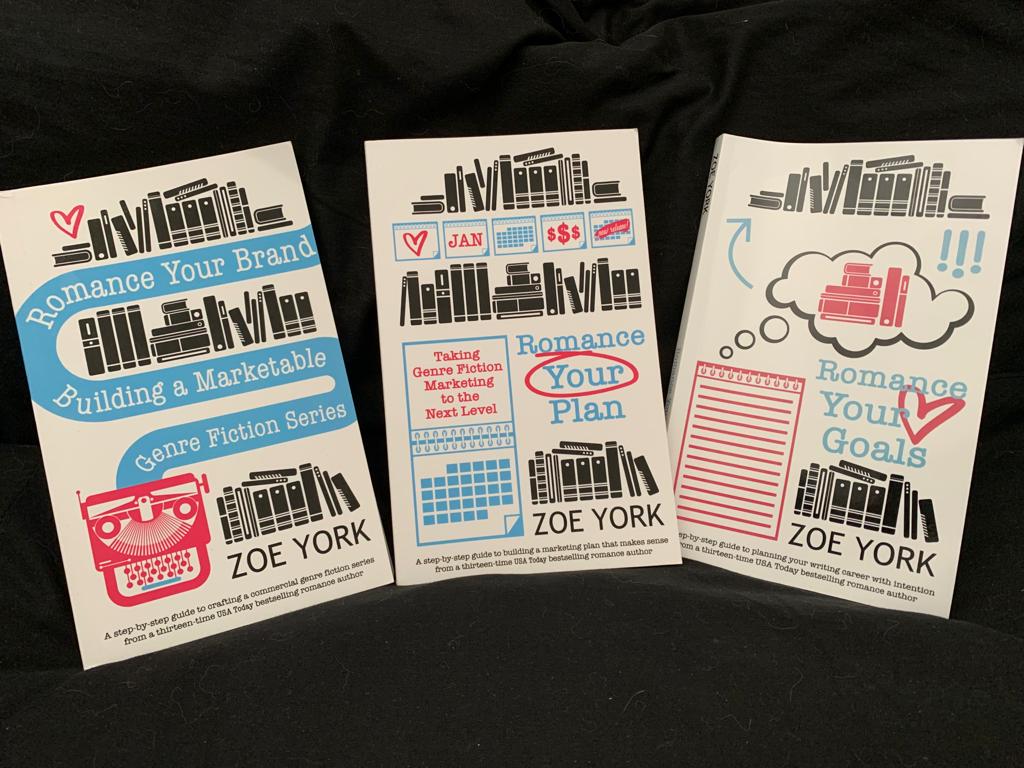
a picture of zoe york's three books about writing and marketing romance.  look here to buy:

https://www.amazon.com/dp/B082CZDK75
To check out the series, look here: https://www.amazon.com/dp/B082CZDK75

I just finished Zoe York’s Publishing How To series, and I really enjoyed the books, her thoughts and experiences on publishing romance, goal setting for your author career, and so much more. She’s been writing and publishing for years now, is a full-time author, and has made a bestselling list or two.

What I’m about to say doesn’t have anything to do with these books–I’ll circle around to them–but lately I’ve realized that when it comes to writing, publishing, and marketing, you can consume all the marketing advice in the whole world, but you won’t get anywhere unless you have a good product, and more importantly, a good product people want to buy. That’s part of the reason why I haven’t purchased Mark Dawson’s Ads for Authors course (comes in at close to 1,000 dollars, and SPF offers it twice a year). If you don’t have the books to back up your ads, your ads aren’t going to do anything.

When I take a look at my publishing history, I was writing good books. I received the odd 1-2 stars most authors do, but on the whole, I’m writing good books. That’s important to me because I do most of the editing and production alone. But something was still off because over the past few years, I didn’t find any traction. One mistake was my newsletter, or lack of one, I should say, and the other was my lack of direction with the books themselves. (I also didn’t understand author brand, but that’s an old discussion we can have on another day.)

It was just this morning when a woman in a writing FB group was talking about this very thing. She was sub-genre hopping and couldn’t figure out why she wasn’t getting any traction. Maybe she’ll believe me, maybe she won’t, but I told her I had the same problems with my own books and decided to niche down.

desk with laptop, plant, and coffee.

be stubborn about your goals but flexible about your methods.

My issue with pivoting is that it took me a long time to realize I had to do it. Some writers who struggle may never understand that it’s not their marketing chops, or their covers, or their blurbs, but simply what they are writing in the first place. Depending on how fast you can write, that can take years. Years that can feel wasted because if you had been writing the right thing in the first place, you wouldn’t still be at ground zero wondering where it all went wrong. But that’s like a chicken and egg scenario–how do you know what’s right or wrong until you put it out there? And what are the metrics you’ve decided to pin that on? Sales? Reviews? I’m nowhere near making a full-time author’s salary–I checked my dashboard yesterday and made 2 cents. (That tells me someone borrowed the book in KU and opened it to make sure it borrowed properly, then went off to do something else. Or they read the first page, didn’t like it, and returned it. If I think to check back, I’ll see if that person read it or not, but that micro-level of caring is not in me and never will be.) Admittedly, those books are old now, and even dropping 10 cents a click in ad spend to those books is probably a waste of money because as we’ve determined, Amazon loves consistency and relevancy, and I won’t be writing any more of those books for the foreseeable future.

So what will make you decide that it’s time to pivot?

At the beginning of the post, I brought up Zoe’s book because in it she says knowing when to pivot and niche down is a personal choice, and it is. You have to look back at your books, where you are, and decide if it’s enough for you. I see indies making money. I want that, too. It’s not a driving force, but financial security is important to me, and who doesn’t want to get paid for doing what they love?

When we talk about pivoting, what does that even mean? It means taking a look at what you’ve been writing, looking at that lack of success those books are bringing in, and deciding to try something new. It can be as simple as what I did–turning from writing “Contemporary Romance” to Billionaire, or doing a full 360 and changing from Christian Romance to Horror. But then that begs the question too–will the pivot be in the right direction? I have no idea. I can’t even say if these new books will resonate with readers until I put them out. I THINK I’ve taken a step in the right direction: billionaire, first person POV. According to Alex Newton of K-Lytics, Billionaires are like vampires and will never die. So, that’s a good thing. But there are a lot of other things that can turn against me: writing style, the tropes I chose to write about, the issues (backstories) I’ve given my characters and decided to tackle in my writing. Changing from Contemporary Romance to Billionaire might not be the magic bullet I hope it is, and right now, I don’t have a plan C. I’m not even sure how long I’m going to give this pivot a go before I decide this writing business isn’t meant to be. I have enough books saved up to publish 4 a year for the next 3 years, so at least until then (because why not publish them since they’re written), but I’ve been skating financially since my divorce, piecemealing paying my bills with scraps of income from various places while giving my writing career a chance to do something, and I can’t do that indefinitely. As Kristine Kathryn Rusch says, there are easier ways to make money. Less stressful too, I bet.

desk with laptop plant and coffee

a pivot is a change in strategy without a change in vision. eric ries

So, if you’ve been banging your head against your laptop trying to figure out why you’re just not seeing the success you want, maybe it’s time to pivot. What is selling right now that’s close to what you’re already writing so you don’t go out of your mind? I’m not saying be a slave to the market, or to trend, though I’ve seen Alex Newton’s indie reports, and trends don’t change nearly as quickly as we like to say they do. I’m saying find something different to write that’s hotter, more niche than what you’ve been writing and see if that works.

All those who wander are not lost, but sometimes you think you know where you’re going and end up not knowing where in the hell you are. That was me before looking at my backlist and choosing to write Billionaire. All of Nothing has made more than all my other books combined, so I feel this pivot was a good choice. Now all I have to do is publish, wait and see.

Fingers crossed.

Lack of Productivity. What’s causing it, and how to fix it.

I’ve seen the topic of productivity a lot lately, maybe because we’re still in what’s considered the beginning of the new year and we’re all scrambling to keep up with New Year’s resolutions and tackle the goals we’ve set for ourselves. I haven’t specifically written about productivity, though I did write a blog post about writer’s block, which is akin to the weird uncle of the family when we talk about writing productivity.

I guess by now it’s a running joke that the hardest thing a writer can do is sit down and write. Butt in chair. Carving out that time. But I have never, in these six years I’ve been a part of the industry, understood this. I get writing is hard, and I’ve come to learn this about myself while writing and/or editing–If I hit a rough patch in dialogue, or say I’m echoing a word in a sentence and I want to rewrite the sentence to take out one of the words and I’m at a loss as to how to do it, instead of pushing through, I’ll flip over to Twitter. That’s avoidance. For now, I let myself do it because so far it hasn’t hampered my output. Normally, after I scroll for a second and see the same old drivel, I’ll flip back to my manuscript and keep going, but it can interrupt my flow.

I’ve seen a lot of tweets about productivity or lack thereof, and, unfortunately, if you’re writing to publish, and more importantly, if you’re writing to publish to build an author career, you kinda need it.

One of the hardest lessons you’ll ever learn in this industry is you don’t have nothing if you don’t have a book, and over time, you need several if you want to find any traction. If you’re writing a series, you have way more marketing power behind you if your series is done. You can’t accomplish that if you’re not writing.

What are some causes of lack of productivity? Here’s a short, though not comprehensive list, of what I’ve seen out in the writing community:

You’d rather do something else. This actually tells me a lot about how you feel about writing and publishing, and if you truly would rather watch TV, read a book, go for a drive, or make dinner, then honestly think about stepping back. Of course, it would help to know the reasons why you’d rather do something else. Maybe you’re not seeing the results you want, or you’ve lost interest. You started writing as a hobby and you’d rather pick up a different hobby like crocheting or knitting, or get back into exercise. If you’d choose to go to the dentist over sitting down and writing the next chapter, give yourself permission to stop writing. No one is forcing you, and if you hate what you’re writing, chances are, your readers will be able to feel that when they read your book. Move on. It’s okay.

You don’t like what you’re writing. Starting a new project is okay as long as you can finish something. If you lose interest in your WIP at the halfway point every time, something else is going on with more than just productivity. Maybe it’s a craft issue because you get bogged down in the saggy middle. Maybe finding an alpha reader who will read as you write, or a critique partner can help you stay motivated and give you tips and ideas on how to finish. The problem with learning craft is that you have to write to learn it. This is the same for characters, too. If you hate your characters, you have to figure out why. Is she a whiny snot? Doesn’t act her age? Is he an alphahole without any redeeming qualities? Are they not doing anything interesting? Find some feedback from somewhere, or refresh your creative well and read for a while. Start a new project, sure, but if you’re going to add to the 20+ WIPs you already have on your computer, you need to do some digging and figure out what the problem is and how you can fix it.

You have no idea what to do with it once you’re done. I’m reading Zoe York’s Romance Your Goals, and in it, of course she talks a lot about setting goals–setting realistic goals, and goals you have to work to reach. I have a lot of thoughts about goals, productivity, and strategies and tactics that will help you achieve those goals. If you have 10 finished books on your computer, they won’t do anything if you don’t know what you need to do with them. More than covering them with a good cover, writing a good blurb, and putting it up on Amazon. I mean, do you have a newsletter? Do you know an ads platform well enough you won’t lose money? Do you have a launch plan for what you’re going to do when your book is done? If you don’t, that could be causing you some productivity issues. If you have no idea what you’re going to do with it once your book is finished, there’s no real reason to finish it then, is there? That way of thinking was pretty much me for the past two years, but instead of lack of productivity, I think I had too much. That is a problem in itself because now I have lots of books and still no real actionable plan to maximize those books and pay myself for all the time it took me to write them.

Maybe you have an idea, but it’s too overwhelming to think about. We talk a lot about a five year plan, and sometimes it’s difficult to figure out what we’re eating for dinner in five hours, never mind where we want our careers to be in five years. If that look into the future terrifies you, ask yourself why. Writing and publishing is a long game, but if that look into the future bogs you down, shorten the timeframe. Maybe look to the next two years, plan out the books you want to write, be it three a year, two a year, whatever you can handle, and let yourself get excited about what’s coming in the immediate future.

You’re burnt out. I think I’ve mentioned this a lot on here, when I heard Jo Lallo say on the Six Figure Authors podcast that there is no faster way to get burnt out than when you work hard for little to no pay off. I’ve you’ve been working for a months, maybe years, and your career is in the same place as it was before, that can affect your productivity. You might wonder why you’re still trying to make a go of it, and you’re thinking about giving up. This conversation goes back to goals–what you want out of your writing and more importantly, how you’re going to get it.

You don’t have any writing friends to cheer you on or commiserate your failures. You’ve probably heard me mention this a time or two. A lot of my friends I made when I first joined the writing community are gone. They dropped off because they don’t write anymore, or we don’t talk for some reason or other. I was friends with a woman for a long time until I realized our friendship was all about her, and her writing, and her roadblocks, and whenever I would say something positive about me, or my books, she blatantly ignored it. I faded off from that friendship and a couple others. While I don’t recommend staying in a friendship (or any type of relationship!) that takes more than it gives, replace those friends with other people or you’ll look up from your laptop one day and see that you are alone. It’s tough to write and be proud of your successes if there is no one to share them with. Take that opportunity to reach out to other authors in your genre and make connections and friends there. Those relationships will be more meaningful because they’ll understand the ups and downs of writing and publishing in that genre. There are so many sprinting groups and people who are willing to be accountability partners. You’ll be surprised at how much better you feel if you have people to reach out to when you want to share your goals and small successes.

At the core of productivity is passion. You have to have passion for what you do, and joy and the love of writing will keep you coming back to your laptop and your characters. Sometimes other things will get in the way, but ultimately, if writing matters to you, you’ll find a way to keep going.

Good luck!

Thursday Thoughts and Author Update

I haven’t give you an author update for a while, but mainly I’ve been listening to my series and slowly getting that ready for my 2023 release. I just started book 3, and I’ve been tweaking, checking consistency with the other books, making sure there aren’t any discrepancies with what the characters say and the information they find out from book to book. You might wonder how I can do this, and let’s just say, I have 75% of my 480,000 words memorized. Haha. I’m kind of kidding, but kind of not and it definitely helps that I’ve already read through this series about five times and let months go by between reads (I wrote these in 2020). Also, listening to these books is a different way of consuming them, and I’m finding things I wouldn’t catch by reading only.

I am very satisfied with how these are coming along, and despite a mini-breakdown I had a few weeks ago about finding beta readers and proofers, I feel good about them all as a whole. I’ve come to the painful realization that I won’t have any betas or proofers, mostly because now isn’t the time to test proofers and betas. I should have set up a system and formed my “team” long before this, and it’s just too big of a project to be trying people out now to see if they are a good fit. While it’s always is a good idea to have more than one set of eyes on your books–especially for newbie authors–sometimes that just isn’t possible for one reason or another and while no one likes to admit it, there are indies out there who publish with the barest of editing and do just fine. In a perfect world, I would love to have some feedback on the overall story and to make sure all the details are consistent, but with my English degree and my firm grasp of grammar and punctuation, I’m not worried about the technical side of things, at least. I’ve been sifting through stock photos too and marking the ones I like but I won’t be able to do the covers until closer to the end of the year when I can get a better look at what will be trending. Who knows what will be hot for Billionaire covers a year from now? There’s no use getting set on a couple or anything else if I’m going to have to redo them later. Cover-to-market is really important, especially in romance, and getting impatient will just create more work for myself.

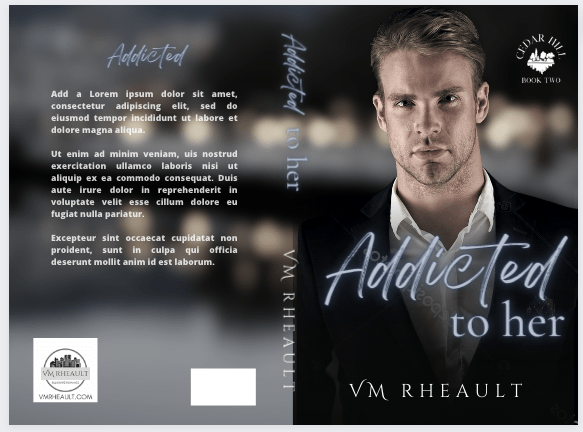
I’ve already had to redo my covers for my duet, as black and white covers with a pop of color for the title are slowly starting to slip away. I revamped the covers for my Cedar Hill duet, making them color instead of black and white. Excuse the rough shape they’re in. They aren’t set in stone, and I haven’t purchased the stock photos yet. Tell me which ones you like the best:

Anyway, so I won’t be doing the covers for the series, but I can do everything else, and I’m hoping I’m finished with them by the summer as I still think I want to write a Christmas novel for release at the beginning of November. Listening to these isn’t taking as long as I anticipated it would, so I should have plenty of time to write it while doing everything else to get my duet ready for release thing spring and my series ready for next year.


This is a topic that would probably better fit a Monday post, but I just want to complain a little bit about it here. The other day, an agent on Twitter tweeted this advice:

Twitter tweet snapshot:

It breaks my heart when I get a great pitch for a book somewhere between 50 and 70k. It's almost always a no. There are exceptions, of course, but in general, adult fiction is between 80k and 120k. 60k is just too short to fit comfortably on the shelf.

12:03AM 2/6/22 Twitter Web App

81 Retweets 264 Quote Tweets 714 likes

Writer Twitter blew up. This agent was attacked on so many levels, and so many people who had to weigh in on this agent’s advice and opinion. She eventually locked her account down and I wasn’t privy to most of the horrid aftermath. I’m appalled at the way the writing community treated her, and I feel terrible she was subjected to such aggressive behavior for simply offering a guideline to help querying writers.

No one wants to hear there are rules, and there’s not a day goes by on Twitter when I don’t see “I’m an indie so I don’t have to follow the rules,” or “Rules are made to be broken.” There are rules, and break them at your own detriment. If you want to query, follow the agent’s guidelines. That includes the genre they rep and the length of the book they prefer. If you want to indie publish, go for it, but there are industry standards. You need to format your book correctly, and include all the correct parts. You can’t use any photo you want for the cover. You can’t use song lyrics in your book unless you write to that artist’s record label and ask permission and probably pay a fee. (If you want more legal advice, Helen Sedwick’s book, Self-Publisher’s Legal Handbook, Second Edition: Updated Guide to Protecting Your Rights and Wallet is invaluable.) There are a gazillion “rules” we must follow every time we publish a book. To say there are no rules is destructive. Not following the rules can prevent you from finding readers at best and can land you legal hot water at the worst. I don’t understand why writers and authors continue to beat a dead horse, but there are rules.

Here is a tweet threads to scroll through if you want. I thought I saved more, but I can’t find the other one where I stole the screenshot of the tweet to begin with. The agent’s tweet and thread is gone–it disappeared for me when she locked her account down, but there’s plenty of fodder if you want to scroll through on your lunch break.

If you want to read another agent’s thread about word count and guidelines, here’s Laura Zatz’s thread:

When it comes to word count, I have found that reaching a higher count can be difficult for newbie writers because 1) they don’t understand how to twist a subplot into the main plot, 2) don’t develop their characters well enough to explore full character arcs 3) don’t know how to write engaging conflict and/or 4) they tell, not show, which always takes fewer words–showing takes a lot more room on the page. Also, some, but not all, indies have gotten into the habit of writing shorter because it helps them publish faster keeping them on top of Amazon’s algorithms.

If you’re a romance author, and like writing novellas, look at Carina Press–the digital arm of Harlequin. They take agent-free submissions, and they publish novellas that are 35k words and up.

Anyway, I’m going back to listening to my book–which is 91k, by the way. Every book in this series is between 85-93k, but they are as long as they need to be for that section of the story.

Be kind to each other, y’all. How you present yourself online will stick with you, and may come back to bite you in ways you never would have dreamed possible.

Until next time!

Five reasons why taking advice from writers about what readers like is a (really) bad idea.

Writing, marketing, and publishing advice is plentiful online. There’s excellent advice that can take your business to the next level, good advice, mediocre advice, very very bad advice, and some advice that is straight up, literally, illegal.

But when it comes to writers giving other writers advice about what readers want, I have found that, depending on where you get it, a lot of that advice isn’t to be trusted. Here are some reasons why it’s probably not a good idea to apply advice from other writers when you’re trying to write, publish, and market to readers–especially to readers who don’t write.

Writers don’t read like readers do. This is a big one. I hate seeing writing advice online. I hate it. I try to avoid it on this blog unless a pet peeve like my “got” issue (and not Game of Thrones) crawls too deeply under my skin and I have no choice but to speak up. Writers don’t read like readers do. How may times have you heard an author say, “I couldn’t get into the book. I was too busy dissecting/editing/proofing it to enjoy it.” A mom hiding from her toddler in the tub with her Kindle and a glass of wine isn’t going to critique your book. She wants a good story, characters to fall in love with, maybe some sexytimes, and if you give her that, she’s not going to care about small issues like whether or not you used the Oxford comma. She actually probably won’t even care how many times you use the word, “got” if the story is engaging and she cares about the fate of your characters. Give your readers a good story, and forget about the writing advice you see online. Keep changes between you, your beta readers and your editor.

A related thing I dislike is hearing writers say, “I read everything, and I write for readers who read everything, too.” The fact is, there are very few people who will read “everything” and writing and marketing to people who read “everything” is like throwing a handful of gravel into the wind. The pebbles scatter, and the force behind your throw is wasted, but throw ONE rock as hard as you can and watch it fly, right? You can’t write for everyone, you want to write for readers of a particular sub-genre. It will make it much easier to find readers because you already know what they like. Whale readers devour everything they can get their hands on in the sub-genre they prefer to read. They don’t stray much outside of their lanes, which is why writers are also counseled to stay in one lane–at least for a while.

Other writers may not have the same audience goals as you. We all want to find readers, but that doesn’t mean we have the same goals. I want to make a living with my writing. That may not be someone else’s goal. Maybe they want to sell only a handful of copies to say they are a published author. If we don’t have the same goals, we aren’t going to run our business the same way, or even think of our books as a business at all. That means anything from being a multi-genre author instead of niching down, not putting their books in KU when yours would do well there, or writing whatever they want when you would prefer to follow what’s selling in the market.

This goes hand-in-hand with writers who will give you plain old harmful advice. The other day on Twitter there was a writer who asked if she should separate her different genres with a different pen name. I can’t tell you how many authors told her not to bother and my jaw dropped. I wanted to explode, but I kept scrolling. Unless your genres are closely related, (billionaire romance/mafia, paranormal romance/speculative women’s fiction with romantic elements, mystery/thriller/domestic thrillers) you’ll do better if you separate your genres with pen names. It will make marketing easier, your also-boughts on Amazon won’t get messed up, and you can cultivate two sets of readers. It’s work though, and that’s why the thought of pen names turns off a lot of writers. Readers will appreciate the separation. Even if you don’t keep your identities a secret, they’ll appreciate knowing which name you write under that they like best. Writers say they want to take credit for all their hard work. You can still take credit–inside on the copyright page. So many people told me that I didn’t need to separate my 3rd person contemporary romances from my 1st person billionaire books. I wanted to because they have different tones, though the subject matter (my characters’ personal problems) is largely the same. I felt validated when Zoe York mentioned in a Clubhouse room that she separates her 3rd person from her 1st person. It just made sense to me all around, though readers probably can switch from reading 3rd to 1st easier than I can writing it.

Writers don’t read enough to know what’s going on in their genres and the industry as a whole. For every rule there is an exception, and there are probably a lot of writers who read regularly. I’m not one of them, and I should be. I should be gobbling up every billionaire romance out there. I did read some, when I decided to make my switch, but I didn’t, and still don’t, read enough. I’m willing to bet that if writers read more in their genre, they wouldn’t be giving the advice they do. They would know what readers want, what they look for, what they’re willing to pay for. They would know the book cover trends, what kind of blurbs capture a reader’s attention. Advice steeped in ignorance is not advice you want to take. I have bemoaned on this blog so many times about how a lot of indies don’t understand the industry, and if you don’t understand the industry, you don’t know what’s selling, or why it is. That’s important.

“I don’t read newsletters, so that’s why I’m not offering one.” This is, by far, the craziest thing I have ever heard. You are a writer. We’ve already ascertained you more than likely don’t read enough, so saying you’re not subscribed to any newsletters isn’t surprising, but it’s not a reason why you shouldn’t offer one to your readers. Readers are not like us. You need a way to communicate with them. I haven’t offered a newsletter in the five years I published under Vania Rheault, and it’s my biggest mistake. If you don’t offer a newsletter, your readers have no way of staying in touch with you. I gobble up non-fiction content and I’m subscribed to many newsletters from big indie names like Dave Chesson, Derek Murphy, David Gaughran, Jane Friedman, Ricardo Fayet from Reedsy. I also get newsletters from Kobo Writing life, Reedsy, BookBub and more. Their information about publishing is valuable, and I subscribe, and, more importantly read, to stay in the know. Your readers, if they enjoy your books, will want to sign up for your newsletter to stay up to date on what you’re doing. This does mean that if you offer a newsletter, you have to send one out on occasion. Content wasn’t the issue with me. I’ve managed to regularly blog for 6 years and rarely do I run out of something to say. I didn’t offer a newsletter because I’m lazy. I didn’t want to learn how to use MailerLite. I didn’t want to take the time to figure out how to create a landing page, how to set up an autoresponder, the technical issues of signing up for a professional email, blah blah blah. But, I finally did it. Now I’m five years behind. Don’t offer a newsletter because you haven’t subscribed to any. You’re not a reader. You’re a writer.

Stubborn indie writers are set in their ways and won’t change even if that behavior hinders finding readers. The two most stubborn groups of people in the world are runners who are injured and who should take a break from running to rest and heal…and indie writers. Taking advice from a writer who isn’t open to new ideas and bristles at constructive criticism is a terrible idea. Feedback and kind criticism are a necessity to grow in craft and in your business. I wish I could count how many times I see an agent say, NO PROLOGUES and a writer say, “I’m gonna write all the prologues” then cry when they can’t find an agent. Are you going to listen to someone who is intent to do it their own way damned the consequences, or are you going to listen to someone who knows what’s going on in the industry and is flexible enough to pivot and or try new things? (By the way, agents know the editors {who are the people who actually buy the books} who know readers and what they like. Just a thought.) As far as readers go, what’s expected in your genre? Fantasy uses prologues. Mystery/thrillers do too, often in the POV of the villain. If you want to write a prologue and your genre supports it (meaning your readers are used to them) write a prologue. If a prologue won’t enhance your story, maybe you don’t need it. I like epilogues. I like writing them, I like reading them, and they are often found in romance novels to tie up loose ends. I’m not doing anything out of the ordinary writing an epilogue. Sometimes a story needs it, sometimes it doesn’t, but prologues and epilogues are not a hill you need to die on. What is best for YOU and your genre? Romances don’t do well with prologues. Readers want to get to the meat of the story as quickly as possible. Introduce your heroine and hero ASAP. Writers have made too much of an issue about something that should be considered on a book by book, and genre by genre, basis.


Writers do their best to sabotage their own businesses–sometimes not thinking about their books as businesses at all is the first mistake they make. Everything you do should be geared toward finding and keeping readers. Writing what you want is only good advice if you know the genre you want to write in, the reader expectations of that genre, and if you enjoy writing that genre and those tropes readers expect. Many people have asked me if I feel boxed in writing billionaire romance, but I don’t. The same tropes (and yes, I structure my novels around tropes) apply to people who have money as to the characters who are broke. They handle problems differently, sure, but that’s fun, too. Make what you love to write meet in the middle with what readers want to read. You can’t listen to a writer who says a book cover doesn’t matter or tells you readers don’t read blurbs. Over on Twitter, I’ve heard it all, and it’s concerning because the writing community has thousands of members, and some of the information passed through those hashtags is harmful at best and toxic at worst. Think like a reader from start to finish and you’ll never go wrong with writing, publishing and marketing of your books.

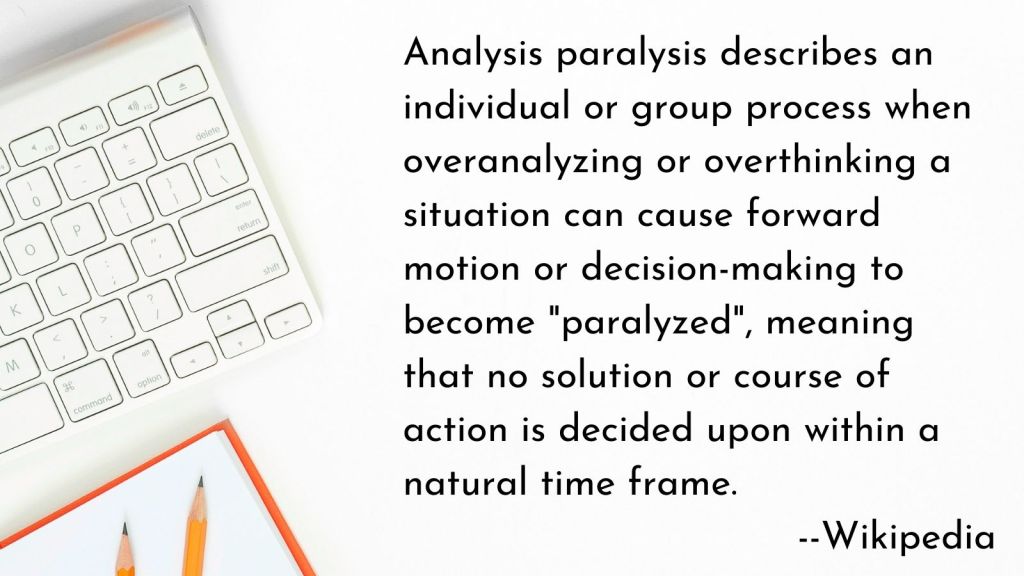
Fighting Analysis Paralysis: What you can do when you feel overwhelmed.

The end of the first month of the new year is upon us, and in Minnesota, that means waiting for February and March to go away so we can start enjoying some milder temperatures. I don’t mind these months so much, especially working from home now, and since I replaced my little Neon two years ago, the winters and the snow aren’t that stressful.

But we can also feel time slipping away, and New Year’s resolutions, for some, are a faint memory. Sometimes we can let these go, but sometimes the passing months just means more time we don’t have to get what we wanted to get done.

I’m starting a new pen name this year, and with it comes pressure to put everything I’ve learned in the past five years toward good, marketable books, while building a readership that will keep coming back for as long as I want to publish. That’s a weighty burden I’ve placed on myself, and to say I struggle would be an understatement. It would be nice if I could find a happy medium between building a readership without losing the joy of writing. I get bogged down with the writing, the editing, the covers, promotions, the newsletter, and sometimes it just makes me want to close out of everything and turn on a movie. Of course, watching Endgame over and over again won’t get me what I want either, but mentally running through everything I can do and should do is stressful all on its own.

How can you combat analysis paralysis in the coming months? Here’s what I plan to do:

Make a list. This can be a huge list of everything you want to accomplish this year, or what you want to get done in a monthly or weekly timeline. A huge master list of what you want to get done in the remaining eleven months of the year might be more stressful than helpful, but giving yourself an overall view of the things you want to accomplish can actually be motivating.

Then chunk it down even further. I know what I want to get done in the next 11 months: release my duet, release a standalone. Write a Christmas novel for this year’s release if I have time and can think of a good story. Edit my 6-book series, format them, and do their covers. Get a proofer to proof the proofs. Get them set up to release in 2023. All of that sounds exhausting, and perhaps, when I’m having a bad day, impossible. Yesterday I was off because I wasn’t feeling well and I was tired, and thinking about tackling my series brought me to tears. That was analysis paralysis at its finest, with some Imposter Syndrome thrown in for good measure. (Is my series good? Is it worth the time to package and publish?) What can I do to make all that easier to swallow? Take it slow. My duet is with a beta. There’s nothing I can with it until he’s done. I can’t format it because there could be changes I need to make and it would be easier to do that in the Word document. I can’t do the covers (not the full one, anyway) because I don’t have the formatted interior files. I have the blurbs written. All I can do is be patient and work on something else, so I’m tackling the first book in my series. The Christmas novel will be a bonus if I have time to write it, and if I don’t, I’m not going to worry about it. Christmas comes every year, and I can write one for 2023.

Don’t worry about what other people are doing. The first the year is terrible with authors tweeting and posting about their New Year goals. Some of the number of books authors say they are going to release is staggering, and you have to keep in mind that you can only do what your life allows you to do. The authors putting up the big numbers do this for a living. They write eight hours a day, or close to it, anyway. They have a system and have managed their obligations so they can write a book in two weeks. If that isn’t you, you can’t worry about it. Analyzing what other authors are doing is a sure way of making yourself feel terrible. Even my schedule might make you wonder how in the world I have time for it all. All I’ve done is write for the past two years, and that was a mistake on its own, but it’s helpful I have books completed–the hard part is already done. Now it’s making time for the busywork and pushing them out there. I’m only releasing three books this year which is a low number by romance genre standards, but I don’t want to be known for putting out ten books a year. You teach your readers what to expect from you, and three books a year is a good number. Not the best, as four books a year keeps you relevant in Amazon’s algorithms, but three books a year is doable for me, and if I can do four, that year will be a bonus. Even if could write full time, I would never be capable of releasing a book a month, and it’s not something I ever want to do.

Control your FOMO. My fear of missing out is over the moon, but if you can’t control the fear of all the things you might be missing out on, you’ll never get anything done. There will always be a marketing webinar to watch, a group to join, a Clubhouse room to listen to, a new podcast episode to consume, and if you can’t focus on what needs to be done when it needs to be done, you won’t get anything accomplished. For the meantime, I’ve stopped listening to marketing podcasts, and the only thing I do regularly now is listen to my Level Up Romance Marketing Monday hour on Clubhouse. That is also a networking opportunity for me as well as listening to some great information, and I don’t work Mondays, so it fits into my schedule. Because here’s the thing: If you don’t have good books to publish, nothing else matters. I know what I need to do in terms of marketing: make sure my covers are to market, make sure my blurbs are good, make sure the stories are what people want to read. If you don’t have those things figured out, no amount of marketing is going to help you sell books anyway. I know now to run Amazon ads without losing money. I have a newsletter signup opportunity ready for my back matter along with a reader magnet. I have all the bits and pieces ready to go, and the only thing I have left now is to see if my stories resonate with readers. So think of what you need to do with where you are at the time. Are you working on your first book? Craft and feedback might be more important to you than learning how to run Amazon ads. Can you not afford a book cover? Learning how to your own might be what you need to focus on right now. Narrow your focus on what you need for the place in your writing career you are at, and a weight will drop off your shoulders. I promise.


I had a crappy day yesterday and was doubting my abilities to put out good books. I’m still feeling a lot alone in this endeavor–so many of my friends have dropped out of the writing community since I met them five years ago, or we’ve drifted apart for other reasons. I was feeling overwhelmed with all I wanted to get done this year, and when you feel like you don’t have help, community, or support, a long list can seem quite daunting. A list can put things in perspective, and while I might feel alone, I’m not. I have a great community on Twitter, and I’m doing my best to cultivate relationships with my romance authors on Facebook. Everyone feels inadequate somehow, like they aren’t enough to make it in this business, but you’re not alone in thinking this. Lack of sales can do it, burnout can do it, too. We’re all struggling, but I hope knowing that you’re not alone can jolt you out of your own analysis paralysis and you have a productive 2022.

Until next time!