It’s October! You Know What that Means!

It’s October first. Well, it might not be when you read this only because I’m a bit behind with my whole life writing this post.

Anyway, so when you think of October, you think Pumpkin Spice Lattes, fall leaves, bonfires, hoodies. Halloween.


Oh, wait. We’re writers. October doesn’t mean any of those things, right?

What does it mean then?

NaNoWriMo Prep Month! 

If you participate in NaNoWriMo, you are thinking about writing your 50,000 words in November.
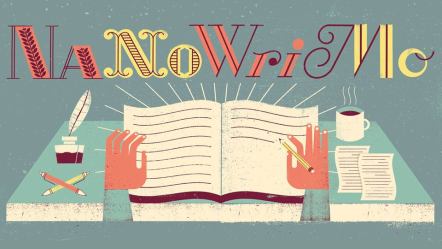
nanowrimo2015-design-by-eric-nyffeler

Ideally, when you decide to participate, you’re supposed to take October and plan out your novel, right? Character arcs, plot. Anything you need to do to make writing your novel smoother, faster, better.

How many words a day to write 50,000 words in a month? 1,666. That’s not too bad.

I’ll let you in on a little secret.

I  hate NaNoWriMo.

I tried it once, I even “won,” and I never want to play again.

I get that some people need the boost the competition provides. The camaraderie. A goal to work toward. The accountability.

But you know what? Let’s do a list. I feel like a list. I feel like coffee too, but let’s do a list first.

  1. I don’t need a contest to force myself to write. I think I write about this a little bit every now and then. I love to write. I love it. I love watching the words pile up, I love reading it over, editing, okay, I don’t love the editing part. But I love writing the blurb, formatting, making the cover. Releasing the book. I love the whole freaking entire process, and I don’t need to participate in a contest to make progress.
  2. I have a publishing schedule that doesn’t include NaNo. The year I played I set aside a book–I was almost done with it; I had only 20,000 words left to finish it. Hey, guess what. It’s still not done, and that was two years ago. It’s not a good idea to put aside work to play. When will you ever get back to it? Right. If you’re like a lot of indies, it will end up in your pile full of half-finished projects. And maybe that’s where your NaNo will end up too once you realize . . .
  3. . . . you’re in for a hella lot of editing. So, I get preachy, I probably too preachy for my own good considering my sales kinda suck. But let me tell you something, one day you’ll appreciate quality over quantity. Wouldn’t you rather have 30,000 amazing words than 50,000 so-so words by the end of the month? I would rather have 30,000 shiny pretty words that I know won’t need much work over any number of words that, in the end, just don’t make much sense.
  4. I get enough community from Twitter and my various FB groups to need NaNo. I could see maybe if you wanted to use the community as support if NaNo was all there was. But it’s not. There’re a ton of people on Twitter who will give you support, accountability. Tweet your daily word count, and trust me, there will be a few people who will congratulate you, no matter how many followers you have. There are a ton of FB writing groups. Heck, you can even start your own. How about support for the whole year, not just in November. That sounds pretty cool, too. Oh, and if you’re slow and you only do 5,000 words in November instead of 50,000, follow #turtlewriters on Twitter.
  5. There is too much going on in November to add this contest to it, too.  Why in the heck did the creators of NaNo choose November? Out all the boring old months to choose from (May, anyone) why November? Thanksgiving, my birthday, my daughter’s birthday, Black Friday, Christmas shopping, blizzards. Besides December, this is probably the worst month in the whole year for me.

I probably have more, but this is all I can think of right now. My main concern whenever someone says they need NaNo to write is that you shouldn’t “need” anything to write. You shouldn’t need anything but your determination to see your goals through and a passion so strong that it hurts if you don’t write.
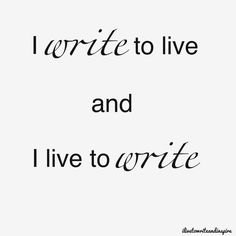
live to write


Start your NaNo project today. How much can you do by the end of the November without needing to rush so much?

Do you like NaNo?  Let me know!

Vania Blog Signature

The “What Makes a Best Seller” #SmutChat

Thanks for participating in #smutchat tonight! Also, thank you for putting up with erratic scheduling this week. I have a friend coming in from out of town next week, and rather than try to work around it, I gambled and changed the dates.

I’ve been busy this week trying to do some editing things for a friend and for myself so I can enjoy next week without worrying about unfinished business.

Anyway, thanks again for dropping by #smutchat! I’ll see you in two weeks!

 a Rafflecopter giveaway


Read to Me, Baby!

Many have you may have realized I’ve disappeared off social media for a bit. If you haven’t, uh. Anyway, so I’ve been editing the first book in my Tower City Romance Trilogy. I’ve been working on this for a while now, and I’m so close to publishing, I can taste it.

coffee-2436940_1920

But editing is a bitch, and it seems like no matter how much I do, it will never be enough. It doesn’t help that I’m taking an online editing class, and every time I complete lesson, I find a million more things wrong with my manuscript.

One class was extremely helpful though and we were told to either make Word read our work to us aloud or to read it ourselves. I can’t stand the sound of my own voice, and it’s a fact that you know what it says so your brain may fill in the blanks and you won’t catch what’s wrong, anyway. I didn’t know Word could read to you so I looked up the directions. You can find them here.

Quite simply, I fell in love with it. I can’t stop listening to my own work. I delight in hearing a perfect sentence or laugh when a piece dialogue sounds as good spoken as it did in my head. Of course, it’s not perfect. He doesn’t say some of my characters’ names right, and he skips over ellipses and em dashes. What does he get right? Well, he reads everything just as it’s written: the double words, the typos, the skipped words. I’m not sure a human could even do this level of proofreading. It’s not fail-proof, he doesn’t know I typed except when I meant accept, but that’s the beauty of him speaking it aloud, you can read along and correct as he goes.

The voice sounds more like this than that, but that’s okay.

This makes it tedious–it takes a long time to listen, correct, listen, correct, listen. Sometimes to the same paragraph over and over again. But I see more advantages of this than not. Audio is getting bigger and bigger, and there are a couple avenues indies can take to make audiobooks of their books.

ACX
ACX stands for Amazon Creative Exchange. Through ACX, for a fee, an indie can turn their book into audio and sell it alongside their books on Amazon.

Findaway Voices
Draft2Digital has partnered with Findaway Voices to give indies another choice than to go with Amazon to turn their books into audio. You can read about it here.

How cool is it that you already have an idea of how your book is going to sound if you decide to turn it into audio?  You won’t have to worry how that two-page paragraph, where, oops, you have six comma splices and five semicolons, will sound. You won’t have to worry if it sounds odd every time your characters speak to each other and they say each other’s names a million times.

Not to mention, that since you have already heard everything in your book spoken aloud, you really won’t have to do anything with your proof but make sure the inside and cover turned out.

So, this is what I’ve been doing for the past few days. I have a publishing date set for November, and I’ve been trying to get through this book. It’s slow going because as I said, he’s finding things I want to fix, so I do, then I listen and have to fix it if it doesn’t sound right, or if I made a mistake while I was fixing my mistake. Yeah, that happens. A lot. But I know that after all this is done, my book will sound the best I can make it.

Have you tried this? Tell me what you think!

Vania Blog Signature


#smutchat All the Lawyerly Writing

{This is the giveaway for the Smutchat of the evening of Sept. 21st. I’m posting a bit early, but if you see this and want to get a head start on the giveaway, knock yourself out! Have a great day!}

A special thank you to Nadia (@nadiadiament) and Ari (@Ari_Ross) for guest co-hosting #smutchat today! It was a great chat, and I hope you learned a little something about how to write believable law into your books.

We deal with the law every day, and sometimes those pesky details can trip you up. To help with that, remember to enter the drawing.

a Rafflecopter giveaway

There are two different books for the winner this week due to a little miscommunication between Nadia and me. I thought Ari was going to answer legal questions about self-publishing, so I bought Helen Sedwick’s book for the giveaway. When Nadia and I discussed the chat further, I realized my mistake and bought  Books, Crooks and Counselors, too! So, it’s your lucky week! Enjoy!


And as always, the giveaway is open internationally, so don’t be afraid to give it a try!

Thanks for playing!

The next #smutchat will be next week due to scheduling conflicts I have the first week of October, and the official date is September 28th at
7 Central. See you there! 

Point of View vs. Head Hopping

When I hosted my editing #smutchat on Twitter a few weeks ago, I was surprised to learn people were confused between POV and head hopping. I thought I would write a quick refresher on the topic. This will just be an overview because complete books have been written on the subject, and I’ll list my favorite resources at the end of the post.

point of view

When you look up the definition of POV, this is what you’ll find. Essentially, when you talk about characters and writing, point of view is the character’s view and thoughts of the story. When you write in 1st person, you only have one point of view—that of the person who is “I.” Many writers like to write in this way because it’s easier to keep track of characters and plot. You don’t have to worry about who is doing what when because there are the thoughts and actions of only one character. The worry about head hopping is nonexistent because you only have the thoughts of the “I” character.

bubble-19329_1920

Writing in 3rd person is different. That is when you can write in the POV of several characters if you want. A popular example of this is Game of Thrones. Each chapter is written in the POV of a different character, and Game of Thrones has a lot of characters. Some writers do this with their 1st person characters—each “I” has their own chapter, and in this way, the author is allowed to move among characters. I think this is lazy, and be mad at me if you want, but ultimately, if you want the POV of more than one character, you might as well just write in 3rd person. It’s cleaner and reads better.

Anyway, I write romances. Most romances are written in 3rd person, and the point of view alternates between the hero and the heroine. (Some longer romance sub-genres like Chick Lit and Romantic Mysteries will add other POVs, say that of the best friend, or the villain.) Switching between the hero and heroine is fun because we like to know if the characters have different thoughts and feelings about a situation they are both involved in. Like a kiss: He’s swept away by the moment, but she’s grossed out because of his breath.

But switching points of view in this way also means changing scenes or chapters and making sure each character and their thoughts are confined to their specific scene or chapter.

Head hopping occurs when an author starts a scene or chapter with the POV of one character, but then the author slips in thoughts of different characters who are not the owner of the point of view.

woman-1172718_1920

Let’s take a look at a clean POV scene:

Amy pushed her food around her plate. She didn’t understand why her boyfriend’s mother hated her so much. She could feel the woman glaring at her across the table. Her boyfriend, Zach, rubbed her back. She appreciated his support, but sometimes she wished he would just tell his mother to chill out. If the woman didn’t stop being so mean to her, Amy would stop eating Sunday dinner at their house. It wouldn’t make Zach very happy, but he would deserve it if he didn’t start sticking up for her.

This is a quick paragraph in Amy’s point of view. We only know her thoughts. She’s uncomfortable with the situation, she’s resentful Zach doesn’t defend her against his mother. There isn’t any head hopping because we don’t know what the other characters are thinking. If this is a romance between Zach and Amy, and we want to know Zach’s thoughts about dinner, we would need to make a scene or chapter break and begin the new scene or chapter in Zach’s point of view.

Zach wished Amy would be nicer to his mother. He was going to have to break up with her if things continued this way. He’d always thought Amy was a sweet girl, and he’d been happy when he asked her out and she said yes. But things went downhill the day he introduced her to his mother. They hadn’t clicked from day one, and it was Amy’s fault. She caused so many problems acting so pretentious. Disgusted with how dinner was going, he guzzled his beer hoping to take the edge off. Breaking up with her was the last thing he wanted to do, but he couldn’t marry a woman who didn’t get along with his mother.

This is why I like 3rd person POV so much. You can surprise your readers with character reveals. Were you surprised Zach was taking his mother’s side? Maybe you were because in Amy’s POV Zach patted Amy’s back and she took that for support when in actuality, Zach was thinking thoughts that were anything but.

This is a classic staple of romances—misunderstandings and conclusions being assumed up the tension and create conflict.

Let’s take a look at head hopping. Head hopping is when the author tries to cram thoughts of more than one character into a scene. You can still start the scene or chapter in the POV of one character, but then you start slipping in thoughts of your other characters. You aren’t necessarily changing POV, but you are revealing thoughts from characters who aren’t having their “turn.”

Amy pushed her food around her plate. She didn’t understand why her boyfriend’s mother hated her so much. She could feel the woman glaring at her across the table. Why is she so mousey? Lydia thought, stabbing at the pork roast she’d made for dinnerHer boyfriend, Zach, rubbed her back. You need to be nicer to my mother, Zach fumed to himself. If the woman didn’t stop being so mean to her, Amy would stop eating Sunday dinner at their house. It wouldn’t make Zach very happy, but he would deserve it if he didn’t start sticking up for her.

This is a short example of having three people’s thoughts in one paragraph. We still have Amy’s point of view—she can think to herself without the italics because the scene is hers, and we’re in her head. But then I added in the thoughts of Zach and his mother. I put those in italics because the scene does not belong to them but we are given a glimpse at what they are thinking.

The question during #smutchat was: how important is avoiding head hopping when you can still find it in today’s books?

There is still head hopping in today’s traditionally published books, even though us indies are told over and over again not to do it. Nora Roberts head hops, and I just abandoned a book that head hopped between the male and female main characters.

So is it important not to head hop?

Agents and editors will tell you not to do it. Readers will tell you they don’t like to read it because it’s jarring and takes them out of the moment.

In my opinion, head hopping is lazy and an author can learn to write well and avoid it.

As a reader what do you like?

As a writer?

Tell me what you think!

Other links:

A great post by Bryn Donovan can be found here.

Fight head hopping by learning how to write in deep POV. Take a look at Marcy Kennedy’s book here.

Also another book by Rayne Hall: here.

Vania Blog Signature

#SmutChat Dialogue Giveaway

Seems like Thursdays come and go pretty fast, right? Thanks for taking the time to participate in chat tonight. I hope you had a good time. The giveaways are Dialogue for Writers: Create Powerful Dialogue in Fiction and Nonfiction by Sammie Justesen and The Cougarette by Eliza David.

a Rafflecopter giveaway


The next time on #smutchat we’re going to mix it up a little bit. We’ll have guest hosts Nadia Diament (@nadiadiament ) and Avi Ross answer your questions about writing believable law in your books.  The giveaways for that chat are super-amazing, so you’ll want to tune in on Sept 21st.  Happy fall!

hello sept

Staying Positive Online

Every day we do a little something to build our platform: send a Tweet, write a blog post, post an update on a Facebook Author Page. As authors, we need to stay relevant; we need to produce content to stay visible. We want people to find us and our books, and that won’t happen if you neglect a blog or don’t update your social media. The more you post, the more visible you are—that’s how it goes.

binoculars-995779_1920

But it’s difficult to produce content, and it’s just as difficult to remain upbeat and cheerful all the time. Sometimes you need to let out a little negativity, a little frustration. The chapter you just wrote is shitty—let’s tweet that out there for some sympathy. You tell your fans on FB that you’re having a bad day. You dropped a jar of pickles on your foot and you post your black and blue toe on Instagram. Sometimes those things aren’t bad, but your fans, the people who read your books, don’t want to hear it all the time. Twitter is a great place to pout because misery loves company; when I’ve had a bad day, there’s always someone there who can relate. But I don’t want to be known as Twitter’s Debbie Downer and neither do you.

angry-2191104_1920

This goes for other things on the internet as well. There’s a lot of controversy about whether or not to leave “honest” reviews on places like Amazon and Goodreads. This isn’t controversy as a whole—a reader who reads a ton of books every year and reviews them can say whatever s/he wants. They are readers and consume books as readers only.

But.

We are writers as well as readers, and that can be a problem because every review you leave is added to the foundation of your author platform. This question comes up a lot: Do you post honest reviews? Most authors will tell you that no, they don’t leave poor reviews—it’s not their place. Especially if the book they’ve read is an indie book. Some authors will say no because they don’t want people to do the same to their books. Some don’t just because they don’t want to post any negativity online. I tend to agree with the authors who say this simply because I try to keep my online presence as positive and as cheerful as I possibly can. I’m a contemporary romance writer. I’m supposed to be in love with life, right?

When I first was introduced to the indie world, I read a lot of indie—and I quickly became discouraged.  Poorly formatted books, books that needed an editor, books that were boring—I discovered why indie publishing has a bad reputation. I read some good ones too, don’t get me wrong, but the books that weren’t that great—I didn’t review.  Because let’s be honest, I was new the game, (still feel like I am most days) and who in the hell was I to criticize a book? It’s not like I’m selling a hundred books a day (though I aim to change that sooner rather than later.) But even then, while my success may justify a negative review, do I want to throw that kind of negativity out there?

Unless part of your platform building is being known as a reviewer who will give an honest review no matter whose toes you step on, then I would suggest not giving unsolicited advice in the form of a review. I’ve given advice to my friends who ask in private messages. I’ve beta read for friends. I’ve edited for free. Doing that, one on one, can do more for your platform than giving a book a bad review. Throw good karma into the online universe, and good karma will come back to you.

mark-adriane-259950

But I believe that advice is good for every situation, not just book reviews. One night at Olive Garden the waiter forgot to put our order in. My sister and I were going to a movie, so we didn’t have time to wait for him to fix his mistake. We had to make due with our drinks and the salad and appetizer we ordered. Did I bash Olive Garden online? Did I tweet to them to get better service in their restaurants?  No. Well, I posted on my personal Facebook profile that if you wanted to actually eat the food you ordered, eat elsewhere, but I made it into a joke and I did not post any harsh words related to the event. That night we were kind to the waiter, and we left. (The chocolate martini I drank probably helped.)

When the movie theater gave us stale popcorn, did I post about it? No. (Luckily that occured on separate evenings, otherwise that would have been a bummer of a night.)

Sometimes I get down just like everyone else, and I do tweet to ask for advice or a cheerful word, but I do not make those posts the mainstay of my platform, just like I don’t use my blog to bitch about the publishing industry or my lack of sales.

I share my frustration with and about the indie community: I want our reputation to turn around. I want people to think quality when they think of an indie book. I want people to want to buy indie over a traditionally-published book. So I will post advice, I will write about things I wish indie authors would do (take the 8 point space between paragraphs out of your manuscripts please, and can you full-justify your file even if Mark Coker tells you not to?). But I would never post a book review and say this author needed an editor, or the formatting was so screwed up I couldn’t read it and too bad I wasted 13.99, you shouldn’t either.

Stay positive online, put a smile on someone’s face, be a friend, be a contributing, productive writer in the indie world, help where you can, offer advice when asked.

positive-725842_1920

In the words of my oh-so-wise mother-in-law, “Don’t crap where you eat.”

What do you think? Let me know!  Vania Blog Signature


(Thank you to pixabay.com and unsplash.com for the photos.)


You’ve Written Your Book. Now What?

There’s a lot of talk in the publishing/writing community about what to write. Ask anyone, and the unanimous answer will be, “Write what you love and worry about the rest later.” And that’s okay; definitely write what you love because if you’re not, it will show in your writing. If you don’t love it, no one else will, either.

book-1760998_1920

But after you’ve written your book, what then? If you want to query, what you’ve written will decide almost 100% if you’ll get picked up. Agents sign books they know will sell, and they know what books will sell because they are in close contact with editors in publishing houses and know what books the editors will buy.  But what are those books?

There are books that will never go out of style because they encompass the bigger genres: romance, mystery/suspense (combine the two and you’re golden), a little science fiction, some fantasy, maybe. When you choose one of those, you’re choosing a subject or topic that will never stop selling.

But indie authors rarely go generic, and that’s a lot of the problem. Say I’ve written this wonderful story about a fairy princess set in modern times who is a pediatrician and she’s in love with the warlock neuro surgeon down the hall. Her father demands she go home to the fairy world to claim the throne and she’s torn away from her warlock lover. After she’s home and takes up her duties as royalty, she finds out she’s pregnant with her warlock lover’s baby. Now what?

gothic-1317139_1280

This story is near and dear to my heart, maybe. It’s all written out, all 99,000 words of magical goodness. I have plans to turn this into a trilogy.

Excitedly, I shop it around.

Agents pass, editors at publishing houses pass. A kind agent takes the time to email me and says, “This is great, the writing is solid. But fairies in adult fiction aren’t selling right now, and I don’t know when they will. I can sell it if you turn the fairy and warlock into humans.”

What she did was make my story generic. She turned it into a simple romance she’d probably sell to Avon.

But that’s not what I want, so she offers me, “I’ll sign you and keep it in my drawer. When fairies come around again, I’ll try to sell it.” This isn’t exactly what I want, either, and I wonder if I want to take her offer because how long do I want to wait, exactly? Selling my book could take years, or she could never do it. It doesn’t mean my book or writing is bad, it just means the publishing industry isn’t selling that kind of book right now.

We can all think of books that have had their day: vampires/werewolves (Twilight), dystopian societies (The Hunger Games), mommy porn (Fifty Shades of Grey).

But look on the NYT Bestseller list and we can see what’s hot right now: mysteries, The Woman in Cabin 10 (Ruth Ware), The Couple Next Door (Shari Lapena), Seeing Red (Sandra Brown), The Store (James Patterson). Simple romance, Two by Two (Nicholas Sparks). General Fiction, Before We Were Yours (Lisa Wingate), Exposed (Lisa Scottoline).


There isn’t a fairy, vampire, or elf on the whole list. Even Young Adult has is having a grown up moment: The Hate U Give (Angie Thomas), One of Us is Lying (Karen M. McManus). Third on the list is about faeries, but it’s part of a series by Cassandra Clare. She has her name and history behind that book, something you wouldn’t have. (Just sayin’.)

The reason I’m writing this blog post isn’t to tell you to write boring—write what you want to write. But I am saying that there may not be room for your book when you’re done with it depending on the climate of the industry.

#PitchWars just ended on Twitter. It’s a program (for lack of a better term) created by agent Brenda Drake. A writer submits their manuscript and hopes a “mentor” will take them on and help make their manuscript queryable.

The problem is, these mentors know what is selling and will choose manuscripts that have the best chance at being picked up. If that happens, everyone looks good; that’s the goal.

There have been a lot of hurt feelings because manuscripts haven’t been picked up by mentors, and I’m willing to bet it’s not the writing but the genre and plot that made a mentor decline a book. Vampires, out. A teen learning what her true gifts are just in time to save the world, out. Clumsy girls who fall in love with billionaires, out.

The stars have to align for a book to be published these days. Your book has to be on target with the plot, the characters, and the trends at the time. It has to resonate with an agent, who has to find the perfect editor who wants to take it on.

I would never feel bad if my book didn’t get picked up. There are so many things that have to go right for that to happen; I would never take it personally.

But lots of people do.

Let me know what you’re writing. Do you think your book would get picked up after seeing what’s being published right now?

Vania Blog Signature


(Book and Fairy taken from pixabay.com. Thanks to Amazon for the book cover pics.)

When Should You Redo a Book?

I was listening to a podcast today–I know, shocker. I listen to them all the time, and it sure makes scooping the kitty litter a little more tolerable.

Anyway, so the two hosts went through their usual, what are you working on, what are you working on?  And the male host (I won’t say who it was or what podcast this was) said, I’m going to redo my first book. New cover, new title, redo some of the plot, the whole thing. And the other host was like, oh, that’s great, blah blah blah.

I don’t know what I was doing then. Cleaning my bathroom? Sweeping the kitchen? But I was like, wait, what?

Rereleasing a book isn’t a new concept to anyone. Traditionally published authors (or their houses) do it all the time, especially for old books. You know it when you’re reading and someone lights up in a restaurant. You think, I just bought this book at Walmart yesterday. Smoking in a public place hasn’t been legal in years. How the *bleep* old really is this book? Oh, the first copyright was 1982. That explains some things, right? Maybe you keep reading it because the story is good, maybe you don’t because you like your characters to have cell phones and access to the internet, but if you keep going, maybe, just maybe, by the time you read to the end, you realize you already read it–30 years ago.


This is Linda Howard’s Almost Forever.  Kinda different huh? There are more covers between these two. The original was released in 1986.


Again, pretty different.  It doesn’t make the inside change–but would you feel cheated if you bought this book today then found it it was published in 1989? There are other covers between these, too.


Unfortunately, this is the same book. I never would have known had I not gone on Goodreads and looked for the old cover of Breathless Innocence and found He’s Just a Cowboy. The descriptions are slightly different as well.


I realize there’s a difference between submitting a new file to CreateSpace to fix typos or if you’ve redone the cover and completely redoing a whole book. We’ve all done it. I did it for 1700. I fixed typos, redid the cover, fixed some formatting issues. It was my first book. Mistakes were made.

But where do you draw the line? Where do you draw the line between fixing the mistakes that you should have caught the first time, but were too damn excited to see or care about, to revamping an entire book?

See, I think of it this way. Your readers bought your crap version. Let’s just call it the way it is, okay?  People shelled out their hard-earned money to buy your mistake-riddled book. Should you have released better, yes. But you didn’t. I didn’t. So people bought it and maybe they didn’t care about the mistakes, maybe you ended up on their author shit-list. That’s on you, and that’s on me.

But say you have some time on your hands and you decide, you know, this book was great, but it’s got a crap-rep now (and maybe the reviews to prove it). I don’t want it to go to waste so I’m going to fix it up. A new title, new ISBN number, let’s fix those plot holes, give the MC a few extra demons, maybe real ones! Yank the old one and let’s watch the sales come in.

Is that fair? Is that fair to the people who bought the first version of your book?

What if you have a decent fan base? Maybe you don’t write as fast as you’d like so when you release a book, people buy it. That’s great. And how are they going to feel when they read a quarter of the way through it and realize that they’ve read this story before?  Yes, it sounds better, no there’s no typos this time around. The cover looks amazing because you learned some things. But . . .

People will think it’s very unfair if they pay twice for the same book. Only authors who have written for longer than you’ve been alive are allowed to do this. You know, authors who have 50+ books in their backlist. Then, only then, are the chances of the same person reading the same book slim. And when publishing houses do this, they are releasing the same book. Authors are too busy writing new material to rework a plot. Their houses are re-releasing books with a new up-to-date cover, and while I may not be too big a fan of that either, it’s a lot better than what we’re talking about here.

I’m not suggesting you don’t fix mistakes. But what I am suggesting is maybe you *don’t* revamp the entire book. Maybe you fix the mistakes, redo the cover, but leave the story and title alone. Leave the ISBN alone. Write a better book next time.

To me, writing is continually moving forward, not back.

What do you think?

Vania Blog Signature


You can read another opinion about this here.

(Book pictures were taken from http://harlequinblog.com/2017/05/8-wonderful-contemporary-romance-re-releases-we-love/ and http://www.goodreads.com)

What Do You Say When People Ask You . . .

. . . why did you write/are writing your book?

ask-2341784_1920


Some authors say their characters called to them and wouldn’t let them go. Some say a plot jumped into their head, and they had to get it down on paper before it disappeared. Some say it was part of a series/trilogy, etc. and they had no choice but to continue or abandon ship.

Why did I write Summer Secrets?

Because I’m insane.

That’s the short and easy explanation, but in reality, it’s much longer.

I had just come off from writing On the Corner of 1700 Hamilton. If you haven’t read it (and I know you haven’t because I can count the copies I’ve sold on my two hands and feet), you’ll know that it’s actually two novellas. One in the male’s point of view called 1700 Hamilton and the other novella is the same time frame but from the female’s point of view called On the Corner of Hamilton and Main. I know, completely crazy titles, and this was the new author in me—mistakes I won’t make again.

But I digress.

Anyway, so what I’m getting at is that writing novellas is fun, easy, and quick. I wrote on the weekends at work, transcribed once a week and actually had a life outside of writing, but I still felt like a writer. Writing novellas isn’t as daunting as writing full-length novels. By the time you reach 10,000 words, you’re halfway done. There’s something freeing about that—there isn’t so much pressure.

So, I kind of got sucked into writing novellas, and I wanted to write more.

woman-690216_1920

Conveniently, after 1700 was published, I was brainstorming with my friend Jewel, and we were talking about writing novella series. She had her own ideas, I had mine, and at work one day I outlined five novellas, characters and all.

This is where the insane part comes in.  I didn’t realize how long it would take me to actually write five. I’d just signed away five to six months of my life. But hell yeah, it sounded like fun. How bad could it be?

It wasn’t that bad. But in the middle of the 5th novella, a character “called to me” (yep, I just wrote that) and I realized he needed his story told. So five novellas I’d estimated at about 20,000 words a piece turned into 6 novellas, and after it was all said and done, turned out to be almost 160,000 words.

It takes a lot of time to edit 160,000 words. It takes a lot of time for someone else to edit 160,000 words. Let’s not mention formatting them and designing covers.

Never mind losing six months, I lost a whole year. On novellas.

But damn, are they good.

See, that’s why I can’t regret writing them. They are well-written, they are all part of the same story, told chronologically, and I learned so much writing them and editing them that I could never feel bad that I decided to do it.

Maybe I’ll be a little sad if they don’t sell—but I won’t be too worried about it, either. They are not the genre in which I want to keep writing, so building an audience won’t do be a lot of good unless they want to branch out as readers.

Never feel bad about what you’re writing. Somehow, some way, your project will serve a purpose.

What are you writing about and how did you decide to start?

Vania Blog Signature