Three Things I’ve Stopped Doing (and Three Things I Always Will)

2,645 words
14 minutes read time
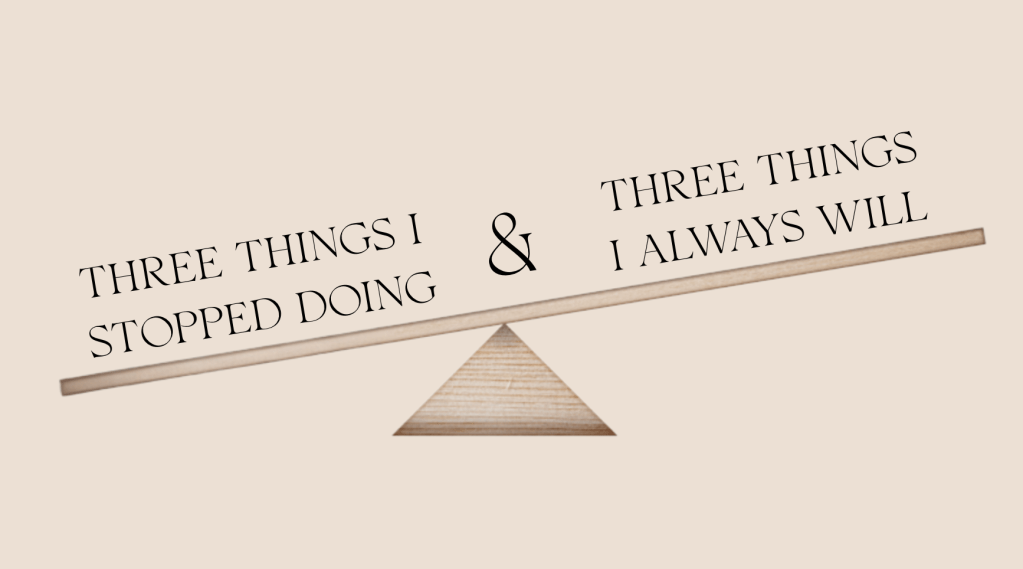
brown scale on brown background. low part says, three things I stopped doing (ampersand) and high part says, three things I always will
black text

Things change in indie publishing. Some quickly, like Amazon guidelines, and some take years to shift, like marketing trends. I’ve been in this game for a bit now, longer than a lot of people I met when I first started out, but shorter than some of the tried and trues I knew who were doing this for years already when I first created my Twitter account.

I have found the longer you stay in the game, the more data you’re going to collect (if you’re smart and keep track). What works, what doesn’t. What did but doesn’t anymore. There are some basic things that will always have merit like publishing consistently, having a website, and, in most cases, not genre-hopping if you want to build an audience. But there are some things that just don’t work anymore, like just simply publishing and watching the royalties roll in as they did during the Kindle goldrush days.

So, I thought I’d share the three things I’ll always do and three things I stopped doing. As the years go by and I hang in there, this list might change, but these are the conclusions I’ve drawn so far since I published my first book in 2016.

Three things I’ll always do in my publishing business:

Finish a duet/trilogy/series before release. I’ve blogged about this a few times, as for most authors this is a Catch-22. Some readers now won’t read until a series is done and they can binge, but an author is reluctant to write more unless they see interest in the first book. What will always convince to me to finish is the fact that if your series is never done, it will never get the readers it could if it was finished. Books don’t expire. In the digital landscape they can sit on a virtual bookshelf for decades. Indies make money on older titles all the time, but you are ensuring that you won’t if you don’t finish. My reasons go beyond the money, even beyond author courtesy and reader habits. I finish out of a sense of integrity for myself and my work. I mean, I don’t publish as I go because I have anxiety over consistency issues that I couldn’t fix if my books were already out in the world. I’m not that good of a writer, so I need to be able to go back and double-check until I’m satisfied. But I also just couldn’t walk away from a world and characters I created. I loved them or wouldn’t have created them in the first place. I’ll always stay true to that creative spark and finish what I start.

Marketing in a way that’s sustainable to me without feeling guilty. That means letting go of the idea I need to be on social media. I don’t like thinking of a hook or a theme and making a graphic and posting. I don’t want to make videos for TikTok even if I have gotten better at it and it doesn’t take me that long. I still post every once in a while so if a reader stumbles upon my FB author page or my IG profile I look like I’m still alive, but otherwise, the constant advice that I need to be posting all the time I will happily ignore. The fact is, a lot of authors don’t have the money or don’t want to spend the money on marketing. I understand that, but paying for ads and for newsletters like Freebooksy and Fussy Librarian is my way of reaching readers without worrying about algorithms or coming up with content and the best way to present it. If I run an FB ad, that’s my limit, since you do need a hook and a graphic that will make people click.

I understand that in a perfect world, an author will use both paid and free tools to market effectively. But when mental health comes in, not to mention time and finances, each author has to make the best choices for them. Even if that’s not posting on socials, not paying for marketing tools, and only joining in a free, author-driven book blast once a year. You have to take a look at what results those methods are bringing in and if you’re okay with that. After a lot of soul-searching, I am okay with breaking even or losing money. I didn’t start publishing to become rich and famous, and that’s okay because I never will be. (I still play the PowerBall sometimes though.)

I will always buy my own ISBNs. This is kind of a cheat, because I already made this decision, and four years ago I bought a pack of 100–after I had already bought a pack of ten and went through them. It cost as much as my rent (at the time–my rent has gone up considerably since then) and I was sweating bullets, but I charged it and paid it off after a few months. I have been called privileged for being able to do that, and you might think I’m privileged to be able to afford ads and paid promos, too. I don’t feel privileged, living paycheck to paycheck, depending on the rent money my kids give me every month, and I still have to charge bigger purchases, like the new mattress I had to buy a few months ago for my back pain. I have a small budget for ads and don’t pay myself a wage out of my royalties. Every penny I make on book sales gets put back into my business hobby. I think that’s another reason authors are hesitant to pay for things like ISBNs and ads. They don’t always make their money back because they don’t write to market or their covers are bad, but I have never seen any industry besides indie publishing where people think they can start a business and not spend any money.

Not everyone will agree that buying ISBNs is a valid expense, and that’s okay. Amazon may not be around forever and neither may IngramSpark, though chances are good they’ll still be here in my lifetime at least. But, I wanted to protect my work under numbers that I paid for and now I’m the publisher on record for my titles. That means a lot to me. I protect both my ebooks and my paperbacks, even when the general consensus is you don’t need an ISBN for your ebooks. I still have quite a few numbers left, even using two a title, and well, I don’t think I’ll need to buy anymore. Obviously, buying ISBNs is a personal business decision but I have never regretted mine.

Bonus Entry:

I will always be a member of ALLi. This is something that I thought of last minute, but I’ll always be a member of the Alliance of Independent Authors. As someone running a business, I think it’s important to be part of an organization that will have your back. I mostly joined so I would have help if Amazon ever closed my account. There are a lot of other benefits too, like discount codes on formatting and publishing services, and I save a little every now and then if I have to update a file at IngramSpark. While it seems like a waste of money on the outside, paying for something that you don’t use (like an old gym membership that’s on autopay) it will be there whenever I need it and in these days of scammers and thieves, having some who’s in your corner is worth more than what they charge for a yearly membership.

Three things I have stopped doing since I started publishing:

Building and sending out a newsletter. Last year when MailerLite screwed me over when I was trying to make my newsletter compliant, I said “fuck it” and shut my newsletter down. I didn’t want to search for another newsletter aggregator and I exported my listed and imported it into my author website. I decide I would turn my newsletter into a public blog, and so far, things have been going okay.

There are a lot of disadvantages to this, to be sure. I can’t offer “bonus content” because what I post goes to everyone. Segregation of an email list isn’t possible on WordPress, nor is culling my subscribers. They have to opt out or my list is stuck with them. I can still force people to give me their emails if they want my reader magnet, but I would have to pay for that privilege on Bookfunnel and that’s not where I want to put my money right now.

So, as far as newsletters go, my blog is still sent out in email form but posted on my site and it will show up in the WordPress reader. People might think I’m crazy for giving away a book without strings, but what’s a book? I can always write another one. Kind of like when your hair stylist does a crappy job. Your hair will grow back. Eventually. Books are a dime a dozen and My Biggest Mistake has served me well. I’ve given away over a thousand copies, and because the back matter in all my books advertises this free book on my website, I’m afraid I’ve trapped myself into giving it away forever. My only ask is you subscribe to my blog, but that rarely happens. Still, I prefer the laid-back approach I’ve adopted since I’ve been working on not taking my books so seriously. I’ve given myself permission to relax, especially in the evenings after a full day. I’ve started watching Lucifer, because, you know. Tom Ellis.

This is one of those things that may change, but I’m not sure what would prompt me to move my list again. I like what I’m doing, and because I’m comfortable with WordPress, maintaining it isn’t a nightmare. In fact, I just refreshed the header, colors, and font on my author page. I hadn’t since I set it up and it looks nice. If you want to take a look around, you can find it here: vmrheault.com.

I’m getting rid of the hard back matter sell. A long time ago in a romance marketing room on Clubhouse, I heard the advice to do the “hard sell” right after the last paragraph of your book. There were all these little caveats, like you couldn’t even use a spacer or a hard enter because that would “force” the content on to the next “page” on an ereader. It was advised to put your call to action (CTA) practically right after the last period, and I did start doing that along with many many many authors. When I look back at my older books now, I hate it. I hate it, hate it, hate it, and I’ve been going through and getting rid of it. Why? Because after I have just read an amazing book, I want to sit with the happy ending, I want to sit with the characters who touched my heart. I don’t want to be yelled at to join a mailing list or to buy another book. So, while I was re-editing Rescue Me, I got rid the immediate CTA to go to my website. (I’ve always pointed people to my website and not a landing page, and that saved me a ton of headache when I stopped using MailerLite.) I didn’t get rid of it completely, but it’s on its own page now. Ebooks are flowable and don’t have pages, but I think a reader has to “flip” to see what else is in the back of the book after the content ends. I’m doing Faking Forever now, and along with updating my list of books, I’m also getting rid of the hard sell. I didn’t it do it on my new releases and that is a trend I’ll stick with. If readers loved your books they will find a way to stay in touch. Like moving my newsletter to my blog and cutting back on the number of books I’m publishing every year, I’m just going to ease up and stop trying so hard. Because you know what? It didn’t do that much anyway.

I’m not adding subtitles on my ebooks. That was another really popular thing to do, and I even wrote a blog post about it. I guess this goes along with the hard sell, and I’m not going to add subtitles to my ebooks anymore. I’m going to start letting my cover, title, and blurb speak for itself, and make sure my categories and keywords I choose when publishing do the heavy lifting. Adding a subtitle to your books was a very trendy thing to do to drive discoverability, and you may think that with market saturation that not doing it anymore might be going backward. But, Amazon doesn’t like it, either, and honestly, now I think shoving mini-tropes into a subtitle just looks desperate and ridiculous. So, as I update my books, along with taking out the hard CTA at the end, I’m going to be taking off the subtitles. It will make my buy-pages look cleaner. Am I telling you not to do it? No. Unless you really do want to be careful around Amazon, then maybe I would rethink that, but if you like to take chances and want to pack your subtitle full of mini-tropes, then you should still do what you want to do. This is the new and improved relaxed version, remember?

Bonus Entry:

I won’t ever use an illustrated cover. Obviously I was thinking about my hockey novels and the kind of covers I wanted to put on them. I don’t fault anyone for using an illustrated cover but I have just come to realize those are not for me. I understand the reasons why authors turn to them. There’s more of a selection when scrolling through vector art than there is real stock models and if you’re one to go with the trends, you don’t want to feel left out and think you could be leaving readers on the table. But at this point, illustrated covers would be at odds with the brand I’ve built for myself over the years, and if I can find what I need and there are still real people on the kinds of books I’m writing, then I don’t see any reason to change. I also have never, and probably will never, write a story light-hearted enough where an illustrated cover would fit, so instead of moaning about that, I’ll lean into my strengths and keep putting hot, sexy men on my covers.


When it comes to indie publishing, or just publishing in general, the ability to pivot and be flexible is probably one of the biggest assets you can have. Things change at a snail’s pace until all of a sudden everyone is talking about it and doing it a different way. What’s especially interesting is when things used to be the standard (like subtitles on ebooks) and that changes to something that no one does anymore.

I have extreme FOMO, I really do, but this year I have managed to brush a lot of that aside, for the most part because I think I know everything there is to know and there isn’t going to be a magic piece of advice that will push me to the next level. And that’s okay. Accepting that is actually freeing. I can do what I want, write what I want, and be happy with it. After the few years I’ve had, that is a really great place to be.

Next week I’ll give you a rundown on what I’ve been doing. July is almost gone, y’all. I hope you’re making the best of what’s left of summer.

See you next week!

Author Update|Mid-April Check-In

2,061 words
11 minutes read time

You may not be used to this level of positivity from me, but I am excited to say that I’m doing pretty good. It probably helps that I’m feeling not too bad today, physically, and that always helps. Even on my “good” days I don’t feel great, but on my “bad” days I feel even worse, so you have to celebrate the little things.

Last week I finished Wicked Games. It came in at 97,606 words, and I’m really happy that I was able to finish it. I had given myself until the end of April, thinking that my funk would last longer than it did, but I got past a slow part, came up with the last little plot point I needed to push to the end, and that was it. It helped that for the past couple of weekends I had really great word counts, and it just snowballed. I hadn’t expected it since the days I felt down I felt really down, but I should realize by now that hormones play a huge part in how I’m feeling and that how I feel at that time won’t stay. I’ve already read through it once, but I’ll set it aside now and let it breathe while I work on Loss and Damages. I have a lot to do to get the ARCs ready for July, but looking at the cover gives me motivation to get the last edits done, format it, and write the blurb.

That’s not to say that the blog post I wrote a couple weeks ago was a waste, because I actually did have a pretty big epiphany that I think I realized but didn’t understand the full meaning of until I was emailing with a friend. Back when I pivoted to first person present POV in 2020, I was actively looking for ways to build a readership and to turn my writing from what was then a hobby into a career. I did a few things they say you should do, like write a reader magnet and start a newsletter. I’ve always had a website for this blog, but I created a new one that was for my author business only. I started taking my titles and my covers more seriously and instead of putting what I liked on my books, compromised and started doing research on what belonged on commercial genre covers. I started thinking about my brand and my books as a product to sell.

Maybe I never thought that I would become a millionaire author like some of my fellow romance authors such as Elana Johnson, Lucy Score, Melanie Harlow, Sadie Kincaid, or LJ Shen, but there are plenty of mid-list romance authors who write full time and are able to live off their royalties. I wanted to at least be a mid- mid-list author, making part time wages to supplement my day job. That came to a halt this year after I did my 2024 taxes. So it wasn’t that long ago actually when I decided that I was done trying to build a career. I have all that in place–the reader magnet, the blog/newsletter, the website. My brand is pretty well established if you scroll through my books on Amazon, at least for my pen name. I’m not going to be taking any of that down, and I’ve gone into why before and don’t want to repeat myself. But, I am going to change how I come at my writing. I’ve set myself up so that I’m ahead. I’m spacing my books out to give myself time to write, but I’m back to where I was in 2017 when I was writing because it was fun and publishing was exciting. (Though I don’t think after pressing Publish the night before I’m going to wake up rich and famous anymore.)

The longer you’re in the writing community, the longer you’re exposed to possibilities, and I think that’s what trips a lot of us up. We have no idea that money can be made until we start talking to authors who are making it. We have no idea we can build a newsletter subscriber list to the tens of thousands until we start hearing about authors who are doing it. And we think, Well, if they can do it, so can I, but the problem is, just because they’ve done it doesn’t actually mean you can. Some things are possible, just not for you, and it’s a blow to realize that, you know?

It puts you in a place that you’re not sure about. I’ve given 20-40 hours a week to my writing since at least 2020, possibly earlier than that. I bought into the belief that you can’t make it as an author if you don’t treat your writing like a job, something I really hounded you guys on over the years on this blog. I scheduled time to write and cranked out books like you wouldn’t believe. Of course I had fun, you can’t do something like that if you don’t like it, but looking back now, there was an underlying sense of, I don’t know, unhinged and deranged work ethic that demanded I spend every waking second I could writing because I wouldn’t get anywhere if I didn’t. Guess what? I didn’t get anywhere anyway. I’m proud of my backlist, of course I am. But no one is reading (and the zeros on my sales dashboard over the last few days are proof of that), so there wasn’t a point in working that hard and missing all the things I missed. A habit like that isn’t something I’ll be able to shake off so easily, and I wrote Wicked Games in two months. I started on February 5th and finished April 8th. I didn’t need to write that fast except that I had the plot in my head so it was easy to get it down on paper, and I enjoyed it. I love Seth and Avery, like the twisty plot. But it is kinda crazy to be writing with this resignation that I’m writing for myself and will only be writing for myself.

I’m still doing “fun” things that indie authors do, like I just made mugs that use my King’s Crossing chapter headers and I used the font in one of the title words on the covers:

I used a promo code on Snapfish and ordered two. They’re big (20 ounces) and sturdy, and came about to be about $15.00 a piece because of shipping. I can’t sell them because I didn’t buy the extended license for the vector, but I might do another giveaway at some point or I was playing around with doing a couple book boxes and seeing if I can build a little buzz, though with the last book out today, that might be too late.

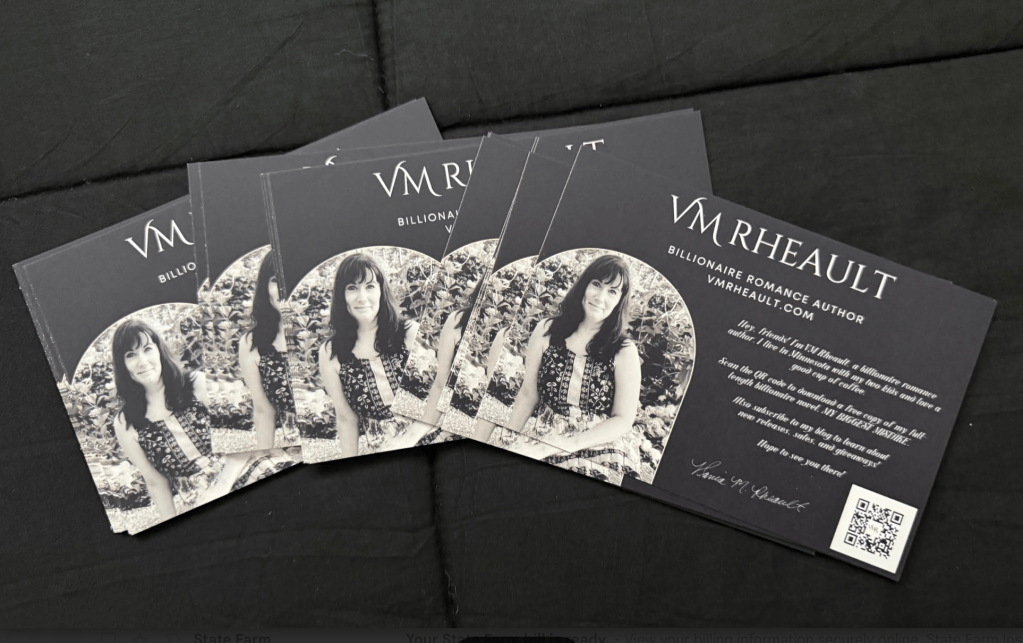
I also made some cards (the size is 6 x 4 inches) that have the QR code to my website’s subscribe page where people can download my reader magnet.

I ordered them from VistaPrint, and I paid $25.00 dollars for 25. I don’t know what I’m going to do with them, keep them in my purse and pin them to community bulletin boards and whatever. Maybe buy some author copies of a standalone and tuck them into Little Free Libraries this summer while I’m out walking. I can do these things knowing that they won’t really do anything. I’m back to where I was, many years ago.


I started reading the first book in the next series I’m going to finish, and I must have gone through it a few times already because it’s pretty clean. That’s kind of depressing because it sets up five more books and I wasn’t really in the mood to write another long series. So my thought was it would have been easier to tear up a book that needed work. It’s a cool concept though, a woman’s father creates a list of men he thinks would be acceptable for her to marry, and each book is for a man on the list. Maybe I will just write them all. The second one is already written and the third is set up in it. I have the MMCs for the fourth, fifth, and sixth, but not any plots for any of them. No backstories or love interests, so I’ll be doing a lot of brainstorming if I’m going to go through with it. I don’t know. I’m glad I started reading the first one though, because I used the same last name in Wicked Games for one of my secondary characters as I did for the main female character in the first book, and it will be a lot easier to change it in one book instead of two. I’m starting to look at cover concepts though, because I’m running out of ideas on how to brand a series, so I’m hoping that will get me excited, too.

I know this blog post sounds a lot like what I’ve been writing about before, but it really was an “Ah-ha!” moment for me when I decided to stop chasing that career dream. It was like when I went to school for human resources and decided I didn’t want a job in HR after all. All that schooling, all that tuition. Just kidding! Right? Education is never a waste, just like the books I’ve written in the past few years aren’t a waste either, but it is a shock, a let down, a broken dream. (Though, to be fair, no one dreams about a career in HR, and if you thought writers drink, you’ve never seen a group of HR reps during happy hour.)

Where am I going from here? I’ll be doing the same I’ve always done. Work on my books, publish them. But I’ll take more time for myself during the day, during the week, only write when I feel like it. Which is still a lot because it’s something I like to do, but I have different expectations, different hopes, for the outcomes of that writing. It’s not a job anymore and any royalties I earn I won’t consider as wages. Maybe I’ll break even at the end of every year after paying what I have to pay to keep my hobby going, maybe I won’t. So far I can afford to keep investing, like I worked new running shoes into my budget every six months when I was running and racing a lot. I need to focus on my health too, so maybe I’ll get back into that. I know I’d feel better if I dropped a little weight as I’ve been a slug for the past five years, but it will be a painful process and I’m not looking forward to it at all.

Now that I’ve had my lightbulb moment, I can stop thinking about it and if I do need to muse about it any more, I’ll put it on my mental health blog. I don’t use that blog anymore since my anxiety faded. That too, has been a journey full of ups and downs and the final destination was a letdown, but it’s better to know how things stand than live under the guise things will get better.

I have a couple blog ideas for the coming weeks, and an author interview in the works. I’m going out of town for a few days with my sister and daughter at the beginning of May to hit up Mall of America and the Minnesota Zoo, and after that, I’ll hopefully be setting into the lazy days of summer. I’m getting a new mattress for my bed delivered tomorrow and Wednesday I’m finally getting my hair cut. I wish that once I marked something off my list that something else would’t take its place, but I suppose that’s what being an adult is. Still, my car’s been holding steady for a while now and I’m grateful for that, and my kids are working and seem to be doing fine if not spending too much time in front of their screens, but I’m not one to judge.

Things are okay here, and I hope they are for you too.

Have a great week!

Written Word Media’s 2025 Publishing Trends: Part One

2,449 words
13 minutes read time

illustrated picture of brunette woman holding cell phone with a stack of books behind her

The first month of the year is almost over, but I’ve been promising this blog post for a while now, and I think Written Word Media’s 2025 predictions are still worth exploring. I need to break this post into two parts, five trends in each, or this blog post will get so long no one will want to read it, and honestly, I don’t have time to do all ten at once (still gotta get some editing in today). I linked to the article if you want to read the original first or as you go along. Some of them you might have seen before, here on this blog, or theirs. Sometimes it feel like publishing, especially indie publishing, can move quite fast, but in reality, publishing, both trad and indie, moves at a snail’s pace, and turning in any other direction than the one in which you are going is slower than the Titanic trying to avoid that iceberg.

Let’s begin:

Trend number one: Authors Focus on Building Loyal Audiences
I feel like this might be a given, and no offense to WWM or the author of the article, but I don’t see the point of adding it. Authors have always been focused on building a loyal audience, finding their true 1,000 fans. I’m not sure why it was included, except maybe to accentuate the fact that building a loyal audience is hard work. First you have to actually find your readers, then offer them enough books to either look forward to everything you write, or self-select out of your books because they don’t like your style or voice or whatever reason they have. How you go about doing this will be different for everyone, not to mention if you can only write and publish one book a year, it will take a long time. The authors who are making a living wage and who do have their 1,000+ fans have managed to accomplish this, so we know it can be done. But given the number of books out there, finding, and keeping, your readers is just a given of being an author. Write your books because without them, you won’t need an audience.

Tread number two: Authors Invest in Email Marketing
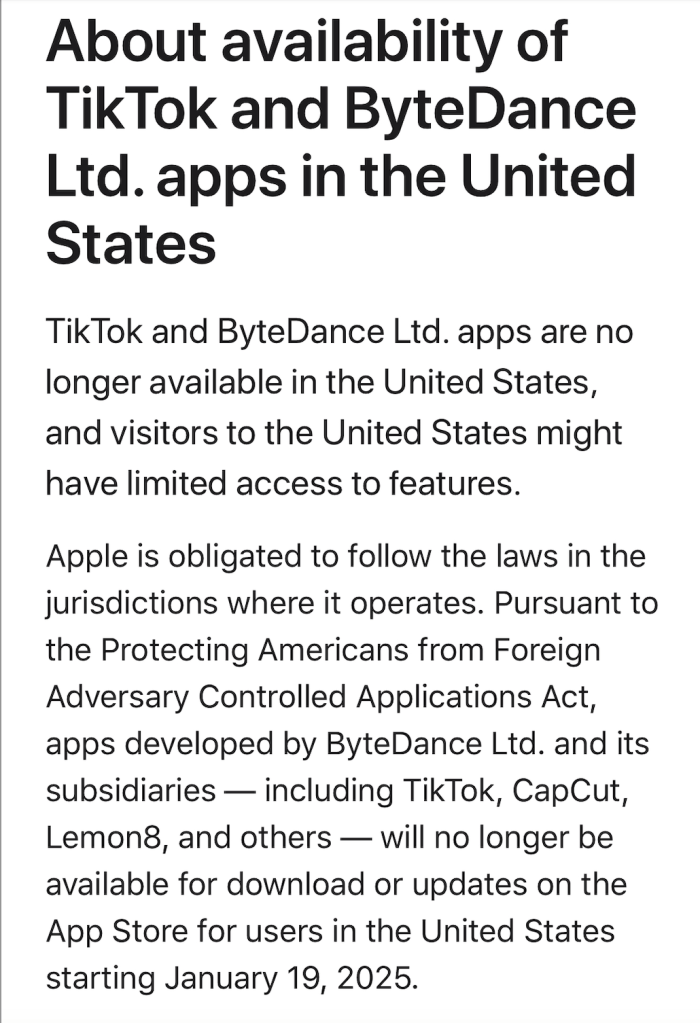
It’s always been known that if you’re an author, you should be building a newsletter, and if you’re not, that’s a personal choice that may come back and bite you in the butt. After the TikTok fiasco, I saw a lot of authors on Threads saying they might start one or start a blog so they have something that’s not social media. It’s probably the smart thing to do, since we saw a lot of desperation when TikTok almost went away, and even some now, because if you deleted TikTok off your phone or other device, you can’t get it back. The app store doesn’t allow you to download it anymore (and if you do still have it, there won’t be any new updates).

About availability of TikTok and ByteDance Ltd. apps in the United States
TikTok and ByteDance Ltd. apps are no longer available in the United States, and visitors to the United States might have limited access to features.
Apple is obligated to follow the laws in the jurisdictions where it operates. Pursuant to the Protecting Americans from Foreign Adversary Controlled Applications Act, apps developed by ByteDance Ltd. and its subsidiaries — including TikTok, CapCut, Lemon8, and others — will no longer be available for download or updates on the App Store for users in the United States starting January 19, 2025.

That’s not say you can’t use TikTok in your browser, but who knows what kind of reach it has. We’ll talk more about Meta in the next trend, but if you don’t like good old Zuck (for political reasons or other), you might not want to be dependent on Facebook, Threads, and Instagram, either. They say you can’t be everywhere at once, but maybe be on a place that you control first and foremost, and then use social media as a backup or Plan B. Evergreen content can be used over and over again, and all content can be repurposed. A blog post on your author site can be chopped into chunks to use on your FB author page or IG. I think the main thing here though, is to train your readers to look for you on your website. If you have an active FB page, make sure they know you have a website too. Turn your website and your newsletter into your primary source of news for your reader. Billionaires don’t care about you–we see this over and over again. Stop thinking they do and take care of yourself. Jane Friedman has a get-started-guide to newsletters, and you can read it here: https://janefriedman.com/email-newsletters-for-authors/

Trend number three: Meta Continues to Dominate
Unfortunately, because he owns Facebook, Instagram, and Threads, there’s not a lot of places for authors to go if you want to avoid Mark Zuckerberg. Personally, I think he’s an idiot for licking Trump’s feet. Be that as it may, he owns a lot of social media now, and if you have a large following on your Facebook author page or your Instagram page, you probably don’t want to leave. I think if anyone was still hanging around Twitter, they left after Musk’s Nazi salute. Finding anywhere else to go is difficult, Bluesky’s founder Jack Dorsey (that is such a good name though) not without his share of problematic activity. I don’t use social media a lot, though I’ve been posting more this month because I joined a challenge. Once the challenge is over at the end of the month, I’ll probably just go back to not posting at all. Being accountable to someone helps, but I should be feeling accountable to my readers and so far, that has only extended to my blog and my books. If I say I’m going to have a book out at a certain time, I do and that’s about as far as my accountability goes.

As far as ads, Facebook ads probably are the best ad platform an author is going to get, Instagram, Bookbub, and Amazon coming in close second, third, and fourth, though hard to tell which order. They all have their attributes and setbacks, and though I’ve struggled in the past, I would lean toward Facebook ads if I ever wanted to run more ads in the future.

I think the thing to remember about any social media, not just what Zuckerberg owns, is that if you’re trying to reach readers, that’s different than being part of the writing community. Approach each platform with the goal you have in mind. If you want to post graphics and reels all day that feature your books, Instagram seems to be the place for that. If you want to connect with other authors, Threads and Bluesky seem like the better choice. Facebook acts as a one-stop-shop, and you can join author groups for publishing and marketing information and networking with other authors to join newsletter swaps and author-driven promos, start an Author page for your readers, and run ads. Each platform does have different purposes, and while above I suggested you reuse content, not all content will be fit for all platforms. For an example, I’ve been posting a lot on my FB author page, but that’s kind of an anything goes platform, whereas, if you’re trying to create an aesthetically pleasing grid on Instagram, everything has to be in line with your theme which means you’ll be planning your posts. Choose your goal and have your plan. I post on FB and Instagram to promote my books to my readers, joined FB groups for publishing industry news and networking, and I joined Threads (though I said I wasn’t going to) to get book news and just post random crap that’s not fit for anywhere else. (How many people care I had to buy a new coffeemaker?)

It seems like Meta will be around for a bit, but always have a backup plan. When Meta servers go down, Facebook, Instagram, and Threads go down at the same time. That’s a lot of social media blackout. Know why you’re posting and what you want to get out of your social media use. If something isn’t working, move on. Algorithms are heartless animals, don’t let them beat you down.

Trend number four: Direct Sales Continue to Grow
I think this is really true. Authors are seeing the benefit of cutting out the middleman and earning more for themselves. But, on the flip side, if you don’t have the technical savvy (or patience) to pull it off, don’t have the space to store physical books, don’t have the spoons to think about any of it much less the ability to get to the post office two or three times a week, I wouldn’t worry about it. For as many authors who do sell direct, there are just as many or more who do not. Because my ebooks are in KU, I couldn’t sell those directly, but I could sell my paperbacks if I wanted. I don’t have the space to store stock, and though I know a couple people who could probably help me get some kind of system set up on my website, it just sounds like too much work.

Honestly, anything more than what I’m doing sounds like too much work. Direct sales doesn’t necessarily mean setting up Stripe on your website and shipping physical books out of your home. It could mean setting up a Patreon and asking readers to pay for exclusive content. It could mean setting up a paid newsletter. Anything where you are engaging with readers directly, where they pay you (minus the fees of whatever platform or system you’re using) directly for content they want. If I ever had a book take off, maybe I would create a special edition to sell directly to readers somehow, but all that seems so up in the air and you have to consider ROI. Are you getting enough from the time and stress it takes to put all that together? I sound like I’m against direct sales, but I’m not. If you have the energy, resources, and your books are available to be sold elsewhere other than Amazon, then you should do it. What I’m trying to do is tell authors who don’t want to or can’t do this right now, or ever, that it’s okay. Not everyone does it or wants to do it. With my luck, I would put paperbacks on my website and sales would explode. I don’t have a team to handle that. Amazon is okay for what I want it to do. They take care of taxes, distribution, and shipping, and royalties land in my account.

I don’t know what’s in store when it comes to a trend like this. More authors doing it? Maybe, as Amazon’s reputation gets worse and worse and Draft2Digital and IngramSpark get increasingly harder to work with. Indies go indie to be in control, after all, and there’s no greater control than selling your own books.

Trend number five: Authors Experiment with Pricing
I think all authors experiment to some extent, though from the small sampling I’ve seen on Threads, authors could be a bit more flexible. Amazon doesn’t make this easy, only giving us 35% if our prices are 1.99 and below, and we’re reluctant to price at .99 only to receive 34 cents per sale. This is where having a series can come in handy, putting your first book for .99 (or free if you’re wide) as a loss leader and recouping that loss when a reader reads all the books in the series. There are a lot of arguments as to what book blasts like SYKD do for anyone, though no one can truly know since evidence for or against is so elusive.

When I price my books, I think of two things: I’m in KU so price doesn’t mean that much, but I also want to be price-friendly for readers who do not have KU and have to pay out of pocket. Right now my six-book series is priced like this: Book One, .99; Book Two, 1.99; Book Three, 2.99; Books 4-6, 4.99 (USD). That’s still over twenty dollars if someone wants to read all six. That sounds crazy to me considering they could pay for a month of Kindle Unlimited for 11.99 USD plus tax. They could read mine and as many other books as they could for the month. I understand not every country has access to Kindle Unlimited but my audience is 75% US, so I always keep that in mind when I make decisions for my book business.

I gave away almost 15,000 books in 2024, and I see the benefit in giving away a first in series or even just a standalone to let readers get a free taste of what you offer, but as the article states, we have to price in a way that we still make money. That’s been something I haven’t quite figured out, and we all have to find that delicate balance among ad spend, giving away our books, and pricing low to keep readers happy but also to reach whatever monetary goals we have. I’ve decided making money isn’t going to be my focus in 2025, stopping all my ads and just letting the chips fall where they may. I’m focusing on enjoying the writing process and not thinking so much of how many books I’ll publish every year.

The more books you have, the more choices you have. You don’t have to think so much of price if you have only one book out or if your series isn’t complete. Look at the bigger picture when pricing your books, not just what you’ll get when one person buys one book. (I also touched on this in a different blog post and you can read it here: https://vaniamargene.com/2024/07/29/every-time-someone-reads-your-book/) Pricing your books is a sales and marketing strategy, so try to know what kind of outcome you want when figuring out what to price your books. You can’t measure return on investment if you don’t know what kind of return you want. Sometimes it’s not all about sales, it’s about exposure or read-through.

Experiment and see what works for you. The first three books in my series won’t be low forever, but I can’t guarantee when I’ll get around to changing them to 4.99 like the rest. It is smart though, to mix it up every now and then, even if it’s just so you have something to write about in your newsletter.


That’s about all I have for the first five of Written Word Media’s 2025 trends. I’ll do the other five next week. Here are some quick links if you’re looking for resources about what we talked about. I hope 2025 is treating you well. I can’t believe how fast time is flying by.

Until next time!


Links:

Bookbub also did a predictions list that focus more on AI: https://insights.bookbub.com/publishing-leaders-share-predictions-2025/

Jane Friedman and newsletters for authors: https://janefriedman.com/email-newsletters-for-authors/

How to do a Kindle Countdown Sale: https://www.writtenwordmedia.com/kindle-countdown-deals-explained/

TikTok Uncertainty Prompts the Book Business to Envision an Even Better Future: https://www.publishersweekly.com/pw/by-topic/industry-news/publisher-news/article/96889-tiktok-uncertainty-prompts-the-book-business-to-envision-an-even-better-future.html (You might hit a paywall if you’ve read all your allotted free articles)

My First Author Update of 2025

Words: 1450
Time to read: 8 minutes

Last year went out with a bang, and this year has come in with a whimper. I mean, the whimper isn’t because I’m in pain, it’s just how I’m going to live my year. I finished reading a book I started last fall, right before I decided to edit my Rocky Point Wedding Series, and started another, reading for pleasure. This weekend I’ll begin edits on Loss and Damages, but I took New Year’s Eve and New Year’s Day “off” and did some housekeeping instead.

KDP approved my new files for the ebooks and paperbacks of my series without giving me any hassle about keywords or licensing rights (or something else I wasn’t prepared to tackle). I was pleasantly surprised and relieved. Not so pleasantly surprised and relieved when I did the same for IngramSpark and ended up paying $200. Fifty dollars a book ($25 dollars per file) wasn’t something I could afford, but the changes were too drastic not to do it. It was something I had taken upon myself and paid the price. The books are better for it, and I’ll find the invoice somewhere and give it to my accountant, uh, next year as I did that on the first of January. This year’s taxes (2025) will look a lot different as I doubt there will be many royalties to declare and a lot less ad spend to claim.

I turned off all my ads after earning $1.76 in royalties on Saturday. I had two Facebook ads that had two dollars a day ad spend, and some Amazon ads that were going at .50/click. I can’t keep my ads on if my royalties aren’t at least breaking even, so I just put up my white flag completely and shut them all down, even my rockstars on Facebook I said I would never stop. I suspect it won’t take long for my books to sink, but like I keep saying, that’s okay. I used to think that breaking even was okay, or even a good thing, but all that takes energy and I don’t want to have to think about click spend or conversion anymore. I might still boost a post now and then. Facebook ad gurus say not to do that, but with the way the algorithms are, boosting a post once in a while is practically the only way to get views. Since I have my ad information all set up in Facebook anyway, boosting a post won’t be difficult. I am trying to get more followers on my author page, though I’m not sure to what end. It’s a nice thought that followers turn into readers who will buy, but I lost that dream when I was on Twitter and my 14k followers did nothing for me. But, like I told a friend in an email, without ads running, I need to do something or no one will know I’m still breathing.

Last year my books were in two promos in December. I paid for a Fussy Librarian and gave away 3,491 copies of A Heartache for Christmas, and in a Stuff Your Ereader promo, I gave away 3,130 copies of Twisted Alibis. I was disappointed because in previous SYKD events I’ve given away a lot more than that, and Twisted Alibis and my Ghost Town Trilogy as whole have done well. Not sure if my hook wasn’t hooky enough or what, but I don’t know if I’m going to participate next year. I was surprised my Fussy Librarian did so well (Al says they have 352,127 free promo contemporary romance subscribers which was more than I thought) but I gave away a Christmas novel in December, so that was probably just timing. I said in a previous blog post that I was going to do four of those kinds of promos this year, but I don’t know. I’m tired of pushing my books, tired of hoping for a result that probably isn’t going to happen. Giving away books has an ROI that can’t truly be measured, and I think I’ve given away enough books for the foreseeable future. I did an author unwrapped on Threads and looked up the free books I gave away last year. I gave away almost 15,000 books in 2024. I don’t mind giving away books, I really, really don’t, but at some point you have to decide how beneficial it is and I’m going to wait and see what kind of page reads and read-through those promos will produce, if any, in the next few months.

I did some website cleanup and moved my books off this website to my author site. I don’t blog to sell books anyway, and all my 3rd person stuff is old and not worth mentioning. I updated some bits and pieces on my author website and I’ll be fine leaving the sites separated. Blogging over there is going okay–I got a couple more downloads of My Biggest Mistake when I sent out a Happy New Year post. Checked my subscriber stats and I’m still losing people, but that’s okay. I don’t know how to cull my list on WordPress so them opting out is the only way to get people who don’t want to be there off my list.

I’m going into this year gentler, trying not to care as much, enjoying the writing and books in general. Tired of trying to make money and there are a lot of posts on Facebook and Threads right now from authors who have been at this for just as long or longer than I have making pennies a day. I’m not alone but knowing that doesn’t make me feel better. I’ve just come to terms with it, and honestly, it’s fine. I’ll accept the yearly loss on my subscriptions like Canva, Office 365, and WordPress because at this point not paying for that stuff is stepping away farther than I want to and I wouldn’t be able to help the authors I’m currently helping. My Alliance of Independent Authors membership is a must because you never know when I’ll need their support if Amazon does something to my account. Once all the books in my King’s Crossing series are done releasing, I can downgrade my Booksprout plan to only one book a campaign instead of unlimited, and I’m only paying $20 a year to Bookfunnel so they can distribute my reader magnet and my Addicted to Her easter egg. The money I have in my savings account needs to stay there, and I don’t have the energy to make sure my royalties are matching my ad spend, so it’s best just to turn them off and let my sales do what they will. The $200 I paid to IngramSpark hit me hard and will be my last big spend. I shot my shot and missed. Now I don’t have any money to play with. I knew it was going to happen, and I’m prepared. It is what it is and all that.

I’m still going to write and publish, like I said, so this blog will always be here. Besides, for some reason, I have 400 downloads in my DepositPhotos account I thought I needed, and I still have about 70 ISBN numbers to use out of that pack of 100 I bought a few years ago. I’ve learned to bootstrap book production–editing, covers, formatting–so maybe I’ll learn to bootstrap some marketing, though the only bootstrapping I know of is social media, and I’ve never been great at that. I did ask Al for some social media prompts geared specifically toward billionaire romance indie authors, and he did a good job. He gave me 31 prompts for the month of January that could actually work without much tweaking. Though, he’s not too helpful when it comes to videos (I’d never ask him to make them for me), if that’s what’s really moving the needle. At this point, my social media accounts are the only place I can talk about my books now, besides my newsletter, and I should talk about them somewhere. Especially since I still have three more books of my King’s Crossing series yet to release. Still working on keeping my books in my mind even after they’ve been published.

That’s about all I have this week. Thanks to my friend Melody for giving me a heads up about the Bookfunnel YouTube channel/podcast. Lately, while I’m cooking dinner, I’ve been listening to their episode on having a publishing plan. Because, you know, what else am I going to listen to when I’ve been saying for the past few weeks I’m going to go easy on my writing and publishing? [Insert rolling eyes here.] Whatever. It’s a great talk, and maybe it will fire you up for the next 51 weeks. If you want to listen to it, or check out their channel, look here:

That’s about all I got. I hope the new year treats you well!

Until next time!

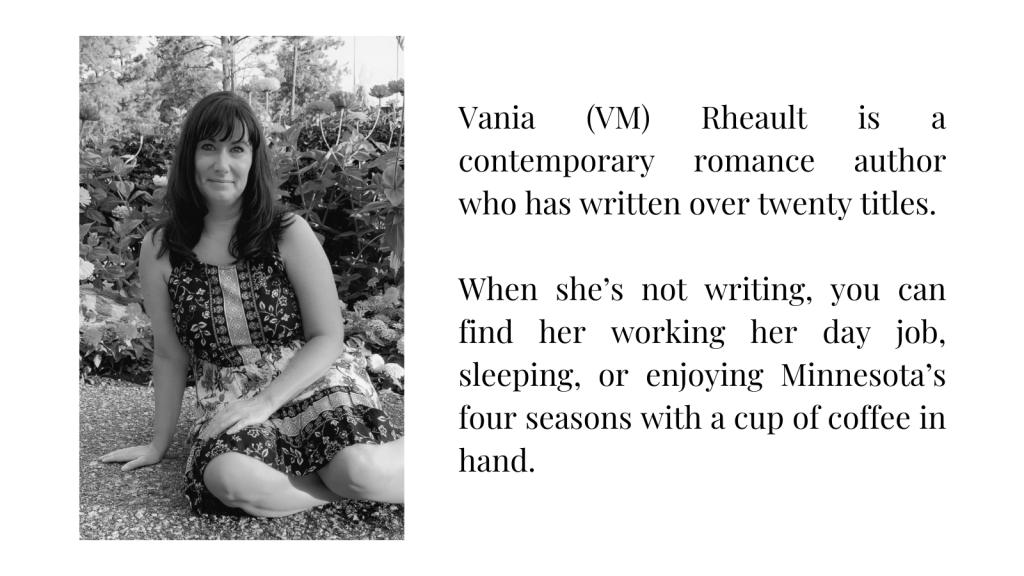
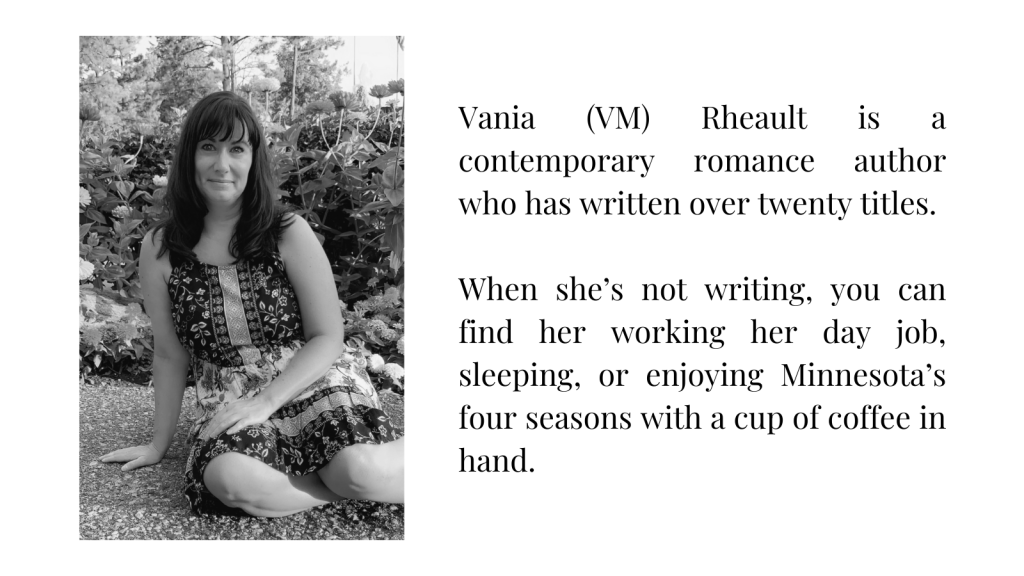
Vania (VM) Rheault is a contemporary romance author who has written over twenty titles.
 
When she’s not writing, you can find her working her day job, sleeping, or enjoying Minnesota’s four seasons with a cup of coffee in hand.

Past Decisions and Their Consequences

Words: 1535
Time to read: 8 minutes


Too tired to look for a stock image. Imagine something pretty here.


Everything we do results in some kind of consequence, some kind of reward, whether we know it or not. Whether we want to admit it or not.

Last week was another crazy day on social media when I saw someone encouraging people to use KDP’s POD, but mark up their paperback prices on Amazon to $200.00 so they could sell off their website instead. This is such a bad take for so many reasons, and when I replied saying that at least IngramSpark was a better option because you can print without distributing, she went off on me saying IS wasn’t viable for everyone and that I was toxic and privileged for even suggesting it. That really hurt and I dropped out of our conversation because I’m not going to let people assume how I live. It’s not toxic to suggest a better way of doing things, it’s not privilege to suggest a platform many authors have access to. She wanted to be right, and there were plenty of people who agreed with her. That’s fine. Look like an idiot selling your paperback for $200.00. Doesn’t bother me at all.

The main issue is that IngramSpark costs money. If you live in the US, you know how expensive ISBNs are. Part of her privilege insult was because she assumed I buy my ISBNs and that I was telling people they should do the same by suggesting they use IS. She doesn’t know that yeah, I did buy a pack of 100 (costs $575 which was almost as much as my rent) but I charged them on a credit card and it took me several years to pay them off. My ex-fiancé said he would buy them for me, but you know how that turned out and I ended up paying off a massive credit card bill that he said he would take care of. Anyway, the outcome of that story is that yeah, I did buy own ISBNs, and it’s none of her business it took me years to pay them off.

Very rarely on this blog do I suggest you spend money on your book business, but on the flip side, I’m very clear that I believe you can’t start a business properly without spending some cash. If you want to sell YOUR book off YOUR website because you’re running a business YOU own, why would you want to use an ISBN that didn’t belong to you? That’s MY main reason for buying ISBNs. They belong to me, I’m registered as the publisher, and if Amazon is ever a dick and closes my account, my books are safe. For all the hating on Amazon over on the sewing platform, they’re quick enough to take what Amazon gives them.

Anyway, so when you use free ISBNs you’re taking a risk Amazon will treat you well and if you take free ISBNs from anywhere else, you’re accepting any eventual consequences.

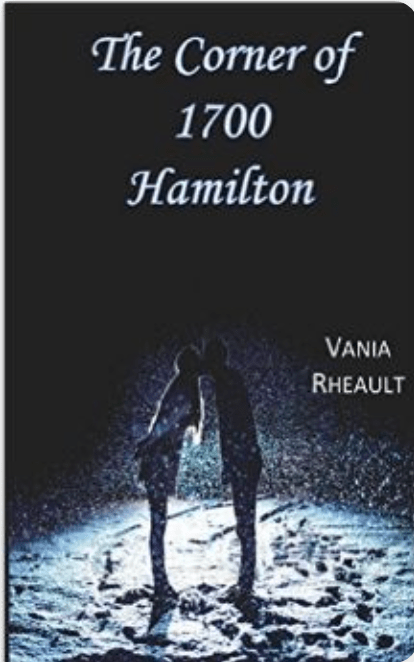
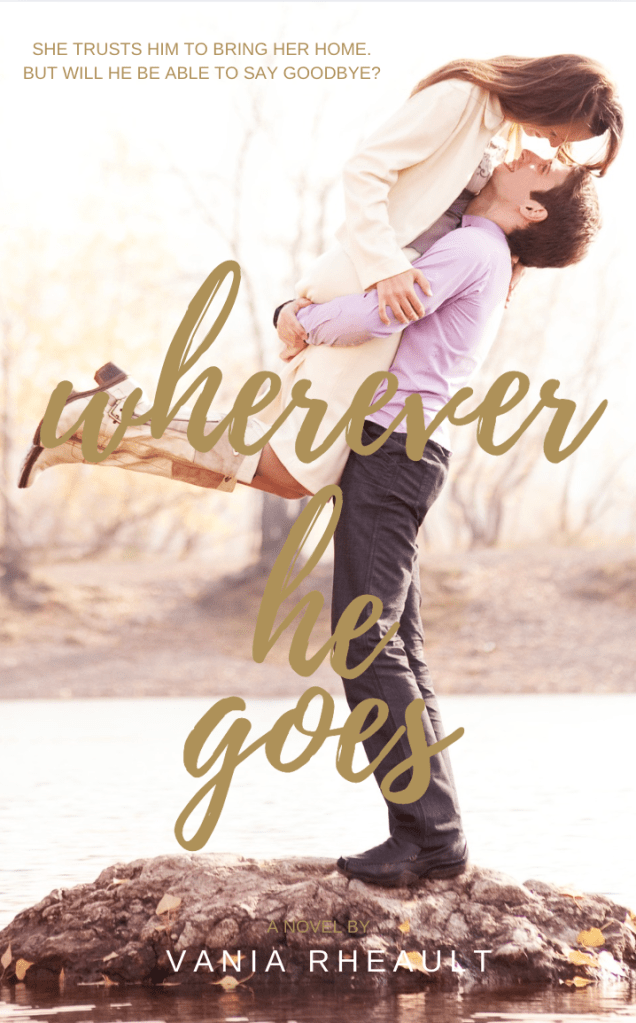
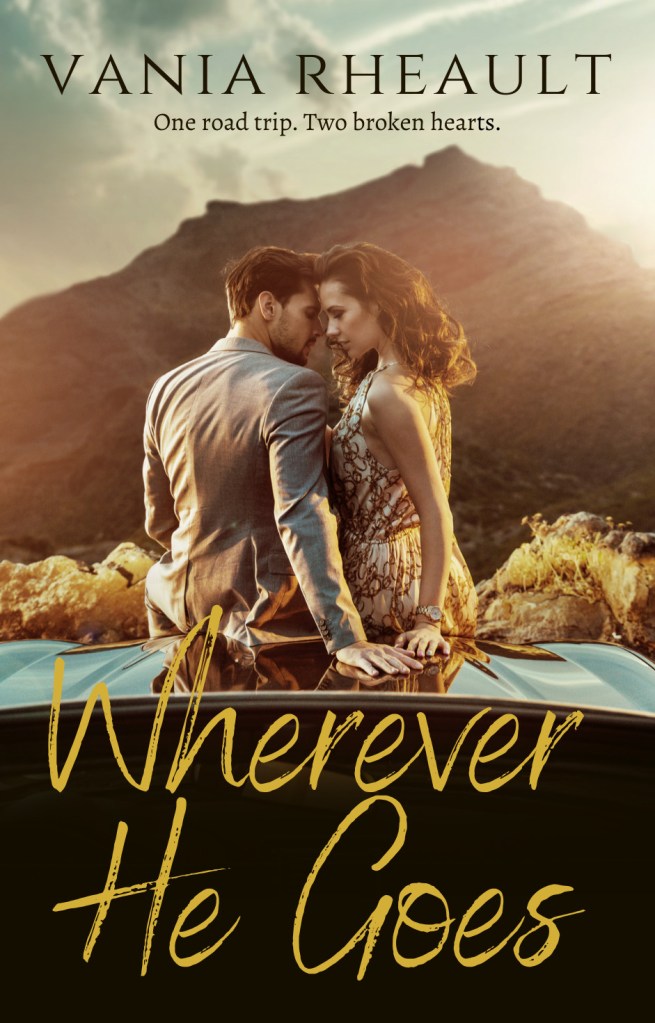
This isn’t a post just about ISBNs. You take risks making your own covers, especially if you don’t have the skill to create a cover that will tell readers what your genre is and won’t look homemade. Just the other day someone was bemoaning the fact he couldn’t get preorders for his book. I told him to look at his cover and maybe redo it, that it looked homemade. He actually was very nice about it, and maybe he will change it, I have no idea. That kind of consequence you may never see–you could not sell any books and blame it on lack of marketing or algorithms. Unless someone you believe and trust says your cover is garbage and you change it, you could go years without knowing what kind of damage your cover caused. I mean, you know I do my own covers, and back in the day they weren’t great. I still see the free stock photo I used on 1700 Hamilton other places, and I published that book eight years ago now. Canva templates taught me a lot, and I still like how this cover came out, the first for Wherever He Goes, even though I changed it to something sexier later that’s still the cover on the book now.

Not listening to your editor and having a book bomb after the fact can have dire consequences–a reader won’t give you another chance if they spent money on a book that had plot holes and grammatical errors every two sentences. And, you know, poor reviews last forever. I’ve been editing my own books for a while, and I know the risks, may have even suffered from some of them. God only knows who’s read my books and said they’d never read me again. I also know the risks of trusting people, and well, tired of that, so you have to choose the lesser of the two evils.

My biggest regret so far was not starting a newsletter sooner, and I wonder how far I’d be now if I had given as much attention to a newsletter as I have to this blog. Maybe because of the change in direction I decided on in 2020, it wouldn’t have mattered, or those people who signed up wouldn’t have cared either way.

After unpublishing some hardbacks and Large Print, I thought about unpublishing a couple of my first books, just because they aren’t the quality of the others, nor are they in the genre I decided to write in. Some say romance is romance, but my romantic speculative fiction could probably go, also my erotica that I decided I couldn’t write because there was just too much sex. (If you have to remind yourself to put in the sex scenes, erotica probably isn’t for you.) When you say you want to write and publish whatever, those consequences can catch up with you. Difficult to make a brand out of “whatever” and you may look back in five years at all the word salad you hoped people would buy.

The one thing all these have in common is that no one can tell you these things. I mean, yeah, the advice is out there, cover to market, hire an editor, start a newsletter, buy your ISBNs if you can. All that’s out there but it’s funny because we’ve turned being indie into defying the rules and maybe some rules are meant to be broken, but this is a business and whether we like it or not, there are best practices.

I almost didn’t write this blog post because I realize the subject is boring and repetitive, even if I’ve made similar mistakes. The bad advice out there can really take me aback, and that woman who had supporters telling people to price up their book left me speechless. What would readers think stumbling upon a book that cost $200.00? How is that author going to tell those readers she preferred to sell off her website? It all seemed so bizarre to me, yet people agreed, said they were going to try it. I don’t know, it just seems like one of those things that you could look back on later and say, “What was I thinking?” Of course, you can do that for just about anything, the cover that wasn’t right, blowing off your editor, not listening to someone who knew what they were talking about because you were determined to fail on your own. That’s how people learn, and I’ve had people tell me to hire an editor, but some things are easier said than done.

So this post is 1200 words of drivel (it’s almost Thanksgiving in the US so I’ll refer to it as turkey gravy), but honestly, my brain is fried. I’m halfway through editing my age-gap. I’m really loving the story and it’s fun to see how far my writing as come, but editing is tiring, probably more so than simply writing. I also have to proof my series proofs, and that will take a minute, but I’m hoping that I’ll get everything wrapped up by the end of the year. I want to start working on my first person stuff again, putting into practice the things I finally know that I didn’t before. I’ve come a long way working on my King’s Crossing series. Really, smoothing out over a half a million words taught me a lot, and I know it did because working on my Rocky Point series was really eye-opening. I agree that sometimes you have to fail on your own to learn, but you do have to keep working on your craft and level up on your own if you don’t want to take anyone’s advice.

That’s all I have for this week. I’ll probably post my Billionaire post next week. I think it’s still relevant, and tempers, while they haven’t cooled all the way down, aren’t so hot, at least, and even if it makes some readers crabby, I think it was wise to wait.

After that, well, it’s year-end stuff, and before you know it, it will be January. The world keeps spinning, no matter what kind of rut you’re in. Do your best to keep moving forward, and hopefully you’ll see more rewards than consequences.

Author Websites: Do You Need One?

Words: 1918
Time to read: 10 minutes


Today’s topic on websites is thanks to Melody Loomis, and you can check out her website here: https://www.melodyloomis.com/


I’ve been a writer in some way, shape, or form, all my life, like most writers are, but when I found writing after a failed attempt at going into Human Resources as a career, I didn’t think to create a website. In fact, the idea of it sounded foreign, confusing, and costly. I dusted off my Twitter account–I had made one while I was in school to connect with HR people–and joined the writing community instead (thinking I’d make the connections I would eventually need to sell my books. Ha!). One of the first things they said was to start a website, so, despite my inhibitions, like everything else I’ve done in publishing, in December of 2015, according to my WordPress site, I jumped right in.

I didn’t create my website to tell people about my books though. I started an indie blog, the one you’re reading right now. Almost nine years later, I have never taken my website down or skipped a week publishing, for that matter. I was pretty hardcore back then, writing six times a month about stuff I knew nothing about. Arrogant, I suppose, like a lot of newbie authors are. I don’t recommend having a website where you blog for indie authors and try to sell your books to readers at the same time. Mixing the writing community and the reading community can leave a bad taste in someone’s mouth, be it the writing community who doesn’t like the kinds of books you’re writing or the reading community who doesn’t like what you have to say on your blog that’s intended for other writers and authors. In fact, after typing that sentence, I’m tempted to take my Books page down. I don’t promote them anyway, and really, they don’t belong on a website that I use to write about my publishing experiences. I could always add them to my true author website (vmrheault.com), nesting a page under that Books page and making it clear they’re written under another name, but that’s a thought for another day.

The title of this blogpost is “Author Websites: Do you need one?” and the answer to that question is yes. Yes, you do, and along with the reasons why, I’ll explain how I use my websites and how they differ from each other.

Don’t build your house on other people’s land.
This is really important and I can’t stress this enough. Just a couple of days ago, someone on Threads was saying how her Facebook Author page got taken down and she lost over four thousand followers. Imagine if she had created a newsletter/blog instead. I know this post is about websites, but websites and newsletters/blogs are almost one and the same. A website is yours, and so is your newsletter. Social media platforms come and go (not because they fall apart like Google + but because you’re at the mercy of a bot who decides if you’re breaking their guidelines), but your website and a newsletter will always be around (unless, for some reason, you take them down).

It’s where you should send newsletter subscribers.
It’s a very bad idea to use your newsletter aggregator’s landing page link to send readers to sign up for your newsletter. If you change your landing page or you have an issue with your newsletter, that link might not always work. When you put that link around online and for some reason it gets broken, readers will think you don’t have a newsletter anymore and you could lose a fan. Also, broken links just look plain unprofessional. If you send subscribers to your website instead, you can make changes to your newsletter sign-up link as needed. No one learned this lesson better or faster than I did when my MailerLite newsletter went up in a puff of smoke. I had an invitation to sign up to my newsletter in the back matter of over ten books. That’s a lot of links to change when you think of ebooks, paperbacks on KDP, and paperbacks on IngramSpark. Luckily, I was sending them to my website, and now instead of a landing page link, I edited what the page says and it invites them to subscribe to my blog. My reader magnet is on that page now, instead of in my welcome email, but it is what it is. I’ll never try another newsletter aggregator. I like being in control of my website and blog. The longer I’m in this industry, the more I learn it’s difficult to trust anyone with any part of your business. If you want to see what that page looks like, you can look here: https://vmrheault.com/subscribe/

It doesn’t cost that much.
I can only speak for WordPress. I use WordPress and let them host. I bought my domain name and the email I needed, vania@vaniamargene.com, when I set up my newsletter, through WordPress too. I’ve shared that email enough that I probably won’t get rid of it even if I don’t need it for MailerLite anymore. Way back people said you shouldn’t do that because you can’t enjoy plugins and other things on a WordPress-hosted site. I didn’t care about having popups or selling books on my site, and still really don’t. Selling my books here sounds like a big time-suck and I already have enough of those. So, I went with a Premium plan for both and pay $96.00 dollars a year, each, $19.00 for my domain names, each, and my G Suite email for $72.00. You don’t need all that. Personal plans are $4.00 a month or $48 a year plus the domain for $19. You can have a professional WordPress website for $67.00 a year. Some website providers are even free, and there’s no reason you can’t go that way, but you’ll still end up paying for a domain name. One of the things authors forget is that when you get your taxes done, you can write off your expenses. I keep track of all my yearly spend and give that and my yearly royalties to my accountant. With how much I spend in ads, I break even or I’m in the red, but I can still get some money back for all the money I put into my business. No matter which way you go, free or paid, or if you find a site that’s in between, set something up.

Your website will turn into your hub.
Your website will be around for years and years and years and as you publish books, you’ll add those to build a nice backlist. You don’t need to worry about SEO or how people will find you. You can add your website link to the backs of your books and on all your social media profiles. People who are searching for you or your books already know your name and what to Google. The only time you need to worry about building SEO is if you’re blogging on a topic and you want to be found when someone searches for information about that topic. That really doesn’t apply to authors, unless you write nonfiction, and then you’re probably blogging about your subject.

This website gets anywhere from 30-100 hits a day. Mostly because people are looking for instructions on how to make a paperback cover in Canva. The updated instructions have gotten over 6,000 views since I published it in June of 2022. I get my regular readers who will read every Monday, and they count too, but if you search for “making paperback covers in Canva” my blog post is on the first page of results. That doesn’t matter much since it doesn’t sell books, I’m just happy I can help people publish. I don’t sell books off this website, so that would be another reason to take my Books page down. If you’re worried about SEO for your website, the only thing you can do is blog consistently on it. Being that a normal newsletter is only sent out once a month, if you blog that infrequently, you’ll never get the SEO you want. Building SEO takes hard work and consistency. Anyone who blogs whenever they feel like it and hops around from topic to topic can tell you how difficult it is to grow your following. Still, if you choose a WordPress-hosted site, you can be part of the WordPress Reader. When I moved my newsletter to my blog, not only did my number of opens stay around the same, but my posts were seen in the WordPress Reader, a perk I hadn’t considered but appreciate now. If you truly want your website to come up if someone searches your genre, sell a lot of books. That’s all you can do.


People say they don’t want a website because they don’t have anything to put on it. To me, that sounds like a good reason to have one. There’s no maintenance. I guess then you can argue you’re paying for nothing, but you’re paying for an internet presence you own and you have no idea how helpful it is to have one until you don’t and you need it. I loving having both my websites, and I have to admit, I love blogging on both too. I never understood people who say they don’t have anything to write, and oh, my God, do I hear it a lot. You’re a writer. How hard is it to come up with 500-1000 words once a month? Talk about yourself. Talk about your books. People can’t get to know you or think they’ll try out your books if you don’t put yourself out there. Though, that’s neither here nor there since we’re just talking about websites and not blogging, but if you’re worried your website will become stale, at least copy over your newsletter content to a blog once or twice a month, and maybe you’ll get some new readers who haven’t subscribed to your newsletter.

Content is the name of the game, and you’d need something to post if you make up a Facebook Author Page. You definitely need to create content on FB if you want people to see it, otherwise the algorithms will sink your page faster than Amazon will sink your book. If you write lengthy posts on Facebook, repurpose those posts on your website.

When I started posting about my books on my author site, I really enjoyed myself, and I was surprised at the number of views and visitors I was getting. I put my ARC links up and though they haven’t gone as fast as I would have liked, more signed up than if I wouldn’t have made them available on my website at all.

Your website will be what you make it. It will reflect who you are as author and the kinds of books you write. We’re all grappling for discoverability, for our books to be seen. A website is a good way to do that.

Now, I need to set up a blog for my author site. I’m blogging more over there to create buzz for my series, and it’s working well. In the past week I’ve had 145 views and 95 visitors, plus the opens I get from the list I exported from MailerLite when I deactivated my account. I couldn’t be happier.

I hope you had a good weekend and that you’re enjoying the Labor Day holiday. Check www.vmrheault.com if you want to see what I’m writing to my readers.

Until next time!

Finishing a Series and Author Update

Words: 1749
Time to read: 9 minutes

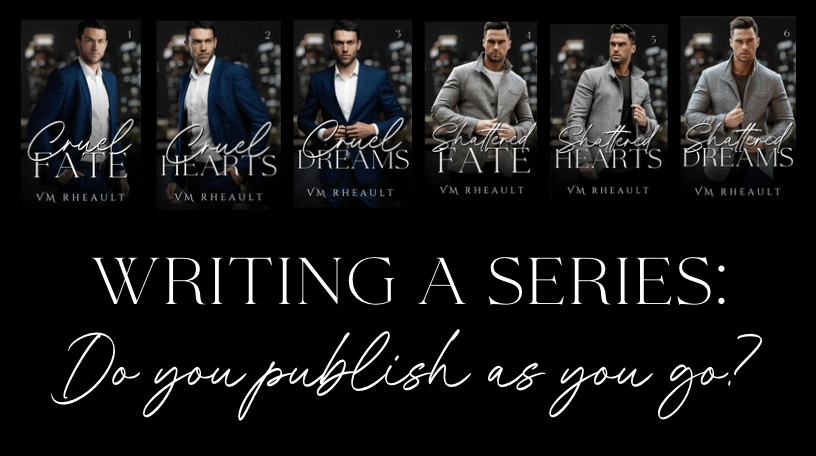
graphic of six book covers and the title of the blog: Writing a Series. Do you publish as you go?
These are the covers I’ve chosen for my series. They just need a few more tweaks before they’ll be ready to submit when I order my proofs.

I’ve written about series a few times on this blog, mostly in favor of them because if your first book is strong there can be potential for great read-through and they have numerous marketing advantages like putting the first book free (a loss leader) or making compilation. But there are cons to writing a series too, such as how much work they are, they cost more to produce, and not everyone likes to dive into a long series, especially by an unknown author.

One thing I didn’t consider when I wrote my first trilogy, or any others after that for that matter, is never finishing once I started. To me, my duets, trilogies, and series are one long story, and like writing a standalone from the first page to the last, they aren’t done until the last book is written. I don’t consider the time or the energy it takes to write it. Once I get it into my head (and the books plotted out) I write until I’m done. I don’t even think about if readers will enjoy them or what kind of return on investment I’ll get after they’re published.

When I first joined the writing community, many years before Musk ruined Twitter, there were authors here and there who wouldn’t finish their series. Being the arrogant new writer that I was, I thought it was simply laziness on their part, but over the years, and days such as yesterday when I’m reminded of it, I’ve learned some authors don’t finish a series because the books they already have published aren’t selling.

This is a huge Catch-22. Some readers don’t read a series until all the books are out, bingeing the books like they would a Netflix show (that actually drops all at once. I’m looking at you, Bridgerton.). That does mean fewer readers of your series if you publish as you write. But since readers do this, maybe you’re not selling as many books as you want and you think finishing isn’t worth it.

I wasn’t aware authors gauged the success of their series this way, mostly because I don’t write and publish that way. In fact, it boggles my mind how you could. The thought of being unable to change details in earlier books to fit with later books gives me hives. I know not all writers need that flexibility (they’re better writers and keep meticulous track of details and/or their stories aren’t too complicated and/or their series are interconnected but true standalones that aren’t as dependent on the books before), but I think needing it also gives me the freedom to finish without worrying about consequences. Consequences such as lost time and lost resources. I’m going to take the time to write and finish because I want to take the time.

The problem with my way of thinking is that if no one reads my series from start to finish, I’ve already lost time. I don’t have the option to bail because that time is already gone. But, even if the books don’t sell, like my duet, I can’t consider it a waste–I’ve written the story I want to tell.

I understand why people don’t want to wait and write them all first. If you have limited time, you may be writing for five or six years before you can publish them all. The series I’m about to publish took me four and a half years to get to where I’m comfortable publishing, but I’ve also written, packaged, and published other books while they were breathing between edits. I’ve said I have a lot of time to write, and not everyone is afforded that luxury. So I get being impatient, wanting to put your books out there, but if you are, that does come with, in my opinion, expectations you’ll have to control. Readers who enjoy your books will want to know when the next one comes out, and that increases the pressure to write and publish quickly. On the flip side, if no one reads, you’ll feel like writing the subsequent books will be a waste of time. On the flip side of that, you’d have to decide if abandoning a series would be worth it because you have no idea how an unrelated book would do and you could find you would have been better off writing the next book in the series you put aside.

Books sell forever and you never know when something will suddenly catch. That may be a book one in a series you didn’t finish and you’re sabotaging your own success. Read through will always earn you more, and an incomplete series can elicit distrust.

It doesn’t happen with only indies… we all know about George RR Martin. I watched the Game of Thrones on HBO because I knew after all this time Martin wouldn’t finish, and I wanted some type of closure, even if it wasn’t his. Whether or not Martin had any input in how the series ended, it ended how I thought it would and I was satisfied, if not happy, though I would have been happier had I been able to read the books. Life happens and he has his fingers in a lot of pies. As an author, I’m not sure how he feels about leaving a project like that unfinished. Maybe it bothers him or maybe he feels HBO finished it for him and he doesn’t think about it. Plenty of fans want the books, and him writing and releasing them would revive the whole series.

What it comes down to is how you want to run your business and how you want to spend your time. It may not be so simple to some, but books end up being products and an incomplete series will never sell as well as one that’s finished. If anything, complete your series to say that you did? I know I wouldn’t be able to write anything else if I didn’t have intentions of finishing. I would feel like I’m letting myself down, and the time it would take to finish would be worth it to me. It’s not for me to judge if it’s not worth it to you.


As for my author update, I finally finished editing my series. The next steps are adding elements to the formatting–even though I said I wouldn’t, I’m going to add chapter headers to the paperbacks, but they’re going to be the same for all six books. I have to make sure all the front and back matter is the same and in the same order, update my copyright pages as I changed the models and backgrounds and I add that information, make sure my Also By pages are updated and rewrite my acknowledgments. I thanked my ex-fiancé and he doesn’t deserve the mention. I still have plenty to do before I can order the proofs, but it won’t take as long as the editing. Toward the end, I just kept rereading the same paragraphs over and over, mostly due to fixating on how I felt instead of the story. I haven’t had any anxiety since my Mayo Clinic appointment on the 28th, and I’m thankful for that. Anxiety attacks were also getting in the way of my editing sessions, causing me to reread more than I should have because I was scared I had missed a mistake.

If you’re reading this the day it posts, I’ll be on a clear liquid diet for a colonoscopy on the 4th. To keep my mind off how hungry I am, formatting these books will be the perfect project. I can make a cup of broth, turn on some music, and pretend I don’t have such a crummy task ahead of me. My doctor at Mayo recommended I have it, and I was very fortunate my local clinic could get me in so quickly so I didn’t have to worry or think about it over the summer. Of course, I’m hoping they don’t find anything–I’m not sure if my mental health could take anymore. I didn’t hear any bad news at Mayo. She reassured me things were okay inside my body and that my hysterectomy hadn’t messed anything up inside me. I was really relieved. I have a follow up on August 23rd, but if my colonoscopy comes back clear, I think that appointment will be the end of things for a while. I know what my issues are and I’m on a treatment plan. I may never feel “normal” again but I’ve come a long way in the four months since my first appointment, and I’m grateful.

I don’t want to bog up this post with health updates–I just mentioned it because my editing was slowed down quite a bit by panic attacks and not feeling well. I still plan on reading most if not all of the proofs, but hopefully that last and final read through will be enjoyable and I can look at it as a kind of closure in two ways: maybe not the end of my health issues, but I worked on these the whole time I was unwell and now I’m feeling better, and the end of four years of work on a six-book series that will be my pride and joy. I doubt I’ll ever be able (or want) to write anything that will compare to these. Writing kept me sane while I was dealing with all this crap, and while they may remind me of these hard years, it will be tough to say goodbye, too.

Besides telling you if my colonoscopy went okay, I don’t think I’ll need to mention my health anymore. It’s under control, and it will be interesting to see how I feel writing new books without that in the back of my mind. But I won’t stop writing on my other blog, and if you want to follow along, you can do it here: chaoscoffeeandconfessions.blogspot.com

Next week I hope to tell you my positive test results and that I was able to order my proofs. Because of the time I’ll need to read the proofs and submit the changes, I won’t be able to put my ARCs up until the beginning of July, but that’s okay. I know these are done to the best of my ability. It’s time to move on, in a lot of ways, and I’m looking forward to it. Keep your fingers crossed for me! Have a great week!

Monday Musings: writing the next book (the state of the industry)

Words: 1338
Time to read: 7 minutes

I don’t listen to many podcasts anymore–I’m hoping that will change after I get more answers at my appointment on Tuesday… and after I get this blasted series done. I have four chapters left, but I know in one of the chapters there’s a scene I want to add to, just to circle back to something a character mentioned in book four that would wrap up this couple’s HEA all the better. I don’t want to rush the rewrite and I conceded a long time ago these would be done when they get done. I’ve been working more seriously on the covers, but damned if I can do better than what I have. I’ve looked at cover after cover, from dark billionaire romances to romantic suspense and the problem I keep running into is that the vibes don’t match. I don’t mean my brand, but the vibes of the stories. While these characters are a little younger than I’m used to, that’s the only difference between this series and what my backlist offers. I can’t go too dark and even if there is a lot of suspense, nothing in the romantic suspense genre grabbed me. I’m stuck with the models–one guy in a suit because he’s the billionaire, one guy (who has been used everywhere FML but I like how he’s dressed) because he’s a PI and wears a suit all of one time in the stories. You wanna see them? Here they are:

The guy on the left is Zane Maddox, billionaire. The guy on the right (who might be familiar as I played with him when I was doing my Christmas novel cover) is Gage Davenport, the PI who falls in love with Zane’s sister. They go well together and match the background I chose for them. Deviating from what I made for covers months ago feels wrong, but I’ve tried because I think the covers are on the plain side. I mean, they’re a good plain and they’ll fit in with the books in my backlist, but I really wanted these to be special, and I feel like I’m letting this series down somehow. Maybe I’m blowing my covers out of proportion. They don’t look any different than the books I’ve published before, but my sales aren’t great and it takes me a lot of telling myself it’s not because of my covers. Because in all honesty, my covers don’t look any worse than anything else that’s out there, and I still like people on my covers, no matter what the trend happens to be right now. I need elegant, not edgy, and even if they are subdued, I think ultimately they’re what I’m going for.

Anyway, so I bring this up because I listened to Craig Martelle’s State of the Industry talk in his Successful Indie Author Facebook group. I like listening to what he has to say. He’s practical and down-to-earth. Maybe in a way that only already successful authors can be because he’s making money and even “slow” periods don’t affect him that much, but he doesn’t freak out about stuff, and I can appreciate that. If you want to listen to what he has to say, he posted it on YouTube here:

I listened to it because I always like hearing speculation and trends, where people think indie publishing is going. Personally, I feel like small-time authors like me are stagnating. Nothing can help us get ahead. Right now FB ads are the only way I’m selling books, and even yesterday I had to go in and pause two of my ads. I spent 140 dollars between two ads for the first book in my duet. The clicks were only costing me .14 USD which is way cheaper than any of my Amazon ads I’ve run, but I wasn’t seeing the sales. I don’t get many sales of Captivated (I think it’s a number of reviews issue), and I would have known if those clicks were turning into buys. In fact, you can go to your Author Central page and look at the sales ranks for your books. My ad spend was going up as my book rank plummeted. That’s not a great match. I have two going for the first in my rockstar trilogy and they have ton of likes and shares. They don’t have an end date and I’ll likely never turn them off. Those two are the only things driving my sales right now. My Freeobooksy for Rescue Me did better in terms of KU reads than I thought, but I haven’t made my fee back yet. (I’ll get into numbers when I do my half-year check in.)

So if you’re a small-time author, or a baby author, you’re going to think the state of the industry is pretty crappy, and you probably aren’t liking the advice everyone throws at you: write the next book. I get the next book is important, but I can understand the conundrum. If no one is around to read it, why write it? It’s very very easy to be defeated, especially since it seems like there aren’t many people around to cheer you on. Everyone is busy with their own struggles and there just aren’t that many people who have time to hold your hand or pat you on the back. I don’t want this post to go all “woes me–” I’d like to keep it practical at least. What can a baby author do to get ahead? What can any author do to move the needle. I understand where people are going when they say write the next book. I’ve said it too. But now many will be enough? There are some authors who have written 100+ and that must feel very intimidating to a debut author whose book sinks a week after launch. The state of the industry is confusing–there has never been a better time to be writer in terms of ease and resources, but I also feel like COVID upped our competition and that competition never really went away. Al (I asked ChatGPT) said 60,000 books are published every month. I used to think that was more, but I haven’t watched a K-lytics report in a long time to know. But even 60,000 books a month is a lot. Other authors aren’t our competition, but when you start throwing numbers around, it sure feels like they are.

Craig also said a few other things, like the election not doing us any favors, and I can believe that. Trump winning wore us down, Biden winning after lifted us up. Whether Biden can win again remains to be seen, but either way, this fall tension will be high. It always is. The holidays don’t do anyone any favors unless you have a Christmas novel to put out, so you could start writing one now and hopefully have it ready to go by November. I’ll push A Heartache for Christmas because last year between November first and December 31st, I sold 31 books and had the equivalent of 96 books read in KU. I also ran ads to it, so I could have technically broke even, but these days, that feels like the best you can do.

I don’t know if Craig said much else. I don’t think he spoke with an outline in mind and he went off on some tangents every once in a while, but I still enjoyed listening to his talk. I guess you take away some negative bits from it (as it seems I have) but the real takeaway I should have gleaned from his talk is that you can’t sell a book that hasn’t been written. That’s true for any author, no matter how many books they have in their backlist, and no one knows that more than an author who has readers wanting their next book.

It’s finding those readers without growing broke or sacrificing your mental or physical health along the way.

That’s the real state of the industry.

Fake It ’til You Make It (Or something like that.)

cinderella's glass slipper with text tha says fake it 'til you make it
It worked for Cinderella

Words: 2974
Time to read: 16 minutes

A lot of people wonder, when they start the publishing game, just how long and just how much money it’s going to take until you “make it.” And without muddying the waters with things like “success is what you think of it” or “every sale counts” let’s assume that “making it” is earning a full-time wage. That will be different for different people too (I could do a lot with an extra 30k a year) but let’s go with 50k since the group 20booksto50k put the number out there.

When you’re getting your book, or books, ready to publish, you can put as little or as much money into your product as you want, and chances are unless you publish a real stinker of a novel, the quality of your book will be just fine. Maybe you’ll be shocked to hear it, but when you look at books that have taken off, they aren’t literary masterpieces by any means. So, if you’re looking at editing, do I think you need to spend $1,000 on a developmental edit, $600 on a copy edit after you’ve made changes, then $200 on a proofread? No, and the people who say that you should are probably other authors who are snobs and editors who want you to hire them. I don’t believe you should publish without some kind of feedback, even if you just ask your spouse to read it to look for plot holes, unless you’ve been at this for a long time and have found your voice and you know what your tics and weaknesses are and can edit them out on your own. If you’re patient enough, shoving your book in a drawer for a month can go a long way to reading your manuscript with fresh eyes. Make use of critique partners and beta readers, catch typos on your own by listening to your manuscript and proofing the proof (mistakes really do jump out at you when your book looks like a book). So, the bottom line is, pay for the editing you can afford or think you need and use free where you can get it.

This also applies to covers–some authors make their covers for as little as $7.00 to buy the stock photo from DepositPhotos and use the free Canva plan, some spend hundreds, even thousands on a cover from places like 99Designs and Damonza, or hire artists for one-of-a-kind art. Of course I believe people judge books by their covers, but your cover is only going to be as good as what’s inside. I knew someone who used Damonza, and his cover was beautiful. I tried to read his book in KU to support him, but it was all telling. He had an entire trilogy in 300 pages because of all the telling. If your book isn’t good, the most beautiful, expensive cover in the world won’t help it take off. Your readers will review, your star rating will tank, and even if you can sell a book, that reader won’t enjoy it, she’ll think she wasted money and never buy you again. I think you can find a happy medium when it comes to covers. GetCovers is inexpensive, they do a decent job, and you’re supporting Ukraine. Or buy a premade for $100 dollars. It’s more important to know what the trends are and what other top authors are doing in your genre than how much money you put into your cover. Do your research because being original isn’t the flex you think it is.

Formatting doesn’t have to be complicated, and while you might want the fancy chapter headers, be honest and admit it’s for yourself and not your readers. I don’t sell many paperbacks, and ebook formats can’t support the fancy stuff authors are always talking about. Ebooks don’t have “pages” and frilly extras don’t apply. So you can pay the $300 for the formatting that will have black pages or full-spread graphics, if you think you’re going to put a lot of energy into selling paperbacks to get your fee back, or you can pay $50 for a simple formatting job. Or you can do it yourself for free using Draft2Digital’s free formatting tool, or Reedsy’s, or upload a Word document. It’s all up to you. I wrote about formatting and gave a lot of resources in this blog post, and you can read it here: https://vaniamargene.com/2022/08/22/formatting-your-paperback-books-interior-tips-and-tools-that-can-help/

That’s packaging your book, and there are always more things you can spend money on like an author logo, the ISBN, or registering your book with the copyright office. When I started my pen name, I swore I would start registering my copyright, but then the fee went up from $35 to $65, and I lost my resolve. If you’re not putting out many books, maybe the $65 dollar fee isn’t that bad, but it can add up if you’re publishing six books a year. Here’s the fee list if you want to bookmark it. https://www.copyright.gov/about/fees.html

I didn’t do a very good job explaining how much it costs to get a book ready to go because depending on their choices, costs can vary from author to author. Some want to bootstrap it because they don’t know if they’ll earn their money back and some don’t care. Some have disposable income and paying for services isn’t a big deal, some can barely afford the seven dollars to buy a stock photo. Some have a huge network and don’t pay for anything because they have a lot of free help or they’ve joined something of an author’s co-op where they all trade services. If you’re like me, pretty much doing this alone, do the best you can. You might be surprised your best is better than you think it is.

Once you have your book ready, reviews are kind of important. I don’t believe in the magical number of 50, but I think if you’re writing commercial fiction, putting your book on a place like Booksprout (there’s a small fee) would give you a few to start out. I didn’t with my duet and published without any, and now Captivated by Her and Addicted to Her are my poorest sellers. I’ve tried doing free promos for Captivated, but I think I ruined any momentum I could have had not launching with a few reviews. Maybe it’s circumstantial, but my other books always had a better launch maybe because I put them on Booksprout first. You never know.

So what do you do after you publish your book? How many times do you have to do that to “make it?” How much money do you throw at marketing to make your book sticky enough to quit your job? The sad part is, I don’t know or I would be doing it. I’m at a point where baby authors would probably envy me my sales dashboard, but authors who knew what they were doing from the very beginning and have been making six figures for the past few years would be unpleasantly surprised if they woke up to my numbers.

Even going viral, in some cases, won’t help. Chelsea Banning (and I’m not picking on her or throwing her shade in any way. She’s an interesting case study because I watched in real time how that all played out and what happened afterward.) went viral on Twitter after Stephen King quote-tweeted her. Suddenly, she was everywhere, from USA Today to doing a video call on the Kelly Clarkson Show. But when something like this happens, not a lot of people are prepared to keep it going. Having a backlist helps because your sudden popularity will lift up all your books. If the timing is right and you have a new book ready to go, that will boost the algorithms too, as will throwing your unexpected royalty money at some ads (you’d have to borrow from yourself because of how Amazon pays out, but I think in this instance you’d be okay with that). But if you only have one book out, don’t have another ready to go, even if you run ads, you may not be able to keep the momentum going. You can save up a little money, maybe have a few hundred to a couple thousand depending on how viral you really went, to throw at your next book, but you need to be in the right place and be in the right mindset to make the most out of going viral. We all want it, but I don’t think we understand what the rewards and consequences of going viral can entail. At this point in my career, I would love to go viral (in a positive way). I have a few books out, trilogies that have good read through and standalones that have a number of decent reviews. I have a six-book series about to drop, and I have a newsletter (blog) in place to capture new readers. But even I would question if I have what it takes to keep that going–after a while, you get burnt out. Posting on social media to stay relevant is time consuming, and if you’re scrambling to get another book ready or to set up a newsletter because you didn’t have one, creating graphics for Instagram or your FB author page may not be on your list of priorities, especially since more than likely you have a full-time job and maybe some kids and a spouse you’d like to see every once in a while. I brought up Chelsea only because going viral didn’t seem to help her in the long run. She might have been able to put away a small nest egg, but on Threads she was asking people to buy her book because her husband had gotten laid off or some such, and she does only have one book out right now so while going viral must have been exciting, it was only a blip in her career. I wrote a little bit about her here: What I learned from an author’s literal, overnight success

And it’s really hard to say how many of those readers stay with you, or if they bought your books and interacted with you to taste your fifteen minutes of fame. Going viral is a flash in the pan, and no doubt helpful, but how can it compare to writing and publishing consistently for many years and organically attracting readers who love your work? Though I doubt anyone would turn down going viral–that’s like saying you wouldn’t take a $100,00 dollar jackpot because you were disappointed you didn’t win a million dollars.

So let’s go back to the question, how long do you have to fake it before you make it? And the honest answer is, I have no idea. Some unlucky authors fake it forever and don’t truly make it. And why they don’t make it is going to boil down to what they’re doing wrong on an individual basis. (I talked a little about this in my transparency post, and you can read it here: https://vaniamargene.com/2024/02/29/the-magic-of-transparency/)

I mean, obviously, there are things you can do to up your chances of consistently selling books:

Write in a popular genre and package it properly. Romance, Thrillers, Sci-Fi/Fantasy, maybe? I haven’t watched a K-Lytics report in a while, so I don’t know what the numbers are, but there are some genres that are harder to make a go at it, like horror (that’s not YA–I think Goth Cottagecore is having a moment right now) or speculative fiction, literary fiction. Like that. You’re already making it hard on yourself by choosing a genre that’s not already a bestseller.

Put up a website and start a newsletter/blog then put that link in the back matter of your books. I always have to qualify that now since I moved my newsletter to my blog, but start something where readers can find you and subscribe for updates. But do more than just start one. Keep it updated. If you’re putting out a book a year, you may think you have nothing to talk about, but doing character sheets, character interviews, talk about where and why you chose the setting you did, etc, can fill up a post a month. You can also do author interviews to keep your name out there.

Learn an ad platform. If you only have one book, it might seem repetitive after awhile, but ads are the best way to shove your book out into the world, especially if you don’t want to put it on sale or use any free days (and why would you? You want to make money.). There are millions of readers and you can run ads indefinitely so long as your spend doesn’t outrun your royalties. You can spend (waste) a lot of money if you don’t know what you’re doing. I would start with a solid list of comp authors–this will help whether you run FB ads or Amazon ads. Make sure your keywords and categories are solid and that your book’s cover, title, and blurb complements them. Figure out how much you want to set for a budget. Go slow and see what happens.

Network with authors in your genre, not just authors in the writing community. Romance is big for opportunities such as newsletter swaps, promos, anthologies, auctions, collaborations, and just genre news in general. I missed a lot of chances for exposure because I got sucked into the writing community on Twitter instead of meeting and getting to know authors who write romance. I’m getting better at it now, spending time in romance groups on Facebook, but I should have been introducing myself many many years ago.

One of the pieces of advice I hear from big indie authors is to have multiple streams of income. If you can’t do it now, that’s fine, I’m not in a position to right now either, but if you have an ebook, a paperback, and audio, that’s three ways, setting up a Patreon could be another, going wide rather than enrolling in KU could be one, starting a podcast that businesses could eventually sponsor could be another. Even adding a Ko-fi link to your social media profiles could be one, or maybe editing/beta reading on the side. If you already don’t have time to be working on what you need to be working on, absolutely none of this will sound appealing, and that’s okay. But if you look at what the big indies are doing, I’m thinking of authors like Joanna Penn and Lindsay Buroker, they have money coming in from a lot of places like translations. One day I would just like to add audio, and that’s a long ways off.

So, you can ask me the question again…. how long do I have to fake it before I make it? And does spending more increase my odds of making it? I’m just shaking my head and shrugging. No one knows. I know what to do to increase your chances and I implemented some of those things myself, but the only thing you can really do is publish your best book and publish your best book as often as you can. Build a backlist because the more product you have to sell the more you sell. Always be working on the next book. That might not get you to 50k in a year, or five, maybe not even ten. I’m on year eight, but I don’t know if not making the mistakes I made would have helped. It’s difficult to watch authors zoom ahead of you, and I have. Two that come to mind are Cara Devlin and Elizabeth Bromke. I met them on Twitter, both when maybe we are around the same level. All of sudden they took off making full-time earnings from their books. Then I see some of the authors who have been around for as long as I have, or even longer, who are still in the same place, maybe because they let their lack of sales get them down and they don’t write much anymore, or their covers and/or genres are just off the mark, or they don’t have money for ads and depend on free social media to get anywhere, or maybe life just got in the way and before they knew it, two years went by and they haven’t opened their Word document.

The problem is, we all write such different books, have different resources, have different lives, that someone like Elizabeth (who writes romance/women’s fiction) could tell me exactly what she did, and maybe I would pick up something here and there, but in the end, I’m not sure it would get me anywhere. She hires an editor and cover designer, but if she lives a life where she could afford that before she started making money from her books, that’s two strikes against me, so we could stop writing out the list already. I mean, it’s nothing to get bitter about–I’m sure there are some people who read my blog get a little annoyed when I recommend running ads. Spending ten dollars without a guarantee of ROI is a stretch and a luxury they can’t afford. I get it. So some of us, through no fault of our own, may be blocking our own paths to success.

I’ve given up the idea that I will ever make a full-time author’s wage. A lot of authors don’t–trad and indie–and not because their books aren’t good or they didn’t go viral. They weren’t at the right place at the right time, or they never wrote a book that hit the market just right. But as I always say to myself with every new release, maybe this will be the one.

It never is, but all you can do is keep faking it.

author photo

Thursday Thoughts and Author Musings

Because Monday is my year-end recap, I can use today’s post to update you on the progress I’ve made this week.

I’m 56k into my new WIP. The book goes in fits and starts, but I’m getting there and should have it done by the middle of January if I can keep up a consistent pace. The longest book I’ve written is a standalone still on my computer in third draft stages that’s 97k words (and I have no idea when I’ll publish it). I don’t know how long this book is going to be, as they haven’t touched on a couple of bigger plot points and they still haven’t had sexytimes. They also haven’t had the 3rd act break up yet, but as a planster, I at least know what that is going to entail, just not how they’re going to get there.

I had a great idea to offer a Goodreads giveaway on the first book in my trilogy. I had a question if you’re allowed to participate in a giveaway while your book is enrolled in Kindle Select, and a Goodreads employee said it was allowed as you aren’t selling books on a different platform, only giving them away.

Under any other circumstance I would question this as even the FAQ at Booksprout said they recommend your book is not enrolled when it’s available for reviews, but since Amazon bought Goodreads and they’re connected, I’ll take it with a grain of salt and hope it’s true. If I get into trouble, it will be Tiana’s fault. LOL But we’ll see if my level of organizational skills is up to the challenge. I suspect not. I also have to figure out what my advertising budget is going to be for this trilogy. I want to give away the first in my duet to at least create some buzz for this pen name as well, but I was looking through the Vellum file for excerpts for graphics for my FB author page and found a couple of typos (of course I did) I should fix before I run any kind of promotion.

I sent out my newsletter for December, but I didn’t get the open rate or downloads I usually get in the past. I only had 8 downloads of the first in my trilogy (I opened it up to 30 downloads) and I had 5 people unsubscribe. I guess the unsubscribers aren’t totally uncommon, but I was hoping for more of a response to the ARC copies I made available through Bookfunnel. (If you want an ARC, you can click here.) I’ll go ahead and put it on my FB author page and see what happens. It’s been stagnant for a long time, and the only people who like my page now are friends and family.

I submitted Rescue Me to IngramSpark, and of course I didn’t do the cover correctly. There’s always something I’m doing wrong, and it usually takes a bit of moving the cover elements around because either they’re too far away from the spine or too close. KDP will publish you no matter if you have your cover bleeding onto the spine or not (in my case the spine is usually bleeding onto the front cover), and again, I wish Ingram had a visual for you to see when you upload your files instead of waiting for the review process for them to tell you that you messed up. I’ll fix it and resubmit. When I was doing Addicted to Her, I went around and around with them a couple of times before I got it right. Canva is great, but it’s too easy not to lay the template over the cover properly to determine where the spine boundaries are.

I don’t have that much else going on. I’m trying to promote more on my FB author page and my reader page. I just discovered that I DID set up a reader group and a reader page. I had to set up the page so I could run ads and I guess I set up the reader group so my readers would have a place to find me on Facebook if they wanted. I was scheduling posts on Canva and they were posting to my reader page and I was wondering why my reader group looked so bare. Now that I know I have both, I can choose which one when I use their scheduler. Though now that I’m posting to Instagram, my FB author page, and a reader group and page, I feel like my content is a bit thin. I know people do cross-post, but putting the same content four places seems a bit much, so I’m going to have to pick and choose where I want content to go, especially since right now my reader page and group don’t have any followers and my FB author page, like I said, only has family and friends following it right now. The last thing I want to do is get caught up in all that, or I’ll never write again.

After Christmas I’ll publish my trilogy paperbacks so I have links for Booksprout, and I can probably put my ebooks on preorder so their buy pages look complete. Doing covers for the hardbacks is the last thing I have to do for them besides publishing them to IngramSpark, but I’ll do that this summer when they’re well established on Amazon first. I’ll probably wait to hunt for typos in my duet (again) until after I finish writing Twisted Lies and Alibis. I’ve written on this book long enough (I started at the beginning of November, and I’m usually done with a book by now) and I want to get the first draft finished and let it breathe while I do other things.

A writer’s work is never done, and I probably will write all day Thursday and jump in on Sunday after my family and I celebrate Christmas. My daughter will be on winter break, and if I buckle in, I can get a lot written between Christmas as New Year’s Day. My 2023 looks bright, and I hope I can level up this year with my releases.

I hope you all have a Merry Christmas if you celebrate and bring in the new year safely and with much love and happiness!