Author Interview: J. C. Maine

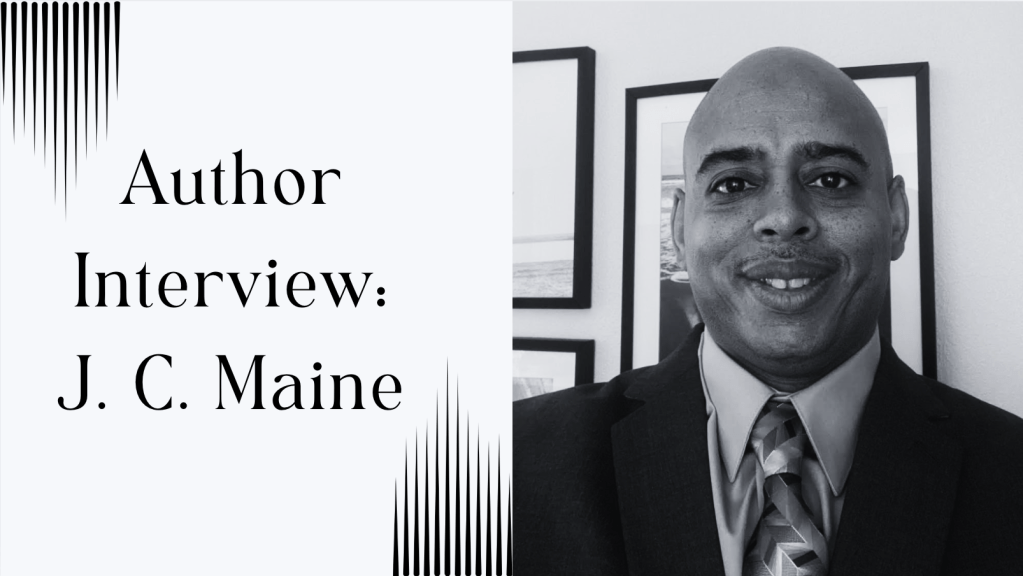
picture of author standing in front of a wall of framed photos. author is wearing a suit with tie. text says, author interview: J. C. Maine
Photo supplied by author.

Today’s interview is with J. C. Maine. We met over on Twitter, like most of my online friends, and we managed to stay in touch over the years and a platform change where we reconnected on Threads after I left. I love hearing different experiences with self-publishing and sometimes I learn a little something too. Jump into this short, but sweet, interview!


Let’s talk about social media. Where do you like to hang out and do you find it beneficial to selling books or do you use it only to network with other authors?
Most of my time online is spent on Instagram. I think it’s very beneficial for promoting and selling books, because it forces you to be visual. It’s also a good way to network.

You seem to write a little bit of everything. How do you decide which project to write?
Whatever moves me at the moment. I was inspired by the dynamic of a real-life couple when I wrote the novel, I Can’t Help It. When Covid-19 disrupted our way of life in 2020, the uncertainty inspired me to write Days of Revelation.

How much of the work that goes into publishing do you do yourself, like formatting, cover design, and editing? Do you like all aspects of it? What is your favorite part?
I do my own formatting, and I do the majority of the editing. Occasionally, a beta reader will also help me with editing. I want my book covers to look professional, so I outsource that to someone who specializes in it. I somewhat enjoy the editing. Unfortunately, I’m not a fan of formatting.

What do you think is the hardest part of publishing and what do you do to make this part manageable/affordable/profitable?
Definitely the formatting. I have to tinker with it for a few days before I get the inside of
my books the way I like it.

Your books are enrolled in Kindle Unlimited. How did you decide to enroll in KU
and not publish your books wide?

I enrolled in KU because I didn’t want to put pressure on someone who wanted to read my work, but didn’t want to pay a lump sum for it. I write books more for exposure than for profit, so giving readers access to it this way doesn’t bother me. Although there are other self-publishing companies I could use, for me it’s a lot easier to work exclusively for Amazon. Besides, I can always order and sell physical copies of my book.

What are you currently working on and what are your plans for the rest of the year?
I’m working on a new thriller. This will be the first time I’ve written a book from a 1st
person point-of-view. I’m having fun writing it so far, and I think people will really like it once it’s published.


J.C., I appreciate you taking the time to answer my questions and sharing your experiences with indie-publishing. J.C. is active on Threads, BlueSky, and Instagram, and you can follow him on Amazon and Goodreads.

I hope you all are having a great spring so far, and have a lovely week ahead!

Follow J.C. here:
Amazon: https://www.amazon.com/stores/J.C.-Maine/author/B087TPZD7W
Goodreads: https://www.goodreads.com/author/show/20343208.J_C_Maine
Instagram: jc_maine
Threads: jc_maine
Bluesky: jcmaine.bsky.social

Author Interview: Brandi Easterling Collins

I met Brandi a long time ago, over on Twitter, and over the years we managed to keep in touch. I was really happy when she said she would do an author interview as it gave me a chance to catch up with her. I hope you enjoy her interiew!


You published your first book, Caroline’s Lighthouse, in 2016. How do you think
the publishing landscape has changed since then?

With so many tools available for indie authors, I think more high-quality indie works are available than ever before. Now is the perfect time for authors to put out quality work as long as they don’t forgo the most important part—editing.

I published my first novel through Archway Publishing, which is fine for someone who
wants help. Taking on the process myself has been more fulfilling (and a lot less
expensive). After establishing my imprint for my second novel, Jordan’s Sister, I had
retained my rights to Caroline’s Lighthouse, so I republished the second edition with
Luminesce Publishing in 2018.

You write primarily Young Adult. How did you begin writing that genre? Do you
think you’ll write in a different genre, and if you do, what do you think it will be?

As a young adult, I read many novels that helped me navigate teenage angst. I write young adult because I want to provide that same enjoyment and help for readers (of any age). I wrote first drafts or notes about all of my published novels when I was between the ages of 13 and 18. The stories have been completely rewritten, but I’d like to think I accurately captured the teenage emotions I felt then. As an adult, I could flesh out the parents and other older characters.

Even now, at 43 years old, I still gravitate toward reading YA novels because they
represent a type of journey that just isn’t the same experience you get in other genres.
That being said, if I were to venture into another genre, it would be women’s
contemporary fiction. My second novel, Jordan’s Sister, and my fifth novel, When Does
Life Begin?
, are New Adult novels that lean heavily into women’s fiction.

How much of the work that goes into publishing do you do yourself, like
formatting, cover design, and editing? Do you like all aspects of it? What is your
favorite part?

I am almost a one-woman show with my company, Luminesce Publishing. I handle all the writing, editing, formatting, and cover design. Fortunately, I have a day job in content marketing, so I write and edit weekly. Before that, I worked in higher education marketing for 17 years, writing, editing, and managing some graphic design projects.

I have a team of wonderful beta readers who review the second drafts of my
manuscripts. A dear friend who is a professional photographer has helped with a few of
my author headshots and offered graphic design advice. My amazing husband is a tech
guy who helps with website troubleshooting.

You read a lot. How do you balance your reading time and your writing time?
Reading is my favorite hobby and lifeline. I read in waiting rooms, during my lunch break, while walking on the treadmill (because it’s boring otherwise!), and before bed to relax. Reading a lot makes me a better writer. My writing time is separate. I typically hit my writing stride between 10 p.m. and 11 p.m. weeknights and late afternoons on Sundays.

What do you think is the hardest part of publishing and what do you do to make
this part manageable/affordable/profitable?

Selling myself and my work is the hardest part for me. I can praise others’ work all day,
but I clam up when I try to tell someone how awesome my books are. I’m proud of my
work, so I plan to work harder on advertising in 2025.

This year, I plan to beef up my website, discuss my writing with colleagues and friends,
and attend more author events. Since I have very little to devote to advertising, I must
make the limited funds count.

Your books are enrolled in Kindle Unlimited. How did you decide to enroll in KU
and not publish your books wide?

I love Kindle Unlimited because I have discovered so many great authors (including you, Vania!), both indie and traditionally published, through the platform. My paperbacks are published wide, but I was okay with keeping the e-books available exclusively through KU.

[My note: Brandi is the whole reason why I re-edited my Rocky Point Series. She reached out and said she was reading them, and I had a “Oh, crap!” moment. Thanks for the nudge, Brandi! The books are better for it. :)]

What’s next for you in 2025?
I plan to populate my publishing company website with writing, editing, and publishing tips for indie authors. Although I’ve owned the domain since 2018, I didn’t do much with the site until earlier this year. Eventually, I plan to open submissions for poetry and short stories to be included in an anthology. It might be 2026 before that happens!

I am also almost finished writing my sixth novel, tentatively titled Four Hearts. The
planned publication date is December 10, 2025, my mom’s birthday.


Thanks, Brandi! I really appreciate your time! It sounds like you have a lot going on in the next little while, and I wish you nothing but the best of luck!

You can follow Brandi here:

Blog: caniscareyou.com
Website: luminescepublishing.com
Amazon: https://www.amazon.com/stores/author/B075DXYBHB
Goodreads: https://www.goodreads.com/author/show/16102161.Brandi_Easterling_Collins
Facebook: https://www.facebook.com/BEC.caniscareyou


Thanks for stopping by today and I hope you have a great week!

Until next time!

Author Interview: Romance and YA Author Melody Loomis

I met Melody on Twitter when she was asking some questions about a Midwestern winter for her WIP. Being I’m in Minnesota, I was happy to help her with all the chilly details. We happened to have several inches of snowfall that winter, and I tweeted her lots of pictures. She asked me to beta read when she was finished, and I was happy to do that, too. We stayed in touch, and now I consider one of my friends. I asked her if she would be willing to do an author interview, and she agreed. Still getting her feet wet with the whole publishing thing, she was happy to share what her past couple of years have been like writing and publishing. She spills on her newest wintery release out this week… (Ironically, we don’t have much snow right now! I’m sure her FMC, Melissa, would love that!)

You write YA and Adult Contemporary Romance. What made you mix it up and do you think you’ll write other genres in the future?
I knew before I published my first book that I wanted to write both YA and adult contemporary romance. I’ve always enjoyed a good love story, and growing up, I was very much into Judy Blume and similar authors. So those are the kinds of stories I like to read and write. I considered using different pen names, but in the end, decided it was too much of a hassle. And I think there will be readers who will enjoy both. I’m still writing in the contemporary genre, even though I’m writing for different ages. And I’m mostly targeting a female audience, though not that men can’t read them too!

As for branching out into writing other genres, I might like to tackle writing romantic suspense, because I enjoy reading that too. I’ve also considered writing picture books and humorous essays, but I’m not ready to do any of that yet.

You’re writing a series now. What do you like best about writing in a series and what do you find challenging?
I love writing in a series because often, I’m not quite ready to let the characters go! I want to keep writing and find out what happens next in their story. Or, I want to explore the best friend’s story.

The thing I’ve found challenging about writing a series is that sometimes, my muse wants to work on other things, and I have to work hard to keep on track. I don’t want to leave a series unfinished. I’m currently working on my Storm Series, but stories 5 and 6 haven’t been written yet. Stories 3 and 4 need work. I think in the future, I will wait until the series is complete before publishing. That way, I’m not under any pressure to keep writing in that series if my muse won’t cooperate. This will probably be the only way I will ever “rapid release.” I consider myself a slow writer, and I like to put away projects for a long time to let them rest before I go back to revising and editing them.

You do your own covers. What prompted you to try and can you explain your creative process?
For my first book, I reached out to a book cover designer, because I didn’t really know what I was doing. When she returned the cover, I thought, “Hey, I could have done that.” Plus, I wanted to try making my own covers to save a little money. I purchased Affinity Photo, which is a great alternative to Photoshop since you don’t have to purchase a subscription. I played around making mock book covers for months. I’m still learning the program, but I discovered that making book covers is a lot of fun.

I only suggest making your own book covers if you really enjoy it and are willing to learn the process, otherwise it can cut into your writing time. But looking at stock images gives me a lot of ideas for future stories, so that’s a plus.

You’re part of the . How did you realize early mornings are the best time for you to write and what would you suggest to other writers who are struggling to find time to write?
Not everyone wants to get up early, but I’ve always been a morning person. It’s quiet before dawn, and I write best with silence. Also, I like to start off my day doing something that brings me joy. And the earlier I get up, the more time I have to write. Though I write at other times of the day, morning is simply the best time, as my creativity is at its sharpest. By early evening, I’m yawning and can barely keep my eyes open!

The best advice I can give, if you’re struggling to find time to write, is that you’re going to have to give up something. For me, that was a lot of TV shows. And YouTube. I used to have an Authortube channel over there, but making videos cut into my writing time.

Or sometimes, you just have to make time to write. Find a few minutes here and there. Maybe you can write for 15 minutes while dinner is cooking, or if you have kids, when they go to bed. For me, getting up before dawn is easy. But also, having a cat helps. They’ll ALWAYS wake you up early!

You self-publish. What is the hardest thing you’ve encountered about the process and what did you do to tackle it?
The hardest thing about self publishing has always been the things I didn’t know or expect, like when my paperback showed up as temporarily out of stock, or when my pre-orders were not fulfilled and customer support wasn’t helpful. I also had an ISBN problem for my second book. And it’s not like I don’t know how ISBNs work. I’m a library assistant, and I look up ISBNs all day! But it surprised me that some sites wouldn’t allow me to use the same ISBN, even though it was one I had purchased.

The only thing I can do when it comes to these issues is to figure out what to do better next time. The first time, I didn’t go “direct” with Amazon for the paperback, and that was a mistake for me. As for the ISBN issue, Draft2digital support helped me out with that one by assigning me one of theirs. Talking to other writers and listening to podcasts has also been helpful in solving these kinds of issues. Maybe by the time I publish my next book, things will go smoothly. Fingers crossed!

Your book went live yesterday (December 17th)! Congratulations! What do you do leading up to your launch? Any marketing secrets you’d like to share?
I’ll be the first to say that marketing is not my strong suit. I didn’t do any kind of marketing for my first book, other than social media posts and a YouTube video. For my second book, I did two book promotions through Written Word Media, In hindsight, I think it would have been better if I had spread those promotions out and not done both at once. I have no way of knowing which promotion brought me more sales because I did them at the same time. And once they were over, the sales dropped off again.

For this upcoming book, I’ve scheduled one promotion, and I’ll plan to do another one at a later date. Also, since this is book 2 in my series, and my romance books are in KU, I’m looking into scheduling some free days for book 1 at some point to introduce people to the series and hopefully encourage them to buy the next one. I’ll also do social media posts, what’s left of social media these days. I haven’t done any Amazon or Facebook ads yet. I’m just not mentally (or financially) ready for that. All I want to do for now is to write books, and if people read them, great. I believe my readers will find me eventually. I think for now, I will try to focus on building my email list. I’m still looking for my first 1000 superfans.

Share your favorite motivational quote about writing.
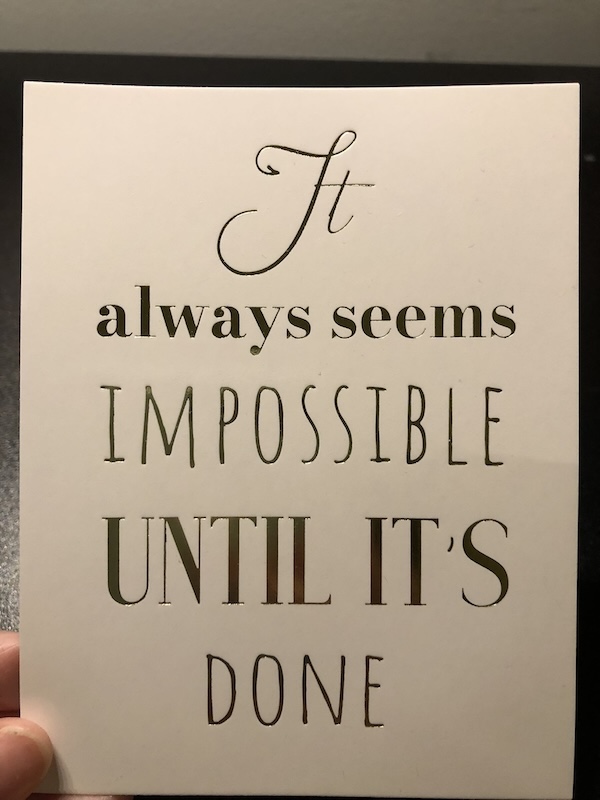
It’s not actually a quote about writing, but there’s this quote by Nelson Mandela. “It always seems impossible until it’s done.” I think about this quote when I’m working on a novel. When the words won’t come, or when I’m stuck in the muddy middle, it’s hard to think that I’ll ever get to the end. But after some determination and butt-in-chair time, the draft gets finished. It always seems impossible until it’s done.

A couple of years ago, I purchased these motivational cards to put on my vision board, and I was excited that one of them had that very quote!

picture provided by Melody

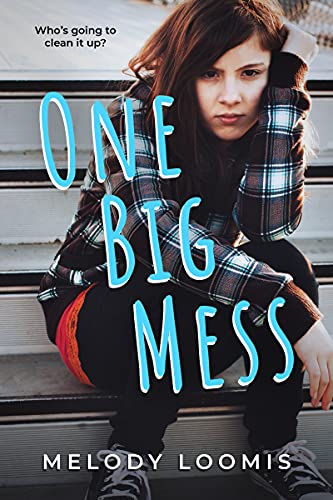
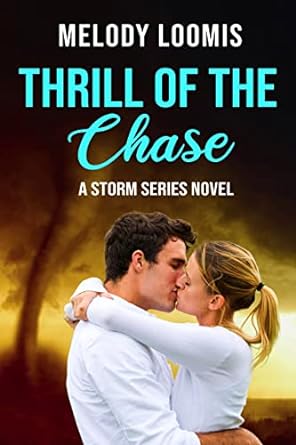
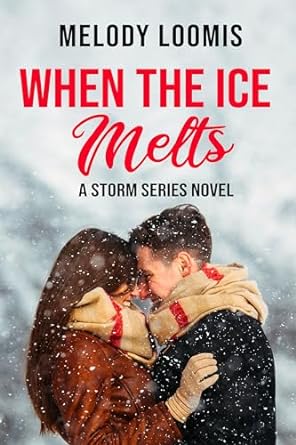
Thank you for your time, Melody! It’s always fun to hear about other authors’ experiences. You can follow Melody at all the platforms listed below, and I pulled her book covers off Amazon so you can see them. You can also join her newsletter for updates at www.melodyloomis.com. Thanks for reading this week!

Follow Melody here: Goodreads | Amazon | Twitter | Instagram | Threads | Substack

Discussion with indie authors A.K. Ritchie and Jeanne Roland

I asked indie authors Jeanne Roland and A.K. Ritchie to chat with me about writing a second book, publishing, and marketing. I think it’s fun to pick the brains of my writer friends. You never know when someone will share something that will elevate your career to the next level. While I don’t think our conversation will turn your book into a best seller, sometimes it’s just helpful to know we’re all struggling. I thought we would chat for half an hour, I’d ask a few questions then we’d log off. We ended up talking for over two hours, and this is the bulk of our chat. I hope you find it entertaining if not useful. Thanks for pulling up a seat at our table. If you want to follow them or check out their books, their links are posted at the end. Enjoy!


Vania: A.K. Can we start with you? How long have you been writing and what made you decide you wanted to publish?

A.K.: Sure! I’ve been writing since I was five! My first book was dictated to my teacher and she turned it into printed books for us to create the pictures to go with the story. That’s when I was hooked! In terms of publishing, I’ve always wanted to! I don’t know where it began. I went to a publishing conference in 2019. It was for traditional publishing and while it sounded really interesting, there were a few things that turned me off traditional publishing. That’s when I decided to learn as much as I could about self-publishing. I was hooked.

Jeanne: Can I ask what turned you off trad publishing, if you remember?

A.K.: Oh, quite a few things. One, I listened to agents talking about how something as simple as a name would turn them off a manuscript. Two, they said it could take a year or even up to five years to get a book on the shelves. It was discouraging to hear.

Jeanne: Yes, don’t even get me started on names! That was the first thing that I was going to have to “change” to get mine published, and I get it. The name of my book doesn’t “work,” if one thinks of the book as a commodity. It won’t “sell.” But it’s the name of my book!

Vania: That seems to be a vibe even now from agents. They’re looking for books that require almost no work to get from your computer to the shelves.

A.K.: Yes! I understand they need to market, but to not even have someone read past the first page because of it is disheartening!

Jeanne: It’s probably a volume issue. An easy way to weed down the stack. I’m sorry I keep interrupting! I’m just very chatty. I’ll try to rein it in.

A.K.: That’s what they said, that there’s just too many to read them all.

Jeanne: I hate to say it, but I also think that agents are looking for authors to sell, not books to sell, too. Are you as an author someone or someone with a story or angle that lends itself to marketing? If not, forget it. There has to be a “story” behind the book, not just the book itself.

A.K.: Agreed!

Vania: Any angle, to get ahead, but I think indies do the same thing. Looking for the next biggest and best thing to somehow get ahead and find readers. A.K., that’s really cool that your teacher fed your passion. I hear so many people who have been shut down by their teachers. I’m glad she had a positive impact on your life! Jeanne, can you tell us a little about how you started writing and why you decided to publish?

Jeanne: Glad to hear that about teachers, too. Sure, here goes … I’ve always loved literature and language, I’ve studied a lot of it and done a lot of nonfiction writing. I write all the time for my job. But … even though I always wanted to write something creative, I thought I had to have something important to say, to write great literature, and that held me back from trying. My father was a professor of American history, and he died rather youngish. When he was terribly ill, he realized he’d always wanted to write something creative and hadn’t done it and then he tried a bit to do it while he was dying. That didn’t work, and I thought I don’t want that to happen to me. If I want to write, I should try. Around that time I read Hunger Games … and I thought, hmm. On the one hand, this is brilliant. I could never write something as brilliant and as well-plotted, but on a sentence level, sure, I could write that! And maybe I could just write something fun and escapist, the romantic escapes I myself enjoy reading. So about 12 years ago, I sat down and started writing Journeys, just as a daydream on paper, to entertain myself. I thought it was terrible and I put it aside then I came back to it a year or two later, sat down, and it just flowed out of me! That’s my story.

Vania: I guess I only have Twitter to gauge, but that seems to be a common quality among
writers–wanting to convey a deeper meaning with their writing. How did you marry wanting to write something deep and deciding to write something fun?

A.K.: That’s so great! I’m glad you came back to it! Sometimes you need to step back from a project to really see it for what it is. And I felt much the same. In my 20s I thought it had to be this massive novel that could “change the world” basically. That goal can be paralyzing.

Jeanne: I guess I matured enough to realize that I just love a good story, and that maybe the meaning comes through the writing, not the other way around.

Vania: I wonder if that’s why some authors look down on commercial fiction–they don’t think it’s deep enough or conveys enough feeling, yet, I think sometimes light and frothy is the perfect way to tackle darker themes.

Jeanne: I do a lot with ancient Greek literature, and it isn’t as moralizing or trying to send one message, and that’s why it is so compelling. It’s about exploring a situation and all its intricacies, and I’m certainly not saying I’m writing something like that, but I think particularly YA that is message-driven is just boring and dry. Don’t get me wrong. I think there are a lot of important things in my book, but they came in the back door.

A.K.: Yes. I think that applies to me too. I wrote a novel based on the music scene I loved and I turned into something more and focuses on healthy relationships, which hadn’t been my intention starting out. Haha.

Jeanne: Yes, I think themes develop in the writing!

Vania: If “lighter” books couldn’t talk about dark things, I think we’d all be in trouble. How could we write about anything worth reading?

Jeanne: For example, my heroine was kicked in the face by a mule and horribly scarred. It’s not “sexy,” and she appears to most to be ugly. That NEVER changes. No one ever finds her physically beautiful. But she is valued and even desired eventually for her character and actions. No “I think I’m not pretty but I am!” for me.

A.K.: I agree. I mean, there are definitely some books that don’t, but life has to be tough for everyone and fiction often reflects that.

Jeanne: And I think a great book doesn’t have to have messages. It can simply be a rip-roaring, well-written read. She also has dreams & goals and breaks herself trying to achieve them, and fails. I think it is so damaging, this lie that we can all get whatever we want if we just want it and work for it enough. That’s just not true! She adapts, and she has to get knocked down and get back up again.

Vania: I agree. I like exploring a person’s darker side. In one of The Years Between Us’ reviews, she says, how did anyone like this book? Everyone is nasty. Well, people can be! No one is perfect and there’s a million shades of gray when we talk about ethics and morality. A.K., you published your second book not long ago. How was that different from publishing your first?

A.K.: Yes! It’s hard to escape horrible people in real life too. Publishing my second book was way less stressful and much faster. Haha. Instead of being nervous to hit publish, I couldn’t wait to do it! Since I knew who I needed to hire and where to find these things, it was much smoother.

Vania: Did you run into any obstacles?

A.K.: I actually found it more difficult to find ARC readers for book two than my first one. As it wasn’t too long after my first book, I hadn’t established a pool of readers outside family and friends yet. I wanted ARC readers who were impartial. It didn’t result in the reviews I hoped for. Other than that, it was smooth.

Vania: That’s great!  Every time I publish, I seem to screw it up somehow. Jeanne, if I recall, you edit your own books? Do you use beta readers or ARC readers?

A.K.: I’m not an expert, but I’m pretty good at troubleshooting if you need help with something for any upcoming books 😊

Vania: A.K. for your next book, if you can afford the $9.00 fee, I suggest you put your book on Booksprout. It generated some good reviews for my standalone Rescue Me. I recommend it.

Jeanne: Yeah, I edit my own. I have one super good friend who reads my stuff and gives me advice/input as I write, and my sister and another friend or two have usually read my books before I publish them, but I do my own editing.

A.K.: Do you have a way of catching pesky typos that spell check and such doesn’t?

Jeanne: I should say that I actually had an agent for Journeys, who suggested some edits and did some proofreading. But I decided to self-publish rather than do what would have been necessary to get trad published, which was mostly to cut it waaay down, because it’s massively long.

Vania: Oh, that must be so helpful! Finding help is definitely one obstacle that we have to deal with. Especially since everything is pay to play now.

Jeanne: I wish I could help w/ the typos! But I’m sure there are many in my book b/c it is really long, but I have to rely on my handful of friends.

A.K.: Vania, do you self-edit as well?

Vania: I listen to my manuscripts before I upload them into KDP–you would be surprised at how much you find. Then I read the proof like I was a reader reading it for the first time, and I think that catches the rest. Yep! I do.

Jeanne: A word about editors, if I may …

A.K.: That’s great! I should start doing that as well.

Vania: I also edit on the side for other people, but they just pay what they can. Sliding-fee scale, I guess.

Jeanne: It isn’t because of either money or arrogance that I edit my own books … I’m sure I’d have caught more errors, etc. with a good one … but how in the world is a self-publisher supposed to know who is a good freelance editor? How are we supposed to trust someone else to edit our works? Any really really good editor is going to be massively expensive and/or not available to selfies. Some of the folks who offer their services … what are their credentials? Do they actually know grammar, even? There are so many people out there who scam indie authors. I trust my friends’ knowledge of grammar more than that of some people offering their services.

Vania: Oooooh, I know. Don’t get me started. Indie publishing has opened up a whole world to scammers who have no idea what they’re doing but are happy to charge you for it! Besides, some of it for me is arrogance. I write my books how I want them to be, and maybe suggestions could make them better, but maybe not?

Jeanne: Yes, this! You know, this idea that a book MUST have an editor … did Shakespeare have an editor? Aeschylus?

A.K.: I definitely agree with that. I picked an editor off Fiverr because it wasn’t expensive and I wanted someone who understood Canadian spellings. I really just wanted another set of eyes. I had no real way of knowing her credentials and while she did help with some things, it wasn’t the quality I hoped for.

Vania: Jeanne, was publishing your second book easier than the first?

Jeanne: It was sort of a unique situation, because it is a continuation of the story. You can read Journeys and end there, but you can’t really read the sequel without having read the first one which meant I knew I was going to have a small audience and there was little point doing any kind of launch … so I was SUPER stressed about putting it out. I was sure that I was going to be massively depressed. I thought no one would buy it and I’d be upset, but at the same time I thought, what if the people who read the first one and loved it are disappointed and hate it? I was really worried about that. Plus, I felt like I’d forgotten how to do it all. Vellum for formatting, uploading to KDP, getting the ISBNs. I’d only done it once, so I’d forgotten everything! It felt like I was supposed to know how to do my 2nd launch better, but I was worse at it, and I ended up super soft launching, no ARCS or advance copies at all, nothing.

A.K.: When you did launch it, did you find it brought any additional momentum to the first book?

Jeanne: All I did was announce it to my readers whose email addresses I had gathered, from asking them to ask for the 1st chapter of it at the end of the 1st book, a pretty short list. So this was the big surprise! YES! In fact, the moment that I put it up, the 1st one started getting interest again, particularly on KU.

A.K.: Amazing!

Jeanne: I had my biggest month of all time last month, b/c of that bump from the second one. 3x the number of KU reads. I think it “might” be because Amazon now lists them as 1 of 2 and 2 of 2, even though there are going to be 4 … so maybe KU readers think it’s a complete series. I feel bad about that, but besides that I say plainly in the blurb that there will be more, I’m not sure what to do about it. Yeah, I’ve started to think that all the effort I make means nothing. My book does ok when Amazon pushes it, for whatever reason then when they stop showing it, it dies. End of story.

A.K.: I don’t think you can change the number of books in the series unless you have pre-orders for them up at least. Mentioning in the blurb seems like a smart idea!

Jeanne: Yeah, I didn’t want people to think I was trying to fool them! But really, my books are Loooooong. If you get to the end of 2 of them, then probably you aren’t going to mind that there are more lol.

A.K.: Do either of you plot out and/or write your whole series before publishing the first?

Jeanne: So for me, I have the whole “main plot” plotted, I know how I’m going to tie up all the loose ends and all the main plot points, but it evolves, grows, and changes as I write. I like to think of it as knowing the destination and many of the big stops on the way, but leaving the exact route a little flexible. You? But mine are one continuous story, too, I should say that.

A.K.: I haven’t intentionally written in a series before, so I’m curious about other people’s processes!

Vania: Yeah, I couldn’t publish a series if I didn’t do that. Under this name I have a trilogy and a four-book series that I wrote, formatted, and did covers for all at once, and under my initials I did my duet at one time, and I’m releasing a trilogy in January with a week between books, and a co-worker is typo-hunting a six-book series that’s done. She’s reading the KDP proofs. I’m very afraid of consistency issues. My six-book series is all one story, too, and I’m afraid of how to market. Most of them end on cliffhangers and the only entry point to reading is book one.

Jeanne: I also have the issue that mine involves a big cast of characters, who keep doing things for x reason, which then seems to involve a y subplot! It’s hard! I’ve pretty much just been marketing book 1, b/c of that very reason.

Vania: I totally relate! My six books wasn’t supposed to be six books. It was supposed to be a trilogy, but then someone killed someone else, and bam! Three more books. LOL A.K, I would at least have a loose plot for most of the books, if only to be able to foreshadow to keep readers wanting the next book.

Jeanne: If I had to do it over again, I wouldn’t publish the first one until I’d written them all, like you. In fact, I wasn’t planning to, but it’s a long story about how I ended up publishing Journeys. It grew out of depression over what happened w/ the agent, and the realization that I wasn’t willing to do what I had to do for her to sell it; even getting her was a result of something else, not of my making. Yes, I’m afraid that my 2 more books might be 3 more books … I have a few characters who WILL NOT behave! I’d wait myself until I was 100% done, if I were doing it over again, frankly.

A.K.: This is really interesting! Thank you for sharing this! The idea for my intentional series is forming. It’s intimidating a little. Haha.

Jeanne: I will say this, too. My books are super long. SUPER long. And that’s probably cost me some interest from readers, scared some off, sure – those who notice. BUT it’s mostly publishers who don’t want a long book. I think readers don’t care, as long as it is interesting and keeps their interest. Length is relative. A slow book that drags is longer than a long book that flies by!

Vania: Some people don’t have the patience, and that’s fine too. It’s not even impatience for me as it is I just need to be able to go back and change things if I have to. Being like this actually will keep me from doing anything longer than 4-6 books because how would I ever be able to save up 10+ books before I publish? A.K., you will never see me so scared as when I opened the file for book 4 knowing I needed to come up with 240k words to complete my series. I wondered how in the HELL I was going to do that. But I did. You just have to take a deep breath and not think about it too hard. Stay in THAT book, that moment, with those people, and it will all come together.

Jeanne: For me, it’s the stress of finishing. As chance would have it, those few who read my book 2 loved it more than the first one thought it was terrific. That’s great! But now I am SUPER STRESSED about not being able to follow that w/ a decent next book.

A.K.: When people are engrossed in the world they don’t want books to end! And yes, Vania, that’s a smart way of doing it. It seems like the most cohesive way too.

Vania: I agree. I don’t think they care either as long as the words have quality and it’s not all filler for page reads.

Jeanne: So this is all an argument for finishing before you publish!

A.K.: I wonder if it will always be like that, worried about not following what you’ve already done.

Jeanne: Yeah, I know that the next book just won’t be as good as the first two. That’s ok. But I worry about it being utter crap. I’d feel better if I’d written it all before publishing no. 1! What if I can’t pull it out of me AT ALL?!

A.K.: “About not living up to what you’ve already done” is what I meant.

Jeanne: Yea, so funny story. When I was writing the book in the first place, I wasn’t thinking about page numbers. I was writing for myself, single spaced, etc. It didn’t seem like it was longer than average …

Vania: Realllly, Jeanne? I’m always afraid my first book will be too weak to carry the rest.

Jeanne: I had no idea about word counts, etc. Then I found out. And I was like, hmmm. So I guess it’s too long! Everyone was shocked, too, b/c it’s a fast read. but it’s long. Well, if the first one is weak, then ppl won’t read it, no problem. But if they read the first one and loved it, then … there’s expectation. That’s what I’m worried about. Readers who love book 1, then thought 2 was even better … they are expecting 3 to be even better! But it is going to be so much worse, lol.

Vania: Yeah that’s a problem when you’ve already written them all!

A.K.: As a reader, even if the second or third book is weaker, it doesn’t stop me from committing to a series. I know what the author is capable of. And I’ll come back for more.

Jeanne: I’m hoping that will be the case for my little pool of readers. but there’s also something depressing about working on massively long books knowing that the number orf readers is just going to decrease over time, not grow, b/c you have to have read the others and some will stop the series. So it’s like you read all the time about people growing their fan base, but I feel like I am just shrinking it, lol. Let’s just say, if and when I ever finish this series, no more series for me! Standalones all the way, baby.

Vania: Yeah, but they grow their fanbase over multiple books and multiple series and multiple years. that’s why everyone says not to genre-hop.

Jeanne: Haha, considering that I have no genre, that won’t be a problem!

A.K.: I only planned on standalone, but a few people wanted more of my characters. It seems hard to avoid! I still try to write them as standalones in their own way.

Jeanne: That sounds like the ideal – a book that can stand alone, but then more for the hungry readers! Perfect.

Vania: That’s how most romances are. The couple has an HEA but there’s some kind of overreaching arch that finishes at the end of the series. I have to admit, I had a lot of fun writing the long story, but I’m really concerned with how it’s going to sell. A.K. do you have a book 3 in the works or are you writing something different? Is what you have a duet?

A.K.: I’m taking a step back from that series to work on something else. I didn’t intend to write a second book in that world so I need some time to figure out what needs to go next. There’s a large pool of characters so there’s potentially more.

Jeanne: Are you working on a different project, then?

A.K.: Right now just working on something random for NaNoWriMo to clear my head a bit. Yup! Just a standalone that may or may not be published in the future. Haha.

Vania: Weren’t you writing a Christmas thing? Is that it?

Jeanne: I’ve always been curious about NaNo but can’t do it.

Vania: I’ve never been that excited about it, though I’ve never needed the motivation or the camaraderie. I find that just by scrolling Twitter, though that may change.

A.K.: The Christmas story was supposed to be book 3 in the series but it wasn’t working out the way I wanted and I felt pressured to write it quickly. Decided after NaNoWriMo, when I’m in the Christmas spirit, I’ll make another attempt and maybe have a Christmas story for next year! I’ve been doing NaNoWriMo for over 15 years. It was a good way to connect with writers back then! Not so necessary now, but I like the ceremony of it.

Jeanne: I’ll confess that I’ve been tempted to write some straight-up, short romance books under a different pen name, but my heart isn’t in it.

A.K.: For me, it seems to be the theme that makes it difficult to write. Haha no, I was writing a short story about a virus that took out the world and then… Covid happened. I love the end of the world fiction. Haha. It has to SAY something in that type of fiction. Not my forte.

Jeanne: Oh, man! I’m out, lol. I think I’ve already established that I have nothing to say.

Vania: Like, the characters have to learn something? Hahaha. I write romance. Out of the three of us, I’m pretty sure I’m the one who doesn’t say a damned thing 😛

A.K.: Hahaha. I love books that don’t say something.  Post-Apocalyptic fiction always seems to comment on the state of our current world. I don’t want to do a critique of our society. I think that’s why I don’t write it.

Jeanne: I don’t know. My series is about a 15-year-old (she’s probably 16 by now!), b/c I love this age – when you are still young enough for things to be firsts, when you are young enough to have big hopes & first loves, etc. I think I have some ideas of what it’s like to grow up. BUT …

A.K.: I prefer to write just about people coming together. That’s why I enjoy romance plots so much. The connection! ❤️

Jeanne: I don’t think my books are really very YA. So there’s a huge disconnect. I’m writing first person POV, present tense, about teens and there’s a TON of lusting after hot boys, but … it’s not really a young person’s book. All my readers pretty much are adult women. And I THOUGHT I was writing a romance, but lo and behold, it has to fit a very strict pattern to be that, and mine doesn’t fit it! So I don’t know what it is, lol.

A.K.: Romance does feel pretty rigid and my first doesn’t fit there either so I’m leaning into the women’s fiction label. As for your novel, there’s definitely a market for books about youth that can be enjoyed by adults. I always go back to YA books as comfort reading.

Jeanne: Yeah, I am calling it YA because I do think that it’s where adult women look for similar books (if there are any? Not sure there are!), and because there’s no sex in mine – just a lot of rather adult sensuality, but nothing that would satisfy most romance readers today, from what I can gather on Twitter!

A.K.: Makes sense! YA would give them the right expectation by the sounds of it. 😊

Jeanne: How about marketing? How do you guys do that? V, I know you do Amazon ads. Mine attempts at ‘zon ads all fail spectacularly, even though I think I’m doing them right. But my cover, title, and lack of clear genre mean that they don’t convert. Any other great ideas?

A.K.: This is likely Vania’s area. I haven’t gotten a grasp of it yet. However, I have found two awesome readers on TikTok. Haha.

Jeanne: Ah, are you conquering TikTok?

A.K.: I’m attempting TikTok. It’s not fruitful at this time. TikTok is very focused on spicy content. And the niche groups are harder to find (however not impossible, I hear).

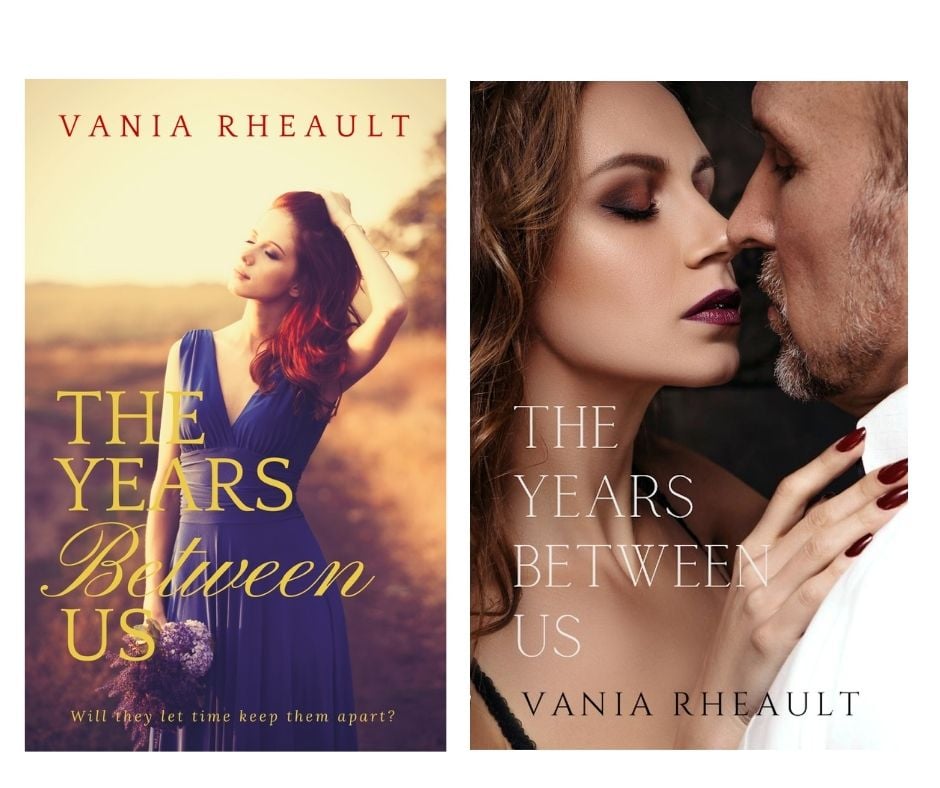
Vania: Through trial and error, I’ve realized that Amazon Ads are very cover-dependent. (Who knew, right? 😵‍💫) I always show this as an example:

I had one cover for my age-gap romance, but it screamed women’s fiction. I was getting a ton of clicks because the cover was pretty, but once they read the blurb, they wanted nothing to do with it. I changed the cover and now at least when I get a click, I’ll sometimes get a sale. At least I’ve stopped wasting money.

Jeanne: That’s the problem for me. Besides that I don’t like the platform, mine just is not spicy.

A.K.: Ohhhhh. Yeah, those are totally different genres. Smart move!

Vania: But I don’t have enough books to scale. Under my name was sub-genre hopping, and now under my initials I don’t have enough books out to say either way. I make money off my ads, just not a lot.

Jeanne: Yeah, I think I had that same problem. At first I could get some clicks, but the cover looks more “grown up” historical fiction, and the blurb reads more juvenile lust fest, so the 2 don’t match up, so now Amazon just won’t show the ads. Why should it bother? Lol

Vania: I don’t wanna do TikTok. I have carpal tunnel, and the thought of being on my phone like that makes my skin crawl. I know there are ways of posting on my laptop, but ugh.

Jeanne: Hey, if you make money rather than lose it, you are ahead of the game!

Vania: To play with TikTok’s algos, don’t you also have to follow and comment on other people? That sounds like sensory overload to me.

A.K.: Making money from ads is great! My plan for the winter is learning Amazon ads. Yes, TikTok is all about engagement. You need to do a lot to get a little in return. As for marketing, I’m looking to redo the cover of my first novel. I think it’s holding me back. Just need to figure it out!

Jeanne: And to do it well, you have to be so purposeful. To be honest, I’m just not interested in being that purposeful about anything. It’s exhausting, and I’ve pretty much given up on the idea that I will ever actually be “successful.” I’m trying to get back to just having fun and enjoying it. The only thing I do wish is that I had more readers. I think my books are great, for the right people, and I think there are more ppl out there who would like them, so I would like to get them into those people’s hands. Same here. I KNOW my covers don’t help me. I just cannot figure out what they should be instead, and …

Vania: If Amazon doesn’t know where to put you, they will definitely bury you. On the bright side, if you run them and they do that, they don’t cost you any money LOL

Jeanne: I’ve been feeling perverse about it lately, like, “these are the covers, dammit! And I’ve gotten some ppl to read the book, even with unlike covers. My covers.” That’s so unhelpful to myself, but I’ve been feeling feisty. I’ll get over it!

A.K.: Covers are hard. I need outside opinions because I’m not certain of how to do visual expression.

Vania: I don’t want to use TikTok to sell my book. I want to use it because I enjoy being on it, you know? Posting mini book trailers all the time or “teasers” for the sole purpose of selling my book seems even more scammy than tweeting a link all the time.

A.K.: Hahahaha. TikTok is overwhelming that way. It feels scammy for sure.

Jeanne: Yeah, Amazon is definitely happy to bury me! Unpopular opinion here, but I have no issue spamming my book.

Vania: When I was doing my trilogy covers, I took it very personally. I wanted what I wanted, and I liked the models that chose the first time, and honestly, you just have to disconnect that part of yourself and say, I’ll put what I need to sell my books on them and be done. So I used some guys that have been used before and did a background that would blend in with other books, and I just hope it’s enough. I don’t mind buying ads, but when you’re on a social media platform and that’s all you use it for, or that’s all you go into it thinking that’s what you’re going to use it for, that’s hard for me. I have no interest in TikTok and that’s all it would be for me.

Jeanne: I know. And I’ve been *this* close to changing. But I don’t know what to change them to, or even if the covers are really the issue. Maybe it’s the blurb. Maybe it’s just the books – they are for a specific audience, and maybe that’s not a big audience anymore.

Vania: I do all my own covers, A.K. I’m happy to brainstorm with you anytime.

A.K.: For my second book, I had my friend read it and suggest a cover for me and I was like “thank you!” Because I never would have gotten there. Is it a marketable cover? Not sure, but I love it and it fits my book.

Jeanne: Oh yeah, I have no interest in TikTok. If my books were spicy, then sure. I’d pretty much have to, but then I’d have ready-made content and I’d be pretty sure eventually it would help me sell the books. As it is? I already find myself overselling the “sexiness” of my books, b/c that’s what people want, and there is a lot of lust and sensuality, but that’s not the essence of my books, and I feel sleazy afterward.

A.K.: Thank you, Vania!

Vania: Sex sells, but you can’t be too misleading either, or you’ll disappoint readers who are looking for that and then it’s not there.

A.K.: I like making videos sometimes, so I do it. TikTok though requires a schedule and a commitment, etc. I work full time so it’s not really possible.

Jeanne: To be honest, I hired someone to do my cover at the beginning. I was going to get a professional cover! Yay! And then I felt like even though it was supposedly super reputable and a great place for indies and yada yada yada, I felt like I got scammed. So I was still willing to pay again, but to whom? Who could I trust to give me a great cover and not rip off a defenseless nobody? That’s when I made my own.

A.K.: People get very upset if they go into a book they think is smutty and there’s no sex. I always tag mine #nospice on TikTok to avoid backlash. Haha. Yes, it’s hard to know who to pick!

Jeanne: Ah, yeah – mine’s YA so I think that should be at least clear that it’s not going to be smut! It’s probably a little spicy for YA, not b/c of what happens, but because of the adult sensibilities and sensuality, but hey. I had a reviewer call it “panty-melting PG,” lol.

A.K.: Some YA can get pretty spicy without crossing the line. Haha that’s an awesome review.

Jeanne: Yeah, also calls the MMC “Darcy on steroids” – love that, too.

A.K.: Sometimes reviewers know how to sum up our characters and plot better than we do. Haha. That’s great though.

Jeanne: For sure! Sometimes they remember what happened better than I do, too.

A.K.: Haha! I went to BookCon and apparently one author uses fan art or fan wikis to remember characters eye colours. I wish I could remember which author said that. Made me laugh.

Jeanne: Right now I’m doing an event on my author FB page that I’m calling “13 day of Journeys,” posting a series of posts w/ content and interactive stuff Journeys’ publication. It’s a lot of work but it’s very fun — just a really small little group of participants, but it’s great. That’s hilarious! I usually don’t mention my characters’ eye colors, so that’s helpful, ha!

A.K.: What? That’s so cool! Such an awesome idea.

Jeanne: Yeah, I wish I’d thought it out a little better so it had better content, but it’s been fun. If you’re bored and want to check it out to see what I’ve done, I put a hashtag on it so that ppl could mute it if it was too much for them & their feeds, but that also means you can search it. It’s #13daysofjourneys.

A.K.: I will!

Vania: I wish I was as creative as you, Jeanne! Even just what you tweet on Twitter is amazing!

Jeanne: It’s all pretty juvenile, but that’s me. If I have to be entirely professional about it all, what’s the point? I’ve already got a profession! Oh, gosh! Thanks! I think I have a really big advantage, and that’s that I don’t really have to care if I ever “make it” as a writer. I’m old, I have a full-time job. I’ve already accepted that I won’t support myself with it. So I can just have fun with it all. That’s very freeing. It means I don’t have to follow all of the “rules”.

Vania: If we can’t have fun writing, we might as well all stop. The second this becomes a chore, I’m out. I need to love what I’m doing, or I might as well get a second job. I could use the money LOL

Jeanne: Oh, sure–I could use money! But in fact I’m losing money on my book, so …!

A.K.: Yes! I would just like to work my day job a little less and write a little more. That’s my goal!

Vania: Are you guys winding down? We actually hit most of the questions unless you want to answer my last, and that is, what do you have planned for 2023 when it comes to your writing, publishing, and marketing? Seems so simple yet so far away, doesn’t it, A.K.?

Jeanne: Sure, I’ll answer. I have GOT to get book 3 out! I’ve already got readers who want it, and I want to finish it for myself, too. As for marketing, that’s the rub, isn’t it? It’s going to be a long time before I have a new book, and then it’s a number 3 in a continuous series, so … yeah, marketing is pretty dead for me. That’ll be interesting!

Vania: How long does it take you to write 600 pages?

A.K.: For 2023, I’m hoping to have at least one more book out in the world! I would like to learn more about marketing and the best way to reach ideal readers. It seems like a good next step with two books out. Looking forward to what 2023 holds for this journey. 😊

Jeanne: Ha ha! It’s all relative. That first book … when I came back to it and got on a roll, I wrote most of it in about 8 months or so …

A.K.: 600 in 8 months is wild! Awesome!

Jeanne: The second book (1273 KENP, so figure! It’s longer) took me a lot longer, b/c I didn’t have the same ability to stay in the flow and just write. It took me some years. And it all depends for me on the writer’s block/ inspiration. If I’m writing the right thing, then I can write fast. But if I’m not … if I’m thinking about it wrong or have the wrong things happening and I get stuck, well … I might never finish! This book 3 has been kicking my ass.

Vania: It’s the fortunate writer who actually has time for it.

Jeanne: Yeah, I have none. and it isn’t just time. It’s mental clarity/mental “time.” Last year was the worst of my whole life. It took all the momentum out of everything. It didn’t leave a lot of room for creativity. But I also care about these books. They don’t have to be great. Or masterpieces. Or anything. BUT it does matter to me that I can feel that I like them, love them, even, and that’s not always easy to achieve. Just writing down the words to tell the story isn’t enough for me for this series. I really need to feel like I’ve done a decent job of it, at least, and I’m not sure I can do that.

A.K.: Sometimes it’s hard to get that clarity. I have a lot of family things always on the go and it takes up a lot of my mental capacity. I try to squeeze it in, but it can sometimes be hard!

Jeanne: Yes, family and kiddos take up so much energy! And I’ve learned the hard way.

A.K.: For sure. I am child-free but I help my aging grandma and chronically ill mom. I’m lucky they’re more independent than children. But it’s still draining.

Jeanne: Writing when I’m not “feeling it” is detrimental. I end up with garbage on the page but after it gels for a while, it is hard for me to change. It’s like I’m a potter making a pot. While the clay is fresh, I can change it. But once it dries, it’s the pot. I can’t do anything but try to disguise the flaws with glaze. Oh yes! I’ve got an aging mother and I know how stressful that can be – even though she’s in a retirement apartment so I’m not doing the care myself.

A.K.: That makes sense! It’s good you know your limit or what you need at least. I, on the other hand, need to keep writing even if I don’t want to because getting out of a routine is bad for me. I just don’t force myself to write anything specific.

Vania: I am so sorry, A.K. that does sound like it would take a lot of time and energy. I’m sorry you’re going through that. I understand, Jeanne. I have never been a “write every day” kind of person. I need to want to write or else why bother. A.K. that’s why I blog–if I don’t feel like writing, at least I’m still putting words somewhere. it’s a different outlet for me that keeps my hand in.

A.K.: Good call! Well, I do have to head out! Have some pre-bed time things to take care of around the house. I just want to thank you, Vania, for facilitating this! It was wonderful learning about your processes and your writing lives! Also, for allowing me to share about my own. ❤️

Vania: Thanks for taking the time, A.K.! I appreciate it very much.  Have a wonderful night!

A.K.: It was lovely chatty with you both. Have a good night!

Jeanne: Thanks for hosting this, V! Great chatting w/ you guys.

Vania: You’re welcome! It was fun sharing what we’ve been working on and what we find frustrating about the business.  Maybe we can do this again sometime. Goodnight!


If you want check out Jeanne’s and A.K.’s books or follow them on social media, here are the links:

Jeanne: Her books are available on Amazon, on Kindle, Kindle Unlimited, and Paperback. https://www.amazon.com/dp/B09L6KZ8D7
And you can also like her author Facebook page here: https://www.facebook.com/jeannerolandwrites

A.K.: You can find her books on Amazon here: https://www.amazon.com/A-K-Ritchie/e/B09HJX6R6P
And check out her author website: www.akritchie.com

Author Interview: Paranormal Romance and Urban Fantasy Author SJ Cairns

I met Sami-Jo through a friend and through the years of writing we’ve stayed in touch. I asked her if she would be willing to answer some questions as her publishing journey has been a little twisty, and I always like to pick the brains of people who have had different experiences than me. I hope you enjoy her interview and sign up for her newsletter to stay in touch with her and her publishing journey!


You’ve been published by small presses up until now. Can you explain the pros and cons that go with publishing with a small press?

  • The absolute best part of having a publisher behind you is that they’re using their own money. Sounds shallow, but while writing can be pure magic, publishing is a whole other mangy beast that incurs a lot of costs for multiple editors, book cover design, formatting, and anything that includes a dollar sign to put out the best possible product.

The downside is that someone else has their grip on your work. They usually get the lion’s share of any profit, you’re bound by their publishing schedule (though it’s quicker than traditional publishing) when all you want to do is hit PUBLISH, and the author is still expected to do their own marketing. Oh! And they can go under at any moment. A plague amongst many small presses since the publisher is sometimes no more than a single person or two with some loyal people to work out all the kinks. When you’re in your groove and suddenly the publisher disappears, your books become homeless. It can be heartbreaking.

You’re looking at self-publishing for the first time. What do you think the biggest challenge of that will be?

  • Not knowing just how much I don’t know about the process is super daunting. There’s so much to learn if you want to do it right and make an impact right from day one. And, come on, who doesn’t want an amazing launch that catapults your book to the top of some fancy best-seller lists? It’s the dream, but it means more work and since I have a newly minted two-year old, spare time is in short supply. I have to-do lists coming out of my ears.

The series you’re working on will have several books in it by the time you’re done. Do you have any tips for how a writer can put together and publish a large project like that?

  • I never intended to write a series, but it’s the small things that can make you want to shave your head. Is this word usually capitalized? Does this character already know such-and-such about this character? Was this character’s eyes green or brown? It’s never-ending. A series bible can help by making extensive notes about things such as special words and how they’re used or spelled, having handy character bios including all physical attributes and important events, but be prepared to search back for things when needed. After multiple drafts and rounds of editing, some details are branded in your brain, but do yourself a favor, assume you won’t remember it all, and write it down.

Since you’ve been writing and publishing, what is the biggest lesson you’ve learned?

  • That you can’t read and reread a contract before signing enough. Not a happy lesson, but an important one. When you’ve spent years on a project and plan on putting it in someone else’s hands, it’s takes an enormous amount of trust. And whether you know the people behind the label or not, publishing is a business and should be treating like one.

I think, during these times in particular, it’s difficult to stay motivated and on track. With a husband and a little one, along with a part-time job, how do you stay motivated to write?

  • I think the motivation comes for wanting something for myself. I loved writing before having my daughter and it took far too long to get back in front of my laptop, especially after losing my office to her nursery. Writing and publishing is something I enjoy. Being motivated and having the time to utilize that motivation is not always aligned and I repeatedly have to give myself a kick in the ass to get things done when the timing lines up. Motivation is not a one-time deal, it takes daily effort and prioritizing.

You’ve done everything from blogging on your website to vlogging on YouTube. What is your favorite social media platform and why? And can you give us some tips on how to find time for that in a busy schedule?

  • I tend to use Facebook the most. Some hate it, but I firmly believe that all social media platforms are as good as you cultivate them to be. Your domain, your control. I wouldn’t be published at all if it wasn’t for the writing relationships made on Facebook. If you can figure out your ideal reader, create content with them in mind, and try and have some fun while doing it, you’re golden. Social media is more to connect with people and, if they are readers, they may follow you and your titles based off how they feel about you as a person. These days, the author is as much the product as their book is. Create a bunch of things on a free day or weekend and then schedule their posts along the week or month when you know you won’t have time. There’s lots of programs that can do that for you.

In closing, what’s on your plate for the rest of 2022? And do you have the next couple of years mapped out?

  • My plan is muddy, but I can vaguely see it somewhere in there. Not ironclad, but my hope is to learn a few more (a million more) things about self-publishing, devise a re-release schedule for the 4 already published books in the Soul Seer Chronicles series while finishing up book 5 and tackling book 6 (They ALL need new covers). Also, to work on another series I haven’t announced yet. Oh, and developing my newsletter subscribers, marketing materials, and update my website. Phew. It’s fine. I’m fine. I can do this. The biggest drive is just to get my books back out there. Not being a published author right now actually feels odd and I’m not a fan. Though, being in control of my titles is super empowering and I am looking forward to reintroducing them to people all over again.

Find SJ on her website: sjcairns.co
Sign up for her newsletter: sjcairns.com/newsletter-sign-up

Until next time!

Author Interview: Nina Romano

I got to know Nina on Twitter, and when she asked if I would interview her for my blog, I was all in! I’m so excited to share this interview with you! I hope you find something valuable in the interview I did with Nina. Thanks for reading!


You’ve been writing and publishing for many years. Do you have any advice for an author just starting out?

When I was starting to publish, I used to submit poems and short stories, nonfiction pieces every Friday. That was the day of the week I stopped writing and did the “business” end of writing. So pick a day to submit and make sure you send your writing out somewhere. This also can be a query to an agent, editor, or small publisher.

How do you keep the energy and momentum going over such a long period of time?

Each writing project brings with it a different set of problems to solve and research to be done because I mostly write historical fiction. It’s these various unresolved complications that spark interest.

I must say, I read a great deal of fiction, and when I read a well-executed novel, this, too, will boost my momentum and energy. With each new novel I write, I try to obtain a higher level of commitment to the piece in hopes that it’ll be more unique and render a better one than my last. I’m not in competition with anyone but Nina Romano.

We always say writing and publishing is a marathon, not a sprint, but what does that mean to you?

It’s the long haul dedication to excel, and with everything I write, I find challenges which in the short term equal the sprint and might be accomplished rather quickly. However, it’s the persistence to meet each task with the accrued knowledge from past experiences which aid in finalizing a new more difficult piece of writing. I never make it easy on myself—what would be the purpose of that?

Your books have won various awards, and I think that’s something a lot of authors, indie and traditionally published, hope for. Congratulations! I think what every author would like to know, myself included, is does winning an award help with sales, or do you find it’s a personal achievement?

Thank you, Vania. I can’t really say that winning awards or making it to a finalist category in a contest helps with marketing books. I can attest to one thing—it’s a lovely satisfaction to know you have a winner or at least a mighty strong contender. It gives you confidence to continue to attempt achieving a degree of excellence. 

You can’t win a race if you don’t participate—I think some authors are either afraid to put themselves out there for contests or perhaps it’s another issue—these contests are expensive, and that may be a super drawback to many fine authors. (My note: Poets and Writers has a great list of contests and you can look at it here.)

I’ll bet there are many people writing today who just want to write—uncaring of prizes, awards, commendations. But the world we live in doesn’t afford us the luxury to do just that. It’s a competitive world, so we must endeavor, struggle, and strive to do our best. A finalist or first place win in a particular category is merely someone’s pat on the back saying, you’ve succeeded. But it’s a lovely accomplishment and we must celebrate all the accolades we can garner. It especially helps to remember these on a dark day when you receive a negative review! 

You are published by various publishing houses and presses. Can you tell us a little bit about what went into submitting and them ultimately publishing your books?

This is a loaded question—I could write an entire thesis on it. At one point I had an agent.  To secure that agent I wrote eighty-four query letters.  We went our separate ways, but I always knew I wanted a traditional publisher. For years, every Friday I would send out poems, short stories, nonfictions pieces, articles, blogs, parts of novels to literary journals, small magazines, and blog sites—in print and online. It’s relatively easy to publish individual poems and stories.  When I had enough poems and a theme, I put them together and made collections—how?  I began to write poems or revise them to fit the theme, which I then submitted to publishers. I did the same with stories. I submitted five poetry collections and one story collection to small, independent publishers, and they were accepted and published.

When it came to novels, I did things differently. Some of my novels grew out of short stories that I had published. I took back the novel, Lemon Blossoms, from the agent, and it became the second book of my Wayfarer Trilogy. I worked backwards and wrote the prequel to that novel: The Secret Language of Women. It took me nine years to get that manuscript into the shape I wanted. I then submitted the manuscript to three small, independent, traditional publishers. I received a letter after a week from Turner Publishing saying they wanted to publish the book. I then sent them Lemon Blossoms, which was accepted, and I was under contract with them to write the third book of the trilogy, In America, which was a great challenge because I had to do it in one year.

Can you give our readers any tips on successfully submitting a manuscript?

Make sure the manuscript is in the best possible shape it can be before submitting—that means completely edited and flawless with regards to research. I had many readers for all of my books—some critiqued for me and others only read. You can never have too many pairs of eyes on a manuscript before you decide to submit it. If a writer doesn’t have good readers, they should pay a professional editor.

Never assume or think that because an editor or a publisher asks for a partial or the entire novel that it will be accepted.  It’s an exhilarating feeling, but by no means is it the gold ring on the carousel ride. At one time, I had eight agents reading one of my novels—not one took me as their client.

Don’t get discouraged. I could paper all the walls of an entire bathroom suite with rejections.  A rejection is only one person’s subjective opinion.  Read the rejection for any positive points to see if you can correct a flaw in the writing. Then, repackage the piece and submit it elsewhere.

I was told years ago that you have to have twelve to twenty submissions circulating in order to get picked up. Never waste time waiting for a single response from an agent or publisher.  SEND! SUBMIT! REPACKAGE! MAIL OUT! And keep on doing it till someone sees the kernel of gold in your writing.

I am by nature a tenacious individual. I worked hard in school, but never quit and have four university degrees to prove it. I worked hard at writing and never quit, and that’s what every writer who wants to publish should do: work hard. Today, things are easy—you can self-publish.  Amazon has a plethora of self-published books. Do they have merit? I can’t guarantee that. The old saying is: “Everyone has a story,” but that doesn’t mean everyone can write a story. My mentor John Dufresne used to say—if you can do or be anything else but to be a writer—do it. I took many writing workshops and seminars, attended numerous writing conferences, readings, author presentations and writing panel discussions. Writing is hard and not all succeed at it.  But what is success, anyway?

Success for me is the thrill of someone reading one my novels. I’m doubly thrilled if it had for the reader an aspect of universality and hit a core with them and they wrote a positive review. My books haven’t made the BEST SELLERS list of the NY Times and they may never. Are the books of intrinsic value? Do they merit being translated into other languages—I believe so. Are they novels I’m proud to say that I’ve penned? You bet they are! And are they books that could be turned into a screenplay and be made into a movie? Yes, if someone with inclination and imagination decided to, that’s also a possibility. Writing abounds in a world of possibilities—it’s what you make of it. So my advice is this: persevere. Be persistent. Never give in or give up.

There is so much that goes into writing, publishing, and marketing. What do you find to be the most challenging?

Marketing. Without a doubt. You can spend a fortune on a publicist—which I did and it didn’t pay off! I lost the advance payment of two novels! I say: don’t bother. You can take out advertisements that are costly but won’t be worth it—in fact, you can lose your knickers and won’t even break even. You can spend hours on social media and it’ll amount to the same thing—zero sales. And what’s worse it’ll be time taken away from your writing, or finding other ways to sell books.

What works? Word of mouth! And for me, personal contact with people almost always pays off. I’ve taught seminars and workshops at writing conferences, attended book fairs, given readings, presentations, and appeared on panel discussions. For me to garner sales is when I have a connection with people.  Put me in front of an audience, a classroom full of eager future writers, or a group of readers and something clicks—I’m a people person and I don’t have an introverted bone in my body. 

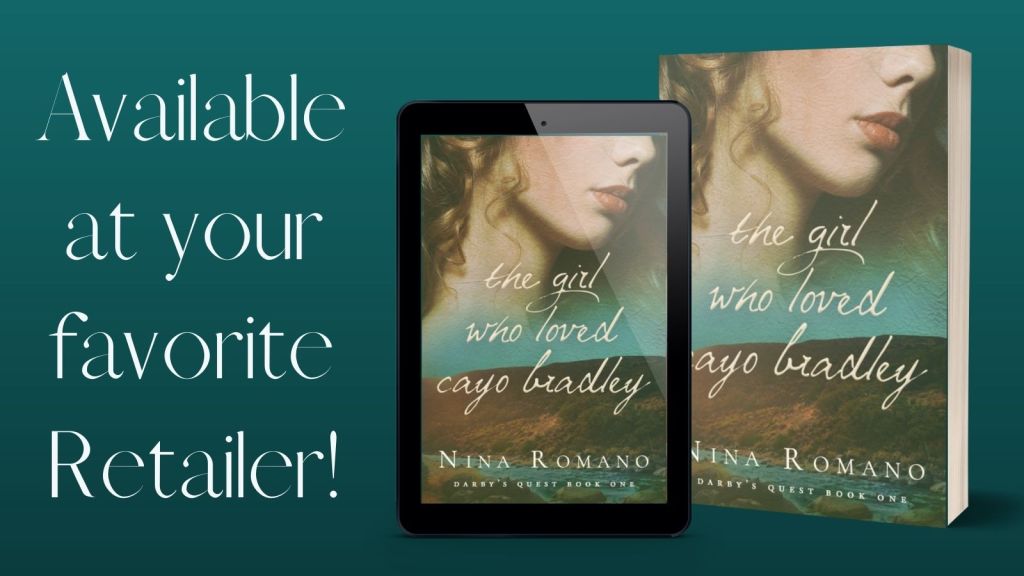
You’re re-releasing The Girl Who Loved Cayo Bradley. Can you tell us why you decided to make changes and if someone is thinking to re-release a book what they can expect and what to look out for?

I had originally wanted to publish this book with my new publisher Speaking Volumes, LLC.

Unfortunately, their acceptance came right after I’d already signed a contract with a small, independent publisher. The contract ran for three years and then I had the option of taking back the rights, which I did.  I resubmitted the manuscript to SV. Why did I do it?  The first publisher only wanted one book, whereas Speaking Volumes wanted a trilogy. In my mind, that’s a no brainer! Done deal!

But that’s my experience.  Everyone else will have a different spin on why they would switch publishers, or re-write and release a book. I did a great many edits on this book, but it happens that sometimes when you fix something, another problem will arise. I hope the end product will be a finer one then was first published.  I know one thing for absolute positive certain—the cover is a knockout and I’m hoping that readers will think the material contained therein is also!

What a gorgeous cover!

I try to tailor my questions to the authors I’m interviewing, and I noticed you have given quite a few interviews! Can you give our readers any tips on approaching a blog or website and asking them to promote you and your novels?

I have been asked to write guest blogs and do many interviews, which are always fun and help give an author visibility. Some even help promote books, and although I’d like to say that sales improve, there are never any guarantees.

I’ve even approached people directly, like this interview with you, Vania. I asked you if you’d be interested in interviewing me. My advice is be polite and straightforward, and don’t take a “no” personally. If the answer is negative—just try someone else.

Is there anything else you’d like to add to the conversation before we wrap up?

I want to thank you, Vania, for these provocative questions and your valuable time. I very much enjoy talking about writing and books—so this was a great pleasure. My hope is that a writer who reads these questions and answers gains some personal insight they can put to good, practical use.


Thank you, Nina! That was amazing! I’m sure everyone who reads this will find something useful that they can use for their own writing and publishing careers. I love it when we can support and help each other!


Read on for Nina’s author bio and all her social media links:

Nina Romano earned a B.S. from Ithaca College, an M.A. from Adelphi University and a B.A. and an M.F.A. in Creative Writing from FIU. A world traveler and lover of history, she lived in Rome, Italy, for twenty years, and is fluent in Italian and Spanish. She has taught English and Literature as an Adjunct Professor at St. Thomas University, Miami, and has facilitated numerous Creative Writing and Poetry Workshops at Writing Conferences throughout the States.

Romano has authored a short story collection, The Other Side of the Gates, and has had five poetry collections and two poetry chapbooks published traditionally with independent publishers. She co-authored a nonfiction book: Writing in a Changing World, and has been nominated twice for the Pushcart Prize in Poetry.

Nina Romano’s historical Wayfarer Trilogy has been published from Turner Publishing. The Secret Language of Women, Book , was a Foreword Reviews Book Award Finalist and Gold Medal winner of the Independent Publisher’s 2016 IPPY Book Award. Lemon Blossoms, Book # 2, was a Foreword Reviews Book Award Finalist, and In America, Book #3, was a finalist in Chanticleer Media’s Chatelaine Book Awards.

Her Western Historical Romance, The Girl Who Loved Cayo Bradley is a semifinalist for the Laramie Book Awards.

Her novel, Dark Eyes, an historical thriller set in Soviet Russia, is forthcoming in 2022 from Speaking Volumes, LLC.

Amazon Author: https://amzn.to/2SUamoF

The following three books are in hard cover, softcover print, and Kindle:
Amazon: The Secret Language of Women https://amzn.to/2MQZpNC
Amazon: Lemon Blossoms https://amzn.to/2TWqzYt
Amazon: In America https://amzn.to/2Hl2VzT

The following book is available in softcover print and Kindle:
Amazon: The Girl Who Loved Cayo Bradley https://www.amazon.com/dp/1645405397
Barnes & Noble: https://www.barnesandnoble.com/w/the-girl-who-loved-cayo-bradley-nina-romano/1130663914?ean=2940161021804

Goodreads: https://bit.ly/3vCJ871

Twitter: https://twitter.com/ninsthewriter
@ninsthewriter

Facebook: https://bit.ly/2BFi38l

BookBub.com: https://www.bookbub.com/profile/nina-romano

Thursday Thoughts: Keeping up with content and where I’m at right now.

Hello, May! I can’t believe how fast 2021 is going. Spring is right around the corner, though in Minnesota, it’s always been a little iffy when it will come and whether or not it will stick. We didn’t have a terrible winter at all, and due to some unusually warm temperatures in March, our snow disappeared a long time ago. I’ll probably do a little spring cleaning and put in a work order for a few things I need done around my apartment. While I don’t have many exciting things planned for summer, I’ve always enjoyed the lazy feel of the longer days. Do you have any plans for the summer?


Writing a blog post ahead of time requires to me to look into the future, or at least, aim to achieve the goals I say I’ve met so my posts don’t require too much editing the night before when I proofread one last time before the blog goes live. I was hoping to be done with my third book of the year (I’m at 63k, but sadly I’ve been so tired lately I spend a lot of my free time sleeping) and I am fighting a bit of quality vs. quantity, imposter syndrome, and self-doubt a lot of writers face when things are going too well. A lot of the argument comes from quality of the fiction, and something deeper, something with a few more twists and turns or a few more chapters of character development, may need a little extra time in the oven before the timer goes off. I’ve never been one not to be completely honest with what I read and write. I read and write romance. Characters have their flaws, they move past them to find a happily ever after. That’s all I’ve ever written and that’s all I’ve ever wanted to write. It doesn’t cheapen the work–it can’t or any adult writing YA, Middle Grade, and children’s books would be set aside and not considered “real writers.” Maybe no matter what one chooses to write, it’s always going to be a personal thing as to how long a book will take from start to finish, but the phrase “If writing is easy you’re doing it wrong” is always in the back of my mind after a successful writing day.

Graphic taken from positivewriter.com/printable-quote-posters-on-writing-and-creativity/

I won’t know if my books resonate with readers until the feedback starts coming in. That’s all anyone can use to gauge their skills, I guess. Can you sell your work or not? If it’s not worth the money, the consumer won’t buy, no matter how pretty your cover is or how well-written your blurb is. Simple as that.

I’m still waiting on my beta reader to get back to me with what she thinks of my first 1st person present standalone I’ll be publishing this year. In the meantime I have plenty to keep me busy. I just can’t let myself start another book. There is more to the business than writing, even if we wished there wasn’t. I’ll be focusing on that as times goes on and I’ll keep you updated on those things as I get them done.


How do you search through all the content out there? I’ve blogged before about my fear of missing out, and I need a way to figure out how to consume the information I need when I need it. I’ve thought of a couple of tips to help with that, and I’ll share them with you. Like so many streaming services and shows/movies/documentaries to choose from, if you try to pay for it all and give all your time to what’s out there you’ll go broke and crazy.

  1. Where are you in your journey? For instance, if you’re just starting your newsletter, content such as what to put in them, or developing an on-boarding sequence may be more in-line with what you need rather than how and when to cull a percentage of your thousands of subscribers who don’t open. Those two things are very different needs, and we could be talking years between needing to know each one.
  2. Is it tried and true? Things happen so fast in the industry that sometimes it’s not worth it to learn something if you’re not going to need it when you learn it. For example, I’m taking a mini-course from Mark Dawson about his launch plan. Being that I’m going to hopefully publish a book in the near future, taking that course makes sense. But if you don’t have anything that you think you’ll be publishing for a while, spending money on his course maybe wouldn’t be the wisest investment. Things can change between now and when you’re ready to publish. A new promo site may develop, or the Amazon Ads dashboard may go through a thousand changes before you’re ready to use it. Facebook is known for changing how you set up an ad. There are very few things that will never change–even tropes, trends, and craft advice can change if you write commercial fiction–but advice on what to blog about, building your author platform, or going back to newsletters, how to offer good content so readers sign up, things like that will always be necessary.
  3. How much money is it? I’ve blogged before about how some of these courses can cost hundreds of dollars. Sometimes, depending on what you need when you need it, a book or a beginners free course will be enough to get you on your way without breaking the bank. Time can also be an investment. I don’t know about your life or finances, but I would rather spend time reading about something and researching than spending money on a course that will spoon-feed the information to me, but at a significant cost.
  4. Make a list of the things you need at the moment versus what you should always be doing. Networking is something everyone should do that never stops. Probably one of the biggest mistakes I’ve made in the past four years is not making friends with other romance writers. They can beta read for you, recommend editors, help with newsletter swaps, keep you up to date with industry news, and be all-around cheerleaders and sprinting partners. As introverts, it’s difficult to put yourself out there, but networking, especially in your genre, is something you should always be working on. Same as reading in your genre. You’ll have a better understanding of what’s going on in the genre you’re writing in than listening to secondhand information. Learning craft is another thing you should always be doing, but things like listening to a podcast about a new program like Kindle Vella can wait until you have the time to consider if it’s the right path for you.

Cutting through all the noise is hard, and it’s difficult to be a hoarder of information. What do you do with a piece of information if you don’t need it right at that moment? You can put it away and hope it’s still relevant when you pull it out again, but chances are something about what you know is going to change. Like I said, ad platforms are notorious for that. There will always be new promo sites, or sites that have worked in the past but don’t work now due to saturation.

I need to remind myself that I don’t need to know everything all the time. Joining Clubhouse (the audio-drop in app) has been really hard for me–I realized that the full-time authors who do a lot of the meetings and talking can do so whenever they want because they work from home and aren’t under anyone’s restraints but theirs. I still have a day job and more than once I’ve been disappointed I couldn’t listen in a room because I was working.

I feel a lot of pressure to know all of the things, and a lot of that is fueled by being truly interested in the publishing industry, both traditional and indie. At least it’s something I can recognize in myself and try to control it the best ways I know how.


As a reminder, the giveaway for Barbara Avon’s author interview is still open! Enter to win a paperback copy of her book, Sacrilege, and a $25 dollar gift card to Amazon. Click here to read her interview! And click here fore easy access to the giveaway! The giveaway ends Sunday, May 9th, so don’t forget!

Author Interview: Barbara Avon

With the way Twitter is now–the platform showing you likes and responses of people you don’t follow–you can interact with someone long before realizing you don’t follow them or vice versa. It was this way with Barbara. I interacted with her a bit here and there, saw her name pop up on my feed a lot, but didn’t realize until she followed me that I wasn’t following her. She’s been a pleasure to get to know and has been writing and publishing for many years now. She’s a strong supporter of the indie community, and she’s a part of the huge and #amwriting communities on Twitter.

I was excited when she said she would answer some questions. I love hearing about other authors’ experiences, and I feel that we can all learn a little something either through the mistakes they’ve made, or how they were able to make something work for them. I hope you can find some of your own takeaways from this interview! Thanks for joining us!


You’ve been publishing for a while now. It looks like you released your first books in 2017. Did you write and publish before that, and how did you get into writing?

First of all, I want to thank you for inviting me to this interview! 

I started this journey in 2002, which is when I wrote my first novel, “My Love is Deep”. Life happened, and I set it aside until 2015 when my husband encouraged me to publish it. Unfortunately, I didn’t know that self-publishing was an option, so I lost a lot of money by having it printed at a printing house and selling it locally through Facebook. I have always loved telling stories. I earned an A + in high school on a short story I wrote set in the 1930s. My teacher even made me read the story out loud and you can imagine how harrowing that was for a shy teen girl. I knew then that I would someday write a novel. 

The indie publishing industry changes so quickly. How is publishing different now than when you first started, and do you think it’s better or worse?

As I mentioned above, I didn’t even know self-publishing existed. After losing $3000 out of pocket, someone finally told me about CreateSpace (now KDP). I honestly don’t know if it’s any different now than it was a few years ago. Self-publishing makes it far too easy for anyone to publish, and that isn’t necessarily a good thing. What should come first, without a shadow of the doubt, is the story. That’s all that ever mattered to me. I am grateful that I have the outlet that allows me to share my work with the world, but far too often, I see stories published that are lacking in some way which tells me the author published too quickly, or without regard for the actual story. 

You publish wide, meaning on all platforms. How did you make the choice to publish wide instead of enrolling your books in Kindle Unlimited?

Again, I didn’t know Kindle Unlimited with an option until later in the game. Now that I’m aware it exists, I still choose to publish “wide”. To me, exposure is everything. 

You have a strong Twitter following. Do you think a strong writer’s platform helps you sell books? Where else do you like to hang out online? 

Twitter is where I sell 90% of my books. You often read tweets from others saying that follower count doesn’t matter. I disagree. The more eyes on my books, the better. I dream big, and if I’m going to be honest here, I want to be a household name. I want my books read across the globe. It’s only logical that a strong following will get one there faster. I started at zero followers like everyone else. Did my sales increase along with my Twitter following? Yes, it’s obvious that they would. I don’t spend a lot of “leisurely” time online. My days are hectic, and extremely busy. When I have some time, I dive into reading!  

In one tweet on Twitter you jokingly said your marketing manager (your husband) told you that you needed to crank up your marketing strategy a notch. Kidding aside, how do you market your books? And in conjunction with that, do you think being wide helps marketing or makes it more difficult?

Marketing is a necessary evil and my least favourite part of being an Indie author. However, I market mostly on social media (Twitter being my favourite platform). I am also a member of BookBub, AllAuthor, Goodreads, and several other sites that feature Indie Author’s such as Patric Morgan’s Indie Book Store. In the past, I have agreed to radio interviews, television interviews, and print media interviews. I often tell authors that they must do “everything they can” to get themselves and their books “out there”. It is part of the job description to market yourself. I do believe publishing wide helps a great deal with this. You can find me on Kobo, Barnes and Noble, Scribd, etc. 

You write articles for www.writerspayitforward.com. Is writing non-fiction something you’ll always keep doing? Do you plan to write a non-fiction book someday?

I have always written opinion pieces. Two decades ago, I had my own column in the local Urban Weekly and I have worked for two city bi-monthly glossies. Today, I write guest blog posts partially for the exposure, (Think: Google search), and partially because I want to help my fellow authors on their journey. 

Your bio says you’re a multi-genre author. What is your favorite genre to write? What is a genre you don’t think you’ll ever try?

Even though I started with Romantic Suspense, my favourite genre to write is Horror (including Paranormal Romance). There is something hauntingly beautiful about the dark and mysterious side of life. I’m currently working on my next horror. Despite the genre, however, there will always be love in my books. I think the only genre I will never try to write is Science Fiction. (I do write Time Travel.) I can’t imagine creating a whole world that revolves around Sci-Fi and I’m in awe of my fellow authors who can.

What is the biggest mistake you’ve made since you’ve first started publishing?

Not starting sooner! Along with that, I’ll repeat what I said in my first answer – printing my first three books at a printing house. 

If you could give a new author one piece of advice, what would it be?

Confidence is the key to great writing. Be bold, be brave, be different. Cherish your own voice and what makes you unique. There will only ever be one Stephen King, and frankly, I don’t want to be Stephen King. I want to be Barbara Avon. 


Thank you so much Barbara, for taking the time to answer my questions! It’s always fun to get a glimpse at what other authors do as they are writing, publishing, and marketing their books.

If you want to keep up to date on what Barb has in store for her readers, sign up for her newsletter, and bookmark her website. Thanks again for joining us today!


Follow Barbara on Amazon | Goodreads | BookBub | Twitter

Thanks for reading!

Author Interview: Women’s Fiction author Brickley Jules

I’d like to welcome Brickley Jules to the blog today. I’ve known Brickley for years, and it’s one of those friendships where I can’t remember where we met (probably Twitter) because she’s been a friend since I started writing. She has a new release coming out that I was happy to edit for her last year. With so little time, every launch is a victory, and I’m happy to be a part of her launch and the rebranding of her series. I asked Brickley a few questions about writing and publishing around such a busy schedule. Thanks for tuning in!


You published Her Unexpected Life in 2016. How has indie publishing changed since then? Anything stand out to you as better?  Worse?

The two publishing entities [CreateSpace and KDP] I used in the past have combined meaning I only have one place to go to get my work out to the public which is easier. But I’m a creature of habit so I’m not as fond of the changes as others might be.

More books are published than ever before. Can you share what you plan to do in terms of marketing after your launches?

I plan to do some more research on marketing to stay up to date and I’m going to utilize every free source of marketing I can. 

Facebook for example has many different free options like Facebook Live, Groups, Author Pages, Cover pictures and videos, and Events. These can be used together to do Release Parties and Anniversary Release Parties etc.

Twitter, Instagram, Pinterest, Goodreads, Google, and several other social media outlets can be utilized to get the word out for free about my releases without costing a thing.

I also intend on using my WordPress Blog to post about my novels.

If you could go back to 2016 and tell yourself one thing that you know now, what would it be?

If you get burnt out writing, editing, or after your computer crashes step away for a bit but don’t completely quit. Don’t allow yourself to make and use excuses to justify not working on your book or educating yourself on your craft. Take a break, pick up a friend’s novel, and do some relaxing studying.

Brickley Jules is a pen name. Do you have any tips for an author thinking about publishing using one? How did you choose yours?

Brickley Jules to me has a science fiction feel and the original manuscript, Out of the Blue, I was intending on publishing, was a spicy mermaid romance but it has overall arc problems, plot holes, and needed a lot of work so I didn’t publish it. I had already done all the leg work though of establishing Brickley Jules on social media so instead of starting over with another pen name that fits my Women’s Fiction book, Her Unexpected Life, I stuck with Brickley. I do think Brickley Jules works with my erotic motorcycle romance, Vested in Her.

My advice would be to look at other works in your genre and see what vibe the names give off. Maybe do some research on the matter but ultimately you have the choice to use whatever name you want to.

A long time ago we were talking about publishing and how difficult it is when you don’t know what you don’t know. How have you gone about filling in those knowledge gaps? 

I have a great group of writer friends who have helped me fill in the gaps and lots of other great writers have published blog posts on their experiences along their writing journey I read those. Otherwise I’m a trial and error girl.

You have a family and work full time. How do you carve out writing time?

It’s hard to find extra time but recently I busted up my ankle and had eight weeks to work on finishing the revamping of the interior vibe of Her Unexpected Life and updating its cover.

I also took some time to work on something new for my readers. More to come on that later.

Normally I have to carry my laptop around in my mom taxi and work on my books while my daughters are at their practices.


Thanks for sharing your experiences, Brickley!

She recently revamped her book, Her Unexpected Life, and is publishing the next in series, Her Ordinary Life. You can find both of these and her erotic Motorcycle Romance, Vested in Her on all your favorite retailers!

Amazon

Facebook Author page

Goodreads

Instagram

Thanks for reading. Until next time!

Amazon Ads: A discussion

A love a good round table talk about things that are working in the indie community. Be it a new marketing tactic or a new way of doing things, I’m all in. I may not take any action–mostly because I know I’m not already doing what I could using tried and true methods, like building a newsletter. But I really enjoy reading discussions about something I’ve tried and can compare what their opinions and expreiences, especially when heavy-hitters in the industry weigh in with what is working for them–and what isn’t.

Trust me, if something isn’t working for them–you’re not going to get it to work for you.

And as always, we have to think of what our definition of success is. When it comes to selling books, that may mean one stranger buying your book. That may mean your first review from someone you don’t know. When you get to the people who are trying to make a living, usually their version of success is making money to live on, quitting their day jobs, maybe using their royalties to have a more comfortable retirement. Indies just starting out think small. A book here, a book there, clicks and tons of impressions are all that is needed to spur them on. I get annoyed, mostly because if you think small, you’ll be happy with peanuts. Someday I would like to quit my day job. I doubt that will never happen, but if I don’t at least aim for it, it won’t, for sure.

So I was pleasantly surprised when I stubbled upon a discussion in the Self Publishing Formula Facebook group headed by Mark Dawson. Mark runs an ads course and is a very successful indie in his own right. Other big names who were chiming in included AG Riddle and Russell Blake. I really want to copy and paste parts of the discussion, but it’s a private group and I don’t want to get kicked out. If you’re an indie and want to join, the link is here: SPF Community.

AG posted a poll: Do Amazon Ads work? In later comments he amended his question to, Do Amazon Ads work right now? And I feel that while some people are still getting their ads to work, the consensus was actually, no they don’t.

At least, not in the way we hope they will.

Lots of things come into play here, and the one that I’m reminded of most is that while Amazon Ads won’t let your book sink down the rankings into obscurity, what you want the ads to do is help your book get sticky enough that Amazon helps you sell it. Email blasts, recommending your book, hitting the popularity list being chosen for a Kindle Daily Deal. Ads alone aren’t going to help you do this. This is what I gleaned from the conversation, and you can tell me if you agree.

Do Amazon Ads work?

*Yes. If you have a series. Someone commented and said that ads don’t truly work if you’re counting on read through to cover the cost of the click. This is a good point and why the number one piece of advice is to write in a series. But the ad is still putting book one in front of readers. It’s up to the strength of the book (is it well-written) and if the other books are available if the ad spend is going to be worth it.

Let’s look at the cost of a click for a standalone book at .99. You don’t get .99 off that sale–your max royalty amount is 35%, so about .35 cents. If you bid .35 on a click, you’re breaking even, right? That’s what I’m doing right now on my first in series. I put it on sale for .99 until the end of the year because it’s a holiday romance. My other books in that series are 2.99. With dynamic bids down, my clicks won’t always cost the exact amount I bid, and I may make .10-.15 on that first book. My others are priced at 2.99, in which I get my 70% royalty, or 2.09.

*Yes. If your book sells well at full price or is in KU. I’ll make more off a .99 cent book in KU than I will selling it for that price. I can spend .35 a click because a full KU read of book one will earn me 1.35. Which is a dollar in royalties.

*Yes. If you have all your categories and targeting situated. There’s nothing Amazon hates more than showing your book to people who won’t buy it. It’s a waste of time for them and for their customer. Customer satisfaction is all Amazon wants and if you’re trying to show your book to as many people as possible and you lose relevancy, Amazon will stop showing it. That’s tough for authors who genre-mash, write without thinking and have no idea what their genre is, or have poor product pages. I didn’t consider why an ad would stop working until I read Robert J Ryan’s book, Amazon Ads Unleashed.

*Yes. If your book is a good product and has the reviews to prove it. There’s not much to say here, and I’ll quote two of the comments:

Ads can only give extra visibility to what you’ve got – they can’t make it sell better. The product does the selling, not the ads.

Robert J Ryan

A very long time ago I got a degree in advertising. One of the bits of wisdom I remember is that good advertising will kill a bad product quicker.

Jennifer L Anderson

*Yes. If you know how to use them. Figuring out how the platform works takes a bit of time, and even though you may not spend much, if you want to see traction, you have to be able to afford some spending money for clicks. As I write this, I’m 19 dollars ahead for the month, but I wouldn’t be there if I couldn’t afford the 10 dollars I’ve already spent on clicks.

The problem is, Amazon ads will help you, but by a very thin margin. Using ads won’t make you a millionaire over night. I break even every month, sometimes make a little–a cup of coffee little. I have ten books out, I’m writing more (or trying to. My life has been a bit trying lately), and my covers, at least, I think, are on point even if I’ve done them myself. It took a long time for me to realize I wasn’t writing what was selling, and lots of authors do that. Maybe they’re writing fantasy, but they aren’t hitting the tropes. Maybe they’re planning a series, but only have book one released.

It’s obvious the better product you have, the more successful you’ll be. Mark Dawson has professional covers, and he writes in a couple popular series. Plus, he’s a good writer. I think all the big indies who have “made it” can safely assume their writing is good and resonates with readers. If you’re pushing water up hill as Robert J. Ryan likes to say in his book, then you need to take a look at the product, not blame the ads.

I enjoyed the discussion very much, and I hope you look it up if you haven’t. I think one of the key takeaways from the discussion is that everyone agreed they used to work better than they do right now. The market is super saturated, and by some very talented authors. We have to work with what we’ve got, and using other platforms in conjunction with Amazon ads may be the better way to go. All the big indies who joined in the discussion have large email lists and they use ads to bring new readers in, not keep readers from disappearing. That’s an important observation, and one I have taken note of.

Have you found a secret ingredient to make Amazon ads work for you? Let me know!