It’s hard to believe that by the time this blog post is published that the first month of 2026 will already be over. There’s nothing scarier than looking back at time that’s gone and realizing you didn’t do anything. Time is a finite resource, in some ways more valuable than money, and no matter how hard you work going forward, you just can’t make up what could have been. That’s why I really dislike the phrase “Give yourself grace.” That’s fine, when you really really need it, but if I gave myself grace for all the times I’ve wanted it, I’d have half a book and two blog posts done. Not really, blogging and writing is what I love best in the world besides our new cat, Pim, but sometimes you have to get your words down first then indulge in what you consider grace (the new season of Bridgerton, anyone?).
Pim for the cat tax
Anyway, so 2026 is already 1/12 over, and while that doesn’t seem like much, summer will be here before you know it.
January was full of little crappy things that sucked my time away from me. I had to get a hair cut, then I took a few minutes afterward to color it because I’m not getting old without a fight. My car needed an oil and battery change and that took half the day. My son needed to go to a doctor’s appointment, and I had a dental cleaning. Then I finally put my big-girl panties on and scheduled maintenance to fix our toilet and replace our sink faucet. I hate having workmen in the apartment and with my previous health issues, not having an accessible bathroom triggered my anxiety. They were here for two hours and I managed, though I was working and had the double-whammy stress of not having a bathroom and being trapped at my desk. I was able to get through it, and now I don’t have to worry about it anymore. They gave us a new toilet, which I didn’t expect, and they chose a pretty faucet for the sink that I like looking at.
So, I’m trying to check things off my list, and last month it just seemed like everything happened at once. This month I’ll still be nickel-and-dimed out of my free time as I have to get my taxes done–unless I push that back to March–my daughter has a new-patient appointment at my dental office which I am very thankful for because they’ve told me in the past that they had reached their capacity for the insurance we have, and I have to make us appointments at the post office to get our passport applications submitted. I want to go to Florida this summer and having a passport is the only way my daughter can fly because she doesn’t have her driver’s license yet. I figured since she’s going through the paperwork and hassle that we all should, but that means figuring out a time when all three of us can go–which has to be on one of my days off work.
So, yeah, I’m giving myself some grace because those are things that I just can’t get out of, but the frustration is there because I want to get Wicked Games ready so ARCs are available in March, and mostly, because I just like working on my books and when I’m doing other, necessary garbage, that time is gone.
I did manage to finish re-editing Captivated by Her, but getting the second book in that duet, Addicted to Her, re-edited will take me a while, and I won’t have that duet re-released until probably spring at the earliest. I’m changing out the covers as well and I always order proofs when I do that. I’m hoping that once I get the things that I only need to do once every six months out of the way that my free time will open back up.
I also want to find time to do some marketing things like trying Bookbub ads again. The last time I tried was back when I was wide and I didn’t have my first person backlist. With all the AI garbage that Facebook is trying to shove on us in the ads dashboard and them taking away the ability to target bigger authors, it just feels like Bookbub ads might be easier and have just a tiny bit better ROI. I mean, I’m hoping that’s the case, not that I heard it from somewhere. But I won’t run ads without researching–I have to reacquaint myself with the platform to make sure I know what I’m doing and how much to bid, or I’ll sound like every other clueless person who says ads didn’t work for them. I get BookBub’s newsletter, and right now I’m going through their Ultimate Guide to BookBub ads, and you can read it here or bookmark it if you’re interested: https://insights.bookbub.com/ultimate-guide-bookbub-ads/. What’s also a plus is that their ad graphics are a lot easier to put together because they literally tell you what works. Facebook lets you guess, and the creative you make could break your ad and you won’t even know it. I just feel like with how little time I have that choosing a platform that doesn’t have so much guesswork is the way to go.
But there is a time and place for Facebook ads and if you want an up-to-date tutorial on which kind of ad to choose (such as traffic vs. engagement) and how to turn off all the AI stuff and choose the interests for your audience that are available, you can watch David Gaughran’s most recent tutorial here:
He doesn’t go into much of what actually makes the ad, like the description, headline, and primary text, and I think those are really important. It’s like the cover, title, and blurb that work together for your book. If you don’t have the right description, primary text, headline, and graphic, any one of those broken cogs can take the whole thing down (or drive cost-per-click up). So, definitely look into that part of it as well because the backend and the front end work together.
Sales are slow, which is why I’m looking for other ways to get the word out. I keep seeing that Trial Reels on Instagram is the way to go, but I still feel pretty deflated after TikTok started labeling my carousels as AI and putting that level of commitment into a different social media platform doesn’t sound appealing. It never did, but now it feels even worse. I’ve been trying to post to Pinterest, and I’ve been able to make a few pins and a few boards, though nothing that would move the needle in any significant way. On the plus side, making a pin is very easy and for the amount of time it took me to make a TikTok carousel, I can make three or four pins. Mostly it’s just another platform a reader might stumble upon and realize I’m an active author who is consistently publishing books.
But yeah, that’s been the first four weeks of 2026 in a nutshell, and I’m just going to be keeping on, keeping on. My main goal is getting Wicked Games ready, and then I can loosen up a little bit. I announce books and create deadlines so I have something to work toward. With a slow sales dashboard in a climate where a new release barely does anything because of all the content out there, it would be easy for me to just let the things that use up my free time take over. Announcing books and keeping to a timeline for anyone who just happens to be waiting keeps the spark from dying out.
This is a short blog post today, but nothing has caught my eye online to complain about, which actually is probably a good thing. Keeps my blood pressure low.
I hope 2026 has been going well for you all too! See you next week.
I stumbled upon something interesting on Threads the other day. Someone was asking for tips and tricks on how to make Amazon ads work for her. Of course, I looked at the book she was trying to sell, noted a few things, and told her what I thought. That never works well in the land of the public, and there were a couple of people who commented on my comment. It’s interesting to me how people can tell you their opinions without looking at what you’re trying to sell or just spew stuff based on their own poor experiences. I’m not going to call this author out, but you can apply what I’m going to say to almost any debut author.
One of the things you should do when wanting to run ads is look at your product. We think we’re pretty wonderful we’ve managed to write a book and publish it, but that doesn’t mean everyone is going to want to read it. In fact, there are so many books out there it’s actually a miracle if you can find anyone who wants to pay for what you’ve written. Thinking that you’re going to set the world on fire will only set you up for disappointment. You have to be realistic when it comes to your book and by that I mean you have to look at your book and your author career as a whole.
What did I see when I saw her book?
It was only the first in a duology and the second book wasn’t on preorder. This is a Catch-22, and we know it is. People won’t buy the first book in a series without the others available because they don’t want to wait or won’t take a chance the author will finish. Authors who don’t sell enough of their first book think there’s no interest, lose motivation, and may not want to finish. I get it, but we also need to look at it from a reader’s point of view. Not being able to start and finish a series on their timetable is unsatisfying. Bingeing is a way of life now and when we are kept from it, we hear about it. No one wants to wait for the next season of Bridgerton or The House of the Dragon. No one knows where they’re going to be in 2026. This author doesn’t have the second book even on preorder, so God only knows when it will be out. She may not have even started writing it yet. It’s a sad fact that if she’s selling a duology, the first would sell better if readers had access to the second, even if only in preorder form.
She’s wide. Amazon ads can be used if you’re wide, but to me, it makes more sense to use Facebook ads so that you can capture readers on all devices (by targeting them in your audience list). I told her that, and someone said she uses Amazon ads to great effect even though she’s wide. I just scoffed. Okay, Karen. The person who said that has been publishing for years, has over 30 books in her backlist, and, I would imagine, a very large newsletter list. She started way back in the Kindle gold rush where it was possible to make a lot of money simply publishing books and buying ads to fuel the flames. Publishing isn’t like that today, and only running ads won’t get you very far, especially as a debut author. I wasn’t impressed with her answer since it was clear she didn’t look at this author’s book or lack of backlist to provide any real, personalized direction. There’s no reason why you can’t run Amazon ads if you’re wide, but Amazon ads are known to be spendy, can’t get any traction for less than 30 cents a click, and you’re only reaching one audience. Facebook ads can reach more than only Kindle readers, can be cheaper (there are ads where I’ve gotten my clicks down to 9 cents a piece), and just seems all around a better investment. For her.
She’s not in KU, and her book is priced at $5.99. This goes along with the “wide” part of the case study. I’m not saying Amazon readers are cheap, I’m sure there are people on Amazon who buy books at full price. But, we’re also talking about a debut author who has one book and the other book doesn’t look to be forthcoming. I’m not sure how many readers will really take a chance on a book that’s $5.99. I’m not arguing for or against being in Kindle Unlimited, that’s a business choice and being wide can be beneficial, but you are choosing your audience and that audience has disposable cash to buy entertainment. I don’t think it’s easier or harder to reach those people, you just have to know how. She may have her book in the Kobo Plus program (Kobo’s KU) but running Amazon ads won’t help her find those readers. So, she’s using Amazon ads to find readers who are willing to pay $5.99 for a debut author who is more than likely still writing the next book. If she’s getting a lot of clicks and no sales, her price could be part of the reason.
She has few reviews. We like to think that reviews don’t matter, but they do. My duet won’t move no matter what I do and I attribute that to not putting them on Booksprout for reviews. The first book is only at twelve, and the second book is only at ten. I didn’t look to see if those are text reviews or only star ratings, but it doesn’t really matter. I don’t know the statistics on the number of readers who read reviews or just glance at the stars, but it does stand to reason the more star ratings you have, the better your book looks. Even if you have a good cover and solid blurb, a reader could nope right out of there if you don’t have enough social proof.
The book is old. She published a while back, about eight months ago, well past the ninety-day grace period Amazon gives you. Running ads to a book that is old and already not selling well is like pushing a boulder up a mountain. Amazon is all about relevancy, and if your book isn’t relevant, meaning, people aren’t buying it, Amazon doesn’t care about it. They may still show your ad, and you get evidence of that when you see your impressions, but who knows if Amazon is pushing down your ad when it could be doing better. She’d do better to put her second book on preorder and then create an ad that targets both of them. That may be her plan once her book is closer to completion, I don’t know, but trying to drum up buzz for an old book takes a lot of time and money. Being that I have no idea how many ads or what kind she’s running, it’s hard to say if creating more and different kinds of ads (category vs. auto placement vs. keywords for example) with a higher budget would work.
So that’s what I saw when I looked at her Amazon page. Marketing is more than just figuring out an ad platform or posting social media graphics. It’s the genre you’re writing in, what your publishing schedule is like, if you offer a newsletter. She’s just getting started, so it’s no surprise her marketing tactics will be slow to take off.
I mentioned a little bit about the ad platforms, but let’s just take a shallow dive into them (I don’t have the expertise to go deep). Amazon’s ad platform isn’t complicated, though you do have to invest in clicks if you want any traction. I can’t get anywhere if I’m not bidding 40 cents or more, and that’s for contemporary romance/billionaires/rockstars. The ad itself only consists of your book cover, a tagline if you live in a country where that’s offered, and the number of reviews your book has. You need a strong cover, and if you get clicks, your cover is doing its job. It’s after you get the click and it doesn’t convert into a sale that you need to look at your product page. If your price doesn’t attract readers or if they’re looking for KU books and your book is wide, or your blurb is confusing, or they decide you don’t have enough reviews. Those can affect other ad platforms too, but if we’re just talking clicks, having your book in solid categories so they show up in the right spots on Amazon and having a fabulous cover will go a long way.
There’s a lot that goes into Facebook ads, and the potential to get one part wrong is huge. It’s probably the reason why the guy who said my Facebook ads recommendation was garbage. He had a bad experience, didn’t know how to put the ad together and maybe lost some money, but not everyone is going to have that experience. You need a good description, a good hook (headline), a good stock photo (creative) that will draw readers in enough to click. They can take a lot of trial and error and it can be costly, but I know it can be worth it once you figure out the secret sauce. Again, though, clicks can be a waste of money if readers don’t like what they see after they click on your ad. Facebook ads allow you to target more than just one kind of reader (versus Amazon ads whose readers only read on Kindles). You can target Google Play readers, Apple readers, Nook readers, Kobo, hoping to draw in those Kobo Plus subscription holders. Facebook will spend your money faster than Amazon does, but I found overall the clicks can be cheaper which allows for a little wiggle room. The dashboard is hella complicated, and I hate clicking around in it, but like any platform, once you get used it it, it’s not so bad. She could start small and boost a post off her author page and see how it goes. She would still need to create an audience, but you’d want to do that anyway. Every author needs comps.
I saw someone who was having bad luck with BookBub ads (not the featured deal you have to approved for) saying she was getting impressions but no clicks. It’s really important to understand what kind of platform you’re using. Amazon ads can cater to regular-priced books as does Facebook, but BookBub’s audience are freebie seekers and if she was trying to sell a book at full price, she wasn’t going to get any clicks. I asked her if she was trying to sell a full-priced book and if she had the price on her creative like they encourage you to do, but she didn’t answer me. Whether she didn’t see my response or she resented me telling her a full-priced book wouldn’t sell there, I have no idea, but I’ve heard of other authors trying to sell full-priced books on BookBub and it just won’t work. They have built their entire readership on readers who want free and cheap books. Trying to go against years of that will be futile. You can use them if you put your book on sale, though I have noticed that not a lot of authors want to do that. The author who is trying to sell the first in a duology might do that when her second book comes out, but without knowing her, I would guess the chances are slim.
When you decide to run ads, you have to take a look at your product and your company, which is you. Backlist, number of reviews, how long you’ve been publishing (there’s a reason why companies love to say they were established in XXXX–it creates trust in the person who’s looking at the advertisement), and how often you publish can all influence a reader’s potential to buy. Being a debut author isn’t a bad thing–we all have to start somewhere–but you have to keep your expectations in check. When she does release the second book in her duology, how long will it take her to write another book? Will she be marketing two books for the next two years? Will she release another first in series and expect readers to wait while she writes the next? Building a backlist can take years and she may not get ads to work for her for just as long.
There’s a reason why they say writing the next book is your best marketing tool. I understand the want to push your book out into the world, and I applaud her for trying, but she seemed to think the ads were what was going wrong, and well, I think in this case, it’s the operator and not the machine.
I’m certainly not an expert and I’ve killed ads that were costing me money, not making it. Like I said, I stopped trying to run ads to my duet, and now when I get someone reading them, I just figure they found out about them some other way. I’m running Amazon ads to my King’s Crossing series, and I had to kill a very productive ad. No one was preordering and the clicks were adding up. I may turn it back on once more books are available to purchase or read in KU. I knew from the start I would be paying for exposure, and I left three of the slower-moving ads on. I created two for my rockstars but they are very slow moving right now but maybe rockstars aren’t in and the books are a year old already (relevancy).
Once I write a blurb for the whole series I’ll set up a Facebook ad for it. I need a blurb that explains what the series is about, but I’ve been busy doing other things (which isn’t great since marketing this series should be on the top of my list) and well, I hate writing blurbs.
Anyway, ads are a great marketing too, just be sure you’re in a place in your career where you can benefit from them and always make more than you spend.
I found this in my email from James Blatch–Is your book advertising ready? Could be a fun webinar to listen in on. It’s free, and you can click here to sign up:
Things may seem bleak now, Brother. But if I’m learning anything from my art studies, it’s that it is almost always a matter of… perspective. I look at my art, and if I do not like what I see, I may always alter the color palette, but I certainly do not toss the entire design aside. Perhaps you, too, could do the same in your own life.
There is a lot of advice online about indie publishing, and we all know to take advice with a grain of salt. People rarely post the whole story to any situation, but a lot of times that’s not their fault. When you’re given a character limit, there’s not a lot you can do. That’s why when someone is asking about ads or editing or marketing, there’s going to be a lot of missing, or misleading, information. Whole books are written on topics like that and there’s no way the person asking how to run Amazon ads will successfully learn everything they need to know in a Threads post or on Twitter. Even Facebook with their unlimited character limit, people won’t/can’t post everything you should probably know. Besides, it’s not their job to teach you, and their way may not be your way.
Part of the problem is the people asking don’t want to take the time research for themselves. We’re all busy and sitting down to read a 200 page book on Amazon ads may sound bland and time-consuming. They want to know the nitty-gritty, but the problem is, we all have different books, knowledge bases, different budgets, and yeah, different perspectives.
I never considered it until someone I’ve interacted with every once in a while relayed this story on Threads:
I related to the post because I too, break even on Facebook ads, but I never considered myself “failing.” I reason that I’m finding readers–people are reading my books who wouldn’t have before–so I never considered the ads or my books, a failure. So, yeah, in a sense they are “working” but anyone who is in my shoes would want them to work “better.”
That’s why it’s important to know what you want out of your books, what you want out of your business, and what you want out of your ad platform. If you want to sell 100 books a month, your goals are a lot different from someone who’s happy to sell one. If they’re happy with that one book a month, then your marketing strategy is going to be vastly different from theirs.
I haven’t done a very good job of figuring out what I want, mostly because I’ve been happy simply writing the next book and breaking even. I’m rather vague, saying I just would like to make a part-time income to fill in some of the blanks my day job leaves behind. I need to change that mission to earning a part-time income without having to spend on ads, or making 200% ROI so I’m earning more than just being able to cover ad costs. I’m grateful I’m selling books at all, even if I have to pay for ads to do it, because the market is crazy right now–there are so many authors and books out there–and selling books isn’t a guarantee no matter how wonderful your books are or how big of a backlist you have.
So when you seek advice online, be prepared for advice given by people who have different goals and perspectives than you. Rarely do we all want the same things or have the resources to obtain them. Taking advice from someone who has very little to spend on ads will be a lot different than listening to advice from someone who can afford to throw $500.00 a month at them. They can because either they have the day job to afford it, or they’re making money off their books and they’re putting their royalty money right back into their business. You may be a ways off before being able to do that.
If you aren’t making money off your ads or you’re not selling books, changing how you look a your product can help too. Get honest feedback on your cover. Get help rewriting your blurb. We become very close to our books and we’re biased because we don’t want to think anything negative or bad about something we worked so hard on. But it’s essential to look at your book as a reader of that genre and not its creator. Change your perspective and you might be faced with a whole lot of truths that can only help you move forward.
When you think about ads or booking a promo through Written Word Media or something else like Fussy Librarian, it helps to know what you want. Do you just want to make your fee back? Maybe you want some reviews too (keeping in mind on average, only one reader out of 100 will leave a review). Maybe you’re just testing the waters and don’t mind losing a little money. Maybe you’re just paying to get your name out there, wanting the exposure, or maybe you’re pushing out your backlist and laying the groundwork for a new release. If you know what your goals are, you can study what others are doing and twist them to suit you and your business.
If someone does say they are having success with ads and you want to break down the hows and the whys, here are some basic things you can look at:
How are their covers? Covers play an important part when you pay for ads, especially Amazon ads where the book cover is the only thing that’s featured (if you don’t choose to write ad copy). Are yours up to snuff? Because if they’re not and theirs is, you can throw their advice away. It won’t work for you.
Blurbs. You need a strong blurb (and cover) or you could pay for clicks and once they reach your product page, they’ll back out and you won’t get any sales.
How many reviews do they have? Opinions on this vary, but from my own experience, books that have more reviews do better than books that have fewer. If you have five and the person you’re talking to has 500, you’ll have to keep that in mind and maybe realize it will be harder for your ads to encourage sales.
How often do they publish/how big is their backlist. If they publish four times a year and never fall off Amazon’s 90-day cliff, but you can only publish once a year, take that into consideration. You’re going to be pushing a boulder up a mountain, and that author is already at the top.
Are they promoting other ways (like a newsletter)? Any way an author is pushing readers toward Amazon tells Amazon to push your books and ads will work that much better. It’s kind of a crappy cycle: the more you push readers to Amazon, the more they push your books, and the more your books will sell, and the more your ads work, and the more your books will sell, and the more Amazon will push your books. I believe that’s called being “sticky” an achievement I haven’t reached yet.
Changing your perspective can help in other ways, too. Experiment with your bid, experiment with your ad copy/tagline, even changing your keywords or categories. If something isn’t working, you need to look at it from a different point of view. This is what my ad would look like if I ran an Amazon ad with ad copy to Twisted Alibis.
For as good as it sells, I’m disappointed I don’t have more reviews, but it’s better than Captivated by Her that only has like, 11 star-reviews and maybe one text-review, so I’ll take what I can get.
You can study that ad and think of what you could do if it was your book. Is the cover good? If you’re in a country that allows you to add text, is your tagline hooky? How many reviews do you have? Is your Kindle price where it should be, or is it too much… or too little?
You have a lot more freedom with Facebook ads, though they’re making changes now and I bought a class from The Writing Wives because Mal is going to go over them. I’ll be logged into work and I won’t be able to watch it live, but I need to know what to do the next time I want to set up a Facebook ad. I have two running right now that have great social proof and I’m never going to turn them off. As of right now, even though I’m slightly losing money on them because sales are dismal, they are the only thing driving any kind of traffic to my books.
There are a lot of resources out there about how to set up Amazon and Facebook ads. A lot of it is technical information, and you have to take that information and tailor it to your books. Like with Facebook ads, not everyone is going to use the same featured stock photo, or use the same headline, or use the same description. All they can tell you is how to set up the ad and possibly give you tips on hooks. You’ll have to figure out what works and what doesn’t. Look at your ad in the POV of a reader and ask yourself if it would draw you in.
David Gaughran has a ton of information on Facebook ads, and he recently just did a tutorial on how to turn your book’s cover into a graphic using Canva.
This blog post has gotten way out of hand, and honestly, I’m not even sure what I’m trying to say. Listen to what people have to say, but be aware their goals may not be yours. That might not be a bad thing–getting others’ opinions can be helpful. Know what you want out of ads, and be honest with yourself if they’re not working. Or if they are working and you want them to work better, figure out what you can do, even if that’s just adding a dollar to your daily spend (if you can afford it and/or if you know you’ll earn it back). Right now, I’m stalled out, spending about 8 dollars a day and earning 6 if I’m lucky, but I think it’s because I haven’t published anything for a long time, and we always have to keep in mind that writing the next book is the best thing you can do.
It’s been kind of a long week, and it’s hot outside–86F. I’m going to go outside and give some water to my animal friends and walk around the block to clear my head. I swear to God I’ll be a different person once this series is done. Maybe I can finally get some rest.
Words: 2725 Time to read: 14 minutes (FML, I’m sorry!)
When I go through and read threads and posts about marketing, I’m surprised sometimes by the misunderstanding. I shouldn’t be because I had the same misunderstandings long ago. I don’t think authors really grasp the concept of what a long game writing and publishing is. We’re still hopeful that we’ll be an overnight success and that marketing will be taken care of for us by a viral TikTok or a random influencer who happens to love our book. The problem with that though, is that even if something like that were to happen, a lot of us don’t have our ducks in a row to keep that tail going.
During my first five or six years of publishing, I didn’t get what marketing was because I was thinking of each book singly as I published it. I also didn’t understand the magnitude of putting my work out there for strangers to enjoy (or not)…the responsibility I had as an author who is asking for readers to pay for a product. I was caught in an indie Twitter bubble, and honestly, it took me many many years to get out of it, or to realize I was in it, to be honest. Looking back at the first three books I published that I had no right to publish at all, and then the first trilogy I published that is still not good but better than what I had published before, I’m a little embarrassed I was so clueless. Sometimes you can’t learn unless you do it and fuck it up while you’re at it, but when you’re selling something, you’re also playing with people’s money.
When we talk about advertising vs. marketing, we’re going to assume your book is as good as it can be inside. If you’re getting any type of poor review that indicates the editing isn’t there, your character arcs aren’t fully formed, or there’s just an overall discontent with your book, you may need to revisit and revise. No amount of advertising or marketing is going to sell your subpar book and you can’t build an author brand on a shaky foundation. That’s what took me six years to learn, and maybe you need six years too, but six years is a long time to waste if you just believe what I say instead.
So this is what I’ve parsed out in my years publishing, especially the past three when I started writing for my pen name:
Advertising: Deciding what book you want to write next! Yay! Marketing: Choosing a standalone or a series and which genre, knowing if you’re going to meet reader expectations, if you’re going to write to market, how long the book(s) are going to be, and if you’re going to write a series, if you’re going to write them all at once and rapid release them or if you’re going to publish as you go and how long that’s going to take. Publishing, as we say, is a very long game, and you have to be honest with yourself. If you’re planning a five book series but you work full-time and have children, how long is that five books going to take you to write? Five years? If you do that and want to publish as you go, how are you going to keep your audience interested so they don’t forget about you while you’re writing the next one? I’ve spoken a lot about series on this blog, and I’m not going to rehash my pros and cons here, but advertising one book because it’s done and published is a lot different than creating a marketing and publishing plan for an entire series–especially if it’s long and won’t be completed for several years.
Advertising: You’re creating a cover for your book that you’ll use in ads like Amazon Ads and Bookbub CPC ads and social media graphics. Marketing: You’re creating a cover for your book that will fit in with the image you want to project as an author, build your brand, and be recognizable to readers the instant they see a cover that belongs to one of your books. Not to mention convey the genre your book is written in (because you chose a genre, right?). I think this is one of the hardest lessons I learned. I was pretty adamant that I was going to make my own covers when I first started writing and publishing, teaching myself with the help from a book that is now 100% obsolete how to make a PDF in Word. Because of that, you can thank me for the Canva how-to blog posts I have here on the website, which gets hits every day. I never would have been able to do that for others if I hadn’t learned it for myself first. That’s not to say it was the smartest thing I ever did, considering I made a lot of mistakes I still see indies make today–using a free photo from Pixabay, et al, not having any idea of a consistency stretching across other books in their catalogue, and having zero idea that the cover should actually match the spice-level my book was written in (people will tell you to browse the top 100 in your genre for a reason). I guess because my book had no specific genre, that made it kind of difficult to do any research had I even known to do it. (Romantic Speculative fiction, anyone? Blah.) One of my favorite examples of what I mean is Melanie Harlow. She has the cutest font for her name, her covers all have the same vibe, and with the sweeping font she uses for a lot of her titles, I know right away if it’s a Melanie Harlow book. I love everything she does and she knows her brand like nobody’s business. If you want to see what I mean, look at her website: https://www.melanieharlow.com/ If you work with the same designer (or do them for yourself) you’ll eventually end up with a cohesive vibe. We all have our own styles, and that will show. Choose a nice font for your name that you won’t get tired of. Decide if you’re going to do single men, couples, lighthouses, streets, what have you, depending on your genre. You want your Amazon author page to look TOGETHER. I’ve seen some author pages that look like I’m digging through a giveaway book box at a rummage sale, and that’s not a way to grab a reader . . . or their loyalty.
Advertising: You’re buying a promo spot like Freebooksy, Bargainbooksy, E-Reader News Today, Fussy Librarian, or something similar for one of your books to see if you can generate some buzz. Marketing: You’re mapping out your promos for the next 12 months based on what you have coming down your publishing pipeline. I heard a big-time author say you should be doing something every quarter–that’s four times a year. (It comes in handy if you’re in Kindle Select because they give you 5 free days per title, you guessed it, four times a year.) If you don’t have the backlist (or the front list) to continually run sales, you have to sit down and decide how fast you can write and what the next three to five years are going to hold for you. You don’t have much to market or advertise if you’re not writing and publishing, and what you’re writing and publishing will be important. You can do a sale or do a free promo, but unless you’re in KU where you might get some page reads during your promo, it doesn’t make a whole lot of sense to give away a standalone novel, especially if it’s your only book. If all you have are standalone novels, make sure your back matter is pointing your reader to the next standalone (if you like this book, check out this book) and/or to your newsletter. You may be thinking you can’t afford to do something like that four times a year, and I understand that completely. In time you’ll start to earn out your fee or get ahead, and if you never do, then the conversation turns back to quality (book covers and blurbs) and craft (how well are the insides written). So, grab a wall calendar and map out the next 12 months. I can mark up my new releases from now until the beginning of 2025. Can you?
Advertising: You decide to write XX genre for your next release, but you’ve written and published XX genre under the same name so your backlist is going to look a bit wonky. That’s okay though because you’re going to focus all your social media efforts and advertising promo dollars on your new release. Marketing: You’ve decided on Small Town Romance, that is where you will stay, and that is what you want to be known for. Everyone tells you not to genre-hop, and a lot of indies don’t listen, saying that it boxes them in or stifles their creativity. I get it. I went from Billionaires to Rockstars because I wanted to write my Rockstar trilogy and that’s what I did. I had an amazing idea for a trilogy and I wasn’t going to not write it–that would be dumb, right? I mean, rockstars are rich too, and as I’ve pointed out in the past, my books are still more contemporary romance than true Billionaire romances. Just because I make them rich doesn’t exactly mean they’re going to meet reader expectations, but so far I haven’t gotten any feedback to indicate readers are unhappy. Romance is neat in that you can choose a genre like small town romance, but the sky’s the limit when it comes to tropes. Most romances are written with a trope for a foundation, and it doesn’t matter which genre or subgenre you choose. So far, I haven’t found that writing Billionaire is stifling–there are many many tropes and you can twist them your own way to keep them fresh. Here’s a blog post I did on consistency: https://vaniamargene.com/2021/12/20/buzzword-consistency/
Advertising: I’m going to post on Social Media every chance I get. All my followers are other writers, but that’s okay–authors are readers too. Marketing: Starting a reader group or author page on FB and joining reader groups for the genre you write in. Using author groups for publishing information and networking to find beta readers, editors, and making friends for newsletter swaps. Bursting out of the writing community bubble was hard, but I think I’m finally doing it. It helps that Twitter imploded and I don’t waste time there anymore and besides all the authors whom I follow and who follow me back on IG where I rarely post, all my social media (besides this blog) now is for readers. I’m slowly building up a readership on my FB author page, VM Rheault, and my V’s Vixens Read Romance FB page, mostly because I run ads from it and I post so it doesn’t look empty. When I started my TikTok account, the smartest thing I did was not label myself as an author. I didn’t think it was necessary as I’m not posting non-fiction (like writing updates) there, and I’m keeping my author following to a minimum, too. I understand that social media is free and falling into the writing community is easy, especially on Twitter and Instagram, but there really is no cheap way to find readers that’s effective. Surprisingly, I’ve had better cost per click using Facebook ads, and when I paused my Amazon ads during Zoe York’s Stuff Your eReader day, I didn’t turn them back on. My sales haven’t suffered, so I’ll wait and see. I have two ads running on FB right now, one for Twisted Alibis and one for Rescue Me. I don’t want to say free social media is useless–established authors still have great success and engagement with reader groups, but filling your social media following with other writers or family and friends won’t get you the sales you’ll want long-term.
Advertising: You start a newsletter but don’t offer anything as an incentive to sign up and don’t push the link anywhere but on social media where the same people hang out. Marketing: You start a newsletter and have a reader magnet that is a great sample of the kinds of things you’ll be writing or reflect what’s in your backlist. You add the sign up link to the back matter of all your books, you add the link wherever you can–Amazon Author Page bio, your BookBub Author Page bio, FB reader groups (if it’s allowed) and anywhere else you can get signups like BookFunnel or StoryOrigin promotions. You also push the link and your reader magnet with FB ads and promos like Fussy Librarian and Bookdoggy. Probably the number one reason I hear for not starting a newsletter is that authors don’t like them so therefore don’t want to offer them, and the second is that they don’t know what to write. Like publishing, building a newsletter list a long game, but the longer you wait, the harder it is and the more urgent it will feel. I should have started one a long time ago, but I can genuinely say the first six years I’ve been doing this was all just one big learning curve. Maybe you aren’t ready for the information in this blogpost–and that’s okay. We do have to write the books of our hearts and in our own time, learn for ourselves that shilling books on Twitter will only go so far, and realize that if you try, you can actually make some money at this publishing thing.
If you don’t think I know what I’m talking about, I pulled up the graph from my lifetime of publishing. As you can see, I had some spikes, anomalies, but the slight upward trajectory since June of 2022 when I first released Captivated by Her and Addicted to Her means more to me than the unexplained sale spikes. Consistency will win the race, and one day my sales will make me a small, if not steady, profit.
I could be sad that it took me so long to figure things out, but I met some great people along the way and learned a lot. I wasn’t prepared for success to come any earlier, but if I wrote something and a TikTok influence loved it now, I would know what to do with the attention and that’s really important. I’m still small potatoes, and I know that, especially since I’ve joined some TikTok for Author groups on FB, and holy hell, can those billionaire/mafia/dark romance authors rake it in. But after all the books I’ve written, I think I found where my heart truly lies–with rich guys written in angsty first person. Finding my niche may have been the biggest accomplishment from the past six years. Now I can write happily in a genre while building my audience.
You can look at advertising as something you do in the present, something that builds buzz short term, but marketing is something you do over months and years, pushing yourself as an author, what your brand is, as well as your books and what they’re about. But, you do need content, and that’s what trips people up, I think. You need be writing, need to have something for people to read, be it books or newsletter content. Time can be a huge factor and that’s why I suggested buying a wall calendar and mapping out what you think you can do for the next year or two.
It’s tiring, believe me, I know. If I didn’t love writing so much, I would have quit long ago, but I do love it, already thinking of what I’m going to write next, even if that won’t be published until the spring of 2025. God knows if I’ll even be alive then with the way I feel some days, but I never want people to think I’m floating on this cloud tapping away at my keyboard, when you probably would never believe the number of down days I have. My sexy men keep me going, and I hope your characters, when you’re down, keep you going too.
We all hear that we need to invest in our business. To different people that can mean different things. When it comes to being an author running a book business, there are a lot of different ways to shove resources at your books.
Money. When you’re an indie author, there are a lot of places your money can go. You have to decide where that money goes and prioritize that spending. ISBNs are not cheap in the US, book covers can be expensive, too. Subscription services like Office 365, Canva, WordPress, and Bookfunnel, just to name a few, eat up a lot of my business money. Then on top of that you have ads and promos, an email aggregator for your newsletter. The list is endless. But you have to put some money into your books or you’ll never get to a place where you can sell them.
Education. One of the things I didn’t realize when I started publishing was all that I was going to have to learn. Back in 2016 we didn’t have Vellum for formatting, and I didn’t start using Canva for book covers and graphics until about 2018 when my friend Aila turned me on to it. Like most software, I didn’t like it right away because I didn’t know how to use it. Now I love it, even though I still don’t know half of what it can do. The same goes for my Mailerlite account. I watched several YouTube videos to learn how to set up an automated welcome sequence, and I had a heck of a time figuring out landing pages and how to connect my Mailerlite account with my Bookfunnel account.
Some things you can find out on your own through free resources, and there are some things you might want to pay for. I always start with the free stuff first and move on to paid classes if I don’t learn what I need to know. There is always someone selling something, an Amazon Ads course or a book marketing course that promises you you’ll sell 1,000 copies of your next book. Around the holidays, especially Black Friday and Cyber Monday, I have terrible FOMO because a lot of that stuff goes on sale. I’ve wasted money buying classes I shouldn’t have. I paid $49 for a ticket to Mini InkersCon hosted by Alessandra Torre that I never attended, and I paid that much for a virtual ticket to the 20booksto50k Vegas conference back in November. I didn’t attend live so that was a waste of money as later, they put a lot of the speakers on YouTube for free. I regret not trying to attend as I missed a wonderful talk by Melanie Harlow that would have been worth the entire price of the ticket. There are a lot of craft classes, book cover design, and editing courses. I have to admit, I’m kind of a class junkie (if you didn’t know that by now) and I have classes I bought through Mark Dawson’s SPF that I haven’t finished, and also classes I purchased through Jane Friedman I have saved on my computer. I have always loved school (I would love to try to get my MFA before I die) and I’m always $50 away from my next class. But I think the idea behind a class is you have to be open to learning what you don’t know. I’ll end this section with this Tweet from a few weeks ago. Learning is vital to your business and you’ll fall behind if you think you know everything there is to know.
Time. Time is precious, and you’ll waste a lot of it doing things that don’t help your book business grow. It’s up to you how you want to spend your time where you think it’s best for return on investment. You can say you’re “networking” hanging out on Twitter all day, but be honest. Are you networking or scrolling to waste time? Is there a better place to network? A Facebook group with authors in your genre, perhaps? If you’ve hit a hard spot in your WIP, it’s easy to find something else to do, but when time is a limited resource because we all have more on our plates than just our books, you’ll find you can be stuck in the same spot for a lot longer than you’d like. Marketing shouldn’t take up that much time–you can’t forget that without books (product) marketing doesn’t mean much. In Elana Johnson’s book about writing and marketing systems, she recommends keeping track of where you spend your time. You may realize that getting out of bed a half an hour earlier, timing yourself on Social Media, or skipping another episode of your favorite show can open up the writing time you need to move forward.
What else can you do with your time? 1. Classes, like I said above. It does take time to do watch the classes and probably the main reason I have so many unfinished. I’d rather write. 2. Read in your genre–with intent but also to fill your creative well. Reading in your genre is really important. Not only do you see what’s selling, but you’ll learn what reader expectations are and how your comp authors are delivering it. 3. Sleep. That sounds crazy, but you’re not going to get good words down when you’re tired. 4. Practice. If you’re taking a class about book covers, you need to practice those skills. I watched a lot of videos when it came to learning Vellum, and the first couple of books I formatted weren’t only to publish but to learn the software. Even if you take an ads course, you still have to put your knowledge into practice on the actual platform. These platforms don’t make it easy, either, when they’re constantly changing their dashboards. It still takes me a while to properly set up a Facebook ad, but without ads, no one will know about my books, so that’s a return on investment I can get behind.
My friend Cara said I could use her response to my tweet in my blog, and this is what she said when I asked what investing in your business means to you:
Effort is a big one, and something I didn’t consider. It takes a lot of effort and energy to keep going, especially when you’re not seeing the results you want. As I just started a new pen name last summer, I’m no stranger to the amount of effort and energy you need to start over. Unfortunately, it can take a while to see if those decisions will pay off.
Sometimes we have to experiment with what will work and what won’t and be willing to let go the parts that aren’t working and try something new. I let go of Twitter a long time ago, and I’m glad. Now when I tweet about my books and get zero response, I can feel good knowing I have other ways of finding readers.
I did a little experiment myself this month and put Rescue Me on sale for .99. I ran an FB ad to it, and while I’m two days short of the end of the month, I’ll tell you how it went. This is my FB ad:
This is a standalone without any read-through potential unless they go on to read my duet or my trilogy. A .99 book on Amazon will only earn you .34 per book, so after you pay for a click (my cost per click is .14 on this particular ad), the ROI may not be that high (in this case, .20 per sale). Kindle Unlimited is good though, and if I get page reads for the entire book, I earn approximately $1.32. As of Sunday morning, I spent $72.20 on that ad. I’ve been running it for the entire month of February. Between sales and pages read, I’ve made $97.99, ($24.98 sales/$73.01 pages read) for a return on investment of $25.79. Maybe you don’t think it’s that much. Maybe you think it’s not worth it for only 25 bucks, but that’s where you have to think about what you want for your business, how much you’re willing invest, and what kind of resources you’re investing (for example, time to learn the FB ads platform and money for the clicks). There’s more to a sale than the royalties you earn. You could get a review, you could find a new fan. You could get a new subscriber to your newsletter. If anything, you’re finding out what kinds of ads work and what kinds of ads don’t. I would have made 0 royalties if my ad didn’t work. So, was it worth it to me? Yeah. But I won’t leave Rescue Me on sale forever. Maybe I’ll try this experiment with the same type of ad for Captivated by Her. There’s read through potential for that book as it’s the first half of a duet.
I also paid for a Freekbooksy for the first in my Lost & Found Trilogy, but I’ll wait to update you on how that went. It’s only 4 days old and I’m $23.00 shy of earning my fee back. I can run down how my February did as a whole, but let me tell you–I forgot I was running Amazon Ads in Canada. Bad move. They really took off and unfortunately, they didn’t have the sales to go along with them. That was my mistake and I’ll have to eat the ad cost. There’s a lesson to learn every day.
Thanks to Cara Devlin who said I could add her response to my tweet in this blog post. Her covers are gorgeous and if you like historical romance, check out her books.
When I decided to run ads to my BookFunnel page to attract newsletter sign ups, I heard the usual: you’ll attract freebie seekers who will just want your free stuff, or, you don’t want to pay for signups, it sounds sketchy like paying for reviews.
I know, and with anything free you give away, you’ll always find people who just want the free stuff and drop off when the well dries up, and in defense of paying for reviews, if it wasn’t legit sometimes, Kirkus would be out of business. So, I did weigh everyone’s opinions, and it came down to this: this is a pay to play world. I think we lost organic reach for anything at least five years ago, and anyone who tries to market their book without shelling out realizes this. You have to be able to put a little money into your business to get the word out.
I think I might have mentioned on this blog before about the seven touches someone needs before they act, and it really is true. That’s why if you can afford it, you run Facebook ads, Amazon ads, mention your book on social media, ask for newsletter swaps, apply for promos in BookFunnel and StoryOrigin, and pay for promos in newsletters like Freebooksy, Fussy Librarian, and ENT. If you send out enough spiders, eventually they’ll start trapping readers in their webs. My Facebook ads to my BookFunnel link will capture the email address of anyone who wants to sign up for my newsletter. Signing up to download my book isn’t mandatory (I’m trying to portray my author brand as easy-breezy, let’s have fun and read romance), and I was worried about how many would download the book without signing up. Here’s what my book’s form looks like on BookFunnel:
They are 100% free not to check the box when they enter their name and email. The email is for Bookfunnel to email them the link to download my book, and if they do check the box, Bookfunnel will record their email address for me and my autoresponder in Mailerlite sends them a thank-you-for-signing-up email where I introduce myself and what they can expect from me if they don’t unsubscribe.
I was a little worried that the reluctance to do the “hard sell’ would result in a whole bunch of people downloading my book and disappearing (which, really, isn’t a bad thing. If they read my book, maybe they’ll turn into a fan.) but surprisingly, that doesn’t seem to be the case. My ad as only been running for four days (as of Sunday evening when I updated my numbers) and it’s been clicked on 90 times. Of that 151 times, 77 people have claimed my book so far and of those 77 people, 67 people have given me their email address. I’ve spent $13.34 and crunching the numbers, that means I’ve paid .19 cents per email address. The cost per click for the ad is only .08 right now, which is way cheaper than any click I’ve paid for on an Amazon ad, but we’re comparing apples to oranges and that doesn’t mean anything. I’m only telling you because it’s rumored that Facebook is expensive and will spend your money, but depending on how well your ad is put together and if you’re targeting the right audience, that isn’t always true.
The fact is, I’m getting my pen name out there, and that’s the most important part. I don’t know for sure how many of those people who clicked my ad and didn’t claim my book just haven’t done it yet. They could let the offer sit in their inbox for a while before they decide they want to claim it, so all hope isn’t lost. After three days, I feel like this is a good start. My ad and the small excerpt I added is appealing enough for people to click on it, and that’s the true test of any ad. Will Facebook scrollers like it enough to click, and then after that will they like your product enough to take action, ie, buy your book? I’m sorry it’s so tiny, but I had to zoom out to capture the entire ad.
I didn’t start the ad with any real expectations, and just seeing my email list grow with people who wanted to be on it (or they wouldn’t have opted in since I gave them a choice) makes me feel positive, at least. I don’t have a specific goal to aim for. I’m running the ad for two months, hoping to get all I can out of it before I release my first book.
I set my daily cap at 3.00 a day. Some people say five or ten dollars a day, but I don’t have any sales coming in to offshoot the ad spend, so I wanted to take it easy and just experiment.
I didn’t go into the ad creation blind–a while back I took Mal Cooper’s Facebook 101 class, and she walked us through the ad platform and explained what we needed. She has the course available on her website for what I paid, and I wonder if it’s even the same one as she recorded it. You can look at it here and decide if it’s what you want to sign up for: https://www.thewritingwives.com/video-courses
David Gaughran just posted a free video and he does the exact same thing as Mal, talking you through how to set up an ad from top to bottom. He goes about it in a different way, and I guess you would have to decide for yourself which way you want to lean with your own ad creation. I watched David’s video after I created mine. I wanted to see how he did it and if it was worth recommending to you, which it is, and I can appreciate that it’s free.
Before you go with either of these courses, or try to set up your ad on your own, there are a couple of things I recommend you do before you try:
Know what your objective is. I had to set up my Mailerlite account, hook it up to Bookfunnel, and make sure everything was working before I ran ads to my Bookfunnel link to give away my reader magnet. That was a lot of background work before I could even think about setting up an ad. You might just want to run an ad to your book’s product page on Amazon, but if you’re wide, are you going to run an ad to every store, ie, Kobo, Nook, etc. Know what you want out of your ad before you begin because setting it up will be a lot easier.
Know who your comp authors are–the bigger the better. Facebook’s list of authors don’t always include indies, no matter how big they are. Facebook isn’t like Amazon where you can use an author’s name or their book titles as keywords, so knowing who your comp authors are will help you create your audience faster. This is where reading in your genre comes in handy. My two biggest comps are E. L. James and Sylvia Day, then I went onto their author pages on Amazon and looked up authors who customers also bought. Not every author is going to be available, so the bigger the list, the easier time you’ll have. I ended up targeting only 4 authors when I created my ad for my reader magnet. I need to do more reading to make sure that the authors I’m targeting are really writing books like mine.
Look for stock photos for your creative. David Gaughran creates his ads with his book cover using Canva, but Mal suggests just using a stock photo that hints at the vibe of your book. Billionaires will always require a sexy AF handsome man dressed in a crisp suit, and I used the guy on my cover and also chose him in a different pose. I don’t want to get into how to create an FB ad because I’ll only be regurgitating what I’ve learned from others, but if you can choose three our for stock photos with the same vibe as your cover, you can add all of them to your ad and FB will show the stock photo to the people they think will react to it the most favorably. I use DepositPhotos for all my FB ads, and that is where I find my stock photos for all my covers, too. You can watch David’s video on how to make an FB ads graphic using Canva here:
Being I’m a newbie at this, I don’t have any success to share, only my resources I found to help me along the way. If you sign up for Mal’s course (not an affiliate link) and it is the one she recorded during the class I took with her, be prepared for a change in the FB platform. That is why I like David’s up-to-date video, even though his process differs from Mal’s and I prefer the way Mal creates her audience. David’s video will show you how the FB ads dashboard looks now, and it’s a lot easier to follow long.
Starting up a newsletter was one of my main goals of 2022, but even though I’ve started that, I can’t scratch it off my list just yet. I still have to send out my first email to my subscribers, and if you haven’t started a newsletter because you’re afraid you don’t have anything to say, Tammi Labrecque’s Newsletter Ninja gives you a ton of tips on content.
So, I’m satisfied with what I’ve going going on so far, and I’m excited that I ordered the proofs for Captivated by Her and Addicted to Her. They should be here soon, but I always have stuff to tweak before approving the books and publishing them. It will be fun to publish again. It’s been a long time and you know from my blog posts I’ve been feeling down about working so hard without seeing “success.” My success, for now, is all the books I have on my computer waiting to be published, but it’s a different thing entirely to have them out in the world.
I was browsing through my social media writing groups the other day, and someone said something so profound that it has stuck with me ever since reading it. You know I’m a big fan of writing to market, a true believer in the idea that if you want to write a book that people want to read, write a book like the ones people are already reading.
We resist that idea because no one wants to write what someone else is writing or has already written, even going so far as to say they don’t want to write the same tropes because they have already been done before. This isn’t a blog post about that, per se, but along the same lines, I suppose.
When we write a book and publish it, that’s only half the work, something we don’t find out until the book sinks like a stone in the rankings because no one knows it exists. We might tweet about it, put it up on Facebook somewhere, create some pretty graphics and post on Instagram, or try our hand at some videos via TikTok, the new kid on the block. That bumps us up a little bit, but eventually we’ll run out of new people because free social media only goes so far (ask anyone who relies on Twitter for sales to tell you how far free social media can really take you).
So we turn to paid advertising, and what that author said blew my mind–write what you can advertise.
Just that simple thing. Write what you can advertise.
What does that mean, exactly? Can’t we advertise any book?
Yes. But can we advertise any book to success? Not necessarily.
You can advertise any book, say on Amazon, but if Amazon doesn’t know where to put your book, they won’t show your ad and you’ll get zero impressions and no clicks. That makes genre and categories really important. When you create an ad on Amazon, you have a few ad type choices: you can do an auto ad and let Amazon do the work in figuring out who to show your ad to, you can run a category targeted ad, or you can use comparison authors and comparison titles as keywords. You can also target ASIN’s of books like yours, which I have heard works better, but I can’t tell you from my own experience that it does. I’ve done all four, and I didn’t realize until just now why, but All of Nothing is a billionaire romance and one of the reasons why it has always done so well when I ran an ad is because there is actually a billionaire category to choose from when creating a category ad on Amazon:
taken from Amazon Advertising ads platform
If I choose that, and my metadata matches, Amazon knows exactly who to show my ads to–readers who want to read a billionaire romance.
My age-gap romance, The Years Between Us, doesn’t have its own category, and choosing Contemporary Romance gets me impressions, and even clicks, but if someone isn’t in the mood to read age-gap, or doesn’t like it for whatever reason, I lose that sale. The same goes for Coming of Age, which I have listed The Years Between Us under, but even though it can be considered Coming of Age as my FMC is 18, readers may not like the age gap element of the novel.
taken from Amazon Advertising ads platform
taken from the Amazon ads dashboard
taken from the Amazon Ads platform
There’s a lot more competition using an umbrella category like contemporary romance.
You can always use comp authors and comp book titles as keywords, but if you’re writing a very niche genre (like age gap, haha), or mashing together more than two, you’ll have trouble targeting the correct authors because there aren’t that many. Targeting authors is something you can do on Amazon Ads, Facebook Ads (if the author is available in the list and I’ve heard from several people that list is arbitrary), and on BookBub. If you’re one of few writers in that genre, ads may not work. Not because your book isn’t good, but because the platform doesn’t know who to show your ads to or the audience isn’t large enough.
Does this man you can’t write what you want? No. Does this mean you can’t still advertise? No. But you may not get the results you want. You may waste money figuring that out or come to the conclusion that ads don’t work which won’t be true. I stopped using Coming of Age completely because I lost a lot of money on clicks and I should probably take that book out of that category as it doesn’t honestly represent the book.
I still advertise The Years Between Us but when I do, I use the Contemporary Romance category on Amazon to mixed results. Readers like my ad copy (He’ll do whatever it takes to keep her safe . . . even if that means breaking her heart), they like the cover, but once they read the blurb and realize it’s an age gap romance, sometimes I lose them. Not always, but until I started keeping track of the ads for that book and pausing them when the spending overtook the sales, I lost money on the readers who decided that book wasn’t for them.
I’ve only dabbled with Facebook ads, and I don’t understand enough to give you any kind of guidance steeped in experience. I know that targeting books isn’t as zeroed-in as Amazon, which can be better and can be worse depending on your point of view. Facebook seems to have more flexibility allowing you to cast a wider net, but that flexibility can also cost you money if people are clicking on your ad and deciding your book isn’t for them after all. There are plenty of billionaire romance authors out there, even if you discounted EL James and Sylvia Day. The idea is to drill down as narrowly as you possibly can so the ads platform you’re using shows your ads to only those readers who would want to buy it. But not so narrow that you don’t have anyone in your audience! Creating a viable audience is probably the trickiest thing about Facebook Ads but I’m willing to keep trying because so many authors say that it works for them.
So what does this mean for writing to market and writing to ad platform? Already lots of indie authors balk at writing to market. They want to write what they want to write, as did I when I thought writing “Contemporary Romance” would be enough to build a career on rather than focusing on subgenre. Marketing and targeting those books was expensive and some books I couldn’t get to sell no matter what, like my road trip romance because Road Trip Romance isn’t a category, nor is Close Proximity, and besides Contemporary Romance there isn’t another category I can try. (I experimented with Romantic Action and Adventure, but my cover didn’t fit and I got some impressions, but no clicks.)
Taken from the Amazon Ads platform
I did everything I could from swapping out covers to rewriting the blurb more times than I could count and still, I just can’t sell it. My Tower City trilogy doesn’t sell either, because while there is a sports romance category on Amazon, my covers aren’t made to the sports romance subgenre, and it turns our long distance running isn’t sexy and no one is interested in it. Who. Knew.
taken from the Amazon Ads platform
The best thing you can do is a little research before you start writing. Who are your comp authors? Are they writing what you write? How is your writing different? Is it too different?
You can use bklnk.com (click author tools and use the cat finder) and find all the categories that a book similar to yours is listed under by searching the ISBN or ASIN. Then you can email Amazon and have those categories added to your book. That way you can run auto placement ads and Amazon will know where to place your ad. I asked around to see if there’s a list of categories available in the Amazon Ads platform, but unfortunately there isn’t one.
Nobody likes to be told what to write, but everyone likes to find readers. Make finding readers easier on yourself and do a little market research before you begin to write. I wish I would have known this before I started publishing. I love all the books I’ve written so far–they are some really good stories and I’m proud of them–but I truly do love writing billionaire, and I think I’ve found a niche I can have fun with for a long time. And also as importantly as enjoying the subgenre, I know there is a market for them and I’ll be able to advertise them.
What do you think? Is thinking about how to advertise your book taking it a little too far? Too limiting? Let me know what you think!
If you’re like me, you’re scrolling through Facebook and you see an ad for a book, so you click on the READ MORE and read the excerpt the author provided, or you click the Amazon buy-link and take a look. Not only could you find a new read that way, but all of a sudden your feed is full of books because the FB algorithms have decided that you love to read and they’re going to show you every ad under the sun. This can work out to your advantage because you can look on the author’s page and see the kinds of ads the author is running–and how many. This could be a big help if you see an ad with lots of engagement, or if you know an author is moving books and want to know the kinds of ads s/he’s running.
I don’t want to single out an author or her ads because I’ve been getting reprimanded for that lately (haha, it’s okay, I just have to be more careful with what I say on here) but I can show you how to do it and you can use the steps to look up ads that pop up on your own feed. We all read and write different books anyway, so if you want to take a look at an author’s ads library on FB here’s how:
First find an author or group that is running ads. This can be an author running ads from her FB author page or a group such as Ravaged Romance that runs ads for authors and books. Click on the page to go to their profile and on the left hand side should be a Page Transparency box. You may need to scroll down a bit to see it. Click on SEE ALL.
After you click on See All, scroll down in the box that pops up and click on GO TO AD LIBRARY.
When you do that, you’ll see all the ads that page is running. You’ll have to turn your ad blocker off if you want to see them–because they are ads and your blocker won’t let you preview them. It took me a minute to figure out why the page wouldn’t load on my Mac.
There you can see all the ad copy that author or group is using with what kind of blurb, excerpt, headlines, and creative (stock photo).
You want to research authors who are writing what you write and then you can see what makes their ads so popular. Like with covers, you don’t need to copy down to the letter, but borrowing the vibe or feel of the ad could help you with reach and conversion.
Some of the smaller authors I chose for this experiment didn’t yield a lot of data, but if you look at a bigger indie author if you click on the SEE AD DETAILS, on the ads no longer active, you’ll be able to see the number of impressions, the potential reach of the audience chosen, how much that author spent on the ad, and who the ad was shown to.
I think it’s interesting to see what kind of ads authors are using on Facebook, and, if anything, it’s another way to waste time poking around when you should be writing.
If you want to take a Facebook Ads class for beginners and can’t afford a lot, I signed up for Mal Cooper’s Facebook Ads for Beginners, and it’s only $50.00. I read both of her Help! My Facebook Ads Suck books, and taking a Zoom class with her should be as interesting as it will be fun. I don’t have a book to promote yet, but I”m hoping the class will prepare me for when I do. If you want to look into her class, look here: https://www.thewritingwives.com/service-page/facebook-ads-beginner-class
That’s about all I have for today. Facebook Ads were something I couldn’t get to work for me, but there are a lot of reasons for that. I wasn’t writing in a niche and hadn’t really nailed down a brand. When you don’t do those things, it’s difficult to figure out who your audience is. With my billionaire romance, I have a ton of comp authors, and finding my audience will be a lot easier. If I can figure out how to create an ad and keep it on point, I hope I won’t lose too much money.
These links aren’t affiliate links. I just thought I would share since Mal’s been in the industry for a long time and knows her stuff.
In the last post we talked a little bit about author collaboration because there is power in numbers, though the group opportunities don’t mean much to me because I’m still building my own career in my own right. Just as I’m sure most readers of my blog are.
The next point WWM predicts is that running ads will become a requirement. This isn’t a prediction so much as it’s already a fact. You need to learn an ad platform and not be afraid to use it. Meaning, you can’t be afraid to spend a little money to make a little money.
Various people say that Amazon ads are the smartest way to go. You’re putting your ad in front of shoppers who’re already in the mood to buy books. I like Amazon ads, too, because you’re selling books to readers who do not have a KU subscription and your enticing readers to borrow your book if they do.
It shouldn’t need to be said that running successful ads means you’re advertising a quality product. Unfortunately you may waste a little money on clicks figuring this out. You may recall in a prior blog post of mine where I described losing some money in ads for The Years Between Us. My ad copy was good, my cover was good, but I was losing people at the blurb. The Years Between Us is an older man/younger woman novel, but it’s not naughty. I was marketing it as a older man/younger woman, when maybe my blurb should have emphasized the forbidden love aspect instead. At any rate, you may need to experiment. If your ad doesn’t get any clicks, but you are getting some impressions, maybe your ad copy isn’t hooky, or your cover looks too homemade or doesn’t reflect the genre clearly. In any case, the blurb cost me clicks. I should have turned my ads off a lot sooner than I did. I was optimistic and I paid the price.
Mark Coker has is own opinion on this prediction–it’s evident he hates that Amazon took this direction. He claims that being pay-to-play makes us compete against other authors. He also states that since Amazon took away the also-boughts at the bottom of the product pages and replaced those with sponsored ads, Amazon is pitting us against each other. (Amazon is always playing with their platform looking for ways to improve the customer experience. Just because they are gone today doesn’t mean they won’t be back tomorrow, or a variation of them.) My book, All of Nothing, does still have some also-boughts, and I’m happy to say that they seem to fit into the kind of book All of Nothing is.
It’s true that when you search an author, their product pages can be peppered with ads. That’s business. It’s no different than driving down the main strip of the city and having your choice of Dairy Queen, Hardee’s, Burger King, McDonald’s, Sonic, Popeye’s, KFC, and a million other places. It’s up to their marketing team to make them stand out, just like it’s up to you to have a good cover, blurb, title, and look inside, so your potential reader isn’t lured away by a prettier cover and better ad copy.
The motto of the 20booksto50k group is a “A rising tide lifts all boats.” There’s no competition. Be the best you can be, put out the best quality product you can. If you write against the grain (the book of your heart), and/or can’t afford an editor and/or can’t find someone to trade with you, if you have to make your own cover, these are choices in situations you’re going to have to work with. Your book isn’t anyone else’s responsibility.
I don’t agree much with Mark Coker. We aren’t competing against each other. It helps to look at other authors as allies instead of competition. Make friends, not enemies, and stay in control of what you can–the quality of your own books.
I like Amazon ads. They don’t cost much money, and they are surprisingly easy to learn how to use. I haven’t ventured into the UK, or Germany territory. I advertise in the US store, and small sales I do have are because I run ads. But you may find better luck with Facebook or Bookbub ads. In my experience, they eat up money faster. We can blame, or try to blame, Amazon for a lot of things, but taking your money isn’t one of them. Except for when they do–but then that usually is due to operator error not the machine.
No matter where you advertise, you’ll need comp authors and their book titles. You need these because in Amazon’s case they’ll be your keywords, in Facebook’s case they will help you find an audience to target. That’s why it’s important to know what genre you’re writing in, and what books fit with yours. Always stay up-to-date with what’s happening in your genre. Keep an eye on authors who are doing well who write the same kinds of books you do.
Take time to learn how ads work. There are a lot of free resources out there. All they take is a little bit of time to listen to a podcast or to read a book a generous person (usually an indie author himself or herself) has taken time to write for the rest of us. Going in blind is silly and will cost you money. As a writer, you should be used to researching. This isn’t any different – you’re only researching wearing your businessperson’s hat and not your writer’s hat. I’ll list them at the bottom of the blog post.
When it comes to this prediction, the future is now. You won’t get far without some kind of paid advertising. You won’t have a launch, strong or otherwise, without ads, and they are especially important in keeping your book in front of readers if you’re going to take a while to release another. Jami Albright has said she wouldn’t make the money she does releasing one book a year without depending on ads.
They are a huge piece of the indie–publishing puzzle.
Resources
Amazon
Bryan Cohen hosts an Amazon ads challenge every once in a while. The next one is scheduled for April 2020. In this ad challenge, he teaches you the fundamentals of Amazon ads: where to find keywords, how much to bid, what to set your daily limit at. Ultimately, he wants you to buy his Amazon Ads course, but in the challenge, he’ll teach you beginning information for free and it’s enough to get you started. It runs for a week, then a week after that he closes down the information. If you miss participating, you have to wait until he does it again. Eventually he may stop doing the ad challenge and think of something else to advertise is Amazon Ad course.
Dave Chesson has made how-to-learn Amazon ad videos. You can access them for free and watch at your own pace. He teaches you the same as Bryan: how to find keywords, how much to bid, how much to set your daily limit. His way is a little different from Bryan’s methods. Though like Bryan, he wants to sell you something and Dave wants to sell you a Publisher Rocket, a software to analyze what the competition is doing, how much they’re making, how many books are selling. It’s also a keyword grabber, though both gentlemen kindly teach you how to find keywords for free. I have Publisher Rocket and it’s worth the money.
As with Facebook ads, free ways to learn the platform are scarce. To be clear, Bookbub ads are not the same as being approved for a featured deal. Those are expensive and you have to submit and be approved. Bookbub ads are what they sound like — ads you make yourself using Canva or BookBrush that are placed at the bottom of their newsletters they send out to their subscribers. The only authority I know of is David Gaughran. He wrote a book about them, and you can find it here. In partnership with Reedsy, he also did a course that is delivered in segments for free to your email address. You can sign up here.
He’s very generous with his time, and he includes links in the book to a forum where you can ask questions. He’ll answer or someone else will help out. The book is a year old, so if you have a question and you search the forum you might find your answer without having to ask. But Bookbub is good for discounted books only. That’s the basis of their whole platform and they’ve trained their readers to look to them for deals. Don’t advertise a full-priced book there. You’ll get plenty of clicks and no sales.
The pros say to choose one platform and get really good at it.
Good luck!
PS: Since I love throwing podcasts at you, this is one by Joanna Penn with Russell Blake and Michael Beverly. Michael founded Adwerks, a business that runs Amazon ads for indie authors who don’t have the time to manage them on their own. They are a wealth of information on how the Amazon ads work, and they give you a peek into the mysterious Amazon Algorithms. I highly recommend it!
The next prediction that Written Word Media talks about is the Big Five putting books into KU. See you there!
They broke down three types of authors–the ones who make less than 60k a year and have six books in their backlis, 60kers who have 22 books in their backlist, and 100kers who have 28+ books in their backlist. They broke those groups into sections on who pays how much for what.
My last blog post was a convoluted 2000 word monstrosity on how even though everyone advises authors to have a professional cover made, if you write in a genre that supports a simpler cover, there’s no reason why you can’t learn how to do them on your own. At any rate, you can read it here, and watch my rudimentary YouTube video on how to use Canva templates for an e-book cover so you don’t have to start from scratch. I hope to do a few more of those videos–if I can make a cover, anyone can.
The next installment of this blog series is marketing.
For fiction, marketing isn’t what it used to be. Even three years ago when the words “author platform” were the buzzwords in the author community, hardly anyone says those words now because nobody cares. (And this is for fiction. Memoir and nonfiction have their own rules and nothing I’m going to get into here.)
For fiction, author platform isn’t as important as a simple newsletter, and before, author platform meant your presence on everything from Twitter to Google Plus. That’s not true anymore.
If the author platform is falling by the wayside, how do you “market?” Marketing is simply finding out what kind of books people want and/or need to read and telling them about your book if your book fills that want or need. That’s it. Author platform used to do that. You would use your platform to draw readers to you and your content.
But as the survey points out, you can use promos and let them tell readers about your book. That’s a lot easier than tweeting into the void.
graphic taken from survey linked above
According to the chart, BookBub came in first for promos. Not everyone will be approved for a featured deal, and sometimes Amazon doesn’t like them. The too-swift uptick in sales flags their algorithms. I’ve heard from some authors that they’ve had their books frozen due to suspicious activity. They get it sorted out but it takes time and they lose sales. Also, featured deals are expensive. I know in some genres they can cost up to $600 so they aren’t an option for all authors.
Promos like Freebooksy and Bargainbooksy work better than ads. I have found that for my own books, anyway. And as the article points out, there is no learning curve. Set your sale, set your promo, and walk away. Let the promo platform deliver your book to their readers.
graphic taken from survey linked above
But what the article doesn’t say is it makes the most sense to use a promo on a book one in a series. If you run a Freebooksy promo on a standalone, yeah, you’re paying to give your book away. And contrary to that poor delusional soul on Twitter who thought being on the top 10 list of free books on Amazon made her a bestseller, unfortunately that isn’t the case. A bestseller implies you are selling books. Nice try though.
If you’re in KU, sometimes you can get some page reads from a Freebooksy on top of giving your book away because instead of downloading it for free, a reader who has a membership with Kindle Unlimited will read your book there instead.
Ads aren’t bad, but they’re complicated and keeping tabs on them so they don’t lose money is time consuming.
If you’re in KU it makes the most sense to learn Amazon ads–then you’re advertising for sales and page reads. If you’re wide and are everywhere like Kobo, Google Play, iBooks, Nook, using Facebook and BookBub ads (not the featured deal) makes sense. Though there is a way when creating your Facebook ad to choose Facebook users who like the Kindle, and that would target only those who buy books from Amazon.
I have dabbled in all the ad platforms and lost money on all of them, too. Your ads will only work if you have a killer product (cover, blurb, title, and look-inside) and it’s only after you lose money when you find out that your cover may have missed the mark or your blurb sucks.
Promos also feature your book’s cover and promos like Freebooksy and BargainBooksy gives you 130 characters or so for a short piece of ad copy so it’s worth it to take the time to write a short hook for each of your books.
Of course, the saying that the best marking marketing for your book is writing another book will never be wrong, and a steadily growing backlist will ensure your readers that you’re going to be around for a while.
Which may also take the place of author platform. Why be everywhere when you could be writing?
What can you do?
Write more books. Promos only work if you have a library to offer your readers. Unless you’re looking for reviews. Freebooksy is around $100 a pop. Not in the BookBub featured deal pricing, but still spendy. Know what your goals are and make the fee count.
Make sure your book is solid. It’s all a waste if you don’t have a good book to offer.
Don’t be scared to stagger promos or overlap them for a longer sales tail. If you put your book on sale for .99 schedule a BargainBooksy and an E -reader News Today (also known as ENT). Authors who are trying to get in on a list like the USA today bestseller list schedule a ton of promos for the same time.
If you want to learn an ad platform there are lots of resources out there:
For Amazon ads, the best thing you can do is follow Bryan Cohen on Facebook. Ask to join his Selling for Authors Facebook group, and do the 5 day mini challenge he’s starting on January 13th. It’s free, and he will teach you how to use the platform correctly and not go broke. Oh, but I thought you said you lost money, you ask. Yes, yes I did. It wasn’t due to following his instructions, but because an ad for The Years Between Us took off, and no one liked the blurb. So I got plenty of clicks on that super awesome ad, but no sales. I should have killed the ad sooner, but I didn’t and that’s my fault.
BookBub. BookBub has a newsletter they send out to all their subscribers. At the bottom of every newsletter are sponsored books. You bid like you would on Amazon, and if you win, your book has a place at the bottom of the newsletter.
Readers click and it takes them to wherever you linked the ad. The best resource I can direct you to is David Gaughran’s book. He knows how to run that platform, and I would’t try to do any BookBub ads without reading that book cover to cover. When I was wide for two months, I tried BookBub ads. I wasted the money to test ads, to test the graphic, whatever. Don’t Run Away was permafree, and I got a lot of downloads. That didn’t lead to sales of the other two books in the trilogy, and only after two months I went back to KU.
Facebook ads. Mal and Jill Cooper came out with the second edition of their book, Help! My Facebook Ads Suck! They explain the platform, what works, how to target your audience. I wouldn’t do a Facebook ad without at least skimming this book so you know what kind of ad to choose, how to put it together, and what kind of graphic to use. I haven’t done much with FB ads. Sometimes I’ll boost a post off my FB Author page. I did that a few times to announce I was back in KU, and I got a small bump in page reads for a little while. I also am boosting posts from my pen name author page to start a little awareness of the books I’ll be releasing in the spring. But nothing too hardcore.
They do include a page about Instagram ads. Since IG is owned by FB, you can run Instagram ads from your FB ad account. I never tried it, so I can’t tell you anything about my experience.
It’s best to focus on one ad platform and learn it really well. I’ll stick with Amazon Ads. Bryan is really easy to understand, and what he teaches you works. But he can only hold your hand for so long. You need to have a viable product or it won’t matter if you choose ads or promos. Nothing will work.
That’s all that I have on marketing. No two books are alike, so no two books are going to sell alike. Find your audience. Are they like you? Where you do you find your books? Market your books there. Sounds simple, but in the end, it’s enough to make you swear off writing forever.
Good luck!
My next post talks about exclusivity vs. going wide and what the Written Word Media survey has to say about that! See you then!

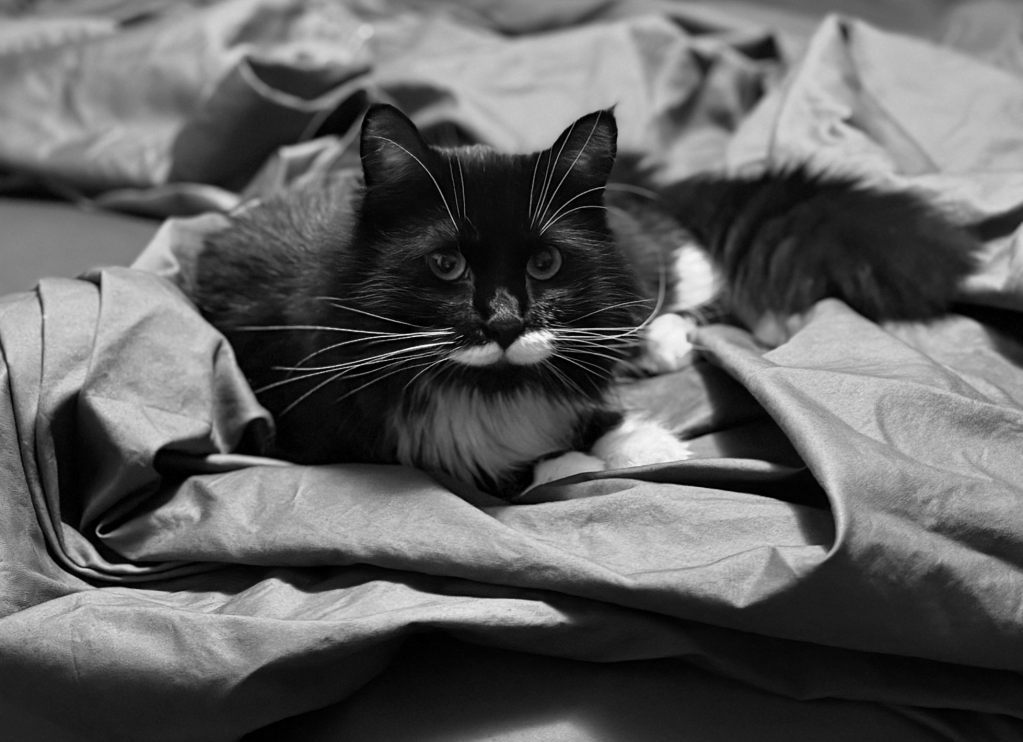

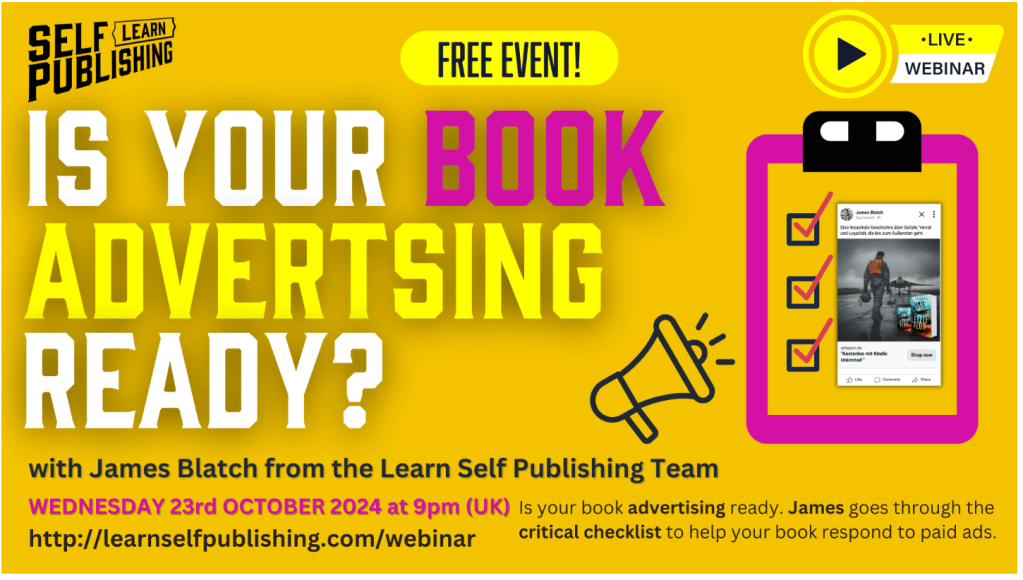

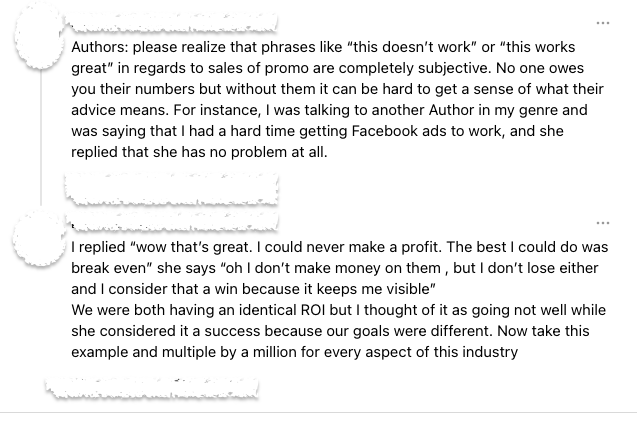
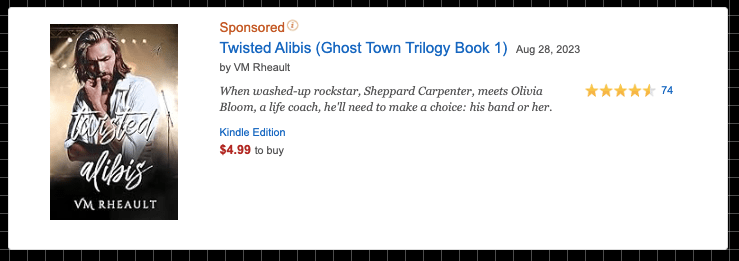
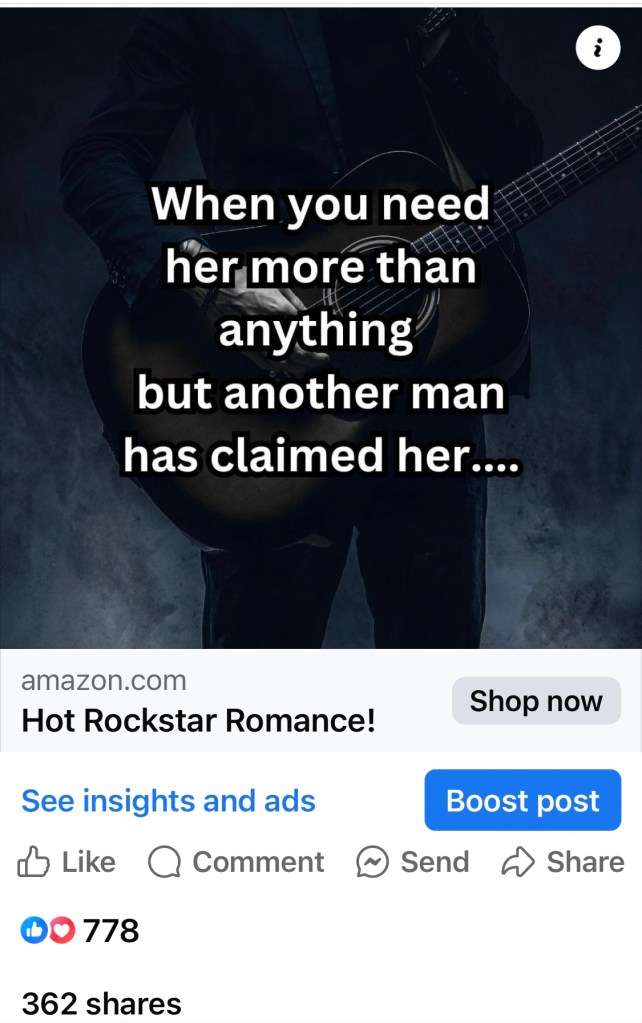
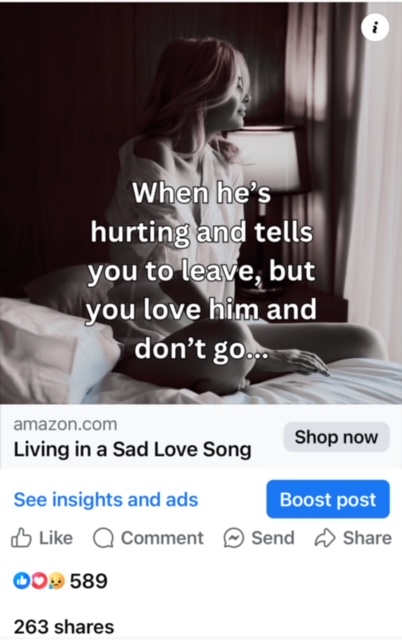

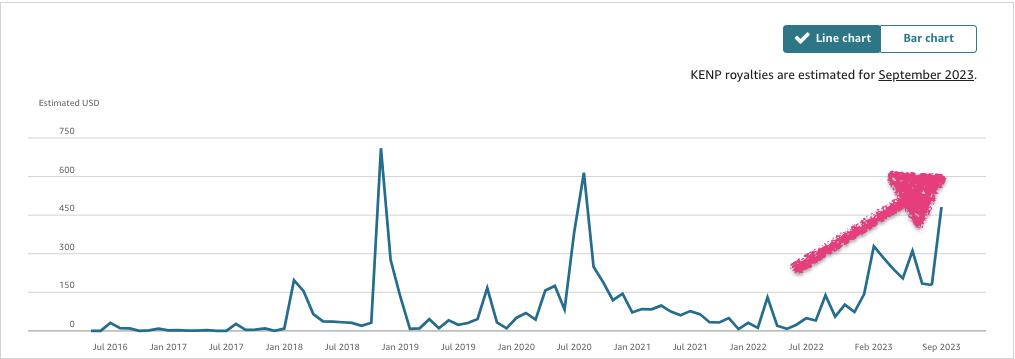


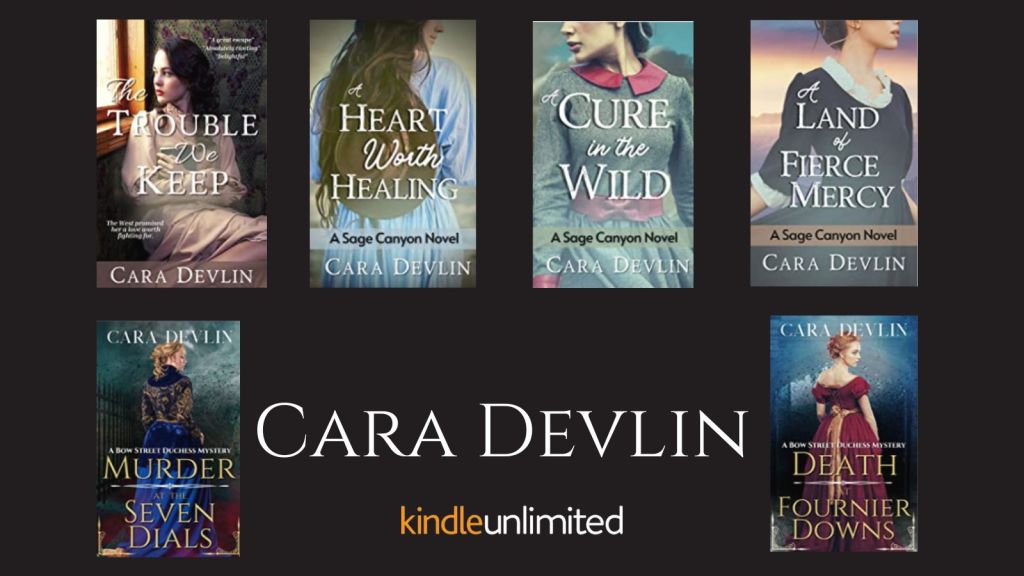

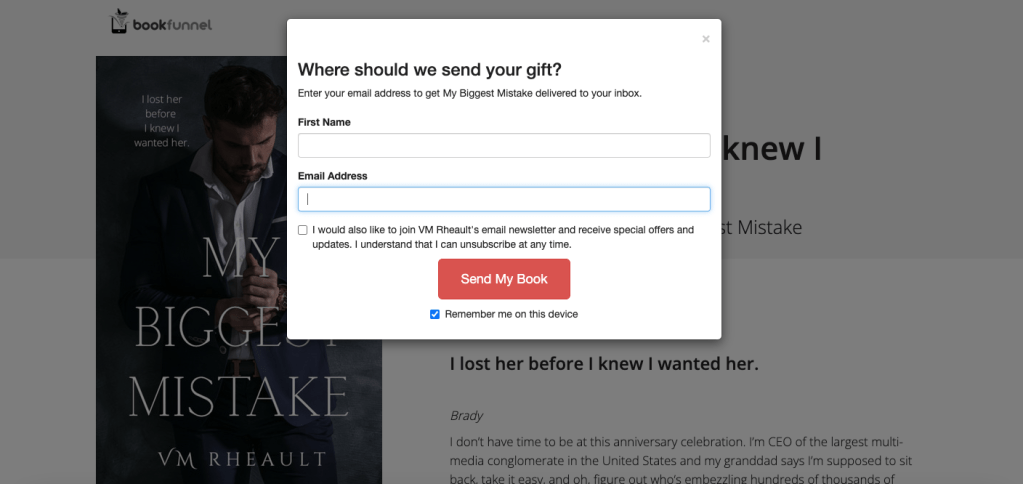


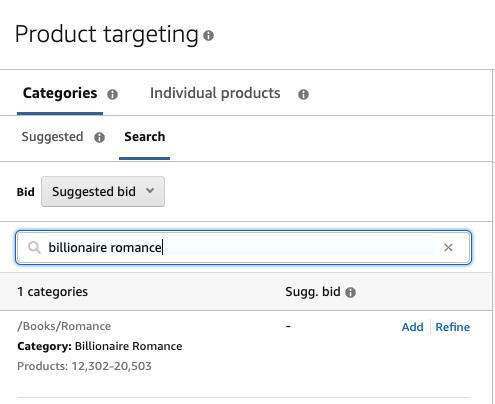
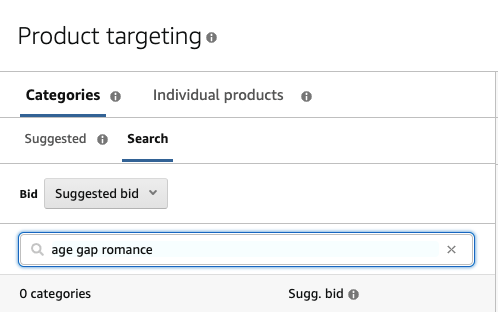

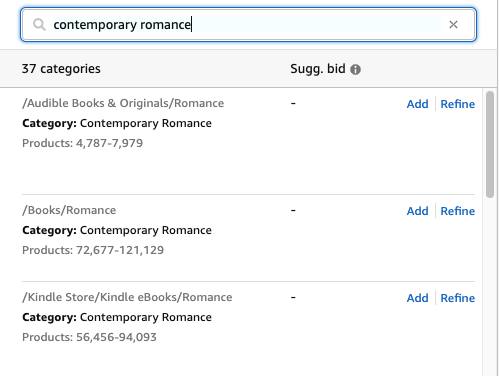


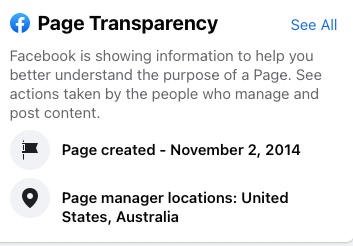
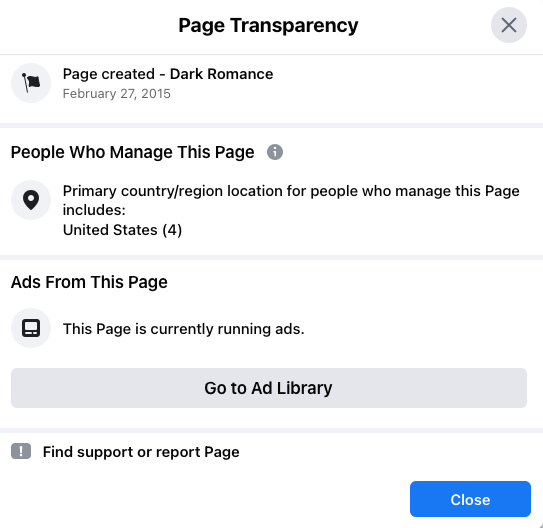


 As with Facebook ads, free ways to learn the platform are scarce. To be clear, Bookbub ads are not the same as being approved for a featured deal. Those are expensive and you have to submit and be approved. Bookbub ads are what they sound like — ads you make yourself using Canva or BookBrush that are placed at the bottom of their newsletters they send out to their subscribers. The only authority I know of is David Gaughran.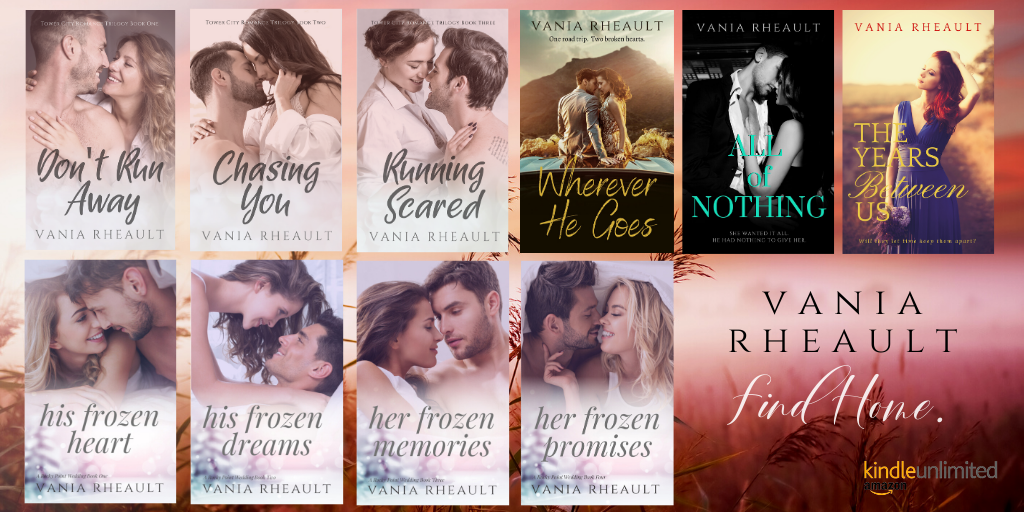

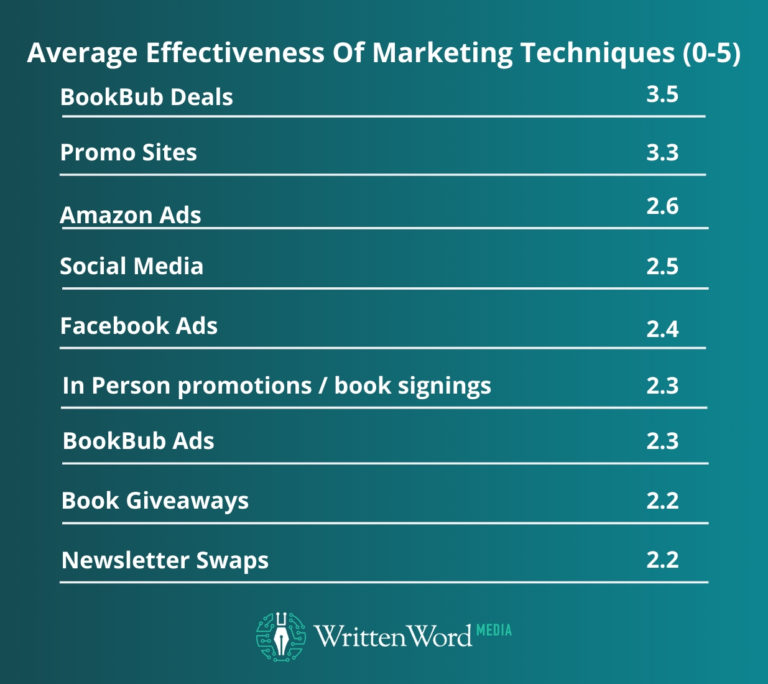
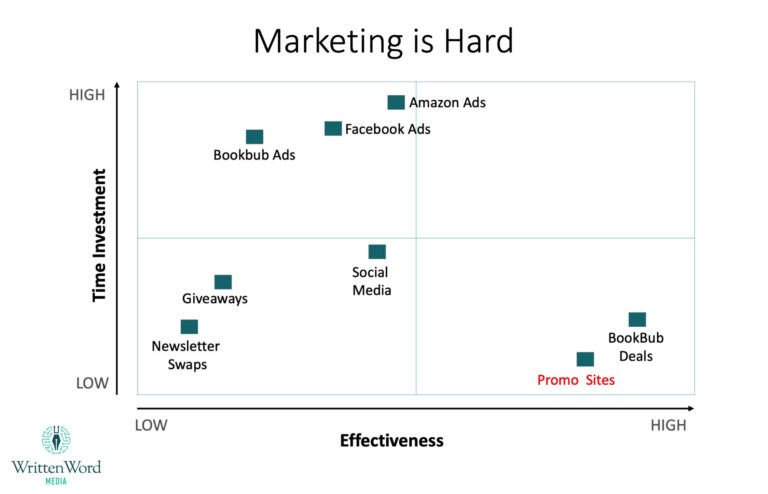


 Facebook ads.

 Vania Margene Rheault