Monday Musings: Editing, Book Launches, and the Rest of 2025

1,902 words
10 minutes read time

Editing Update
For the past few months I’ve been trapped in editing hell. A hell of my own making, but hell nonetheless. Anyway, I’m happy with the choices I’ve made, especially since I’ve sold a couple copies of Rescue Me since I updated the files. At the time of this writing, I’m waiting for another proof of Faking Forever to come because I forgot to add the “About the Book” section to the front. I also made a couple additional edits, but because you can edit a book forever and ever, after this second proof comes, I’ll just page through it and mark it done. Even if I happen to miss something, it will still sound 1000% times better than what it did, so I’ll consider that a win.

I’m still going through my Christmas novel and I’m hoping to be done with it by the end of the month. It’s a little slow going because I’m trying to avoid having to read through it again, but I guess I’ll skim the paperback proof when I order one. Of course there’s always a risk of editing in mistakes, but I’m not the only one that happens to, so I’ll just make peace with the fact that all the books I’ve edited in the past several weeks sound better than they did. I did a blog post on some of my changes for A Heartache for Christmas and you can read it here: https://vaniamargene.com/2025/08/18/when-dumbing-down-your-writing-isnt-dumb/

Loss and Damages Launch Activity
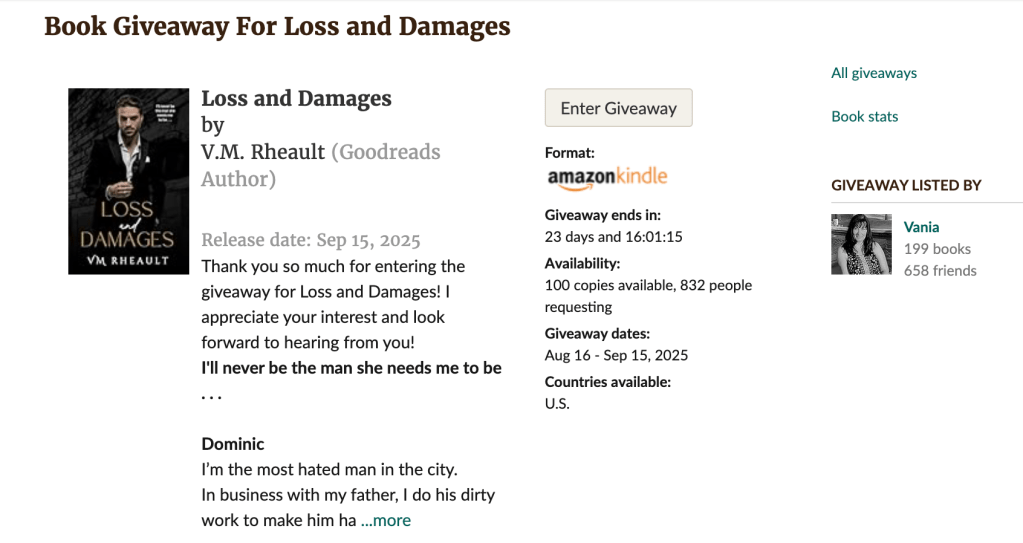
I haven’t been doing much for it except buy a Goodreads giveaway and run an Amazon ad to the preorder. At first I felt bad I spent the $99 dollars on the giveaway because other than exposure, like when I bought one for Cruel Fate, I won’t get much out of it. Comparing the two books might be worthless since Cruel Fate is the first in a six book serial and Loss and Damages is a standalone which (in my mind) makes it much more likely to be read, so chances are outcomes will be completely different anyway. But, I get paid three times in September, so after realizing that, I shrugged and moved the Goodreads receipt into my 2025 Book Spend folder to give to my accountant next April. All that being said, I’m at 832 entries and the giveaway ends the day the book is live, on September 15th. Since those free books are added to my sales dashboard, maybe they’ll count as “sales” and they’ll give me a little push that day. Who knows. If you want to enter, you can here: https://www.goodreads.com/giveaway/show/419642-loss-and-damages

Book Giveaway For Loss and Damages
Loss and Damages by V.M. RheaultLoss and Damages
by V.M. Rheault (Goodreads Author)

Release date: Sep 15, 2025
Thank you so much for entering the giveaway for Loss and Damages! I appreciate your interest and look forward to hearing from you!
I'll never be the man she needs me to be . . .

Dominic
I’m the most hated man in the city.
In business with my father, I do his dirty work to make him ha ...more
Enter Giveaway
Format:
Kindle book

Giveaway ends in:
23 days and 16:01:03

Availability:
100 copies available, 832 people requesting

Giveaway dates:
Aug 16 - Sep 15, 2025

Countries available:
U.S.

The Amazon ad isn’t doing too much but it’s just another way to push my book out there, and for now, it’s low-cost. My ads going to other books are doing well, but my sales aren’t keeping up with ad spend so I may have to reassess them at the end of the month. For now, the ad has resulted in one pre-order. I usually get none, so that’s a small win all around.

snapshot of Amazon ads stats for Loss and Damages. 6422 impressions, three clicks, cost per click is .35 cents.

I have four paperback copies I ordered since my paperback is scheduled and I can order them without the proof stripe on the cover. I was thinking about maybe offering them on IG to a few bookstagrammers or something, but time is slipping away if I want to do that because half the appeal is getting the book and reading it before it releases. I have less than a month to do that now, and with shipping, even to the United States, I’m cutting it close. Still, it never hurts to put up a post, so I might be doing that sooner than later.

Overall, I don’t have other plans for it. Most times I forget I even wrote it and that I should be pushing it. I have a terrible habit of moving on before I really should be moving on, but I’m always thinking about the next thing, and being stuck in editing makes me antsy to write something new.

What subgenre in romance is hot right now:
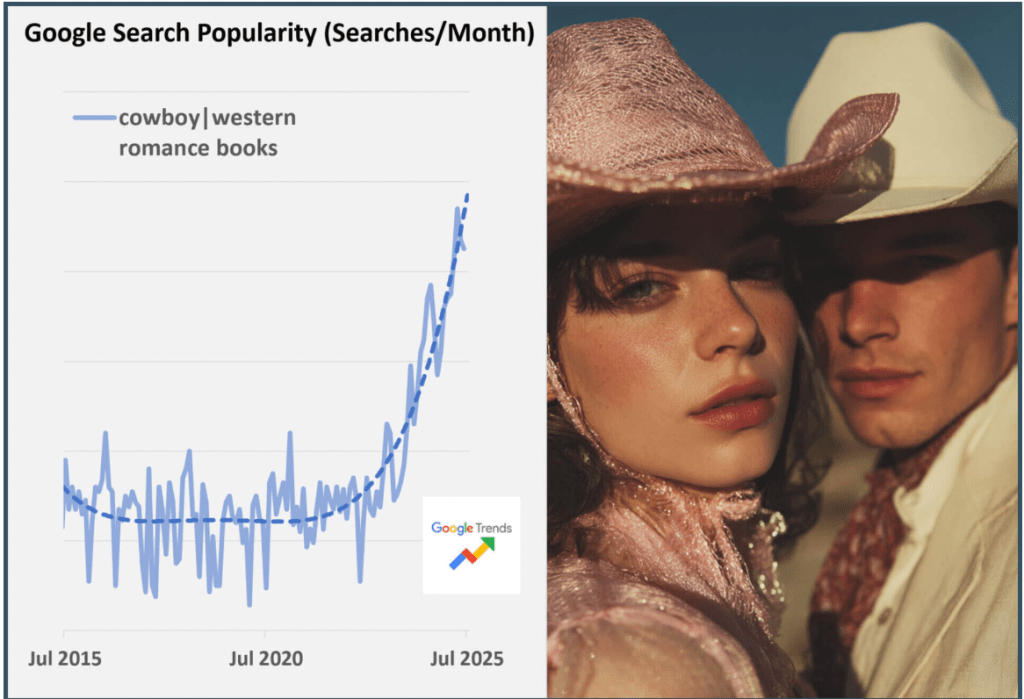
If you get the K-Lytic’s marketing trends research newsletter, you’ll know that Cowboy and Western Romance is on the upswing. I never was one to care about cowboys, even if Glen Powell portrayed a pretty sexy one in Twisters (that I have seen approximately 100 times). Ranch and farm life is a bear to get right if you’ve never lived on a ranch or a farm. Tacking a horse incorrectly will get you skewered by readers who actually know how to ride, and that is a level of research that I just don’t care to do. Especially since the last, and only, time I rode a horse was back when I was ten and went to summer camp. The last time even I saw a horse in person was two winters ago when we went on a sleigh ride (“sleigh” being used loosely as there wasn’t much snow that year and we were actually on wheels) and I got to pet one before we set off. That, unfortunately, does not qualify me to write a cowboy romance, and neither does living in the middle of farm country. But, it’s interesting to note that Cowboy and Western Romance is having a moment. This is the snapshot that Alex Newton shared in his K-Lytics email.

graph on left showing uptick between 2020 and 2025 of cowboy romance. on the right, a sexy cowgirl and sexy cowboy both wearing cowboy hats

If you want to buy Alex’s newest report, you can find it here. In the past they were $37 and now they’re $57, I believe, but he offers a lot of information. This is not an affiliate link: https://k-lytics.lpages.co/western-romance/. I like watching them but I have a Mafia report from two years ago that I haven’t watched, so it’s pretty obvious I don’t make the time and shouldn’t waste the money.

Authors Guild Webinar
There’s a free Authors Guild webinar that looks interesting that also popped up in my email. It’s called How and Where to Find Your Readers and it’s on Wednesday, August 27th, at 2pm EST. Someone on Threads asked me if there would be a replay, and though the information doesn’t say that there will be (that I could see), they usually put a lot of their content on their YouTube channel. Here is the registration link if you’re interested in attending the webinar: https://us02web.zoom.us/webinar/register/WN_z9jduvBMTL-wsm77dcFMjg#/registration You don’t have to be an Authors Guild member to attend.

You can also subscribe to their YouTube channel as they have a lot of content there as well: https://www.youtube.com/@AuthorsGuild

The Anthropic AI Lawsuit
You all might have heard that Anthropic was found to have legally obtained thousands of books and other work from pirate sites such as LibGen and Library Mirror. There was information going around that if your books were included that you could join the class action lawsuit. If. If you had filed a copyright for your work with the Copyright Office. That little piece of information was hidden in the Threads posts and other bits and pieces I read about it, but Craig Martelle was very upfront about it in his Facebook group, Successful Indie Author. I realized it’s because it’s just one of those things people assume an indie author will do. [Cue the Chrissy Teigen meme where she’s grimacing in the audience.]

Applying for copyright was something I planned on doing when I started my pen name and then, I guess you can call them excuses, I lost focus because of COVID, my health, and other things going on at the time. Not to mention price. After paying for what we have to pay for, adding another expense, and one that didn’t seem imperative, was a lot, and I just . . . didn’t. Now I’ll be paying for that along with many, many, many other authors who don’t bother because if whoever is behind this class action lawsuit wins and damages are paid out, they won’t be paid out to us. It’s really a “coulda woulda shoulda” moment, and you can’t go back to retroactively submit your copyright because you have to do it within three months of your book being published. And I don’t even mean that in a skeezy way of trying to become a part of the lawsuit, just simply going back to fix your mistakes. Along with having a membership to the Alliance of Independent Authors, paying for your copyright is probably a good idea. There are so many scammers and thieves out there now. Authors need all the protection they can get. If you want to read more about that, you can find it on the Authors Guild website here: https://authorsguild.org/news/anthropic-ai-class-action-important-information-for-authors/

What’s next for the rest of 2025?
It’s a little early to be thinking about the end of the year, but September is just around the corner, and once the holidays hit, it’s game over. So, in recognizing that, I’d like to try to write another book. I have Bitter Love pretty much plotted out in my head. I’ll have to fill in some blanks as being a “planster” that’s expected, but I know the major plot points. How it ends right now could go either way, not the HEA part, but where they end up, you know. When I write my small town romances, sometimes they stay and sometimes they don’t.

If I can start on Bitter Love September first, I’d have to write 5300 words a week to write a 90k word book. That actually sounds pretty doable, considering in the past I’ve been able to write 5000 words a day, but now with changes at my work, I’m not sure what kind of word count I’ll be able to produce. I have a really difficult time writing on the days I work–my ten hour shifts don’t leave me a lot of time and by the end I’m exhausted anyway–and the days I don’t are filled with chores, errands, and other pesky things that make up life. So, while that 5300 word count cheers me because it doesn’t sound that bad, I’ll have to see what reality lets me do. But that is the goal so we’ll see what happens. Especially since this book might not be that long. There’s no mystery in it, just a bunch of garbage my characters have to deal with, so maybe it would be a nice change if my book came in at 75k words or so. I won’t know until I write it, but I’m not put off by the idea.

I guess that’s all I have for this week. Overall things are good. Health is hanging in there, nothing bad is happening with my car. Pim is a little jerk (I mean that very affectionately) and she hates being alone, but I think we’re all still getting used to each other and there’s a chance yet she could quiet down. I hope she does because having to feed her breakfast around 4am isn’t awesome, and sometimes, like on the days I know I have to get up for work, I can’t always fall back asleep. My son has been good with getting up with her, too, and sometimes when I finally get up, he’s asleep on the couch. Not great, but I love having a cat again, so you just have to deal.

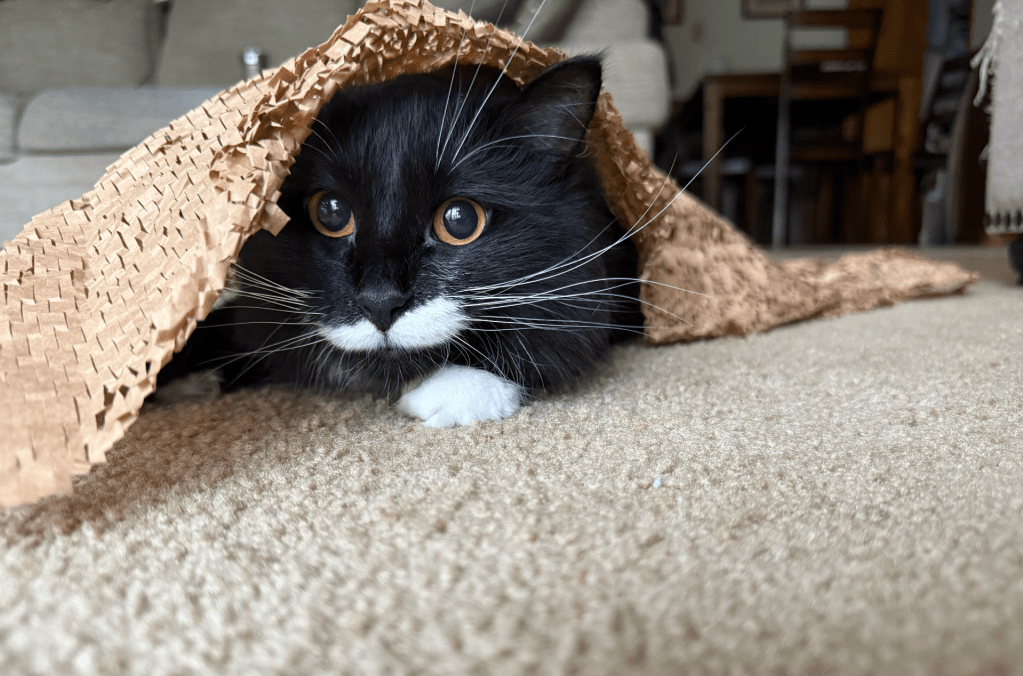
Here’s Pim for the pet tax. She loves that piece of packing paper.

Enjoy the last little bit of August, and I will talk to you next week!

Writing the Book of Your Heart

1,411 words
7 minutes read time

Writers are always told to write what they love, and there’s a joke in there. We’re told that because we’re going to be reading it a million times. That’s true in a way. The editing process can be long and tedious for some, especially for those of us who can’t afford an editor and must make sure our books are as typo-free as possible on our own.

The book of your heart might be a little different than that, the characters staying with you for many, many years, so much so that you really don’t want to write anything else. You keep going back to that book, the characters, the themes, because they resonate so much with what you’re going through, or were going through at the time.

That made me think of my own journey as a writer and author, and looking back at my backlist and the books I’ve written, I can’t say that I have the “one book” that I loved more than any of the others. When I sit down to write a new book, I love that book with all my heart. I’m obsessed while writing it; I cry at the end when I’m done. I love the editing process because that means I can stay with those characters longer and make them shine. But, in all the books I’ve ever written, once they’re published, I don’t really think about them anymore, moving on to my next set of characters and beginning the process all over again.

Sometimes I do go back and read my favorite parts, a scene that I loved to write, like Sawyer and Evie in her barn talking in A Heartache for Christmas, or in Twisted Alibis, when Sheppard realizes he’s in love with Olivia but he knows he shouldn’t feel that way about her because he thinks she’s engaged to another man. But I’ve never wanted to tear a book apart and start over simply because I didn’t want to leave them yet. I did a massive re-edit of my Rocky Point series because they needed it, not because I missed them and wanted to hang around the town of Rocky Point for an extra four months.

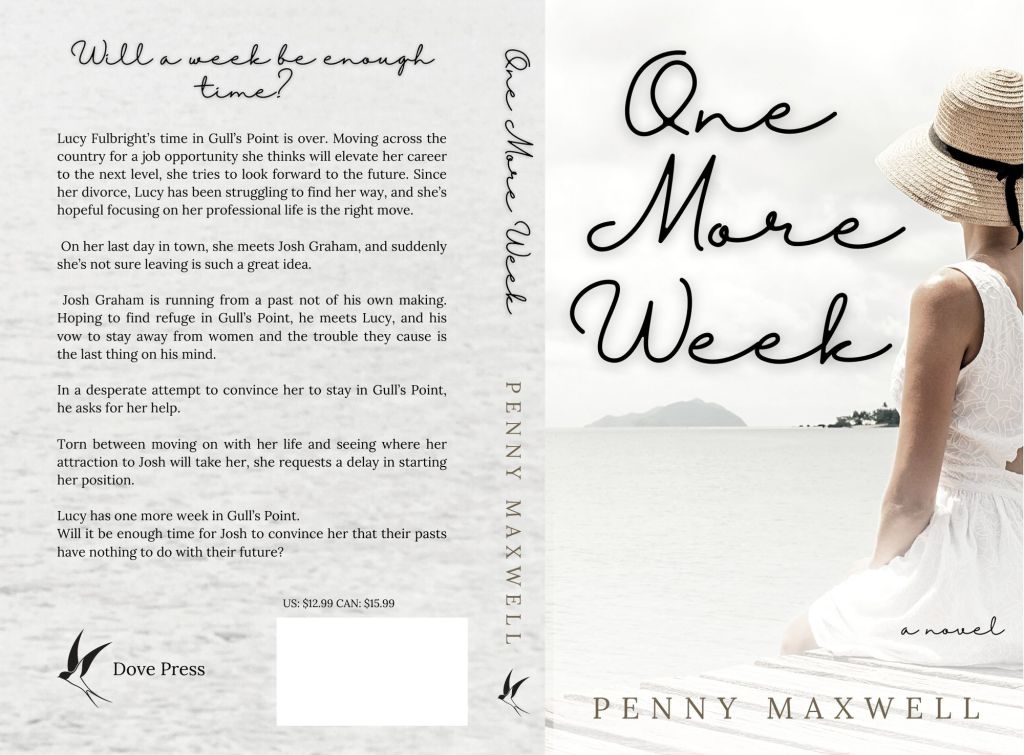
Some of my books have been years in the making, like the book I’m editing now, Wicked Games. I did a fake cover for a blog post back in 2021, and I had to come up with a blurb for the back. I liked the blurb so much that it stuck with me, and I turned it around and around in my head for four years.

Lucy Fulbright’s time in Gull’s Point is over. Moving across the country for a job opportunity she thinks will elevate her career to the next level, she tries to look forward to the future. Since her divorce, Lucy has been struggling to find her way, and she’s hopeful focusing on her professional life is the right move.

On her last day in town, she meets Josh Graham, and suddenly she’s not sure leaving is such a great idea.

Josh is running from a past not of his own making. Hoping to find refuge in Gull’s Point, he meets Lucy, and his vow to stay away from women and the trouble they cause is the last thing on his mind.

In a desperate attempt to convince her to stay in Gull’s Point, he asks for her help.

Torn between moving on with her life and seeing where her attraction to Josh will take her, she requests a delay in starting her position.

Lucy has one more week in Gull’s Point.

Will it be enough time for Josh to convince her that their pasts have nothing to do with their future?

Four years is a long time to think about something, but the concept stayed with me and wouldn’t leave me alone. Here’s the cover I made. The “final draft” was a little different, but I deleted it out of my Canva account as I do sometimes to keep the “clutter” at bay. I don’t have the one I liked best, but that’s okay. This one will do for this post:

I often think about my books for years before I write them, like the Mafia books I’m planning to write later, probably in 2026. I’ve had the idea in my head since I wrote a short story about the characters back in 2018. I’ve blogged about writing them and I will, eventually. But being excited about it, looking forward to writing it, having it in the back of my mind for so long, that doesn’t mean it’s the book of my heart.

Is it bad not to have a “book of your heart?” I’m not sure. For one, people might accuse you of not putting your whole heart and soul into the things you write, which isn’t true, for most of us. Yeah, there are writers who only write what they think will sell, using their books as a way to make income only, skipping the “art” part of the writing and going directly to the “product” part of publishing. On the other hand, if you’re stuck writing and rewriting the same book over and over and over again, you’re never going to get anywhere. You can’t move forward going backward, or staying in the same place. So, you’d have to decide what your true plans are. Are you okay being at a standstill? And if you are, what does that mean for your business? It might mean that you don’t have one. Readers want something new to read, and there are plenty of authors out there who can and will do that for them. They don’t have to hang around and wait for you.

But, as I’m trying to lighten up in my writing and business, writing only for the thrill of it and resigning myself to the fact that this will never be a career, maybe thinking writing for the sake of writing instead of trying to build a business is okay. That doesn’t mean I’m going to suddenly spend years writing my next book. In fact, thinking about my books for so long before I write them only speeds up the writing process because I know exactly what I want to write. Wicked Games was one of the fastest books I’ve ever written, 97,606 words in sixty-two days. I ate, breathed, and slept Seth and Avery, even though they’d already been a part of my life for years.

I’m writing this post because I’m trying to articulate the fact that in some ways, I envy those who want to stay with a certain set of characters forever and ever. To feel that connection deep in your bones, to never want to let them go. I think it would be amazing, like those characters are real people, part of your life. But, I also hear of authors who need years and years to finish a book, and it makes my stomach churn. Before I started feeling like crap, I liked adventure, trying new things. I liked to travel and my curiosity was off the charts. I haven’t lost some of that, and I think staying with a set of characters would drag me down. I want to write about new characters, new experiences. New settings and create new heartbreaking backstories.

We all write differently, and write different things. What you do with your time and your business is always up to you, but you have to keep expectations in check, and not only that, but you have to keep the way the book business works in the corner of your mind when making your decisions. The latest figure I read is that there are 7,500 books published on Amazon a day. There is a lot of content out there and readers don’t need to wait for you. It’s nice to think they are, or that they will, but in reality, attention spans are short, there’s a lot to choose from, and well, just from the backlash we see when we hear that shows like The House of the Dragon or Bridgerton won’t release another season for two years, we know that people don’t like to wait for something they like.

I think maybe I do write the book of my heart, but I write it over and over again. And even if I’m not making any money, I think that’s a pretty awesome place to be.

When the Words Stop. What then?

2,015 words
11 minutes read time

picture of a land in a drought.  text says. when the words stop
Yes, I do know it’s ironic that this blog post is about words drying up and this blog post is one of the longest I’ve ever written. :/

I haven’t written anything in days. Stalled, I’ll look at my manuscript, edit what I have (again), get to the end, and do something else.

Whatever the reason for it is, I guess that’s not really the point because this isn’t a post about writer’s block or a missing muse or trying to find motivation when there doesn’t seem to be any around. This post is mostly to just mumble through some thoughts on what you do when you call yourself a writer but you’re not writing.

I see this a lot actually, authors who try to hang on to the by the skin of their teeth because it’s the only place they feel like they belong. They post about the books they’re reading or the books they’re trying to write, bouncing around from manuscript to manuscript hoping for a spark of inspiration, talk about the games they’re playing (a surprising number of authors are also gamers I’ve found), anything to stay connected. Anything, except writing something and publishing/querying it, as writers are often expected to do.

The deeper you’re ensconced in the writing community, the harder it is when suddenly you’re not writing. I see this too, authors taking their blogs down, taking their websites down, Facebook author pages, Instagram profiles. Even their books.

Back when I was still drinking a lot and kind of bitter, I wondered what I’d do if I stopped writing. At that time I was thinking about stopping because my books weren’t selling, and I just wondered if maybe I should chuck the whole thing. Now if I think about it (with a clear mind), I don’t think of completely stopping (and take culpability for my sales or lack thereof), but I think it would be difficult to stay as connected as I am dropping down to a book a year. The level of my involvement in the indie-publishing space would surely take a hit as it’s really really difficult to maintain a blog about something you’re not doing anymore–especially a blog as active as mine. Four times a month at around a 1,000-1,500 words a post is a lot of content. Since I cut down on listening to podcasts, reading nonfiction books on craft and marketing, and watching webinars, my content has gotten repetitive and stale. Lots of my posts are author updates, and if I’m not making any progress on a WIP or not actively participating in the author/indie-publishing world, those updates will be full of nothing and pretty much useless.

I mean, just because I haven’t written for a few days, that doesn’t mean I’m going to stop completely and fade away into obscurity, but it does make me wonder how far I can step back while giving value to this blog and to my readers. And not just me, how anyone who does step back can contribute to the writing community in a meaningful way. If that’s what you want to do, and I get that not everybody does.

Plus, I’m coming at this from an indie helping indie standpoint, something that I truly do pride myself on because I like helping other authors in a time when everyone wants to be compensated for every little thing they do for you. But it’s doubly concerning when you’re not writing and you need or want to update your books’ readers. What then? In past blog posts I’ve suggested recommending other books, but that only lasts so long before your newsletter stops being about you and just turns into a curated list of books you enjoyed reading.

Then you have to take a look at the money you’re spending to stay connected. Lots of authors don’t pay for their websites and they’re on a free newsletter plan. But software like Canva can get a little expensive if you’re not using it regularly, and subscription services like Booksprout and Bookfunnel aren’t worth keeping if you don’t need a review and delivery service. Some of that I’ve locked myself into because all my books have back matter that directs readers to my website where they can download My Biggest Mistake through Bookfunnel. That’s too much back matter to change and I would rather keep paying that than edit all those files (and pay to do it, too, on IngramSpark).

I’m caught in a spider’s web, but it’s not a bad place to be. If eight years ago someone would have told me the position I’d be in now, I’d probably say I’ll never stop writing and shrug off any warning. Out of anything that I’ve “tried” this “hobby” is my favorite and even if I’m not writing as much as I used to, I’m content.

So what to do then, if you’re a writer who’s not writing? You can always support other writers and authors, but eventually that would get old. How long can you cheer for someone doing what you want to be doing? I mean, I assume you still want to be doing it otherwise why not shut everything down and never look back? I’ve known people who have done that, unpublished their books, taken down their socials and disappeared. In the days of pen names, it’s pretty easy to do. Not that their reason was that they wanted to stop writing. Life can get hard and writing as a hobby is the first thing to go. Or some say “forget it” when they don’t see the sales they want, realizing this might be a little harder than they thought, and moving on to things that don’t need so much time/money/energy. Writing is a hobby after all, unless you’re making a living wage and depend on it to pay bills. It’s rather a depressing realization, the thought that where you are is probably where you’ll always stay. Some can’t handle it. Work smarter, not harder, but even that doesn’t help. Writing to market doesn’t help, writing and publishing quickly doesn’t help. So, yeah, I’ve had friends disappear, and I just wonder how much courage it takes to completely shut down and walk away.

When I was trying to get my newsletter up to compliance and I unknowingly knocked down my website for two days, I can still feel how sick I was inside. Luckily, I pay for a plan that gives me access to tech support, and the WordPress chat was able to explain what I did and get my website back up in only a few minutes. I get 20-50 views of my Canva paperback book cover tutorial a day. I was saddened to think of the people who tried to read it and couldn’t. Even though that was a long time ago, I still hope that they tried again or heard in a group or something that it was back up. So yeah, my websites and blog means a lot to me, and so does my newsletter and so does my reader magnet because I’m proud as hell of Brady and Allie. [https://BookHip.com/CMSVSNK}

I didn’t stop writing for good. I’m not sure if I could ever do that. But going for so long without writing anything and not feeling bad about it (well, that’s not totally true or I wouldn’t be writing this post) does give me pause and makes me think about what I would do if I didn’t have this in my life. I wouldn’t still try to be part of the writing community. There would be no point. I’ve made friends that I would probably still chat with, but I don’t know how long it would last. When you met because you’re both writers, after you strip that way, you’d need something else to build your friendship on.

We like to say our lives are full of seasons, chapters, however you want to split up your life, and my past chapters are still visible in the people I followed on LinkedIn and the groups I joined on Facebook. Even some of my friends there are from my HR days, and there’s no reason to keep them on. I bet I could lose a good twenty people if I unfriended my old community college friends, teachers, and connections I made through the Fargo/Moorhead Human Resources Association. And before that I was running six miles a day, but I think between then and now I’ve been able to get rid of most of that. Every time a group that has to do with running or nutrition pops up on Facebook I leave or unlike the page. I bet it would take a long time to get rid of my writing chapters. Eight years of newsletters and Facebook groups, friends, and connections. Where would I go from here? I’ve got twenty, maybe twenty-five years left on this earth, not too many more because I’m already tired and don’t think that I’ll be spared the cancer that has appeared in my family in various ways, but if you leave something behind, something inevitably takes its place. A new job perhaps, if my mental and physical health could handle the pivot. I’ve been with my job for twenty-four years, and at my age, changing careers wouldn’t be impossible but nothing I would look forward to.

So I guess all in all, this is a really long post on how would I fill my time and if I could do something else and not look back. I envy authors who have other hobbies like needlepoint or baking. Nothing like that interests me, in fact, knitting or crocheting would probably make my carpal tunnel worse than it already is. I could just go back to reading, but I’ve turned my writing hobby into content I push out into the world, so if all I did was read or watch TV I’d need to turn that into kind of a review thing or I wouldn’t feel like spending my time doing that was worth it. Which probably isn’t healthy considering doing an activity just for the sheer enjoyment of it is the best reason to do it. Hustle culture is real, y’all.

I could say it’s interesting to think about, but it really isn’t. It’s a little scary. Of course, you can use that fear and turn it into motivation, but then you’re writing for the wrong reason. You shouldn’t do anything out of fear. I’ve said that plenty on this blog. Don’t make decisions on your writing business because you heard something and you’re afraid. Always make the best choices for you, and if there are repercussions later, then deal with it. You have no idea of the opportunities you could be missing.

Even if I just do a thousand words a day, I need to finish this book. Then I won’t have to actually write anything new for a long time. I have Loss and Damages to edit and package and then the book I’m writing now, Wicked Games, would need the same treatment. After that I have those two books in my next series to edit, probably rewriting some of the first one to cut out the number of books I had planned. Book three in that series will be the next thing I’ll need to write from scratch, and that might not be until this winter. Though, I don’t want to start dreading writing, either, or I might as well just call it. I never understood people who forced themself to write, as if they needed to hang on to the above all else. Life is too short to force yourself to do something you don’t enjoy. And I do enjoy writing. I do. There’s a saying that goes something like “I like having written,” which is true too. I love going back and reading what I’ve written during my last writing session, but everyone knows you can’t read what you’ve written if you haven’t written it. It’s a conundrum we writers face every day.

Now it sounds like I’m babbling, and my Word icon at the bottom of my laptop screen is mocking me. Time to publish this post and switch over to Seth and Avery. I have the whole day in front of me. Let’s see after such a long break what damage I can do.

Enjoy your week!

Four Things I Learned Editing My King’s Crossing and Rocky Point Wedding Series

1,933 words
10 minutes read time

For the past several months, from October of 2023 right after I published A Heartache for Christmas until January of this year, I was editing. I was editing my King’s Crossing Series, doing the final editing passes since I had sat on those books for over three years after I wrote them, and my Rocky Point Wedding series since I hadn’t looked at them since I published at the beginning of 2020. After so much time had gone by, I knew they could be better, and since a few people here and there were finding them, I thought while I was between projects, it would be a good time to edit them again.

But, editing ten books in a row dragged me down, so much so I didn’t even realize how icky I was feeling until those projects were finished and I started having fun writing again. Huge projects are a lot of work, especially when you don’t have help. My Rocky Point Wedding series might not have needed more editing if I’d had help in the first place, on the other hand, a lot of time had gone by and a lot of words too, so I was bound to get better regardless.

Since I doubt I’ll ever edit ten books back to back again, I thought I’d write out the four things I learned while editing these books.

Time between edits is really helpful.
When I wasn’t feeling well, I wrote nonstop. I would finish a book and move on to the next with barely a break. Before I knew it, I had several books on my computer and a different kind of anxiety started weighing on me. What was I going to do with all those books? So, while I was writing, in a way, I was taking a break from the others I had written before. I think my King’s Crossing books benefited the most from that because each time I did an editing sweep, I added more details I hadn’t thought of before and fixed inconsistencies I missed. As more time went by and I could edit with fresh eyes, I was able to fix the smaller and more intricate details and inconsistencies. I once said that something small in book two could have damning consequences in book four, but for me to remember that incident, I needed space between editing sweeps. Not everyone is going to take four years to edit a series, and I didn’t really, either, writing new books between editing sessions, but knowing how beneficial breaks can be, I’m going to try to stagger projects in the future so every editing sweep will feel “new.”

I had to develop a better memory.
Maybe it’s easier to write standalones, but while I was writing my King’s Crossing series it was difficult to remember things, and it might sound dumb, but you don’t remember what you forgot. When I was re-editing my Rocky Point Wedding series, I found a lot of places where I had forgotten things, like where a character parked her car, or when a character was supposed to be somewhere and I had him somewhere else. Also, characters had a habit of just “fading away” when I didn’t need them anymore. I was actually kind of surprised I messed that up so badly, and I could tell I learned a lot from editing my King’s Crossing series as those discrepancies were easy to spot. If you don’t have a good memory, you’re going to have to hire someone who does. I told a friend that by the time I was done editing my King’s Crossing series, I pretty much had all the books memorized. After editing them back to back three times in a row, I don’t think I had much of a choice. Now I think I have a better memory than before, though right now I’m only working on standalones and I don’t think I ever had a problem with those. I’ve gone through the standalones I have out and those were more of a garbage word sweep than anything else, maybe plumping up some scenes. But yeah, I definitely found out my memory wasn’t as great as I thought it was, but I can take steps to help with that now that I know.

Putting inside information into the books was a lot of fun, some I didn’t even consider until the fourth or fifth edit.
Probably what I loved best as I was getting to know the plot and the characters more was putting connected information from books 1-3 into books 4-6 . For instance, there’s a place in book six where Gage thinks, I bet Zane’s never gone through the public entrance of the airport, but we know in book three he did with Stella. What I loved was writing Max’s journal entries that Gage reads in books 4-6 that Max, as a character in books 1-3, wrote down. I really enjoyed writing the events of those books through Max’s eyes only for them to be interpreted into information Gage needed in books 4-6. I’m not sure if I would have even thought to do some of that stuff if it hadn’t been for the multiple rounds of editing those books went through. One of my biggest pleasures was when in book six, they need to go across the state in a hurry, and in the past Zane would drive. We didn’t really understand his fear of flying because of his parents’ plane crash until he says he’d get on a plane to save his sister.

I could tell I pantsed my King’s Crossing series a lot more than I did other books I’ve written.
I think one of the things I did the most was smooth out consistency issues, and maybe not even issues, just adding details to make books 1-3 and books 4-6 more cohesive. Because I didn’t realize that Zarah was going to get her own story until almost the very last second, that meant a lot of smoothing out books 1-3, adding details and motivations of characters to better explain what was going on. That was especially true of Max, when they didn’t really know why he was investigating Zane and Zarah’s parents’ plane crash, and the reasons he was come up in the later books.

I remember plotting out all the books in my Rocky Point series before I started writing, so the plot stuff there wasn’t too big of an issue while I was editing those, and I was happy about that. I did have one instance where I messed up and I had a character say he was doing something when he definitely was not. That was part of my memory issue too, but besides having to fix that, the plots were solid. I don’t like pantsing books because for me it takes a lot of work to edit them, but even if I had to put a lot of time into my King’s Crossing series, it was worth it in the end.


A friend and I were talking about series and how I keep details straight. Short of memorizing every single line of every single book, I really didn’t have an answer because that’s what I felt like I did, at least to the point I knew exactly the sentence to search for to get to the scene I needed to check something. I used a notebook at times, writing stuff down, but then I would never look at it again, so I don’t think writing anything down really helped me all that much. When I first decide to start a book, I write down character names and traits, that kind of thing, but once you’re five books deep into a series, that stuff doesn’t come up too often. I mean, once you establish a character’s eyes are blue, you don’t need to keep repeating it.

I think over such a long series, I had trouble more with keeping characters’ goals and motivations in check. For instance, Zarah’s therapist turns out to be a bad person, but I was vague as to how she came to be Zarah’s therapist to begin with. Once her therapist’s role became even more apparent, I could think of how she inserted herself into Zarah’s life. I’m hesitant to say that some of this stuff could have been avoided if I had written slower because I did write six books in a little over a year, and maybe that’s true, but these books were also the first 1st person dual POV books I ever wrote, so not only did I jump into a huge series, I hadn’t taken the time to learn how to write in first person after writing in 3rd all my life.

I haven’t gotten feedback on the series as a whole yet–books five and six have yet to release, and even though they were all available on Booksprout, the reviewers haven’t posted reviews of book six because it’s not time for them to. Only when feedback starts to come in of book six will I know if the series as a whole works. Probably everyone I ever tell I did these alone will think I’m crazy, but as prices go up and up, editing will be farther and farther out of a reach for a lot of authors. Which is unfortunate because if you don’t have the skill to edit your books yourself, there’s not a lot out there that can compare to a human’s feedback. ProWritingAid can only do so much, and no matter how “smart” Al is, this is just a level of editing he can’t handle.

I don’t know what the solution is. I had these beta read, both series, but you’re not going to get the kind of feedback you need to avoid inconsistencies like that unless you hire the right kind of editor and that costs. If I have to give any advice on doing something like this alone, it would be to plot, take your time writing, and give yourself plenty of space to edit, and then, when all is said and done, be okay with knowing you might not have caught everything. There probably are a couple things I missed editing my King’s Crossing series. Layers I could have added, details that would have made the story richer, but like with any book, you can’t chase perfect or you’ll never publish. That’s the simple truth.

If you’re thinking of writing a series or if you have trouble plotting in general and want to give it a try, I have a couple of resources for you (none of them are affiliate links). Next week I’ll do a proper author update, and the week after that I have a lovely interview planned with Brandi Easterling Collins.

Have a good week! Until next time!


Romance Your Brand: Building a Marketable Genre Fiction Series (Publishing How To Book 1) by Zoe York: https://www.amazon.com/gp/product/B07XMDKV1Y

Take Off Your Pants!: Outline Your Books for Faster, Better Writing: Revised Edition by Libby Hawker: https://www.amazon.com/Take-Off-Your-Pants-Outline-ebook/dp/B00UKC0GHA

Melody Loomis: How to outline a novel when you don’t know what’s going to happen:

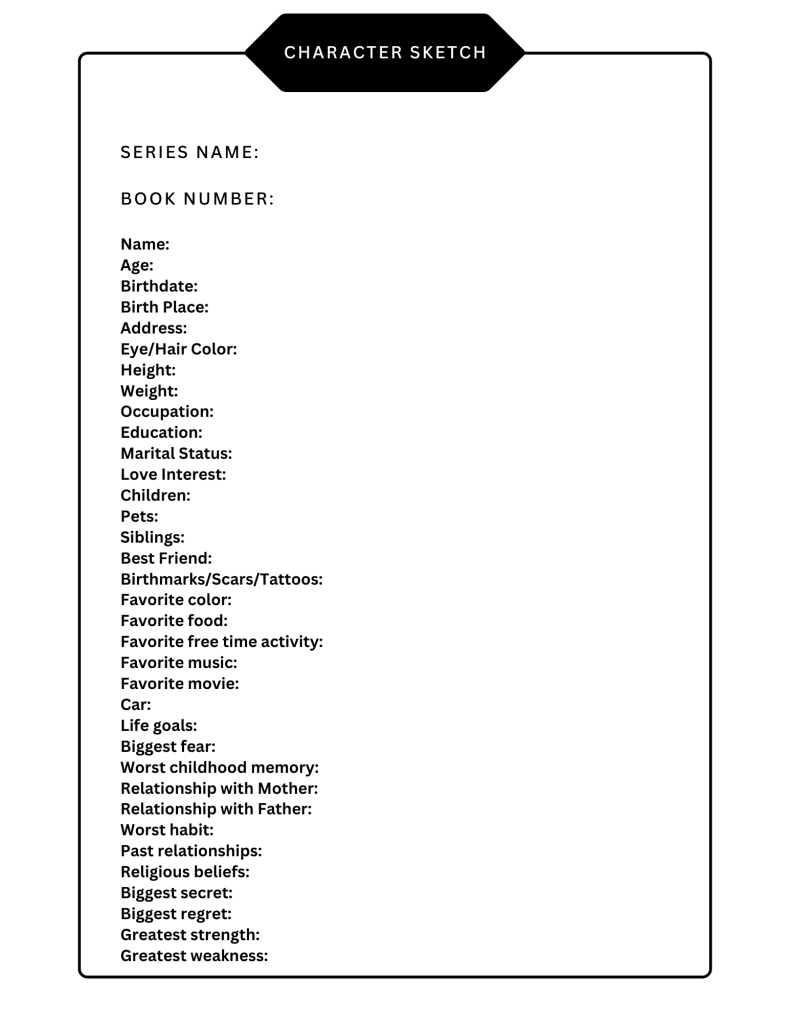
Melody also said I could share this graphic with you. She found the original via Priscilla Oliveras’s “Romance Writing” course and you can find it here: https://www.ed2go.com/courses/writing/writing-and-editing/ilc/romance-writing. She added a couple of things and so did I. Have fun filling it in–I’ve only used a notebook to write all these things down, but maybe I will try this instead. Have fun plotting:

save and print me!

Thursday Thoughts: Social Media

1,396 words
7 minutes read time

sell phone with chalk drawings depicting social media icons like cloud, envelope, speaking bubble and envelope. different colors: yellow, teal, and purple. text says, thursday thoughts: social media

So, a couple things caught my eye this morning while I was having coffee trying to wake up. Thursdays are my Mondays and I don’t always handle the mornings as gracefully as I should. Becca Syme says maybe not opening social media (or checking your sales dashboard) the minute you open your eyes could help, but for now this is my way of easing into my day.

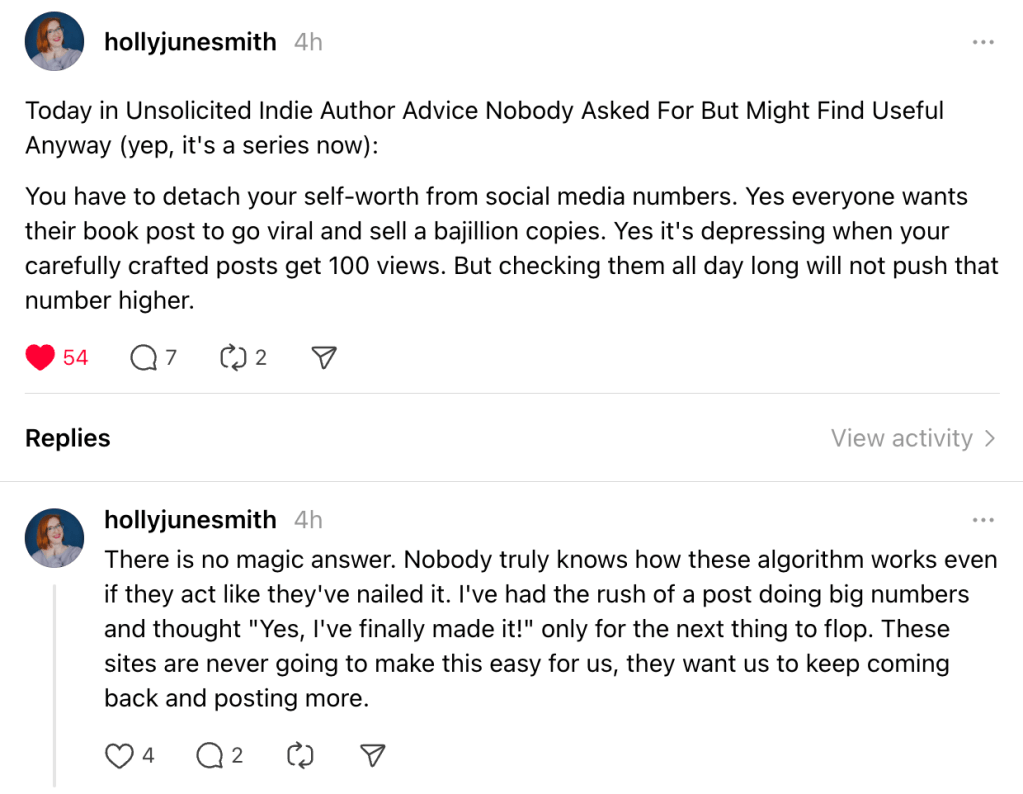
The first thing I saw this morning was this lovely Thread by Holly June Smith (typed out in Alt text):

Snapshot of a thread:

Hollyjunesmith
Today in Unsolicited Indie Author Advice Nobody Asked For But Might Find Useful Anyway (yep, it's a series now):
You have to detach your self-worth from social media numbers. Yes everyone wants their book post to go viral and sell a bajillion copies. Yes it's depressing when your carefully crafted posts get 100 views. But checking them all day long will not push that number higher.
There is no magic answer. Nobody truly knows how these algorithm works even if they act like they've nailed it. I've had the rush of a post doing big numbers and thought "Yes, I've finally made it!" only for the next thing to flop. These sites are never going to make this easy for us, they want us to keep coming back and posting more.
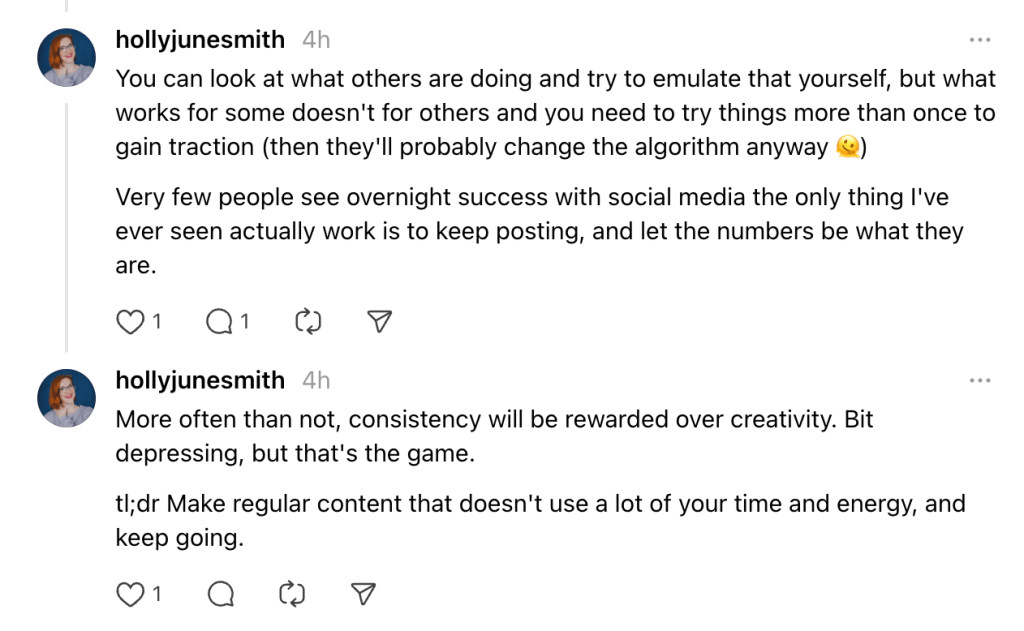
Snapshot of a Thread:

Hollyjunesmith
You can look at what others are doing and try to emulate that yourself, but what works for some doesn't for others and you need to try things more than once to gain traction (then they'll probably change the algorithm anyway 🫠)
Very few people see overnight success with social media the only thing I've ever seen actually work is to keep posting, and let the numbers be what they are.
More often than not, consistency will be rewarded over creativity. Bit depressing, but that's the game.

tl;dr Make regular content that doesn't use a lot of your time and energy, and keep going.

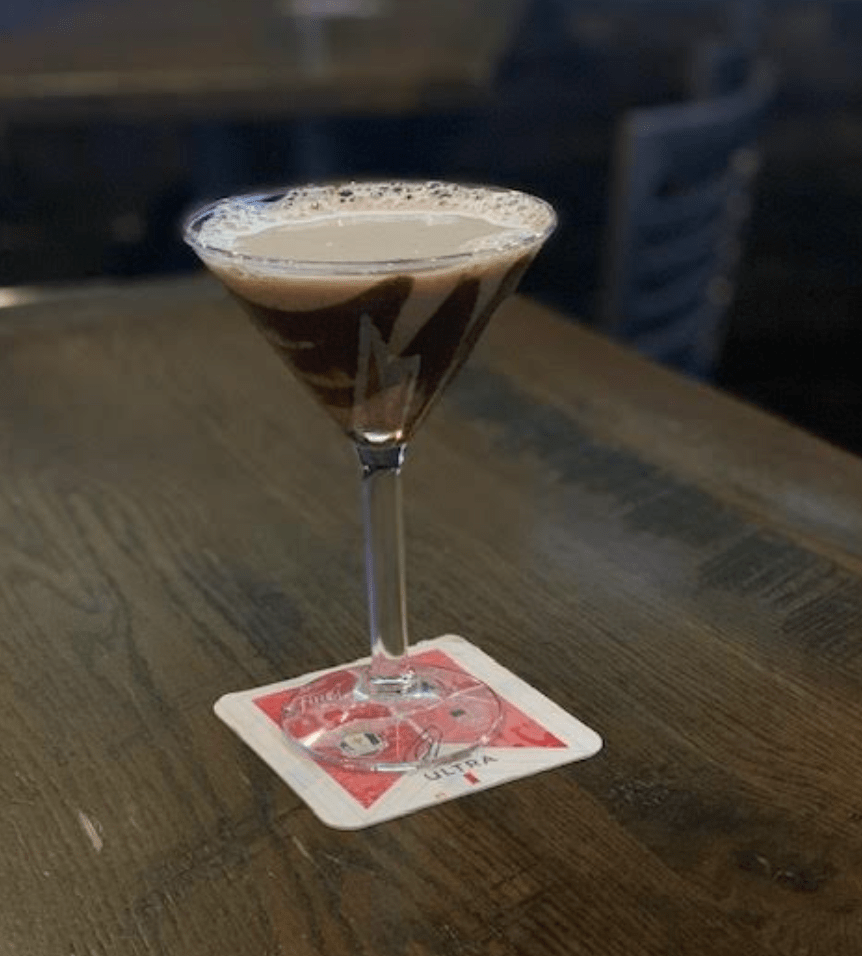
I really love this and what I needed to hear because underneath all the blog posts I write about doing better, complaining about low views when I do actually post, and just overall wondering if social media really moves the needle at all, is the fact I have a really difficult time posting. Even on my personal Facebook profile, I rarely post anything. I don’t care much about “checking in” when I go somewhere or telling people about my day. I don’t take pictures of my breakfast, and if I take a picture of a boozy drink like the one I ordered last night when I went out with my sister…

Southtown Pourhouse, Fargo, ND

…I usually forget to post it and delete it off my phone later. I learned years ago on Twitter that followers don’t add up to a whole lot.

Then right after I saw Holly June’s perfect thread I read someone’s bragging about her social media growth. It made me feel crappy for about two minutes because while she can brag about how quickly her account grew, I have a lot of things I’m proud of that (in my opinion) are more important than that.

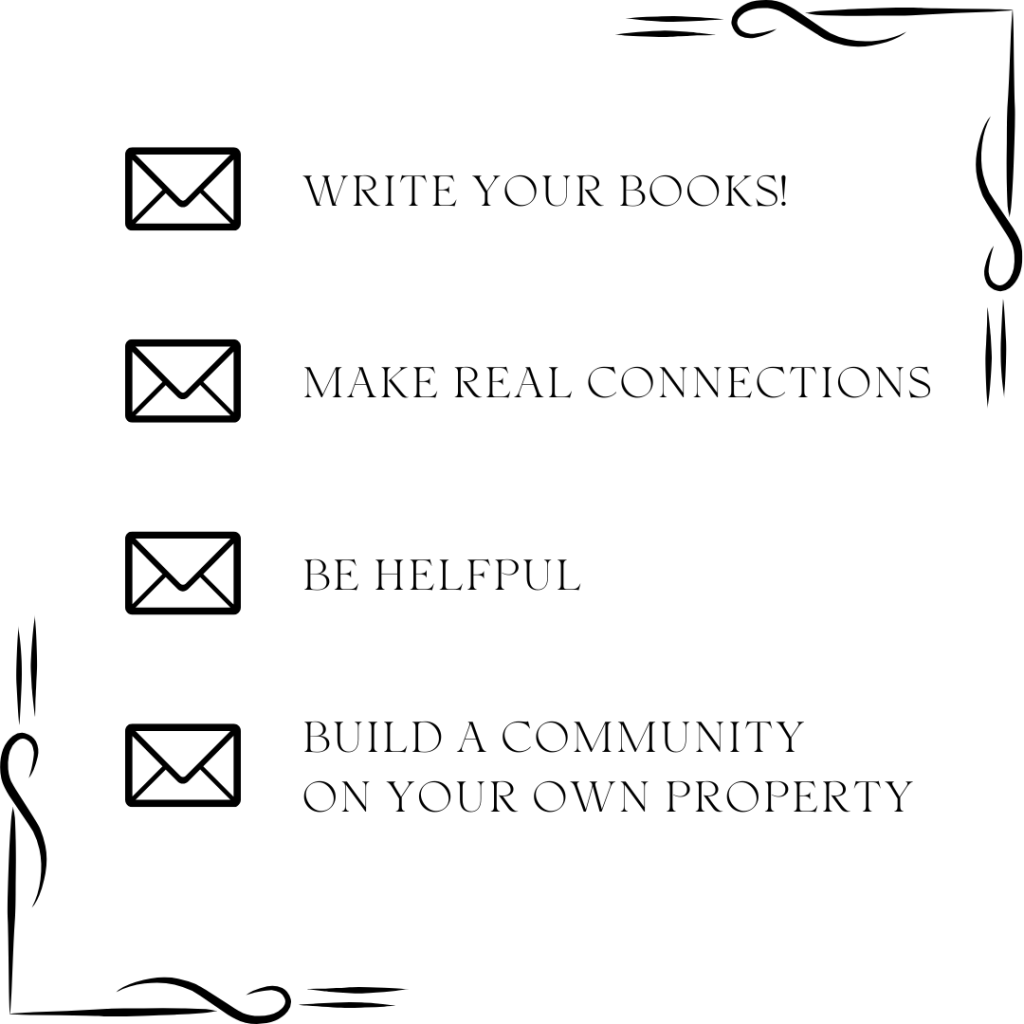
If you ever feel down because your social media growth isn’t what you want it to be, remember what’s important. Here’s a list and you are welcome to print it out and tape it somewhere to remind yourself that there are more important things than follower count.

write your books
make real connections
be helpful
build a community on your own property

each with an envelop  black filigree in corners of graphic

Write your books!
Remember why you got into this game to begin with. Everyone is talking about what will happen when TikTok gets banned, and when you have 40k followers and use that platform to sell books, yeah, it’s going to be a devastating development. I’m still pretty optimistic that TikTok won’t go away anytime soon (I’ll believe it when I see it), but social media platforms and the billionaires who own them are fickle beasts and one way to control that is to keep your eyes on your own paper and write your books. Your books will always be there no matter what kind of social media disappears and what takes its place. I’d rather say I wrote three books this year than say I gained 50 followers or whatever. Remember what’s important. Besides, even if you do have a ton of followers, they can’t buy what’s not there.

Make real connections.
Personally, the only reason I know of to have social media is to make personal, genuine connections. Obviously, 100% of my online friends I’ve met through social media. Though, some have reached out to me through this blog and we stay in touch through email or the messages part of a platform like Instagram. Network with others in your genre, build bridges with those you can help and who can help you. That’s what social media is really for. (I’ve said for years if you’re not connecting with other authors and using it to find out important book news, you’re using Facebook wrong.) I’ve been friends with a handful of people for several years that I met on Twitter and I wouldn’t have met them if I hadn’t be a part of that platform.

Be helpful.
It’s going to sound dumb, but helping my friends and other authors is probably the most important part of this whole thing. I learned how to do book covers, I have Vellum and learned how to use it. Now I help other authors who can’t afford to hire out those services. I edit for people when I can. I beta read. I like helping people and between that and writing my books, publishing them and hearing feedback from readers that they loved the story, those are the two most important reasons why I keep writing and publishing. It’s why I keep coming back to this blog every Monday. Just the other day I got a message on Instagram from someone who thanked me for writing the Canva tutorial on how to make a full paperback wrap. I’d rather have someone reach out and thank me for giving her the tools she needed to publish her book than a million followers.

Build a community on property you own.
I can’t stress this enough. Like the future of TikTok and what Musk did with Twitter, you never know the outcome of some of these platforms. Some seem to be around to stay, but for every platform that hangs on, there are more that don’t like MySpace and Google +. As an author, even if you don’t want to hear it, build your reading community on land you own and that way it doesn’t matter what social media does or doesn’t do. Create a website, blog on it if you want so you can build SEO. Start a newsletter. Collect those email addresses and back them up often so no matter what happens to your aggregator, your readers are yours to keep. Sometimes we put our energy into the wrong place. I’m not saying building a following anywhere, like TT or your Facebook author page, is a bad move, but also have a plan B, because just like we say about Bezos, they don’t care about you. The last thing Mark Zuckerberg cares about is your book business. You have to take it upon yourself to find a way to stay in touch with your readers that doesn’t depend on anyone else. If you have an FB page, frequently remind them to sign up for your blog or newsletter or as an alternative, tell them to follow your author page on Amazon. Amazon may not be around forever either, but if they don’t want to give you their email address, I think a follow over there is the next best thing. Now that Zuck owns Instagram, Threads, and Facebook, when their servers go down, ALL that goes down. Having a way to reach your readers that doesn’t depend on someone else is a must. It really is.

You can get down looking at other authors’ follower counts, but behind the scenes, those followers might not be doing anything for them anyway. I know my followers on Twitter didn’t, but I also made friends and that’s what really counts. Post if you want, find joy in sharing your work with others. I’m not saying having a social media account and trying to gain followers isn’t valid, it can be in this world of being online, but it’s definitely not the end all be all of your publishing journey. I have to remind myself of that when I see others’ social media accounts exploding and mine is a stagnant mess. But I’ve accomplished a lot in the past year. I’ve finished a 6-book series and started publishing those books. I’m editing a standalone that sounds so good, and the cover I’m tweaking is a perfect match. I’ve picked up a reading and formatting project I’m going to start working on soon.

I’m on social media. I like talking to other authors, talking shop, supporting them in bite-sized Threads pieces. I’m trying to like posting on my FB author page, even if my reach is bad and my engagement isn’t any better. But with anything, what you put into it is what you’ll get out of it, so I’ll keep posting my favorite lines out of my books, talking about my books, and my life as an author. If those posts find fans, they do, and if not, that’s okay. I’ll keep editing Loss and Damages, and it will be a solid addition to the backlist I’ve written over the years.

And unless I’m starving, my breakfast won’t have anything to do with it.

Come back on Monday. I’ll have my usual post and I’ll be talking about the 2025 Written Word Media publishing predictions. Have a good weekend!

Finishing a Series and Author Update

Words: 1749
Time to read: 9 minutes

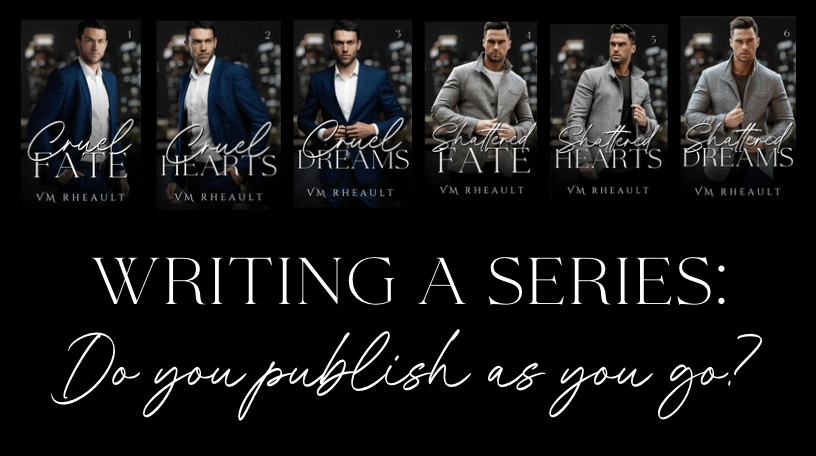
graphic of six book covers and the title of the blog: Writing a Series. Do you publish as you go?
These are the covers I’ve chosen for my series. They just need a few more tweaks before they’ll be ready to submit when I order my proofs.

I’ve written about series a few times on this blog, mostly in favor of them because if your first book is strong there can be potential for great read-through and they have numerous marketing advantages like putting the first book free (a loss leader) or making compilation. But there are cons to writing a series too, such as how much work they are, they cost more to produce, and not everyone likes to dive into a long series, especially by an unknown author.

One thing I didn’t consider when I wrote my first trilogy, or any others after that for that matter, is never finishing once I started. To me, my duets, trilogies, and series are one long story, and like writing a standalone from the first page to the last, they aren’t done until the last book is written. I don’t consider the time or the energy it takes to write it. Once I get it into my head (and the books plotted out) I write until I’m done. I don’t even think about if readers will enjoy them or what kind of return on investment I’ll get after they’re published.

When I first joined the writing community, many years before Musk ruined Twitter, there were authors here and there who wouldn’t finish their series. Being the arrogant new writer that I was, I thought it was simply laziness on their part, but over the years, and days such as yesterday when I’m reminded of it, I’ve learned some authors don’t finish a series because the books they already have published aren’t selling.

This is a huge Catch-22. Some readers don’t read a series until all the books are out, bingeing the books like they would a Netflix show (that actually drops all at once. I’m looking at you, Bridgerton.). That does mean fewer readers of your series if you publish as you write. But since readers do this, maybe you’re not selling as many books as you want and you think finishing isn’t worth it.

I wasn’t aware authors gauged the success of their series this way, mostly because I don’t write and publish that way. In fact, it boggles my mind how you could. The thought of being unable to change details in earlier books to fit with later books gives me hives. I know not all writers need that flexibility (they’re better writers and keep meticulous track of details and/or their stories aren’t too complicated and/or their series are interconnected but true standalones that aren’t as dependent on the books before), but I think needing it also gives me the freedom to finish without worrying about consequences. Consequences such as lost time and lost resources. I’m going to take the time to write and finish because I want to take the time.

The problem with my way of thinking is that if no one reads my series from start to finish, I’ve already lost time. I don’t have the option to bail because that time is already gone. But, even if the books don’t sell, like my duet, I can’t consider it a waste–I’ve written the story I want to tell.

I understand why people don’t want to wait and write them all first. If you have limited time, you may be writing for five or six years before you can publish them all. The series I’m about to publish took me four and a half years to get to where I’m comfortable publishing, but I’ve also written, packaged, and published other books while they were breathing between edits. I’ve said I have a lot of time to write, and not everyone is afforded that luxury. So I get being impatient, wanting to put your books out there, but if you are, that does come with, in my opinion, expectations you’ll have to control. Readers who enjoy your books will want to know when the next one comes out, and that increases the pressure to write and publish quickly. On the flip side, if no one reads, you’ll feel like writing the subsequent books will be a waste of time. On the flip side of that, you’d have to decide if abandoning a series would be worth it because you have no idea how an unrelated book would do and you could find you would have been better off writing the next book in the series you put aside.

Books sell forever and you never know when something will suddenly catch. That may be a book one in a series you didn’t finish and you’re sabotaging your own success. Read through will always earn you more, and an incomplete series can elicit distrust.

It doesn’t happen with only indies… we all know about George RR Martin. I watched the Game of Thrones on HBO because I knew after all this time Martin wouldn’t finish, and I wanted some type of closure, even if it wasn’t his. Whether or not Martin had any input in how the series ended, it ended how I thought it would and I was satisfied, if not happy, though I would have been happier had I been able to read the books. Life happens and he has his fingers in a lot of pies. As an author, I’m not sure how he feels about leaving a project like that unfinished. Maybe it bothers him or maybe he feels HBO finished it for him and he doesn’t think about it. Plenty of fans want the books, and him writing and releasing them would revive the whole series.

What it comes down to is how you want to run your business and how you want to spend your time. It may not be so simple to some, but books end up being products and an incomplete series will never sell as well as one that’s finished. If anything, complete your series to say that you did? I know I wouldn’t be able to write anything else if I didn’t have intentions of finishing. I would feel like I’m letting myself down, and the time it would take to finish would be worth it to me. It’s not for me to judge if it’s not worth it to you.


As for my author update, I finally finished editing my series. The next steps are adding elements to the formatting–even though I said I wouldn’t, I’m going to add chapter headers to the paperbacks, but they’re going to be the same for all six books. I have to make sure all the front and back matter is the same and in the same order, update my copyright pages as I changed the models and backgrounds and I add that information, make sure my Also By pages are updated and rewrite my acknowledgments. I thanked my ex-fiancé and he doesn’t deserve the mention. I still have plenty to do before I can order the proofs, but it won’t take as long as the editing. Toward the end, I just kept rereading the same paragraphs over and over, mostly due to fixating on how I felt instead of the story. I haven’t had any anxiety since my Mayo Clinic appointment on the 28th, and I’m thankful for that. Anxiety attacks were also getting in the way of my editing sessions, causing me to reread more than I should have because I was scared I had missed a mistake.

If you’re reading this the day it posts, I’ll be on a clear liquid diet for a colonoscopy on the 4th. To keep my mind off how hungry I am, formatting these books will be the perfect project. I can make a cup of broth, turn on some music, and pretend I don’t have such a crummy task ahead of me. My doctor at Mayo recommended I have it, and I was very fortunate my local clinic could get me in so quickly so I didn’t have to worry or think about it over the summer. Of course, I’m hoping they don’t find anything–I’m not sure if my mental health could take anymore. I didn’t hear any bad news at Mayo. She reassured me things were okay inside my body and that my hysterectomy hadn’t messed anything up inside me. I was really relieved. I have a follow up on August 23rd, but if my colonoscopy comes back clear, I think that appointment will be the end of things for a while. I know what my issues are and I’m on a treatment plan. I may never feel “normal” again but I’ve come a long way in the four months since my first appointment, and I’m grateful.

I don’t want to bog up this post with health updates–I just mentioned it because my editing was slowed down quite a bit by panic attacks and not feeling well. I still plan on reading most if not all of the proofs, but hopefully that last and final read through will be enjoyable and I can look at it as a kind of closure in two ways: maybe not the end of my health issues, but I worked on these the whole time I was unwell and now I’m feeling better, and the end of four years of work on a six-book series that will be my pride and joy. I doubt I’ll ever be able (or want) to write anything that will compare to these. Writing kept me sane while I was dealing with all this crap, and while they may remind me of these hard years, it will be tough to say goodbye, too.

Besides telling you if my colonoscopy went okay, I don’t think I’ll need to mention my health anymore. It’s under control, and it will be interesting to see how I feel writing new books without that in the back of my mind. But I won’t stop writing on my other blog, and if you want to follow along, you can do it here: chaoscoffeeandconfessions.blogspot.com

Next week I hope to tell you my positive test results and that I was able to order my proofs. Because of the time I’ll need to read the proofs and submit the changes, I won’t be able to put my ARCs up until the beginning of July, but that’s okay. I know these are done to the best of my ability. It’s time to move on, in a lot of ways, and I’m looking forward to it. Keep your fingers crossed for me! Have a great week!

Fake It ’til You Make It (Or something like that.)

cinderella's glass slipper with text tha says fake it 'til you make it
It worked for Cinderella

Words: 2974
Time to read: 16 minutes

A lot of people wonder, when they start the publishing game, just how long and just how much money it’s going to take until you “make it.” And without muddying the waters with things like “success is what you think of it” or “every sale counts” let’s assume that “making it” is earning a full-time wage. That will be different for different people too (I could do a lot with an extra 30k a year) but let’s go with 50k since the group 20booksto50k put the number out there.

When you’re getting your book, or books, ready to publish, you can put as little or as much money into your product as you want, and chances are unless you publish a real stinker of a novel, the quality of your book will be just fine. Maybe you’ll be shocked to hear it, but when you look at books that have taken off, they aren’t literary masterpieces by any means. So, if you’re looking at editing, do I think you need to spend $1,000 on a developmental edit, $600 on a copy edit after you’ve made changes, then $200 on a proofread? No, and the people who say that you should are probably other authors who are snobs and editors who want you to hire them. I don’t believe you should publish without some kind of feedback, even if you just ask your spouse to read it to look for plot holes, unless you’ve been at this for a long time and have found your voice and you know what your tics and weaknesses are and can edit them out on your own. If you’re patient enough, shoving your book in a drawer for a month can go a long way to reading your manuscript with fresh eyes. Make use of critique partners and beta readers, catch typos on your own by listening to your manuscript and proofing the proof (mistakes really do jump out at you when your book looks like a book). So, the bottom line is, pay for the editing you can afford or think you need and use free where you can get it.

This also applies to covers–some authors make their covers for as little as $7.00 to buy the stock photo from DepositPhotos and use the free Canva plan, some spend hundreds, even thousands on a cover from places like 99Designs and Damonza, or hire artists for one-of-a-kind art. Of course I believe people judge books by their covers, but your cover is only going to be as good as what’s inside. I knew someone who used Damonza, and his cover was beautiful. I tried to read his book in KU to support him, but it was all telling. He had an entire trilogy in 300 pages because of all the telling. If your book isn’t good, the most beautiful, expensive cover in the world won’t help it take off. Your readers will review, your star rating will tank, and even if you can sell a book, that reader won’t enjoy it, she’ll think she wasted money and never buy you again. I think you can find a happy medium when it comes to covers. GetCovers is inexpensive, they do a decent job, and you’re supporting Ukraine. Or buy a premade for $100 dollars. It’s more important to know what the trends are and what other top authors are doing in your genre than how much money you put into your cover. Do your research because being original isn’t the flex you think it is.

Formatting doesn’t have to be complicated, and while you might want the fancy chapter headers, be honest and admit it’s for yourself and not your readers. I don’t sell many paperbacks, and ebook formats can’t support the fancy stuff authors are always talking about. Ebooks don’t have “pages” and frilly extras don’t apply. So you can pay the $300 for the formatting that will have black pages or full-spread graphics, if you think you’re going to put a lot of energy into selling paperbacks to get your fee back, or you can pay $50 for a simple formatting job. Or you can do it yourself for free using Draft2Digital’s free formatting tool, or Reedsy’s, or upload a Word document. It’s all up to you. I wrote about formatting and gave a lot of resources in this blog post, and you can read it here: https://vaniamargene.com/2022/08/22/formatting-your-paperback-books-interior-tips-and-tools-that-can-help/

That’s packaging your book, and there are always more things you can spend money on like an author logo, the ISBN, or registering your book with the copyright office. When I started my pen name, I swore I would start registering my copyright, but then the fee went up from $35 to $65, and I lost my resolve. If you’re not putting out many books, maybe the $65 dollar fee isn’t that bad, but it can add up if you’re publishing six books a year. Here’s the fee list if you want to bookmark it. https://www.copyright.gov/about/fees.html

I didn’t do a very good job explaining how much it costs to get a book ready to go because depending on their choices, costs can vary from author to author. Some want to bootstrap it because they don’t know if they’ll earn their money back and some don’t care. Some have disposable income and paying for services isn’t a big deal, some can barely afford the seven dollars to buy a stock photo. Some have a huge network and don’t pay for anything because they have a lot of free help or they’ve joined something of an author’s co-op where they all trade services. If you’re like me, pretty much doing this alone, do the best you can. You might be surprised your best is better than you think it is.

Once you have your book ready, reviews are kind of important. I don’t believe in the magical number of 50, but I think if you’re writing commercial fiction, putting your book on a place like Booksprout (there’s a small fee) would give you a few to start out. I didn’t with my duet and published without any, and now Captivated by Her and Addicted to Her are my poorest sellers. I’ve tried doing free promos for Captivated, but I think I ruined any momentum I could have had not launching with a few reviews. Maybe it’s circumstantial, but my other books always had a better launch maybe because I put them on Booksprout first. You never know.

So what do you do after you publish your book? How many times do you have to do that to “make it?” How much money do you throw at marketing to make your book sticky enough to quit your job? The sad part is, I don’t know or I would be doing it. I’m at a point where baby authors would probably envy me my sales dashboard, but authors who knew what they were doing from the very beginning and have been making six figures for the past few years would be unpleasantly surprised if they woke up to my numbers.

Even going viral, in some cases, won’t help. Chelsea Banning (and I’m not picking on her or throwing her shade in any way. She’s an interesting case study because I watched in real time how that all played out and what happened afterward.) went viral on Twitter after Stephen King quote-tweeted her. Suddenly, she was everywhere, from USA Today to doing a video call on the Kelly Clarkson Show. But when something like this happens, not a lot of people are prepared to keep it going. Having a backlist helps because your sudden popularity will lift up all your books. If the timing is right and you have a new book ready to go, that will boost the algorithms too, as will throwing your unexpected royalty money at some ads (you’d have to borrow from yourself because of how Amazon pays out, but I think in this instance you’d be okay with that). But if you only have one book out, don’t have another ready to go, even if you run ads, you may not be able to keep the momentum going. You can save up a little money, maybe have a few hundred to a couple thousand depending on how viral you really went, to throw at your next book, but you need to be in the right place and be in the right mindset to make the most out of going viral. We all want it, but I don’t think we understand what the rewards and consequences of going viral can entail. At this point in my career, I would love to go viral (in a positive way). I have a few books out, trilogies that have good read through and standalones that have a number of decent reviews. I have a six-book series about to drop, and I have a newsletter (blog) in place to capture new readers. But even I would question if I have what it takes to keep that going–after a while, you get burnt out. Posting on social media to stay relevant is time consuming, and if you’re scrambling to get another book ready or to set up a newsletter because you didn’t have one, creating graphics for Instagram or your FB author page may not be on your list of priorities, especially since more than likely you have a full-time job and maybe some kids and a spouse you’d like to see every once in a while. I brought up Chelsea only because going viral didn’t seem to help her in the long run. She might have been able to put away a small nest egg, but on Threads she was asking people to buy her book because her husband had gotten laid off or some such, and she does only have one book out right now so while going viral must have been exciting, it was only a blip in her career. I wrote a little bit about her here: What I learned from an author’s literal, overnight success

And it’s really hard to say how many of those readers stay with you, or if they bought your books and interacted with you to taste your fifteen minutes of fame. Going viral is a flash in the pan, and no doubt helpful, but how can it compare to writing and publishing consistently for many years and organically attracting readers who love your work? Though I doubt anyone would turn down going viral–that’s like saying you wouldn’t take a $100,00 dollar jackpot because you were disappointed you didn’t win a million dollars.

So let’s go back to the question, how long do you have to fake it before you make it? And the honest answer is, I have no idea. Some unlucky authors fake it forever and don’t truly make it. And why they don’t make it is going to boil down to what they’re doing wrong on an individual basis. (I talked a little about this in my transparency post, and you can read it here: https://vaniamargene.com/2024/02/29/the-magic-of-transparency/)

I mean, obviously, there are things you can do to up your chances of consistently selling books:

Write in a popular genre and package it properly. Romance, Thrillers, Sci-Fi/Fantasy, maybe? I haven’t watched a K-Lytics report in a while, so I don’t know what the numbers are, but there are some genres that are harder to make a go at it, like horror (that’s not YA–I think Goth Cottagecore is having a moment right now) or speculative fiction, literary fiction. Like that. You’re already making it hard on yourself by choosing a genre that’s not already a bestseller.

Put up a website and start a newsletter/blog then put that link in the back matter of your books. I always have to qualify that now since I moved my newsletter to my blog, but start something where readers can find you and subscribe for updates. But do more than just start one. Keep it updated. If you’re putting out a book a year, you may think you have nothing to talk about, but doing character sheets, character interviews, talk about where and why you chose the setting you did, etc, can fill up a post a month. You can also do author interviews to keep your name out there.

Learn an ad platform. If you only have one book, it might seem repetitive after awhile, but ads are the best way to shove your book out into the world, especially if you don’t want to put it on sale or use any free days (and why would you? You want to make money.). There are millions of readers and you can run ads indefinitely so long as your spend doesn’t outrun your royalties. You can spend (waste) a lot of money if you don’t know what you’re doing. I would start with a solid list of comp authors–this will help whether you run FB ads or Amazon ads. Make sure your keywords and categories are solid and that your book’s cover, title, and blurb complements them. Figure out how much you want to set for a budget. Go slow and see what happens.

Network with authors in your genre, not just authors in the writing community. Romance is big for opportunities such as newsletter swaps, promos, anthologies, auctions, collaborations, and just genre news in general. I missed a lot of chances for exposure because I got sucked into the writing community on Twitter instead of meeting and getting to know authors who write romance. I’m getting better at it now, spending time in romance groups on Facebook, but I should have been introducing myself many many years ago.

One of the pieces of advice I hear from big indie authors is to have multiple streams of income. If you can’t do it now, that’s fine, I’m not in a position to right now either, but if you have an ebook, a paperback, and audio, that’s three ways, setting up a Patreon could be another, going wide rather than enrolling in KU could be one, starting a podcast that businesses could eventually sponsor could be another. Even adding a Ko-fi link to your social media profiles could be one, or maybe editing/beta reading on the side. If you already don’t have time to be working on what you need to be working on, absolutely none of this will sound appealing, and that’s okay. But if you look at what the big indies are doing, I’m thinking of authors like Joanna Penn and Lindsay Buroker, they have money coming in from a lot of places like translations. One day I would just like to add audio, and that’s a long ways off.

So, you can ask me the question again…. how long do I have to fake it before I make it? And does spending more increase my odds of making it? I’m just shaking my head and shrugging. No one knows. I know what to do to increase your chances and I implemented some of those things myself, but the only thing you can really do is publish your best book and publish your best book as often as you can. Build a backlist because the more product you have to sell the more you sell. Always be working on the next book. That might not get you to 50k in a year, or five, maybe not even ten. I’m on year eight, but I don’t know if not making the mistakes I made would have helped. It’s difficult to watch authors zoom ahead of you, and I have. Two that come to mind are Cara Devlin and Elizabeth Bromke. I met them on Twitter, both when maybe we are around the same level. All of sudden they took off making full-time earnings from their books. Then I see some of the authors who have been around for as long as I have, or even longer, who are still in the same place, maybe because they let their lack of sales get them down and they don’t write much anymore, or their covers and/or genres are just off the mark, or they don’t have money for ads and depend on free social media to get anywhere, or maybe life just got in the way and before they knew it, two years went by and they haven’t opened their Word document.

The problem is, we all write such different books, have different resources, have different lives, that someone like Elizabeth (who writes romance/women’s fiction) could tell me exactly what she did, and maybe I would pick up something here and there, but in the end, I’m not sure it would get me anywhere. She hires an editor and cover designer, but if she lives a life where she could afford that before she started making money from her books, that’s two strikes against me, so we could stop writing out the list already. I mean, it’s nothing to get bitter about–I’m sure there are some people who read my blog get a little annoyed when I recommend running ads. Spending ten dollars without a guarantee of ROI is a stretch and a luxury they can’t afford. I get it. So some of us, through no fault of our own, may be blocking our own paths to success.

I’ve given up the idea that I will ever make a full-time author’s wage. A lot of authors don’t–trad and indie–and not because their books aren’t good or they didn’t go viral. They weren’t at the right place at the right time, or they never wrote a book that hit the market just right. But as I always say to myself with every new release, maybe this will be the one.

It never is, but all you can do is keep faking it.

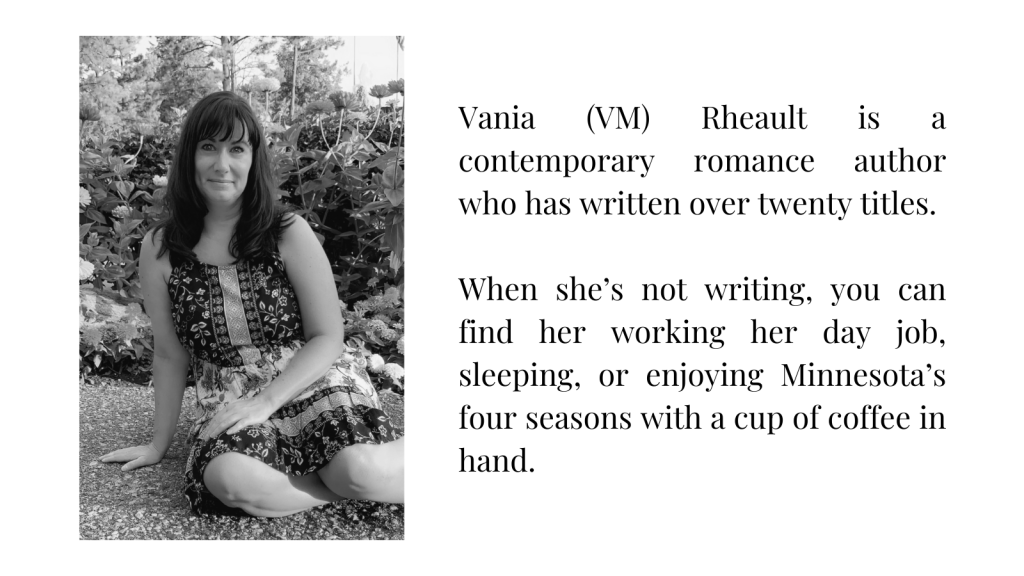
author photo

Thursday Author Update

Words: 1539
Time to read: 8 minutes

I thought I would write quick update being that this will be the last one of 2023. Next Monday on Christmas Day I’ll post my year-end recap and on New Year’s Day, I’ve decided to take the day off. After that, I’ll post what I want to accomplish in 2024 and fall back into my usual posting schedule.

Mainly all I’ve been doing is editing my King’s Crossing series. I got through number one and added almost two thousand words. Some of the scenes were sparse and I filled them in. That is what is happening with book two–I’m only halfway through and have already added 1500 words. It’s really interesting reading these since they were the first books I wrote when I switched to first person, but not only that, I can tell I pantsed a lot of the plot (she just said what?!). I’m going slower than I’d like, but I have to make sure these are the way I want them to be before I publish. Like my rockstars, I’m not going back to edit them ever again, and though I know perfection isn’t obtainable, I want to make sure they are done to the best of my ability. So even though I said I would like to start publishing them in March, I might not be able to do that. I was hoping to get through each book in two weeks’ time, but there are some chapters that are so long that it takes me days to get through them.

Which leads me to this question: How long should a chapter be?

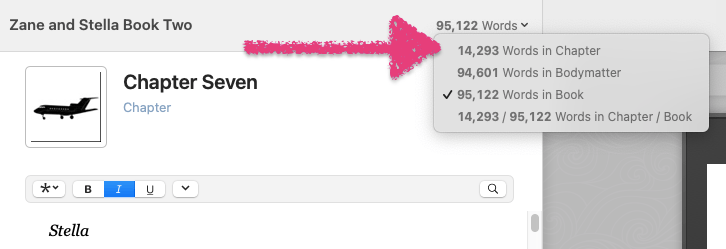
My most recent chapter I edited was 14,000 words long. There is one chapter in one of the later books that is 21,000 words long, and no, I didn’t accidentally add a zero.

When I started with the idea of dual POV, I didn’t think much beyond that I simply knew what it was, that’s how contemporary romances were being written and that they were selling. I had read books in dual POV like Sylvia Day’s Crossfire Series, and I never thought much about length of chapters. As long as there is stuff going on that moves the plot along, and the chapters are fast-paced and don’t drag, why should it matter how long a chapter is? I’ve read a couple books where the book is “dual” but we don’t hear from the male POV for chapters into the book. There was one book I read that took so long to get to his, I wasn’t even sure if his POV was included and I almost did not finish (DNF). I like the man’s POV more than the woman’s and I always have. I think that reflects in my writing too, where I wouldn’t be surprised if there is more male POV in my books than female. Writing that made me curious, and here’s the breakdown of A Heartache for Christmas:

Sawyer’s POV: 54,114
Chapter one, 1,611
Chapter three, 3,681
Chapter five, 8,152
Chapter seven, 7,266
Chapter nine, 4,894
Chapter eleven, 10,691
Chapter thirteen, 4,354
Chapter fifteen, 10,305
Chapter seventeen, 3,160

Evie’s POV: 43,050
Chapter two, 878
Chapter four, 5,907
Chapter six, 4,355
Chapter eight, 6,302
Chapter ten, 6,772
Chapter twelve, 8,930
Chapter fourteen, 2,750
Chapter sixteen, 7,156

As you can see, I started writing long chapters and never stopped. I gave Sawyer 11,064 more words, but in this case, it makes sense because he was solving a mystery and needed the page time. This also goes along with how I used to write my 3rd person books. I never wrote in chapters, only scene breaks, and then I would chop up my book in editing. I couldn’t think in chapters and maybe I still don’t. I end a POV when it needs to be ended and not any sooner to stay in line with some arbitrary chapter-length rule. Because if you have a POV that needs five chapters to be told, why are you cutting up that POV? It doesn’t make any sense, but then, I guess you don’t have a 95k word book with only sixteen chapters in it. Is there a wrong way? I think the only wrong way cutting up something into such small parts is if the reader doesn’t have time to get invested. Your readers have to care about your characters–that’s nonnegotiable. They can’t do that if they’re not given the time to do so.

Anyway, so when I’m dealing with a 14,000 word chapter where parts need to be beefed up a bit here and there and then I have to go back and read, not only to make sure I didn’t add any typos but to make sure that what I added blends into what was previously there and what came before it, then yeah, the editing process slows way down. Unfortunately. But, on the bright side, I am still loving these books, and I’m enjoying the process. These will probably be the biggest project I’ll ever tackle. I’m not really interested in writing this big of a project again, and I have no idea how these are going to be received. I hope these sell well, even boost-my-career-to-the-next-level well, but these will take a time and money commitment from a potential reader and you just never know. No one wants to write books that no one will read, and there are no guarantees.

As for what else I’m doing, that series will consume all my attention, my every free second, until they’re done. I’m still aware I need to redo their covers too, as the more I read these books the more convinced I am that the covers they have now don’t and won’t do them justice. I’ve been playing with hiring GetCovers to do them. They are inexpensive and after I get my tax refund in February could afford to cover six books, but I’ve heard you get the best results if you find the elements (stock photos) you want them to use. Finding the male models is what takes the longest and if I’m going to do that on my own, I might as well do the whole thing myself. But I have plenty of time to play with that–I just need to remind myself that experimenting with cover concepts is just as important as the editing. Thank God the blurbs are done, though I’ll go over them one more to be sure they sound okay.

Be sure to check next week for my year-end recap. My rockstars boosted me up a bit, so hopefully I’ll have more to report. I hope you all have a wonderful Christmas if you celebrate! I’m having my sister and ex-husband over and I’m cooking turkey, cheesy hashbrowns (we had mashed potatoes and gravy for Thanksgiving), green bean casserole, and the yummy cheddar biscuits from Red Lobster you can buy as a mix. It will be a small meal, but difficult to orchestrate as everything needs oven time and I only have one. Oh well. It will work out. I managed on Thanksgiving.

One last thing before I sign off for this week…there has been lots said about Bryan Cohen and his free Amazon ads course that he hosts. Some call him a scammer and only wants to recruit people into his Amazon Ads School, some say he doesn’t know what he’s talking about when it comes to Amazon ads, (calling his method throwing spaghetti at the wall and seeing what sticks) some say if he’s not selling books not to listen to him (something I don’t believe because a lot more goes into selling books than knowing how to use an ad platform) but I’ve joined in with the challenge many times, and if you want a free way to learn Amazon ads, Bryan is the one to teach you to do it. There are many strategies to experiment with when it comes to Amazon ads, or any ad platform for that matter, and Bryan teaches you one way. For free. He goes into a lot more than just how to set up an ad. He goes through and makes sure you understand if your book is ready to throw money at it (and a lot of times people find out the answer is no) and teaches you how to write hooks and more. I’m not saying his way is the end-all, be-all way. There are plenty of people out there who do ads like Robert Ryan, Janet Margo, and Ricardo Fayet (from Reedsy), but if you join in with the challenge, you have a ton of help and people to bounce ideas off of in the Facebook group. You can use Bryan’s free course as a springboard for getting your feet wet, and then move on to other strategies by other people. Anyway, so I just wanted to throw that out there, and if you were planning to learn Amazon Ads in 2024, then you can sign up for Bryan’s course that’s starting on January 17th and decide for yourself if his spaghetti deserves a plate at your table. You can sign up here. https://learn.bestpageforward.net/jan24/ (These are not affiliate links.)

Enjoy the rest of the week and have a restful weekend!

Writing Tics: What they are, how to spot them, and how to fix them.

Words: 1882
Time to read: 10 minutes

made with https://www.freewordcloudgenerator.com/

I don’t delve into writing craft that often on my blog. Writing quality is subjective, after all, and what is one person’s favorite book is another person’s trash. It’s fine, but I still believe there are some things that are universally downers like too much telling, too many crutch words, characters that are not well-rounded, scenes that aren’t anchored in a setting. There aren’t many things that can ruin a book for me, but one of my biggest pet peeves is characters who don’t act their age. I’ve read a few books now where the female main character is just a brat but we’re expected to believe a mature, grown (and running a billion dollar company as they are wont to do in billionaire books) hero is going to fall in love with her, warts and all. It instantly makes the story unbelievable–if I can’t stand reading her, how can he love her?

But, that’s not the point of my blogpost today. Last week I talked about redoing my covers for my trilogy, and I thought, well, there’s nothing I like more than reading my own work, so having a little look-see at the insides before I go through all the work of changing out the covers wouldn’t be a bad idea.

I’m glad I did because what I found was just not good. The first book wasn’t as bad as the other two, though I did find quite a few things to change. But when you go back to read something you haven’t looked at for ten months, that will happen. The second book…I have no idea what happened. This is where writing tics come in. A writing tic is something you write over and over again without realizing it. Maybe you get into a zone and the words are flowing, and before you know it you’ve got your favorite writing tic all over the place.

That’s what happened to me. I fell into a sentence structure I didn’t see. Since I didn’t see it, with all the editing I did, I couldn’t fix it. And it was only after ten months of distance did I read that book and think, WTF happened?

A writing tic can be almost anything. Your favorite word, turn of phrase, a description you can’t let go of (how many times can moonlight glimmer in her eyes?). My writing tic was using the word “as.” An example of that is a sentence like this: He sits back, turns the beer bottle on the table as he thinks. I found a few other tics too, during my read-through. I decided I liked the words when and while. While she was doing this, he was doing that.

Writing tics can be harmless, but if you get too carried away, they can actually destroy a good piece of writing. The problem is, sometimes you can’t always see them, and maybe if a reader is used to reading that particular tic, they aren’t going to see it either. Using “as” in first person writing seems to be common. Now that I’m sensitive to it, I see it everywhere, but that doesn’t mean I want it in my books, even if a reader isn’t going to notice it.

That’s why writing about craft is so difficult and why some authors and writers get so up in arms about it. Getting better takes work, and not everyone wants to put in that work (or thinks that they should or needs to). I did not have any fun practically rewriting all of book two… and book three. It was hard, messy, and time consuming, and I’m going to have to order more proofs and read the whole trilogy over again to make sure I didn’t edit in any typos which is always a concern no matter how meticulous you are. Not to mention how easy it is to adopt another tic while trying to edit out the one you noticed.

The real problem I have with tics is getting fixated on other books in my backlist and wondering if they have the same issue. I get almost manic with the need to go back and read them and find out if they sound good or not.

During one of my editing sweeps of my six book series, I noticed I had a love affair with the words “take” and “make.” They were all over the place, and once I realized that, I had a heart attack. By the time I noticed, I had written other books, and I found the same problem. Luckily, I had saved them up and was able to fix them. Tackling a writing tic in six books made me want to cry, and I am so so glad I didn’t publish them right away.

So, what’s next then? I’m going to finish editing out my writing tics in my third book. I’m forcing myself to go slowly because there’s no reason to rush. My books are out there, and who knows if readers think they’re poorly written. Sometimes a reader can overlook poor writing for a good story, and I may never have any proof that my tics ruined the book for them. So, I’ll take it slow, finish editing the third book over again, smooth out the prose. I’ll tweak the covers and fix a few things I found there, and order new proofs. Then, I need to read them all again to double check I didn’t edit in any mistakes. Yes, it’s a pain in the neck, and yes, it actually would have been nice if I could have done this the first time around. They were edited several times (unfortunately, only by me) and honestly, God only knows if a different editor would have spotted it.

I don’t edit for many people anymore, but one person I’ve edited for recently had the same “as” problem that I do. Another friend I edited for a while back used way too many hyphenated adjectives to describe a noun (think, long-legged blonde). When I read first person books that aren’t mine, the “as” sentence structure jumps out at me. I’ve blogged before that I can’t read a certain author who uses the word “got” over and over again. Once I saw them I couldn’t stop seeing them and now I can’t read anything from him. What’s funny is it just occurred to me now that got/get/gotten/getting could be his writing tic. Since I wrote him off my TBR list, I don’t know if his recent books still have this problem or if he’s managed to find an editor who told him to stop it. (He’s a small press author.)

Anyway, the whole thing makes me sad. I’ve documented my struggles on here, and finding something in a book that’s been published (for almost a whole year too!) is depressing as hell. I’m not chasing perfection, but I would like to say my books are published to the best of my ability. The problem is, if you’re going backward, you can’t go forward, but after this trilogy, all my books will be how I want them to be. I’ve already gone back and did the same thing with my duet (I edited them after redoing their covers). I’ve pulled enough hooks from Rescue Me for TikTok videos to know that book doesn’t have the writing tic problem, at least, not the “as” one. I’ve read my rockstars so many times I know they’re good. With this new knowledge, the only book I could probably read again is Faking Forever, but, even if it is only a standalone, going back to that one doesn’t thrill me. Especially since I’m tweaking the cover of my Christmas novel and reading it over again while I wait for the second proof to make sure the cover is going to come out how I want it.

I hate feeling like the whole world is coming to an end, but I can’t stop feeling the urgency to get these books done as quickly as possible. I won’t let myself rush–that only sets myself up to make more mistakes, but this project definitely isn’t something I thought I would be dealing with right now. Still, it’s for the best. New insides, new covers, and I can push them hard after Christmas for their one year birthdays and see what happens, because no matter if the covers weren’t great or the prose wasn’t what I thought it was, they are still really good books. I was going to jump right into editing my series again and publish the first book in January, but I don’t think that’s going to happen now. They still need a lot of work, and I may not get that all sorted until March.

I can’t look that far ahead though. My two main priorities at the moment are getting through this trilogy and getting them done knowing I will never go back to them again, and publishing my Christmas novel in a timely manner with as few issues as I can. There should be no reason to have to go back to it, now that I know I have tics that need to be fixed that could show up in that novel. I still have plenty of time to hit the readers who like Christmas stories, so I just need to keep my head on straight and remind myself the world won’t come to an end if I miss my release date, which, at the moment, is November 13th.

Writing tics can cause a lot of trouble, especially if you do something so much you need to do a lot of rewriting like it did with my second and third books. I have no tips on how to spot them, except just letting time go by and then rereading (especially if you read or work on something between editing passes). That seems to do it for me. You may have a fantastic editor who spots those things for you, or you may use a program like ProWritingAid which would probably point them out too, depending on how bad they are.

I would suggest keeping a list, and that could help. I have a list of garbage words that I avoid, but the thing I’ve noticed with my writing tics is that they can change from book to book. It would be nice if I could just not write with any, but I don’t know if anyone can do that. I suppose I should just be thankful I spotted them at all. I’m so sensitive to asking people to spend their money on my books and I want them to have the best product possible. I would love to find a writing partner that I could depend on, but after so many years trying to make friends and connections, the one thing I’ve learned is that if you want something done (maybe not right, but at this point done at all), you have to do it yourself. No one will care about your books more than you. That’s a sad fact.

I will update you with other news next week! Have a great day!

If you want to read more about writing tics, look here:

https://patthomson.net/2016/06/23/writers-tics-its-all-about-the-invisible-gorillas/

May Recap and June Plans

Another month has come and gone, and I still feel like I’m trudging through quicksand, though, to be fair, I have gotten a lot done in the past couple of weeks. It’s more of a personal thing that I feel like I’m not making any progress when, in fact, I’ve made so much I’m freed up to write again. That I won’t have room in my publishing schedule until 2024 isn’t a concern, more of a blessing in disguise as I’m plotting out a new trilogy and having a difficult time. I feel like I may be broken since I haven’t written anything in months and the momentum I’ve had for the past two years is definitely gone. It is true, what they say, it’s better to have written as I have really enjoyed editing these books over the past few months, but I also like to write and I need to have at least a loose outline of all three books (for breadcrumb purposes) first before I can really dig into writing book one.

Despite a new diagnosis of a yeast infection (I swear, the fun never stops with me these days) I managed to format, write blurbs for, and create six covers for my King’s Crossing series. I’ve ordered proofs for them all, and here are the covers.

I have to admit, I’m pretty proud of these, but like I’ve mused in other blog posts, I may have been too far ahead of myself for these to stick. I’m hoping covers for billionaire books don’t do a complete 180, though illustrated covers are becoming more and more popular. I just don’t think that an illustrated cover would provide an accurate depiction of what I write about (high angst), so at least I don’t have to worry about that no matter how heavy the cover trends lean in that direction.

Last week, I spent more time than necessary (because they changed their platform since I’ve last used it) setting up a Facebook ad for Captivated by Her, which was released on the 1st. I don’t expect anything to come of it; I’m still getting my new pen name out there and unfortunately paying to do it. I have just a little under 200 on my newsletter subscriber list, and surprisingly, I’ve only lost four. I did go ahead and offer them an ARC of Captivated, but only 26 subscribers took me up on it. That’s fine, even if just one or two of them leave an honest review that they liked it, it will be a nice gauge into if my books will resonate with anyone. So for now, I’m running a very small budget FB ad to Captivated, turned my ad back on for my reader magnet to build my list, and I’m running a couple of Amazon ads that don’t have much traction yet. I didn’t think an ad to a preorder would, I just wanted the algorithms to pick me up.

I might buy a newsletter promo with ENT or Fussy Librarian for Captivated when Addicted to Her comes out in August. I don’t have a preorder for it because I’m reluctant to put something on preorder for that long. It would just sink on Amazon because nobody wants it, so I feel it’s better to wait and do what I did this time–put it on preorder for a week so I have a link and in that time I can run some ads to it so Amazon knows it exists. Am I doing this right? I have no idea. I won’t know for a long time if I’m going to make any money off these books, but underneath the need for financial validation, I sure had fun the past two years writing them all.

There is always TikTok. Apparently you need to be on there ASAP if you’re a romance writer, but honestly, I’d rather throw money at ads for now than learn how to work another platform. I still don’t have a complete grasp on MailerLite and all it can do (I have a course by Holly Darling I bought during a Black Friday sale that I haven’t taken yet, either), and if I wanted to put time into anything else, I need to learn how to participate in Bookfunnel promotions because I’m paying for the privilege.

For now, I’m just happy to be writing again, even if I’m having a bit of trouble plotting, but I’ll get back into it easy enough. I’m also trying to figure out what more I can offer on this blog. I’m going to look into an indie editor series because besides my author updates, there just isn’t a whole lot going on in indie publishing right now. TikTok is all the rage and I could experiment just for the sake of telling you about it, but with only one book out anyway, I feel it would be a waste of time. So, we’ll see what happens. I won’t stop writing, but I like being able to offer content that’s helpful. I guess I’ll be brainstorming more than just plot for the next little while.


What I’m loving right now:

When I sent a newsletter out hoping to prompt the readers who downloaded Captivated into leaving a review, I knew there was a way to create a link that would send the reader straight to the review page instead of just asking them to hunt for it on the book’s product page. Dave Chesson of Kindlepreneur usually has all the answers, and indeed, he has a YouTube video on how to create a review link, and also a blog post that explains it a bit better. This was a golden find for me and so helpful for your readers if you ever need to ask for reviews!

I hope you all have a fantastic week!