Okay, so, I’m not doing too much lately besides writing. I’m 21k into the second book of my duet, and I’m liking the story. The loose ends I left in book one are just enough to anchor book two, and I have a pretty good idea of where the book needs to go and how it’s going to end. I don’t always have the end scene in my head when I’m starting out, and I need to get back to doing that. It makes things a lot easier for me.
In the spirit of planning, I bought a large grid calendar for 2022.
I want to start planning out my releases and along with the releases, figure out a launch plan for each one. Tentatively, for 2022, I’m going to release book one of my duet in March or April, release the other one in about 10 weeks after that, a standalone that I’ve already written 10 weeks after that, and a billionaire Christmas novel in November because I’ve never done a novel specifically for Christmas and I would have plenty of time to write it.
That brings me to my releases for 2023, and all those books are written (though I will need to proof them, format them, and do the covers), and as I release my six book series during that time, I’ll finish the other series I started (two books in, four to go).
It feels good to have a plan, and the schedule of three-four books a year will give me breathing room to keep writing. I never want to be in a position where I write and release, write and release. That’s too much pressure to keep consistency going, and I would feel better to stay ahead in case something happens and I can’t write. To keep a schedule going requires motivation, discipline, and organization and that is something I’m going to work on in the years ahead. Banking books has helped, but I have to admit, the thought of dumping them all on Amazon has an appeal.
There are still a lot of amazing presentations I want to listen to, but because I have such terrible tunnel vision, the only things I’ve been working on right now are book two of my duet and this blog. I’ve missed some webinars, and I need to watch the one I paid for via Jane Friedman and her courses. There was another one that I signed up to watch live, but because I was writing when Zoom notified me it was beginning, I skipped it, too, but luckily it’s part of the Author’s Guild Business Bootcamps for Writers, and you can watch the replay on YouTube here. Also if you want notifications of when things like this happen, bookmark this site!
What am I loving this week?
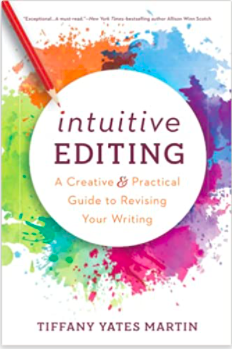
Two things about editing caught my eye, one is the course hosted by Jane Friedman with Tiffany Yates Martin. I love anything that involves Tiffany, and I signed up for this course right away. I hope I can watch it live. There are so many people who are “editors” these days, some have a legit business, while others offer the service when they shouldn’t be editing a gallon of milk. (Hey, if your book has a review that says you have typos and/or grammar and spelling issues, you shouldn’t be offering to edit someone else’s work–especially if you intend to charge them for it. Thank you for coming to my Ted Talk.) With that said, even if you find someone who knows what they’re doing, you may not know if they are a good fit for you. Hiring an editor is an investment in your book and your business and you don’t want to waste that money! Take a look at this class about finding an editor that is a good fit for you!
It’s nice to be busy, and I’ll be more careful than I have in the past with lists and trying to be organized. If I find something that works, I will pass it on to you!
Have a great weekend ahead, and I hope you find these resources helpful!
One of the biggest epiphanies I’ve had since I published my first book in 2015 is how to sell my books.
When we join social media and begin to build our platforms, we think that we’re building a base for readers to come together and talk about our books. The only problem with that is, we identify so strongly with being writers that we forget that we need to identify with being authors.
What do I mean by that?
When we’re writers, we’re writing, and we love to talk about writerly things. What tropes are trending, trading craft secrets, sharing blog posts and favorite craft books about showing vs. telling, how to build 3d characters, how to create conflict with stakes, goals, and consequences. And, of course, our wonderful notebook collection. We like to cheer each other on, beta read for each other, and support each other by retweeting snippets of our work. And most importantly, supporting each other on every platform. All that sounds really good, and it is.
It is until we want to sell books, and I mean, not to the handful of people we know on Twitter, or to the five writers we’ve gotten close to on Instagram. All of a sudden then, being a part of the writing community isn’t so great. We have thousands of followers but when we launch a book, no one cares. We might get a congratulations, or we might get a few compliments on our cover, but launch day comes and goes and the shine wears off rather quickly.
I don’t know how many books I launched before I realized all my followers on Twitter didn’t care. They were busy doing, or trying to do, the exact same thing I was.
And like a fish caught in a net, we struggle. How do we break out of our writer circles to sell books?
*Stop promoting your books to the writing community. Probably one of the very first things I did after realizing this is I stopped tweeting about my books. No one cared. Now I use my Twitter account for what I had been using it for before I published. I tweet about articles I find useful, congratulate authors on their finished WIPs, and point writers and authors to this blog. That’s it. I chit chat, but very very rarely I tweet about my books on there. My experience has improved, and I’ve gotten more hits on this website for my blog than I ever sold books.
I have a friend on Twitter who has almost 38,000 followers. I’m sure it hits her at times that if only 15% of her followers (5,700 readers) bought her book during launch week, she could make the USA Today bestseller list. When you have that many followers, it doesn’t seem so out of reach–until she tweets about her launch and not much happens.
As of this writing, I have 14.5k followers on Twitter. Lately, say in the past two years or so, I’ve been focusing more on writing books than networking, probably because of my realizations. I’m in KU and not eligible to reach the USA Today bestseller list, but it would take about 35% of my followers for me to reach 5,000 sales.
Take a look at your accounts. Are most of your followers writers like mine are? That is not going to help you. You can start over, but if you don’t know how to connect with readers, you’ll fall into the same trap. I’ve been in the writing community bubble for so long, at this point, I have no idea how to use social media to find readers. Last month, I gave myself permission to stop posting on Instagram. I have 373 followers, and I would guess that at least 75% of them follow me on Twitter and or are actual friends with me on Facebook. I never knew what to post, and it was a weight off my shoulders when I stopped. My Facebook personal profile and my Instagram account are linked, so whatever photo I post on Facebook will post on Instagram, but what does it matter? I don’t post about my books on my personal Facebook page. I don’t want my friends and family reading my books. They aren’t my readers and spamming them is pointless.
*Use promos to reach reachers. Unfortunately, a lot of what I’m going to say now may require a little money. You won’t hear too many authors say that they can find readers for free. You have to learn an ad platform, or buy newsletter promos, pay for a Goodreads giveaway, join BookFunnel promotions, and/or start a newsletter. All of those will cost a little bit, depending on what you choose and what you have going on at the same time. As far as promos go, buying a spot in newsletters like Freebooksy or Robins Reads or E-reader News Today will bring in new readers and you won’t be bothering your writer followers with unwanted promos about your book. For a great list of promos, David Gaughran created a list. I’m going to work on my own list because some of them have a review minimum, and I want the ones who don’t handy when I start releasing books next year. Not all of them are expensive. The one I used to promote my holiday boxed set of A Rocky Point Wedding was $25 dollars. It will be up to you and your prices and marketing strategy to choose the promos that will give you the most bang for your buck.
*Publish regularly and add a link to the next book in your back matter. This is probably the best way to keep readers engaged and reading your books. No spamming required.
*Learn an ad platform. You don’t have to spend a lot of money on ads. Just because you set a five dollar a day budget on Amazon Ads doesn’t mean Amazon is going to spend your five dollars a day. Plus, even if you set your bid at .30/click, that doesn’t mean every time someone clicks you’ll actually pay .30. If you choose dynamic bids down, sometimes clicks can come in a lot cheaper. The only way I have ever seen authors spend more money than they had intended was when their book wasn’t ready for advertising. When your “look inside” has typos, your cover isn’t to market, your title is off, and your blurb needs feedback–that is the only time I have ever seen an author lose money. Now, you may think all that is great and say ads don’t work, but more often than not, it’s going to be your cover or your blurb that wastes your money. If you want a free way to learn Amazon Ads, Dave Chesson has a free course through his website Kindlepreneur.
*Create an FB author page, or group, but don’t tell anyone. Yeah, that’s right. Don’t tell anyone. Add a request into the back matter of your books asking them to like your page or join your group. Add a request to your newsletter…and that’s it. I didn’t realize until I was writing this blog post the whole reason I’m disinterested in my own FB author page is because most, if not all, of my likes are by other authors who don’t care if I publish another book. Why am I going to waste time updating my FB author page when I’m not going to get any engagement? We do this with all our social media: Twitter, TikTok, FB author pages/groups, Instagram, and our newsletters. Stop it. You may want to follow other authors who write in your genre on TikTok to see how they are promoting their books, but otherwise, don’t invite other writers/authors to like your stuff. It will get you nowhere fast. It may even cost you money. See newsletters.
*Start a newsletter, but only put the link in the backs of your books and use BookFunnel and StoryOrigin to promote your reader magnet and accumulate signups. When you reach your free limit with your newsletter aggregator (if you’re using MailChimp or MailerLite), you want the people on your list to be buying your books. Deadweight costs you money, and I’m sorry if you don’t want to hear that. Your friends aren’t deadweight, and okay, they aren’t. But if they don’t open your emails, if they sink your open rate, if they don’t click on the links, if they aren’t buying your books, why are they subscribed and why do you want them to be? They aren’t supporting you, and if you’re doing that to your friends, you aren’t supporting them. Stop it.
Breaking out your writer bubble on social media is hard, but if you’re happy with the results, then you don’t need to change. If you’re unhappy with sales, are disillusioned with social media and all the time you put into networking with “readers,” it’s time to try something different. I am a lot happier on Twitter now that I stopped trying to sell books on there. I get a lot of clicks to this blog if I have an interesting topic, but mostly I use it to connect with other writers so I don’t feel so alone in this endeavor.
Writers like to hide behind social media because writing/publishing/reaching out to readers is hard. Publishing consistently is hard. A lot of writers like to write in all genres and that makes finding readers difficult so they tweet into the void and hope for the best. This is fine if this is your business model and it meets your needs, but if you need more than what you’re getting out of your current situation, you need to change.
A new year is coming–how are you going to find readers in 2022?
I’ve been neglecting my blog as of late because I’ve been so swept up with my books. I finished the first of a duet last month, and after a couple of days’ rest, I hopped into writing the second book. I didn’t give myself enough time to think about what I needed to put into book two, and I stalled at 10k, burnt out and floundering.
I decided to take a break, but instead of stepping away completely, I dug up my five book epic fantasy series I began way back in 2015 before I starting publishing romance. These books are full of everything I learned not to do: head-hopping, word echoing, and oh my goodness, so much repetition and telling. They also don’t follow epic fantasy word counts–book two is only 57k. I remember writing these books, being so consumed by the characters, and the way I write hasn’t changed. When I start a new story, the characters and the plot monopolize my every waking moment. I would constantly think about these characters. I was more of a pantser back then, before I wrote more and drifted comfortably into the planster I am now.
I started rereading these because I really love these characters, and I’ve even thought about taking a detour and fixing them up. I wrote a blog post about it, but I never did pause my contemporary romance momentum to do it.
I have learned some lessons while rereading work that is six years old, and I thought I’d share them with you:
Not everything you write needs to be published. I’m not going to fix these and publish them. I have often thought about it because I love these characters and while I was writing them, I poured my heart and soul into them. But there is so much wrong with just the writing, never mind the non-existent characters arcs and weak conflicts, that I would have to rewrite them from the beginning. We’re talking 441,000 words, and not all of them are good words.
It’s important to know genre expectations. I don’t know why I thought I could write an epic fantasy. Back then, I hadn’t read Game of Thrones, nor had I much exposure to anything like that. The books aren’t word-count appropriate, and they don’t contain the required tropes, such as The Chosen One. (I do have one character who was “chosen” but she does not go on a journey to save a kingdom or find herself along the way.) While I can appreciate them for what they are with an author’s admiration for the start of what I hope will be a long-term and lucrative career, I know readers won’t value them as much as I do. That is one thing indies don’t seem to understand. Just because you love your work, if you’re not fulfilling reader expectations of that genre, your readers may not. It takes a lot of courage to look at your work and admit it’s lacking.
The core of who you are will always be evident in all your work. What’s funny is that I realized even after all this time, I used some phrases, favorite words, tone, and general feelings in these books that I have not lost. I suppose you can consider that my writing style, my author’s voice. It’s fun to see the ways I’ve changed, how I’ve grown into my writing, but how much of it has stayed the same.
I use the same character names. It’s probably best I created a table to keep track of the characters names I’ve used from book to book. No matter how imaginative I think I’m being, chances are I’m using names I’ve used in the past. In the second book of the duet I’m writing, my female main character’s name is Talia, and imagine my surprise when I opened these files and I have a female character named Talia. In this one thing, being consistent is not a good thing and can cause reader confusion if you do it too often or with books published too close together.
They were a foundation for bigger and better things. Jumping into a five book series as a “first book” laid a foundation for the books I’ve written since then. Looking back, I didn’t consider it such a daunting task. I was telling a story (and boy was I telling–no showing in 441,000 words) and it didn’t occur to me to be scared of the magnitude of the project. That attitude has served me well, and since then, I have written a trilogy, a four-book series, and a six-book series that I will publish under my pen name next year. There are times when jumping feet first without looking can have consequences, but in this case, writing this series without concern set me up to be utterly fearless in the trajectory of my career.
They weren’t a waste of time. Probably one of the biggest lessons I’ve had to learn over the past five years of writing and publishing is nothing I’ve done is a waste. It may feel like it, as last month I barely made $50.00 and that was after paying $25.00 for a promo and a little bit of ad spend. Not enough to mention, as my books are old and I’ve let them and my ads stagnate. But I do have to console myself every once in a while with all that I’ve learned:
*How to format–I learned the hard way copying and pasting my Word document into a KDP interior for a paperback book. There are so many programs now that will format for you in practically just one click of a button that it’s almost laughable how many hours I spent copying, pasting, and tweaking that template to create the perfect paperback interior.
*Writing to market. I learned it’s not enough just to write a book. If it were, I could publish my epic fantasy and it would find a million readers. I’ve learned about tropes, genre/reader expectations, how to look at the top 100 in your genre for covers to help cover books to market. I spent a lot of time writing what I wanted to write. That should never be a bad thing, and for me, it hasn’t been, but you have to find a way to meet in the middle with writing what you love and also what readers love to read.
*Things about myself. While writing that series and the books since then, I’ve learned a lot about myself. I’ve learned that I love learning about the industry. I learned I love being part of the writing community. I learned that there’s nothing I’d rather be doing than writing. I learned I love writing this blog. I’ve learned that I love everything about writing a book, editing it, formatting it, doing the cover, and uploading it to KDP. (Notice I didn’t say I love writing the blurb LOL). I think this is why I’ve stuck it out for so long. I love every aspect of this industry. I’ve seen a lot of people come and go in the five years I’ve been publishing. Not everyone has the tenacity to stick with something where success seems so out of reach.
I’ll finish reading these, and in doing so, I’ll say goodbye to these books. As long as they are on my computer, I will always think in the back of my mind they are “fixable” when in reality, they are anything but. I’ll email them to myself and delete them from my hard drive. I don’t need them hanging around anymore. It will be bittersweet, but there are so many more stories, so many more characters to write about. I will never rewrite them. Sometimes we need something just for ourselves, something we aren’t going to share with anyone else, and these books will be that for me. No one has read them besides me, and no one will. I need to say farewell and look to the future.
Okay, I’m sniffling, and to move on from being sad, here is what I’m liking this week.
The 20booksto50k Facebook group hosted by Michael Anderle and Craig Martelle had their annual writing/publishing convention earlier last month. They’ve been putting up their presentations on YouTube for those who could not go in person to Las Vegas. One day I will, but not for a couple of years. I have too many responsibilities in November to make the trip–at least until my daughter graduates high school.
I’ve been slowly getting through some of the ones I really wanted to watch, and I loved, loved, loved Kyla Stone’s presentation on writing to market.
I don’t know why I get so enamored with that message, because I am a huge advocate of it, and all I do is nod my head. But her talk really spoke to me, and I am so amazed at what she has accomplished in such a short amount of time. I want to be Kyla when I grow up. Or hopefully in the next five years I’m writing and publishing. Check it out!
That is all I have for today. Thanks for hanging out with me!
Happy Monday after US Thanksgiving! I hope you all had a fabulous holiday and were able rest and relax over the weekend! I missed last Monday’s blog post. I was so swamped with getting my edits on my book done and overall burnout that I dropped the ball. I should have at least told you I would be skipping, but I hope to make it up to you all with the goodies I have to talk to you about for the rest of the year!
I did have something else I wanted to talk about today, but it’s getting pushed until next week because I need more time to write it, so I’m going to do a short author update and talk about goals for 2022.
I’m done with my third read-through of my kind-of Beauty and the Beast retelling. It veered from that as some stories do, and I won’t be using that description as a marketing ploy when it’s published. Anyway, I never usually edit books so quickly after finishing them–I’ve always been a huge fan of letting books breathe–but something about this book has hooked me. Maybe it’s because I finished it so quickly, or maybe because I didn’t want to leave the loose ends untied, but whatever it is, I’m finished reading and moving on to plotting book two. I don’t count drafts, but after this third read-through it sounds fantastic and unless book two requires that I make changes to book one, all it needs now is a proofread. I’ve been mulling over what I want book two to be about–mostly I need to wrap up the over-arching plot of book one. I didn’t intentionally not finish, but it just kind of worked out that way, and it’s fine. It’s giving me more room to figure it out, so I need to find a way for my female main character to do what the FMC in book one failed to do (though she tried her best). I was also thinking about tropes and naturally, as a much younger sister, there’s going to be an age gap that I didn’t count on, but won’t drill down on either. I was thinking about a secret baby, but an age-gap/secret baby is what I did for The Years Between Us and while this will be written in 1st person under my pen name, I dislike reusing plot devices. Their ages are set–there isn’t much I can do about that, but he might not knock her up after all. Brainstorming and coming up with backstories for my characters and how those affect their present stories is a lot of fun, and I can’t wait to sit with pen and paper and think about all the ways I can make their lives miserable.
I listened to a great room on Clubhouse last week during the Monday Marketing hour for my Level Up Romance group. The question they asked today was, what is one thing you’re going to work on for 2022?
That’s an interesting question to me, especially since I’ve started helping someone as an alpha reader/editor/critique partner. She’s been with small presses and is looking to indie publish. Today I asked her what she wanted for and from her books.
It’s such an important question because with so many books on Amazon and so many choices going wide on other platforms, publishing isn’t just about putting up a book and walking away. Publishing now requires a lot of thought as to where you want your career to go. How many books can you write/edit/publish a year? What is your genre? Where are your readers? KU? Wide? A lot of authors don’t understand that marketing begins while writing the book. If you can figure this out before you waste too much time, you’re ahead of the game. It took me five years to learn this.
What do I want to work on next year that will help me and my business? I’d like to expand my squad. Find beta readers that will consistently help me (I’m more than willing to help in return!). Maybe find an editor that I can afford–at least a proofreader so I can have that extra confidence I’m putting out a typo-free product. Possibly find a cover designer, because honestly, while I enjoy it, I’m tired of doing my own covers. (This part is actually a lie. I probably will never trust anyone to do my covers, but it would be nice to have help.) For the amount of books I’m going to have coming out in the next little while, it would be super not to have to do all the work for each and every one. But, networking and connecting with people who offer services is difficult and sometimes you have to waste spend money to realize that someone isn’t going to work out.
The paid beta reader I used a few months back didn’t give me enough feedback for what I paid. Maybe that was my fault because I didn’t know the questions I should ask, but after the lack of feedback, I know now (and that can be a blog post for a different day). So while her fee wasn’t a complete waste–I learned a lot about myself and what I need–it didn’t go toward what it could have, either, which is a bummer. I never talked to her about it, and that was another mistake, I just figured to leave well enough alone and to try someone else. That’s not a great way to build relationships–you should always be able to talk to the person you’re doing business with, and possibly I could hire her again only this time be clear with what I need because what she did give me was fine–it was what she didn’t that I had a problem with.
What am I loving right now?
There is so much information that I haven’t consumed yet–from the K-lytics reports that I’ve paid for and the free ones Alex made available, to all the 20booksto50k talks from the conference in Vegas earlier, that I am downing in content and I have many many many hours of watching and listening ahead of me.
If you want to start in on the conferences, I did watch Elana Johnson’s talk and she touched upon what she’s going to be working on in 2022. How she’s going to market all the books she’s going to be putting out, and doing it all without going crazy. She has a great sense of humor, too, so listening to her speak was a lot of fun. You can watch it here.
I’ll be sharing the ones I like best as I watch them.
Another thing I’m loving right now is the book, Everything and Less: The Novel in the Age of Amazon by Mark McGurl. Hat tip to Jane Friedman for pointing out the New Yorker’s article about the book (follow her on Twitter for more insights into the publishing industry). You can read the article here. After I read the book, I’ll probably do a blog post about it. How Amazon has shaped, and is shaping, the publishing industry is fascinating to me, and how Amazon molds how indies write is really interesting, too. (And how some indies rebel against it.) For example, the idea of making the first 10% of your book the best it can be because that’s the amount of sample pages Amazon lets a reader skim to help them decide if they want to purchase your book. Another example is how Amazon pushes its own imprint books and how that dictates how readers find the books they want to read while perusing Amazon. Of course Amazon is going to push the books they publish, and being they are the biggest book retailer in the US, those books will do well with Amazon’s power behind them. How does that shape what’s trending, what’s popular, and how do indie authors respond to that with the books they write hoping to cash in on what is selling on the top 100 lists? I love reading about that kind of thing, so I will definitely check back in. If you want to take a look at the book yourself, you can find it here.
So, needless to say, I will be quite busy in 2022. It would be too much for me to hope that I can finish writing book two of this duet before Christmas being that I don’t even have a plot for it yet, but If I can get it finished by the end of the year and work out a few things, I would love to publish these as the first two books of my pen name in the spring. I’m doing that because unfortunately, and I have lamented about this in the past, you cannot build a readership on standalones. You can certainly publish standalones, but the real butter for your bread comes with read-through of a series. Any indie making it will tell you that. In fact, I was going to go ahead and rebel, and publish two standalones at the beginning of next year, but changed my mind after listening to Lindsay, Jo, and Andrea talk abut what they would do now if they were to start over knowing what they know now. Not one of them said they would publish a standalone, and while that was disheartening to hear, I also have to take their advice. Publishing a duet first is my compromise. Read-through to book two will be nice while I get a feel for my readers and they get a feel for me. I’ve said in the past I don’t write billionaire romance the way the other top 100 authors do. My characters are older and they hit upon issues that I haven’t found in a lot of the billionaire romances out there. So this will be me slowly testing the waters, and all I can do is see if it works. If you want to listen to that podcast where they talk about that, you can listen to it here:
Good morning and happy Monday! If you’re participating in NaNoWriMo, I hope you’re getting all your words down so you can take a (much needed) break around Thanksgiving if you celebrate!
I don’t have much going on for myself. My daughter’s birthday is this week (on the 18th) and we’ll be heading out to dinner to celebrate her turning the big sixteen. It makes me feel old to have a daughter that age, though I’ll be turning 47 on the 28th, and that really isn’t that bad. I haven’t spoken about it for a long time, but I’m still dealing with some girly issues. It’s been a long year. Luckily, I haven’t let how I’m feeling get in the way of writing, and I hit 78k on my latest novel. A friend asked me if I’m ever going to publish them, or if I’ll just hoard my books like a dragon guards his gold, but one day I’ll publish something. After the holidays, at least. I probably will be publishing without a reader magnet, but that’s a choice I’ll be making because I haven’t written anything I want to give away.
What I wanted talk about today is logos for series. I’ve been seeing so many of them lately, and I like looking at them and how they’re associated with the books. There are a few reasons why you would want to make a logo for your series, but you’d have to think about branding and how your covers are going to look before you publish book one. Indies are terrible at looking ahead (I know–I was one of them) but all it takes is a little pre-planning to make your series shine. Why do a logo?
It will make the reader aware the books are in the same series. If you have deep backlist, a logo will help separate one series from another. I say help, because your logo shouldn’t be the only thing to tie your series together. Take, for instance, Ivy Smoak’s gorgeous covers for her Empire High series. (Check them out here!) They all look similar, with the same font, stock photo model, and overall vibe.
Screen grab taken from Amazon
Here is a close up of her logo for the series. It might be a little pixelated–all I could do is take a screenshot of it and blow it up, but you get the idea.
It’s great for marketing purposes. It probably doesn’t need to be said that having a logo identifier is great for branding and marketing purposes. How? That’s the million dollar question everyone asks. How do you market? How do you promote your brand?
The first thing I thought of when doing this blog post was swag. Bookmarks are the go-to for authors and many of us turn our book covers into bookmarks to give away at events, or even just to leave in places like coffee shops. You never know who is going to pick up a bookmark and then go on to look up your book because of the hunky stock photo guy or book cover you used. But, I’m also thinking of using Dave Chesson’s QR code creator (it’s FREE). With his QR code creator, not only can you add a logo to to the code, but you can make the code go right to your Amazon series page or your Amazon Author page.
This is a poor and quick attempt to show you what I mean:
Of course, you can do better than this. It’s a very poor attempt to show you that you can match the logo on your book’s cover to the logo you can put in the center of the QR code. This is a cover I made up for one of my books while I was goofing around with concepts. It turns out it’s going to be book one of a six book series, and I only have two written right now. I’ll get back to those after I get all these standalones out of my system. But for now we’ll use the fake cover as an example. I made the bookmark in Canva (search bookmarks and they will give you a variety of templates), but VistaPrint is another great place to make bookmarks. I’ve seen their quality and they are a great resource for swag.
Another thing you can do with a logo is put it on all your graphics. Even if you don’t use ads, you can make graphics for your FB author page, Twitter, and Instagram. Here is something I whipped up for this blog post using Canva with my fake cover and the logo.
It can be clever identifier to what the books are about. The BBB for my logo isn’t a great example, but the ballet slippers that author Vivian Wood used is. We know right away her trilogy is going to be about dancers of some kind.
It is a funny coincidence that our cover models are the same man–such is life in the life of a romance author with limited stock photos.
But this brings me to a really great point about logos. A lot of logos you will make for your covers are just going to be elements that you hunt up yourself unless your cover designer also makes them for you. Going on depositphoto.com and searching for vectors is probably the best way to find something you’re looking for, and I found a similar pair of ballet slippers Vivian used for her cover:
All it would take is a little know-how with GIMP or Photoshop to strip this pair of their sepia background and color the shoes gold to fit in with her color scheme. Like anything else you do with your cover, it’s best to buy your elements. In fact, this article from The Cover Counts says DepositPhotos is the ONLY place you should buy logo elements because different stock sites have different terms of service and vectors may not be allowed to be used a part of a logo.
When we talk about logos, we’re not talking about trademarking it as part of your official brand, author brand, or book brand. It’s more a part of your cover like the font you use than it is some of real legal value. Just like the guy above we both used as a cover model, there’s nothing that says an author can’t like your logo so much they want it as part of their own series and copy it. Indies are a pretty good group of people though, and I don’t hear of thievery like this very often, especially in romance author circles. But because we’re all limited by stock choices out there, one can only hope that an author’s or cover designer’s creativity will keep them from having to copy someone else.
How do you make a logo? It would be tempting to go into Canva and search logos and and alter one to suit your needs, but you should make your own with elements you purchase (please stay away from pixabay, unsplash, pexels, and other free sites) and use fonts that you have purchased or you know are free for commercial use. I’ve been thinking about the logo I’m going to make for the duet I’m currently writing, and my King’s Crossing 6-book series will definitely need one.
Canva is the easiest way to try a design, using their free elements, and then when you think you might have what you need, look to DepositPhotos and buy what you can find that will fit.
Most authors have an author logo, too, and I made one for my pen name. For now I’ve been placing the on the backs of my books in the empty bottom left hand corner of the cover. The cityscape theme matches the stock photo I use on my newsletter signup, and If I rebrand the author page on Facebook I have now, or start a new one, the cityscape can be part of the header too.
You can have a lot of fun with a logo for a series, and it’s great way to tie your books and covers together, and with splashing it everywhere, maybe you can build some brand awareness!
I don’t have much else today. It’s going to be a busy week, and I’m going to try to get this book done before Thanksgiving so I can rest a few days during the holiday. I still don’t have a plot for book two, but I left a lot of loose ends in book one (not for the couple, they’ll have their HEA) but book two is definitely needed now, and all I have to to do is figure out how to do it.
I, unfortunately, don’t have a lot going on for this post today. I’m not doing NaNoWriMo, so there’s nothing to update you there. I’ve never needed the motivation or the camaraderie. I did NaNo one year about 5 years ago, and after a ton of editing, that book turned into Don’t Run Away, the first in my Tower City Romance Trilogy. Since then I’ve never needed to “get serious” or use it as a month to “start over.” I’m actually kind of glad I don’t depend on NaNo to get words down. What do people do the rest of the year? Anyway, I actually have a blog post about why I never participate, and you can read it here, if you want.
I am, however, 56,000 words into my new novel, and more than likely it will be a duet. My FMC has a sister who is introduced to my MMC’s business partner. It stands to reason they’ll have their own story, even though I don’t have a plot for them. I’m excited for the possibility of a duet since that is something I haven’t tackled, but at the same time, I don’t want to write it. Why would I force myself to write something that hasn’t grabbed me? Mostly because of reader expectations. When you have two secondary characters and they meet and there’re sparks, readers are going to want to know what happens. Can I rewrite what I have so there are no sparks, yes, but it felt natural they were attracted to each other. From one writer to another, you know what happens when characters go off and do their own thing. It’s difficult to rein them in and they end up doing what they want to do, much to our disappointment and disapproval. I like my two side characters, and I hope a nice juicy plot ends up in my lap by the time I’m done with this book.
My favorite meme when it comes to character vs. plot:
Found on Instagram
You might be tempted to tell me to do what I want, regardless of what readers will want after reading this book. That is the indie author refrain after all. I’m an indie, I’m going to do what I want to do, but the funny thing is, the indies on Twitter who say that the loudest also lament about how low their sales are. I could do what I want and let this be another standalone, or I could put my brain to work, think up a few things for these characters, and give my readers what I know they’ll want after they read this book.
Managing reader expectations is important. When they pick up your book based off an ad because you targeted a similar author, and they see your cover, your blurb, the title, they are going to expect certain things. The novel’s content will nudge them to expect certain things. If you’re writing about a group of friends, chances are each friend is going to have her own book–especially if your novel is tagged a Book One, and you indicate it’s part of a series. Your readers will expect that. Writing Book One and then never writing another book–I’ve seen authors do that. They might as well not even have published for all the good that did. So, if I set up for my characters to have their own book, then I should give them their own book. I nag about this topic too much, but Nora Phoenix has a great blog post about this very thing, and you can take a look at it here.
As an extra tidbit, even word count can make a reader happy or disappoint them. You should be well-read in the genre you’re writing, should know the tropes, general feel, and how long the books usually are. A great way to see how long a book is is to use this website Wordcounters. There you can look up a book or better yet, an author, and get an idea of their average book length. Some of the top billionaire romances right now range from 80-110k words per book. Some are longer, but very very few are shorter. The authors I looked up also have their books in KU, so I’m going to guess that a lot of them write with that in mind. Romance can go all over the place, but a lot of the novellas I see now are written to fit between books as extra content, and the main books are full-length novels. All of you know that I’ve been trying to write a reader magnet for my newsletter, and it would be great if I could write a shorter book for that. I’m trying, but first person takes up a lot of room, and my shortest book I’ve written since changing POVs is 74k, my longest, 97k. I still don’t know what I’m doing, but maybe one day I’ll figure it out. I need a plot for a 50k novel I can write in week, please and thank you.
My giveaway I’m hosting for Nina Romano’s interview ends Wednesday, the 10th of November. You can read her interview and enter to win this gift basket full of fall goodies and a beautiful paperback copy of her book, The Girl Who Loved Cayo Bradley. I’ll ship anywhere in the United States and I’ll brave the post office to ship to Canada.
Hello Fall, orange mug with chocolates, a $25 Amazon gift card, Pumpkin candle, Vanilla Nut ground coffee and Nina’s book.
Usually when I read stuff like this, it’s just them preaching to the choir, but I’m hoping she can give me some good ideas on how to launch my books next year, too.
I think that is about it from me. Things, I suppose, will be quiet around here until after the holidays. I’ll be writing and relaxing, and I hope you will be doing the same!
I got to know Nina on Twitter, and when she asked if I would interview her for my blog, I was all in! I’m so excited to share this interview with you! I hope you find something valuable in the interview I did with Nina. Thanks for reading!
Youโve been writing and publishing for many years. Do you have any advice for anauthor just starting out?
When I was starting to publish, I used to submit poems and short stories, nonfiction pieces every Friday. That was the day of the week I stopped writing and did the โbusinessโ end of writing. So pick a day to submit and make sure you send your writing out somewhere. This also can be a query to an agent, editor, or small publisher.
How do you keep the energy and momentum going over such a long period of time?
Each writing project brings with it a different set of problems to solve and research to be done because I mostly write historical fiction. Itโs these various unresolved complications that spark interest.
I must say, I read a great deal of fiction, and when I read a well-executed novel, this, too, will boost my momentum and energy. With each new novel I write, I try to obtain a higher level of commitment to the piece in hopes that itโll be more unique and render a better one than my last. Iโm not in competition with anyone but Nina Romano.
We always say writing and publishing is a marathon, not a sprint, but what does that mean to you?
Itโs the long haul dedication to excel, and with everything I write, I find challenges which in the short term equal the sprint and might be accomplished rather quickly. However, itโs the persistence to meet each task with the accrued knowledge from past experiences which aid in finalizing a new more difficult piece of writing. I never make it easy on myselfโwhat would be the purpose of that?
Your books have won various awards, and I think thatโs something a lot of authors, indieand traditionally published, hope for. Congratulations! I think what every author wouldlike to know, myself included, is does winning an award help with sales, or do you finditโs a personal achievement?
Thank you, Vania. I canโt really say that winning awards or making it to a finalist category in a contest helps with marketing books. I can attest to one thingโitโs a lovely satisfaction to know you have a winner or at least a mighty strong contender. It gives you confidence to continue to attempt achieving a degree of excellence.
Iโll bet there are many people writing today who just want to writeโuncaring of prizes, awards, commendations. But the world we live in doesnโt afford us the luxury to do just that. Itโs a competitive world, so we must endeavor, struggle, and strive to do our best. A finalist or first place win in a particular category is merely someoneโs pat on the back saying, youโve succeeded. But itโs a lovely accomplishment and we must celebrate all the accolades we can garner. It especially helps to remember these on a dark day when you receive a negative review!
You are published by various publishing houses and presses. Can you tell us a little bitabout what went into submitting and them ultimately publishing your books?
This is a loaded questionโI could write an entire thesis on it. At one point I had an agent. To secure that agent I wrote eighty-four query letters. We went our separate ways, but I always knew I wanted a traditional publisher. For years, every Friday I would send out poems, short stories, nonfictions pieces, articles, blogs, parts of novels to literary journals, small magazines, and blog sitesโin print and online. Itโs relatively easy to publish individual poems and stories. When I had enough poems and a theme, I put them together and made collectionsโhow? I began to write poems or revise them to fit the theme, which I then submitted to publishers. I did the same with stories. I submitted five poetry collections and one story collection to small, independent publishers, and they were accepted and published.
When it came to novels, I did things differently. Some of my novels grew out of short stories that I had published. I took back the novel, Lemon Blossoms, from the agent, and it became the second book of my Wayfarer Trilogy. I worked backwards and wrote the prequel to that novel: The Secret Language of Women. It took me nine years to get that manuscript into the shape I wanted. I then submitted the manuscript to three small, independent, traditional publishers. I received a letter after a week from Turner Publishing saying they wanted to publish the book. I then sent them Lemon Blossoms, which was accepted, and I was under contract with them to write the third book of the trilogy, In America, which was a great challenge because I had to do it in one year.
Can you give our readers any tips on successfully submitting a manuscript?
Make sure the manuscript is in the best possible shape it can be before submittingโthat means completely edited and flawless with regards to research. I had many readers for all of my booksโsome critiqued for me and others only read. You can never have too many pairs of eyes on a manuscript before you decide to submit it. If a writer doesnโt have good readers, they should pay a professional editor.
Never assume or think that because an editor or a publisher asks for a partial or the entire novel that it will be accepted. Itโs an exhilarating feeling, but by no means is it the gold ring on the carousel ride. At one time, I had eight agents reading one of my novelsโnot one took me as their client.
Donโt get discouraged. I could paper all the walls of an entire bathroom suite with rejections. A rejection is only one personโs subjective opinion. Read the rejection for any positive points to see if you can correct a flaw in the writing. Then, repackage the piece and submit it elsewhere.
I was told years ago that you have to have twelve to twenty submissions circulating in order to get picked up. Never waste time waiting for a single response from an agent or publisher. SEND! SUBMIT! REPACKAGE! MAIL OUT! And keep on doing it till someone sees the kernel of gold in your writing.
I am by nature a tenacious individual. I worked hard in school, but never quit and have four university degrees to prove it. I worked hard at writing and never quit, and thatโs what every writer who wants to publish should do: work hard. Today, things are easyโyou can self-publish. Amazon has a plethora of self-published books. Do they have merit? I canโt guarantee that. The old saying is: โEveryone has a story,โ but that doesnโt mean everyone can write a story. My mentor John Dufresne used to sayโif you can do or be anything else but to be a writerโdo it. I took many writing workshops and seminars, attended numerous writing conferences, readings, author presentations and writing panel discussions. Writing is hard and not all succeed at it. But what is success, anyway?
Success for me is the thrill of someone reading one my novels. Iโm doubly thrilled if it had for the reader an aspect of universality and hit a core with them and they wrote a positive review. My books havenโt made the BEST SELLERS list of the NY Times and they may never. Are the books of intrinsic value? Do they merit being translated into other languagesโI believe so. Are they novels Iโm proud to say that Iโve penned? You bet they are! And are they books that could be turned into a screenplay and be made into a movie? Yes, if someone with inclination and imagination decided to, thatโs also a possibility. Writing abounds in a world of possibilitiesโitโs what you make of it. So my advice is this: persevere. Be persistent. Never give in or give up.
There is so much that goes into writing, publishing, and marketing. What do you find tobe the most challenging?
Marketing. Without a doubt. You can spend a fortune on a publicistโwhich I did and it didnโt pay off! I lost the advance payment of two novels! I say: donโt bother. You can take out advertisements that are costly but wonโt be worth itโin fact, you can lose your knickers and wonโt even break even. You can spend hours on social media and itโll amount to the same thingโzero sales. And whatโs worse itโll be time taken away from your writing, or finding other ways to sell books.
What works? Word of mouth! And for me, personal contact with people almost always pays off. Iโve taught seminars and workshops at writing conferences, attended book fairs, given readings, presentations, and appeared on panel discussions. For me to garner sales is when I have a connection with people. Put me in front of an audience, a classroom full of eager future writers, or a group of readers and something clicksโIโm a people person and I donโt have an introverted bone in my body.
Youโre re-releasing The Girl Who Loved Cayo Bradley. Can you tell us why you decided to make changes and if someone is thinking to re-release a book what they can expect and what to look out for?
I had originally wanted to publish this book with my new publisher Speaking Volumes, LLC.
Unfortunately, their acceptance came right after Iโd already signed a contract with a small, independent publisher. The contract ran for three years and then I had the option of taking back the rights, which I did. I resubmitted the manuscript to SV. Why did I do it? The first publisher only wanted one book, whereas Speaking Volumes wanted a trilogy. In my mind, thatโs a no brainer! Done deal!
But thatโs my experience. Everyone else will have a different spin on why they would switch publishers, or re-write and release a book. I did a great many edits on this book, but it happens that sometimes when you fix something, another problem will arise. I hope the end product will be a finer one then was first published. I know one thing for absolute positive certainโthe cover is a knockout and Iโm hoping that readers will think the material contained therein is also!
What a gorgeous cover!
I try to tailor my questions to the authors Iโm interviewing, and I noticed you have givenquite a few interviews! Can you give our readers any tips on approaching a blog orwebsite and asking them to promote you and your novels?
I have been asked to write guest blogs and do many interviews, which are always fun and help give an author visibility. Some even help promote books, and although Iโd like to say that sales improve, there are never any guarantees.
Iโve even approached people directly, like this interview with you, Vania. I asked you if youโd be interested in interviewing me. My advice is be polite and straightforward, and donโt take a โnoโ personally. If the answer is negativeโjust try someone else.
Is there anything else youโd like to add to the conversation before we wrap up?
I want to thank you, Vania, for these provocative questions and your valuable time. I very much enjoy talking about writing and booksโso this was a great pleasure. My hope is that a writer who reads these questions and answers gains some personal insight they can put to good, practical use.
Thank you, Nina! That was amazing! I’m sure everyone who reads this will find something useful that they can use for their own writing and publishing careers. I love it when we can support and help each other!
Read on for Nina’s author bio and all her social media links:
Nina Romano earned a B.S. from Ithaca College, an M.A. from Adelphi University and a B.A. and an M.F.A. in Creative Writing from FIU. A world traveler and lover of history, she lived in Rome, Italy, for twenty years, and is fluent in Italian and Spanish. She has taught English and Literature as an Adjunct Professor at St. Thomas University, Miami, and has facilitated numerous Creative Writing and Poetry Workshops at Writing Conferences throughout the States.
Romano has authored a short story collection, The Other Side of the Gates, and has had five poetry collections and two poetry chapbooks published traditionally with independent publishers. She co-authored a nonfiction book: Writing in a Changing World, and has been nominated twice for the Pushcart Prize in Poetry.
Nina Romanoโs historical Wayfarer Trilogy has been published from Turner Publishing. The Secret Language of Women, Book #1, was a Foreword Reviews Book Award Finalist and Gold Medal winner of the Independent Publisherโs 2016 IPPY Book Award. Lemon Blossoms, Book # 2, was a Foreword Reviews Book Award Finalist, and In America, Book #3, was a finalist in Chanticleer Mediaโs Chatelaine Book Awards.
Her Western Historical Romance, The Girl Who Loved Cayo Bradley is a semifinalist for the Laramie Book Awards.
Her novel, Dark Eyes, an historical thriller set in Soviet Russia, is forthcoming in 2022 from Speaking Volumes, LLC.
Can I say I don’t know what I’m doing? Because that would probably best describe the state of my mind and author business at the moment. How to successfully launch a book, figure out a publishing plan, and start a successful book business. I know all that takes time, trial and error, and a healthy dose of luck. I can’t do anything about the luck, but I feel like I’ve put in my time, and learned a lot through trial and error. So this is what I’ve got going on right now:
Two books loaded into KDP. All I have to do is press publish. That’s not exactly true as I want to redo the blurbs again. After reading Theodora Taylor’s 7 FIGURE FICTION: How to Use Universal Fantasy to SELL Your Books to ANYONE, I grabbed some great ideas for pulling out the meat of a book and adding it to the blurb. I think one of the mistakes I was making when writing the blurbs to Faking Forever and My Biggest Mistake was that I was writing a 1st person blurb like I was still writing a 3rd person blurb. 1st person and 3rd person blurbs have a different vibe. 1st person blurbs are more personal, told in the voice of the characters. My blurbs were still sounding flat in 1st person because I was following the 3rd person blurb style that I’d adapted after reading Bryan Cohen’s How to Write a Sizzling Synopsis: A Step-by-Step System for Enticing New Readers, Selling More Fiction, and Making Your Books Sound Good. I’m not saying his way is wrong–I loved the blurbs I’d written after reading his book, but all his examples are in 3rd person and I struggled to find a punchy way to write the blurb in the voice of my characters while trying to pull out what really mattered in the book. Theodora’s book really helped and I’m going to redo those and use her examples for other blurbs moving forward. She did a fun interview on the Six Figure Author Podcast, too, and you can watch it here:
Okay, so I have two books almost ready to go besides those tweaks, and right now I’m on a break editing my six book series. I read through the all again, and caught and fixed a few inconsistencies. I’m not going to rehash all that because I blogged about it on Monday and you can read it here. While I’m taking a break, I thought about editing another standalone. I have two that I could do: my brother’s-girlfriend-is-off-limits-trope, or the-one-night-stand-with-my-future-boss trope. The boyfriend one was the most likely candidate since I haven’t looked at it in a while and is 97k. The other one I’m excited about too, and I’ve gotten good feedback from a beta read, though the subject is a little touchy and I’m not sure how it’s going to go over with readers. It’s a little dark, but I’m hoping my readers can understand why he made the choices he made and not think too poorly of him. Those both need another editing sweep and listening to them both will take time. They need covers and blurbs and formatting and all that jazz, which means each book has at least another month a piece before they’re ready to publish.
Instead of working on those, I had another idea pop into my head and I’m writing kind of a beauty and the beast retelling, but I can’t even call it that anymore because he’s not grumpy, and she’s not trapped there–at least not in the way Belle was trapped in Beast’s castle. He’s scarred from an accident, she’s snowed in during a blizzard, and he has a ton of books but that’s where the similarities end. The idea pretty much came out of nowhere and I wanted to write it before I forgot it. I outlined what i knew of the story, but it wasn’t enough to keep it on the back burner and I’m 27k into it right now after only four days. I think I’ll hit about 80k with this one, maybe shorter, as not much is going on right now but them talking and falling in love and knowing that because of what they have going on they can’t be together after the blizzard stops (that’s not true, of course, all my books have an HEA). It’s fun, and I had to do a lot more research than I normally have to. There could be potential for another book with her sister and his business partner, but so far I would have the characters and no plot so we’ll have to see how that goes.
What I’m trying to do is line these up and figure out a publishing schedule where I can make the most of the work I’ve put into these books for the past two years. I didn’t have any business starting a new book, but I couldn’t resist, besides, it’s a good filler for the next couple months with the holidays.
As far as anything else goes, I have a promo with a new site I haven’t tried yet for my holiday box set I have selling for .99. The promo cost $25 so I should make that back KU reads at least if they have the reach they say they do. I’ll let you know how it goes and who it’s with if I have good results. For right now my ads were in the hole and I had to turn off one for The Years Between Us. It was eating up click money and no sales coming in. Those books are old and I don’t have anything new coming in 3rd person so I’ll keep the low bid ads running, but I don’t have much hope for those books anymore.
What am I loving right now?
I’m going to read through Elana Johnson’s nonfiction books. I’ve heard her speak enough that I think her books could be valuable. I’ve blogged in the past about how difficult it is to take information from top indies because they have so many more books, resources, money, connections than we do. I’m hoping that her books are geared toward anyone no matter where they are on their journey, and I can find some tips to help me as I start publishing next year. This is the link for book one in her non-fiction series if you want to check it out. Writing and Releasing Rapidly (Indie Inspiration for Self-Publishers Book 1)
Another thing I’m loving right now is Alex Newton of K-lytics has shared some info for romance writers for free this holiday season! This is taken from his Facebook page (I recommend you liking it on FB!).
I don’t have plans to release anything Christmassy, not anything new, anyway. My Rocky Point Wedding box set takes place in the winter around Christmas, but it’s not a solid Christmas story, or stories. It would be fun to play around with the idea and maybe next summer I can write a billionaire Christmas story for Christmas 2022 and see how it goes. BUT I love industry news, and if you love it too, here is the link to download his free report! FREE RESEARCH REPORT | CHRISTMAS ROMANCE
That’s about all I have going on at the moment. Now that I’ve started a new book, that will be what I’ll focus on until it’s done. It would be nice to say I’m taking December off, but that will never happen. I honestly don’t know what I would do with myself, and as hard as I work on my books, I enjoy it, too.
It’s almost the end of October and there’s nothing better than fall weather in Minnesota! November is always fun because it’s my daughter’s birthday month (she’ll be 16!) and mine, too, but I won’t be sharing how old I am (haha!). I took Thursday off for Thanksgiving and I plan to make a turkey like I did last year–though I overcooked it and I’ll do better this time. There’s only two more months left of the year, but I don’t have any particular plan besides working on a new WIP because I miss writing. I could edit something, but I’m a little tired of that since I just read through and fixed some inconsistencies in my six-book King’s Crossing series and I need to cleanse my palette before more editing. I don’t participate in NaNoWriMo–I don’t need the motivation to get anything done, and the month is terrible for me all around. I do wish everyone who is participating very good luck, and I hope you all meet your goals!
Editing a Series
I didn’t have a plan for today’s blog post, but I did want to talk a little bit about how difficult it is to edit a series–especially if you don’t have help. You would think that after a few years of writing and publishing I would have enough coming in by now to afford an editor, but I don’t and the reality is, I’m not alone. Indies seem to make the same mistakes and that holds us back. Not always–some indies know exactly what to do to get to where they want to be–but others, such as myself, we flounder as we learn “the rules” of the publishing industry. What we don’t gain in royalties is made up in knowledge, but that’s small consolation when we were hoping our beloved hobby would help us pay a few bills here and there, or, at the very least, nudge us into the black after expenses.
Anyway, I have a beta reader who’s going to read them all for plot and consistency issues, and he’s a writer friend who will do it for free. He’s not a professional by any means, and all I can do is hope that I took care of everything on my end and that he catches the rest (if there is anything).
Because this blog is geared for the bootstrapping authors who pretty much do every little thing on their own like I do, I made a list of things that can make it easier on you if you’re editing a long series alone. No, it’s not optimal. I hope you have someone who can help you like I do (even if it’s just one person), but even if you do, you’re going to want to do the bulk of the work yourself to make it easier on the people who do take the time to help you.
Write them as quickly as you can. What was helpful was I didn’t spend a lot of time writing them, meaning, I didn’t leave a lot of time between books. I wrote them all in a smooth sequence that took about ten months because it’s all one gigantic story. There wasn’t time for me to forget anything, and if I had a question, I knew where to look because it hadn’t been that long ago I wrote it.
Use a series bible. I depend on my memory a lot more than I probably should. I remember eye color, hair color, features, pets. As I write, my characters become real people, and it’s easy to remember how they look if they are real to me. That doesn’t always mean things stay consistent, and during this last read through of my series I wrote down eye color, hair color, names, bits of background. You might already do this when you start a series or new book, and I do too, but this series was completed a while ago, and I’m not 100% sure where those notes are. I grabbed a new notebook and jotted down everything that was important. One of the saves I made this time around was thanks to my story bible. I had changed one of the character’s names from Alan to Nolan.
Give it a rest. I take huge chunks of time between each editing read. It’s how I can credit the two saves I found this time around. One save was at the beginning of book one when I mentioned the director of the FBI, but in later books I had demoted him to an agent. It was an easy fix, but I had already read these three times before I caught it. The other big save was when Zane, my MMC, knew something at the beginning of book three, but I didn’t reference in book two how he came into the knowledge. I had to reread almost the entire book to a) make sure I didn’t forget that someone told him what he knew and b) look for the perfect spot in which to write it in. Giving it a rest is probably the most helpful thing you can do, especially if you work on something else while you wait. If you can go back to the story with a clear head, it will feel like you’re reading it, maybe not for the first time, but the story won’t feel so tired.
Trust your reader. You may be tempted to repeat things, especially if your series is long, but all that does is give you opportunity to mess up details. I try not to repeat things, especially if I catch myself thinking it’s for the reader and doesn’t further the story along. Readers are smart–it’s why a lot of authors turn fans into beta readers. They have great memories. I remember one interview with Marie Force on the Self Publishing Show and she said she has betas who read her entire series over from book one whenever she writes a new book because they read for inconsistencies. If you have a beta reader who starts a 20 book series at book one to help you with plot issues, then you better believe she’s got a great memory. Readers picture your characters in their heads how they think they look. It’s not necessary to harp on the physical attributes of your characters. You don’t have to go over plot point after plot point, but if you do mention a gun in a drawer, you better remember to use it because your reader will remember you put it there. If you’re interested in listening to that interview with Marie, you can watch it here. She offers so much useful information, I loved it!
Proof your proofs. Lately I’ve also been listening to my books before I format them and create proof copies. Listening to your novel can point out syntax issues, typos (it’s funny when the voice says a word in a funky way), repeated words, etc. That’s a more micro editing step, and as you can tell, I’m more concerned with the bigger picture–especially when you’re dealing with so many books at once. I like listening to them, and I make the most changes when I take the time to listen. It’s a very time-consuming step.
Reading them in book form does something to my brain, and I find a lot of mistakes, both proofing-wise and content-wise. I binge them like a normal reader would, and since they feel like a book and smell like a book, they have a cover and all the back and front matter, it’s a different kind of reading experience. I used to print them out at Office Max, but that got to be too expensive and wasted paper. Creating a proof copy is cheaper, even if you pay for expedited shipping.
As far as using a software like ProWriting Aid, The Hemingway App, or Grammarly, I find those only work if you already know the rules and can decide for yourself if you’re going to take their suggestions or not. Not everyone has a degree in English, and I get that, but you should also learn the fundamentals or software like that will hurt more than they help. I don’t use any software, nor writing/plotting aids like Scrivener or Plottr. Among the edits I do on screen using plain old Word, listening to the manuscript, then proofing the proof, I hope I take care of most of the issues. At least, as far as I can tell. I don’t have any reviews indicating my books could use another edit (which is a terrible thing for a book–reviews won’t go away, even if you’ve done another editing sweep and your book is 100% better).
The biggest challenge I’ve had with editing these is boredom, and if your heart isn’t in it, that can make you miss things. I’m tired of reading them and taking time between edits helps. Not that I want to give anyone an impression I don’t like my own work. I doubt authors like EL James, Sylvia Day, or Stephenie Meyer are ever caught saying they’re tired of the characters that made them famous. I love them, but it will be nice to write something else while these breathe–again. I was hoping to start releasing them over the summer, but I don’t know how that will work out. I can only work as fast as I can work–especially alone.
Do I have any resources for editing a series? There’s nothing really out there that can help you edit alone. There’s no argument that a second set of eyes can go a long way–as long as that second set of eyes comes with a good memory and can remember inconsistencies and plot issues. The best you can do on your own is to remember your own work. Remember the plot points, remember your character arcs, write down plot twists so you can refer back to them later to keep details straight.
It’s tough not to have help, or be able to afford it. I have a couple of prolific readers in my real life who I know from work, and I maybe could ask them if they would be willing to proof the final copies before I hit Publish, but we’re talking six books here. I don’t know how long it would take to get through them all. It would probably be wise if one of them agrees, and I can afford to pay small fee, say $50 a book. That’s cheaper than you’ll find anyone to do it online. As I like to say, I’ll cross that bridge when I come to it. I still have plenty to do before I reach that point. Until then, to give myself a break, I’ll write another stand alone. You can never go wrong writing another book!
I suppose that’s all I have for today! Have a great week everyone!
You guys know I consume a lot of content. Not as much fiction as I should be for a romance author, but I live and breathe non-fiction, especially anything having to do with market trends and industry (both indie and trad) news. I have a fascination with learning, not only to pass things on to you, but because you don’t know what you don’t know, and I like knowing it all. Or trying to. Picking through the weeds is difficult and time consuming, and even today because I have to work, I’m missing out on Clubhouse rooms (and you all know how much I agonize over that).
Anyway, so on one of my off days, I was listening to a Clubhouse room and after an hour of extolling the virtues of TikTok, she says, “But you don’t have to do any of this if you don’t want to.” I would imagine some of us felt relief, because sure, you DON’T have to be on TikTok to sell books. It’s a relatively new platform and it’s not like books didn’t sell before it’s invention. But. After an hour of hearing how wonderful and fun it was, being told that it was voluntary punched me in the gut. After listening to testimonies about how worthwhile it was, how people did manage to sell books on there, her comment didn’t sound true. It sure as hell sounded like we needed to be on TikTok.
It made me think about what we can use in the business and what we really don’t need. These opinions are coming from a place where I wish I would have done some of these things and where I have tried some and think they have merit, where I found some tractions with sales, and what I know I’m missing out on because I didn’t do them. Your mileage, as always, may vary.
You don’t have to . . . be on social media . . . if you don’t want to. You really don’t have to be on social media if you don’t want to. Twitter is a time suck of negativity, IG is going down in flames as TikTok runs miles ahead. No one likes Facebook. But if you don’t like social media, what does an author have left to sell books? You need something. Anyone who pushes Publish and walks away knows you need something or no one will know where your book is. Probably the hardest lesson I learned in the past five years of publishing is that without a newsletter, without a reader group on on Facebook, if someone wanted to be a real fan of my books, I didn’t give them a chance to be. There is no where for them to meet up or chat with me. Sure, I’m on social media, but I’m not active and anyone who finds my author page will see my last post was from almost a year ago. Why would they hit the like button? It’s not like they would get anything out of it. So if you don’t like Facebook, you still need someplace for your fans to meet up. I get it. As a newbie author, maybe you’re thinking you won’t ever have fans, at least not for a long time. This could be true, but you don’t need to make it any harder for them than it has to be, either. If you don’t want to be on social media, you need to replace it with something. I didn’t have a social media presence or a newsletter and after a reader read my book, there was no way for them to connect with me, or me to connect with them to let them know of sales and/or new releases.
You don’t have to . . . start a newsletter . . . if you don’t want to. For years I didn’t start a newsletter. I didn’t want to take the time to learn. The thought of cranking out a book to offer as a reader magnet didn’t bother me (yes it does), but there is so much that goes into a newsletter, and it still makes my head spin. It’s easy to say, “Start a newsletter,” but it’s the behind the scenes that makes me bitter. Learning the platform, learning BookFunnel (because it’s the best way to distribute any bonus material and gather email signups), or StoryOrigin, seemed like a giant waste of time to me when all I wanted was to write books. If you have an active reader group on Facebook, you might be able to get away without a newsletter, though you’re planting seeds in someone else’s garden and everyone says not to do that. You could blog for readers, and Anne R. Allen even has a book about that very thing: The Author Blog: Easy Blogging for Busy Authors. It may be a bit outdated, but her content advice should still be relevant. The only problem with directing a reader to your website is that you lose the control to connect with them. They choose to visit your website or read your blog. If you can snag their email, you can contact them whenever you want. True, they still have to open the email, but they voluntarily signed up, so that makes it more likely they will at least peek at what you have to say. Do you need to start a newsletter? Nope. But as an author who has been writing and publishing–steadily, I might add–with no readership after all this time, it’s my biggest regret.
You don’t have to . . . learn an ad platform . . . if you don’t want to. Like the other two things on the list so far, you don’t have to learn an ad platform, but you do have to have something to replace it, be that a newsletter or using promos such as Freebooksy, BargainBooksy, Ereader News Today, Fussy Librarian, etc. If you want to get the word out about your book, and you don’t want to be on social media, start a newsletter, or learn an ad platform, that doesn’t leave you a lot of marketing choices. Because I haven’t had a newsletter and I’m not active on social media, learning an ad platform and using the promo method are the two things I’ve used to find readers. Not a lot of readers, but more than if I hadn’t used anything at all.
You don’t have to . . . write in a series . . . if you don’t want to. From the minute I started writing and publishing, all I heard was write in a series. There’s a lot of wisdom to this. Read-through (KU page reads and sales of individual books) is great if your first book is strong and you don’t take too long between releases. You have more marketing choices if you write in a series (like box sets and offering the first book for free to get readers hooked), and ad spend isn’t so bad if you pay for a little higher click because essentially you’re not only advertising one book, but many books (as many books is in your series, obviously). So what’s the problem? Writing is hard. Publishing is hard (so much to learn!) and costly. If your book one isn’t strong enough and readers drop off, every book you write after book one is a waste of time. Instead of figuring out how to do covers for one book at a time, all of a sudden you’re thinking about series branding and formatting. If you’re a new author, that’s intimidating. Not to mention if you don’t have friends to lend a hand with beta reading, editing a series can be very costly. I never advise anyone to publish without at least one more set of eyes besides yours on the book (I don’t care who that is). Writing standalones has always been more enticing to me, and I can write them quickly. They’re more manageable, and publishing one book is a lot faster because I have this weird thing with writing an entire series before publishing it. (Which has come in handy this time around as I did find a small little something from book 2 to book 3 that affects book 5 that I can fix now.) What can you do if you like to write standalones too? 1) Use your back matter. Advertise another standalone in the back. Use a buy-link, add the cover. Some ad copy. 2) Don’t let too much time go by between releases, or don’t market heavily until you have a backlist. If readers love you (and you want them to, right?) they will read all that you have. If that’s only one book, they might love it, but then they have nowhere else to go. (And this is especially true if you don’t have a newsletter or a group they can join to hook up with you while you write the next book.) But this also brings me to….
You don’t have to . . . write in one (sub)genre . . . if you don’t want to. You don’t, but it will make things easier if you do. For a few books, anyway. Or if you really want to, it can be wise to separate genres by pen name, but it will slow your productivity, depending on how fast you can write. I decided to use a pen name for my billionaire romance though I think they could have fit in with my contemporary romance okay. I like the idea of starting over, of having one specific subgenre under one name. Of course you can write whatever you want under one name, but marketing might be a little harder and the chance of finding readers who will read it all are slim. What can you do if you want to genre hop? The best advice I’ve heard is to try to not stray too far. Contemporary romance is all-encompassing, and I thought I could write whatever I wanted. It wasn’t true. If I ever get tired of writing billionaire, I could probably get away with writing Mafia, as they have similar tones. Not that I have plans for that as I have never even read a Mafia romance. Admittedly I don’t know much about other genres like Fantasy. An author could maybe get away with mixing RomCom and Women’s Fiction, especially if the WF has humorous elements in it. Domestic Thrillers could pair well with Mystery or Thriller. It will help your cause if they have similar elements and similar covers, so the books your Amazon author page look cohesive.
I could probably do a lot more of these; there are plenty of “rules” in the indie publishing space. The fact is, you can do whatever you want, but that leads to the indisputable fact that you may not achieve the results you want as quickly as you want them. I’ve been publishing for five years. I don’t have the audience I want because I didn’t give them a way to hook up with me, or a space for them to hang out with each other. No readers means no sales. What kills me is I did it my way for a long time, when I was more than willing to do what I needed to do it right the first time. I just didn’t know what that was. It wasn’t TikTok, and while I’m curious about the platform, I’m still wondering just how worth it it is. The whole idea of anything is to do what you enjoy so you can keep up the consistency of that thing. I don’t like my FB author page. I don’t like Instagram. I don’t want to learn how to use TikTok when I can put that time to use and write bonus material, a reader magnet, learn BookFunnel, network with others, and read more in my genre (and while doing that, join a billionaire readers’ group to help me stay on top of the hottest trends).
It’s all where you want to spend your time, how fast you want to put books out, and what you enjoy doing. You don’t have to do anything. You’re an adult. What do you want to do, and will it move your book business forward? That’s a question only you can answer.
Another thing I loved is the interview James Blatch did with romance author Melanie Harlow on the Self Publishing Formula Podcast. She had some great advice, and I really related to what she had to say. I love it. You can listen to it here.
That’s it for me today! Have a wonderful week everyone!