Aila Stephens’ Interview and Giveaway (Updated post. The giveaway is closed.)

Aila StephensI got to know Aila wasting time networking on Twitter, and I read her first book, Sex, Love, and Technicalities, when it came out last year.

In celebration of her sequel’s release, Sex, Love, and Formalities, I’ve interviewed Aila, and I am also hosting a giveaway! (More on that later.) Settle down with a cup of coffee, and listen in to my interview with her! Enjoy!

You chose IngramSpark over CreateSpace. Can you explain why?
I was drawn to IngramSpark because of the reported quality of their paperbacks. I don’t know how many YouTube videos I watched where people had ordered copies from both Ingram and Createspace, and most authors liked the paper quality of Ingram better. I also liked the fact that my books would potentially be more attractive to brick and mortar stores—because you know, we Indie authors become household names so quickly. 😉
To be honest, I’m now convinced that using a combination of IngramSpark and Createspace is the way to go.

You published your first book in July of 2016, and now you are releasing the sequel in November of 2017. Can you give our readers some pros and cons of waiting over a year between books?
After SLT came out, life slapped me in the face. It wasn’t just one or two little things, it was more akin to a typhoon of problems pounding at my shore. I tried to keep writing during this rough period, but it was easy to see my creativity suffered and I knew I needed to step away if I wanted to even remotely be proud of my work. It stung…but in the long run, I think Sex, Love, and Formalities is better since I waited. The first storyline was weak—so I suppose that’s the pro. During the absence, I wasn’t writing, but I was thinking.
The cons are numerous. People forgot me. I wasn’t selling copies of SLT, therefore it’s hard to build hype around SLF. I will always worry I lost some of Briella’s voice.
All in all, I don’t recommend waiting over a year between books if it can be helped.
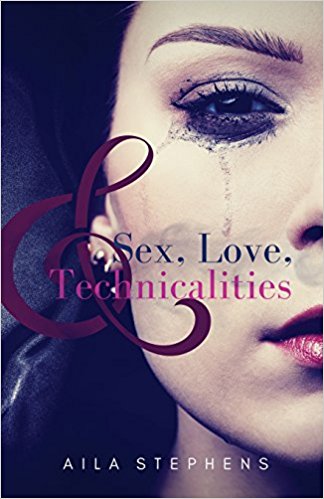
Sex, Love and Technicalities

The gorgeous cover for Sex, Love, and Technicalities. Love!

Now that you’ve released two books, can you tell us some of the things that surprised you about the self-publishing industry, or maybe the publishing industry in general?
It surprised me how much I enjoy the process. I love the fact that with self-publishing everything is up to me…which is also terrifying. There are a lot of rules. Marketing is the bane of my existence. That was one thing I hadn’t expected: How much I dislike marketing. I like creating marketing materials…it’s what to do after that baffles me.
I am glad I self-published these first two books. I think it was a great learning process, and I’m sure I will self-publish again. But the two books I am writing next, I plan to pitch. I’m still uncertain about how long I will pitch them before I decide to self-publish them, but I am excited to learn another side of the publishing industry.

Having gone through the publishing process twice now, can you tell us what you would have done differently the first time around with the knowledge you have now?
With the first book, I would have done more editing. I would NOT use IngramSpark for eBook publication. I also would have formatted the eBook myself from the beginning. I would force myself to market more.
With the second book, I wouldn’t have put my passion on hold for so long. I’d force my unsociable self to be more sociable.

In your opinion, what is the best part of the self-publishing process?
It may sound odd…but making my own book covers. I absolutely love making them. I hope people like them half as much as I loved making them.

sex love and formalities

The dazzling new cover! Her cover design skill is proven here. Great job!

Will you ever query and try for a traditionally published deal?
Yes. That’s the plan with the next two books. Alabama Rain is a book I’ve been working on intermittently for the last year and a half, which will now get my full attention. Then I have a project I’m currently outlining and preparing for which has a placeholder title of Underthings.

Thanks for having me, Vania! I am sure I speak for all your readers when I say thanks for all you do for the Indie writing community. You’re an inspiration!

Thank you, Aila, for taking the time to answer my questions. If anyone has other self-publishing questions, ask in the comment sections or tweet us. 🙂 We’ll be more than happy to help!

Please follow Aila on Facebook Twitter (mandatory to enter the giveaway) Goodreads and of course, follow her on Amazon! Keep up to date on her blog posts, and please take a moment to check out her website.

The giveaway for Aila’s release includes:
An assortment of coffee and tea
A coffee mug
Signed paperback copies of Sex, Love, and Technicalities
and Sex, Love, and Formalities
A $25.00 gift card to Amazon sent to the winner’s email address

The giveaway is open internationally, so don’t be afraid to enter!

Click here to enter!!!


Updated to congradulate Rebecca Yelland on winning the giveaway! I hope you all enjoyed Aila’s launch–she had a blast! Thank you all for helping make her day a huge success!


 

PitchWars: Should You Enter?

PitchWars is an annual writing contest where writers all over the world compete for the chance to be mentored by traditionally published authors. If you have a completed novel, you can enter. While mentors comb through entries, everyone involved in the contest spends about a month on Twitter making friends, talking about writing, and sharing their favorite GIFs.

Once picks are announced, mentors and mentees work together for two months on the mentee’s novel. After that, there’s an agent round where roughly fifty agents will read the entries and make requests for manuscripts that spark their interest.

Photo 1

Right? It’s an amazing opportunity to network and get your foot in the door with traditional publishing. The question is, should you enter?

Yes, I think every unpublished writer who wants to go traditional should try it once. I entered this past August and didn’t get a spot, but thought it was a very valuable experience. However, please save yourself some heartache and assume you will not win a spot. Getting into PitchWars is no easier than getting an agent from cold querying.

So why should you bother? As with everything in this bizarre universe of ours, it has its pluses and minuses.

Disadvantages

Seriously, the Odds Are Not in Your Favor

Ignoring duplicate entries, over 2800 people entered PitchWars in 2017. There were 180 spots. That’s a 0.6% acceptance rate. For context, Yale Fucking Law School has a 9.7% acceptance rate.

But let’s say you’re lucky enough to get in. As of July, PitchWars has almost 250 success stories. This means ~250 people have gotten agents out of the 385 mentees selected between 2013 and 2016. Don’t get me wrong, a 65% chance of getting an agent is HUGE, especially compared to the 1% cold query success rate rumor I keep hearing about. But it’s far from a guarantee.

Am I trying to shit on PitchWars? Absolutely not. But you need to go into this with wide-open eyes. You should have faith in yourself as a writer and your journey; your book will find a home (whether it’s with trad pub, self-pub, or small press). But it probably won’t be through PitchWars. PW is not a golden shortcut ticket to unlock the Gates of Traditional Publishing.

The Secret to Getting Picked Is a Goddamn Mystery

Photo 2

In addition to the numbers working against you, there is no real way to know why your manuscript does or doesn’t get picked. Some mentors give feedback, but most do not. Your book has to fit into a specific and subjective set of standards, which include…

  1. It has to be good. Good voice, solid plot, interesting characters, quality writing, etc. are essential.
  1. But it can’t be too good. *facepalm* I know. But if you’re going to work with a mentor for two months, they need to have a vision for what they can do to help you improve the book. Contest rules say to submit a “complete and polished” manuscript, but I would read this more as “complete and copyedited.” Your lump of clay needs to be good, but it still needs to be a lump of clay.
  1. It has to mesh with the mentor’s tastes. Before you submit your application, mentors will post wish lists about what kinds of stories they’re looking for, which is helpful, but look at their backlist too. Does anything about their work resonate with you? Their voice? Their subgenre? The tropes they use?
  1. But it can’t be too similar to the mentor’s body of work. If the mentor has a series about a talking squirrel who solves mysteries with a cynical school janitor, they probably won’t feel comfortable working with you on a book about a talking chipmunk who solves mysteries with a grumpy hotel maid.
  1. It has to be marketable. Mentors are more lenient about this than agents are, but it still has to be clear where your book will fit in the market.
  1. The mentor has to believe you can work together. Mentorship isn’t just about quality and marketability. It’s an interpersonal issue, too. Some mentors will stalk you on Twitter to see if you’ll be a good fit.
  1. Weird miscellaneous factors can decide your fate. Maybe your protagonist has the same name as their favorite niece. Maybe your book takes place in their hometown—which they HATE. As they always say, this business is subjective. Considering some mentors have hundreds of entries to wade through, it could be literally anything that puts your book in the “Yes” pile.

Not surprisingly, aside from #2, the reasons a mentor will accept or reject your work are similar to why an agent will or won’t request more pages. Once again, PW is not simpler or easier than cold querying an agent.

Social Media Is Hell

What makes PW such an event is the social media component of it on Twitter, but to be honest, I have conflicting feelings about that aspect. In the weeks leading up to the submission window opening, there are all kinds of Twitter games, encouraging you to get to know mentors and other PW hopefuls. Once the submission window closes, the Twitter party continues for another month…but it gets more intense.

The entire purpose of the PW Twitter community is for everyone to get worked into a literal frenzy. They want you to be excited and proud of your work, which is a nice thought, but it also sets up unrealistic expectations. Many mentors post teasers about entries they’re enjoying— there’s an entire hashtag for them. There are also endless posts telling you to stay positive because there’s always a chance you could win a spot. It was an exhausting rollercoaster.

At least with agents, you know to pray for the best but expect the worst. Cold querying is beautiful in its simplicity. I send out my package, note the expected response dates in a spreadsheet, and walk away. If I follow agents I’ve subbed to on social media, I don’t have to worry their posts will be hints about submissions they’re reading. Some agents do #tenqueries, but those posts include specific reasons for passing on or requesting more pages of a project. They don’t post cryptic messages about something they might pick.

So if you do enter PW, protect your space. Like all social media, PW Twitter can become too much. Don’t be afraid to block hashtags, mute certain accounts, or take a break.

Advantages – Why You Should Enter Anyway


Photo 3

I know, I raised a lot of issues with the contest, but I still think it’s worthwhile to enter at least once. Whether you’re new to the querying trenches or are a seasoned pro, PW has something to offer.

 If You Do Get Picked, It’s a Great Opportunity

It doesn’t hurt to buy a lottery ticket—just don’t gamble away all your money. Go in with low expectations, but if you do have the fortune of getting selected, the mentorship alone is an amazing opportunity. Not only are you getting free, in-depth help from a professional writer, but you’re also forming a connection with them. I often hear about mentors who still talk to and help their former mentees with their writing. Like with any other industry, you need connections to thrive. Mentorships are invaluable.

As I said earlier, the agent round may or may not yield fruit, but it does boost your chances.

You’ll Make New Friends and Expand Your Twitter Presence

While I wasn’t a fan of certain aspects of the PW hashtag, overall, I did enjoy the sense of camaraderie among entrants and mentors. If you participate in any of the games (e.g., GIF competitions) or interact with the hashtag, you’re bound to connect with other PW hopefuls. Some of these people will become followers, critique partners, and even friends. For some writers, PW has become as much a valued tradition as NaNoWriMo because of the unique community.

PitchWars is also a good excuse to post content and build your brand. Twitter is the most popular social media platform for us writer types, so if you’re looking to network, it’s the place to be. Many unpublished writers are using their growing platforms to build hype around their manuscripts by showing off novel aesthetics, character interviews, and memorable quotes. Taking advantage of the PW hashtag can help you with that.

You’ll Discover New Authors

Since mentors are wading through their slush piles for free, it’s nice to give back by reading their books. There are over a hundred PW mentors, so there is plenty of new content to discover. You might find your next favorite book or a new comp title to use in your query letter.

It’s Good Practice for Rejection

If you haven’t queried agents or publishers before…Welcome! PitchWars is a great way to rip off that first Band-Aid of rejection because there’s going to be tons of it, regardless of how you publish. Agents will reject you, publishers will rebuff you, and readers will scorn you. Get in the practice now with PitchWars. Rejections from faceless agents are way easier to digest after getting rejections from friendly mentors you bonded with.

It’s a Kick in the Pants

Most people don’t enter PitchWars because they simply happened to have a polished manuscript lying around. They prepare. Whether they just found out about PitchWars existed three weeks before the deadline or they’re a third-year PitchWars veteran, PW hopefuls haul ass. If you’re looking for motivation, the contest is a great stimulus for finishing your book and writing a query letter. Even if you don’t get a spot, you’re still way ahead of where you were before.

Photo 4

PitchWars will re-open in August 2018, but you can read this year’s winning entries here: www.pitchwars.org

nadia's logoNadia Diament writes sexy, funny things. You can ask her esoteric questions on Twitter here, check out her blog here, and read her stories here.


The Evolution of Don’t Run Away’s Cover

This is an old, terrible post and unless you want your eyes to bleed, you shouldn’t read it. Or, go ahead if you want to be amused while I flailed helplessly and gave advice when I shouldn’t have been giving it. There are better posts to read about my book covers. Try this one about matching the vibe of your book to your cover and why a “perfect” cover might not always be the right one: https://vaniamargene.com/2024/04/08/my-marketing-secret-shh/


They say your cover is the most important part of your book. I don’t know who “they” are, or if that’s necessarily true, but your cover is important. It needs to convey your genre, it needs to be eye-catching. The font for your title and author name needs to look professional, yet suited to your genre.

This is a tall order if you want to do it yourself. Way back when I was new at this, I didn’t know as much as I do now, and I was adamant that indies could do their own covers. And you can. You should.

But let’s step back and figure out what a “good” cover is.

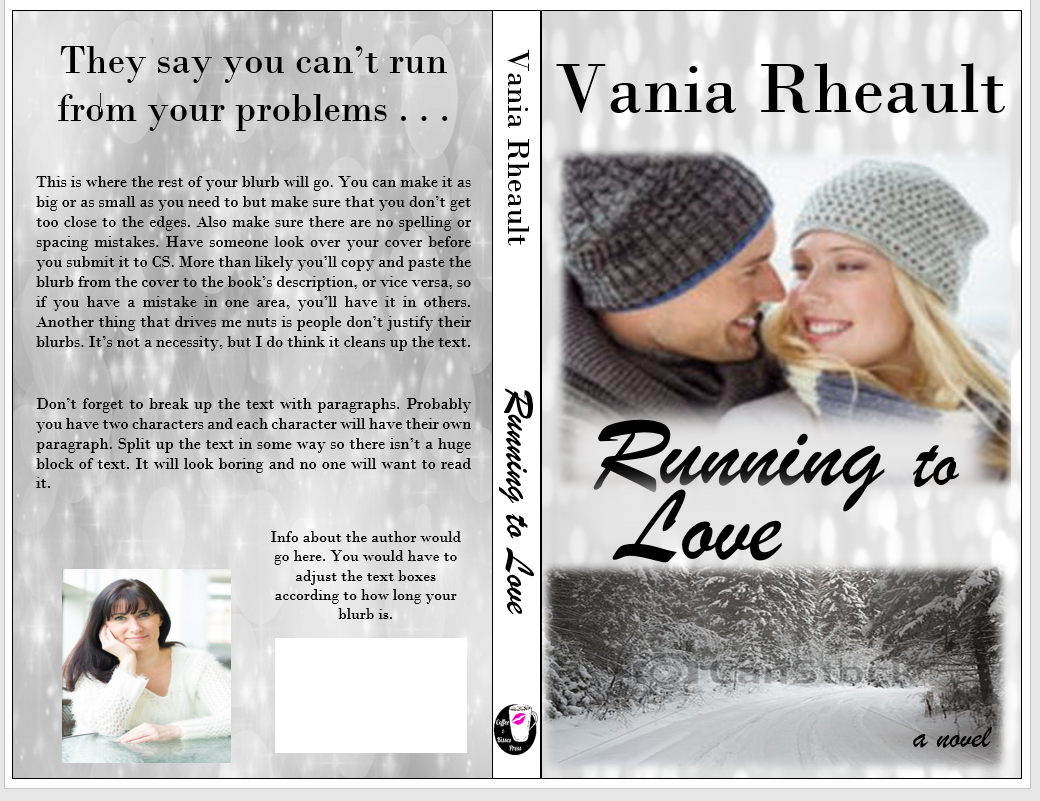
I wrote Don’t Run Away as a NaNoWriMo project in 2015. After I released Summer Secrets, I started editing it, I mean, really editing it, so that it was publishable. I took out all the head-hopping, the mixed up POVs, and I turned it into the book that’s going to be released on the 18th. So for the year I spent editing, I blogged about the publishing process and making your own cover. While I blogged about making your own cover, I came up with some doozies, that were, ah, well. See for yourself.

blog post 1

Yeah. I blogged about creating this cover. Did I say that I liked it? No. Am I embarrassed that I put something like that on the internet? Yes. But that was naivety and inexperience. Cover design takes practice and a good eye.

Did it get better? No.

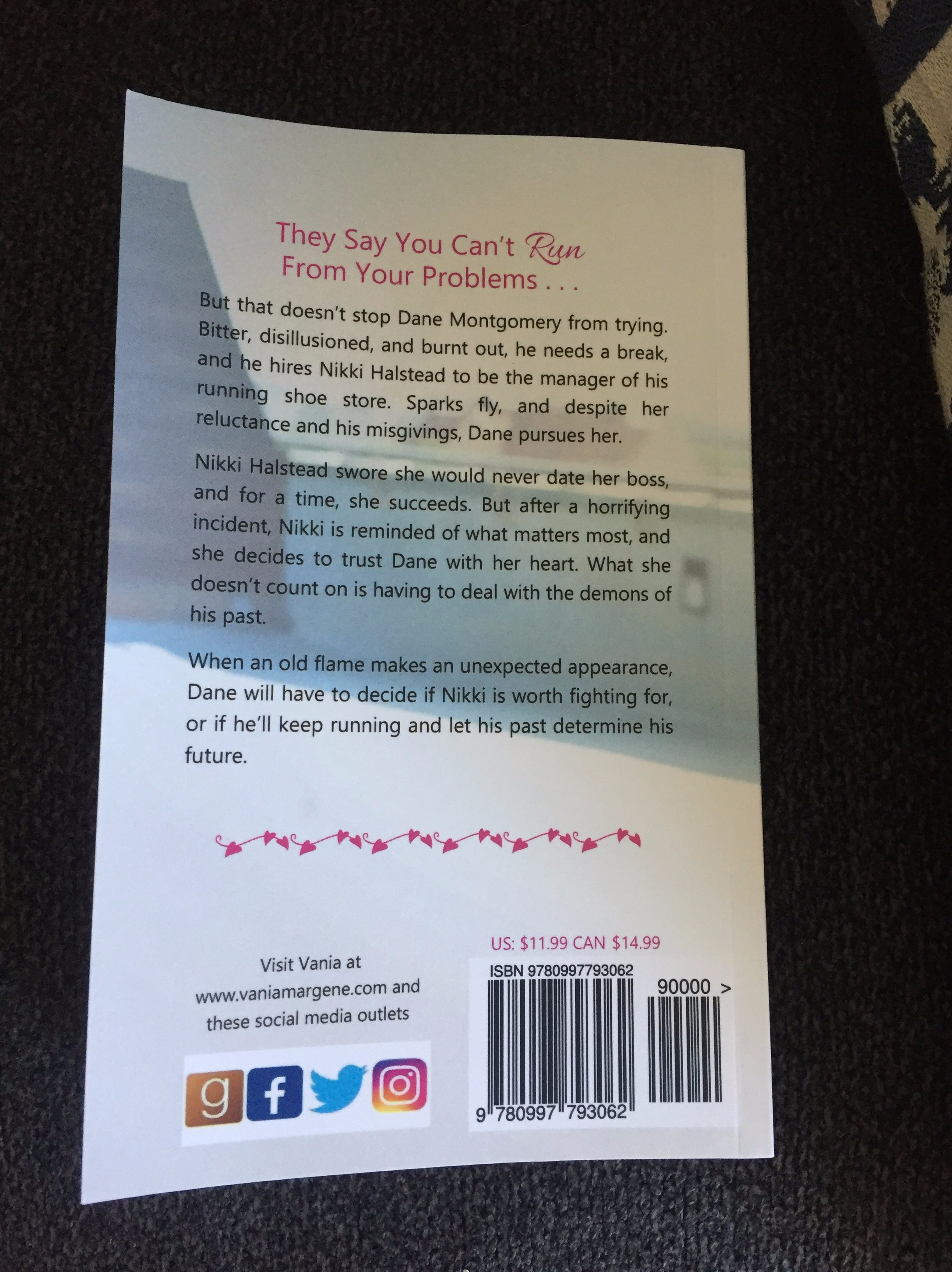
back cover blurb

Then I came up with this piece of crap. Yeah, it’s better than that pink monstrosity above, but I would never buy a book that had this for a cover.

Luckily for me, lots of time went by, and I took a break.

When I was nearer to publication, I came up with this:

20813949_10155382724650751_814775920_n

And that’s not so bad. I even would have maybe used this. But the problem was, or is, is that Don’t Run Away is book one of a trilogy, so not only did I need to make one cover, I needed to keep in mind that I needed two other covers, and they needed to look like they belonged together.

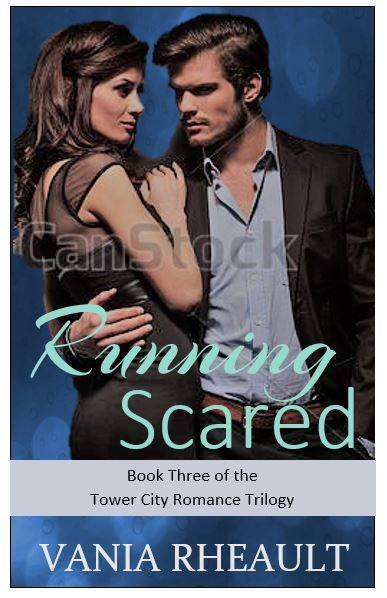
I came up with these two for books two and three:

I mean, as far as covers go, they aren’t that bad. But ultimately, I turned all three of them down because, in the end, I felt the couples looked fake. When you look through sites like www.canstock.com or www.dreamstime.com there are three different categories of people. Real people:

canstockphoto11400894

You don’t want real people on your cover. I think this is where a lot of indies go wrong. Real people aren’t models, and the photographer didn’t touch up the photograph to make it look less real. I suppose if you found the perfect person, you could run the photo through some filters, modify it somehow so that she doesn’t look like a real person giving you a goofy look through some weeds. But you definitely have to do something to it. That’s where the pink “hell no” cover at the beginning of this post comes from. Real people don’t work.

The second category of people on stock sites are real, but they look better than real.

canstockphoto15361212

She looks good, ya know? She looks like model material, but approachable. The photographer added some sunlight. Depending on your genre, these make perfect covers.

The third category of people are fakes:

woman-grass-young-outdoors-fashion-portrait-style-boho-40902938

There’s a genre for actual models (erotica and porn), and I didn’t need anything like her for my covers. I needed my couples approachable. My characters aren’t billionaires, they aren’t sheiks, or princes, or even CEOs. My characters hold down-to-earth jobs and have real people problems. I needed my covers to convey that.

So I did manage to find this couple, and I was lucky to find two other couples that looked like they were taken by the same person. Two of them were, but the third was taken by someone else. I probably won’t write anymore trilogies, but if you do, or even a duet, or even more than three, make a plan for your covers because it’s a pain in the ass to change them. Not only do you have to go through the submission process again for CreateSpace, if you use IngramSpark, they charge you for every change you make. And you have to remember to change your cover on Goodreads, too. (Which isn’t the best because your old cover will always be attached to your book on the book’s page.)

Here are the three I chose for my covers:

canstockphoto11573436 (2)
canstockphoto38274429 (2)
canstockphoto46133644 (1)

I also decided to make the whole picture wrap onto the spine and back cover, so the position of the couple was important too.

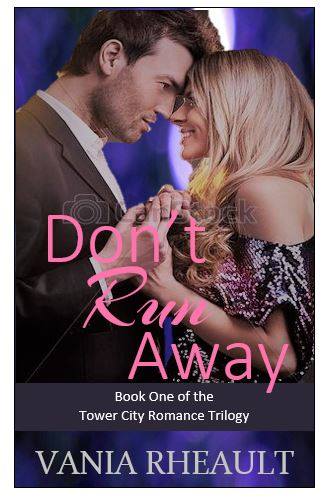
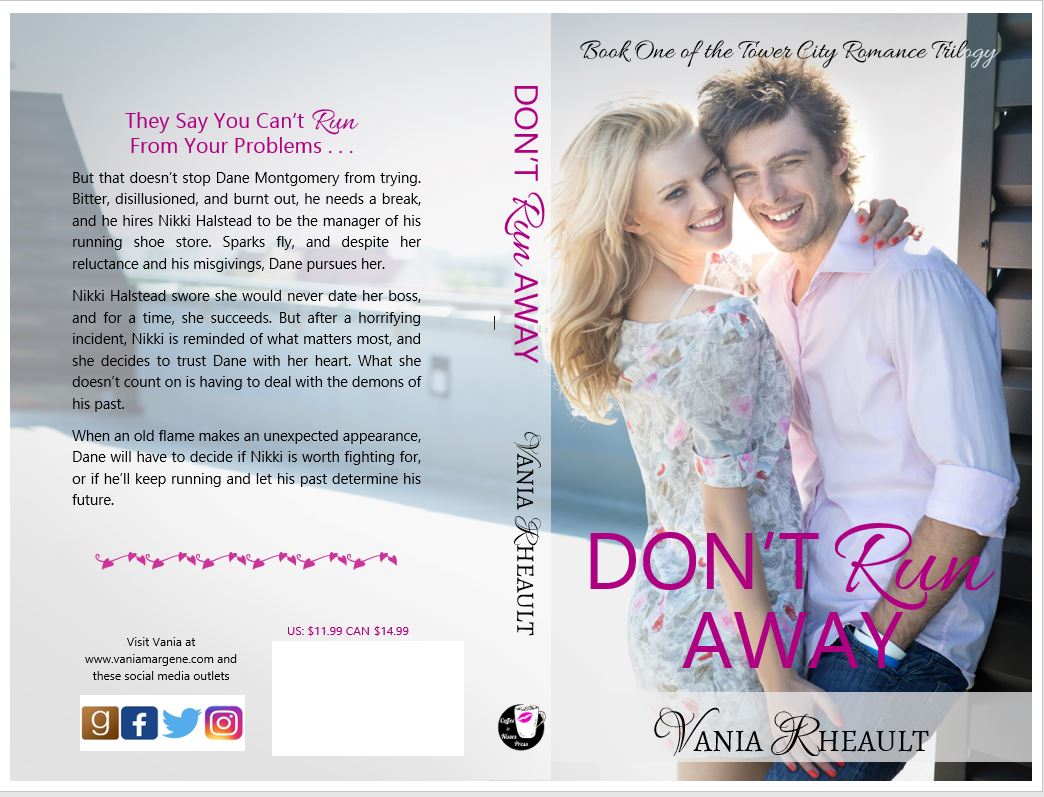
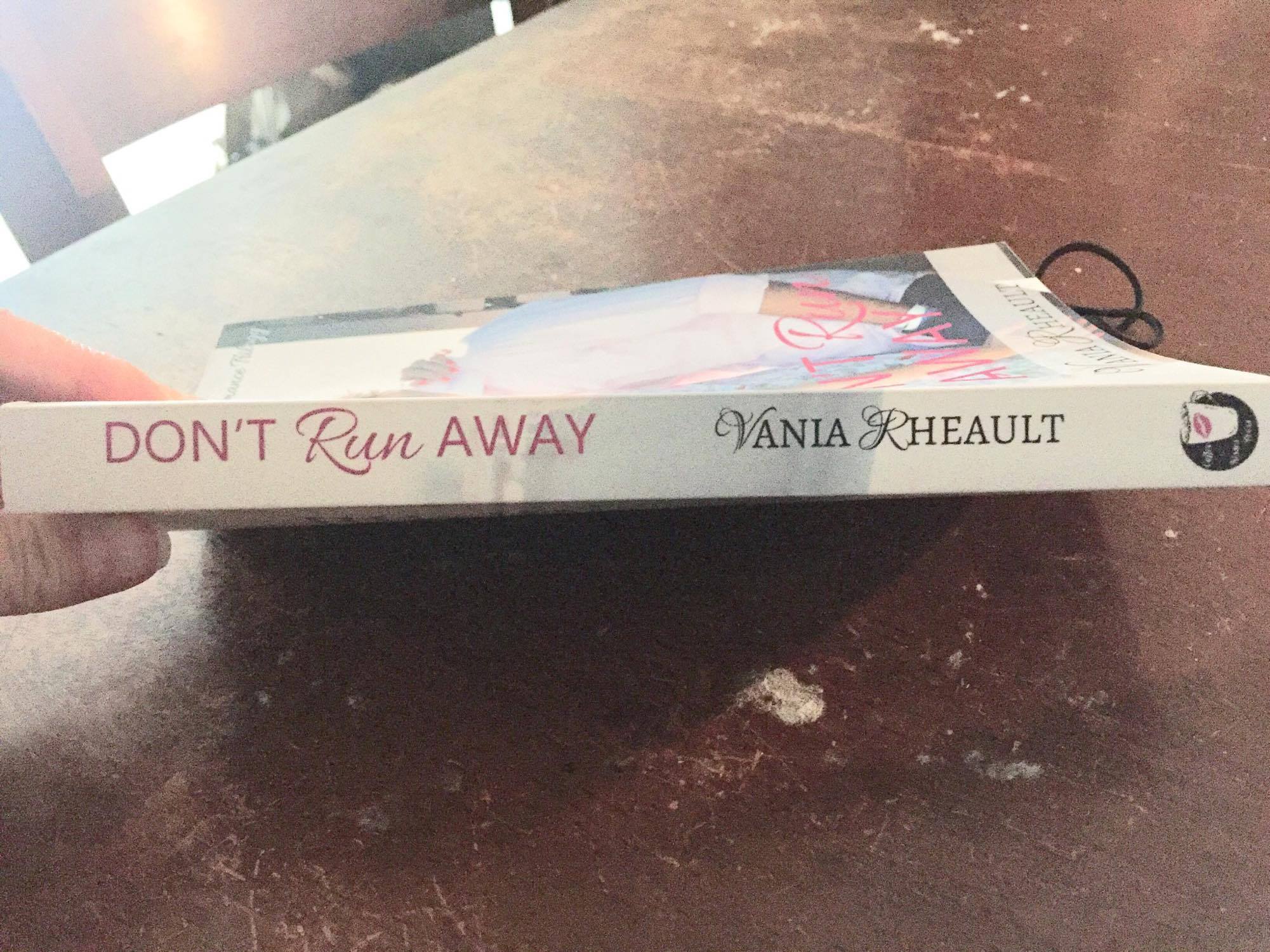
Here’s how Don’t Run Away turned out:

don't run away cover

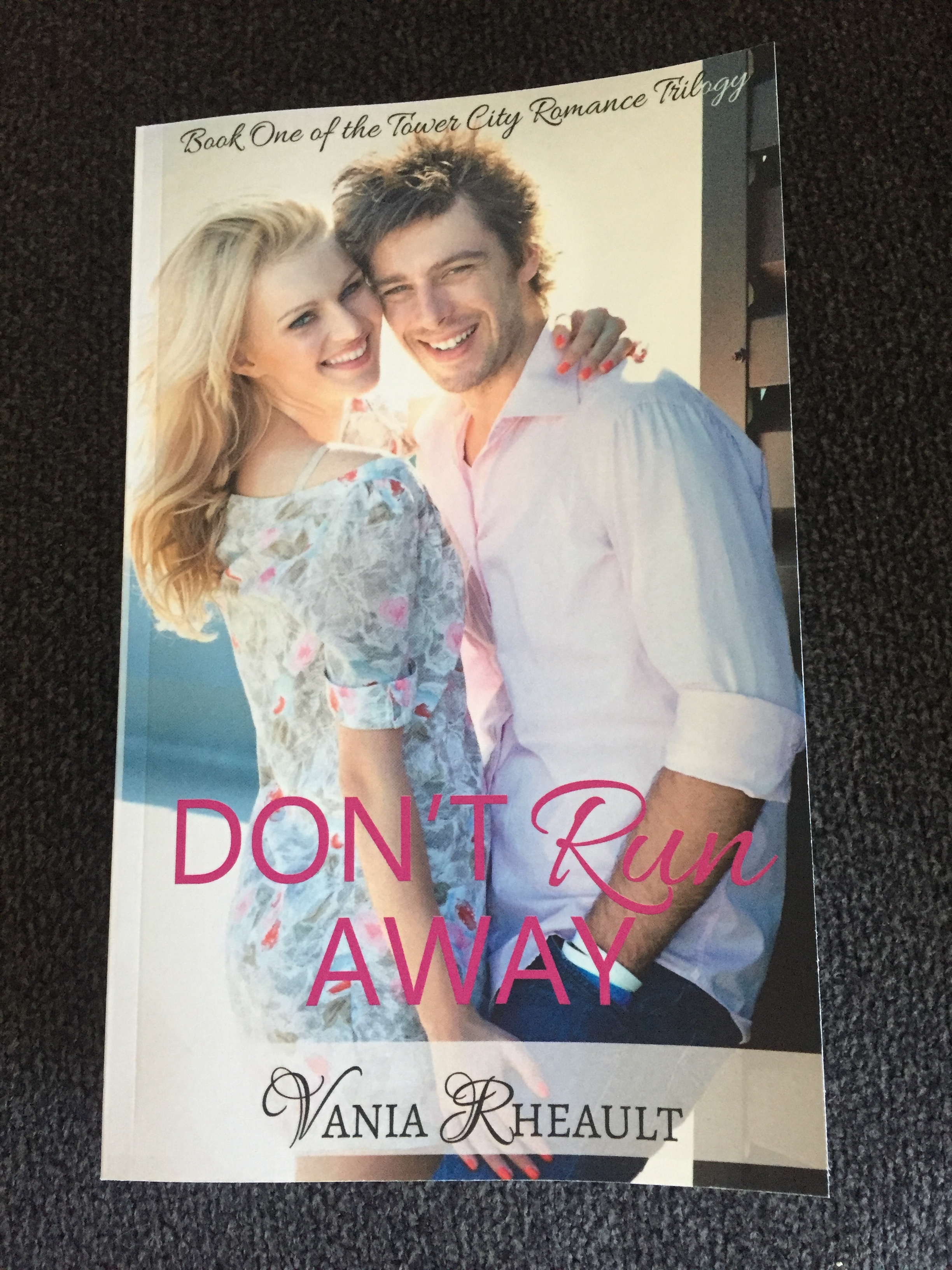
I’m pretty proud of it. And it turned out nice in person (ignore how goofy looking he is):

IMG_9499
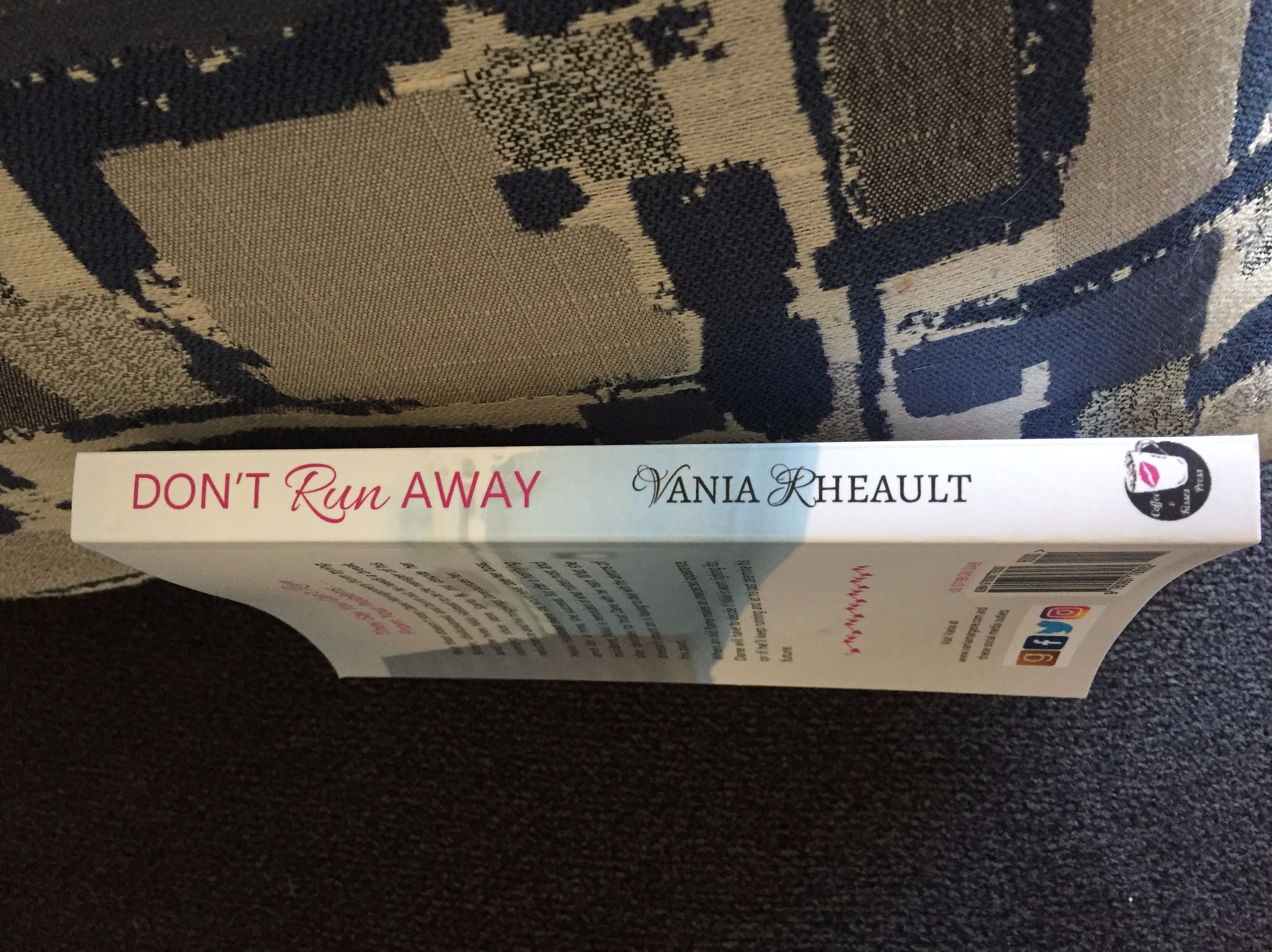
IMG_9500
IMG_9501

Of course, even when you find the perfect picture, you need to play with font, where everything will go, that kind of thing. At first my cover looked like this:

Don't Run Away Experiment

And I didn’t have any qualms about it. But after the proof came in the mail, I realized the title was way too big. It didn’t need to be that large. My friend Gareth made the crack that, what, I didn’t need people be able to see it from outer space? No, I didn’t. So I fixed it, but then the spine was off:

23134703_10155603226795751_388290689_o

I was tempted to leave it, but I couldn’t. So again, I sent it in to be fixed, and it came back okay.

I guess my point is, covers go through an evolution of sorts, and it’s never too late to start playing around with fonts and photos.

Look around at other covers and see what’s popular in your genre. Maybe even see if other covers are using the same people you’re thinking about using.

I found this nice one while looking around:

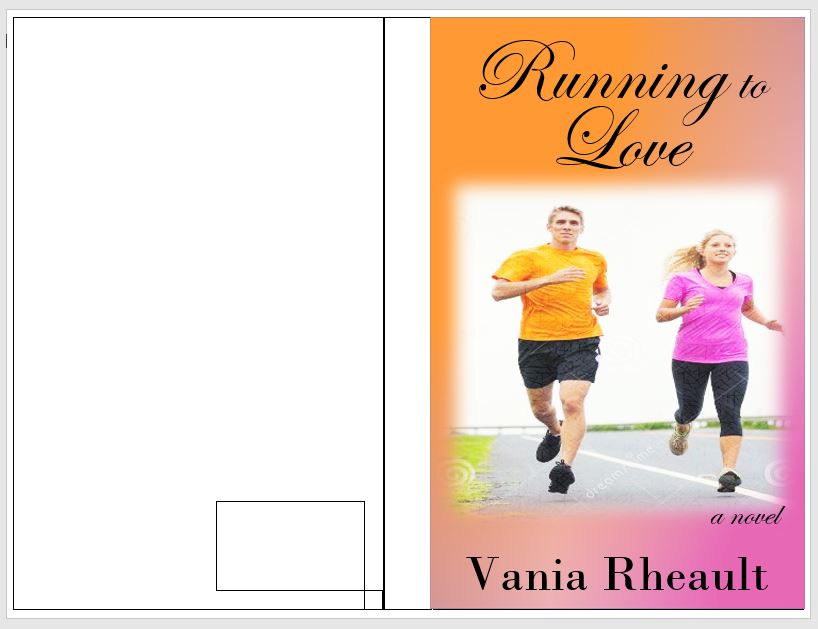
fake running to love

The site selling it wanted $50.00 for it. I’m sorry, but I like mine better, and it was free. Well, did pay http://www.canstock.com five credits for the picture, which turned out to be around 4 dollars. The fonts I used were all allowed for commercial use for free and I downloaded them from http://www.1001fonts.com/. Be careful if you use this site because some are for commercial use, and some are not.

That ends my cover adventure for Don’t Run Away. If you want to know how I used the photo for the spine and back cover, let me know. It’s fun, and it solves the problem of what to put on the back. Some people don’t care about the back since you’ll sell more e-reader versions, but still. If you ever do a book signing or a giveaway, perhaps on Goodreads, you’ll need a paperback version.

Let me know your thoughts!


Why I Canceled my Twitter Chat

Last night I canceled my chat.

CANCELED

I think there was some surprise, and there was a little disappointment.  But I’ve been running it since April, and while it has been fun and I’ve made a lot of friends, I think I managed to get all that I could out of it.

Let me explain.

There are a lot of chats out there.

There are a gazillion chats on Twitter. You can find a chat on any day of the week, sometimes more than one, sometimes even more than two or three or four.  There are only so many hours in the day, and writers are busy. When they decide to give up some writing time to participate in your chat, they are giving you a gift. But since there are so many chats on Twitter right now, I was finding it hard to compete.  And because there are so many chats on Twitter, it was hard to stay original. Finding topics and themes that weren’t being used by other Twitter chat hosts was impossible. (If you want a complete list of chats and Twitter writing games, look here. Mica does a wonderful job of keeping everything in order.)

I chose the wrong hashtag.

My chat never achieved the elevation of other chats. This isn’t me being whiny, I’m just stating a fact. I had my regulars, my friends who wanted to support me (thank you!), but in all the months I hosted, it never blew up to the epic proportions I wanted. I think this had a large part to do with my hashtag. #SmutChat was a chat for everyone, and I tried to make that clear. But I think lots of people avoided it because they thought we were going to talk about romance or sex, or only the Romance genre, or Erotica. Had I chosen a more generic hashtag, I may have seen more movement. Perhaps if I had chosen to go full-blown smut and only focused chats around that topic, I could have drawn in the romance and erotica writers. I tried to go down the middle of the road, and it didn’t work. That was my mistake.

I was going broke.

At the end of #SmutChat, I gave away a writing resource that tied in with the topic. To me, this was genius; to everyone else . . . no one seemed to care all that much. In actuality, I had to plead with people to enter the giveaways, and there were never more than 6 or 7 people entering the giveaway at the end of every chat. There is so much free stuff on Twitter right now, the giveaway did nothing. I even had one person who won tell me they would get a hold of me when they found an address they were comfortable giving me. I offered the e-book version instead, but they said no. I can only take this to mean the person who won didn’t really want it to begin with, and that book is still sitting on my bookshelf. I didn’t mind spending money on the books and the shipping, but I was beginning to feel underappreciated. That’s no one’s fault but my own, being it was my idea to do the giveaways. I was hoping to set my chat apart from other peoples’ chats, but it didn’t work so well.

I have a publishing schedule I want to keep.

I have three books coming out in the next three months, and I have another book rumbling around in my head that I will write after my trilogy is released. Until they host one, no one can understand how time-consuming a chat is. They are a lot of work. Thinking up the topic, doing the graphics, tweeting about it. And that’s only the prep work. You have actually sit down and do the chat, and sometimes people will answer late, or the next day. As a courteous host, you want to try to touch base with everyone so I would be on the computer one or two hours after chat, and I would also answer tweets the day after. I know this is a counter-argument to the one where I wanted chat to grow even bigger because I would have spent even more time on it. Maybe I would have felt all the time spent on chat would have been worth it then. I’m not belittling the people who did take the time to participate, but sometimes you have to decide if you want to go big or go home. I decided to go home.

Think about what you want to get out of your chat.

What do you want to achieve with a chat? I had chat twice a month, and I would say I spent about 12 hours a month on prepping and the hostessing. What do you want to gain out of giving up that time? Twitter followers? What will you do with your followers once you earn them? Twitter doesn’t sell books, so those followers you gain will do nothing but plump up your numbers. Are you holding a chat to add it to your platform? That was my initial reason. I was doing something tangible that would add to my social media platform. But there again, you’re building your platform to sell books, connect with readers. Putting on a chat doesn’t do that. If you want to just make friends and connect with your followers, then hosting a chat is for you. If you want anything else out of it, think about what else you could do instead. Blog more, put that time into building your website. Write. Having a platform doesn’t do you much good if you’re not writing and/or publishing. Can you get what you want out of a chat by participating in others’ chats? I think with the little bit of free time I’ve recouped from canceling mine, I will participate in a bigger chat where I can still make friends, talk about a topic I love.

In parting, you may think this was just a big whiny blog post about how my Twitter chat didn’t go well for me, and now I’m crying about it. I’m actually blogging about it so anyone who is thinking about starting a chat knows the pitfalls of hostessing/hosting a chat, and what it entails. I appreciate every. single. participant. of my chat, and I have made some wonderful friends during the months I hostessed.  I started chat in April of 2017, and I ended it right before NaNo and the holidays could take people away. I feel I ended it on a positive note, and I’ll still be doing chat, in my own way. I’ll be blogging about the topics I want to talk about, rather than holding a chat. I’m hoping this will drive some traffic to my website, and I’ll encourage comments at the end of my posts. Maybe this won’t work either, but like anything in life, if you don’t take risks, you won’t get anywhere. I took a chance with chat, and I enjoyed it. But you have to know when to cut your losses if something isn’t working. Good luck to those of you who want to start a chat. And I’m not disappearing–I’ll still be on Twitter a lot. I’ll participate in other chats and enjoy the hard work I know goes into one. I’ll let the hostess handle the rest.

Tell me what you think!

Vania Blog Signature

#Smutchat Giveaway–NaNoWriMo

Thank you for participating in #smutchat tonight! I hope you had a great time talking about NaNoWriMo!

Tonight’s giveaways are Monsters by Gareth. S. Young and Book in a Month, the fool-proof system for writing a novel in 30 days by Victoria Lynn Schmidt, Ph.D. The other giveaway (yes! there are two winners tonight!) is The Wolves of Dynamo also by Gareth S. Young, and Write Your Novel in a Month, how to complete a first draft in 30 days and what to do next by Jeff Gerke.


A special thank you to Gareth S. Young for his donation of his books! Please follow him on Twitter, Goodreads, Facebook, and find him and his books on Amazon!

Thanks for playing, and have a wonderful weekend!

a Rafflecopter giveaway

Five Reasons Why I’m Not Marketing My Books Right Now

As always in conversations about self-publishing, the subject of marketing your book comes up. I hosted a Twitter chat last week on Self-Publishing, and people wanted to talk more about marketing than anything else.
blogs-marketing-2646804_1920

I get this. I mean, we all want people to find our books; we write so people can read our work. But when people ask me what my plans are for marketing my books, I have to tell them, I have no immediate plans.

And here’s why.

  1. I don’t have enough content.
    You don’t need a marketing plan if you have no content. (Good grammar for a writer, huh?) Various numbers come up, but I follow @BadRedheadMedia‘s #bookmarketingchat on Twitter, and in one of her tweets, she said your career doesn’t start an upswing unless you have 6 to 10 books published. That seems like an impossibly high number, and when I first started in self-publishing, that number was 3 to 5. But with all the new writers publishing books, it’s harder and harder to make a name for yourself, and I believe that number will get higher as the market floods even more.
  2. I don’t want to throw money at one or two books.
    This kind of goes hand in hand with number one. I do have content, but not enough to warrant paying for any kind of marketing. Even if you were to stumble upon a plan that works and drew people to your book, after you draw those readers in, they’re done. They have no backlist to read through if they like your work. I’m too poor to start over every time I publish a new book. When you spend on an ad to market one book, you’re actually advertising your whole list.
  3. I genre-hopped.
    I wrote a Romantic Fantasy for my first go at publishing. I wrote it expressly to experiment with publishing, to get a feel for the process. On the Corner of 1700 Hamilton is two different novellas of the same story, one told from my male main character’s point of view, and one told from my main female character’s point of view. Summer Secrets is six novellas. The story is about six couples told in chronological order, and I published them together so readers would be forced to read them that way. These are Erotica and not my genre of choice. Since I’ve published those, I’ve settled into Contemporary Romance, full-length novels at that, and I don’t want to spend money on books that are not in my genre. When I market my books, I’ll market books that will be the foundation of my writing career. There is no point in marketing books in a genre I won’t write anymore.
  4. I’m researching how I want to market my book.
    I’m reading books right now on how to run Amazon ads, how to run successful Facebook Ads. I read a book on how to use Goodreads as an author. Marketing takes time and money—I don’t want to try these vendors without knowing what I’m doing. I talk to people who have tried various things and they say they don’t work, but they didn’t take the time to figure out how they work so they don’t waste money. It’s important to know what CPC (cost per click) is, what RT (not retweet, you tweeters) Read-Through means, and how to calculate ROI (Return on Investment, not a weird spelling of your sister’s boyfriend’s name). Knowing this stuff puts you ahead of the game, so you’re not wasting money on tactics that won’t work. Here’s a tip: If a person put together a class, say Mark Dawson and his Facebook Ads class, then that way of advertising is complicated and investing a few hours of your time to learn how it works and maybe learn some insider tips can only help you.
  5. I’m networking.
    Yes, networking is a part of marketing. When you hear that you should start networking a year before your book comes out, that’s not a lie. Some suggest even longer. You need to get to know book bloggers—be a blip on their radar as an acquaintance, even a friend, before you have a book to peddle. There is nothing more irritating than having someone introduce themselves to you for the sole reason to ask something of you. Follow them on Twitter, like their FB page. Wish them a nice day, or a great weekend. Listen to podcasts by successful indie authors, like their FB pages, follow them on Twitter, read their books. Become involved in the indie-publishing community. Everyone knows everyone in this business, and you want everyone to know you. I listen to The Sell More Books Show podcast, and Jim Kukral and Bryan Cohen host. Bryan Cohen wrote a book, How to Write Sizzling Synopsis, which I bought to support him since I love the podcast. It’s a wonderful book, and I’ve written Don’t Run Away’s blurb with his tips. It took me 15 minutes. It was fabulous. One day I was listening to their podcast, and they had a guest, Michael Cooper. Coincidentally, I was reading his book about Facebook Ads, because someone in Brian D. Meeks’ Amazon Ads Facebook Group recommended it. I’m in his group because I read his Amazon Ads book, and he runs a Facebook group for his readers who want help with their ads. Funnily enough, it wasn’t that long ago he did a guest spot on Joanna Penn’s podcast, to talk about his book. Everyone knows everyone. I’m not suggesting you get to know people just to use them. But if you get to know them, even peripherally, (I tweet and blog about their books all the time; well I tweet and blog about any books I like all the time) then maybe one day when you cross paths, they’ll already have heard of you and will be more willing to help you out, by say, inviting you to be a guest on their podcast. Networking, letting relationships grow naturally, organically, takes a lot of time. Start before you’re desperate for publicity.

Those are my five reasons I’m not marketing right now. I’m writing books to have a decent backlist before I throw money at anything. When readers find me, I want them to ask, “Where has she been all my life?” not, “Oh. She only has one book out?” I’m learning how to market, where best to put money so I don’t waste it. As I do that, I’m getting to know the heavy-hitters in the indie publishing world. Even if you’re not so keen on getting to know them, you can at least study what they do in their careers, what makes them successful, so you can duplicate it.

How long will I “prepare” before I actually punch in my credit card number, or submit my book to a blogger?

It depends on how fast I can write.

Check with me next year.

I Googled “How many books does it take for an indie author to start their careers in 2017?” While I didn’t get a straight up answer, the Google spit out some interesting articles that you can read here and here.

Tell me what you think!

Vania Blog Signature


To Query or Not to Query

When I talk to people about my publishing plans for my next couple of books, people ask me if I’ll ever query and try for a traditionally published deal. I always say, “No, I’m not writing anything queryable right now.”

People can take that a lot of different ways, and mostly that sounds like I don’t have faith in what I’m writing, or that my work is crap and only suited for self-publishing.

That couldn’t be further from that truth.

What I mean by that is, I know what I’m writing. I know what it’s suited for. That doesn’t mean what I’m writing isn’t being traditionally published; it just means I don’t have to find an agent to get it there. I write fluff. Maybe that’s demeaning to my genre when I say that, but I also am not pinning my work with any more importance than it deserves. Harlequin, the publisher that brings you the lines Temptation, Desire, Blaze, and the like (they’ve done some remodeling, so I don’t know what their lines are now) prints hundreds of books like that every year. In my Barnes and Noble, they take up a shelf in the corner of the building near the floor. All the shiny red spines with titles like One Night with the Billionaire or The Cowboy’s Baby. Women read these by the handfuls; a quick read you can get through in a couple hours before tossing it onto a pile and reaching for another one, like candies in a heart-shaped box. You know what you’re getting, you savor it as it melts in your mouth, but you have no problem reaching for another one when the chocolate is gone.

My books are like that. What I write in three to four months will be devoured in three to four hours, and I’m okay with that. I’m more than okay with that. Romance is a huge genre, and where there are millions of writers cranking out millions of books, there are also millions of readers. They don’t call the Romance genre the bestselling genre for nothing.

But along with pages of guidelines for how they like their books to be written and their preferred word count, Harlequin has its own dropbox on its website. I don’t need to query an agent and let my manuscript sit in a slush pile to wait for an agent’s assistant to skim my query letter. I can upload my manuscript onto Harlequin’s website myself, or to Carina Press, the digital-first arm of Harlequin, and let it rot in their slush pile without any help, thank you.

If I were to query, going back to the original question, I would query something more serious. Something I worked harder for. We all have visions of our books sitting on the display table at Barnes and Noble in the center of their main walkway. Trust me when I say Don’t Run Away would never make it there—agent or not. No, looking at the New York Times Book Review right now, I would want to write something more akin to Women’s Fiction, not Contemporary Romance. I would want my manuscript to mean something, to say something, to point out an injustice, to try to right a wrong, to help someone. I would want my manuscript to come from my brain as well as my heart.

bookstore_page

I’m not trying to degrade romance, not at all. But any romance writer or reader knows the difference between In the Arms of Her Boss and Sing Unburied Sing by Jesmyn Ward, a finalist for the National Book Award for Fiction. And let’s be clear, a reader who picks up either one of these knows what she’s getting. You have to be in the mood to read it, and a writer has to be in the mood (not to mention have the talent and skills) to write it.

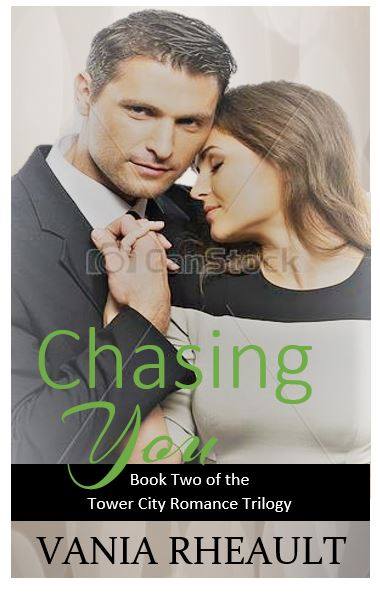
I’m not in the mood to try to write something of Sing Unburied Sing’s caliber. I’m perfectly happy editing Chasing You. (You can weigh the two books by title alone, can’t you?)

If, or when, I plan to query, it will be with a book that will make it worth my time, and it will be with a book that will be worth the pain and heartache of rejection. Because I know the score. Querying is a whole lot of rejection, and I won’t put myself through that for a computer file full of fluff.

You might think that I’m too hard on myself, but I prefer to think of it as a realistic POV of my work. And, quite possibly, more indie writers should have it. Querying a story that won’t make it onto a table at the Barnes and Noble will sour you on the whole process. Traditional publishers only publish so many books per year. Why query a book that would never make it? That’s not to say your fluff isn’t good enough for Harlequin or a small press. (The back of bookstore on a shelf near the floor is better than nowhere at all, right?) It very well may be, and you should definitely go that route if you feel your book is worth it. Query to find an agent knowing/admitting where your book is going to end up, or use Harlequin’s dropbox and let your book sit in cyber purgatory for a few months while interns wade through the submissions.

But I won’t bother to try to find an agent for something that will sell just fine when I self-publish it.

After I’ve grown a bit more as a writer, or maybe when I have a nice backlist I can be proud of and want to challenge myself, or when the perfect plot plops into my head, I’ll write my book and I will query it to find an agent who loves it as much as I do, and maybe one day it will end up at the Barnes and Noble on a table in their main walkway.
I’ll pass it and brush my fingers over the cover as I walk to the café for a coffee. But for now, I’ll finish writing Running Scared while chocolate melts in my mouth.

#Smutchat Self-publishing giveaway!

Thanks for participating in #smutchat tonight! I hope you had fun learning about the self-publishing industry!

The giveaway tonight is How to Self-Publish for Under $100 by Cinquanta Cox-Smith.

publish under 100 dollars

Self-publishing can be expensive–pick and choose wisely!

Thanks for playing! Have a lovely evening!

a Rafflecopter giveaway

Why Buy the Cow When You Get the Milk for Free? Or Something Like That.

Writers are notorious for giving their work away. “Sign up for my newsletter and receive a free book!” “My book is on Instafreebie!” “Every first book to all my series is permafree.” We hand out novellas and short stories like candy. We tweet poems. There is so much free content you could drown in words. Our Kindles are becoming black holes of free books downloaded in just a second, forever to rot in your device.

But this isn’t a post about too many books, or the quality of books, or another blog post on trad-pubbing vs. indie.

This post is about paying for services.

I was researching something a while back–I can’t remember what it was now. How to price a series, or how much to charge for something. I have no idea. But I came across an article that forever changed my way of thinking about giving my books away. I can’t refer to the author or the website because I can’t remember, but if I ever come across it again, I’ll link it up. See, the article was about . . . why writers are expected to give their work away, but no one else in a creative area is asked to do so.

arrow-964733_1920

Indie writers who research publishing are told from the get-go to hire out. Hire out your editing, hire out your cover design. Hire someone to format and convert your files. You can even hire someone to write your blurb for you. You want a professional looking and sounding book, don’t you? But what no one tells you that if you do, indeed, hire all that out, you’re spending thousands of dollars. Editors alone make a mint–and sometimes you need more than one. Developmental editing, line editing, proofreading. Sometimes you can find someone who does a mix of those, but that doesn’t make it cheaper. Anyway, so you hire out, do all the things you’re supposed to do. Then what do you do? You give your book away.

Why is it writers are expected to do this, but no one else? Cover designers don’t give their work away unless maybe they are part of a giveaway or something. Editors don’t edit for free unless they are donating their services for some odd reason. Even formatters want five bucks for setting up your margins and gutters in your Word document.

ecommerce-2140604_1920

I understand the backlash of indies doing things themselves. I even told a friend not long ago that if I were a reader now I would be pissed off. In one of my Facebook groups, a woman posted a lovely looking book. The cover was amazing, she had a great blurb, and the premise of the story hooked me. So I went into the “Look Inside” feature on Amazon, and the first page was riddled with head hopping. We were in the heads of at least three different people on the first page. The author obviously didn’t have her book edited. Maybe beta read by friends who didn’t want to tell her the truth, but that didn’t help. It made me wonder how many unsuspecting readers have been burned by indie books. Does buying a book now really have to feel like looking for a new car? Is the salesman going to talk you into a stinker then pop the champagne when you drive off the lot?

I don’t pay to have anything done to my books. I edit myself; I do my own covers. And I don’t give my books away, either. I’ve never used the promotions available to me on KDP Select. I enter my books a couple giveaways here and there for my paperbacks, but nothing in my library is “permafree.” Not even .99. (Except my short novelette I would feel guilty charging more for.)

So indies are expected to “invest in their futures” as the industry likes to call it, but then we’re supposed to turn around and give our books away for free. How are we supposed to have any return on that investment?

What I’m proposing is that maybe “investing in our futures” would be a lot easier to choke down if we demanded top dollar for our work the way other creatives do. Maybe it would be easier to pay out the $300 for a cover, the $500 dollars for the editing and for the other odds and ends you need to make your book look good. Maybe we would be more apt to do that if we knew it wouldn’t take 10 years to recoup those losses.

I know it’s a Catch-22. You can’t sell books if they don’t look and sound good, but you can’t afford to hire out unless you’re making money. I’m in the same boat. I can’t afford to pay $1,000+ per book to publish it. Almost no one I know can. But I’m not saying I won’t when I can afford it.

Pricing your book sucks. You want it to be cheap enough to draw people in, but you want to make money, too. You deserve to make money on something you spent so much time on. Writing is hard work, and you won’t find anyone who will tell you it’s not. You deserve to get paid.

money-1302835_1920

Stop giving your books way to people who join your newsletters. Stop posting your book on the Instafreebie site. Stop pricing your book at $0.00 on Smashwords and everywhere else. It’s not working anymore, anyway. There is too much free content. Would you rather have someone download your free book and never read it, or choose to spend the $4.99 on your e-book and actually read it and possibly review it? It’s a known fact that if someone spends money on something they put more value on it.

But it’s up to you to make your book valuable to your readers.

Trash is free; antiques are priceless.

Do you give your books away? Tell me what you think!

Vania Blog Signature


The “What Makes a Best Seller” #SmutChat

Thanks for participating in #smutchat tonight! Also, thank you for putting up with erratic scheduling this week. I have a friend coming in from out of town next week, and rather than try to work around it, I gambled and changed the dates.

I’ve been busy this week trying to do some editing things for a friend and for myself so I can enjoy next week without worrying about unfinished business.

Anyway, thanks again for dropping by #smutchat! I’ll see you in two weeks!

 a Rafflecopter giveaway