Changing Your Book Over From CreateSpace to KDP Print

This is the big bad everyone is talking about–moving your books over.

Do you want to move your books from CreateSpace to KDP print? I think, yes. Because if you’ve been following what CreateSpace has been doing (ie, cutting staff, removing services) then you know that Amazon is in the slow process of getting rid of it. Not that anyone from Amazon has admitted it.

If you’ve been avoiding it because you think it’s going to be hard, don’t worry! It will be fine. I did it just to see how it would go, and I ended up doing half my books.

Let me tell you how.

First, you go to your dashboard on KDP. The one you check when you want to see your lack of sales.

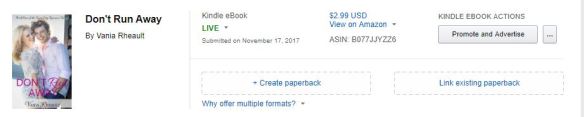
Then, what you need to do is find the corresponding book that you have on Kindle, and choose Create Paperback.

blog going from cs to kdpp5


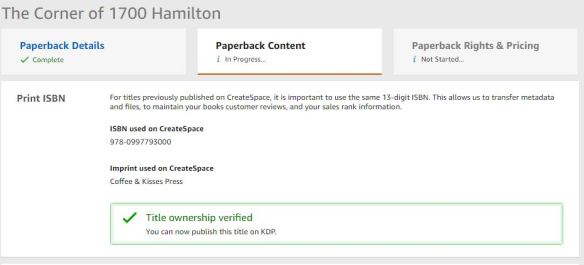
After that, there is a place for you to enter the ISBN number you used for CreateSpace. Log into your CreateSpace account and copy and paste the ISBN number from your paperback into the space.  After you type in the number, you have to hit ENTER, and the yellow button will highlight so you can click it. I don’t have a screenshot of that, but just take my word for it. They tell you in pretty green that yes, you are the owner of the title. 🙂 Thanks, KDP Print!

blog going from cs to kdpp

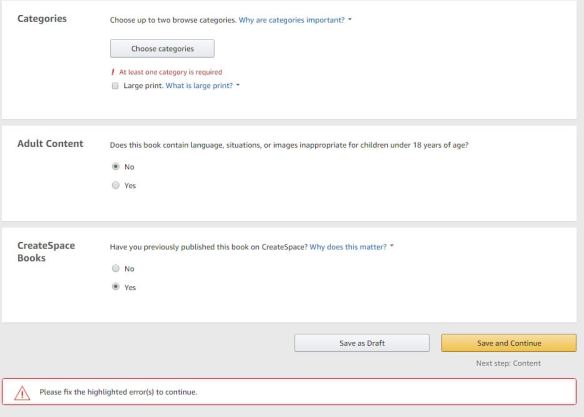
The categories don’t come with your manuscript or your cover, so you need to choose the categories over again. I didn’t, and I got the error message.

blog going from cs to kdpp4

Choose the option “you have published this book on CreateSpace.” That’s the whole point to this exercise.

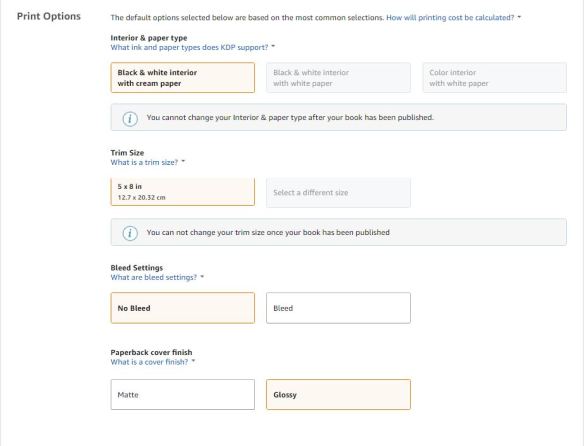
Also, another good thing to know is you can’t change your trim size and your interior since those things are attached to your ISBN number.

blog going from cs to kdpp2

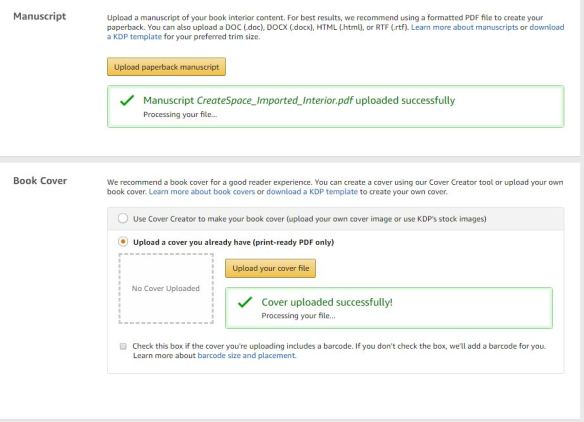
But after that, you’ll see that everything has ported over:

blog going from cs to kdpp3

After the cover and manuscript are processed, you can take a look at it through the online viewer. I open it just to be sure, because KDP Print is a lot more clear on cover and manuscript requirements.

There is one thing I found out the hard way:

If CreateSpace tweaked your cover in any way to make it passable for publication, those changes do not carry over. 

Apparently, when I did my covers for Summer Secrets, I did them wrong, and the lovely customer service people at CreateSpace fixed them for me. They didn’t bother to tell me I was doing them incorrectly. When I did a cover for one of my books in my trilogy, I called them for something completely unrelated, but the rep I spoke with pointed out that error as well. I thought since they were publishable, I wouldn’t have a problem, but I did.

I wouldn’t bring this up except for the fact that I don’t know how may covers CreateSpace helped along with no notice to the author. Is it bad? No, not at all. But if they tweaked your cover and KDP Print tells you something is wrong now, I hope you have the skills to do what CreateSpace did to fix it in the first place. Or if you hired a designer, you’ll have to ask them to make the changes.

Don’t worry if KDP Print tells you something is wrong–they get very precise when pointing out the errors. They won’t leave you guessing, and they let you know right away–in the information bar on the left-hand side of the online viewer.

It was just a surprise to me that KDP Print didn’t approve my covers when CreateSpace had published them.

You won’t know right away if they pass, even if there aren’t any errors in the online viewer–they do go into review, and you’ll get an email saying if they pass or not. And if they don’t, the email will explain why. But it is faster than the 24 hour time period that CreateSpace used to take. I got my emails back in 12 hours. The online viewer is similar to the one on CreateSpace. Sometimes it seems like it will take forever for the viewer to populate your content, but I just hit REFRESH and that seems to do the trick to get it moving.

Don’t forget to hit SAVE AND PUBLISH.

And that’s all there is to it, really. I messed with the insides of 1700, so I ordered a new proof, just to be sure.

The link to order the proof is small, and it’s on the bottom of the page, so you’ll have to keep an eye out for it if you want to order a new proof.

I didn’t mess with the insides of Summer Secrets, so I didn’t order a proof of either of those. Proofs take a lot longer to come than they did using CreateSpace, and author copies, too. Definitely plan extra time into your publishing schedule.

All in all, I was happy with the experience. It will go smoothly for you if don’t have cover issues and if you don’t change anything with the interior. Although, now is a good time to do those changes, if that’s what you were going to do at some point. All you would have to do is upload the new file and replace the ported file from CreateSpace with the file you made changes to.

Always order a proof if you make interior changes, unless you are prepared to flip through every page with the online viewer.

KDP offers instructions and offers advice, and you can read about that here.

Otherwise, there’s not much else to tell you. I plan to do the trilogy soon. Oh, and if you’re selling paperbacks like hotcakes right now, you probably don’t want to do this until your sales die down because as you switch over, your paperbacks aren’t available for purchase.

If you’re worried, try not to be. I was a new author when I did my covers, but I’m better at it now. If you used a cover designer or in any way were more experienced than me when publishing your book, you’ll be just fine.

Jump, don’t be pushed.

Good luck!


buy image for blog


When Do You Recommend Your Friends’ Books?

The indie writing community is very tight-knit. Make one of us mad, we all get mad. I think Faleena Hopkins figured that out quick enough. We support each other; we help each other. We do free things for each other: cover help; editing; beta reading.

We even do some naughty stuff like review trading.

We tweet each other’s books.

Lately, there have been a couple of people asking for book recommendations from indie authors. They want to start a list on their website, or they want to start reviewing indie books.

There were lots of tweets, as you can imagine.

And there was something that surprised me, but I guess it shouldn’t have. Someone was recommending books they haven’t read. How do I know this? For one, I know she doesn’t read indie. Two, she’s a very picky writer, and I don’t think she would have recommended these books had she read them. (That is a polite way of saying they could have used more editing.)

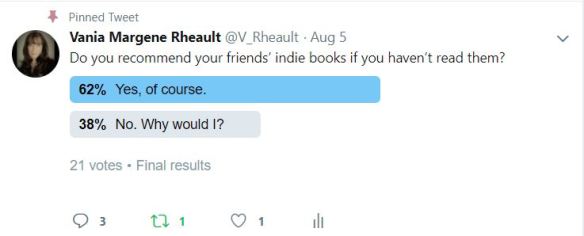
This made me do one of my super researching techniques: I ran a poll on Twitter. While the participant number was low, the results still stunned me.

indie books

I’m trying to figure this out because this bothers me.

Why would you recommend a book to someone if you haven’t read it? Would you walk into a bookstore, grab any old book off the shelf, and tell your friend it was fabulous and a must-read? Of course not.

This seems to be an indie-only thing, like not full-justifying your margins in your books when you format or adding your cover designer to the book’s contributors when you publish. Indies start stuff traditionally published authors don’t do. And the more indie authors do it, the more it becomes acceptable and the more newbie authors do it.

Of course I want to support my friends. But we all know indie writers don’t read that much. We might beta read, or be a critique partner, and that’s fine. It’s a little different in that I would assume the published book is different from a draft a beta or CP read. But at least you know the gist of the story, know if the book has proper punctuation and grammar.

At least you know the story makes sense.

But what are you doing to your own credibility if you recommend a book to someone you haven’t read and that someone takes you seriously? What if that someone takes a peek at the look inside on Amazon. What if that book has no established POV, or doesn’t have a good hook (AKA boring as f*ck)? What if the formatting is messed up, or has typos in it? What if the first paragraph head-hops into five different heads?

There were a couple comments in that tweet thread that asked the question: Who doesn’t read their friends?

Well, quite a few if my own track record is anything to go by. I can count on one hand the number of my friends who have picked up Wherever He Goes and read it cover to cover.

And if you want to ask me what indies I’ve read in the past few months, I can say one. And it was someone I edited for back in February. Otherwise, I’m busy writing or reading craft books, or reading trad-pubbed romance books. I don’t read indie simply for the fact that most of my friends don’t write what I like to read–contemporary romance. And then another reason I don’t read indie much anymore is if they find out I’m reading their book, they expect a review. I won’t leave a bad indie review. I won’t do it. So I don’t want my friends to wonder where their review is because there won’t be one if I don’t like their book.

Given those reasons, I rarely recommend indie books on Twitter. I recommend how-to publishing books or marketing books. I recommend trad-pubbed books that do something well that could be used as an example to my fellow writers.

I think it’s great that we help our friends. But if we want to help our friends, we should do it in a different way. Pass along promo sites. Recommend books you’ve read on how to do proper Facebook ads or Amazon ads. Marketing your friends’ books is not your job.

Sure, I’m flattered when someone posts a picture of my book on Instagram, or tweets about it. (And yeah, less five people have done that for me anyway.) But I don’t expect it and I don’t ask. My readers aren’t on Twitter. They aren’t even following me on Instagram right now–I got sucked into the writing world there, too. {KT Daxon is a good one for this, and I have to give her credit where credit is due. She does a great job of promoting the books she reads, and she truly does read the books she says she does.}

I would only recommend books I’ve read. It’s honest.

And you want people to be able to trust you, not question your taste.

Not question how good your books are.

I know this blog post sounds like I don’t think indies can write and publish good books. That’s not the case. What I am saying is that some indie books could use more editing. And I understand why indies don’t. It’s expensive and time-consuming. Waiting for an editor to get back to you is like sitting on pins and needles, and then you have to put in all the edits once you get them back. A total edit could push your pub date back by several months. But let’s not pretend that indies aren’t impatient, and rushing to publish is a mistake a lot of indies make.

This reminds me of the trad-pubbed writing community. I’m exposed to a lot of YA on Twitter and Instagram. It seems like a lot of YA authors do read other YA authors and tweet about their books and support each other. Being trad-pubbed is like being in a club, and those authors have each other’s backs.

Romance writers are the same way:

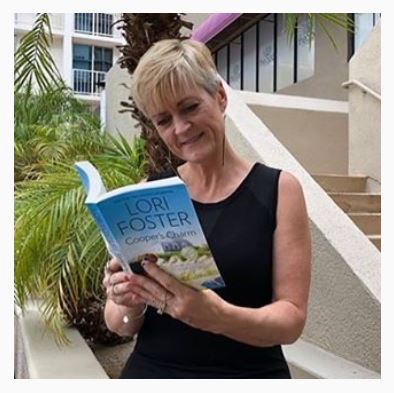
lori foster brenda novak

Here’s Brenda Novak reading Lori Foster for a book club Brenda is going to hold in her Facebook Author Group.

That’s real support. That’s real networking and collaboration.

There’s lot of bad things to say about the traditional publishing industry, but this isn’t one of them.

Let’s support our friends the right away.

Read the books you’re recommending. Because reading a book and having a discussion about the book with its author would mean a lot to the author, and a tweeted conversation about a plot twist or an evil character is true promotion.

Do you have any good reasons for recommending books you haven’t read? Let me know!


Blog book promo for the end of blog posts


I Did an Amazon Giveaway–and It Did Pretty Much Nothing

THIS POST IS ARCHIVED AS AMAZON DID AWAY WITH GIVEAWAYS IN 2019 AND HAS SINCE NOT REPLACED IT WITH AN ALTERNATIVE. THANKS FOR READING!

I was always curious about the Amazon giveaways–you know the cute little button at the bottom left of your books’ (or any products’ really) page. You have to scroll down pretty far to find it–after reviews and two sets of sponsored product ad strips.

amazon giveaway blog

You can give away paperback or Kindle versions, and it’s obviously cheaper to give away Kindle versions. Amazon makes you pay for your book, so if you gave away paperbacks, you’d be paying the price you set in CreateSpace or KDP Print, plus shipping.  There’s no shipping with Kindle files, but there is tax. So make sure you’re looking at the correct page, and Amazon tells you which version you’re giving away–it’s in the blue to the right of your book’s cover.

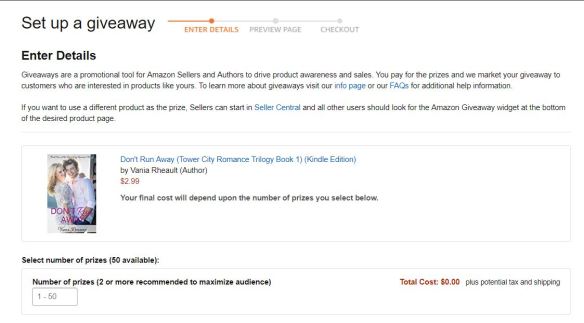
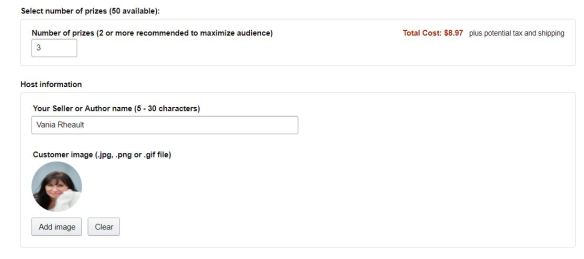
Choose your number of prizes:

amazon giveaway blog 2

I’ll give away three Kindle file copies. I did five when I did my giveaway for Wherever He Goes, so I feel like I’ve already spent money on something that probably won’t do anything for me.

amazon giveaway blog 3

Add your photo. I chose a different pose of my author photo that I use everywhere else, but I still look like me.

The next part is where I royally screwed up because I had no idea giveaways ran that quickly, or that people would enter, or maybe I just didn’t understand the stats of a giveaway like this.

amazon giveaway blog 4

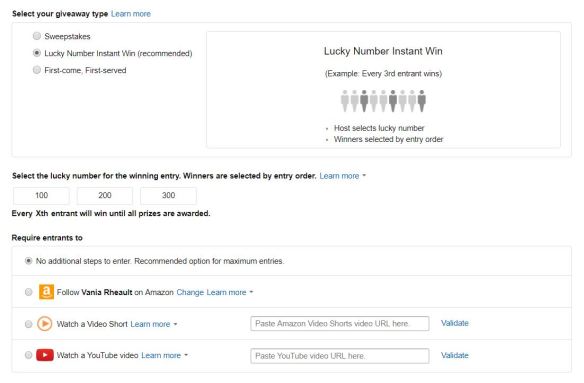
I did the recommend Lucky Number Instant Winner, and I chose 100 for the lucky number for the winning entry.

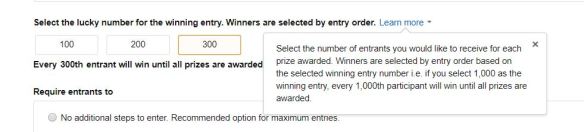
This is what it says if you click on LEARN MORE:

amazon giveaway blog 5

My giveaway lasted fifteen minutes. So When I chose 5 prizes along with the 100 entrants,  500 people entered my giveaway and every 100th entrant won a copy of my book. The fact that it only too 15 minutes for my giveaway to end blows my mind.  So will be going with a higher number next time.

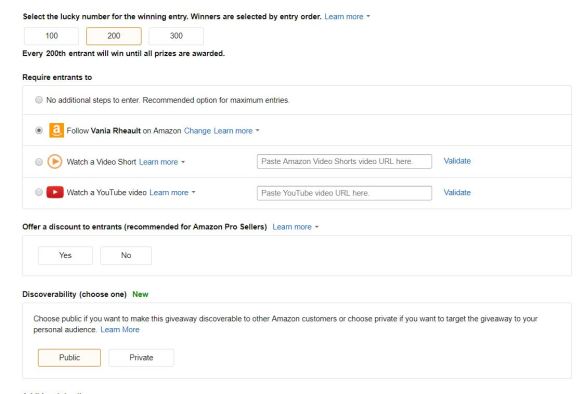
And then, of course, I have them follow me on Amazon.

amazon giveaway blog 6

I made it public of course, because the more the merrier.

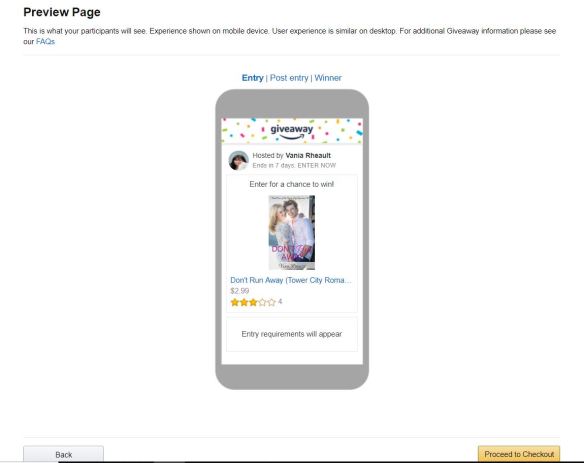
To recap, I’m doing 3 copies of Don’t Run Away. I have the number of entrants set at 200 per prize so 600 people have to enter to win three copies. They all have to follow me on Amazon.

You would think this would be a great thing. But the thing is, most people enter giveaways just to enter giveaways. That is what they do. Just for the rush of winning, I’m assuming.

I don’t think this giveaway is going to go any slower than my other one, but we’ll see.

Click on no for not offering discounts, then click next.

amazon giveaway blog 7

This is the last page, and it’s laughable. It’s probably where my high expectations came in. The giveaway will end in 7 days? Yeah right.

Then you get your shopping cart screen and you purchase your giveaway. I didn’t screenshot that because you don’t need to see my stuff. After you buy it, you get this:

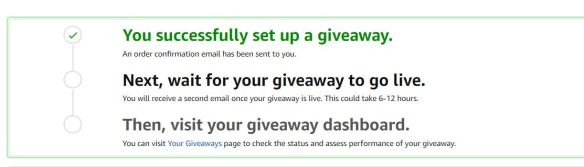
amazon giveaway blog 8

And you’re all set.

You get an email when your giveaway is live, and for me, fifteen minutes later, I got an email saying my giveaway was over.

Amazon doesn’t tell you how many followers you have, but at some point, hopefully when they email your followers when you release a new book, that some of them will buy it.

Don’t turn blue holding your breath.

While I was typing this up, my giveaway went live–I got the email.

We’ll see how long it takes for the giveaway to end . . . . go get something to eat. I’ll wait.

At any rate, did the giveaway for Wherever He Goes do anything for me?

Not really that I could tell. At least with my AMS ads, even with little results, those are still measurable. These giveaways seem like a waste of time and a waste of money.

Maybe I’ll do a Goodreads giveaway when my new book comes out.

It will be something to blog about anyway.

Did you have a good experience with an Amazon Giveaway? Let me know!

Blog book promo for the end of blog posts


Formatting Your Book for Publication

If you don’t want to format yourself, yet you don’t want to have to pay too much, then there aren’t many things you can do.

Let’s start with Kindle, since more than likely 100% of you will publish on Amazon through KDP. What are your options if you don’t want to format your file for Kindle?

1. Actually, just format it, FFS. It’s easy. I pulled this out of an old blog post I did last year. Some of the info isn’t correct anymore, but you can still take a look at it here.

First, make a copy of your manuscript (just in case something goes wrong). This one shouldn’t have any headers or footers. If you have page numbers and/or a don’t steal my shit copyright header for your beta readers, remove them all.

The biggest thing with conversion is Tabs will screw everything up. If you use the Tab key to make your indents for your paragraphs, you’re going to have one messed up converted file. Here are the steps to take out your Tabs:

Removing Tabs

Press the Paragraph Show/Hide button in the Paragraph section of the Home tab so you can see the formatting marks.
Highlight (select) your whole document.
At the far right of the Home tab in the Editing section, click on the Replace button.
Click the More/Special button in the bottom left corner of the box.
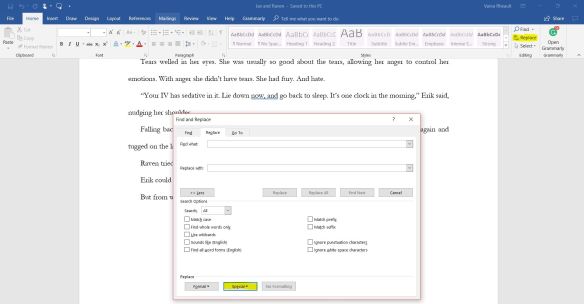
taking out tabs

Select the Tab Character.

2018-06-25_LI

Leave the Replace with field empty and click Replace All. This removes all the Tabs.

This should have taken them out. If, for some reason, you used the Spacebar to make a tab, go into Replace, and in the Find field hit the number of times you used the Spacebar to make the Tab (maybe five? Six?), leave the Replace line empty and hopefully Word will find all the Spacebar spaces you used for tabs and pull them out.

But now you have a whole book that doesn’t have any indentations. I’ve seen books like this. Don’t do it. You want your book to look as professional as possible so put them back in:

Putting your Tabs Back In

Again, select or highlight your whole document.
Click the little arrow at the bottom right of the Paragraph menu in the Home tab. Or right-click your mouse and select Paragraph from the menu.
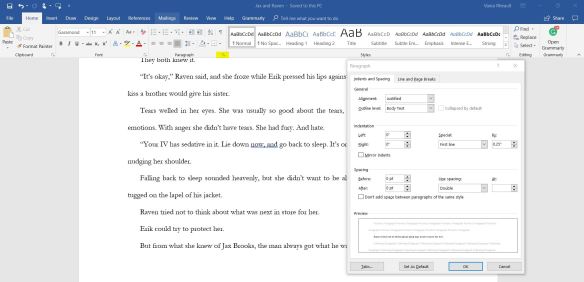
tabs

In the Indentation section of the box change Special to First Line and enter 0.25. This is how long your Tab is going to be. If you want it shorter you can do 0.23 or something. I use 0.25.

Click OK.

This puts all the Tabs back into your document, but you don’t want the first paragraph of your Chapters and/or scenes to be indented (traditionally published books usually do not have the first paragraph of Chapters or scenes indented) so you will have to go through your whole novel(la), look for the Chapter starts and scene breaks and take the tab out of the first paragraph. When you find those, put your cursor in front of the first letter of the first word, right click your mouse, select Paragraph and in the Indentation section, change By to 0. This will manually take the one Tab out.

When you start a new document, it’s easier to go into Paragraph, change First Line to 0.25 from the beginning, then you don’t have to go through all this after you’re done. It will take a little getting used to, to not have to hit the Tab button at the beginning of every new paragraph, but it will be worth it in the long run.

KDP Formatting Instructions at a Glance:

Take out all the Tabs, put them back in with the instructions above. Don’t indent Chapter starts. First paragraphs after scene breaks have started to become optional.

If there is any in your document, remove headers, footers, and page numbers.

Use a common font. I use Georgia for my Kindle, Garamond for the paperback.

Drop caps are not e-reader friendly, at least not in my experience, and I don’t have enough patience to make them work. Remove those as they will probably mess up your paragraph during conversion.

Set your margins to .5 all around–top, bottom, left, right.

Set your line spacing to 1.5. Not single, not double.

Select your all your text and set to Full Justified.

Don’t use a bunch of Hard Enters to make new pages. Please insert page breaks to create new pages. Lots of hard enters will not convert well. Insert page breaks after you Title Page, Copyright page, dedication page, acknowledgments, Table of Contents, and after each Chapter End. Use them to separate your back matter from your author page.

insert page break

If you have spaces between your paragraphs, you’ll need to select your file again, go into Paragraph and change After in Spacing to 0 pt. This takes out all the unnecessary spacing between paragraphs. (You will want to do this so you are not accused of making your book longer for the extra KU page reads.)
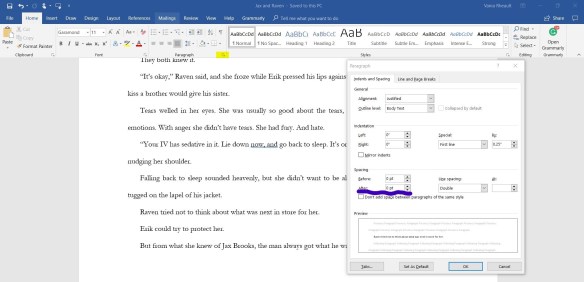
tabs_LI

To add your website or author page in the back, say, on your author page, use https:// with the rest of the website in the link.

What you’ve done is made your file as simple as possible. If you have graphics or formulas or are publishing a nonfiction book with all the bells and whistles, then I would suggest buying a book or researching how to format a complicated document. These instructions are for a fiction book with the general front matter and back matter only.


If you follow those guidelines for your Word document, you should be good to go conversion-wise. But if you don’t even want to do that then you can:

2. Use Kindle Create to format your file. The file won’t belong to you–you format it and then publish right to KDP. So you wouldn’t be able to use the file for other platforms like Apple Books or Kobo. But if you all want to do is publish to Amazon, download the App, upload your book into it and just fiddle with it until you like what you see. Watch the videos to learn how. I played around with it, and I formatted a 50,000-word book in an hour. Look here for details.

3. Use a template. The templates are already set so all you do is copy and paste your document into it. Most of these cost money, so look at these at your own discretion. You can start here: Beautiful Templates for Book Design Success

4. Draft2Digital says they’ll let you format your book on their site for free, and let you use that file wherever you want. You can even use them just to make a file for Kindle. You don’t have to go wide to use their free services. I haven’t ever tried them simply because once you get down how to format a file for Kindle, you don’t need anyone’s help. But if you just want to upload your document into D2D after you create an account, give it a try.

5. Buy a Mac and buy Vellum. I  hear Vellum is the best at formatting e-books and paperbacks. I don’t have a Mac but I plan to treat myself this summer so I can buy Vellum (although, if it’s as good as I hear, I’ll be tempted to redo all my books). If you don’t have a Mac or Vellum, and can’t afford either one, maybe you can ask someone who does to format for you. Maybe offer to trade for the favor. You never know.

6. I also hear Scrivener has formatting capabilities. I don’t use it–I write in Word. But if you use Scrivener, you can try it and see how you like it.

You’ll note that I don’t have the instructions on how to put a Table of Contents in your file. I think they are stupid for fiction. But that’s just my opinion and not a very popular one at that. If you want to know how to make a clickable ToC for your e-reader file, read the instructions I had to hunt down when I made a box-set for Summer Secrets a couple months ago.


Formatting your paperback is a bit harder.

1. I will always recommend using an interior template from CreateSpace or KDP Print. These templates are the same, you just download them from different websites. Choose the formatted template which has all the headers, footers, and end sections in place so your page numbers and your author name and book’s title are on the pages they are supposed to be on. If you take a look at any trad-pubbed book, you’ll see there aren’t headers on Chapter start pages, or headers or footers on front matter or back matter. The interior templates takes care of most of this for you. The only issue I had with them at all is that I usually have more chapters than the template allows, so I have to monkey with the end section breaks myself to create more chapters. Most of the time I just copy and paste the section end break of a previous chapter into the end of the next chapter and that works for me. If you have any working knowledge of Word at all, you should be able to do this without any hassles. The front matter and back matter is all laid out for you as well, so just copy and paste page by page, or chapter by chapter. The template is “chunked” meaning you can’t copy and paste your whole document into the template at one time. The chapters and front and back matter are broken up by section end breaks.

Have patience. If you do 98% of the work, I’m willing to bet you have a friend who would look it over and do the other 2% if you just can’t get it right.

2. If you don’t want to go this route, I’m afraid there isn’t much you can do for free besides get a very good working knowledge of Word and start from scratch to do it all yourself. I took a college class in Word, and I still couldn’t do my formatting without at least getting a good start with the template. But you can always look for a paid template. Most websites that sell e-reader templates sell interiors for paperbacks too.

3. Pay for a formatter. Reedsy has freelance interior design recommendations. They maybe be a bit expensive–that’s my guess just by looking at their qualifications. Fiverr pulled up a lot of options for interior formatting as well, and what I saw were reasonably priced. Of course, always ask for referrals, or other books they’ve done to get an idea of how their books look.


As always, I recommend learning how to do this yourself. If you’re going to be a prolific writer, or even if you’re just going to write a book or two a year, you might as well learn how to do it. Hey, you might even get good at it and you can trade services with other people. That’s what the writing community is all about: I’ll scratch your back if you scratch mine. If you can format for someone, maybe they’ll beta read for you, etc.

I know there’s stuff I’m forgetting. I mentioned Draft2Digital but not Smashwords. If you want to publish through Smashwords, they have their own system, and I’ve read their how-to-format-your-file book so that it will convert through their “meatgrinder” process.  I’ve never published through them, so if you’re interested, here is their STYLEGUIDE that will help you format your file to upload to Smashwords. It’s long, but Mark Coker makes it funny, so there is that.

When I first started formatting, it was a lot of trial and error. Make use of the interior viewer on KDP, KDP Print, and CreateSpace. Trust me when I say what you see is what you’ll get. If you get caught in an upload, fix, upload, fix, upload, fix, upload, fix pattern and you feel like you’re going to go mad, take a step back, go outside and come back later with a clear head. There is nothing worse than trying to format when you are quivering with rage.

Try practicing on short stories or novella. It’s a lot easier to work with few words then build up to a complete MS when you kind of know what’s going on.

I hope this blog post helps you format!

Good luck!

Up next is cover design!

Thanks for reading.

Editing: What it is, why you need it, and where you can find help.

Editing your novel can vary in cost. You can pay nothing if you can find someone to swap with, or it can cost you in the thousands if you pay for all the things.

The types of editing vary, too, and it’s wise to figure out what you need before you look for an editor.

Types of editing:

  1. Proofreading. This is a sweep looking for typos. This is probably the cheapest and easiest editing job you can hire out. Even a beta reader could probably do this for you if you give out copies of your final draft.
  2. Line Edits. This goes a lot deeper. These editors look for punctuation, grammar, incorrect word usage, syntax, repetition, subject/verb agreement. If you don’t have a strong grasp of grammar, punctuation, or have a weak vocabulary and you often use an incorrect word, then a line edit is probably mandatory so you don’t look like an ass.
  3. Developmental Editing. Developmental editors read your whole book and make notes on plot holes and incomplete character arcs. They point out pacing, passages that don’t bring anything to the story or doesn’t make sense. If you wrote yourself into a corner and pulled a deus ex machina to get yourself out, they will call you on it. Developmental editors are good for writers who haven’t finished a book and need help getting there, or for a writer who is trying to stretch their writing wings and may need guidance with a more complicated plot. Book coaches or book doulas aren’t exactly the same thing, so research who/what/when/where before you hire anyone.

As an indie, you must decide what kind of editor you need. Because also, as an indie, you aren’t going to be able to afford all three–though some of the big indies who “have made it” pay for a combination of the three because they can.

What’s an indie to do if you can’t/doesn’t want to shell out the cash?

Let’s start with the developmental edit.
Look for places online that offer a critique partner match-up. On Twitter that’s #CPmatch. If you’re part of the #amwriting crowd you could probably just tweet you’re looking for a critique partner for your new novel in your genre. But the problem with this kind of service is the expectation of reciprocation. If you’re not willing to help someone else, don’t bother to look online for someone to help you for free. Expect to pay out. You could pay a beta reader for some feedback, but I doubt they would go as deep as a developmental editor. Betas maybe will give you a sense of what’s working and what’s not–but developmental editors can tell you how to fix your issues. There are also a gazillion writing groups on Facebook. Join a couple and ask if anyone would be willing to work with you. But this kind of situation is the same as Twitter–be prepared to reciprocate in some way in the future. And be prepared to wait. Not everyone will get back to you when you’d like them to.

Join a local writing group. People will be more than happy to tell you what’s wrong with your work. If you can develop a thick skin, and admit you need help, a writing group critique can be valuable. But people have the propensity to be cruel whether online or in person. So if you really need help of this nature, it may behoove you to pay out. At least the editor will be professional about it and actually tell you what you need to know to fix your book. I’ve spoken with people who have gotten such cruel feedback from writing groups they’ve stopped writing. I don’t want this for you.

Can you be your own developmental editor? You may need to write a few books before you can get your plot points, backstory building, saggy middles, and character arcs under control. Read up on plotting and building character arcs. If you want to avoid tons of rewriting and backing yourself into a corner only a deus ex machina could get you out of, then maybe learn to plot out your books. Pantsing is okay if you know where you want to go, but just letting your mind and your characters run wild may open you up to forgotten side characters, saggy middles where no one is doing anything, and plot holes that may take forever to fix.

One of the best ways you can learn developmental editing is to chart out a book you read that you enjoyed. Write out chapter by chapter what happened (mini-cliffhangers), paying special attention to the first part of the book (what drew you in), the middle (what kept the plot moving), the couple chapters toward the end (what made you keep reading to the last page). This is why it’s important to read in your genre. Eventually, you’ll learn the rhythm and feel of your genre and it will show in what you write.

Line editing.
If you really need this kind of help, there aren’t many places you can find this type of editing for free. I line edit, and it’s time-consuming. Pointing out grammar, punctuation, syntax, incorrect word usage, and repetition takes a lot of concentration. I do “look and finds” a lot. “You used ‘walked’ 300 times. ‘Looked’ 250. ‘Saw’ 600.” Whoever line edits for you needs to be able to point out comma splices, tell you when a word like saturated is better than lingered when it comes to a scent (or did you mean smell?). Did you mean waive instead of wave? Waist instead of waste? Or if it’s April second in your novel and you wrote there was a full moon, but at that time of year, the moon would actually have been a quarter? This attention to detail that a line editor gives you cannot be produced for free. It’s just too much work. Did you mean Kleenex or tissue? Because if you’re referring to the brand, you better capitalize it. Same with Jell-O or gelatin. Does your main male character watch sports center or SportsCenter? Because only one of them is correct, and I bet you can see which one it is.

The good news is you can teach yourself a lot. Read grammar books. Self-editing books. You need to train yourself to pay attention to detail. Look up words if you don’t know their exact meanings. The best way to learn is to read a lot of fiction and non-fiction books. In time, you’ll get better. But until then, are you talking about karat, or carat when you describe your FMC’s engagement ring? If you don’t understand, or you don’t know what you don’t know, you’re going to have to find, and probably pay, someone to tell you.

Proofreading.
Proofreading is the cheapest form of editing. Don’t give your book to someone to proofread unless you are done.

Done.

Because when you go through your book fixing things, sometimes you can fix in a mistake right along with it. Your proofreader will be your last set of eyes. So don’t decide to rewrite chapter one after your proofreader has done her job. That wastes everyone’s time.

There are some software programs that can help–but a software program can’t take the place of human eyes, so take their suggestions with a (huge) grain of salt.

Grammarly. Grammarly is okay. But they are comma crazy. They are also hyphen crazy. I stopped running my manuscripts through it. You’re better off knowing your stuff and reading your MS line by line with a ruler. In my experience, no help is better than their help. **I do have Grammarly installed on my laptop, and though I don’t use it for my books anymore, it’s great for blog posts, tweets, and FB posts. I appreciate their assistance when I’m blogging, as for non-fiction, it’s an accurate help.

Hemingway Editor. The Hemingway app gives you a free sample online. Just copy and past part of your manuscript into the program and see if it would be beneficial to you. It’s only $20.00. I have it, but I don’t use it.

ProWriting Aid. I’ve used the free sample online, and it’s similar to Hemingway. They have different levels of pay (per time usage), so see what’s best for you if you like the online sample. My friend Aila loves it and wrote a great blog post about it (but please note the giveaway is over), and she’s an affiliate with them. If you decide to buy the program, I would appreciate it if you bought it from her affiliate link.

If you have trouble with syntax, natural-sounding dialogue or if you have slow areas that affect your pacing, you may want to try having your computer read to you. I love doing this–especially if you ever think you’ll turn your books into audio. The voice isn’t perfect, but it’s better than nothing. Some people read their manuscripts aloud, but because you know what you want it to say, you may miss things.

Here is a list of my favorite editing books:

Writing Deep POV

Self-Editing On a Penny: A Comprehensive Guide

Self-Editing for Fiction Writers, Second Edition: How to Edit Yourself Into Print

VOICE: The Secret Power of Great Writing

Fix Your Damn Book!: A Self-Editing Guide for Authors: How to Painlessly Self-Edit Your Novels & Stories

Mastering Showing and Telling in Your Fiction (Busy Writer’s Guides) (Volume 4)

Structuring Your Novel: Essential Keys for Writing an Outstanding Story

Creating Character Arcs: The Masterful Author’s Guide to Uniting Story Structure (Helping Writers Become Authors) (Volume 7)

That should be enough to get you going. I’ve read all of these and they are my favorites.

If you hire an editor, always be sure to send a sample first. Some editors charge you for this, but if you hire them, they’ll put that fee toward your book. Give them as clean a draft as possible, because if your sample is a mess, they will quote you higher. They’ll think your book will take them a lot of time.

Writers are not always good editors, and editors don’t always make good writers. Writing and editing are different skill sets and they are not inclusive of each other.

Know what you’re getting into before forking out the cash.

Where to look for an editor:

Join Alli, the Alliance for Independent Authors. They have a great list of resources for indies. They take a stance on putting out supremely professional work though, so don’t be surprised if their resources are expensive. Unfortunately, you can’t gain access to their resources without becoming a member.

Joanna Penn makes her resources available for free. But be careful. Someone’s best fit won’t necessarily be yours.

Reedsy. Create an account and you will have their resources at your disposal. Vetted for skill and professionalism, you’ll get what you pay for. They have a lot of different freelancers for the different kinds of editing you’d be interested in.

reedsy editors

Start looking for an editor quite some time before you wish to publish. You’ll be put at the end of the queue. While you wait for them to edit your book, you can work on something else, get your author platform going, go on vacation, what have you. But you won’t be working on your timetable anymore.

I hope this blog post and resources have helped you a bit.

Next up is formatting! Fun times!

Thanks for reading!