Let’s Talk Engagement

There has been a lot of talk of engagement on Twitter lately. What exactly is engagement? The Macmillian Dictionary defines engagement as

definition 4: the action of parts of a machine when they connect with each other or definition 6: the feeling of being involved in a particular activity.

You could even go as far as to say engagement means definition 3: a battle between armies, because, let’s face it, Writer Twitter isn’t always friendly.


woman-593134_1920

She’s cute, but forcing people to talk to you isn’t pretty.

No matter which definition you choose, engagement means a give and take between people or things. So when someone on Twitter says they don’t follow back without some engagement first, or they threaten to unfollow you if you don’t engage with them, what does that mean exactly?

This kind of attitude has always baffled me because first of all, they don’t understand what kind of social media tool Twitter is, and second of all, TWITTER IS F*CKING HUGE. “As of the fourth quarter of 2017, the micro-blogging service averaged at 330 million monthly active users.” Obviously, no one is going to have 330 million followers, but even in Writer Twitter, the number of people following you can grow to the double digits quickly.


So what does engagement really mean? What are you asking for when you expect (demand?) people to tweet with you?

i#followFriday (1)For sake of simplicity, we can pick on a relatively small account. Say you’re following 300 people. You have more people following you; let’s say this number is 1,000. We’ll keep an even number because my math is terrible. Let’s subtract the 300 you’ve followed back, leaving you with 700 people following you that you have not returned the favor to. Let’s subtract 200 of these because we’ll just assume they aren’t real people. Sexbots and whatnot. That’s 500 people, writers, potential friends, and connections, mind you, you’re not following. What if all of a sudden half those people started engaging with you.  You tweeted something funny, an article that hit home. They try to chat with you. Suddenly you have 250 people engaging with you.

What are you going to do, ignore them? This is your dream come true! You want engagement! Now you’ve got it! Oh, you say, 250 people aren’t just suddenly going to want to talk to me. Okay, fine. What about half that? What if 125 of those people started tweeting with you? Then what? You still don’t buy that? Okay, 75. It’s #FollowFriday. They haven’t been pissed off by your snotty attitude yet, so they try to get into your good graces by giving you a happy shoutout. Seventy-five #FollowFriday happy weekend shoutouts. Yee-haw!

i#followFridayYou better believe you respond to these people because this is what you wanted, right? All right, I know I’m being facetious, but let’s be real for a minute. Even if you had 25 people on a daily basis wanting to tweet with you, that’s a huge time suck. There are days, like #FollowFriday, or #WriterWednesday, where I do get quite a few notifications, and I do have to take the time to sit and thank everyone. I’m getting to the point where I may not be able to always answer all my notifications, but for now, I’m trying my best. I respect my followers, as should you. Someone thought you were interesting enough to follow, or you’re part of Writer Twitter, whatever, and you thank them by . . . ignoring them. Nice.

I admit, you can look at my numbers, and see my following and followers are not even. And that is fine. Some are bots, some are huge accounts I know will drop me after they get a follow back, huge marketers with 100K following/followers, writers who only tweet their books and nothing else. Yes, I do not follow those accounts. And I’m not suggesting that you do.

I follow back writers, readers, bloggers, agents, anyone human related to the reading/writing/self-publishing/traditional-publishing industry.

What I am suggesting is that with an engagement entitlement attitude, you do not.

I get that if you’re a big-time author you’re not going to follow back everyone. I was lucky and Karen M. McManus followed me, or vice versa, before she became famous. You can see that she’s no longer following everyone who follows her. I was lucky, and I’m able to tweet with her now and then.

one of us is lying

Buy Karen’s awesome book here!


So, why do I have a problem with this attitude, this need for engagement on Twitter? Because it’s the wrong platform for it. I’ve suggested to a few people on Twitter that if they want to keep their groups small, then they should invite 200 of their nearest and dearest and form a private group on Facebook. Chat away until your heart’s content, and you won’t have to worry about those pesky people wanting a follow back without saying hi first.

Twitter and Facebook are different.

Twitter is used for quickly exchanging information. Read an excellent blog post about editing, tweet it! Found a shortcut for formatting? Share it. Twitter is also for supporting your colleagues. Congratulate someone on their new release. If someone has a question, and you just read a book about it, let them know! Twitter has it set up now that tweets pop in your feed from people whom you do not follow. They did this to broaden your horizons and help you find more people to connect with. Don’t be annoyed by it! Use it to find your next Critique Partner or Beta Reader. If you need something, would you rather be able to ask 200 people, or 10K? Build up your account. Spread out your reach.

i#followFriday (2)Twitter is like being at a gigantic party! Grab a drink and say hello to everyone. You may not exchange business cards with every person you meet, but you never know when you’re going to make a connection. Or know someone who knows someone who can help you. It only takes a moment to follow back a living, breathing writer.

Do not insist on engagement. Twitter isn’t made to be a small group of people, your profile open to the public, and anyone can enter.

If you want privacy, switch over to Facebook and start a small writer’s group there. Share resources, tips and editing, vent. You’ll be happier.

I adore tweeting with people. Maybe I’ll only tweet with them once or twice and they’ll slip away, but that doesn’t mean they’re gone for good. They’ll pop back up one day, and then I’ll be the one to say hi.

And I’ll just make one last point before I go–you’re a part of Writer Twitter. Doesn’t that mean you’re supposed to be, oh I don’t know, writing? Insisting on engagement isn’t fair to the people on Twitter who spend the bulk of their time either working their day job, taking care of kids, and in the little time they have left, writing. Don’t punish your connections for doing what you should be doing, too.

Come say hi to me on Twitter and tell me what you think! I’ll see you there!


Happy writing Vania Margene

Author Interview–Aila Stephens

Everyone loves to hear how a launch goes. Was it successful? How many books did they sell their first day? Their first week? How many page reads did they have if they were enrolled in Kindle Unlimited?

Book launches are exciting.
◊Cover reveal!
◊Excerpts!
◊Author interviews!
◊Blog tours!

But what about after? There is always going to be someone else who releases a book and our attention will be jerked away by a shiny new cover.

What happens after the launch? What happens months after the first week of sales? How does an author keep the momentum going?

I spoke with author Aila Stephens to find out. Listen in—maybe she’ll tell us all her secrets.

astericks

You launched Sex, Love, and Formalities, the companion to Sex, Love, and Technicalities in November of 2017. How did that launch go for you? Can you give us a quick rundown of what you did to prepare? You hosted a giveaway, as well, correct?

Sure! I drank a lot of coffee. I panicked a little…no, no. I mean, yes, I did those things, but really, I talked Formalities up on social media a little more than I did when I launched its’ predecessor. I had much better-looking bookmarks printed up, and I spent a little more time and money on the book trailer than I did for the first one. I love having a book trailer for my books. It’s mostly a total vanity thing, but they’re still fairly rare in the indie community. Giveaways are pretty hit or miss, I don’t think that’s a secret, but I look at them as a necessary evil.

I did have a giveaway. It’s no secret that giveaways are pretty hit or miss, and there’s never any rhyme or reason to how many participants you get, but this one had decent participation. I gave away two signed copies of my books along with coffee and tea, a mug, and even a nice shawl to throw over the shoulders as it was quickly turning wintertime.

That was a great giveaway! I was bummed I couldn’t enter. You also did a free book promo for book one during the launch of book two using some of your free days allowed to you in the KDP Select program. Can you explain how you promoted that, if you did? If I remember correctly, your stats for that free book were rather impressive.

I promoted using Twitter and my Facebook author page.

I am going to strangle myself for this, but I cannot for the life of me remember exactly how many free copies of Technicalities were downloaded during those days, but it was several hundred—maybe even closing in on a thousand. I’d tell you concretely, but apparently, Amazon won’t let me go back that far. Whatever it was, the top ranking I got on Amazon that day was #14, for Women’s Fictions > Crime, and I believe it was #20 for Women’s Fiction > Romance.

That’s fantastic! Did your free promotion for book one bolster sales for book two?

In the weeks following that free promotion, I did have several thousand “normalized pages” of Formalities being read on Kindle Unlimited, which was very nice.

…If only all those free books and KU pages led to reviews, right?

It’s hard to tell if the sales of Formalities since then have been directly related to that free promotion, though I suspect most are.

Did you find it easier to launch book two since it was a sequel?

I did. I had so many—so very many—mistakes I learned from with Technicalities. I think that’s kind of a great thing though, learning from one’s own mistakes. I made a few with Formalities which I hope to avoid with the next book, and I’m sure I’ll make some with it that I’ll try and avoid with the one after that…and so on and so forth.

What are you doing, four months after your launch, to keep sales going? And are your methods working?

Still drinking coffee, still panicking. Ha! No. It’s not in my nature to go for the hard-sell. I do share pictures of my covers from time to time on Instagram, though it’s fruitless. What I think has helped me the most to see continued sells and KU reads has been my blog. I didn’t have the best track record of consistently blogging, but after my launch, I decided to make blogging my second priority to writing more books. I blog every Monday and every other Thursday. I’m still trying to wean myself from blogging just to other writers and figuring out how the heck you blog for readers, but I digress.

At the end of every blog post I include a small, hopefully unobtrusive, advertisement I made for my books and I link it to them on Amazon. I have noticed that I usually sell something on Tuesdays and/or Fridays, and my KU pages have remained rather steady.

This is a comfortable way for me to garner attention to my books without me feeling like a spam-artist.

Again…if only those translated to reviews.

What have you learned from either of your books to help you launch and maintain momentum for your next book?

I want to give a little more time between finishing the book and launching the book. With this next one I want to seek out ARC reviewers on YouTube (which, honestly, excites me and kills me a little on the inside), and I also want to spread out smaller, but still impressive, giveaways. I am still researching some launch tactics, but these are the main ones I intend to employ this go-round.

Do you have any tips for those who are seeing declining sales after their launch?

I would ask them what they’re doing to keep putting it in front of people. Like I said, there isn’t a soul out there who can say I’ve sent them an auto-DM going, BUY MY BOOK!! But I endeavor to have a quality blog I drive traffic to several times a month, in the hopes that by the time someone gets to the bottom, they’re intrigued enough to take a look at my books.

You can’t publish a book and then expect people to find it without a little elbow grease.

Have you ruled out paying for ads or promotions?

Not at all! I just don’t want to do it for two books. Once my next book comes out, I’ll shell out a little money for advertising and see what comes of it. Three is by no means the magic number, but I will chalk it up to research, too. I can’t afford to be anything except financially prudent with this, but I’m excited to see what happens with it.

I’ve read the best advertisement to promote your work is to write another book. Do you believe this is true?

Absolutely. I wish I had the ability to write full-time so I could crank them out faster. I think in today’s world, we’re all so accustomed to instant-satisfaction that we don’t want to fall in love with a book or an author if they’re not producing anything else. It’d be like watching The Paradise on Netflix and falling in love with it only to learn they shucked it after two seasons. We binge-watch in this day and age, and readers binge-read. This is why there is so much advice out there saying book series are the moneymakers.

…says the girl writing a standalone book right now.

Think of Harper Lee. To Kill A Mockingbird is a priceless piece of American literature, but for the longest time—fifty-five years!—there was only one published out there by Ms. Lee. I don’t know how well that sort of publishing schedule would work in this day and age. 😉

I guess the secret is to write such a thought-provoking, moving book, that your book is mandatory reading in all schools! Thanks, Aila, for taking the time to chat with me!

Vania, thank you so much for sitting down with me again for such a lovely interview! I am always honored and humbled that someone of your talent and expertise has time for little ol’ me.

And to all of your amazing readers, thank you so much for taking the time to get to know me!

Love ya, mean it!  -Aila

Aila always makes me blush. I hope you enjoyed her interview and maybe learned a little something about how to keep the momentum after your launch from drifting away. Help keep her momentum up by downloading free copies of her books here (March 27 and 28) and give her Amazon profile a follow while you’re there. 🙂

Aila is leaving her mark all over the interwebs, and you can follow her Instagram account, Tweet with her on Twitter, like her Facebook author page, and definitely give her blog a peek. She’s in the middle of a wonderful writers’ resources series you don’t want to miss!

Thanks for reading!


Quotes taken from the websites in the photo captions, and photos taken from http://www.pixabay.com and http://www.unsplash.com. Graphics created with these photos in http://www.canva.com.

Author Interview: KT Daxon

This interview is archived. KT no longer writes under this pen name and her book is no longer available.

Today I spoke with author KT Daxon. We chat a lot offline, but we moved our discussion online so you could listen in on what her publishing experience was like, the roadblocks she ran into, and if there were any silver linings to the whole thing (of course there were!) Join me as I grill chat with KT about how it felt to release her first book! KT Interview

Vania Margene Rheault: I think I read somewhere you’ve worked on your book for about four years before your editor got a hold of it, is that right?

KT Daxon: Yes, that’s correct. Broken Tomorrows began as a Nanowrimo project in 2013. I’ve rewritten it like 80 times and shaped it into a piece of work I was comfortable sending to my editor.

Vania Margene Rheault: How did you start writing it? What compelled you to sit down and try to write a book?

KT Daxon: I had participated in NaNoWriMo two years before, though that book never saw a second draft. When we moved to Virginia, I had a rough start to the year and sought writing as a way to manage the dark cloud that loomed over me. Writing the first draft was a form of therapy that turned into a passion. 1

Vania Margene Rheault: I think writing is a form of therapy for a lot of people. How did you come up with the plot? I have to admit, your twist surprised me.

KT Daxon: Some people have told me the twist was confusing, others, reacted the way you did, surprised. The original plot is a 180 from what Broken Tomorrows ended up publishing as. I wanted to write about a single mom running from a past, but as the years went on the plot changed. My antagonist, Landon transformed into a guy I actually began to care about. In the end, it became his story as much as my female main character, Gabby’s.

Vania Margene Rheault: When you think of plots, or need help nudging loose an idea, do you brainstorm with anyone? Use writing prompts?

KT Daxon: Most of my plots are pulled from real life events, some happen to me, others to someone else. For Broken Tomorrows, I had a friend read the first draft and we talked often about different aspects, including figuring out plot holes. Luckily, the story has changed since the last draft she read, so she gets to read the twist and all the new goodies I’ve included. I only use writing prompts if I am 100% without an idea.

Vania Margene Rheault: You’re already writing another book, aren’t you?

KT Daxon: I am! I’m very excited about this new work in progress and I think that if I can get it to work like I envision in my head, it’ll be a great addition to any bookshelf.

Vania Margene Rheault: How will you mesh that sentiment, keeping your story your own, while improving your story from beta reader feedback and editing advice?

2KT Daxon: It won’t be easy, but I think if any writer were to listen to their editor/beta readers advice with an open mind, and then consider the possibility of making a change that has a meet in the middle aspect to it. I’m trying to think of an example with Broken Tomorrows but I’m blanking right now. Bottom line for me is I need to be open-minded to the suggestions the editor/betas are giving. To understand and know that it’s not because they want to take over your story, but they really are there to help and at the least cause you to pause a moment and consider the possibilities.

Vania Margene Rheault: Sounds like you’d have to think seriously if you ever decided to query. The editing process for books that have been picked up scares me, honestly.

All this background information has been fun, but let’s get to the real stuff, shall we? You launched, ah, early. I’m sure you’re not the first person who has done that. How many plans did that mess up?

KT Daxon: When I hit “approve proof” and published earlier than planned, I won’t lie, I panicked. I had planned to publish on my 35th birthday, make it a big party/celebration day. I had an ARC contest set up, an Indie Feature spot right around the launch date, my bookmarks and swag hadn’t been ordered yet…it got scary. But, it all worked out in the end. The four people who entered the ARC contest ended up getting autographed copies of my book, the indie feature is still on which will be helpful, and my swag is here so I can work on marketing. It also allowed me to begin my next WIP, so, all in all, it worked out.

Vania Margene Rheault: The process of putting the book together after the final manuscript is ready sounds daunting. How did you go about the cover and formatting? How did you decide what platforms to publish on, and what vendors to use?

KT Daxon: I had planned to do the cover myself, but I had to admit to myself it just wasn’t something in the cards for my debut novel. I’m still learning. I was lucky and had a couple of offers for assistance and stumbled upon my cover designer, Aila Stephens. She offered to the read the book to get a good idea as to what we could do and I was thankful for that consideration. I think she did an excellent job and between the two of us, she produced a solid cover. As for formatting, I got lucky there too and a friend helped me with that as well, Rebecca Yelland. CreateSpace has a template that even I seemed the screw up so Rebecca used it to shape up my paperback. A few adjustments from myself and we whipped it into shape. As for what platforms to publish on; that is something I’m still learning. I used CreateSpace and clicked all the channels I qualified for.

Vania Margene Rheault: With so many books being published every day, launches don’t go as well as we hope, or think they will. Care to share numbers? How did your launch really do as compared to as how you hoped it would?

KT Daxon: I wasn’t sure what I expected for launch day, but as of this interview 3/16 I am just under 30 books (paperback and e-book combined) sold. It could have been worse but had hoped it would be better.

Vania Margene Rheault: I don’t think I sold any of Don’t Run Away the first week. But that was my fault–I didn’t tell anyone it was available.  What are your marketing plans for the foreseeable future?3

KT Daxon: For Broken Tomorrows, I am going to try something risky next month. To celebrate my birthday and make it fun for everyone, it’ll involve gifts! But, those details are a secret, so readers will have to be on the lookout on my social media and website on April 1st. 🙂 I’m also going to renew my bookmark order and distribute those pretty much anywhere I can; dentist office, airport, housing office, and anytime I go out to eat. Just today, I left one with my receipt for lunch asking the waitress to share with a reader in their life. I also plan to craft a Facebook ad soon and use that to promote on FB in May.

Vania Margene Rheault: That’s a great idea! How are you going to promote that? I notice you’re quite visible on Instagram. Is that your primary social media choice, besides Twitter?

KT Daxon: Twitter is my primary social media choice because there’s more engagement here. Instagram is next because it’s easy and I also get a bit of engagement. However, I’m on FB as well but it kinda lacks in engagement. I plan to post a video, but Instagram only allows for 1 min videos, so that’ll be my challenge. I’m currently working on a “script” for the video now, LOL.

Vania Margene Rheault: Right. I’m rarely on Instagram, so I’m not sure of all the ins and outs. Do you have a tentative publication date for your next book?

KT Daxon: The only publication date I have for the next book is Spring 2019. Ideally, I’d love to publish in December of this year, but with my upcoming move, I need to be realistic.

Vania Margene Rheault: Right, as you know these things sound quick, but once you’re in the middle of things, you never know what can slow you down. Now that you’ve had your launch and you’ve gone through the publication process, can you share one thing that surprised you the most?

KT Daxon: One thing that surprised me the most was how hard it was to sell a book. I didn’t automatically think my book would be flying off the Amazon shelves but, selling a book is hard work!

Vania Margene Rheault: Yeah, it’s difficult to get your books out there. It’s something us authors struggle with on a daily basis. Is there anything else you want to add before we wrap this up for the evening?

KT Daxon: One thing I am learning is that you have to spend money as a self-published author. Biggest lesson learned is that writing is not a job; it’s a craft that when passion takes ahold of it can spin into a spectacular journey. I just want to add that I recommend our readers to feel free to download the preview offered on Amazon and keep an eye out for the giveaway information to be posted.

Also, final thought: If writing is your dream, if writing is your passion; never ever give up on it or yourself. There will be days where you’ll want to burn your laptop, but the reward of publishing is so worth the bad days.

Vania Margene Rheault: Sounds like advice we all need to hold on to at night! Thanks for chatting with me, tonight, KT, and for being so forthcoming. It’s always a nice reminder that while things look rosy on the outside, the reality is, writing and publishing is a struggle. Good luck and keep us posted! I know we’ll all be looking forward to your contest.

KT Daxon: Thank you for having me! It’s been fun, as always. I’ve enjoyed sharing some background information on my book and the whole process. Have a great night, Vania.

Vania Margene Rheault: Goodnight!

kt's cover

Thanks for reading!

PitchWars: Should You Enter?

PitchWars is an annual writing contest where writers all over the world compete for the chance to be mentored by traditionally published authors. If you have a completed novel, you can enter. While mentors comb through entries, everyone involved in the contest spends about a month on Twitter making friends, talking about writing, and sharing their favorite GIFs.

Once picks are announced, mentors and mentees work together for two months on the mentee’s novel. After that, there’s an agent round where roughly fifty agents will read the entries and make requests for manuscripts that spark their interest.

Photo 1

Right? It’s an amazing opportunity to network and get your foot in the door with traditional publishing. The question is, should you enter?

Yes, I think every unpublished writer who wants to go traditional should try it once. I entered this past August and didn’t get a spot, but thought it was a very valuable experience. However, please save yourself some heartache and assume you will not win a spot. Getting into PitchWars is no easier than getting an agent from cold querying.

So why should you bother? As with everything in this bizarre universe of ours, it has its pluses and minuses.

Disadvantages

Seriously, the Odds Are Not in Your Favor

Ignoring duplicate entries, over 2800 people entered PitchWars in 2017. There were 180 spots. That’s a 0.6% acceptance rate. For context, Yale Fucking Law School has a 9.7% acceptance rate.

But let’s say you’re lucky enough to get in. As of July, PitchWars has almost 250 success stories. This means ~250 people have gotten agents out of the 385 mentees selected between 2013 and 2016. Don’t get me wrong, a 65% chance of getting an agent is HUGE, especially compared to the 1% cold query success rate rumor I keep hearing about. But it’s far from a guarantee.

Am I trying to shit on PitchWars? Absolutely not. But you need to go into this with wide-open eyes. You should have faith in yourself as a writer and your journey; your book will find a home (whether it’s with trad pub, self-pub, or small press). But it probably won’t be through PitchWars. PW is not a golden shortcut ticket to unlock the Gates of Traditional Publishing.

The Secret to Getting Picked Is a Goddamn Mystery

Photo 2

In addition to the numbers working against you, there is no real way to know why your manuscript does or doesn’t get picked. Some mentors give feedback, but most do not. Your book has to fit into a specific and subjective set of standards, which include…

  1. It has to be good. Good voice, solid plot, interesting characters, quality writing, etc. are essential.
  1. But it can’t be too good. *facepalm* I know. But if you’re going to work with a mentor for two months, they need to have a vision for what they can do to help you improve the book. Contest rules say to submit a “complete and polished” manuscript, but I would read this more as “complete and copyedited.” Your lump of clay needs to be good, but it still needs to be a lump of clay.
  1. It has to mesh with the mentor’s tastes. Before you submit your application, mentors will post wish lists about what kinds of stories they’re looking for, which is helpful, but look at their backlist too. Does anything about their work resonate with you? Their voice? Their subgenre? The tropes they use?
  1. But it can’t be too similar to the mentor’s body of work. If the mentor has a series about a talking squirrel who solves mysteries with a cynical school janitor, they probably won’t feel comfortable working with you on a book about a talking chipmunk who solves mysteries with a grumpy hotel maid.
  1. It has to be marketable. Mentors are more lenient about this than agents are, but it still has to be clear where your book will fit in the market.
  1. The mentor has to believe you can work together. Mentorship isn’t just about quality and marketability. It’s an interpersonal issue, too. Some mentors will stalk you on Twitter to see if you’ll be a good fit.
  1. Weird miscellaneous factors can decide your fate. Maybe your protagonist has the same name as their favorite niece. Maybe your book takes place in their hometown—which they HATE. As they always say, this business is subjective. Considering some mentors have hundreds of entries to wade through, it could be literally anything that puts your book in the “Yes” pile.

Not surprisingly, aside from #2, the reasons a mentor will accept or reject your work are similar to why an agent will or won’t request more pages. Once again, PW is not simpler or easier than cold querying an agent.

Social Media Is Hell

What makes PW such an event is the social media component of it on Twitter, but to be honest, I have conflicting feelings about that aspect. In the weeks leading up to the submission window opening, there are all kinds of Twitter games, encouraging you to get to know mentors and other PW hopefuls. Once the submission window closes, the Twitter party continues for another month…but it gets more intense.

The entire purpose of the PW Twitter community is for everyone to get worked into a literal frenzy. They want you to be excited and proud of your work, which is a nice thought, but it also sets up unrealistic expectations. Many mentors post teasers about entries they’re enjoying— there’s an entire hashtag for them. There are also endless posts telling you to stay positive because there’s always a chance you could win a spot. It was an exhausting rollercoaster.

At least with agents, you know to pray for the best but expect the worst. Cold querying is beautiful in its simplicity. I send out my package, note the expected response dates in a spreadsheet, and walk away. If I follow agents I’ve subbed to on social media, I don’t have to worry their posts will be hints about submissions they’re reading. Some agents do #tenqueries, but those posts include specific reasons for passing on or requesting more pages of a project. They don’t post cryptic messages about something they might pick.

So if you do enter PW, protect your space. Like all social media, PW Twitter can become too much. Don’t be afraid to block hashtags, mute certain accounts, or take a break.

Advantages – Why You Should Enter Anyway


Photo 3

I know, I raised a lot of issues with the contest, but I still think it’s worthwhile to enter at least once. Whether you’re new to the querying trenches or are a seasoned pro, PW has something to offer.

 If You Do Get Picked, It’s a Great Opportunity

It doesn’t hurt to buy a lottery ticket—just don’t gamble away all your money. Go in with low expectations, but if you do have the fortune of getting selected, the mentorship alone is an amazing opportunity. Not only are you getting free, in-depth help from a professional writer, but you’re also forming a connection with them. I often hear about mentors who still talk to and help their former mentees with their writing. Like with any other industry, you need connections to thrive. Mentorships are invaluable.

As I said earlier, the agent round may or may not yield fruit, but it does boost your chances.

You’ll Make New Friends and Expand Your Twitter Presence

While I wasn’t a fan of certain aspects of the PW hashtag, overall, I did enjoy the sense of camaraderie among entrants and mentors. If you participate in any of the games (e.g., GIF competitions) or interact with the hashtag, you’re bound to connect with other PW hopefuls. Some of these people will become followers, critique partners, and even friends. For some writers, PW has become as much a valued tradition as NaNoWriMo because of the unique community.

PitchWars is also a good excuse to post content and build your brand. Twitter is the most popular social media platform for us writer types, so if you’re looking to network, it’s the place to be. Many unpublished writers are using their growing platforms to build hype around their manuscripts by showing off novel aesthetics, character interviews, and memorable quotes. Taking advantage of the PW hashtag can help you with that.

You’ll Discover New Authors

Since mentors are wading through their slush piles for free, it’s nice to give back by reading their books. There are over a hundred PW mentors, so there is plenty of new content to discover. You might find your next favorite book or a new comp title to use in your query letter.

It’s Good Practice for Rejection

If you haven’t queried agents or publishers before…Welcome! PitchWars is a great way to rip off that first Band-Aid of rejection because there’s going to be tons of it, regardless of how you publish. Agents will reject you, publishers will rebuff you, and readers will scorn you. Get in the practice now with PitchWars. Rejections from faceless agents are way easier to digest after getting rejections from friendly mentors you bonded with.

It’s a Kick in the Pants

Most people don’t enter PitchWars because they simply happened to have a polished manuscript lying around. They prepare. Whether they just found out about PitchWars existed three weeks before the deadline or they’re a third-year PitchWars veteran, PW hopefuls haul ass. If you’re looking for motivation, the contest is a great stimulus for finishing your book and writing a query letter. Even if you don’t get a spot, you’re still way ahead of where you were before.

Photo 4

PitchWars will re-open in August 2018, but you can read this year’s winning entries here: www.pitchwars.org

nadia's logoNadia Diament writes sexy, funny things. You can ask her esoteric questions on Twitter here, check out her blog here, and read her stories here.


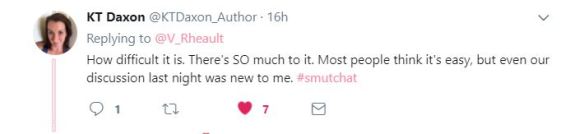
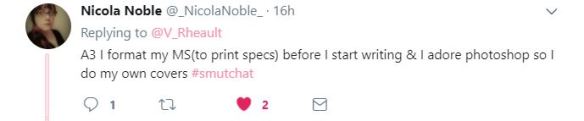
#SmutChat Self-publishing Topic Recap!

I run a Twitter chat called #smutchat. It’s geared toward more than just smut, (though I am a romance author and I like to chat about that too, from time to time) and last night we talked about self-publishing.
I said I would recap the chat for a few people who couldn’t make it, so here you go. 🙂


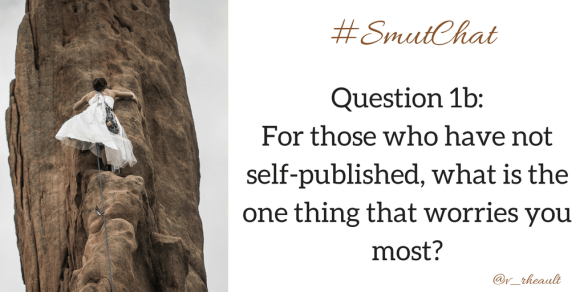
#SmutChat-Selfpublishing (2)#SmutChat-Selfpublishing

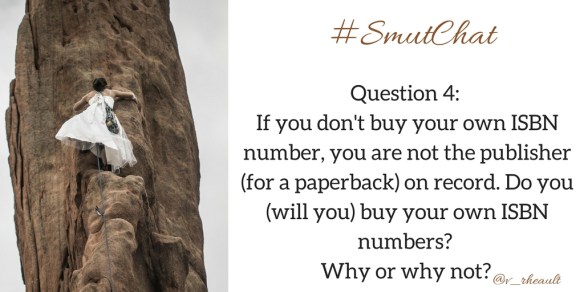
Question one, when I was making it up, was intended to be a question about the process of self-publishing. Was it formatting your paperback book? Dealing with uploading to KDP? Maybe figuring out your book cover? Some hit the nail on the head; others went far beyond.

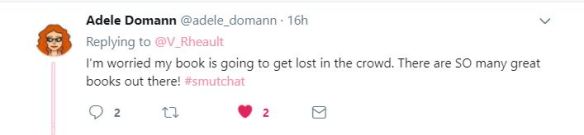
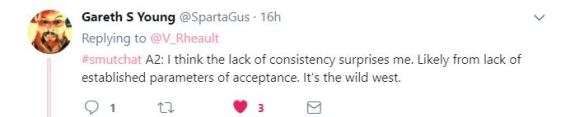
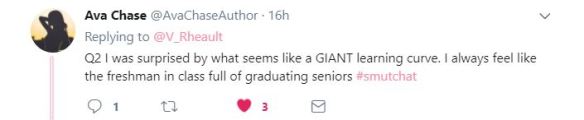
smutchat recapsmutchat recap 4smutchat recap 2smutchat recap 1smut chat recap 3

smutchat recap 5


#SmutChat-Selfpublishing (3)

To be honest, I didn’t know what I was going to get out of this one, and the answers were all over the place.

smutchat recap 7smutchat recap 8smutchat recap 9smutchat recap 6

#SmutChat-Selfpublishing (4)

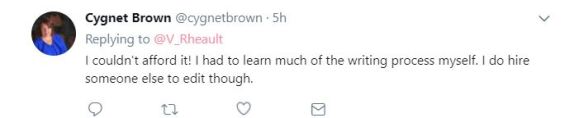
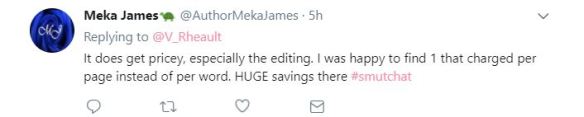
This question brought about the answers you would expect. It’s expensive to publish a book if you hire out, and no we can’t afford it, and no again, we probably won’t see a return on that investment any time soon. Yet the people who don’t know what they’re doing and publish bad-looking books muddy the pool for the rest of us who do it right.

smutchat recap 10smutchat recap 11smutchat recap 12smutchat recap 13smutchat recap 14

smutchat recap 15

nadia covers

gareth editing


#SmutChat-Selfpublishing (5)

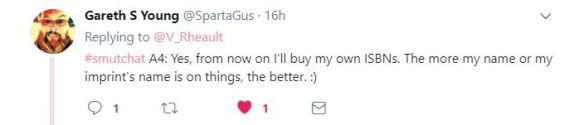
ISBNs are expensive–at least, they are in the US. CreateSpace gives you one for free and if you use theirs, they are listed as your book’s publisher, not you. Kindle Direct Publishing will give you an ASIN number, but I read somewhere that selling an ebook isn’t considered publishing per se, it’s just selling a file. I use my own ISBN numbers for both my Kindle file and my paperback for CS. Here’s what others said:

smutchat recap 16smutchat recap 17smutchat recap 18smutchat recap 19

emae isbn numbers

#SmutChat-Selfpublishing (6)

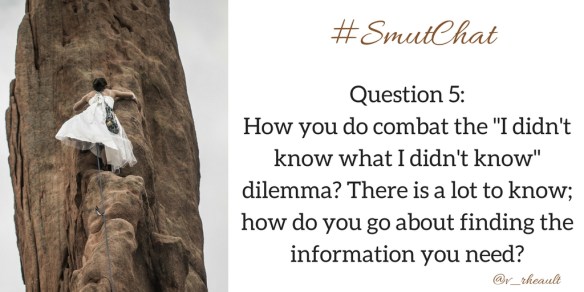
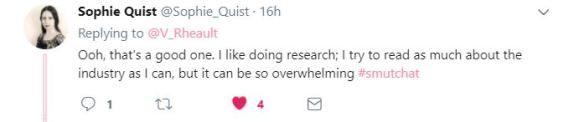
This is tough because if you don’t know you don’t know it, how will you figure it out? I researched the hell out of self-publishing, CreateSpace, and Kindle before I published On the Corner of 1700 Hamilton and I still got a lot of things wrong. When you self-publish on your own without help from someone who has done it before, you’re bound to make mistakes. I still make mistakes. I had to resubmit my cover for Don’t Run Away. CS said they “fixed” my cover, but I wanted to fix it myself. The more I know, the better off I’ll be. Here’s what other people thought:

smutchat recap 20smutchat recap 21smutchat recap 22

smutchat recap 23smutchat recap 24

That wrapped up the chat about self-publishing. Though I didn’t showcase them here, there were several tweets about book marketing. I haven’t delved into marketing yet, so I don’t have anything to offer in the way of that or what works. I do know that I have been reading up on Amazon Ads, and a good book by Brian D. Meeks seems to make a lot of sense. Whether it will work for you (or me) remains to be seen, but you can find it here. I have also been reading about Facebook Ads and this is the book I’m reading.

Rachel Thompson @BadRedheadMedia  runs a book marketing chat. You should check out her chat and maybe get some tips and ideas on how to market your own book. She has also written a book about it, and you can find it here.

In some sub-tweets, I told someone to look at Author Marketing Club, run by Jim Kukral. He’s co-host of the Sell More Books Show podcast I listen to every week. He also runs Happy Book Reviews if you’re interested in finding more book reviews. I haven’t used his services so do so at your own risk. Like everything online, be careful where you throw your money. I do listen to his podcast though, and he seems to be on the up and up or I wouldn’t point them out to you.

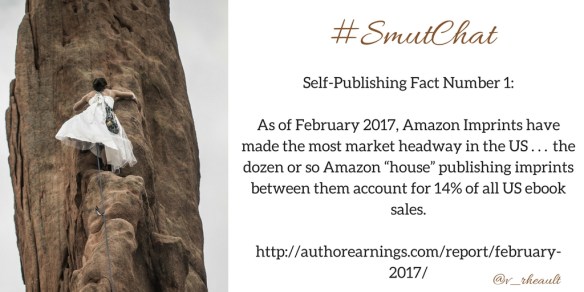
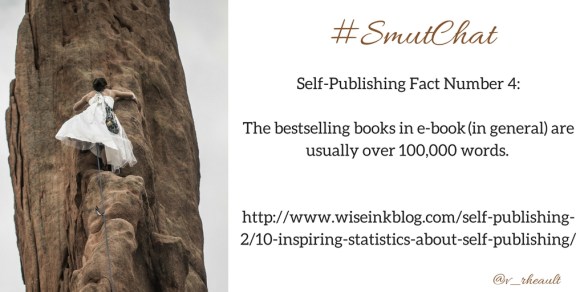
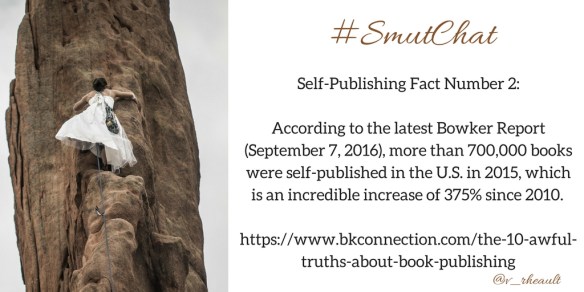
I also tweeted some interesting facts about self-publishing:

#SmutChat-Selfpublishing (14)#SmutChat-Selfpublishing (13)#SmutChat-Selfpublishing (12)#SmutChat-Selfpublishing (11)#SmutChat-Selfpublishing (10)

Anyway, thanks for reading over the recap. I apologize if I didn’t feature one of your tweets to a question. It was difficult wading through the answers, though I do appreciate everyone who participated last night! If you’re interested in all of the answers, or you want to look at the sub-tweets, please take a look at the hashtag! It was a great chat!

Vania Blog Signature

#Smutchat Self-publishing giveaway!

Thanks for participating in #smutchat tonight! I hope you had fun learning about the self-publishing industry!

The giveaway tonight is How to Self-Publish for Under $100 by Cinquanta Cox-Smith.

publish under 100 dollars

Self-publishing can be expensive–pick and choose wisely!

Thanks for playing! Have a lovely evening!

a Rafflecopter giveaway
The “What Makes a Best Seller” #SmutChat

Thanks for participating in #smutchat tonight! Also, thank you for putting up with erratic scheduling this week. I have a friend coming in from out of town next week, and rather than try to work around it, I gambled and changed the dates.

I’ve been busy this week trying to do some editing things for a friend and for myself so I can enjoy next week without worrying about unfinished business.
Anyway, thanks again for dropping by #smutchat! I’ll see you in two weeks!

 a Rafflecopter giveaway


#smutchat All the Lawyerly Writing

{This is the giveaway for the Smutchat of the evening of Sept. 21st. I’m posting a bit early, but if you see this and want to get a head start on the giveaway, knock yourself out! Have a great day!}

A special thank you to Nadia (@nadiadiament) and Ari (@Ari_Ross) for guest co-hosting #smutchat today! It was a great chat, and I hope you learned a little something about how to write believable law into your books.

We deal with the law every day, and sometimes those pesky details can trip you up. To help with that, remember to enter the drawing.

a Rafflecopter giveaway

There are two different books for the winner this week due to a little miscommunication between Nadia and me. I thought Ari was going to answer legal questions about self-publishing, so I bought Helen Sedwick’s book for the giveaway. When Nadia and I discussed the chat further, I realized my mistake and bought  Books, Crooks and Counselors, too! So, it’s your lucky week! Enjoy!


And as always, the giveaway is open internationally, so don’t be afraid to give it a try!

Thanks for playing!

The next #smutchat will be next week due to scheduling conflicts I have the first week of October, and the official date is September 28th at
7 Central. See you there! 

#SmutChat Dialogue Giveaway

Seems like Thursdays come and go pretty fast, right? Thanks for taking the time to participate in chat tonight. I hope you had a good time. The giveaways are Dialogue for Writers: Create Powerful Dialogue in Fiction and Nonfiction by Sammie Justesen and The Cougarette by Eliza David.

a Rafflecopter giveaway


The next time on #smutchat we’re going to mix it up a little bit. We’ll have guest hosts Nadia Diament (@nadiadiament ) and Avi Ross answer your questions about writing believable law in your books.  The giveaways for that chat are super-amazing, so you’ll want to tune in on Sept 21st.  Happy fall!

hello sept

#SmutChat Traditional Publishing Giveaway

Today’s give away is Green-Light Your Book by Brooke Warner. Thank you for participating in chat tonight! I hope you had a great time!

a Rafflecopter giveaway


greenlight your book