Monday Musings: ARCs, Goodreads, and Writing While You’re Sick

1,906 words
10 minutes read time

I’ll tell you a little story. In our city, our Walmart is located in a poor neighborhood. I would imagine when they built it, they didn’t intend for that to happen, but as the city grew, it became a poor part of town. Since then, theft has increased. You can tell it’s increased because of the way they treat their customers. They have security walking around their store (I know who he is because I worked with him many many years ago when I was checker at K-Mart), they lock up everything that has value, from laundry detergent to pregnancy tests, and in the cosmetics department, you have to pay for anything you want before you leave. They don’t let you pay at the main checkout counters anymore.

They treat you like you’re going to rob the place the second you step foot in their store. And you know what? It sucks. It sucks being treated that way. I mean, I get it, they probably do lose thousands of dollars in product every year, and that will continue to happen as things get more expensive and companies don’t want to pay their employees.

The sad part is, I’ve seen authors treat their ARC readers this way. Changing one word in each copy to “catch” someone pirating, watermarking their copies, making them sign NDAs. Sometimes we forget that we need them–ARC readers don’t need us. Treating them like they’re guilty before they do anything is kind of, I don’t know. I left another Facebook group the other day because I got into a discussion with someone who was trying to prevent theft. At first she said her post was about ARC readers then she changed her story and said she was doing a giveaway on Instagram, mostly, I think, because I told her treating ARC readers like they’re guilty before they even do anything is nasty and unnecessary. No matter how you’re giving out copies of your book, treating readers like they’re going to steal from you will only make you look petty and mean. Your book will get pirated. The potential is there for it to get stolen, but the stories I hear of that happening? Other authors are doing the stealing, not plain old, every day readers who want to help you.

I’m glad I left that group, but I’m sure I’ll see it again. I don’t like being treated like I’m going to do something before I’ve done it. I don’t like being accused when I’m innocent. And neither does anyone else. If you feel that strongly about protecting your work, don’t give out ARCs. Don’t do giveaways and don’t publish because the second your book is on Amazon, it will get pirated.

And as Forrest Gump says, “That’s all I have to say about that.”


Once again I had to go through the wonderful process of contacting Goodreads to move Loss and Damages from my “fake” profile to my “official” one. I don’t understand how my “fake” profile isn’t allowed to exist, but it does, and every time I publish, I have to contact Goodreads and have them move my book. This time I contacted support rather than a Librarian and they actually took my “fake” profile down, so maybe the next time I publish a book it will move over correctly without me having to do anything. They were great about it and did it in a couple of hours. I should contact a Librarian and change some of my old covers too, but dealing with Goodreads is a necessary evil, and I try to do it as little as possible.


I’ve been re-editing some older titles, and I think I mentioned that in my last blog post. Since then I finished Faking Forever a couple days ago. Now I’m reading it over just because I made so many changes that I’m looking for mistakes in my edits.

I’m trying to think back to when I was writing that book, or Rescue Me for that matter. Most of my books I wrote between 2020 and 2024 were written while I wasn’t feeling well. I wasn’t myself, dealing with my lichen sclerosis when I didn’t know what it was, getting a hysterectomy that I’d find out later wouldn’t help and only cause me post-surgery issues, and breaking up with my fiancé who did nothing less than catfish me into thinking he was a decent human being. I look back at that time in my life, and I just wonder if those things didn’t effect how I wrote, because I have to say, Rescue Me didn’t sound too terrible, but Faking Forever sounded like shit. My word choices, my writing style, it all sucked, and I can really tell that I wasn’t in a good frame of mind. I just wasn’t.

When I was re-editing Faking Forever, I practically rewrote the whole thing. Not on a plot or character arc basis, but on a sentence and paragraph level. I took out over 1,000 words when I re-edited Rescue Me, and I took out almost the same in Faking Forever. It makes me sad because looking back, maybe I shouldn’t have been writing. Though, I don’t know what I would have done with myself if I hadn’t. Those four years I was undiagnosed, my doctors lying to me, prescribing treatments that wouldn’t help, I was in a really bad place mentally. I had anxiety. We were going through COVID and lockdown and I was trying to support my daughter who started tenth grade virtually.

I’m feeling better now. In 2024 I got a diagnosis. I stopped taking the medication that had side effects. I stop drinking the tap water that was making me nauseated and messing up my digestion. Most days now I don’t think about how I feel physically. I can push what’s left into a corner of my brain and ignore it. But in doing so, that leaves my mind open to a lot of other things, and I can see in my writing how stressed out I was.

This makes me feel horrible, because in 2020 I started my pen name in an effort to do everything “right.” I wanted to turn my books into a career, but I sabotaged myself and starting a pen name or trying to do any kind of “real” work not feeling well only backfired. I have a lot of books out. My Lost & Found Trilogy. My Cedar Hill Duet. Those are the first books I published. Since I published them, I’ve edited them, but I edited them when I still wasn’t feeling well, and well, unless I read them again, I have no idea how they would sound to me now.

I can safely say that my other books are okay. I just reread my rockstars and I like how they sound (except for a couple of typos here and there that are normal). I’m lucky I did the final sweeps of my King’s Crossing serial when I was feeling good. That would have been a monster of a project to re-edit and I’m confident I don’t have to do that. Rescue Me and Faking Forever are fixed, or close to it. I’ll edit A Heartache for Christmas after I upload new files to KDP for Faking Forever, just in time for the holiday push this year. Then, maybe I can feel in a good enough place to write new work. I felt good writing Wicked Games earlier this year. I edited Loss and Damages (coming out next month) when I was feeling good.

Where does this leave me? I’m cleaning up my house, literally and figuratively, but there’s a lot of time gone by. I don’t want to say wasted. I can’t. Writing was there for me when my world was pretty much falling part, for lack of a better way to describe it, but I don’t want to sound melodramatic either. I can write new books knowing I’m giving my best to the story and the characters and nothing is holding me back or distracting me.

A friend told me to give myself grace. That if my writing is better today it’s not only because I’m feeling better but because I’ve put a lot of words on the page. That might be true. I know I learned over the past year to spot some writing tics that I’ve been able to avoid in newer work. I’ve learned to relax, not only just to enjoy the writing, but my writing style and my voice. Who cares if I use “get” or “put” or “takes” or a little telling slips in there sometimes? My writing sounds stilted because I was trying to avoid garbage words, and honestly, with the books out there that are selling like ice cream cones in 90 degree weather, you’re better off just saying “fuck it” and write in a freer manner than trying to conform to rules that will only make you sound like cardboard.

But this also circles around to my not having an editor. I’ve broken probably one of the most important rules in publishing. Not even just indie, but publishing in general. There are a lot reasons why I haven’t. I mean, I used to, back when I first started, but my productivity was so much that I would never have been able to afford one for every single book anyway. And I’ve had this argument with myself and others before: an editor can’t teach you how to write. They can only make better what you’ve given them, and if you give them garbage, you only get better garbage when they’re done.

Likely, an editor wouldn’t have been able to do much with Faking Forever. It was my voice, my style as a whole, that had problems. Fox’s and Posey’s character arcs are solid. The plot is fine. It just read like crap and I’m not sure what an editor could have done. Marked every sentence and suggested I rewrite it? And even if that had happened, I’m not sure I could have. Not how I was feeling.

So, I guess the best thing I can do is move on. Write more, enjoy the process now that I can. Celebrate my improved health. Go back if I feel like it, and I probably will at some point. Re-edit my Lost & Found trilogy and my Cedar Hill duet. Those would be the last books I’d need and then I could say all my books are okay. But I don’t want to be re-editing forever either. I’d like to write something new, but I’m going with my instincts and right now after getting Faking Forever out of the way, giving A Heartache for Christmas one final read will make me feel better. I like Evie and Sawyer anyway, so going back won’t be a hardship. I’ve read bits and pieces since I published them and I already know that book doesn’t sound like Faking Forever did. Maybe I was in a particularly nasty frame of mind when I wrote Faking Forever, I don’t know. All I can do is take the good from that time in my life and leave the bad.


I’m still getting used to the restructuring my work did last week. Only time will tell if it will effect how often I can blog, but I love sharing bits of my life and news with you so I’ll do my best not to let it impact me too much.

Have a good week, everyone, and I’ll chat with you later for sure.

Romance Covers: Finding the right stock photo

Words: 1507
Time to read: 8 minutes

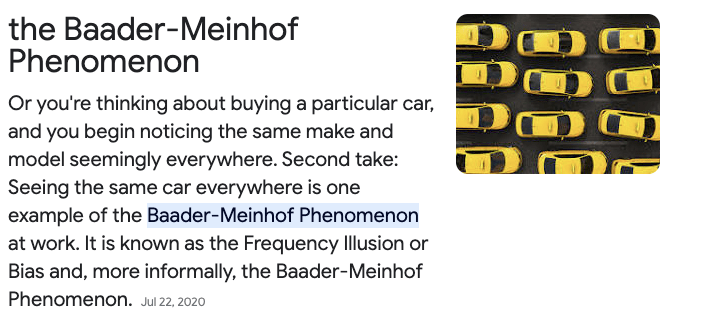
You know when you buy a new (or new to you) car? You’ve never seen it on the road before, but once you drive yours off the lot, it’s everywhere? That actually has a name and it’s called the Baader-Meinhof Phenomenon. That happened to me when I bought my Ford Escape a few years ago. I never noticed one in my life, but after I bought mine, they were everywhere. Not just the make and model, either, but the color.

the Baader-Meinhof Phenomenon
Or you're thinking about buying a particular car, and you begin noticing the same make and model seemingly everywhere. Second take: Seeing the same car everywhere is one example of the Baader-Meinhof Phenomenon at work. It is known as the Frequency Illusion or Bias and, more informally, the Baader-Meinhof Phenomenon.

photo of an arial view of yellow cars that all look the same.
Screenshot taken from the first results page of a Google search

I think that can happen when we look for stock photos when we create covers for our books. You’re searching for the perfect man (haha, aren’t we all) who will accurately depict what your character looks like. He’s got the vibe, the dangerous glint in his eyes, and you think, Yes! He’s the one! And like what happens in real life, maybe he’s not the one after all.

A lot of romance authors and cover designers use DepositPhotos for stock images for our covers. Not only because I’ve heard Amazon will accept their copyright contract if KDP asks you for proof you own the licensing to use the photo without argument, but because with deals like AppSumo around Black Friday and one or two other times during the year, you can get a package of 100 photos for $39.00. It’s a cost-effective way to buy images safe to use.

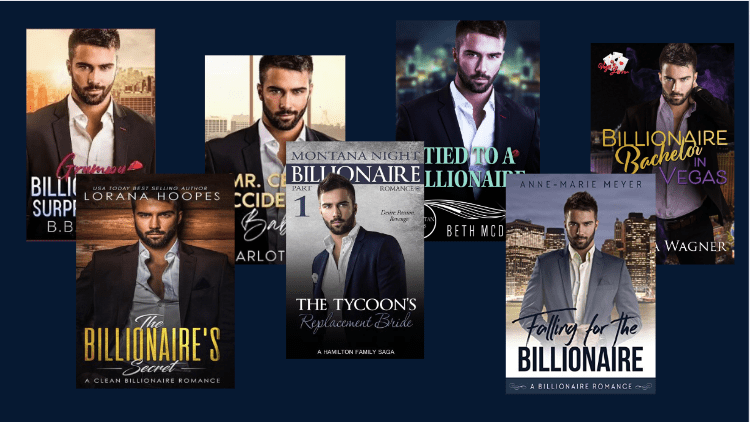
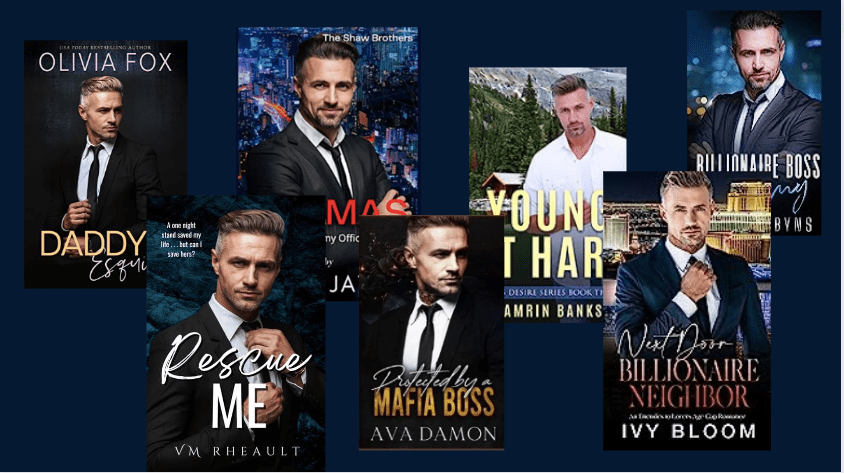
But it also limits the selection, and as more and more authors publish books, we’re going to see the same models on romance covers. I, of course, haven’t been immune to the selection (as you will see below). And I can’t even call it a meagre selection because DepositPhotos offers hundreds of thousands of photos.

But what I do wonder is if using a stock photo that’s been used a hundred times before confuses readers, lowers discoverability, and maybe, in terms of Amazon since they only use your cover photo for their ads, suppresses the ad lowering impressions and clicks.

Covers found in a Google search, graphic made in Canva

I’m not posting these book covers to shame the authors–in fact, I have used the same stock photos many do, so I’m in the same situation. The male model I used for Rescue Me is everywhere, and I honestly didn’t even know he was everywhere until after I published.

Images found on Google and Amazon, made with Canva

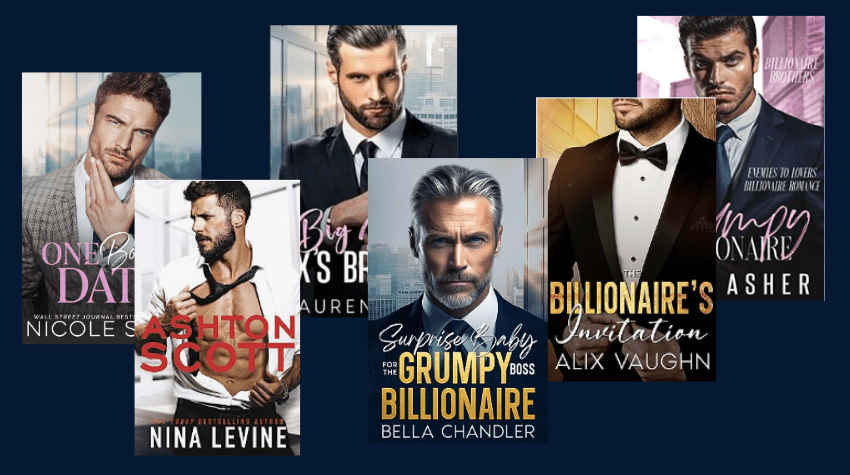
It’s even to the point where similar backgrounds are being used by some authors. I saw this one by Nicole Snow first, and now different variations are used by other authors. Maybe not all the time, but we know as trends heat up, indie publishing is quick enough to follow them before they fizzle.

Images found on Google and Amazon, made with Canva

You can find your own by doing a search for business city window backgrounds.

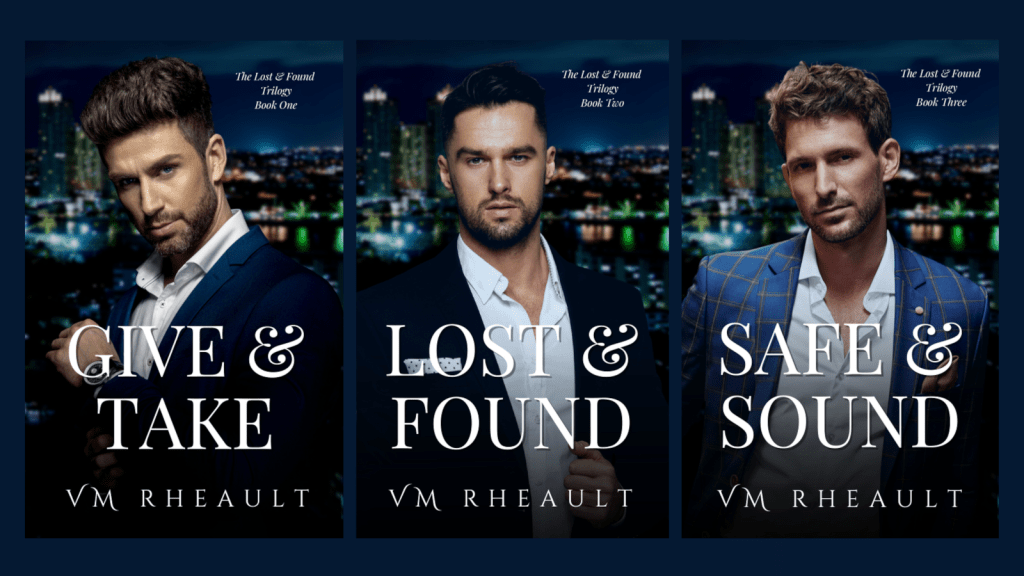
When I did my covers for my Lost & Found Trilogy, one of the reasons I took so long was because didn’t, DID NOT want to use the same models other authors and book cover designers have. I wanted to be original but still fit in–the secret sauce for selling books. Of course, that didn’t work so well. I scrolled through pages and pages and pages of men. It didn’t help I write a bit older, and the good-looking models are in their 20s and 30s. I got so frustrated I finally just closed my eyes, said whatever, and poked at my screen with the DepositPhotos website up. That’s not exactly what I did, but it felt like it. I’m still not happy with the covers, but I’m getting reads and sales. The models have been on other books, but they aren’t the best. The first guy is too smarmy, the second is fine, and the third has an odd look about him that I ignored.

I chose a darker background because everyone at the time was going light (like the city window backgrounds above) and I wanted something different. Does it work? Probably not. I tried really hard though to get the covers, the titles, the trilogy name, and the backgrounds as tight as I could so marketing them would be easy. There is no mistake they are a trilogy, but I still think that I could do better with the models if I had time and wherewithal to hunt. Time is relative, and I do have it, at the cost of something else. Like this blog post, or my Christmas novel. It it worth it to go back? That’s where the energy part comes in, and I don’t know. Maybe if I had a different place to source photos it wouldn’t be so difficult.

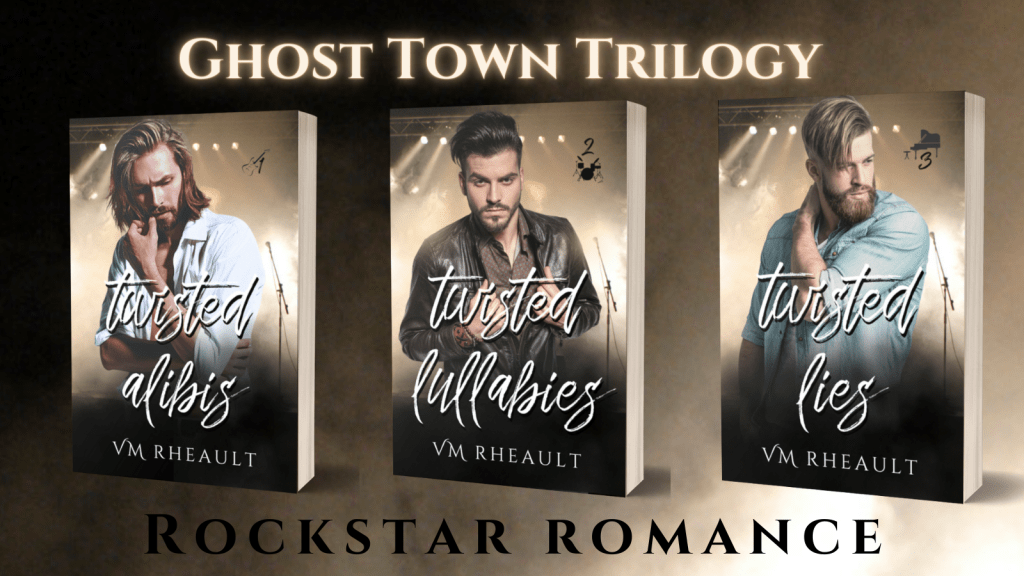
My rockstar trilogy was easier, but the models have still been used before.

I am really really happy with these though, so the few covers I have seen with the same models don’t bother me.

When it comes to covers and models that have been used relentlessly, I don’t know if staying away from them is helpful. There’s not a lot written on the subject, and from what I can see in groups, not a lot of reader feedback, either. There was talk a couple of years ago that some authors were choosing to do the illustrated covers for something different, but that had consequences. The cutsie covers don’t depict the right level of spice in some of the steamier books and either readers don’t pick up those books because they want sexytimes, or they picked up those books because they didn’t and got a nasty surprise with the open-door sex scenes.

It’s difficult too, finding sexy guys who are dressed because Amazon ads won’t let you advertise manchest covers. That was hard because when I was doing my rockstar romances, I found several shirtless models who would have looked great. Unfortunately, I need ads to sell my books and using a model that would get me suspended wouldn’t work.

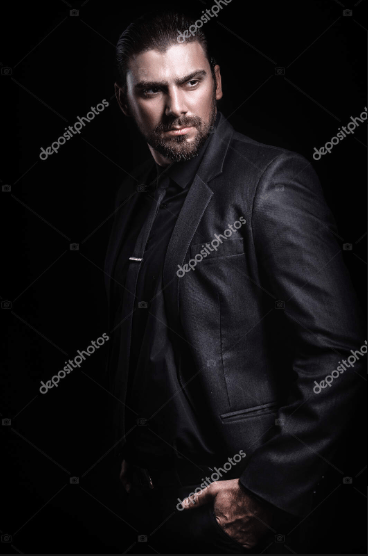
I’m not sure what the solution is, but I plan to try to stay away from the men who come up first when you search for “handsome man in a suit.” Which really is funny, because when I search for it, the first guy that comes up is the one I chose when I redid my covers for my duet.

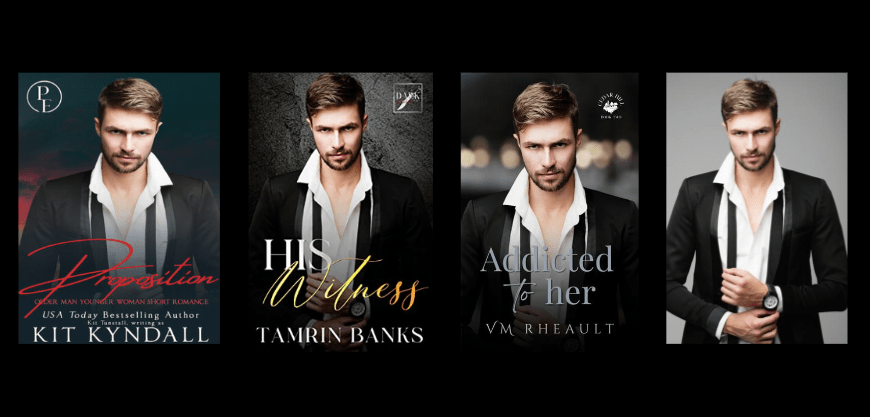
the same male model wearing a tux on different book covers written by different authors
covers found in a Google search, mine, and the DP search results
https://depositphotos.com/stock-photos/handsome-man-in-suit.html?filter=all

You can try your best to give them a different background or flip them so they appear different, but that’s not always going to work.

When I was looking for my man for the Christmas novel I’m going to publish in November, I was really excited to find a guy I had never seen on a cover before. My novel is kind of a romantic suspense that takes place over the Christmas holiday, and I needed someone who looks dangerous but protective. I starred him so I wouldn’t lose him and downloaded the composite the second I scrolled into him:

But, you know, nothing can be easy, and while I was scrolling Instagram, I came across this book cover on an account that posts new releases. If you’re on Instagram, you should follow them. I love looking at their new book release compilations. https://www.instagram.com/sebrero_sisters/

Anyway, so this is my working book cover, and this is the cover I saw on IG:

I like the guy and finding him on a different cover won’t deter me for keeping him. He looks different enough that I had doubts it was even him, but the tiny spot under his lower lip without any whiskers gives him away. This is the only cover I’ve seen him on so far, but now that I spotted him, that will probably change.

I like studying covers and looking out for the trends. Illustrated covers seem here to stay–I could barely find any real models on romance Christmas books when I was doing research for my own. I’m not interested in those and wouldn’t fit the story I’m writing anyway. Since I’ve done my own covers since I started publishing and probably will never stop, researching and taking note of the models and font choices is fun homework.

Are there repercussions for using the same models over and over again? I don’t know. I have noticed that there are levels of professionalism that doesn’t always coincide with sales. Some of the drabbest covers I’ve seen on Amazon have reviews in the thousands, so I wouldn’t always discount a middle-class cover. It gives me hope as I’ve often wondered if my books would sell better if my covers were more professional, but at this point, I really don’t know. That would have to be an experiment that I’m not quite ready to run. At any rate, tell me what you think! If you read romance does a recognizable model turn you off or doesn’t it matter?

Until next time!

All photos screenshot from DepositPhotos.com. Compilation made with Canva

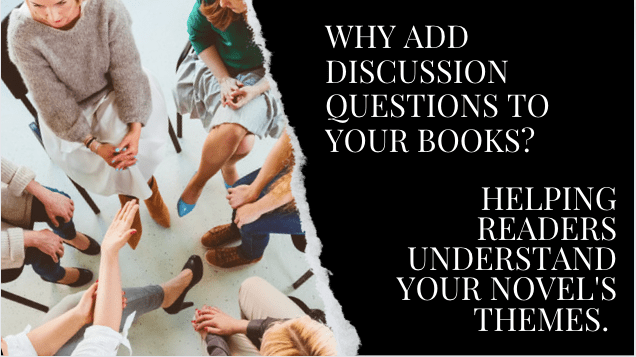
Adding discussion questions to your novel, yes or no?

Words: 823
Time to read: 4 minutes

Adding discussion questions to the backs of books seems like a very traditionally-published thing to do. When I first started publishing in 2016 I never thought about it, mainly because up until that point, I don’t know if I read books that had discussion questions in the back. If I did, I skipped them entirely because after the last sentence, I set the book aside. It was only after I became an indie author and started devouring every book I read cover to cover (what people sneak into their copyright pages can be really hilarious) did I realize just how much I was missing not reading past The End.

Always Read the Acknowledgments Page by Grace Bialecki via Jane Friedman’s blog.

Why would an indie add discussion questions to the backs of their books? I asked that question on Twitter and I received varying responses. One said because she thought her book didn’t warrant them, another said if was an indie book, they would obviously be written by the author which seemed strange. (As opposed to them written by an editor, I guess.) One said he didn’t want to think too much about his own book to come up with the questions.

Those are valid reasons, I suppose, but I think any book has the content required to warrant discussion questions. Every character makes choices, and every one of those choices can be dissected and measured. That’s what I like about adding discussion questions to some of my books. I like puzzling out why a character did what he did and if there was a better way for the outcome he wanted. As an author who is “supposedly” in control, that’s not always the case. I’m not one of those authors who spends years editing her book because she thinks of something better. I write the damned book, and it’s done. What’s there is what will stay there and my stubbornness actually gives me room to explore why I wrote what I did. Characters’ choices aren’t always going to be ours–a nasty character doesn’t make us nasty because we created them.

I like the idea of discussion questions in the back of romance books. Considering what kind of a reputation romance books have, even if a reader glances briefly at the questions, it maybe give them the idea to explore the deeper meaning underneath the kisses. Of course, there may not be any deeper meaning, and that’s okay too. I think every character is flawed and will make poor choices at some point, and reaching to understand the answers to those questions help us grow as readers and our ability to understand other people.

I had a difficult time thinking of questions for the back of Rescue Me. I added them because Sam made a choice or two that may not have sat well with a reader. Lily understood the choices he made, and if there was anything to forgive, she did so with an open heart. Was she right to forgive him? We can’t control how other people behave, we can only control our reactions to what they do.

I admit that discussion questions probably work better with standalone novels, and I’ll add discussion questions to my next standalone coming out in May. That book also deals with some sensitive topics and behavior from both my male and female characters.

Characters are flawed, they’re human, and they’re not always going to do what we expect in the heat of the moment. It’s what they learn from their choices, if anything, that matter in the end.

Is it vain to add questions to the back of self-published novel? Not any more vain than thinking your own work is worthy of being published at all. When indies publish with no greenlight from a gatekeeper, you have to have faith in your work. Why not have faith that a reader will want to explore your book with questions you thought were a good complement?

You never know–maybe your book will fall into the hands of a book club and they’ll appreciate the built-in discussion help.

If you don’t like the idea of coming up with your own discussion questions, perhaps ask a fellow author to give you a few interview questions about your book. You can answer them and then offering extra content won’t feel like such a one-way street. There are always ways to reach your readers, and the more involved they are with you, your characters, and your books, the sooner they will turn into true fans.

Here are a few more resources on adding discussion questions to your own novel:

Creating Discussion Questions Using Your Book’s Themes by by Sara Letourneau via DIY MFA

How to Write Great Discussion Questions by Janet Kobobel Grant via Books & Such Literary Management

And a list of books that have discussion questions in the back: https://app.thestorygraph.com/reading_challenge_prompts/6e172dac-df93-425b-ae9e-702ebe940358

Thanks for reading and have a great week!
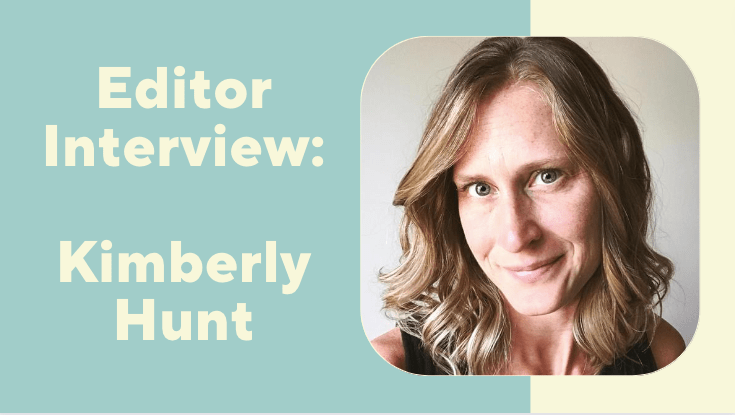
Editor Interview: Kimberly Hunt

I met Kimberly on Twitter some time back, and I’m a member of her Facebook group, Revision Division. We’re also members of Romance Editor Q & A since I do a little editing myself and keep up the skill not only for my own books but for those I edit for on the side. I appreciate Kimberly’s time, and I hope you enjoy the answers to all the questions she so graciously filled out for me.


Introduce yourself! How did you get into editing and what are your qualifications? What genres do you enjoy editing most?
C.S. Lewis said “You are never too old to set another goal or to dream a new dream.” This is exactly what I did. After twenty years in the corporate world, I took a sabbatical and it shook my world to realize how amazing it is to fill my day with activities I’m passionate about. I have always enjoyed my work and the companies that employed me, so it was jarring to realize I could be happier. Before I set off on a vacation volunteering in Peru, a friend of the family asked if I’d read a novel he’d written. The story was amazing, but I couldn’t get past the number of errors. This was my inspiration to look into copyediting. My natural ability to spot punctuation, usage, grammar, and spelling errors lent itself well to copyediting, so I took courses to start there. My education introduced trusted resources like dictionaries and style guides and working with publishers taught me how to create and maintain a style sheet for consistency. The more advanced courses I took revealed my true passion is earlier in the process, with developmental editing. I love assessing the big picture elements like structure, plot, pace, point of view, and character development to help writers improve their stories. I love editing romance the most but I also enjoy editing women’s fiction, mystery, and psychological thrillers. I’ve edited all heat levels and time periods but prefer steamy contemporary.

There’s the saying that a writer needs to write a million words before they can write something publishable. Do you agree with this? Why or why not?
Whoa, that’s a loaded question without a simple answer! On one hand I don’t agree with the limitations of hitting an exact word count and refraining from sharing your work until it’s perfect. We grow and learn from making mistakes. I definitely don’t think writers should wait for an arbitrary milestone to publish. On the other hand, I agree with the sentiment of the saying where putting in the hours and the work makes for a better quality product in the end. Have you read Malcom Gladwell’s Outliers? He has a point about it taking 10,000 hours to become exceptional at something.

What is the biggest mistake you see indie writers making right now? (For example, info dumps at the beginning of their book, not enough conflict, too much tell vs. show, etc.)
I’ll admit I had to give this question some thought because I see such a wide variety of manuscripts with different issues. Considering both the unpublished manuscripts I edit and the completed books I read for pleasure, I’d say the biggest challenge seems to be related to pace because conflict is tricky. Many authors struggle to create believable conflict that escalates. Each chapter needs a purpose where the complications grow and the consequences are impactful. Many of my developmental editing projects require suggesting solutions for improving chapters without clear purpose. It’s hard to move the plot forward if the reader doesn’t know what the character wants, why they want it, or what stands in their way.

There’s a lot of talk about whether or not it’s necessary to have a manuscript edited before querying. What are your thoughts?
Most of my clients are independent authors, but I have helped several writers improve their story and polish with a copyedit prior to querying. I have more than one data point for authors gaining representation and eventually signing publishing contracts, but I can’t take credit for those achievements. Their storytelling talent far outshines my knowledge of where a comma goes. But as a businessperson who has reviewed cover letters and resumes before hiring someone, that first impression needs to be solid, so editing before querying could be beneficial even if it’s not required.

How do you keep the author’s voice intact while also guiding them with suggestions on how to make their book the best it can be?
Great question! My job is to point out both what works well and areas for improvement. I give suggested solutions in comments or in a revision letter for the more lengthy explanations. Changes made directly in the manuscript are usually corrections to indisputable errors. I reference Merriam-Webster dictionary and the Chicago Manual of Style to support the corrections I propose. When line editing, I tread carefully to make sure I’m respecting the author’s voice while keeping concision and clarity a priority.

Is there ever a time when a book would require too much work? What do you tell a writer whose book isn’t ready for a professional edit? What resources do you refer them to?
This has happened a few times. Sometimes an eager writer finishes that first draft and jumps to the editing stage too soon. Revision and self-editing are recommended in these cases and I often provide resources for finding critique partners or offer to take on the project as a writing coach instead if the manuscript isn’t ready for editing yet.

What advice can you offer an author who can’t afford a professional edit? Are there things they can do to sharpen their own self-editing skills?
Definitely! These tips don’t replace the value of working with a professional editor, but they do offer some cost-savings if you can self-edit as much as possible first. I have a bunch of videos and blog posts on this subject on https://revisiondivision.com/tips but here is my best advice: read aloud to yourself, others, or have Word read it aloud to you. You’d be amazed by how much this trick catches. It will highlight awkward flow and bring attention to missed words and sneaky errors.

As an editor, it’s important you’re honest and give critical and actionable feedback. How do you offer this feedback so a writer doesn’t take it personally?
Diplomacy. I aim to provide valuable feedback through constructive criticism AND praise. By pointing out a writer’s strengths and showing in their manuscript where something works well, they learn and grow. On a scale of one to ten, with one being a Positive Pollyanna and ten being brutally honest, I’m probably a moderate four. I’m a professional and my training emphasized how to provide actionable feedback tactfully.

Are there any other tips or thoughts you would like to add about editing or publishing?
Adding on to that last question, I’d like to encourage writers to expect good and bad feedback. But they shouldn’t react right away in order to avoid an emotionally defensive response. Edits can be overwhelming. After initially receiving feedback, it’s a good idea to set it aside and digest. See what resonates and come back to it later to make a plan for revisions. Most importantly, do not give up.

Thank you for this opportunity to talk about something I’m so passionate about. 😊


Thank you, Kimberly, for your time!

How to find Kimberly:

Website: https://revisiondivision.com/
Twitter: https://twitter.com/RevisionDiv
Instagram: https://www.instagram.com/revisiondivkimberly/
Facebook Group: https://www.facebook.com/groups/2376033425801031

Author Update

Mondays always seem to come around so fast! Last week was a wash as I was still sick, and today was supposed to be the day I posted a video on how I made one of my romance covers in Canva. Last week went by in a haze of chores, sleep, and work, so I will do my best to get something figured out and post for next week.

As for today, I don’t have much going on. Everyone is slipping into the lazy days of summer. My Clubhouse marketing chat is on hiatus until the Fall, and I’m missing the only podcast I used to listen to as they wrapped up to pursue other things. I’m still trying to figure out why I feel like crap even after my surgery, and I have another appointment on Tuesday. It would go a long way if I could feel better, and I’ve been really struggling lately to remain upbeat and positive. Twitter isn’t the fun, supportive place it used to be, and it’s been difficult not to feel alone. Not just in the writing part of it, but in my personal life as well. My fiancé and I broke up after a five year long distance relationship and my son moved out to live with his dad to have a built-in ride to work for his summer job.

I’ve had a lot of transitioning to deal with lately, and when I clicked publish on my paperback the other day, I didn’t feel a sense of accomplishment (though if you wanna see how pretty the cover looks, click here). I also felt a bit let down as I don’t really have anyone to share that with. Most of my writing friends with whom I was close faded off, and the one person who would have been my biggest supporter is gone. It’s not that I’m complaining about any of that. I like being alone–I just have to get used to all these changes and find joy where I can. And of course, I don’t want to turn this blog into a Debbie Downer’s journal. I’ll bounce back one of these days; I just need time to adjust.

I have been working on my books, though that is another area of my life where sometimes I feel like I don’t know what I’m doing or why it even matters. I love writing and I love publishing, so I won’t stop any time soon (it’s what saved me the past two years), but a friend of mine on Twitter yesterday and I were talking about crap books and how it seems anyone can get anyone to buy anything if you make a video about it on TikTok. It’s pretty sad when you see people posting their sales figures in the author groups on Facebook, and the books are no better than first drafts. I’m not saying all books are like that, or that I would resent any author their success, but it is disheartening for anyone who puts their heart and soul into their books only for them to sink while “other” books do well. In the end, it will be their loss because with the number of books out there for readers to choose from, you only get one chance to make a good first impression, and in most instances, a first draft won’t cut it. So I can feel bad for myself now, but I’ll build my book business on good books and be proud of that.

I haven’t done anything with my paperback on Amazon yet besides claim my author page and add my photo and bio. Captivated by Her hasn’t clicked in with Goodreads or Bookbub yet, and I don’t want to manually add my book to Goodreads because I know from past experience it will eventually auto-populate, then I’ll have two of the same book on there. I’m also wondering if I want to go through with paying for Booksprout for reviews, and if I want to offer Captivated to my newsletter subscribers in exchange for a review. From what others have said in the past, I don’t think I would get many takers anyway, but reviews are important, and it makes the most sense to ask my newsletter subscribers and get into the habit of treating them like the VIPs I want them to be. I also hate that Booksprout went to a paid only service, and even at the cheapest rate ($9.00/month) the quality of the reviews in the past wasn’t worth it.

I went ahead and set up Captivated by Her in Bookfunnel so I have the link available if I decide to offer it in my newsletter. There is an option where you can put an expiration date on the link, so I might just tell my subscribers they have two days to download it and then in two weeks’ time email them a review link so they can post a review on Amazon if they want. This book is the first in a duet, anyway, so I’m not looking to push this book very hard. I’ll run some ads when the ebook is live, but I’ll use a couple of free days in Kindle Select and buy some promos when the second book comes out.

What I’m waiting for is for my book to show up on Goodreads so I can claim my author profile under my pen name. I may never be wide, so claiming my page on Bookbub may never be something I care about. Bookbub ads are great if you’re wide and your book is on sale, but I’m hearing it’s still difficult be approved for a BookBub feature if you’re in KU, so not sure if building my profile on there is something I want to waste energy on.

That’s about all I’m doing right now. I’m working on my covers for the series I’m going to release next year–titling these books is already giving me fits and doing the covers is probably pointless right now anyway because who knows what the cover trends will be in January. i just need to put them together so I can order proofs. Reading them in paperback form is the last step I need to finish editing them and then I can finalize everything this fall.

Despite being down about my current situation, I’m still working, trying to stay relevant and keep on top of things in the industry. There just isn’t a whole lot going on, which can be a really good thing, but it also doesn’t set me up to talk about much on here except what I’m doing with trying to get my pen name off the ground. I still think I made the right choice there, but I forgot how long it took to get everything situated.

So, I guess that’s it from me. This blog post is posting late today because Work was busy and then I went to my sister’s last night for dinner and a movie. By the time I got home, I was just ready for bed. We can’t be winning all the time.

Have a great week, everyone!

Author Interview: Paranormal Romance and Urban Fantasy Author SJ Cairns

I met Sami-Jo through a friend and through the years of writing we’ve stayed in touch. I asked her if she would be willing to answer some questions as her publishing journey has been a little twisty, and I always like to pick the brains of people who have had different experiences than me. I hope you enjoy her interview and sign up for her newsletter to stay in touch with her and her publishing journey!


You’ve been published by small presses up until now. Can you explain the pros and cons that go with publishing with a small press?

  • The absolute best part of having a publisher behind you is that they’re using their own money. Sounds shallow, but while writing can be pure magic, publishing is a whole other mangy beast that incurs a lot of costs for multiple editors, book cover design, formatting, and anything that includes a dollar sign to put out the best possible product.

The downside is that someone else has their grip on your work. They usually get the lion’s share of any profit, you’re bound by their publishing schedule (though it’s quicker than traditional publishing) when all you want to do is hit PUBLISH, and the author is still expected to do their own marketing. Oh! And they can go under at any moment. A plague amongst many small presses since the publisher is sometimes no more than a single person or two with some loyal people to work out all the kinks. When you’re in your groove and suddenly the publisher disappears, your books become homeless. It can be heartbreaking.

You’re looking at self-publishing for the first time. What do you think the biggest challenge of that will be?

  • Not knowing just how much I don’t know about the process is super daunting. There’s so much to learn if you want to do it right and make an impact right from day one. And, come on, who doesn’t want an amazing launch that catapults your book to the top of some fancy best-seller lists? It’s the dream, but it means more work and since I have a newly minted two-year old, spare time is in short supply. I have to-do lists coming out of my ears.

The series you’re working on will have several books in it by the time you’re done. Do you have any tips for how a writer can put together and publish a large project like that?

  • I never intended to write a series, but it’s the small things that can make you want to shave your head. Is this word usually capitalized? Does this character already know such-and-such about this character? Was this character’s eyes green or brown? It’s never-ending. A series bible can help by making extensive notes about things such as special words and how they’re used or spelled, having handy character bios including all physical attributes and important events, but be prepared to search back for things when needed. After multiple drafts and rounds of editing, some details are branded in your brain, but do yourself a favor, assume you won’t remember it all, and write it down.

Since you’ve been writing and publishing, what is the biggest lesson you’ve learned?

  • That you can’t read and reread a contract before signing enough. Not a happy lesson, but an important one. When you’ve spent years on a project and plan on putting it in someone else’s hands, it’s takes an enormous amount of trust. And whether you know the people behind the label or not, publishing is a business and should be treating like one.

I think, during these times in particular, it’s difficult to stay motivated and on track. With a husband and a little one, along with a part-time job, how do you stay motivated to write?

  • I think the motivation comes for wanting something for myself. I loved writing before having my daughter and it took far too long to get back in front of my laptop, especially after losing my office to her nursery. Writing and publishing is something I enjoy. Being motivated and having the time to utilize that motivation is not always aligned and I repeatedly have to give myself a kick in the ass to get things done when the timing lines up. Motivation is not a one-time deal, it takes daily effort and prioritizing.

You’ve done everything from blogging on your website to vlogging on YouTube. What is your favorite social media platform and why? And can you give us some tips on how to find time for that in a busy schedule?

  • I tend to use Facebook the most. Some hate it, but I firmly believe that all social media platforms are as good as you cultivate them to be. Your domain, your control. I wouldn’t be published at all if it wasn’t for the writing relationships made on Facebook. If you can figure out your ideal reader, create content with them in mind, and try and have some fun while doing it, you’re golden. Social media is more to connect with people and, if they are readers, they may follow you and your titles based off how they feel about you as a person. These days, the author is as much the product as their book is. Create a bunch of things on a free day or weekend and then schedule their posts along the week or month when you know you won’t have time. There’s lots of programs that can do that for you.

In closing, what’s on your plate for the rest of 2022? And do you have the next couple of years mapped out?

  • My plan is muddy, but I can vaguely see it somewhere in there. Not ironclad, but my hope is to learn a few more (a million more) things about self-publishing, devise a re-release schedule for the 4 already published books in the Soul Seer Chronicles series while finishing up book 5 and tackling book 6 (They ALL need new covers). Also, to work on another series I haven’t announced yet. Oh, and developing my newsletter subscribers, marketing materials, and update my website. Phew. It’s fine. I’m fine. I can do this. The biggest drive is just to get my books back out there. Not being a published author right now actually feels odd and I’m not a fan. Though, being in control of my titles is super empowering and I am looking forward to reintroducing them to people all over again.

Find SJ on her website: sjcairns.co
Sign up for her newsletter: sjcairns.com/newsletter-sign-up

Until next time!

Working on your craft: Can you publish without an editor?

So, there was an interesting question that came up in one of my Facebook writing groups, and essentially, she asked, Can you really make a living publishing without an editor?

Considering that’s what I’m trying to do with my new pen name because I can’t afford to hire out, it piqued my interest.

All the answers, as you would imagine said, of course you need an editor. I was the only one who said, not so fast. There are a lot of variables when deciding something like that, and some of the questions I threw back at her were, How long have you been writing? Have you ever gotten feedback before, like, ever? Do you have a good memory to keep track of your own (in)consistencies and details? If you don’t know how to write a catchy beginning, avoid a saggy middle, create interesting and meaningful character arcs, and know your grammar and punctuation backward and forward, then you’ll probably need help. (It also helps immensely if you know what you don’t know and have the wherewithal to look it up.) During the first couple of years when decided to try write books to publish, I needed help, and I did use editors and beta readers. That was back when I had a large circle of friends who were willing to trade or charge very little and we all came through for each other. Now most of those friends are gone, and I’m alone. I said in my post, if you’ve written enough words to find your voice and style, then you’re one step ahead of most newbie authors. I’ve edited for a few new writers, and no amount of good editing will fix bad writing. The writer first has to give you something to work with, and if s/he doesn’t….

If you, or the original poster of that question, are looking for an easy way out, there isn’t one. Writing is like any other skill and it takes practice and a knowledge of the genre you’re trying to write in.

I admit, I love a writing craft book, and I read them all, but some of them get too formulaic, and I can’t follow. I tried reading Save the Cat! Writes a Novel: The Last Book On Novel Writing You’ll Ever Need by Jessica Brody, and it just wasn’t for me. (She also has a blog that you may find helpful.) The way Jessica broke down a novel’s components made my head spin. Another book I’ve read, (though not recently) is Romancing the Beat: Story Structure for Romance Novels (How to Write Kissing Books) by Gwen Hayes. Romance authors a million times over swear by this book, but I just couldn’t make it work for me. And it’s not because I’m a pantser and want to write as I discover the story. I’m a plantser, and have a general idea of how I want the story to go, what the characters’ backstories are and their emotional wounds from their pasts that haven’t healed and how they affect their futures, which is what any romance book is about. But turning writing into a formula, or consciously chopping up my plot into the three act structure is really difficult for me to grasp and I can’t do it. The only two things I do with regards to planning that way is making sure something happens at the 50% mark to avoid the saggy middle (the Mirror Moment as James Scott Bell calls it), and breaking up my characters around the 75% mark, because that’s most what romances do. To be honest, them breaking up and thinking all hope is lost is my favorite part of any romance, and I would do it anyway.

When you’re a new writer, betas or developmental editors are valuable. They’ll tell you where the story drags, if you’ve rushed your ending, if your characters have no substance, and over time, if you listen to their feedback, your writing will smooth out and you’ll start to include those elements naturally. I don’t think any writer who is writing a debut novel will have all that figured out, never mind having written enough to find their voice and style. It’s why whenever I see a writer saying they are querying their first ever book, I say good luck, because chances are, your book will sound like you’re a brand new writer, and an agent can’t sell that.

It’s really not fair, because a lot of good writing comes from gut instinct, or following an intuition that you’ve honed over a million words. You develop your own formula based on genre expectations and how you twist those reader expectations to make your tropes fresh and new. All that comes with practice and listening to feedback.

Once you have your voice and style down, once you know you can deliver to your readers, then yeah, I think you don’t need an editor, not someone who will deep-clean your manuscript, though it does mystify me how many people get angry when I say it. (I even left a Facebook group over it.) I don’t know if it’s because they resent having to use an editor, or are just defensive of indie publishing as a whole and how much crap is published on, let’s face it, a daily basis, or what. I really don’t know what makes people so mad when I say it, but that doesn’t make it less untrue. Besides, no one has any idea how hard someone will work not to need an editor. I read craft books like crazy, read in my genre (though not as much as I should) and write. Maybe that’s the issue people have? They aren’t writing? Look, it doesn’t matter who you are, you need to practice to get better, and that goes for anything you want to try to master. Olympic gold medalists have been honing their skills in their chosen sports since childhood. Same as musicians. But I suppose if you have twenty hours a week to write, and you’re talking to someone who only has five free hours a week, yeah, maybe there will be a little resentment there. I write a lot. I don’t have many friends, I work from home, I don’t go out much. When I’m not working, doing chores, running errands, or going to Tuesday movie night with my sister, I’m writing. That’s not something I’m going to apologize for, and neither should you if someone is giving you a hard time.

In reality, it’s a moot point, anyway. I know 6 and 7 figure authors with one-star reviews that say they needed an editor, when I know that hiring an editor is part of their publishing process. You won’t please everyone, so you might as well be honest. If you need help, get help, and if you can write a good story without help, don’t worry about it. You can’t achieve perfection, and I’ve already said this will be the last time I go through my 6 book series. I will ALWAYS be able to find something to change, but I need to let them go. I’m tired and I have many other stories in my head that I want to get onto the page.

So, how do you make your writing better, level up so you don’t need an editor?

Read a lot in your genre. A lot of developmental editing is finding those tropes and elements that make your genre what it is and helping you meet those reader expectations. You won’t know what those expectations are unless you read a lot in your genre. I know this stinks like writing to market, but every genre, be it romance, domestic thrillers, detective novels, have elements that you can’t leave out or you’ll just make readers mad. Writing a good story is all about the overall picture as much as knowing where your commas go.

Listen to feedback early in your career. When I first started writing again, it took me a lot of feedback to find my groove. My very first beta who volunteered pointed out all the “justs” and “thats” and that was my first lesson in filler words. That was a great start to learning what I was doing wrong. Another beta/editor told me to trust my readers because I had a habit of “reminding” them of what they’ve read in previous chapters. That was another great lesson, and one I still apply today when I find myself rehashing information. Repetition is tedious and boring. Echoing was another thing people pointed out to me, and I still do it, and it’s part of my editing to delete or replace repeated words. That’s one of the reasons why I’m going through my series again when I thought I was done. Because I found a couple of words that I used over and over and over again and I wanted to tighten up my sentences. Those are words I will always watch out for now, and you can make your own list of filler and crutch words to refer back to when you’re creating your own editing process.

Work on new projects. I learned a lot working on different books, and it’s the only way you’ll be able to practice crafting an engaging plot. As Kathryn Kristen Rusch says, rewriting will only teach you rewriting. You need to work on fresh projects to move forward.

Realize it will take time. “They” say you need to write a million words before you find your voice. I think that’s true–I wrote a 5 book fantasy series that will never see the light of day, plus a few novellas, and a book that would turn into book one of my first trilogy before I found my stride. That was in 3rd person past. I wrote a quarter of a million words in first person present before I found my voice in that POV, and I can tell reading through my series. That’s why I was so paranoid editing these books–I wanted book one to sound like book five, and it did take me a few extra thousand words added to books one, two, and three for them to smooth out and sound as good as books four, five, and six.

I feel bad for the beginning writer with no writing friends or money for resources. But as they say, if you don’t have money to spend, then you have to spend time, and that might mean swapping projects with another author who is in the same position as you. That’s not a bad thing. You can learn a lot editing for someone else, so it’s a great idea to join author groups on Facebook and make friends with authors who write in your genre. You’ll get help, and you’ll help others, so it’s a win-win for you and your writing career.

This was a very long introduction to what was supposed to be a list of craft books that have helped me. I linked to Save the Cat Writes a Novel and Romancing the Beat above. Just because they didn’t work for me, doesn’t mean they won’t work for you, and you should definitely give them a try.

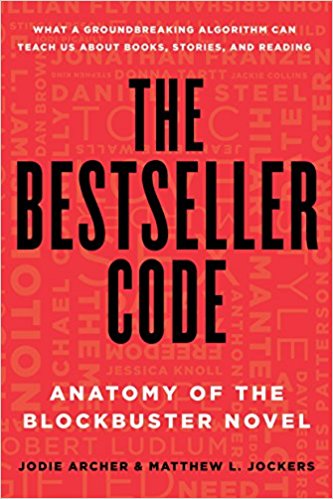
It’s surprising but one of the books that helped me a lot isn’t necessarily a craft book. It’s The Bestseller Code: Anatomy of the Blockbuster Novel by Jodie Archer and Matthew L. Jockers. This breaks down why bestsellers sell the way they do. This might be my favorite book in the whole world because it mixes craft and the publishing industry. I love it. I can’t recommend it enough.

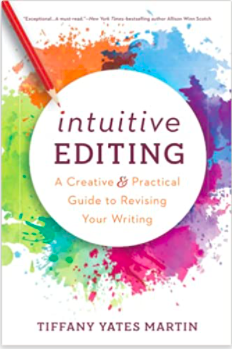
The second book that changed my life is Tiffany Yates Martin’s book, Intuitive Editing: A Creative and Practical Guide to Revising Your Writing. I love everything about this book. She reminded me about conflict, character arcs, character motivation, and stakes. Important elements that, if you skip or miss, will make any book fall flat. You need tension, and this book will help you find it. There’s even a section that mentions other editing resources if you can’t hire out. If you like audiobooks, she posted on Twitter she narrated it herself! (She also blogs, and you can sign up for her newsletter.)

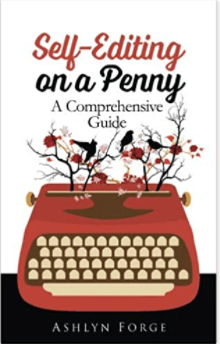
Though I haven’t read it for a long time, it was one of the first self-editing books I ever read, and it helped me a lot: Self-Editing On a Penny: A Comprehensive Guide by Ashlyn Forge.

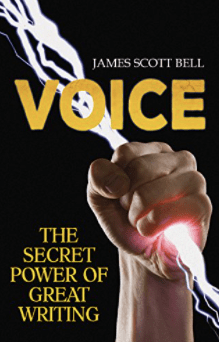
This book made so much sense. It was a real eye-opener, and now I recommend it to every new author: VOICE: The Secret Power of Great Writing (Bell on Writing) by James Scott Bell.

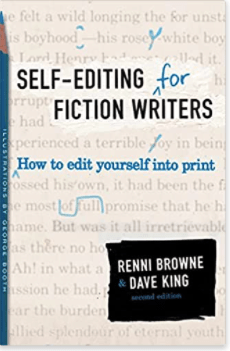
When I went to the Santa Barbara Writer’s Conference a few years ago, every agent in attendance said this book is a must have. I do have it, and it’s a great resource: Self-Editing for Fiction Writers, Second Edition: How to Edit Yourself Into Print by Renni Browne and Dave King.

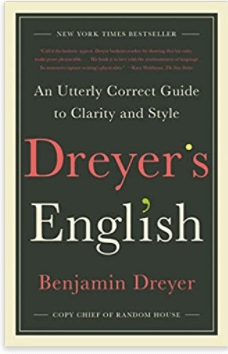
Someone recommended this book to me, and his sense of humor keeps this book from reading like a textbook–it was an enjoyable read, and I also learned a lot: Dreyer’s English: An Utterly Correct Guide to Clarity and Style by Benjamin Dreyer.

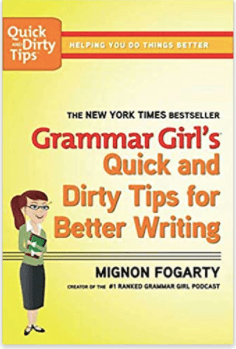
And last, but not least, Mignon Fogarty’s grammar guide is a must have. Written in a light, conversational tone, Grammar Girl is easy to understand, and she goes through everything you need to learn grammar and punctuation for all of your writing projects: Grammar Girl’s Quick and Dirty Tips for Better Writing (Quick & Dirty Tips) (Quick & Dirty Tips)

This post turned into its own animal, and that’s okay. Thanks for reading if you’ve gotten this far. In an age where everything is pay to play, including beta readers, even if you have plans to hire out, making your manuscript as perfect as possible will save you money. The less your editor/proofer has to do for you, the better for your wallet. You’ll never regret teaching yourself as much as you can. I haven’t.

Thanks for reading!

***Per usual, this post does not contain any affiliate links, and the book covers are screen grabs from Amazon.

Negativity in the Writing Community

social media doesn't create negativity, it uncovers it. Jay Baer

posted on a desk with partial view of laptop, notebook, and pen

I am really tired. Not only because of what’s been going on in writing circles, but because my cat won’t let me sleep, and I’ve been approved for surgery at the end of March, which is good news because I need to keep trying to find some relief from what’s going on with me, yet it will cause a lot more work for the next little while. I was really hoping to launch the first book in my duet in April…we’ll see how that goes.

But what I’ve been seeing in the writing community makes me tired, too. Namely, tweets like this: (And no, I don’t feel bad for showcasing them here. If you’re putting something out on social media, expect for it to be shared. Period.)

My books ARE edited. By me.

I wrote my own blog post about that a long time ago, once upon a time believing that indies who didn’t care about what they published brought us all down. But the fact is, it’s not true, and it will never be true. Because I’ve realized this: Instead of looking at Amazon as a retailer, look at Amazon as a distribution center. You still have to create and store a good product, you still have to drive traffic to your book’s product page, you still have to keep the promise you made to your reader and satisfy your customer with the content. All that is on you.

So, why do indies take quality, or lack thereof, so hard? So personally?

I would guess it’s fear. Fear that they are going to put so much money, time, and effort into a book that will sell a handful on launch day and then sink in the charts. There is nothing more disheartening. Nothing. While a book that (and this is subjective, anyway) isn’t written as well, will sell like gangbusters for months, maybe years after its release. This happens. Of course it happens. Why do we still talk about Fifty Shades even though that book is 10 years old? Or Twilight? People hated Twilight so much that they ran Stephenie Meyer from social media. Writing and being on social media in a writing community capacity wasn’t on my radar back then, but I saw in real-time what the writing community is capable of doing when they bullied a poor agent after she tweeted her preferred book lengths guideline. It was atrocious, to say the least. Fifty Shades of Grey was fine; it still is fine. Ask Erika how her sales are of the books written in Christian’s POV. She’s not crying in her tea. So is the Twilight saga–it’s fine. Midnight Sun has sold over a million copies. The authors who are bitter may never find that level of success, but that isn’t something that you should shove onto other authors in your community. Your, ummm, peers?

Will poorly written books sell? Of course they will, and this fact is what drives splinters under people’s fingernails.

Now, I can get crabby at authors the same as everyone else. When I hear the, “I’m an indie author and I can do what what” mantra, and then in the same breath, “Why aren’t I selling any books?” Yes, I get crabby at those people. Very rarely can you have it both ways.

I just don’t understand why anyone needs to put that kind of negativity out there in public. There are bad indie books. Books full of telling, head-hopping, plot holes, poorly edited because let’s face it, editing is expensive, but no one is forcing anyone to read those books. Like Nicole says further in that tweet thread, maybe those authors shouldn’t expect to sell books. Maybe they shouldn’t, but it’s none of my business. I learned a long time ago not to buy a book because it has a nice cover on it–anyone can make one in Canva. I have to read the blurb, make sure it’s properly formatted, and I have to read all of the look inside Amazon makes available before I buy a book. And listen, if you buy a book and you don’t like it after the first couple of chapters, return it. Why keep it? You wouldn’t keep any other product that’s broken after you bring it home from the store. Maybe that advice won’t go over well, but I view books as products, and I don’t keep things that are broken. I’m too poor for that. Yes, I’ve had my books returned. No, it didn’t hurt my feelings. I simply didn’t care.

This topic is near and dear to my heart, because when authors like these decide to spew censure all over Twitter, I am one of those authors they hit. I have never, ever, been afraid to tell you that I do most of the work on my books alone before I publish. All alone. And the fact is, I’m not in the minority here. When everything, and I mean, EVERY SINGLE THING in this industry is pay to play, and you are broke, what in the heck can you do? You can still be a real author and not pay for a developmental edit, a copy edit, and a proofer, and a beta reader after the fact. That’s ridiculous and will cost you thousands of dollars. Do beginning authors need more help than an author who has written twenty books? Maybe. Probably. But I also know authors who have an extensive back list and their books are boring and/or have other technical issues, either because they haven’t gotten the feedback they needed earlier in their career, or they think they are good writers and aren’t open to feedback.

No one can predict what will hit and what won’t. What book will fill a need at the right time, what will hit with a trope or a feeling or a theme. That’s why there are sleeper hits. Any book at any time can explode. Do you have a better chance if that book is properly edited, has an exciting look inside, with a great (and legal) cover and fantastic story? Sure, but it’s not like authors intentionally publish books without those things. We all launch to the best of our ability, and my best won’t be the same as someone else’s best. There are are people who will always be better or worse than you. I have a degree in English with a concentration in creative writing. Someone else could have an MFA. Someone else could have flunked high school English. Those things are not indicative of success. And to be honest, it’s none of my business what degrees you have or not. Maybe you have 100,000 newsletter subscribers like Lucy Score, or maybe you have a little money and can run some Amazon ads and buy a newsletter promo and hope Amazon’s algos help you out. Maybe your book gets picked up by popular TikTokers. Colleen Hoover’s books are having a moment because of TikTok.

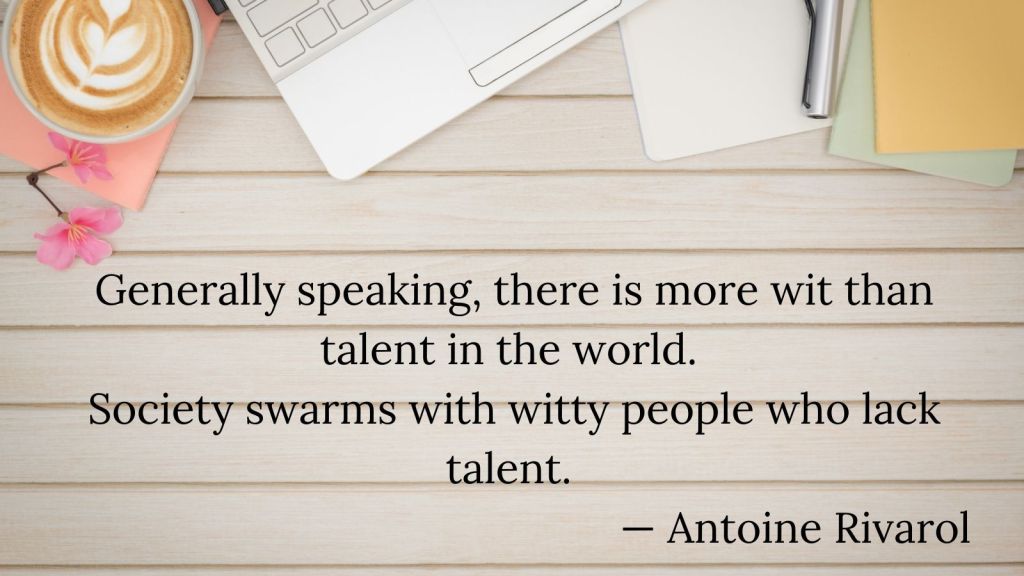
Generally speaking, there is more wit than talent in the world. Society swarms with witty people who lack talent. -- Antoine Rivarol

printed on desk with partial view of laptop, notebook, and pen

The point is, tweets like the ones up above aren’t necessary. If you’ve been burned by an author, indie or otherwise, tuck their name in the back of your mind, don’t buy from them again, and move on. While I was reading Billionaire when I decided to pivot, I read a lot of books. Some were really really good, and some were not that great. And I understand the frustration. A lot of those not-so-great books? They were outselling the books I enjoyed. By a lot. A lot has to do with who the author publishes with. Some are full-fledged indie authors, some were published by Montlake–an Amazon imprint. But that just makes it even clearer that there is so much that goes into a bestseller that trying to hit it is futile.

So stop ragging on other authors. Do your best, and hopefully one day it will pay off.

The end.

Lack of Productivity. What’s causing it, and how to fix it.

I’ve seen the topic of productivity a lot lately, maybe because we’re still in what’s considered the beginning of the new year and we’re all scrambling to keep up with New Year’s resolutions and tackle the goals we’ve set for ourselves. I haven’t specifically written about productivity, though I did write a blog post about writer’s block, which is akin to the weird uncle of the family when we talk about writing productivity.

I guess by now it’s a running joke that the hardest thing a writer can do is sit down and write. Butt in chair. Carving out that time. But I have never, in these six years I’ve been a part of the industry, understood this. I get writing is hard, and I’ve come to learn this about myself while writing and/or editing–If I hit a rough patch in dialogue, or say I’m echoing a word in a sentence and I want to rewrite the sentence to take out one of the words and I’m at a loss as to how to do it, instead of pushing through, I’ll flip over to Twitter. That’s avoidance. For now, I let myself do it because so far it hasn’t hampered my output. Normally, after I scroll for a second and see the same old drivel, I’ll flip back to my manuscript and keep going, but it can interrupt my flow.

I’ve seen a lot of tweets about productivity or lack thereof, and, unfortunately, if you’re writing to publish, and more importantly, if you’re writing to publish to build an author career, you kinda need it.

One of the hardest lessons you’ll ever learn in this industry is you don’t have nothing if you don’t have a book, and over time, you need several if you want to find any traction. If you’re writing a series, you have way more marketing power behind you if your series is done. You can’t accomplish that if you’re not writing.

What are some causes of lack of productivity? Here’s a short, though not comprehensive list, of what I’ve seen out in the writing community:

You’d rather do something else. This actually tells me a lot about how you feel about writing and publishing, and if you truly would rather watch TV, read a book, go for a drive, or make dinner, then honestly think about stepping back. Of course, it would help to know the reasons why you’d rather do something else. Maybe you’re not seeing the results you want, or you’ve lost interest. You started writing as a hobby and you’d rather pick up a different hobby like crocheting or knitting, or get back into exercise. If you’d choose to go to the dentist over sitting down and writing the next chapter, give yourself permission to stop writing. No one is forcing you, and if you hate what you’re writing, chances are, your readers will be able to feel that when they read your book. Move on. It’s okay.

You don’t like what you’re writing. Starting a new project is okay as long as you can finish something. If you lose interest in your WIP at the halfway point every time, something else is going on with more than just productivity. Maybe it’s a craft issue because you get bogged down in the saggy middle. Maybe finding an alpha reader who will read as you write, or a critique partner can help you stay motivated and give you tips and ideas on how to finish. The problem with learning craft is that you have to write to learn it. This is the same for characters, too. If you hate your characters, you have to figure out why. Is she a whiny snot? Doesn’t act her age? Is he an alphahole without any redeeming qualities? Are they not doing anything interesting? Find some feedback from somewhere, or refresh your creative well and read for a while. Start a new project, sure, but if you’re going to add to the 20+ WIPs you already have on your computer, you need to do some digging and figure out what the problem is and how you can fix it.

You have no idea what to do with it once you’re done. I’m reading Zoe York’s Romance Your Goals, and in it, of course she talks a lot about setting goals–setting realistic goals, and goals you have to work to reach. I have a lot of thoughts about goals, productivity, and strategies and tactics that will help you achieve those goals. If you have 10 finished books on your computer, they won’t do anything if you don’t know what you need to do with them. More than covering them with a good cover, writing a good blurb, and putting it up on Amazon. I mean, do you have a newsletter? Do you know an ads platform well enough you won’t lose money? Do you have a launch plan for what you’re going to do when your book is done? If you don’t, that could be causing you some productivity issues. If you have no idea what you’re going to do with it once your book is finished, there’s no real reason to finish it then, is there? That way of thinking was pretty much me for the past two years, but instead of lack of productivity, I think I had too much. That is a problem in itself because now I have lots of books and still no real actionable plan to maximize those books and pay myself for all the time it took me to write them.

Maybe you have an idea, but it’s too overwhelming to think about. We talk a lot about a five year plan, and sometimes it’s difficult to figure out what we’re eating for dinner in five hours, never mind where we want our careers to be in five years. If that look into the future terrifies you, ask yourself why. Writing and publishing is a long game, but if that look into the future bogs you down, shorten the timeframe. Maybe look to the next two years, plan out the books you want to write, be it three a year, two a year, whatever you can handle, and let yourself get excited about what’s coming in the immediate future.

You’re burnt out. I think I’ve mentioned this a lot on here, when I heard Jo Lallo say on the Six Figure Authors podcast that there is no faster way to get burnt out than when you work hard for little to no pay off. I’ve you’ve been working for a months, maybe years, and your career is in the same place as it was before, that can affect your productivity. You might wonder why you’re still trying to make a go of it, and you’re thinking about giving up. This conversation goes back to goals–what you want out of your writing and more importantly, how you’re going to get it.

You don’t have any writing friends to cheer you on or commiserate your failures. You’ve probably heard me mention this a time or two. A lot of my friends I made when I first joined the writing community are gone. They dropped off because they don’t write anymore, or we don’t talk for some reason or other. I was friends with a woman for a long time until I realized our friendship was all about her, and her writing, and her roadblocks, and whenever I would say something positive about me, or my books, she blatantly ignored it. I faded off from that friendship and a couple others. While I don’t recommend staying in a friendship (or any type of relationship!) that takes more than it gives, replace those friends with other people or you’ll look up from your laptop one day and see that you are alone. It’s tough to write and be proud of your successes if there is no one to share them with. Take that opportunity to reach out to other authors in your genre and make connections and friends there. Those relationships will be more meaningful because they’ll understand the ups and downs of writing and publishing in that genre. There are so many sprinting groups and people who are willing to be accountability partners. You’ll be surprised at how much better you feel if you have people to reach out to when you want to share your goals and small successes.

At the core of productivity is passion. You have to have passion for what you do, and joy and the love of writing will keep you coming back to your laptop and your characters. Sometimes other things will get in the way, but ultimately, if writing matters to you, you’ll find a way to keep going.

Good luck!

Can You Follow Advice from Someone Who Isn’t Successful?

There is no shortage of advice. Everyone has an opinion on what to do and what not to do, and not many are afraid to shove it down your throat either, or take offense when you don’t follow what they say, or want you to drop down on your knees in gratitude they gave you five seconds of their time.

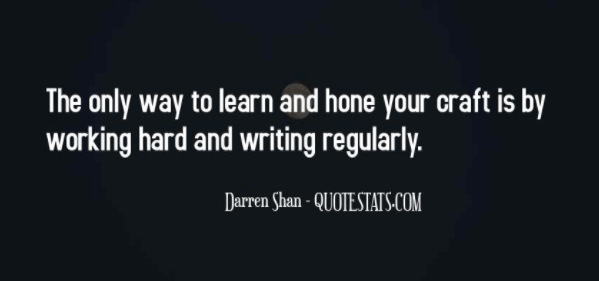
I think about this when I’m blogging and sharing my experiences, tweeting my own opinions, and especially when I’m scrolling through Twitter and my Facebook writing groups. I was poking around for motivational quotes for another blog post, and this one caught my eye:

I really like this because we’re all struggling writers, all trying to find that magic bullet that will catapult our book to bestseller status (with as little work and money as possible, if we’re being honest here), and we should be open to advice. We should be open to learning from other people’s experiences.

Probably one of my favorite topics to blog about is scammers–people offering a service they aren’t qualified to provide. The indie community is full of them, and how many indies finding ways to game the system or relieve you of your money knows no bounds. I got into a discussion with someone on Twitter the other day who is getting to the blurb-writing business. I asked politely, as I have never had a problem with this person before, if he had a refund policy in place for the blurbs that don’t convert to sales. He said that blurbs aren’t part of marketing that therefore he had no refund policy in place as it wasn’t his responsibility to market your book and that conversion on a new blurb wasn’t measurable. I said I wished him well and that I hoped his own sales success was proof that he could write a good blurb. He said he was doing just fine. I took a look at his book rankings, and unless he meant something other than book sales, no he wasn’t doing just fine.

So he 1) didn’t believe a blurb was part of marketing a book, 2) didn’t have a refund policy in place if you were unhappy with conversion 3) didn’t believe blurb conversion could be measured and 4) his own books weren’t doing well sales-wise. I hope people followed along our tweets because there is no way this person should be offering a blurb-writing business AT ALL. I did the best I could to call him out, but there’s only so much I can do, especially without looking like a big B. I think I already have a reputation on Twitter as being a bit aggressive, and I’m trying to soften up my look. It’s not working.

This goes for a lot of other advice too–writing advice, cover advice, marketing advice. I know one writer who loves to give writing advice, is always sharing excerpts of her work, but it’s all telling and she’s not selling books. People who don’t know what covers are hot in their genre love to give advice on what they like and don’t like. Maybe their advice is valid, maybe it’s not, but if you’re trying to ask for advice from a perspective that others don’t share (like writing to market, covers to market, writing commercial fiction, or the other way–if you want to write your own thing getting advice from someone who doesn’t share that viewpoint won’t help), it can be tough. You’ll be inundated with opinions that would never help.

Sometimes a fresh set of eyes can help whether the people those eyes belong to have had their own success or not. I feel like I know what goes into a bestseller, and I can say easily that depending on Twitter for sales will only go so far, or you need to learn an ad platform, or you need to change your cover, simply for the fact your cover is horrendous and I don’t need to be a bestselling author to know it.

I think that’s why I like Bryan Cohen’s free Amazon ad challenge so much. When he shares his screen/Amazon Ads dashboard during the videos, we can see that he’s selling books. We can see that he’s written books that people want to buy. Yes, he spends a lot of money on ads, but he also makes it all back and more. His ad challenge wouldn’t be worth much if he wasn’t selling books.

Just the other day in a group someone was asking about a different indie author who offers classes (that aren’t free) and one poster said, “I stopped taking his classes when he stopped selling books.” Like the blurb-writing guy, people forget that it doesn’t take much time to go onto a book’s product page and see the ranking in the Kindle store. You can go onto any of my books’ sales pages and see that I’m not selling many. I’m very transparent–in fact it’s practically the premise of my whole blog–I’m not selling books, this is why I think that is, how I’m changing that, and I hope what I try can help you. I’m not interested in making money off this blog. When I get a couple of readers who thank me for the resources or thank me for sharing my experiences, or tell me they tried something and it worked, I consider my job well done.

So what do I suggest you do when you might consider taking someone’s advice?

  1. Take a look at their success rate if at all possible. Look at their covers if they are going into business creating covers and see if they know market trends, what’s selling right now. Look at their books’ rankings and decide for yourself if they’re qualified to give the advice their giving.
  2. Ask yourself if what they’re saying makes sense. Trends change, and maybe someone isn’t up on the newest thing–like that lady who told me my first person blurb isn’t how everyone else is doing it, when actually most are now, at least where billionaire romance is concerned. But it could be that you missed the boat with something and their advice is legit. Check it out and see if it’s something you want to experiment with.
  3. Where else are they online? Sometimes Amazon sales rank won’t always be the greatest measure of success. LIke the guy who wants to write blurbs, maybe he is successful somewhere else (like writing ad copy for his day job), but if he doesn’t make that known, it reflects poorly on the business he wants to start. Some writers publish to Wattpad and have a large following there. Some write for blogs that have good traffic and they have a large following in that circle. Some submit to literary journals and are published in lit mags. Dig deeper. You might be surprised–and learn their opinion is steeped in more experience than you think.
  4. Do they have a good track record giving advice? Sales aren’t the end all be all, I know that. Sometimes questionable books do quite well and no one can figure out why. Maybe someone has a great marketing tip that didn’t work for themselves but worked really well for someone else. Maybe they know a secret ingredient and it turns out to be the last piece of your own puzzle that can bring your books to the next level, like a promo that didn’t do much for them but made another author’s book rank high in the charts. I edit on the side for friends who can’t afford it. Just because my sales aren’t great doesn’t meant I’m not a good writer or editor. I have a handful of people who could tell you that I’m good at what I do and that I’m qualified to give grammar, punctuation, and writing advice.
  5. Look at the viewpoint of the person giving the advice. I tweeted about this not long ago–taking the advice from one writer on Twitter when there are a million readers out there probably isn’t the best idea. Writers read differently, and what would bother a writer may not faze a reader. I catch myself doing that all the time–stressing while editing or writing about something a writer said they disliked. Why should I care if a writer says she doesn’t like the word moist (or whatever?) Chances are 99.99% that she will NEVER read any of my books. So why does it matter? All that matters is what readers think–and they will tell you.

I’ve taken advice (and my cover for Faking Forever is better for it), but I’ve ignored my fair share. I’ve also given a lot of advice, and usually in some way the people I’ve spoken with aren’t ready to hear it–even if they’ve asked for it. I’ve told plenty of people their covers aren’t working. I’ve looked inside a lot of books and said they need another editing pass. I’ve pointed out blurbs that aren’t written well, and I don’t think a day goes by where I haven’t told someone that they need to branch out from Twitter for marketing if they aren’t seeing the results they want. Usually my advice consists of either spending time or money (it’s work, y’all), but you have to invest something in your books if you want to find readers and nurture an audience. Just today someone on Twitter said he would take down his YouTube channel if he couldn’t get up to a certain number of followers by the New Year, but when I asked him what he did to drive traffic to his channel besides Twitter, he didn’t answer me. So in that non-answer I know the answer. Nothing. I don’t need to be a YouTube guru to tell him he needs to promote his channel to expand his audience and threatening to take his channel down won’t do anything to build his audience. The opposite, in fact, because why would someone invest time in something that may disappear?

At the very heart of your business, only you can make decisions for you, and only you can decide what to apply to your book business and what not to apply. If you’re not seeing the results you want in blog follows, sales, YouTube subscribers, whatever it is you’re trying to accomplish, that will be the true test. Trying to achieve different results doing the same thing over and over again will not work, and you don’t need anyone to tell you that. (And if you can’t admit it, it won’t matter how many people tell you–you won’t believe them anyway.)

So, after all that, should you follow advice from someone who isn’t successful? I guess the murky answer is maybe. I certainly wouldn’t pay for anything if the person dispensing said advice couldn’t put his money where his mouth is, and in the indie publishing business, that usually means book sales. There are quite a few top-tier indies who do dispense advice through podcasts, non-fiction books, interviews, and various classes they’ve decided to teach. Some will do consulting, some blog and offer their advice for free. There is plenty of advice out there from indies who are making it, so maybe there’s no need to take advice from someone who isn’t. It could be that simple.

Do you give advice? Take it? Let me know!

Until next time!