My Next Few Weeks

Vania's AprilMay Plans

Last week I finished Wherever He Goes. At 77,863 words, it’s one of the longest books I’ve written, and I’m very proud of how the story came out.

What does this mean for the next couple months in terms of my writing schedule?

Take a look:

Plot out my next book.
I left a few threads open while I wrote Wherever He Goes, and I need to decide if I want to close them up or write a companion to the book. The companion would be about Aiden’s brother Dylan. I foreshadowed a few things about him, but his story isn’t fully developed in my head yet, so I need to think, do I want to leave the threads loose in case his story comes to me, or tie them off and move on? I’m hoping a solution will come to me while I edit. For now, I have another book I need to plot out that has nothing to do with Wherever He Goes. I want to get most of the bones of that book written down before I forget any of it.

I start edits on Wherever He Goes on April 2nd. My editing process is long and contains many steps, mostly because I edit myself, but mostly because even if I did pass my book on to an editor, I would give them as clean a version as I could. My editing process includes:
Initial read-through. This is where I fix blatant typos and plot holes I noted while writing that I didn’t go back and fix. I’ll fix character discrepancies and repetition. I’ll fix my characters’ overall arcs. As I get to know them, my writing loosens up, so I’ll even out the flow of the story. All this is easier on the screen.
Print it out. I need this step because this is where I put my chapters in (I write without breaking up my book) and make sure the plot makes sense. I have an easier time with this when I can “see” the book laid out in front of me. Often this is when I beef up scenes or take out parts that don’t need to be there.
I listen to my manuscript. I have Word read my book to me. This is where I do line edits, and I pay special attention to dialogue and syntax. One day I’ll do audio for my books, so I pay special attention to this step. This step gets rid of wordiness, and it takes about four to five days to listen to it all.
I proof the proof. You can see a lot of typos and long paragraph blocks that need to be broken up when you read the proof you order from CreateSpace or wherever you publish through. You can find repetition, errors, and there have been times I’ve caught huge consistency issues. Always read your proof as a reader would. Take your time, sip on some coffee, tea, or other beverage (keep it non-alcoholic so you have a clear head). This step takes me about three days. I take my time because this is the last step, and the last time my eyes will be on it.

After I edit, I’ll put in the changes and order another proof to make sure my formatting stays perfect.

I don’t have a pre-order set up for Wherever He Goes, no blog tour set up or anything. I did a successful Freebooksy for my first book in my trilogy, so I know I have readers out there. I’ll do a soft release for this book because I hope I’ll already be a few thousand words into my new book.

I’ll still continue to blog. Lately, I’ve been doing more book reviews on the non-fiction I’ve been reading. I have a lot of time at work and I’ve accumulated a pile of books that could be useful to other indie authors. Plus, it’s content, and I’m horrible at blogging consistently.

I’m going to basically stop doing Twitter giveaways. They are useless. There is too much free stuff out there and they are a waste of money. No offense to the people still doing them–I wish you well. This includes doing a Goodreads giveaway. Until I can know for sure you get the bang for the buck, a promo site like Bargainbooksy may make more sense. And cents.

Summer is a time when things slow down, and people take vacations, do things with their families. I still would like to try to write 1,000 words a day and publish another book by the end of the summer. Trying to stick to a three-book a year schedule may be tough because I have to have a whole book in my head before I start writing. I have bits and pieces of plots bouncing around in my brain, but nothing fully realized yet. So I have this next book to plot out, then I hope something comes to me.

Vania's AprilMay Plans (1)

That’s what I’ll be doing for the next little while. I’m excited to release Wherever He Goes. I have the cover tentatively worked out, and you can see it on my Facebook Author Page.

I don’t have any writing conferences to attend this year–a few things take precedence like my son’s high school graduation. I also have a few things going on I don’t have the liberty to discuss, but I’m going to guess will be very time-consuming.

I also need a couple days to make box sets of Summer Secrets and my Tower City Romance Trilogy. It will be a pain in the butt, but worth it!

I’ll be busy between now and Fall, but I’m looking forward to the challenges!

What are your plans for the next little while?

Happy writing Vania Margene


images created with http://www.canva.com

Indie Book Reviews: My Unpopular Opinion

There’s been a lot of talk lately about writing indie book reviews. You know, it’s a kind thing to do, you’re giving the book a bump in the Amazon algorithms. You see it everywhere on Twitter: support an author, leave a review.

And I’ll be honest, when I jumped into the indie world, I read a lot of indie books. I was supporting my Twitter friends. But when you are just starting out, when you’re new to Writer Twitter, the thing that no one tells you is that there are bad books out there. Maybe I was naive, maybe I was just inexperienced. I was in awe of anyone who had published books. I hadn’t been exposed to the indie world, and I had no idea that a published book could be bad.

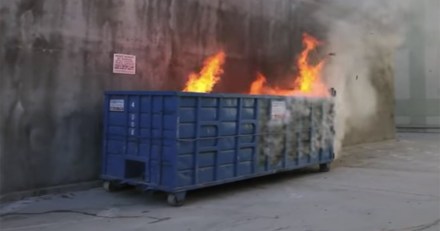
So I bought books, tweeted I was reading them, showed my support. The only problem was, some of them were good, some were okay, some were dumpster fires.

20-dumpster-fire.w1200.h630

Then I would have to write a review. I admit, I wrote a handful of 5-star reviews for books that were mediocre. (I realize that is a moral dilemma for some, and I have stopped doing it since it’s not fair to anyone). There was a lot of telling, or the characters were flat. Maybe a plot hole here and there.

After I bought two books in a row that I did not finish (DNF), I stopped buying indie completely. Because let’s face it, indie books are expensive. I buy paperback, and to get any kind of royalty, CreateSpace makes you price your book at a ridiculous price. So spending $17.99 on a book I won’t finish is a blow to my wallet.

But lately, the review talk is getting out of hand. While writing a positive review for a book that is well-written and well-edited is one thing, writing a negative review for a book that isn’t good is something else.

What makes a book bad?

Poor or complete lack of editing
The formatting is wonky, so wonky that it takes away from the reading experience
Flat characters
Plot holes
An all-around boring story

I’ve read my share, and if you read indie, you have too. I once read a book that had so many typos in it, I used it as a proofreading exercise (a quick run through Grammarly could have fixed 80% of those mistakes). I’ve read two books that I did not finish because the formatting was so terrible I couldn’t focus on the story. I read one book where nothing happened for three chapters. I was still waiting by chapter four and eventually toss the book aside.

Did I write bad reviews for any of those books? No, I didn’t. Did I reach out to those authors, my friends? No, I didn’t.

See, here’s the thing that you probably won’t agree with, but something that I live by:

When I pick up a book at Target, Walmart, Barnes and Noble, I’m picking up a traditionally published book. I’m reading a book that has been read several times by an agent, by several (and different kinds at that) editors. If the book is bad, say unlikeable characters, maybe a slight plot hole, or just a boring story, several people are to blame for the all the book lacks. I’m also reading that book as a readerI don’t know the author, probably. I’ll never interact with them. I can leave an honest review, and for a traditionally published book on GoodReads I have left, you know, two or three stars (which technically isn’t a bad review anyway).

When I read indie, I’m doing it because they are my friends, or I know them peripherally, or I thought it looked good and picked it up in a show of support. What do you get when you purchase an indie book?

Maybe something that hasn’t been edited all that great due to cost, resources, what have you. Most times editing is a favor, and it’s not always done by someone who knows how to edit.
A book that has a cover that was maybe done by the author to save a few bucks. I do my own covers, and I like to think they look decent. I know decent isn’t what we’re aiming for here, and I realize that if I wrote in any genre other than Romance, I would have to pay to have my covers done. Romance is the only genre you can get away with slapping a kissing couple on the front and adding the title and your name and be able to call it good.
A book that hasn’t been properly formatted. This has always bothered me because CreateSpace has free templates for you to download. And there are lovely templates you can purchase at a low cost you can use over and over again. Copy and paste your book into it, and you’re done. You’ve got your headers, footers, the pages where there should be numbers, and where they shouldn’t be. Gutters, margins. The templates aren’t perfect, and I’ve had to tweak mine, but even just using a template as a starting point will put you ahead of hundreds of authors who don’t know they exist or are too stubborn to use them. Pick up a trad-published book for God’s sake. Copy it. Page numbers, title, author name in the headers and footers. Full-justify the damn thing. Take out the auto spacing between paragraphs. A 200-page book shouldn’t be 600 pages. It costs money, for you and your customers, to print all that space. Stop it.

But you know what, a review is not the place to say all this. By the time the book is published, it’s too late. It’s not your job. You might say, well I have to warn other readers, or I’m giving my feedback.

When you read an indie, you are doing so as a writer, and that is not the same as reading a book as a reader. It’s not the same. When you read indie, you are peer-reviewing their books, and giving a poor review is a low blow. Reach out to them in a DM if you absolutely must, but be prepared for the backlash.

Look, there are a lot of readers out there, and eventually the book you want to “leave feedback on” will receive an honest review from someone the author doesn’t know. That’s an honest review, and maybe if your friend receives enough of them, they’ll pull the book and have it edited, or whatever.

reviews

This blog post is really long, and I haven’t even touched on the thing that makes me the maddest. I’ll write another blog post about it. But anyway, I don’t leave bad reviews for the simple fact that I am a nobody in the world of indie publishing. I don’t have thousands of sales, I don’t make six-figures. And when I do become an authority, I still won’t leave reviews. I’ll write blog posts like this.

Let’s try to save these books before they are published. Instead of reviewing, maybe offer to beta read, be a CP. Tweet informational articles about formatting. If you find services you like, tweet about it! Share when you find a paperback interior template that you LOVE. Share tips, tricks. A good editor that doesn’t cost an arm and a leg. Maybe you can get the information out there; even if you can help one person, it’s worth it.

It’s hell for an author to pull a book to fix it, and by then, their reputation may already be ruined. All it takes is one book for a reader to be turned off by an author, forever.

Let’s stop it before it starts. It can only help all of us.

no one heals themsevles by wouding another

Tell me if you leave bad reviews. Feel bad about it? Proud of yourself for being honest? Let me know!

Vania Blog Signature

#Smutchat Editing Giveaway

Thanks to everyone who participated in #smutchat tonight! I hope you maybe learned something from chatting about editing!

Tonight’s giveaway is:

Self-Editing for Fiction Writers, Second Edition: How to Edit Yourself Into Print by Renni Browne and Dave King

Have a great weekend everyone! I’ll see you next time!

a Rafflecopter giveaway

Which Came First? The Chicken or the Egg?

This is going to be a touchy post. Not uncomfortable touchy-feely like your creepy neighbor, more touchy-feely like you’ll probably get mad. At me, at my thoughts about the indie-publishing industry, whatever.

Indie writers are famous (infamous?) for not liking being told what to do. They don’t like being told to write every day, they don’t like being told not to genre-hop, they don’t like being told write to market. No head-hopping, no weird 1st person to 3rd person shifts in the middle of a novel, no using their artistic license to do what they want.

And that’s really great–up to a point. Yes, write what you love. For sure. Use 100 POVs in a novella because you think they fit, do that crazy cover because you want to stand out. Do whatever the hell you want because it’s your book, you’re self-publishing it, and you don’t have to answer to anyone.

There’s disdain for the traditional publishing industry. I know there is because I’ve felt it myself. When I attended the Minnesota Writer’s conference I went to a workshop on how to self-publish your novel. That she ran her own self-publishing firm seemed a conflict of interest to me, but anyway, her firm hired out everything. She hired out the editing, the proofing, the formatting, the cover. They did it all for you for a hefty tune of $5,000-$10,000. I could hear dreams shattering around me like fragile champagne glasses thrown against a stone fireplace mantle. (Romantic, yes?) Having already published 1700 for free (I only paid for my ISBN number) I sat there shaking my head.

But between then and now I had a realization. She wasn’t trying to rip anyone off. On the contrary, what she was actually trying to get across was that when you self-publish, especially when you self-publish, you are in charge of the quality of your book.  You are in charge of how good the story is, you are in charge of how eye-catching the cover is. You are in charge to make sure the inside of your book is not a hot mess. The speaker of that workshop discouraged a lot of people from ever trying to self-publish because they didn’t know where else to look for information. They didn’t realize that you could self-publish for free (or for cheaper than $5,000!).

retro-1157709_1920

It’s too bad because the only thing she was trying to press upon the attendees of her workshop was that a certain standard is expected when a reader opens a book.

Traditional publishing is under a lot of fire lately for not being flexible and not changing their ways to adapt to what the publishing industry is turning into. I agree that to keep up with the output of indie authors they are going to step up their game and do things differently. But while distribution and output may change, the point is, quality is something a reader can always expect from a traditionally published book.  And whether you want to believe it or not, a reader is going to want that same quality from your book, too.

Oh, I know, you’ve found typos in books. I read a book recently and a whole speech tag was missing in a sentence. I don’t know how it slipped by an editor, but it did. There have always been typos. And there will be more as the publishing industry has to tighten their bootstraps and make budget cuts. But for every little mistake that slips by in a trad-pubbed book, there things a reader can expect to get from a book they bought from a big publisher:

  1. A story that makes sense in terms of plot, characters, and POV.
  2. A cover that looks nice that will hint at what the book is about.
  3. A blurb that also makes sense and makes a potential customer want to read the book.
  4. Formatting inside that doesn’t distract from the reading experience.

An author who is traditionally-published doesn’t have to worry about that stuff, and unless they go hybrid and self-publish as well as have their books trad-published, they won’t have to.

But you will. Not knowing isn’t a valid reason. If you want people to read your book, and read the next one you write, and the next, you have to take ownership of your work. It isn’t unheard of for indie-authors to revamp their first books as they publish more and learn more. I redid the cover for 1700, fixed typos, and fixed some formatting errors.

Anyway, the point I’m getting at with this post is that you are responsible for the quality of your book. Going rogue in the name of artistic license may feel good at the time, but how good is it going to feel if it ultimately means giving up sales and maybe even sullying your reputation as a writer?

The best way to know how to format your book is to look at one. Check one out at the library, or go to the bookstore and look through several in your genre. When I wrote my front matter for 1700, I took the book I was reading and copied it. You’ll notice in a trad-pubbed book the margins are justified, there are pages numbers, the book’s title and author name in the headers. There aren’t any spaces between paragraphs (this is a big pet peeve of mine).

There’s no doubt that the publishing industry is changing. But like anything that changes, you want things to get better, not worse.

Tell me what you think! Am I being too picky?

Other articles on self-publishing quality:

http://www.writing-world.com/publish/lulu.shtml

http://www.writing-world.com/publish/format.shtml

https://self-publishingschool.com/5-book-formatting-mistakes-to-avoid/

https://forums.createspace.com/en/community/thread/1434?start=0&tstart=0


Protect Your Summer Writing Time!

Summer is here!

Sumblackboard-2192605_1920mer is here and the kids are out of school. Maybe you can sleep in a little more, and dinner is certainly easier to make—just throw some steaks on the grill and open that container of potato salad you bought yesterday at the deli.

You would think that with the arrival of summer you would have more time to write. Right? The days are longer making it easier to stay up at night; the kids don’t have activities they need to be driven to every afternoon. Maybe the workload at your job is a little lighter.

This all sounds good in theory, but the reality is, summer takes up a lot of time. Things don’t change much if you still need to get the kids to daycare or summer day camp, and your evenings are just as packed as they used to be with getting everyone home, dinner, bath, and bedtime. If things in your day-to-day routine haven’t changed, and you still want to do summertime fun stuff—going to the pool, the lake, the cabin, the beach, the parties at the park, the parades around the 4th of July—your weekends are even busier than they were before. Never mind fitting in family vacations.

So what does this do to your writing? My kids have only been out of school for one day, and already my writing schedule is out of whack. Did I get anything done their first day off? Nope. Would I have?  Yep.

It’s important during these next three months to guard your writing time. If you used to be able to write one or two hours a day, try to keep that going. It’s easy to let the time go by taking the kids to the park or sitting on the porch with the neighbors sipping daiquiris while the kids play in the water sprinkler.

My daughter is asking to go to the zoo, have playdates, have a movie night with me. And I absolutely want do those things with her. For sure! She’s eleven, and soon she won’t want to spend any time with me. But you know what else I want to do this summer? I want to publish Summer Secrets. I want to finalize edits in Running to Love (not the title anymore, but still) and get that ready for publication (formatting, book cover and writing the blurb) this fall. I want to keep writing this blog and figure out the mysterious newsletter thing everyone says authors need to have. I want to keep writing my 3rd Tower City Romance book. I need to edit the second one. No, I’m not going to be able to fit all that into the summer, but I’m not going to fit any of it into these next three months if I allow them to slide by in a haze of bug spray and suntan lotion.

I think of writing as my (second) job—I have a publication schedule I want to stick to. I don’t want to take a three-month vacation from writing.

So, it’s best for me to remember that when I’m tempted to stay up until 2 am and sleep until noon. I’ll remember that when my daughter wants to watch Moana for the second time that day.

Time alone is good for kids, and it’s good for me, too.

Only, I’m not alone—I’m with my characters, and it’s a nice place to be on a sunny summer afternoon.

pencil-1497126_1920

Photo credits: Pixabay.com


#SmutChat Tropes Giveaway

Thank you for participating in #smutchat. Here is the link for the giveaway of Jennifer Probst’s book, Write Naked: A Bestseller’s Secrets to Writing Romance & Navigating the Path to Success

Good luck and stay tuned for the winner announcement!

(This contest is open internationally!)

a Rafflecopter giveaway

Don’t Rush to Publish!

Probably the best advice I can give you about publishing is not to rush.

I’ve always promoted doing as much as you can yourself—especially since your first book is pretty much a loss until you write more and have more books available for purchase. When it’s when it’s your only book available, you’ll never get back what you put into it. (Unless you have a tangible way to measure pride and satisfaction.)

Combining the fact that this is your first book with doing it all on your own is dangerous. You’ll never be sure if your book bombed because you’re an unknown author and this is your first book, or if it’s because your book sucks. Publishing a superior product rather than a POS will take some of the guesswork out of the question.

You want to put your best work out there, so when you have more books available you don’t have to waste time fixing it. Being it is so easy to update files in Kindle Direct Publishing, you may get into the habit of updating your files and covers all the time. It’s a waste and you’ll never move forward. Fixing your files in CreateSpace is easy too, but your book isn’t available until your files are approved, and CreateSpace’s approval time is longer than KDP’s. People still can buy your Kindle book while the new file is being approved, but it will be your old file.

Here are some tips to not rush:

Cover

Never publish your first attempt at making a cover. Make many covers. Many, many, many. Try different pictures, fonts, and color themes. Take your best two or three and turn them into a contest on Facebook or Twitter. Enter all the names of the people who chose the one you decided to use into a drawing and give a signed copy of your book to the winner. Ask for lots of feedback. There are plenty of people online who are willing to give you an honest opinion.

Research your genre, watch picture manipulation videos to learn how to do what you want. If your idea is too much for you to do on your own, or you just can’t get your vision from your head onto the computer, ask for help.  Don’t publish your first attempt. Keep it clean, keep it professional. One day you may change your cover to bump up sales, or because your skills have improved, or because you found a better picture. All I’m saying is, don’t make it a habit. You’re supposed to be writing more books.

Formatting/Book Interior

The inside of your book needn’t change much. As you grow your library you may want to add those books to a list in the front or back matter letting your reader know they are available. Maybe you’ll want to fix typos, but don’t get caught up with this. You’ll never stop editing, and I feel it’s disrespectful to the people who previously bought your book before your fixes.

CreateSpace takes 12-24 hours to approve files, and your book is not available during the approval process. You can lose sales going into it to fix to too many times.

KDP takes five hours, but don’t use this as an excuse to fix every little thing. Plus you want your paperback and Kindle files to match. Publishing your book as close to perfect as possible will save you lots of time in the long run.

Blurb

Changing your book’s description is simple enough, but if you offer a paperback you’ll want your product information to match the blurb on the back of your book. Again, CS has to approve any changes and this takes time. Blurb writing is difficult, every writer loathes it. I find it easier to write blurbs for others than for my own books. Research how to write one and get plenty of feedback from people who both have and have not read your book. The people who have read it can tell you if it’s accurate. The people who have not read your book can tell you if the blurb makes them want to read it.

Editing

I’ve written a lot about editing in my publishing series, and in two prior blog posts. Editing is the worst because of all the waiting, waiting, waiting. For other people. To read your work. You’re waiting on someone (or hopefully many someones) to read your work and you can’t say anything or you’ll seem rude. If you pay someone, hopefully, you come to some kind of a time agreement. If your friends are doing you a favor, you need to be patient. I’ve edited for people who have published before I was done. Please don’t do that—especially if they keep you updated and they are finding things. It’s rude, and frankly, it hurt my feelings. What I advise you to do is forget about publishing it. Work on something new. Work on your cover—can you make it better? Work on your website, or write a few blog posts and schedule them out so you’re ahead. Try to get into a blog tour, or ask some of your friends who run blogs to interview you. Beta-read or edit for someone else. There are plenty of ways to fill your time and still feel like you are moving forward career-wise.

Be patient.

Don’t rush into publishing. It will save you a lot of time down the road, and a lot of regrets, because you’ll never now how many sales you lost because of a poor cover, or your first 20% in the Look Inside feature has typos in it and a potential reader didn’t want to take a chance on the rest of your book.

It took a year or more to write your book. Waiting a bit longer won’t hurt.

What’s your biggest publishing regret?

April’s #smutchat Giveaway

Using Rafflecopter is a pain in the butt, but thank you for clicking and entering the drawing! Good luck and I hope you had fun participating in #smutchat!

See you soon!

(And if you want to follow my blog that would be super cool!)

Click here to enter:

a Rafflecopter giveaway


Congratulations to Jewel E. Leonard (http://www.jeweleleonard.com/) for winning the book giveaway! Thanks for playing!

#smutchat: What is it?

THIS BLOG POST IS ARCHIVED. I HAVEN’T RUN #SMUTCHAT FOR A WHILE NOW AND HAVE NO PLANS TO START AGAIN IN THE FORESEEABLE FUTURE. IF YOU PARTICIPATED AND ENJOYED IT, THANK YOU! IF YOU WERE NOT ABLE TO PARTICIPATE I BLOG ABOUT THE TOPICS WE FREQUENTLY COVERED. CHECK BACK TO MY WEBSITE! 

smutchat

I’ve been a part of the Twitter writing community for a couple of years now. I’ve met some wonderful people, and they have been instrumental in helping me publish On the Corner of 1700 Hamilton. Without my friends, my journey would have been harder, and certainly not as much fun.

I follow and am followed by writers who write in all genres, but I am an erotica and romance writer. There are a lot of writing chats on Twitter that I sometimes participate in, but I’ve never participated in one that primarily chatted about romance, or “smut.” When I searched #smutchat, I saw the hashtag hadn’t been used for a Twitter chat, and I took it as a sign. Finding a hashtag not in use, and one that is short, is half the battle in hosting a Twitter chat or writing game.

But before I announced my intentions, I did a bit of research. I participated in a couple of chats before, but hosting a chat is different. I had to decide how often I would host them, and on what day. There are a lot of popular chats, and I didn’t want anyone to have to choose between mine and another. I had to think of questions, and I wanted to find sexy pictures to grab people’s attention and draw them into the chat. I want to convey that #smutchat is sexy and fun, but informational. I read a lot and used the writing books to make up thought-provoking questions about the world of writing and romance.

I also wanted to set my chat apart from the other chats, so I decided to give one of those reference books away at the end of every chat. Each chat will have a theme, and each book will hopefully support that days’ theme in some way. Some of my writer friends caught wind of that and offered their books up, too. If I do give away a friend’s book, it will be paired with the reference book I’ve chosen as well.

If fingers crossedthis chat takes off, fingers crossed, I have enough questions for a whole year if I host one every 2-3 weeks.

I would love to host one every week, like some chats, but I first and foremost am a writer, and I have a few books that are very close to publication. While #smutchat will be a fun way to connect with the Twitter writing community, I can’t lose sight of the fact of why I am part of it in the first place.

#smutchat highlights will be posted on my blog, time permitting.

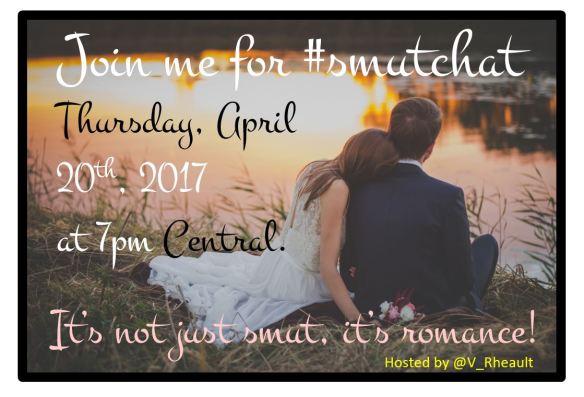
Join me, tomorrow, Thursday, April 20th at 7 pm Central, USA.  (I do plan to mix-up the times so my Twitter friends who are not in the USA and Canada have an easier time participating).

Come have a good time, make some new friends, and maybe win book!

See you there!


Formatting Your Word Document for Kindle

Formatting your Word document is easy. Don’t pay someone to do this. Look at the inside of 1700, and tell me if you think I did a good job. My file is full-justified, I don’t have any wonky spaces between paragraphs. My line spacing looks good. It is so easy to make such a quality product that I’ve become a bit of a snob. If I see in the “Look Inside” on Amazon that the sample is a mess, I won’t buy it. I get too distracted by bad formatting to enjoy a story, no matter how good it is.  Poor formatting could lose you a sale from a customer.

Formatting for an e-reader is different from a paperback. There are no page numbers because the device will hold your “page.” Therefore there are no headers or footers. For a fiction book, I advise you not to put in a table of contents because you are going to assume your reader is going to read it from front to back. It’s not like a nonfiction book where your reader may only want to read chapters that interest them.

A while back it used to be advised that you don’t put your acknowledgments, dedication, or copyright page in the front of your Kindle file because Amazon lets a potential customer read 20% of the content as a sample. This was based on the idea you didn’t want to waste your customer’s 20% on pages they didn’t care about. This isn’t true anymore. Yeah, they still can read 20%, but they can now look inside the paperback, and if they are looking inside the paperback, they are still going to see all that front matter. I don’t even think you’d realize if you’re looking inside the paperback or the Kindle when you want to read a sample. (I have passed on paperback books with bad formatting too, so I like looking in the front of paperbacks.)

I still keep all my front matter limited anyway. I’m not going to put in three pages of reviews, or tons of pages of acknowledgments. When I get my backlist going, I may put in a page with a list of my other books. But that won’t be for a while. So, for now, I would stick with my copyright page, my book’s title page, acknowledgments, and dedication page (not necessarily in that order.)

Anyway, so here’s how to format your Word Document for Kindle so when KDP (Kindle Direct Publishing) converts it into .mobi or azw, or azw3 it looks good. If you want to get really confused, you can read about all the files here. The only one we care about is Kindle for this blog post, and KDP will convert your Word file for you. It will do it perfectly if you have it formatted correctly. Remember in my past blog post that CreateSpace offers to convert your manuscript and send it to KDP for you. 1700 didn’t convert well, and I formatted my own Kindle file.

First, make a copy of your manuscript. You should have copied and pasted it into the CS template if you published a paperback, now make a copy of that just so you have it on hand in case something goes wrong. This one shouldn’t have any headers or footers or page numbers, so we’ll leave it like that.

The biggest thing with e-readers is they don’t take Tabs. If you use the Tab key to make your indents for your paragraphs, you’re going to have one messed up converted file. Here are the steps to take out your Tabs:

Removing Tabs

  1. Save your Document so you have the original just in case something gets messed up.
  2. Press the Paragraph Show/Hide button in the Paragraph section of the Home tab so you can see the formatting marks.
  3. Highlight (select) your whole document.
  4. At the far right of the Home tab in the Editing section, click on the Replace button.
  5. Click the More and/or Special button in the bottom left corner of the box.
  6. Select the Tab Character.
  7. Leave the Replace with field empty and click Replace All. This removes all the Tabs.

This should have taken them out. If, for some reason, you used the Spacebar to make a tab, go into Replace, in Find hit the number of times you used the Spacebar to make the Tab (maybe five? Six?), leave the Replace line empty and hopefully Word will find all the Spacebar tabs and pull them out.

But now you have a whole book that doesn’t have any indentations. I’ve seen books like this. Don’t do it. You want your book to look as professional as possible so put them back in:

Putting your Tabs Back In

  1. Again, select or highlight your whole document.
  2. Click the little arrow at the bottom right of the Paragraph menu in the Home tab. Or right-click your mouse and select Paragraph from the menu.
  3. In the Indentation section of the box change Special to First Line and enter 0.25. This is how long your Tab is going to be. If you want it shorter you can do 0.23 or something. I use 0.25.
  4. Click OK.

This puts all the Tabs back into your document, but you don’t want the first paragraph of your Chapters and scenes to be indented (traditionally published books usually do not have the first paragraph of Chapters or scenes indented) so you will have to go through your whole novel(la), look for the Chapter starts and scene breaks and take the tab out of the first paragraph. When you find those, put your cursor in front of the first letter of the first word, right click your mouse, select Paragraph and in the Indentation section, change By to 0. This will take the Tab out.

When you start a new document, it’s easier to go into Paragraph, change First Line to 0.25 from the beginning, then you don’t have to do this after you’re done. It will take a little getting used to, to not have to hit the Tab button at the beginning of every new paragraph, but it will be worth it in the long run.

As you write, take the Tab out of every new Chapter or scene break, then half your formatting is done when you’re finished.

Instructions at a glance: 

  1. Take out all the Tabs, put them back in with the instructions above. Don’t indent Chapter starts or first paragraphs after scene breaks.
  2. If there is any in your document, remove headers, footers, and page numbers
  3. Use a common font. I actually just found a font for dyslexics. @scifikate tweeted about it. Supposedly it’s easy on the eyes and dyslexics have an easier time reading it. I haven’t tried it, but I’m going to explore it the next time I publish. You can read about it here.
  4. Drop caps are not e-reader friendly. Remove those as they will mess up your paragraph.
  5.  Set your margins to .5 all around.
  6. Set your line spacing to 1.5. Not single, not double.
  7. If you have spaces between your paragraphs, you’ll need to select your file again, go into Paragraph and change After in Spacing to 0 pt. This takes out all the unnecessary spacing between paragraphs.
  8. To add your website or author page in the back, say, on your author page, use https:// with the rest of the website in the hyperlink.

What you’ve done is made your file as simple as possible. If you have graphics or formulas or are publishing a nonfiction book with all the bells and whistles, then I would suggest buying a book or researching how to format a complicated document. These instructions are for a fiction book with the general front matter and back matter only. Anything else, and unfortunately, you are on your own.

Kindle will give you a chance to look at your book on the online previewer, similar to CS when you looked at your book online. Go through every page, yeah, this takes a long time, but you’re hoping people buy the darn thing, so you might as well. Especially flip to the end and make sure your author picture and bio turned out.

Publishing to Kindle is the easiest way to publish, and I understand not everyone cares about a paperback. But Goodreads won’t let you give away an e-reader, and signed copies of books are good for other giveaways and promotions. I wouldn’t discount doing CreateSpace. I like holding my book in my hand, and I’ve given several copies away in giveaways.

Here’s the first page of 1700 on Kindle Voyage. It looks okay. 🙂

1700 kindle

Good luck to you and congratulations!