I talk about writing to market all the time. To the indie writing community, there seems to be something fundamentally wrong with a writer who sits down at their computer, looks at their WIP, and says, “Who would want to read this besides me?”

As James Scott Bell phrases in his book Just Write: “Without readers, a writer has no career.” Of course, writers write for more than just money, but if you’re reading my blog, you probably want to sell some of your stories. And that means writing what people like to read.
Writing to market is primarily writing popular commercial fiction. Nora Roberts, Stephen King, Dan Brown. Tom Clancy. They sell books by the truckload. Every book they write ends up selling thousands of copies. There are other writers who write commercial fiction too, like most big romance writers who don’t always make the list: Lisa Marie Rice, Susan Mallery, Kristin Higgins, Brenda Novak, Laurell K Hamilton. They write consistently what people consistently read. They don’t vary because something is popular. In other words, they don’t chase trends.

It used to be a writer was warned off chasing a trend because traditional publishing moves too slowly for that to work.
When Twilight was popular, if you wanted to jump onto Stephenie Meyer’s coattails with a traditional book deal, it would have been almost impossible. First, you have to actually write the book. Then you have to find an agent, and she has to shop you around. If she succeeds, then your book is stuck in the publishing process that moves slower than my kids getting dressed for school.
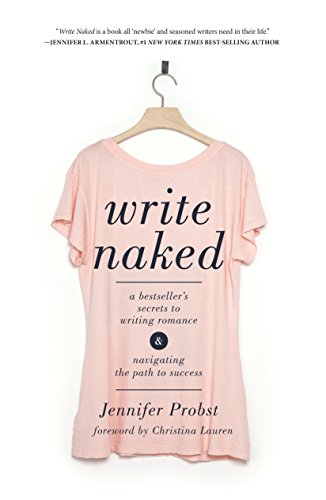
Sometimes movies can draw out the popularity of a trend. Like with 50 Shades of Grey, there were a couple authors I know of that managed to get in on the action, though if it was just timing, or a thought out plan, I guess we won’t know. Sylvia Day wrote The Crossfire quartet, and Jennifer Probst lucked out with the Marriage Bargain. (An experience she shares in Write Naked.)
And sometimes that can backfire. I’m sure I wasn’t the only one who was glad when Fifty Shades Freed, the movie, was released, and that trilogy could be put to bed. Literally and figuratively. If people are sick of a trend, it’s far too late to try to get in on it.
But with self-publishing, if you can crank out a book in 3 months, and publish it, you could very well get in on a trend before it dies.
Is that a bad thing? I’m going to express an unpopular opinion and say no. Why not? If grip – lit is still going strong and you can write a good book in that vein, why not try?
Trend chasing isn’t evil. But I say that with a couple of caveats.

1. You can’t build an audience that way. The writers who make it, or seem to be making a go of it, remain consistent in their writing. If you want to chase a trend and can spare the time, maybe write in a pen name.
2. You still have to love what you’re writing. People think when a writer writes to market they don’t love their work, that they are just chasing the almighty dollar. To find a foothold in the industry you need an extensive backlist, and the only way to create one is to stick with it for however long that takes. And that means loving what you write. If you love the trend you’re chasing by all means. But if werewolves are trending, and you hate them, don’t bother. Which leads me to a third caveat:
3. You need to be familiar with the genre so you can hit all the tropes. If werewolves are trending, but you’ve never read them, don’t think you can write them. You’ll disappoint your readers who do know the genre and will be upset they spent their money on your book.
So, chasing a trend isn’t a cop-out. If you can plan it into your writing schedule, if you have a great idea that could potentially be published before the trend fades, why not? What is trending now? It seems like women’s fiction, mystery-driven domestic (family/wife/children) pop up on the list.
As for something sweeping the world by storm, such as Twilight, The Hunger Games, or The Girl on the Train, sometimes all it boils down to is the lucky timing of when the book was published. Ruth Ware, who wrote The Woman in Cabin 10 and The Lying Game, seems to be doing okay. But I wouldn’t accuse her of chasing a trend. Perhaps just lucky, because she’d written a few books before The Woman in Cabin 10 made her a household name.
There is a difference between writing to market and chasing a trend. I write straight up contemporary romance. Tropes, plots, and characters like those will never date themselves. For now, I’m not interested in chasing trends. Mainly because if I missed the mark, that’s time wasted on a book that won’t sell. I’d rather invest my time in books for my backlist that will never go out of style.
You are in control of your own career. Chase a trend, write to market, write that thing that’s weird, but you can’t stop thinking about it. We all have different variations of success, and you have to be honest with yourself about what those are. Only you know what will make you happy. Good luck!

Why authors shouldn’t chase trends
On Chasing Trends…. And why you should just write the book you want to write…


 And it’s more than that, too. I consider myself an indie writer, publisher, marketer of those books. That means staying on top of publishing trends, practicing writing, reading about craft. I just finished Stephen King’s On Writing. There is always something to do when you are an indie writer: build your platform, market your books, run ads.
 two-fer, I try to go for walks as I listen, to get my exercise in. There are two that I absolutely love:
  friends will crank out two blog posts a week. I can’t do that. Not only do I not have time, Good Lord, where do they find the content? I’ve added book reviews to my blog schedule (of craft and other non-fiction books) just to add some filler. But contrary to what others say about how important blogging is to your platform, this is the one that I let slip first.
 What could I drop? Blogging, probably. I blog for indie writers, and well, indie writers don’t read indie books. That is not where my audience is, and it was one of my mistakes when starting up my blog. I could give up Twitter, but it’s my main source of writerly companionship. Sometimes I don’t walk as much as I want to, and that’s sad, because MN weather is really nice right now, and I don’t want my podcasts to pile up (when I don’t walk, I listen to podcasts to make the chores and errands go a little bit faster).

 For sake of simplicity, we can pick on a relatively small account. Say you’re following 300 people. You have more people following you; let’s say this number is 1,000. We’ll keep an even number because my math is terrible. Let’s subtract the 300 you’ve followed back, leaving you with 700 people following you that you have not returned the favor to. Let’s subtract 200 of these because we’ll just assume they aren’t real people. Sexbots and whatnot. That’s 500 people, writers, potential friends, and connections, mind you, you’re not following. What if all of a sudden half those people started engaging with you. You tweeted something funny, an article that hit home. They try to chat with you. Suddenly you have 250 people engaging with you.
 You better believe you respond to these people because this is what you wanted, right? All right, I know I’m being facetious, but let’s be real for a minute. Even if you had 25 people on a daily basis wanting to tweet with you, that’s a huge time suck. There are days, like #FollowFriday, or #WriterWednesday, where I do get quite a few notifications, and I do have to take the time to sit and thank everyone. I’m getting to the point where I may not be able to always answer all my notifications, but for now, I’m trying my best. I respect my followers, as should you. Someone thought you were interesting enough to follow, or you’re part of Writer Twitter, whatever, and you thank them by . . . ignoring them. Nice.
 Twitter is like being at a gigantic party! Grab a drink and say hello to everyone. You may not exchange business cards with every person you meet, but you never know when you’re going to make a connection. Or know someone who knows someone who can help you. It only takes a moment to follow back a living, breathing writer.









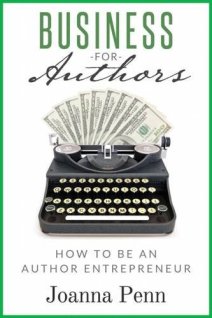 business. Joanna Penn, on a podcast I listened to a while back, said her


 Jennifer won her gold medal, and she tries for another every time she sits down to write.