The Secret to Leveling Up?

Words: 1291
Time to read: 7 minutes

Like any author publishing today, be it indie or trad, I’m always looking for ways to level up. Take your career to the next level. We hear a lot of advice, some I’ve repeated here: learn an ad platform, network with authors in your genre for promo opportunities and newsletter swaps, write and publish a lot, that kind of thing. It can be frustrating when you think you’re doing everything right, and the success you’re hoping for is still out of reach.

I can personally attest to how frustrating that is, to the point where I think that maybe this whole writing career thing isn’t meant to be, and it will always be considered a hobby by the people in my life and the IRS.

I read some advice about leveling and it was enlightening as well as confusing. She said, and this is an author who makes six to seven figures a year, to focus on writing the next best book you can.

It made me a bit crabby (no offense to the advice-giver because I love her and she does a lot for the indie community), because when you’re writing a book you intend to publish, you’re always thinking it’s going to be your best book ever. Back when I wrote All of Nothing, I thought it was an 85k word masterpiece. (Little did I know it would take several edits after initial publication for me to be happy with it, and one that I actually did not long ago.)

This is akin to the question, how do you know what you don’t know? But, if your books aren’t selling, and you’ve tried ads and newsletter swaps and you’ve bought a Freebooksy promo that didn’t move books, there is unfortunately, room for improvement.

Craft is difficult to tackle mostly because it takes so long to make any kind of positive progress–depending on how you already write, it could take months or even years and hundreds of thousands of words. You have to write a lot to get better at it, and not only do you have to write a lot, you need constant feedback on that writing so you know what’s working and what’s not. How do you level up your craft?

*Join a critique group or work with an alpha reader who reads as you write.

*Get lets of beta reader feedback. And find people who are honest. If your characters are flat, you want, and need, to know about it.

*Read the kinds of books you want to write. One of the very first “complicated” series I read when I was thinking of writing my own books was a romantic suspense series by Lisa Marie Rice. She’s since expanded on those books, but the four I read have stuck with me for years. In fact, I want to read them again just to see if they are as good as I remember.

https://www.amazon.com/dp/B087CN1LNB?

*Just swallow it and admit series sell and read-through is what will make you money. I love writing standalones, I do. The Christmas novel I just finished is a standalone and I fixed it so I couldn’t write any sequels from it. But the fact is, series sell because readers love reading them. But, from a writer’s standpoint, they’re difficult and stressful. They take planning, something a lot of pantsers aren’t willing to do too much of, but you need to have some details fit together from every book. If you’re a new writer, that’s hard to do. There’s a lot of details to remember, breadcrumbs to drop. You can start “small” and write a duet, then as you get more experienced, add books.

Writing a book, and a good one, is a group effort until you can get the hang of it. But what if you already think you have? When I read that advice, it didn’t know what to think. I feel like my writing is pretty good, I get positive feedback from reviews, readers reach out to me to say how much they enjoy my books. I have the skills, ability, (talent?) to write a long series–my six books I have coming out next year–and the beta feedback I’ve already received–is proof of that. So, I mean, what can you do if you think your work is already there?

If I had an answer, I’d probably be a six-figure author myself. You can study the market and see if what you’re writing is not hitting the target. Romantic suspense, psychological and domestic thrillers, and several other genres and subgenres will always be popular, but if you’re writing something mainstream and still not selling, maybe you aren’t including enough to meet reader expectations. Maybe your mystery plot isn’t twisty enough, or your characters are flat–meaning their backstories are bland and you haven’t given them enough to fight through.

Be that as it may, you can write the most perfect book in the world, and no one will be able to read it if no one knows it exists. There is the idea of word of mouth, and that does work if your book blows people away. It’s not like you can ask every reader who reads your book to spread it around like an STD, they have to want to do it, be passionate enough about your book to do it. If a booktoker doesn’t get a hold of it though, you’ll have to run ads or buy a newsletter promo spot. Those don’t work unless your cover is good, so part of leveling up may be refreshing book covers or doing better than you have in the past.

It helps to have a hook too, something I didn’t have with my first billionaire trilogy. I have decided for their book birthdays in January that I’m going to redo their covers and come up with better hooks for ad copy. Obviously, doing what I should have done a year after the fact was part of that commenter’s point. You lose a lot of time and opportunity if you don’t do what you should have done at the start. Still though, you can get some marketing juice from a relaunch–especially if you actually make improvements and the changes you make aren’t lateral moves. Maybe that means hiring someone like GetCovers to redo them, or learning new techniques on your own. Maybe that means letting go of what you want and putting a cover on your book that will sell.

As for me, we’ll see what my series does next year. I’m rethinking the covers since I made them last year and my tastes have changed. I also need to read through them one more time and make sure the writing is there. My beta/proofer found a few things, too, so I’m glad I sat on these books and waited to publish. Before I do that, though, I need to get my Christmas novel ready to go, finalize the cover (I changed the man again) write the blurb, listen to my manuscript, and get the paperback proof to my beta/proofer. Then the new covers for the trilogy, and then my series. I’m already thinking of what I’m going to write next while those release, six books at two months apart will give me all of 2024 to write something else.

Anyway, leveling up can take different forms, but there is always room for improvement. If people have read you and are willing to give you feedback, take their advice to heart. It’s okay to listen and realize that what you thought was good isn’t. It’s what you do with that and were you go from there that will help you really level up.

Have a good week, everyone!

Ethics in Indie Publishing

photo taken from Canva

Independent publishing has opened up a whole new world for scammers who want to make a quick buck, and we all know those kinds of people don’t have morals or scruples. But we don’t hear a lot about ethical behavior of the “kind of” innocent kind, at least not until recently with the rise of AI. I have a lot of opinions on AI, many I keep to myself because for the most part, it’s none of my business what other people do. I’m not going to take part in the witch hunts I see happening online, authors guilty until proven innocent. People can make mistakes, can be misled, or, can actually make the choice to use AI for whatever reason, and I’m not interested in being judge and jury for those people. I’m too busy with my own stuff going on, and honestly, unethical behavior happens everywhere, every day. You can’t take it all on (and for the sake of your mental health, why would you want to?).

I have spoken out about some of it, though, beta readers who take your money to beta read but actually don’t put in the work, “cover designers” selling Canva templates and calling them their own designs, editors who are paid to edit, when they shouldn’t be anywhere near a red pen. I don’t like when I hear about people getting ripped off, mainly because I don’t believe in paying people to do something you can do yourself. You can create your own cover using a Canva template for free–there’s no need to pay someone 50 to 100 dollars. You can do the bulk of your editing for free too, if you take the time to listen to your manuscript before sending it off, and there are a free resources for formatting, Draft2Digital and Reedsy to name two off the top of my head.

Like almost everyone in the indie space, I’ve been a victim of some unethical behavior, and I have been for as long as I’ve published. Editors who sit on manuscripts for months and then when they finally get to your work, they don’t give you the experience (*cough* time and effort *cough*) you gave them money for. They say you get what you pay for, but that’s not necessarily true–some people don’t actually know they shouldn’t be charging for the services they are. They don’t know they’re poor editors, they don’t know it’s an ethical grey area to sell Canva templates. Once on Twitter I saw a freelance editor bragging about some kind of award ProWritingAid gave her, and I was dumbfounded. I knew she was putting her clients’ manuscripts through it. Perhaps that’s part of her “editing process” but her clients are paying for that–it’s definitely nothing she should have been admitting in public. After seeing that, I never would have hired her for anything. I can run my own manuscripts through PWA if I wanted to use it (the Hemingway Editor is a free version of this). I don’t need to pay for someone else to do it.

The question, I guess, is how do you know what you don’t know? You have to be honest with yourself for one thing. A “cover designer” I called out starting her business selling Canva templates said she liked “simple designs.” No. She just admitted she has no skills. If you’re an author and you can’t edit your own books, you shouldn’t think you can edit for other people and get paid for it. If you don’t have time or the inclination to beta read, don’t offer or don’t accept a job. Honesty and integrity begin with yourself and it will extend to your clients. If you need the money that badly, get a second job. Ripping people off, no matter how unintentionally, is still ripping people off.

On the author side, is it ethical to use AI? I’m not going to poke that bear. I think in some instances it is okay to use AI. I chat with Al, brainstorm with him, and it’s fun to bounce ideas off him when I’m stuck with a plot issue or need sparks for ad copy. I don’t feel it’s any different than searching for a plot generator and sorting through the prompts, or making a huge list of tropes and pulling one out of a fishbowl when it’s time to write a new novel. Of course, that’s very different than asking him to write a short story and then turning around and submitting it to an online journal. I would never do that, and all my books are written by me and only me. I don’t copy and paste. Never have and never will. I like to write; I wouldn’t outsource that. If there ever comes a time when I think I might, I’m tired of writing in general and should quit altogether. In connection, I would never use a ghostwriter to publish a book then claim I’m an author, but people do that. I saw on Twitter one “author” who queried a ghostwritten book and landed an agent. I think that’s kind of disgusting, especially since books go through extensive editing and likely that person won’t have the skills to do that.

Dealing with people who don’t have any ethics, or who don’t know they are being unethical, is what makes indie publishing difficult. It’s a minefield and it would be a lot easier for everyone involved if people stopped trying to make a quick buck out of everything. Life is hard, though, and I don’t see that happening. Authors can’t afford to hire a professional at every turn, so we do what we can, cut corners, or try to, and sometimes we get burned.

But, when we do that, as authors, sometimes it’s our readers who get burned, too. When you’re trading a product for cash, your product needs to be the best it can be, and not everyone can do that alone. I’m not fond of gatekeeping–it’s one of the pillars of this blog. To give you resources to do things for yourself, be it editing, cover design, or formatting. But I’m well aware that even with all the resources in the world, not everyone can do all the things on their own, and the unfortunate fact is, if you can’t put out a decent product by yourself, you can’t find someone to help you for free, and you can’t afford to pay for a service, then maybe it’s just not your time to publish. I don’t say that with a light heart, either, but your customers and you readers deserve more.

I have a short list of things I see authors do that I would never do when it comes to my own business. I would never put book one of a series in KU but publish the others wide in an attempt to force readers to buy them to keep reading. People try to have it both ways, and I blogged about that here: KU vs. Wide (Can you have your cake and eat it too?) I would never enroll my books in KU and still put them wide, hoping to take advantage of Amazon, but authors do, and even brag when they aren’t caught. I would never not finish a series. I think starting a series and abandoning it is terrible for your readers and you look untrustworthy and like you have no follow-through. I would never post on social media that I’m writing a book and then not actually write it. I have changed my mind once or twice when blogging here, but any books I’ve committed to where my readers are, I have finished and published. (Let’s just say that fantasy series I blogged about will never see the light of day. I’ve put it away for good, and I am really really okay with that now.)

This whole thing started with a Facebook post accusing GetCovers/MiblArt of unethical behavior, notably plagiarizing covers of bestselling books. I won’t point to the post or the person who wrote it because most of the Facebook groups I’m in are private and it’s against group guidelines to share. I took the post with a grain of salt because while you can accuse anyone of copying a book cover, the fact is, it’s done all the time. Maybe not purposefully, but it is done. One of the best practices of covers is to blend in with your genre while having one or two elements that stand out. Anyone will tell you to go through the top 100 in your genre and see what other authors are doing. That’s standard advice. If an author asks GetCovers to do their cover like the latest LJ Shen’s billionaire romance, that’s what they’re going to get. That’s hardly GetCovers or MiblArt’s fault. It’s not even the author’s fault because they’re following advice that’s pretty common. Designers have their own code of ethics that prevents them from stepping on each other’s toes, and that’s great. We should all support each other, but some of those guidelines are hazy and grey, and sometimes it just comes down to common sense and courtesy–like a lot of ethical subjects. I didn’t talk about the ethics part of copying a cover, but I do talk about the “sameness” of billionaire covers here. If you see ten covers with the same background stock photo, maybe it wouldn’t be that hard to avoid that photo. If you see the same font used for titles, use something else? I don’t know the right answer because I do the same things. Your books need to look like they belong, but using the same background, font for your tile, and color scheme may not do what you want it to do. You’re not Nicole Snow, and the only person who is, is her. Build your own brand instead of trying to piggyback off of someone else’s–that’s probably the best advice you can follow. Plus, it’s more ethical and will serve you well in the long run.

As always, this post went longer than I wanted. If you want to read more about ethics in publishing, look here:

Ethics Tips for Self-Published Authors BY ANDREA MORAN

The Ethics of Self-Publishing: Staying Honest and Fair

Author Ethics and Utilitarianism (Or, “Why Authors are Bad People”) by Derek Murphy

Thanks for reading, and drop me a comment if have any thoughts! I’d love to hear them!

So…Much…Indie Publishing…News!

Words: 1431
Time to read: 8 minutes

There has been a lot going on in the past couple of weeks, and now that I’m done with my trilogy (!) I can poke my head out of my writing cave and weigh in! Most of it’s been happening over at Amazon, but when aren’t they making huge waves over little changes that leave all of us authors rolling around on the floor in a temper tantrum?

The first big thing was they raised the price of Kindle Unlimited. It used to be $9.99 a month and they raised it to $11.99 USD. I’m not sure why that gave every author I know a heart attack. Two dollars is nothing, especially since in the email they sent all their subscribers, they said their catalogue has grown to over four million titles.

Since the launch of Kindle Unlimited in 2014, we have grown our eBook catalog from 600,000 titles to over 4 million titles today, introduced digital magazine subscriptions, and improved selection quality across genres. Kindle Unlimited members have unparalleled access to read as much as they want from a rich catalog of eBooks, audiobooks, magazines and comics. We continue to invest in making Kindle Unlimited even more valuable for members.

Taken from my Amazon Email

Guys, readers aren’t going to care. As a reader who uses KU, I don’t care. Have you priced ebooks lately? Anyone? These days your KU subscription fee will pay for two, mmmaaaayyybbbbeeee three ebooks, if they’re priced low enough. Everyone’s prices are rising, and KU for a reader is still a great deal. If you’ve been considering pulling your books out of Kindle Select because of this small price change, I would tell you to take a step back and breathe. You all are going to make a major business decision over two dollars a month? (And I’m especially staring at the people who are paying Musk $11.00/month to tweet.) I hope not. But if you are going to go wide, publish with Kobo directly and enroll your books in Kobo Plus. They don’t require the exclusivity Kindle Select does, and if you’re considering signing up as a reader to save money, understand that their catalogue isn’t nearly as large.

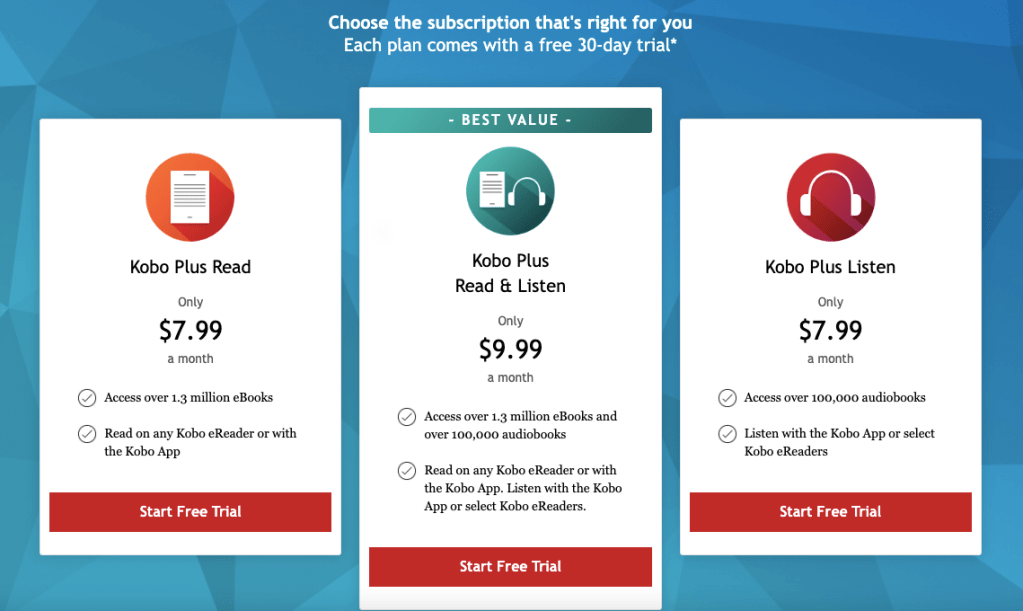
Graphic explaining Kobo Plus benefits for readers.  Text taken from their website:

After the free trial period, we'll charge you $7.99 a month for a Kobo Plus Read or Kobo Plus Listen subscription, or $9.99 a month for Kobo Plus Read & Listen, ...
Free delivery · ‎30-day returns
https://www.kobo.com/us/en/plus

Evaluate for yourself if keeping your books enrolled in Kindle Select is the right thing for you and your business. Don’t blindly follow what people are doing on Twitter and in your author groups. A lot of the reaction is due to the fact that AMAZON made this change. Authors love to hate Amazon, always accusing them of undercutting and cheating us. They added value and upped their prices–like any company does. Like Canva is going to do with all their new toys. I’m waiting for the email to come from them too. It’s what happens.

Another nasty surprise we woke up to is Kindle Direct Publishing raising their printing costs. This caused a lot of anger and resentment too, but someone I trust analyzed how much that means for indie authors, and the fact is, KDP upped printing costs by .15 a paperback. You need to take a look at your business and decide if freaking out over .15 is a wise business decision. I don’t sell many paperbacks. It’s not where my focus is. I market to KU subscribers. Any time I run an FB ad or mention my book on Twitter or anywhere else, I say it’s available in Kindle Unlimited. That is where my readers are. That might not be true for everyone. Authors who write poetry, kids books, and middle grade focus on paperbacks, and if you’re buying author copies in bulk, you can always print through IngramSpark. I think again, people are angry because this is Amazon, but you have to take a look at the industry as a whole. For some reason, I follow a lot of agents, and when they are telling querying writers to adhere to a certain word count because printing is expensive and it’s easier for them to sell shorter books, then it’s an industry problem, not an Amazon problem. Amazon is part of the publishing business, and the publishing industry is global. We are caught in the middle of the pandemic aftermath, and it seems a lot of people forget that. Are you upset about fifteen cents? I’ll give you the quarter I found between my couch cushions.

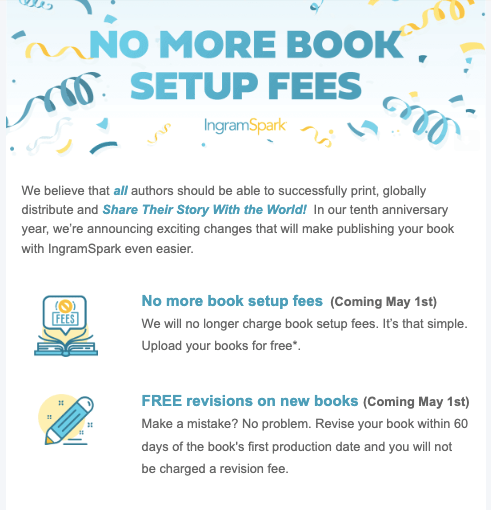
IngramSpark is dropping their publishing and revision fees this month. That was actually a very nice surprise, and I will be taking advantage of it as I haven’t put my trilogy on IS yet. (I abhor busywork and adjusting the KDP cover template to the IS template is a boring pain the butt.)

We believe that all authors should be able to successfully print, globally distribute and Share Their Story With the World!  In our tenth anniversary year, we’re announcing exciting changes that will make publishing your book with IngramSpark even easier. 


No more book setup fees  (Coming May 1st)

We will no longer charge book setup fees. It’s that simple. Upload your books for free*.


FREE revisions on new books (Coming May 1st)

Make a mistake? No problem. Revise your book within 60 days of the book's first production date and you will not be charged a revision fee.

I wondered how they were going to recoup that loss, and they too, are going to be charging more. I can’t remember where I got this screenshot, but I shared with my friend Sami-Jo when we were talking about IS dropping their fees:

To balance the general 60-day waiving of fees, IngramSpark is introducing a higher percentage fee on the publishing side, a "market access" fee. We are currently seeking more clarification on both changes and will further update you as soon as we know the full details.

So while the free title set up and the free revisions are a good thing, they are going to make up that loss, and it will fall to us. I’ve never paid a fee; I’ve belonged to a group like IBPA or ALLi who includes codes as member benefits, or just waited until they had a promotion and used their promo days (a good time was always in December for their NaNoWriMo promo.) Amazon isn’t doing anything everyone else isn’t doing, so please breathe and conduct your book business accordingly.

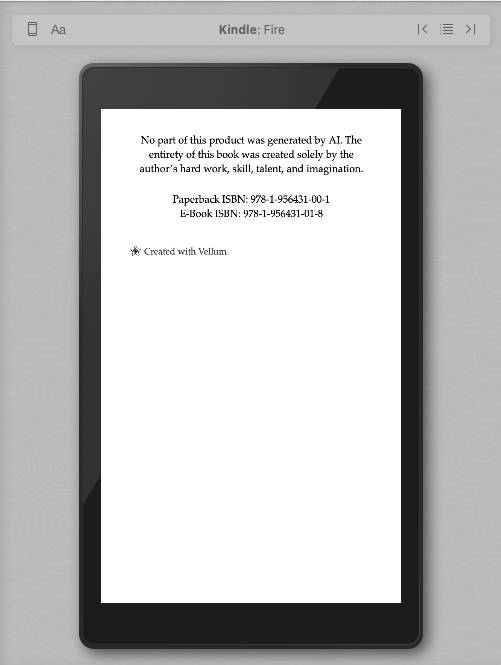
So much talk about AI I’m going to scream. I’m never going to use AI to write my books. I’ve played with Chat-GPT and while it’s fun to chat with Al and bounce ideas off him from time to time, the last thing I’m going to do is give him a prompt and copy and paste it into a book that has my name on it that i’m going to sell. If other authors want to do that, that’s their choice, name, and reputation. My books come from my heart, and I pour a lot of blood, sweat, tears, and wine into my fiction. (Not so much the wine anymore. I’ve stopped drinking hoping to drop a few pounds this summer.) I enjoy writing. I love creating characters and putting them through a lot of crap before giving them their HEAs. Why would I outsource that? I get not everyone feels the same, and that’s fine, but I have started to include a disclosure on the copyright page of my books, and I did it with my newest release Faking Forever, which was out last week.

screenshot of kindle view on the formatting software Vellum
No part of this product was generated by AI. The entirety of this book was created solely by the author’s hard work, skill, talent, and imagination.

My copyright page is absurdly long because I give credit to everyone living and dead who in any way shape or form helped me with my books. Just kidding, but I add all the contributors for my stock images and chapter headers with DepositPhotos plus I give credit to my son and ex-fiancé for helping me with the imprint logo. And maybe one day I’ll update that too so I don’t have his name in my books anymore. Anyway, maybe no one reads copyright pages, but I like knowing that I’ve added it. I’m not going to write my books using it, but I can look at both sides and understand that there can be a place for it. Authors are going to have to do what they’ve always had to do: write good books and find a readership. I don’t think AI is going to disrupt this any more than COVID did when everyone was staying home and writing and publishing books because they didn’t have anything better to do. Publish good books, publish consistently, buy promos and invest in an ad platform. Start a newsletter and reach out to your readers. Let them get to know you as a person, and they’ll respond and connect with that.


Probably more went on, but this is going to be it for me this week, as far as commentary goes, anyway. While I “take a break” I’m going to re-edit The Years Between Us and reformat it using one of the newer styles that came with a Vellum upgrade. Depending on how I feel after that I would like to tackle my small town series and give them a facelift (especially covers because not being able to run Amazon ads is especially annoying), but I also want to stay on track with my rockstar trilogy to have that ready to rapid release by the end of August. There is always something to do!

I hope you all have a fantastic week!

What I learned from an author’s literal, overnight success

This month was a good month for Chelsea Banning who tweeted about her book signing. When Henry Winkler quote tweeted it, other high-profile authors in the writing community picked her up and offered her support as well. If that wasn’t enough, news outlets like CBS tweeted about her too, and as a result her book sold hundreds (maybe even thousands) of copies.

I could fill my entire blog post with tweets mentioning her, but instead, you can search Twitter for her name or follow her here.

Not every one was happy for her, and like Brandon Sanderson’s success with Kickstarter there were some people who, let’s just say, weren’t thrilled with her sudden luck. That’s fine. Some people think success isn’t due unless it’s earned through back-breaking hard work, like somehow how hard you hustle should be equated with the level of success you can achieve (which is a terrible American way of thinking, to be honest, and if it were true, I’d be a millionaire by now).

Instead of feeling sorry for myself and how few books I’ve sold in my lifetime (which I didn’t, but I know there were some who did), I thought I would use her luck and success as a learning experience. What did I learn watching her career explode right in front of my face? Let’s take a look.

Have a great product. One of the biggest lessons you can learn is to put out a quality product because you never know when or where that bump will come from. It’s much easier to share someone’s work if it’s good quality. While Henry Winkler, Margaret Atwood, and Stephen King didn’t personally endorse her book or share a tweet with her book cover in it, her momentum may have halted in its tracks if her cover was bad or if her book wasn’t good enough to share. Not long ago I blogged about an author whose TIkTok went viral. He sold hundreds of copies of his book, but it wasn’t well-edited and his reviews reflected that. I felt so sorry for him and his read-through. While you don’t know what you don’t know, and we’re always putting out the best quality product we can at the time, having your book at least looked over by betas who can spot typos or hiring a proofreader and getting an inexpensive cover from GetCovers can go a long way if you’re a broke DIYer.

Have a way to capture readers. Chelsea went viral on Twitter and her followers reflect that. She went from a small following to over 10k almost over night, but we’re told the best way to keep a reader is to start a newsletter and grab their email address. (Chelsea has one through MailChimp and you can sign up here.) With the uncertainty of any social media platform (Musk taking over Twitter evidence of just how shaky a platform can be) it’s better to keep your readers on land you own. When you start a newsletter, you can export your list regularly so if you ever need to change aggregators, you can and not lose any subscribers. Please don’t try to set up a newsletter through a personal email account or something like vaniarheaultauthor@gmail.com (that is a legit email for me but I don’t check it so email me there at your own risk), as it can be illegal to do so. For more information about making sure your newsletter is compliant, check here, and you can find another great resource here. I go through MailerLite, though I don’t have a double-opt in feature. When I run ads to my reader magnet, people can give me their email address voluntarily and at the end of the book, they have another chance to sign up if they didn’t before. My unsubscribe link is clear at the bottom of every email, and I do get some occasionally. I like it because I can create pretty newsletters with specially placed text boxes and images–nothing like what you can do with gmail.

Have something to offer your new (new) readers. I don’t know what Chelsea’s situation is, and of course you can’t predict when something like this will happen, but I hope she has another book coming soon! If not, she can use her newsletter to keep readers engaged between books–and maybe she already has a reader magnet she gives away to her subscribers. Like Brandon Sanderson before he started his Kickstarter, he already had the four books written and was able to capitalize on his hard work. It’s also a great marketing tool to be able to say all the work is already done. If Chelsea doesn’t have a second book in the works, maybe she has an idea and can put up a pre-order for the next book. That’s another reason why writing in a series is a good move, and having them look like they all belong together encourages sales and read-through.

Put yourself out there. That is probably the biggest takeaway I learned from Chelsea’s experience. She stepped out of her comfort zone and approached a bookstore to host a signing. If you were a little jealous of her success, look at what you’ve done to step outside your comfort zone. She tried, set up an event on social media, and when it didn’t go her way, she shared that, too. That alone is worth more than a pat on the back, and more than likely, that bookstore was happy to host her because, looking at number one, her book is professionally put together. I have an independent bookstore not far from me, but I have never asked them to carry my books on consignment or otherwise. I know they do, as I flip through the local authors section every now and then and there are always books with the KDP Print stamp in the backs. I just have never bothered as being on a bookshelf has never been my dream, and I know my readers are mostly in KU. But if all you’ve ever wanted is to see your book on a shelf, then what are you waiting for? Your courage could lead to bigger and better things like it did for Chelsea.

I’ll never resent anyone who puts in the work and reaps from that work. With the start of the new year upon us, how do you plan to create your own luck?


I don’t have much personal news for myself. We had a lot of snow last week, and I ran over something and now my car is leaking oil. I can’t get it in until Tuesday, so fingers crossed I can get my errands done without trouble before I can get it fixed. I wanted to be at least 50k into my rockstar romance by now, but it’s been slow going, and I’m only at 46k at the time of this writing. Hopefully when you read this I can be at 50k because I can write all weekend without much interruption. I have 30 days before my first book in my trilogy releases and I’m going to try to do a few things from the 30 pre-launch plan that came with Stephanie Burdett’s social media kit that I wrote about last week. If anything, at least I can get my FB author pages going so they don’t look so empty. After Christmas I’ll put all three paperbacks on Amazon and list them on Booksprout for reviews. And for a kick, I’m still going to put book one of my duet on a couple of free days and buy a promo or two bump up my pen name. Just a lot of waiting, but I have my WIP to keep me occupied, so it’s all good.

There’s one more Monday where I’m going to post my end of the year recap, and unless I have something I want to say, I’m going to take Monday the 2nd of January off for a little break. I always say I’m going to take a break, but I never do, so we’ll see.

Have a great week!

The biggest lesson I’ve learned in 2022 and how I’m going to use in it 2023

Like a reader pointed out in her comment on my blog post last week, sometimes people have to learn things on their own and in their own time. That’s never been more true for publishing. There is so much information out there, and to consume it in some way (blog post, podcast, non-fiction book, reading a tweet) then applying it to your own circumstances can be a lot of work–and you need a healthy dose of self-awareness to even know you need the information in the first place. Not at easy feat when we’re told from the second we start writing our books that our novels are our babies and every baby is beautiful, not a product to sell.

https://quotefancy.com/quote/1139974/Jackie-Collins-I-have-written-20-books-and-each-one-is-like-having-a-baby-Writing-is-not

It’s important to know where you want your publishing to go (well it is for me–I’m done trying to tell people what to do), and you can think about these things if you’re unsatisfied with where your career is up to this point: Do you want to publish for fun and earn some pocket money, or do you want more? Do you want to make what you’d earn working part-time? Do you want to be a full-time writer and quit your day job? I think a lot of us, whether we really want to admit it nor not, would love to at least make a part-time income. Part-time, for me, would be about $10,000/year. Depending on where you live in the world and what you do as a profession, that’s either a lot or barely what you earn in a month at your day job. I work for a non-profit, I’m barely scraping by, and that’s half of what I make in a year. To say an extra $10,000 a year would turn my life around is an understatement. It would take care of a lot of worries for me. It’s not asking a lot, but that is the biggest thing I’ve learned this year–I have to write out a goal in black and white and figure out a plan on how to get there.

Changing what I’m writing was a good start (and something not a lot of people are willing to do). Most indie romances are written in first person now, and two years ago, I pivoted and that’s what I started writing in. It wasn’t that difficult–just a minor change in mindset and some feedback to put me on the right path since I’ve never written in it before and only read it without acknowledging it like the Hunger Games trilogy and the Twilight series.

But I need to do more than that. Through the years I’ve gotten the basics down: that marketing pertains to your whole brand and what you’re offering readers across the board as apposed to advertising which is only buying promos and running ads to your books. It’s funny that when you start a pen name you get a fresh start when it comes to your brand. I had to figure out how I was going to present myself to readers. It helped that I already had a few books written (not published) and I caught on to some characteristics/themes that I can play with: my characters are older, some divorced, they’ve gone through a trauma which means a shitty backstory they have yet to overcome so they can find love. My covers are cohesive, even if they aren’t in the same series, and over time I want people to be able to catch a glimpse of a cover and say, “That’s a VM Rheault romance.” That’s branding, that’s marketing, and that’s something I’ve learned on my own over the past five years. That’s not anything anyone can explain to someone else–it has to click. (When you have 20 books and they all look different, maybe it will click or maybe it won’t, or maybe you just don’t care. And definitely, under no circumstance, will I tell you that you should.)

Made in Canva

So for 2023, I thought I’d do the math and figure out what I needed to make $10,000 a year. Having more books, of course, is helpful all around, and right now I only have three under my pen name, though All of Nothing, a standalone under my full name, has been my biggest earner since I published it and my small-town holiday series comes in second because of read-through. I’ll always run ads to those books, but as I figured out during my Freebooksy promo, I think I just want to focus on my first person books for now and see what I can do with them. I have three out, I’ll release three more in January, and a standalone in March.

What I’m thinking, and though I haven’t accomplished it, I know it’s achievable, is the idea taken from the 20booksto50k concept, being if you have 20 books published, you should be able to make $50,000 a year. Twenty books is a lot of books (and let’s assume we’re talking full-length novels, only based on the idea that I’m in Kindle Select, and the longer the book the more you earn from page reads.) Maybe then, you can halve that and say I want to make $25,000 off ten books. That’s nothing I’ve done with my ten that’s written in 3rd person, but I know where I went wrong, even if they are in 3rd person. I didn’t stick to one sub-genre, my covers were abysmal because I did them myself starting out, my trilogy wasn’t solid because my writing just wasn’t there yet. I could have hired a better editor than I had, though, I just hadn’t written enough to find my voice and my writing was the best it could be at the time. I definitely could have had better covers, but I hadn’t heard the secret of researching the top 100 in that genre and blending in with those books. I was all about the “vibe” and capturing it on the cover, and I definitely didn’t know about stock photo sites and used pictures from Pixabay which is a huge no-no. I didn’t know how to write good blurbs or good ad copy for ads, and I didn’t know how to use those platforms anyway. It’s not a surprise that I haven’t earned $25,000 a year off those books. I was doing too many things wrong. Even though they’re “fixed” too much time has gone by to do anything with them.

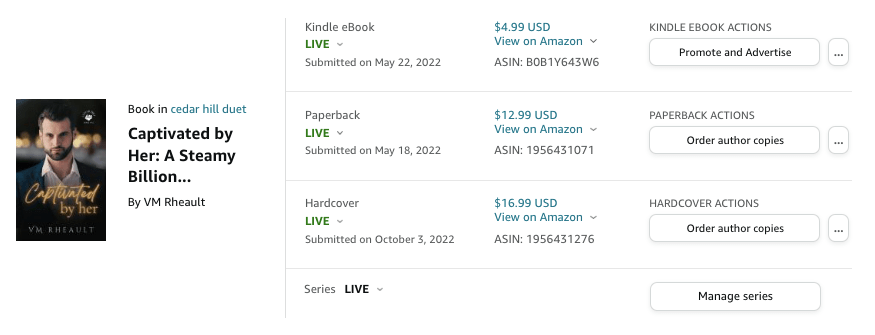
Now I’m on the right path, or at least a frontage road going in the right direction, having a concrete number to shoot for is probably best. There are some things you need to know, such as your ratio of read-through from book one to the others if you have a series, and how much you earn from page reads if you’re in KU. I’m actually kind of surprised to see how many authors don’t know how to calculate pages read when they’re in KU. I’ll show you quick in case you don’t know. To find how many KENPs (Kindle Edition Normalized Page) are in your book if it’s enrolled in Kindle Select so it’s available in Kindle Unlimited, you have to go to your bookshelf, click on the promote and advertise tab of the ebook and it’s at the very bottom of that page.

My KENP for Captivated by Her is 404. Now that we know that, we can divide the number of page reads with that number to find out how many total books have been read. When I look for the number of pages reads for Captivated by Her for this year I get 14,800. 14,800/404 is 36.63. So roughly 36 full books in page reads since I published in June. You should know the KENP of all your books. (If you want to know how much you earn, multiply the total number of page reads by .0045 [the average payout of a page read by KDP–this fluctuates and you can use .0044 or even .0043 if you want to assume a decrease] and in my case 14800*.0045 is $66.60).

The KENP for the second book in that duet is 397. We can do the same for Addicted to Her: I’ve had 4593 pages read, equalling 11 full books read. (Royalties–4593*.0045=$20.66.). We don’t have to do the math to see that there is a significant drop off from book one to book two. And thanks to Mal Cooper, this is how you figure that percentage. But first, KU reads are only part of the equation. I did have a couple sales, so let’s factor those in.

Captivated: KU page reads equalling 36 books. Sales 13 (9 ebook, 4 print) Total: 36+13 = 49
Addicted: KU page reads equalling 11 books. Sales 5 (3 ebook, 2 print) Total 11+5 = 16

According to Mal’s math, you divide the number of book 2 by the number of book 1 and it looks like this:

16 / 49 = 32%.

32% of the readers who read book one went on to read book two. Mal says you want read through from book one to book two to be about 50% and each book after that will likely drop even more. If you want to read more about read-through, I grabbed her formula from the post she did for Dave Chesson, and you can read it here. https://kindlepreneur.com/calculate-series-read-through/

Where were we again? Oh, yeah, so I want to know how many books I would have to sell if I want to make $10,000 from my books next year. My books are around the same length so we can assume I make $1.78 from every full book read in KU and $3.49 for every ebook sale. (Remember to give KDP or your other platforms their %–Amazon takes 30% if you choose the 70% royalty, and 70% of 4.99 is $3.49.)

If we just go by full sales and not page reads, I would have to sell 2,865 books in 2023 to earn $10,000. Considering in my lifetime of publishing, I’ve only sold 887 books (not counting page reads) that seems like a significant feat–on the other hand, it’s not as many as I thought it would be. $10,000 sounds like such a large sum, LOL. But that’s also 5,617 full books read in KU, which may or may not be easier. ($10,000/$1.78 = 5,617 books.)

The math seems like the easiest part–it’s the advertising and marketing that trips us up. So what am I planning to do to sell that many books?

Use my Bookfunnel subscription in a more productive way. I haven’t taken advantage of any promos or newsletter builder opportunities. I’ve been waiting until my newsletter looks like it has something to offer and also been waiting until I have a few more books in my backlist. I plan to snoop around after my trilogy is out. I’ll have six books published and that seems like a good number to see how things go.

Keep going with ads. After the holidays I’m going bump up my bid per click on my Amazon ads and create some new ones with updated keywords and see if that helps. Right now I’m doing conservative bidding per Bryan Cohen but romance is competitive and bumping up my bids might help with impressions and getting more clicks. Amazon ads are easy with category and keyword ads, but Facebook is a bit trickier when it comes to building your target audience. I’m going to research a little more into how to build that audience so I’m not wasting clicks.

Buy more promos. There are a few I haven’t tried like Ereader News Today, Robin’s Reads, and Fussy Librarian that will put books in front of readers who have never heard of me before.

Start posting regularly on my FB pages. I was sneaky and turned my Vania Margene Rheault Author page into my VM Rheault Author page so I don’t haven’t start from scratch there. I don’t have a significant following, but I connected that to my Instagram that I also rebranded. I’m going to try harder to post content on there rather than waste time on Twitter. I’m so disillusioned with my experience on Twitter lately that the best thing I can do is to spend that time in a place that will have a better return on investment. I also have my V’s Vixens reader page that I started that I run ads from. If I post content there regularly, I can pick up followers from my ads. Building a social media platform takes time, patience, and content. If I trade the hour I spend scrolling Twitter every day, I should be able to post content no problem and that should be better for me long-term.

Publish consistently. The best thing I can do is publish consistently. I have the next 18 months set out and hopefully, by the time those books run out, I’ll have 6 more (or another year’s worth). I don’t want to think of my books as widgets on a factory conveyor belt, but I have to admit, there isn’t so much pressure to write quickly when I know I have time. With how my mind works it’s difficult for me to write a new WIP and go back and promote older books, but I’m going to explore turning two days a week into marketing only and then the rest of the week into writing days. Maybe that will help. Focus is a good thing until it’s not. Then you have to figure out ways to work around it and make it work for you rather than against you.

Keep putting my books on Booksprout for reviews. Publishing without reviews is tough and my duet may never recover (which would be a crummy start to my pen name). All I can do promote it and hope readers who like it review it. Unless I pull them out of KU and put them up in Booksprout, there’s not much more I can do, but I’m not willing to do that. It was a mistake I’ll learn from and move on.


Will I get to $10k in 2023? I don’t know. I’ve never been in this place in my life with all that I know now. If all goes to plan, I’ll have 8 books for sure, maybe 10 with two of my six book series released toward the later part of the year. All I can do is my best, apply what I’ve learned, and hopefully I’ll find some readers who enjoy my books!

I have three more Mondays after today to post before the New Year. One will be my end of the year recap that I usually do, and the other two, I’m not sure. The last Monday is the day after Christmas, so I might take that Monday off. We’ll see. I hope you all have a wonderful week!

Compassion Fatigue. What is it, and how does it affect your marketing?

Tired and sad woman sitting at desk with forehead resting on her hands.

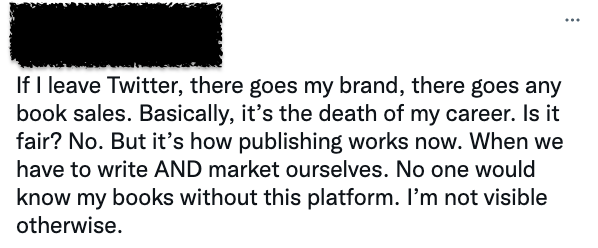
Lots going on over on Twitter last week. Elon Musk reluctantly took over causing a tsunami of emotions. A lot of people talked about leaving (and still are), only to follow up that thought with, where else is there to go? Twitter is a unique experience, offering bite-sized content and opportunities to respond to other people in 280 characters or less. If you’ve read any of my prior blog posts, you’ll know I spend a lot of time over there, but I don’t use it as a promotional tool. Plenty of people do, and what started popping up in my feed after Musk took over surprised me. More than one person said, “If I have to leave Twitter, there goes my writing career.” As an example:

This is actually a common refrain, people depending on Twitter and nothing else because it’s free, and as long as you tweet regularly so the algorithms remember who you are, you can nurture a decent reach. But no matter how far you reach, after a while you will run out of people who will want to buy your books. Maybe that saturation point will take a while, especially if you’re new and you put a lot of effort into building your account, but anyone with a huge account can tell you that Twitter doesn’t sell books in the number they wish it did.

Where does compassion fatigue come in? Let’s first take a look at what it is. I hadn’t heard of it until I was chatting with my friend Sami-Jo about this very topic which led to this blog post. According to WebMD compassion fatigue is:

Compassion fatigue is a term that describes the physical, emotional, and psychological impact of helping others — often through experiences of stress or trauma. Compassion fatigue is often mistaken for burnout, which is a cumulative sense of fatigue or dissatisfaction.

https://www.webmd.com/mental-health/signs-compassion-fatigue

When you think of Twitter and marketing, you think of posting promotional material like this:

made with Canva

Or maybe something not so fancy like this:

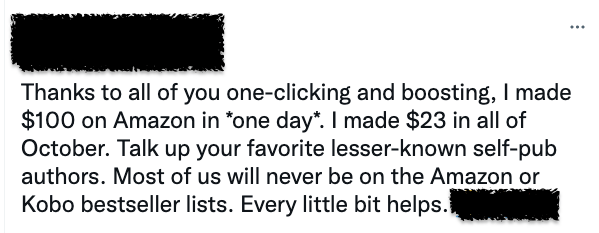
Add a link, and there you go. Something quick and cute that can reach hundreds, if not thousands, of people in a few minutes. I can see why Twitter would be people’s first choice. Free and easy, it gives off the illusion you’re marketing. I say only the illusion of marketing because to truly market and advertise your books, you need to show those ads to readers who read your genre and want to buy. Writer Twitter is full of writers, and while, yes, we are readers, we don’t read nearly as much as a reader who doesn’t write. Also, there is a mish-mash of genres on Twitter, and even if your promo reaches 1,000 of your followers, only 10 of those could read the genre you’re writing in.

So, let’s take this a little farther. You’re promoting your books, chatting with other authors, sell a handful, but not as many as you think you should because you spend A LOT OF TIME on Twitter (and buying indie books, but let’s not go there because a buy for a buy is icky and we don’t do that, right?). Time that could be better spent writing, if you’re honest with yourself. And this is where compassion fatigue comes into play. You start complaining about sales. Tweeting screenshots of your empty sales dashboard, moaning that a new release didn’t take off. Then some of your friends buy one of your books to cheer you up, and for that customer, you’ve reached your saturation limit. Then you do it again and again for every new release, and you get more bitter and more bitter because your friends aren’t going to buy every book you write. They can’t. They can’t afford $4.99 a book every time you release. They have their own careers and family obligations to see to, and let’s face it, $4.99 is a gallon of milk, right? They have kids they need to feed, and times right now are tough. You get angry your books aren’t selling because you need money too, they get sad and not a little upset because they’ve helped you and can’t anymore.

Complaining about sales when you use Twitter to find readers will only tell the people who have bought your books that their purchases weren’t enough.

When you complain on Twitter and you garner some sales from tweeting your empty sales dashboard, those sales turn into pity buys, and that is not a good sustainable marketing strategy.

So when someone says, I don’t have a writing career without Twitter, I’m baffled because yes, while it’s free, there are several other ways to promote your books. Relying on only one way is a fool’s game and one you won’t win. I’ve blogged a lot over the past couple of years on ways you can market your book that’s not Twitter, and those are: buy a promo from places like Free/Bargainbooksy, E-reader News Today, Robin’s Reads, Fussy Librarian, and more. Buying a slot in one of those reader newsletters will grab you more readers than hours of tweeting into the void. Write a reader magnet, set up a newsletter, and build your reader list through platforms like Bookfunnel and StoryOrigin. Learn how to use Amazon ads and run a couple of low cost-per-click ads. I would rather run ads and sell a couple of books a day than spend hours on Twitter begging people to buy my book. Publish consistently, and that means the number of books a year as well as not genre-hopping for a bit to build an audience for that genre.

I get that authors are afraid to sink money into their books, but ads and promos are only expensive if your book isn’t advertising ready and it doesn’t sell (after all, you’re supposed to make more than you spend. That’s the point of an ad.). I’ve seen people say, I bought a promo and didn’t earn my fee back. That’s a you problem, not a promo problem (and definitely not a Twitter problem). Likely, your cover wasn’t good enough, or the ad copy they ask you to write to go along with a picture of your cover wasn’t hooky enough. Maybe you were trying to promote a standalone when a lot of earning a fee back consists of read-through or the purchases of other books in the series.

The good news is, if you’re losing money on promos, you can adjust. Write something new. Replace your cover with something from GetCovers (their prices are very inexpensive compared to some that are out there). Workshop your blurb and change it on your Amazon product page. But out of anything you can do, stop complaining on Twitter. Your friends and followers aren’t responsible for your writing career. They can’t carry you. They want to write and sell their own books. After a while, they’ll get sick of seeing your promos and hearing you beg. They’ll mute you out of bitterness and a feeling of worthlessness that their support wasn’t good enough for you.

If Elon Musk shuts down Twitter either by fault or design, how fucked would you be? Would you consider your writing career destroyed, or would you simply adjust your sails and chart a different course? I’d miss some friends I’ve met on Twitter and don’t know how to contact any other way, and maybe I wouldn’t see as much traffic on my blog as I do now, but Twitter closing up shop would have zero affect on my book sales. That’s a good thing. If you depend on Twitter and you’re telling yourself you have nowhere else to go, you’ve trapped yourself there out of fear. Don’t do that. You are in control of your writing career, not Elon Musk. Figure things out for yourself because not everything is forever.

As for the tweet above? She did end up with a few pity buys, and maybe that’s the way publishing works for her, but it’s not the way it works for me, and I hope it’s not the way it works for you.

At some point I’ll probably get beat up for this blog post, and I’m not trying to make anyone feel bad or embarrass anyone. Writing and publishing for me is pretty much my whole world, and if I depended on one unsteady platform for my longevity, I would quit writing and funnel my passion into something else. It truly is a lonely road, and isolating yourself only makes it worse. There’s talk now that everyone will need to be verified on Twitter if they want their tweets seen, and the cost will be $11.00 a month. Why sink further into the pit if you plan on paying that? If Twitter isn’t working for you now, it won’t work for you then.

With the holidays coming up and a shaky economy, I wish all of you good luck writing and publishing and hope 2023 is your best year ever.

Monday Musings and an Author Update

I don’t even know where to start this week. As much as I absolutely love doing every little bit for each and every book, these projects feel like they take so much work to get from my head and onto Amazon’s website.

Last week I finished listening to the last book of my trilogy. I can pick up 99.9% of typos that way, and it makes for a pretty clean final draft. I need to keep a list of words I like to lean on while I’m writing, as I discovered the word “just” in my 3rd book and went back to the first and second and realized I abused it there too. All told among three books, I think I edited out about 300. Some make sense, some can be deleted without changing the sentence, and sometimes a better word can replace it. It wasn’t a huge task, but it added an extra hour to my editing on Wednesday. But, I know the books are better for it, so I can’t be too annoyed. Last Friday I was able to format them all, much to my delight, and over the weekend I was able to create my covers.

I’m not going with the covers I talked about in my last blog post. Honesty is always the best policy (with yourself and others, but especially with yourself), and they were just not a good fit for the billionaire subgenre. It sucks, because they’re pretty and I like them, but they aren’t going to do the job. What really tripped me up was looking for models who are older. I have one MC who is 45 and another who is almost 50, and while I’m not one to care if a model matches the description inside, I can’t portray young men on the covers when there are not young men inside. There are very few older men models on DepositPhotos (that are model quality, anyway, sorry guys), and I happened to use the most popular one on Rescue Me. Luckily, my next couple of books are finished cover-wise, so I won’t be scrolling through stock sites again anytime soon. DepositPhotos seems to be kind of picked over at this point, and that will be a dilemma I’ll need to face down the road. Covers are super agonizing, but I’m confident what I finally came up with will work. They are better suited, and they still have their heads. I suppose if that’s the only thing I can’t bend on, I’m not doing too bad.


The problem I have, and will always have, is doing what you want vs. what you need to do to sell books. Someone in one of my author groups on FB posted the other day and said the best thing about being an indie is not having to appeal to everybody. I read that, and I was so confused. Of course you don’t want to appeal to everybody, but you want to appeal to SOMEBODY, preferably readers in your genre, and you can’t do that if your cover looks like Photoshop and DepositPhoto had a baby. I write this blog and publish my books in the POV of a single mom with a full-time job that doesn’t pay very much. I get it. You’re broke, I’m broke, and paying out for everything is just not possible. I have never ever said you shouldn’t publish if you can’t afford things like covers and editing. But I was listening to a Clubhouse room not long ago and one of the speakers said this: You’re gonna pay. You’re gonna pay at the beginning when you hire out for an editor and cover designer and a formatter if you don’t know a kind soul who has Vellum, and if you don’t pay there, you’re going to pay with readers after you publish your book. You won’t have any. If you don’t have money to spend, you have to spend the time, and I can’t tell you how many premade sites I perused, how many current top 100 romance lists I looked at trying to gauge what I needed compared to the skills I have that yes, I have tried to cultivate over the course of the six years I’ve been publishing (but I am not an expert by any means).

It’s easy to believe what you hear. I got a lot of good feedback from those sunset/city covers I posted on Twitter, but Twitter writers are not my readers and while I appreciate the compliments, it doesn’t matter if they liked them or not. What matters is my readers like them enough to buy my book and read it. That’s all I want. That’s the cover’s only job. It isn’t about pride or what you like, and you can look for validation on Twitter until the cows come home, but when you buy a promo and you don’t get your money back, that’s the real validation. Giving away 4,000 copies of my first in series during a Freebooksy and paying for that fee the first day with KU page reads is a high that will never, ever get old.

Anyway, that seems to be a theme lately, the them vs us. Indie vs. readers, indie vs. traditional publishing. There is no versus if you do things the way things are meant to be done. There is no line, and I keep trying to figure out who is drawing it. If you’re standing on one side of that line, why? You have to identify with being an indie so hard that you’re willing to sacrifice readers for the control? Who is really in control when a reader sees your book, doesn’t like the cover, doesn’t like the title, doesn’t like your blurb and decides not to buy? Your control is an illusion. The control is with the reader who bought a different book.


Ooof, I’m done with this part of it. There are too many negative emotions online lately. Fear and doubt and desperation. No sales and launches that sink. 965 words of you can do better and your books and readers will thank you.

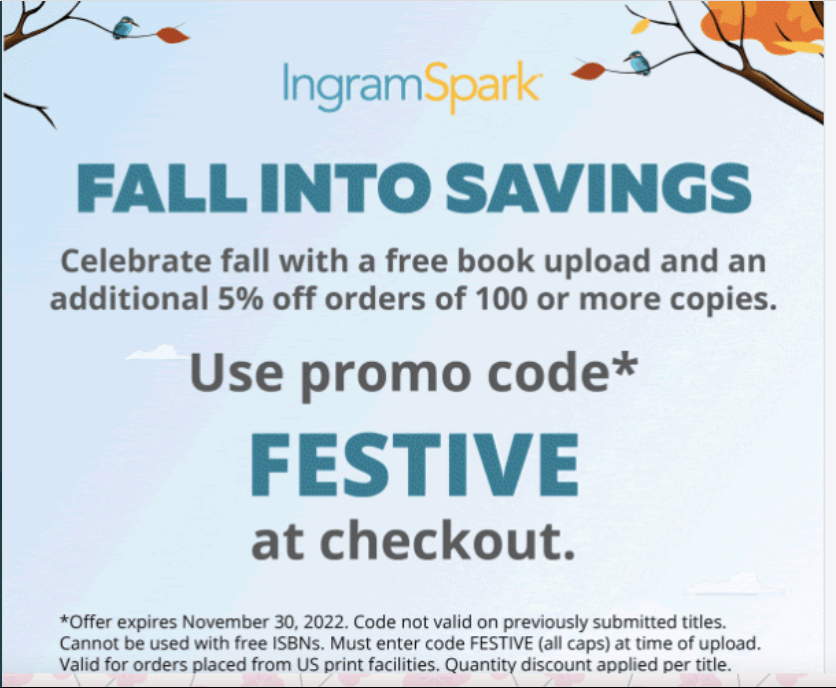
Besides the painful realization my covers needed a third revamp (no one saw my first try besides my friend Sami-Jo) the rest of what I have going on should be okay. Vellum is a dream and I formatted pretty quickly. I need some blurb feedback that I’ll seek out while I get some other stuff done, and all in all, I’m excited to publish these. I still have to adjust my author name on the hardcover of Rescue Me and approve it, but otherwise there’s nothing I need to backtrack for unless I want to load it into IngramSpark too, but I’m not in a hurry to publish my paperback there. If you’re looking for a freebie upload, you can sign up for their blog. They’ll let you know promo codes every so often, and this one popped in my email yesterday:

6 Figure Authors Podcast did a catch up episode that I was excited to see. I thought it was old until Lindsay (on Twitter) said it was new, and you can listen to it here.

That’s about all I have for this week. I’ve decided to work on completing my series that I started over COVID lockdown. I have two done, four more to go, and last night I was trying to think of why I stalled out when I realized it was because I decided I needed a reader magnet for a newsletter that was a long time in coming, and I stopped my series to write a novella. Three full-length books later I realized I can’t write a novella and ended up using the shortest of the three (76k words) as a freebie for my newsletter. Now it’s time to get back into finishing that series because I want to tackle a long series about one couple like Sylvia Day’s Crossfire series. I’m not sure on plot, though Lindsay Buroker was talking about psychics some time ago, and that idea has been rattling around in my brain for a long time now trying to tie a psychic in with the billionaire subgenre. And at some point I have three standalones I want to write, so I’m glad I won’t be running out of material for the next little while. But as always, I’m getting ahead of myself, and maybe I’ll take a couple days off after my trilogy is uploaded to Amazon and my proofs ordered. I’m on track to publish in January providing nothing strange happens. I won’t be participating in NaNo this year, though I rarely do. This November I’ll be rereading the first two books and making plans for the other four. I don’t have their plots laid out yet, and I can only blame the planster life for that. I know who the characters are for the most part, but not much more.

Next week I can write about my second try with Booksrpout and catch you up on how my Amazon ads are doing and how my Facebook Ad is doing with my reader magnet and my newsletter sign up.

Have a good week!

Monday Author Update: Spring is Here!

There isn’t a whole lot going on with me–I’m in surgery today and I have some great guest posts lined up for the next three weeks. Barbara Avon is writing about being a multi-genre author on April 4th. She’ll also have a new book out by then, so watch for that! Vera Brook will be blogging about the benefits of writing short fiction, and that will post on April 11th, and I interviewed Paranormal Romance and Urban Fantasy author SJ Cairns for the 18th. That interview will have a giveaway, as well, so make sure you pop in!


I’m still plugging away trying to rewrite sentences to “take” out take and make out of my manuscripts. Those are just two crutch words I fell back on when I switched to 1st person present and I didn’t notice. After this series, I’m going to read over my reader magnet again and buff that up. While I start to build my newsletter signups after I edit my reader magnet one more time, I’ll have to edit my duet again. I mean, those words aren’t crazy to the point where the books sound bad or I would have hopefully noticed a lot sooner, but I can’t deny that the sentences are stronger when they’re rewritten. It’s such a drag, especially since I probably used those words in ALL my books, and I have two more books in a series I started and four more standalones that I’ll need to re-edit.

If you want to know what I’m talking about, I’ll give you an example:

Zarah will have that same power. I see glimpses of it when she’s feeling good. It makes me proud of her, but her legacy isn’t something I can comprehend.

This is a sentence from the fourth book of my series. You can see the “makes me proud” part of that sentence. I do that…all the time. In this example, it’s easy to fix it from that to simply, I’m proud of her, but her legacy isn’t something I can comprehend.

You might not think it’s a big deal, but when I do this 250 times in an 80k novel, it’s a bit much.

Another example is something like this: She stands from the couch and takes the pill bottle I gave her off her desk.

Rewriting this is simple too: She stands from the couch and lifts the pill bottle I gave her off her desk.

I use “takes” a lot as a verb (I used the word on average 200 times per novel) and it’s as boring as “got” and “get.” (In the book I’m reading now–the author uses “get” 300 times, and “got” 164 times, which is really distracting. But she doesn’t have my problem, and she uses “takes” only 70 times. Haha. We all have our issues.)

It’s not difficult to find a better verb, and the sentence is stronger and reads better.

As I said, it’s not time consuming, but when my brain is stuck, figuring out a different way to say the same thing can be difficult.

That pushes back my launch of my duet even longer than I had anticipated, surgery aside, but I’m trying to convince myself that’s a good thing. I want to launch this pen name strong, start off with a solid foundation because I’m tired of doing things the wrong way and wondering why nothing is working. And the very last thing I want to do is publish a book and have to re-edit it. I hate that. Part of my process for this new pen name is to try like hell not to mess up a release so I don’t have to go back and fix anything.

So, that’s my life. Editing, trying to set things up so I can launch my duet. My best hope now is to have my duet out this summer sometime. I don’t need long to re-edit a book, but sometimes I feel like it I need a lot of brainpower to rewrite a sentence. It’s actually pretty easy, but when your brain is stuck on something, you need to jiggle it loose and figure out another way to say the same thing. I don’t aim to take out all of them–I believe you can edit so much you edit out your style and your voice and I don’t want to do that–but now that I see them, I can’t unsee them, and I can see where my brain would get stuck in that rhythm while I was writing.


There’s a lot of talk about writing conferences this year, but I’m not going anywhere. Not because of COVID, just because I have so much in virtual stuff both paid and free to get through that I don’t have time to go anywhere. As much as I would love to be able to network in person, I would like to have some books out too, so I’m focusing on editing, publishing, and building my newsletter through social media while trying to consume the content I’ve paid for.

On a happier note, I looked at MailerLite’s emails, and they aren’t getting rid of their classic design. I don’t need to redo or relearn anything when it comes to my newsletter, so that was welcome news. But since I upgraded to a BookFunnel’s integration I’ll need to figure that out before I start promoting my reader magnet.


The Six Figure Author Podcast with Lindsay Buroker, Jo Lallo, and Andrea Pearson is ending soon. I was pretty bummed when they announced it during their last episode, but I can see where the podcast would be time consuming. Jo said in the comments of this episode they’re leaving their FB group up, so that’s nice. It’s a great resource for indie authors, and maybe they’ll post their career updates there instead of sharing on their podcast. If you want to listen to their latest episode, you can find it here:

I will try to update you all when I’m feeling better, probably on a Thursday since Mondays are booked for the next three weeks (which takes a lot off my mind) and I’m thankful I have friends willing to help me when I’m in a tight spot.

I hope you enjoy the guest posts and enjoy the warming temperatures! I know I will.

Hustle Culture in the Indie Community

I didn’t even know what I was going to write about today, until I saw Kim Kardashian trending (when isn’t she) for telling people to get off their asses and get to work.

This comes at a great, or maybe not so great, time when several assistant editors in large publishing houses recently quit their jobs. It’s not a secret editors are underpaid and overworked, and houses cutting the positions due to budget cuts, something that’s evident when you pick up a traditionally published book and wonder why there are so many typos. (It wasn’t that long ago I read a book where the author kept using the word “sallow” as complimentary adjective. The word does not mean what she think it meant–an easy catch for an editor–and I wondered why no one told her to fix it.)

With gas prices soaring while the pandemic is still around (yeah, it really is), sometimes it’s difficult think of how someone could work harder than they already are. Cost of living has gone up (the price of meat is out of this world) but pay rates stay the same (my last raise was .25/hr–I’ll be sure not to spend it all one place), and there doesn’t seem to be a solution…especially when the overall sentiment these days is, if you don’t have money to pay your bills, you’re not working hard enough.

The same holds true for indies in the indie publishing industry. If you can’t crank out a book a month, you’re not working hard enough. Two of these tweets popped in my feed this morning, so it’s on people’s minds:

A lot has to do with the industry and the way it’s evolved since Jeff Bezos created the Kindle. Expectations changed, more authors than ever are publishing books. Thousands of new titles a month are published on Amazon, and while it’s easy to say a rising tide lifts all boats, it’s a lot easier to feel like your boat has a hole in it when you’re comparing your career to other people’s.

What it took me time to understand is that you can burn out doing what you love, and you can burn out doing what you love if you don’t see any small measure of success while you’re doing it. For the most part I love all that goes into indie publishing: learning how to do covers, watching ad platform workshops–I”m watching a craft workshop with Melanie Harlow later today. I love it all, but I resent it too, because how hard do I have to work to move the needle, how much money do I have to spend (which seems counterproductive to what I’m trying to do), and how long is my “overnight success” going to take?

The last thing I want is to let the industry drag me down so much that I don’t enjoy writing, on the other hand, my finances are taking a beating right now, like many who have found themselves in tight spots when the pandemic hit, and it’s really difficult to hang in there when I don’t know where my rent is coming from.

I agree with Kim to a point. You do have to work for what you want. You have to put in the work. You have to write the words, work on your craft. Before worrying about marketing or ads, or starting a newsletter, you have to learn how to write good books, and that’s a never-ending process. But after that, then what? When Amazon feeds into the hustle culture by rewarding your books with a new release bump that will fade after 30 days…. It’s why authors aim to publish so quickly–they’re trying to feed Amazon’s algorithm the best they can. Relevancy is rewarded with ad performance and rank, and you have to do a different kind of hustle if you can’t publish four times a year.

I understand what it’s like to feel guilty for taking a break–it wasn’t that long ago on my blog I was outlining the ways I could make my surgery recovery work for me, instead of, you know, resting. And even if I want to just lie in bed and “rest” I have plenty of webinars, both paid and free to watch, and hours of podcasts I’ve fallen behind listening to, that would maybe keep me from feeling like I was wasting my time. But what I won’t do, and probably a lot of people in my position wouldn’t do either, is flip on Netflix and watch TV all day.

The most insulting thing I find about what Kim said is that there are plenty of people who put in the time, they just don’t have anything to show for it…yet. She wasn’t always rich and famous. At some point, way at the beginning of her “career,” she was a personal shopper/dresser hanging around Paris Hilton making sex tapes, and it’s easy for her now to stand on her pedestal and preach about how hard she worked to get where she is.

I mean, I get what she’s trying to say. I see a lot of writers, especially on Twitter who say they don’t have time to write, yet in the next tweet (ahem) they’re talking about video games, or watching a new show, or what they’re baking, what they’re knitting. I can appreciate filling the creative well. I did replace my Kindle and renewed my KU subscription, so I’m all about reading for fun. But you are making a choice when you’d rather play on TikTok than sit down and write. That is a choice, but then I guess if you’re making that choice, the hustle culture conversation doesn’t apply to you because you already know how to relax (haha!).

We don’t have to work twenty-four hours a day, seven days a week, even if that’s what society is telling us we need to do. You have to take a break, and if you’re working two jobs, maybe that means writing falls to the wayside, and at this time in your life, there’s not much you can do about that except hope things turn around for the better. If you’re able to put in the time without getting burnt out, why not? But if you can’t, don’t let people make you feel bad. You’re doing the best you can.

I just wish my best paid off a little bit more.


My thoughts were kind of scattered today. I have a lot going on, and my energy has been focused on other worries lately. I hope after my surgery I can feel more like normal and things won’t look so bad. It really is amazing how things can perk up when you feel better. If you want to read more about the hustle culture or thoughts on assistant editors leaving their jobs, you can find the articles below. Thanks for reading today, happy Daylight Savings Time if you celebrate!

The Amazon Cliff by Limelight Publishing

Why are so many editors leaving publishing?
And how does it impact authors?

by Kern Carter via Medium

Letting go of hustle culture is harder than it seems by Serena Smith

The End of Editing
An author argues that editors have become too hands-off

By Sadie Hoagland

Trever Noah’s Reaction to Kim’s statement. He makes a lot of great points and worth a listen.

Knowing when to pivot. (What does that mean?)

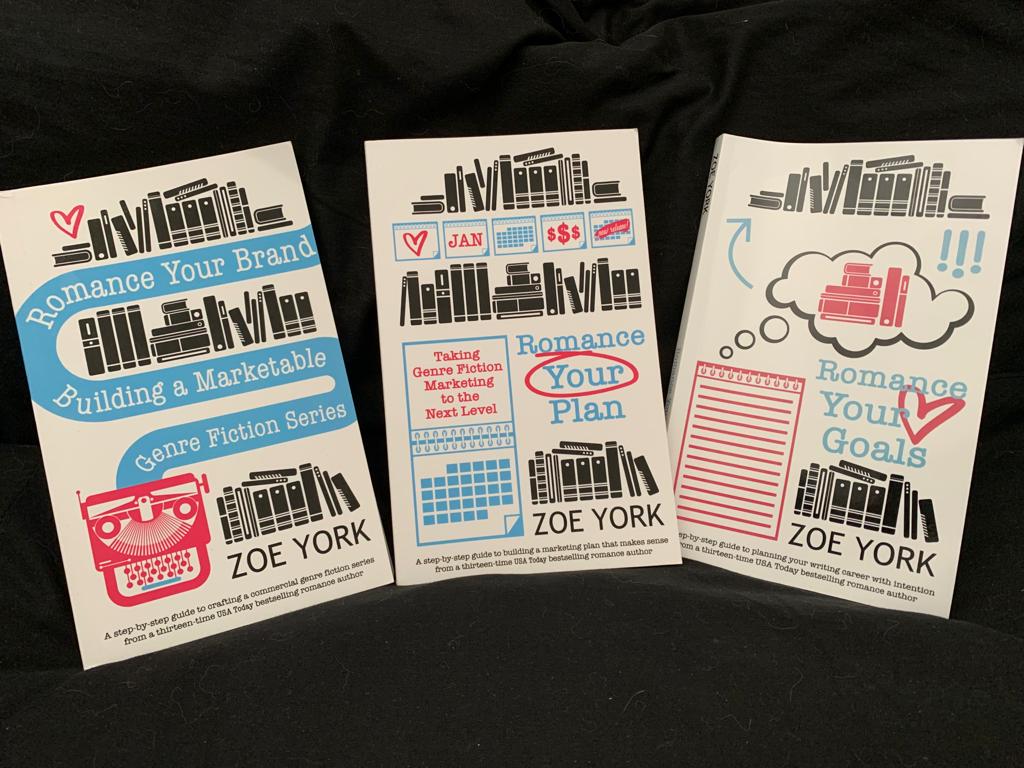
a picture of zoe york's three books about writing and marketing romance.  look here to buy:

https://www.amazon.com/dp/B082CZDK75
To check out the series, look here: https://www.amazon.com/dp/B082CZDK75

I just finished Zoe York’s Publishing How To series, and I really enjoyed the books, her thoughts and experiences on publishing romance, goal setting for your author career, and so much more. She’s been writing and publishing for years now, is a full-time author, and has made a bestselling list or two.

What I’m about to say doesn’t have anything to do with these books–I’ll circle around to them–but lately I’ve realized that when it comes to writing, publishing, and marketing, you can consume all the marketing advice in the whole world, but you won’t get anywhere unless you have a good product, and more importantly, a good product people want to buy. That’s part of the reason why I haven’t purchased Mark Dawson’s Ads for Authors course (comes in at close to 1,000 dollars, and SPF offers it twice a year). If you don’t have the books to back up your ads, your ads aren’t going to do anything.

When I take a look at my publishing history, I was writing good books. I received the odd 1-2 stars most authors do, but on the whole, I’m writing good books. That’s important to me because I do most of the editing and production alone. But something was still off because over the past few years, I didn’t find any traction. One mistake was my newsletter, or lack of one, I should say, and the other was my lack of direction with the books themselves. (I also didn’t understand author brand, but that’s an old discussion we can have on another day.)

It was just this morning when a woman in a writing FB group was talking about this very thing. She was sub-genre hopping and couldn’t figure out why she wasn’t getting any traction. Maybe she’ll believe me, maybe she won’t, but I told her I had the same problems with my own books and decided to niche down.

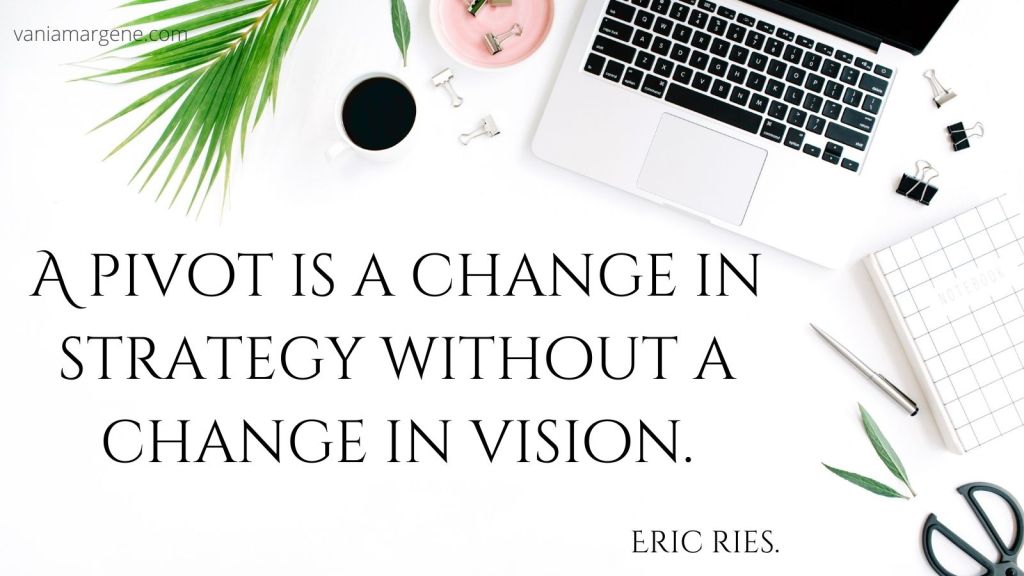
desk with laptop, plant, and coffee.

be stubborn about your goals but flexible about your methods.

My issue with pivoting is that it took me a long time to realize I had to do it. Some writers who struggle may never understand that it’s not their marketing chops, or their covers, or their blurbs, but simply what they are writing in the first place. Depending on how fast you can write, that can take years. Years that can feel wasted because if you had been writing the right thing in the first place, you wouldn’t still be at ground zero wondering where it all went wrong. But that’s like a chicken and egg scenario–how do you know what’s right or wrong until you put it out there? And what are the metrics you’ve decided to pin that on? Sales? Reviews? I’m nowhere near making a full-time author’s salary–I checked my dashboard yesterday and made 2 cents. (That tells me someone borrowed the book in KU and opened it to make sure it borrowed properly, then went off to do something else. Or they read the first page, didn’t like it, and returned it. If I think to check back, I’ll see if that person read it or not, but that micro-level of caring is not in me and never will be.) Admittedly, those books are old now, and even dropping 10 cents a click in ad spend to those books is probably a waste of money because as we’ve determined, Amazon loves consistency and relevancy, and I won’t be writing any more of those books for the foreseeable future.

So what will make you decide that it’s time to pivot?

At the beginning of the post, I brought up Zoe’s book because in it she says knowing when to pivot and niche down is a personal choice, and it is. You have to look back at your books, where you are, and decide if it’s enough for you. I see indies making money. I want that, too. It’s not a driving force, but financial security is important to me, and who doesn’t want to get paid for doing what they love?

When we talk about pivoting, what does that even mean? It means taking a look at what you’ve been writing, looking at that lack of success those books are bringing in, and deciding to try something new. It can be as simple as what I did–turning from writing “Contemporary Romance” to Billionaire, or doing a full 360 and changing from Christian Romance to Horror. But then that begs the question too–will the pivot be in the right direction? I have no idea. I can’t even say if these new books will resonate with readers until I put them out. I THINK I’ve taken a step in the right direction: billionaire, first person POV. According to Alex Newton of K-Lytics, Billionaires are like vampires and will never die. So, that’s a good thing. But there are a lot of other things that can turn against me: writing style, the tropes I chose to write about, the issues (backstories) I’ve given my characters and decided to tackle in my writing. Changing from Contemporary Romance to Billionaire might not be the magic bullet I hope it is, and right now, I don’t have a plan C. I’m not even sure how long I’m going to give this pivot a go before I decide this writing business isn’t meant to be. I have enough books saved up to publish 4 a year for the next 3 years, so at least until then (because why not publish them since they’re written), but I’ve been skating financially since my divorce, piecemealing paying my bills with scraps of income from various places while giving my writing career a chance to do something, and I can’t do that indefinitely. As Kristine Kathryn Rusch says, there are easier ways to make money. Less stressful too, I bet.

desk with laptop plant and coffee

a pivot is a change in strategy without a change in vision. eric ries

So, if you’ve been banging your head against your laptop trying to figure out why you’re just not seeing the success you want, maybe it’s time to pivot. What is selling right now that’s close to what you’re already writing so you don’t go out of your mind? I’m not saying be a slave to the market, or to trend, though I’ve seen Alex Newton’s indie reports, and trends don’t change nearly as quickly as we like to say they do. I’m saying find something different to write that’s hotter, more niche than what you’ve been writing and see if that works.

All those who wander are not lost, but sometimes you think you know where you’re going and end up not knowing where in the hell you are. That was me before looking at my backlist and choosing to write Billionaire. All of Nothing has made more than all my other books combined, so I feel this pivot was a good choice. Now all I have to do is publish, wait and see.

Fingers crossed.