What do you NEED to be a writer/author? Pick and choose at your own peril.

So if any of you follow Mark Dawson or you’re concerned about marketing strategies, or you were thinking about taking an ads course, or if you’re in any writing groups at all on Facebook, you know that Mark Dawson’s Ads for Authors course closed last week. Whenever Mark opens up his course, I have a huge case of the nerves. Why? Because everyone raves about this course. How helpful it is. How it’s a lifetime pass to ads and all your questions and all of the answers until you die. You can’t be an author and learn how to sell your books without it. After hearing it’s God’s gift to sales, you’ll run out and sign up, right? Well, the next time it opens is in the winter, and you’ll need that time to save up the fee, because you know why I haven’t signed up? It’s $849.00. You read that correctly. It’s almost a $1,000. And if you take the cheapest payment plan, it does cost over $1,000 dollars payable over two years’ time.

You know how indies say, “I can’t afford a cover, or a professional edit, etc, etc, etc, because I’ll never earn my money back?” Yeah. That. How many books would I have to sell to earn back $849? That’s the whole point of the ads course, right? To learn how to make that kind of money? Sure.

So how about this one? In Mark’s SPF University, there’s a course on how to write a bestseller by Suzy K. Quinn. People have raved over this, and I’m always wanting to work on the craft part of being an author. Some would say working on craft is the most important part of being a writer because it always starts with a good book. But her class is a whopping $297.00. People say they learn so much from that class. But hey, that’s two car payments for me. Or half a month’s rent.

And I’m not picking on Mark Dawson. John Truby also has a writing class. He gave a intro talk about it at the 20booksto50k conference in November last year. And you can watch it here.

His course is $397.00. You can check it out here if you’re interested.

My favorite Amazon Ads School guy, Bryan Cohen, runs an Ads Course, too, and his costs $397.00. During his ads challenges (the next one is in July) he’ll throw in some blurb writing or something a little extra to entice you to sign up. And that’s great. A lot of these indies who are offering courses try to throw in a little something for nothing. But where does it stop?

Adam Croft, under his Indie Author Mindset brand offers courses under $50.00. You can check them out here. I love his Facebook group, and I encourage you to check that out, and his podcast, too. Andrea Pearson, one-third of the Six Figure Authors podcast and Facebook group offers classes too, also in bite-sized fees, and if you listen to the podcast she just recently gave out a code for a percentage off. Her classes range anywhere from $5.00 to $50.00. Jane Friedman offers classes, as well. I’ve taken a couple and they are usually about $25.00. You can look on her blog to keep up-to-date on the courses she offers.

And that’s just classes. We haven’t talked tools yet.

Bookbrush. A platinum yearly fee with them is $250.00. Canva. A yearly membership with them is $120.00 a year. But if you compare the two, you get quite a lot more with Bookbrush, as you should since it’s double the cost. There there’s Vellum, and if you don’t have a Mac you have to run it through Macincloud, and if you do want a Mac, well, everyone knows how much they cost.

Then there’s ProWritingAid (lifetime is $224.00), the Hemingway App ($19.99 one-time fee), Grammarly (the premium is $139.95 a year).

Scrivener ($49.00).

Publisher Rocket ($97.00).

Let’s do promotions: A Freebooksy with Written Word Media is all over the map, with the popular genres around $100.00. E-reader News Today is between $50.00 to $140.00 depending on the price of your book. Book Barbarian runs about $50.00. Fussy Librarian is isn’t terrible, but you still have to sell books to make a profit.

Never mind paying for clicks on Amazon Advertising, and the same goes for running Facebook ads and Bookbub ads. (Don’t bother with running ads on a platform you don’t understand. You might as well give me your money. I’ll use it to buy promos.)

Can we add newsletter providers too?

Oh, I forgot about website hosting and a domain name. Maybe a business upgrade on WordPress.

A yearly subscription to Microsoft Office 365.

Forgot coffee. And booze. Are you even a writer if you’re not drinking something like a fish?

Let’s just say that indies have a lot of resources and not all of them cheap, ah, budget-friendly.

How much does it cost to be a writer? Well, nothing. I mean, literally 0 dollars. It takes no money to be a writer. Maybe two dollars. Grab a pen and notebook from the dollar store. Or scrounge your kids’ school supplies for things they didn’t use after everything moved to online learning because of COVID-19.

There’s a joke in the running world that running is the most expensive free sport there is. Shoes, race fees, GPS watches, the rest of the gear. The list is almost as long as what a writer needs to be an author. Being an author is the most expensive free thing you can do right? Tell that to my $150.00/pair Brooks running shoes so I don’t get tendonitis in my ankles.

But how much money does it really take to invest in your business?

The problem is, not anyone is going to know but you.

I had a friend step back from writing. She’s focusing on her family. That’s great; she has to do what’s best for her. And while she’s never said she won’t come back into the writing/indie space, what she did invest in will just sit while she decides what she wants to do. She bought a Mac, she purchased Vellum. She bought a yearly subscription to Canva Pro. Granted, that can run out, but I don’t know how much of her paid year will go to waste while she’s not using it. She purchased her domain name for a blog she took down. I gave her a free developmental edit of her book, so there’s something, but she paid for a cover for a book that will sink in the Amazon store because she won’t be promoting it (and by promoting it, I really mean writing the next book) while she takes a break.

So how much money should you spend? Start small. I pay for Word. I don’t use a writing software like Scrivner. But you don’t have to purchase Word, either, though the .docx is compatible with Vellum and other conversion websites as well as KDP. There are free options like Open Office or Google Docs.

There are some things indie professionals say you can’t skimp on like a professional edit, or a decent book cover. And that’s true. You don’t have anything if you don’t have a good book. That’s why there’re craft classes out there. But you don’t have to pay $300.00 for a class. There are a ton of craft books, and all you need is to invest some time into reading them. In fact, there are a lot of free resources on YouTube if you learn better listening to a speaker. Brian Sanderson has a set of lectures on Youtube people say are really good, and you can get started here. And over the years John Truby has spoken about craft and you can watch those YouTube videos for free. I’ve shared several talks I’ve enjoyed from the 20booksto50k conference in Vegas last year. The group puts those on YouTube for free too. Chris Fox’s channel is valuable, as is David Gaughran’s new channel.

I suggest narrowing down what you need at the moment you need it. If you only have one book out, probably you don’t need an $800.00 ads course. If you only have one book chances are working on craft would suit where you are in your career a lot better than learning an ad platform or any kind of marketing strategy.

I have fear of missing out, and a lot of writers I know do too. It’s tough not to want the newest brightest thing. Especially when all your groups on Facebook are raving about it. I can’t afford Mark Dawson’s class, and if you can’t either, there’s no point in feeling bad about it. It is what it is. I’ve learned a lot taking Bryan Cohen’s free ad challenges, and he doesn’t push you to pay for his class. I break even with my ads, and that’s okay. I’m not losing money and I’m picking up new readers. At this stage in my career, that’s a win for me.

Having all the tools and technology won’t make you a writer and I have a feeling that was what my friend was aiming for. She was collecting the tools of the trade, but in two years wrote only 60,000 words. For some indies, that’s a word total per month.

Think about what your goals are, what you want out of your career and when you want them. My fiancé bought me a Mac and purchased Vellum for me. I format a lot of books, and pay my fiancé’s kindness forward and will format free for others. Like I said, I pay for Word. It’s my main (umm, only) writing software and I use it every day. I pay for Canva. I bought Publisher Rocket because I do experiment with ads (and right now those small ads are my main source of sales). I’m ashamed to say I threw $40.00 at something I don’t even know what it is or how it will help me. All I know is she said it was her final offer because she wasn’t going to sell it anymore, and I swallowed it hook, line, and, sinker. Some kind of author toolbox website that I probably will never be able to find because I was too busy throwing money at her to pay attention to what I was buying.

It happens, and probably more frequently than we want to admit. The panic sucks. The fear of missing out on something that will make us a bestseller. And we especially panic when we think everyone else but us has the magic bullet.

A good rule of thumb is to exhaust all the free possibilities before going to paid. Newsetter providers have tutorials. So do lots of people on YouTube wanting to help you. Podcasts have been a great way to learn things, and I like to multi-task. Listen while you’re doing chores, or running errands, or taking a walk. I use my phone to take notes if they mention something of interest I don’t want to forget.

No matter how you learn what you learn, probably the one thing you’re going to need to invest is time, and in a lot of cases, that time is better spent writing.

How much does it cost be a writer? Nothing.

Okay. Two dollars.

Tell me what you think!


Writing with tropes in mind. What I learned from reading Zoe York’s Romance Your Brand

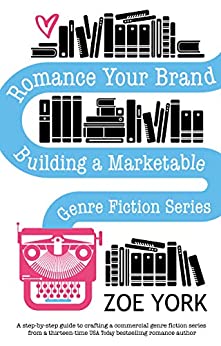
Last weekend I read Romance Your Brand: Building a Marketable Genre Fiction Series by Zoe York.

I love reading nonfiction by indie authors. It’s like being able to pick their brains without actually bothering them. An author shared a screenshot of the books on her Kindle in one of the Facebook groups I’m in, and Zoe’s book caught my eye. Zoe is a well-known in the indie publishing space as a contemporary romance writer. I first heard of her when she was a contributor of the now defunct podcast Self-Publishing Round Table, one of the first podcasts I listened to about self-publishing.

I was excited to see that she started writing nonfiction and I purchased her book right away.

I’ve written two series: one trilogy and another with four books. They don’t sell that great, but though to be fair, I don’t promote them much, either, and I thought Zoe could share some things that worked for her.

She goes through the reasons why a series is good–namely read-through and creating a world fans can fall in love with. I already know that, which is why I tortured myself all of 2019 writing one. It’s not to say I didn’t enjoy it, but there are things you have to consider like consistency and bringing other characters into the story of the main couple because they’re all friends and people simply don’t disappear when you don’t need them at the moment.

Zoe goes into some of the planning, encouraging you to draw a map of where your series is going to take place. She writes small-town romance, and my Rocky Point Wedding Series is placed in a small town, too. I knew my series wasn’t going to be very long — I don’t have an attention span for several books, so I trusted myself to keep Rocky Point’s details in my head without writing them down. But if you plan to write 5+ books, it may be advantageous to treat your setting like a character and write a detailed sheet to keep facts straight.

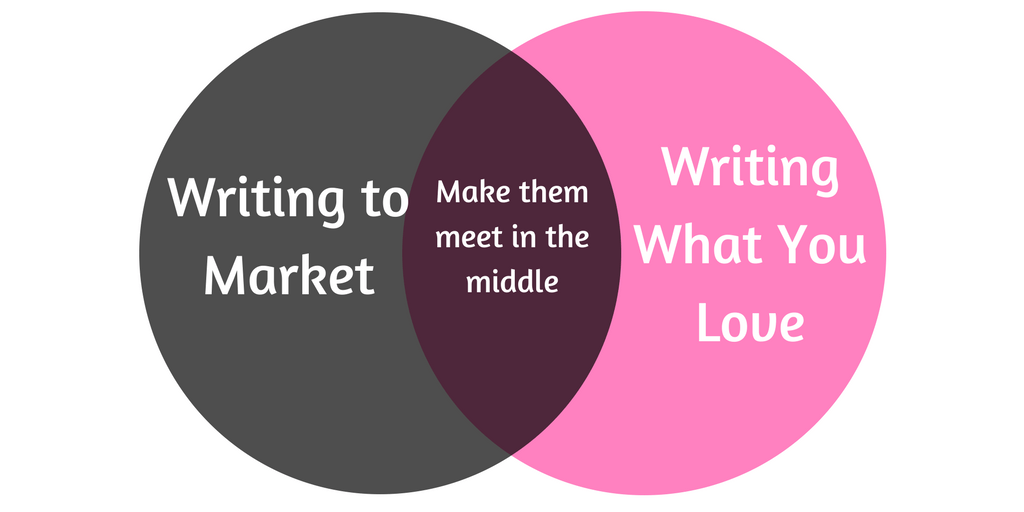
Other tips she offers are keywords, naming your series, and plotting out the books. This is where my ears perked up so to speak because Zoe is a genre fiction author. She subscribes to the Venn Diagram where you need to write to market while writing what you love and finding that sweet spot to sustain a lucrative, but happy and satisfying, career for yourself.

When I plotted my series, I started with setting first. For me that’s the easy part. I set the books in a fictional small town in Minnesota based on my hometown. I even gave my town the same attributes — along the Canadian border, a shut-down paper mill, and a similar Main Street. I’ll probably always set my stories in Minnesota. I love the seasons and the variety they can bring to the plots.

Then I move onto characters. I think this is where I dropped the ball and Zoe opened my eyes that actually when I plan out my books I don’t keep tropes in mind.

Every romance novel is based on a trope or two, and while you might scoff or want to deny it because your books are better than that drivel, I need to remind you readers love tropes. The kind of trope the book contains is why the reader chooses to read your book.

While plotting my series I forgot that, and it’s why my books aren’t as strong as they could and should be. Of course my books contain tropes, but I assign the tropes after the fact when I should be planning my stories around them. Knowing the tropes I want to include beforehand will give my books a stronger spine.

What are some romance tropes? These are from Zoe’s book:

  1. friends with with benefits
  2. married to the enemy
  3. marriage of convenience
  4. enemies to lovers
  5. fish out of water (new town, fresh start)
  6. forced proximity
  7. bad boy
  8. ugly duckling
  9. unrequited love
  10. friends to lovers
  11. strangers to lovers

There are more, these is only a sample. A Google search can come up with a couple more:

  1. forbidden love
  2. age gap
  3. secret baby
  4. fake date
  5. fake marriage

You can have a lot of fun with tropes. Take forced proximity. Maybe two strangers have to share a shelter during a tornado, or the elevator stalls (that’s pretty popular) or there’s only one bed (another that’s popular). Anything where the characters need to spend a lot of time together in a close space with no chance of escape. Like a cabin during a blizzard.

Zoe encourages you to list the tropes as you plan the books in your series and I’m going to start doing that with all my books. For now I can list the tropes that my books do contain (I can list them for marketing and ad copy purposes) and going forward use new tropes as I plot.

Knowing what tropes your books includes can help with blurb-writing and writing ad copy. As Jami Albright says, tropes sell. If you can make the tropes easy for readers to see, you’ll be more apt to make a sale.

Writing a series takes a bit of planning. At least the first few books so you can fit the pieces of each book together like a puzzle. Some series can go on for a while see (Robyn Carr) and there is no way to plan twenty books at one time. But if you can list the elements you want to include in the first few hopefully consistency won’t be too big of an issue and you (and your characters) can find a groove.

Zoe’s book gave me a new perspective and I feel there are things any genre writer could benefit from. I encourage you to pick it up. You’ll be glad you did.


A note about sub-genre and tropes.

Some writers blur the line between sub-genre and tropes. The easiest way to explain the two is to give an example.

Take Aidy Award’s books. She writes curvy-girl romance. That’s her sub-genre. You know when you grab one of her books the heroine will be voluptuous. But that can’t be the plot. The plot will contain tropes that pertain to genres that aren’t only curvy-girl. Like close proximity or enemies to lovers.

Billionaire romance is another example. Maybe every single male character an author writes will be a billionaire, but those characters will have their own plots that contain their own tropes.

I have noticed that some of the bigger in the writers like Aidy focus on one sub-genre. Then they have fun with the tropes. They have an easier time branding their books and that helps marketing and sales. It’s something to think about moving forward.


If you want to grab Zoe’s book, look here. She has another book related to this one, and I’m going to grab it as soon as it’s available.

To check out her Amazon author page, and take a peek at her contemporary romance books, look here.


Thanks for stopping by!

Amazon Ads Adventures: how did my May go?

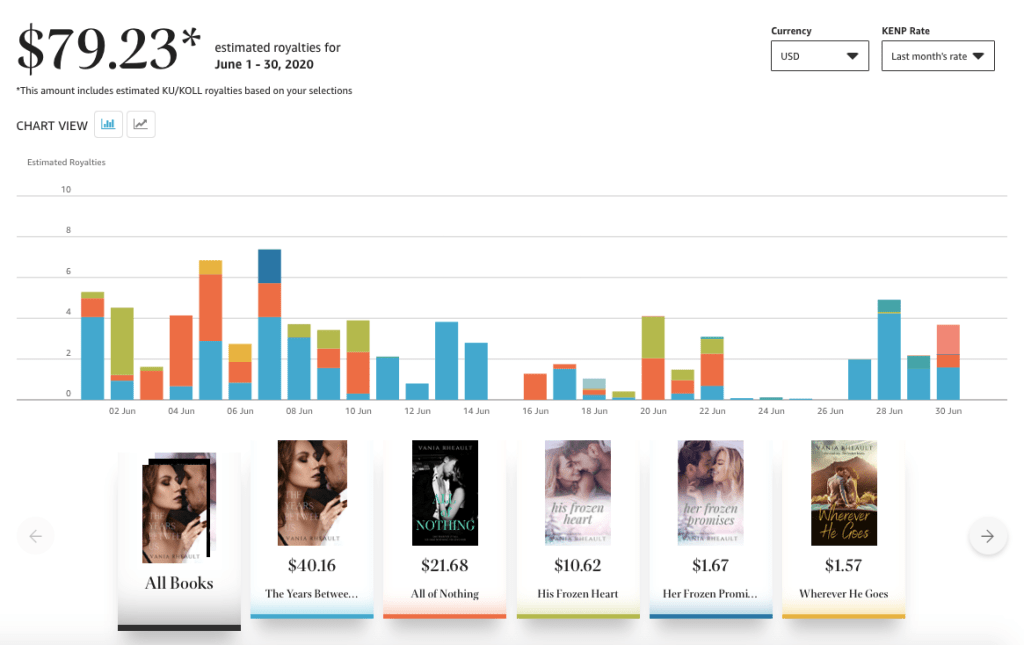
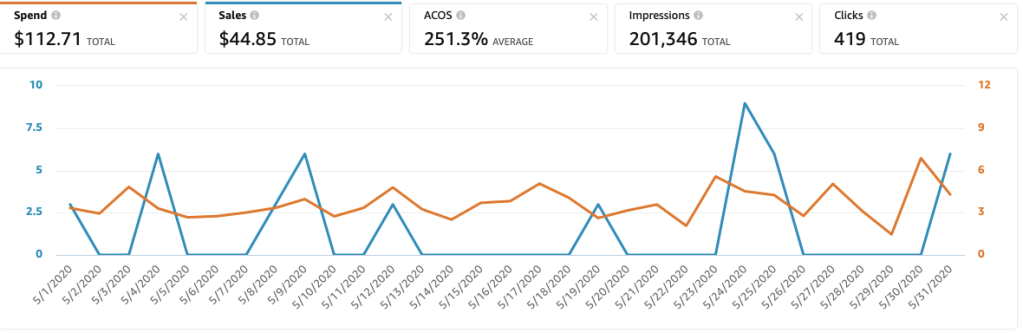
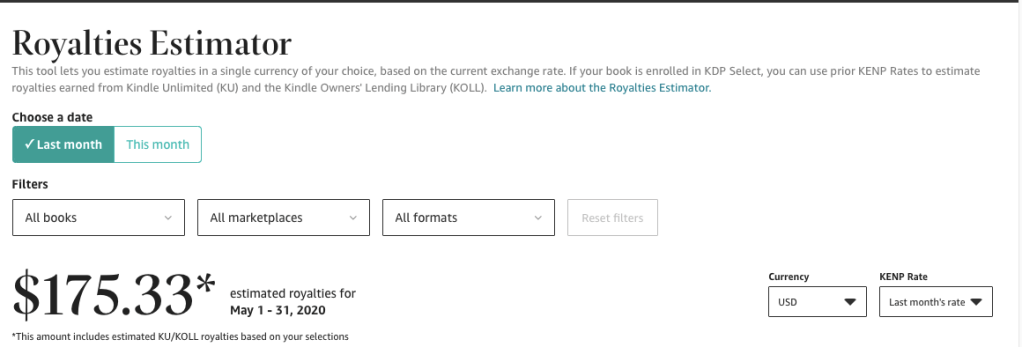
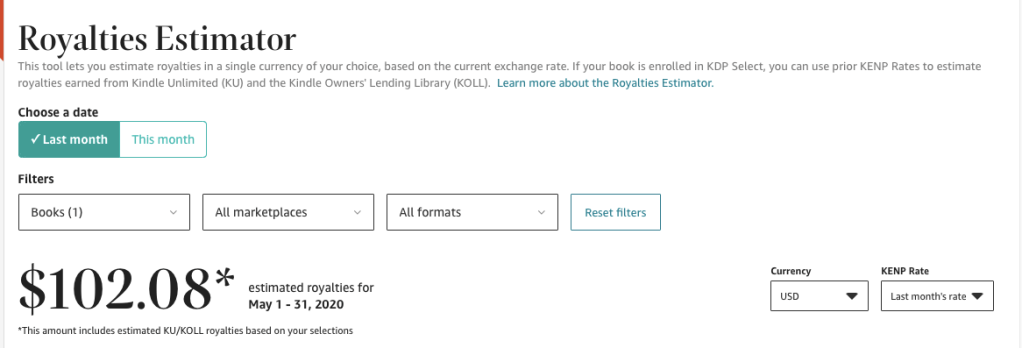
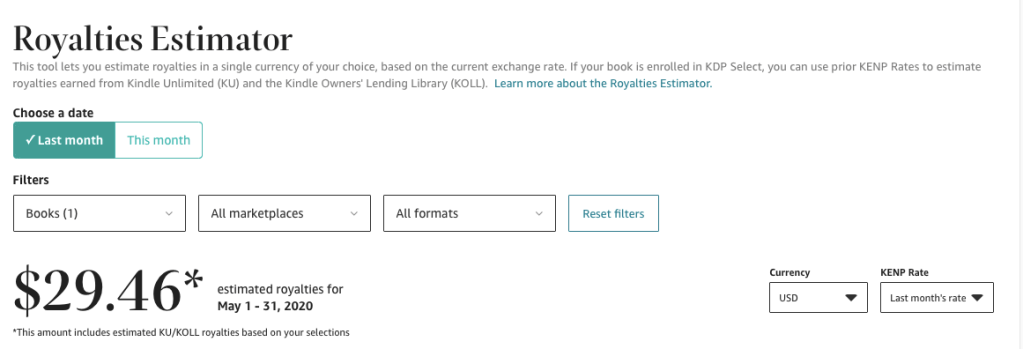
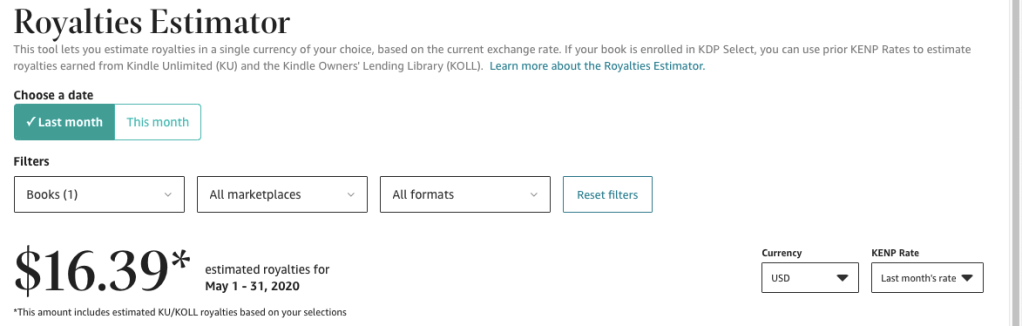
Because I have nothing else to talk about, let’s see how my ads did for the month of May. Right now I’m running ads for four books: All of Nothing, Wherever He Goes, The Years Between Us, and His Frozen Heart. I actually came in ahead last month, making about $60.00 after ad spend. That’s not terrible–breaking even for me so more than acceptable at this point–and I’m aware that it’s more than what some people are making on their books right now.

Before I get into the numbers, I’ll tell you that my daily ad budget is always $5.00, and that my bid per click is always between .25-.35. I never EVER go with Amazon’s suggested bid. I know click bid can depend heavily on genre, and everyone always says how competitive romance is. But I’m not willing to up my bid on the off chance that it will make me more money. Right now all I’m concerned with is tweaking my covers, blurbs, and look inside so that my books are profitable, and my lower bid per click is working. I get impressions and I get clicks and that’s more than enough for now. There is plenty to worry about without hoping Amazon’s suggested bid won’t blow your grocery budget for the month.

My ad spend for the month of May:

Don’t let the spend versus sales fool you. If your books are in KU, the sales don’t include KU page reads. Sales are readers who buy the ebook/paperback. And in this case, I didn’t sell any paperbacks.

Here are the royalties:

Using the royalties estimator from the KDP reports dashboard is the easiest way to look at your royalties. Some people use BookReport, a Google Chrome extension, but I haven’t put Chrome on my Mac.

I took screenshots of the royalties vs. ads for each book individually. I don’t normally look at that–so long as I’m not wasting money, I don’t mind which book is making more than the others. You can see All of Nothing made the most–and also spent the most. Wherever He Goes is the unpopular one of the group, and maybe a new blurb could help. But I’ve already rewritten it, and at this point I’m done going back.


My numbers might not add up 100% just because I do make a couple cents here and there on other books, but these are the main four I run ads for. You can see that All of Nothing is the leader in sales. Sales for that book allows me to lose money on ads for the others. Is that smart? Probably not–all your ads should run in the black, but I’m just playing around and experimenting.

I’m happy to see that The Years Between Us is doing better with the new cover and blurb. People are actually reading it and in the past few days I have been selling the ebook; people aren’t only reading it in KU. I wish they’d buy the paperback because the new cover looks gorgeous in print.

Anyway, so that’s how I’ve done for the month of May. So far for June I’m in the black, but just by a few dollars. I may not be making a ton of money, but I’m picking up new readers, and that feels good. The last book in my series launched at the end of May, so I don’t have any reports yet on how my read-through is for the four books. I think next month I may plan a Christmas-in-July promotion and buy a BargainBooksy promo and see if I put His Frozen Heart on sale for .99 if I can get some read-through for that series. I’ll be playing around with ads for the next little while because I won’t have anything coming out for a few months.


What I know I learned from Bryan Cohen’s free ad challenge that he does every once in a while. He gives out such useful information, and he’s even usually around to answer questions. I can’t say enough good things about the guy, and I really encourage you to sign up for his challenge in July. It makes a big difference if you know how to use an ad platform before plunking down the money on experimentation. Trust me, there’s a lot to experiment with (like ad copy) without worrying about wasting money on ad spend because you don’t know what you’re doing. If you want to sign up for the challenge next month, you can find Bryan’s sign up link here. I don’t get anything if you sign up. I learned a lot from his classes and homework, and I know you will too!

Thanks for reading, and I hope you’re all having a wonderful June so far!

Letting go: stopping the search for perfect.

By the time you read this, I’ll be done going through my backlist. The loss of some of my Vellum files spurred me on to the idea that if I was going to reformat them to get my files back, I might as well re-edit them too.

While I haven’t written anything fresh in quite some time, I’ve re-edited and reconstructed the Vellum files of seven books. It was a lot of work, but I’m glad I took the time. I found tiny inconsistencies, typos, and in some earlier books, hammered out telling, and for some reason in On the Corner of 1700 Hamilton, lots of passive voice. (That is a weird speculative fiction kind of book, and I’m not sure where my mindset was when I wrote it. The other day someone borrowed it in KU, read one page earning me .01 cent, and returned it [I’m assuming they returned it because they didn’t read anymore.] I can’t say that I blame them any.)

I can see how I’ve grown as a writer and where I can still improve.

But probably the hardest thing for me is finally letting these books go. They are the best they are going to be. It’s a little scary because no writer wants to put subpar work out into the world, and when we put out books with spelling errors, typos, or plot holes that’s what we do.

My anxiety comes from thinking my books have them (even though they could be 100% clean) and I need to let that worry go. I had a moment of panic when I was fixing something in Wherever He Goes. I thought I fixed it and moved on. Later, I went back to reread what I had edited and I discovered autocorrect had changed a word I misspelled to something completely different than what I had intended. Even the word misspelled would have been better than what autocorrect inserted instead.

Suddenly, my life flash before my eyes and I envisioned my whole book full of autocorrected words rendering my pages to a book full of gibberish.

That isn’t likely to happen, but it’s enough to give any author hives. But no matter how many times we go over our books with a fine-tooth comb, chances of putting out a 100% error-free book are slim to none.

There will always be something to change and you get to the point where it’s not a change for the better–it’s only different.

There is a certain peace in knowing these books are as good as I can make them for the skills I have right at this minute. I fully believe that as writers we will never stop growing. We’ll try for twistier plots, more points of view, we’ll get better at breadcrumbing backstory and clues, and we won’t info dump at the beginning of stories. Our eyes will get sharper and we’ll catch more of our own mistakes and we’ll realize we have crutch words and weed them out before handing off our stuff to an editor.

We’ll refine our editing process and grow more efficient. Our first drafts will be cleaner.

When I was editing my Tower City trilogy, I came to two realizations: my writing from two years ago wasn’t as bad as I had thought, but my story (particularly the first book) was just as lackluster as I’d try to deny myself.

To be kind, you can call these books “quiet.” Internal conflict, some stuff going on, but not a lot of character growth, if you know what I mean, and if you don’t, in editor-speak that means not completely formed character arcs. I didn’t understand how to tie in past demons with the present story. What I did know came from instinct and a lifetime of reading romances. Sometimes the “beats” are ingrained and you know by feel what needs to go where. Some might say that’s skill, or talent, but I call it luck and it’s what made Don’t Run Away a half-way decent read as my first contemporary romance book.

In the second book, I had “Let’s meet an ex in a public place” scene like in the first book, and I don’t know if it was bad memory, or if I didn’t care, but at least I stopped that in my other books.

Part of the reformatting included doing a new box set for the trilogy and I wrote a “Where are they now” novella for the end. It was easy to write because I was fortunate to have written what I did in the original books. The novella practically wrote itself.

Now, even though the novella won’t make up for the slow start of book one, at least I can confidently brush my hands of that whole thing. They are re-edited, I changed the covers last year, and all the couples have a new happily ever after. There’s nothing more that I can, or even want, to do with those characters.

They are finally on their own.

Chasing perfect will never end well. Sometimes you’re at a point in your writing life where you can’t give it to yourself no matter how hard you try. Sure, I could write a better book one now, but what is the point when I could use my developing skills to write an entirely new book? If it were part of a ten-book series it might be worth it for the read-through, and if that’s you, then maybe it would be worth your time.

Like anything, your mileage may vary.

Some may see the time I took as a waste, but I disagree. If I found peace of mind in these two and a half months of going back and making sure my books were the best I can do as of Spring 2020, then it was worth it to me, but the trick now is to leave them alone and focus on the new.

My books aren’t dumpster fires. Maybe they aren’t 100% perfect, but no book is. I need to accept that, let my anxiety go that there are things that could be fixed. There probably are, but I need to forget about that and market my books with confidence.

Chasing perfect is an unattainable goal.

Maybe there are tiny fires in the form of an errant apostrophe, or a number I typed out that didn’t need to be, but I need to shrug those little things off, pull up a log, and grab my marshmallows.

A little fire doesn’t have to be a bad thing.


If you want to hear a talk about chasing perfection, Kristine Kathyrn Rusch has a great one she gave at 20booksto50k Vegas last year in 2019.


Also, just by chance, my friend Sarah also wrote a post on her blog a few days ago about her own struggles with perfection, and you can find it here: https://sarahkrewis.com/survivingperfectionisminwriting/


Pointing fingers: Who’s fault is a bad book?

book-back-COVER-2-op0xdop9ax0haxvc95x9ft6dzj0yiadp35hjwu9e90

Taken from Stephenie’s website, stepheniemeyer.com

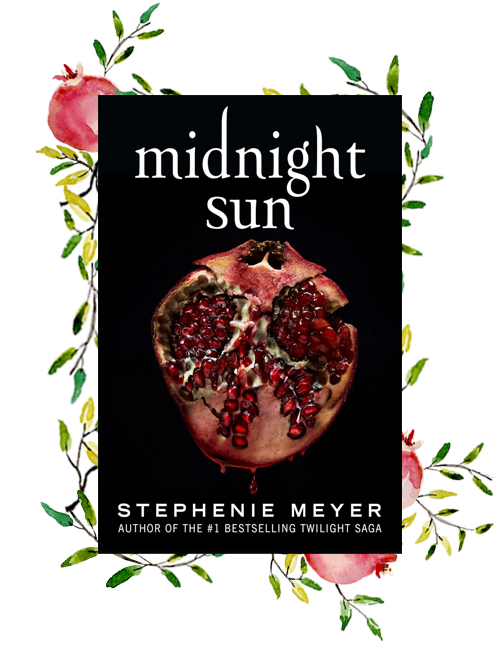
There was a lot of hoopla on writer Twitter last week when Stephenie Meyer announced that she would be finally releasing Midnight SunTwilight only from Edward’s point of view. Twelve years ago, halfway through writing it, someone leaked it, and heartbroken, Stephanie didn’t finish it letting the half-done manuscript sit on her website.

The vitriol on Writer Twitter started immediately. I even saw someone make a parody of the cover of Midnight Sun which features a pomegranate. In the parody, the designer used a peeled banana. It didn’t take me long to get sick of the scathing remarks.

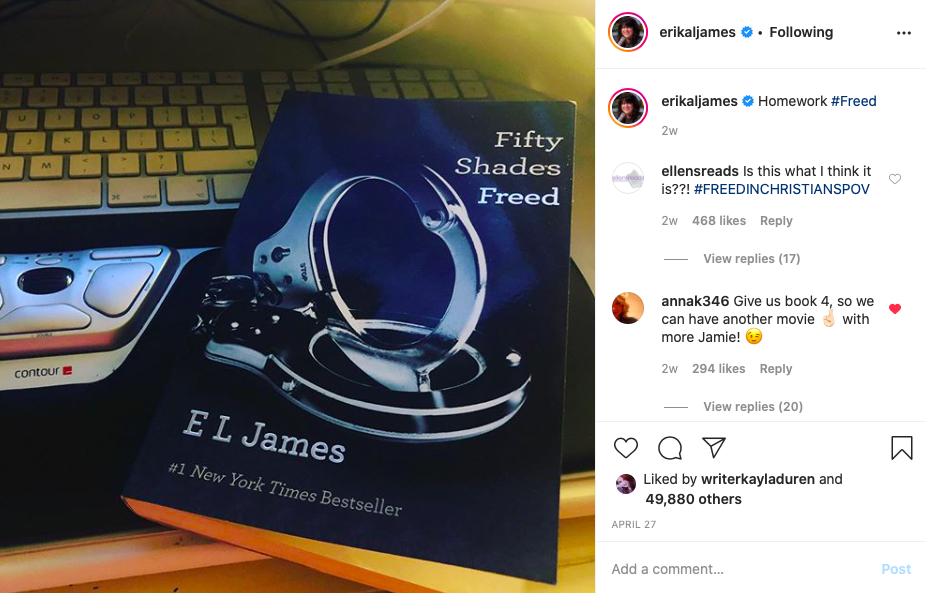
Coincidence, or maybe not, I saw on Instagram that E L James is starting to write the last 50 Shades book from Christian’s point of view.

Screen Shot 2020-05-16 at 8.53.52 PM

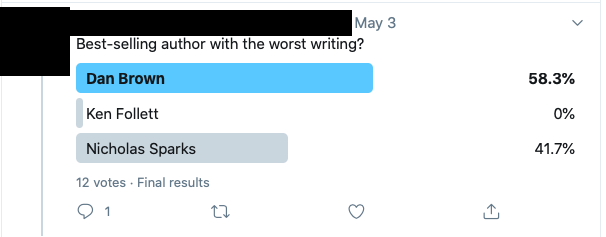
And a few days ago, someone on Twitter posted a poll: Who is the worst best-selling author among Ken Follett, Nicholas Sparks, and Dan Brown. It was an unnecessary and meaningless post. I told her so, and we got into a little catfight until ultimately she told me to grow up. I found that funny because I wasn’t the one tearing down best-selling authors in public.

Screen Shot 2020-05-16 at 6.39.16 PM

But all this mud opinion slinging, all these disparaging remarks, begs a question: whose fault is a bad book?

It’s easy to pin in it on the author. Readers take passages from a book to make fun of it, they make gagging noises when reading the Look Inside of a book on Amazon, they live tweet their reactions to books hoping to start a mob of dislike. (Public Twitter shaming is big in YA, especially if the topic of racism/race is involved.)

Is it always the author’s fault when a bad book is published?

In the indie world, it sure is. Whether indies don’t hire an editor because they can’t afford it, or don’t think they need one, or they hire one then ignore everything that editor says because it’s “their book and they can do what they want,” when an indie self-publishes, everything from cover to cover is their responsibility.

Some say it’s not really fair. Finding resources, resources that are affordable and trustworthy, is hard. I totally get that and it’s why I’ve stopped reviewing indie books. Sometimes no matter how hard an author tries, their book isn’t going to be good enough. When it comes to Stephenie Meyer or E L James, their best obviously wasn’t good enough for some people, either.

Though, when an author gets picked up by an agent, when that agent sells work to a publishing house who employs several editors, when does the responsibility shift from author to publishing house? Is there no differentiation? When you publish a book, your name is on it. It belongs to you. You’re responsible for the outcome, good or bad, and I guess when you’re a reader, you don’t stop to consider that a “bad,” traditionally-published book has been looked at by probably close to five sets of eyes–one belonging to an agent who deemed it sellable in the first place. Twilight was actually found a slush pile by agent assistant at Writers House who passed it along to a senior agent, Jodie Reamer.

If you get picked up by an agent, and she sells it, and an editor edits it, the house publishes it and puts a few thousand dollars at marketing it, are you that remiss in thinking that your book is good or that you’re a decent writer? Agents are gatekeepers after all, and it’s why some writers still query and never self-publish even if they never find an agent. They need the validation. They need to be told their writing is good.

And all these musings beg another question: When an agent, editor, publishing house says an author is a great writer, but the readers say she is not, who is correct? The house who pays the author an advance, or the readers on Twitter who tweets live what a piece of shit it is?

Is it the author’s fault they believe the agent, the editor, and the publishing house? Of course not. Is it the author’s fault the editor skimped on edits and pushed the book out to meet reader demand and take advantage of social media momentum like in the case of 50 Shades of Grey? I don’t think so.

So why all the finger pointing at the author when the book is taken out of their hands?

I mean, do you think E L James’s editor pulled her aside and told her to join a writing critique group? Probably not. Erika didn’t have time anyway, she was too busy rolling in money and watching Jamie Dornan strip on set.

The thing is, as writers, we’re bound to get better. I read The Mister and it was definitely a change from 50 Shades. She got better. Now, we’ll probably never know if she took some creative writing classes or read some craft books, or if that time around her editor took more time with her and The Mister went through more rounds of edits than 50 Shades.

I tell indies on my blog and on Twitter all the time–it’s not your editor’s responsibility to teach you how to write. If you get a 1,000 dollar editing bill from a copy editor, you’d be better off investing in two English/creative writing classes. Which do you think is the better investment? The classes that could help you for your entire career, or the edits from one book?

If you’re an indie and your editor highlights every single sentence because of grammar, punctuation, or it simply doesn’t make sense, you need to take the future of your writing into your own hands. Not every writer is going to have an MFA, but if you don’t understand tension, conflict, stakes, plot, and character arcs, you best figure it out or you’re always going to have problems and your books will never sell.

That’s a big difference between bestselling authors who use too many adverbs and an indie who doesn’t know how to plot–story. Stephenie’s and Erika’s agents knew a good story when they read one, and so did their publishing houses, and most importantly, so did their readers.

Maybe it’s not fair of me to blame an indie for their weaknesses and not a traditionally published author. In the case of a “bad” book, though, it’s not an author’s fault if their agent and editor tell them that their book is good. Those people are supposed to be in the know–and they didn’t end up wrong–numbers of copies sold proves that.

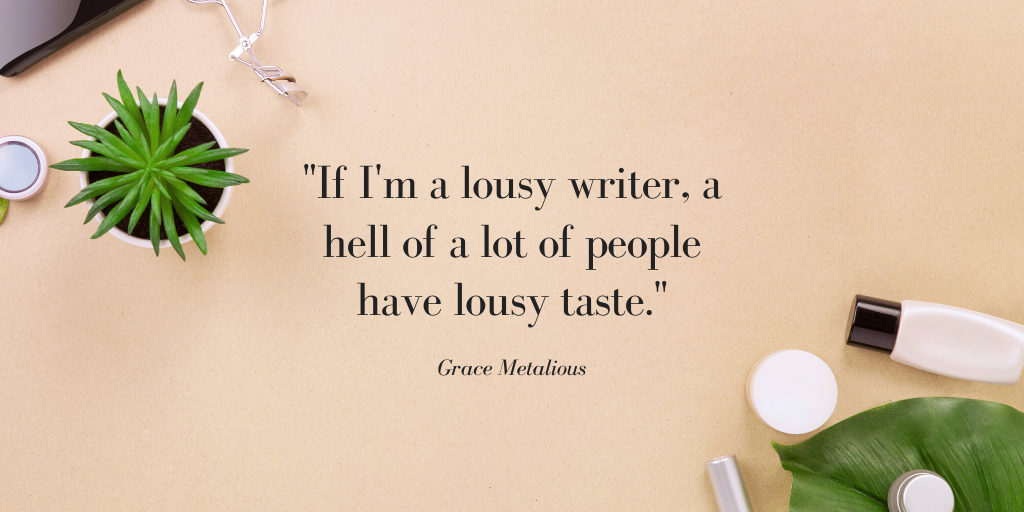
As Grace Metalious said of her runaway bestseller Peyton Place, “If I’m a lousy writer, a hell of a lot of people have lousy taste.” A sentiment I’m sure E L James shares, and a sentiment that brings the literary versus commercial fiction argument full circle.

You’ll never change your life until you change something you do daily

If books like Twilight and 50 Shades of Grey are so offensive because of sparkling vampires, horny main characters, and typos so abundant that even the free version of Grammarly would meet its match, why do so many people read them? In one of my tweets to the writer with the poll, I told her she can read who she likes. No one is forcing her to read Nicholas Sparks.

There are a lot of ways a book can be “bad.” The story can be well-written but more boring than hell. The author may not know her grammar and punctuation, or subject-verb agreement, or maybe she has a crutch word issue like the girl from Tik Tok pointed out making fun of Stephenie’s use of the word “chuckled.” (An editing failure, in my opinion.)

We all aspire to write “good” well-written novels and we chafe when we do so (or we think we have) and we’re not recognized. That’s luck and what’s hitting the market at any particular time, and you’e not proving anything to anyone showing off sour grapes because an author you deemed “not worthy” has found that luck and niche in the market.

What can you do besides wasting time with useless polls?

Work on your craft. Read books that won’t offend your high-society taste. Query your heart out or learn marketing because, honey, that’s the only way your book will see the light of day.

You’ll never change your life until you change something you do daily-2

So, who’s fault is a bad book? I suppose after such a long blog post hashing out the question, we can determine there are no bad books written, only bad matches between book and reader. The only difference is some readers are more vocal about their unhappiness and some aren’t.

I wish Writer Twitter weren’t so vocal about it. It’s not like a lot of those writers have anything to brag about. Sometimes I find the reader who complains the loudest is only making themselves feel better because their books fall into the same camp they’re trashing online.

I wish Stephenie all the success in the world with Midnight Sun. And I hope Erika’s critics never stop her from writing.

There are books out there for everyone. Read what you like and leave the rest of us alone.


Resources I used for this blog post:

The Bestseller Code: Anatomy of the Blockbuster Novel by Jodie Archer and Matthew L. Jockers


end of blog post graphic

The authorpreneur I am versus where I was five years ago.

It’s never fair to compare yourself to where you were five years ago, or more precisely, four and a half years ago, unless you haven’t changed and you can’t see in your rearview mirror through all the regret of wasted time.

16114241When I joined Writer Twitter, I was writing a huge epic fantasy and I thought I needed to be on social media to sell those books. Independent publishing was always a no-brainer, even when I didn’t know exactly what it was, and how I’d heard of it, I have no idea. Probably the one thing that pushed me along was a friend from work who was majoring in publishing at our local university. She gave me one of her textbooks, APE: Author, Publisher, Entrepreneur–How to Publish a Book, by Shawn Welch and Guy Kawasaki. It was my first taste of independent publishing, and being independently published fed into my control-freak nature. (I try to keep that under wraps, so don’t be surprised if it’s the first you’ve heard of it.) I don’t recommend the book now–this industry moves too fast for a book that’s eight years old to hold much relevance.

41ZRJBd-fUL

These are delightfully naughty stories, and I highly recommend them!

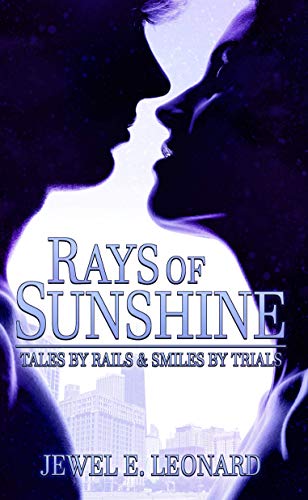
Back then, I was a wide-eyed, starry-eyed girl. People were publishing, they knew a helluva a lot more than I did, and they made the industry sound exciting. I wanted in. I read indie. Lots of indie. Bought lots of indie paperbacks, some from people who don’t write anymore or who have dropped off the grid because other things got in the way. I held books in my hands from people I knew, actually talked to online, and I wanted to hold my books too. One of the very first books I read was by Jewel E. Leonard, Rays of Sunshine. She did everything herself. Her husband helped her with the cover, but she wrote it and edited it, formatted the insides. She was my inspiration, and I started 1700 to publish like she did. (And can you read a blog post I wrote about writing to write and writing to publish here.)

Except, I had no idea how much work it would be to be let in. Because if it’s something that I’ve repeated on this blog for as long as I’ve been blogging, is that behind the cover designers and editors, the huge Twitter accounts, behind the shop talk, and Twitter chats, and blog tours and cover reveals, is this very one important thing. None of that matters if you haven’t written a good book. 

And this isn’t going to be another one of those blog posts. Everyone is going to publish crap. No one is immune from it, and very few are exempt. I’m no exception.

But the thing that probably saved me was the fact that I didn’t know it was crap. I went on my merry way, writing and writing and writing, and publishing and publishing and publishing and blogging about it, too! It was cool. I was a loser who didn’t know I was a loser.

Eventually, I got better. It’s just something that happens if you write enough words. You get better. Since I’ve started publishing, not including the fantasy still on a memory stick that I go back and forth between deciding to edit or not, I’ve written 1,227,000 words. Some of those aren’t published yet, as they belong to a first person trilogy that I haven’t edited. I’m going to write the sister trilogy to that before I release them. But they are written, and I’ll include them in my word count.

That figure isn’t to brag. I know I have a lot of time, and I do use the time I’m given.

But I think back to almost five years ago and how much the industry has changed. I did my book covers in Word. I used a free photo for The Corner of 1700 Hamilton, which I learned is a huge no-no. I formatted my documents myself using the templates KDP still has available though Vellum is so easy to get your hands on these days.

Besides the few people I had help me in the beginning, once I got the hang of writing again, I started editing my own books and for others.

There is something to be said for going back to basics. I learned a lot. I learned what a cover consists of, what bleed means. I can spot extra spaces between words in sentences in a manuscript and how not to put two spaces after a period. I know how terribly a Tab can screw up formatting, and even still today, I’m still learning how important it is to back up files (thanks disappearing Vellum files).

I’ve always moved forward, never gone back too often. Dean Wesley Smith calls this “overwhelming” your book. I call it burying it. But that’s hard to do if you want all your books to count. I say The Corner of 1700 Hamilton and my erotica novellas don’t count toward my backlist, but they have my name on them. They count. Even if I’ll never promote them. I put them out there, they are mine, and I own them.

For me, the glitz and glamour of being an independent author has gone away. You can scroll through writer twitter and maybe see some of those writers who haven’t published yet interacting with other writers with the same wide-eyed look. It’s not that I’ve become jaded–I still get teary-eyed whenever I finish a book and press publish–but it’s not long after that I’m on to the next thing, because there will always be another story.

What is this blog post about? It was supposed to be about how I revamped The Corner of 1700 Hamilton, but I’ll save it for another day.

I guess being quarantined has made me a bit nostalgic. I’ve come a long way in four and a half years. I’ve cried over lost files and bad reviews, I’ve virtually high-fived other authors and shared in their successes. I’ve shaken my head at others who keep making the same mistakes, and I feel bad for them because I don’t see their careers going anywhere. I know authors who are still working on the same story as the one when we met. This isn’t the career for those who can’t be tenacious, who can’t look ahead, who can’t see what they want in ten years and put in the work now. This industry isn’t for the faint of heart. Or for the weak.

I’ve come a long way in the almost five years I published 1700, and I plan to go even further in the next five. I WILL have a bestseller. Just wait and see.

What have you accomplished in the last five years? How has the industry changed since you’ve joined the writing community?

Let me know!


I read more than just Jewel’s book when I first joined Writer Twitter. Take a peek at the books I read that I very much enjoyed, and that I still recommend today. If you’re interested, click on the cover and it will bring you to Amazon. Some of them are in KU if you have a subscription. Some of the publishing dates reflect earlier dates, and I can only take that to mean that the authors have gone in, made changes, and republished. That’s one of the perks of being your own publisher. 🙂

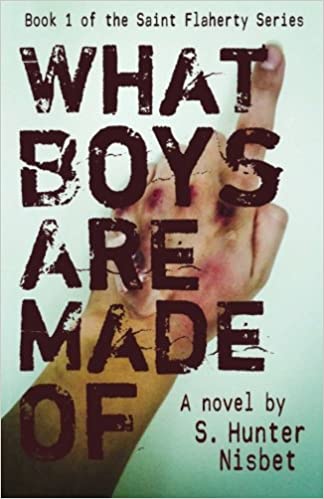
I can’t link you to What Boys Are Made Of and the other books in the series because I think Stephanie is redoing them. It’s too bad she unpublished while relaunching them though, because they were really good. Probably some of the best indie work I’ve ever read. I hope she gets them put back up really soon. They deserve to be out in the world.

51xSbxNCXCL._SX322_BO1,204,203,200_


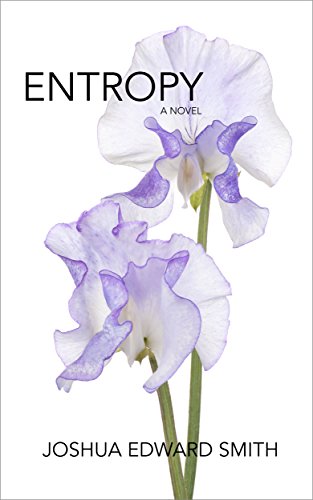
Entropy is the first in a trilogy, and I’ve read them all. I’ve mentioned before Joshua helped me by beta-reading Don’t Run Away, and we formed a friendship after meeting on Twitter. He has quite a few books in his backlist now, and if you want to read his next book, Perplexity, he’s blogging the scenes for a little entertainment due to COVID-19. You can find his blog, Perplexitybook.com, here.

41-CcnUwF5L

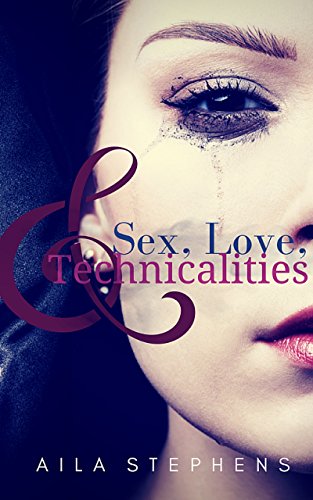
I love Aila with all my heart, and she knows her stuff. She introduced me to Canva, knows her way around IngramSpark, and is all around a fantastic writer. Sex, Love, and Technicalities is the first in a duet, and I helped her edit the second (which is why I’m attached to it, not because I helped her write it). Aila and I have been friends for a really long time.

51SHmVSUYlL

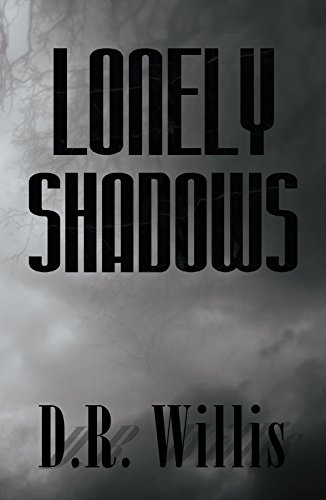
One of the first indie books I read was David’s Lonely Deceptions. Originally published as a novella trilogy, Austin Macauley squished them together and published them as a whole. Not that I would recommend going with a vanity press, David was fortunate and they paid him, not the other way around. Just recently he wrote the sequel and sent it off to Austin so the books would be consistent (they gave him an advance for that book also). Right now he’s working on something new that will be published under a pen name because he says he’s tired of people thinking he’s a doctor. LOL

41AoQWMhVBL

Tom is another writer who kind of fell off the grid, though I think he’s active on Goodreads. I haven’t spoken to him in years, but I’ve read all of his books, and he was one of my first Writer Twitter friends. I think Jewel introduced us. His books are hilarious, but dark, and I recommend empathetic all the time. It’s laugh-out-loud good.

5127jCie4nL


Another update, because, why not? And other musings of a #stayhome life

I had a blog post planned for today, and it’s even written out in my notebook. I need to type it up and get it out there, because it’s part of the 2020 predictions from Written Word Media. I would like to get that series finished up so I can blog about other things. Though, with this virus stuff going on, (and I don’t mean to make light of it at all; I know it’s affected many people) it feels almost strange to be carrying on in any normal sort of way.

silhouette-4233622_1920Even with my rah-rah-sis-boom-bah, write, write, write mentality I like to shove down people’s throats on this blog, I haven’t been doing much of that.

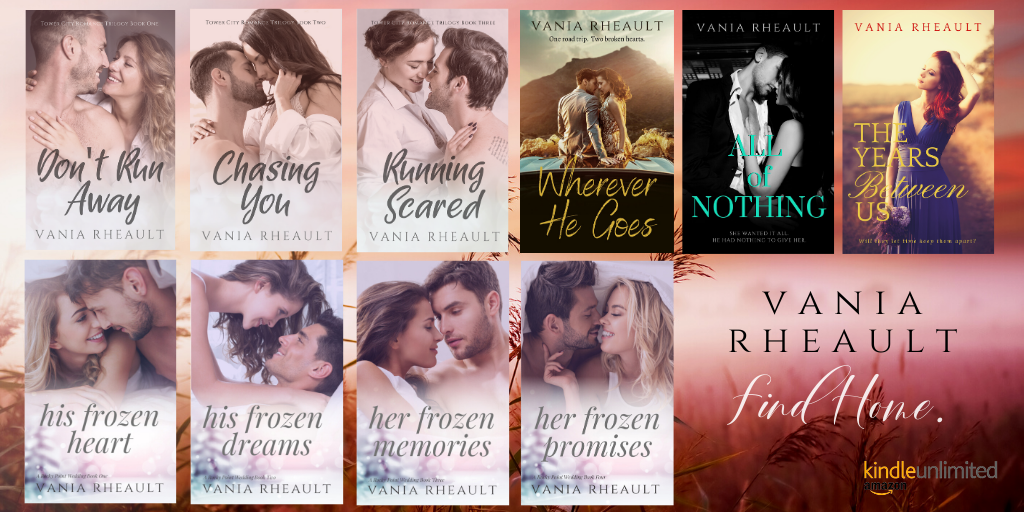
That’s not to say I haven’t been doing something. I was dismayed to find one day that some of my Vellum files for my books went missing. It’s not technically a big deal. I mean, I still had the .mobi files for Kindle the PDFs, but I didn’t like not having the actual files that upload into Vellum. So I took it upon myself to take the PDFs, convert them back into a Word docx and put them back into Vellum.

It’s just as convoluted as it sounds, and when you convert a PDF into a Word docx, the formatting isn’t 100% the same. And when you put that Word docx into Vellum, it gets messed up even more. So what I did (for my own peace of mind and my weird anxiety I get when I think about my books) I decided that while I was fixing the formatting in Vellum, I would give them a light edit and push them back into the world.

I’ve taken the last two weeks and I did All of Nothing, The Years Between Us, and Wherever He Goes. I guess because the formatting changed, or maybe I chose a different font for the text, who knows, I had to redo cover dimensions for All of Nothing and Wherever He Goes. That wasn’t too big a deal, since everything was saved in Canva and I had all my stock photos still saved there. Recreating them with a different canvas size didn’t take too much time, and I’m getting good enough that I didn’t bother ordering proofs before publishing them (something I used to do every time I made a change to the paperback).

It was actually kind of interesting to go back and read my books again, and I learned a couple things along the way:

1. I need to keep my baby name book with me. ALWAYS. I used the same names over and over again. There’s a Jared in Wherever He Goes, and there’s a Jared in my Wedding series. I reused the name Max, as well. Dismayed, I found I used Erik in All of Nothing, and there’s an Eric in Don’t Run Away. There’s an Elmer in Wherever He Goes, and an Elmer in the new trilogy I’m editing (I’ll change his name, for sure). You know, there are so many names available, I shouldn’t have reused the names at all. It’s not like I’m 60+ into my backlist and I’ve run out of choices. For consistency and scared I would do more harm than good, I didn’t change any of the names. Maybe in the future an Excel sheet will come in handy.

2. I use the same imagery. I’m consistent in imagery, and I guess that’s what people mean when they say they know a book’s author by the way it’s written. Though some of the metaphors and cliches change from book to book, it’s evident I like the sound of a certain way of comparing things.

In the mirror, I give myself one last look. The dress shows off just enough leg, my hair is a blonde mess of curls down my back, my eyes have just the right amount of shadow and eyeliner.

I’ll pass, if no one looks too closely.

After all, even imitation gold shines in the light.

This is an example of some of the language I like to use from book to book, and while it’s pretty, I need to make sure that I’m mixing up my imagery or my books will start to sound the same.

3. My themes are the same. This isn’t necessarily a bad thing. In fact, I’ve been told that a consistent theme weaving your books together will help with marketing. My theme, so far, is when you fall in love with the right person, you can find your place, you can find your home. Of course, in romance you have to be careful that the woman isn’t losing herself in her man, that her world doesn’t revolve around him. So it’s important that you give your female main characters their own backstories and make sure they have their own arcs so they fall in love and find their place with their man on their own terms. All my female characters battle their own demons before allowing themselves to find happiness in a relationship. This is the way romance has evolved, but I don’t have any complaints. No one wants to read about a doormat who doesn’t have her own life outside of her love interest.


I could tell that when I was writing Wherever He Goes that I was a bit stiff at the beginning and I did take the chance to smooth out some sentences and make the scenes and paragraphs flow a little better. I didn’t hit my stride with that book until the middle, and I find it interesting because already by Wherever He Goes I had already written quite a few words. But that book was my first standalone after the my Tower City Trilogy and I guess I was getting used to new characters and plot.

I don’t know if I’m going to do every single book I’ve published. The box set file for my trilogy is still intact, so pulling those out and making the books single again to recover my Vellum files won’t take that long, and they won’t require proofing unless I want to go back and read them. I suppose I could since in the back of my mind I feel like those are mediocre offerings at best and I’m reluctant to advertise them. If I read through them and fix typos, etc, then maybe the time I invest doing that will come back to me since I’ll be more comfortable promoting them. That’s committing to a lot of work, and for now I’m going to do 1700. I don’t have the file for that cover anymore–that was way back when I was doing covers in Word, and Canva wasn’t available yet. So I want to revamp that and reformat the insides with Vellum. I’m excited to do that–and it won’t take me long. The whole book is barely 50k. I already edited an old paperback so I just need to add them in and make the interior pretty. It’s a romantic fantasy, and once I update the cover and keywords, it might actually make a few sales. It’s a cute little story, and even though it’s the first one I published, I’m still proud of it.

I think I even found a stock photo that might work:

depositphotos_321067012-stock-photo-young-elegant-couple-hugging-while

I know the font will play a big part of the cover, and to be honest, I totally fucked myself with the title. On the Corner of 1700 Hamilton is atrocious, and if I cared at all, I would unpublish and start over. But while it’s a sweet little thing, it doesn’t mean enough to me to completely revamp it. As they say, mistakes were made, so what’s the point of pretending they weren’t?

Anyway, so that’s what I’ve been doing with my time. It’s amusing, at any rate, and it’s actually kind of heartening to know that I like what I write and I feel like though there were typos I had to take care of, my books are solid and I’ll have confidence in running ads to them in the coming years.

Tell me what you’ve been up to! Are you doing little things to keep your mind busy or have you been able to write?

Let me know!


end of blog post graphic

COVID-19 Check in, what’s been going on, and still trying to get things done.

This is a hard time for everyone, and I just wanted to check in with my readers and ask how everyone is doing. How many of you are working from home? How many of you are not working at all because your workplace has closed? How many of you are considered essential personnel and still need to go in? If you’re still working, please be safe, and thank you for doing all you can during these trying times.

when-you-find-out-your-nomal-daily-lifestyle-is-called-quarantine-memeI’m considered essential personnel (I type for the deaf and hard of hearing) so I still go in for my shifts at the call center. For right now, things haven’t changed too much in my life. My daughter is no longer in school, and her teachers are preparing to start online learning soon. Tomorrow she has to go to school and clean out her lockers and bring everything home. Though they haven’t announced it for her school, I don’t think she’ll be going back to finish out the school year.

My son had a wound check last week, and we were screened by gowned and masked nurses before being allowed into the clinic. They pushed back his next appointment to the middle of next month, but I have a feeling that that appointment, too, will be pushed back. He’s healing well, though, so I give thanks for that. It would be hard to worry about him and feel like we don’t have access to his doctor and nurses. I know they are limiting people going in and out, and I’m thankful we’re not in a position to need them on a regular basis. I pray for those who do still need to attend the doctor regularly.

I go to the grocery store only when necessary, and I went yesterday for milk and a few things for dinners. I won’t have to go back for a while now.

I still try to have some motivation to get things done regarding my books. The secondkeep motivated during qurantine book in my series will release on March 31st. I’m working on my first person trilogy. I sent book one to my friend Sarah, and she proofed it and found some mistakes. She was also a bit taken aback because this trilogy is going to be more of a serial than a series, and book one ends on a massive cliffhanger. She did have one observation, so I’m going to take a look at the ending and see what I can do in regards to that, but otherwise, I think she liked it.
It’s hard to focus during a time like this, but I have to remind myself that if I let this time go by, once it passes, I’ll feel terrible that I didn’t get anything done. I know lots of people are panicked now, and a lot of us are just trying to get through one day at a time. But if you can, try do a little something for your writing every day. If you have the time to write a little, you should try to put some words down. If you can’t focus on the words, there are other things you can do to forward your career.

  1. Keep blogging. If you choose topics that don’t depend on current events, you can write evergreen posts that will always be part of your platform. Lots of us are reading more, so post reviews, recommend books in the genre you write in, or if you’re writing to writers, dissect books and explain what you liked about them as a writer, what you learned as a writer reading them, and how you can apply what you learned to your next book.
  2. Look back at your 2020 goals and see what you can check off the list with some of your new free time. Did you say you wanted to start a newsletter? Revamp your website? Trust me, after all this is over, if all you did was binge Netflix because you couldn’t wrap your mind getting something done, you’ll regret it later.
  3. Learn an ad platform.posted quite a few free resources that can help you learn ad platforms, and now is a great time to dip your toes into experimenting  with something. There’s been a lot of talk of stopping ads during this time, and authors are reluctant to promo because it seems self-serving. There are a lot of books out there, and I don’t see the harm in running ads and helping people who are stuck at home find good reading material. I haven’t turned off my ads, but I’m not making all that much anyway. I’m still coming out ahead, making about .50 a day in sales after subtracting ad cost. But learning is just that, learning, and it takes practice to figure out what will work for you.
  4. Practice something else that you wanted to master. Lots of authors do their own covers just because it’s difficult to afford editing, formatting, and cover services. There are lots of tutorials out there that will help you learn GIMP and Photoshop, and Canva has free online resources that teach you how why things look pleasing to the eye. The best thing you can do is practice. Look up the top 100 on Amazon in your genre and practice copying the elements that make the cover look good. This is one of those things where you’re going to have to take time over the course of months and maybe even years because developing an eye is just something that takes time.
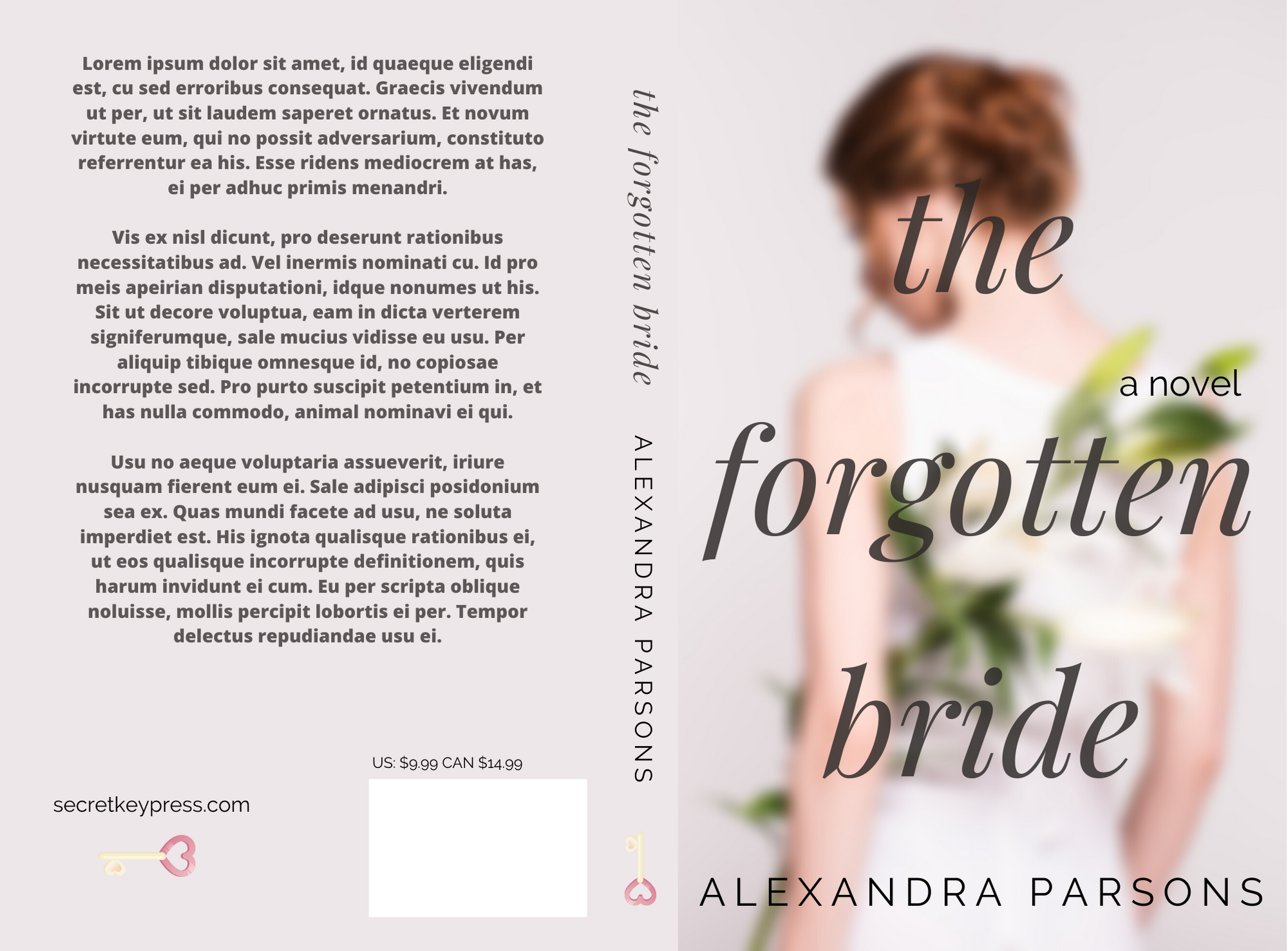
    This is an example of doing your own cover and graphic just as practice for when you need to do the real thing. I took a look at the top 100 Contemporary Women’s Fiction books on Amazon right now.
    I liked this one. It’s doing pretty well. Number four in sister’s fiction in the Kindle store at the time of this blog post.
    515+yEzlUHL
    So I decided to try my own hand at it, and I came up with this:
    the forgotten bride
    It’s not exactly the same. I don’t like the swirly things on the other one, but I did like the concept of the blurry woman. Here’s my take on it. Us indies are held to a slightly different set of standards, and it’s frowned upon to have a review on the cover of our books, so I skipped that part, too. But you get the idea. The image was purchased on depositphoto.com and the cover was made entirely with Canva. The Font is an italicized Playfair Display, and the font for the author’s name is Raleway. And I do practice what I preach. I try my hand at fake covers a lot.
  5. Do some busy work. Is there a book that needs to be reformatted? Were you going to refresh a cover and didn’t want to make the time? Rewrite a blurb? If you can put on some music and lose yourself in an activity, you’re not wasting time, and you’re doing something that can have rewards later on. Even if you just sit in your email and unsubscribe from some pesky emails that you never look at and always delete, that can be helpful, too.
  6. Work on craft. If you can’t sit down and work on your book, try a short story, flash fiction, poem, or something else.
  7. Get outside. Social distancing and living in quarantine doesn’t mean you can’t go outside. In Minnesota, the weather is warming up, the snow is melting. I spent a lovely day yesterday at Buffalo River State Park getting air, hiking around. Take the opportunity to get away from the news and plot out a new book or work out a plot hole that you can’t resolve. Sometimes unplugging can be a stress reliever and exercise will give you a hit of endorphins that can ease anxiety.

The fact is, we’re not sure when this will all be resolved. It could take months. I’m not planning to go to my book marketing summit in May. Even though they haven’t canceled it yet, it wouldn’t feel the same, and I think we’ll still be dealing with the aftermath of all that’s occurred. To be sure, it won’t have the same feeling as before the coronavirus outbreak, and it’s best to just stay home and look forward to a conference in 2021.

For right now I’m working on my trilogy and planning the second trilogy that will end the first. There will be six books in this series, and I hope to write these and be done with them by the end of the year. I wrote the first three very quickly but with summer coming, I do have plans, and may be a little slower with the second three.

Anyway, we’ll see how it goes.

I hope you all are doing as well as you can, and try to remember that even if you’re self-isolating, you’re not alone.

Until next time!

the forgotten bride graphic


end of blog post graphic


An Author’s Thursday Thoughts: How book one is doing, what’s up next, and cliffhangers.

Happy Thursday!

Happy Thursday! March seems to be going just quickly as February did! I hope you’re getting a lot done while the weather is still a bit dreary, as I know how difficult it is to get those words down when all you want to go is go outside.

I’m still doing the 2020 publishing predictions from Written Word Media with a dash of Mark Coker (from Smashwords) thrown in for good measure. But sometimes life gets in the way. My son had a procedure done that needs wound care, so that has created a new morning and evening schedule. It wasn’t serious, and he’s healing, but I’m still his mother and sometimes doing something while you’re stressed doesn’t work. Hopefully things will get back to normal in a couple weeks.

Until then, I can update you on a few things.

My second book in A Rocky Point Wedding will drop at the end of the month. My manuscript is loaded into the pre-order, but I still need to go in and add the pre order link to book three to the back matter. Not that it matters. Because I have one pre-order for book two. So I’m doubtful if putting the pre-order link in the back of book two for book three will do anything. Such is life.

His Frozen Heart went live on February 11th, 2020, and I suppose you want to know how the launch did. It didn’t break any records, and even though I tried to drum up a little enthusiasm, which is a lot more than I usually do before a release, it didn’t help. Since its release I’ve made $16.51 and that includes both KU page reads and ebook sales. I’ve had no paperback sales. I think the only thing I’ve managed to do is gather some bad reviews, which I have to admit, let bother me for a little while. Now I just shake it off because it is what it is.

I tried to keep an open mind given the fact that both the main characters went through something unpleasant. Truthfully, even the other characters seemed to be carrying enough baggage to sink a ship, which makes up for unnecessary drama.
This is a nice enough book, it started well for me then just went downhill fast because of some of the character’s wishy-washy attitudes. — Goodreads Reviewer

Anyway, I’ve blogged a lot about what I think is selling right now, and we’ll just see what happens with the other books I have lined up to release under a pen name this year. I think I’ll concentrate on the pen name for a little bit. I’m having more fun than I thought writing first person, and I have a continuation in mind that is spun-off from one of the characters from this new trilogy. I’ll spend my summer writing that, and honestly, trying not to worry so much about sales.


I’m done with the last book in my trilogy I just mentioned. It took a little longer than usual to finish this book, mainly because I wanted to make sure that I ended the trilogy on a good note, and end that book well in general. I have a tendency to rush endings because, well, it’s the end, and even with what I have I’ll probably add a little more in editing. I’ve been looking at stock photos for the covers, may have even picked out the couple since I managed to find a nice male and female in different poses that might look good next to each other.

But there is one thing about this trilogy that has me thinking now. I was scrolling through Mark Dawson’s Self Publishing Facebook group and there was a woman posting about cliffhangers, particularly in romance. Should she, shouldn’t she? Do readers like them? Loathe them? A little of both?  As you can imagine, she got quite an earful, both pro and con.

Happy Thursday!-2

Then it made me wonder, I have a MASSIVE cliffhanger at the end of book one. I had already planned on releasing these books pretty close together, for that very reason. It’s one big story, after all. A reader has to read book one first, or two wont’t make sense, and reading three before either one or two, well, they just wouldn’t get anything out of it. Now I’m wondering if that’s the death knell for the whole entire series. I mean, I’m all for writing what you want, do that (at your own peril) and if I can avoid some issues before publication, then I should do that. But honestly, I have NO IDEA how I would fix the cliffhanger short of just taking a little bit from the beginning of book two and tacking it on there. But that’s silly. I started book two exactly where I wanted to start it, and it would water down book one’s ending.

It’s a dilemma.

As a writer, we don’t care we write cliffhangers, because the information and “what’s next” is at our disposal. But as readers, is it fair to make them wait, even one second? Would an excerpt from book two be enough to appease them?

I’ve already thought that this isn’t your typical romance. I might not even categorize these as such. Perhaps domestic thriller with romantic elements, or plain thriller, though there’s not too much mystery involved. The thing is, the couple featured aren’t together all that much, though the romance part of it is more than a subplot. I already knew in the back of my mind trying to market it as a full-blown romance won’t cut it.

That’s what happens when you write from your heart, kids. You have a book you don’t know what to do with.

Well, whatever, I suppose. I’ve had more pressing problems in my real life at the moment.

On that note, I am going to bed. It’s already been a long week. With my son’s wound care, sister time, editing for a friend of mine, and of course, all the cats doing all the things, I’ve been pretty busy.

There’s never a dull moment.

I hope all of you are doing well, and I will try my best to be back at it on Monday! Have a lovely weekend!

Happy Thursday!-3


Do you need money to write? A poor indie author weighs in.

Words: 1998
Time to read: 11 minutes

There’s an article in the Guardian that is making the rounds on social media right now. Written by Lynn Steger Strong, she talks about writers and money. The title is an eye-catching:

A dirty secret: you can only be a writer if you can afford it.

If you read my blog, you know I love to talk about money. In particular, writers making money, or more precisely, not making money. This is a favorite topic of mine because I’m convinced there is money out there, somewhere, but only the lucky few find it, and even fewer are able to hang on to it for any length of time.

Lynn, (I’m sure she won’t mind if I call her that) publishes traditionally, has a Master’s in I’m going to assume, writing of some kind, and teaches college classes. That’s a pretty common way to be a “serious” “full-time” writer and author. Through her graduate program, she found an agent, and she teaches, again I’m going to assume some kind of English class, creative writing class, or even literature. She says her husband’s job helps, and she seems (according to the tone of the article) content, or at the very least semi-satisifed, to write and publish the academia way.

But not everyone can do that, or even wants to do that. A lot of writers I know whom I have met on Twitter, especially, don’t have an English degree, or American Lit, or Brit Lit, or have never taken a creative writing course. So, right away, opportunities (teaching jobs and agent referrals) aren’t accessible to many writers who want to go the traditional route. And surprisingly, many still do. It’s actually quite amazing to me how many writers want to query, want the book deal. They think theyr’e going to be the next JK Rowling, Cassandra Clare, Sarah Maas, Leigh Bardugo. They write epic YA fantasies, or they’re trying their hand at “serious” literary novels, wanting to be short-listed for the Booker, and they think “book deal” means money and fame, and really, does traditional publishing even deliver that anymore?

It’s no secret even if you get The Book Deal, you’re often on your own with marketing and publicity, (and editing. I hate throwing Jasmine Guillory under the bus, but go on Goodreads sometime and look at the reviews for her books. It’s a shame really, that her publishing house *cough* Penguin, couldn’t invest in a a couple editing sweeps and continued to let her flounder for many subsequent books) something new writers who query still don’t seem to understand. Even Lynn, in this article, mentions a published author spending her advance on a publicist. I suppose some want book deals because they think they’re going to luck out and land an agent who will hold their hand through their whole career. They’ll nurture them, and guide them, mold their novels into bestsellers. (Where did you go, Max Perkins?)

Publishing doesn’t do that anymore. In fact, Lynn’s way to publishing, I’m going to predict, will go the way of the dinosaurs in the next few years. Indie publishing is taking over, and the die-hards don’t want to admit it because there are still some successes. In Scratch, by Manjula Martin, you can read an account of how Cheryl Strayed lived hand to mouth with her husband while she wrote Wild. It paid off because she landed a huge book deal, and was able to pay off the credit cards they lived on while she wrote. She didn’t give numbers, but she also admitted that when Reese Witherspoon picked up her book for a movie deal, that also help her finances. I’m sure it did. She must have had a huge amount of faith to think her creative memoir was going to sell big. And she was lucky it did. Who else can put their rent on a credit card? I wouldn’t want to.

So, yeah, sure, you need money to write. Time is money, and if you have time because your significant other pays the bills, or your kids are old enough not to need daycare and you don’t have to make that up in wages, or you’re renting instead of buying and your rent is half the cost of a mortgage, you’re fortunate and have twenty hours a week to write.

But, you need money to sell your books. How many of you would really, let’s be honest now, throw your book deal advance into marketing? How many of you would would throw your 10,000 dollar advance at a publicist? Really? Whether you’re trad published or not, you still need to pay for marketing your own book.

This is where I think most people get hung up. They make time to write, and maybe it takes six months to a year to finish a novel. But then what? Never mind paying for ads. If you’re a debut novelist and you don’t have an MFA or even an under graduate degree in creative writing, you’re going to need a developmental editor ASAP, and those don’t come cheap. Because let’s face it, every day people publish absolute crap. They do. Some of them even know it, but they don’t know how to fix it. Everyone says, hire an editor, but people (often the people who can afford it) forget that a developmental editor costs as much as two months of my rent. I’m sure it’s that way for other people, too. Hmm, a roof over my head, or an editor? Sometimes you can’t choose. So they publish crap and moan when they don’t sell books.

Then there’s the cost of cover design and formatting and throwing a great launch, and paying for ads for the rest of your life.

You can be a writer–that’s free. It’s the rest that slows us down.

I understand where Lynn is coming from. Hell, I’ve even been tempted to try to apply to an MFA program. I picture us sitting around a university classroom, sipping on espresso and discussing why Hemingway was such an asshole, or if F. Scott Fitzgerald was a good writer because he was an alcoholic, or despite it. I picture myself pulling a Donna Tart and spending the next ten years writing the next great American, Pulitzer prize-winning novel while I teach English 101 classes to kids who can’t spell because our educational system is going down the toilet. But how am I living doing that? Hand to mouth because teachers don’t make anything, and programs at universities are shrinking because no one can afford school anymore.

What can you do then?

  • Recognize that it’s going to take a lot of work and a lot of time to start making good money. I’ve been writing and publishing for three years, and I made sixty dollars in the month of February–and you need to subtract the 20 dollars I spent on ads. A 40 dollar return on investment is nothing, and at this stage of the game, I’d be better off appreciating the fact that people are paying to read my books, even if that number is few. But, forty dollars won’t even pay my cell phone bill every month.
  • Do what Lynn suggests in the article and find a job that won’t zap all your creative energy so you have the mental and emotional capacity to still write at the end of the day while you’re trying to make it big.
  • Find the sweet spot between what’s selling and what you love to write. You don’t have to write a literary work of art. Half the battle is writing what people enjoy reading. 
  • Focus on craft. We all can do better with plotting, character arcs, and finding our voices.
  • Learn an ad platform and make it work for you. You can start small–five dollars a week.
  • Network with bigger players in your genre and see if you can get a little help with the marketing end of it with newsletters swaps and sniff out promotions that won’t break the bank. One can hope that you’ll always make more money than you spend.

There is money out there. There are readers out there. They want to read good books. Write one and then pay to find them.

No teaching required.


If you need proof there’s money in indie publishing, Publisher Rocket has the goods. I use that software to find keywords for my Amazon ads, and it scrapes data from Amazon. How much is the hottest contemporary romance novel projected to make this month?

51QY58RfpnL

Lauren Landish put out a book a few days ago: The Dare. At the time of this writing, it’s number 10 in the entire KINDLE STORE, and number 1 in her genre categories. Do you know how much that book is projected to make this month? Almost a quarter of a million dollars. Yes you read that right. It seems almost . . . I don’t know, illegal, to have that kind of information out there. So much for privacy in the digital age. But no one, especially traditionally published authors, wants to admit that that kind of money is out there. That it’s ACHIEVABLE. (I would also be amiss not to point out that her book is exclusive to Amazon, and I bet most of that money comes from KU reads since her book is available in Kindle Unlimited.)

And admittedly, that book is number one in contemporary romance meaning she must have worked her ass off to get that far, and she’s written a lot of books. So there’s no way I’m going to resent her that income. But let’s try the book that’s listed in the 100 slot in the top 100 of contemporary romance today:

41F7yYZ+yJL

The book is by Rich Amooi, and I have to admit, I’ve never heard of him before. He’s projected to make $12,000 dollars this month. That’s a steep drop from Lauren’s paycheck, but probably you wouldn’t turn your nose up at that kind of royalty check from KDP.

Lynn, the author of the Guardian article, has a book coming out, Want: A Novel, and I wonder how much her advance was from Macmillan, how much of it went to her agent, and what her own plans for marketing her book will be when her book is finally published (it’s on preorder). I wonder if she looked at genre trends, researched the market before she wrote her book. I wonder how long her agent shopped it around before she found the book a home. I wonder if she’ll earn out her advance. She’s not going to make a quarter of a million dollars. I’d bet my next year’s royalties on it.

So where am I going with all this? 1900 words later, I guess I want to say that the money is there, but it depends on the path you choose to determine how long it’s going to take you to find it. I’m working my butt off–I write every day, I try to publish consistently and put out good books. My books haven’t caught on yet, and that’s okay. I’m exploring new things, (switching to first person present for one) and I’m flexible (I don’t mind learning what’s going on the indie publishing world). I’m lucky that my fiancé supports my writing–he pays my rent and makes a credit card payment every once in a while so I can buy groceries. My ex-husband pays me alimony and child support, and I do work. I piecemeal an existence together like a lot of writers. It’s probably why I sound so hardcore whenever I blog about writing. I don’t want to waste the time granted to me by other people’s generosity. I want to make that time count. My life would look very different if I didn’t have money coming in from different avenues, and I probably wouldn’t write as much. It’s Lauren’s numbers that keep me going.

I’m going to make it some day.

And you can, too.


end of blog post graphic