Knowing when to pivot. (What does that mean?)

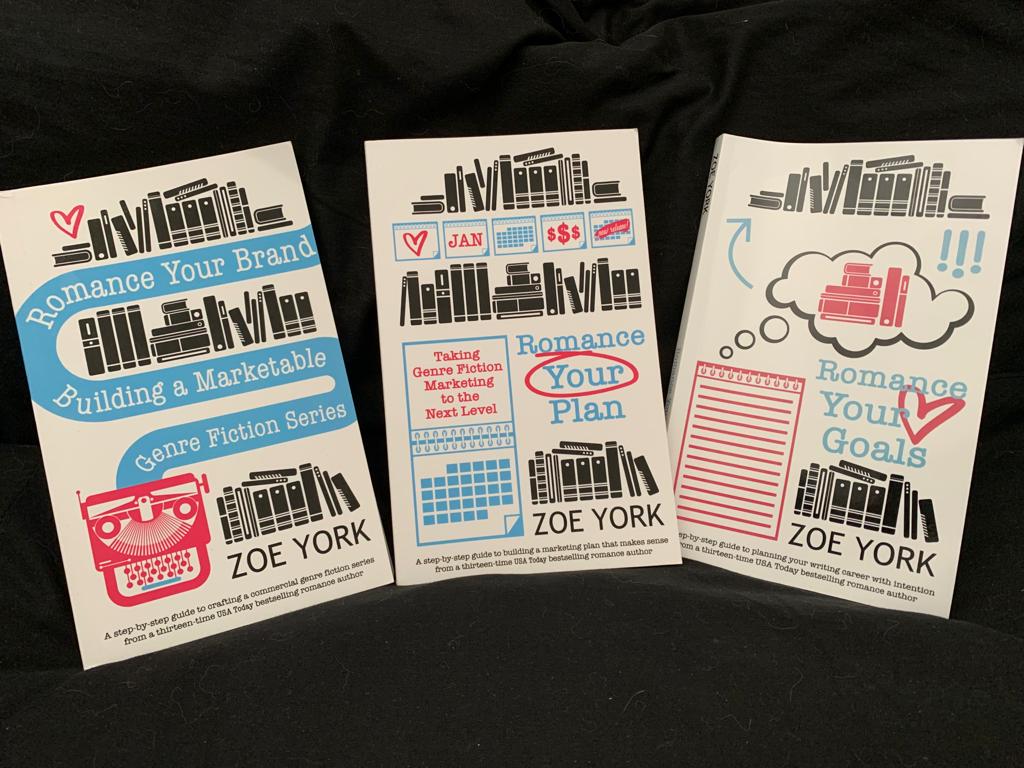
a picture of zoe york's three books about writing and marketing romance.  look here to buy:

https://www.amazon.com/dp/B082CZDK75
To check out the series, look here: https://www.amazon.com/dp/B082CZDK75

I just finished Zoe York’s Publishing How To series, and I really enjoyed the books, her thoughts and experiences on publishing romance, goal setting for your author career, and so much more. She’s been writing and publishing for years now, is a full-time author, and has made a bestselling list or two.

What I’m about to say doesn’t have anything to do with these books–I’ll circle around to them–but lately I’ve realized that when it comes to writing, publishing, and marketing, you can consume all the marketing advice in the whole world, but you won’t get anywhere unless you have a good product, and more importantly, a good product people want to buy. That’s part of the reason why I haven’t purchased Mark Dawson’s Ads for Authors course (comes in at close to 1,000 dollars, and SPF offers it twice a year). If you don’t have the books to back up your ads, your ads aren’t going to do anything.

When I take a look at my publishing history, I was writing good books. I received the odd 1-2 stars most authors do, but on the whole, I’m writing good books. That’s important to me because I do most of the editing and production alone. But something was still off because over the past few years, I didn’t find any traction. One mistake was my newsletter, or lack of one, I should say, and the other was my lack of direction with the books themselves. (I also didn’t understand author brand, but that’s an old discussion we can have on another day.)

It was just this morning when a woman in a writing FB group was talking about this very thing. She was sub-genre hopping and couldn’t figure out why she wasn’t getting any traction. Maybe she’ll believe me, maybe she won’t, but I told her I had the same problems with my own books and decided to niche down.
desk with laptop, plant, and coffee.

be stubborn about your goals but flexible about your methods.

My issue with pivoting is that it took me a long time to realize I had to do it. Some writers who struggle may never understand that it’s not their marketing chops, or their covers, or their blurbs, but simply what they are writing in the first place. Depending on how fast you can write, that can take years. Years that can feel wasted because if you had been writing the right thing in the first place, you wouldn’t still be at ground zero wondering where it all went wrong. But that’s like a chicken and egg scenario–how do you know what’s right or wrong until you put it out there? And what are the metrics you’ve decided to pin that on? Sales? Reviews? I’m nowhere near making a full-time author’s salary–I checked my dashboard yesterday and made 2 cents. (That tells me someone borrowed the book in KU and opened it to make sure it borrowed properly, then went off to do something else. Or they read the first page, didn’t like it, and returned it. If I think to check back, I’ll see if that person read it or not, but that micro-level of caring is not in me and never will be.) Admittedly, those books are old now, and even dropping 10 cents a click in ad spend to those books is probably a waste of money because as we’ve determined, Amazon loves consistency and relevancy, and I won’t be writing any more of those books for the foreseeable future.

So what will make you decide that it’s time to pivot?

At the beginning of the post, I brought up Zoe’s book because in it she says knowing when to pivot and niche down is a personal choice, and it is. You have to look back at your books, where you are, and decide if it’s enough for you. I see indies making money. I want that, too. It’s not a driving force, but financial security is important to me, and who doesn’t want to get paid for doing what they love?

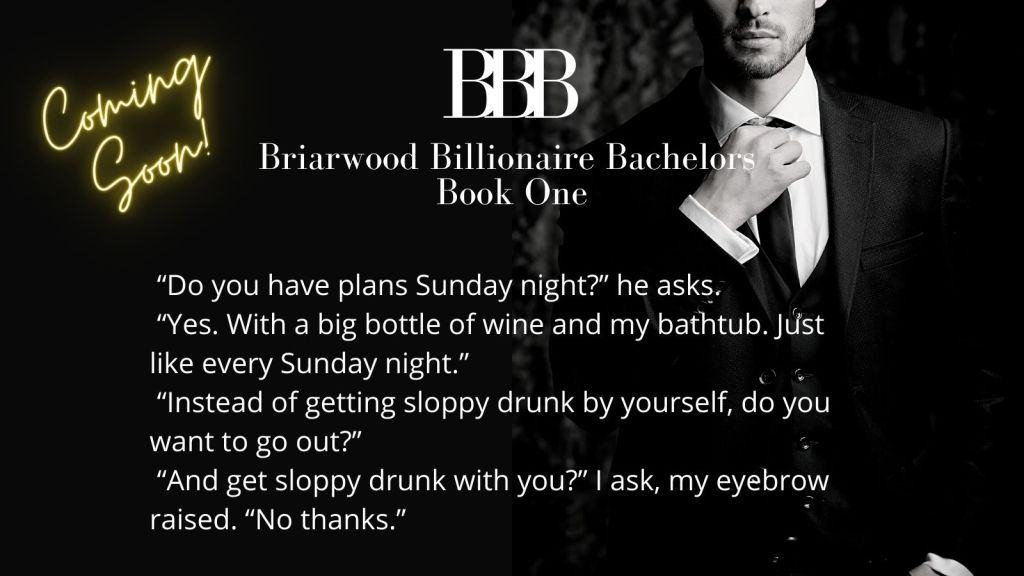
When we talk about pivoting, what does that even mean? It means taking a look at what you’ve been writing, looking at that lack of success those books are bringing in, and deciding to try something new. It can be as simple as what I did–turning from writing “Contemporary Romance” to Billionaire, or doing a full 360 and changing from Christian Romance to Horror. But then that begs the question too–will the pivot be in the right direction? I have no idea. I can’t even say if these new books will resonate with readers until I put them out. I THINK I’ve taken a step in the right direction: billionaire, first person POV. According to Alex Newton of K-Lytics, Billionaires are like vampires and will never die. So, that’s a good thing. But there are a lot of other things that can turn against me: writing style, the tropes I chose to write about, the issues (backstories) I’ve given my characters and decided to tackle in my writing. Changing from Contemporary Romance to Billionaire might not be the magic bullet I hope it is, and right now, I don’t have a plan C. I’m not even sure how long I’m going to give this pivot a go before I decide this writing business isn’t meant to be. I have enough books saved up to publish 4 a year for the next 3 years, so at least until then (because why not publish them since they’re written), but I’ve been skating financially since my divorce, piecemealing paying my bills with scraps of income from various places while giving my writing career a chance to do something, and I can’t do that indefinitely. As Kristine Kathryn Rusch says, there are easier ways to make money. Less stressful too, I bet.
desk with laptop plant and coffee

a pivot is a change in strategy without a change in vision. eric ries

So, if you’ve been banging your head against your laptop trying to figure out why you’re just not seeing the success you want, maybe it’s time to pivot. What is selling right now that’s close to what you’re already writing so you don’t go out of your mind? I’m not saying be a slave to the market, or to trend, though I’ve seen Alex Newton’s indie reports, and trends don’t change nearly as quickly as we like to say they do. I’m saying find something different to write that’s hotter, more niche than what you’ve been writing and see if that works.

All those who wander are not lost, but sometimes you think you know where you’re going and end up not knowing where in the hell you are. That was me before looking at my backlist and choosing to write Billionaire. All of Nothing has made more than all my other books combined, so I feel this pivot was a good choice. Now all I have to do is publish, wait and see.

Fingers crossed.

Thursday Thoughts and Author Update

I haven’t give you an author update for a while, but mainly I’ve been listening to my series and slowly getting that ready for my 2023 release. I just started book 3, and I’ve been tweaking, checking consistency with the other books, making sure there aren’t any discrepancies with what the characters say and the information they find out from book to book. You might wonder how I can do this, and let’s just say, I have 75% of my 480,000 words memorized. Haha. I’m kind of kidding, but kind of not and it definitely helps that I’ve already read through this series about five times and let months go by between reads (I wrote these in 2020). Also, listening to these books is a different way of consuming them, and I’m finding things I wouldn’t catch by reading only.

I am very satisfied with how these are coming along, and despite a mini-breakdown I had a few weeks ago about finding beta readers and proofers, I feel good about them all as a whole. I’ve come to the painful realization that I won’t have any betas or proofers, mostly because now isn’t the time to test proofers and betas. I should have set up a system and formed my “team” long before this, and it’s just too big of a project to be trying people out now to see if they are a good fit. While it’s always is a good idea to have more than one set of eyes on your books–especially for newbie authors–sometimes that just isn’t possible for one reason or another and while no one likes to admit it, there are indies out there who publish with the barest of editing and do just fine. In a perfect world, I would love to have some feedback on the overall story and to make sure all the details are consistent, but with my English degree and my firm grasp of grammar and punctuation, I’m not worried about the technical side of things, at least. I’ve been sifting through stock photos too and marking the ones I like but I won’t be able to do the covers until closer to the end of the year when I can get a better look at what will be trending. Who knows what will be hot for Billionaire covers a year from now? There’s no use getting set on a couple or anything else if I’m going to have to redo them later. Cover-to-market is really important, especially in romance, and getting impatient will just create more work for myself.

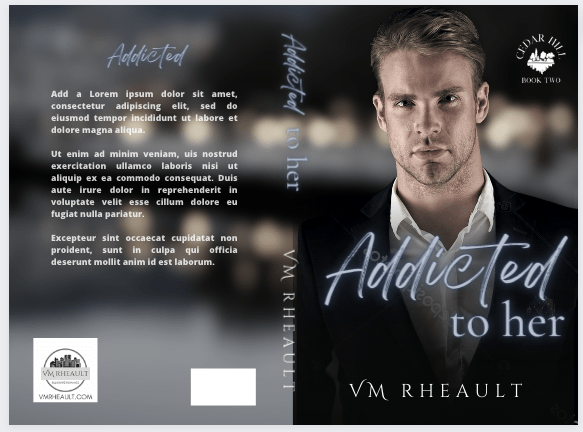
I’ve already had to redo my covers for my duet, as black and white covers with a pop of color for the title are slowly starting to slip away. I revamped the covers for my Cedar Hill duet, making them color instead of black and white. Excuse the rough shape they’re in. They aren’t set in stone, and I haven’t purchased the stock photos yet. Tell me which ones you like the best:

Anyway, so I won’t be doing the covers for the series, but I can do everything else, and I’m hoping I’m finished with them by the summer as I still think I want to write a Christmas novel for release at the beginning of November. Listening to these isn’t taking as long as I anticipated it would, so I should have plenty of time to write it while doing everything else to get my duet ready for release thing spring and my series ready for next year.


This is a topic that would probably better fit a Monday post, but I just want to complain a little bit about it here. The other day, an agent on Twitter tweeted this advice:

Twitter tweet snapshot:

It breaks my heart when I get a great pitch for a book somewhere between 50 and 70k. It's almost always a no. There are exceptions, of course, but in general, adult fiction is between 80k and 120k. 60k is just too short to fit comfortably on the shelf.

12:03AM 2/6/22 Twitter Web App

81 Retweets 264 Quote Tweets 714 likes

Writer Twitter blew up. This agent was attacked on so many levels, and so many people who had to weigh in on this agent’s advice and opinion. She eventually locked her account down and I wasn’t privy to most of the horrid aftermath. I’m appalled at the way the writing community treated her, and I feel terrible she was subjected to such aggressive behavior for simply offering a guideline to help querying writers.

No one wants to hear there are rules, and there’s not a day goes by on Twitter when I don’t see “I’m an indie so I don’t have to follow the rules,” or “Rules are made to be broken.” There are rules, and break them at your own detriment. If you want to query, follow the agent’s guidelines. That includes the genre they rep and the length of the book they prefer. If you want to indie publish, go for it, but there are industry standards. You need to format your book correctly, and include all the correct parts. You can’t use any photo you want for the cover. You can’t use song lyrics in your book unless you write to that artist’s record label and ask permission and probably pay a fee. (If you want more legal advice, Helen Sedwick’s book, Self-Publisher’s Legal Handbook, Second Edition: Updated Guide to Protecting Your Rights and Wallet is invaluable.) There are a gazillion “rules” we must follow every time we publish a book. To say there are no rules is destructive. Not following the rules can prevent you from finding readers at best and can land you legal hot water at the worst. I don’t understand why writers and authors continue to beat a dead horse, but there are rules.

Here is a tweet threads to scroll through if you want. I thought I saved more, but I can’t find the other one where I stole the screenshot of the tweet to begin with. The agent’s tweet and thread is gone–it disappeared for me when she locked her account down, but there’s plenty of fodder if you want to scroll through on your lunch break.

If you want to read another agent’s thread about word count and guidelines, here’s Laura Zatz’s thread:

When it comes to word count, I have found that reaching a higher count can be difficult for newbie writers because 1) they don’t understand how to twist a subplot into the main plot, 2) don’t develop their characters well enough to explore full character arcs 3) don’t know how to write engaging conflict and/or 4) they tell, not show, which always takes fewer words–showing takes a lot more room on the page. Also, some, but not all, indies have gotten into the habit of writing shorter because it helps them publish faster keeping them on top of Amazon’s algorithms.

If you’re a romance author, and like writing novellas, look at Carina Press–the digital arm of Harlequin. They take agent-free submissions, and they publish novellas that are 35k words and up.

Anyway, I’m going back to listening to my book–which is 91k, by the way. Every book in this series is between 85-93k, but they are as long as they need to be for that section of the story.

Be kind to each other, y’all. How you present yourself online will stick with you, and may come back to bite you in ways you never would have dreamed possible.

Until next time!

Five reasons why taking advice from writers about what readers like is a (really) bad idea.

Writing, marketing, and publishing advice is plentiful online. There’s excellent advice that can take your business to the next level, good advice, mediocre advice, very very bad advice, and some advice that is straight up, literally, illegal.

But when it comes to writers giving other writers advice about what readers want, I have found that, depending on where you get it, a lot of that advice isn’t to be trusted. Here are some reasons why it’s probably not a good idea to apply advice from other writers when you’re trying to write, publish, and market to readers–especially to readers who don’t write.

Writers don’t read like readers do. This is a big one. I hate seeing writing advice online. I hate it. I try to avoid it on this blog unless a pet peeve like my “got” issue (and not Game of Thrones) crawls too deeply under my skin and I have no choice but to speak up. Writers don’t read like readers do. How may times have you heard an author say, “I couldn’t get into the book. I was too busy dissecting/editing/proofing it to enjoy it.” A mom hiding from her toddler in the tub with her Kindle and a glass of wine isn’t going to critique your book. She wants a good story, characters to fall in love with, maybe some sexytimes, and if you give her that, she’s not going to care about small issues like whether or not you used the Oxford comma. She actually probably won’t even care how many times you use the word, “got” if the story is engaging and she cares about the fate of your characters. Give your readers a good story, and forget about the writing advice you see online. Keep changes between you, your beta readers and your editor.

A related thing I dislike is hearing writers say, “I read everything, and I write for readers who read everything, too.” The fact is, there are very few people who will read “everything” and writing and marketing to people who read “everything” is like throwing a handful of gravel into the wind. The pebbles scatter, and the force behind your throw is wasted, but throw ONE rock as hard as you can and watch it fly, right? You can’t write for everyone, you want to write for readers of a particular sub-genre. It will make it much easier to find readers because you already know what they like. Whale readers devour everything they can get their hands on in the sub-genre they prefer to read. They don’t stray much outside of their lanes, which is why writers are also counseled to stay in one lane–at least for a while.

Other writers may not have the same audience goals as you. We all want to find readers, but that doesn’t mean we have the same goals. I want to make a living with my writing. That may not be someone else’s goal. Maybe they want to sell only a handful of copies to say they are a published author. If we don’t have the same goals, we aren’t going to run our business the same way, or even think of our books as a business at all. That means anything from being a multi-genre author instead of niching down, not putting their books in KU when yours would do well there, or writing whatever they want when you would prefer to follow what’s selling in the market.

This goes hand-in-hand with writers who will give you plain old harmful advice. The other day on Twitter there was a writer who asked if she should separate her different genres with a different pen name. I can’t tell you how many authors told her not to bother and my jaw dropped. I wanted to explode, but I kept scrolling. Unless your genres are closely related, (billionaire romance/mafia, paranormal romance/speculative women’s fiction with romantic elements, mystery/thriller/domestic thrillers) you’ll do better if you separate your genres with pen names. It will make marketing easier, your also-boughts on Amazon won’t get messed up, and you can cultivate two sets of readers. It’s work though, and that’s why the thought of pen names turns off a lot of writers. Readers will appreciate the separation. Even if you don’t keep your identities a secret, they’ll appreciate knowing which name you write under that they like best. Writers say they want to take credit for all their hard work. You can still take credit–inside on the copyright page. So many people told me that I didn’t need to separate my 3rd person contemporary romances from my 1st person billionaire books. I wanted to because they have different tones, though the subject matter (my characters’ personal problems) is largely the same. I felt validated when Zoe York mentioned in a Clubhouse room that she separates her 3rd person from her 1st person. It just made sense to me all around, though readers probably can switch from reading 3rd to 1st easier than I can writing it.

Writers don’t read enough to know what’s going on in their genres and the industry as a whole. For every rule there is an exception, and there are probably a lot of writers who read regularly. I’m not one of them, and I should be. I should be gobbling up every billionaire romance out there. I did read some, when I decided to make my switch, but I didn’t, and still don’t, read enough. I’m willing to bet that if writers read more in their genre, they wouldn’t be giving the advice they do. They would know what readers want, what they look for, what they’re willing to pay for. They would know the book cover trends, what kind of blurbs capture a reader’s attention. Advice steeped in ignorance is not advice you want to take. I have bemoaned on this blog so many times about how a lot of indies don’t understand the industry, and if you don’t understand the industry, you don’t know what’s selling, or why it is. That’s important.

“I don’t read newsletters, so that’s why I’m not offering one.” This is, by far, the craziest thing I have ever heard. You are a writer. We’ve already ascertained you more than likely don’t read enough, so saying you’re not subscribed to any newsletters isn’t surprising, but it’s not a reason why you shouldn’t offer one to your readers. Readers are not like us. You need a way to communicate with them. I haven’t offered a newsletter in the five years I published under Vania Rheault, and it’s my biggest mistake. If you don’t offer a newsletter, your readers have no way of staying in touch with you. I gobble up non-fiction content and I’m subscribed to many newsletters from big indie names like Dave Chesson, Derek Murphy, David Gaughran, Jane Friedman, Ricardo Fayet from Reedsy. I also get newsletters from Kobo Writing life, Reedsy, BookBub and more. Their information about publishing is valuable, and I subscribe, and, more importantly read, to stay in the know. Your readers, if they enjoy your books, will want to sign up for your newsletter to stay up to date on what you’re doing. This does mean that if you offer a newsletter, you have to send one out on occasion. Content wasn’t the issue with me. I’ve managed to regularly blog for 6 years and rarely do I run out of something to say. I didn’t offer a newsletter because I’m lazy. I didn’t want to learn how to use MailerLite. I didn’t want to take the time to figure out how to create a landing page, how to set up an autoresponder, the technical issues of signing up for a professional email, blah blah blah. But, I finally did it. Now I’m five years behind. Don’t offer a newsletter because you haven’t subscribed to any. You’re not a reader. You’re a writer.

Stubborn indie writers are set in their ways and won’t change even if that behavior hinders finding readers. The two most stubborn groups of people in the world are runners who are injured and who should take a break from running to rest and heal…and indie writers. Taking advice from a writer who isn’t open to new ideas and bristles at constructive criticism is a terrible idea. Feedback and kind criticism are a necessity to grow in craft and in your business. I wish I could count how many times I see an agent say, NO PROLOGUES and a writer say, “I’m gonna write all the prologues” then cry when they can’t find an agent. Are you going to listen to someone who is intent to do it their own way damned the consequences, or are you going to listen to someone who knows what’s going on in the industry and is flexible enough to pivot and or try new things? (By the way, agents know the editors {who are the people who actually buy the books} who know readers and what they like. Just a thought.) As far as readers go, what’s expected in your genre? Fantasy uses prologues. Mystery/thrillers do too, often in the POV of the villain. If you want to write a prologue and your genre supports it (meaning your readers are used to them) write a prologue. If a prologue won’t enhance your story, maybe you don’t need it. I like epilogues. I like writing them, I like reading them, and they are often found in romance novels to tie up loose ends. I’m not doing anything out of the ordinary writing an epilogue. Sometimes a story needs it, sometimes it doesn’t, but prologues and epilogues are not a hill you need to die on. What is best for YOU and your genre? Romances don’t do well with prologues. Readers want to get to the meat of the story as quickly as possible. Introduce your heroine and hero ASAP. Writers have made too much of an issue about something that should be considered on a book by book, and genre by genre, basis.


Writers do their best to sabotage their own businesses–sometimes not thinking about their books as businesses at all is the first mistake they make. Everything you do should be geared toward finding and keeping readers. Writing what you want is only good advice if you know the genre you want to write in, the reader expectations of that genre, and if you enjoy writing that genre and those tropes readers expect. Many people have asked me if I feel boxed in writing billionaire romance, but I don’t. The same tropes (and yes, I structure my novels around tropes) apply to people who have money as to the characters who are broke. They handle problems differently, sure, but that’s fun, too. Make what you love to write meet in the middle with what readers want to read. You can’t listen to a writer who says a book cover doesn’t matter or tells you readers don’t read blurbs. Over on Twitter, I’ve heard it all, and it’s concerning because the writing community has thousands of members, and some of the information passed through those hashtags is harmful at best and toxic at worst. Think like a reader from start to finish and you’ll never go wrong with writing, publishing and marketing of your books.

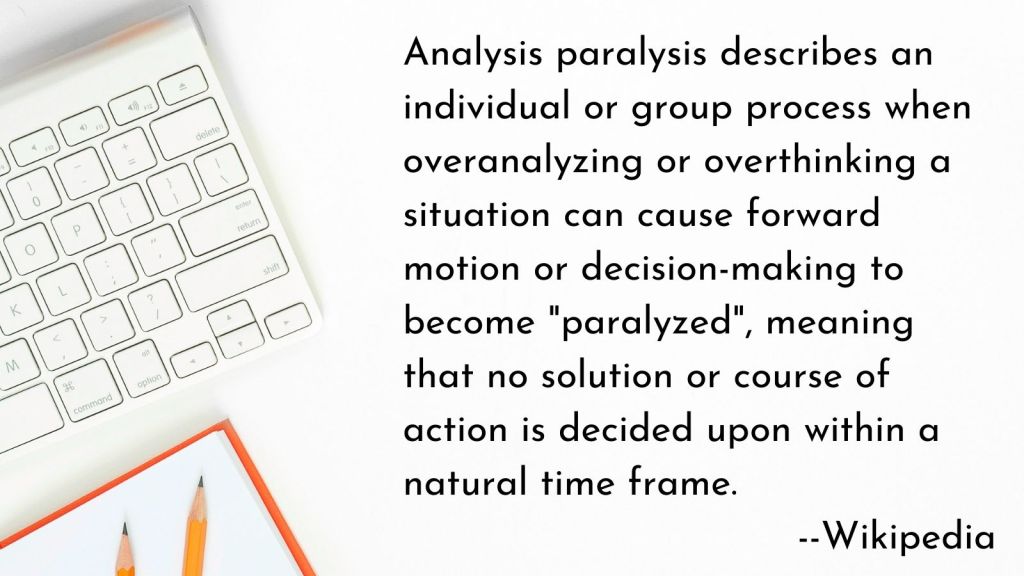
Fighting Analysis Paralysis: What you can do when you feel overwhelmed.

The end of the first month of the new year is upon us, and in Minnesota, that means waiting for February and March to go away so we can start enjoying some milder temperatures. I don’t mind these months so much, especially working from home now, and since I replaced my little Neon two years ago, the winters and the snow aren’t that stressful.

But we can also feel time slipping away, and New Year’s resolutions, for some, are a faint memory. Sometimes we can let these go, but sometimes the passing months just means more time we don’t have to get what we wanted to get done.

I’m starting a new pen name this year, and with it comes pressure to put everything I’ve learned in the past five years toward good, marketable books, while building a readership that will keep coming back for as long as I want to publish. That’s a weighty burden I’ve placed on myself, and to say I struggle would be an understatement. It would be nice if I could find a happy medium between building a readership without losing the joy of writing. I get bogged down with the writing, the editing, the covers, promotions, the newsletter, and sometimes it just makes me want to close out of everything and turn on a movie. Of course, watching Endgame over and over again won’t get me what I want either, but mentally running through everything I can do and should do is stressful all on its own.

How can you combat analysis paralysis in the coming months? Here’s what I plan to do:

Make a list. This can be a huge list of everything you want to accomplish this year, or what you want to get done in a monthly or weekly timeline. A huge master list of what you want to get done in the remaining eleven months of the year might be more stressful than helpful, but giving yourself an overall view of the things you want to accomplish can actually be motivating.

Then chunk it down even further. I know what I want to get done in the next 11 months: release my duet, release a standalone. Write a Christmas novel for this year’s release if I have time and can think of a good story. Edit my 6-book series, format them, and do their covers. Get a proofer to proof the proofs. Get them set up to release in 2023. All of that sounds exhausting, and perhaps, when I’m having a bad day, impossible. Yesterday I was off because I wasn’t feeling well and I was tired, and thinking about tackling my series brought me to tears. That was analysis paralysis at its finest, with some Imposter Syndrome thrown in for good measure. (Is my series good? Is it worth the time to package and publish?) What can I do to make all that easier to swallow? Take it slow. My duet is with a beta. There’s nothing I can with it until he’s done. I can’t format it because there could be changes I need to make and it would be easier to do that in the Word document. I can’t do the covers (not the full one, anyway) because I don’t have the formatted interior files. I have the blurbs written. All I can do is be patient and work on something else, so I’m tackling the first book in my series. The Christmas novel will be a bonus if I have time to write it, and if I don’t, I’m not going to worry about it. Christmas comes every year, and I can write one for 2023.

Don’t worry about what other people are doing. The first the year is terrible with authors tweeting and posting about their New Year goals. Some of the number of books authors say they are going to release is staggering, and you have to keep in mind that you can only do what your life allows you to do. The authors putting up the big numbers do this for a living. They write eight hours a day, or close to it, anyway. They have a system and have managed their obligations so they can write a book in two weeks. If that isn’t you, you can’t worry about it. Analyzing what other authors are doing is a sure way of making yourself feel terrible. Even my schedule might make you wonder how in the world I have time for it all. All I’ve done is write for the past two years, and that was a mistake on its own, but it’s helpful I have books completed–the hard part is already done. Now it’s making time for the busywork and pushing them out there. I’m only releasing three books this year which is a low number by romance genre standards, but I don’t want to be known for putting out ten books a year. You teach your readers what to expect from you, and three books a year is a good number. Not the best, as four books a year keeps you relevant in Amazon’s algorithms, but three books a year is doable for me, and if I can do four, that year will be a bonus. Even if could write full time, I would never be capable of releasing a book a month, and it’s not something I ever want to do.

Control your FOMO. My fear of missing out is over the moon, but if you can’t control the fear of all the things you might be missing out on, you’ll never get anything done. There will always be a marketing webinar to watch, a group to join, a Clubhouse room to listen to, a new podcast episode to consume, and if you can’t focus on what needs to be done when it needs to be done, you won’t get anything accomplished. For the meantime, I’ve stopped listening to marketing podcasts, and the only thing I do regularly now is listen to my Level Up Romance Marketing Monday hour on Clubhouse. That is also a networking opportunity for me as well as listening to some great information, and I don’t work Mondays, so it fits into my schedule. Because here’s the thing: If you don’t have good books to publish, nothing else matters. I know what I need to do in terms of marketing: make sure my covers are to market, make sure my blurbs are good, make sure the stories are what people want to read. If you don’t have those things figured out, no amount of marketing is going to help you sell books anyway. I know now to run Amazon ads without losing money. I have a newsletter signup opportunity ready for my back matter along with a reader magnet. I have all the bits and pieces ready to go, and the only thing I have left now is to see if my stories resonate with readers. So think of what you need to do with where you are at the time. Are you working on your first book? Craft and feedback might be more important to you than learning how to run Amazon ads. Can you not afford a book cover? Learning how to your own might be what you need to focus on right now. Narrow your focus on what you need for the place in your writing career you are at, and a weight will drop off your shoulders. I promise.


I had a crappy day yesterday and was doubting my abilities to put out good books. I’m still feeling a lot alone in this endeavor–so many of my friends have dropped out of the writing community since I met them five years ago, or we’ve drifted apart for other reasons. I was feeling overwhelmed with all I wanted to get done this year, and when you feel like you don’t have help, community, or support, a long list can seem quite daunting. A list can put things in perspective, and while I might feel alone, I’m not. I have a great community on Twitter, and I’m doing my best to cultivate relationships with my romance authors on Facebook. Everyone feels inadequate somehow, like they aren’t enough to make it in this business, but you’re not alone in thinking this. Lack of sales can do it, burnout can do it, too. We’re all struggling, but I hope knowing that you’re not alone can jolt you out of your own analysis paralysis and you have a productive 2022.

Until next time!

Starting out with BookFunnel, and yeah, as always, Happy Monday!

Good morning! I don’t have any new goals except that I would like to finish listening to the second book in my Cedar Hill duet so I can format them and order the proofs from KDP. I’m going to take a break before proofing those and I probably will write the billionaire-wants-a-baby trope novel that’s been in my head for a little bit. I wasn’t going to, but I need something to do with my time. It was going to be a standalone, but my FMC has single friends, and I realized it would be a good start to a 5 book series, or so, though the rest of them will have to be put on the back burner for the time being. I’m still looking at an April release for book one of the duet, and I’m gathering information on launch plans and forming a tentative schedule for the first month of its release. Maybe I’ll blog about launch plan ideas for next week and give you some of the resources I’ve been checking out and my thoughts on them.

Today and I wanted to talk about BookFunnel. BookFunnel has been around for a long time as a book distributor and also a newsletter builder. I’ve heard a lot about BookFunnel in recent months, especially at the beginning of this year as we all look toward our new goals for the year and how we can better run our businesses. It’s not a secret that I’ve been talking about my newsletter on the blog, all the steps I’ve had to take to set up a newsletter through MailerLite, and my back and forth and back and forth with whether to offer a reader magnet or not. I did, in fact, decide to offer a newsletter magnet–one of my shorter (78k) standalones I was going to publish this year. Instead, I uploaded it to BookFunnel, and in my welcome email, I give readers the link they need to go to BookFunnel and download it.

When I was looking into setting up my account, I wanted to research how to do things on there before diving in. That’s just my way. Before I even opened Vellum (a formatting software) I watched hours of how-to videos so everything would look familiar. I hate stumbling around, not knowing what I’m doing. I watched this how-to video on Mark Dawson’s SPF channel on YouTube:

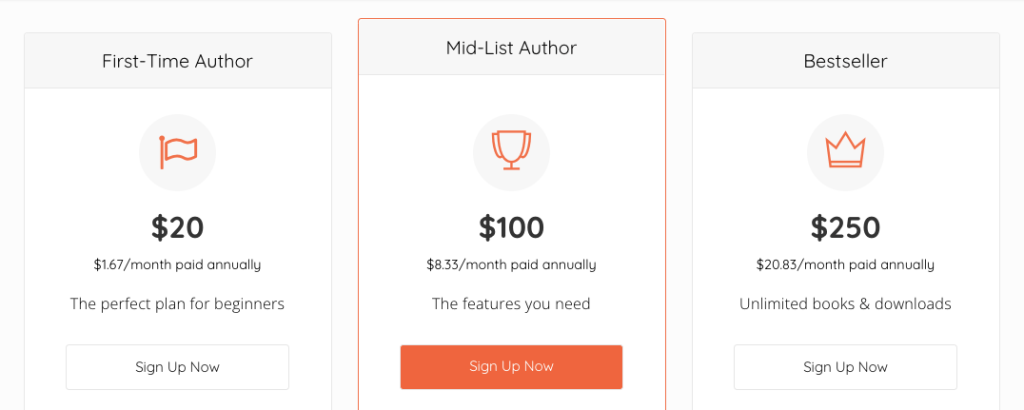
That was very helpful, and it talks you through initial set up. While I believe, like Elana Johnson, to begin as you wish to continue, I just signed up for the $20/year plan.

You can look here for what the plans offer. Ultimately, I’d like to go with the mid-list author plan as the $20.00 plan doesn’t collect email addresses if you send traffic directly to the download page. It creates an additional step for your reader as you have to send them to your newsletter sign up page and ask them to sign up before they have access to download your book. You can say it will weed out the freebie seekers, as if they do go through all the steps to sign up for your newsletter to have access to your free book, chances are they really like what you’re writing and will remain a lifelong fan. On the other hand, you want to make things as simple as possible, and well, extra clicks will always turn some people off.

I just pay so much for other writerly things right now that another $100.00/year on a pen name that I’m not sure will take off just seems a bit much. (My Office 365 subscription, Canva Pro, and my WordPress subscription come to mind off the top of my head.) I’m going to release a duet and a standalone this year (and possibly a Christmas novel in November/December if I can find some Christmas spirit) to get my feet wet, and I think that will be a good enough gauge to see if my books are going to resonate with readers. I can upgrade at any time. Probably the most inconvenient thing about choosing the cheaper plan is that you can’t run a Facebook ad to your reader magnet. A lot of authors I know will run FB ads to their BookFunnel download page and let BookFunnel collect the reader’s email address for the newsletter signup before they can download the free content. BookDoggy will also promote your BookFunnel download link. Paying for newsletter signups is a bit controversial, but I’ve heard good things about running Facebook ads to your BookFunnel link to grow your mailing list. I just want to test out my books first to see if there’s even an audience there before spending more money. I’ll have my newsletter sign up in the backs of my books, the cover of the reader magnet, and the blurb to entice readers to sign up.

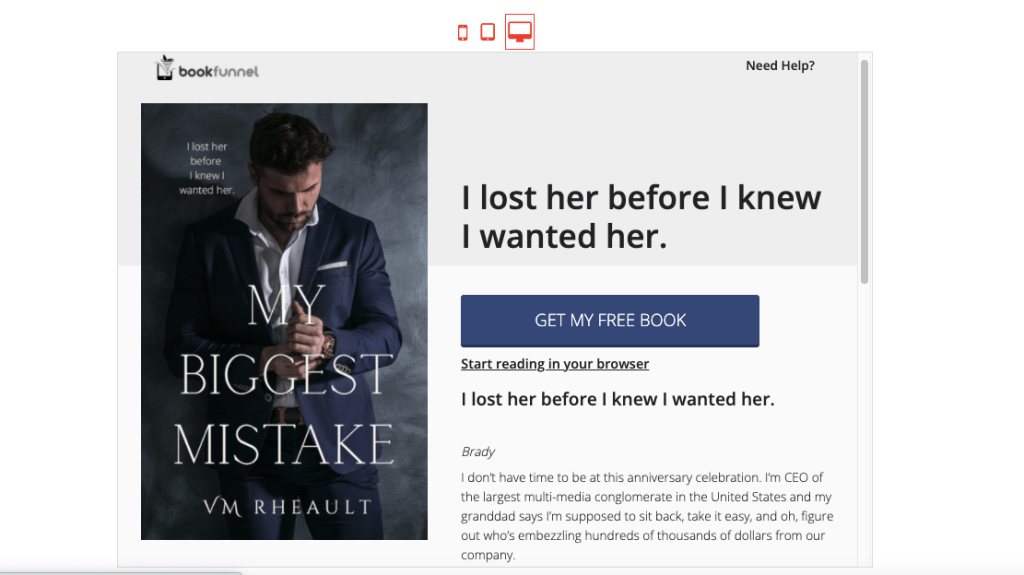
The downloading page is beautiful. Here’s the page to my reader magnet:

The landing page displays the entire blurb, but this is what it looks like before you scroll down. I’m not going to share the link with you, but I do offer a short story, and I’ll share that link with you now.

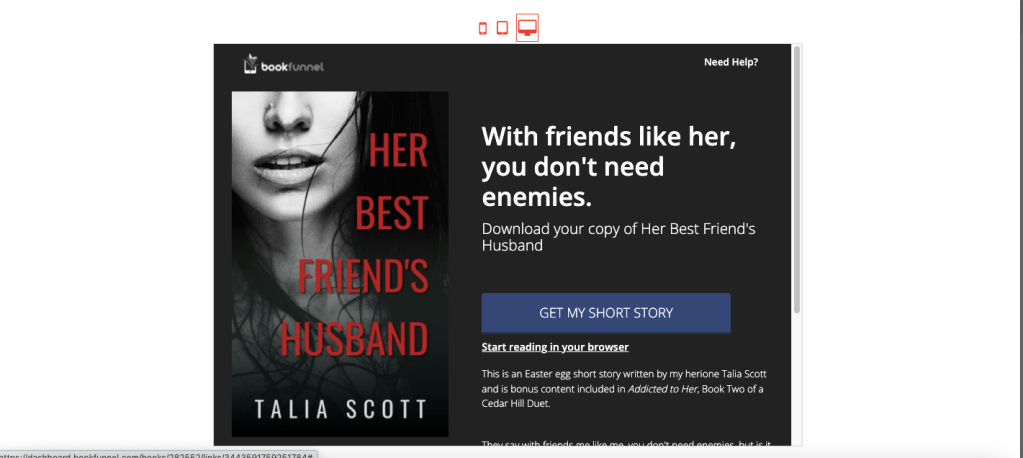
I had an idea for what to do with a short story that I wrote a couple of years ago. It doesn’t have a happy ending, doesn’t fit in with the brand I’m trying to create for myself, and I had no idea what to do with it. It sat in a notebook for a long time, and when I was writing the second book of my duet, I had an idea of what to use it for. In my second book, Talia, my FMC, gives her email address to Beau, the MMC. I don’t know about you, but when I was a kid and there was a phone number in the book I was reading, I dialed it. If only to hear the “That number is not in service, please check the number and dial again” recording. I’ve always been curious, always wanting to know what, where, when and why (and the name of the dog), and I’m still like that. It drives my kids and sister crazy. Anyway, when Talia gives her email address to Beau, I thought, what if someone emailed that address and what if Talia responded? It’s a fun Easter egg probably no one will ever figure out, but if you email her address, you’ll receive an autoresponder message that thanks the reader for emailing, apologizes that she can’t get back to you personally, but as a thank you for emailing, please download a short story she had to write for English class (she’s in college in the book). I created an email address for her– taliajeanscott(at)gmail(dot)com –and set up a vacation autoresponder with the BookFunnel link inside it. Was it a lot of work probably for nothing, yes. But I don’t think I would have bothered to do it if I hadn’t had the short story already written.

If you want to test out BookFunnel as a reader to see what your readers will get if you use it, you can download Talia’s short story as a demo. Be careful if you read it–it’s 5 chili peppers on the heat scale–which is another reason I felt I didn’t have anything to do with it. I write open-door sex scenes, but nothing like that short story that borders on erotica, I think. Anyway, here’s the link, and a picture of the landing page if you don’t care about downloading it: https://dl.bookfunnel.com/xwng7qjy2w

Yes, I had to format the short story with Vellum (another writerly purchase, but has earned back what I paid and much more), add the copyright page and author’s note in the back, and I created the book cover with Canva using a Deposit Photo stock photo. It probably was a whole lot of work for little gain, but it was something fun, so whatever. I’m not the first author to provide Easter eggs in their books, and these days, we’re all looking for a bit of an edge over the competition. Feel free to steal this from me, and if you do, I hope it works for you!


There are a lot of benefits to using BookFunnel, and I barely touched on any of them, mostly because I haven’t had the chance to try out everything they offer. I’ve heard a lot about how you should have your own newsletter built up before attempting to join any promos for building your list, and I”m not interested in using BF for that… yet. I would like to grow my list organically first, from the sign up link in the back of my books, though I know that could double or triple the time it will take for me to grow my list. But, that’s getting ahead of myself considering I don’t have even one person signed up for my newsletter yet. Hopefully that will change in April when I release my first book.

If you want to hear Damon Courtney talk about BookFunnel at the 20booksto50k Vegas conference last November, you can watch it here.


There’s not a whole lot going on for me besides just keeping on keeping on. I’m trying my best to remain optimistic, but with my impending release, that’s getting easier. I haven’t published for so long, it’s giving me something to look forward to. I didn’t remember how much work it is. No wonder I’ve spent the past two years burying my head in the sand and just writing.

I think that’s all I got for today. I hope you have a lovely week ahead!

Until next time!

Author Comparisonitis and leveling up.

Last week, there was a little kerfuffle online about Sky Warren’s RAM (Romance Author Mastermind) conference, and like a true gossip, I like nosing around and seeing what the issue is.

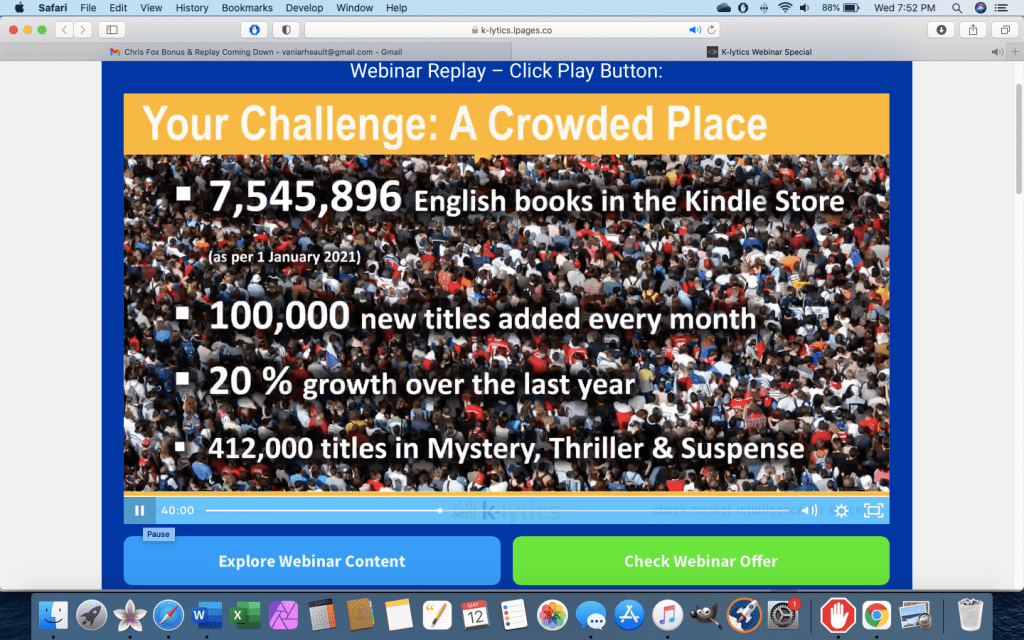
I’m not writing this to call anyone out or judge any author, in fact, quite the opposite. If you’ve read my blog for any length of time, you know I blog to the new author, the one stumbling around trying to find his way in the industry where there are EIGHT MILLION books on Amazon with thousands more added every day.

This is a screenshot taken from a free webinar by Alex Newton of K-lytics. I screen-grabbed it in May of 2021, so the numbers are a bit outdated–and probably worse today.

I’m transparent in that I’ve written a few books, published them on my own–edited them with the help of a couple of beta readers, formatted them with Vellum, did my own covers. I haven’t found any real success–not the kind we really want when we publish a book. (We can all say we don’t want to make money or be a bestseller, but if you’re putting your book on Amazon, you’re hoping for an outcome such as that and there’s no point in lying to yourself. It will only bog your business down.)

So when conversation turns to leveling up, ad spend in the thousands, and launching to number one in the Kindle store and staying there for weeks on end, we have to realize that a conversation like this is like the difference between a janitor-in-training on his first day, and the CEO of that building conducting a billion-dollar meeting. It just isn’t the same.

I feel like these conversations come up every year, despite the information being proprietary to those conferences. You have to be making enough to be invited to attend RAM, and I am a long way off. That doesn’t mean I don’t appreciate the information that comes out of it, but in reality, I’m not in any position to take it, either. I wrote about that before in a different blog post–we’re all at different stages in our journey and what one 6- or 7-figure author can do is not the same as what I can do with the resources that I have. That doesn’t mean you can’t listen to them talk, or take notes, or tuck away what works for them for later use, but is it going to help you with what you need help with NOW? Probably not.

I think the conflict came with the latest episode of the 6 Figure Authors podcast when Andrea Pearson recapped what she learned attending RAM. You can listen here. (Usually they post it on YouTube, but this episode is not available there. You can also listen to it on your podcast app of choice.) Because I write romance, it’s interesting to hear what the big authors are doing in regards to their business, but I know I’m not there yet. I’m not even in the black most months, so I listen with curiosity, a huge grain of salt, and a wish in the back of my mind that one day these lessons will apply to me.

How can we listen and not compare ourselves to these authors? Here are some things I take into consideration:

Are you doing the minimum first? This is a big one for me because if you’re not doing the 101 stuff, you’re not ready for the 301 level coursework. You know exactly what I mean, too. Are you writing in a series? Are you sticking to one genre to find a readership? Have you started a newsletter? Is your book GOOD? That is something we lose sight of–your book needs to be GOOD. Well-written with on-point grammar and punctuation, good story/genre appropriate/following the expected tropes and reader expectations, good cover, good blurb. If you don’t have the core quality of your product down, you’re never going to level up, or be in a position where that’s possible. It’s the difference between the crappy Frostee Freeze and the huge, brightly-colored popular Dairy Queen. Where would you rather buy your chocolate-dipped cone? (No offense to the Frostee Freezes out there, but ours is located in the ghetto and looks like the movie set of a Lifetime murder movie.)

What are your business goals? Everyone talks about this–what do you want out of your book business? But the fact is, if you don’t know, nothing you consume will help you get there. Why do you write? What do you want to get out of your business? A bestseller? Hit the top ten in your category? Do you want to have a huge launch? How many books do you have? How many books will you have by the end of the year? Are you writing a series? How fast are you going to release them? How long are you willing to do this before you see any success? This is part of the 101 stuff I was talking about above.

Find information that will help you NOW. This is probably why I like listening to the presentations from the 20booksto50k conferences in November. They are very generous and post most of the speakers on YouTube. There’s a little bit of everything for everyone, unlike the mastermind classes where you already have to be at a certain level to get anything out of it. There are a lot of resources out there for newbies–podcasts and blogs, free ads courses, etc. Figure out what you need help with in regards to where you are at the present time. Are you working on craft? Looking for an editor? Exploring doing your own cover? Preparing for a launch? If you haven’t released your first book, listening to someone talk about how they’re spending 10,000 dollars on ads every month won’t matter to you, and it shouldn’t get you down. There’s no way you would (or probably could) spend that launching your first book. You’d never get that money back. Ever. There are so many resources for someone just starting out. My favorite is David Gaughran’s free course, Starting From Zero.

If you’re going to compare, at least be smart about it. I think a lot of what people don’t understand when they hear authors spending so much on their ads is that first, the authors have been writing for years and have a huge backlist (not to mention a huge readership), and second, a lot of their ad spend comes from savings of royalties already made. When you’ve been at this for years, you have savings. You’ve invested your money into CDs or high-yield savings accounts. When your interest accrued every year is as much as someone working a part-time job, you can afford to put some of that back into your ads. If you want to compare yourself to another author and base that comparison in reality, look at their genre. Is it the same as yours? Look at your backlist and how long it will take you to get to the same place. How is their book quality compared to yours? I could market my books the exact same way Janie Crouch does–but my books will never be like hers. Even if I copied the covers, genre, and tropes, our author voices and styles will never match. This is what they mean by “Your mileage may vary.” You are not another author and you never will be. How can you achieve your own kind of success?

I love this recap thread by Zoe York on Twitter. She’s so down to earth and pushes you to do what’s best for you and your books while giving you the encouragement to see that anything is possible if you work hard and don’t give up.

As far as I can see, there is no reason to get angry if someone wants to recap a high-end conference or be bitter they did. It’s the same as buying a marketing book from an author who is killing it. You can grab morsels of information but the likelihood you’re going to be able to apply 100% of what you’re consuming to your business that very second is slim.

Personally, I know why my publishing career is at a standstill. I made poor choices I didn’t know where poor choices. I know now through trial and error and listening to what mid-list authors have done to achieve their success. That’s why I did a 360 with my writing and started writing first person billionaire instead of the 3rd person contemporary romance. Will it help? I don’t know. I don’t know of my writing will resonate with readers. I may not know for a couple of years, and that’s something I’ll have to be okay with. Not everyone will make money in this business and I’ll have more choices to make if I’m not one of them. For now, I’m enjoying the process and I’m having fun writing. I’m not going to be condescending and say that’s all that matters, because it’s not. I want monetary compensation for the time I’ve spent writing and producing my books. Otherwise I would publish them on Wattpad or my own website and call it good enough.

You’ll have to decide what matters to you.

Your mileage may vary.

Thanks for reading!

Happy Monday! Creating a Logo for a Series and short author update.

Good morning and happy Monday! If you’re participating in NaNoWriMo, I hope you’re getting all your words down so you can take a (much needed) break around Thanksgiving if you celebrate!

I’d like to congratulate Barbara Avon for winning the fall gift basket I gave away in association with Nina Romano’s fabulous interview we did! Incidentally, I interviewed Barb last spring, and you can read her interview here.


I don’t have much going on for myself. My daughter’s birthday is this week (on the 18th) and we’ll be heading out to dinner to celebrate her turning the big sixteen. It makes me feel old to have a daughter that age, though I’ll be turning 47 on the 28th, and that really isn’t that bad. I haven’t spoken about it for a long time, but I’m still dealing with some girly issues. It’s been a long year. Luckily, I haven’t let how I’m feeling get in the way of writing, and I hit 78k on my latest novel. A friend asked me if I’m ever going to publish them, or if I’ll just hoard my books like a dragon guards his gold, but one day I’ll publish something. After the holidays, at least. I probably will be publishing without a reader magnet, but that’s a choice I’ll be making because I haven’t written anything I want to give away.


What I wanted talk about today is logos for series. I’ve been seeing so many of them lately, and I like looking at them and how they’re associated with the books. There are a few reasons why you would want to make a logo for your series, but you’d have to think about branding and how your covers are going to look before you publish book one. Indies are terrible at looking ahead (I know–I was one of them) but all it takes is a little pre-planning to make your series shine. Why do a logo?

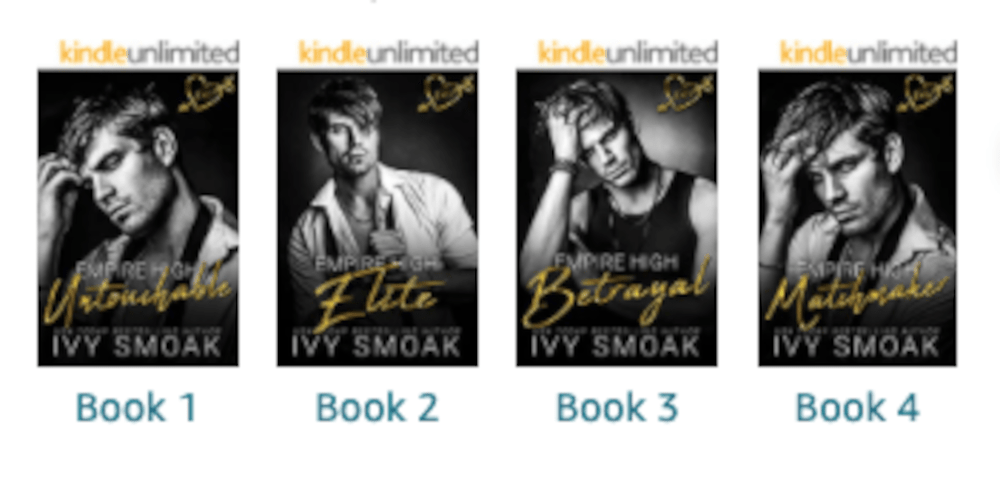
It will make the reader aware the books are in the same series. If you have deep backlist, a logo will help separate one series from another. I say help, because your logo shouldn’t be the only thing to tie your series together. Take, for instance, Ivy Smoak’s gorgeous covers for her Empire High series. (Check them out here!) They all look similar, with the same font, stock photo model, and overall vibe.

Screen grab taken from Amazon

Here is a close up of her logo for the series. It might be a little pixelated–all I could do is take a screenshot of it and blow it up, but you get the idea.

It’s great for marketing purposes. It probably doesn’t need to be said that having a logo identifier is great for branding and marketing purposes. How? That’s the million dollar question everyone asks. How do you market? How do you promote your brand?

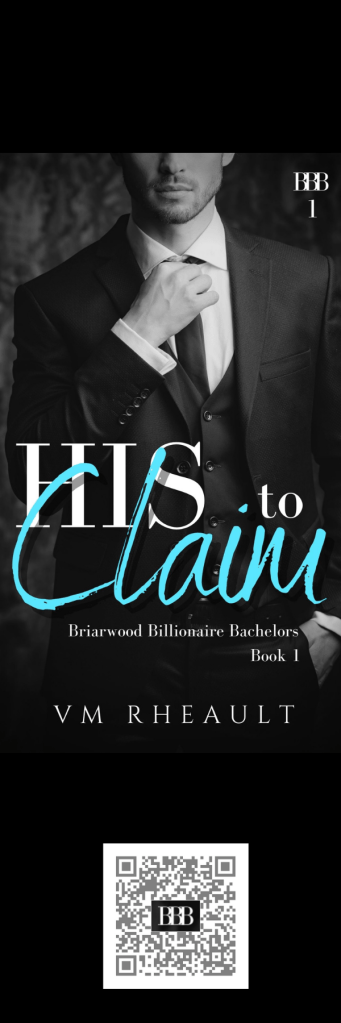
The first thing I thought of when doing this blog post was swag. Bookmarks are the go-to for authors and many of us turn our book covers into bookmarks to give away at events, or even just to leave in places like coffee shops. You never know who is going to pick up a bookmark and then go on to look up your book because of the hunky stock photo guy or book cover you used. But, I’m also thinking of using Dave Chesson’s QR code creator (it’s FREE). With his QR code creator, not only can you add a logo to to the code, but you can make the code go right to your Amazon series page or your Amazon Author page.
This is a poor and quick attempt to show you what I mean:

Of course, you can do better than this. It’s a very poor attempt to show you that you can match the logo on your book’s cover to the logo you can put in the center of the QR code. This is a cover I made up for one of my books while I was goofing around with concepts. It turns out it’s going to be book one of a six book series, and I only have two written right now. I’ll get back to those after I get all these standalones out of my system. But for now we’ll use the fake cover as an example. I made the bookmark in Canva (search bookmarks and they will give you a variety of templates), but VistaPrint is another great place to make bookmarks. I’ve seen their quality and they are a great resource for swag.

Another thing you can do with a logo is put it on all your graphics. Even if you don’t use ads, you can make graphics for your FB author page, Twitter, and Instagram. Here is something I whipped up for this blog post using Canva with my fake cover and the logo.

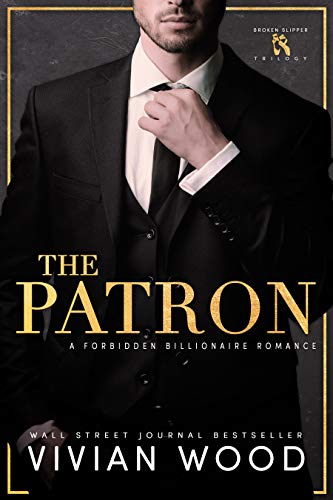
It can be clever identifier to what the books are about. The BBB for my logo isn’t a great example, but the ballet slippers that author Vivian Wood used is. We know right away her trilogy is going to be about dancers of some kind.

Taken from

It is a funny coincidence that our cover models are the same man–such is life in the life of a romance author with limited stock photos.

But this brings me to a really great point about logos. A lot of logos you will make for your covers are just going to be elements that you hunt up yourself unless your cover designer also makes them for you. Going on depositphoto.com and searching for vectors is probably the best way to find something you’re looking for, and I found a similar pair of ballet slippers Vivian used for her cover:

All it would take is a little know-how with GIMP or Photoshop to strip this pair of their sepia background and color the shoes gold to fit in with her color scheme. Like anything else you do with your cover, it’s best to buy your elements. In fact, this article from The Cover Counts says DepositPhotos is the ONLY place you should buy logo elements because different stock sites have different terms of service and vectors may not be allowed to be used a part of a logo.

When we talk about logos, we’re not talking about trademarking it as part of your official brand, author brand, or book brand. It’s more a part of your cover like the font you use than it is some of real legal value. Just like the guy above we both used as a cover model, there’s nothing that says an author can’t like your logo so much they want it as part of their own series and copy it. Indies are a pretty good group of people though, and I don’t hear of thievery like this very often, especially in romance author circles. But because we’re all limited by stock choices out there, one can only hope that an author’s or cover designer’s creativity will keep them from having to copy someone else.

How do you make a logo? It would be tempting to go into Canva and search logos and and alter one to suit your needs, but you should make your own with elements you purchase (please stay away from pixabay, unsplash, pexels, and other free sites) and use fonts that you have purchased or you know are free for commercial use. I’ve been thinking about the logo I’m going to make for the duet I’m currently writing, and my King’s Crossing 6-book series will definitely need one.

Canva is the easiest way to try a design, using their free elements, and then when you think you might have what you need, look to DepositPhotos and buy what you can find that will fit.

Most authors have an author logo, too, and I made one for my pen name. For now I’ve been placing the on the backs of my books in the empty bottom left hand corner of the cover. The cityscape theme matches the stock photo I use on my newsletter signup, and If I rebrand the author page on Facebook I have now, or start a new one, the cityscape can be part of the header too.

You can have a lot of fun with a logo for a series, and it’s great way to tie your books and covers together, and with splashing it everywhere, maybe you can build some brand awareness!


I don’t have much else today. It’s going to be a busy week, and I’m going to try to get this book done before Thanksgiving so I can rest a few days during the holiday. I still don’t have a plot for book two, but I left a lot of loose ends in book one (not for the couple, they’ll have their HEA) but book two is definitely needed now, and all I have to to do is figure out how to do it.

I’ll think of something.

Until next time!

Can You Follow Advice from Someone Who Isn’t Successful?

There is no shortage of advice. Everyone has an opinion on what to do and what not to do, and not many are afraid to shove it down your throat either, or take offense when you don’t follow what they say, or want you to drop down on your knees in gratitude they gave you five seconds of their time.

I think about this when I’m blogging and sharing my experiences, tweeting my own opinions, and especially when I’m scrolling through Twitter and my Facebook writing groups. I was poking around for motivational quotes for another blog post, and this one caught my eye:

I really like this because we’re all struggling writers, all trying to find that magic bullet that will catapult our book to bestseller status (with as little work and money as possible, if we’re being honest here), and we should be open to advice. We should be open to learning from other people’s experiences.

Probably one of my favorite topics to blog about is scammers–people offering a service they aren’t qualified to provide. The indie community is full of them, and how many indies finding ways to game the system or relieve you of your money knows no bounds. I got into a discussion with someone on Twitter the other day who is getting to the blurb-writing business. I asked politely, as I have never had a problem with this person before, if he had a refund policy in place for the blurbs that don’t convert to sales. He said that blurbs aren’t part of marketing that therefore he had no refund policy in place as it wasn’t his responsibility to market your book and that conversion on a new blurb wasn’t measurable. I said I wished him well and that I hoped his own sales success was proof that he could write a good blurb. He said he was doing just fine. I took a look at his book rankings, and unless he meant something other than book sales, no he wasn’t doing just fine.

So he 1) didn’t believe a blurb was part of marketing a book, 2) didn’t have a refund policy in place if you were unhappy with conversion 3) didn’t believe blurb conversion could be measured and 4) his own books weren’t doing well sales-wise. I hope people followed along our tweets because there is no way this person should be offering a blurb-writing business AT ALL. I did the best I could to call him out, but there’s only so much I can do, especially without looking like a big B. I think I already have a reputation on Twitter as being a bit aggressive, and I’m trying to soften up my look. It’s not working.

This goes for a lot of other advice too–writing advice, cover advice, marketing advice. I know one writer who loves to give writing advice, is always sharing excerpts of her work, but it’s all telling and she’s not selling books. People who don’t know what covers are hot in their genre love to give advice on what they like and don’t like. Maybe their advice is valid, maybe it’s not, but if you’re trying to ask for advice from a perspective that others don’t share (like writing to market, covers to market, writing commercial fiction, or the other way–if you want to write your own thing getting advice from someone who doesn’t share that viewpoint won’t help), it can be tough. You’ll be inundated with opinions that would never help.

Sometimes a fresh set of eyes can help whether the people those eyes belong to have had their own success or not. I feel like I know what goes into a bestseller, and I can say easily that depending on Twitter for sales will only go so far, or you need to learn an ad platform, or you need to change your cover, simply for the fact your cover is horrendous and I don’t need to be a bestselling author to know it.

I think that’s why I like Bryan Cohen’s free Amazon ad challenge so much. When he shares his screen/Amazon Ads dashboard during the videos, we can see that he’s selling books. We can see that he’s written books that people want to buy. Yes, he spends a lot of money on ads, but he also makes it all back and more. His ad challenge wouldn’t be worth much if he wasn’t selling books.

Just the other day in a group someone was asking about a different indie author who offers classes (that aren’t free) and one poster said, “I stopped taking his classes when he stopped selling books.” Like the blurb-writing guy, people forget that it doesn’t take much time to go onto a book’s product page and see the ranking in the Kindle store. You can go onto any of my books’ sales pages and see that I’m not selling many. I’m very transparent–in fact it’s practically the premise of my whole blog–I’m not selling books, this is why I think that is, how I’m changing that, and I hope what I try can help you. I’m not interested in making money off this blog. When I get a couple of readers who thank me for the resources or thank me for sharing my experiences, or tell me they tried something and it worked, I consider my job well done.

So what do I suggest you do when you might consider taking someone’s advice?

  1. Take a look at their success rate if at all possible. Look at their covers if they are going into business creating covers and see if they know market trends, what’s selling right now. Look at their books’ rankings and decide for yourself if they’re qualified to give the advice their giving.
  2. Ask yourself if what they’re saying makes sense. Trends change, and maybe someone isn’t up on the newest thing–like that lady who told me my first person blurb isn’t how everyone else is doing it, when actually most are now, at least where billionaire romance is concerned. But it could be that you missed the boat with something and their advice is legit. Check it out and see if it’s something you want to experiment with.
  3. Where else are they online? Sometimes Amazon sales rank won’t always be the greatest measure of success. LIke the guy who wants to write blurbs, maybe he is successful somewhere else (like writing ad copy for his day job), but if he doesn’t make that known, it reflects poorly on the business he wants to start. Some writers publish to Wattpad and have a large following there. Some write for blogs that have good traffic and they have a large following in that circle. Some submit to literary journals and are published in lit mags. Dig deeper. You might be surprised–and learn their opinion is steeped in more experience than you think.
  4. Do they have a good track record giving advice? Sales aren’t the end all be all, I know that. Sometimes questionable books do quite well and no one can figure out why. Maybe someone has a great marketing tip that didn’t work for themselves but worked really well for someone else. Maybe they know a secret ingredient and it turns out to be the last piece of your own puzzle that can bring your books to the next level, like a promo that didn’t do much for them but made another author’s book rank high in the charts. I edit on the side for friends who can’t afford it. Just because my sales aren’t great doesn’t meant I’m not a good writer or editor. I have a handful of people who could tell you that I’m good at what I do and that I’m qualified to give grammar, punctuation, and writing advice.
  5. Look at the viewpoint of the person giving the advice. I tweeted about this not long ago–taking the advice from one writer on Twitter when there are a million readers out there probably isn’t the best idea. Writers read differently, and what would bother a writer may not faze a reader. I catch myself doing that all the time–stressing while editing or writing about something a writer said they disliked. Why should I care if a writer says she doesn’t like the word moist (or whatever?) Chances are 99.99% that she will NEVER read any of my books. So why does it matter? All that matters is what readers think–and they will tell you.

I’ve taken advice (and my cover for Faking Forever is better for it), but I’ve ignored my fair share. I’ve also given a lot of advice, and usually in some way the people I’ve spoken with aren’t ready to hear it–even if they’ve asked for it. I’ve told plenty of people their covers aren’t working. I’ve looked inside a lot of books and said they need another editing pass. I’ve pointed out blurbs that aren’t written well, and I don’t think a day goes by where I haven’t told someone that they need to branch out from Twitter for marketing if they aren’t seeing the results they want. Usually my advice consists of either spending time or money (it’s work, y’all), but you have to invest something in your books if you want to find readers and nurture an audience. Just today someone on Twitter said he would take down his YouTube channel if he couldn’t get up to a certain number of followers by the New Year, but when I asked him what he did to drive traffic to his channel besides Twitter, he didn’t answer me. So in that non-answer I know the answer. Nothing. I don’t need to be a YouTube guru to tell him he needs to promote his channel to expand his audience and threatening to take his channel down won’t do anything to build his audience. The opposite, in fact, because why would someone invest time in something that may disappear?

At the very heart of your business, only you can make decisions for you, and only you can decide what to apply to your book business and what not to apply. If you’re not seeing the results you want in blog follows, sales, YouTube subscribers, whatever it is you’re trying to accomplish, that will be the true test. Trying to achieve different results doing the same thing over and over again will not work, and you don’t need anyone to tell you that. (And if you can’t admit it, it won’t matter how many people tell you–you won’t believe them anyway.)

So, after all that, should you follow advice from someone who isn’t successful? I guess the murky answer is maybe. I certainly wouldn’t pay for anything if the person dispensing said advice couldn’t put his money where his mouth is, and in the indie publishing business, that usually means book sales. There are quite a few top-tier indies who do dispense advice through podcasts, non-fiction books, interviews, and various classes they’ve decided to teach. Some will do consulting, some blog and offer their advice for free. There is plenty of advice out there from indies who are making it, so maybe there’s no need to take advice from someone who isn’t. It could be that simple.

Do you give advice? Take it? Let me know!

Until next time!

Advertising Your Book–Categories, Targets, and Comp Authors

I was browsing through my social media writing groups the other day, and someone said something so profound that it has stuck with me ever since reading it. You know I’m a big fan of writing to market, a true believer in the idea that if you want to write a book that people want to read, write a book like the ones people are already reading.

We resist that idea because no one wants to write what someone else is writing or has already written, even going so far as to say they don’t want to write the same tropes because they have already been done before. This isn’t a blog post about that, per se, but along the same lines, I suppose.

When we write a book and publish it, that’s only half the work, something we don’t find out until the book sinks like a stone in the rankings because no one knows it exists. We might tweet about it, put it up on Facebook somewhere, create some pretty graphics and post on Instagram, or try our hand at some videos via TikTok, the new kid on the block. That bumps us up a little bit, but eventually we’ll run out of new people because free social media only goes so far (ask anyone who relies on Twitter for sales to tell you how far free social media can really take you).

So we turn to paid advertising, and what that author said blew my mind–write what you can advertise.

Just that simple thing. Write what you can advertise.

What does that mean, exactly? Can’t we advertise any book?

Yes. But can we advertise any book to success? Not necessarily.

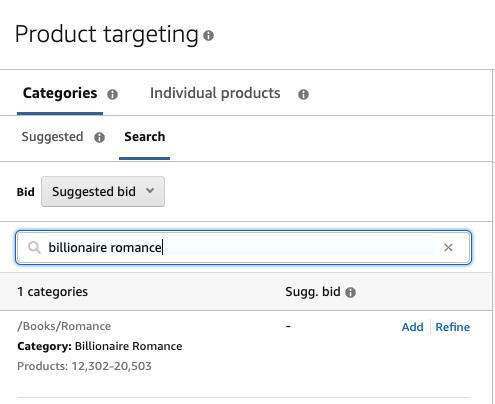
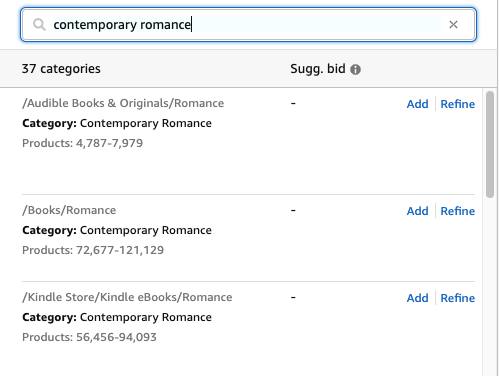
You can advertise any book, say on Amazon, but if Amazon doesn’t know where to put your book, they won’t show your ad and you’ll get zero impressions and no clicks. That makes genre and categories really important. When you create an ad on Amazon, you have a few ad type choices: you can do an auto ad and let Amazon do the work in figuring out who to show your ad to, you can run a category targeted ad, or you can use comparison authors and comparison titles as keywords. You can also target ASIN’s of books like yours, which I have heard works better, but I can’t tell you from my own experience that it does. I’ve done all four, and I didn’t realize until just now why, but All of Nothing is a billionaire romance and one of the reasons why it has always done so well when I ran an ad is because there is actually a billionaire category to choose from when creating a category ad on Amazon:

taken from Amazon Advertising ads platform

If I choose that, and my metadata matches, Amazon knows exactly who to show my ads to–readers who want to read a billionaire romance.

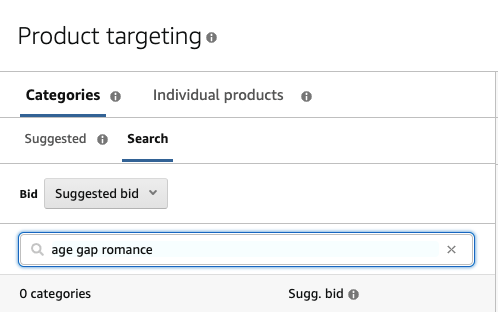
My age-gap romance, The Years Between Us, doesn’t have its own category, and choosing Contemporary Romance gets me impressions, and even clicks, but if someone isn’t in the mood to read age-gap, or doesn’t like it for whatever reason, I lose that sale. The same goes for Coming of Age, which I have listed The Years Between Us under, but even though it can be considered Coming of Age as my FMC is 18, readers may not like the age gap element of the novel.

taken from Amazon Advertising ads platform
taken from the Amazon ads dashboard
taken from the Amazon Ads platform

There’s a lot more competition using an umbrella category like contemporary romance.

You can always use comp authors and comp book titles as keywords, but if you’re writing a very niche genre (like age gap, haha), or mashing together more than two, you’ll have trouble targeting the correct authors because there aren’t that many. Targeting authors is something you can do on Amazon Ads, Facebook Ads (if the author is available in the list and I’ve heard from several people that list is arbitrary), and on BookBub. If you’re one of few writers in that genre, ads may not work. Not because your book isn’t good, but because the platform doesn’t know who to show your ads to or the audience isn’t large enough.

Does this man you can’t write what you want? No. Does this mean you can’t still advertise? No. But you may not get the results you want. You may waste money figuring that out or come to the conclusion that ads don’t work which won’t be true. I stopped using Coming of Age completely because I lost a lot of money on clicks and I should probably take that book out of that category as it doesn’t honestly represent the book.

I still advertise The Years Between Us but when I do, I use the Contemporary Romance category on Amazon to mixed results. Readers like my ad copy (He’ll do whatever it takes to keep her safe . . . even if that means breaking her heart), they like the cover, but once they read the blurb and realize it’s an age gap romance, sometimes I lose them. Not always, but until I started keeping track of the ads for that book and pausing them when the spending overtook the sales, I lost money on the readers who decided that book wasn’t for them.

I’ve only dabbled with Facebook ads, and I don’t understand enough to give you any kind of guidance steeped in experience. I know that targeting books isn’t as zeroed-in as Amazon, which can be better and can be worse depending on your point of view. Facebook seems to have more flexibility allowing you to cast a wider net, but that flexibility can also cost you money if people are clicking on your ad and deciding your book isn’t for them after all. There are plenty of billionaire romance authors out there, even if you discounted EL James and Sylvia Day. The idea is to drill down as narrowly as you possibly can so the ads platform you’re using shows your ads to only those readers who would want to buy it. But not so narrow that you don’t have anyone in your audience! Creating a viable audience is probably the trickiest thing about Facebook Ads but I’m willing to keep trying because so many authors say that it works for them.

So what does this mean for writing to market and writing to ad platform? Already lots of indie authors balk at writing to market. They want to write what they want to write, as did I when I thought writing “Contemporary Romance” would be enough to build a career on rather than focusing on subgenre. Marketing and targeting those books was expensive and some books I couldn’t get to sell no matter what, like my road trip romance because Road Trip Romance isn’t a category, nor is Close Proximity, and besides Contemporary Romance there isn’t another category I can try. (I experimented with Romantic Action and Adventure, but my cover didn’t fit and I got some impressions, but no clicks.)

Taken from the Amazon Ads platform

I did everything I could from swapping out covers to rewriting the blurb more times than I could count and still, I just can’t sell it. My Tower City trilogy doesn’t sell either, because while there is a sports romance category on Amazon, my covers aren’t made to the sports romance subgenre, and it turns our long distance running isn’t sexy and no one is interested in it. Who. Knew.

taken from the Amazon Ads platform

The best thing you can do is a little research before you start writing. Who are your comp authors? Are they writing what you write? How is your writing different? Is it too different?

You can use bklnk.com (click author tools and use the cat finder) and find all the categories that a book similar to yours is listed under by searching the ISBN or ASIN. Then you can email Amazon and have those categories added to your book. That way you can run auto placement ads and Amazon will know where to place your ad. I asked around to see if there’s a list of categories available in the Amazon Ads platform, but unfortunately there isn’t one.

Nobody likes to be told what to write, but everyone likes to find readers. Make finding readers easier on yourself and do a little market research before you begin to write. I wish I would have known this before I started publishing. I love all the books I’ve written so far–they are some really good stories and I’m proud of them–but I truly do love writing billionaire, and I think I’ve found a niche I can have fun with for a long time. And also as importantly as enjoying the subgenre, I know there is a market for them and I’ll be able to advertise them.

What do you think? Is thinking about how to advertise your book taking it a little too far? Too limiting? Let me know what you think!

Thursday Thoughts and Controversial Subjects in Novels

**This blog post contains a sensitive conversation about miscarriage. If this is a topic delicate for you, please continue with caution. Thank you.

Happy Thursday!

I was going to write about this topic for a Monday blog post, but all of my Thursday posts are more personal, so I thought the topic at hand would be better suited for today. Monday I’ll be blogging about advertising, comp titles, comp authors, and categories, so come back for that!

But first, a quick update on where I am:

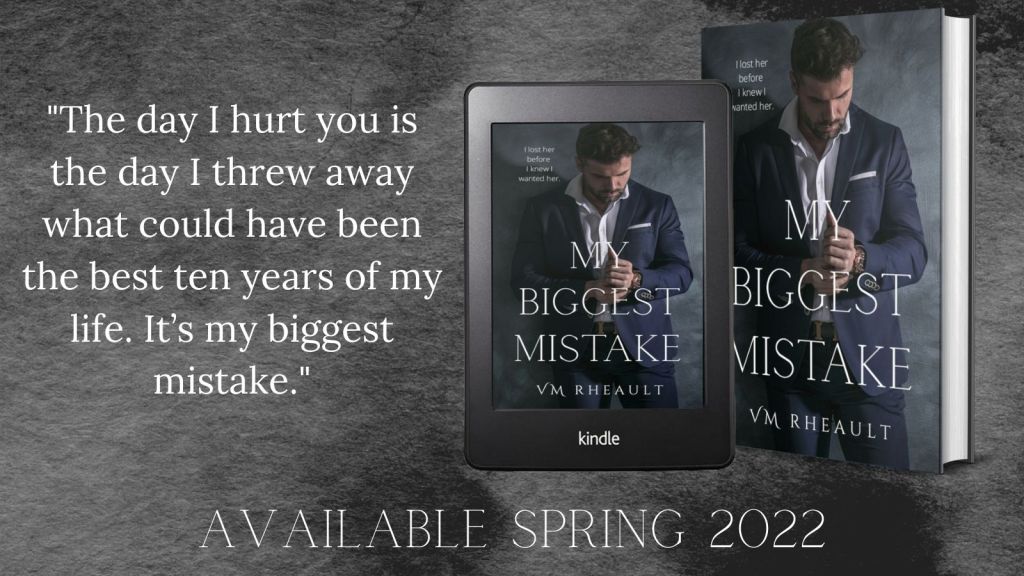
I’m waiting for the proofs, the regular print and the large print, of My Biggest Mistake to come in the mail.

Made with Canva on a Twitter post template and a free 3d mock up generator https://www.creativindiecovers.com/free-online-3d-book-cover-generator/ by Derek Murphy

I’ve already proofed one paperback, so these are just to make sure the changes look right. I’m still unsure when I’m going to publish, and if I do, the books will go on a preorder for no longer than a week. Dave Chesson of Kindlepreneur said a longer preorder if you’re in KU can hurt you, that goes along with what Mal Cooper said in the FB ads Zoom class I took with her earlier this month. Because we’re heading toward the holiday season, I’m not going to bother with releasing books until after the new year. There really isn’t a point, and Amazon is going to be bogged down soon enough with people Christmas shopping. This seems to always up the cost per click when running ads, so I think it’s better to just wait until January before I try to do anything. I have plenty to do in the meantime, and my box set of my Rocky Point Wedding series is up for pre-order until October eighth for .99. I took a few minutes to zoom in on their faces to adjust the covers per Amazon’s guidelines, trying to take away the “in bed” look so I can run ads. The one ad I tried for the box set was approved, so I’ll create a few more Amazon ads and maybe even do a Facebook ad just to practice with the platform. These are steamy, small-town holiday, so this would be the perfect time to push them.

If you want to hear the Dave Chesson interview where he talks all things Amazon with Lindsay, Jo, and Andrea on the Six Figure Authors podcast, here it is. He knows SO MUCH about Amazon, and it’s really helpful to store away these tips!


The one thing I wanted to talk about today is writing about controversial things in your novels. There was an interesting article in the Guardian about Sally Rooney and people thinking she’s a racist because of some of the things her characters say. All authors put a little bit of themselves into their characters, but any writer knows that characters take on a life as their own, especially as the book develops and we get to know them better and better. None of us would be very good writers if we couldn’t separate ourselves from the people we create, and all of our characters would sound the same because eventually they would all be us.

Humans have a dark side, and it stands to reason that characters can have a dark side, too. If they didn’t we wouldn’t have novels about serial killers and the investigators who solves the crimes, or vigilantes looking for their own justice, or even male characters who treat women like crap, and women who do the same, honestly. Humans aren’t perfect, and I believe adding that layer, those flaws, can make a character feel real.

Romances aren’t always roses and champagne, there’s usually a “big bad” that breaks up the couple 3/4 of the way through the book, and the “will they or won’t they” keeps readers hooked until the end. There wouldn’t be a big bad breakup if the characters were rosy and sunny and treated everyone else in their lives in a decent manner.

We can write about delicate situations like divorce and miscarriage, death from things like cancer or suicide, and we should write about those things because that’s life. So when I wrote a character who’s ex-girlfriend lost their baby, and while he was devastated, he was also relieved because it gave him the out he was looking for in their relationship, it gave me pause. No one should be happy a miscarriage happened, and Fox wasn’t happy. I tried to make that clear he wasn’t happy about it, and I didn’t want him to come across as an asshole because he was anything other than completely destroyed. In the book he was about to break up with her when she announced her pregnancy and after she miscarried, they did break up, she ending it before he reconciled with the loss.

It’s a hard conversation to have–in the book and in real life. When I was in college, I was depressed, suicidal, and I drank a lot. I slept around and at 21, I got pregnant. I miscarried, and while I was sad, I too, was relieved. I wasn’t ready to be a mom, I didn’t have the mental health I needed to be a good mom, and that miscarriage saved me. I drew on a lot of my feelings from that time and a lot of what Fox feels, I felt too. Can you find something good in something so tragic? Should you? Are you allowed to?

This worries me, not because of how I’m going to be perceived–I was practically a kid who made bad choices and somehow I was saved from having to pay for the choice of sleeping around without protection. Anyone who wants to judge me has the right to do so, and I don’t care. But I’m not a male hero of a romance novel, and I know readers have limits of how far they are willing to go to give a character space to be themselves. I’ve read lots of asshole male characters in the billionaire/mafia/dark romance subgenres (reviewers going so far as to call some of them rapists in dubious consent novels), and maybe I shouldn’t be nervous that Fox was anything other than human. When I talk aloud about it, I can see how maybe I could be turning a molehill into a mountain, on the other hand, readers can be unforgiving.

So what can I do short of rewriting it? I don’t want to rewrite because it’s my truth, and it’s also Fox’s truth. His ex’s miscarriage saved him from going down a path he didn’t want to go down, living a life he didn’t want to live, and I made sure that she got the help she needed–as did I–because grief is real, mourning is real, even if you can see the good in something terrible.

I’m not one for trigger warnings, but I will add one to this book. The conversations ARE controversial. Some women will have been in a situation where a miscarriage has gotten them out of a sticky situation, while others will have lost babies that were 100% completely wanted. I went on to have three more miscarriages between my son and daughter after I was married to their father, so I have felt both sides of grief.

I may also write an author’s note for the back of the book, explaining why Fox felt the way he did. I can’t try to appease every reader who may read Faking Forever, but I want to try to explain why I wrote him the way I did. Maybe Fox’s feelings would have found a better home in a women’s fiction novel (perhaps something more serious than a billionaire romance book? Though that discredits romance as a “real” genre) but in the novel I tried to explain that all our feelings have validation and that he has a right to feel that way (and he also admitted and learned from the fact he never should have gotten her pregnant in the first place).

Anyway, it’s a touchy subject, and I don’t normally go that deep with my writing. Do you write about controversial subjects? How do your readers respond?


There isn’t much else that I wanted to update you on–just a few Clubhouse rooms and free classes if you’re interested in taking a peek.

ProWritingAid is hosting a Romance Writer’s online Conference in October, and you can look at all the information here (this isn’t an affiliate link): https://prowritingaid.com/romanceweek?utm_campaign=Romance.

And here is the at-a–glance list of speakers. Bookmark the ones that you are most interested in. The lineup can seem demanding, but you don’t have to attend live.

Another writing conference I want to tell you about is on the app Clubhouse, hosted by The Author Conference the weekend of October 15 & 16.

Clubhouse is now available to anyone using either an iPhone or Android. Download the free app, and create your profile. Search the rooms for the Author Conference and follow the club. There is so much information available and it’s all free–anything from Amazon Ads with Janet Margo, to book launches with Pamella Kelley and others. This is such a great resource–and you never have to speak! I’ve been listening to rooms for months now and I still have never spoken to ask a question or add a comment.

Join the Clubhouse Authors Facebook group for more information!

I guess that’s all I have for today! I need to put in a few hours of editing the first book in my series. Have a great weekend, everyone!