Reusing Plot Devices: Good Idea, or the Devil of Plotting?

Plotting is hard. Thinking up things for your characters to do, the trouble they get into to make a story interesting, fast-paced, is a pain in the butt. Readers want things to happen; they want your characters moving. Characters who sit around are boring, and if they’re not talking about anything interesting, forget it.

hiking-1312226_1920Where are your characters going? How do you get them there?

Sometimes that’s where saggy middles come from. The beginning is exciting, lots of action, your characters are finding whatever trouble they’re going to get into for most of the book, be it fall in love with the wrong person, witness a murder, find a missing person, start a journey, whatever the case may be. The beginning of the book is always thrilling, full of promise, or at least, it should be.

And the end, oh the end! You know how it ends, the happy reunion of those two people in love, the satisfying conclusion to a journey, the missing child found. Endings can make a reader cry, close your book with a sigh and a smile, or throw the book (or Kindle, or tablet) across the room in frustration.

But the middle, the middle is difficult to write. You need scenes to move the story along, when you come up empty, it’s easy to reach for an old standby.

Plotting from A to Z is an art, a skill, a talent. Which is why so many books have been written on the subject.

And because plotting is so difficult at times, it’s easy to get caught up in what has worked for us in the past.

If you have a few books under your belt or saved on your memory stick, you probably have reused something, at some point. But is that a good idea?

Sometimes you have to. Take romances for instance. There are only so many plots to go around: boy meets girl, they break up, they reunite. Be it a case of mistaken identity, ending up in the wrong bed, best friends falling for each other, tropes are reused for a reason. That’s why they’re tropes. Same for mysteries. There’s always going to be the question of why, and how that question is answered.

And while all plots, to some extent, are recycled, that’s not exactly what I’m talking about. I’m talking about the small things that we do in our books that we do over and over again. Take for example the Stephanie Plum novels by Janet Evanovich. I hate calling out authors, but to explain what I mean, it’s the easiest way. For those of you who have never read a Stephanie Plum novel, it’s about an untrained, unprofessional bounty hunter named Stephanie. She works with her police detective boyfriend and another (male) bounty hunter.

You can probably already see where I’m going with this. Love triangle.

And that is fine. It’s perfect. It’s another plot/trope/plot device that lots of writers use. Hell, I have.

But Stephanie, being untrained, can’t do her job correctly. And it’s funny. The first couple times she does something. But the 5th time her car blew up, it wasn’t so funny anymore.

And the love triangle thing works GREAT for the first few books, but when you’re reading book nineteen, you’re practically screaming, “Choose one of them already!”

It’s frustrating.

Not to mention that when Janet tries to be funny using these plot devices over and over again, we’re cheated out of a character’s emotional arc. You would think, in twenty-four books, that if Stephanie really wants to be a good bounty hunter, she’d go to school. Cop school, self-defense classes, at the very least. Gun safety, anyone? There isn’t any character growth, and that’s too bad. But Janet purposely did that so she can write about all these dumb things Stephanie does to make us laugh. And it works, for a long time. But Janet released book twenty-four, and it’s not working anymore. In fact, when did it stop working? I would say around book nineteen when I stopped reading the series.

So when should *you* reuse plot devices?

I ran one of my cool Twitter polls . . .

twitter poll

. . . and it does seem as if writers like using the same plot devices. I don’t know how many books these writers have out, if any, but in one of the comments Chuck said . . .

chuck plot devices

. . . and I agree. It may be easier to use a plot device because it fits, it doesn’t take a lot of work to incorporate it, but will your readers like reading the same thing over and over, or will they drop off because eventually, all your books will start to sound the same?

In the end, this is your call. Do all your characters eat chocolate cake? Do they all drive clunker cars? Do all your heroines at some point get lost, physically? Do all your heroes have the same tragic backstory?

In my own writing, I’ve been dealing with this. I think, oh, my characters reuniting on the beach would be beautiful . . . oh, wait. They did that in book two of my trilogy. Probably best not to end my new stand-alone that way.

I wanted my characters to find a cat or something, but my characters, yes in book two of my trilogy, found an abandoned dog at a state park. So, no homeless kittens in this new book.

It can be challenging to think of new material, but you can do it. Try a couple of these tips:

  1. Read in your genre, but outside your genre, too. You never know if a character’s situation will spark a whole new idea for you.
  2. Use writing prompts. Maybe a picture or a line of dialogue will land your characters their best/worst situation yet!
  3. Brainstorm. I love to brainstorm plots with people. Just because someone came up with an amazing idea, that doesn’t mean you can’t use it. I’ve used ideas people have thrown out in these sessions, but of course, as you write and as you adapt the idea to your characters, things change. Never be afraid of using something someone has throw out there. In the writing process, you’ll make it yours.

    workplace-1245776_1920

    Brainstorming can be a great way to come up with plot bunnies! 
  4. Listen to music. Maybe a lyric or the way that piece of music is played will spark an idea.
  5. Go for a walk and let your mind wander. Letting your mind think about whatever it wants is an incredible way for new ideas to pop into your head.

    dress-2542263_1920

Empty your mind; let it wander. Let your characters speak to you.

Anyway, be careful when reusing plot devices. You’re a creative–you’re a writer. You can think of something original. Keep delighting your reader with new ideas, new situations, and they’ll keep coming back to you and your books over and over again.

And maybe at book nineteen, they won’t drop off.

Tell me what you think!

Vania Blog Signature

Who Are You Writing For? Yourself or Your Readers? Be Honest.

There’s a lot of fear in a writer’s heart. Lots of it. Am I good/smart/brave/pretty/handsome/wistful/*insert adjective here* enough to be a writer? Am I writing books people want to read?

I see this all the time. The fear. The agony of publishing. The waiting on pins and needles for reviews to start coming in. If they do. Then we have to wonder, is a bad review better than no review? Bad reviews mean that someone read my book, right? Or *gulp* tried to.

I have to admit, I see this stuff and I go wwwwwhhhhhhyyyyyyy?

Why_

There shouldn’t have to be this crippling anxiety when you write and publish a book. Not if you do it right. What do I mean by right? Well, I have some ideas.

The first and foremost is be honest who you’re writing for. Are you writing for yourself? Because if you are, then you have no justification to piss and moan when someone doesn’t read your book or want to read your book. Because after all, you wrote it for yourself so what do you care if no one else is reading it? So, be honest. I find that with a lot of indie myths floating around out there that this isn’t so easy. Some of my favorite indie myths? Indie myths

  1. Build it and they will come.
    This is the stupidest thing I ever heard. Your book is not a sports stadium. (And even sports stadiums are built with specifications. Could you image a stadium built with no bathrooms because the owner didn’t want to pay to put them in?) No one is going to find you unless you push your book out there. Even publishing houses make you do most if not all of the marketing for your book yourself. If you’re an indie, this means contacting book bloggers, paying for ads, hosting events on your FB author page. Setting up your own signings at bookstores. How does this fit in with writing for yourself? You can write what you want all day long, but if you’re writing what no one wants to read, why bother?
  2. Writing to market is a cop-out.
    I love this one the most. Do you know what writing to market even means? My friend Holly put it like this: Writing to market isn’t being a sell-out. Writing to market is writing what people like to read. That’s it. It’s not any harder than that. So what does that entail significantly? Knowing your genre. What tropes are used? What kind of characters are in that genre? It can even come down to how many pages does a book in that genre typically have? Know the genre. It’s why your reader picked up your book in the first place.
  3. Experimenting is okay/write what you love/it’s your book.
    I agree up to a point. You have to experiment to find your voice. You have to love what you’re writing because this is your hobby, this is your passion, and if you hate it, you might as well go to work instead and hate it there and get paid for it, too. And it is your book. Absolutely. The choice of genre and POV is in your hands. But you have to stay within the confines of the genre you choose. I don’t know how many more times I can say it. And if, for God’s sake, you have to experiment with a medieval Zombie sex plot, no one is saying you have to publish the *insert derogatory adjective here* thing.
  4. And the worst indie myth of all:
    I DO WHAT I WANT
  5. I’m an indie and I can do/write/publish what I want.
    This is hurtful for so many reasons. One, because what you do affects all of us. You know that saying “one rotten apple poisons the barrel?” It’s true. Indie publishing already has a bad enough reputation, do we need to add to it by publishing whatever crap you decide to write? You hurt me, and I hurt you. And if you think I’m full of crap, think again. Another reason this hurts is because you are hurting yourself on a personal level. One crap book and your reputation is on the line. Readers remember you. Don’t think they don’t. I have a list of readers I don’t like, both indie and trad-pubbed, and you know what? I don’t buy their books. Easy-peasy.

So what does all this have to do with the fear I was talking about earlier? Well, I’m willing to guess and say, if you follow the rules (yep, I went there) and produce a good book, you may find that the idea of people reading your book won’t scare you as much as it did.

What are these blasphemous rules I speak of?

  1. Know the genre you’re writing in. When a publishing professional asks, If you were to put your book on a shelf in a bookstore, where would you put it? That’s a serious question. We all dream of being in a bookstore, and I don’t think that means being in the back room because the manager hasn’t got a fucking clue where to put your book. Follow the tropes and expectations of that genre.
  2. Get the thing edited. I don’t care by who. Just do it. You have a typo on the first page, and it can be something as simple as using a period in dialogue when it should have been a comma, you lost me. And probably about 100 other readers who were interested. They aren’t anymore.
    And if this is your first book and you have no idea what you’re doing? Get a developmental editor, too. Your plot needs to move, your characters need to grow. If you have trouble crafting a good plot (ie no plot holes) and your characters are flat out boring, don’t publish.
  3. Have a cover that matches your genre. Seems like a no-brainer, but it’s amazing how many authors do what they want with no sense of what is going on in their genre. This could be because they don’t have a genre, and well, that sucks. No genre, no cover, no bookshelf space, no book. It takes two seconds to Google the hot 100 on Amazon in your genre. If your cover looks like a sweet romance, but you wrote erotica, you’ll piss off a lot of people. And you know that means? Bad reviews.
  4. Write a decent blurb.

If you do all these, and yeah, it takes work, time, and money, and you publish the best book you can, there is no reason why you should be scared people will read your book.

Let me tell you a little story.
A someone told me they were petrified people were going to find and read their book. This puzzled me, as they published the darn thing–they should want someone to read it. Naturally, I looked them up on Amazon. The cover was okay; it prepped me for a chick-lit plot with some naughty bits. Can’t beat comedy and sex. The blurb sucked, but well, writing them is hard, so I gave them a pass. Their author bio was written first person, a no-no, but well, I guess some people don’t know that. I used the look inside feature that Amazon has so graciously set up for us so we don’t waste money, and I found the book was a mess. Their cover didn’t match the serious tone of the book, the formatting was horrible, and it was evident from the first paragraph they didn’t have an editor. They’re scared people are going to find their book? They should be.

There are things you can do to control the quality of your book. Find an editor/critique partner/beta reader who will teach you things, not just blow smoke up your bum. Read craft books. Go to writing conferences and have your first pages critiqued. Read in your genre. For the love of God, choose a genre. It makes writing a lot easier, trust me. And after you hit publish, you did it. Own it.

And seriously. If you are writing for yourself, when you’re done, print it out and shove it under the bed. Maybe the monster under there can edit it for you.

Am I too harsh?

Tell me what you think!

Vania Blog Signature

I’m Going to be a Bad, Bad, Girl . . .

Since I’ve already gotten all my presents from Santa, I’m going to be a little naughty in 2018. I’m going to be decadent, give in to my desires.

book-2899636_1920

I’m going to go against everything I’ve ever preached on this blog.

I’m going to genre-hop.

I know. I’m sorry. There are so many reasons not to do this, and I’m going to disregard every single one. If you don’t know what they are, let me give you a short run down . . .

  1. You can’t build an audience that way.
    When you’re an indie, you need to focus all your energy on writing and finding your readers. You can’t do that when you’re skipping around genres. Write one genre, focus your time on getting books out there. Eventually, you will be known for writing that genre and your readers will find you through advertising, consistent content. You’ll become known on social media as a writer for that genre. I’m not saying you can’t ever write something else, but if you’re a new writer and looking for readers, genre-hopping is the fastest way to waste time.
  2. You don’t have anywhere to concentrate your energy on social media.
    Maybe, if you’re like me, and you write romance, you follow other romance writers, you follow book bloggers who blog romance, agents who rep romance. You’re networking with that genre. So, how easy do you think it would to turn around and decide you’re going to write horror? It’s not easy. There are writers who set up different twitter accounts, do this that and the other thing, and pretty soon, they aren’t writing. They’re doing social media maintenance all the time. It’s not productive.
  3. This goes with number two. If you genre-hop, you may decide to write under a pen name. Pen names need new twitter handles, maybe a new website, blog posts. And that’s just what you want to do. What you have to maintain is your new Amazon author page for that pen name, and a GoodReads profile, too. Now we’re back to social media maintenance, and who wants to be online all the time? Blah.
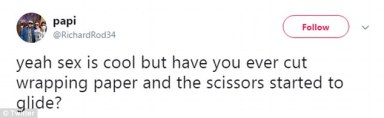
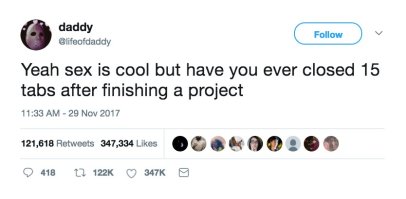
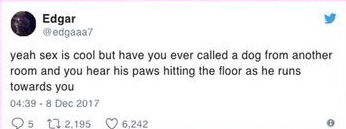
  4. It wastes time. If you decide you don’t like writing in that genre, you’ve wasted all that time you could have had writing something you like. I did that when I wrote Summer Secrets. Summer Secrets is six erotica novellas published split between two books. I think I was in the middle of writing novella 4 when I realized I didn’t want to write erotica anymore. All. That. Sex.sex is great but . . .
    sex is great but 1. . .
    sex-is-cool-but-jokes-1513681415

    Anyway, so you get the idea. By the time I was done with those six novellas, I knew I never wanted to write erotica on a regular basis. Summer Secrets, from start to finish, took me a year. Do I regret that? No. The stories are solid; I learned a lot from writing them. Not only writing but cover design, editing, etc. Every time you writing something, publish something, you learn something new, and that is experience you can’t learn in a book, no matter how much you research.

Do you want to know what I’m going to write? Sure you do! Before I wrote Don’t Run Away, I jumped into writing a high fantasy novel. It’s got everything: dragons, unicorns, wolves. Princesses, Princes, Kings, Queens. It is almost a fully completed series. Book One is 71,278 words, Book Two is 58,019,  Book Three is 114,815, Book Four is 88,005, and Book Five is 108,567, so far. Book Five not completed, as I took a break to write Don’t Run Away for my NaNo project, back in November 2015. I opened the file for Book One on January 4th, 2015.

Even though they are full of mistakes I have long since hammered out of my writing, I would feel sick if all those words went to waste. I’m confident that with what I know now, I can make those books into something I can be proud of. But it will take some work. A lot of work. And my contemporary romance schedule will be put on hold for at least a year but probably a lot longer.

Things I see I need to fix just by skimming the files as I retrieved my word count:

  1. Double spaces after my periods. Yep. I’m old, and that’s how I was taught to type. I didn’t know any better then.
  2. Head-hopping. I had a lot of head-hopping in Don’t Run Away, as well, and Joshua Edward Smith was nice enough to give me some much-needed feedback. Everything he pointed out in Don’t Run Away is there in that series, X 5. Will it be fun to correct all that head-hopping? Nope. Will the story sound better when I do? Yep. Fixing head-hopping is probably the hardest thing a writer can do during editing. Sometimes it requires so much rewriting and POV fixing, it can take months.
  3. These are very raw, and just the amount of typos I’m going to have to fix leaves me shaking. I can type 90 words a minute, but sometimes my brain is faster than that, and it leaves me with typos and missing words.
  4. Actually complete the 5th book. I need to finish book five, and I think I estimated I still need about 20,000 more words to end it. I know how I want it to end, and providing that doesn’t change, it should be easy enough. A piece of cake, really, compared to the massive amount of editing I’ll need to do before I write it.
  5. If I remember correctly, the main plot is a little shaky. I’m hoping with editing and POV-fixing that will naturally sort itself out. Fingers crossed!

I’ve gone back and forth about fixing this series for a long time, mainly for the reasons I listed above. But, this is the part where I’m being bad, being naughty, and I’m just going to say it. I’m going to follow my heart, write what I want. I’ll genre-hop from contemporary romance to flat out high fantasy, but you know what? I’ll be indie here too, I don’t care. I’ll publish under a pen name, I’ll do what I’ll need to do to get it out there. I’ll hire an editor, hire a cover designer (I could never do fantasy by myself). Pay for some advertising and then leave it alone. I’ll have it out there, I’ll be proud of it, and if it flies, it flies. Like this guy.

canstockphoto45233200

It will set my writing schedule back by a year, maybe even two, because I know the score: editing these is going to be a labor of love. Lots of labor, but also, lots of love. I want to get my characters out into the world so you can love them, too!

That is all for now. I’m tired and being it’s Christmas Day, it’s been a long day. But I will use my blog as a way to keep you all updated on how editing is going and look for a new chat series with my friend, KT. She’s going through the publishing process for the first time, so we’ll be chatting about that up to twice a week. Tune in for newbie questions, road bumps, and hurdles that can slow you down. Use our chats and finally know what you don’t know!

Let me know what you think!

Vania Blog Signature

Competitiveness. Let’s Not Talk About It

The other day, I got into a little spat with a couple people in a Facebook writer’s group. Someone announced that they had just published their book. There were a lot of congratulations, but there was one woman who felt the need to edit this person’s post. Yes, there was a typo in it. But it was clear this person hit the comma on their phone instead of the spacebar. No harm done, right?

The fact that she called him out on it wasn’t really what bugged me–it was the fact that her own post had a typo in it. All this poor guy did was post he’d published a book. That’s all. So why the need to attack him? I usually let this stuff go, but the fact she did it with a typo herself made me jump in.

typos_LI (2)

But like all good catfights, it didn’t end there:

i'm going to hell_LI

Did you notice that the person corrected her typo? I wanted to tell her that correcting her typo didn’t make her comment any less bitchy.  The person correcting my comment was someone different, but I like to think I got the upper hand there, too. Know your grammar before you begin correcting people, or you’ll just look like a fool, and yes, it is damaging to your online presence.

I’m trying to figure out why people need to be so callous. It came to me in the shower (where all good ideas do).

We jump on each other because we’re insecure and jealous. These people probably haven’t published anything, and they felt threatened by this person’s announcement.

Does that make it okay? No of course not, but I think it does point out something no one likes to talk about: competition.

Writers support each other, that’s a given. When we’re writing.

But what about when we’re trying to sell our books, novellas, shorts? What about when we try to market our blog posts?

There are only so many publishers/agents/bookshelf space to go around. Whether we like it or not, we are competing for prime real estate.

So when we feel like people are “ahead of us” in some way, be it a new marketing trick, or what????!!!!!! . . . they just put out another book? It can feel disheartening, and it can make some people, not very nice frustrated.

But you know what? It’s okay to have those feelings. We all feel them. Yes, I support all my writer friends; yes, I want their books to sell.

But.

I want my books to sell, too.

Maybe, maybe you can even admit, you want your books to sell more than you want their books to sell.

You can admit that–in a dark little corner of your soul. It’s okay. It’s natural that if someone is choosing between your book and someone else’s you want that person to choose yours.

But it’s what you do with those feelings that matter.

Don’t: attack people online; in the end, it only makes you look bad
Don’t: not write because you feel it’s hopeless
Don’t: stop supporting your friends because they make you feel inferior with their progress or sales

Do: turn those feelings into productivity and work harder
Do: trudge through those feelings and support your friends anyway (Jennifer Probst has a wonderful section on this in her book Write Naked which you can find here.)
Do: keep those feelings to yourself, or confide in someone you trust who won’t turn on you or blab behind your back.

The guy who was put down in that thread PM’d me to thank me for sticking up for him. I have been known to stick my nose in a few places where it doesn’t belong because I’ve been on social media long enough I don’t give a f*ck what people think of me. If I see nastiness, for the most part, I’ll call you out. There’s no need for it. We all have one goal: for people to read our work. Being nasty online is counterproductive to that. You can bet I’ll remember those two women, and if they ever publish anything I’ll look the other way.

Speaking of memory, I remember Rebecca Thorne posted a little something about this during her experience at the Dallas Writer’s Conference in 2016. Must have stuck with me to remember a blog post from over a year ago, and you can read it here.

After I defended my use of and at the beginning of a sentence, I left that group. I don’t need that kind of negativity in my life–and I certainly don’t need to waste my valuable time defending idiots who just won’t get it anyway.

You can be supportive and still want to do well for yourself.

And for those other two, karma’s a bitch, baby.

karma


Let me know what you think!

Vania Blog Signature

It’s Beginning to Look a lot like . . . Something the Cat Dragged in

I’ve been blogging close to nothing these past few weeks. I’ve been sick, but not like, a flu/head cold/stomach bug thing that wouldn’t go away. I’ve had an infection in the cartilage of my nose, and while the pain has been annoying and uncomfortable, it’s been the antibiotics that have made me feel off for the past few weeks. I went through two courses in the past 24 days. I just finished my second course a couple days ago, and I think my body is finally getting back to normal. Though now I have some weird sinus/fuzzy ear/ face pressure thing that won’t go away. It can’t be anything bacterial-related since all the antibiotics I’ve been on would have killed it. I’m just biding my time, waiting to see if my body will right itself after all the drugs I’ve pumped into my body lately. (With the second round of antibiotics I was also put on Prednisone; that didn’t do me any favors.)

cat-2749889_1920

Tired of this BS. I want to get better!

Anyway, so I’ve been fuzzy, sleeping, and my nose hurt until the antibiotics kicked in, and the tip of my nose still tingles and aches in the cold (I live in MN). I admire anyone who can function on a day to day basis with any kind of chronic illness. Not only does the pain do things to your body, it preys on your mental health. I couldn’t concentrate while waiting to see if the drugs were going to kick in or not. And yes, I have to force myself to stop poking at my nose to see if it hurts. The short answer, yes. Anything you poke at long enough will start to hurt. LOL

Through it all, any mental wherewithal I had went into my books. I released book one of my Tower City Romance on November 18th to little to no fanfare. My fault. But that’s okay. My second book is loaded into CreateSpace and KDP and is ready to go on December 18th. I’m editing and scrambling to get book 3 ready for release on January 18th. I might be behind on that one, and I may need to settle for the end of January, or even the beginning of February. I don’t want to sacrifice any part of editing just to publish, and I know Christmas is going to take a little time whether I want it to or not.

retro-gifts-1847088_1920

On the bright side I already know the next book I’m going to write–it’s a stand-alone and once I get going on it, I should be able to write and publish it rather quickly. I’ve already got it plotted out, and I’ve been playing with the cover. I’m so used to dealing with a million words at a time (Summer Secrets was about 160,000 words all together and this trilogy is 210,000 combined) that working with only a 70,000-word book will feel like a dream come true.

Anyway, so that’s what I’ve been doing these past few weeks.

I’ve also been fiddling with what I can do to break into the reader/social media barrier that eludes a lot of writers.

binoculars-1209011_1920

I read a lot of books so, for now, I’m going to focus on reviewing them. But not just any books. I’m going to read romances (what I write, naturally) pick at them, and compare how they are written to what I’ve learned in the world of self-publishing. That way I’ll be reading my genre, get a blog post out of it, but also I can compare what’s being published to what indies are “learning” in the Twitter Writing community. A win-win for everyone.

I’ll start with The Mountain Between Us by Charles Martin. I watched the movie with my sister and bought the book to compare. But that is another blog post.

I realize 2017 is coming to a close, and I’ll be writing another blog post or two about what happened in 2017 both in the publishing community and in my own career. I have a lot to share–if my nose and my ears stop doing weird things.

Fingers crossed!


Vania Blog Signature

Let’s Talk about WAS

“Was” is a nasty, dirty, filthy word, am I right? “Was” means, oh my God, you are writing in the passive voice, and all passive voice must be eradicated from your Work in Progress, or you are going to fall into the fiery depths of writing hell when you die.

fire-298105_1920

Indies are told it’s bad, that you need to take it out of your writing. Even when I edit for others, I will find it, give the authors the bad news that yep, they used it 4,000 times in a 70,000 word WIP.

But just how bad is it?

I’m reading The Snowman by Jo Nesbø right now. I love it. I saw the trailer for the movie, and I wanted to read the book before I watched the movie. (Chances are after I finish the book I won’t want to watch the movie anymore, but that’s a different blog post.) But you know what I saw when I opened up the book? Well, yeah, I saw the front matter, the title page. But what was the first sentence of the first paragraph?

It was the day the snow came.

A book by an acclaimed author whose book was turned into a movie started his book with passive voice. He could have written, Snow came that day or It happened the day it snowed. Something. But he didn’t. Why didn’t he? Why didn’t his editor catch it? Ask him to fix it? I wonder how many “was” words he uses in his book.

When should you write out “was?” Here’s what I think.

wite out

When it’s an indicator of tell, not show.
This is another no-no in the indie world. Always, always show, not tell. And for the most part, I agree. Description is always a lot better than telling your reader something.
When I was editing Don’t Run Away one of my little triumphs was:
Dane was livid.
I turned it into:
Dane trembled with rage.
You can see right away that’s a better way to go. I didn’t do it so much as to get rid of the “was” word, but I wanted my readers to picture what Dane’s anger looked like.

When the sentence simply sounds better without it.
This is tricky because how do you know? You can try to rewrite your sentence, but if you can’t get it to make sense without “was,” leave it alone.  Writers use “was” because it’s easy. It’s a lot easier to say, The sky was blue, rather than, The blue sky shone; not one cloud masked its brilliance. But not every sentence needs to be written that way–it’s up to you as the author to pick and choose, to decide where you want to put your energy.

When you freaking use it too many times. 
It always sucks when you do a search to see how many times you’ve used a crutch word. Just, 500, that, 1,000. Nodded, smiled, rolled eyes, shrugged.  “Was” is no different. If you have a ton of them, it could mean you are doing more telling than showing, that you’ve gotten a bit lazy, and you need to examine your WIP to see what you can fix. A paragraph describing a room like this:

The bedroom was small. A bed was pushed against the wall to make room for a desk that was filled with papers. A dog was sleeping at the foot of the bed, and a picture was hung crookedly on the wall. The rug was dirty, and the closet door was open, revealing clothes hanging haphazardly on their hangers.

Can be turned into this:

A dog lay on an unmade bed that had been pushed against the wall to make room in the small space. A desk filled with paper sat under an open window.  A rug that had seen better days lay in front of a closet that hadn’t been closed properly, and Janet wrinkled her nose in distaste at the mess inside. She straightened the crooked picture on the wall before leaving. Jack wasn’t there. She’d have to look for him somewhere else. 

Not only are you getting rid of “was” words, you are getting rid of repetition. I’ve edited for a few people whose paragraphs sound the same. Subject + verb + the rest of the sentence. If you want to get words down and move on, that’s fine. Some writers like to worry about the editing later. But please do go back and mix up your sentence structure. Sometimes this includes getting rid of “was”, sometimes it means starting a sentence with a prepositional phrase.

When you can fix the verb.
Don’t say, He was standing say He stood. She was watching turns into She watched. This is an easy fix and will save you some words too, if your WIP is bloated and you need to cut it down.

Rewriting some sentences that have “was” in them can make a sentence or paragraph stronger, can show your reader something instead of telling them what is going on.

But I also think that “was” is a lot like “said” in that it is invisible to a reader. The room was dark, and Stacy stumbled. We know what that means. We can picture that just as clearly as Stacy couldn’t see two inches in front of her face. She didn’t know what lurked in the shadows of the bedroom, and she tripped over God knew what when she gingerly took a step inside. Did the second example sound better? Maybe it did, but it’s also exhausting to read that all the time. It’s also exhausting to write that way. If every author tried to eradicate “was” from their writing, every book would be as thick as a Stephen King novel.

There is room for “was,” and I’m not as hardcore to get rid of it as I used to be. As long as you’re conscious of how many you have, if some of them can be replaced with something stronger and you do, then you’ll be okay.

Sometimes we can get too caught up in following every single rule out there. And it’s disheartening to be trying your best when you read trad-pubbed books doing things you’re trying not to do. Give yourself a little break. Keep on eye on the numbers, take your beta-readers’ opinions to heart. Listen to your editor.

Avoiding “was” hell won’t matter too much if you’ve trapped yourself in editing hell. Find a happy medium. Your sanity, and your readers, will thank you.

Why I Canceled my Twitter Chat

Last night I canceled my chat.

CANCELED

I think there was some surprise, and there was a little disappointment.  But I’ve been running it since April, and while it has been fun and I’ve made a lot of friends, I think I managed to get all that I could out of it.

Let me explain.

There are a lot of chats out there.

There are a gazillion chats on Twitter. You can find a chat on any day of the week, sometimes more than one, sometimes even more than two or three or four.  There are only so many hours in the day, and writers are busy. When they decide to give up some writing time to participate in your chat, they are giving you a gift. But since there are so many chats on Twitter right now, I was finding it hard to compete.  And because there are so many chats on Twitter, it was hard to stay original. Finding topics and themes that weren’t being used by other Twitter chat hosts was impossible. (If you want a complete list of chats and Twitter writing games, look here. Mica does a wonderful job of keeping everything in order.)

I chose the wrong hashtag.

My chat never achieved the elevation of other chats. This isn’t me being whiny, I’m just stating a fact. I had my regulars, my friends who wanted to support me (thank you!), but in all the months I hosted, it never blew up to the epic proportions I wanted. I think this had a large part to do with my hashtag. #SmutChat was a chat for everyone, and I tried to make that clear. But I think lots of people avoided it because they thought we were going to talk about romance or sex, or only the Romance genre, or Erotica. Had I chosen a more generic hashtag, I may have seen more movement. Perhaps if I had chosen to go full-blown smut and only focused chats around that topic, I could have drawn in the romance and erotica writers. I tried to go down the middle of the road, and it didn’t work. That was my mistake.

I was going broke.

At the end of #SmutChat, I gave away a writing resource that tied in with the topic. To me, this was genius; to everyone else . . . no one seemed to care all that much. In actuality, I had to plead with people to enter the giveaways, and there were never more than 6 or 7 people entering the giveaway at the end of every chat. There is so much free stuff on Twitter right now, the giveaway did nothing. I even had one person who won tell me they would get a hold of me when they found an address they were comfortable giving me. I offered the e-book version instead, but they said no. I can only take this to mean the person who won didn’t really want it to begin with, and that book is still sitting on my bookshelf. I didn’t mind spending money on the books and the shipping, but I was beginning to feel underappreciated. That’s no one’s fault but my own, being it was my idea to do the giveaways. I was hoping to set my chat apart from other peoples’ chats, but it didn’t work so well.

I have a publishing schedule I want to keep.

I have three books coming out in the next three months, and I have another book rumbling around in my head that I will write after my trilogy is released. Until they host one, no one can understand how time-consuming a chat is. They are a lot of work. Thinking up the topic, doing the graphics, tweeting about it. And that’s only the prep work. You have actually sit down and do the chat, and sometimes people will answer late, or the next day. As a courteous host, you want to try to touch base with everyone so I would be on the computer one or two hours after chat, and I would also answer tweets the day after. I know this is a counter-argument to the one where I wanted chat to grow even bigger because I would have spent even more time on it. Maybe I would have felt all the time spent on chat would have been worth it then. I’m not belittling the people who did take the time to participate, but sometimes you have to decide if you want to go big or go home. I decided to go home.

Think about what you want to get out of your chat.

What do you want to achieve with a chat? I had chat twice a month, and I would say I spent about 12 hours a month on prepping and the hostessing. What do you want to gain out of giving up that time? Twitter followers? What will you do with your followers once you earn them? Twitter doesn’t sell books, so those followers you gain will do nothing but plump up your numbers. Are you holding a chat to add it to your platform? That was my initial reason. I was doing something tangible that would add to my social media platform. But there again, you’re building your platform to sell books, connect with readers. Putting on a chat doesn’t do that. If you want to just make friends and connect with your followers, then hosting a chat is for you. If you want anything else out of it, think about what else you could do instead. Blog more, put that time into building your website. Write. Having a platform doesn’t do you much good if you’re not writing and/or publishing. Can you get what you want out of a chat by participating in others’ chats? I think with the little bit of free time I’ve recouped from canceling mine, I will participate in a bigger chat where I can still make friends, talk about a topic I love.

In parting, you may think this was just a big whiny blog post about how my Twitter chat didn’t go well for me, and now I’m crying about it. I’m actually blogging about it so anyone who is thinking about starting a chat knows the pitfalls of hostessing/hosting a chat, and what it entails. I appreciate every. single. participant. of my chat, and I have made some wonderful friends during the months I hostessed.  I started chat in April of 2017, and I ended it right before NaNo and the holidays could take people away. I feel I ended it on a positive note, and I’ll still be doing chat, in my own way. I’ll be blogging about the topics I want to talk about, rather than holding a chat. I’m hoping this will drive some traffic to my website, and I’ll encourage comments at the end of my posts. Maybe this won’t work either, but like anything in life, if you don’t take risks, you won’t get anywhere. I took a chance with chat, and I enjoyed it. But you have to know when to cut your losses if something isn’t working. Good luck to those of you who want to start a chat. And I’m not disappearing–I’ll still be on Twitter a lot. I’ll participate in other chats and enjoy the hard work I know goes into one. I’ll let the hostess handle the rest.

Tell me what you think!

Vania Blog Signature

To Query or Not to Query

When I talk to people about my publishing plans for my next couple of books, people ask me if I’ll ever query and try for a traditionally published deal. I always say, “No, I’m not writing anything queryable right now.”

People can take that a lot of different ways, and mostly that sounds like I don’t have faith in what I’m writing, or that my work is crap and only suited for self-publishing.

That couldn’t be further from that truth.

What I mean by that is, I know what I’m writing. I know what it’s suited for. That doesn’t mean what I’m writing isn’t being traditionally published; it just means I don’t have to find an agent to get it there. I write fluff. Maybe that’s demeaning to my genre when I say that, but I also am not pinning my work with any more importance than it deserves. Harlequin, the publisher that brings you the lines Temptation, Desire, Blaze, and the like (they’ve done some remodeling, so I don’t know what their lines are now) prints hundreds of books like that every year. In my Barnes and Noble, they take up a shelf in the corner of the building near the floor. All the shiny red spines with titles like One Night with the Billionaire or The Cowboy’s Baby. Women read these by the handfuls; a quick read you can get through in a couple hours before tossing it onto a pile and reaching for another one, like candies in a heart-shaped box. You know what you’re getting, you savor it as it melts in your mouth, but you have no problem reaching for another one when the chocolate is gone.

My books are like that. What I write in three to four months will be devoured in three to four hours, and I’m okay with that. I’m more than okay with that. Romance is a huge genre, and where there are millions of writers cranking out millions of books, there are also millions of readers. They don’t call the Romance genre the bestselling genre for nothing.

But along with pages of guidelines for how they like their books to be written and their preferred word count, Harlequin has its own dropbox on its website. I don’t need to query an agent and let my manuscript sit in a slush pile to wait for an agent’s assistant to skim my query letter. I can upload my manuscript onto Harlequin’s website myself, or to Carina Press, the digital-first arm of Harlequin, and let it rot in their slush pile without any help, thank you.

If I were to query, going back to the original question, I would query something more serious. Something I worked harder for. We all have visions of our books sitting on the display table at Barnes and Noble in the center of their main walkway. Trust me when I say Don’t Run Away would never make it there—agent or not. No, looking at the New York Times Book Review right now, I would want to write something more akin to Women’s Fiction, not Contemporary Romance. I would want my manuscript to mean something, to say something, to point out an injustice, to try to right a wrong, to help someone. I would want my manuscript to come from my brain as well as my heart.

bookstore_page

I’m not trying to degrade romance, not at all. But any romance writer or reader knows the difference between In the Arms of Her Boss and Sing Unburied Sing by Jesmyn Ward, a finalist for the National Book Award for Fiction. And let’s be clear, a reader who picks up either one of these knows what she’s getting. You have to be in the mood to read it, and a writer has to be in the mood (not to mention have the talent and skills) to write it.

I’m not in the mood to try to write something of Sing Unburied Sing’s caliber. I’m perfectly happy editing Chasing You. (You can weigh the two books by title alone, can’t you?)

If, or when, I plan to query, it will be with a book that will make it worth my time, and it will be with a book that will be worth the pain and heartache of rejection. Because I know the score. Querying is a whole lot of rejection, and I won’t put myself through that for a computer file full of fluff.

You might think that I’m too hard on myself, but I prefer to think of it as a realistic POV of my work. And, quite possibly, more indie writers should have it. Querying a story that won’t make it onto a table at the Barnes and Noble will sour you on the whole process. Traditional publishers only publish so many books per year. Why query a book that would never make it? That’s not to say your fluff isn’t good enough for Harlequin or a small press. (The back of bookstore on a shelf near the floor is better than nowhere at all, right?) It very well may be, and you should definitely go that route if you feel your book is worth it. Query to find an agent knowing/admitting where your book is going to end up, or use Harlequin’s dropbox and let your book sit in cyber purgatory for a few months while interns wade through the submissions.

But I won’t bother to try to find an agent for something that will sell just fine when I self-publish it.

After I’ve grown a bit more as a writer, or maybe when I have a nice backlist I can be proud of and want to challenge myself, or when the perfect plot plops into my head, I’ll write my book and I will query it to find an agent who loves it as much as I do, and maybe one day it will end up at the Barnes and Noble on a table in their main walkway.
I’ll pass it and brush my fingers over the cover as I walk to the café for a coffee. But for now, I’ll finish writing Running Scared while chocolate melts in my mouth.

#Smutchat Self-publishing giveaway!

Thanks for participating in #smutchat tonight! I hope you had fun learning about the self-publishing industry!

The giveaway tonight is How to Self-Publish for Under $100 by Cinquanta Cox-Smith.

publish under 100 dollars

Self-publishing can be expensive–pick and choose wisely!

Thanks for playing! Have a lovely evening!

a Rafflecopter giveaway

Why Buy the Cow When You Get the Milk for Free? Or Something Like That.

Writers are notorious for giving their work away. “Sign up for my newsletter and receive a free book!” “My book is on Instafreebie!” “Every first book to all my series is permafree.” We hand out novellas and short stories like candy. We tweet poems. There is so much free content you could drown in words. Our Kindles are becoming black holes of free books downloaded in just a second, forever to rot in your device.

But this isn’t a post about too many books, or the quality of books, or another blog post on trad-pubbing vs. indie.

This post is about paying for services.

I was researching something a while back–I can’t remember what it was now. How to price a series, or how much to charge for something. I have no idea. But I came across an article that forever changed my way of thinking about giving my books away. I can’t refer to the author or the website because I can’t remember, but if I ever come across it again, I’ll link it up. See, the article was about . . . why writers are expected to give their work away, but no one else in a creative area is asked to do so.

arrow-964733_1920

Indie writers who research publishing are told from the get-go to hire out. Hire out your editing, hire out your cover design. Hire someone to format and convert your files. You can even hire someone to write your blurb for you. You want a professional looking and sounding book, don’t you? But what no one tells you that if you do, indeed, hire all that out, you’re spending thousands of dollars. Editors alone make a mint–and sometimes you need more than one. Developmental editing, line editing, proofreading. Sometimes you can find someone who does a mix of those, but that doesn’t make it cheaper. Anyway, so you hire out, do all the things you’re supposed to do. Then what do you do? You give your book away.

Why is it writers are expected to do this, but no one else? Cover designers don’t give their work away unless maybe they are part of a giveaway or something. Editors don’t edit for free unless they are donating their services for some odd reason. Even formatters want five bucks for setting up your margins and gutters in your Word document.

ecommerce-2140604_1920

I understand the backlash of indies doing things themselves. I even told a friend not long ago that if I were a reader now I would be pissed off. In one of my Facebook groups, a woman posted a lovely looking book. The cover was amazing, she had a great blurb, and the premise of the story hooked me. So I went into the “Look Inside” feature on Amazon, and the first page was riddled with head hopping. We were in the heads of at least three different people on the first page. The author obviously didn’t have her book edited. Maybe beta read by friends who didn’t want to tell her the truth, but that didn’t help. It made me wonder how many unsuspecting readers have been burned by indie books. Does buying a book now really have to feel like looking for a new car? Is the salesman going to talk you into a stinker then pop the champagne when you drive off the lot?

I don’t pay to have anything done to my books. I edit myself; I do my own covers. And I don’t give my books away, either. I’ve never used the promotions available to me on KDP Select. I enter my books a couple giveaways here and there for my paperbacks, but nothing in my library is “permafree.” Not even .99. (Except my short novelette I would feel guilty charging more for.)

So indies are expected to “invest in their futures” as the industry likes to call it, but then we’re supposed to turn around and give our books away for free. How are we supposed to have any return on that investment?

What I’m proposing is that maybe “investing in our futures” would be a lot easier to choke down if we demanded top dollar for our work the way other creatives do. Maybe it would be easier to pay out the $300 for a cover, the $500 dollars for the editing and for the other odds and ends you need to make your book look good. Maybe we would be more apt to do that if we knew it wouldn’t take 10 years to recoup those losses.

I know it’s a Catch-22. You can’t sell books if they don’t look and sound good, but you can’t afford to hire out unless you’re making money. I’m in the same boat. I can’t afford to pay $1,000+ per book to publish it. Almost no one I know can. But I’m not saying I won’t when I can afford it.

Pricing your book sucks. You want it to be cheap enough to draw people in, but you want to make money, too. You deserve to make money on something you spent so much time on. Writing is hard work, and you won’t find anyone who will tell you it’s not. You deserve to get paid.

money-1302835_1920

Stop giving your books way to people who join your newsletters. Stop posting your book on the Instafreebie site. Stop pricing your book at $0.00 on Smashwords and everywhere else. It’s not working anymore, anyway. There is too much free content. Would you rather have someone download your free book and never read it, or choose to spend the $4.99 on your e-book and actually read it and possibly review it? It’s a known fact that if someone spends money on something they put more value on it.

But it’s up to you to make your book valuable to your readers.

Trash is free; antiques are priceless.

Do you give your books away? Tell me what you think!

Vania Blog Signature