Laying the Groundwork for a (Romantic) Series

Series sell. Us indies are told this all the time. Write a strong first book in a series, hook the reader, and have natural read-through to the next three or four or five plus books. While my trilogy hasn’t taken off, (i.e. I can’t pay the rent with royalties yet) I do have some read through–people I have reading book three who wouldn’t be around had the first book been a standalone.

But there are a lot of questions to consider when thinking about a series:

  • Where is it going to take place?
    You need a setting that is interesting enough that the place of your books will hold

    interesting setting

    An interesting setting becomes a character in and of itself.

    the reader’s attention for that amount of time, lends plot potential, and is a place that you won’t get sick of as an author. A detective series could take place in a large city. There’s enough fodder for lots of crime, and the possibility of cops sitting around playing poker in a city full of millions of people is low. Lots of romances take place in small towns, but if you’re working with a small town, you need to make sure your characters have something to do. A town with one stoplight, where the only gas station closes at 8pm, doesn’t leave much opportunity to use setting as a character, unless something happens like a natural disaster such as a tornado. So when you’re planning your series, you have to keep the setting in mind. Susan Mallery’s Fool’s Gold series is based in a town called Fool’s Gold and its Mayor proves to be quite the matchmaker.


  • How many people are you going to start with at first?
    A series will evolve and change as you write (new characters will be introduced, for

    group of people

    Plan your characters.

    instance), but when you sit down to write the first book you’ll need to keep in mind where you want the first few books to go so you can lay the groundwork. Weaving future plots and characters into current narrative will clue your reader into the fact that yes, there will be more books about the characters they will come to care about, and yes, they will want to read the next and the next and the next. But you can only do that when you know what’s going to happen in the first handful of books. It can be a woman and her three best friends, or a guy and his two sisters. Nora Roberts does this well, and my Four Bridesmaids Quartet I’m planning is modeled after her Bride Quartet. (I’m not copying her–I’ve read Nora since I was a teenager, and I admire her plotting skills and the construction of her books. I wouldn’t be the writer I am today had I not read so much Nora Roberts growing up. She’s definitely influenced my writing for the better. :))


  • What are the characters’ backstories?
    Your characters’ backstories need to be related to the plot somehow. Say your three sisters had an abusive mother and their relationship with her bleeds into their relationships with their boyfriends. If you go bigger (a longer series) and it’s your town that has the problems, like a tornado, or hurricane, or a flood, your characters need to have personal problems associated with the town to create conflict. A popular romance trope is a stranger comes to town, and he’s got a ton of secrets. Only the widow in the falling down ranch house can breech his rough exterior to his secrets beneath. But he’s he’s also an electrician and can help rewire the school after the fire! That helps the town accept him and he feels like he belongs and he stays after he falls in love with your FMC (female main character).


  • What is your plot?
    Is your main plot going to be wrapped up in each book (like the detective solves the crime, and the next book would be the detective solving a new crime?) or is your main plot going to arc over a few books? If you’re hoping to write so a reader can pop in at book eight and not feel like they’ve missed anything, you’ll need to wrap up the plot at the end of each book while foreshadowing your next story. This is why it’s always best to know what your next book is going to be about so you can weave in those clues.


Publishing Your Series

The bullet points above are the writing part of it, but before you begin a series, it’s best to have some kind of idea about publishing.

  • Your publishing schedule.
    As an indie, you have complete control of your publishing schedule. Are you goingwaiting for a series to publish them as you write them, or are you going to save up a couple and publish them together? A week apart? Two weeks apart?In this case, being an indie author is definitely a perk. You don’t have to make your readers wait a year between books like the traditionally published authors do. But because of impatience, many indies publish as they write, without a thought as to making a reader wait for the next book. I haven’t met one author who likes to sit on books. (But I have heard of plenty of stories about the benefits to the authors who do.) The minute the book is ready, they hit publish. But what does this mean if you’re writing a series? How fast can you write the next book? Do you do this full-time and can publish the next one in two months, one month? Do you have a team that will edit and format and do your covers for you? What is the point of publishing a book one if it’s going to take you two years to publish the next?
 

  • Consistency.It’s really hard to go back and make changes to a book that’s already been
    changes

    This is a pretty kind of change. The kind made to your book after already publishing isn’t this pretty, and it’s time-consuming.

    published. Not that it’s hard from a technical standpoint–just make the fixes and upload the new file. But what about those readers who have read it already? Your plot and characters are already in their heads, and you want to ask them reread your book for the new information so the next book will make more sense? Sorry. It doesn’t work that way. If you write a book one, and something happens in book two to make your consistency fade away like fog in the sun, you’ve got a problem, if you’ve already published. But if you haven’t–good news! Just make the changes. As you add to the series, this isn’t realistic, I know that. You’re not going to sit on seven books. No one would. But in all practicality, sitting on two or three books to make sure your plot is going smoothly and you don’t have any big plot holes or changes that need to be addressed is pretty darn smart.


  • Covers 
    If you’re doing your own covers, or if you’re going to be buying premades, orbride_quartet nora roberts working with a designer, it’s very very very important that your covers not only fit the genre, but that your series will look like a series. That means your author name looks the same, that your pictures you choose are cohesive. It means that the series name is on all the books.Here’s Nora Roberts’ Bride Quartet I was telling you about earlier. It’s a lot easier to plan how your covers will look–at least the first few, if you wait to publish.
    It’s also helpful with titles. If you’re doing a trilogy, or a quartet, or even a quintet, it will give you a chance to think of titles that match the theme of your plots.


After my May/December romance, I am going to write a quartet. Yes, I will wait to publish until they are all done. I will do my own covers, and I’ve already thought of titles that will match the theme of the books. I have my town chosen, I’m mulling over characters now. It will take a lot of patience to write this series, but as I stated at the beginning of the post, series sell. I’ll have a trilogy and three standalones in my backlist, and it’s time for another series.

Are you writing a series right now? Are you publishing as you go? How much time is between them? Let me know!
 

Blog signature

Weak writers, strong characters?

I am a part of a DM group on Twitter. We were talking about the weather where we live, and I live in Minnesota. I mentioned blizzards and the potential hazards. I said now that my husband has moved out, this winter may be a little nerve-racking as I’ll need to shovel and get my daughter to school by myself. I have to deal with maybe my car not starting or getting into an accident because some moron doesn’t know how to drive on the snow and ice.

I said, “I’m sorry. I know I sound weak. It’s just nice to have a man around sometimes.”

What exactly was I apologizing for? All the women in my group are married to men. They know it’s nice to have a partner, someone around to help.

In our society today, we encourage strong women. We have #GirlPower. Women are encouraged to raise their daughters to be strong and independent. We fight for equal pay. We fight the glass ceiling. We fight for our reproductive rights. We pay our own bills we make our own way.

glass ceiling

Women don’t need men.

I write romance. I make sure my heroines can take care of themselves. They have jobs; they pay their bills. Sometimes they’re searching for love, sometimes love finds them. My heroines don’t need a man.

But they want one.

Does that make them weak?

powerful woman 2

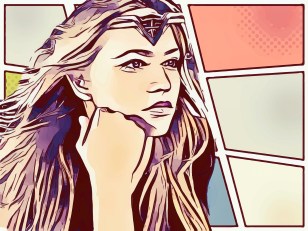
Even in the comics, Diana Prince was paired with various men over the years. The epitome of a kick-ass woman, she still likes to snuggle at night.

I’ve been told, “Don’t make the man rescue the woman.” But isn’t that what a romance is? I mean, rescuing a woman because he has to. It’s part of a mission. She’s been kidnapped because her father is a billionaire. She needs a bodyguard. She’s cured cancer, and people want to kill her. She’s a rock star, and someone is out to get her. There are a million plots to go with that trope. The hero rescues the heroine, they fall in love. The end.

There’s a reason why that trope is popular.

Women take care of themselves (and their children) alone all the freaking time. Reading is an escape. We want our man to step in and say, “Let me take care of this because I’m falling in love with you.” My favorites, and hopefully the kind of books I write, is when they rescue each other. Maybe he can get her to the hospital for her life-saving surgery, but when she opens her eyes, he knows she really saved him, by repairing his broken heart and giving him his life back.

Most times after the “big fight” I have my man go to his woman first. Not because I want to put my woman in a position of power. Not because my heroine wants a man groveling at her feet. But because it’s romantic. It feeds into what women fantasize about. Men saying, “I was wrong. I can’t live without you. I’m sorry. Marry me.”

What I didn’t realize though, is that it takes a strong woman to give a man the space he needs to figure it out and admit that. For him to have time to see his mistakes and go to her.

It takes a lot of bravery for a woman to face heartbreak if the man she loves doesn’t come for her. For her to say, “If he can’t admit he was wrong and apologize and admit that he loves me, I can’t have the kind of relationship I need with him to be happy.”

Women in romance can be kick-ass and still want a man. I’ll never write a sniveling idiot as a female main character.  Men, characters or otherwise, don’t want a woman who acts like that. Women who act like that in real life never find true happiness or true love. 

So in my DM, what was I apologizing for? Because in my group, we are all writers and we all pride ourselves on writing kick-ass women characters. How can I write a strong woman character when I, myself, I am not a strong woman in real life?

kick ass woman

Maybe not this kind of kick-ass. 

I’ve been on my own now for two months, since my husband moved out. I pay my bills with my own money (and a little help from alimony and child support). I work full-time. I’ve always paid our bills so balancing a checkbook was nothing new, I just don’t have as much money to work with. I drive a dumpy car, and it’s not lost on me I’ll have to work a car payment into my budget at some point.

But guess what? I have written characters who have also live paycheck to paycheck. That’s real life.

I have good friends. My sister lives in the same town as me. Even my soon to be ex-husband would help me out if I ever find myself in serious trouble. I’m not alone, and I don’t feel like I am. Our split was amicable, and I haven’t been this happy in a long time.

I am a strong woman even if at times I don’t feel like it. We all need love, security. We all want love, someone to protect us, have our backs. That doesn’t make us weak.

I write romance.

My characters fall in love.

They aren’t weak, either.

They’re human.

October through the end of the year goals.Whatever.

Everyone is doing October/end of year goals, so I thought I would, too.

I don’t have many.

  1. Finish All of Nothing. This includes finishing the editing, writing the blurb, doing the full cover for the paperback, formatting for both Kindle and paperback. Sending it out for betas and hopefully publish by Halloween. It was my target goal from the beginning, with Thanksgiving being the ultimate maximum amount of time I wanted to take. It looks like Halloween is more than doable–at least for the Kindle. Using KDP Print for the paperback takes longer, just for the simple fact ordering and waiting for a proof is a lot more time consuming than it used to be through CreateSpace. If you’re launching a paperback by a certain date, be prepared and give yourself plenty of time for the KDP Print hassle.

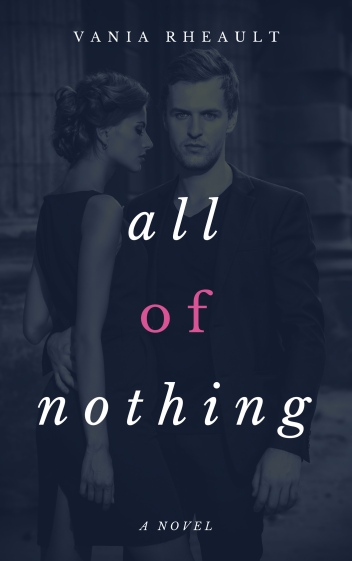
    Here’s the working cover I made in Canva. We’ll see if I stick with it.

    allofnothing
    Made with a Canva template and a photo I purchased from CanstockPhoto, it’s a simple cover which I hope conveys the darkness of the story.  No chick lit for this author. 😛

  2. I have 2,000 words into my next book (a beautiful May/December romance that will be a counter to the dark romance I’m editing now) already written, and a few pages longhand that I need to type up. I would at least like to get the handwritten stuff typed up this month. I would love to get the whole thing written and published by March of next year. I have a bookselling summit I’m attending in May, and the more in my backlist, the better.
  3. I did a Happy Book Reviews feature for Wherever He Goes that I am not terribly impressed with. I’ll do a full blog post on how it turned out. But for now, it’s safe to say, don’t waste your money. If it sounds too good to be true, it probably is.
  4. In my other blog post about marketing, I said I was writing a non-fiction book on self-editing. I’m going to be working hard on that in the coming months, and hopefully have that ready to go by no later than this summer. My fiction comes first, and I want my new book to be ready by the summit, but depending on my health (see number 5) I’d like to get the editing how-to book done by June.
  5. I have carpal tunnel and I’ll be going for a nerve test this Thursday. My carpal tunnel runs from my elbows into my neck, shoulder blades, and back. Meaning, I’m in a ton of pain a lot of the time. I let it go too long. I know. And I’m paying for it now. But the truth is, I’ll more than likely be having surgery and the recovery time for both arms will set me back. I know voice-to-text can be a life-saver to some, and I may still be able to blog that way for a bit, but chances are, I won’t be able to work on my fiction for a while. The break is much needed, but not that wanted. We’ll see how it goes.
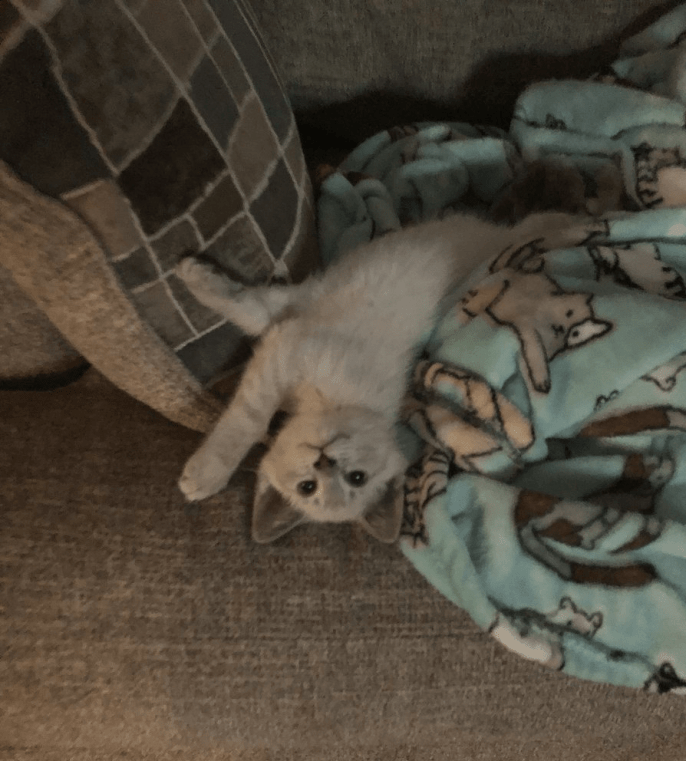
  6. These are lofty goals when I have a new kitty to play with! My husband moved out, and the kids and I replaced him with a new kitten named Blaze. It wasn’t really like that (LOL) but it’s hard to resist playing with her, or snuggling with her when she’s sleeping. She’ll be a good recovery pal. Here’s a pic:

    blaze
    It’s tough not to share pictures of her all the time, so if you follow me over on Instagram, you can see a lot more of her. 🙂

Those are pretty lofty goals for the next few months, but I’m hoping it’s nothing I can’t get accomplished. All of Nothing is the big item on my plate right now, along with keeping this blog going with indie news and writing tips.

Also, since I will be working on my editing book, if there is anything you struggle with when it comes to self-editing LET ME KNOW! I would love love love to include anything and everything indie writers struggle with.

Happy Fall, Everyone!

book and fall leaves

I Did an Amazon Giveaway–and It Did Pretty Much Nothing

THIS POST IS ARCHIVED AS AMAZON DID AWAY WITH GIVEAWAYS IN 2019 AND HAS SINCE NOT REPLACED IT WITH AN ALTERNATIVE. THANKS FOR READING!

I was always curious about the Amazon giveaways–you know the cute little button at the bottom left of your books’ (or any products’ really) page. You have to scroll down pretty far to find it–after reviews and two sets of sponsored product ad strips.

amazon giveaway blog

You can give away paperback or Kindle versions, and it’s obviously cheaper to give away Kindle versions. Amazon makes you pay for your book, so if you gave away paperbacks, you’d be paying the price you set in CreateSpace or KDP Print, plus shipping.  There’s no shipping with Kindle files, but there is tax. So make sure you’re looking at the correct page, and Amazon tells you which version you’re giving away–it’s in the blue to the right of your book’s cover.

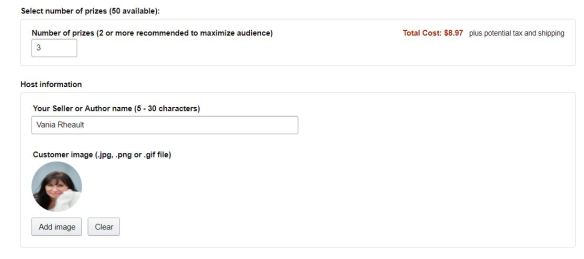
Choose your number of prizes:

amazon giveaway blog 2

I’ll give away three Kindle file copies. I did five when I did my giveaway for Wherever He Goes, so I feel like I’ve already spent money on something that probably won’t do anything for me.

amazon giveaway blog 3

Add your photo. I chose a different pose of my author photo that I use everywhere else, but I still look like me.

The next part is where I royally screwed up because I had no idea giveaways ran that quickly, or that people would enter, or maybe I just didn’t understand the stats of a giveaway like this.

amazon giveaway blog 4

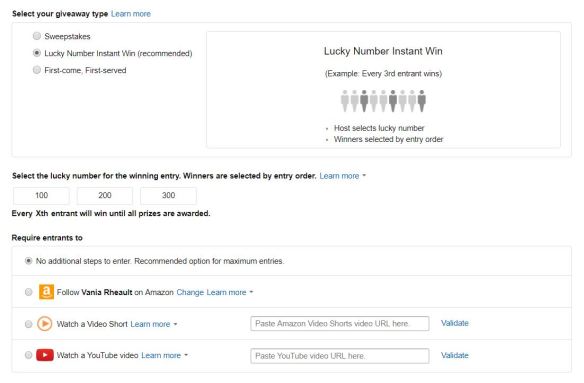
I did the recommend Lucky Number Instant Winner, and I chose 100 for the lucky number for the winning entry.

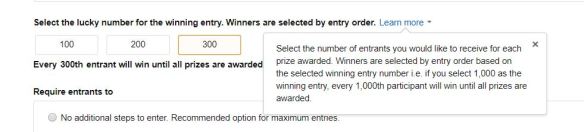
This is what it says if you click on LEARN MORE:

amazon giveaway blog 5

My giveaway lasted fifteen minutes. So When I chose 5 prizes along with the 100 entrants,  500 people entered my giveaway and every 100th entrant won a copy of my book. The fact that it only too 15 minutes for my giveaway to end blows my mind.  So will be going with a higher number next time.

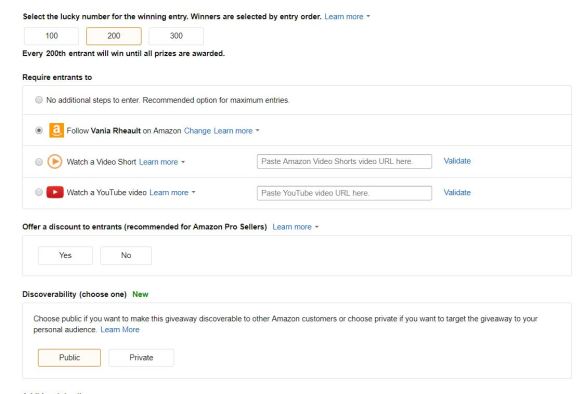
And then, of course, I have them follow me on Amazon.

amazon giveaway blog 6

I made it public of course, because the more the merrier.

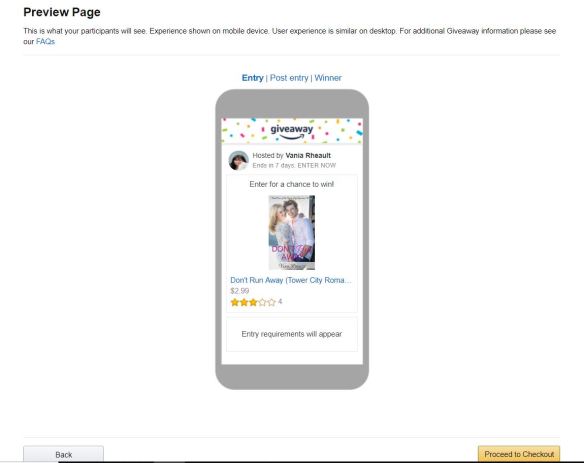
To recap, I’m doing 3 copies of Don’t Run Away. I have the number of entrants set at 200 per prize so 600 people have to enter to win three copies. They all have to follow me on Amazon.

You would think this would be a great thing. But the thing is, most people enter giveaways just to enter giveaways. That is what they do. Just for the rush of winning, I’m assuming.

I don’t think this giveaway is going to go any slower than my other one, but we’ll see.

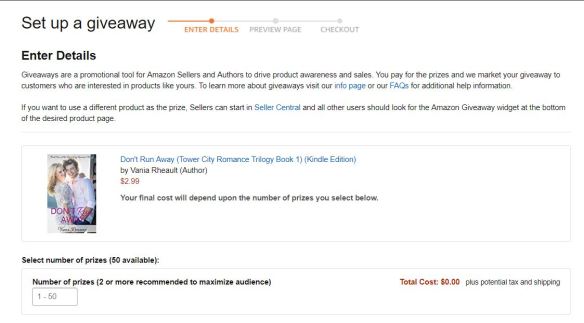
Click on no for not offering discounts, then click next.

amazon giveaway blog 7

This is the last page, and it’s laughable. It’s probably where my high expectations came in. The giveaway will end in 7 days? Yeah right.

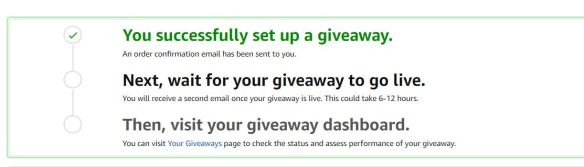
Then you get your shopping cart screen and you purchase your giveaway. I didn’t screenshot that because you don’t need to see my stuff. After you buy it, you get this:

amazon giveaway blog 8

And you’re all set.

You get an email when your giveaway is live, and for me, fifteen minutes later, I got an email saying my giveaway was over.

Amazon doesn’t tell you how many followers you have, but at some point, hopefully when they email your followers when you release a new book, that some of them will buy it.

Don’t turn blue holding your breath.

While I was typing this up, my giveaway went live–I got the email.

We’ll see how long it takes for the giveaway to end . . . . go get something to eat. I’ll wait.

At any rate, did the giveaway for Wherever He Goes do anything for me?

Not really that I could tell. At least with my AMS ads, even with little results, those are still measurable. These giveaways seem like a waste of time and a waste of money.

Maybe I’ll do a Goodreads giveaway when my new book comes out.

It will be something to blog about anyway.

Did you have a good experience with an Amazon Giveaway? Let me know!
Blog book promo for the end of blog posts


More AMS (Amazon ads) Updates

I like doing these to help anyone who is afraid of dipping their toes into Amazon marketing. Ads are a scary concept, be it Amazon or Facebook. Anything that will take your money without a firm promise of ROI (return on investment) needs to be taken up with a bit of caution. Too cautious though, and you aren’t going to get the results you want.

You need to spend money to make money, and all that.

So here’s where I am so far with ads.

ams-blog-post.jpg

ams blog post 2

If you know anything about what you’re looking at, it’s pretty easy to see my bids are not high enough to be getting very many impressions or clicks. But that’s the name of the game, you know, to find the sweet spot where you’re getting impressions and clicks, but you’re also not paying a ton of money for clicks if no one is buying. You’re hoping if people are clicking on your ad, that you’ll make sales. But your clicks also have to be in line with how much you’re making from your books.

My books are priced at 2.99. If I spend 30 cents a click, and I get 2.09 from each sale, that’s a take-home royalty of 1.79 a book. (There’s a real way to determine ROI and I’m not doing that here, and I know I’m not, so you don’t have to tell me, for you die-hard ROI fans out there.)

Anyway, so anyone worried that you’re going to do some ads and Amazon is going to take all your money and you’re going to broke with no sales, well, you can go slow. You need to have patience. And some impressions are better than none, but these aren’t what I was hoping for, and these aren’t what Brian Meeks, in his book, says you can accomplish either.

I have 20 ads running simultaneously, and I’ve only spent $2.30.

I am still getting KU reads, and I’ll never know if those come from the impressions from my ads.

I’ll add a few more ads with a higher click and see if we can’t get something going. I’ll have another book coming out in November, hopefully, so I’ll have another book to promote.

The more, the better, right?

Anyway, so that’s where I’m at. If you’re interested in Brian’s book, click on the pic. He’s got a ton of great info there. amazon ads

Until next time, happy selling!


Blog book promo for the end of blog posts

Thoughts on the RWA

rwa header

I’m a member of the Romance Writers of America. I like being part of a group of people with similar interests. I was especially proud to belong when they stepped up to bat during #cockygate. (For those interested in following along with the hashtag on Twitter, look here.) I feel it’s an organization that has my best interests at heart as a writer and author and wants to help me succeed. In fact, I’ve been a member for a while now, and I haven’t even started to explore all the resources they offer their members.

I was listening to the Sell More Books Show and they featured a blog post by Allison Brennan who left the RWA because she felt like the organization operated more for indie writers than traditionally published romance authors.

While I don’t have a problem with the RWA operating this way because I am an indie author, I did notice this, too, as I paged through the Romance Writers Report. I’ve read articles about marketing, discoverability. How to work with editors and book cover designers. These articles are written with the self-publishing author in mind (trad-pubbed authors don’t have to worry about editing their own books, or hiring their own cover designer). Even in the June issue I have on hand, some of the articles include:

  • Romance Law School is Now in Session: How to include law in your fiction in a realistic manner.
  • Fifty Ways to Show the Spark without the Heat
  • Proofreading Hats

I’m not saying traditionally published authors don’t need how-to articles like these, but I am saying that indie or new writers could find more value in them. I suppose a veteran writer could use the Fifty Ways article for writing prompts, or read the Romance Law School is Now in Session article for ideas on how to write a new series featuring a lawyer. But the Report also features ads, and they are geared to the indie writer–lots of editing, proofreading, and formatting ads no traditional published author is going to need.

So the question is, is this the right move for the RWA?

They want to support all their members, and if indie membership outweighs traditionally published author membership, then perhaps it is a good direction for them to take.

However, it feels like there are more organizations aimed at supporting indie writers than ever before. The Alliance for Independent Authors is very supportive offering an array of services from podcasts to a services directory where an author can find professional editors, cover designers, and formatting professionals. There are other organizations as well, such as the Independent Book Publishers Association.

There is support for us indies. So does Allison have a point? Where do traditionally published authors go for support if they find RWA lacking? Do they even need support? After all, they are where a lot of us hope to be someday. Is the RWA pushing them from the nest because they are ready to fly? Do traditionally published authors get enough writing and publishing support from their publishing houses and their agents? Where do they go for networking opportunities if they are slowly being ousted from the organization?

Allison does make a good point, too: if all the traditionally published authors leave the RWA because they don’t feel RWA has anything more to offer, what becomes of us who look up the traditionally-published authors? Who would judge the RWA contests? Who would be our mentors? Who would be our professional critique partners and our chapter leaders?

But let’s be honest, here, too. If the RWA wants to support writers, and by support, I mean, help them make (more) money, then self-publishing is a viable way to go. At least for romance. (If you want to read about indie romance authors dominating the self-publishing industry, click here.)

To me, it makes a lot of sense for RWA to shift. After all, the distinction between traditional and indie publishing is blurring more and more every day. And a lot of traditionally published authors are still the ones who do a lot for their books: marketing, platform building. Some authors have to set up blog tours, book signings, that kind of thing.

Being a traditionally published author today doesn’t even guarantee you’ll end up on a bookshelf. Maybe a virtual bookshelf, but the chances of seeing your book at Barnes and Noble shrink every day. I took a quick peek at Harlequin’s mail service, and if you subscribed to every line and subscribed to the maximum they mailed you in that line every month, you would receive 86 books a month. It isn’t possible that every book would find shelf space, even for just four weeks.

So what does it mean to be traditionally published? To pass the gatekeepers? Is this Allison’s main guff with RWA supporting indies? Perhaps she wants the RWA to nurture us to being published traditionally. But not one way is going to be the right way for everyone.

The publishing landscape is changing. Maybe Allison Brennan doesn’t want to see it. Maybe she sees indies as her competition, not her colleagues. Maybe she sees herself as better because she’s traditionally published. The problem is, that way of thinking divides indies from the traditionally published authors, and that’s just not the way things are anymore.

One day traditional publishing won’t give Allison what she needs, and then she’ll need the RWA to help her gain her footing in a constantly changing publishing landscape that she’s refused to acknowledge.

rwa missionRomance writers are all the same. We all want the same thing. To write quality books and make a reader swoon over a happily ever after. And the RWA supports that, no matter how those stories are published.

Issues like #cockygate affect all of us, and we all need an organization like RWA to have our backs.

I’m proud to belong.

The Scary World of Amazon Marketing Services

Writers need to get their books out there. Twitter doesn’t sell books. Neither does Facebook–at least not on your personal profile. There are only so many copies Aunt Edna wants. And she’s not going to pay your bills. (If she is, that’s no one’s business but yours.)

So what is an author to do? Well, you can write more books. You should be anyway. What else? Instagram the shit out of your life hoping to draw some attention to your fabulous #writerslife.

What else?

Pay for promos, maybe. I’m assuming I’m still getting some KU page reads from a Freebooksy promo I did a few months ago. (To read about that, click here.)

I’ve come to the conclusion after a few years on Twitter, the only way to find readers is to write books and tell people (who aren’t on Twitter) about them (you know, actual readers). I’ve decided to dip my toes into the world of Amazon ads.

amazon adsNow, lots of people have told me that they don’t work. I bought Brian Meeks’ book, and he tells me they do. But you gotta be smart, and you gotta be patient, and you gotta test. Test and Test. And Test.

Oh, by the way, you have to have a decent book, good cover, good blurb. Because if you don’t have a quality book, no amount of advertising will sell your POS. (Sometimes people forget about that part.)

So, I’ve been running ads for a couple of weeks. Brian says this isn’t hardly any time at all, and I agree. Buying and running ads on Amazon isn’t the magic trick to selling books and getting famous. You need to have patience, and you need to know what you’re doing.

At first, I bid low (like Brian advised–he walks you through the entire process), and piecing together information from other sources, I realized this was way too low. I write contemporary romance, and it’s a highly competitive market.

The thing with Amazon ads is you need to bid high enough that Amazon will show your ads, but not so high that if someone clicks on your ad but doesn’t buy, you don’t go broke paying for clicks that don’t turn into sales.

It’s called a sweet spot, and from what I can tell, few people have the patience to get there. Or they are too scared they are going to waste a lot of money trying.

I’ve been running ads for 13 days, and this is what I have so far:

ams ads so far june 18

Remember, 13 days isn’t hardly any time at all. But for anyone scared to run ads, take a look: I have 12 ads running right now, and I’ve spent 35 cents. Not dollars, cents. None of the ads are doing particularly well, and I assume it’s because I’ve bid too low. The ad for Don’t Run Away that has over 3,000 impressions, hasn’t cost me anything. But those impressions could have given me a few page reads in KU if someone saw the ad, but didn’t click and just decided to try the book in KU anyway. Where and when someone decides to read your book if it’s enrolled in KU will always be a mystery.

Here are my KU page reads for DRA. I took this screenshot on June 18th. The same day I took the screenshot of my ad dashboard.

sales and ku reads for dra

Nope, I don’t have any sales yet. But I haven’t gone broke trying, either.

So anyone who is wanting to try this but is afraid of losing money can err on the side of caution, figure a few things out, and go from there.

I’m surprised that DRA is getting impressions, as the second set of ads I did for Wherever He Goes is a higher cost per click (which you would think would buy me more exposure), and I think the cover for WHG is better than DRA. But maybe the blurb is better written, or the characters resonate better with readers.

So where do I go from here? I plan to bid a bit more for WHG, and see if I can’t get some impressions, at least. Maybe I could even do another set of ads for DRA at a higher bid, and see if that doesn’t ramp up my impressions even more and hope those turn into clicks. Or I could do nothing, and wait to see what happens, because 13 days of ads is hardly any time at all.

But I’ll keep an eye on it. I just wanted to let you know a high daily limit doesn’t have to scare you.

And if you take anything away from this it’s this: if your ads are successful, and you are getting a ton of clicks but they aren’t turning into sales–you need to look at your book. You need to look at your cover. Your Look Inside pages. Your blurb. Don’t pay for ads for a crappy book. Make it better.

I’ll keep you posted!

Writing to Market vs. Chasing a Trend

I talk about writing to market all the time. To the indie writing community, there seems to be something fundamentally wrong with a writer who sits down at their computer, looks at their WIP, and says, “Who would want to read this besides me?”

adult-attractive-beautiful-1036620

As James Scott Bell phrases in his book Just Write: “Without readers, a writer has no career.” Of course, writers write for more than just money, but if you’re reading my blog, you probably want to sell some of your stories. And that means writing what people like to read.

Writing to market is primarily writing popular commercial fiction. Nora Roberts, Stephen King, Dan Brown. Tom Clancy. They sell books by the truckload. Every book they write ends up selling thousands of copies. There are other writers who write commercial fiction too, like most big romance writers who don’t always make the list: Lisa Marie Rice, Susan Mallery, Kristin Higgins, Brenda Novak, Laurell K Hamilton. They write consistently what people consistently read. They don’t vary because something is popular. In other words, they don’t chase trends.

action-couple-fashion-432506

It used to be a writer was warned off chasing a trend because traditional publishing moves too slowly for that to work.

When Twilight was popular, if you wanted to jump onto Stephenie Meyer’s coattails with a traditional book deal, it would have been almost impossible. First, you have to actually write the book. Then you have to find an agent, and she has to shop you around. If she succeeds, then your book is stuck in the publishing process that moves slower than my kids getting dressed for school.

Sometimes movies can draw out the popularity of a trend. Like with 50 Shades of Grey, there were a couple authors I know of that managed to get in on the action, though if it was just timing, or a thought out plan, I guess we won’t know. Sylvia Day wrote The Crossfire quartet, and Jennifer Probst lucked out with the Marriage Bargain. (An experience she shares in Write Naked.)

And sometimes that can backfire. I’m sure I wasn’t the only one who was glad when Fifty Shades Freed, the movie, was released, and that trilogy could be put to bed. Literally and figuratively. If people are sick of a trend, it’s far too late to try to get in on it.

But with self-publishing, if you can crank out a book in 3 months, and publish it, you could very well get in on a trend before it dies.

Is that a bad thing? I’m going to express an unpopular opinion and say no. Why not? If grip – lit is still going strong and you can write a good book in that vein, why not try?

Trend chasing isn’t evil. But I say that with a couple of caveats.

witch-3202467_1920

1. You can’t build an audience that way. The writers who make it, or seem to be making a go of it, remain consistent in their writing. If you want to chase a trend and can spare the time, maybe write in a pen name.

2. You still have to love what you’re writing. People think when a writer writes to market they don’t love their work, that they are just chasing the almighty dollar. To find a foothold in the industry you need an extensive backlist, and the only way to create one is to stick with it for however long that takes. And that means loving what you write. If you love the trend you’re chasing by all means. But if werewolves are trending, and you hate them, don’t bother. Which leads me to a third caveat:

3. You need to be familiar with the genre so you can hit all the tropes. If werewolves are trending, but you’ve never read them, don’t think you can write them. You’ll disappoint your readers who do know the genre and will be upset they spent their money on your book.

So, chasing a trend isn’t a cop-out. If you can plan it into your writing schedule, if you have a great idea that could potentially be published before the trend fades, why not? What is trending now? It seems like women’s fiction, mystery-driven domestic (family/wife/children) pop up on the list.

As for something sweeping the world by storm, such as Twilight, The Hunger Games, or The Girl on the Train, sometimes all it boils down to is the lucky timing of when the book was published. Ruth Ware, who wrote The Woman in Cabin 10 and The Lying Game, seems to be doing okay. But I wouldn’t accuse her of chasing a trend. Perhaps just lucky, because she’d written a few books before The Woman in Cabin 10 made her a household name.

There is a difference between writing to market and chasing a trend. I write straight up contemporary romance. Tropes, plots, and characters like those will never date themselves. For now, I’m not interested in chasing trends. Mainly because if I missed the mark, that’s time wasted on a book that won’t sell. I’d rather invest my time in books for my backlist that will never go out of style.

You are in control of your own career. Chase a trend, write to market, write that thing that’s weird, but you can’t stop thinking about it. We all have different variations of success, and you have to be honest with yourself about what those are. Only you know what will make you happy. Good luck!


Happy writing Vania Margene


Why authors shouldn’t chase trends

On Chasing Trends…. And why you should just write the book you want to write…


Write Naked: A Bestseller’s Secrets to Writing Romance & Navigating the Path to Success by Jennifer Probst–A book review

Every writer could use a guidebook, a map, perhaps a mentor who can say, “If it were me I do this.”

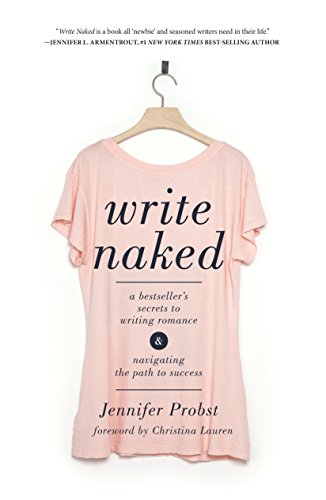
I read Write Naked: A Bestseller’s Secrets to Writing Romance & Navigating the Path to Success last year, but as a series of book reviews I’m starting for my blog, I pulled it out again and reread some of my favorite chapters.write naked

In Write Naked, Jennifer Probst takes you through from the beginning of her career, when she didn’t think she would make it, to present time, when indeed she has made it, evidence being she’s able to add best-selling author after her name.

It’s gratifying to know that even a best-selling author has fears, flaws, and has made mistakes, but being she has made it to the other side, she also gives us tips and tricks to overcome our fears and if you really want this thing called a writing career, what to do to achieve it.

Some of my favorite chapters include:

Chapter 4
Green With Envy
Jennifer acknowledges that yes, writing is a community, but that community is steeped in jealousy, cruelty, and fear. I see it on Twitter. I read it in a poor book review by another author, sometimes even a malicious review. I see it in the passive-aggressive interactions between me and my other writer friends. Pretty soon you don’t know whom to trust, who really is happy for you and your success. Jennifer writes a chapter on this–a very honest and forthcoming chapter. She says on page 34 of the paperback  . . .  “jealousy . . .  is an endless vicious cycle.” Don’t let it consume you; there will always be someone doing better than you, and you will always be doing better than someone else.

Chapter 5
The Write Path
1. You’ll make mistakes. Costly mistakes.
2. Overnight success is never overnight.
3. Once you reach the top, there is nowhere to go but down.

This may seem like a downer of a chapter, and perhaps it is. Jennifer reminds you that a writer’s journey is tough. There is a reason why writing is compared to running a marathon or climbing a mountain. Your journey takes a ton of preparation–years of writing, years of learning the craft, refining your work. It takes many books. One foot in front of the other for years. Then what do you do when you reach the top of the mountain? When you bury a flagpole in the summit and can call yourself a success? You climb down and do it all over again.

Chapter 8
Trademarks of Bestselling Authors
There are no shortcuts. Sit down, do the work. But what is the work? Jennifer, along with other romance authors, gives you an idea of what it takes to get where they are. This chapter includes writing advice, networking tips, and thinking about writing as a career, not a hobby.

Chapter 12
The Indie Revolution
Jennifer did publish as an indie author, and she gives her readers a few tips on how to publish a good book. You may not like what she has to say, but all of her advice has merit. Probably the biggest takeaway from this chapter is indies need to remember they are writing for readers. You want and need them to like your books. Publish accordingly.

Toward the end of the book, say the last third or fourth, Jennifer goes into what makes a romance book an addicting read. Snappy first lines, lovable characters. Setting up and delivering on a hook, keeping up the sexual tension, keeping your middle from sagging. She touches very briefly on all these and more, so if you think you have any of these issues in your own writing, find other craft books to study with, because these chapters tell you what I know many don’t want to hear – write a good book and keep reader expectations in mind as you write. As with any genre, there are tropes and rules you must follow, or all you’ll do is make your reader mad, and that could result in a bad review.

Jennifer’s last chapter is Happy Endings. She coaches you on how to end your book on the best note possible. But finishing one book isn’t the end! There will always be another book to write, another mountain to climb, another race to run.

Jennifer-Probst-2-1Jennifer won her gold medal, and she tries for another every time she sits down to write.
I recommend reading this book in its entirety, and I pull it out every now and again for a pick-me-up or a reality check.

You can find it on Amazon here.

Thanks for reading! Do you have any books from authors you like to read that give you tips or a much-needed reality check? Let me know!


Happy writing Vania Margene


My Next Few Weeks

Vania's AprilMay Plans

Last week I finished Wherever He Goes. At 77,863 words, it’s one of the longest books I’ve written, and I’m very proud of how the story came out.

What does this mean for the next couple months in terms of my writing schedule?

Take a look:

Plot out my next book.
I left a few threads open while I wrote Wherever He Goes, and I need to decide if I want to close them up or write a companion to the book. The companion would be about Aiden’s brother Dylan. I foreshadowed a few things about him, but his story isn’t fully developed in my head yet, so I need to think, do I want to leave the threads loose in case his story comes to me, or tie them off and move on? I’m hoping a solution will come to me while I edit. For now, I have another book I need to plot out that has nothing to do with Wherever He Goes. I want to get most of the bones of that book written down before I forget any of it.

I start edits on Wherever He Goes on April 2nd. My editing process is long and contains many steps, mostly because I edit myself, but mostly because even if I did pass my book on to an editor, I would give them as clean a version as I could. My editing process includes:
Initial read-through. This is where I fix blatant typos and plot holes I noted while writing that I didn’t go back and fix. I’ll fix character discrepancies and repetition. I’ll fix my characters’ overall arcs. As I get to know them, my writing loosens up, so I’ll even out the flow of the story. All this is easier on the screen.
Print it out. I need this step because this is where I put my chapters in (I write without breaking up my book) and make sure the plot makes sense. I have an easier time with this when I can “see” the book laid out in front of me. Often this is when I beef up scenes or take out parts that don’t need to be there.
I listen to my manuscript. I have Word read my book to me. This is where I do line edits, and I pay special attention to dialogue and syntax. One day I’ll do audio for my books, so I pay special attention to this step. This step gets rid of wordiness, and it takes about four to five days to listen to it all.
I proof the proof. You can see a lot of typos and long paragraph blocks that need to be broken up when you read the proof you order from CreateSpace or wherever you publish through. You can find repetition, errors, and there have been times I’ve caught huge consistency issues. Always read your proof as a reader would. Take your time, sip on some coffee, tea, or other beverage (keep it non-alcoholic so you have a clear head). This step takes me about three days. I take my time because this is the last step, and the last time my eyes will be on it.

After I edit, I’ll put in the changes and order another proof to make sure my formatting stays perfect.

I don’t have a pre-order set up for Wherever He Goes, no blog tour set up or anything. I did a successful Freebooksy for my first book in my trilogy, so I know I have readers out there. I’ll do a soft release for this book because I hope I’ll already be a few thousand words into my new book.

I’ll still continue to blog. Lately, I’ve been doing more book reviews on the non-fiction I’ve been reading. I have a lot of time at work and I’ve accumulated a pile of books that could be useful to other indie authors. Plus, it’s content, and I’m horrible at blogging consistently.

I’m going to basically stop doing Twitter giveaways. They are useless. There is too much free stuff out there and they are a waste of money. No offense to the people still doing them–I wish you well. This includes doing a Goodreads giveaway. Until I can know for sure you get the bang for the buck, a promo site like Bargainbooksy may make more sense. And cents.

Summer is a time when things slow down, and people take vacations, do things with their families. I still would like to try to write 1,000 words a day and publish another book by the end of the summer. Trying to stick to a three-book a year schedule may be tough because I have to have a whole book in my head before I start writing. I have bits and pieces of plots bouncing around in my brain, but nothing fully realized yet. So I have this next book to plot out, then I hope something comes to me.

Vania's AprilMay Plans (1)

That’s what I’ll be doing for the next little while. I’m excited to release Wherever He Goes. I have the cover tentatively worked out, and you can see it on my Facebook Author Page.

I don’t have any writing conferences to attend this year–a few things take precedence like my son’s high school graduation. I also have a few things going on I don’t have the liberty to discuss, but I’m going to guess will be very time-consuming.

I also need a couple days to make box sets of Summer Secrets and my Tower City Romance Trilogy. It will be a pain in the butt, but worth it!

I’ll be busy between now and Fall, but I’m looking forward to the challenges!

What are your plans for the next little while?

Happy writing Vania Margene


images created with http://www.canva.com