My BargainBooksy Ad from last month. How did it do?

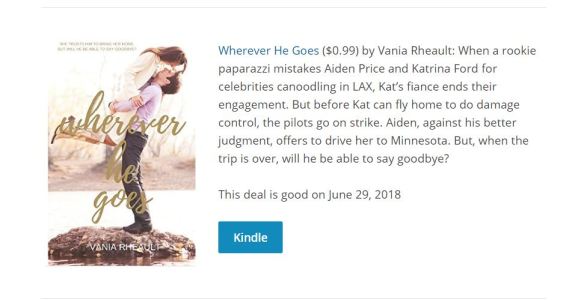
Well, apparently, not very well since I forgot to post the update. This time, this ad was a paid ad (meaning, my book wasn’t free), and I set the price of Wherever He Goes to .99. I thought, a dollar for a book, that’s pretty good, right? Heck, I spent three months working on it, I figured a dollar was a good price.

The problem is, with doing these ads, you just WON’T KNOW why your book doesn’t sell. It could be the cover, it could be your copy. It could just be that no one wants to pay. You never know.

So, in total, I sold 40 books on the day the newsletter came out and a couple days afterward. That is nothing compared to the 4,000 books I gave away during my Freebooksy ad I did back in February. You can read about that here.

june sales for bargainbooksy ad

As far as KU page reads are concerned, you can see that the newsletter created a bit of a spike, but nothing to write home about. And this is only for Wherever He Goes. My trilogy is still getting a few page reads, but I wanted to see what my ad would do for Wherever He Goes, and unfortunately, for 80 dollars, not much.

Here is what my ad looked like in the newsletter:

bargain booksy ad

Would I do this again? I haven’t made back what I spent on the ad, so it will be a while before I try something like that again.

What I need to focus on is getting reviews, but for using any legit reviewing services, I need to pull my book out of Select because the one review service I contacted distributes the books through Bookfunnel. Amazon considers Bookfunnel as a distribution platform and will yank you out of Select if they catch you using it.

For my next book, I’m going to place my book with a review service first, before putting into Select and see what happens. Hopefully, if I get some decent reviews that way, readers will give all my books a chance.

And I think if I ever do another promo with Written Word Media (Freebooksy/Bargainbooksy) I’ll do the free one, since I kind of feel like I got more bang for my buck. At least, it sounds better to say I gave away 4,000 copies than say I sold 40. It would be great if any of that had turned into reviews, but so far nothing significant on that end, either.

But, that is my experience with Bargainbooksy, and if you’ve tried them, and have gotten better results, let me know!

Thanks for reading!

Blog book promo for the end of blog posts


What do You do with Promo Photos? And Better Yet, WHERE DO THEY COME FROM?

We all see these cute photos of people’s books, you know? If you don’t know, you’re not on Twitter much, or you haven’t liked many Facebook author pages. Let me give you some examples. Hold on while I dredge some up.

wherever he goes promo composite

This is mine for my latest book I put out in June. That looks pretty cool, right? Or how about Aila’s, when she did her cover reveal for her new Women’s Fiction, Alabama Rain:

alia's cover reveal

Hers is pretty fancy; those books stacked on that nice shelf. And I love her cover. I am so excited to read this book. She made an awesome trailer, too, and you can watch it here. Anyway, I can make something similar with mine (but not the same because her skill set and my skill set vary greatly):

whereverhegoespromowithsunflower

The best part about the 3D mockup maker I use is that you can download a PNG without any background, which makes it very easy to place your book onto a different background, and you can make a super cute promo like this:

aila's promo

But what the heck are you going to do with it?

Aila says she puts hers at the end of her blog posts, making the photo clickable and driving traffic to her Amazon page. That’s not a bad idea. But she blogs–a lot. And consistently. Who can say they do that? Not me. But you should totally check out her blog. She writes very informative posts about the indie publishing industry, and she knows a lot of writing resources she generously shares.

I mean, you want photos out there. Someone might Pin It, or Retweet it, if it’s cute. I found this one somewhere and saved it for reference because I’m terrible at design:

book promo idea

Text is good, you know? A tagline, a teaser.

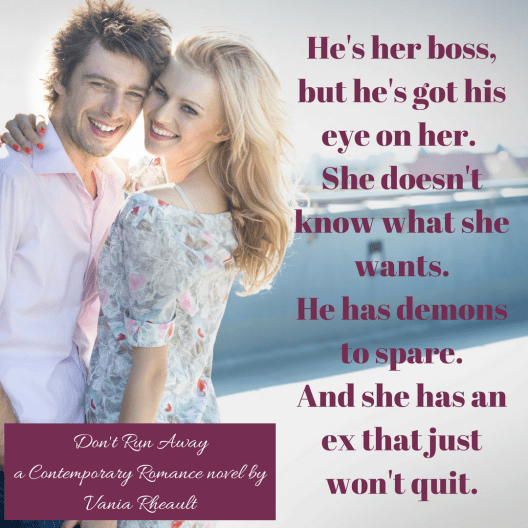
I made this messing around in Canva, trying to practice, develop my eye:

He's her boss, but he's got his eye on her. She doesn't know what she wants.He has demons to spare.And she has an ex that just won't quit.

Canva is good for stuff like that. It makes placing photos in composites a lot easier if you don’t know your way around GIMP or Photoshop. I made this in Canva using my Kindle cover for the first book in my trilogy:

Don't Run Away Promo

Of course, you need to make sure the photos you are using, like the sunflower on the shelf, and this work photo, are okay for commercial use since you’re trying to sell your books. At least, I’m going to assume you are.

But the problem is, there’s a ton of this stuff out there, and it’s annoying. You can Tweet it all the time but people will unfollow you. You can’t post it on Instagram all the time, because then you’re pegged a self-promoter and no one will follow your account.

So, I make promo photos, and then I don’t do anything with them.

But part of this blog post was to tell you where you can do this stuff, so take a look at the programs I’ve used:

FREE ONLINE BOOK MOCKUP MAKER
Derek Murphy runs this site, and he’s got a lot of great information about making covers yourself. He has a YouTube channel, and it’s worth checking out. I used this to make the first picture in this blog post, and I’ve done it for my friends, just to see how it looks with other covers:

stealing home promo

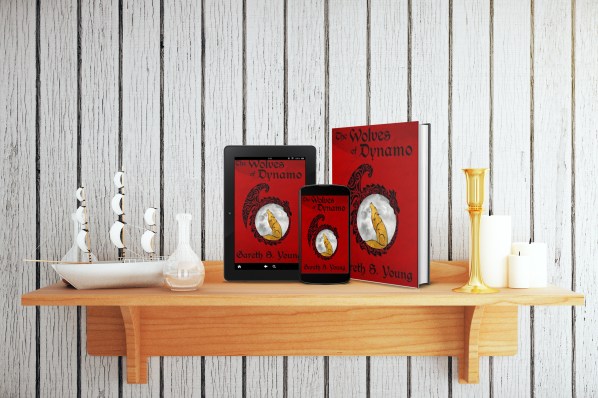
wolves of dynamoThis is a free site, though the positions of the books are somewhat limited. But it’s free and the program places the covers for you, so you take what you can get, right? If you want to place the books anywhere else, like a shelf, you need to use a program to place them onto a different background. I use GIMP to keep my hand in (I’ve spent a lot of time figuring out the very small percentage of what I do know); it’s a free version of Photoshop. But you can use Canva, too, which is a lot easier to figure out.

shelf with sailboatandbook
I bought the shelf photo from canstockphoto.com. Wolves of Dynamo is a fantasy YA geared for both boys and girls, so I didn’t want to put with anything too girlie, or something that wouldn’t fit the genre. (I showed it to the author, and Gareth gave me a tough time. LOL)

Anyway, so give the mockup maker a try. Use pixabay.com and find workstation photos. All their photos are free for commercial use. Placing your book’s cover onto a Kindle mockup is easy using Canva. Just like any software, it may take a little bit to get used to, but that’s part of the fun of making these, right?

Because it’s not like you can shove them in people’s faces all day long–people will get bored with you, fast.

This is the quick mockup I made of David’s book:

shelf with lampstealinghome

If you make a lot of these, you probably want to experiment with different ways your book looks. Stacks, like Aila’s above, or just one, or all your mockups will start to look the same.

If you do the stacks, you’ll need to have a picture of your spine and better skills because the 3D maker I linked you to doesn’t have a stacks option. I haven’t bothered with that, just because there’s only so much time I want to take messing around. And it takes a lot of time to make these things if you don’t know the software; it takes a bit of practice.

It can be a nice break though, from writing, to mess around with this kind of thing.

Aila used a different website to find her mockups, and she put a lot of work into those, but she knows Photoshop really well, and she makes her own book covers, too. I think she does a fantastic job!

Also, you can get a lot of ideas just Googling book cover mockups. On Twitter, I’ve seen people advertising to do this for you but they charge a bit. If you don’t want to do it yourself, you can hire someone from Fiverr. Sometimes if you hire a cover designer, they’ll make a couple of these for you, too. But again, it’s like, what are you really going to do with them? You know? If you like design and want to put the time in, practice so you can get to know the software for other things like, maybe eventually you’ll want to make your own covers. Then you don’t have to bother your cover designer or ask their permission every time you want to create a mockup.

I’ve given you some ideas on the book cover mockups for promos, and where you can go to make them. But don’t be wasting your time messing around with these when you should be writing. It’s fun to learn how to do these, but if you don’t have a book to market, it’s all pretty pointless, anyway.

Have fun, and good luck!

Vanias Books Promo


Can You Please Stop Saying Your Work Sucks? What if Someone Believes You?

hatewriting2

You would think writers would love their work. We sit for hours and hours holding pencil or pen to paper, or sitting in front of our laptops, or holding a microphone to our mouths weaving plot and character together to hopefully create story.

Yet, writers are first to degrade their own work so completely that if you listened to every word they said, you’d fully believe your kitten could do better.

Why do we do this to ourselves?

I don’t mean insecurity, or doubts while you’re writing. We all have those. We should have those. We all have more to learn and we need to stay open to new ideas. Thinking you’re the best will close your mind.

Mainly, what I’m talking about is Twitter behavior in the #amwriting community. And perhaps this isn’t such a big deal. But writers have to remember Twitter is still a public forum. Do you want a potential reader to stumble upon your handle, excitedly look through your tweets only to find you bashing your own work?

Of course not.

But we do it.

I’ve seen it enough times by authors that, no, I won’t spend money on their books. Why should I waste money on a book when its own author says it’s crap? They would know, wouldn’t they?

Why do writers hate on their own work publicly? I have a few ideas:

  1. They do it to fit in.
    The #amwriting community is full of doubt, insecurity, and competition. We need allies in this writing war. Why stand out when you can blend in? You don’t want to alienate anyone by actually being proud of you what you’re writing. Blend in or get out. No one wants to be your friend if you know what you’re doing and like it.
  2. You need sympathy and people to commiserate with you.
    There’s nothing more boosting to your ego than if you tweet that you just wrote twenty-five pages of crap and have ten people pat you on your virtual back and say, “You did not! Read it in the morning and you’ll be pleasantly surprised.” Or, “I just deleted two chapters of sludge. Here’s a hug and shot of whiskey [insert whiskey GIF here].” Uplifting. Encouraging. You’re not suffering alone.  Well done.
  3. You want to put your work down first.
    Say all the bad things before anyone else can. Beat them to the punch. There’s nothing better than posting a snippet with an “I know this is bad, but I’m tweeting it anyway” warning label. Besides, you know it’s not that great, even if you did rewrite it five times before you tweeted it.
  4. You’re not going to brag because what if you think it’s good, but it really does suck?
    There’s nothing worse than saying you are super proud of your work, and then later finding out it’s only sub-par. Too many filler words. You tried to be too flowery, so WTF does your line even mean? Better to admit it’s crap because really, your betas and editor will tell you it is anyway.

The thing is, at some point, you have to be proud of your work. You have to be. Or you wouldn’t query, submit to contests, or publish. Very few authors honestly look at their work, say, “This is crap,” and while believing it, still click publish.

publish image

So if you have pride in your work, why not say so? Maybe your excitement will boost someone else. Maybe your enthusiasm will open a door. You could be invited to participate in an anthology, or an agent who is thinking of signing you will be charmed by the simple joy you have in your projects.

Why sabotage your writing career?

We all have doubts but find a trusted friend and vent offline. Not everything belongs in a tweet.

Stop saying you hate your work.

Because you don’t. If you really did, you would stop writing.

And we all know you don’t want to do that.

self-confidence-2076793_1920

How Free is Self-Publishing?

It costs absolutely nothing to publish a book. Nothing.

free

There are free word processing programs like Google Docs. You can use a library’s internet and computer. Platforms like Draft2Digital and Amazon’s KDP will provide you with some kind of book identification number so you don’t have to buy ISBNs for your books.

All you need to do is write, make a cover in Canva using their free website, use a free for commercial use picture from Pixabay, Pexels, or Unsplash, and you are a published author. All for free.

But when isn’t that a good idea?

Do you know Amazon has over 7 billion books in their Kindle store? And writers publish more every day.

So not only are you competing with everyone you know on Writer Twitter, you are competing with writers who are not on Twitter, big time indies who don’t have much time for social media. You’re competing with traditionally published authors, and those authors range from anywhere between The Big Five to tiny university presses.

You’re competing with writers from the US, Canada, (do you know how many writers I know who live in London, Ontario? A lot!) the UK, Australia, and many other countries.

Over 7 billion books.

Okay. What what is this blog post really about now that I’ve made you feel like crap?

Spending money.

Self-publishing is free.

Until it isn’t.

I do everything myself. For my trilogy, and Wherever He Goes, I wrote them, edited them. I formatted them and did the covers. The orangy hue on the third is my fault. I didn’t have the skill to fix it. It doesn’t look bad on screen, but the paperback could look better. That’s just the way it is, and I accept that.

What can you pay for when you self-publish?

  • Editing
  • Formatting
  • Cover

Those are the three big ones. But we can go further:

  • Beta Readers/Critique Partners/Book Coaches/Book Doulas
  • Blurb writing
  • Reviews/Arc review services like NetGalley
  • Advertising, ie, Facebook ads, Amazon ads, Promotions
  • ISBNs
  • Paperbacks for giveaways
  • Giveaway fees like on Goodreads

No one is saying you have to pay for all of that–or any of it.

It’s up to your discretion how much money you want to pump into your books.

See, this is the problem. No one wants to admit that they publish their books to sell them. Which leads an author not spending one dime on their books.

They are publishing for themselves. I repeat this over and over again like a broken record:

If you only publish for yourself you have no right to complain if your books do not sell.

But if you can admit you want people to pay to read your work then you have to take a hard look at your book.

Is the cover you made yourself doing the job?

Is your blurb up to snuff or is it confusing and off-putting?

Are there typos in the first few pages of the Look Inside?

If you can’t put out quality work yourself, then you’re going to need help.

It’s that simple.

And that difficult because saying you need help is a lot easier than being able to afford said help.

That being said, you can teach yourself how to do these things.

If you just shut down on me, it’s because you don’t want to take the time to learn. That’s okay. I wear clothes every day. That doesn’t mean I want to learn how to sew.

But what I’m trying to tell you is that you must find a happy medium between doing things for yourself and hiring out the help you need to make your book desirable to readers.

Because remember, readers have 7 billion choices.

Listen, my books aren’t pretty. Use the look Inside Feature for any of my books and you’ll see basic formatting. The embellishments are non-existent.

That’s fine. I taught myself enough to get by, and that’s good enough for me.

Readers aren’t going to care if you have fancy chapter headings if your story sucks.

So, being I’ve published a few things, I can suggest where you should put your money–if you have any, or where you should ask for favors from friends–if you have any. Just kidding!

  1. Editing. If you’re a newbie writer, this means a developmental edit as well as a line edit and proofing. Plot holes, flat characters. Developmental editing can be more of a job for a critique partner or someone from your writing group. Ask someone who reads your genre so they have a handle on the tropes and feel for the type of genre your book is in. Once you have a stellar story and a solid look inside sample, you need a good cover.
  2. Cover. Canva.com offers design classes. You need to train your eye and learn what makes a good cover. It can make or break your book. Plus, if you push your book in any way, ads, promos, giveaways, your cover will be the selling point. Look at your genre on Amazon. Look at templates. Try to duplicate them yourself in Canva. You may need to spring for a photo, but that’s not as expensive as you might think. I buy mine on canstockphoto.com for seven dollars apiece. Photos are even cheaper if you buy a credit package.

    A word of warning though. I write romance, and slapping some text onto a smiling couple is a lot different than making a cover for an Urban Fantasy novel. Fantasy, of any kind, requires a certain kind of cover. Negotiating a price with someone on Fiverr is a lot better than publishing a book that does not have an appropriate cover. Your sales will stop before they even start. I’m sorry, but that’s just the way it is.

    Sometimes you can find a pre-made template that’s cheap.

    Sometimes you can even find a photo on a photo site that is already doctored to how you need/want it to be. Set aside hours, days, if not weeks, to click through pictures. I’m barely 20,000 words into my next book and I’m already looking at photos.

  3. Formatting. Formatting for Kindle takes five minutes. All you need to do is set the options in Word so when you upload it into KDP it converts correctly. If you go wide and you use Draft2Digital, you don’t even have to do that. (Smashwords is a different story, and your Word file has to be formatted correctly or it won’t convert through their “meatgrinder” and they won’t publish your book.) Draft2Digital seems easier to work with, but I’m in KDP Select and haven’t used either of those services.


What is the cost of self-publishing? It can cost as much or as little as you want to put into it.

Someone opening a business always needs to invest. Paying for services is investing in your book business.

I used to think that I didn’t want to invest in my books because I may never get that money back. But that was incorrect thinking.

If my books are well-written, have a nice cover, and are formatted as to not turn anyone off from reading it, eventually, I will see that money returned to me by way of sales.

My books will be sold for years and years.  As I slowly make a name for myself, my sales will increase. It will take time, but I’m in it for the long haul, and I have patience.

I’ve put money toward my books by way of taking the time to learn how to do things for myself. I read lots of editing books. I read tons of blog posts about what makes a good cover. I’ve practiced making covers. I’ve learned to format my files. It took time. But time is money. I’ll eventually see dividends on the time I invested in my books.

time is money

It’s a personal choice.


This blog post begins a self-publishing series about how you can do most of these things by yourself if you want, and where to look if you don’t. I’ll give you the resources I used to learn and you can decide for yourself if it’s easier for you to hire out, or if you can’t afford it, where you can spend time learning things on your own.

Look for my next blog post about editing resources.

Thanks for reading!


Thoughts on the RWA

rwa header

I’m a member of the Romance Writers of America. I like being part of a group of people with similar interests. I was especially proud to belong when they stepped up to bat during #cockygate. (For those interested in following along with the hashtag on Twitter, look here.) I feel it’s an organization that has my best interests at heart as a writer and author and wants to help me succeed. In fact, I’ve been a member for a while now, and I haven’t even started to explore all the resources they offer their members.

I was listening to the Sell More Books Show and they featured a blog post by Allison Brennan who left the RWA because she felt like the organization operated more for indie writers than traditionally published romance authors.

While I don’t have a problem with the RWA operating this way because I am an indie author, I did notice this, too, as I paged through the Romance Writers Report. I’ve read articles about marketing, discoverability. How to work with editors and book cover designers. These articles are written with the self-publishing author in mind (trad-pubbed authors don’t have to worry about editing their own books, or hiring their own cover designer). Even in the June issue I have on hand, some of the articles include:

  • Romance Law School is Now in Session: How to include law in your fiction in a realistic manner.
  • Fifty Ways to Show the Spark without the Heat
  • Proofreading Hats

I’m not saying traditionally published authors don’t need how-to articles like these, but I am saying that indie or new writers could find more value in them. I suppose a veteran writer could use the Fifty Ways article for writing prompts, or read the Romance Law School is Now in Session article for ideas on how to write a new series featuring a lawyer. But the Report also features ads, and they are geared to the indie writer–lots of editing, proofreading, and formatting ads no traditional published author is going to need.

So the question is, is this the right move for the RWA?

They want to support all their members, and if indie membership outweighs traditionally published author membership, then perhaps it is a good direction for them to take.

However, it feels like there are more organizations aimed at supporting indie writers than ever before. The Alliance for Independent Authors is very supportive offering an array of services from podcasts to a services directory where an author can find professional editors, cover designers, and formatting professionals. There are other organizations as well, such as the Independent Book Publishers Association.

There is support for us indies. So does Allison have a point? Where do traditionally published authors go for support if they find RWA lacking? Do they even need support? After all, they are where a lot of us hope to be someday. Is the RWA pushing them from the nest because they are ready to fly? Do traditionally published authors get enough writing and publishing support from their publishing houses and their agents? Where do they go for networking opportunities if they are slowly being ousted from the organization?

Allison does make a good point, too: if all the traditionally published authors leave the RWA because they don’t feel RWA has anything more to offer, what becomes of us who look up the traditionally-published authors? Who would judge the RWA contests? Who would be our mentors? Who would be our professional critique partners and our chapter leaders?

But let’s be honest, here, too. If the RWA wants to support writers, and by support, I mean, help them make (more) money, then self-publishing is a viable way to go. At least for romance. (If you want to read about indie romance authors dominating the self-publishing industry, click here.)

To me, it makes a lot of sense for RWA to shift. After all, the distinction between traditional and indie publishing is blurring more and more every day. And a lot of traditionally published authors are still the ones who do a lot for their books: marketing, platform building. Some authors have to set up blog tours, book signings, that kind of thing.

Being a traditionally published author today doesn’t even guarantee you’ll end up on a bookshelf. Maybe a virtual bookshelf, but the chances of seeing your book at Barnes and Noble shrink every day. I took a quick peek at Harlequin’s mail service, and if you subscribed to every line and subscribed to the maximum they mailed you in that line every month, you would receive 86 books a month. It isn’t possible that every book would find shelf space, even for just four weeks.

So what does it mean to be traditionally published? To pass the gatekeepers? Is this Allison’s main guff with RWA supporting indies? Perhaps she wants the RWA to nurture us to being published traditionally. But not one way is going to be the right way for everyone.

The publishing landscape is changing. Maybe Allison Brennan doesn’t want to see it. Maybe she sees indies as her competition, not her colleagues. Maybe she sees herself as better because she’s traditionally published. The problem is, that way of thinking divides indies from the traditionally published authors, and that’s just not the way things are anymore.

One day traditional publishing won’t give Allison what she needs, and then she’ll need the RWA to help her gain her footing in a constantly changing publishing landscape that she’s refused to acknowledge.

rwa missionRomance writers are all the same. We all want the same thing. To write quality books and make a reader swoon over a happily ever after. And the RWA supports that, no matter how those stories are published.

Issues like #cockygate affect all of us, and we all need an organization like RWA to have our backs.

I’m proud to belong.

The Scary World of Amazon Marketing Services

Writers need to get their books out there. Twitter doesn’t sell books. Neither does Facebook–at least not on your personal profile. There are only so many copies Aunt Edna wants. And she’s not going to pay your bills. (If she is, that’s no one’s business but yours.)

So what is an author to do? Well, you can write more books. You should be anyway. What else? Instagram the shit out of your life hoping to draw some attention to your fabulous #writerslife.

What else?

Pay for promos, maybe. I’m assuming I’m still getting some KU page reads from a Freebooksy promo I did a few months ago. (To read about that, click here.)

I’ve come to the conclusion after a few years on Twitter, the only way to find readers is to write books and tell people (who aren’t on Twitter) about them (you know, actual readers). I’ve decided to dip my toes into the world of Amazon ads.

amazon adsNow, lots of people have told me that they don’t work. I bought Brian Meeks’ book, and he tells me they do. But you gotta be smart, and you gotta be patient, and you gotta test. Test and Test. And Test.

Oh, by the way, you have to have a decent book, good cover, good blurb. Because if you don’t have a quality book, no amount of advertising will sell your POS. (Sometimes people forget about that part.)

So, I’ve been running ads for a couple of weeks. Brian says this isn’t hardly any time at all, and I agree. Buying and running ads on Amazon isn’t the magic trick to selling books and getting famous. You need to have patience, and you need to know what you’re doing.

At first, I bid low (like Brian advised–he walks you through the entire process), and piecing together information from other sources, I realized this was way too low. I write contemporary romance, and it’s a highly competitive market.

The thing with Amazon ads is you need to bid high enough that Amazon will show your ads, but not so high that if someone clicks on your ad but doesn’t buy, you don’t go broke paying for clicks that don’t turn into sales.

It’s called a sweet spot, and from what I can tell, few people have the patience to get there. Or they are too scared they are going to waste a lot of money trying.

I’ve been running ads for 13 days, and this is what I have so far:

ams ads so far june 18

Remember, 13 days isn’t hardly any time at all. But for anyone scared to run ads, take a look: I have 12 ads running right now, and I’ve spent 35 cents. Not dollars, cents. None of the ads are doing particularly well, and I assume it’s because I’ve bid too low. The ad for Don’t Run Away that has over 3,000 impressions, hasn’t cost me anything. But those impressions could have given me a few page reads in KU if someone saw the ad, but didn’t click and just decided to try the book in KU anyway. Where and when someone decides to read your book if it’s enrolled in KU will always be a mystery.

Here are my KU page reads for DRA. I took this screenshot on June 18th. The same day I took the screenshot of my ad dashboard.

sales and ku reads for dra

Nope, I don’t have any sales yet. But I haven’t gone broke trying, either.

So anyone who is wanting to try this but is afraid of losing money can err on the side of caution, figure a few things out, and go from there.

I’m surprised that DRA is getting impressions, as the second set of ads I did for Wherever He Goes is a higher cost per click (which you would think would buy me more exposure), and I think the cover for WHG is better than DRA. But maybe the blurb is better written, or the characters resonate better with readers.

So where do I go from here? I plan to bid a bit more for WHG, and see if I can’t get some impressions, at least. Maybe I could even do another set of ads for DRA at a higher bid, and see if that doesn’t ramp up my impressions even more and hope those turn into clicks. Or I could do nothing, and wait to see what happens, because 13 days of ads is hardly any time at all.

But I’ll keep an eye on it. I just wanted to let you know a high daily limit doesn’t have to scare you.

And if you take anything away from this it’s this: if your ads are successful, and you are getting a ton of clicks but they aren’t turning into sales–you need to look at your book. You need to look at your cover. Your Look Inside pages. Your blurb. Don’t pay for ads for a crappy book. Make it better.

I’ll keep you posted!

Beach Reads Giveaway Coming Soon!

Super fun beach reads giveaway!


Even though I said I wouldn’t do many giveaways anymore, it’s SUMMER and that means an opportunity to do a beach reads giveaway!

Let’s break out the beach towels, hit the beach, or the pool, or even the backyard and the sprinkler, and pull out those books while you bake out your brains and try to banish those hold-over winter blues!

I’m in the process of putting together a fabulous giveaway. Need a beach towel–I’ve got you covered. Hypo-allergenic sunscreen? Check! Pool-safe beverage container? Check! Cooler? Check! And most importantly, books.

domenico-daniele-411075-unsplash

Did someone say SHARK????

Lots and lots of books!

I’ve got my fellow author friends sending me books–all the books! And that means an awesome assortment for you to try your luck at winning.

Mystery/thriller, Women’s Fiction, Romantic Tragedy, and Contemporary Romance are just a few of the genres that will be included in the giveaway!

I’ll post a link soon, so keep an eye out for more information!

Until then, enjoy the weather, and keep reading!


Photos by Unsplash


Writing to Market vs. Chasing a Trend

I talk about writing to market all the time. To the indie writing community, there seems to be something fundamentally wrong with a writer who sits down at their computer, looks at their WIP, and says, “Who would want to read this besides me?”

adult-attractive-beautiful-1036620

As James Scott Bell phrases in his book Just Write: “Without readers, a writer has no career.” Of course, writers write for more than just money, but if you’re reading my blog, you probably want to sell some of your stories. And that means writing what people like to read.

Writing to market is primarily writing popular commercial fiction. Nora Roberts, Stephen King, Dan Brown. Tom Clancy. They sell books by the truckload. Every book they write ends up selling thousands of copies. There are other writers who write commercial fiction too, like most big romance writers who don’t always make the list: Lisa Marie Rice, Susan Mallery, Kristin Higgins, Brenda Novak, Laurell K Hamilton. They write consistently what people consistently read. They don’t vary because something is popular. In other words, they don’t chase trends.

action-couple-fashion-432506

It used to be a writer was warned off chasing a trend because traditional publishing moves too slowly for that to work.

When Twilight was popular, if you wanted to jump onto Stephenie Meyer’s coattails with a traditional book deal, it would have been almost impossible. First, you have to actually write the book. Then you have to find an agent, and she has to shop you around. If she succeeds, then your book is stuck in the publishing process that moves slower than my kids getting dressed for school.

Sometimes movies can draw out the popularity of a trend. Like with 50 Shades of Grey, there were a couple authors I know of that managed to get in on the action, though if it was just timing, or a thought out plan, I guess we won’t know. Sylvia Day wrote The Crossfire quartet, and Jennifer Probst lucked out with the Marriage Bargain. (An experience she shares in Write Naked.)

And sometimes that can backfire. I’m sure I wasn’t the only one who was glad when Fifty Shades Freed, the movie, was released, and that trilogy could be put to bed. Literally and figuratively. If people are sick of a trend, it’s far too late to try to get in on it.

But with self-publishing, if you can crank out a book in 3 months, and publish it, you could very well get in on a trend before it dies.

Is that a bad thing? I’m going to express an unpopular opinion and say no. Why not? If grip – lit is still going strong and you can write a good book in that vein, why not try?

Trend chasing isn’t evil. But I say that with a couple of caveats.

witch-3202467_1920

1. You can’t build an audience that way. The writers who make it, or seem to be making a go of it, remain consistent in their writing. If you want to chase a trend and can spare the time, maybe write in a pen name.

2. You still have to love what you’re writing. People think when a writer writes to market they don’t love their work, that they are just chasing the almighty dollar. To find a foothold in the industry you need an extensive backlist, and the only way to create one is to stick with it for however long that takes. And that means loving what you write. If you love the trend you’re chasing by all means. But if werewolves are trending, and you hate them, don’t bother. Which leads me to a third caveat:

3. You need to be familiar with the genre so you can hit all the tropes. If werewolves are trending, but you’ve never read them, don’t think you can write them. You’ll disappoint your readers who do know the genre and will be upset they spent their money on your book.

So, chasing a trend isn’t a cop-out. If you can plan it into your writing schedule, if you have a great idea that could potentially be published before the trend fades, why not? What is trending now? It seems like women’s fiction, mystery-driven domestic (family/wife/children) pop up on the list.

As for something sweeping the world by storm, such as Twilight, The Hunger Games, or The Girl on the Train, sometimes all it boils down to is the lucky timing of when the book was published. Ruth Ware, who wrote The Woman in Cabin 10 and The Lying Game, seems to be doing okay. But I wouldn’t accuse her of chasing a trend. Perhaps just lucky, because she’d written a few books before The Woman in Cabin 10 made her a household name.

There is a difference between writing to market and chasing a trend. I write straight up contemporary romance. Tropes, plots, and characters like those will never date themselves. For now, I’m not interested in chasing trends. Mainly because if I missed the mark, that’s time wasted on a book that won’t sell. I’d rather invest my time in books for my backlist that will never go out of style.

You are in control of your own career. Chase a trend, write to market, write that thing that’s weird, but you can’t stop thinking about it. We all have different variations of success, and you have to be honest with yourself about what those are. Only you know what will make you happy. Good luck!


Happy writing Vania Margene


Why authors shouldn’t chase trends

On Chasing Trends…. And why you should just write the book you want to write…


What People Don’t Tell You About Blogging

What people don't tell you about blogging.


When you first start out writing, or want to be writing, or want to be publishing, or whatever it is you want to do to sell books, poems, short stories, non-fiction, people tell you to blog as part of your platform. And that’s all fine and good. Blogging is fun, you’ll build an audience, a fan base, and your content will sell like hotcakes because they like your free stuff.

But then the questions start popping up. Where do I set up my blog? What do I blog about? How many times do I have to blog, per week, per month, per year? Where do bloggers get those awesome graphics? Are they expensive, do you have to make them yourself? How much are the pictures?

In my last blog post, I wrote about my lack of time, and I said I would give up blogging to write. Blogging is writing, but I don’t see it being a huge moneymaker some blogs can be. I don’t do affiliate links, I don’t support advertising on my website. Partly because I’m not popular enough to make any money from it, and partly because I don’t want to be known for my blog. I want to be known for my books.

But if you haven’t blogged yet, or need some tips to get your blog on track, here are a few that I’ve picked up, and a few that I’ve read about. Maybe you can turn your blog into something amazing!


Figure out who you want to blog for.

I blog for indie writers. I blog about non-fiction books I’ve read and liked, editing tips, publishing tips, formatting tips, making-your-cover tips. If it has to do with indie-publishing and writing, I’ve probably at some point blogged about it. And so have countless others. While we’re humans with different experiences, thoughts, and feelings, you’ll be hard-pressed to find something in this area no one has written about yet.
What people don't tell you about blogging. (1)

That said, I wish I would have started blogging for readers. I would have blogged for my fans, my people who love my books. The problem is, when I started blogging, I didn’t have a book out yet. Was that detrimental to writing for my readers? Not really. I mean, your readers will want to know where your ideas come from, maybe how long it takes you to write your book. They like the cover reveals. And maybe if you’re prolific, you have a lot to write about. The problem with blogging for your readers, however, is that all that you’re blogging about should go into your newsletter. There is only so much content to go around, you know? At any rate, it doesn’t matter who you write to, as long as you make the choice and know what you’re getting into.


Decide what you want to blog about.

I’ve read that when you blog, you need to choose 3-5 topics and write about only those. Always. Your readers follow your blog for a reason. If you write about publishing tips and news, then your readers want that. Not your thoughts on Trump, or the rogue blog post about how sick your kid is. While I’ve been accused of not being personal enough, do people really care that I had a crappy day and didn’t get my words in? Maybe if I can turn it into a post about productivity even when you’re not feeling well. But no one cares if I have a cold and I watched six episodes of Castle while I ate a gallon of ice cream. Begin as you wish to continue. If you want a lifestyle blog, then find an audience for that kind of a blog. I know for me, (and I know everyone will like different things) if you get to personal one too many times, I won’t read your blog anymore. Not when I follow your blog for tips on publishing, your own experiences, what you found out, if you stumbled upon any shortcuts. I started your blog because I was interested in that. I don’t have enough time in my schedule to care if you had to take your dog to the vet. Sounds harsh, but I don’t care. I read blogs to further my own career. Write your blog assuming that of your readers as well.
What people don't tell you about blogging. (2)

***A quick word about turning your blog into an indie book review site: if you decide to do this, and you decide to be honest in those reviews. Be prepared for backlash. Posting a negative review of a peer’s book is never a good idea, and rarely can you find an indie book where you will have nothing bad to say about it. A good rule of thumb would be to have a policy such as, if a book would have gotten less than three stars, then don’t review it. It’s a personal choice that can come with big repercussions if you upset one too many people. On the other hand, if you only give out 5-star reviews and you’re reviewing crappy books, your credibility will tank. Fast. Trust is hard earned. Don’t lose it. You may never get it back.


Find a spot. 

I use WordPress because I like being part of the network. I don’t self-host, I let WordPress host my site because I don’t care about all the little extras you get with your website when you do that. I pay for my website address, and I pay for, I think, the business package so I can use some plugins. But if you don’t want WordPress, you can do Blogger, or Squarespace. My friend Aila did a great blog piece on Wix. WordPress was easy to set up, so I’ll recommend that. Plus the free templates WordPress make it easy to switch up your look when your site gets stale. As you add content (write books) it’s easy to add to your website. WordPress has been able to give me what I need, but it doesn’t matter where you blog. Just get an address and start producing content. Then tell everyone on social media about it.


Decide on consistency. 

The reason your blogging is to get your name out there, build your writer’s platform, attach a person to your brand. The more you blog, and the more people who read you, the easier it is to find you. When you Google “Self-Publishing Help” Joanna Penn’s name comes close to, if not to the very, top. Eventually, you want to get up there. Self-publishing help, top fantasy writer, the most popular romance writer. Whatever people search for, you want to be close to the top. This can take years and years and years–I think Joanna’s been blogging since 2008. She has every right to be at the top. But you want to at least stand a chance of being found in a search. That means blogging good content, consistently. This is easier said than done. I’ve heard advice to blog as much as you can when you’re first starting out. Every day if possible. Then when you start to have a following, you can ease back. I try for twice a week, but lately, I’m lucky if I can do twice a month. Even if you blog four times a month, always post on the same day so your readers will get to know your schedule and know when to look for new content. Do I do this? No. Should I? Yes. Do my blogging friends do this? Yes.
What people don't tell you about blogging. (3)


Where the hell do you get all those cute graphics?

Probably the best place for graphics is Canva.  Canva is cool. Just choose the size of the graphic you want, slap some text on a photo and there you go. Awesome. Canva has some great photos free to use, and I also use Unsplash, Pexels, and Pixabay. You may not be using the photos for anything, but I still try to make sure the photos I use are free for commercial use. It just takes the headache out of it, you know? If you want to see how I used Canva to pretty up some blog posts, look at my interview with KT Daxon. I made those quote graphics in Canva using quotes from her book. Also, see my interview with Aila Stephens. I made those graphics with the cute pictures of macarons and looked up the quotes to slap on them. This leads me to my final point:


Figure out how long you want to spend doing this.

I can’t concentrate on anything for too long. I’ve been going back and forth between Facebook and Twitter. But being distracted didn’t do me any favors, and I’ve already put two (okay, three because I went to the kitchen for a snack) hours into this blog post. And I haven’t prettied it up with graphics yet. You need to, because studies have shown, (no, I’m not making this up, but I’m not going to dig for it for you, either) that people consume content better when it’s accompanied by photos. You want to break up long-ass paragraphs of text anyway, so might as well add some pretty stuff to it. A lot of my blog posts come off as book reports, or just reports, heavily researched and referenced. There’s not often I don’t add a few links to someone else’s blog post. That’s a boon for you because you add valuable content to your blog, and it’s great for the other blogs because you are driving traffic to their sites as well. The blogging community is much like the writing community. To get any traction, you have to read others’ blogs, comment, and share. Once you start to get going in that, you’ll have others do the same for you.
What people don't tell you about blogging. (4)


Blogging can be fun, but it can be a drain. It can be discouraging when you feel like no one is listening to you. I’ve been at this for a while, and I still don’t feel like I reach many people. If you only have so many hours in the day, you’re better off writing your books. Chances are good if you start a blog in hopes for a book deal, it’s not going to happen. Blog because you want to, because you want to help others, because you want to share your writing journey. Blog because you want to be included in the writing community.

I’m going to bed now.

Until next time!

Important Reasons Authors Need to Think About Blogging by guest @kikimojo

3 Reasons Why You Should Be Blogging

Why You Should Start a Blog (Even If You’re Not a Writer)

Let’s Talk Engagement

There has been a lot of talk of engagement on Twitter lately. What exactly is engagement? The Macmillian Dictionary defines engagement as

definition 4: the action of parts of a machine when they connect with each other or definition 6: the feeling of being involved in a particular activity.

You could even go as far as to say engagement means definition 3: a battle between armies, because, let’s face it, Writer Twitter isn’t always friendly.


woman-593134_1920

She’s cute, but forcing people to talk to you isn’t pretty.

No matter which definition you choose, engagement means a give and take between people or things. So when someone on Twitter says they don’t follow back without some engagement first, or they threaten to unfollow you if you don’t engage with them, what does that mean exactly?

This kind of attitude has always baffled me because first of all, they don’t understand what kind of social media tool Twitter is, and second of all, TWITTER IS F*CKING HUGE. “As of the fourth quarter of 2017, the micro-blogging service averaged at 330 million monthly active users.” Obviously, no one is going to have 330 million followers, but even in Writer Twitter, the number of people following you can grow to the double digits quickly.


So what does engagement really mean? What are you asking for when you expect (demand?) people to tweet with you?

i#followFriday (1)For sake of simplicity, we can pick on a relatively small account. Say you’re following 300 people. You have more people following you; let’s say this number is 1,000. We’ll keep an even number because my math is terrible. Let’s subtract the 300 you’ve followed back, leaving you with 700 people following you that you have not returned the favor to. Let’s subtract 200 of these because we’ll just assume they aren’t real people. Sexbots and whatnot. That’s 500 people, writers, potential friends, and connections, mind you, you’re not following. What if all of a sudden half those people started engaging with you.  You tweeted something funny, an article that hit home. They try to chat with you. Suddenly you have 250 people engaging with you.

What are you going to do, ignore them? This is your dream come true! You want engagement! Now you’ve got it! Oh, you say, 250 people aren’t just suddenly going to want to talk to me. Okay, fine. What about half that? What if 125 of those people started tweeting with you? Then what? You still don’t buy that? Okay, 75. It’s #FollowFriday. They haven’t been pissed off by your snotty attitude yet, so they try to get into your good graces by giving you a happy shoutout. Seventy-five #FollowFriday happy weekend shoutouts. Yee-haw!

i#followFridayYou better believe you respond to these people because this is what you wanted, right? All right, I know I’m being facetious, but let’s be real for a minute. Even if you had 25 people on a daily basis wanting to tweet with you, that’s a huge time suck. There are days, like #FollowFriday, or #WriterWednesday, where I do get quite a few notifications, and I do have to take the time to sit and thank everyone. I’m getting to the point where I may not be able to always answer all my notifications, but for now, I’m trying my best. I respect my followers, as should you. Someone thought you were interesting enough to follow, or you’re part of Writer Twitter, whatever, and you thank them by . . . ignoring them. Nice.

I admit, you can look at my numbers, and see my following and followers are not even. And that is fine. Some are bots, some are huge accounts I know will drop me after they get a follow back, huge marketers with 100K following/followers, writers who only tweet their books and nothing else. Yes, I do not follow those accounts. And I’m not suggesting that you do.

I follow back writers, readers, bloggers, agents, anyone human related to the reading/writing/self-publishing/traditional-publishing industry.

What I am suggesting is that with an engagement entitlement attitude, you do not.

I get that if you’re a big-time author you’re not going to follow back everyone. I was lucky and Karen M. McManus followed me, or vice versa, before she became famous. You can see that she’s no longer following everyone who follows her. I was lucky, and I’m able to tweet with her now and then.

one of us is lying

Buy Karen’s awesome book here!


So, why do I have a problem with this attitude, this need for engagement on Twitter? Because it’s the wrong platform for it. I’ve suggested to a few people on Twitter that if they want to keep their groups small, then they should invite 200 of their nearest and dearest and form a private group on Facebook. Chat away until your heart’s content, and you won’t have to worry about those pesky people wanting a follow back without saying hi first.

Twitter and Facebook are different.

Twitter is used for quickly exchanging information. Read an excellent blog post about editing, tweet it! Found a shortcut for formatting? Share it. Twitter is also for supporting your colleagues. Congratulate someone on their new release. If someone has a question, and you just read a book about it, let them know! Twitter has it set up now that tweets pop in your feed from people whom you do not follow. They did this to broaden your horizons and help you find more people to connect with. Don’t be annoyed by it! Use it to find your next Critique Partner or Beta Reader. If you need something, would you rather be able to ask 200 people, or 10K? Build up your account. Spread out your reach.

i#followFriday (2)Twitter is like being at a gigantic party! Grab a drink and say hello to everyone. You may not exchange business cards with every person you meet, but you never know when you’re going to make a connection. Or know someone who knows someone who can help you. It only takes a moment to follow back a living, breathing writer.

Do not insist on engagement. Twitter isn’t made to be a small group of people, your profile open to the public, and anyone can enter.

If you want privacy, switch over to Facebook and start a small writer’s group there. Share resources, tips and editing, vent. You’ll be happier.

I adore tweeting with people. Maybe I’ll only tweet with them once or twice and they’ll slip away, but that doesn’t mean they’re gone for good. They’ll pop back up one day, and then I’ll be the one to say hi.

And I’ll just make one last point before I go–you’re a part of Writer Twitter. Doesn’t that mean you’re supposed to be, oh I don’t know, writing? Insisting on engagement isn’t fair to the people on Twitter who spend the bulk of their time either working their day job, taking care of kids, and in the little time they have left, writing. Don’t punish your connections for doing what you should be doing, too.

Come say hi to me on Twitter and tell me what you think! I’ll see you there!


Happy writing Vania Margene